Immensee · Companion Guide
茵梦湖
一个老人在暮色的暗室里对着画像开口——从童年林边到湖心那朵够到了又还回去的白睡莲,所有未曾说出的话,压成了一生的水雾。
In a Dark Room, the Portrait Speaks First
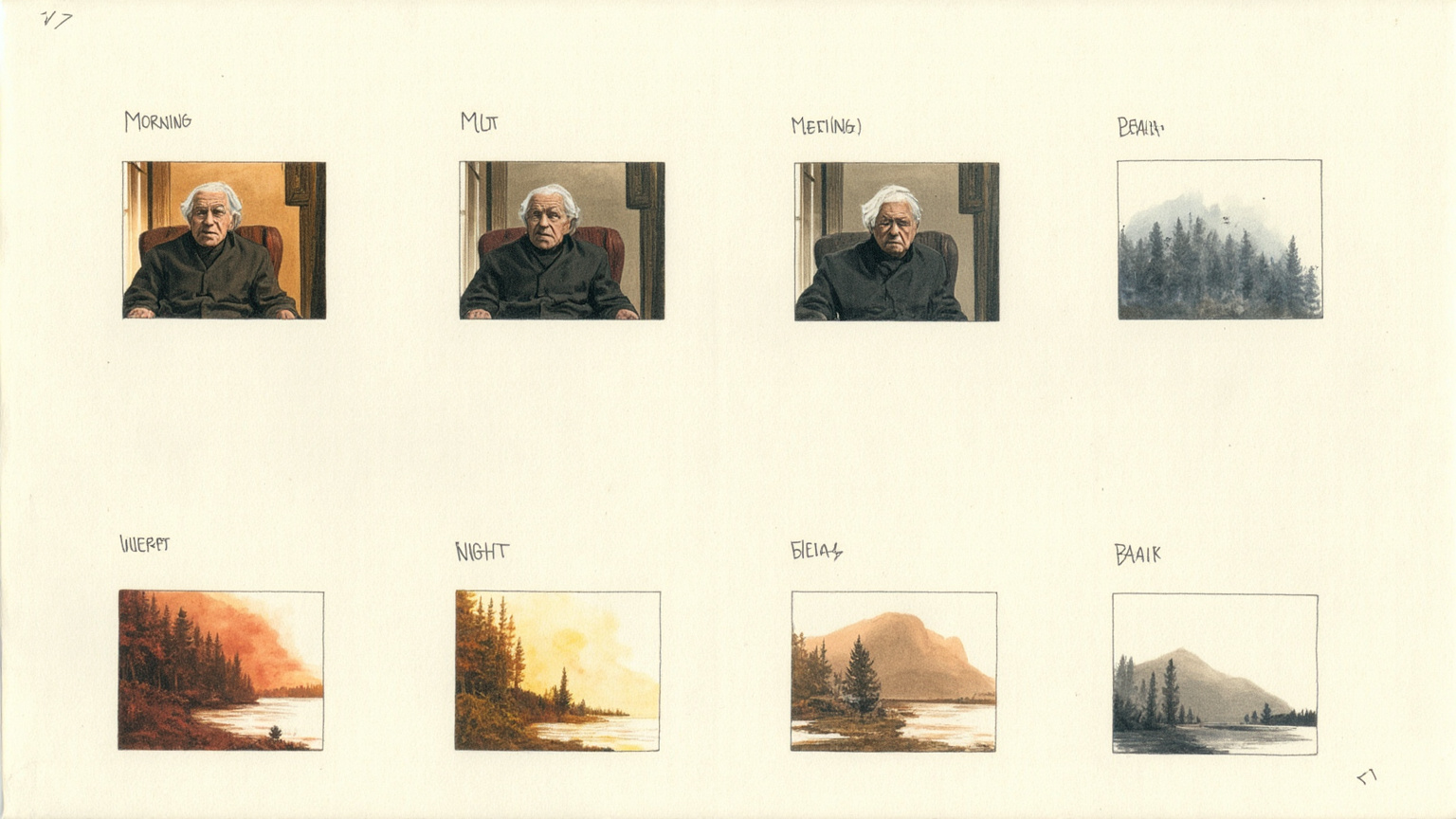
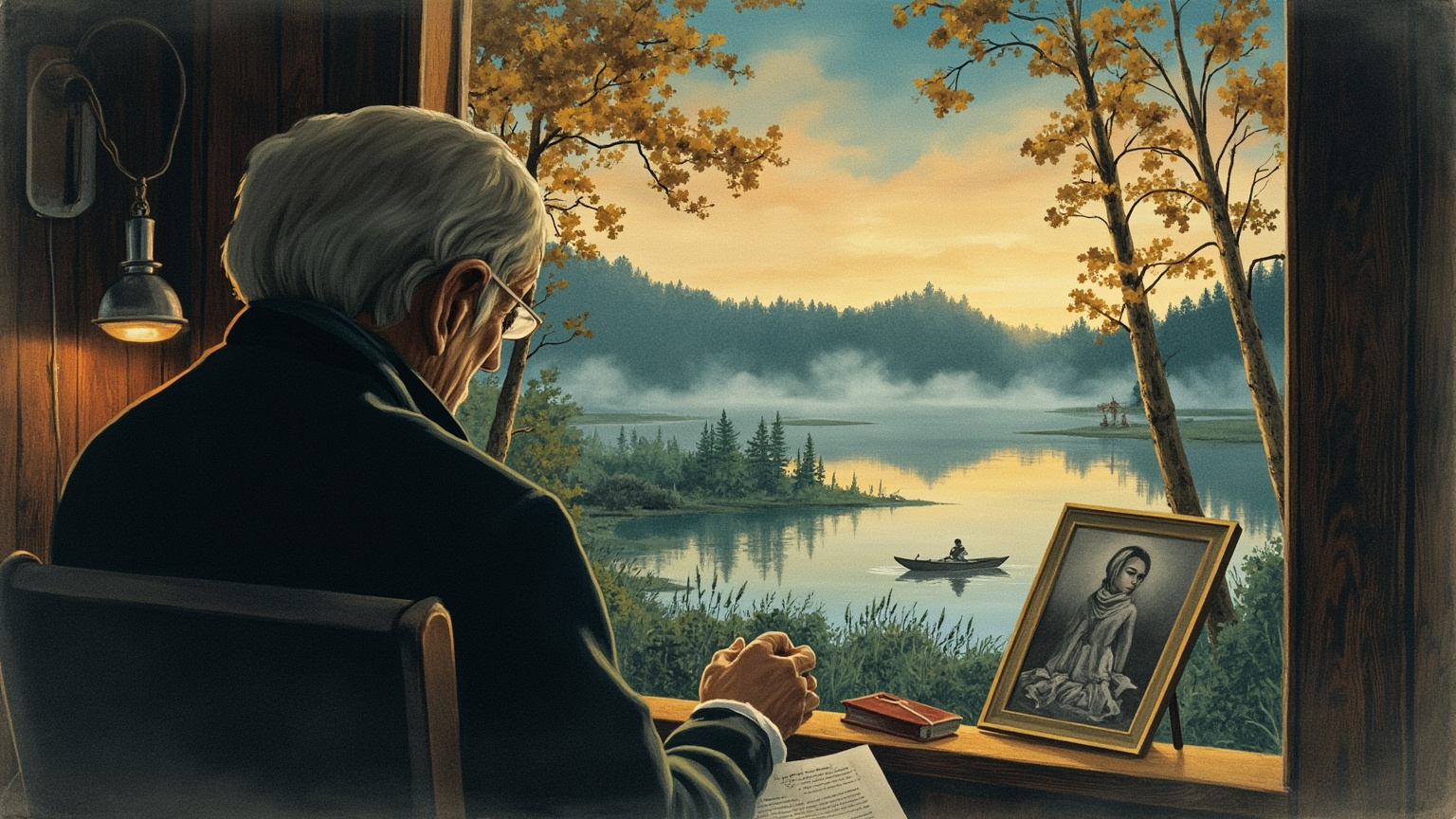
A portrait of a young woman hangs on the wall. Her hair is gold, her eyes are dark, and her expression looks like she is waiting for someone. An old man sits in front of the painting — he is the man in this story. The aging Reinhard, in a room where the evening light is going out, speaks slowly of Immensee as it was more than forty years ago, addressing Elisabeth's portrait. This is the opening move of the most famous novella in German literature: in under a hundred pages, it compresses a lifetime of missed chances into a series of still, framed images.
A Small Book That Stayed
Storm wrote Immensee in 1849. In German literature it stands at the meeting point of late Romanticism and Biedermeier middle-class fiction. In China it holds a stranger place: Guo Moruo began translating it into Chinese around 1914, and the book became an unavoidable bridge in the history of Sino-German literary exchange — nearly every writer of that generation of New Literature, from Ba Jin to Bing Xin to Dai Wangshu, borrowed a spark from this thin little volume at some point. It is startlingly short. It is not the least bit light.
The Characters: A Missed Chance Written In From the Start
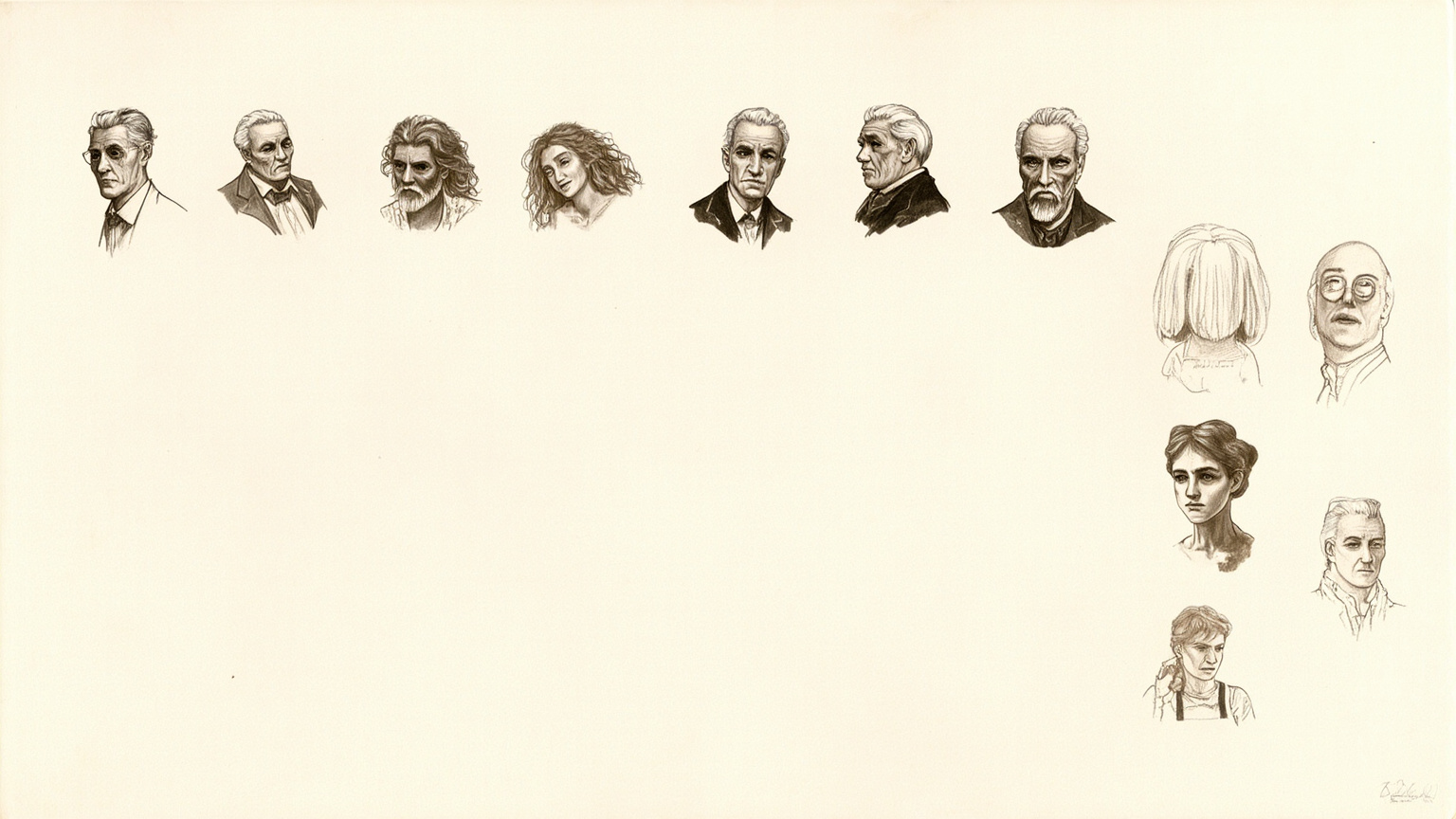
The young Reinhard is the child of a poor scholar's family, sent by his mother to board with a cousin who lives on Immensee. Elisabeth is that cousin's daughter, in effect his own cousin. Gold hair, dark eyes, gentle and a little melancholy: she is the one light in the whole world of his childhood. They pick raspberries together, build shelters out of branches together, listen to the same bagpipe drifting over the water, and are sent off to school in town together. Erich is the son-in-law Elisabeth's mother later settles on: comfortable, quiet, capable, a farmer with land and a house of his own, and that is the entire case for the marriage. Reinhard's mother is the one adult in this book who is gentle without a single shadow to her. Elisabeth's mother is shrewd, practical, and loves her daughter, but loves the family's standing more. She resents that the Reinhards are poor, resents that his university studies will take him off with 'no settled prospects,' and so she arranges the marriage herself, on both their behalf. There is no villain in this book. There is only an account book.
Childhood at the Edge of the Woods: Their First Shared World
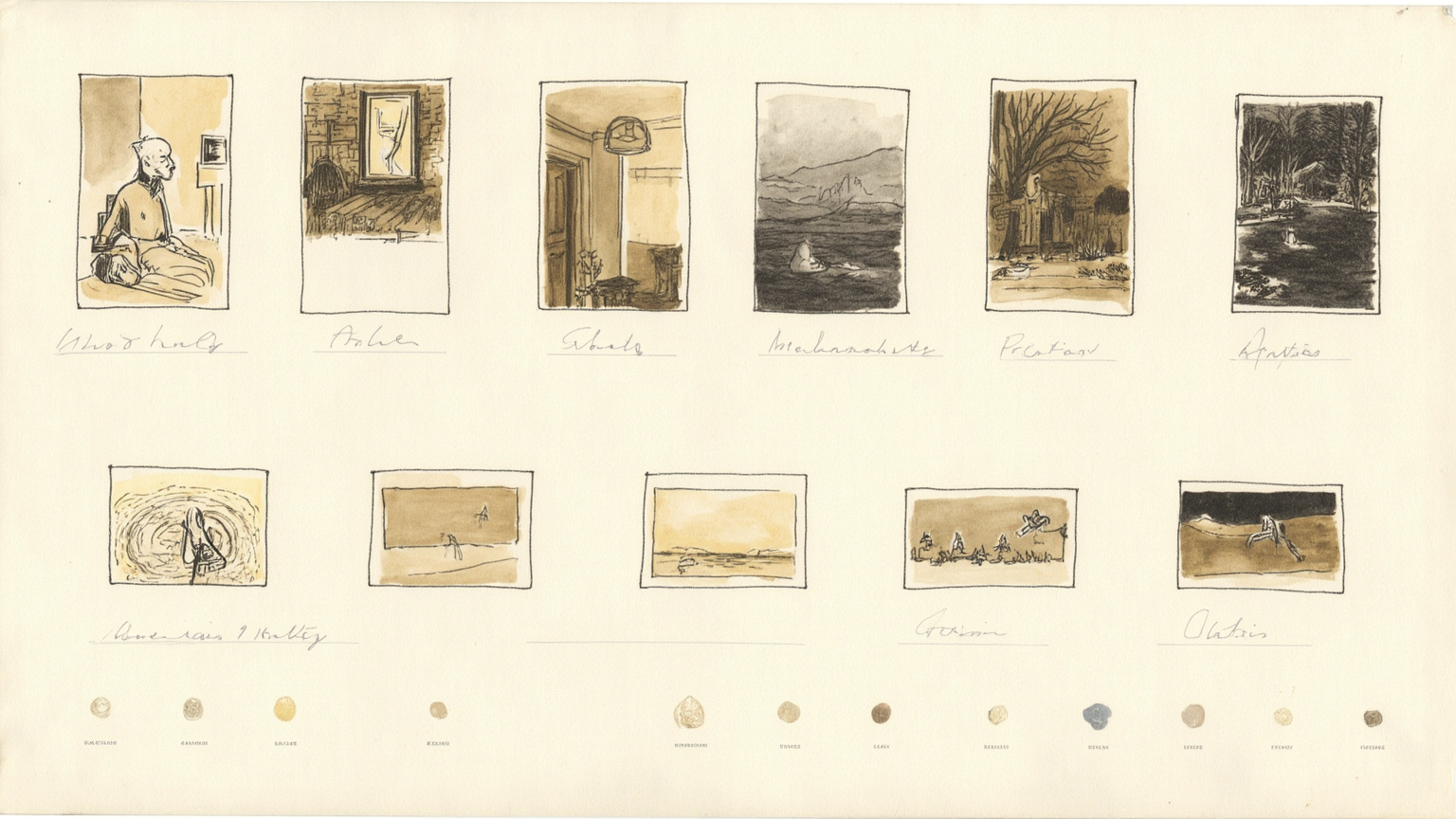
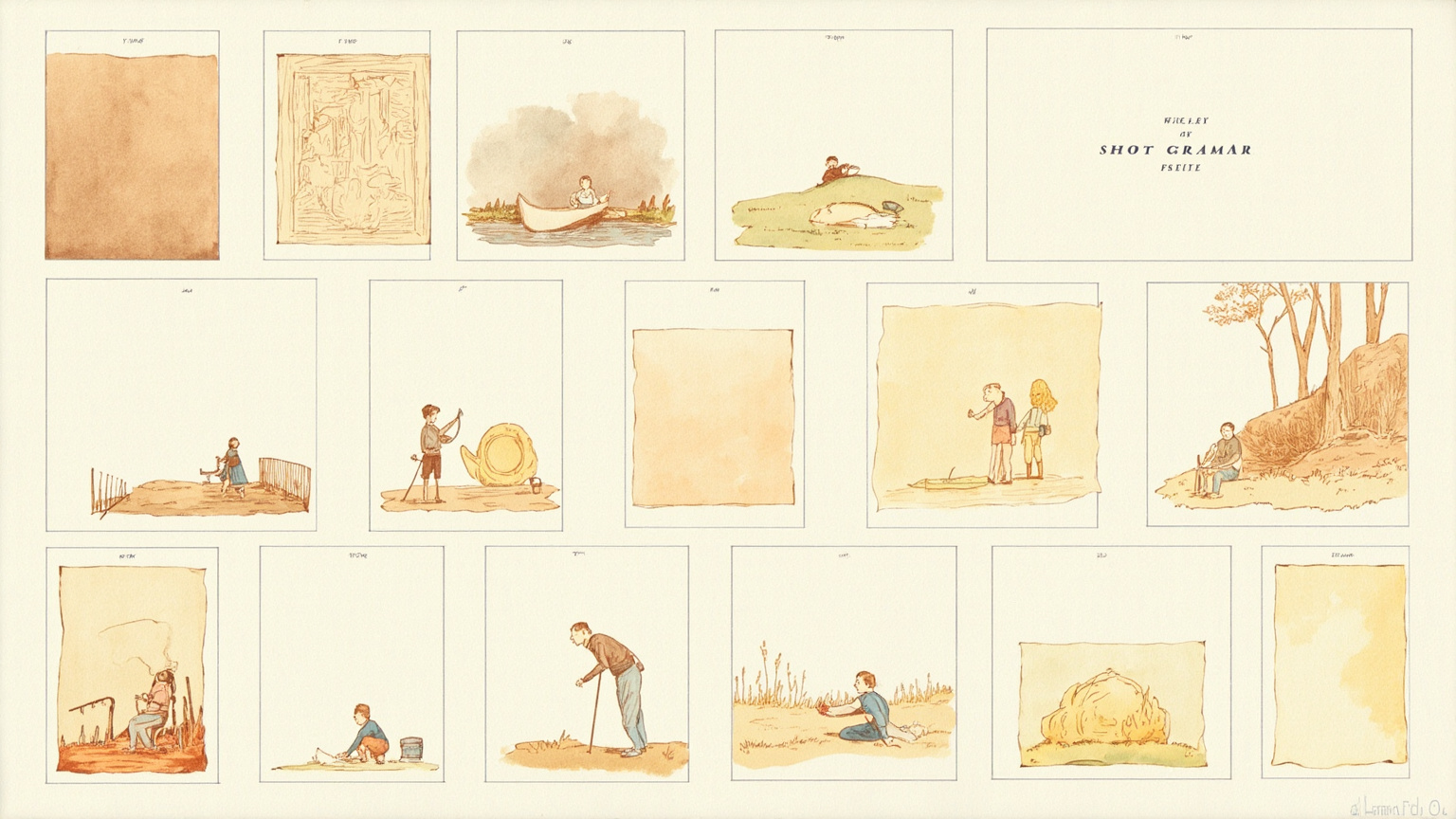
The story opens at the edge of a stretch of woodland in northern Germany, not the cowbell-and-chalet Alps but the flat land, lakes, mist, and heather moors of Holstein. The young Reinhard is sent by his mother to board with his cousin, and he and Elisabeth go everywhere together in the woods. The raspberries ripen to deep purple and stain their small hands red. The children build a little house of their own out of branches and old boards. A bagpipe carries over from somewhere in the distance at dusk, and when they play house, Elisabeth is the mother and Reinhard the father. This stretch is the warmest light in the whole book, and also the lightest touch in it: it falls like a dropped leaf, disturbing nothing.
The beauty of this childhood scene is that it is not scenery. It is a sealed-off little universe of its own. Storm never tells us what Reinhard is thinking; he only shows how the two children's hands move, where their feet land, how the branches get propped together. This method, action without a word of psychology, runs through the whole book, and it is the kind of thing a reader only feels the full weight of after the missed chance has already happened and they turn back to reread it.
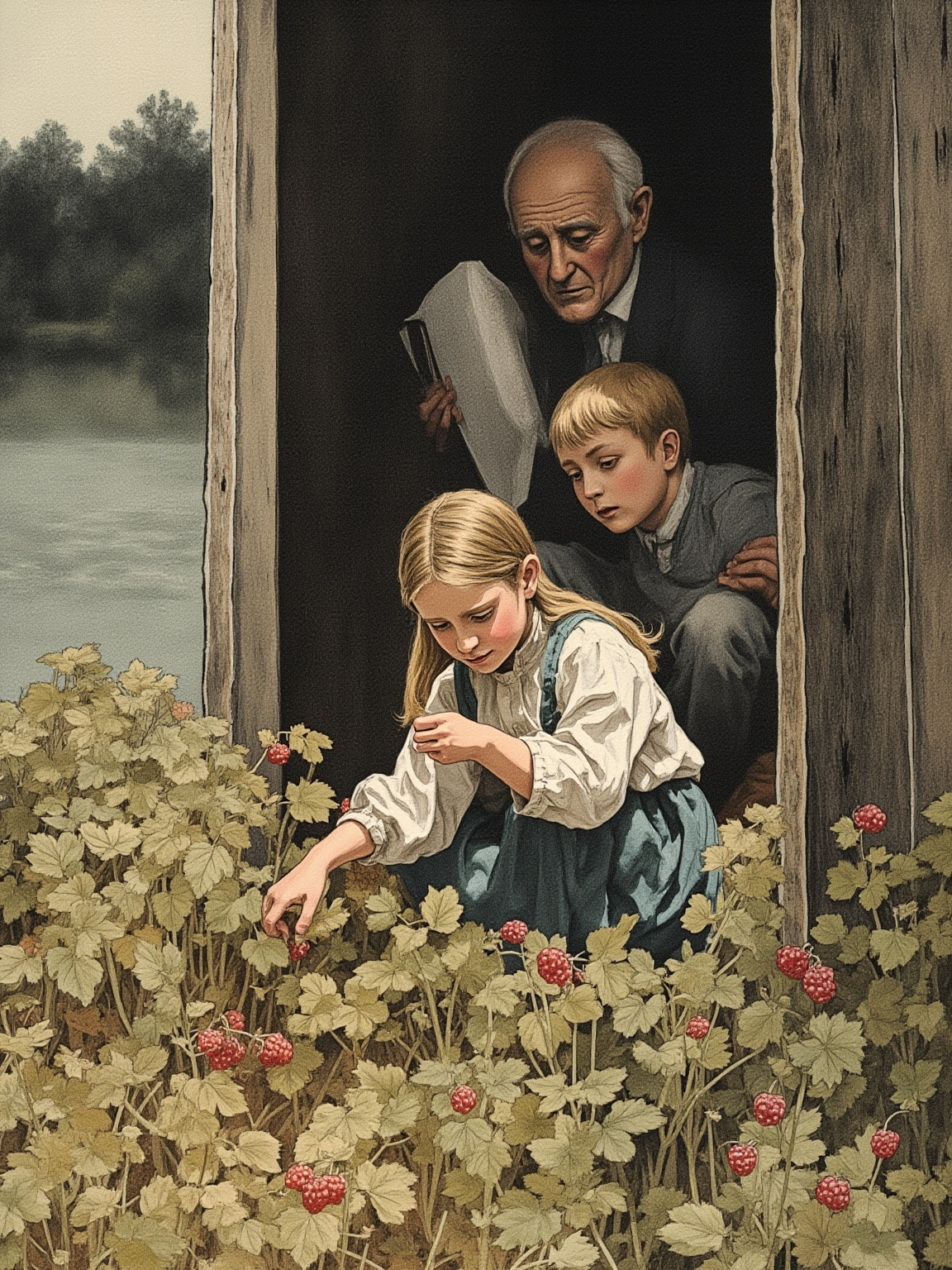
Then the children sat among the dark blueberry bushes, and the red, fragrant raspberries hung above their heads; they talked and chatted merrily, as if the whole world belonged to them.
孩子们坐在深色的越橘丛里,红透的、带着香气的覆盆子就垂在头顶,他们快活地说着、笑着,仿佛整个世界都归了他们。
金句 · 林边童年段 · 覆盆子与树枝棚
The White Water Lily at the Heart of the Lake: The First Unfinished Ritual
The two are sent off to school in town, and at dusk Reinhard rows Elisabeth home across Immensee. The water lies perfectly still, mist rises off the surface, and the little boat seems to float inside a cloud. A single white water lily blooms every summer in the same spot at the heart of the lake. Elisabeth always wants to reach it; Reinhard always rows toward it, and always falls just short. This is the first ritual between them that never gets completed, and it does not need completing. Its being unfinished is exactly what the thing is.
The university acceptance letter arrives. Reinhard has to leave home. Storm writes the parting with extreme restraint: no embrace, no kiss, not one line of dialogue that says the thing outright. Elisabeth only presses a small box into his hand; inside is a lock of her own gold hair. An object stands in for everything left unsaid — this is Storm's signature move, letting one small, concrete thing carry the weight of an entire life.
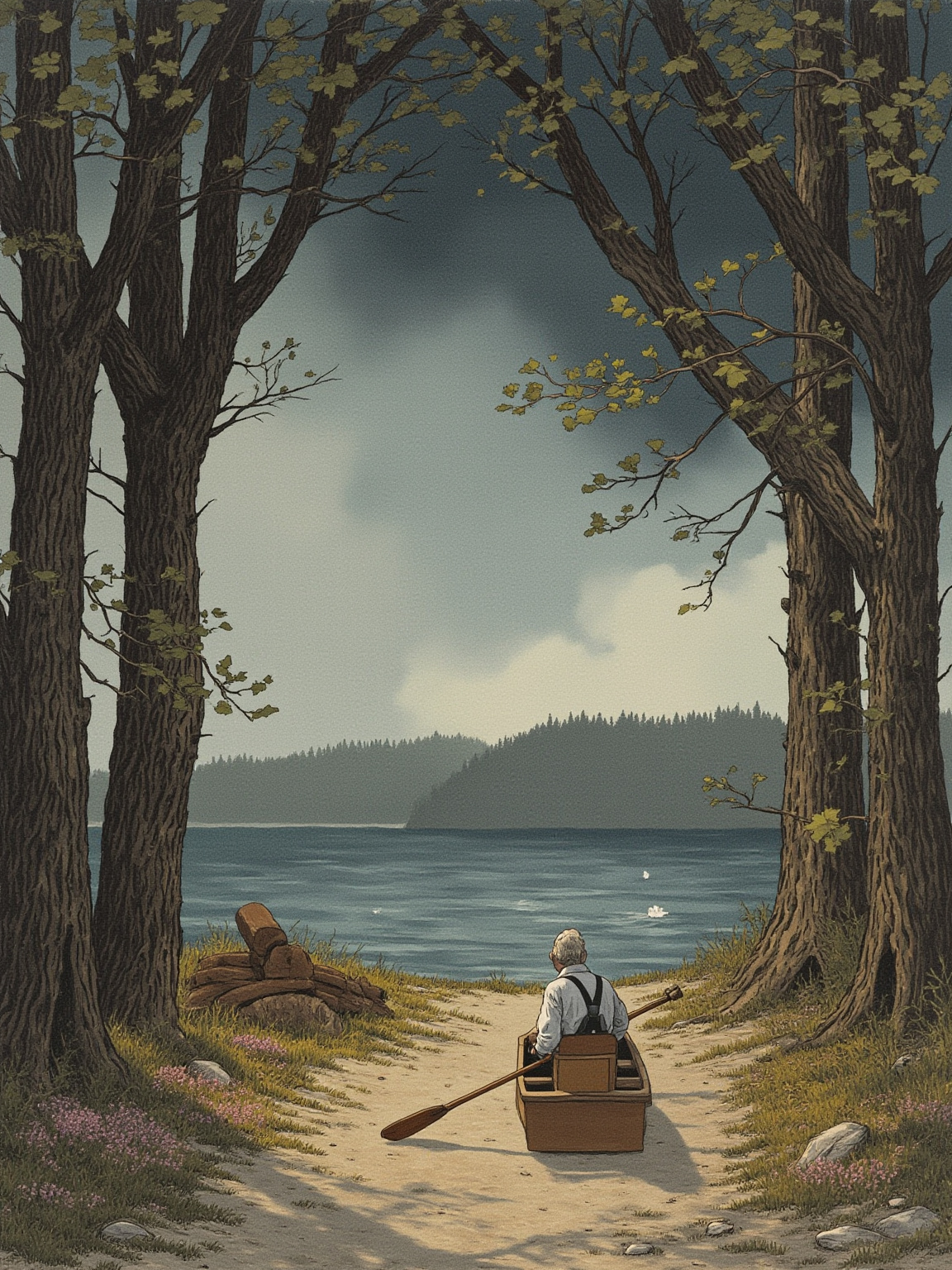
The boat glided across the still water; the mist rose softly from the lake, and around them the white water-lilies gleamed like distant lights.
小船在静水上滑过去,雾从湖面轻轻升起,四周的白睡莲像远处的灯火一样隐约闪亮。
金句 · 湖心小岛段 · 黄昏渡船
The University Episode: Another Attraction, Kept Deliberately Quiet
Reinhard arrives in the university town and lodges above an old folk singer. The old man spends his days downstairs playing his fiddle and singing ancient ballads, and his dark-eyed granddaughter comes down now and then. For a while Reinhard thinks he is falling for her, taken with those dark eyes, and he calls on her a few times. Storm deliberately keeps this thread flat, giving it barely two pages where another novel would give it a whole chapter, and the reason is simple: he wants the reader to discover for themselves that Reinhard was never really drawn to the dark-eyed girl at all. What he copies into his notebook and carries back to Immensee are the words of two of the old singer's ballads — and those are the thing he actually means to bring home to Elisabeth.
Old songs! he said, and smiled; and when the old man began again, Reinhard felt as though he were listening to his own past, as though the songs belonged to that vanished time.
古老的歌——他微笑着说。当老人再度唱起,莱因哈特觉得自己仿佛在听自己的过去,仿佛这些歌属于那段已经消逝的时光。
金句 · 大学城段 · 老民歌手的歌
The Return: Reading Together by Lamplight, the Closest and Most Painful Moment in the Book
By the time Reinhard returns to Immensee, Elisabeth is already Erich's wife. The safe marriage her mother arranged has cost Reinhard, permanently, any right to say what he might have said. But Elisabeth still comes to borrow the little notebook with the two ballads copied into it. They sit together by lamplight and read the old songs, and more than once, words rise to the lips and get swallowed again. This scene is the closest the two of them ever get emotionally, and nothing in it crosses a line: just an oil lamp, two old sets of lyrics, and two people finally sitting side by side who somehow look lonelier for it. The first time I read this scene I sat with it for a long while, two people sitting that close to each other, and between them, across the whole scene, not one complete sentence gets said.
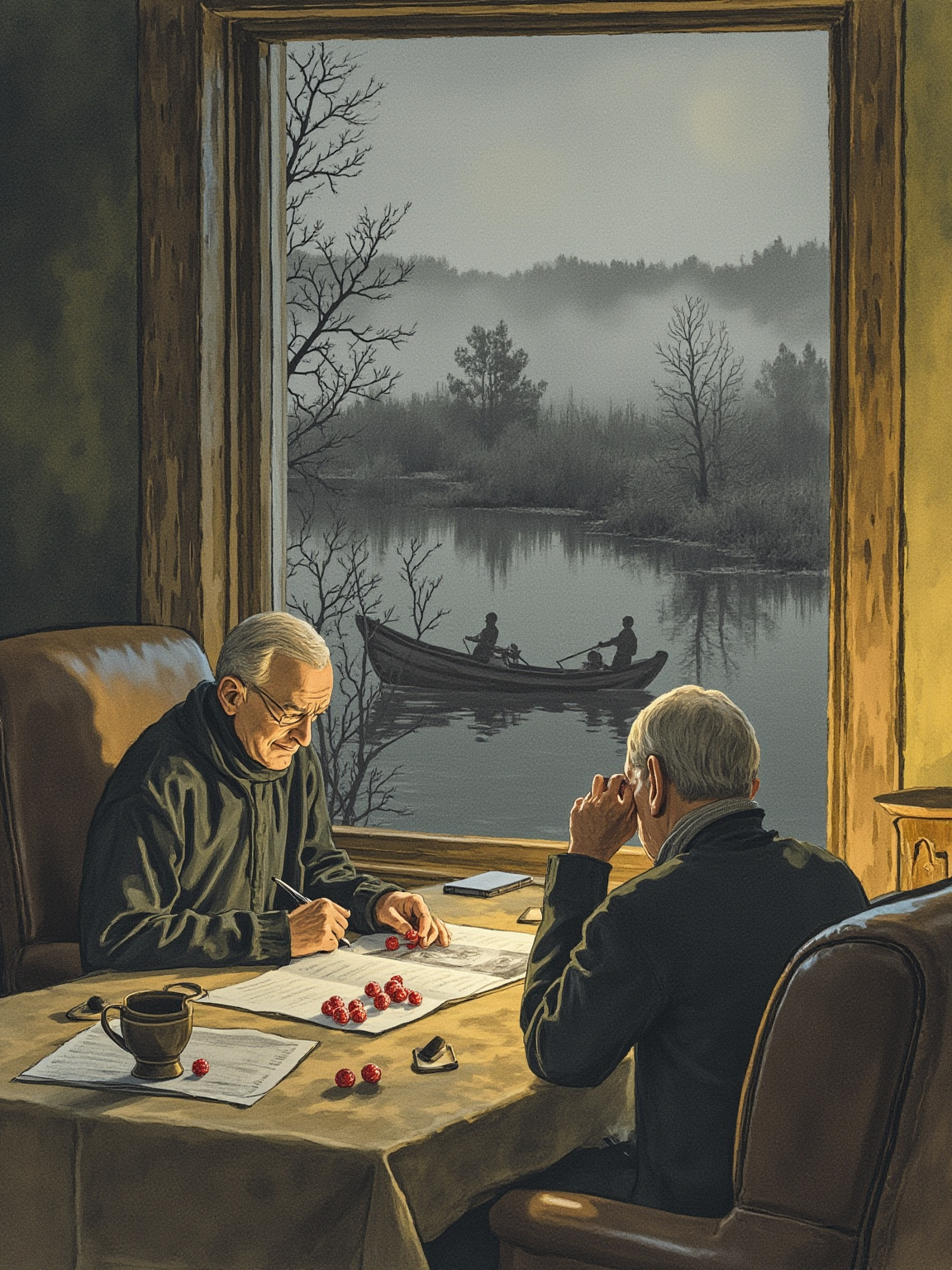
They sat together by the lamp, and read the old songs; and often they fell silent, and the flame threw long shadows on the wall, and outside the autumn wind went through the bare branches.
他们在灯下并肩坐着,读那些古老的歌;常常谁也不说话,灯焰把长长的影子投上墙壁,窗外秋风吹过光秃的枝条。
金句 · 归来段 · 灯下共读民歌
The Heather Moor: Everything Left Unsaid Stays Outside the Door
One autumn evening, Reinhard walks Elisabeth back to the estate from outside. On the northern heather moor, the night leaves nothing but the wind and the thin sound of their footsteps. The garden gate opens in front of him and closes behind her. Inside the gate is lamplight, a husband, a life already set in its shape. Outside is Reinhard, and half a sentence he cannot get out. There is no death in this book, no falling for someone else, only a mouth that stops itself, again and again, just before the gate swings shut. Storm uses this image, a door that, once closed, will not open again, more than once, and each time he touches it as lightly as possible.
The Water Lily Reached, Then Given Back: The Final Chapter
More years pass. Reinhard returns to Immensee one last time and rows alone out to the little island at its center. This time, he reaches the white water lily. He carries it back and sets it on the table; the next day, he returns it to the lake and gets up to leave. A flower he could not reach as a boy, and now as a grown man can reach and chooses to let go of — this is one of the most famous images of an unkept promise in German literature. Storm makes an entire novella turn on a single flower. This is a story about choosing, at the very moment you could finally have it, to let something go.
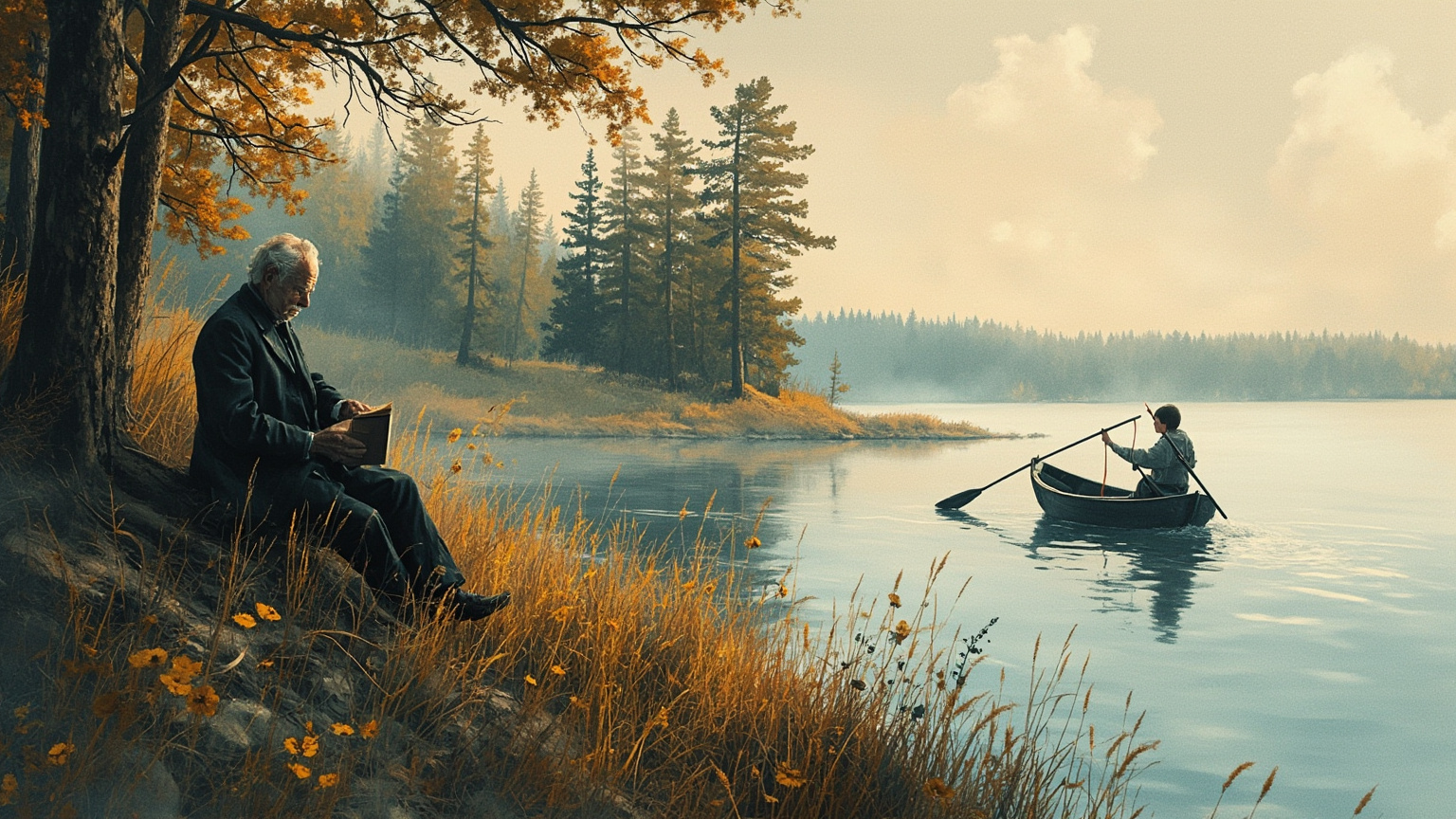
He took the white water-lily from the table, and carried it back to the lake, and laid it upon the water; then he turned away, and left the place for ever.
他把那朵白睡莲从桌上捧起,带回湖边,轻轻放回水面;然后转过身去,永远地离开了那个地方。
金句 · 终章 · 还回去的白睡莲
What makes this scene so devastating is how quietly Storm lets both the reaching and the giving-back happen — no dramatic pause, no interior monologue. Reinhard simply sets a flower back on the water and stands up. That restraint does more damage than any amount of weeping could, because it leaves the reader to work out for themselves exactly how much is packed into that one act of giving back.
What This Book Is Really About
On the surface this is a story about a missed chance. One layer in, it is about the tradeoffs of bourgeois life: poverty, leaving home, no settled prospects, none of which are flaws in Reinhard's character. They are simply the whole of what it meant to be a poor student in nineteenth-century northern Germany. Elisabeth's mother is not out to hurt anyone; she is doing the sums for her daughter's security. One layer deeper still, this is about the shape memory takes: a dark room, a portrait, the fire, the last thread of daylight, all pressed into a sequence of still images, so that remembering stops being a line and becomes a space instead. And underneath all of that, Immensee is saying one of the hardest things to write, that the important things go unsaid not because they cannot be said, but because once said, no one involved could bear the weight of them.
There is no villain in this book — only an account book, and a white water lily that got reached, and then given back.
Why It's Still Worth Reading, Even Once You Know How It Ends
You already know the plot now: the childhood, the leaving, the return, the closing gate, the flower given back. But what actually makes Immensee worth something is the feel of Storm's prose on the page: the damp on your fingers as raspberries burst in the woods, the silence at the heart of the lake as mist lifts off the water, the last bit of warmth the evening light leaves on Elisabeth's gold hair, the particular emptiness of a heather moor where all you can hear is two people's footsteps. No summary can hand you any of that. It lives in the rhythm of Storm's long German sentences, in the daylight that dims and lifts again and again across fewer than a hundred pages. Now that you know the story of one water lily, go read the original once, and let Storm raise that mist over the lake for you himself.
Art Direction4 plates
Before the guide was written, this book got a visual foundation — every illustration you just read grew out of it.