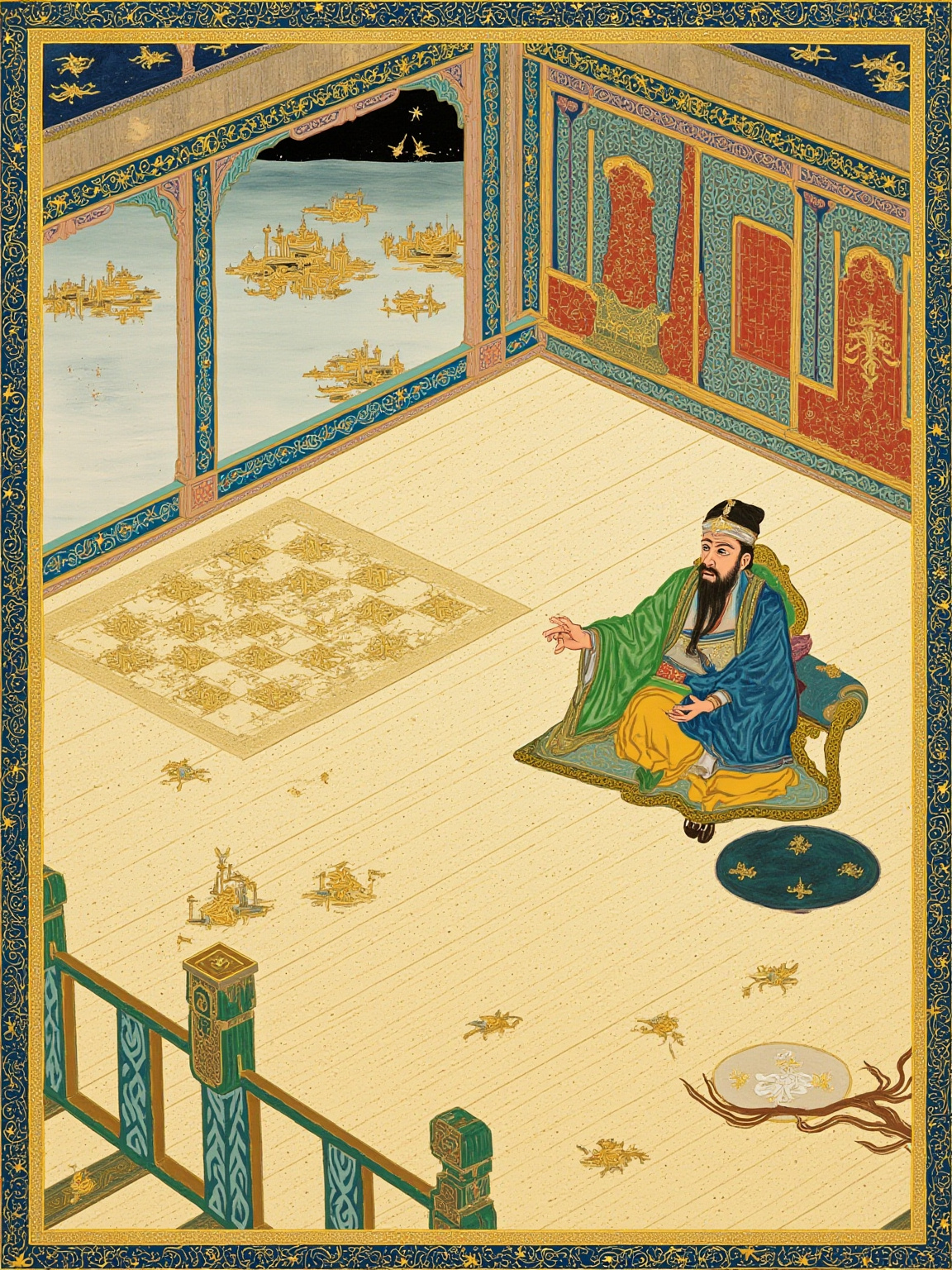
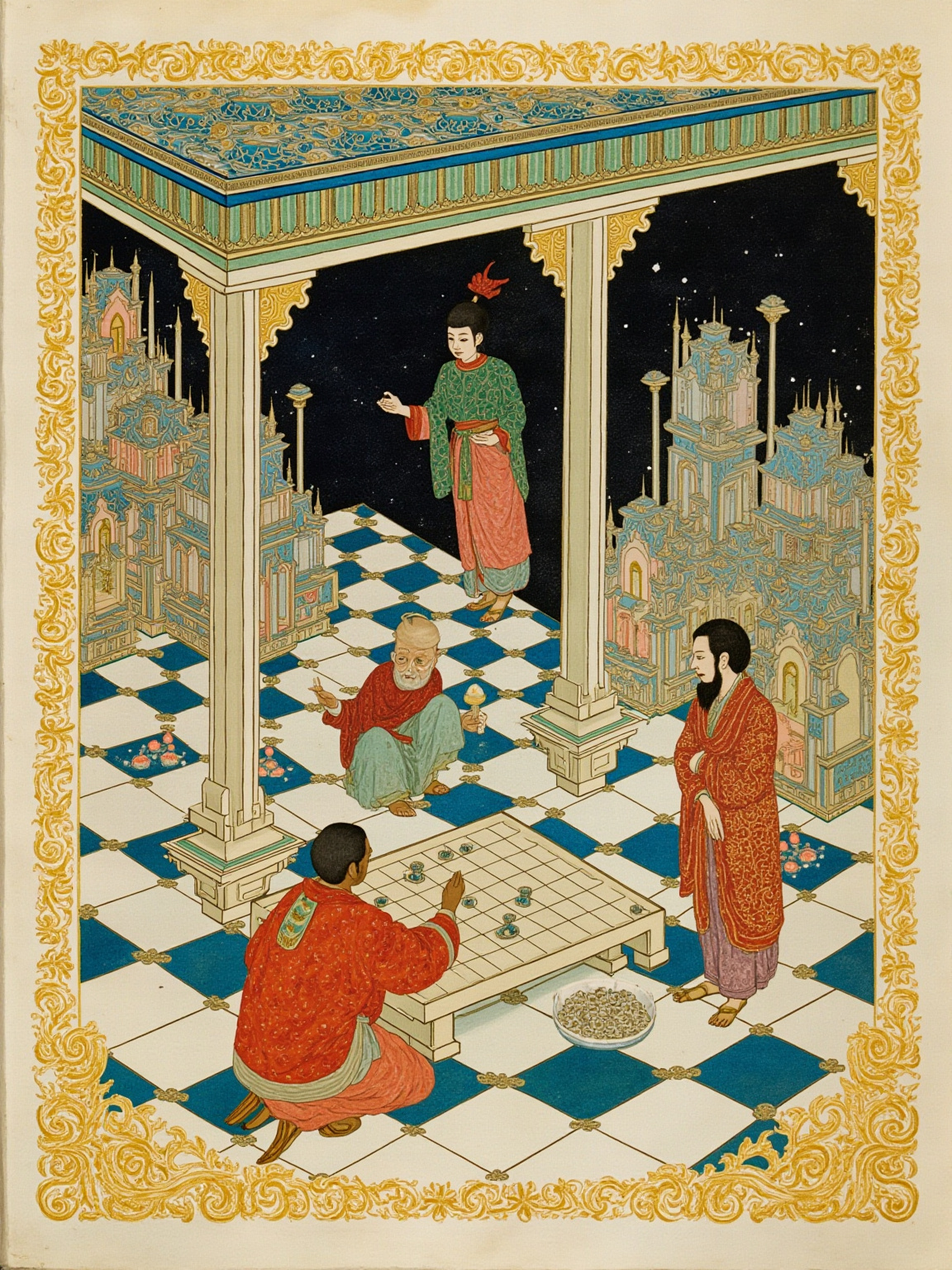
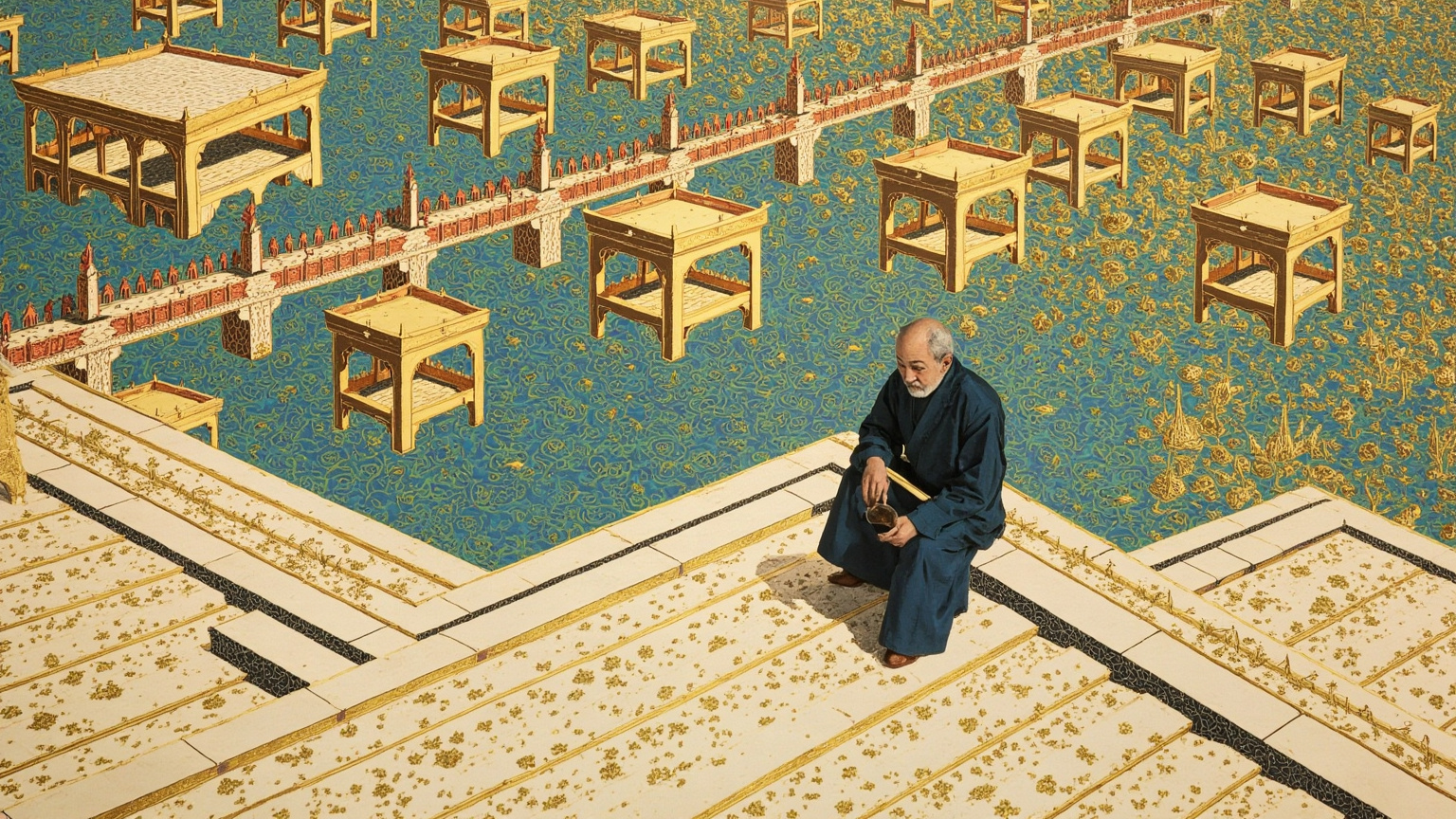
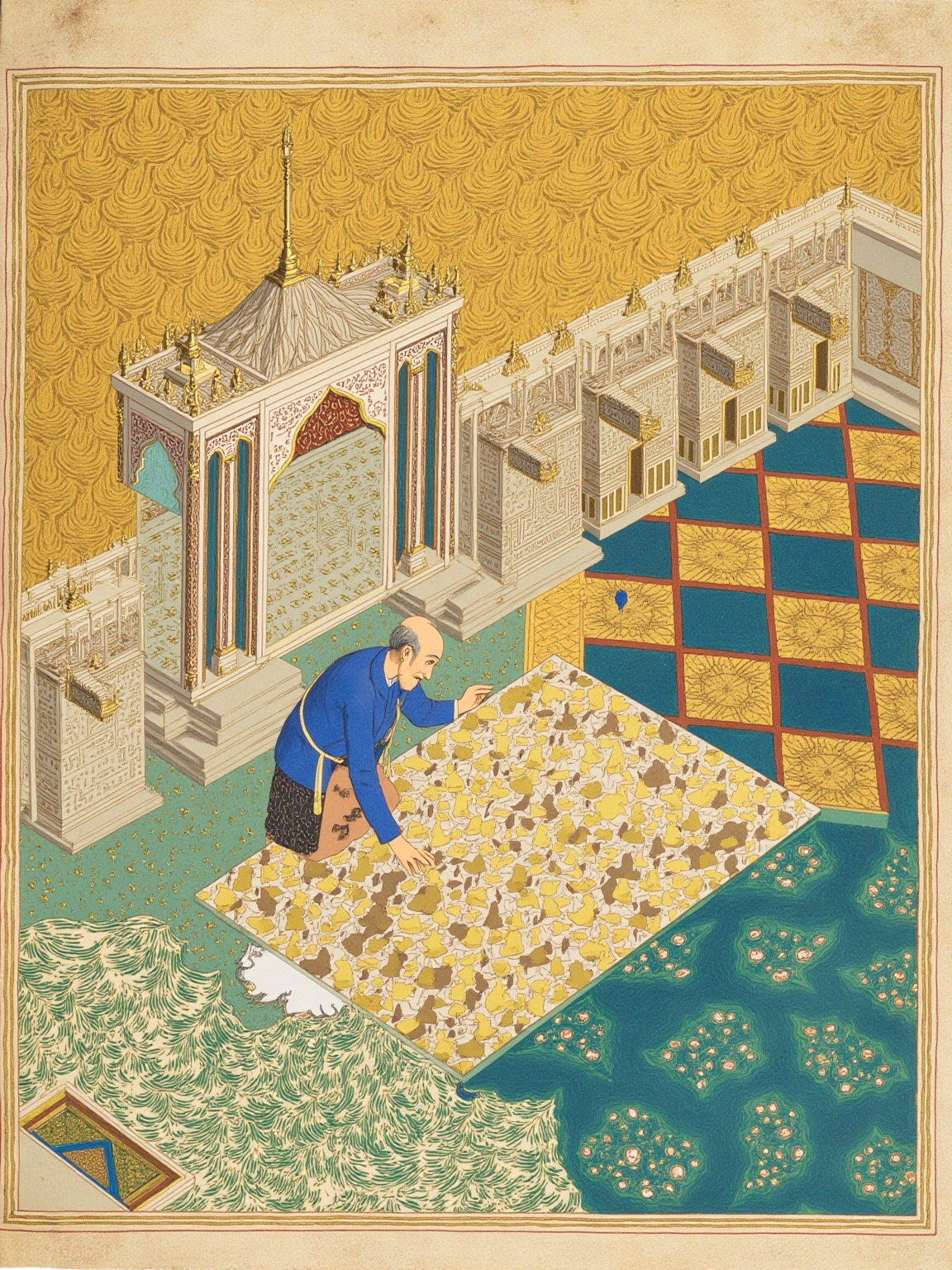
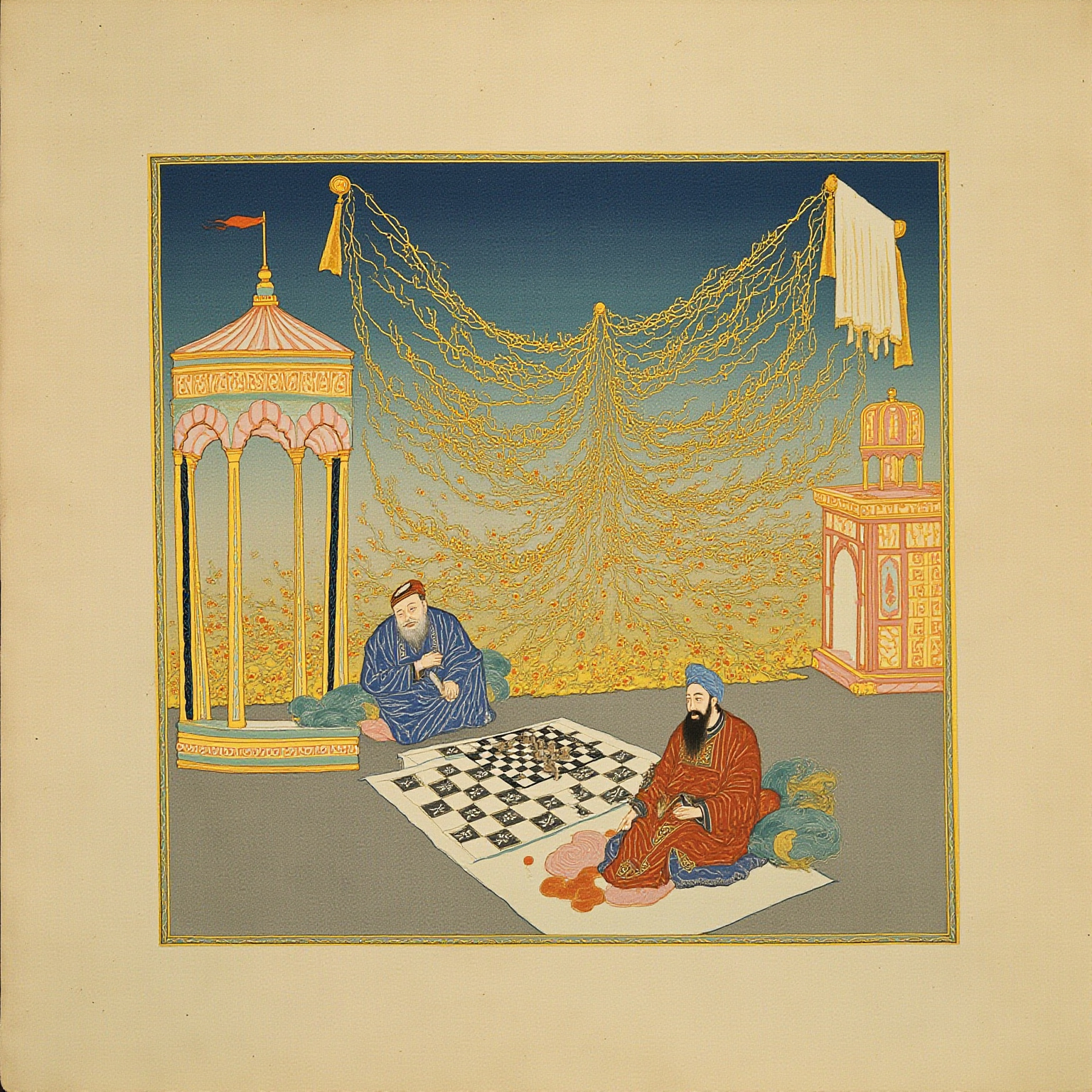
A game of chess is still unfinished, and the pieces have already begun to cool. The aging Kublai Khan sits on the steps of his pavilion, an ivory chessboard resting on his knees, waiting for the stranger who has traveled from Venice to speak. He wants no battle reports — he wants city after city he has never set foot in and may never see, while the man telling him about them is still learning how to get those cities out of his own throat.
What this book is
Invisible Cities is the work of the Italian writer Italo Calvino, first published in 1972 by Einaudi in Milan. It is usually filed under postmodern fable — no plot in the conventional sense, no protagonist who carries through from first page to last. Instead it is assembled from fifty-five city sketches, each short enough to pass for prose poetry, interleaved with dialogue that keeps breaking in. Calvino later admitted that while writing it he carried an invisible compass pointed toward lightness, toward precision, toward some border where poetry and thought meet. Decades on, architecture schools, urban theory courses, and anyone writing about cities can hardly avoid it — not because it teaches you how to build a city, but because it teaches you to see, all over again, how a city becomes a place people actually live in.
Two characters, one old, one young
At the center of the book are two men. One is Kublai Khan, ruler of the vast Tartar empire, old now, already sensing that his domain has grown too large to hold and is crumbling away, inch by inch, at the edges. The other is Marco Polo, a young traveler from Venice, employed by the Khan, who returns from his journeys to describe, each evening, the cities he has seen.
Calvino himself said that while writing this book, two words kept circling back to him: lightness and precision. You could read it as a book resisting gravity — every heavy thing, empire, hell, the unreliability of memory, gets pressed into these city sketches that barely run a page, thin as a sheet of glass and hard enough to ring when you tap it.
Calvino was never writing geography. He was writing how a person, living inside a city, ends up shaped like it without ever noticing.
Knowing the plot is still no reason to skip the text
A companion guide can lay all fifty-five cities out on the table for you, one by one, but only the text lets you walk into them yourself. You will not catch, in a guide, the rhythm of Calvino's sentences, hammered over and over until they are short, exact, and always a hair from falling apart. You will not see, in a guide, the city you thought you understood turn out darker than you expected once you actually read it. That only happens page by page. Carrying this map in with you beats going in empty-handed — it gives you one more pair of eyes.
ImaRead5
Art Direction4 plates
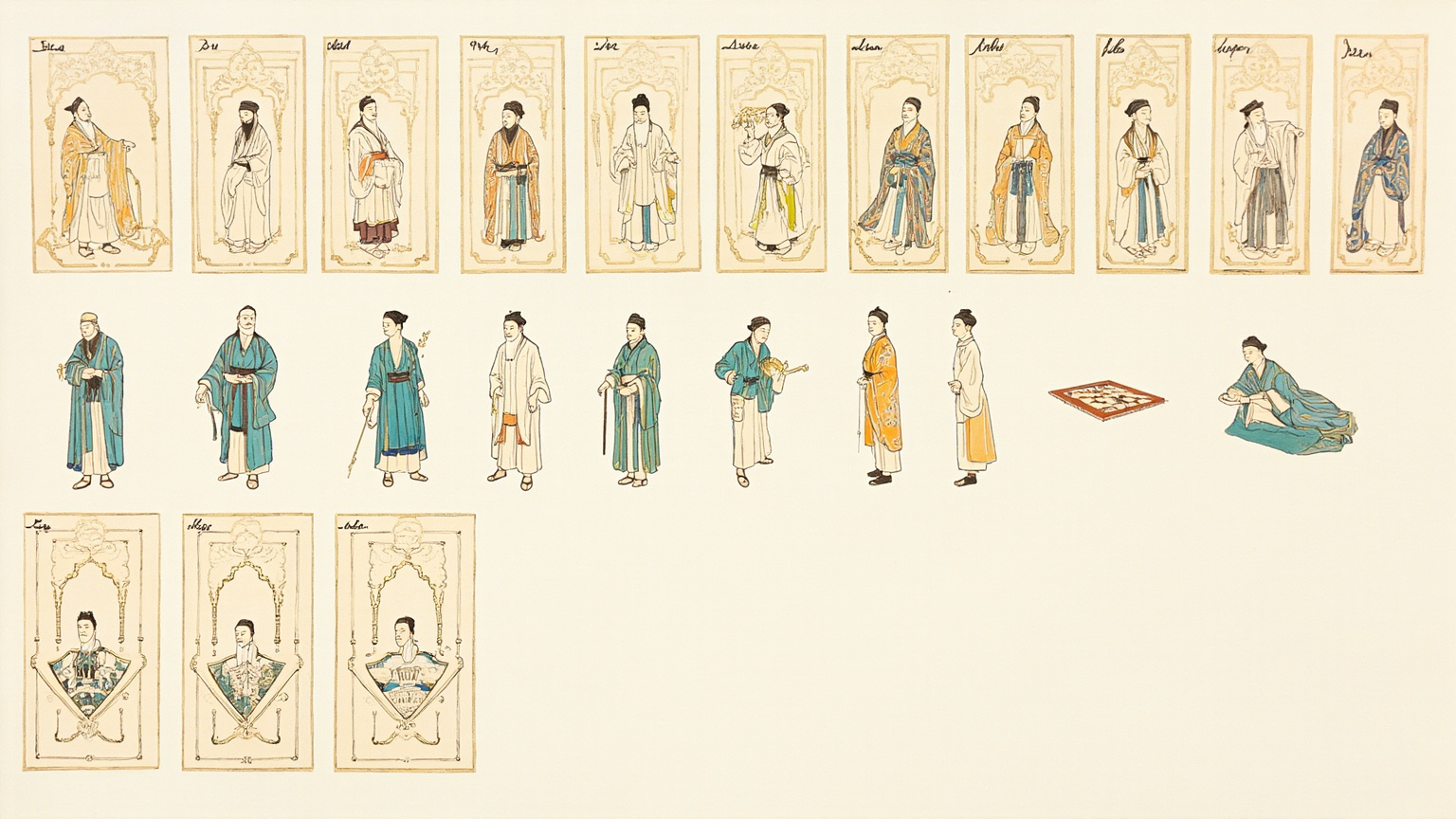
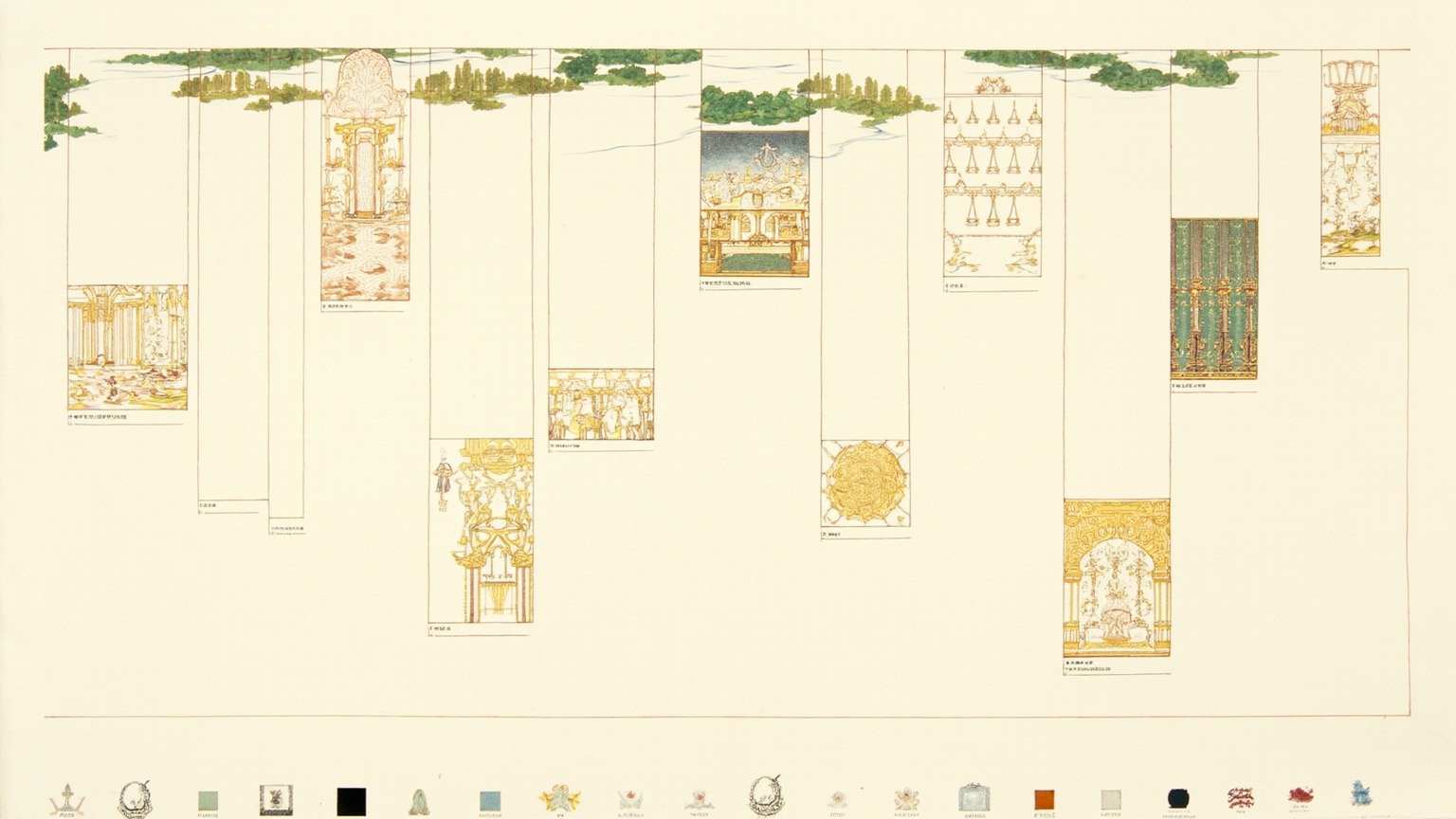
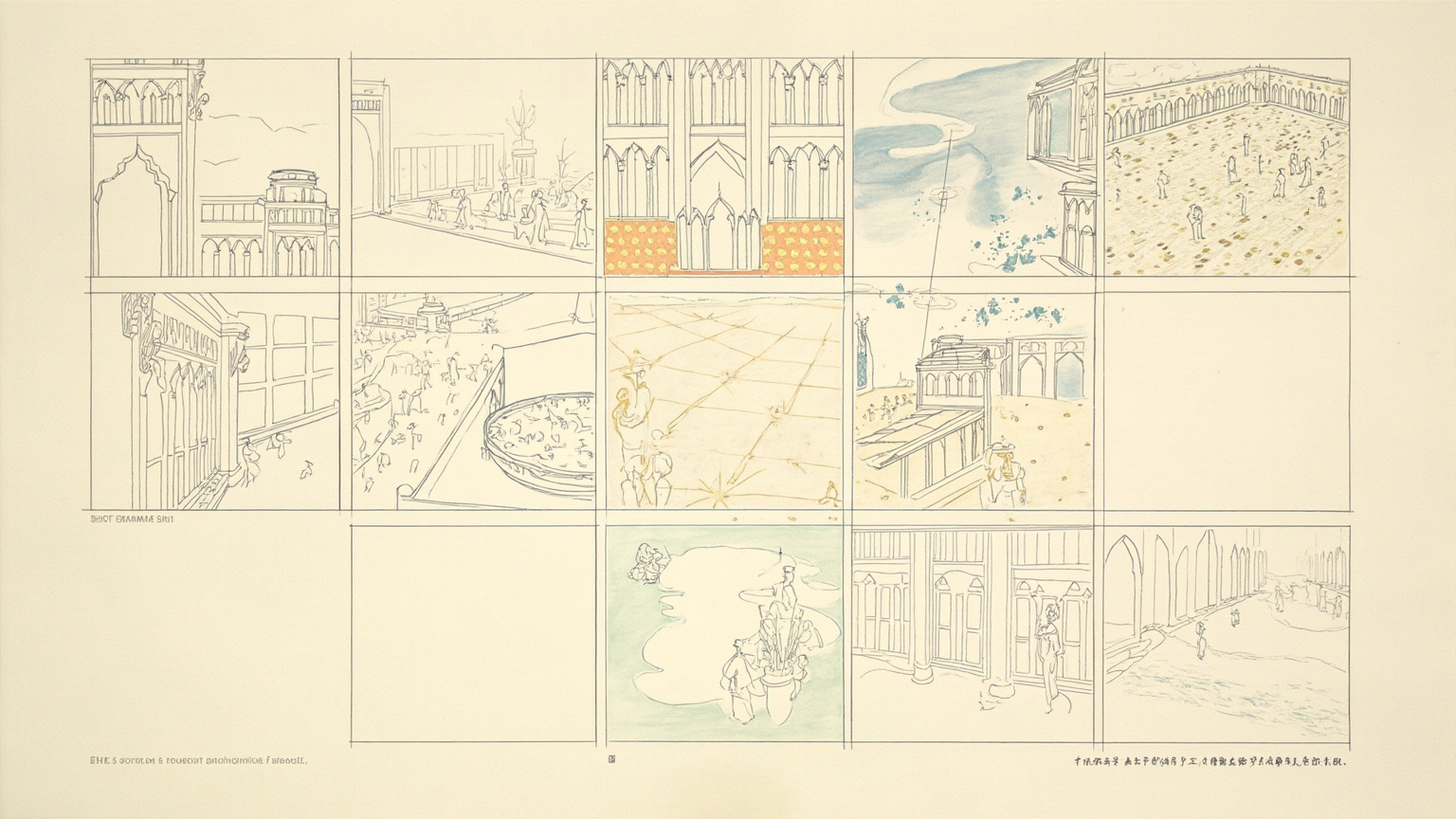
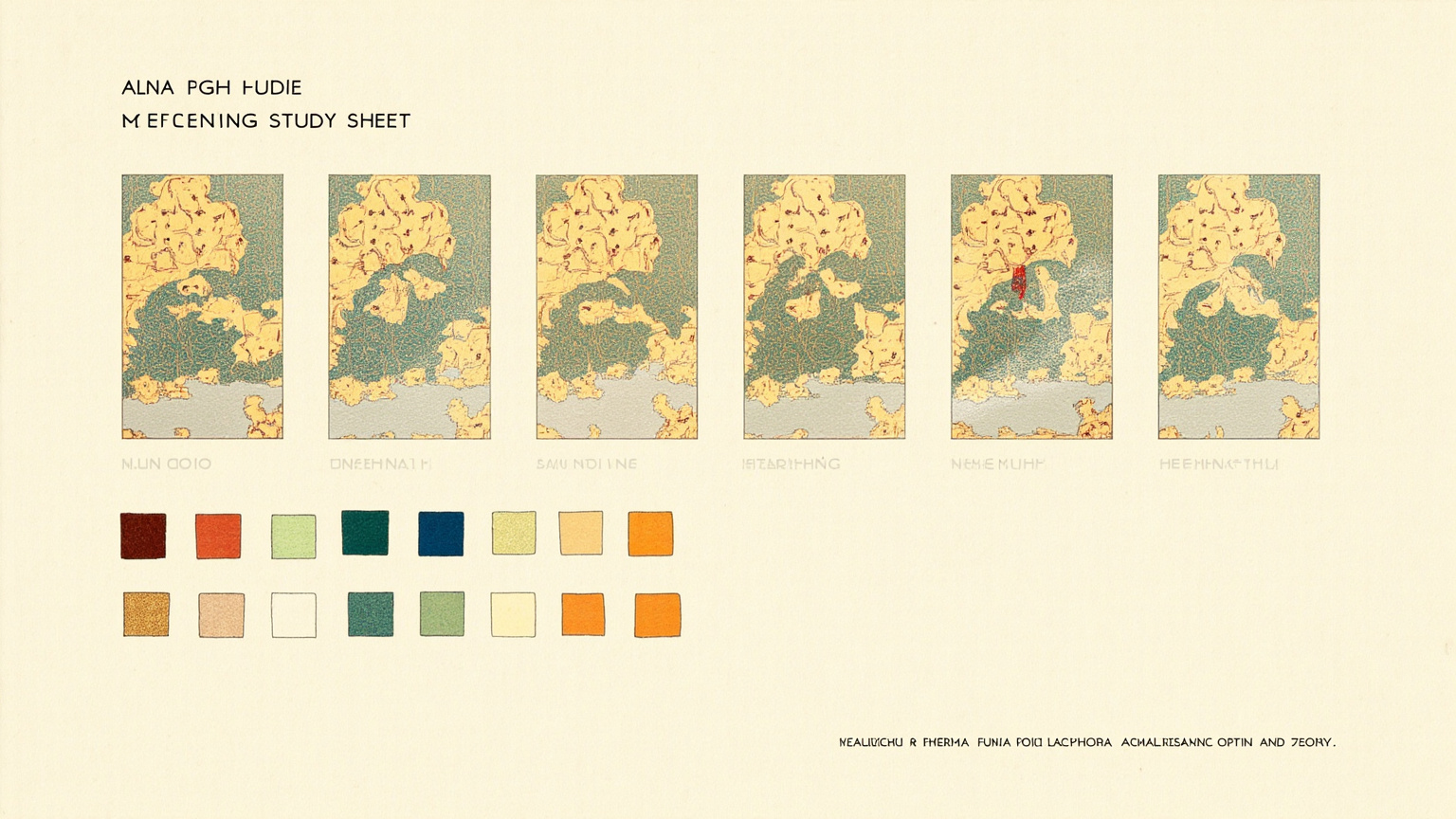
Before the guide was written, this book got a visual foundation — every illustration you just read grew out of it.
The interesting part is that these two are not equal voices in a conversation — one speaks, the other listens. When Marco Polo first arrived at court he could not yet speak Tartar, so he had to act each city out for the Khan: gestures, dances, the strange objects he had carried back laid out one by one. Language came later; it had to grow in.
Where the invisible cities come from
Once Marco Polo starts speaking, fifty-five cities surface one after another. Every one of them has a woman's name, and every one is filed under a category: Cities and Memory, Cities and Desire, Cities and Signs, Thin Cities, Trading Cities, Cities and Eyes, Cities and Names, Cities and the Dead, Cities and the Sky, Continuous Cities, Hidden Cities. Eleven themes, five cities apiece, arranged with something close to mathematical precision.
Calvino is not writing geography. In the cities of memory, forgetting the past means losing yourself along with it. In the cities of desire, seven identical bridges string together seven desires, and the more satisfied the residents become, the sadder they grow. In the cities of signs, everything conceals another meaning, and only those who can read it survive. These cities are fables — abstract questions like whether memory lies, whether desire can ever be satisfied, whether a name is a cage, cast in the shape of roofs, canals, bridges, windows.
This section is written with real restraint. A city rarely runs past a page. There is no arc, no protagonist, and certainly no ending. The reader has to catch the whole flavor of a city from a detail or two, the way you would flip through a hand-drawn travel guide where each page only holds your attention for three seconds. That is exactly his skill: compressing a city's entire fate into a stone small enough to close your fist around.
By the end, every city is the same city
By the middle of the book, the italicized dialogue starts seeping through, the way water pushes up from under sand. The Khan grows suspicious: have you really been to all these places? Marco Polo answers vaguely, or not at all. By this point the reader has started to suspect the same thing — these cities are so different from one another, so why does the same undertaste keep showing up, as if it were the same canal flowing under a new name each time.
Calvino never spells it out, but the hint is nearly pressed against your face: every city Marco Polo describes may be a different profile of the same city, and that city is very likely Venice, his home. The farther a Venetian travels from home, the more he takes it apart into pieces and scatters them through every city he describes. By the end, the journey does not reveal some far-off place — it reveals the man telling the story.
Maps, chessboards, and the emptiness of empire
The Khan will not let it go. He has atlases brought out and pieces set one by one onto the ivory chessboard, trying to fit the whole empire into his head through these abstract props. He believes that if he can grasp the logic behind the game, he will possess every city on the board — possess it, even if he has never set foot there.
ImaRead3
Marco Polo does not argue back — he answers with city after city that order cannot sit still on. A city built on stilts, where residents draw lots to decide which day the whole place sinks into the sea. A city made of two cities fused together, whose residents visit each other and suspect each other in equal measure. A city that is nothing but pipes and valves, where people talk by knocking on the pipework. With every added city, another crack opens in the order laid out on the board. Calvino's move here is merciless: the more refined the Khan's abstractions become, the more futile they look — the harder you try to frame reality with a diagram, the more new branches reality grows out past the frame.
The empire grows old, and hell draws near
The further the book goes, the darker its tone gets. The empire has grown too vast, so vast that even its ruler can only watch, from a distance, as it comes apart inch by inch. The atlas turns into a catalogue of an empire vanishing, and the longer the list grows, the deeper the loss. Calvino writes no war, no plague — he simply lets the Khan grow quieter and quieter before the chessboard, and that quiet is more unsettling than any defeat could be.
Hell is not somewhere else — it is the life you live every day
The heaviest passage in the book comes at the very end. Both men admit it together: every city on earth may finally sink into the same hell. The Khan asks what can be done. Marco Polo's answer is one of the most quoted sentences in twentieth-century literature — if hell exists, it is not waiting in some future ahead of us, it is the present we accept without complaint and build together every day. There is only one way out: inside the hell, learn to recognize what is not hell, and give it room to keep going.
That line brings the whole book back down to the plainest possible ground. Calvino does not hand the Khan some grand plan to save the empire; he hands him a small, doable act instead — do not walk through hell too smoothly, do not let yourself go numb to the things that should not be numbed. Written for the Western world of the early 1970s, looking back, it carries more weight than most of the protest slogans of its day.
Why it is remembered
Invisible Cities is often ranked among the first tier of postmodern fable-novels in literary history. It breaks outright with the old rule that a novel needs plot, character, and a beginning-middle-end arc, holding up an entire meditation on cities, language, empire, and people on nothing but fifty-five sketches and a thread of italicized dialogue. More important, it is still taught again and again in architecture schools and urban theory courses — not because it predicted any future city, but because it demonstrates a way of reading a city as a thought.