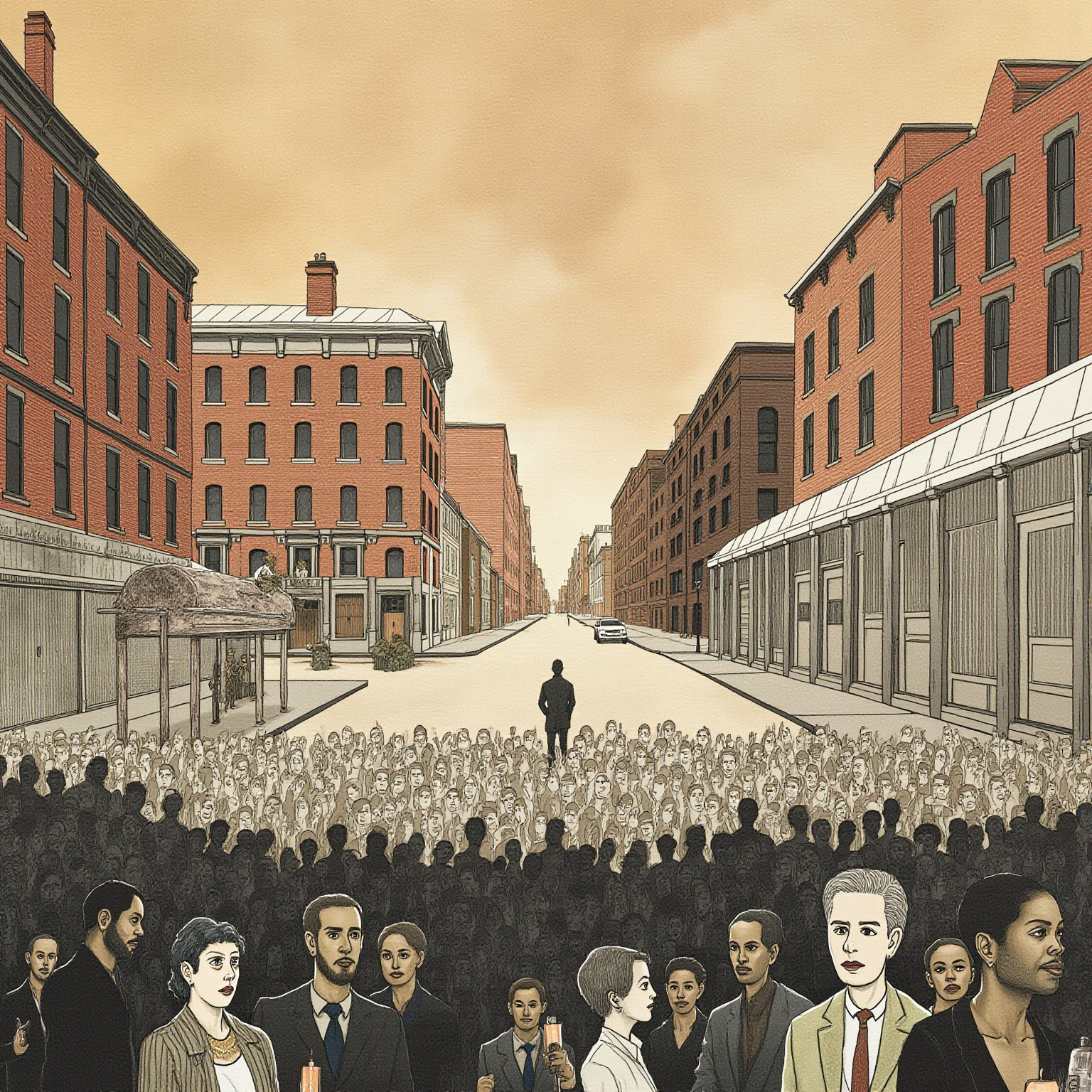
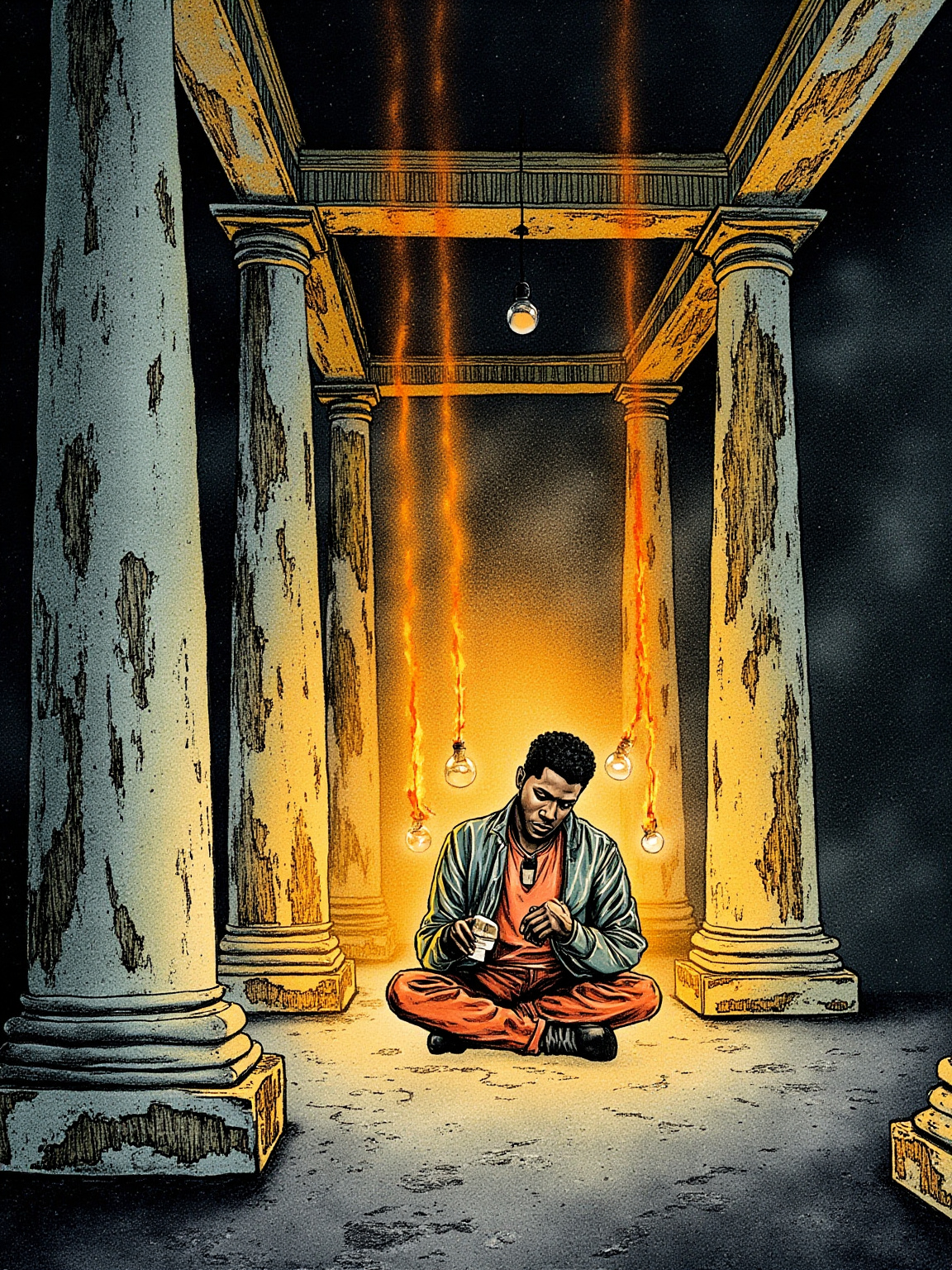
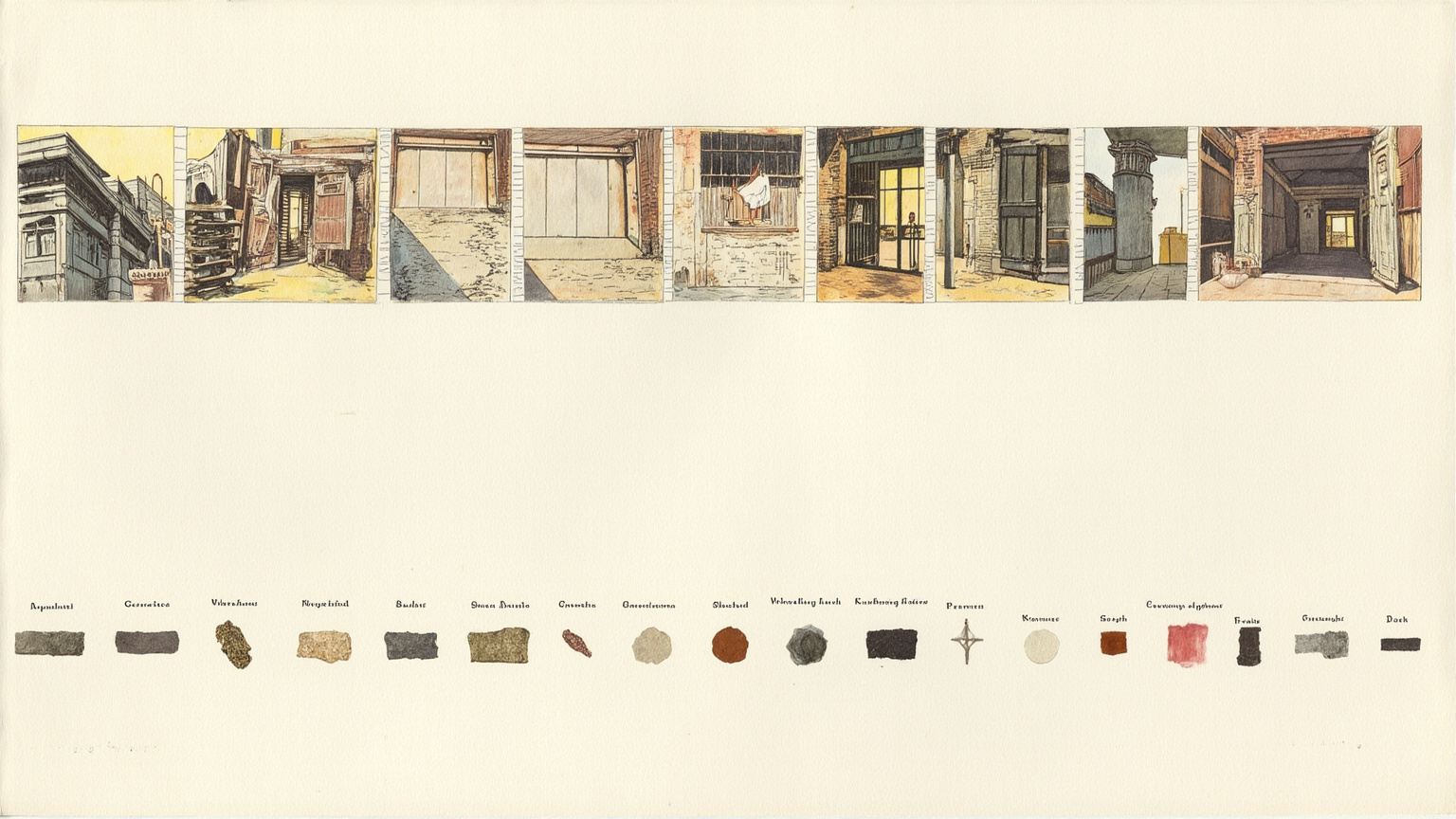
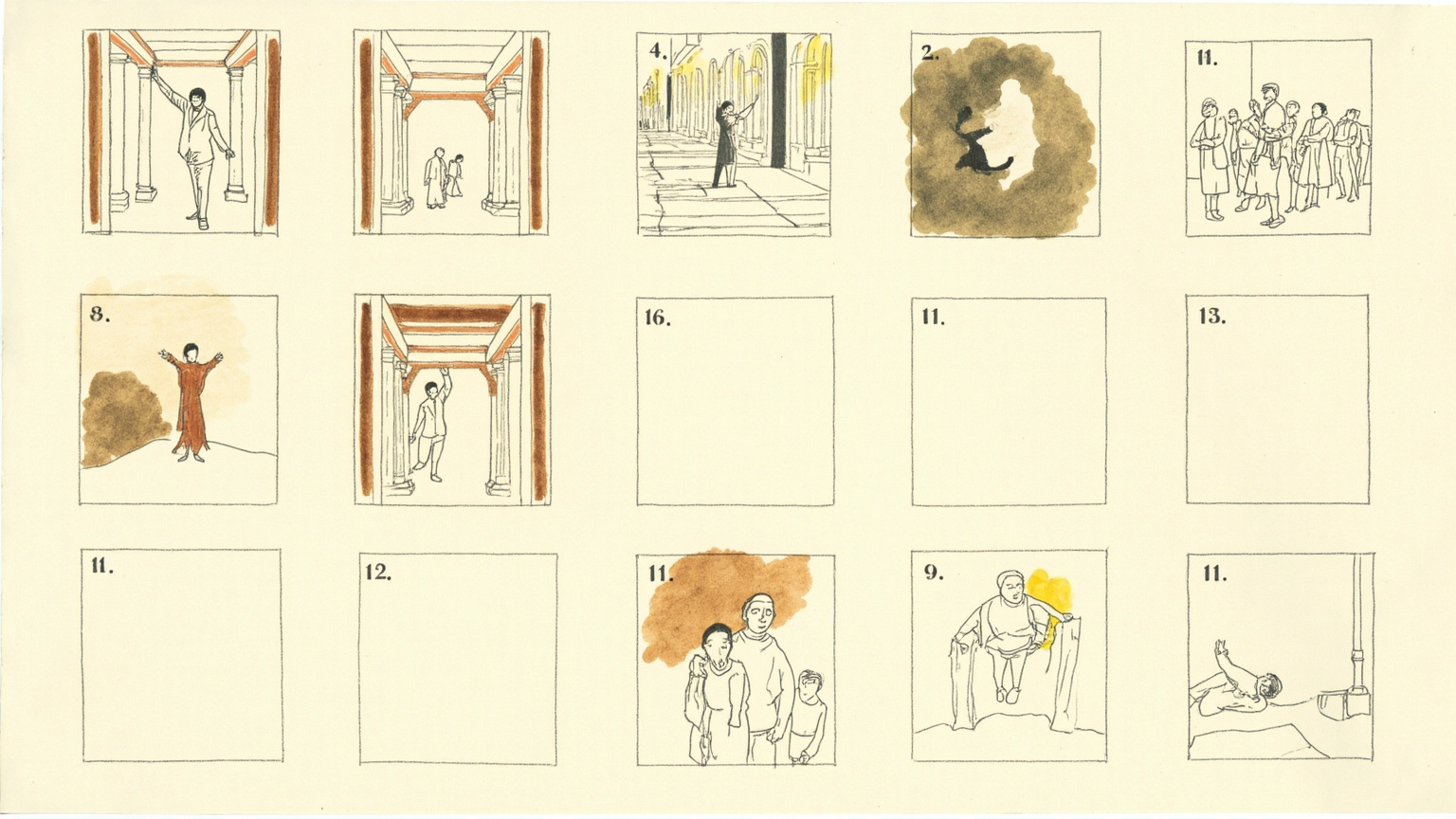
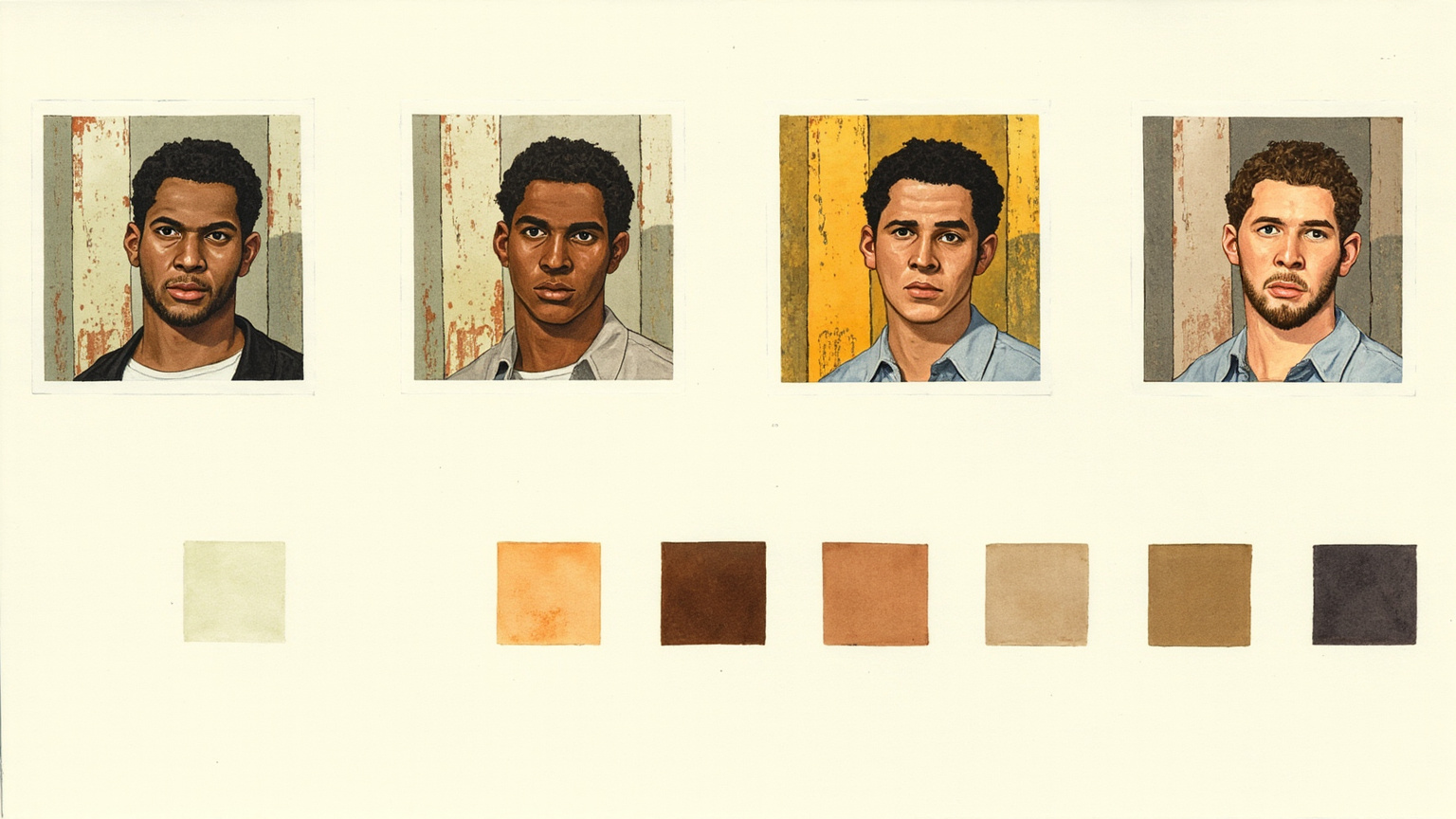
Underneath New York, a young Black man taps into the power grid and lights up 1,369 bulbs at once. He carries an old leather briefcase stuffed with everything life has handed him: diplomas, letters of recommendation, speeches, every one of them a tool someone else used to define him. He sets them on fire. The pages curl to ash, and the light keeps getting brighter. He hasn't lost his mind. He means to write down an experience nobody has ever seen, to bring it up from underground into the light. That's how the book opens, and that's how it ends. Everything in between is the story of how he got down there.
What Kind of Book This Is
Ralph Ellison, a Black American writer, delivered this novel in 1952 and won the National Book Award for it the following year. It is widely counted among the most important American novels of the twentieth century, and it marks the turn in Black literature away from the earlier protest novel and toward modernist fable. Ellison had trained seriously as a jazz musician, and the novel's structure carries that same improvisational feel. It follows a young Black man in the South of the 1930s: he graduates, sets out into the world, gets used up by one faction after another, and ends up hiding underground in Harlem. It is not autobiography, and Ellison never names the state; he keeps the setting deliberately blurred so the fable can show through.
Characters and World
Only one person speaks through the whole book: the narrator himself. He has no name. Ellison never gives him one, start to finish, and that is the design, not an oversight. Everyone else passes through as a function rather than a full person: Dr. Bledsoe, the president of the Southern college, the embodiment of respectability politics; Brother Jack, the white leader of a New York political organization modeled on the American Communist Party, who wears a glass eye; Tod Clifton, a young, handsome Black colleague who ends up shot dead by police; Mary Rambo, a Harlem landlady, one of the few people who takes him in without an agenda. The rule holds throughout: whatever looks like an opportunity has someone behind it running the numbers.
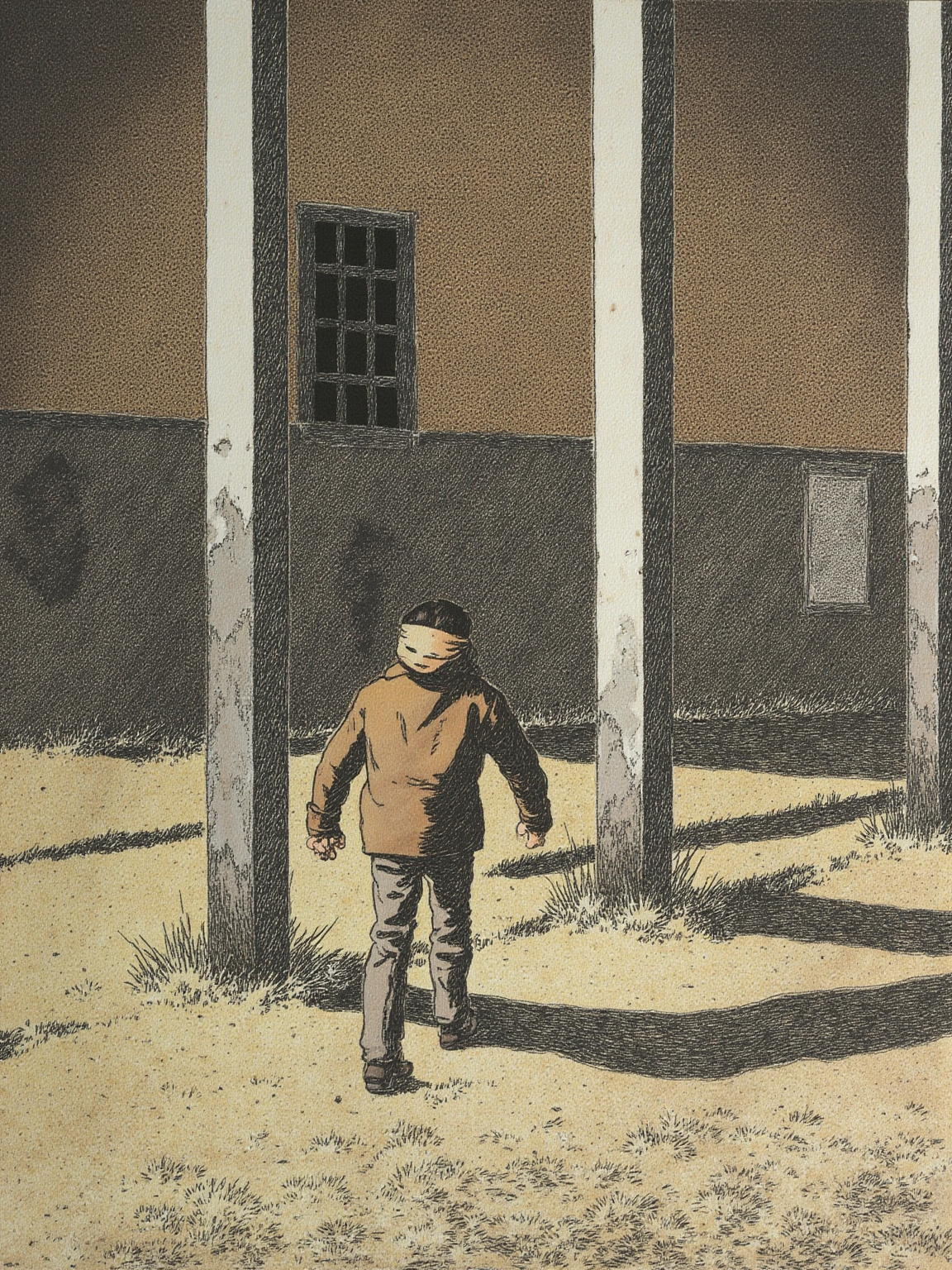
The story loops back to its first scene: a high school graduation ceremony in a small Southern town. The Black boys are herded into a basement, blindfolded, and set against each other in a free-for-all while the town's white power brokers watch from their seats and pick out the toughest fighter. The winner is then led onto an electrified rug and made to stand there, shaking, while he bends down to scoop up scattered bills. Once he's been shocked enough, he's allowed back into the hall to deliver the humble speech he prepared for the white audience. Applause, and a scholarship to a Southern state college: the first time in the book that a body gets traded for admission.
Taking the White Donor Somewhere He Shouldn't Go
In his sophomore year, the college's white benefactor, Mr. Norton, comes to visit, and the president sends the narrator to drive him around. Not knowing better, the narrator first takes the old man to see a Black sharecropper nearby: Jim Trueblood, shunned by the whole community for getting his own daughter pregnant. Trueblood tells Norton the story himself, and instead of recoiling, Norton is riveted. The narrator then takes him into a bar in town called the Golden Day, where a room full of Black World War One veterans, all suffering from what would now be called PTSD, erupts in front of them, terrifying the respectable white philanthropist half to death. Back at the college, President Bledsoe is furious. Officially the narrator is put on probation until he proves himself; in fact Bledsoe expels him for good and orders him north to New York to fend for himself.
The Truth Behind Seven Letters of Recommendation
Before he leaves, Bledsoe hands him seven letters of introduction to prominent men in New York, worded so graciously they read like a mentor vouching for his best student. The narrator carries the stack north and calls on one address after another, and every door closes on him politely. Then, one day, the college-age son of one of the recipients takes pity on him and tells him what the letters actually say: every single one asks its reader to never, under any circumstances, give this young man a chance. Only then does the narrator understand that the man he trusted has been steering him into a dead end the whole time.
Optic White at the Paint Factory
He lands a job at a paint factory in Harlem, its sign promising Keep America Pure White. The formula for the purest white paint turns out to require a few drops of black additive stirred into the base, the racial metaphor stated as plainly as that. The narrator is sent to assist in the boiler room, run by Lucius Brockway, an old Black worker, suspicious and territorial, convinced that he alone holds the real secret of the formula. The two men clash, the boiler explodes, and the narrator ends up badly hurt in the hospital. What follows is stranger still: the hospital subjects him to an experimental electroshock treatment, and when he comes to, his past feels like a wiped hard drive, nothing left but blurred outlines. He starts over from zero a second time.
The Brotherhood and a Body in the Street
ImaRead3
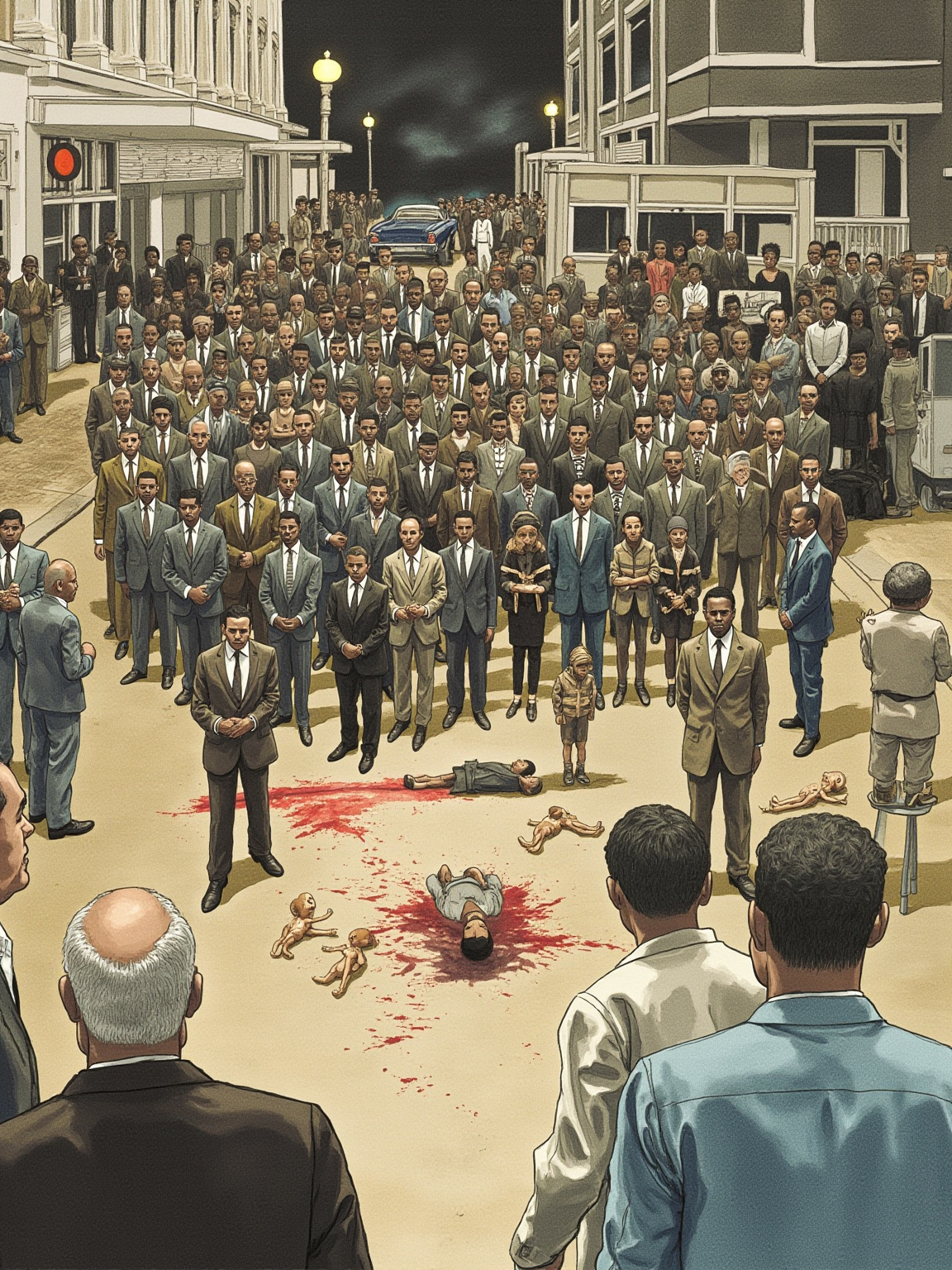
While recovering, he's taken in by Mary Rambo, a kind Harlem landlady. One day the sight of an elderly couple being evicted onto the street pushes him into an impassioned street speech, and it catches the attention of a political organization called the Brotherhood. Brother Jack, the group's white leader, recruits him personally, gives him a new identity, and trains him as the Brotherhood's public voice in Harlem. For a while he believes he's finally found his place in history: he's sharp, he can talk, and his reputation grows fast. His closest friend there is Tod Clifton, a young, handsome Black colleague. But Clifton sees through it before he does: the Brotherhood treats Black issues as a piece on the board, not people it actually cares about. Disillusioned, Clifton quits the organization and starts hawking Sambo dolls on the street, dolls that caricature Black people. One day the police shoot him dead in the open street.
Against the Brotherhood's orders, the narrator organizes a huge street funeral for Clifton on his own. He stands over the coffin and delivers a eulogy for a real friend, saying everything the organization's leadership doesn't want to hear. The cost is immediate: the Brotherhood reprimands him for going off the party line and acting without authorization. Meanwhile Ras, a Black nationalist street leader of Caribbean descent who opposes any alliance with white people, has already marked him as a traitor. Neither side wants the man. Both of them just want his voice.
Rinehart's Trick and the Night of the Riot
ImaRead4
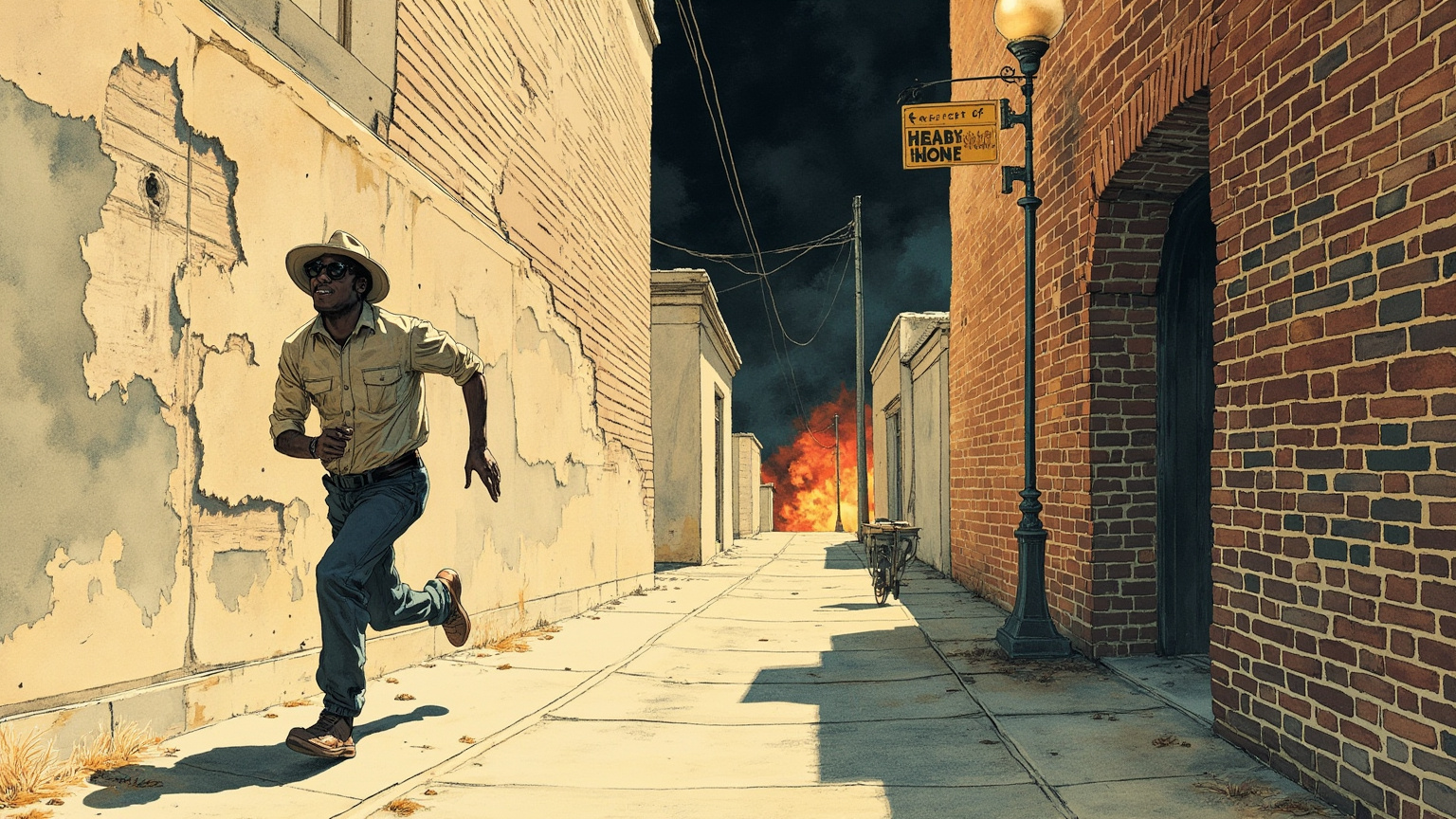
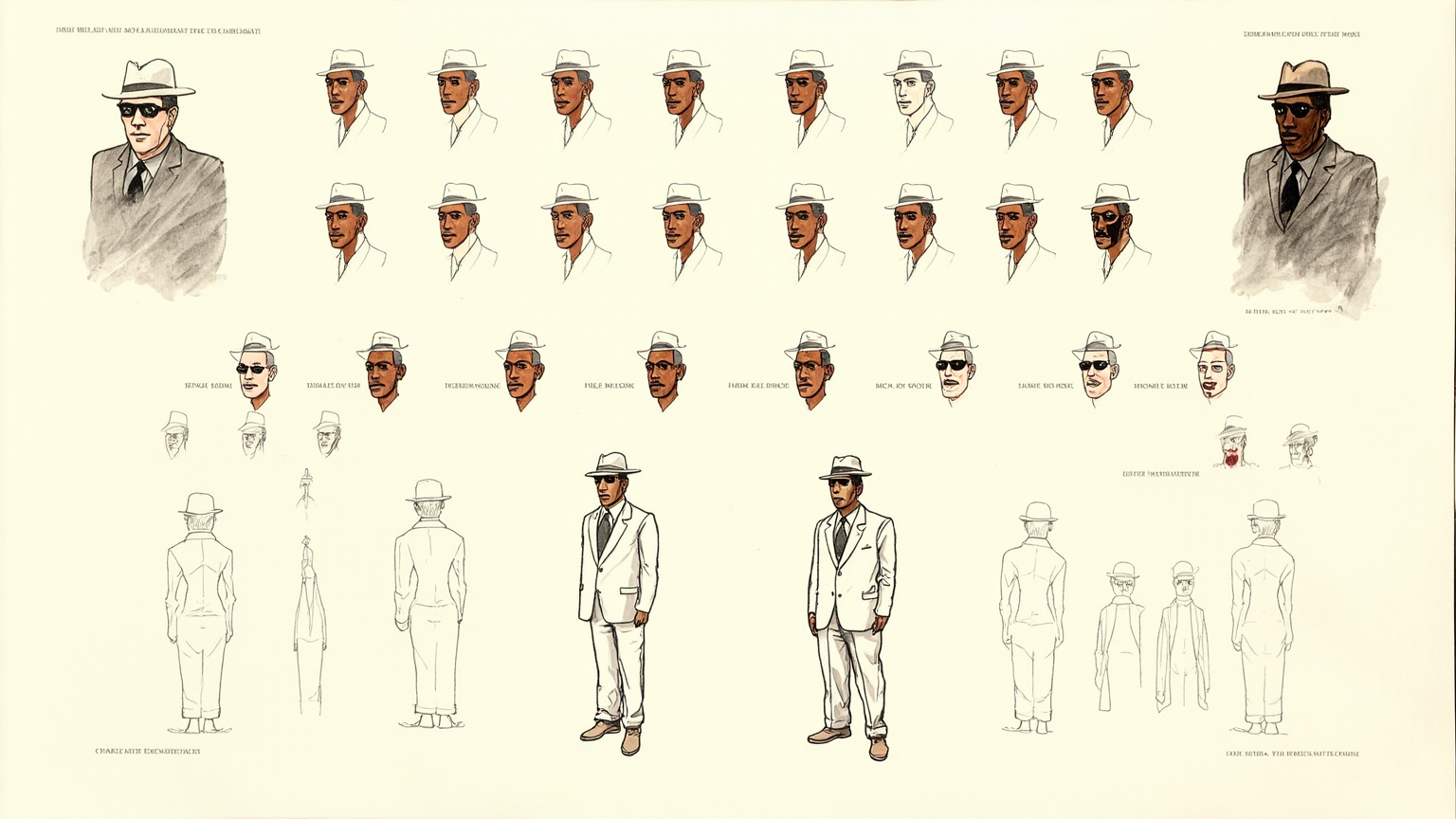
To dodge Ras, who is now hunting him, the narrator changes his outfit: a wide-brimmed hat, dark glasses, a white scarf, and disappears into the identity of Rinehart, a legendary figure of Harlem rumor said to be pimp, numbers runner, ladies' man, and preacher all at once, a man nobody has ever actually seen. Strangers keep mistaking him for the legend, and getting called by all these different names in a row, he has a realization: identity can be fluid, and he doesn't have to hold on to the one everyone else handed him. But before that insight can settle, a race riot that has been building in Harlem for a long time finally breaks. Caught in the chaos between Ras's men and a white mob, he flees underground into an abandoned coal cellar and passes out.
Back Under the 1,369 Bulbs
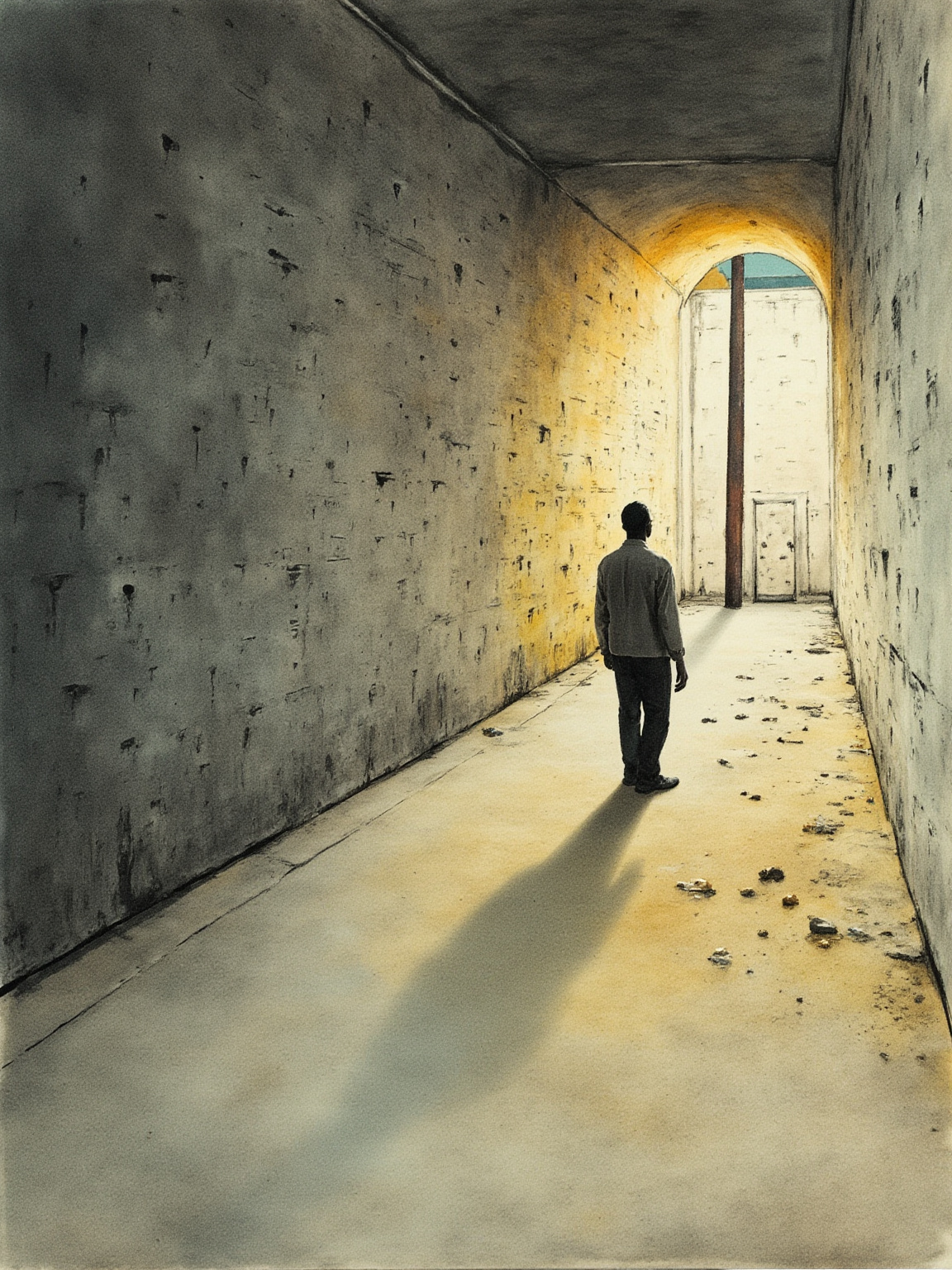
When he comes to, he's in another underground space, the one where he taps the power lines and lights up all 1,369 bulbs. This is the basement the book opens in. He opens the same battered briefcase that has followed him the whole way, full of everything he's collected over the years: the graduation speech, the letters of recommendation, the Brotherhood's directives, old drafts of speeches, every page a record of some institution that once used him as a tool. He sets them on fire and lets them burn to ash, page by page, and the light keeps getting brighter. He decides to write it down. One man's experience, written underground, by the light of 1,369 bulbs. That's the circle Ellison draws around the whole book.
What It's Actually About
Invisibility here isn't about eyesight. Ellison's point is that white society never sees Black people as specific individuals; it sees only the stock figure it already carries in its head: humble, dangerous, funny, pitiable, whichever one is needed at the moment. The narrator spends his whole life being picked up and used by one force after another, from the respectability politics of a Southern college president, to the class narrative of a Northern political organization, to the revenge politics of street nationalism, and every faction wants him to play a role, with nobody interested in who he actually is. He has no name because, in everyone else's eyes, he never had one. What makes the book remarkable is that it doesn't just protest; it invents a new way of writing to do it, mixing realism, surrealism, Black folklore, and the improvisational structure of jazz into one thing. Reading it, you sometimes feel you're inside a social novel, and sometimes inside a modernist fable.
Why Read the Book Itself
I've told you the story already. But there's one thing no summary can carry: the physical sensation Ellison builds into these humiliations. The blindfolded brawl, the scramble for money on an electrified rug, the electroshock after the boiler explosion, Clifton falling in the street. Ellison doesn't write these as abstract oppression. He writes the smell of sweat, the smell of rust, the ache in your teeth when current runs through skin. That physical specificity is something no companion guide can give you. Then there's the jazz structure: the whole novel reads like one long improvisation, loose on the surface, but the key phrases keep circling back to the main theme with real precision. You won't feel how that rhythm strings one Black life into a single, complete piece of music until you open the book and walk through it yourself.
Real invisibility isn't that people can't see you. It's that the person they've already decided to see was never you.