From wrecking Heaven to fetching scriptures on Vulture Peak — the skeleton and the flavor of this god-and-demon novel, laid bare
Text and illustrations produced by the pipeline
A rock splits open, and out leaps a monkey. He has no parents, no lineage, and yet he wants to be seen more badly than anyone alive — he wants to learn real skills, to live forever, to make heaven and earth remember his name. This book starts with that stone's temper.
Call it, by way of subtitle: how one monkey's rebellion turned into a Chinese manual for surviving as a team. The plot is not just monster-of-the-week leveling up — the uprising against Heaven reads like the fury of a young person meeting the rules of the world for the first time, while the eighty-one ordeals of the journey west are the slower story of a person learning to fit himself into an order. Neither half is the whole book. Together, they are its actual weight.
Journey to the West is one of the Four Great Classical Novels of Chinese literature, traditionally attributed to the Ming-dynasty writer Wu Cheng'en. The earliest complete edition to survive is the hundred-chapter Shidetang printing, published in Nanjing in 1592, the twentieth year of the Wanli reign. The reason it has lasted is simple: it gave China Sun Wukong, a character everyone knows on sight, and its structure of eighty-one ordeals handed later generations one of the most durable templates a Chinese story can have — trace almost any strand of Chinese popular culture, from opera and picture books to today's animation and games, and it runs back to this novel.
One caution, though. The novel borrows the real historical journey of the Tang-dynasty monk Xuanzang, who traveled west for Buddhist scriptures, and sets its story in the Zhenguan era of Emperor Taizong of Tang. But the whole system of gods and demons, the characters, the plot, all of it is invention, and it bears almost no resemblance to the actual Master Xuanzang — the monk who went west on his own initiative and translated a vast body of scripture afterward — or to real Tang history. Read this as a fable, not as a chronicle.
This pilgrim band is one of the novel's most winning inventions.
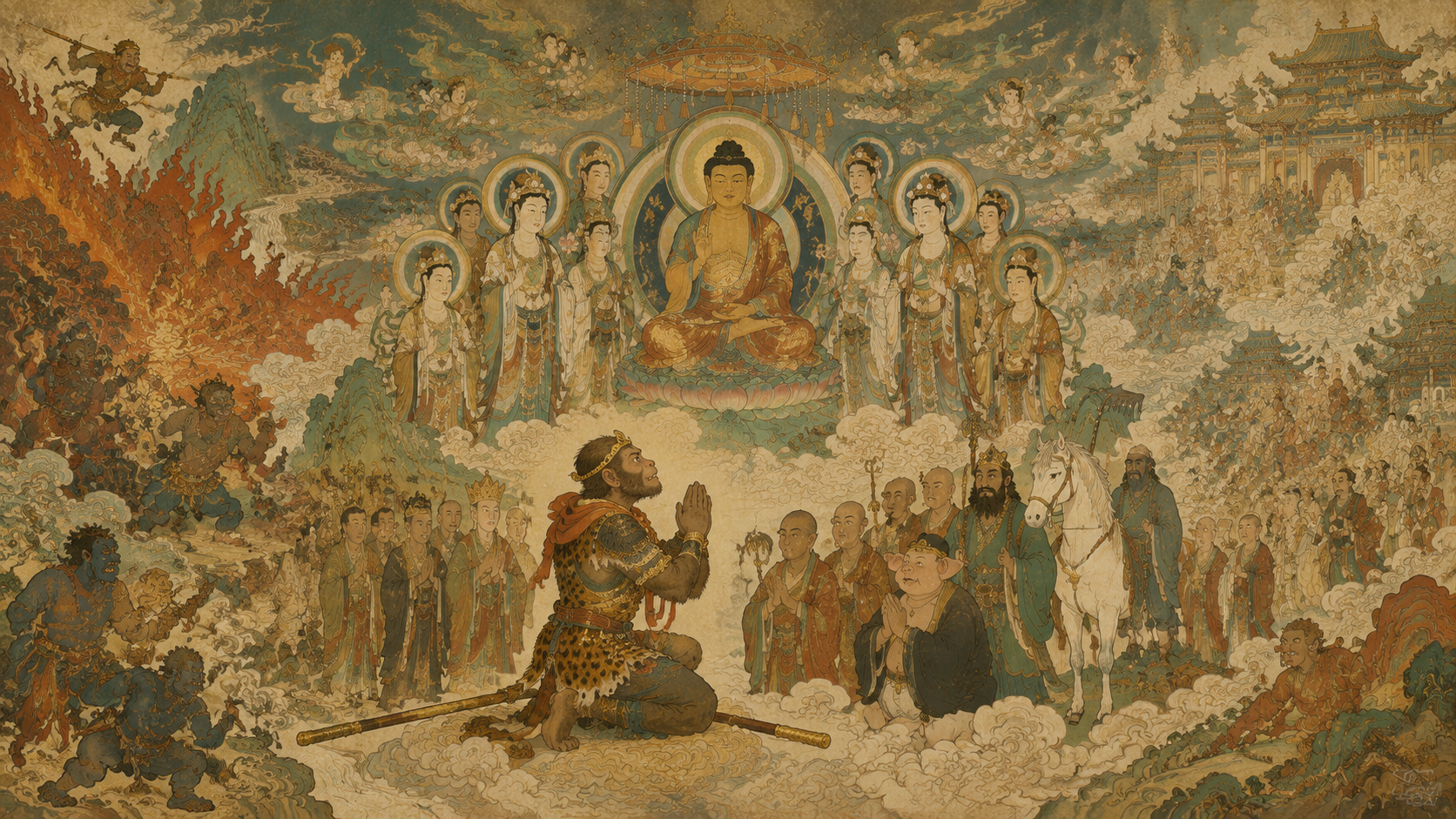
After every ordeal, master and disciples finally reach Vulture Peak in the west and carry the true scriptures back to the east. The ending hands out Buddhahood all around: Tang Sanzang becomes the Buddha of Sandalwood Merit, Sun Wukong becomes the Victorious Fighting Buddha, Zhu Bajie is made Janitor of the Altars, Sha Wujing becomes a Golden-Bodied Arhat, and the white dragon horse takes his place among the Eight Heavenly Dragons.
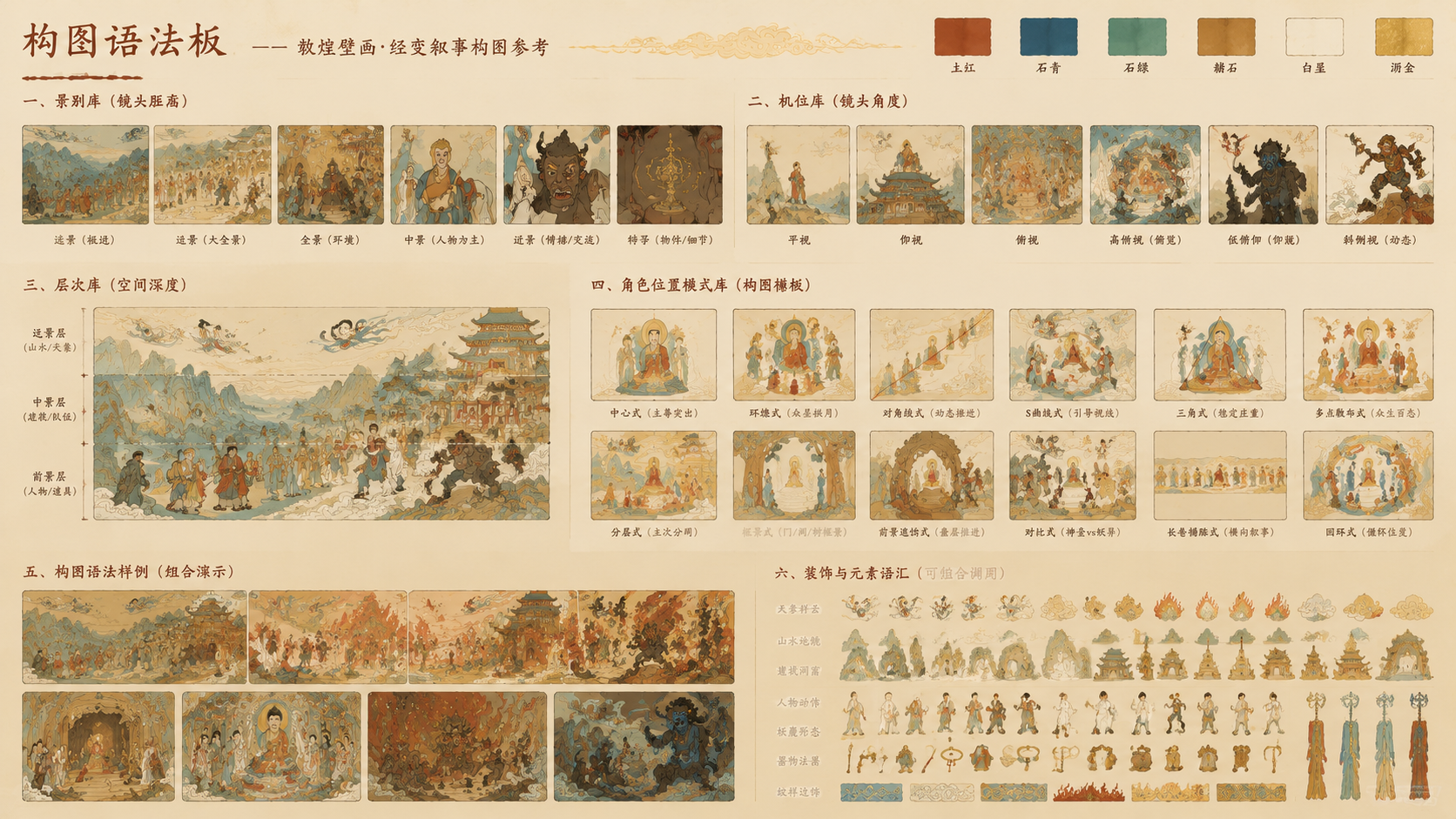
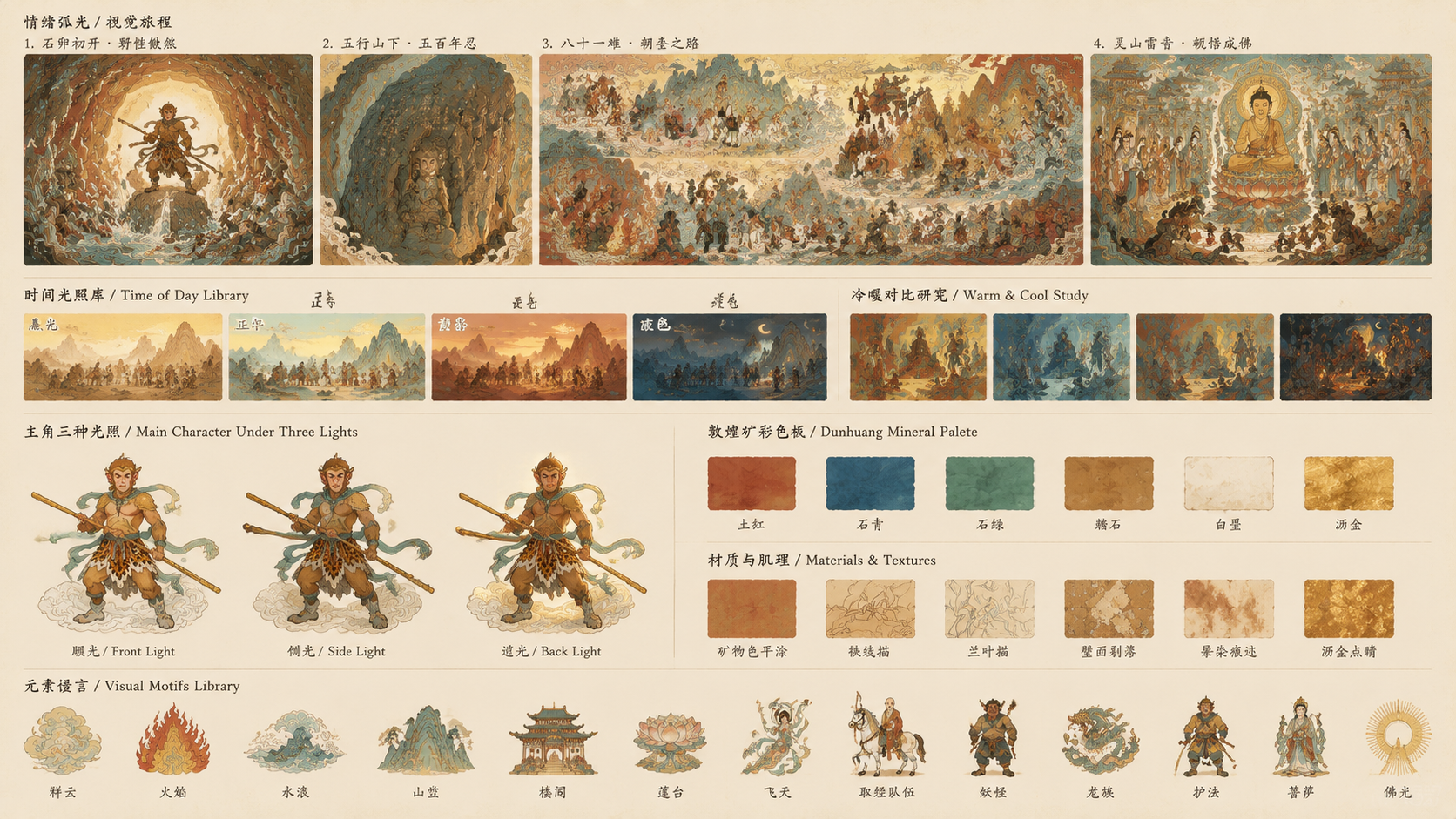
Before the guide was written, this book got a visual foundation — every illustration you just read grew out of it.
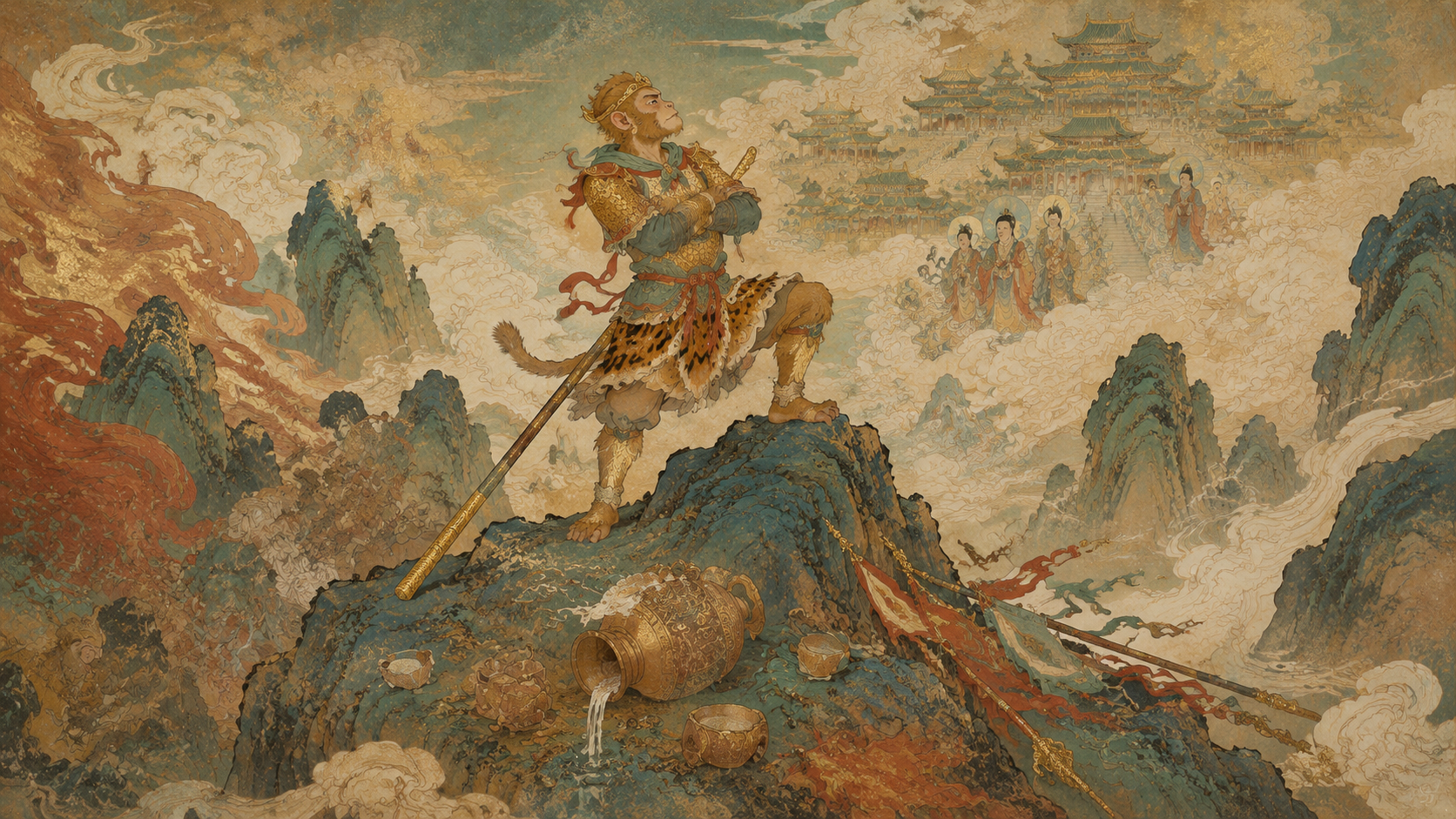
Sun Wukong — the stone monkey who leapt from the rock, master of the seventy-two transformations and the cloud-somersault, self-styled the Great Sage Equal to Heaven. His uprising against Heaven threw all three realms into chaos. He is this team's talent, and its temper.
Tang Sanzang — the pilgrimage's central figure, a mortal of unbending resolve, whose mortal eyes and soft heart just as often lead him to misjudge the disciple fighting to keep him alive. He is the one the team most needs to protect, and the one most likely to cause the next disaster.
Zhu Bajie — once Marshal Tianpeng of the celestial court, banished to earth and reborn in a pig's body after harassing the moon goddess Chang'e. Lazy, gluttonous, hopelessly fond of women, he is also decent and loyal underneath it, and the most down-to-earth member of the team.
Sha Wujing — once the Curtain-Raising Captain of the celestial court, banished to the River of Flowing Sands after shattering a crystal chalice. Honest and uncomplaining, he carries the luggage and leads the horse the whole way, and is the quietest of the four. Add the Third Prince of the Dragon King of the West Sea, transformed into the white horse they ride, and the band is complete: four utterly different temperaments — reason, desire, loyalty, and conviction — with nothing missing.
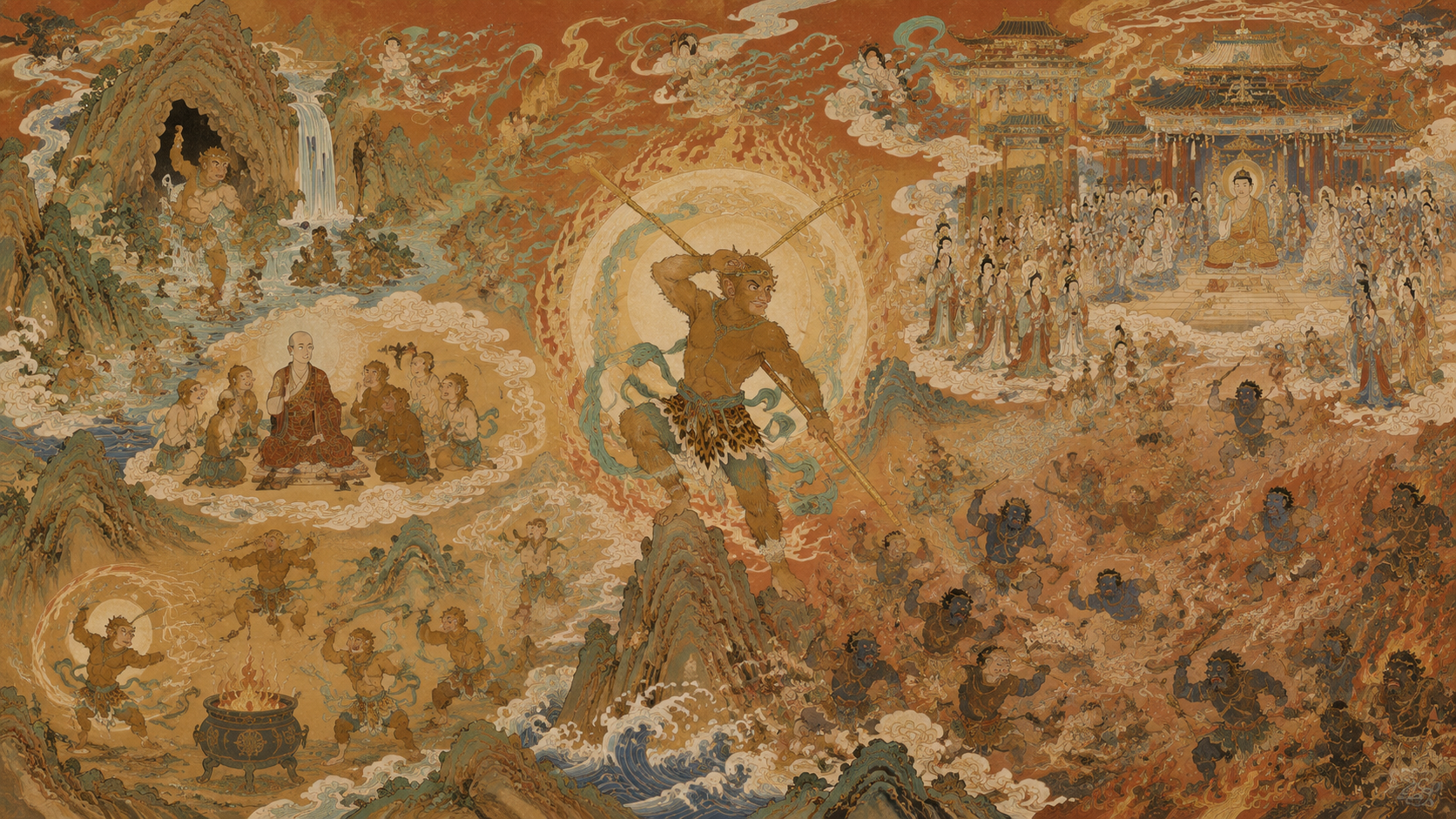
The best part of the first half is the uprising against Heaven. The opening seven chapters could almost stand alone: a magic stone splits open and turns into a stone monkey; the monkey crosses the ocean to learn his arts, comes home, crowns himself the Great Sage Equal to Heaven, ransacks the Dragon King's undersea palace, turns the underworld upside down, and finally throws the celestial court itself into chaos. However many heavenly troops and generals are sent against him, none can hold him; he fights his way up to the Jade Emperor's own throne hall, shouting a line that has echoed for centuries.
What makes the writing work is that it is written laughing. Heaven's loftiest immortals are run ragged by one wild monkey — the Jade Emperor, Laozi, the Pagoda-Bearing Heavenly King, each made to look ridiculous in turn. Lu Xun once said that what separates a good gods-and-demons novel from a bad one is whether it has a flippant, unimpressed-by-anything spirit. This book has that spirit from the first page to the last: great men get mocked, rules get mocked, even the sacred order gets ground into the dirt by a monkey. Readers laugh, and underneath the laughter is a young person's instinctive refusal to bow to any authority — which is exactly why Sun Wukong became the most rebellious figure in the whole of Chinese literature.
But even the wildest monkey eventually meets his limit — the Tathagata Buddha steps in. One palm comes down, Five Elements Mountain closes over him, and the monkey is pinned beneath it for five hundred years. The first half of the book stops dead, cutting from a runaway sprint straight into a long wait. What does five hundred years mean here? It means taking a boy who was all spikes and forcing him to sit still long enough to think.
Emperor Taizong of Tang sends Xuanzang west to India for the true scriptures — that is the official reason the pilgrimage exists. But the one who actually assembles the traveling party is Guanyin, acting on the Buddha's instructions: she converts the disciples, arranges the trials along the way, and steps in more than once when things turn desperate. In other words, the pilgrimage is not just a state project of Emperor Taizong's, and not just Tang Sanzang's private faith. It is an examination the Buddhist establishment has designed in advance — who gets chosen, what they run into on the road, how it all resolves, there is an invisible answer sheet for every part of it.
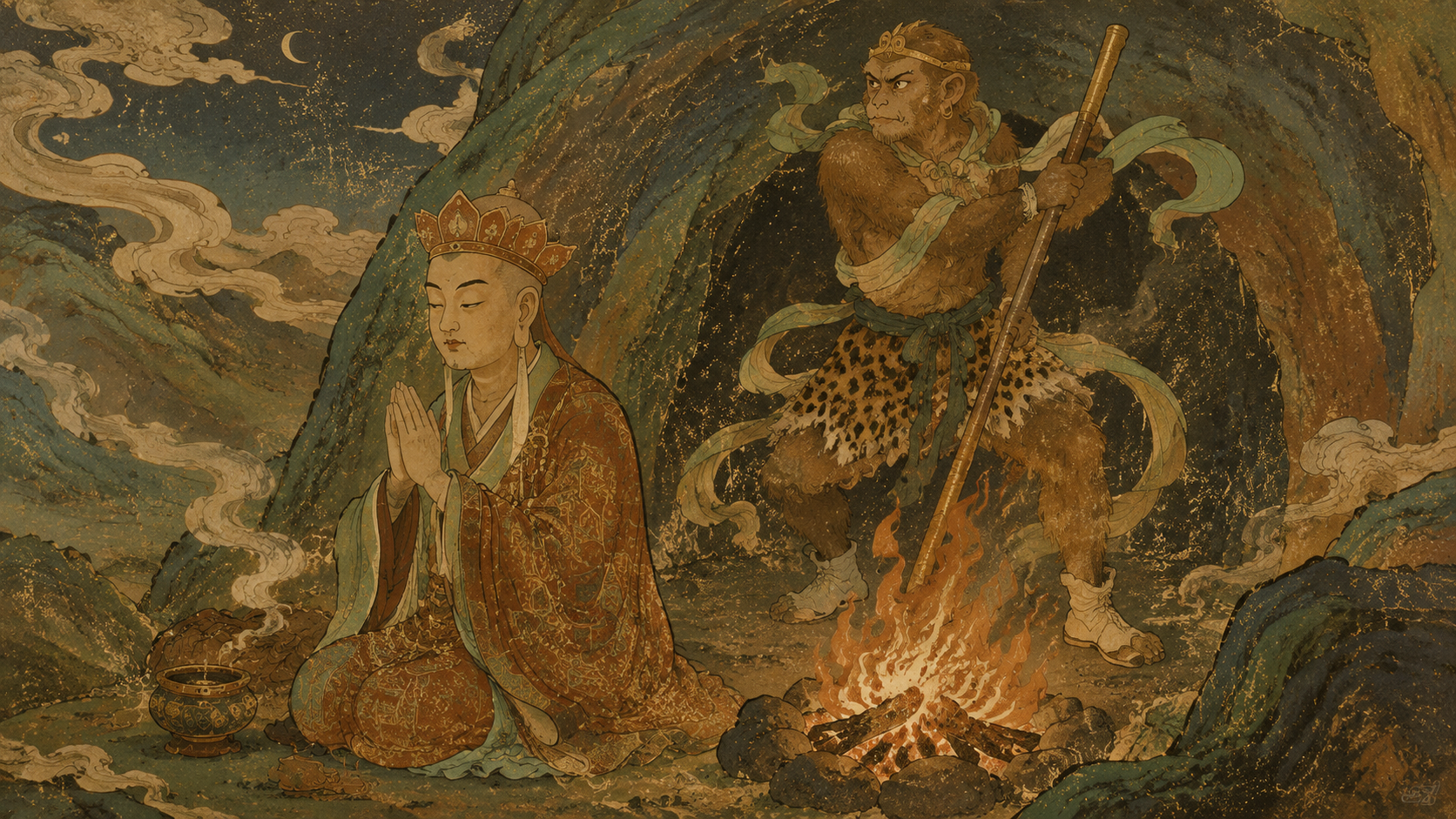
So we get a scene that could only be Chinese: a monkey who has spent five hundred years under a mountain is released to escort a mortal stranger he has never met. The monkey resents being managed; Tang Sanzang, at first, finds him too violent to stomach. Neither one thinks much of the other, and yet the next decade and more will bind their lives together. This is the real subject the middle of the book gets down to — not fighting monsters, but living with each other.
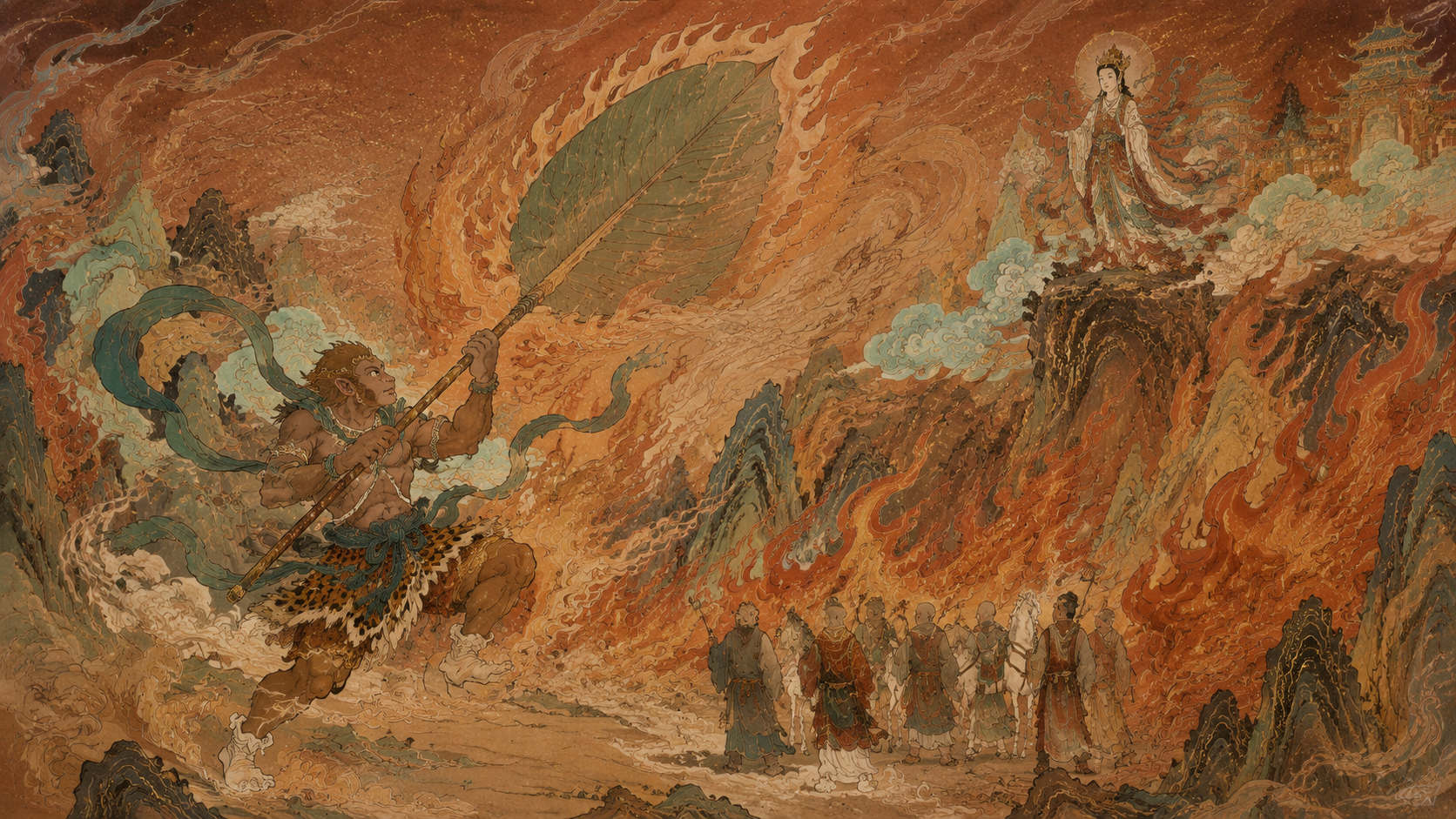
Once the four are together, the story is structurally a string of eighty-one ordeals. They fall into two rough categories. One is natural obstacles — the Flaming Mountains, for instance, where the fire can only be put out by Princess Iron Fan's palm-leaf fan, forcing Sun Wukong to go begging for it three times and dragging the whole feud with the Bull Demon King's family into the open. The other is demon trouble: countless demons along the road covet Tang Sanzang's flesh, said to grant eternal life if eaten, and drag him off to their lairs again and again, so that Sun Wukong must climb to Heaven and dive into the underworld each time, calling in favors and outwitting enemies, to bring him back out.
The most underrated craft here is that each ordeal reads like a self-contained short story, and yet, stacked together, they escalate without a seam. Why does the count have to be exactly eighty-one, and not eighty or eighty-two? Because in the folk cosmology this novel draws on, a blend of Buddhist and Daoist belief, nine-times-nine is the number of completion — fall one ordeal short and the practice does not count as finished. The hint to the reader is this: what the pilgrimage retrieves was never really those crates of scripture. It is the heart you have worn smooth getting there.
One more thing not to miss: across the eighty-one ordeals, the real virtuosity is not how Sun Wukong beats a demon, but how Tang Sanzang gets terrified, gets rescued, and keeps tripping over his own soft heart. Every time he wrongs Sun Wukong, it is a test of conviction; every time Sun Wukong leaves in bitter innocence and comes back anyway, it is a test of loyalty. Using the simplest possible episodic structure, the book keeps interrogating the same question: is what you believe in worth suffering for?
What Journey to the West is really about was never just the pilgrimage. It is an argument between rebellion and order: Sun Wukong goes from the rebel who wrecked Heaven to the guardian who defends the Buddhist faith, and that is the most common shape Chinese growing-up takes — young, you believe the world owes you a place in it; older, you find out the world has simply swapped you into a different one.
It also lays out a Chinese archetype of the team: Tang Sanzang supplies conviction and direction, Sun Wukong supplies ability and edge, Zhu Bajie supplies appetite and cushioning, Sha Wujing supplies execution and silence — only once all four roles are filled does a team exist that can actually go the distance. Centuries later, whenever we read an office novel, a startup story, or any group of four cast for a mission, the oldest shadow of it traces back to this book.
On a deeper level, the novel melts the historical fact of the Buddhist pilgrimage together with the Daoist pantheon and folk legend, and every god, demon, and ghost in it has its own rank in a working hierarchy. It may be the single most complete literary rendering of the Chinese folk-religious worldview there is. Understand this book and you have more or less understood the imagined universe Chinese people carry around in their heads.
Once you know the plot, is Journey to the West still worth reading? Yes. A summary gives you the skeleton; the flesh and blood live in the actual text — the wit traded inside demon lairs, Zhu Bajie's comic bickering, the sheer physical reality of Sun Wukong writhing on the ground under the tightening headband spell, the sheer wearing tedium of Tang Sanzang's endless crying. None of that survives being told to you. You have to turn the pages yourself.
What makes Journey to the West so captivating is that it traces one monkey's whole arc, from declaring that emperors ought to take turns to becoming the Victorious Fighting Buddha — proof that rebellion and order can, after all, make peace inside the same person.