Journey Under the Midnight Sun · Companion GuideStories · Issue 00
Journey Under the Midnight Sun in 10 Minutes: Two People Who Can Never Walk Side by Side
A nineteen-year cold case, two children, and a symbiosis that never sees the sun
Text and illustrations produced by the pipeline
ImaReadFolio 02 — 06
Opening
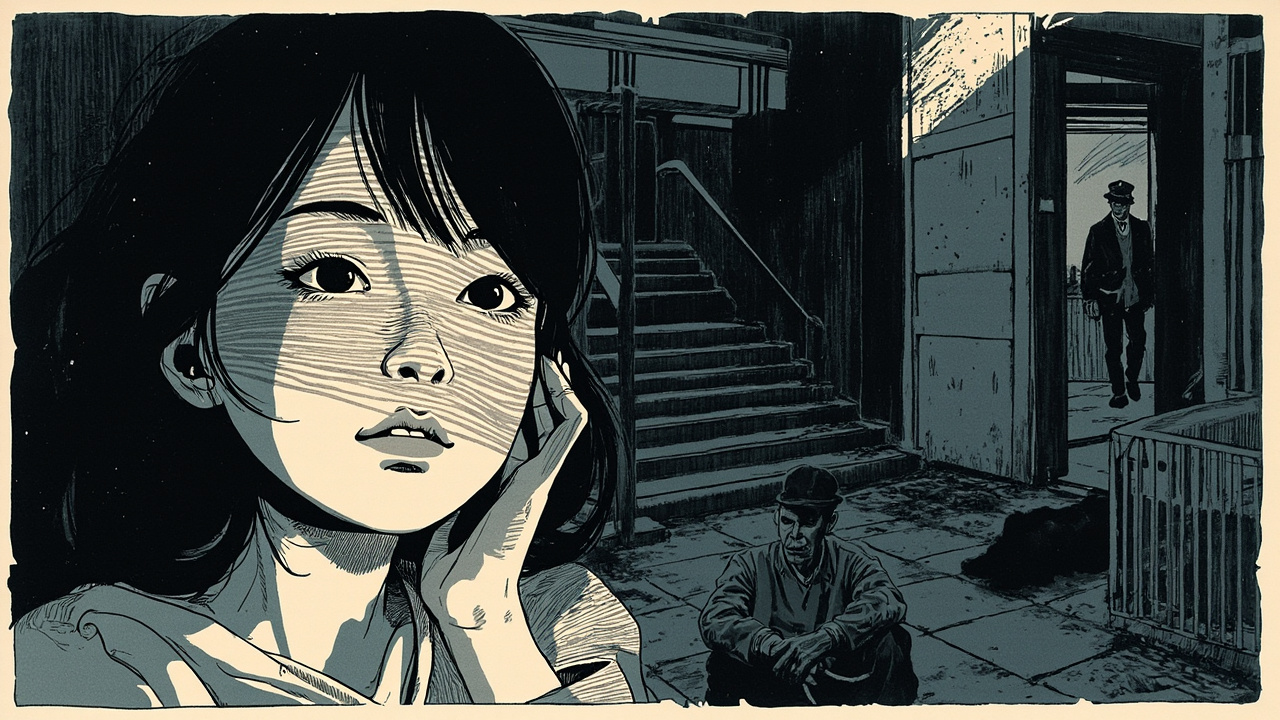
An abandoned building, the air thick with rust and rain. A pawnshop owner is stabbed in the back and left to die among a pile of other people's childhood secrets. The police come and go, the case closes without an answer, and the killer and the motive seem to evaporate along with everyone's interest. From that day on, two children are rewritten forever — a boy and a girl who, after that night, are never again seen in the same place at the same time. Nineteen years later, one of them falls in a pool of blood; the other walks away into the crowd without looking back. This isn't the climax of some detective drama. It's the heart of a novel called Journey Under the Midnight Sun. What this piece sets out to do is simple: in ten minutes, lay out the story, the characters, and the moment that will chill you most, then tell you why — even knowing how it ends — the novel is still worth opening for yourself.
What kind of book is this
Journey Under the Midnight Sun is a long social-mystery novel by the Japanese writer Higashino Keigo. It was serialized in a literary magazine in the closing years of the twentieth century and published in book form by Shueisha in August 1999. Within Higashino's own body of work it's generally treated as his high-water mark, and readers often use it as a key to understanding Japanese popular fiction of the entire 1990s. It isn't remembered for the cunning of its puzzle. It's remembered because it takes what looks like a simple unsolved case and, tracking the rise and fall of the bubble economy alongside two children growing up, slowly stretches it into a nearly twenty-year epic of society and feeling.
One widespread misconception is worth correcting here: the midnight sun in the title isn't a reference to the literal polar phenomenon of the sun staying up through the night. What Higashino is actually borrowing is closer to this — a life lived with no sun at all, where people can only walk through the dark and huddle together for warmth. This is a book about living with no sun. Hold onto that; it explains everything the characters do from here on.
People and world
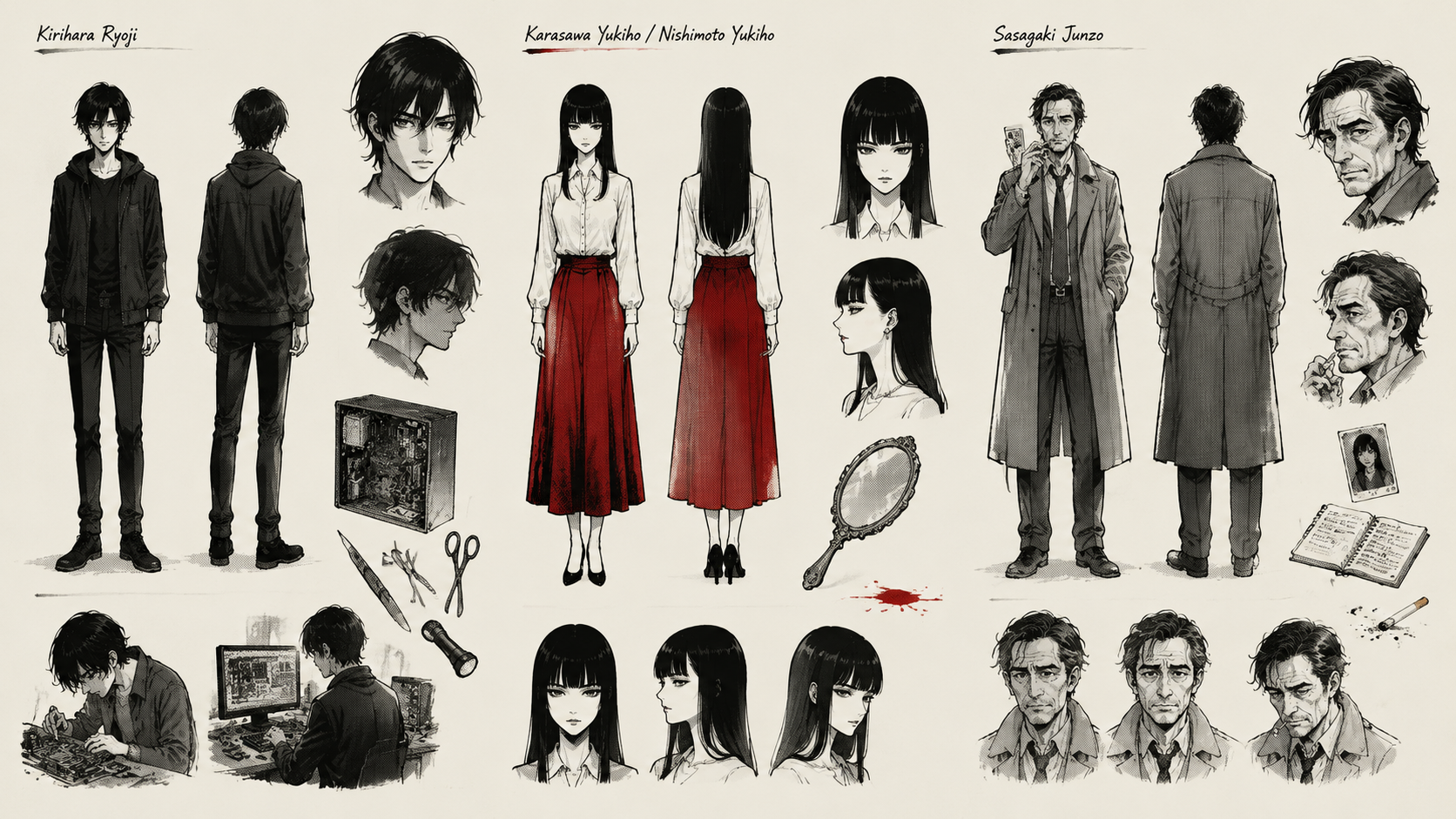
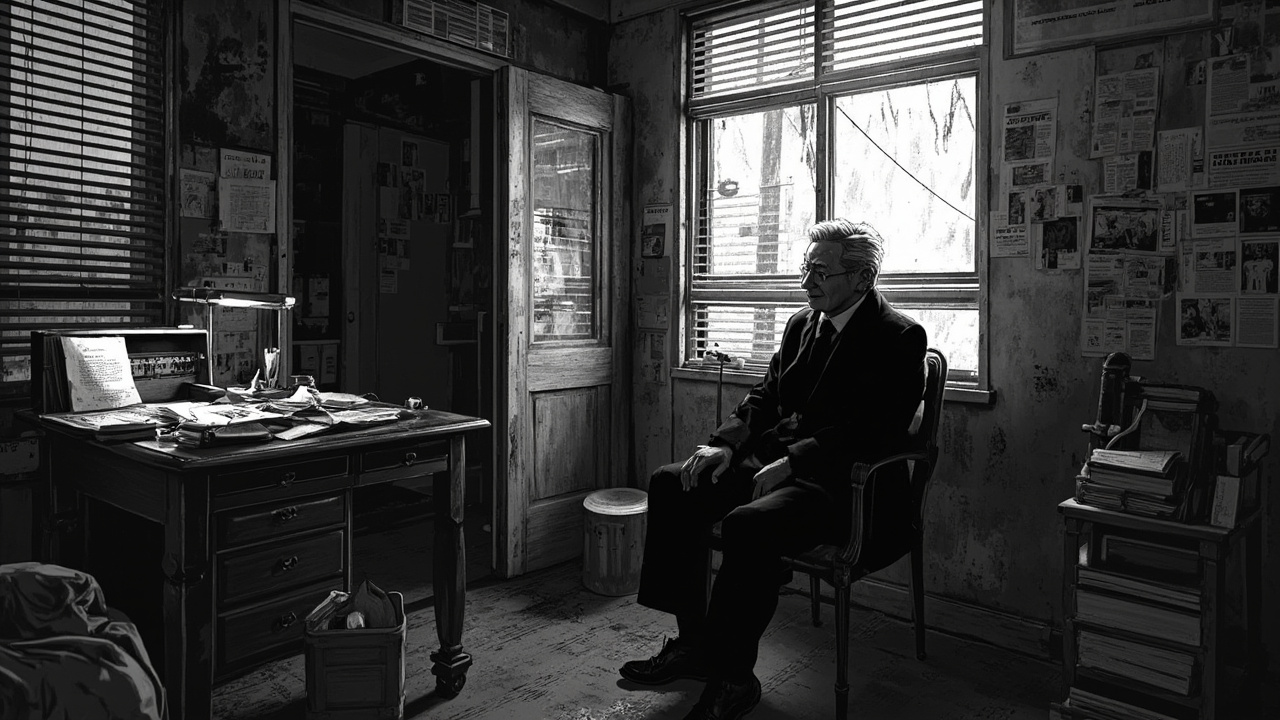
Only four people really matter in this novel. Ryoji Kirihara, still in elementary school when the murder happens, is the son of the pawnshop owner killed in the building. Yukiho Karasawa, born Yukiho Nishimoto, is the daughter of the murder suspect, and just as young at the time. These two children are the novel's shadow protagonists; the story follows them from childhood to adulthood across nearly twenty years. Junzo Sasagaki is the veteran detective who took the case, and even after it was nominally closed he never let go of his suspicions, still quietly chasing it down years into retirement. Yosuke Kirihara is the man found dead in the abandoned building — his death is where everything begins.
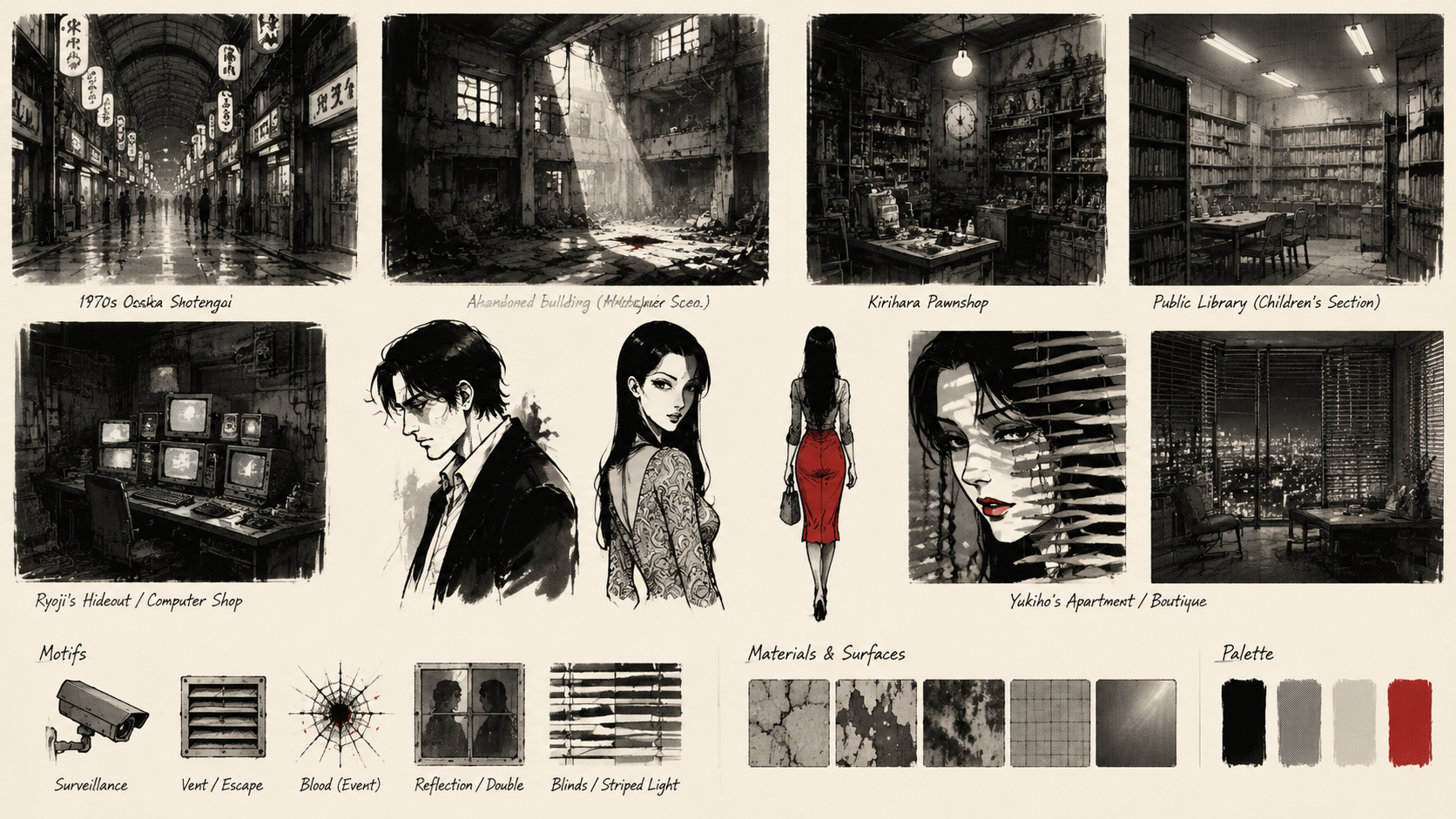
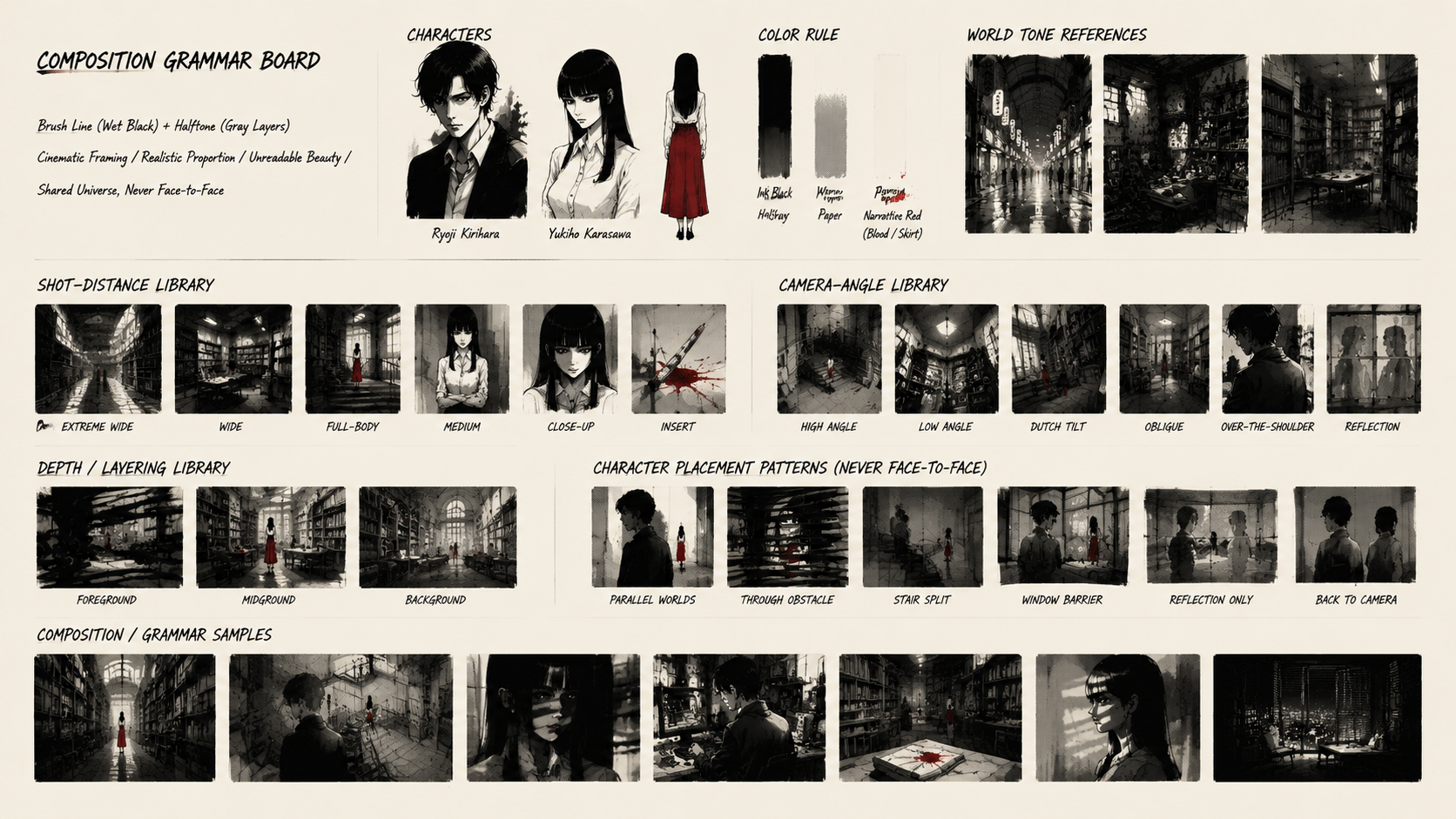
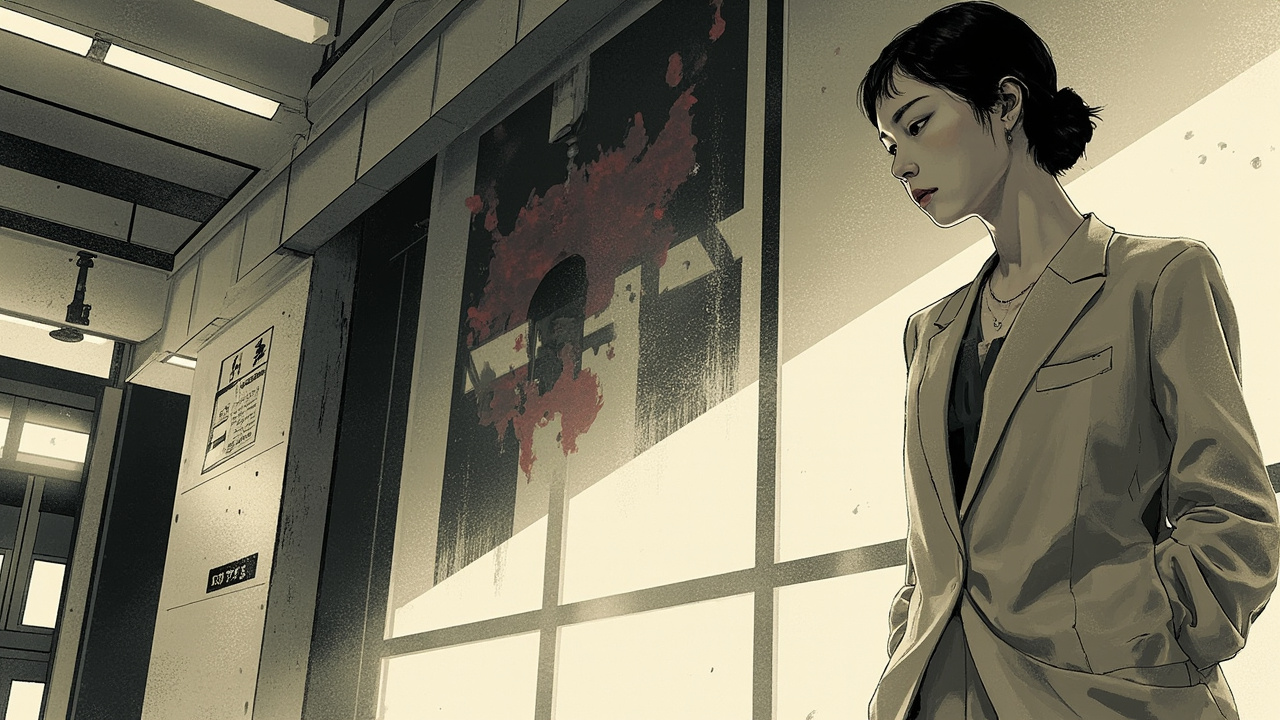
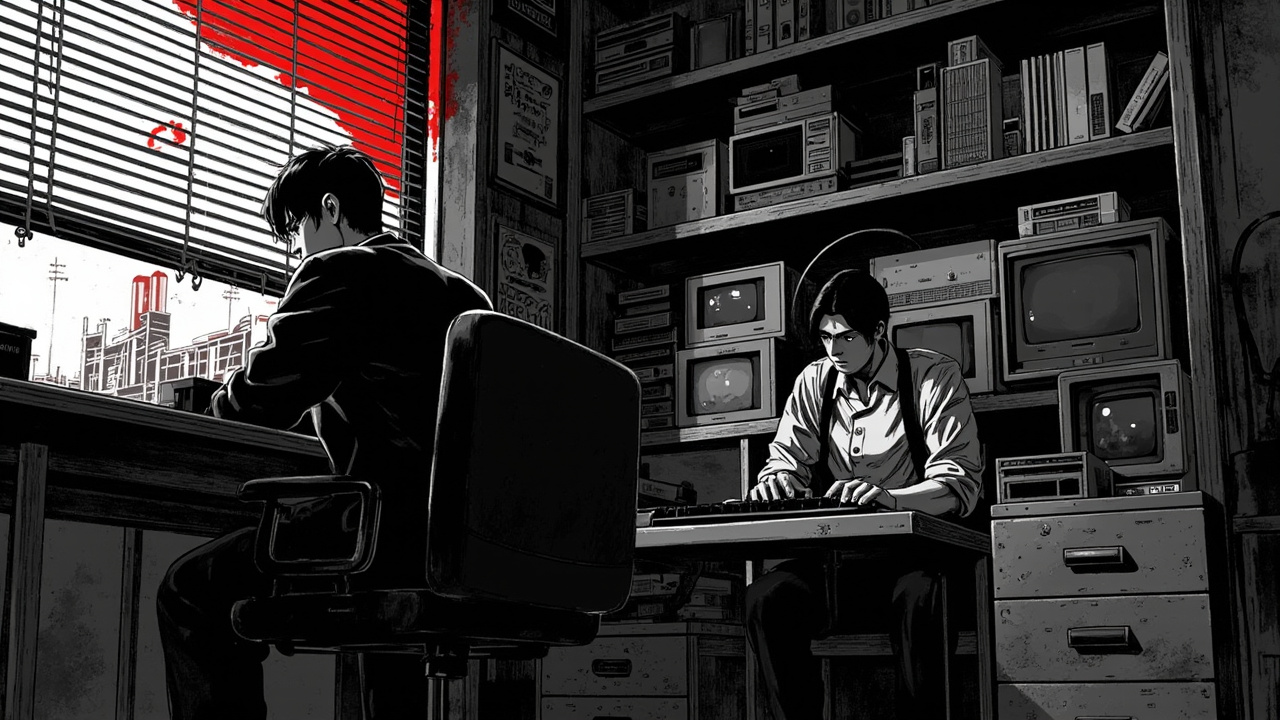
The story runs from the early 1970s to the early 1990s, from Osaka to Tokyo, cutting straight through the loudest years of the bubble economy. Once the two leads grow up, the worlds they move through split cleanly in two: Yukiho's half is drawing rooms, galleries, and boutiques among the upper class; Ryoji's half is computer software, pirated games, and gray-market deals. They don't inhabit the same world, and the novel never lets them share the same scene — which is itself one of the book's most devastating pieces of craft.
ImaRead2
ImaReadFolio 03 — 06
ImaReadFolio 04 — 06
ImaReadFolio 05 — 06
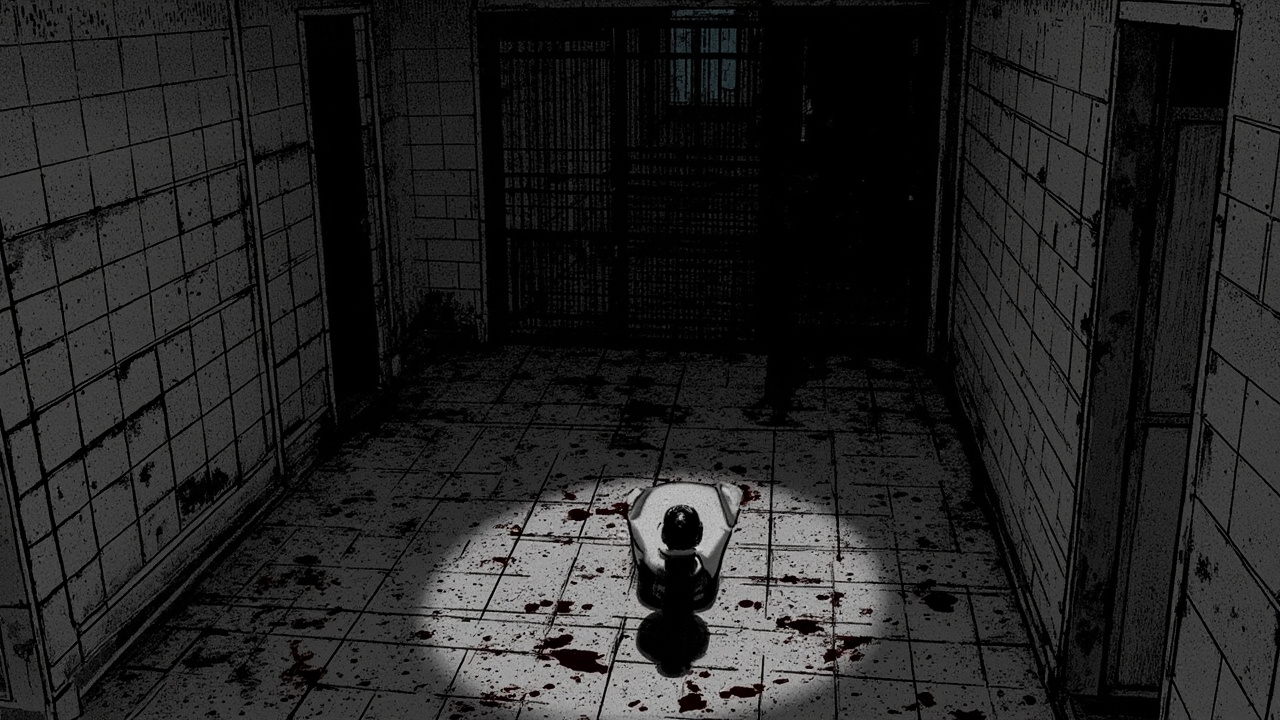
Then, finally, that night. The police close in, and Ryoji is cornered in an elevator shaft by one of Yukiho's own former followers. He's stabbed in the struggle and falls in a pool of blood — his death is, in effect, what blocks the police's last strike at Yukiho. From beginning to end, he and Yukiho are never written into the same scene together, and even now, at the very last, that doesn't change. He dies in one place; she stands in a bright crowd of people, and turns and walks away without looking back. Sasagaki watches her go and says only one thing: there has never been a sun in her life.
The final stroke of craft is Yukiho's refusal to look back. Through the whole novel she has lived in the spotlight, written by Higashino as composed, cool, flawless — and that one turn undoes all of it, every bit of her whiteness, in a single motion. She was never walking in the sunlight; she was only leaving the darkness behind her. Higashino gives her no line of defense, no tears, and doesn't let Sasagaki take a single step toward her. He leaves only her back, receding. It's the sharpest cut social mysteries have to offer.
ImaReadFolio 06 — 06
A companion piece gives you the map; the novel is the land itself. Reading Higashino's original, there are things this short piece simply has no room for. First, the patient way he renders the texture of Japanese society across those nineteen years from 1973 to 1992 — the pawnshops, the arcades, the computer stores, the golf courses, the weddings, every era's details still breathing on the page. That kind of density only comes through in the reading. Second, the way the two leads' parallel lives are cut together across nineteen years, the sense of things clicking into place from one chapter to the next — that only lands as you're turning the pages yourself. Third, and most important, is Higashino's narrating voice: cold to the bone, and never once willing to speak up for his characters. It's what keeps the whole book pressing down on you until the moment Yukiho turns away — and only then does it truly land. Knowing the ending only tells you where the door is. The cold draft behind it only reaches your face once you push it open yourself.
ImaRead6
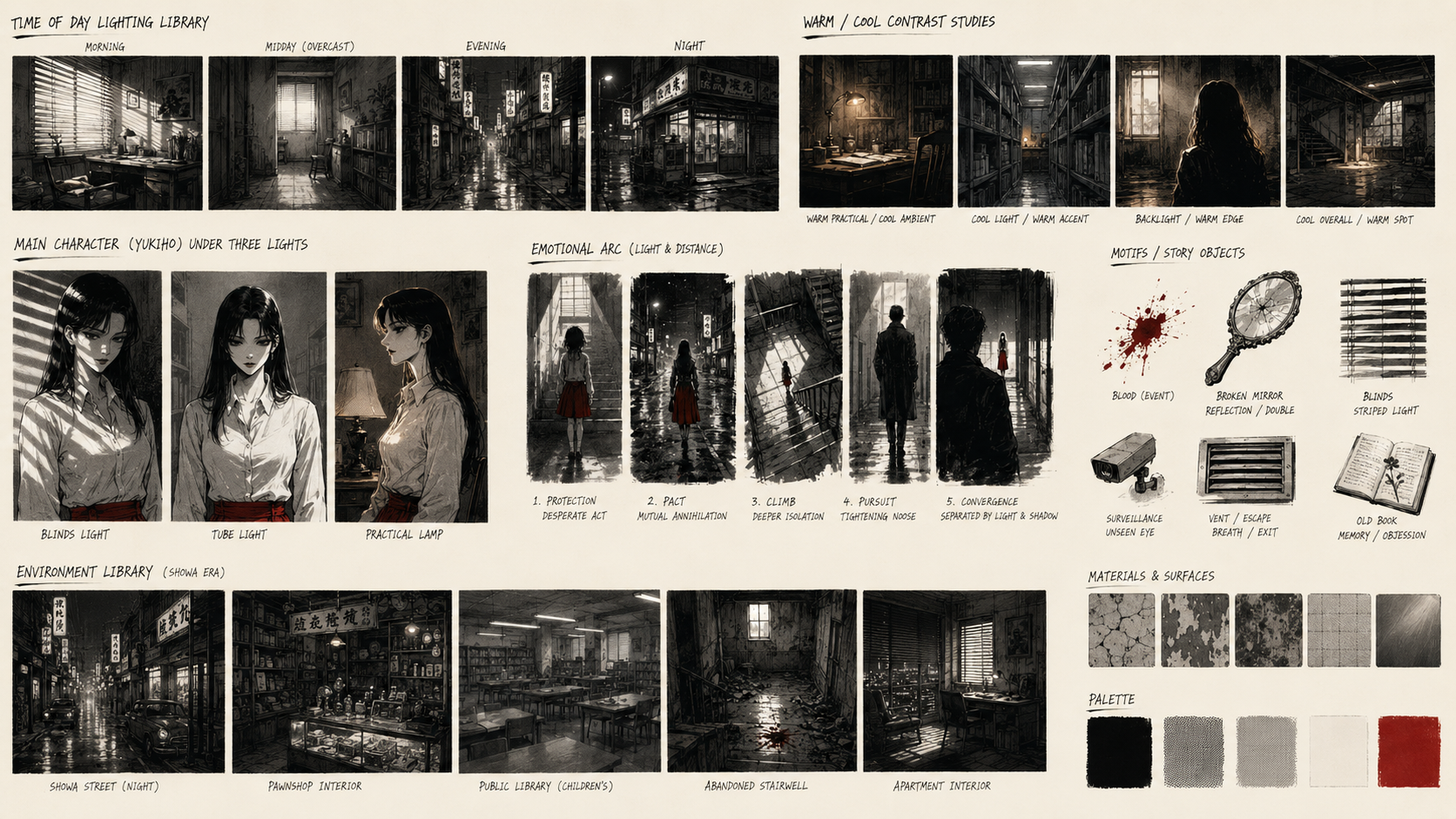
Art Direction4 plates
Before the guide was written, this book got a visual foundation — every illustration you just read grew out of it.