Jude the Obscure · Companion Guide
无名的裘德
一个石匠凿了一辈子墙,最后发现他和他爱的人,连同他们的孩子,都只是墙脚下多余的尘土。
Opening: The Wall and the Note
A note in an unsteady, childish hand gives the reason: done because we are too menny. The boy who wrote it was barely in his teens. He hanged his two younger siblings first, then put the rope around his own neck. Contemporary readers branded the book Jude the Obscene, and some burned their copies. Hardy finished this, his last novel, and never wrote fiction again.
That note is the watershed. The first half is a poor boy's desperate climb; the second is that same boy run through by three blades at once: marriage, class, poverty. Close the book and think back, and the climb toward the college spires never really moved anywhere. The line the boy left behind — done because we are too menny — is where the novel actually lands: Victorian society's tolerance for a family at the bottom had run out, completely.
What This Book Is
Jude the Obscure is the last of Hardy's Novels of Character and Environment, published in 1895. It takes the rigid order of late-Victorian southwest England — education, marriage, the church, class — apart piece by piece, and every screw inside turns out rusted through. Hardy's own title carries a pun: obscure means unknown, but it also means kept in the dark, deliberately dimmed.
In literary history it is a watershed and a scandal both, mocked as Jude the Obscene, burned in more than one hearth, then later held up as an early ancestor of the modern psychological novel. Most people who read it today are stopped cold by the same two things: the class indictment cut to the bone, and that note.
Characters: Four Stones Weighing on Jude
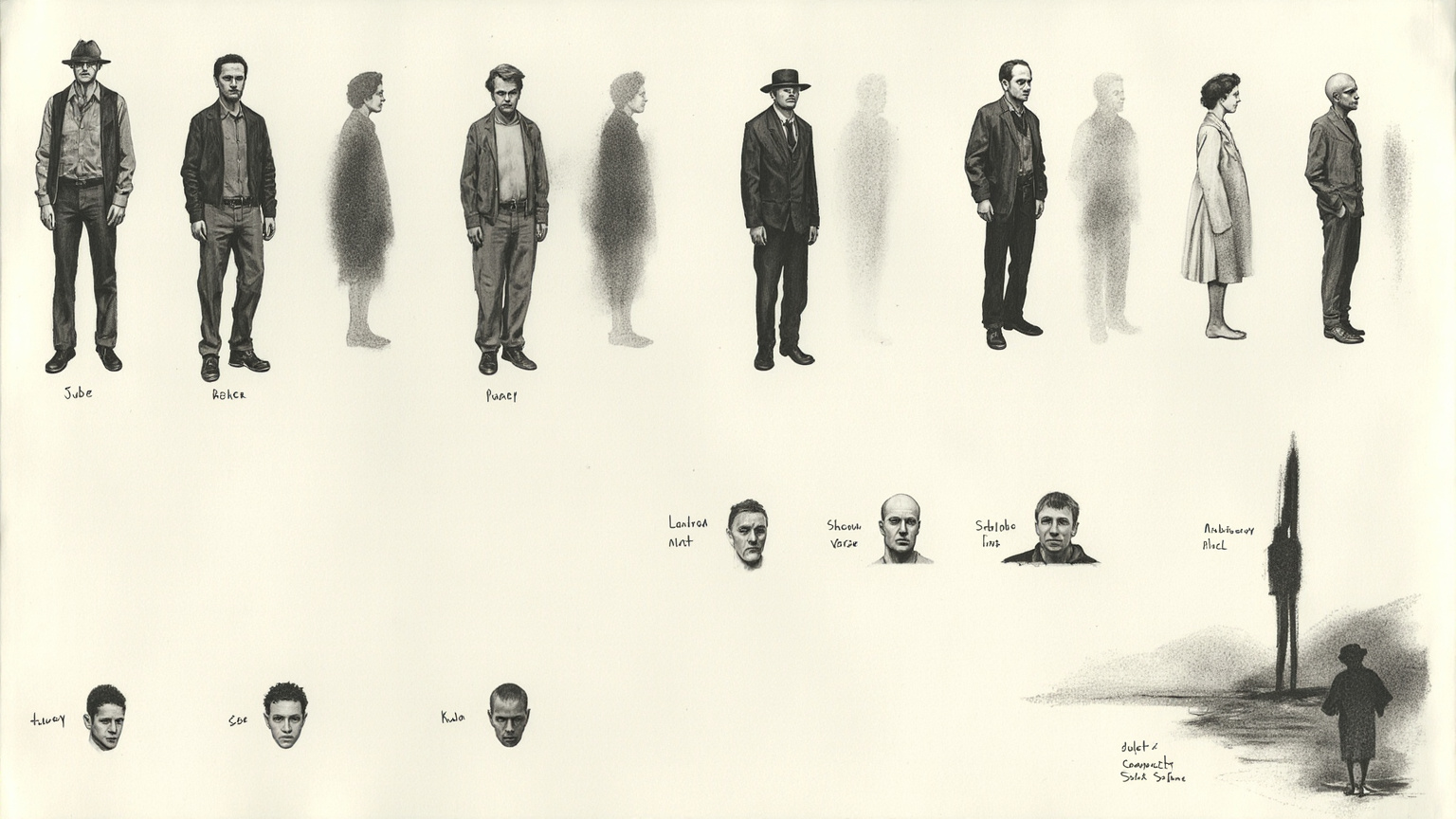
Jude Fawley is an orphan, raised by his sharp-tongued great-aunt Drusilla. As a boy he watches his teacher, Phillotson, walk off toward Christminster to study, and the small fire that lights in him never goes out. He spends his days cutting stone in a mason's yard and his nights teaching himself Latin and Greek, aiming for the university town whose spires he cannot afford to study behind.
Three people pull him in three directions. Arabella Donn, a pig farmer's daughter, worldly, carnal, and calculating, tricks young Jude into marriage with a false pregnancy, then leaves for Australia when the marriage falls apart, returning years later. Sue Bridehead, Jude's cousin, clever, unconventional, widely read, and allergic to anything that binds her, is Jude's true match, except she marries Phillotson, Jude's old teacher, first. Phillotson himself, the man who lit Jude's dream of learning in the first place, eventually lets Sue go in a way that scandalizes everyone around him, and loses his post and his good name for it. The four lives twist into a single rope, and Jude is the strand it tightens around.
One more face belongs in this list: Little Father Time, the son Arabella bore Jude, a child born looking old and sorrowful, whom Arabella eventually ships back for Jude and Sue to raise. He is the quietest person in that household, and the first to break.
Marygreen: A Stonemason's Apprentice, and His Dream
At the start of the story Jude is still a boy. He stands on the dirt road out of the village and watches Phillotson's figure shrink to nothing on the road to Christminster. Behind him, Aunt Drusilla mutters something about a family curse on marriage. He does not hear a word of it.
For the next several years he cuts stone for college walls by day and works through Latin grammar by lamplight at night. Hardy writes this stretch with a particular quiet cruelty: Jude is not striving so much as carving his own coffin boards one layer at a time, and every inch he cuts adds an inch to the wall above his head. The first time I read this passage I had to stop. He thinks he is cutting a way through. He is helping the wall get thicker.
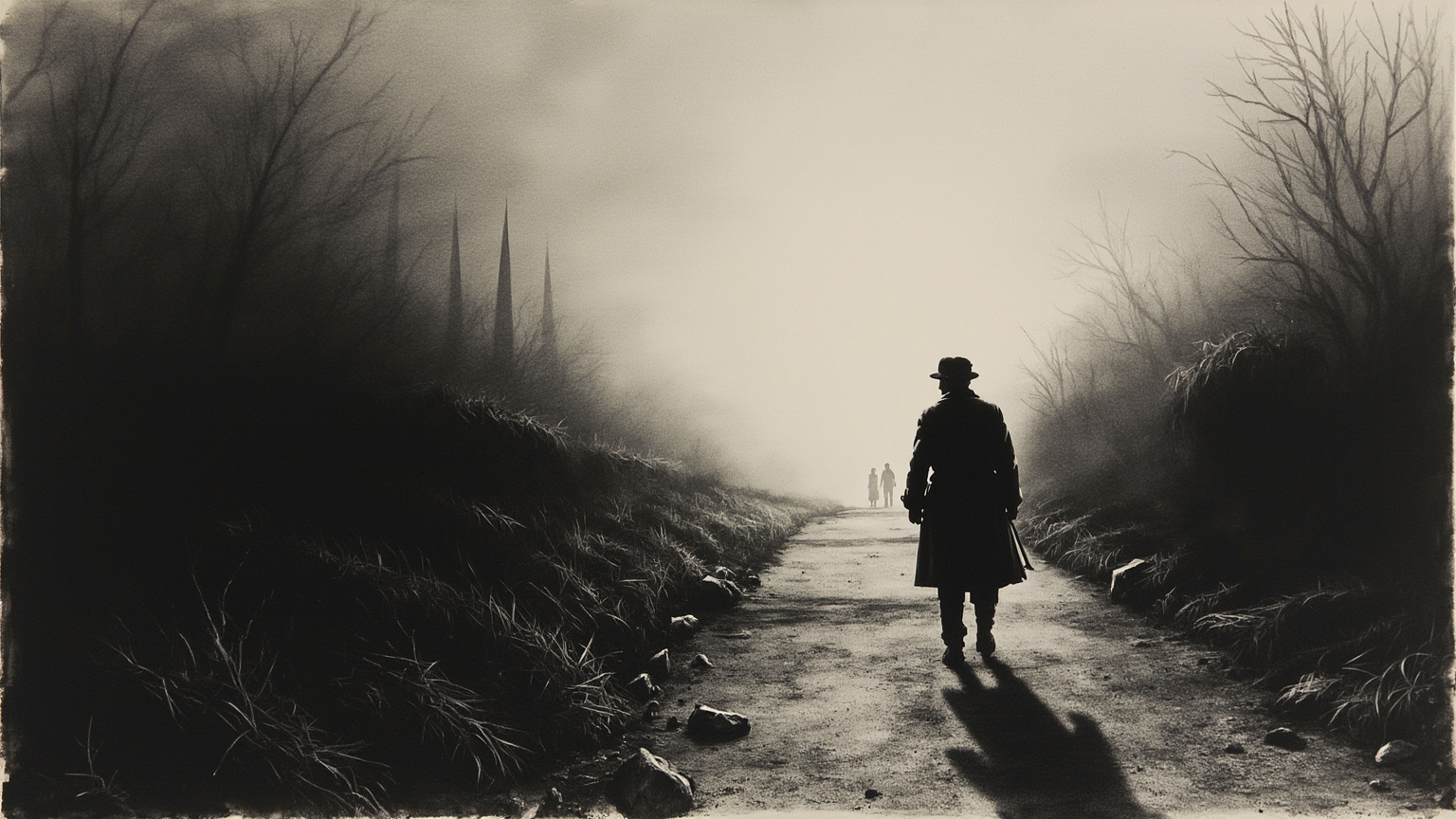
"It is what you may call a castle, manned by scholarship and religion."
那是一座由学问和宗教驻守的城堡。
原文金句 · 第一部 · 梦想的城堡
Arabella: A Marriage Set as a Trap
Arabella's entrance is blunt: she claims to be pregnant and gets young Jude to the altar on the strength of it. Within months her true colors show, and Jude understands what he has walked into, a trap sprung and sealed. She soon leaves him for Australia, and his years of self-taught study are simply cut off for years at a stretch.
Hardy does not write her as a pure villain. She is coarse, calculating, sensual, and also has a rough, undeniable vitality of her own. The real problem is the rule she stands in for: once Victorian marriage law nailed two people together, a man had no way out, let alone room to study, or to climb.
Christminster: The Wall That Never Opened
Jude finally reaches Christminster. It is the most vivid irony in the book: he works there as a mason, and the stone he repairs every day is the very college wall he has spent his life dreaming of walking through. Mortar, chisel, hoist rope: his own trade feeds him, and his own hands keep raising the wall of his dream.
He writes to every college asking for admission, and the letters come back one after another. The last is from a college head, worded so politely it amounts to an insult: Jude would do better, he suggests, to stay in his own station in life. This is not a rejection to try again next year. It is a wall with you do not belong here carved into it, good for life.
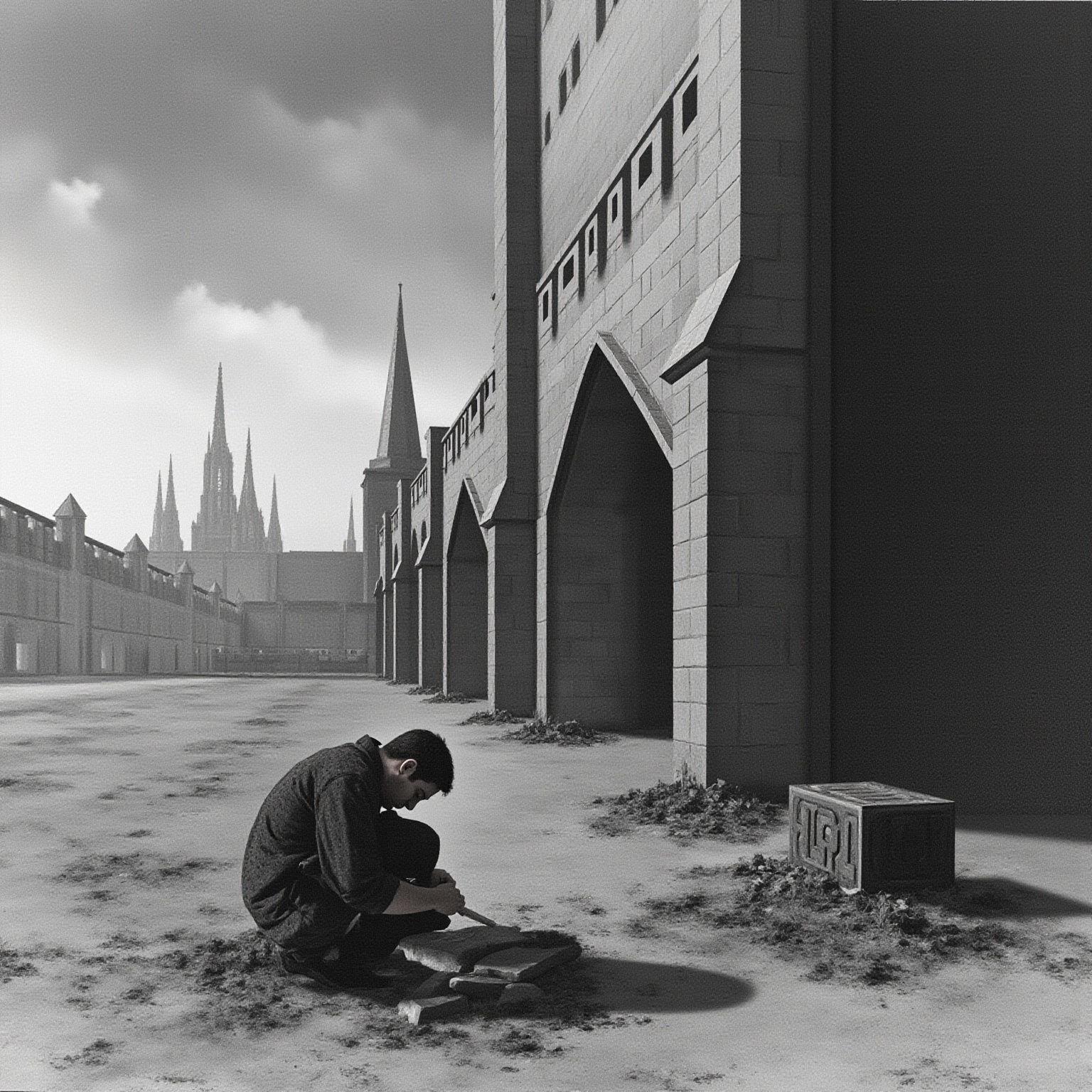
"This is the very road by which I came into Christminster years ago full of plans!"
这正是多年前我满怀计划踏进基督寺的那条路!
原文金句 · 第四部 · 旧路重游
Sue: A Free Spirit Runs Into the Wall of Marriage
Jude's cousin Sue Bridehead enters the story here. Clever, well-read, and allergic to anything with the shape of an obligation, she marries Phillotson, Jude's old teacher, before Jude has a chance. Phillotson makes a good teacher and a poor husband, and the two of them live out a marriage that is miserable and perfectly respectable.
Sue eventually tears free of that marriage and goes to Jude. They live together, have children together, and refuse, flatly, to marry. That is enough to set the whole social machine in motion: landlords turn them away the moment they hear the word unmarried, employers dismiss them the moment word gets around. The family drifts from town to town across Wessex with the children in tow, put out of one place after another. Hardy writes it with total calm, no outrage, no raised voice, just the sound of doors closing again and again. That coldness suffocates more than anger would.
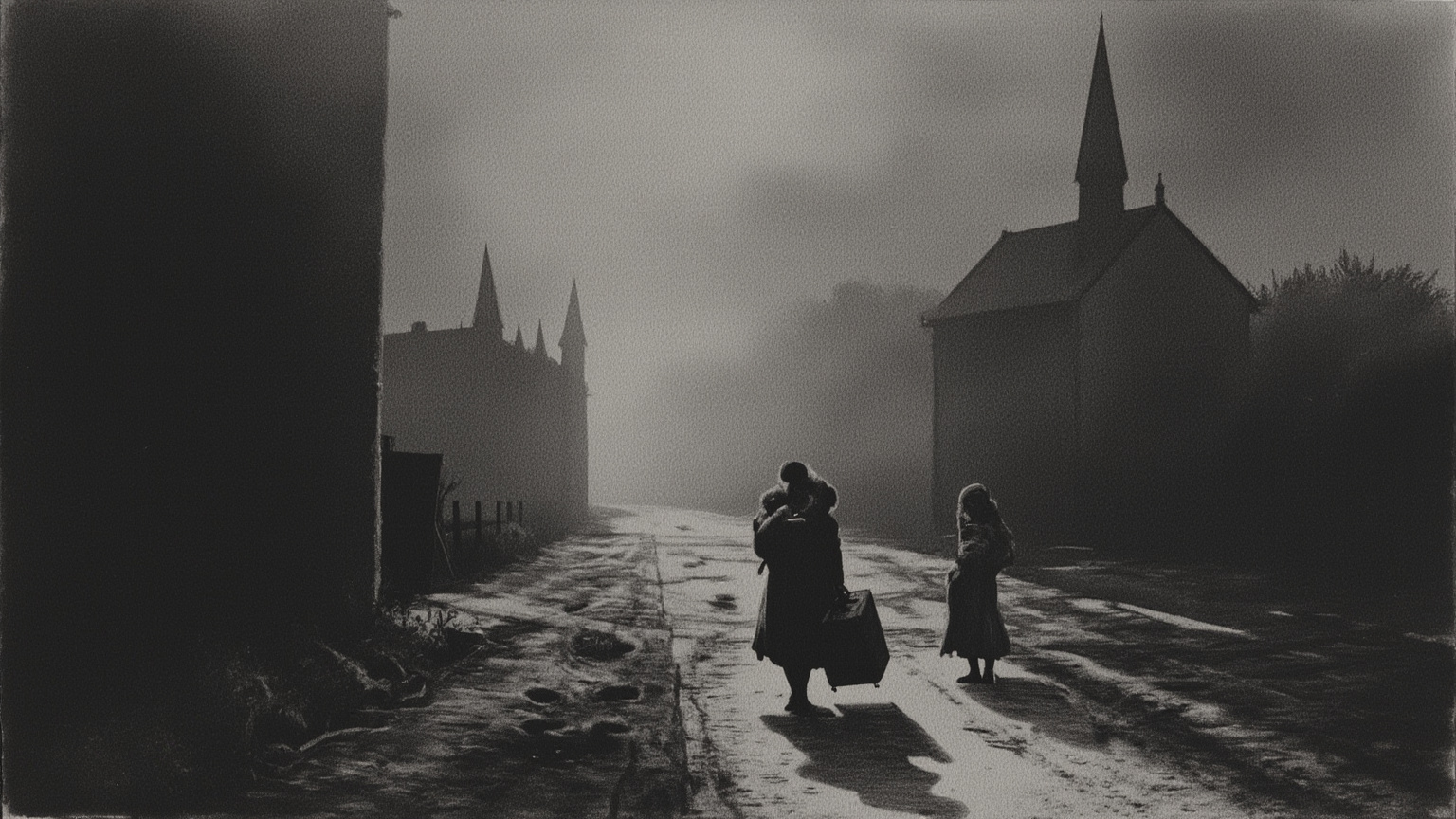
"I have enough to pay for the night's lodging I have obtained, but barely enough to take me back again."
我今晚的住宿钱是够了,但几乎不够回家的路费。
原文金句 · 第五部 · 漂泊者
Little Father Time: The Darkest Note in the Book
Arabella is back from Australia by now, and with her is the son she had with Jude, the boy with the old, sorrowful face they call Little Father Time. She hands him over to Jude and Sue and leaves again.
The last straw falls during Christminster's Remembrance Week. The family tries to find a room in the city and is turned away, place after place, for the same reason: unmarried. That same night, Sue discovers she is pregnant again. Little Father Time has been watching all of it. He writes a note, pins it to himself, explaining that it was done because they were too menny, then hangs his two younger siblings, one after the other, and finally himself.
Hardy gives this scene almost no interior narration, no voice-over to explain the boy's reasoning. He simply lets the fact of it land. It is the hardest page in the book to turn, and the one page no reader can skip: a child ground down by poverty and shame, solving his family's problem by his own logic.
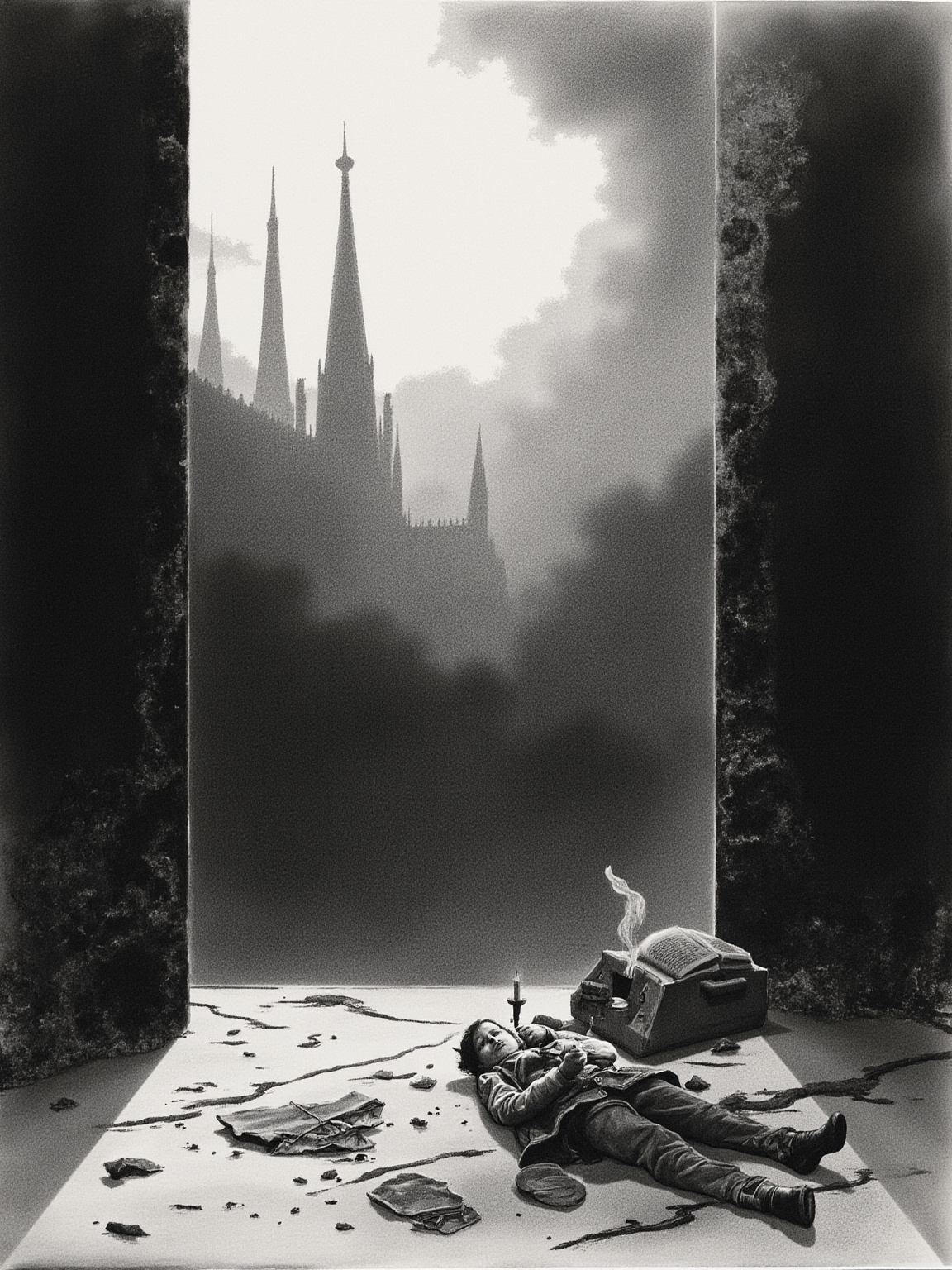
"Oh God, Mother, you've never a-sent for another; and such trouble with what you've got!"
哦上帝,妈妈,你不会又要生一个吧;已有的已经够麻烦了。
原文金句 · 第六部 · 小时光老人的恐惧
Sue's Return: The Most Heartbreaking Turn
After the tragedy, a reader assumes the worst has already landed on Jude. There is one more cut coming. Sue reads the deaths as heaven's punishment for her own sin, for leaving a marriage, for living with Jude unwed, and her mind gives way completely. She turns to an extreme, penitent religiosity, leaves Jude even though he still loves her, and goes back to remarry Phillotson, calling it, in effect, her own punishment.
At this point Hardy all but takes the knife out of the reader's hand and drives it into Jude's chest a second time. Sue has not stopped loving him, quite the opposite. She crushes him with that love turned inside out: the deeper she believes herself sinful, the more firmly Jude is nailed in place as the source of the sin. It is the most tangled psychology in the book, and the most modern.
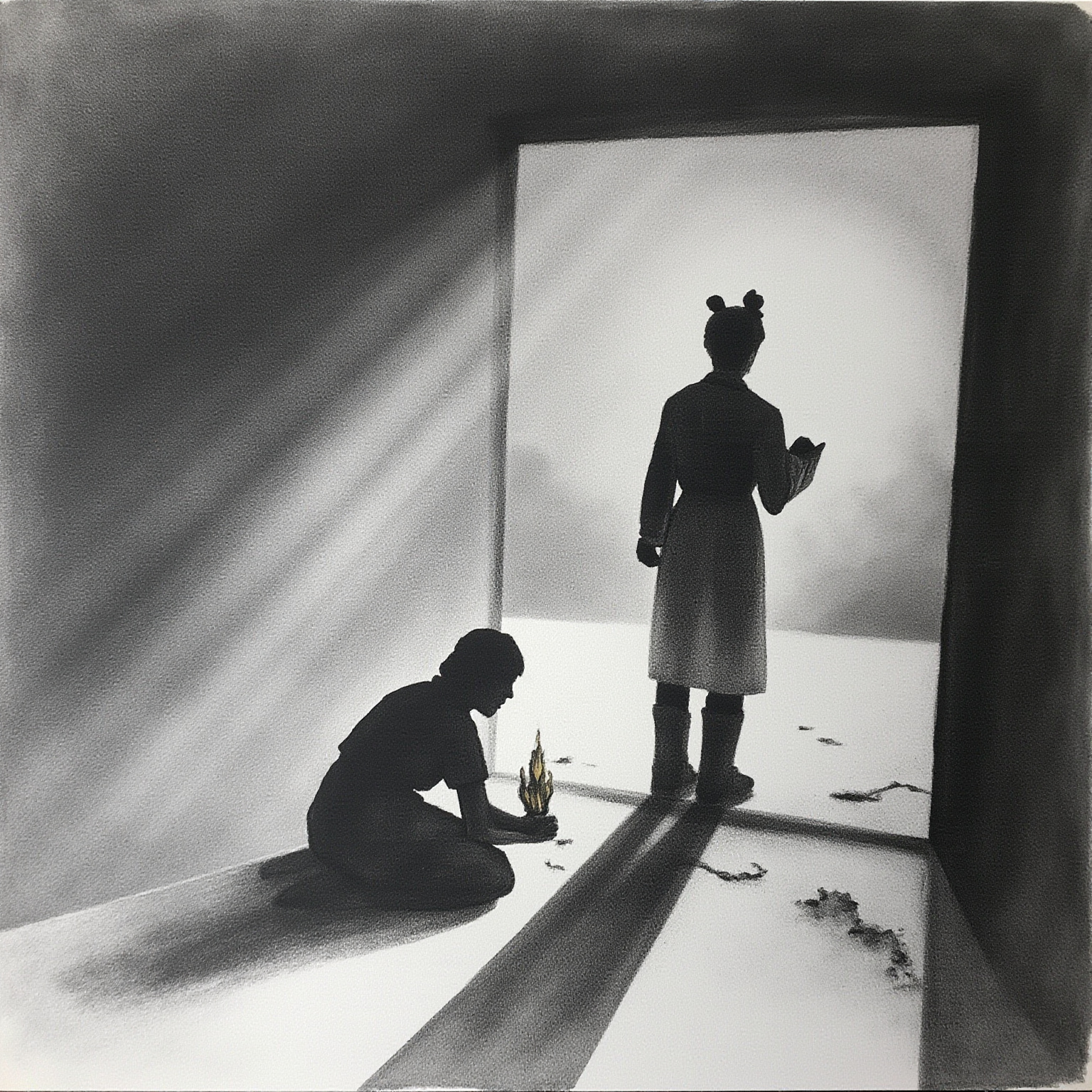
"The flowers in the bride's hand are sadly like the garland which decked the heifers of sacrifice in old times!"
新娘手里的花,悲哀得像古时献祭牛犊颈上的花环。
原文金句 · 第五部 · 献祭的新娘
Jude's Death: The Book of Job in the Rain
Arabella smells an opportunity. With Jude sick, broken, and out of hope, she sets her trap a second time and gets him to marry her again, her second wedding to him, and his last.
The closing scene is written very still. Poor and ill, Jude walks a long way through the rain for one last look at Sue, and does not get to see her. Back home, Arabella is off enjoying herself at the boat races. He lies in bed alone, reciting the Book of Job, and dies in delirium. Outside, the rain keeps falling.
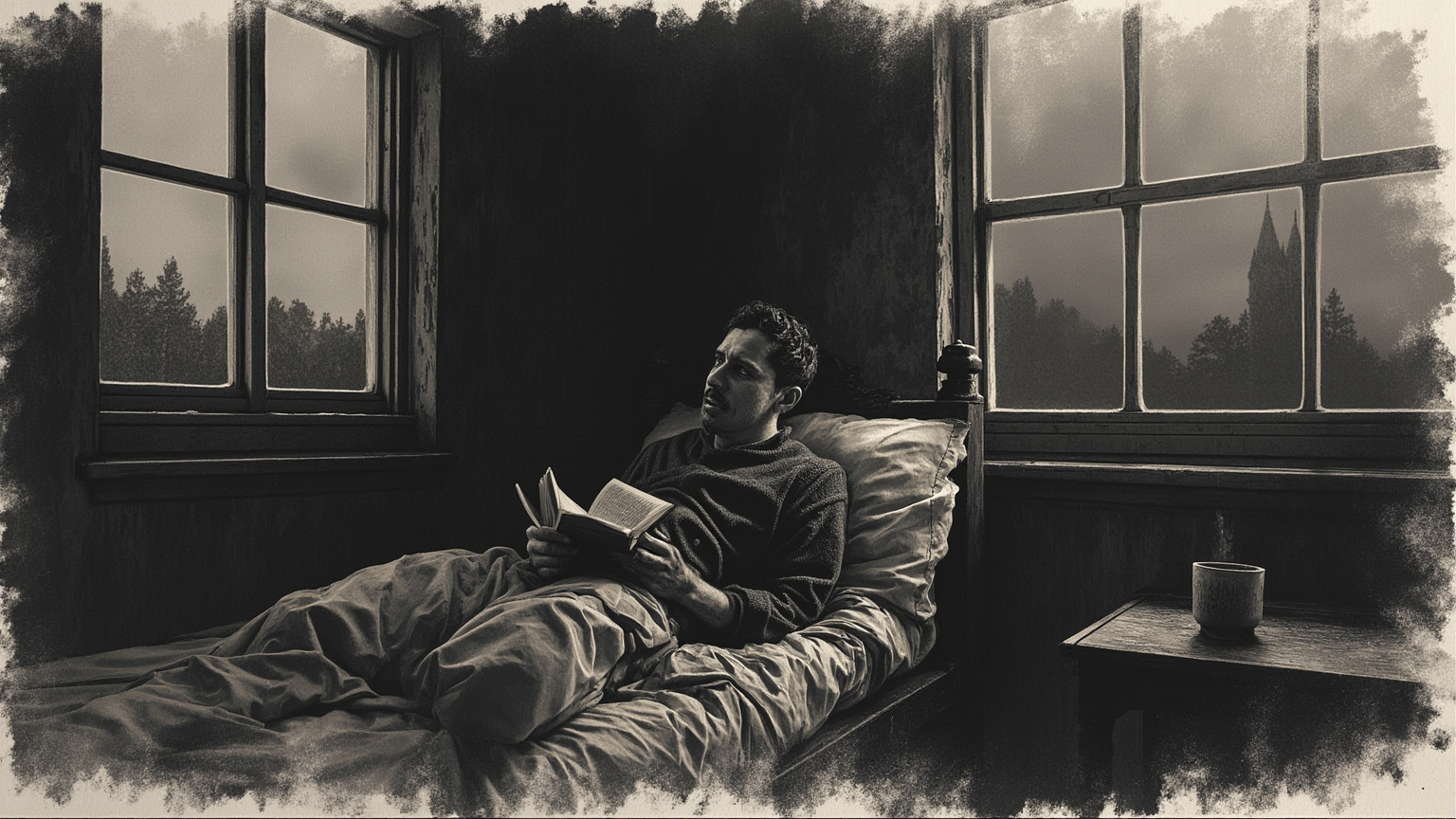
"There is something external to us which says, 'You shan't!' First it said, 'You shan't learn!' Then it said, 'You shan't labour!' Now it says, 'You shan't love!'"
有一种外在的力量对我们说:‘你不准!’起初它说:‘你不准求学!’然后说:‘你不准劳作!’现在它说:‘你不准去爱!’
原文金句 · 第六部 · 临终的控诉
What This Book Is Really Saying
On the surface it is a tragedy of personal striving. Underneath, it is an indictment of institutions. Victorian education is closed for life to a stonemason's son who wants to learn. Victorian marriage is a social death sentence for two people who refuse to be bound by it. And poverty stacked on shame, once it lands on a child, makes even staying alive an open question. Hardy builds all three walls into a single household and lets them press at once. The note is what comes out the other side.
Hardy also writes in a fatalism entirely his own. Aunt Drusilla mutters about the family's marriage curse in the opening pages, and the whole novel sits under a sense that struggle is futile no matter what. What makes Hardy skillful is how tightly he meshes that fatalism with the actual machinery of Victorian society, until you cannot say for certain whether it is fate or institutions that destroys Jude. That ambiguity is the sharpest edge in the book.
Jude does not lose to himself. He loses to a wall he spent his whole life cutting stone for, and that only grew taller.
Why It's Still Worth Reading, Even Knowing How It Ends
Knowing that Little Father Time dies, that Sue goes back to Phillotson, that Jude dies in the rain: that is only the skeleton. What Hardy is actually good at is the flesh on it: the stone dust in the mason's yard, the cold-faced landlords during Christminster's Remembrance Week, the crooked handwriting on a child's note, the page of Job that Jude turns to at the end. None of that survives being summarized. It only works page by page, in the original.
There is also the pacing, the slow walk to the edge of a cliff. Hardy does not shout, does not editorialize, does not reach for lyricism. He just keeps writing flatly, letting you believe there is still a way out, right up until the next page cuts you. By the time you close the book, you notice you have been sitting up straight, fists clenched, without knowing when that happened. That is the moment you have actually read it.
Art Direction4 plates
Before the guide was written, this book got a visual foundation — every illustration you just read grew out of it.