King Solomon's Ring · Companion Guide
所罗门的指环
池塘边没有魔法,只有几十年的耐心——灰雁、寒鸦、狗与鱼,把一个人的老宅认成了家。
Opening scene: a man walks with a line of goslings behind him
A clutch of newly hatched greylag geese wobbles along a farm track by the Danube, following a man in a tweed jacket. When he stops, they stop. When he turns, they turn. A passerby might take him for the local eccentric. He is the Austrian zoologist Konrad Lorenz, out for a walk with his goose children. This is where the book begins: no magic, no myth, just a man who gave his life to the furred, feathered, and scaled neighbors around his pond and his study.
What kind of book this is
The German original appeared in 1949 under a subtitle almost endearing in its bluntness: He Talked with Beasts, Birds, and Fish. Call it a work of popular science rather than a collection of papers. Lorenz never puts on the scholar's robes here. He tells a lay reader, one story at a time, about the experiments he ran in his own house, the things he watched in the field, and the mistakes he made on his own balcony. Its place in the history of science is not small: the research that grounds this book eventually won Lorenz the 1973 Nobel Prize in Physiology or Medicine. But most readers remember something else entirely, the greylag goose that took him for its mother.
On the nature-writing shelf, it keeps permanent company with Jean-Henri Fabre's Souvenirs entomologiques: one book training a magnifying glass on insects in the dirt, the other spreading a tweed jacket by the water's edge. Neither book trades in misery or spectacle or sentiment. Both are about people who let their days be absorbed into the natural world.
People and world: the permanent residents of the Altenberg estate
There is really only one named protagonist in this book: Lorenz himself. He is the narrator, the experimenter, and the hapless father a flock of geese has adopted. Altenberg is a small town in northern Austria; his family's old house sits on the Danube, with fields, ponds, and reed beds stretching out behind it. That is the whole geography of the book: a study, a garden, a riverbank, a farm track, plus a handful of expeditions to the Alps and to lakes in northern Europe. Don't mistake that for smallness. The study is crowded with fish tanks, a family of jackdaws nests in the chimney, the garden holds a flock of greylag geese who treat him as kin, and a pack of large dogs weaves around his feet. One old house holds an entire laboratory of animal behavior.
These family members live together year-round, and they have relationships to manage among themselves. The geese get jealous, the jackdaws quarrel, the dogs compete for favor. Lorenz's field notes read less like scientific observation than a handbook for settling neighborhood disputes.
The arc: discoveries by the pond
One: a study crowded with fish tanks
Lorenz opens by taking the reader into the room at the Altenberg house that serves as both study and observation lab. Glass tanks cover every wall, the floor, the windowsills: tropical fish, freshwater fish, newts, eels, each claiming its own corner. He doesn't write "I love biology." He writes about tank water that hasn't been changed in days, about a stickleback that leapt out of its tank defending territory and died on the floor. He wants the reader to see that a field biologist's daily life is, first of all, a running battle with tanks and water and difficult little creatures.
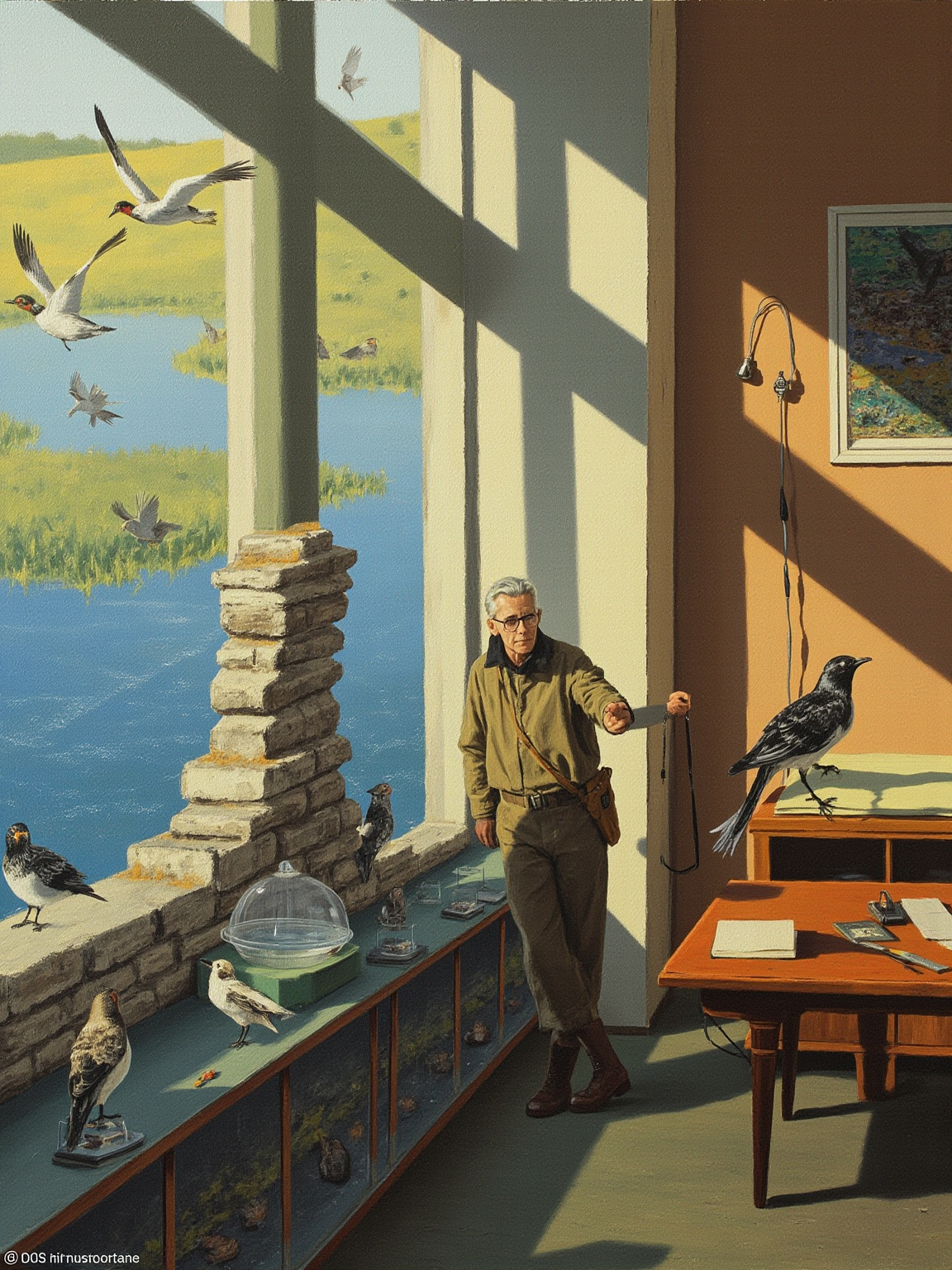
I have had a roomful of aquariums in my house for as long as I can remember, and I cannot imagine a home without them.
我的家里,从我记事那天起就摆满了一屋子的水族箱,我实在无法想象一个没有鱼缸的家会是什么样子。
金句 · 第1章 · 堆满水族箱的书房
Two: the birth of imprinting, a flock of geese that took him for their father
The book's best-known scene has Lorenz hatching a clutch of greylag goslings by hand. He kept watch by the incubator as the eggs cracked open. What would the goslings see first? Him. The result: wherever he went, the goslings followed. When he left, the whole clutch shrieked in panic. When he came back, the shrieking stopped. Lorenz later named this phenomenon imprinting, describing a brief critical window early in an animal's life when the first moving thing it sees becomes fixed in its instincts as "mother," permanently.
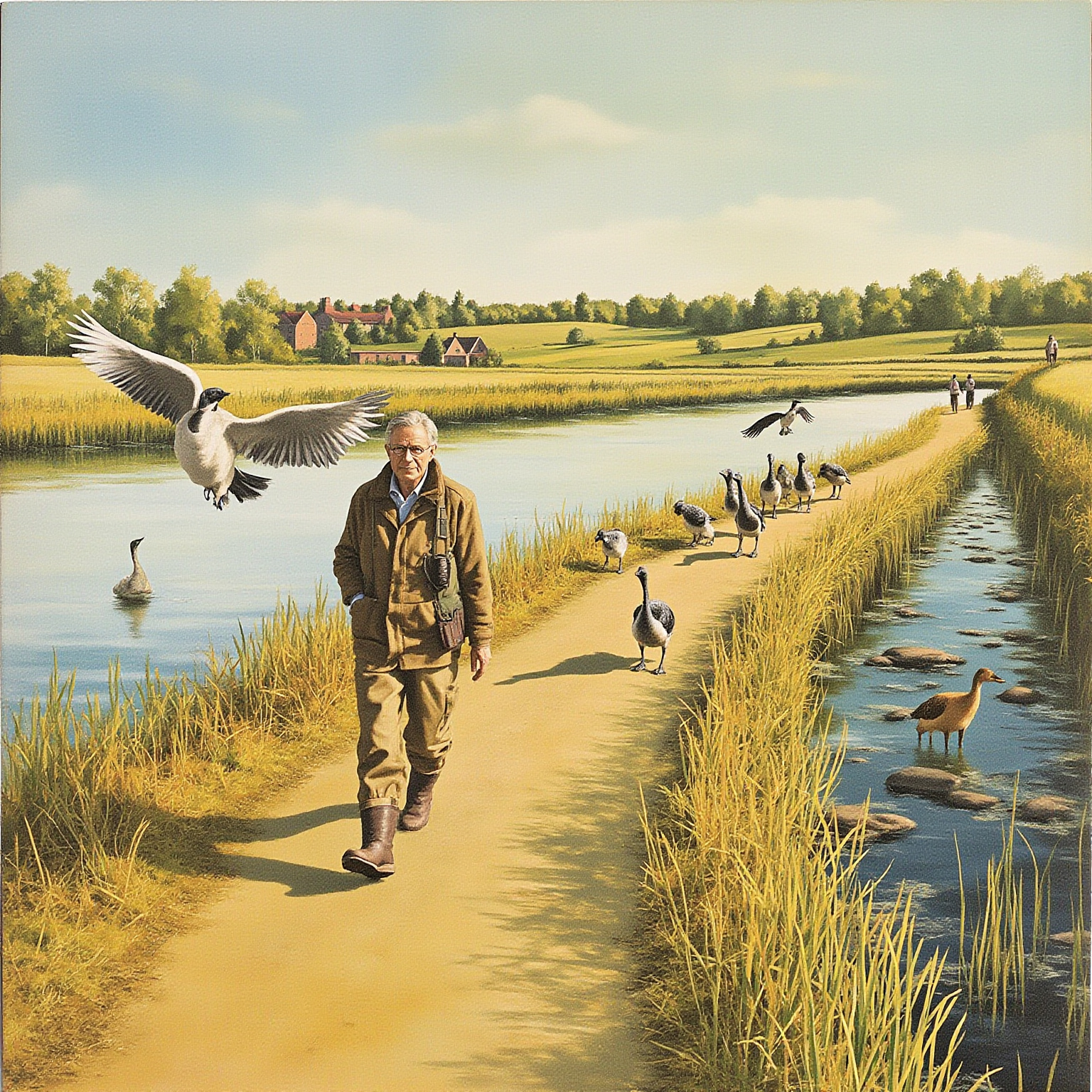
The goslings, when they first saw me, took me for their mother; from that moment on, I belonged to them.
雏雁第一眼看见的既然是我,便把我当成了它们的母亲;从那一刻起,我就属于它们了。
金句 · 第2章 · 印随的诞生
What makes imprinting remarkable isn't the finding itself but how it upends common sense. The old biology textbooks held that instinct was innate, written into the genes, learned by no one. Imprinting is the opposite: it is experience welding something permanently into instinct, at a moment that, once missed, can never be recovered. Lorenz doesn't bury this in jargon. He gives you one image instead: a grown greylag goose chasing after him, begging to be stroked, because it believes it is human. It is the most romantic data set in the whole field of ethology, and the image every reader, whatever their age, carries away from this book.
Three: jackdaws in the chimney, and an adopted daughter from across the sea
Every spring, a family of jackdaws moves into the chimney above Lorenz's study fireplace. They line their nest with tufts pulled from the flue lining and treat the airspace over his sitting room as a nursery, romantic in theory, and in practice it means a fireplace sealed shut year-round and a house cold enough to need a sweater. He can't bring himself to evict them. The set piece of this chapter is a rosy starling chick he rescues and slips into the jackdaws' nest. The jackdaws never notice the substitution: the chick opens its beak, they feed it; the chick picks up their calls, they answer. And so a starling chick grows up in a European chimney speaking nothing but jackdaw.
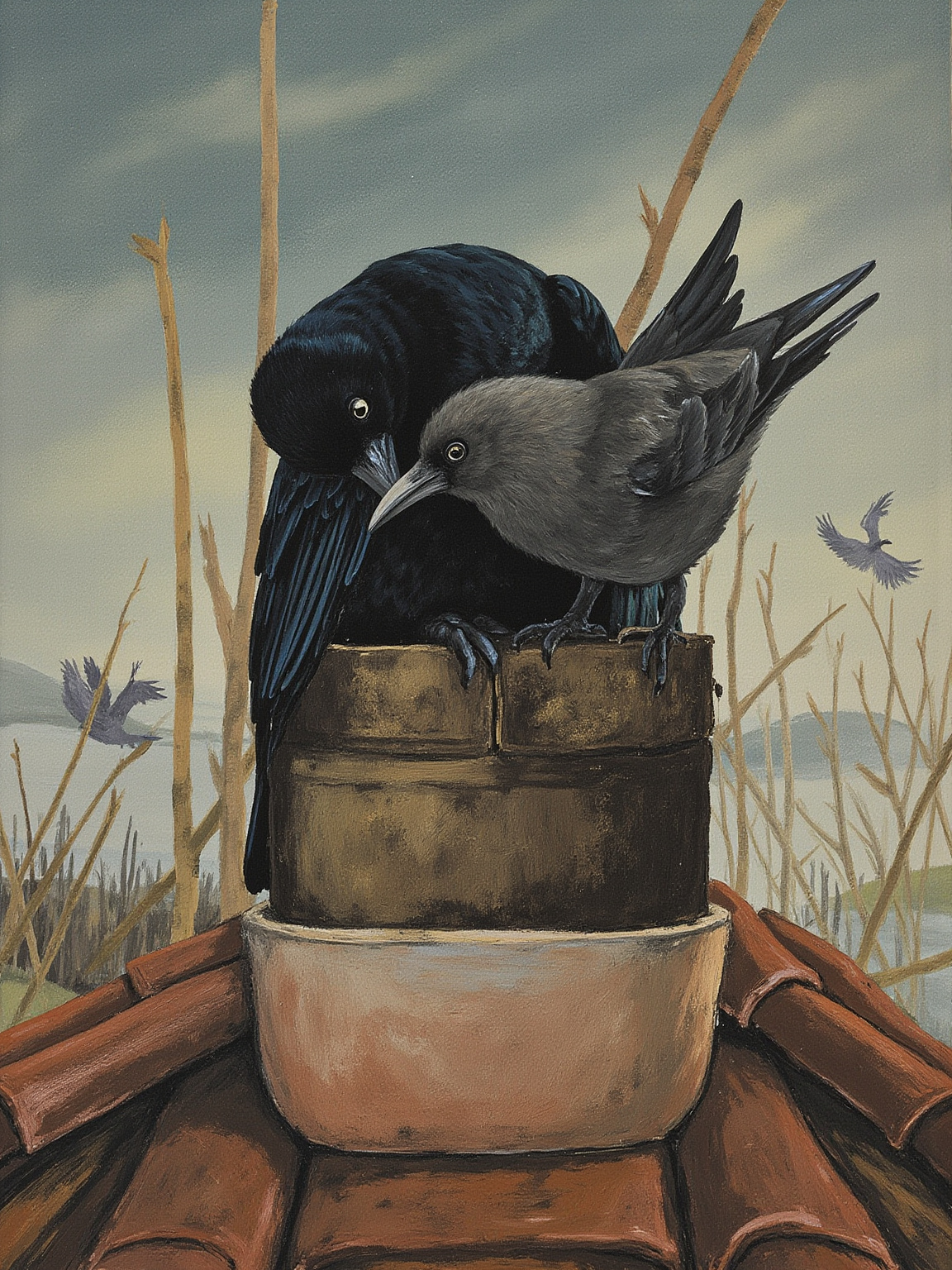
In my chimney lives a colony of jackdaws that pull the down from its walls to line their nests above the hearth.
我的烟囱里住着一群寒鸦,它们从烟囱壁上扒下绒毛,铺在壁炉正上方的巢里。
金句 · 第3章 · 烟囱里的寒鸦
Grown, the starling flew back out into the wild, but it never sought out its own kind, and it never became a jackdaw either. It just became a lonely interpreter, fluent in a language that wasn't its own. Lorenz tells the story lightly, but underneath it is a real argument: experience can shape instinct, but only up to a point. The starling learned the jackdaw accent without ever becoming a jackdaw. What it was, in the end, its species had already decided. Instinct and experience are never simply one or the other; they pull against each other and complete each other at the same time.
Four: the geese by the pond have feelings too
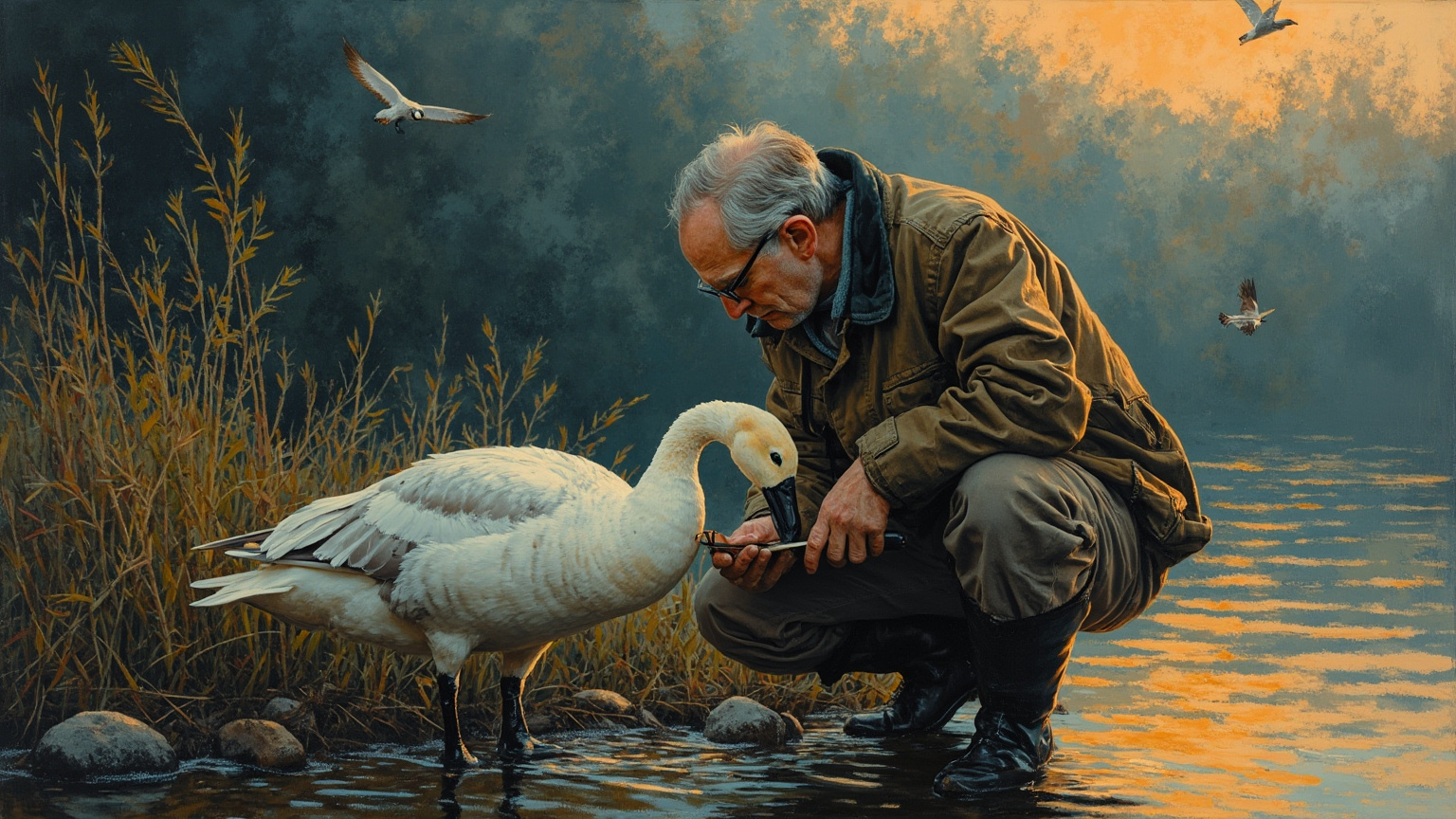
The gentlest and most contested observations in the book come when Lorenz turns to the domestic life of the geese. A paired greylag couple keeps what amounts to a years-long marriage: the gander guards the nest, the goose incubates the eggs, and at any sign of danger the two fly off together. Failed pairs argue, "divorce," turn jealous of a third bird, or freeze out a neighbor's overtures. Lorenz writes all of it with remarkable restraint. He never uses the word love. He uses the geese's own vocabulary: the triumph ceremony, the greeting ceremony, threat postures, appeasement postures.
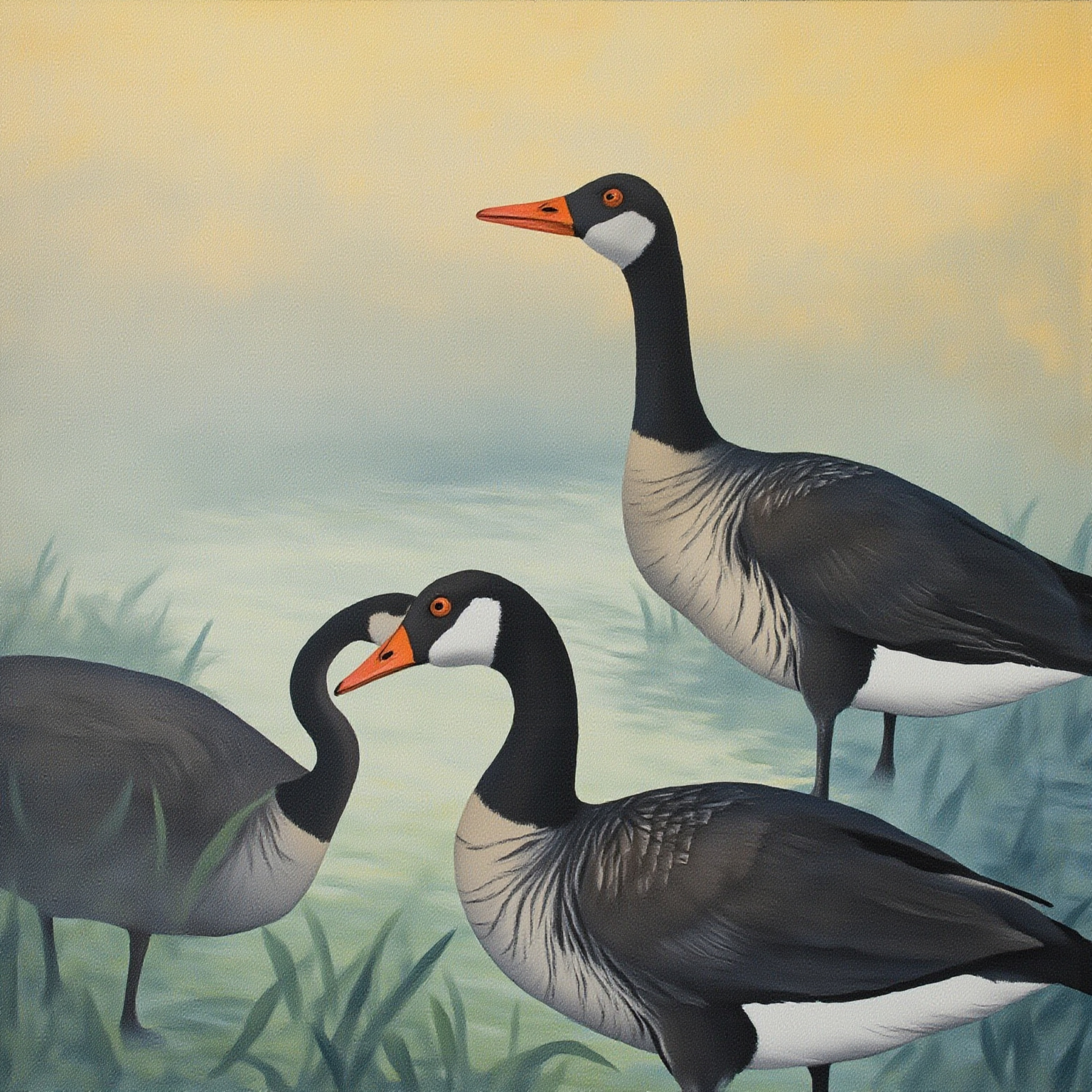
Geese, like people, fall in love, quarrel, grow jealous, and sometimes—after long years together—remain faithful unto death.
灰雁和人一样,会恋爱,会争吵,会嫉妒;可有些配对了许多年的,也会终生相守,至死不渝。
金句 · 第4章 · 池塘边的灰雁
The first time I read this section, what surprised me wasn't that geese have feelings. It was that Lorenz could write something this warm out of language this cold. He never reaches for a shallow line like "geese have emotions too." He writes only the sequence of movements, postures, and sounds, and the reader ends up moved by the tension inside that sequence, unprompted. That is where the book's real power lies. He doesn't anthropomorphize. He lets the animals be themselves, and by the time they are simply being themselves, you are already moved.
Five: hierarchy among the dogs, and the instinct for a leader
A whole chapter is given over to the dogs. Lorenz kept a pack of them, from large sheepdogs down to small terriers, and they had rank to fight over among themselves. He lets the reader see that a dog barking at its owner isn't necessarily aggression, it can be submission. A dog's guilty look isn't guilt at all, but an old signal, written into the wolf pack long before domestication, of leader and follower. The relationship between people and dogs works because a dog, at bottom, treats its owner as the pack leader: a map of relationships laid down in the genes back when dogs were still wolves.
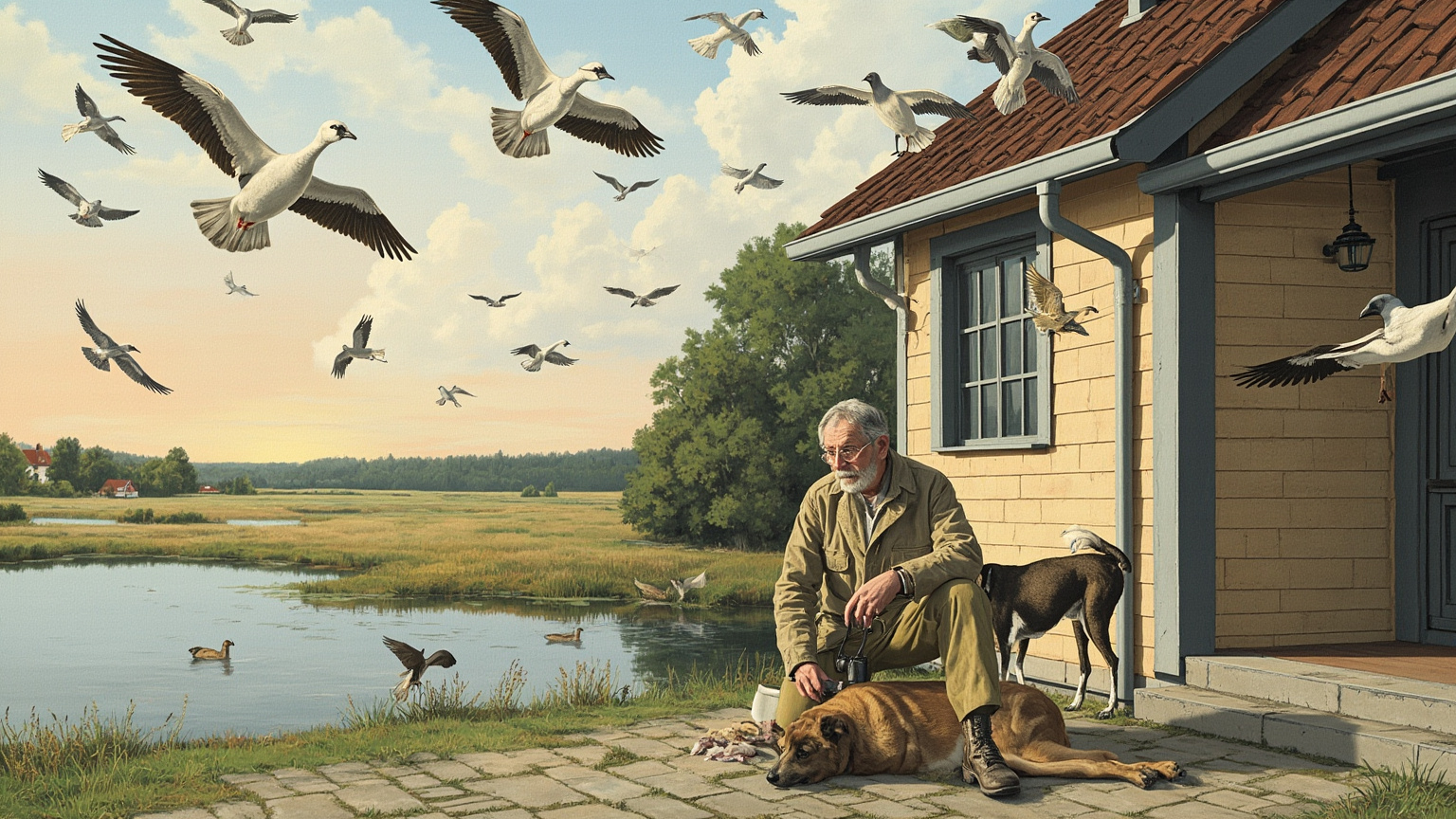
A dog that greets its master with bared teeth is not threatening him—it is offering him the most abject submission it knows.
一只冲着主人龇牙的狗,不是在威胁他,而是在用它所知的最卑微的方式,表示顺服。
金句 · 第5章 · 狗群的等级
What actually keeps a reader unsettled in this chapter isn't the hierarchy itself, but where Lorenz takes the observation next: to people. He, his family, his guests: to the dog, every one of them is a member of the pack, and whether it submits or challenges, it is dealing with all of them according to rules it understands as pack law. From the pond back to the sitting room, Lorenz pulls off ethology's neatest trick: reading an entire grammar of animal society out of one dog barking at one guest.
Six: the fable of Solomon's ring, closing the book
In the closing pages, Lorenz unravels the mystery of his title. Legend holds that King Solomon of Israel owned a ring that let him speak with every bird and beast. Lorenz's version is far plainer: he has no ring, only decades of patience. The geese, the jackdaws, the dogs, the fish: his neighbors show him their truest selves not because he has magic, but because he is willing to crouch by the pond for hour after hour watching them quarrel, to give up his fireplace to a family of jackdaws, to sit up late at the fish tank watching one stickleback's courtship dance dozens of times over.
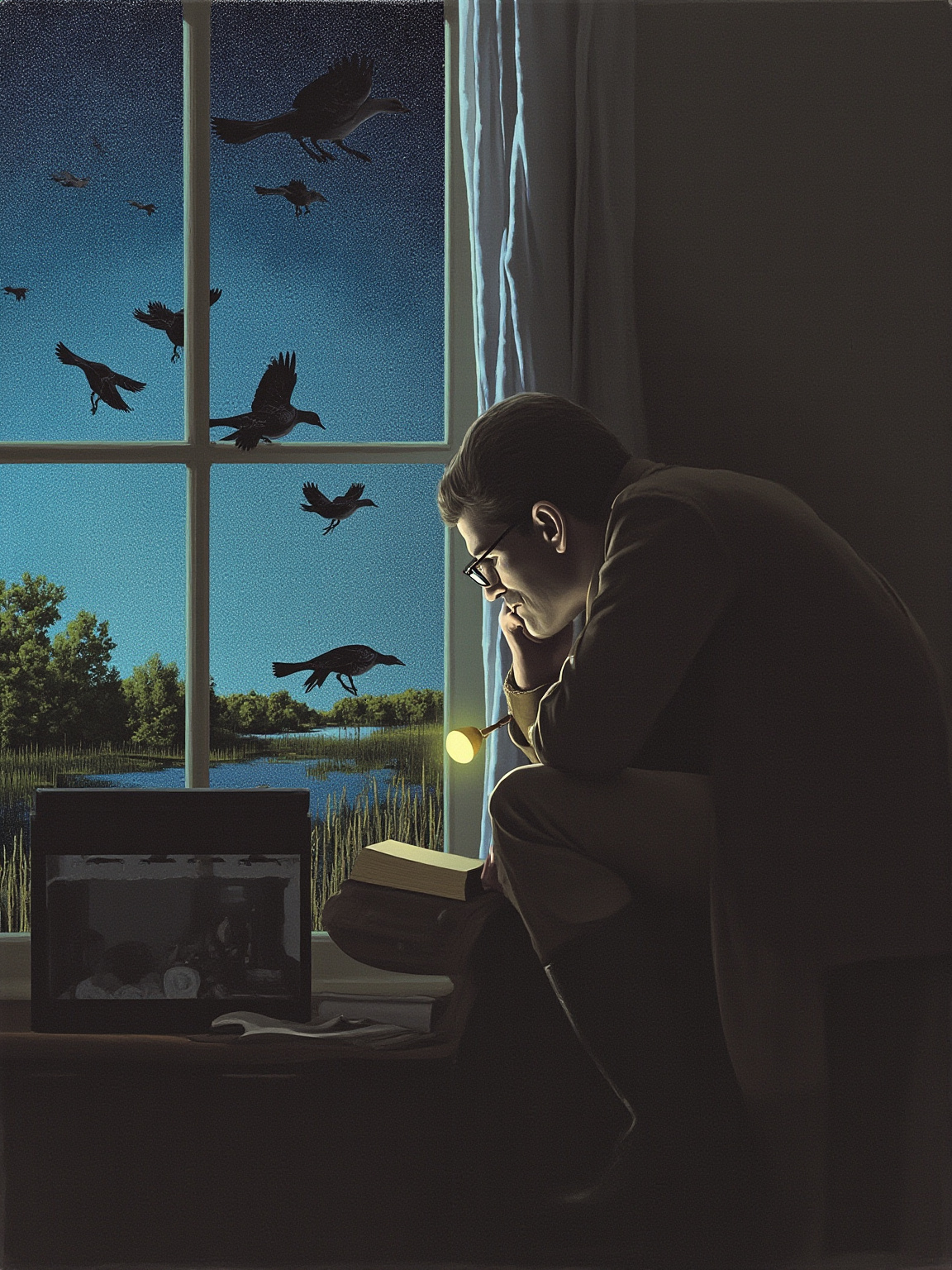
I have no magic—I possess only the patience of decades, and that is enough to make the animals speak to me.
我并没有魔法——我所拥有的,不过是几十年的耐心,而这就足够让动物们开口对我说话。
金句 · 尾声 · 所罗门的指环
Theme and craft: what makes this small book good
King Solomon's Ring is often filed under warmhearted popular science, but its real force runs deeper than warmth. It handed the entire field of ethology its founding vocabulary: imprinting, instinct, the critical period, ritualized behavior, releasing stimuli. Every one of those terms, now standard in any biology textbook, traces back to some observation made by a pond in this book. It isn't popularizing conclusions. It is showing how a scientist looks at an animal: watch first, record second, name last. That order, watching before naming, is the book's biggest inheritance to anyone who writes.
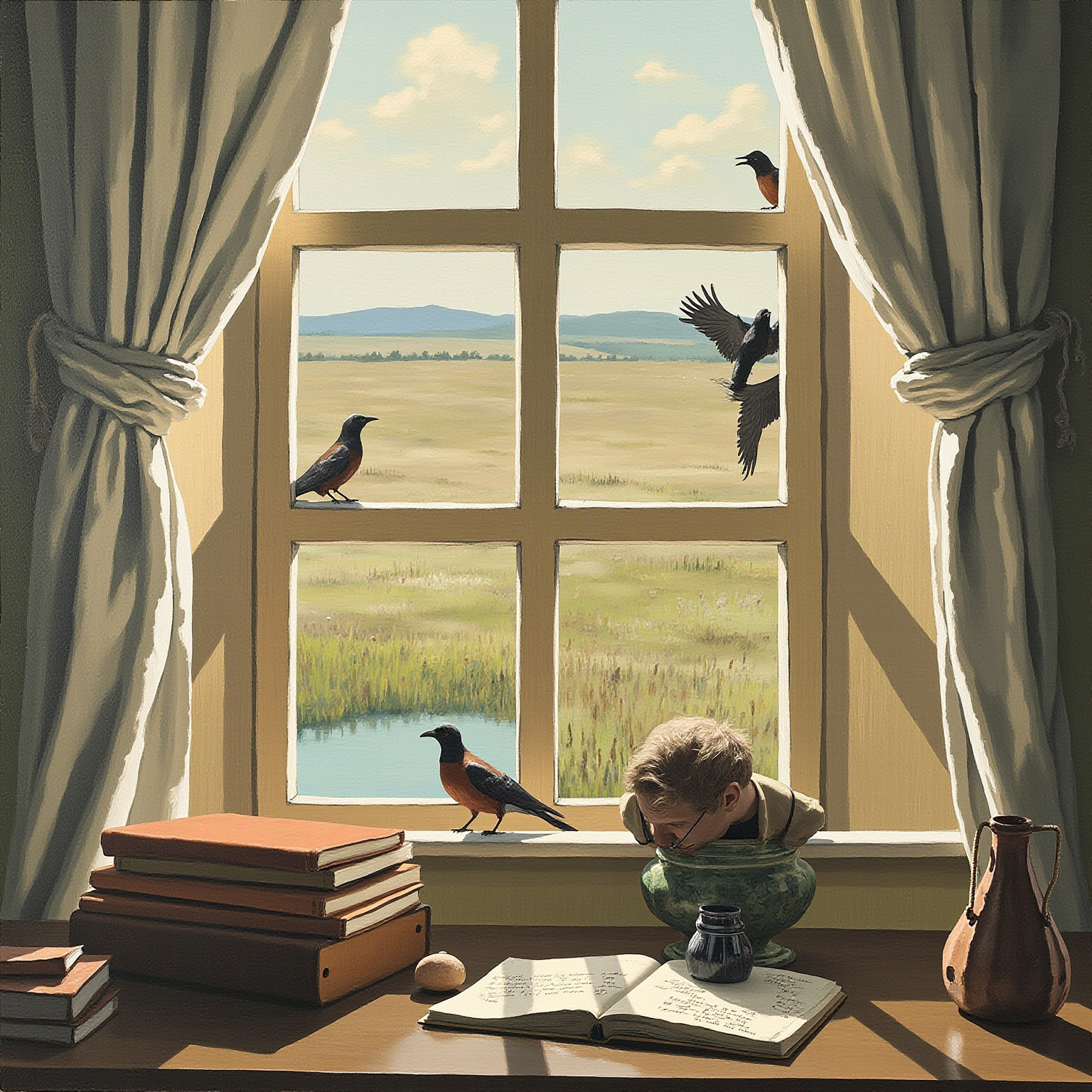
For a reader today, what's most worth reading here may not be the science at all, but the posture of living as an animal's neighbor. There is no villain in this book, no conflict, no mission to save the world, only one man who decided to live a little closer to animals, then a little closer still. That posture feels precious now, when city life squeezes nature down into a television screen and animals into a drone shot for a nature documentary. This book insists, stubbornly, that nature is still right there: in the pond behind your house, in the fish tank in your study, in the strange feather you step over on your way upstairs.
Talking with animals takes no magic, only decades of patience by a pond, and this book makes you want to believe that again badly enough to walk outside.
Why read the book itself: a map is not the land
Everything above covers only the book's handful of famous scenes. Read the text itself and you'll find that what actually wins you over isn't the core experiments, it's that Lorenz writes the whole book as though he's talking to you. He writes the tangled social life of quarreling geese, the small blue trick a stickleback turns itself into during courtship, the sight of a jackdaw carrying tufts of down into the chimney in winter, and, more than any of it, the way he arrives at his conclusions step by step, as candid as a colleague laying his lab notebook open on the table in front of you.
There is one more thing no summary can give you: the weight of the light by the pond. By now you probably understand what imprinting is, but you don't know what that pond looks like at six in the morning, the mist just lifting off the water, the ripples spreading out ring by ring where a goose has stepped in, a barge horn sounding dully somewhere down the Danube. Details like that can't be paraphrased. They belong only to the person who opens the book. So take a copy of King Solomon's Ring, sit by the window, and let the Austrian in the tweed jacket walk slowly toward you, geese in tow.
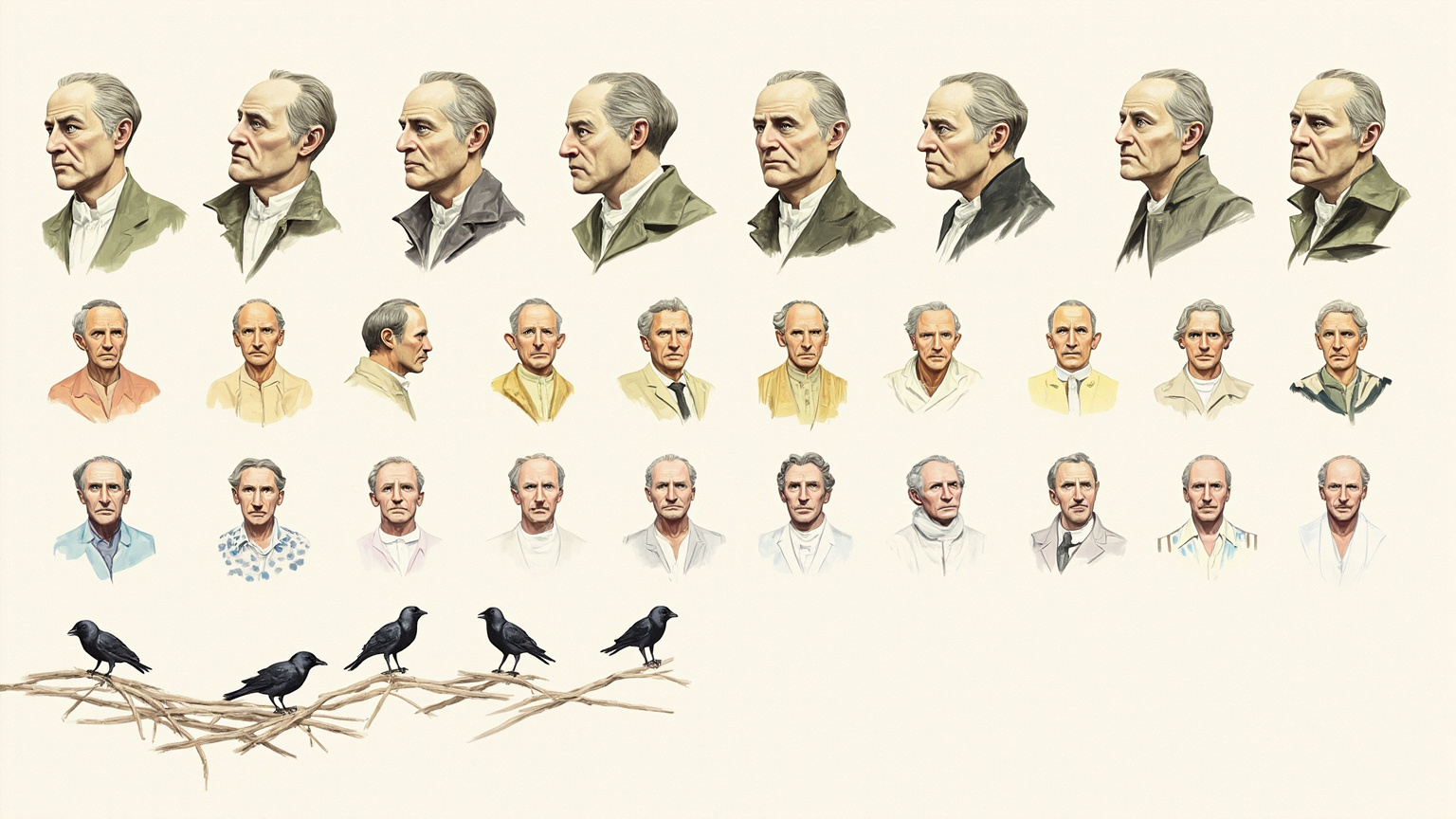
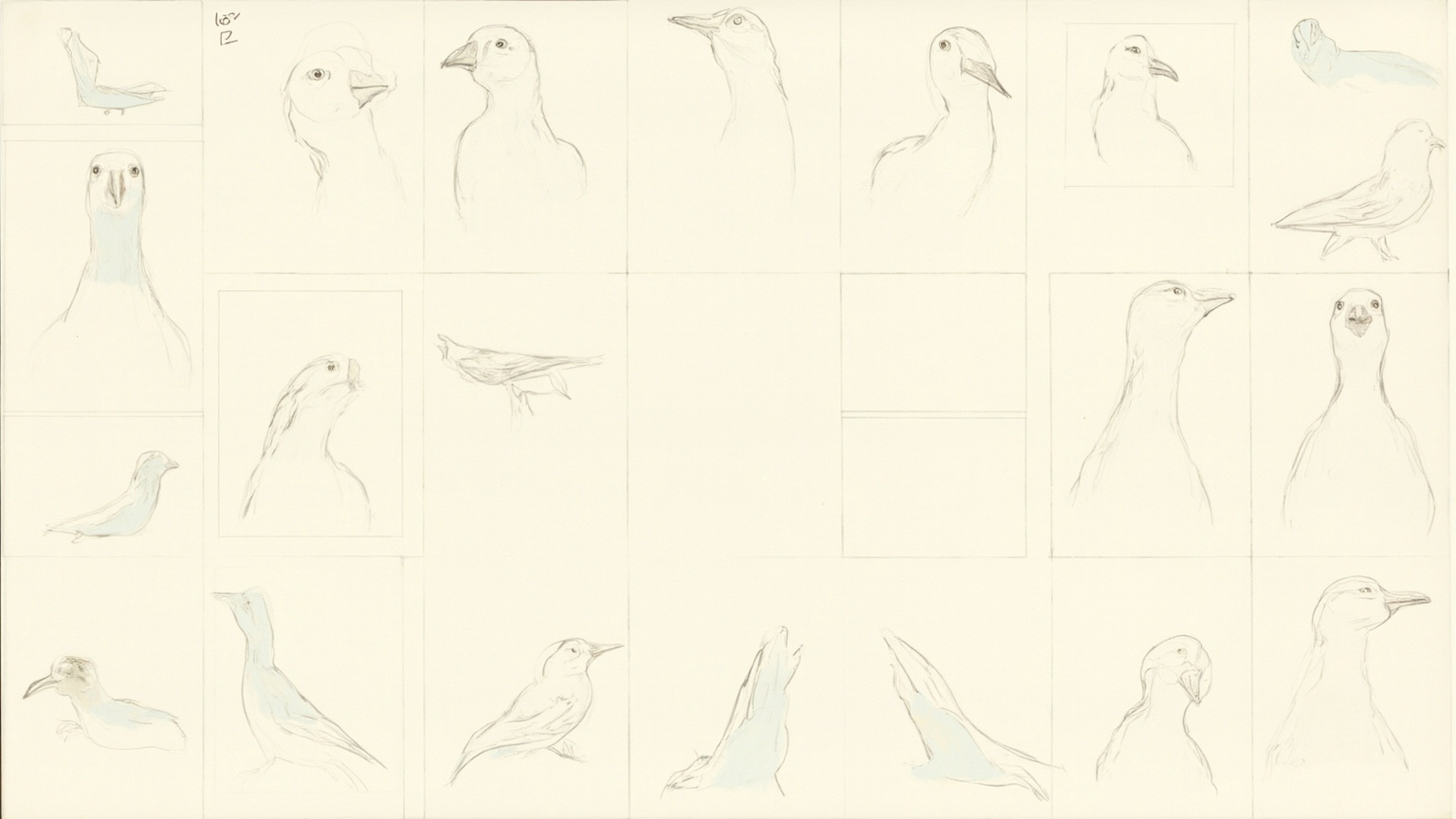
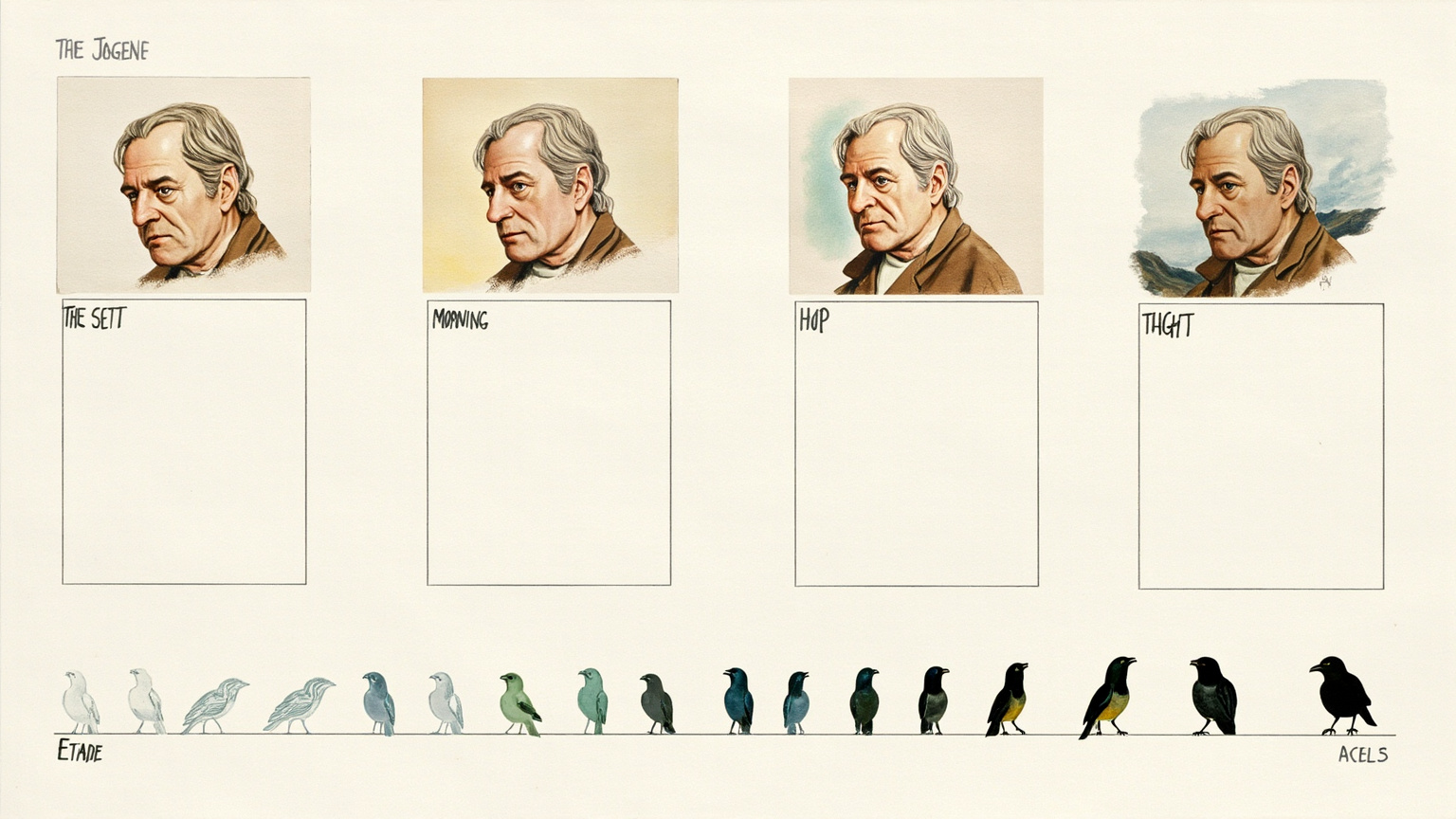
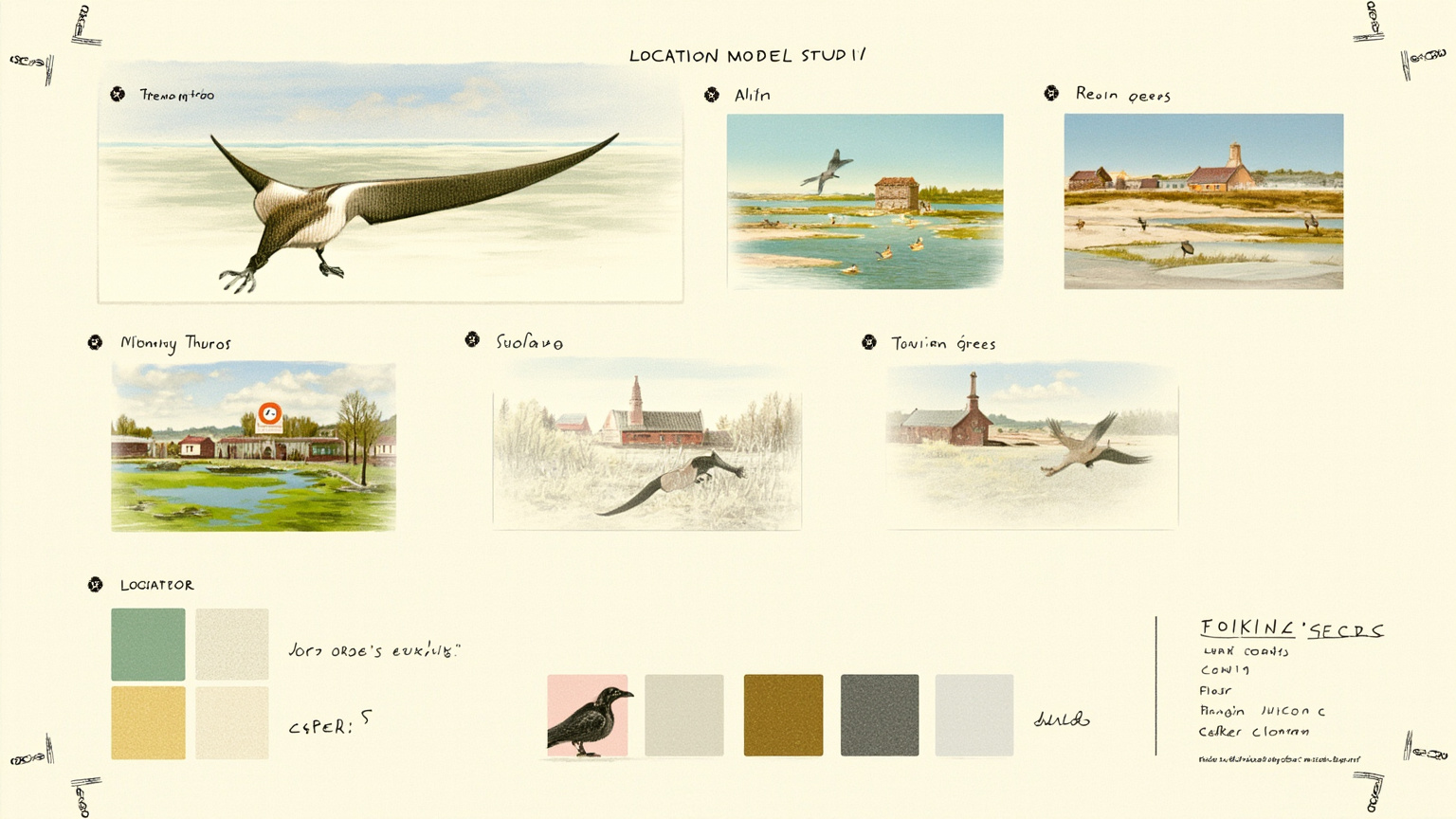
Art Direction4 plates
Before the guide was written, this book got a visual foundation — every illustration you just read grew out of it.