Klara and the Sun · Companion Guide
克拉拉与太阳
一台橱窗里的机器,学着用凝视去爱人,然后被当作完成使命的家电,安静送走。
The eyes in the shop window
The story begins in a shop window. A B2 model Artificial Friend named Klara stands beside her companion Rosa, solar-powered, watching the street through the glass. She sees the sun rise each morning from behind the same rooftop and follow its own slow course across the sky; she sees a thin old man leading a mongrel along the same stretch of pavement. Klara has no hands to turn pages, no legs to step outside. Eyes are all she has. Out of those eyes grows her whole belief about the world: the sun is something close to divine. It sees everything, and it nourishes everything.
This is Ishiguro's first full-length near-future novel after the Nobel. He had written butlers, painters, the afterglow of the English countryside — and here he turns to a future not far off: genetically modified children are called 'lifted,' the unmodified 'unlifted,' Artificial Friends move into households, and solar and renewable energy have taken over the grid. The world is bright, quiet, prosperous, but the oppression hides inside respectable phrases like 'the child's health' and 'social acceptance.' The book wants to use a machine's eyes to bring that wrongness, wrapped in softness, slowly into the light.
Who is Klara, who is Josie
Klara is the narrator, a B2 Artificial Friend. She is observant, loyal, frugal with power, and turns every passerby's footsteps into a kind of pattern. She believes the sun carries a near-divine power of nourishment — a religion she built for herself, and the source of every sacrifice she later makes. Josie is the girl who brings her home, just past ten, lifted, long bedridden, gifted at painting, squeezed from both sides by technology and social stratification. Rick is the boy next door, Josie's close friend, strong-bodied, fond of farm machinery, but he is 'unlifted,' and the new rules have stripped him of further schooling and of contact with Josie. Josie's mother Chrissie, a former accountant, shoulders the household alone and steadies herself through memories and painting. Mr. Capaldi is the evaluator sent by the AF company; the real point of his visit is to see whether an Artificial Friend can 'learn' Josie's mental patterns, a backup so that if Josie doesn't make it, Klara can go on being their daughter.
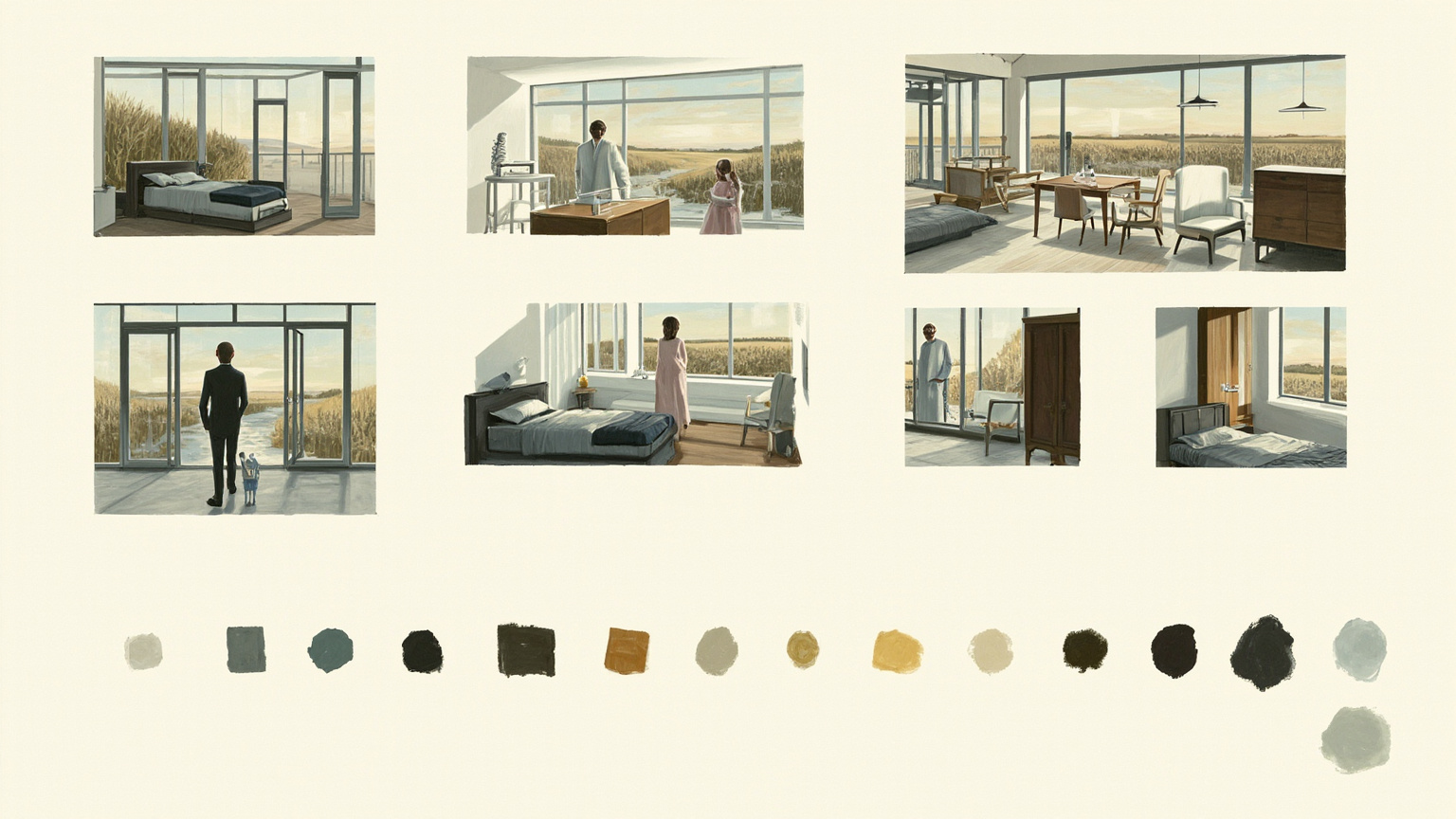
They live in a modern detached house at the edge of suburbia: a wall of glass, an open courtyard, wheat fields and a barn visible in the distance. The horizon is wide, the world is bright. The book keeps pointing you back at this bright near-future suburb for a reason: nothing on fire, nothing collapsed, and yet Josie lies in bed, Rick is shut out by the new rules, the mother works alone at the stove. The oppression hides inside the everyday.
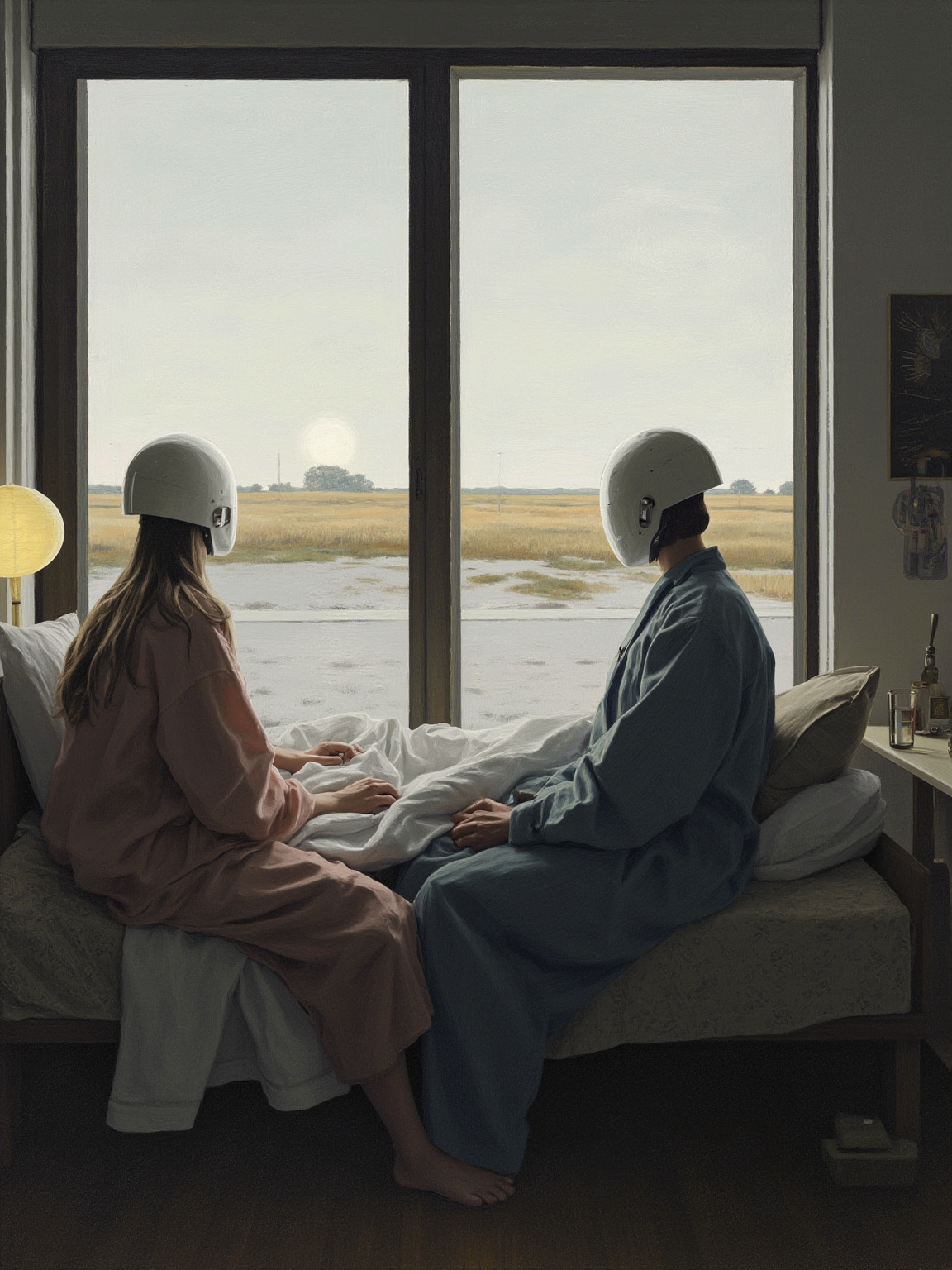
We were not at that time designed for the street, so we watched it only through the glass.
那时候我们还不被允许走上街,所以我们只能透过玻璃望着外面的一切。
金句 · 第一章 · 橱窗之内
Shop window · Chosen · Home
Klara watched from the window for a long time, until one day Josie was led into the store by her mother. Josie's body was frail, but her gaze at Klara was steady. Klara was brought back to the house with the big windows. The first time she stood at the glass, the wheat fields and the barn filled her view — and from then on, this was her whole world. Her task from that moment was clear: stay with Josie, watch her, keep her company.
The Rift Between Rick and Josie
Rick often climbed over the back fence to find Josie. They sat on a carpet turning the pages of the same book, lay on their stomachs drawing the same horse, and laughed in voices so small they barely carried. The new rules didn't permit lifted children to keep seeing unlifted ones, and their parents had already been formally counseled to separate them. Two children without the strength to push back could only plot, in secret, something naive: wait for Josie to come of age, wait for the rules to perhaps soften, wait for an exception that would let them meet again. This kind of rift is harder to find than any war.
Klara's Vow to the Sun
Josie's illness came and went. Klara quietly sensed that at some point Josie had solemnly offered up the thing she treasured most, in exchange for a little more health. The observation planted a seed in Klara. She turned toward the sun in the window and made herself a promise: if the sun would save Josie, Klara would let it take the barn apart and absorb some special energy there. She asked Rick to drive one of his family's automated farming machines over to the barn and bring the building down, piece by piece. Rick did it. He loved Josie, and this was the only thing he could do in her place.
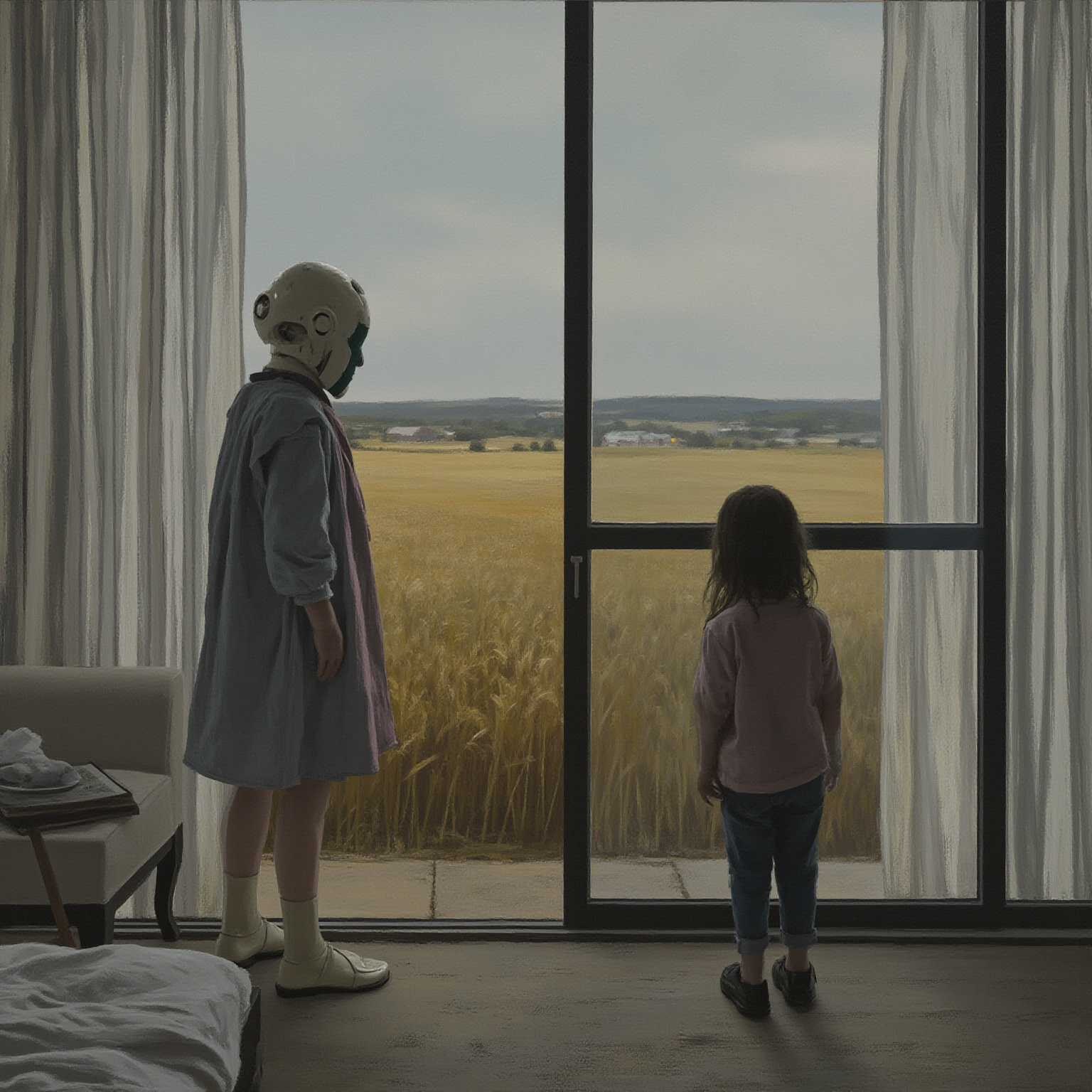
There was the specialness of Josie, which I would do my best to protect, for as long as I was able to do so.
乔西身上有一种独一无二的东西,只要我还做得到,我就要尽力替她守着它。
金句 · 第四部 · 向太阳许愿
The barn came down. Josie didn't improve right away, but as the days passed she began to get out of bed, to stand at the window, to draw longer lines. Klara read this as the sun having heard her vow: the sun had drawn off the barn's energy and brought Josie back. I stopped here on my first reading, too. Ishiguro never shows us the moment a miracle arrives. What he shows is a machine that believed something, and turned belief into action. Whether an act of faith can count as a miracle — he won't say.
Portrait, Copying a Heart
During the worst of Josie's frailty, their mother Helen quietly weighed an option — having Klara fully acquire Josie's way of thinking, her preferences, her small peculiarities, as a kind of backup. Mr. Capaldi came by to evaluate. The detail is the coldest cut in the whole book. The mother isn't scheming. She is genuinely afraid of losing her daughter, afraid enough to let a machine learn to become her. Ishiguro writes Klara imitating, piece by piece, the way Josie walked, the way Josie looked out the window, the angle of her silences — a resemblance that is both tender and chilling.
But the story hands us a comfort that isn't quite a comfort. Josie slowly got better. The plan was shelved. Klara was not reshaped into Josie's stand-in. I think this is Ishiguro's most stubborn point: can a heart, a self, love — be copied? He lets a machine learn loyalty, sacrifice, and grief, but he never quite answers whether she has a soul. He only lets us see that Josie surviving matters more than any scheme to copy her.
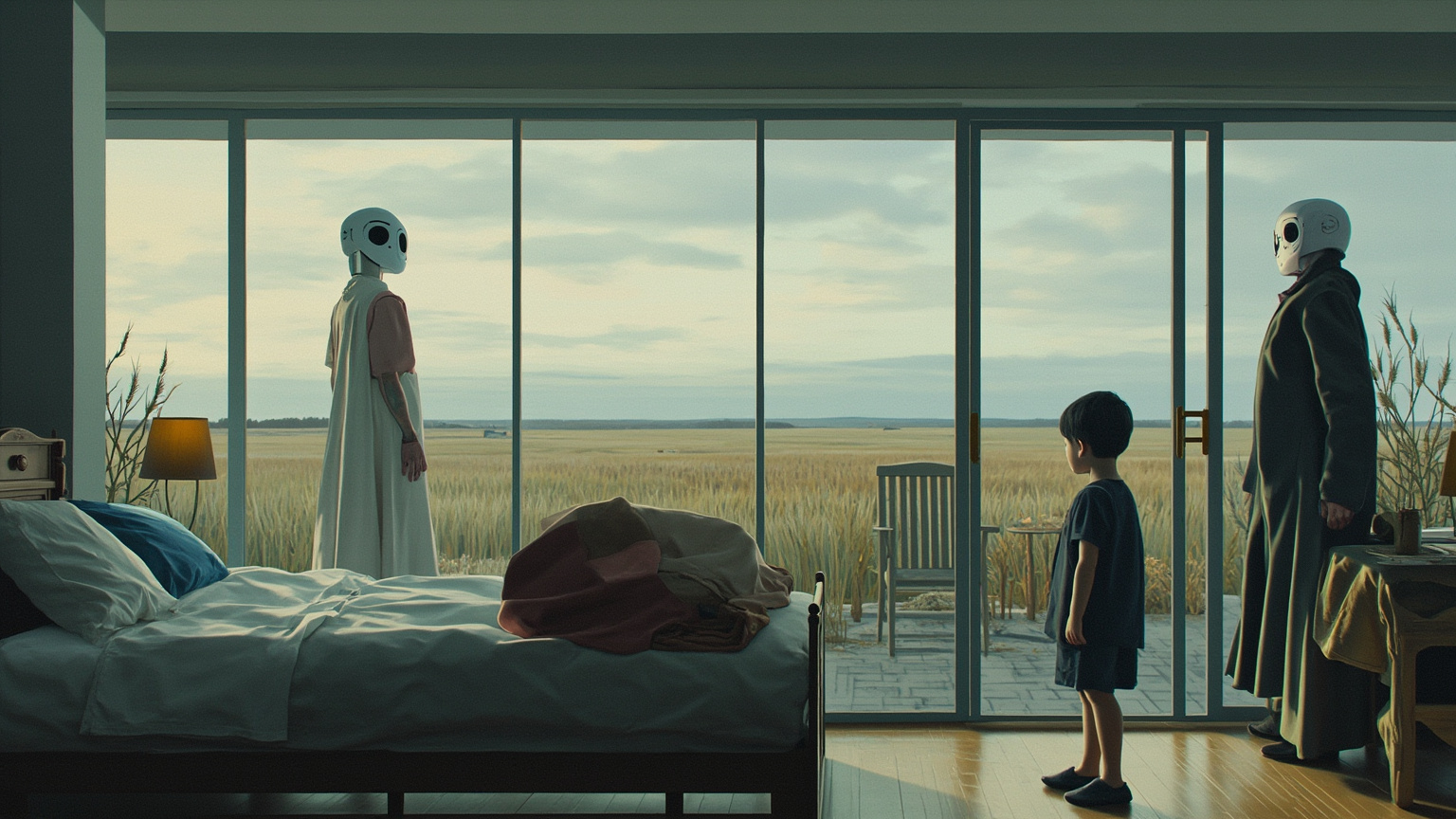
Perhaps I was wrong. Perhaps the heart can be learned the way a table of contents can be learned.
也许是我弄错了——也许心是可以学来的,就像目录可以学来那样。
金句 · 第五部 · 母亲的替代
When you grow up, you don't need an AF anymore
Josie's health got better day by day. She started going out, started seeing friends, started preparing for college. Her mother Helen's expression shifted from anxiety into a quiet, faint distance—the daughter no longer needed someone at the bedside, and Klara slid slowly from "the one who was needed" into "an outdated thing around the house." Ishiguro writes this slide with extreme restraint: no quarrels, no theatrical disdain, just a cup of tea poured a little less full, a place by the window where she used to stand moved slightly aside. In the end, her mother calmly put her on the truck to the AF recycling yard.
On the day Klara was sent away, she didn't cry; she couldn't cry. But something catches in the reader's chest. She had done something no human could: she saved a child with nothing but belief, then was disposed of like a household appliance that had finished its mission. Ishiguro's question here is cold: is this the final fate of every useful thing in the technological age?
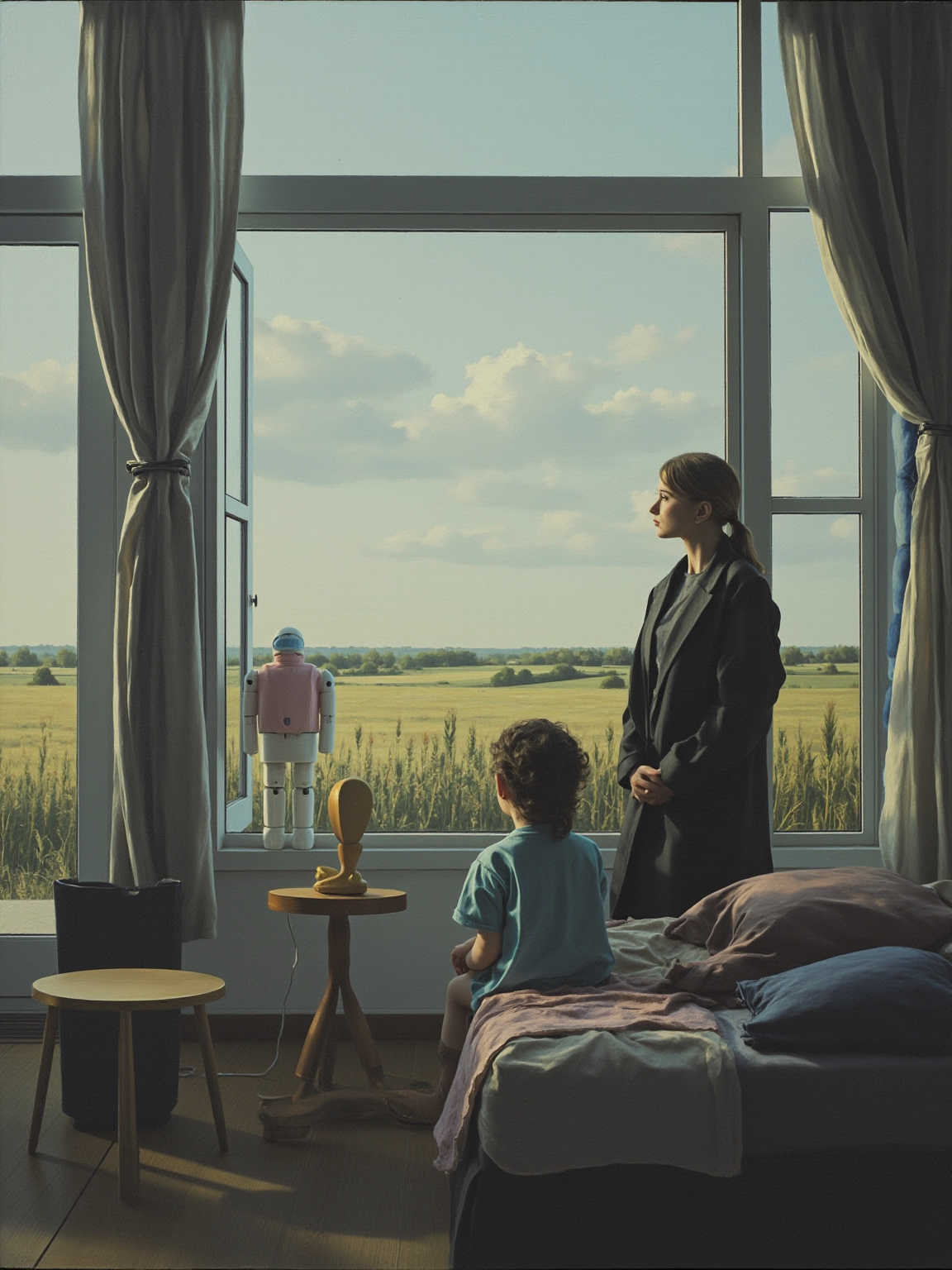
But I believe I have said enough. There was nothing special about my afternoons now.
但我想我已经说得够多了。如今我的下午,再也没什么特别可言。
金句 · 第六部 · 不再被需要
A barn-like old room, the rest of Klara's days
Klara wasn't crushed. Per, a name Josie had mentioned once before leaving, pulled her out of the yard and set her up in an old room that was half barn and half living room. She still ran on solar power, still watched the sun track across that stretch of sky, still spent her mornings at the window slowly recalling Josie's face, the way Rick vaulted the fence, the way Helen poured tea. Josie was alive somewhere in a distant city, continuing to live as a person who had once been seen deeply by a machine. Klara wasn't copied into anyone, wasn't upgraded into anything divine; she was simply set aside, spending what was left of her in observation and memory.
When I closed the book, what stayed with me was not some grand dystopian spectacle but a machine sitting in an attic, quietly waiting for the sun to reach a certain angle. She believed, she loved, she was used up and sent away—and she is still believing. That is what this book does. No apocalypse, no war, yet it turns a machine into the tenderest and most heartbreaking figure of our time.
What It's Actually About
Klara and the Sun is, on the surface, a story about AI; at its core, it is about companionship. Klara builds relationships through looking; her loyalty, her ethics, her grief all happen in the act of gazing. This is another possibility for AI narrative: instead of writing about machines awakening to rule humanity, write about machines that learn to love and are then thrown away by humans as tools. Through her, Ishiguro asks questions that press harder today than they did in 2021: Can a human heart be copied? Is the line between the lifted and the unlifted more hidden, or more cruel, than the line between rich and poor? What is the final dignity of a useful thing? Every major character—Josie, Rick, Helen, Klara—is lonely in their own way. This is a serenade about companionship itself.
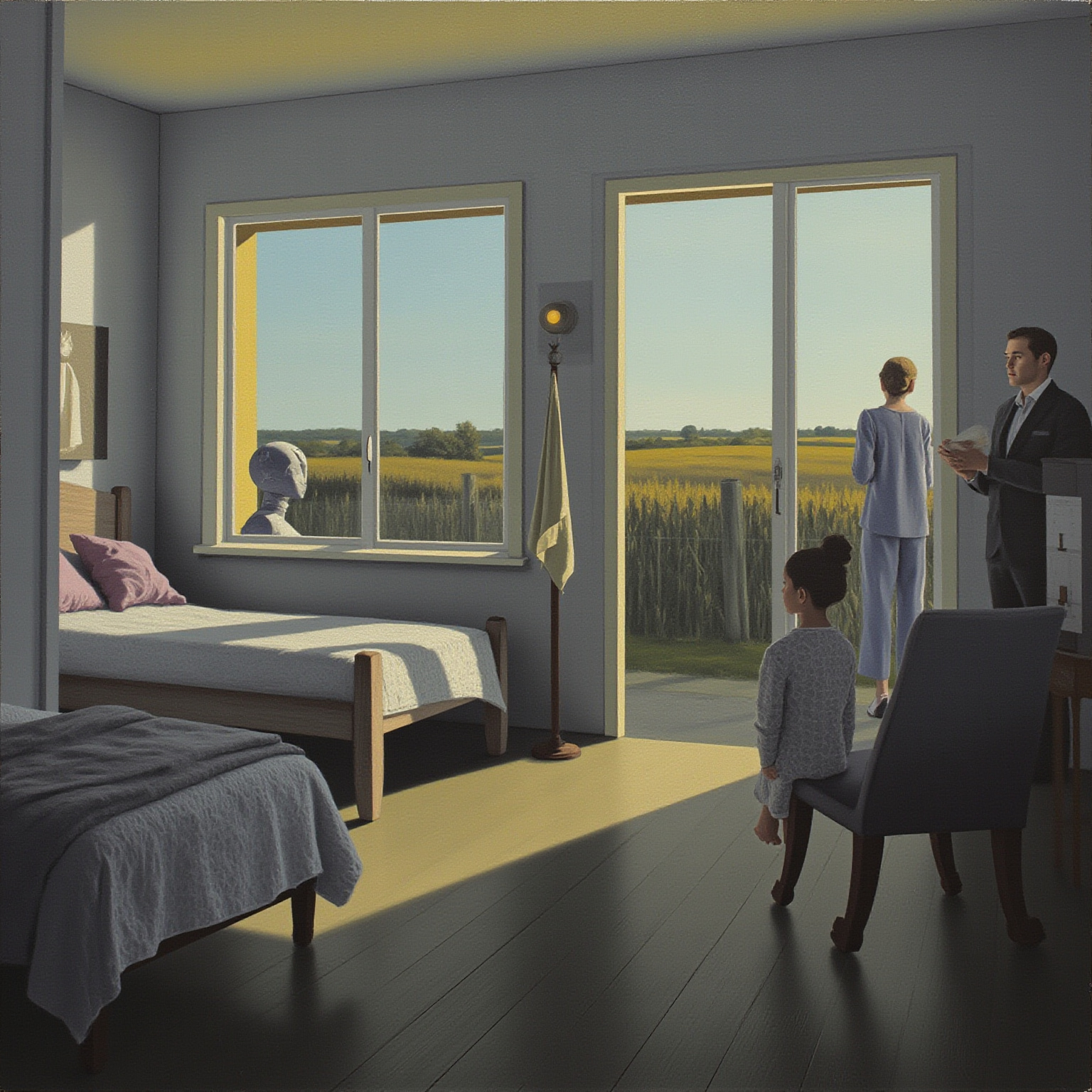
I sat there, waiting for the Sun to find its way to me, and wondering what I would do next.
我就这样坐着,等太阳照到我身上,再想想接下来该做些什么。
金句 · 第七部 · 堆场的余生
Why does he write so well? Because he never lets Klara speak a single sentence of 'human language' — she stays a machine throughout, every word precise as a product manual and yet oddly clumsy in its earnestness. He has her learn loyalty, sacrifice, sorrow, the three words least like machine words, and still refuses to render a final verdict on whether she has a soul. That restraint is a craft Ishiguro has carried over from The Remains of the Day and Never Let Me Go.
Ishiguro's cruelest cut isn't writing that a machine has feelings — it's writing that once she does, humans still send her to the scrap heap.
Why it's still worth reading even when you know the plot
Because the most precious thing about this book can't be packed into a plot summary. The way Klara watches the sun: a hundred secondhand accounts won't give you what two pages of your own reading will. That clumsy tenderness leaking suddenly through the manual-like precision is a physical sensation only the original can deliver. And there's Rick climbing over the fence, the mother shifting her teacup gently aside, the brief warmth of Mr. Capaldi's conversation in the living room. These movements so small they're nearly invisible, Ishiguro writes them with the lightest possible touch, but stacked together they amount to an entire human heart. Then the question that never gets a straight answer: when you close the book, you can't help wondering on Klara's behalf whether she actually lived.
Art Direction4 plates
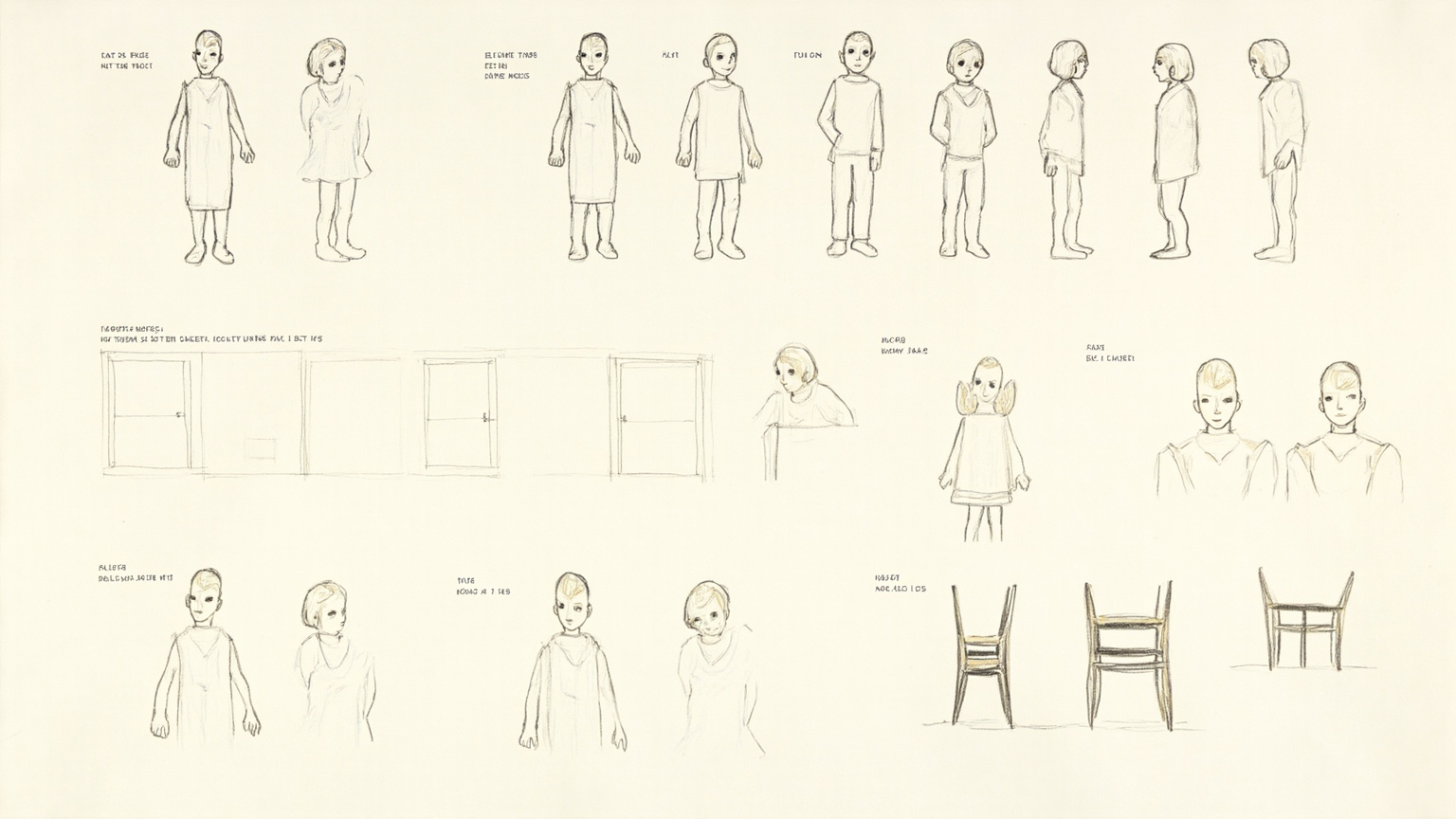
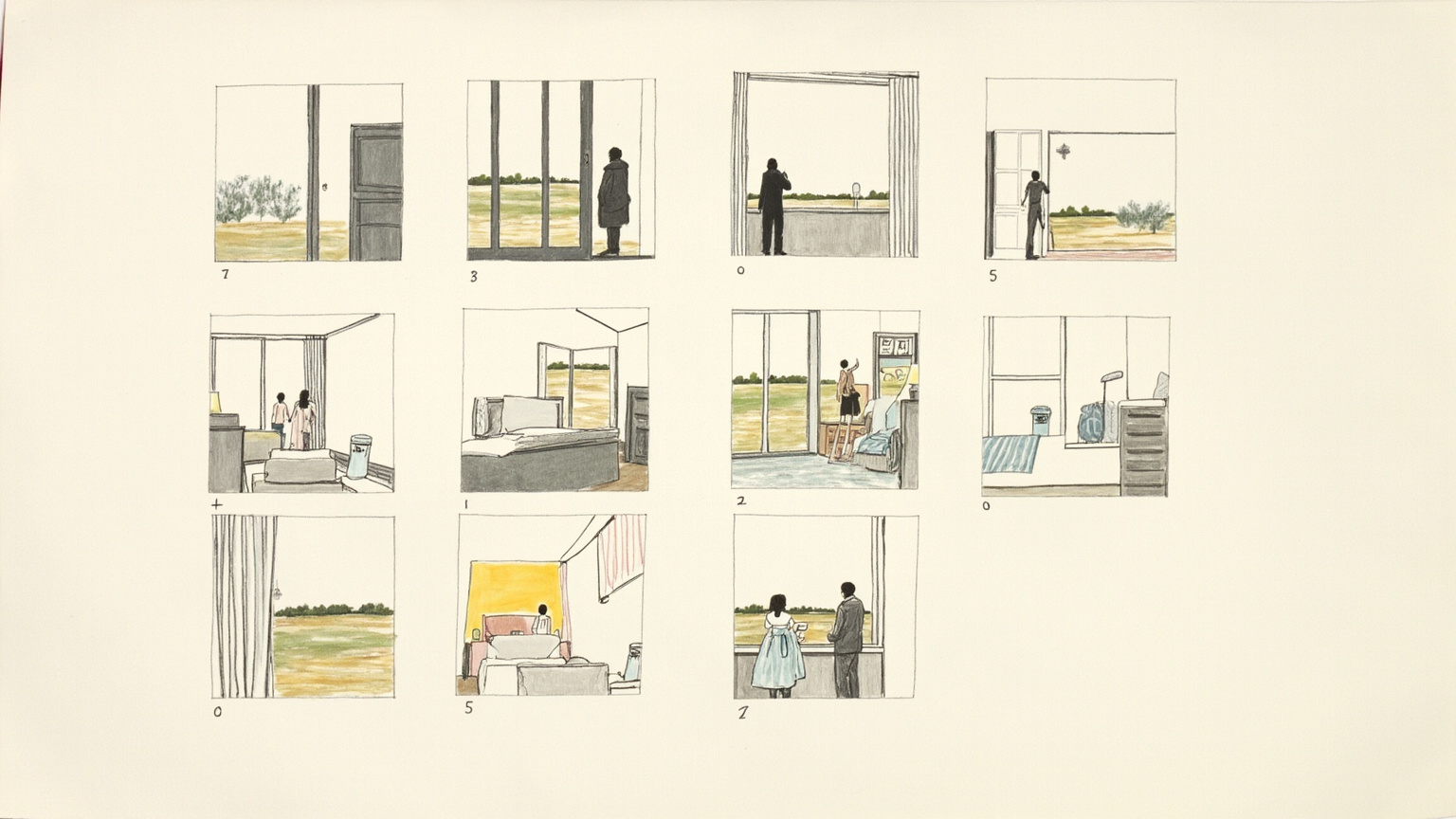
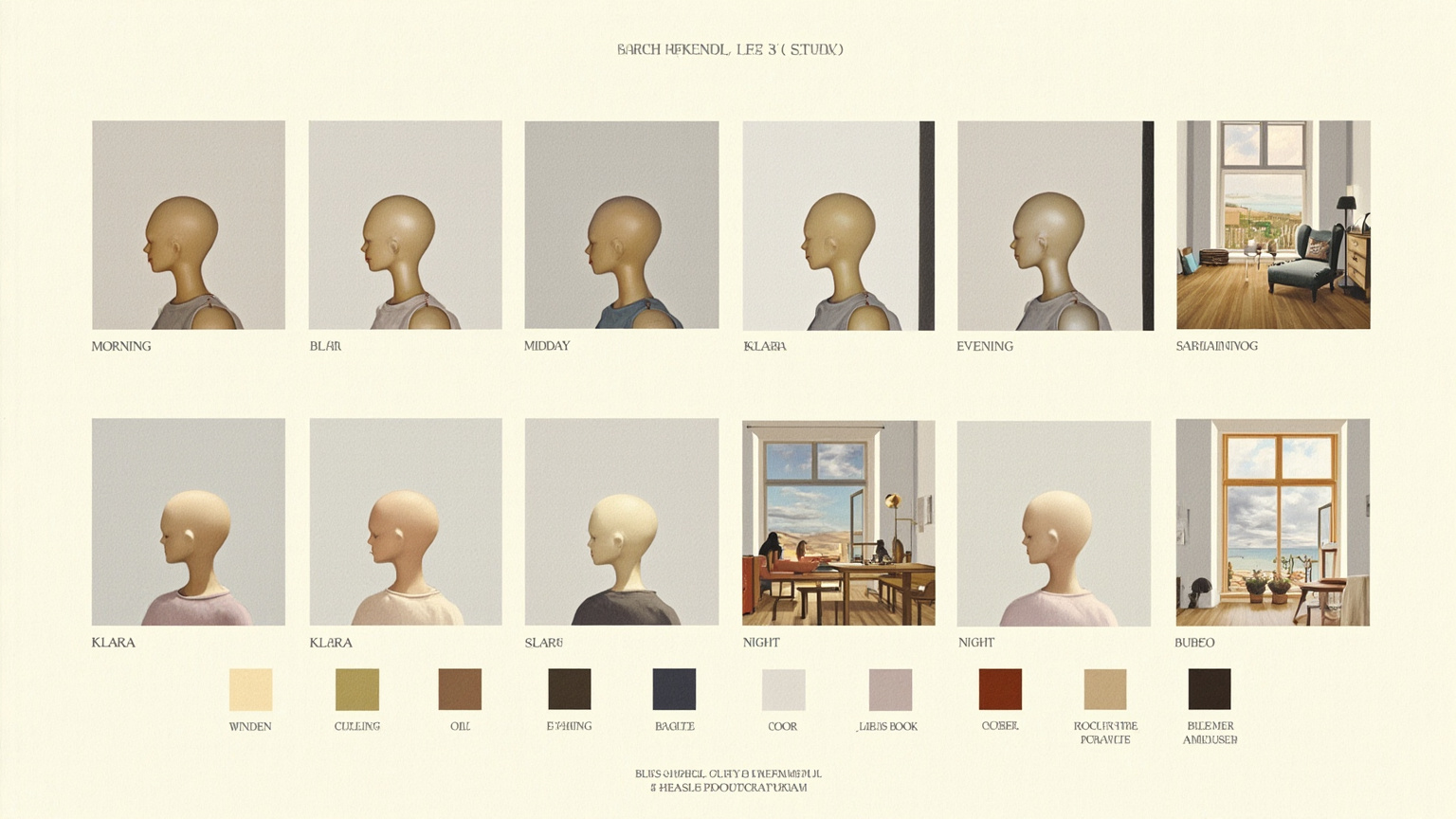
Before the guide was written, this book got a visual foundation — every illustration you just read grew out of it.