Kokoro · Companion Guide
Kokoro
On the beach at Kamakura, a student approaches an impassive stranger he'll call Sensei; years later, a farewell letter arrives — he once beat his best friend to the woman they both loved, and the friend died behind a sliding door.
It Begins on a Beach
The water is cold, the waves break against the breakwater, and a middle-aged man is standing not far off, looking out at the sea with no expression at all — not calm, just empty. You go over and start talking to him, and from that moment you are pulled into his life. This is not the start of a romance. It is the start of a mystery: something about his loneliness that you cannot name has you hooked, and the closer you get, the more you want to know what he is hiding.
What Kind of Book This Is
Kokoro is Natsume Soseki's long psychological novel, serialized in the Asahi Shimbun in 1914, two years before his death. It is routinely named among the handful of peaks of modern Japanese literature. Unlike Osamu Dazai's No Longer Human, which grips readers with a pose of decadence, Kokoro works through a single long letter that presses a whole lifetime of secrets into the reader's hands — and through the fact that this letter arrives in the very summer the entire Meiji era is breathing its last.
Who Speaks, Who Stays Silent
Only two people in the whole book get the right to a name — the college student who narrates as "I," and the middle-aged man he addresses, respectfully, as Sensei. Sensei is not a teacher; it is simply what he is called. His real name never appears. He is a reclusive, self-scrutinizing man who withdraws from the world, and once a month he goes alone to a cemetery in Zoshigaya, in Tokyo, to visit a dead friend's grave. His wife, Shizu — called "the young lady" before they married — is gentle and devoted, and has no idea what her husband has lived through. The one entrusted with all these secrets, who listens, who will carry them forward, is the young college student drawn to Sensei on that beach at Kamakura. He is not especially clever, not especially brave — he is simply caught by a loneliness he cannot name. Beyond these three there is a cast of shadows who never get names of their own: the close friend known only as K, the widowed landlady's family that K quietly loves, and, back in the narrator's home village, a father slowly dying of kidney disease.
Meeting at Kamakura: Loneliness Drawn to Loneliness
The narrator first meets Sensei on the beach at Kamakura — the two of them walking in the same cold wind, and Sensei lets slip some remark that the narrator happens to overhear. Back in Tokyo afterward, the narrator takes the liberty of calling on him, and is quietly allowed to keep coming. There is an indefinable chill to Sensei's household: his wife is gentle, but Sensei himself is not a talker, and there is always a distance in his eyes. Every so often he vanishes for half a day and comes back without explaining himself — only much later does the narrator learn he has been to Zoshigaya, visiting a grave. As a piece of writing, this is Soseki setting a twenty-year-old's eyes to work closing in on a forty-year-old mystery. Reading the first two parts, you are as puzzled as the narrator is — why is Sensei like this? Why does a person end up living like this? Soseki never gives away the answer; he simply lets the narrator sit near him, again and again, until the shape of that strangeness slowly becomes something you can smell.
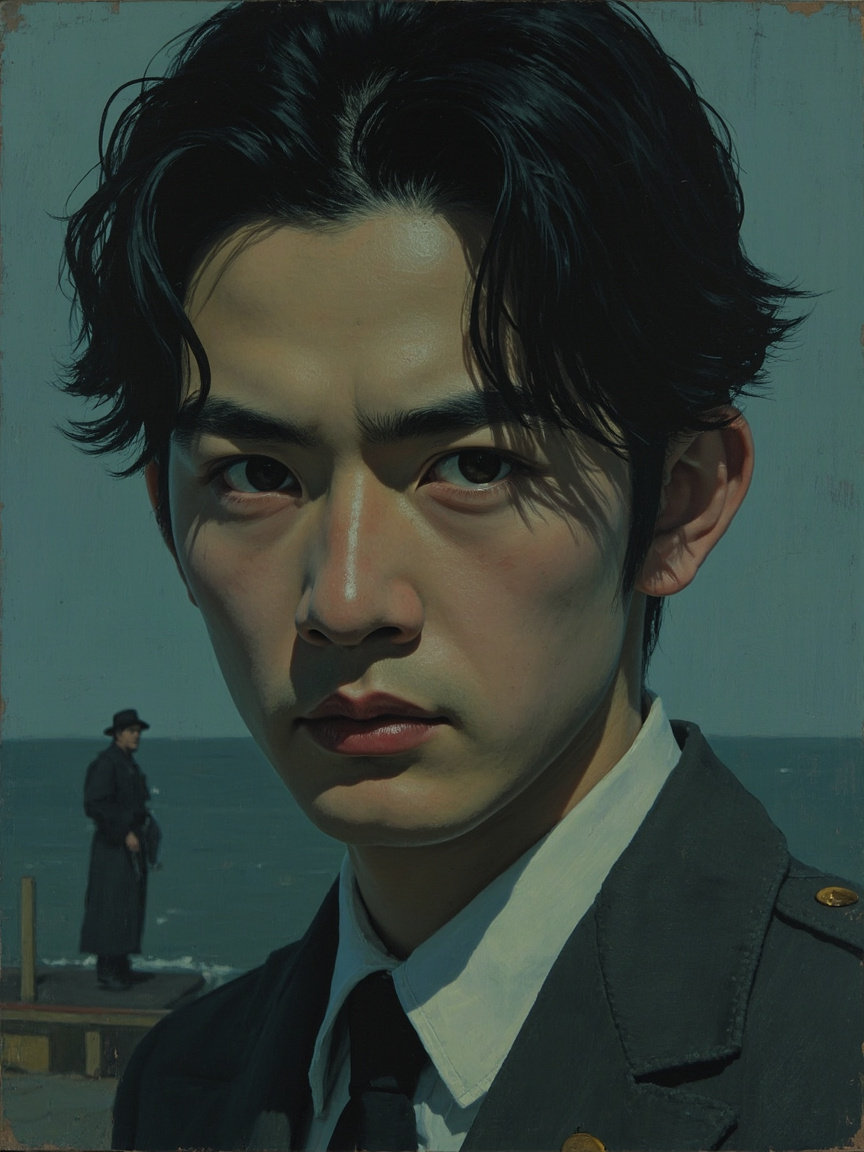
Now and then Sensei says things to the narrator that sound half like aphorisms, half like confession — that people turn bad when it matters most; that the narrator will understand someday; that he should not put too much faith in what the moral textbooks say. At the time the young student barely follows any of it, and takes Sensei simply for a pessimist, a man weary of the world. Only later does the reader understand: this is not world-weariness. This is a man who has proved that sentence on his own body, warning the next generation.
Graduation and Return: An Old World Is Dying
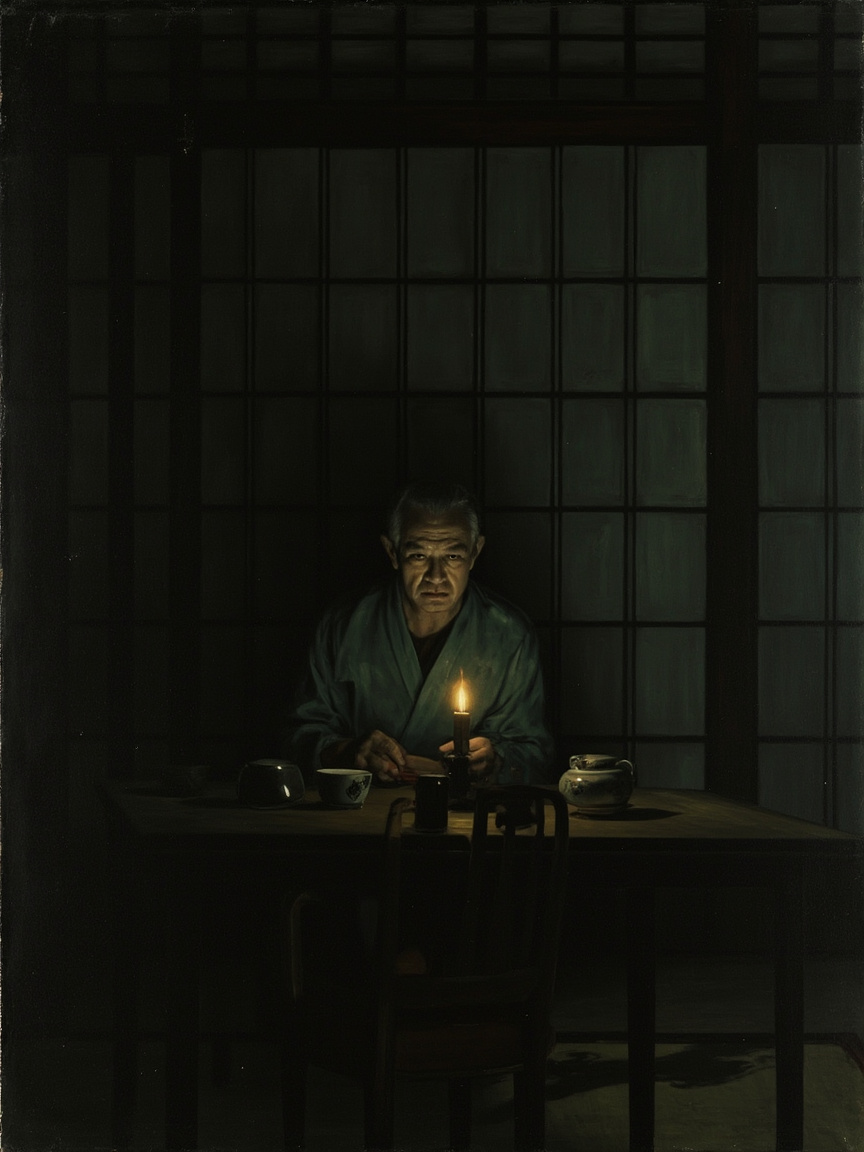
College is finished. The narrator returns to his family home in the country, where his father lies bedridden with kidney disease. On one side is the old world of blood and kinship — a silent father, a mother bustling about, relatives dropping by, an uncle running errands. On the other is the remote, aloof Sensei back in Tokyo, sending the occasional short note that reads almost like a will. Soseki stitches these two worlds together like two pieces of cloth cut from different eras. It is at this moment that word comes of the Emperor Meiji's death. All of Japan seems to draw in a cold breath. And then, hard on its heels, General Nogi Maresuke commits junshi — follows his lord in death — on the day of the state funeral. The two funerals fall on top of each other, and the whole country is shaken. Soseki writes this passage entirely from the narrator's vantage point out in the country, hearing the news, watching his father's face: the men of the old world are dying, and the old world's gi — its code of duty and loyalty — is dying with them.
The Letter Arrives: The Moment He Abandons His Father
The father is close to death. A long letter suddenly arrives from Tokyo — Sensei's handwriting, a thick sheaf of pages inside the envelope. The narrator has barely read the opening lines before his scalp prickles: this is a man putting his affairs in order. Before he even finishes reading it, he makes the decision later generations would argue over for years — he leaves his dying father's bedside and boards a train for Tokyo. It is a brutal touch. A young man who has just received a modern education, caught between the father of the old world and the Sensei of the new, runs instinctively toward the latter. Soseki makes him neither a hero nor a villain — he is simply pulled along by the weight of that unsolved mystery. As a piece of construction, this passage is almost a silent acceleration: every thread laid down earlier pays off at once, and the reader realizes, in the same instant as the narrator, that Sensei is on his way to die.
The Testament, Part One: The Seed of Betrayal Was Planted Early
The long letter opens by yanking the timeline back to Sensei's boyhood. Orphaned by both parents, he was entrusted to his uncle — who promptly embezzled the family fortune. It is the first time in Sensei's life that someone he trusted betrays him, and from then on he learns not to trust anyone. Carrying that wariness with him to Tokyo, he lodges with a military widow, his landlady, and slowly falls for her daughter, Shizu. As writing, Soseki has Sensei lay this out in the first person, in a tone so calm it borders on the businesslike. But the reader can already read, between the lines, the strained rhythm of a man who has to finish laying every piece of groundwork before he can bring himself to say how K died. The very structure of this testament is the shape of a coward's courage, finally spent after a lifetime of gathering it.
The Testament, Part Two: A Friend Dies on the Other Side of the Sliding Door
Sensei brings his closest friend, K, to live with him. K is an almost monkish young man, hard on himself, devoted to a relentless kind of spiritual self-discipline. Before long K falls for the landlady's daughter too. K confesses this to Sensei, and Sensei tells him, fine, let's compete fairly — then, behind K's back, gets to the landlady first and asks for the daughter's hand. Word of the engagement reaches K through the landlady herself. A few nights later, K cuts his own throat with a knife on the other side of the sliding door. The short note he leaves behind blames only his own weakness of will — not one word of resentment toward Sensei. But Sensei knows the truth: he drove his closest friend to his death. From that night on, Sensei lives out the rest of his life as though he were already dead. He marries Shizu. He keeps his silence for the rest of his days, telling nothing even to his wife. Once a month he visits a grave at Zoshigaya that no one else knows he is responsible for. And he tells himself: I have already lived through my own execution.
Soseki writes this scene in almost bare, unadorned strokes — Sensei recalling the sound he heard that night on the other side of the sliding door, the narration calm to the point of cruelty. The coldest line of all: he keeps this from his wife for the rest of his life not out of indifference but to protect the "spotless" version of himself that lives in her mind — a devotion twisted, down to the bone, into a kind of selfishness. Reading this, the faint world-weariness that hung over the first two parts finally takes a shape: he does not hate the world. He hates himself.
Three Deaths Layer into an Elegy for Meiji
At this point the story circles back to the two funerals it opened with. Emperor Meiji is dead. General Nogi has committed junshi. In that summer when the whole nation is shaken, Sensei finally decides to set down, word by word, everything he could never say aloud — his uncle's betrayal, K's death, the way he has lived the rest of his life as a dead man — in a long letter addressed to the one young listener he has, the narrator. Then he kills himself. Soseki defines Sensei's death in a line that sounds almost like a slogan without quite becoming one: he dies as junshi for the spirit of Meiji. It is a private reckoning and a national mourning at once. The moral world of the Meiji generation was built on treating gi — duty, loyalty, righteousness — as the very thing worth living for. When the symbol of that world dies, they find no new language to go on living in, and so they choose death to hold on to the old gi. What makes Sensei's betrayal unforgivable is precisely that it comes from a man who valued gi above everything else — and that self-inflicted irony is the deepest pain in the whole book.
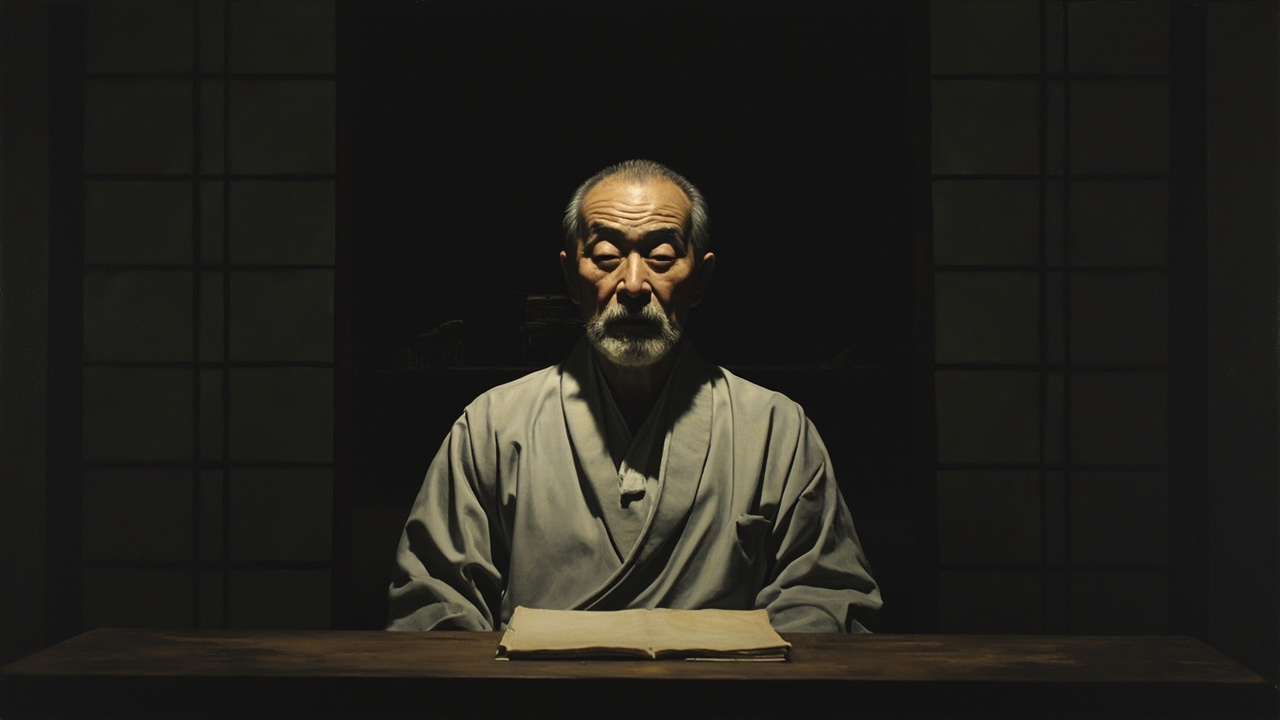
What makes this passage remarkable, technically, is that Soseki barely uses a single word that sounds tragic. Sensei's death, K's death, the Emperor's death, General Nogi's death — none of these four deaths is staged as a dramatic scene. But laid one on top of another, the weight of the whole book comes down at once. This coldness that burns from the inside is the most characteristic posture of the generation of Japanese intellectuals straddling Meiji and Taisho — and it is why this novel remains required reading for understanding the modern Japanese spirit.
What Is It Actually About
On the surface, it is about the weight of guilt and shame: one selfish act of getting there first, one betrayal where "I never even laid a hand on him," is enough to make a man live the rest of his life as though he were already dead. Underneath that is the loneliness of modern individualism — Sensei understands too much of the dark side of human nature, understands the truth that people turn bad when it matters most, understands it even about himself; but understanding a thing is not the same as being able to get past it. The freedom of the modern individual turns out to be, at the same time, an isolation that cannot be shared with anyone. At the outermost layer, it is the death of an entire era. The Meiji generation lived by treating gi as the very thing worth living for, keeping the self pressed down beneath it; by the early Taisho years that structure could no longer hold — the old gi had nowhere left to stand, and the new self did not yet dare to lift its head, so all that was left was death. Soseki himself stood at that same crossroads, which is why he let Sensei die once, in his place.
What You Get by Reading the Novel Itself
This guide gives you a map, but the novel itself is the ground you only find out is uneven once you are actually standing on it. Two things Soseki does are beyond any plot summary's reach. One is a pacing so slow it verges on suffocating — every time Sensei opens his mouth he says half a sentence and leaves the rest unsaid, always. The other is the sensory detail of the night K kills himself: the faint sound on the other side of the sliding door, the direction of the wind, the way the lamplight shifts. None of that reaches you unless you are immersed in the breathing rhythm of the original text. And there is a question you will not even know to ask until you have finished: looking back, is Sensei's twisted devotion to protecting the spotless self his wife believes in actually love, or is it selfishness? Soseki deliberately never answers. You do not get to ask that question until you have read the whole book.
The cruelest stroke in Kokoro is this: the man who valued gi more than anyone else is the one who betrays it — and spends the rest of his life paying off that debt of death simply by staying alive.
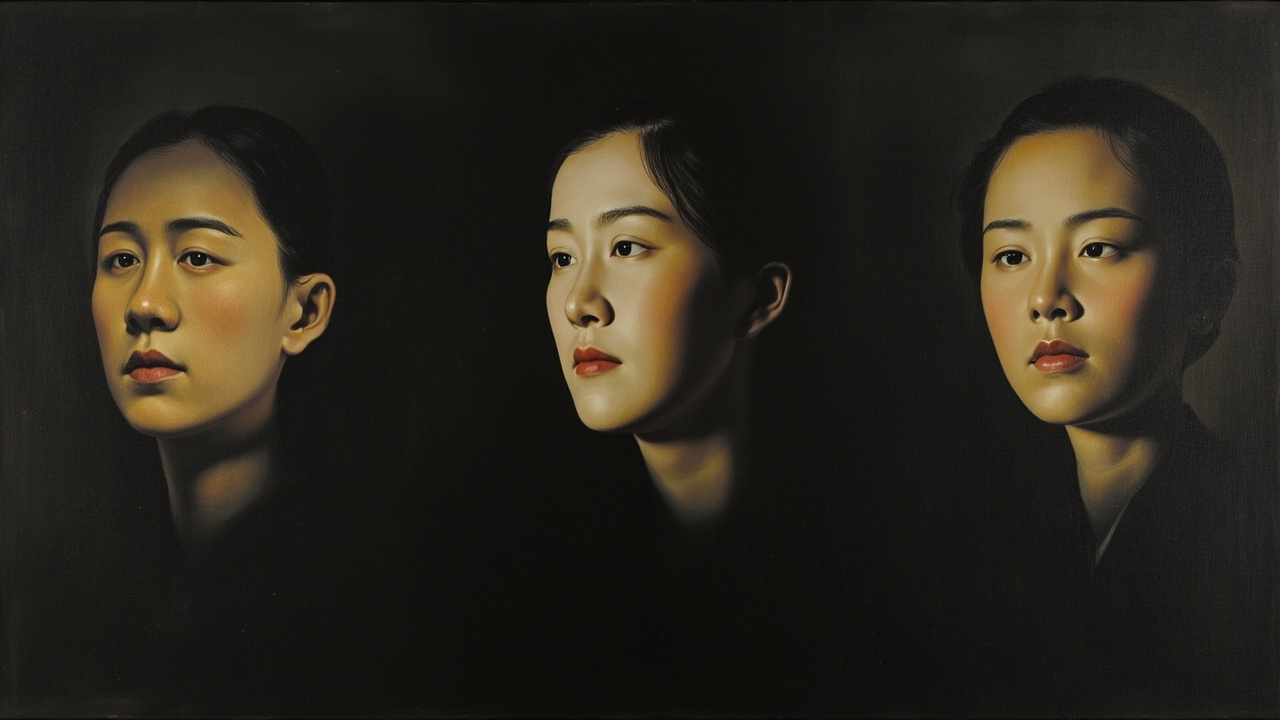
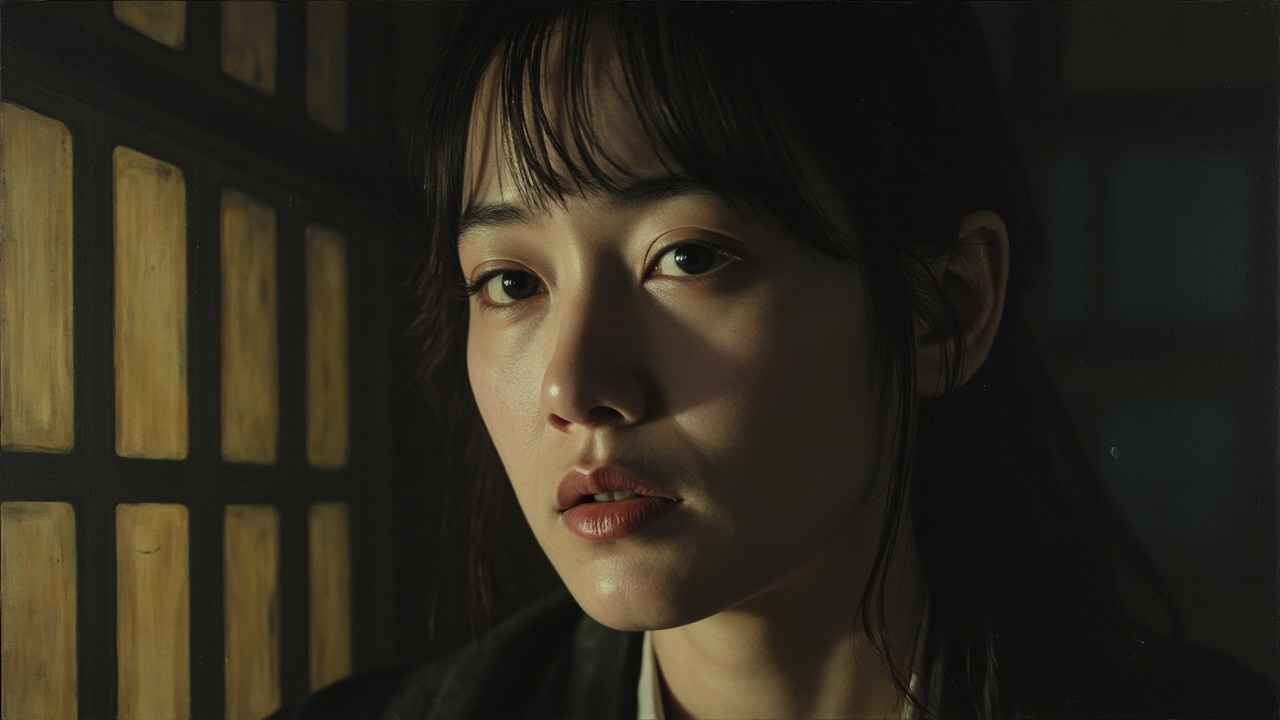
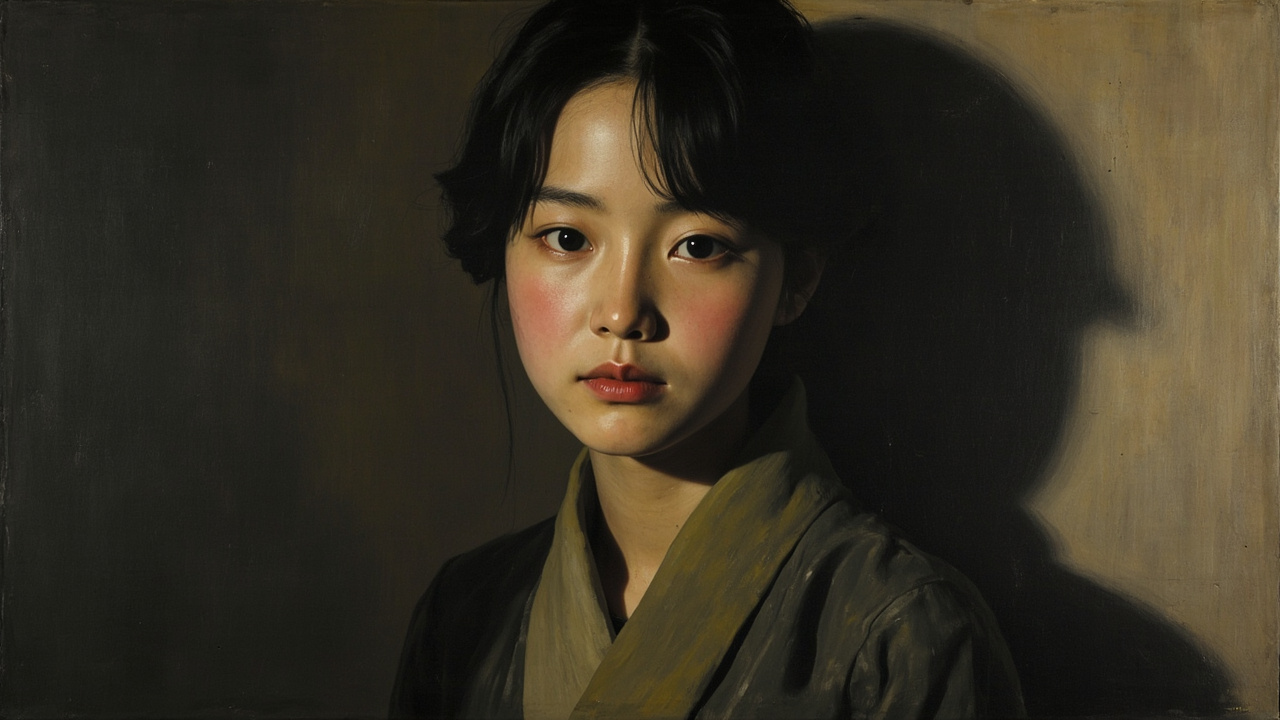
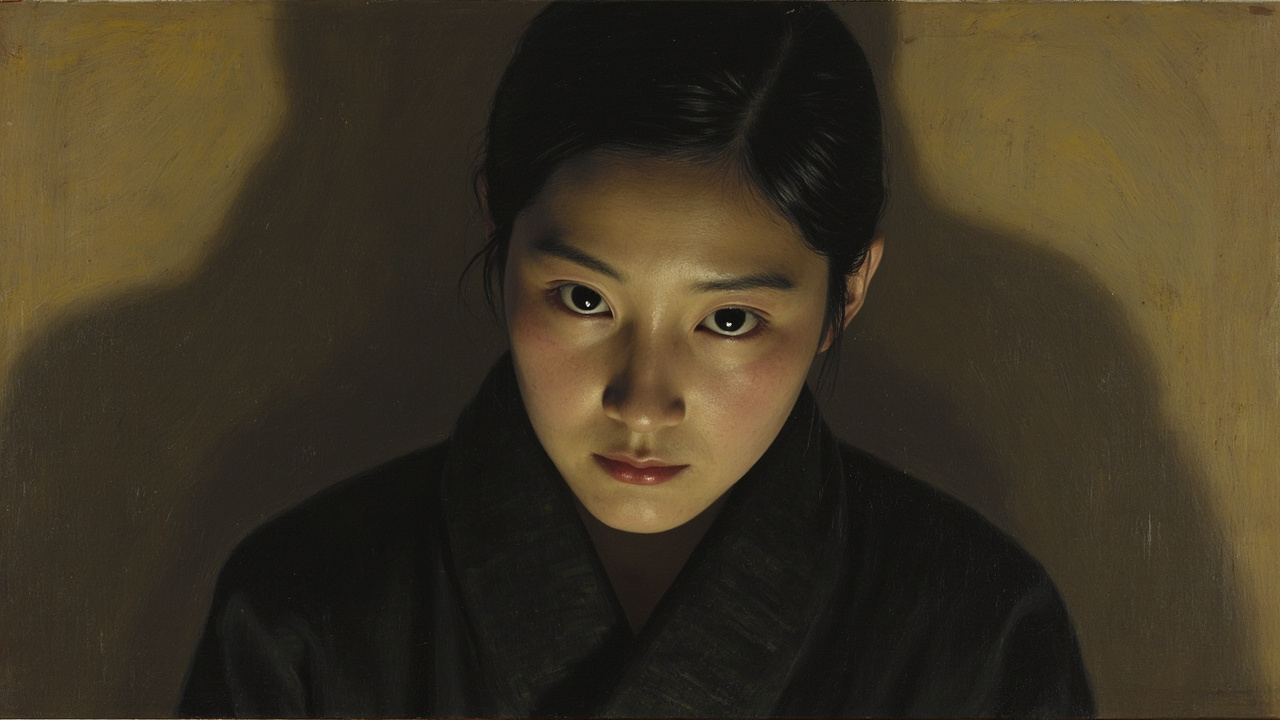
Art Direction4 plates
Before the guide was written, this book got a visual foundation — every illustration you just read grew out of it.