Krylov's Fables · Companion Guide
克雷洛夫寓言
十九世纪初的俄罗斯,动物披上俄式礼服——狐狸唱奉承歌,狼借口职责撕碎羊,市井与官场都被钉在十行短诗里。
Opening: How the Cheese Got Away
A crow perches in a tree with a piece of cheese in its beak. A fox passes underneath, looks up, and starts in on the crow's feathers and its voice, urging it to sing just one note. Flattered out of its senses, the crow opens its beak, and the cheese drops. The fox snatches it up and tosses back one line on its way out: anyone who loves pretty words eventually pays for them. This is the scene Krylov set down in early nineteenth-century Russia. The cheese sits on a branch, not a plate; the trickster doesn't skulk in shadow, it looks up and smiles as it flatters. The whole book's register is fixed from this single fable — a fairy tale's skin over a satirist's bones.
What Kind of Book This Is: Russia's La Fontaine
Ivan Andreyevich Krylov was born in the latter half of the eighteenth century and died in the first half of the nineteenth. He spent most of his life writing something very short: verse fables, a dozen or so lines apiece, an animal story capped with a wry moral. Between the early and the mid-nineteenth century he published nine volumes in his lifetime, with a ninth collected and printed after his death, more than two hundred fables in all. Russians call him Russia's La Fontaine. That's not a courtesy title — plenty of lines he wrote are things native Russian speakers say every day without knowing where they came from. The bear's favor. The swan, the pike, and the crayfish. Mountains never meet, but people do. These sayings live on in his verse, and from there they went on living on people's tongues, generation after generation.
Cast and World: Animals in Russian Court Dress
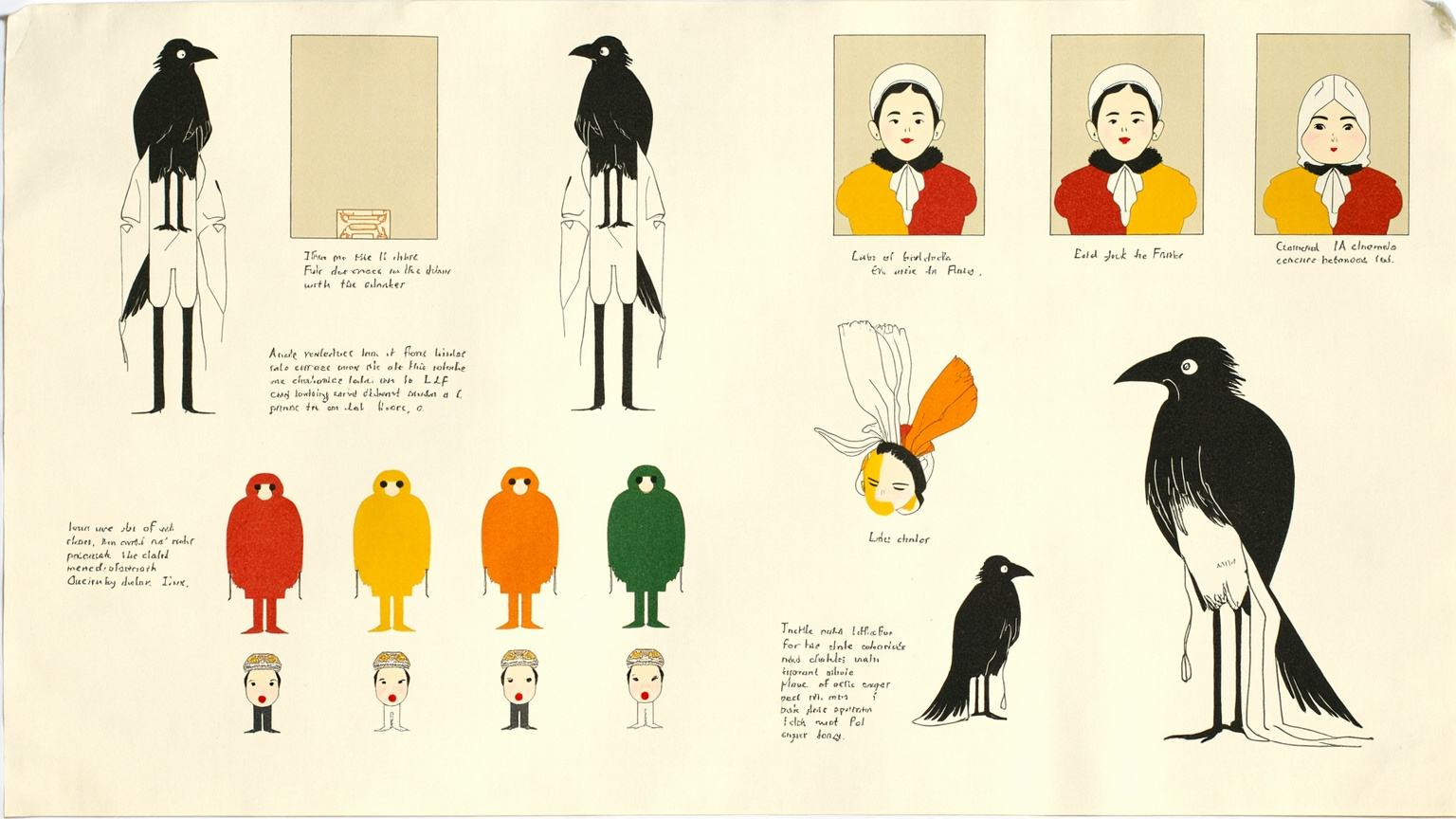
Open the book expecting a zoo, and two pages in you realize you've wandered into a Tsarist government office instead. The crow and the fox wear long coats, the wolf sports an official's epaulettes, the bear is buttoned into a frock coat, the lion holds court at the center of the drawing room. A magpie stands in the corner, craning its neck at the show. The cast has fixed roles, and nearly every fable runs the same familiar faces through their paces: the crow is a vain fool, the fox a smooth flatterer, the wolf a fanged predator who always has an excuse ready, the bear a lumbering giant whose good intentions do damage, the pike a bottomless glutton, the lion a king of the forest who is all show, the donkey a patient drudge nobody bothers to notice. The settings are just as fixed: country estates, marketplaces, the edge of the forest, aristocratic drawing rooms, some minor provincial office. The year hangs somewhere over early nineteenth-century Russia, but which year hardly matters — this isn't a period piece. It's a mirror.
Plot Line: Seven Fables, Seven Human Failings
Krylov's Fables isn't a novel with a beginning and an end — it's a gallery of more than two hundred pieces, each one complete on its own. That changes how you read it: pick and choose, start with whichever one bites hardest. I've pulled out seven of the most representative here, the way you'd pull the most eye-catching books off a shelf to show someone around.
Fable One: the Fox and the Crow, or the lesson of the cheese. This is the full version of the scene from the opening. The fox isn't looking at the moon overhead, it's looking at the cheese in the tree. It opens with three compliments in a row — the feathers, the figure, the voice — all of them worthless. The crow, giddy with flattery, opens its beak to sing, and the cheese falls straight into the fox's mouth. What makes this fable work is that Krylov never moralizes outright. The story ends with the fox trotting off with its prize and tossing back one line: anyone who loves pretty words pays tuition for it sooner or later. The moral is short, pinned to the very last line, and it's what flips the whole piece from fairy tale to barb.
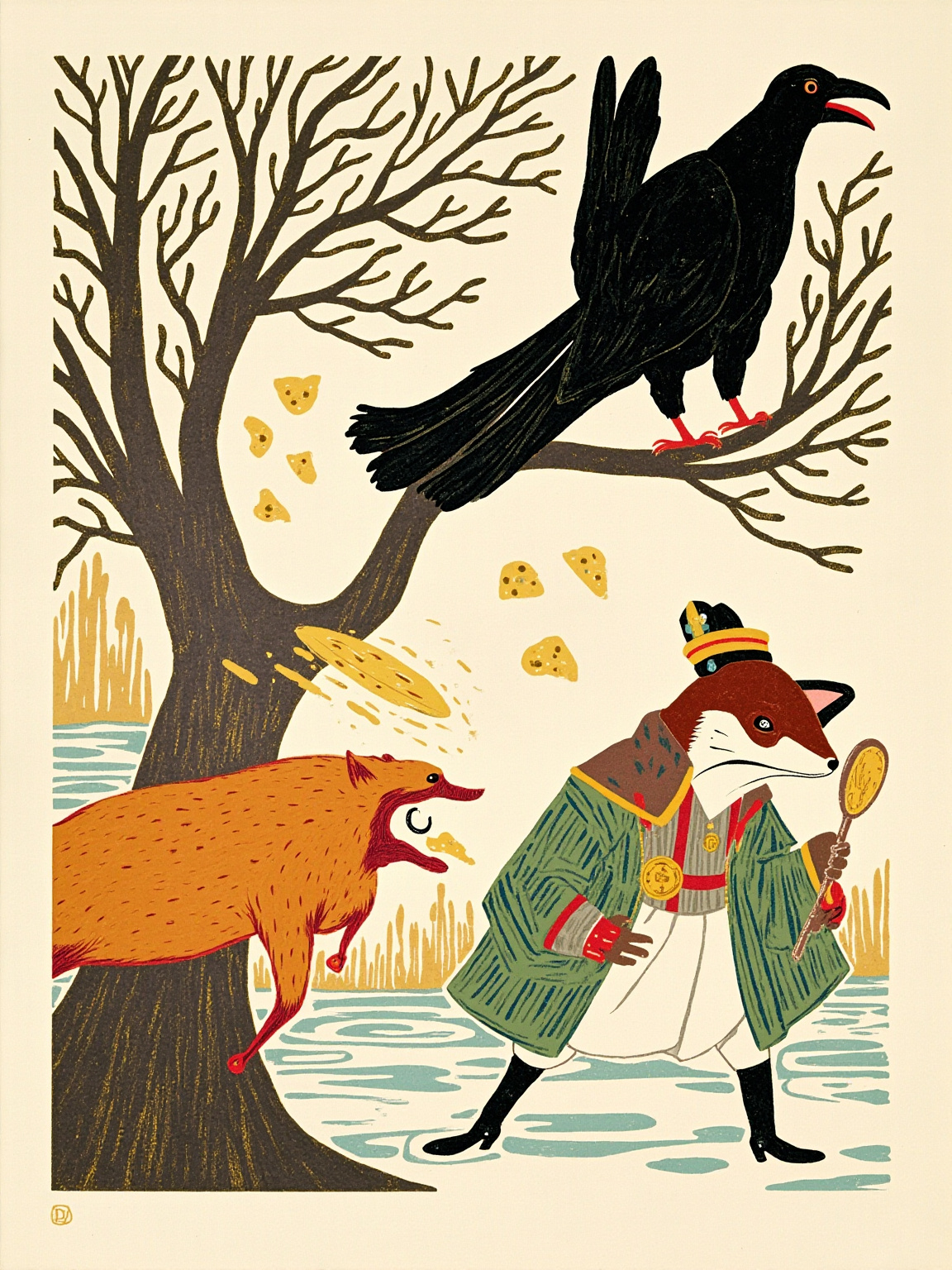
Silly Crow, you are beautiful and well-feathered, but you have no brains.
你这只乌鸦,羽毛倒还齐全,可惜没有脑子。
金句 · 狐狸与乌鸦 · 收束的刺
Fable Two: the Wolf and the Lamb, or it's my duty. A lamb is drinking from a stream when a wolf walks up meaning to eat it. The wolf has reasons ready — you've muddied the water, you insulted me last year, your people insulted me. The lamb answers every one of them, the wolf listens to none of them, and finally adds: I'm not eating you for a reason. I'm eating you because it's my duty. Krylov isn't writing about a wolf's cruelty here — he's writing about how an excuse dresses itself up. When the wolf wants to do something wrong, it never simply says I'm hungry. It always reaches for a coat labeled duty, or order, or decency. That line went on to become an idiom in Russian: it's my duty is shorthand now for anyone who flies a flag of principle over what is really a private errand.
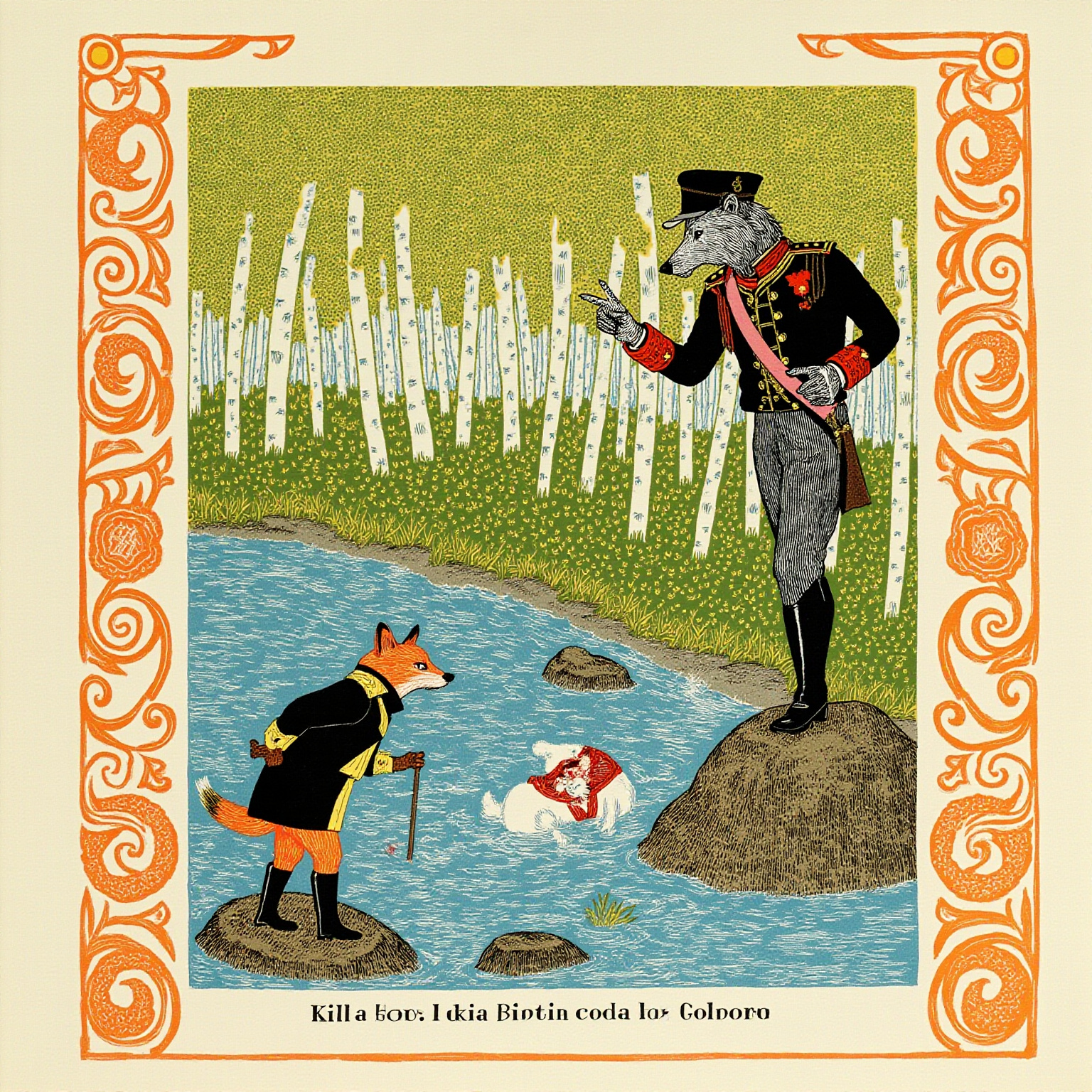
Your anger is all the justification I need. I shall eat you now.
就凭你那一通气,我便有了吃你的道理。
金句 · 狼与小羊 · 强者的理由
Fable Three: the Hermit and the Bear, or how good intentions cracked a skull. A hermit dozes off with a fly circling his head. The bear notices, and volunteers to swat it for its friend — it picks up a rock and brings it down hard. The fly gets away. The hermit's skull doesn't. The bear cradles its friend's body and weeps, the most innocent killer in the world. The damage here isn't in the fly, it's in the rock — good will plus brute strength is often not help but wreckage. The phrase the bear's favor is still in daily use in Russian, from diplomatic communiques to marriage spats, from corporate retreats to hospital wards.
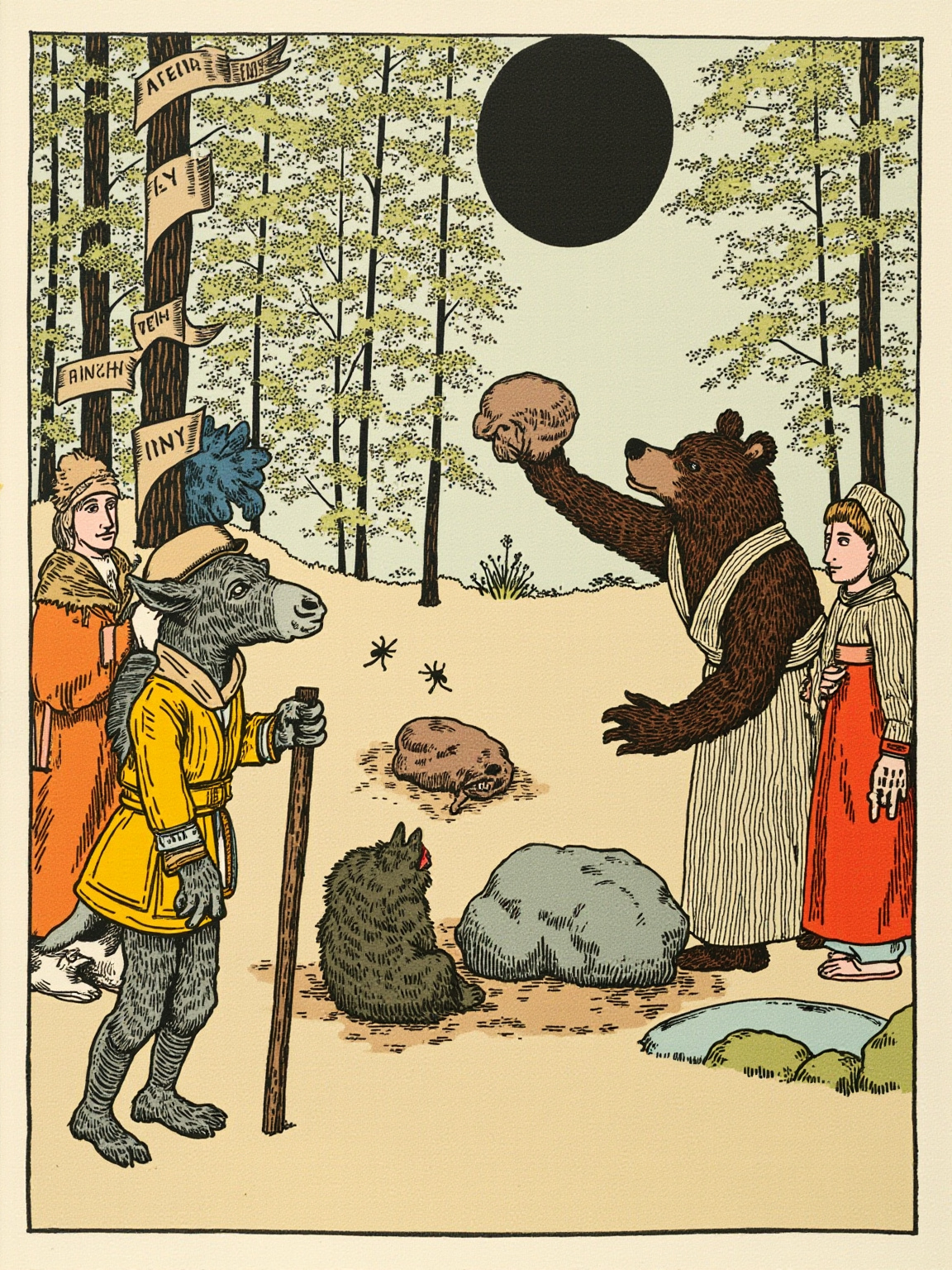
Kind hearts are more than coronets, and simple faith than Norman blood.
熊一边哭,一边对朋友的尸身说:我的好心啊——可好心哪里抵得过没脑子的力气。
金句 · 隐士与熊 · 好心之祸
Fable Four: the Swan, the Crayfish, and the Pike, or three partners pulling in three directions. A cart won't budge, so the swan, the crayfish, and the pike team up to haul it. The swan strains skyward, the crayfish scrabbles backward, the pike hauls toward the water — three forces pulling at once, and the cart spins in place without moving an inch. This is the ur-text in Russian for a partnership gone wrong. The swan, the crayfish, and the pike functions as a ready-made phrase — anyone whose business partners can't get through a meeting without fighting, anyone whose relatives bought a house together and regretted it, knows this fable by feel. Like every great fabulist, Krylov never bothers with a complicated plot. He writes one absurd action and lets the reader supply the office meeting in their head.
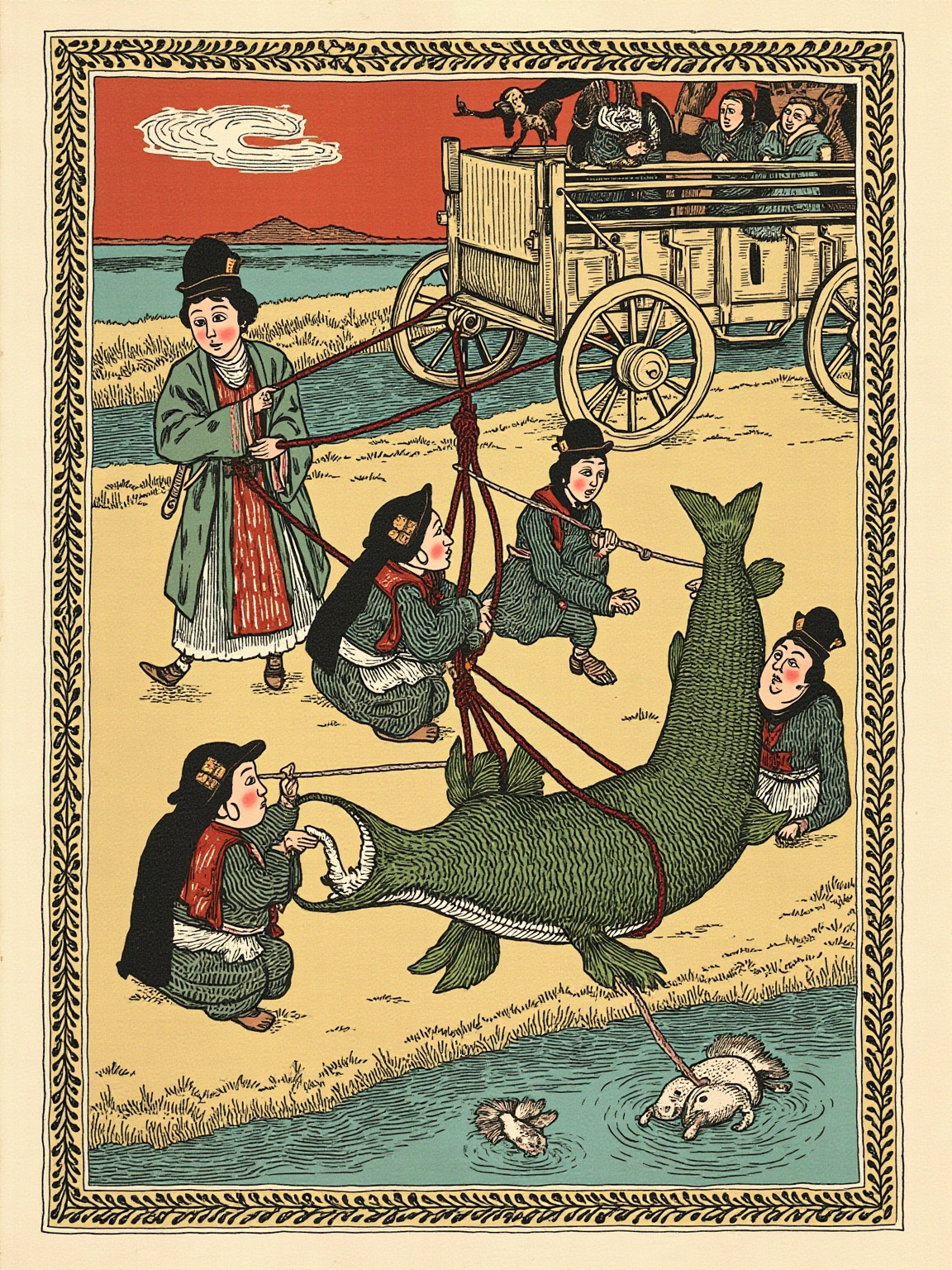
Swan is pulling skyward, Crayfish backward, Pike is pulling into the sea — the load has not budged.
天鹅把力气往天上抛,龙虾把力气往后扯,梭鱼把力气往水里拽——车轱辘只在原地打转。
金句 · 天鹅、龙虾与梭鱼 · 合伙的反向
Fable Five: the Lion's Hunt, or majesty on loan. The king of the forest sets out to hunt and invites a party of friends along. They bring down a stag. Who divides it? The lion hands the job to the donkey. The donkey, dead serious, splits the stag three ways: the first share to the lion as king of the forest, the second to the lion for his courage, the third to the lion again, since he didn't even have to kill anyone to look this impressive. Having said his piece, the donkey collapses in terror at his own daring. The lion smiles: a fine ruling, brother donkey. Then folds the donkey into the third share as well. Krylov isn't writing about the lion's strength here — he's writing about how good flattery feels. The forest king's crown is on loan, and so is every judgment made in his name; all he has to lend is the setup, and someone else says the rest for him. I laughed writing this one up. The lion never even has to open its mouth — the donkey does the work of saying I deserve the lion's share for it. That kind of talk plays out in some provincial office every single day.
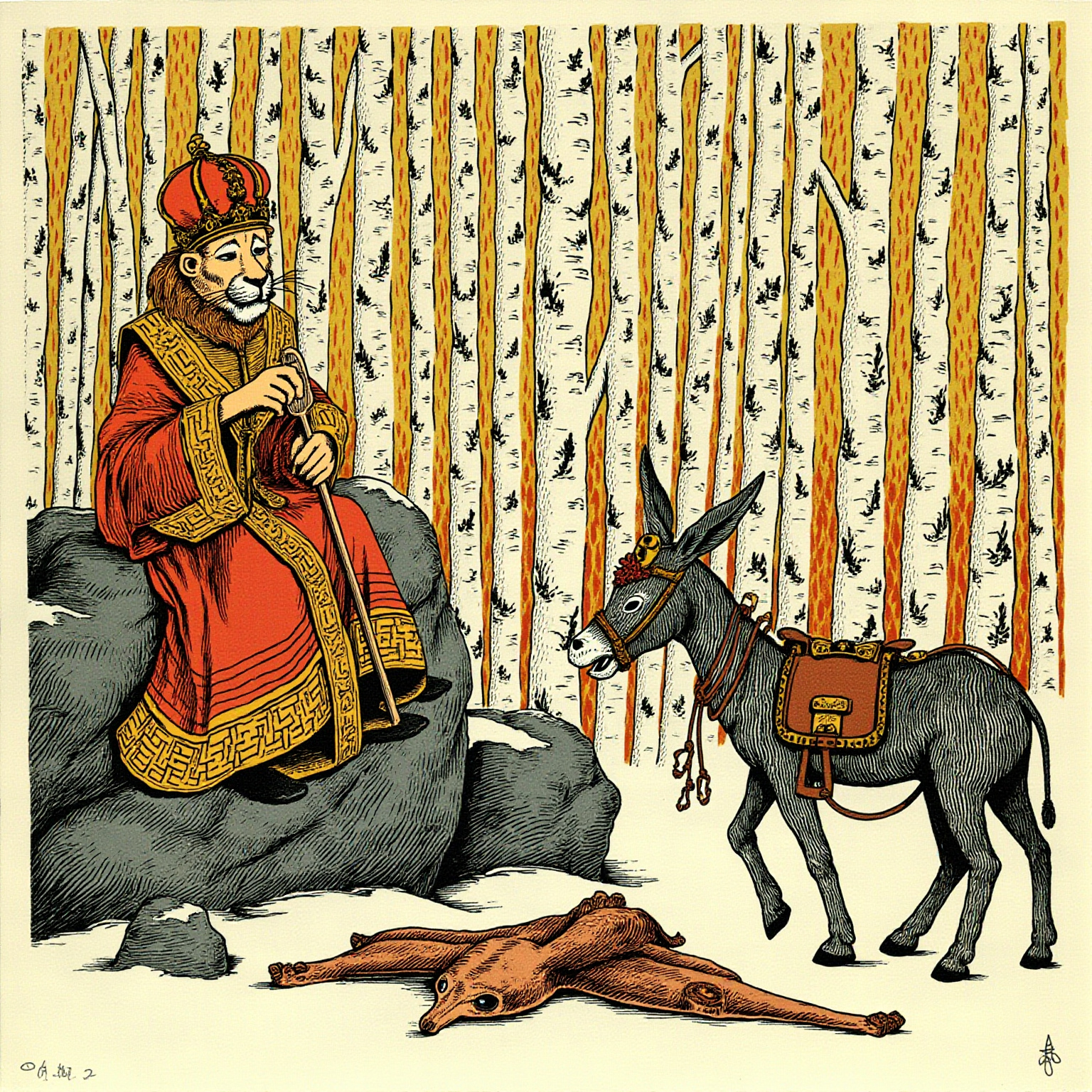
My share — and yours, brave hunters — and mine again.
第一份归狮子(他是林中王),第二份归狮子(他最勇武),第三份也归狮子——谁敢碰一碰那一缕鹿皮。
金句 · 狮子打猎 · 借来的威名
Fable Six: the Crow and the Peacocks, or borrowed feathers. A crow envies the peacocks' plumage, and quietly gathers up a scatter of dropped peacock feathers to stick onto itself. When the peacocks come back and find this gaudy impostor among them, they mob it and strip every feather off. The crow tries to fly back to the other crows, but they won't have it either — it's neither peacock nor crow anymore. Borrowed finery, stripped bare. Krylov's coldest cut in this fable isn't at the start, it's at the end: the price of vanity isn't the lost feathers. It's the self that was there before them.
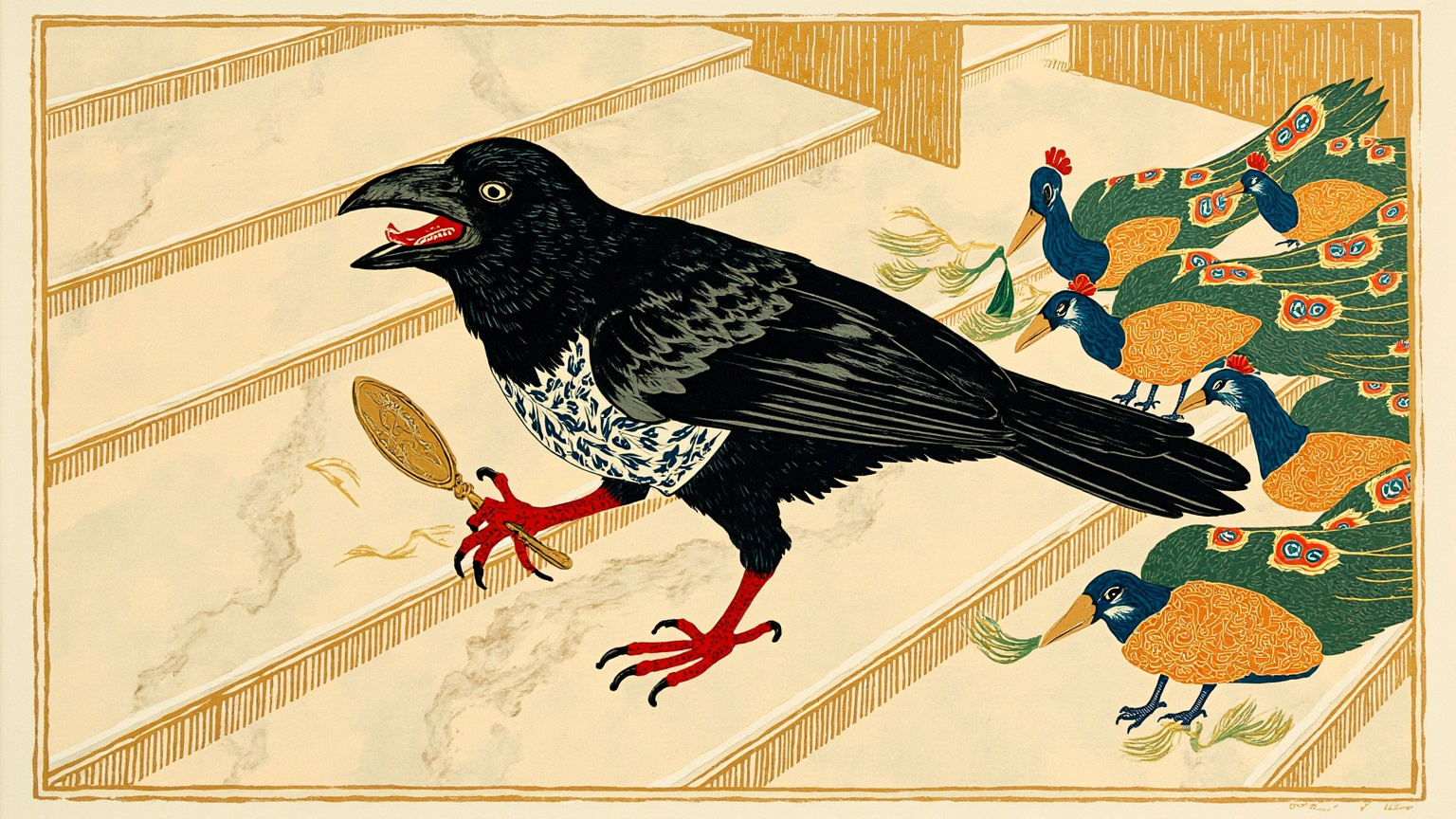
Gleaming with Peacocks' feathers, she was pecked at by every one of them.
孔雀们一拥而上,把自己借出去的羽毛,连根拔了回来。
金句 · 乌鸦与孔雀 · 借来的衣裳
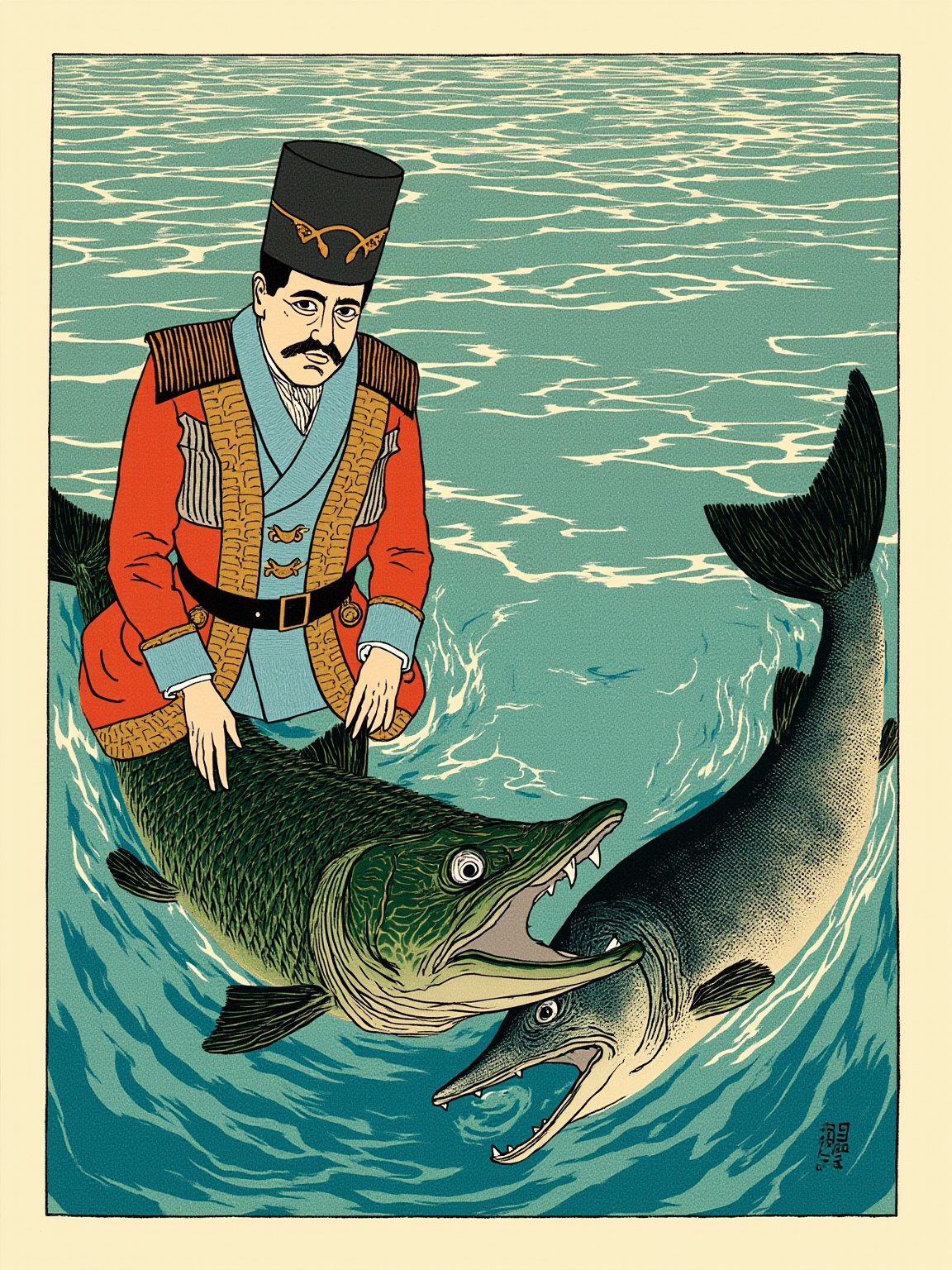
Fable Seven: the Pike, or the predator who's never had enough. A pike gets hauled up by a fisherman and wriggles free back into the water. Nothing satisfies it after that — the river's too small, the sea's too salty, the other fish swim faster than it does. It swims on, complaining the whole way. Krylov's pike never learns anything. All it remembers is I want more. The type shows up again and again in the book — the minor official who complains his salary's too thin, his colleagues climb faster, his superiors don't recognize his worth. Krylov never says where the complaining stops. Every reader who gets this far supplies their own answer. Seven fables in, and the fox, the wolf, the bear, the pike, the crow, the lion, the donkey have pinned down seven small human failings, each in a dozen-odd lines of verse.
Themes and Craft: Satire That Wears Its Weight Lightly
Krylov really only writes a handful of themes: flattery, vanity, power's cowardice, partnerships that fall apart, good intentions that do harm, greed. But he's the exact opposite of Dostoevsky's kind of heavy introspection — he can pin down a single human failing in a dozen-odd lines of verse. Where Dostoevsky needs three hundred pages for one confession, Krylov needs one line: it's my duty. The technique hinges on the last line — the moral. He doesn't stuff the meaning into the story; he pushes the story to its end and lets the reader walk straight into that line. In the best fables the moral is short enough to print on a teacup: whoever loves pretty words pays tuition for it. No partnership holds together once the partners stop rowing the same direction. Borrowed feathers come due eventually. Those lines are still alive in everyday Russian, which is exactly why Russians call him Russia's La Fontaine. He isn't just the author of one book anymore. He's the source of a whole way of talking.
Krylov never explains human nature. He just lets you watch a crow open its beak to sing in a tree.
Why It's Worth Reading the Fables Even Once You Know the Plots
I've walked through the seven most iconic stories, but this guide has only held up a palm-sized map for you to glance at. What actually keeps you reading is what's in the text itself. Open the Russian original and the fox's flattery practically sings; the thud of the falling cheese lands like a hand on a small drum. That rhythm rolls past your ear, and a translation can't carry it over. Read a few more fables and you'll notice the fox tricking the crow this week, then talking its way out of the wolf's trap next week with the same move. The bear cracks a friend's skull in one fable and bungles some other good deed in the next. Reading enough of them feels like walking into an old teahouse — whichever table you pick, it's the same familiar face. Keep going and you run into your own life — which crow is in your group chat, which bear is one of your relatives, which partnership just broke up among your coworkers the way the swan and the pike did. That moment of recognition is something only the book itself can give you.
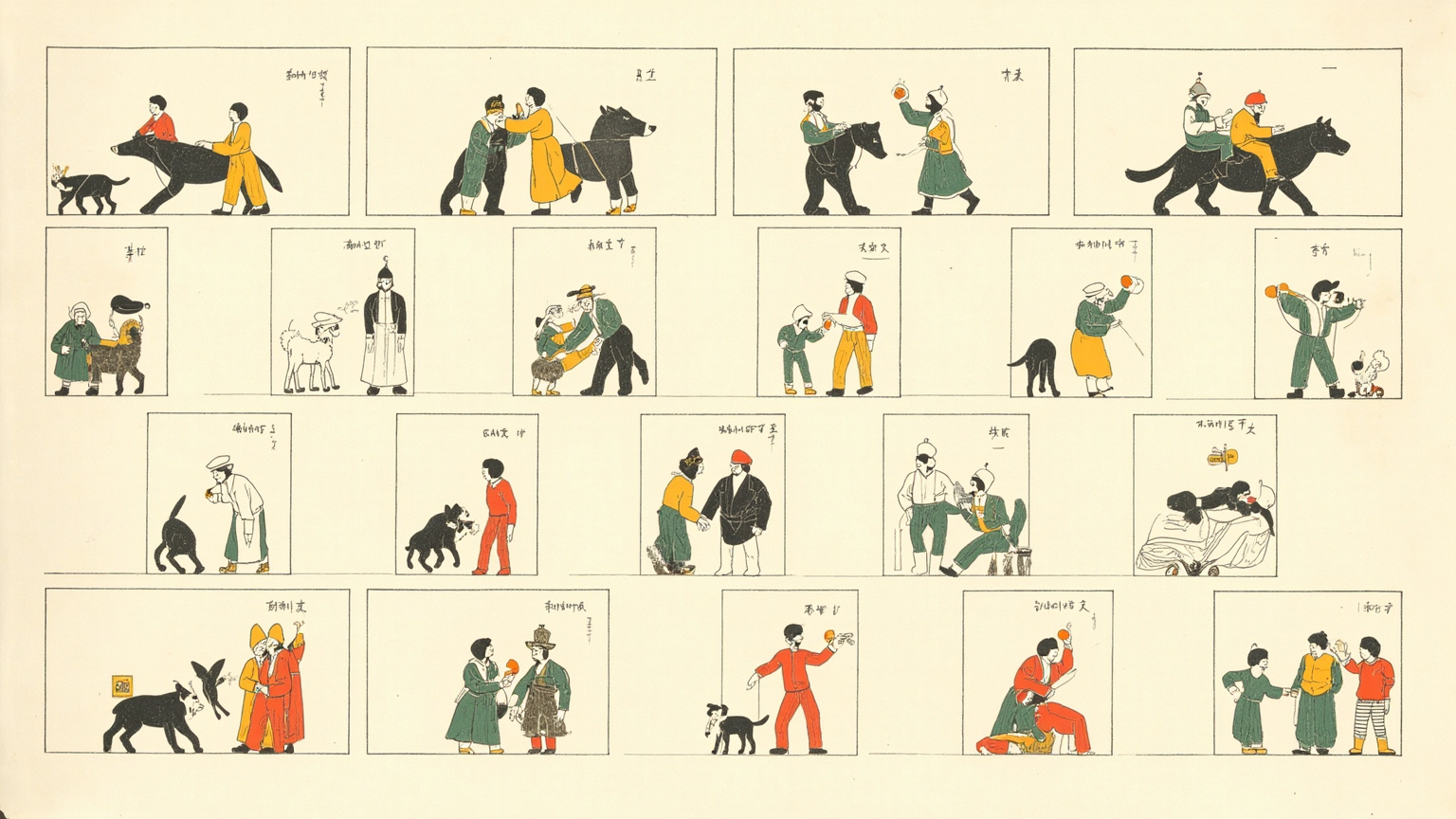
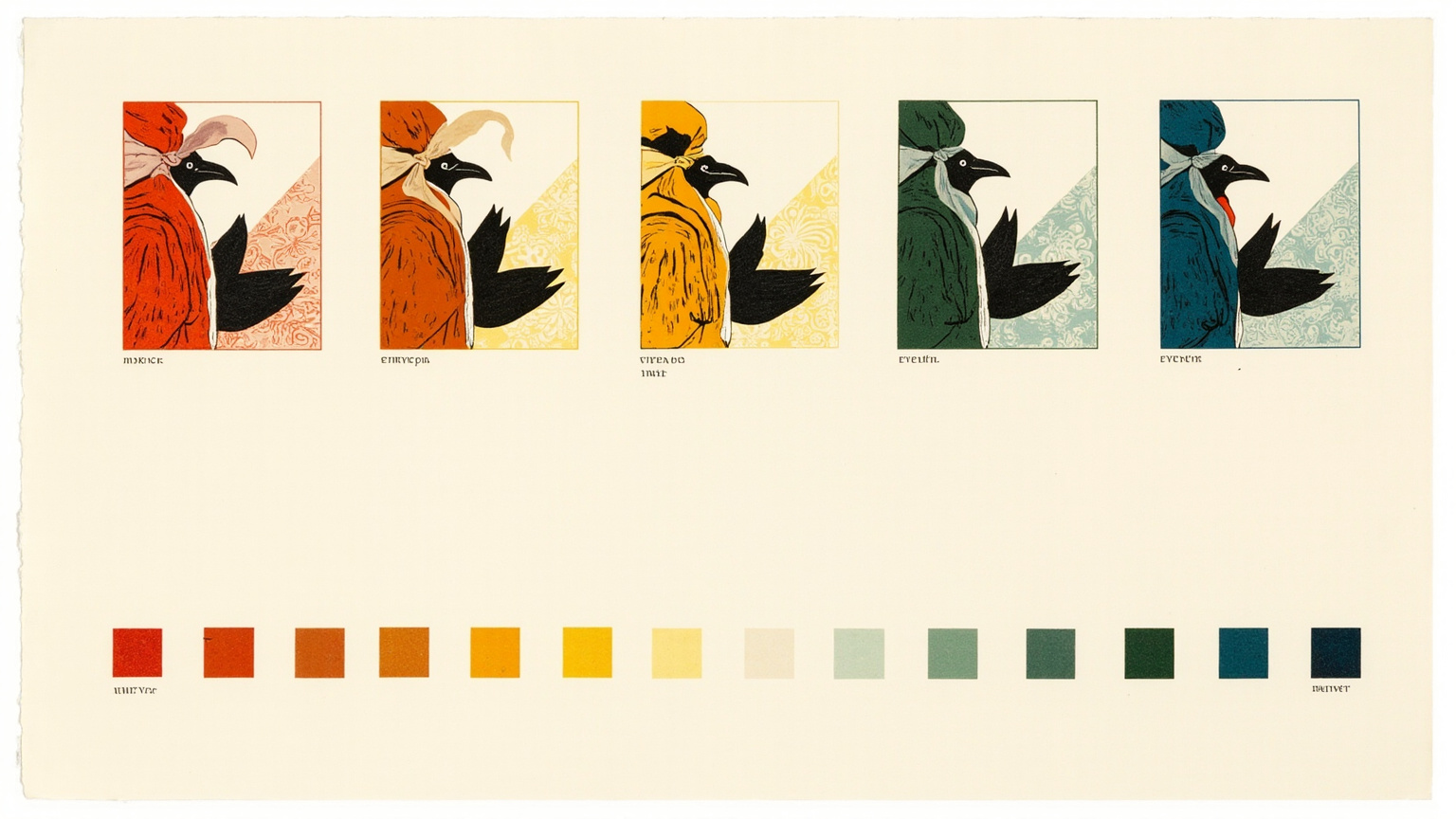
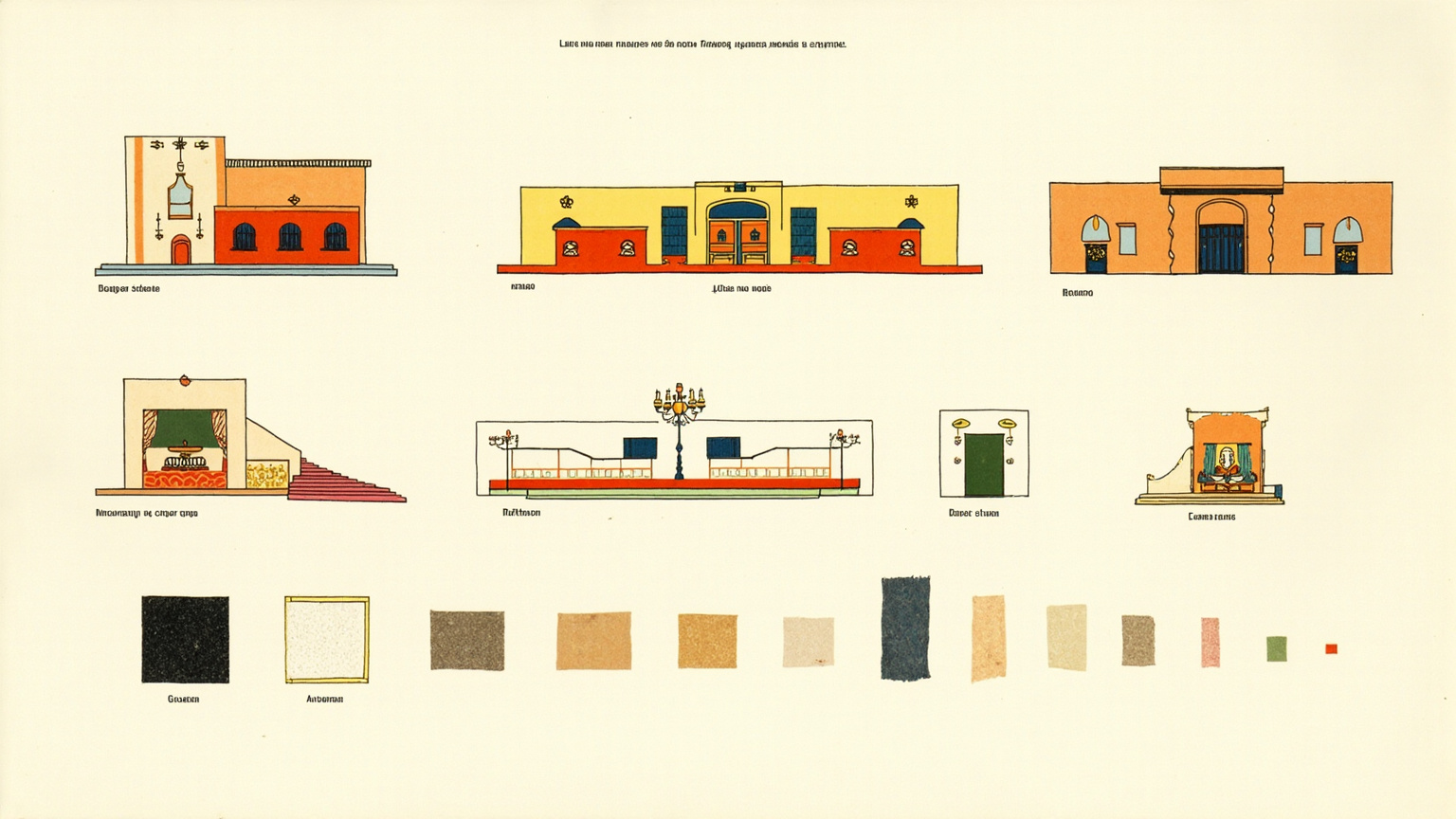
Art Direction4 plates
Before the guide was written, this book got a visual foundation — every illustration you just read grew out of it.