La Celestina (Tragicomedia de Calisto y Melibea) · Companion Guide
塞莱斯蒂娜
十五世纪末的西班牙,一座被石墙与花园围起的城市里,贵族少年为猎鹰翻入少女的果园,一夜之间整座城的欲望、算计与礼教同时点燃,最终坠入父亲那段痛彻肺腑的长独白。
The Opening: A Jar of Snake Oil, a Garden, a Rope Ladder
Late at night, in an old house on a corner somewhere in the city, an old woman mixes valerian root, newt's eye, and snake oil into a clay jar. She is no alchemist — she talks for a living, brokering secret affairs with charms and a fast tongue, and skimming money off both sides of every deal. In that same city, a young nobleman vaults a garden wall chasing a stray falcon and looks up to find a girl he has never seen, locked away behind her family's walls. That one glance is the fuse for everything that follows.
What Kind of Book This Is
La Celestina, subtitled The Tragicomedy of Calisto and Melibea, first appeared in 1499 in a sixteen-act version and was expanded to the standard twenty-one acts by 1502, setting the course the European novel would take. Its author, Fernando de Rojas, was a converso of Jewish descent, trained in law at the University of Salamanca, who ended his life as a town councilman — and the acrostic he signed the book with remains a literary puzzle to this day. The work is generally ranked second only to Don Quixote among Spanish literary landmarks, and it is read as the closing of Spanish medieval literature and the opening of the Renaissance in one gesture: a book that kicks the medieval door open from the inside.
The Cast and Their World
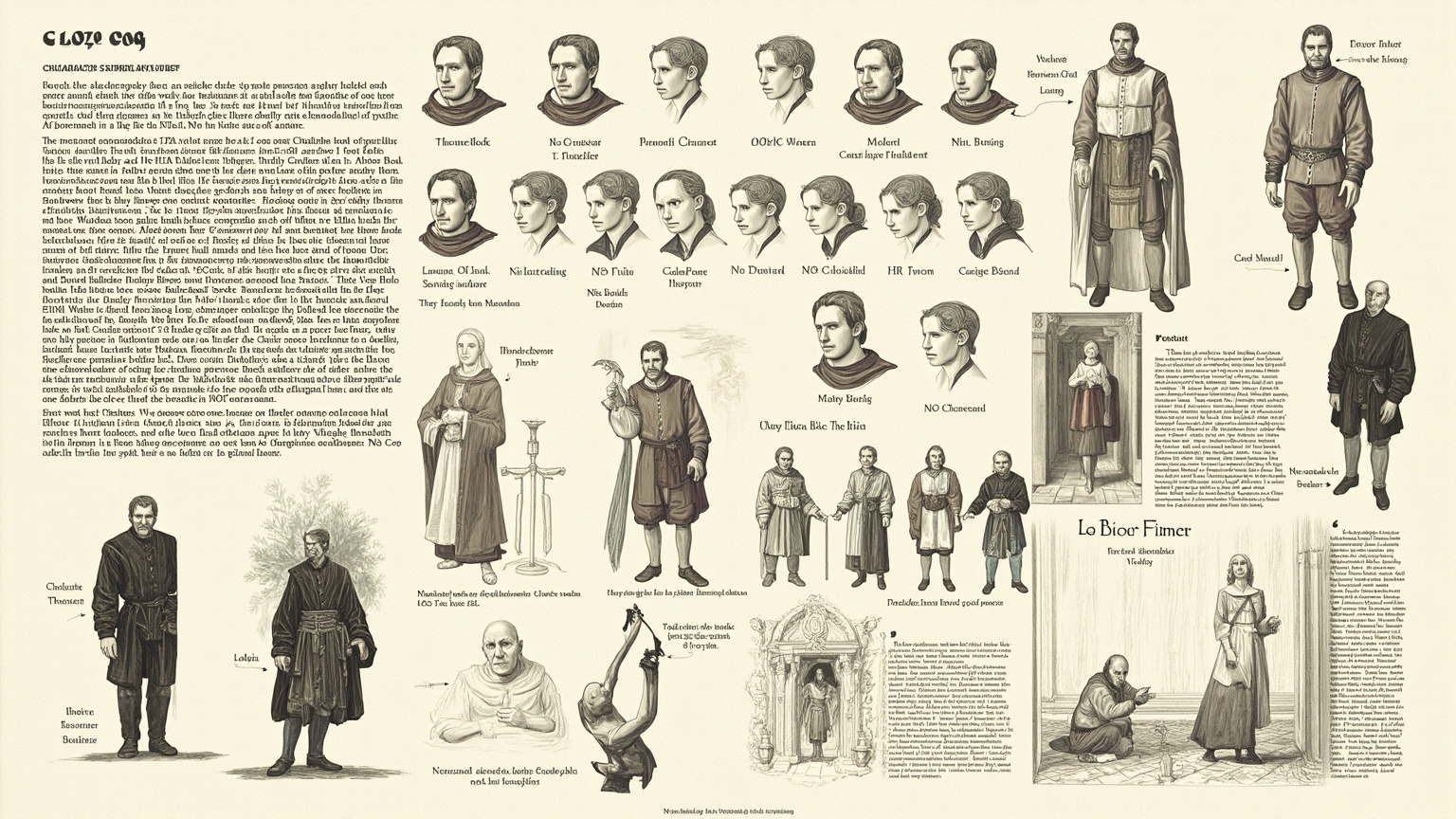
There are really three leads. Calisto is a wealthy young nobleman, quick-tempered and quicker to fall — one look at Melibea and he is burning. Melibea is a noblewoman's daughter, kept locked in her family's house, cold as stone at first. But the book's real center of gravity is the third figure: Celestina, an old woman who runs a brothel out of her house and makes her living as a go-between and a con artist, working the lovers with charms in one hand and a silver tongue in the other. Her name has stood for "procuress" in Spanish ever since, the female counterpart to Pandarus in English.
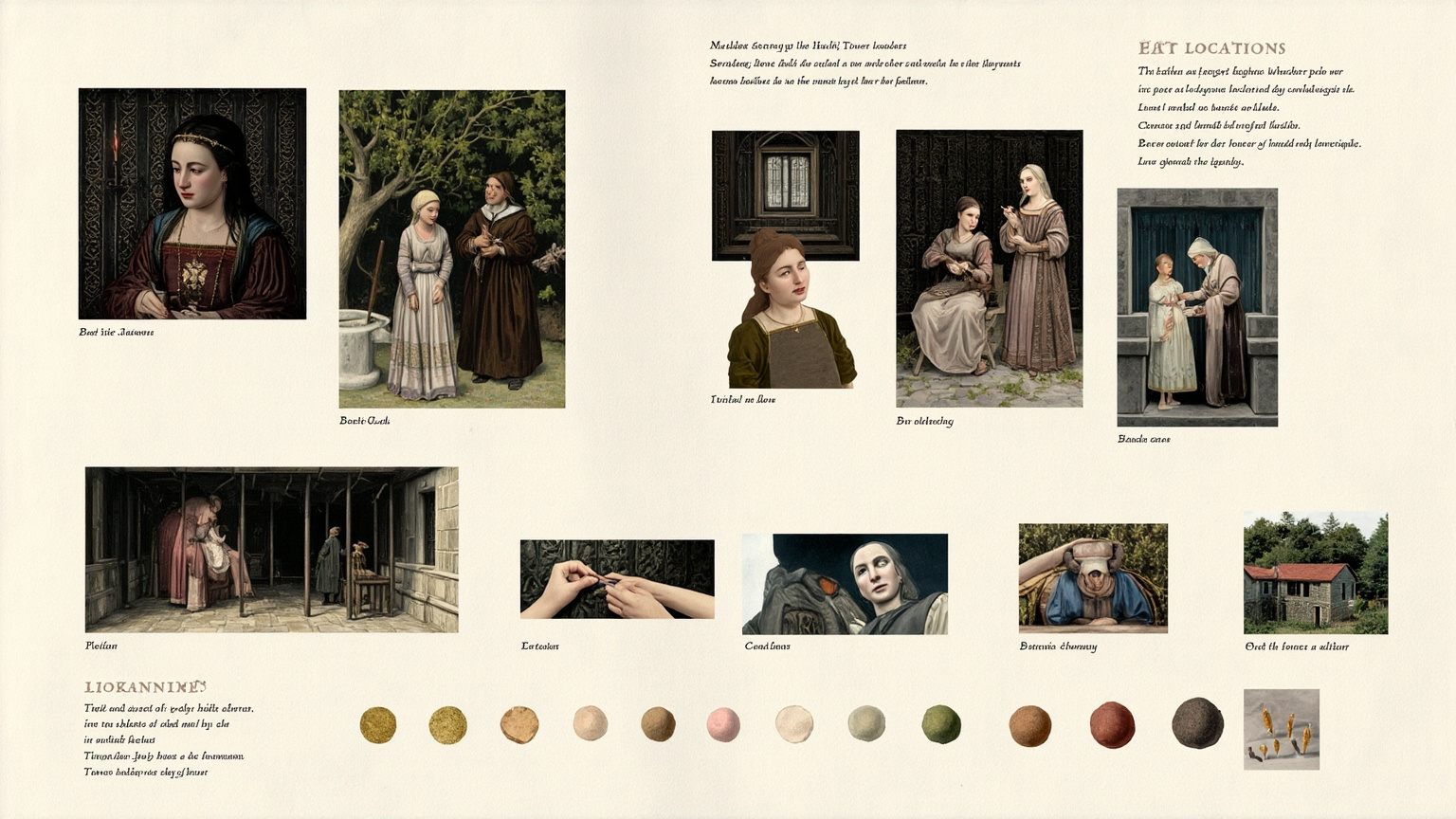
Around them swarms a whole street-level cast. Calisto's household servants, Sempronio and Pármeno, each play their own angle — Pármeno warns his master about Celestina early on, then gets won over and turned by Areúsa, who works out of Celestina's house alongside Elicia; it is Areúsa who talks him out of ever warning Calisto again. Two more servants, Sosia and Tristán, wait in the wings. The whole world is small: a noble house with its daughter locked inside, a garden with a rope ladder hanging over the wall, Celestina's house that doubles as a brothel, a lantern at the corner and a church bell tower, stables and a falcon, cobbled streets after dark. The rule is just as small: whoever calculates fastest gets to use everyone else first.
How the Story Moves
One — The Garden: A Falcon Over the Wall, One Line That Lights the Fire
Calisto chases a falcon into Melibea's family garden, and the instant he climbs the wall he looks up and sees a girl he has never met. He declares himself on the spot, piling up courtly language into one long, burning speech. Melibea turns him down flat — behind her stand the locked house, strict parents, the whole stone wall of feudal propriety. The rejection levels Calisto's world in a single moment. Rojas moves fast: a falcon, a garden, one refusal, and the powder keg is already lit.
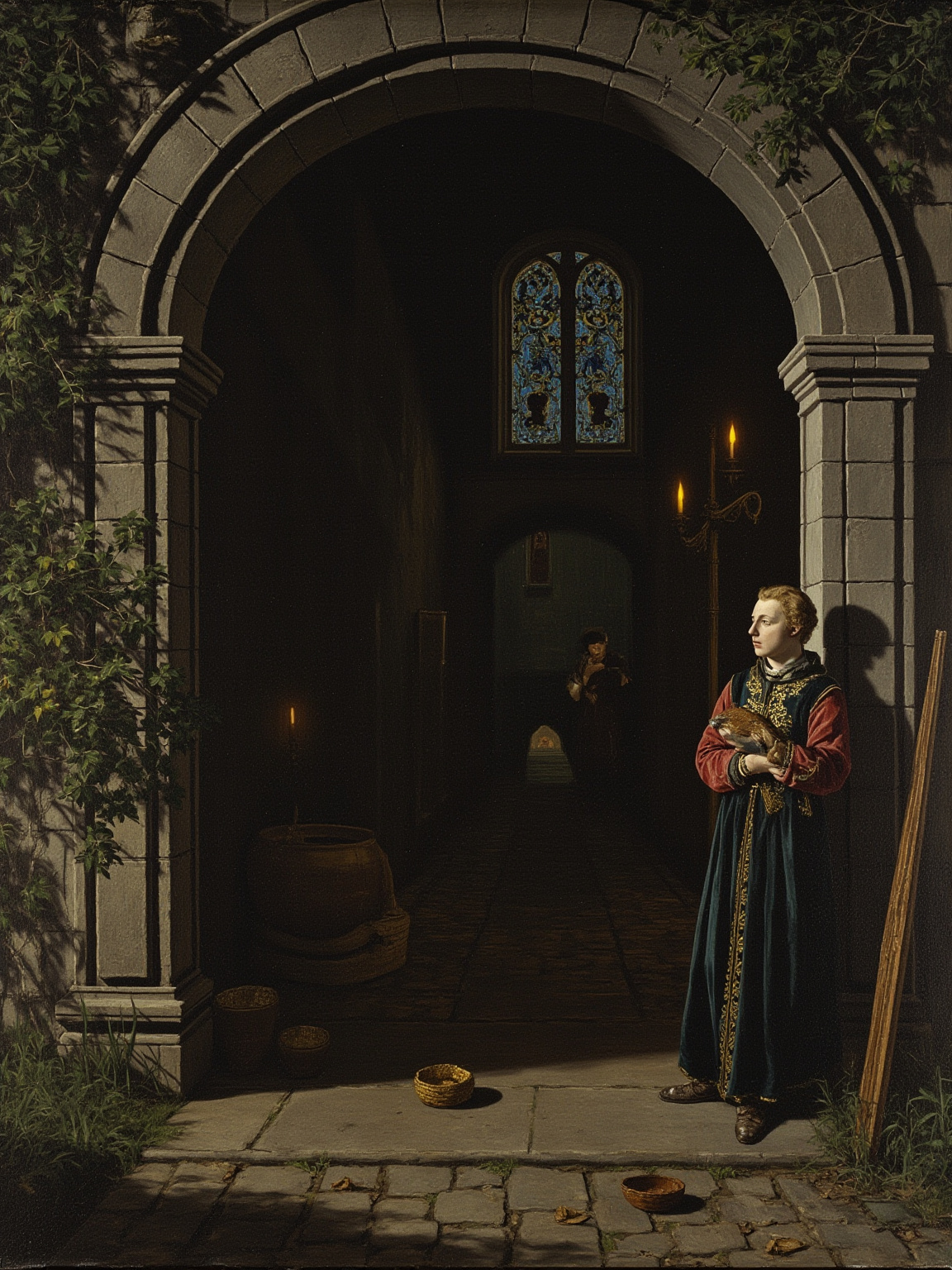
Melibea, I am Calisto, son of the noble Alisa. My reason lies in your eyes.
梅利贝亚,我是卡利斯托,贵族阿莉莎之子。我的理智落在你的眼睛里。
金句 · 第一幕 · 花园邂逅
Two — Calling in the Procuress: The Street Gets Its Hooks In
Calisto comes home a wreck, and his servant Sempronio slaps his knee — he knows exactly the old woman for this, Celestina, who makes her living brokering affairs and running cons. Calisto balks at first, too proud of his standing to touch her reputation; Sempronio shuts him down with one line — do you want to be a lover or a saint? It is a sharp scene: noble dignity meets street calculation for the first time, and the street wins.
Three — Breaking Her Down: Charms and a Silver Tongue
Celestina shows up at Melibea's door and gets turned away at first — the gatekeeper won't let her in, the girl won't see her. She doesn't rush it. Working the jar of valerian and newt's eye at her belt and one line of talk after another, she pries the outer defenses open one at a time. Once she's face to face with Melibea, she flatters her, then needles her, then lands the line that does the real work: do you think chastity is something you can just lock up? The fortress comes apart from the inside. This is the best scene in the book — the reader knows she's a fraud and still holds their breath with her, because every line she says lands exactly where it hurts.
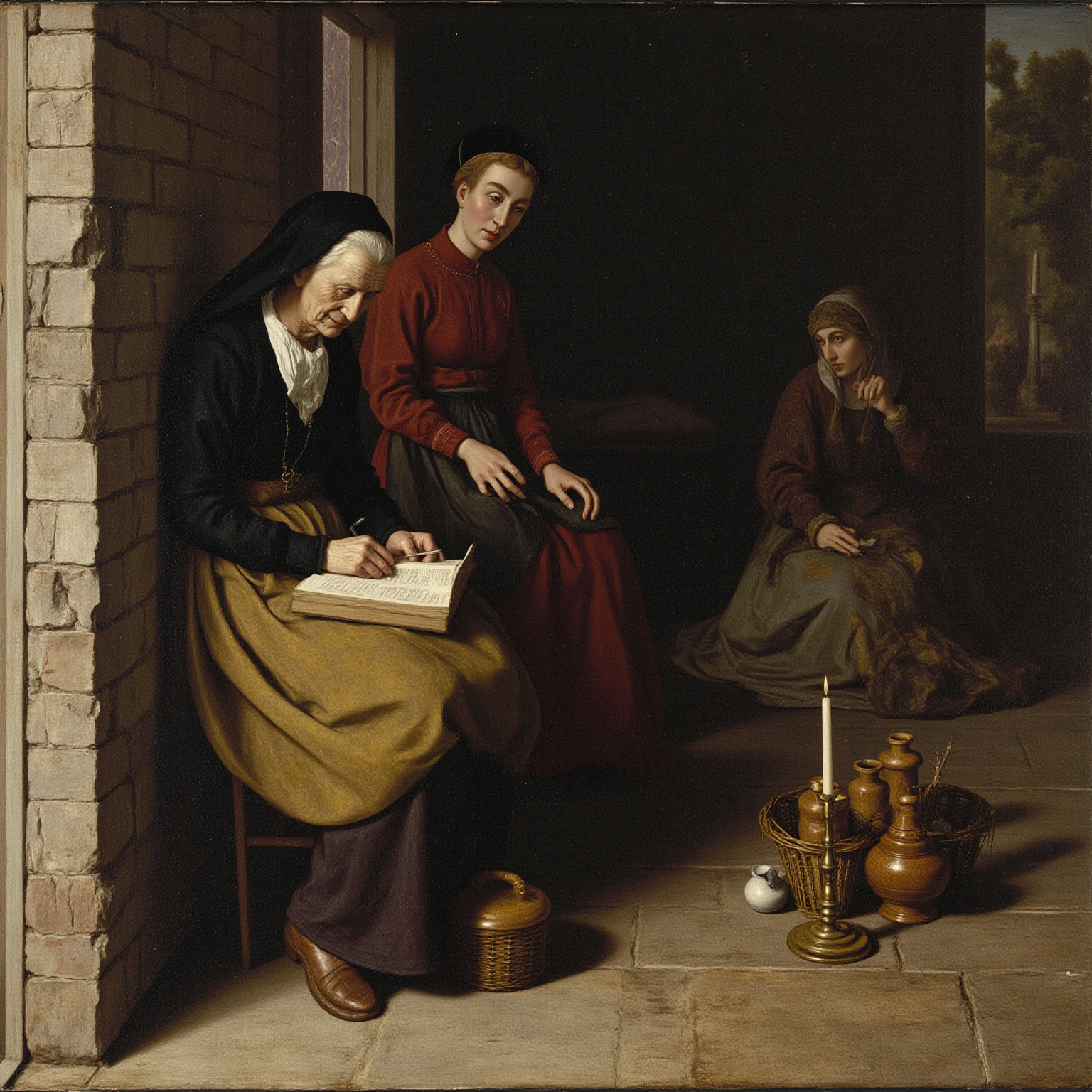
A wise old woman lives in this city, skilled in such matters.
这座城里住着一位精于此道的老妇人。
金句 · 第四幕 · 求助塞莱斯蒂娜
Four — Crossing the Line: The Gold Chain, and What It Costs
Celestina arranges a meeting in the garden. Calisto pays her with a gold chain, not knowing that chain will fuse together every death that follows. What Melibea crosses that night isn't just a garden wall — it's the whole boundary feudal morality drew around her. Rojas doesn't dress the moment up; he lets the reader see both their hands shaking.
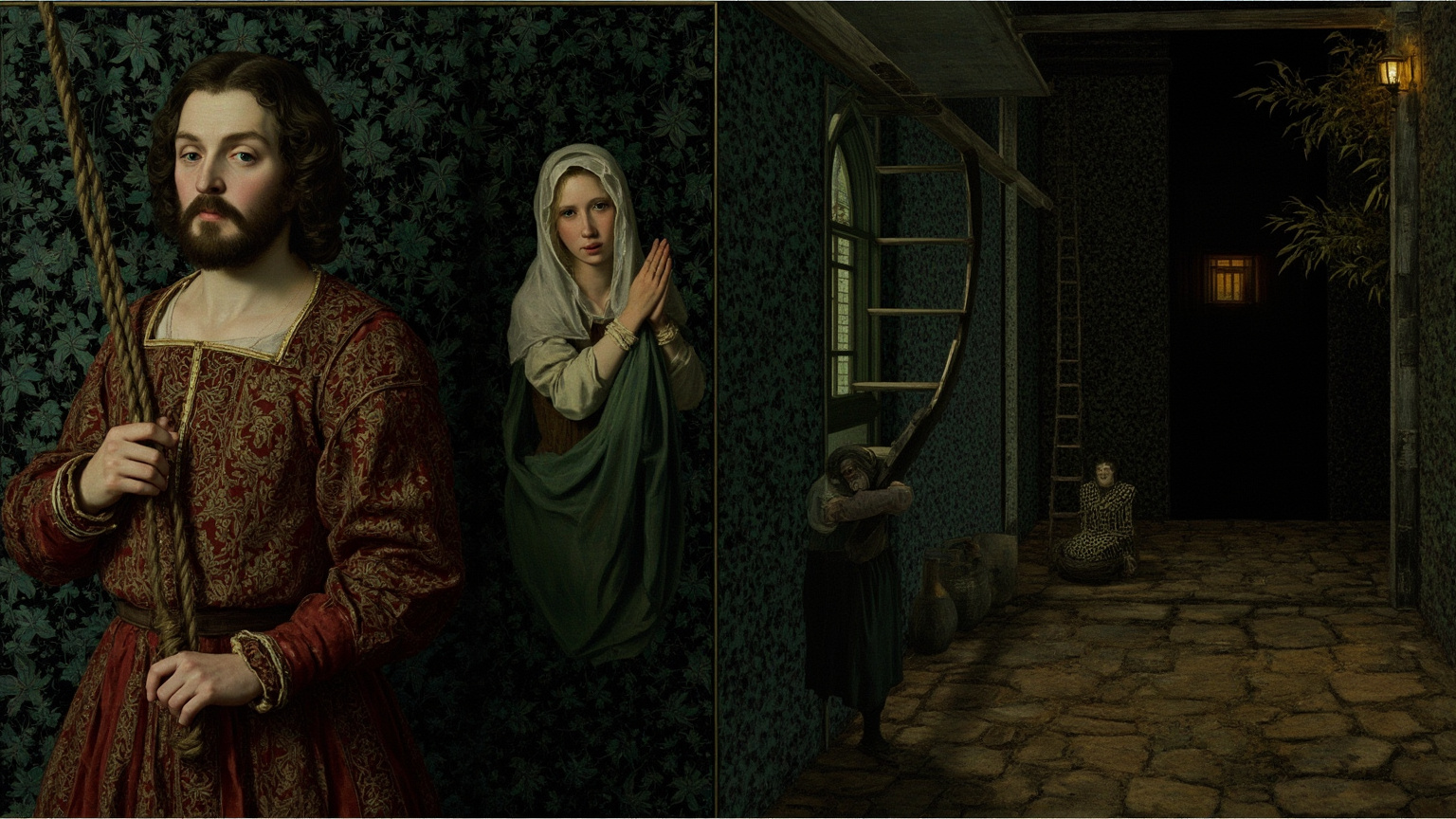
Fortune, how swiftly you turn the wheel against the bold!
命运啊,你对胆大的人转得多快!
金句 · 第十四幕 · 越界与金链
Five — The Procuress's Death: Lives Owed on the Chain
Celestina takes the gold chain and refuses to split it with Sempronio and Pármeno. The two servants, already resentful, break into her house and stab her to death, then jump out the window to run. The money never reaches their hands — they're caught and executed almost immediately after. Rojas writes none of the blood, none of the faces; one exchange of dialogue turns the whole page. Add it up afterward and three people are dead over that one gold chain.
Six — A Fall from the Wall: What the Lovers Pay
After one of the garden meetings, Calisto loses his footing climbing back over the wall and falls to his death. When word reaches Melibea, she climbs the tower of her house, bolts the door, tells her father Pleberio the whole truth of the affair when he comes running, and jumps. Rojas never shows the fall itself, never shows her silhouette against the tower — he lets the outcome speak and leaves the reader to absorb it alone.
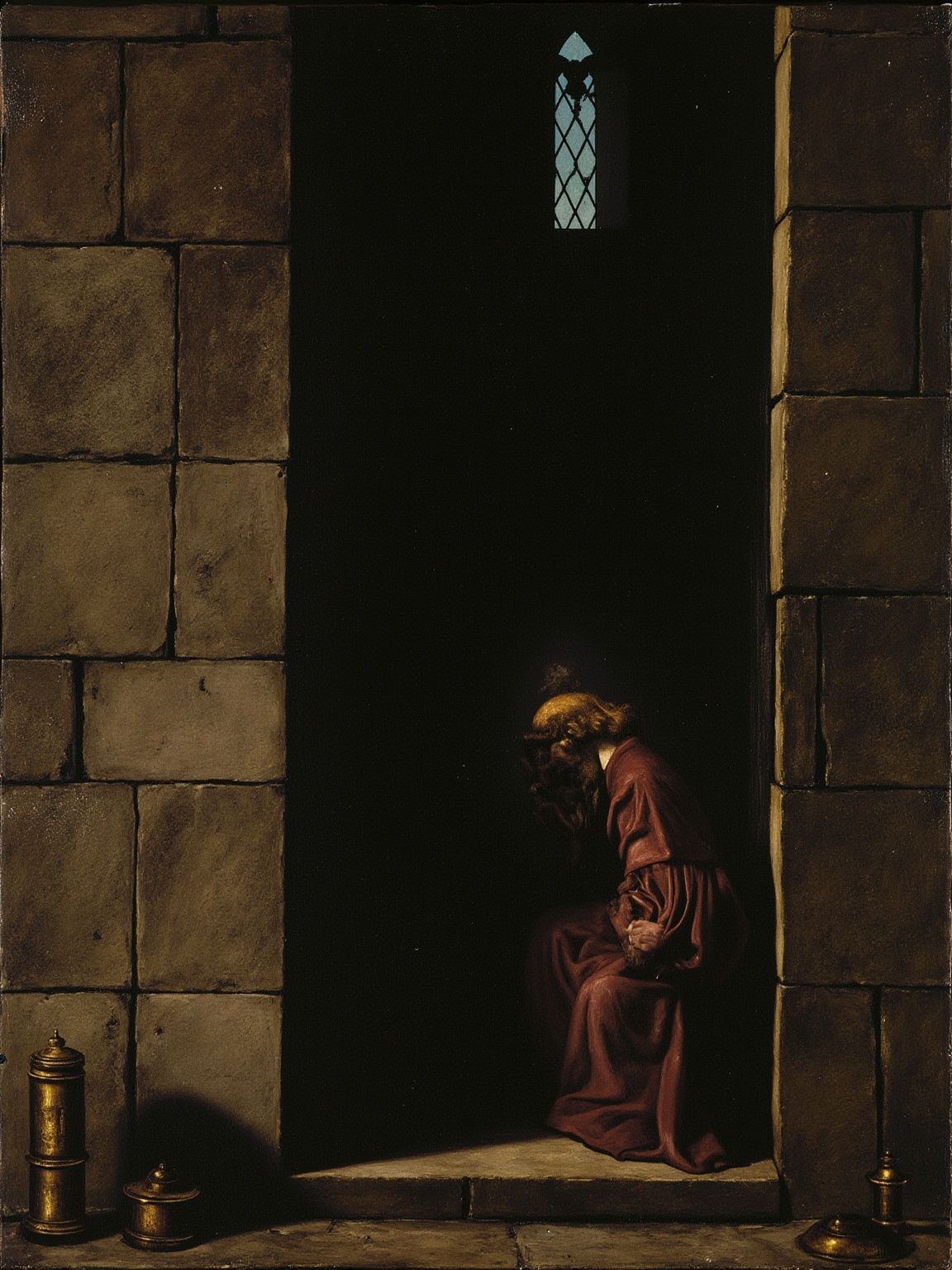
O fortune, variable and blind, why didst thou aim so high?
啊,变化无常又盲目的命运,你为何把箭头瞄得那样高?
金句 · 第二十幕 · 坠亡与告白
Seven — A Father's Grief: The Curtain Falls on the Middle Ages
The book closes on Pleberio's long, gutted monologue after hearing his daughter's dying confession. He cannot understand it — the daughter he guarded for years, gone over a love affair. He interrogates the whole order of the world: kinship, fortune, wealth, love, hatred, all of it. By the end you realize he isn't only questioning his daughter's affair — he's questioning the entire set of rules the old world ran on. Who let all the evil in this world loose? That line is the sound of the Middle Ages closing its own book.
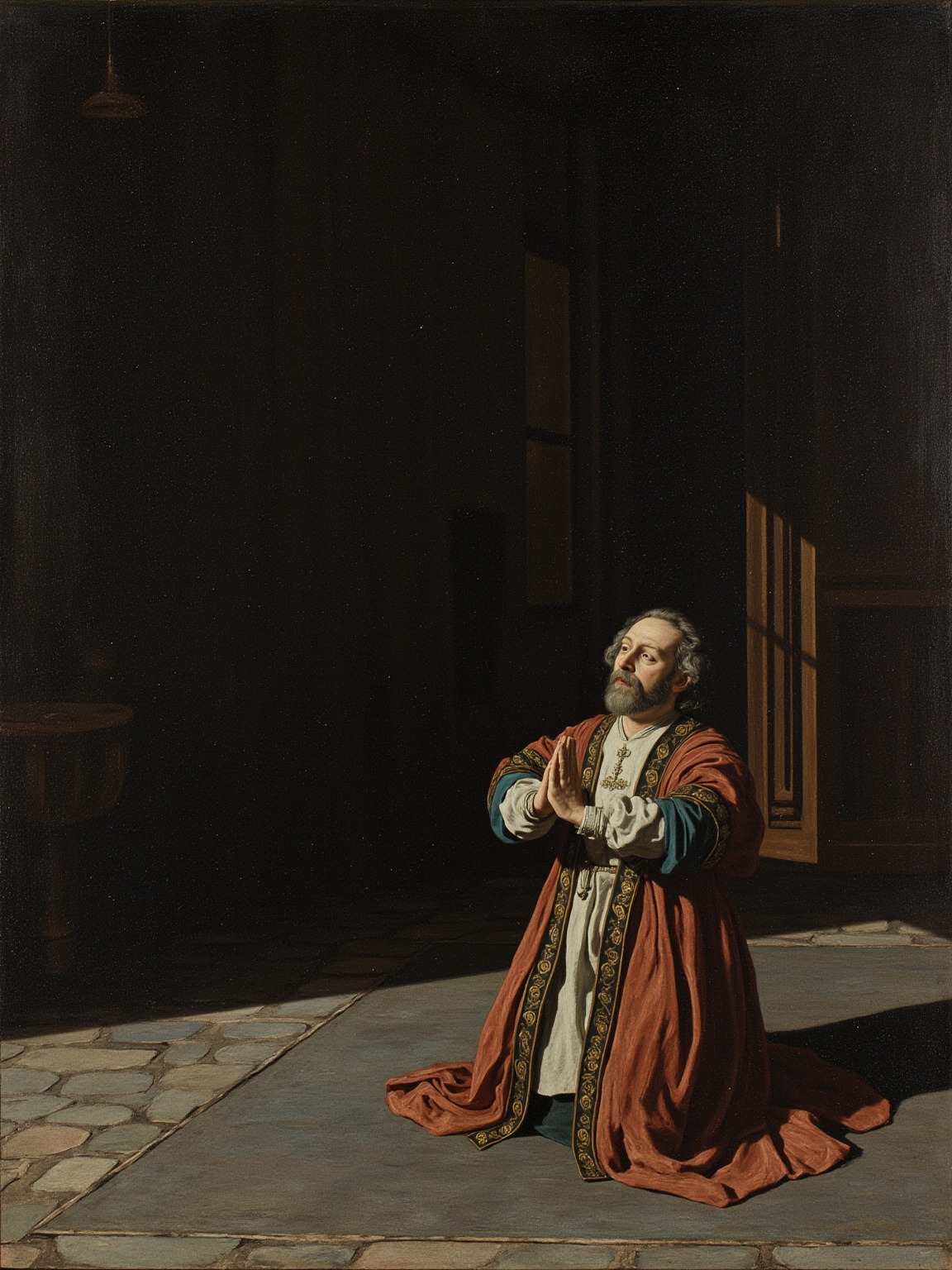
O vanity of man, who thinkest thou canst command the world!
虚妄的人啊,你竟以为自己能号令这世界!
金句 · 第二十一幕 · 普拉尔索的哀恸
Themes and Craft
What is this book actually about? On the surface, a tragic love story. Underneath, it's a ledger of desire for an entire city — the procuress, the servants, the lovers, the locked-up daughter, the noble father, every one of them running their own accounts, and every one of them eventually ruined by their own math. Go a layer deeper and the real subject is trespass: the locked house and the rope ladder thrown over its wall stand for the fight between feudal morality and worldly desire, and the book sides with the trespassers, affirming happiness in this life against the church's moral order. The name Celestina has lived inside the Spanish word for "procuress" for five hundred years since — the first fully realized version of that character in literary history.
As for craft, Rojas did something nobody had done before: the entire book runs on plain dialogue across twenty-one acts, no narration, no description, nothing but people talking. Servants' street slang sits right next to courtly speech, curses share the stage with love poetry — this is where the secular bloodline of Spain's Golden Age theater first takes root. The whole book reads naturally in one continuous take, act after act, like watching a crowd keep talking under a corner lantern until the light finally goes out and everyone scatters.
Why Read the Text Itself
A guide can hand you a map, not the ground itself. On the map you get seven big beats. On the ground you run into things no map can draw — Celestina's rapid-fire street wit, Sempronio's slipperiness, the exact turn in Pármeno's mind from warning his master to betraying him, the relentless string of questions in Pleberio's final monologue that leaves you unable to breathe. Knowing how it ends doesn't cost you anything, because the book's real weight was never in what happens — it's in how these people's mouths move and their minds turn, scene by scene. Finish it and your sense of the exact moment the Middle Ages ended will be more concrete than anything a history textbook gives you.
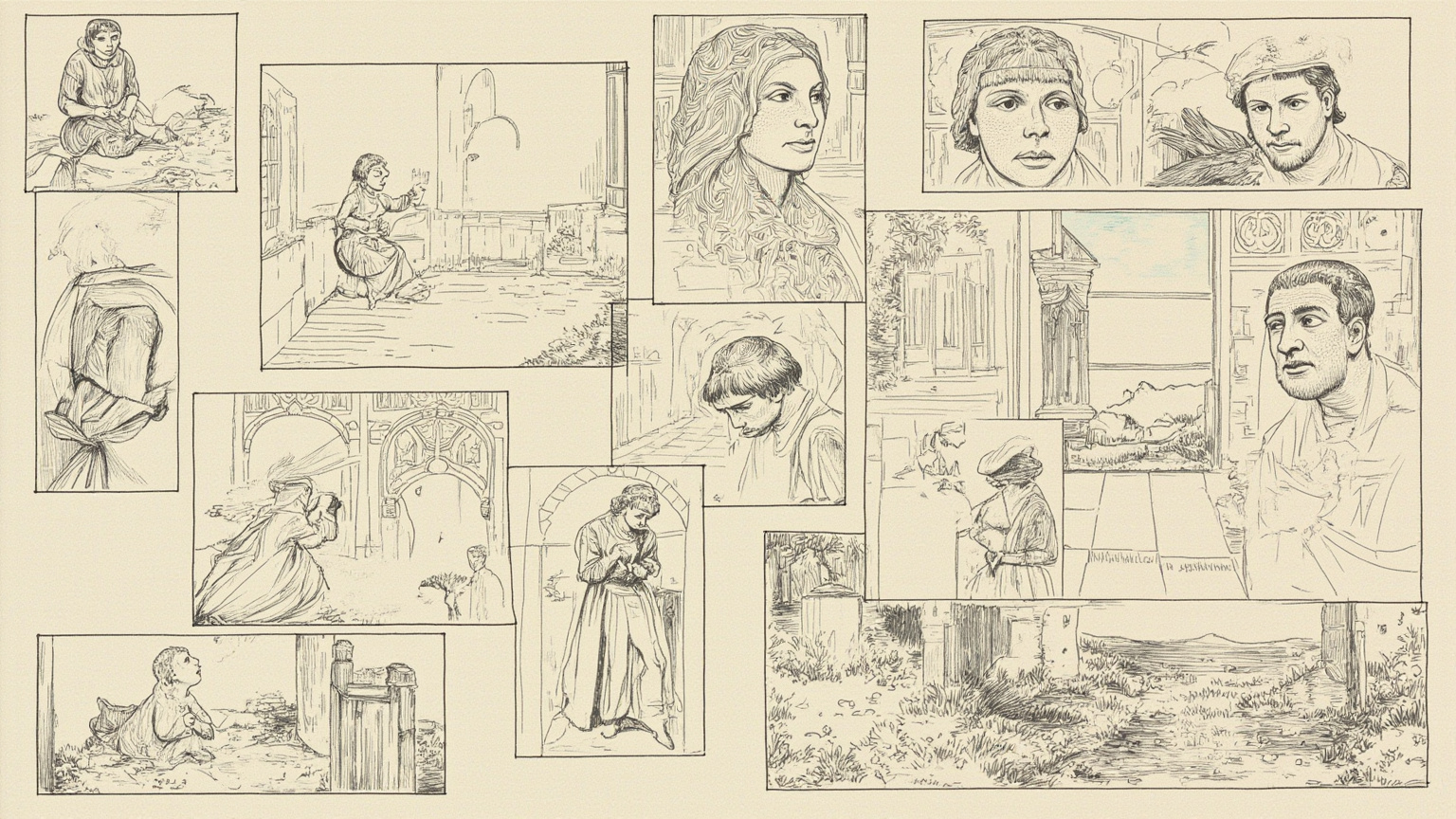
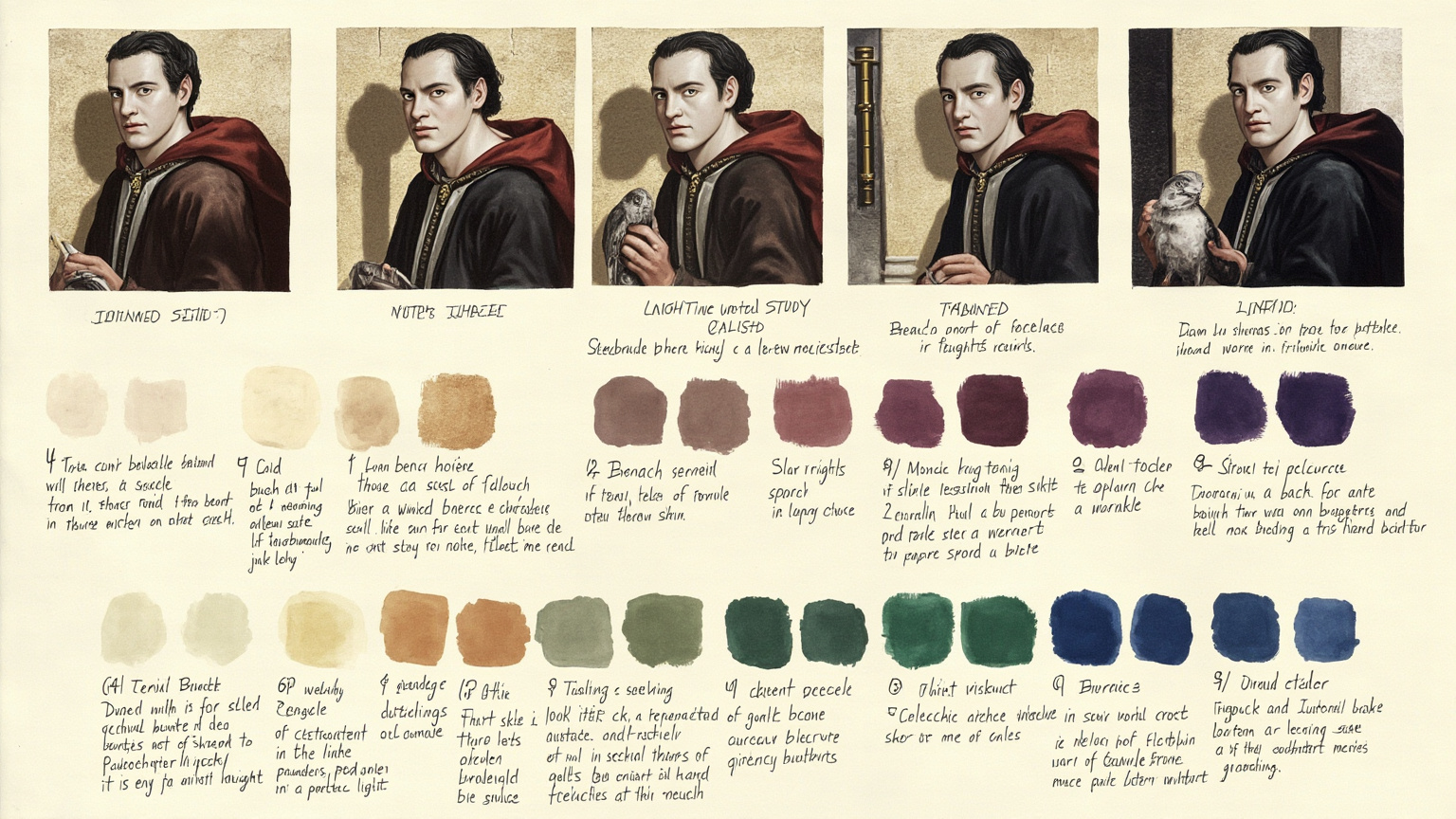
Art Direction4 plates
Before the guide was written, this book got a visual foundation — every illustration you just read grew out of it.