Letters from a Stoic (Epistulae Morales ad Lucilium) · Companion Guide
塞涅卡道德书简
一位从暴君身边退下来的老人,在那不勒斯湾的葡萄园里,把生死富贵都写成借来之物。
A Letter From a Country Estate Opens Like This
Live this day as if it were your last. That line did not come from a monk on a meditation cushion, and it is not someone's 3 a.m. social-media tagline. It opens a letter written by a retired Roman finance minister in the early empire, addressed to a middle-aged friend on his way to take up a post in Sicily. The man writing it was already sick enough to count his own breaths, and rich enough to complain about his wealth from inside a private estate. Between coughs, he tells you to take your time back.
What This Book Is About, and Why It's Still in Print
Letters from a Stoic is a collection of philosophical letters written in Latin. Seneca sent them out one by one in the middle of the first century, and after his death the recipient gathered them into the book that survives today. Along with Marcus Aurelius's Meditations and Epictetus's Enchiridion, it forms one of the three founding texts of the modern Stoic revival — the first an emperor's private notebook, the second a former slave's teaching outline, and Seneca the third figure: an immensely wealthy retired statesman reasoning with a friend through the slow medium of letters. Three social positions, three forms, one Stoic ethics. Of the three books, this is the least like a textbook, and the most like someone actually talking to you.
Two Men, and What Makes a Letter Work
The letters come from Seneca himself. By then he had extricated himself, more or less intact, from Nero's court, and lived across a scatter of estates between the Bay of Naples and Rome, tending vines and writing. The recipient is Lucilius, newly appointed procurator of Sicily, on his way to the post. He is a learned, ambitious, morally hungry man in middle age, and he keeps pulling Seneca back to the real questions with concrete situations — how a sick old man should live, whether to treat slaves decently, how to hold yourself together near a tyrant. What makes the letters work is Seneca's tone. He does not sound like a teacher handing out assignments; he sounds like a gentle, exacting elder sparring alongside you. Under every argument, he admits first that he cannot do it either, then shows you what falling short looks like. That is what separates Stoic ethics from the Cynics: it does not ask you to move into a barrel. It asks you to still know why you're taking a hot bath while you're taking one.
Letter 1: Time Is the Thing Being Stolen
The very first letter sets the pitch for the whole book. Seneca opens with a warning: we think we're busy, but really we spend a lifetime having our time stolen by other people. He gives Lucilius an exercise — treat the start and end of every day as if it were the last one, not for drama, but for clarity. As a piece of writing, it is short enough to feel like a knock at the door, and it drives the whole of Stoic ethics down to a single point: the most valuable thing a person owns is a clear awareness of the present moment. The 123 letters that follow are that same nail, struck again on a different day each time.
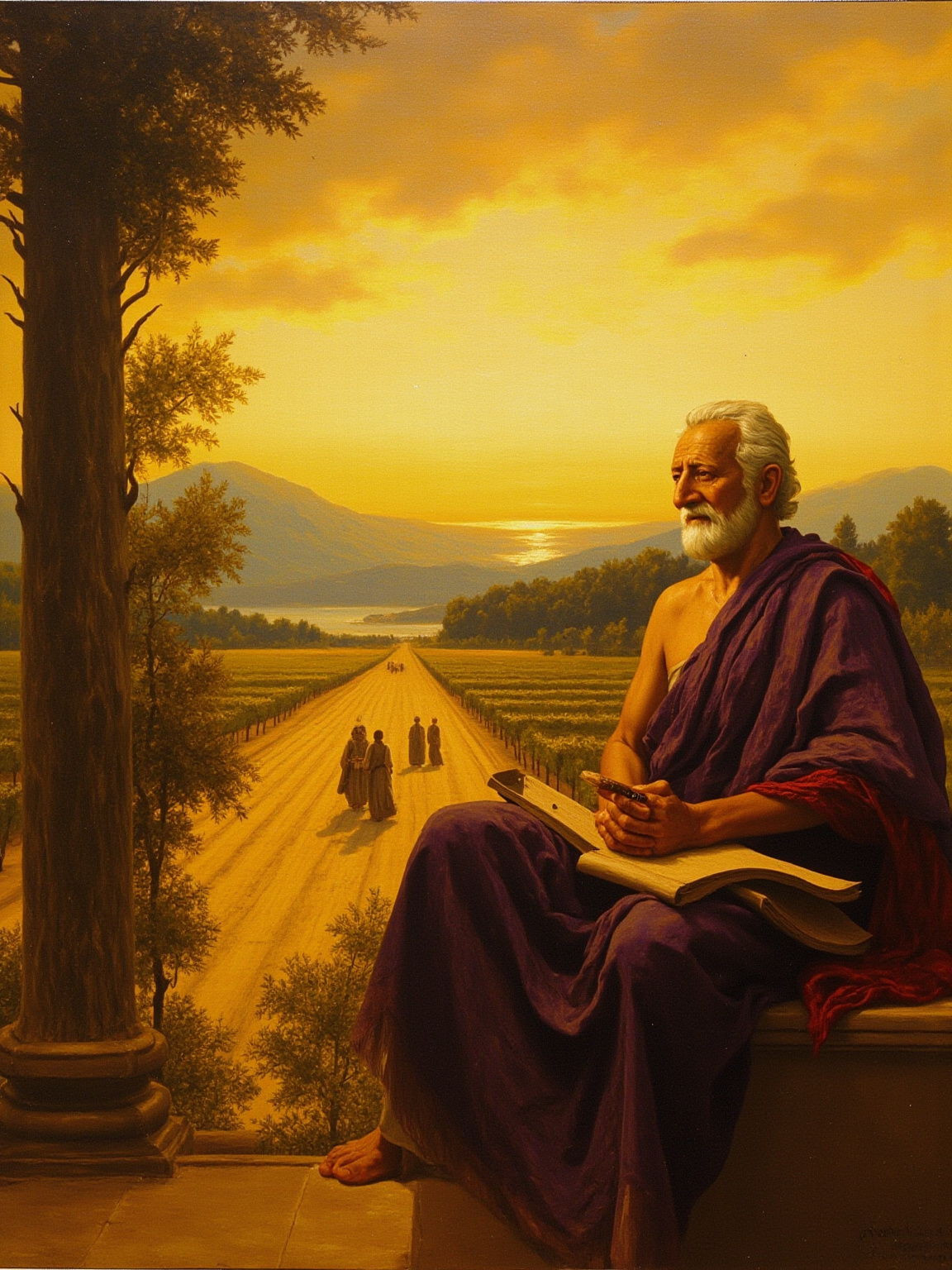
It is not that we have a short time to live, but that we waste a lot of it.
不是我们拥有的时光太少,而是我们浪费掉的太多。
金句 · 第1封信 · 时间是被偷走的东西
Letter 17: What a Poor Man Actually Is
By letter 17, Seneca is doing something almost perverse: a man richer than most kingdoms is complaining about his own wealth to a friend who works in finance. He offers the definition that gets quoted over and over since — the poor man is the one who lives on the least. On the surface this letter is about poverty. What it's actually performing is surgery on the rich. Stoic freedom is not about deprivation; it's about seeing clearly that you don't need as much as you think. There's real tension between that claim and how Seneca actually lived, and he puts that tension on the table on purpose. The first time I read this letter, I went back and reread the page before it — one of the richest men in the Roman Empire, writing about being poor in that tone, and getting away with it.
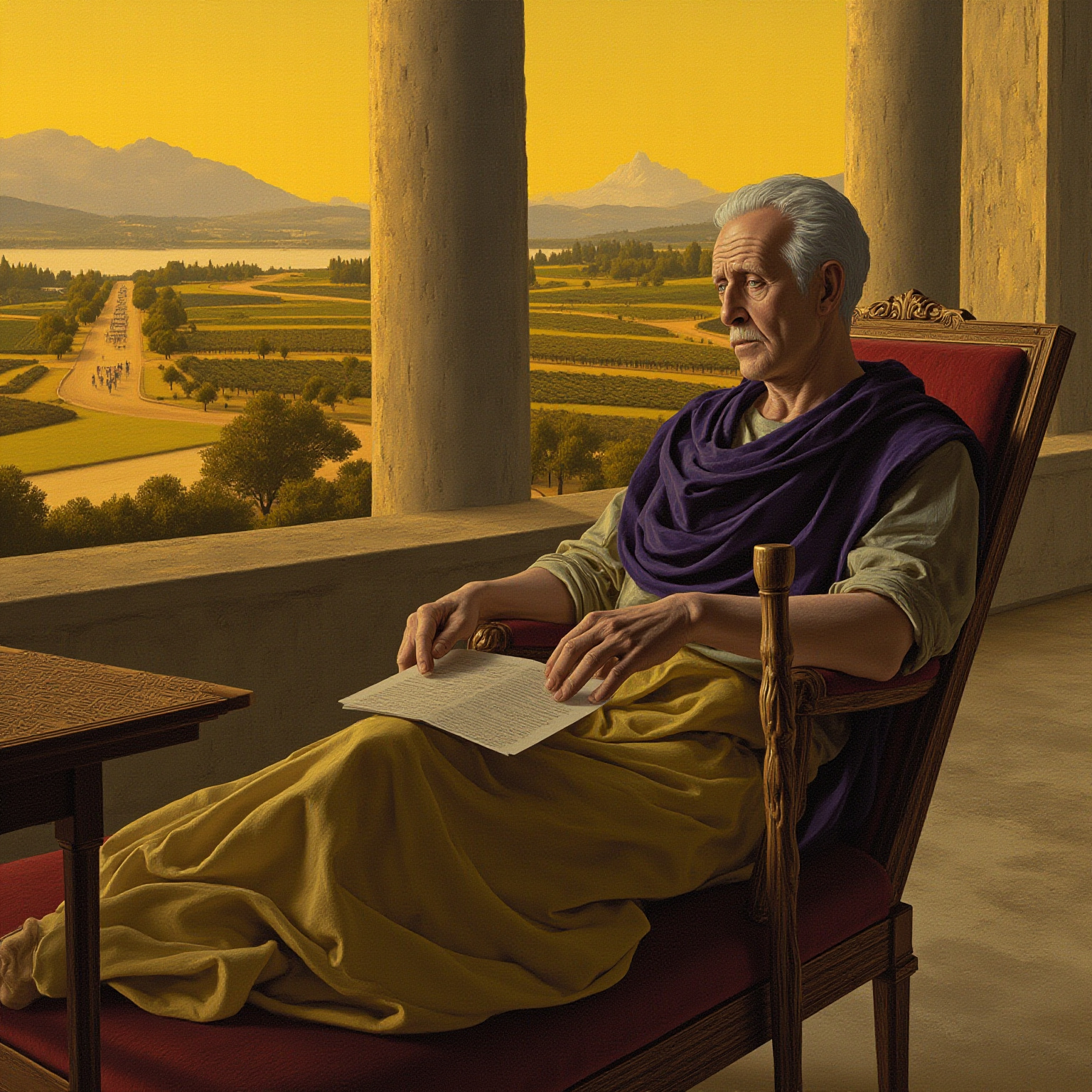
He is a poor man who counts his things by what they cost.
穷人是怎样的人?就是靠最少的东西活着的人。
金句 · 第17封信 · 穷人是怎样的人
Letter 23: Imagined Suffering Outweighs the Real Kind
This is the most dog-eared page in the whole book for modern readers. Seneca writes that we suffer more often in imagination than in reality. He moves from private fears to the daily jumpiness of living under a tyrant, from insomnia to a heart that jolts at the sound of a door — and lands on the point that most of what tortures us is a rehearsal for something that hasn't happened yet, or never will. The clever move here is craft, not argument. Instead of preaching abstract calm, he lists a long string of specific, almost embarrassing small panics, so you laugh at yourself while you read. It turns out the hero and the coward are worrying about the same thing, structurally, at three in the morning.
Letters 70 and 77: When a Person Is Allowed to Leave
Here Lucilius asks the hard question outright. Does a sick old statesman, one who struggles to breathe, have the right to choose the hour he stops? When is a man who has served a tyrant allowed to exit? This is the Stoic tradition's famous problem of when a person may leave. Seneca puts duty first: leaving is not a matter of feeling, it is a matter of what you still owe the people around you and the work you haven't finished. Being gravely ill does not automatically grant permission to go; simply staying alive is, at certain moments, an obligation in itself. He returns to that boundary again and again in the letters — it is the coldest and, at the same time, the warmest place in Stoic ethics.
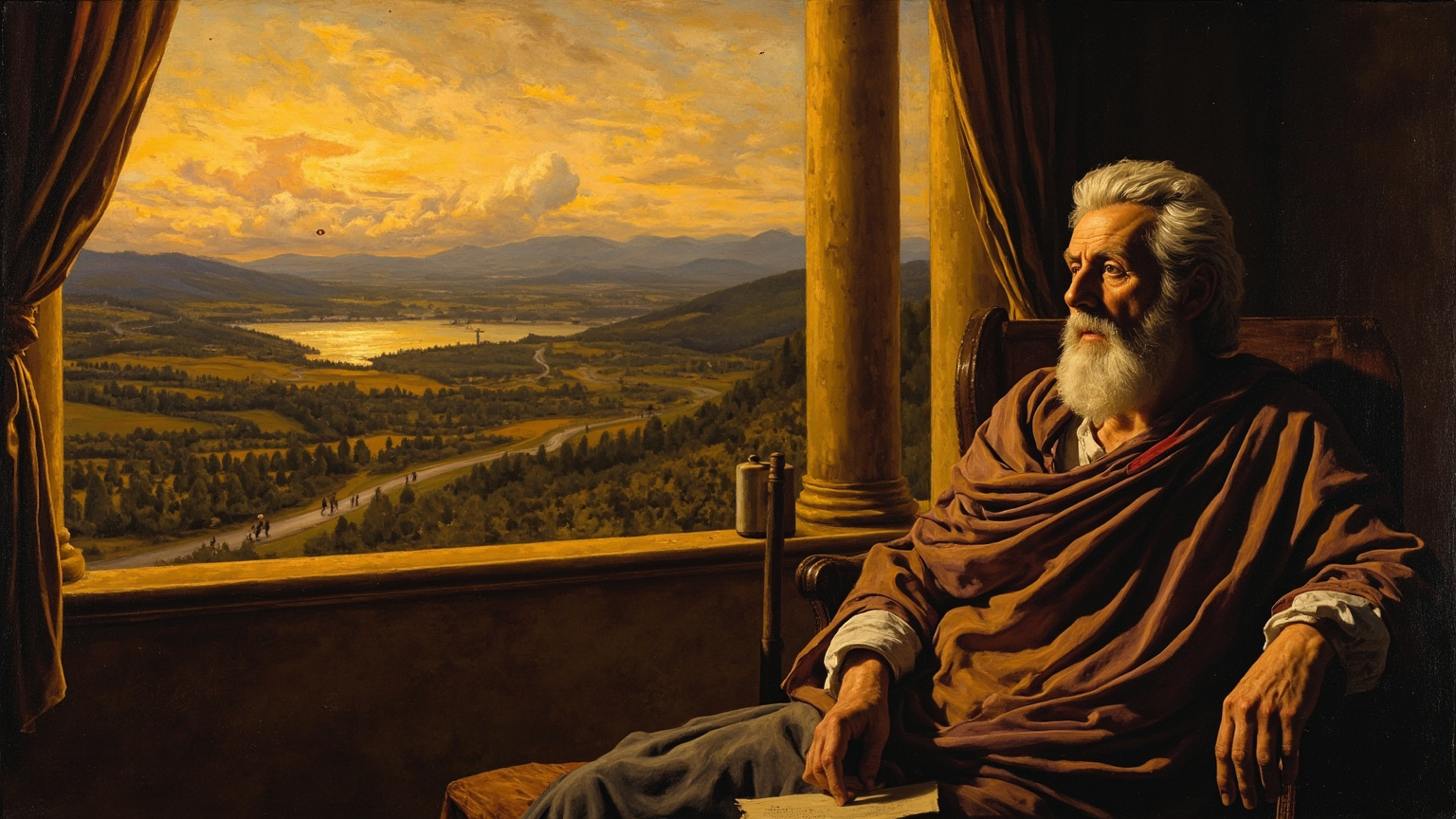
Against all the accidents of life, I have a sure haven. The worst that can befall me is death, and death is indifferent.
面对人生一切变故,我有安全的港湾。最坏不过是死,而死对我无所轻重。
金句 · 第70封信 · 人何时可以退出
Letter 86: Scipio's Retirement — the Hardest Enemy Is Yourself
The letters build to their climax starting at letter 86. Seneca uses the old age of Scipio Africanus, the general who defeated Hannibal, to lay out a genuinely counterintuitive Stoic paradox: the man who conquered Hannibal was later hounded by political enemies, chose exile in the countryside, and died on a small estate. A man who beat every enemy he ever faced found that the hardest one waiting at the end was himself. The letter is built in an unusual way — Seneca sets a general's campaigns and his retirement side by side in the same passage, and lets the reader feel the drop from battlefield to vineyard without spelling it out. The emptiness that follows retirement is a wall every successful man of the empire eventually hits.
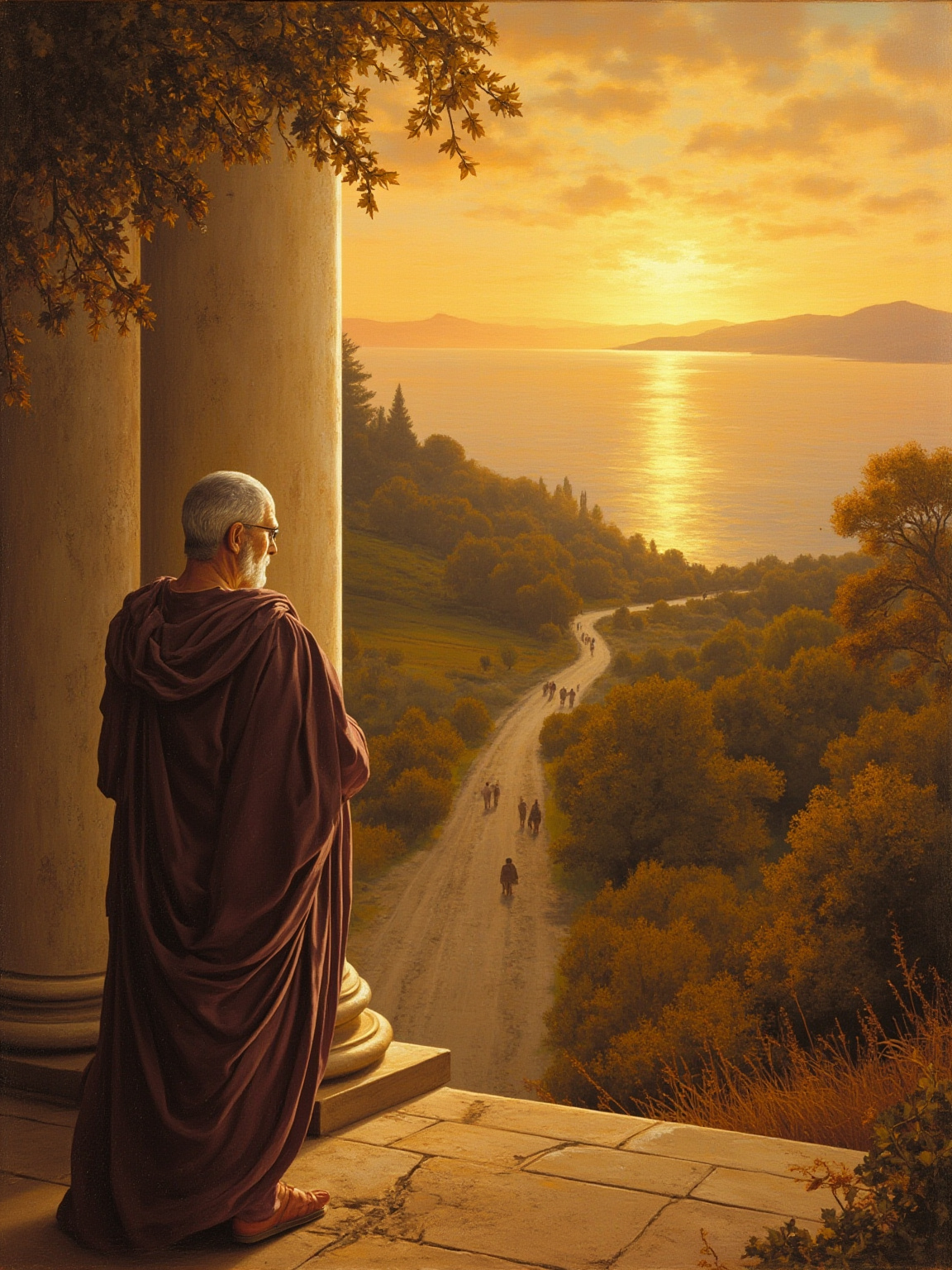
The man who has conquered his own spirit has won a greater victory than over any army.
征服自己灵魂的人,所获的胜利大于任何一支军队。
金句 · 第86封信 · 西庇阿的隐退
Letter 87: Posidonius — a Hundred-Year-Old Man Absorbs the Death of His Son
Right after letter 86, letter 87 shifts to the man Seneca calls a Stoic still living in our own time — the centenarian Posidonius. He was present when his son died, and he met it with composure. Seneca returns to him here, describing how he simply went on with his days on a small estate. The power of this letter isn't in the argument, it's in the image: a hundred-year-old man sitting by his son's grave, still reading. It isn't coldness. It's steadiness, decades in the making. Seneca writes about him with the plain reverence of a younger man toward an elder, and admits to Lucilius, in the same breath, how far short of it he still falls.
Letter 67: Regulus Chooses Torture Over Breaking His Word
The triangle of climactic letters closes with 67. Regulus, a veteran commander from the First Punic War, was captured by Carthage and sent back to Rome to negotiate, on his word that he would return. He urged the Senate to reject the unjust terms, then went back to Carthage and died under torture rather than break his promise. Seneca draws from his story a heavy line: death itself is cheap; what's frightening is using the threat of death as a tool to make people do wrong. Three figures from an earlier generation of Stoics — Scipio, Posidonius, Regulus — are summoned together across letters 86 through 88, as Seneca's answer to the question Lucilius never quite asks outright: are there still Stoics in our own time? Yes. They look like this.

Do you count him unhappy who has just begun to be happy? Death is not an evil; it is the pretence of evil.
他刚刚开始幸福,你却说他不幸?死本身并非灾祸,对死的想象才是。
金句 · 第67封信 · 雷古鲁斯宁受酷刑也不背约
What This Book Is Actually Saying
What Seneca is teaching is a very specific way of living: time is borrowed, not owned; wealth, power, and health are on loan; solitude means meeting your actual self, not being alone; and death belongs in daily practice, not behind a curtain. All of this was written in the shadow of a first-century Roman court, which is exactly why it was never meant for someone hiding in the hills. It was written for people still in the city, still working, still dealing with real trouble. Why does it hold up as good writing? Because it fills in a slot the other two founding texts leave empty. The emperor's notebook leans inward, the former slave's outline leans schematic, and the wealthy ex-statesman's letters read the most like one person actually talking to another. Seneca is the one who brings Stoicism back down from a textbook abstraction into somebody's ordinary day.
Seneca writes philosophy with his body underneath it — a night of asthma, a slave's footsteps on the estate, a heart that jolts at the sound of a door at three in the morning.
Why It's Worth Reading the Letters Even Once You Know What Happens
A guide like this can only tell you what the book is about; it can't replace the three evenings it takes to actually read the letters. Seneca writes philosophy with his body underneath it — a night of asthma, a slave's footsteps on the estate, a heart that jolts at the sound of a door at three in the morning. None of it moves forward on plot; it moves on the breath you feel between the lines. Read these letters long enough and you slowly pick up a new way of looking at yourself — not as a judge, but as company. This book was written two thousand years ago and people still open it today because the problems it handles — not enough time, not knowing when to step back, fear of things that haven't happened — just keep showing up in new packaging. Go read the letters themselves, and let that gentle, exacting old man train alongside you for a while.
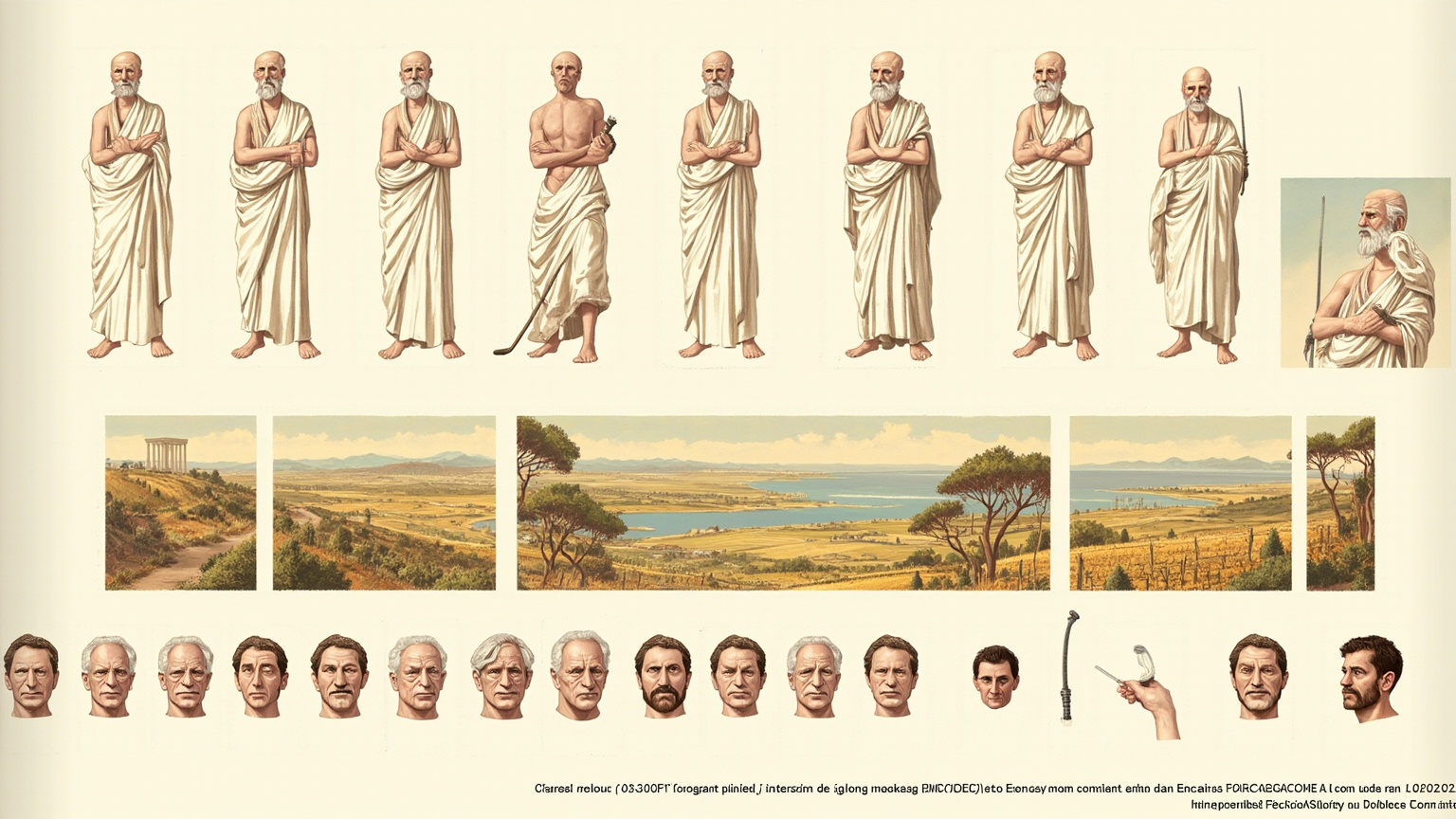
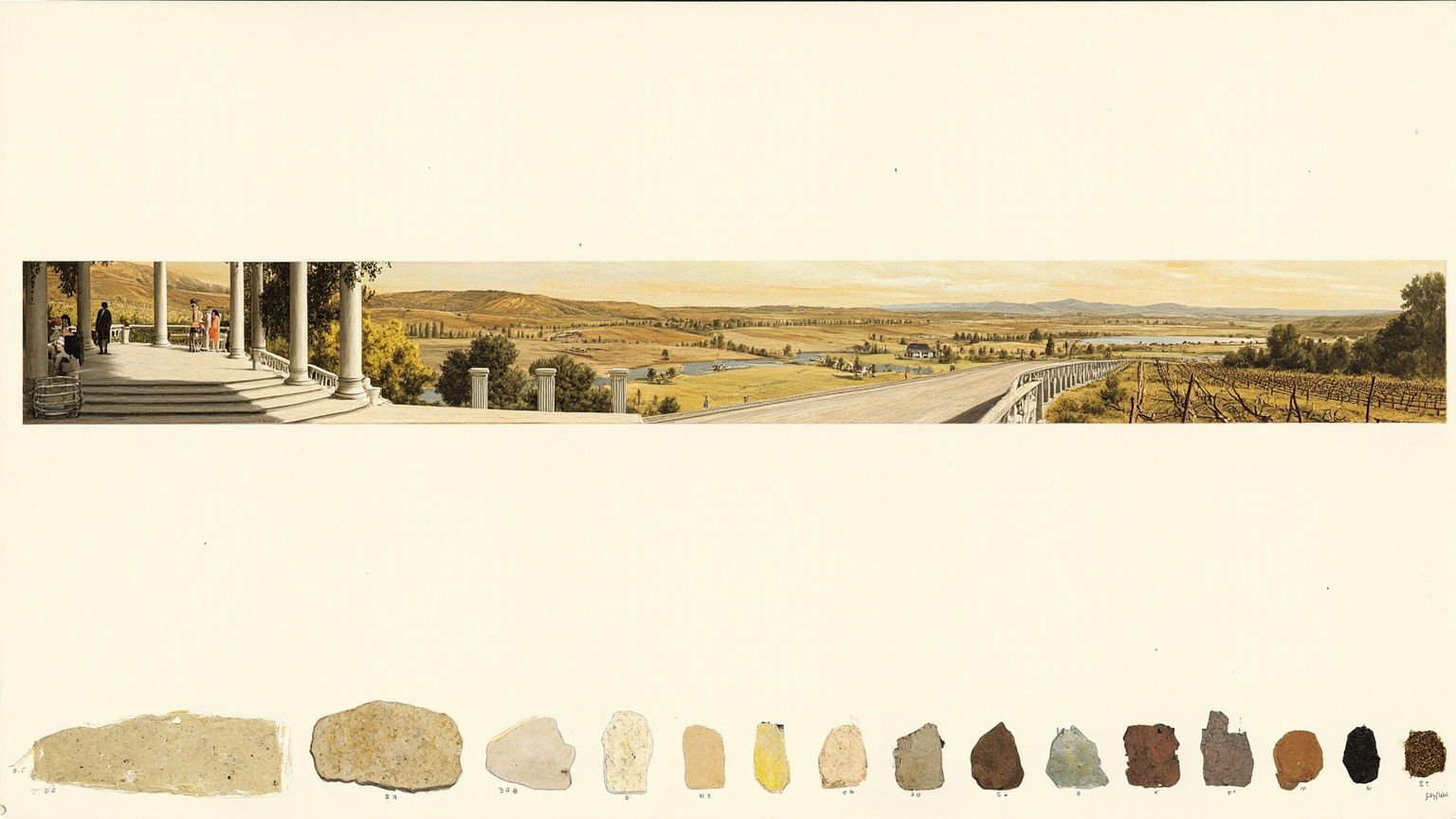
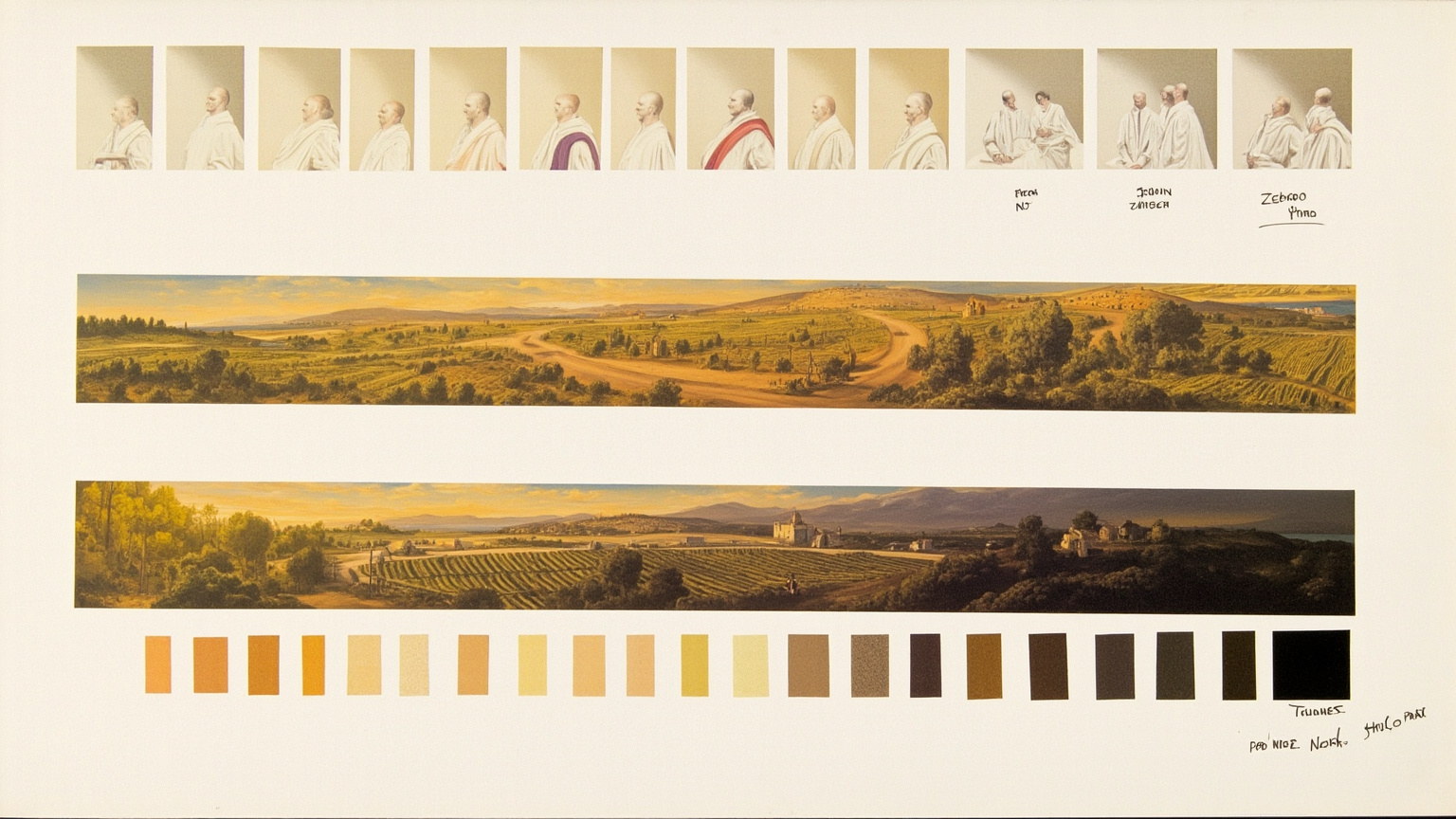
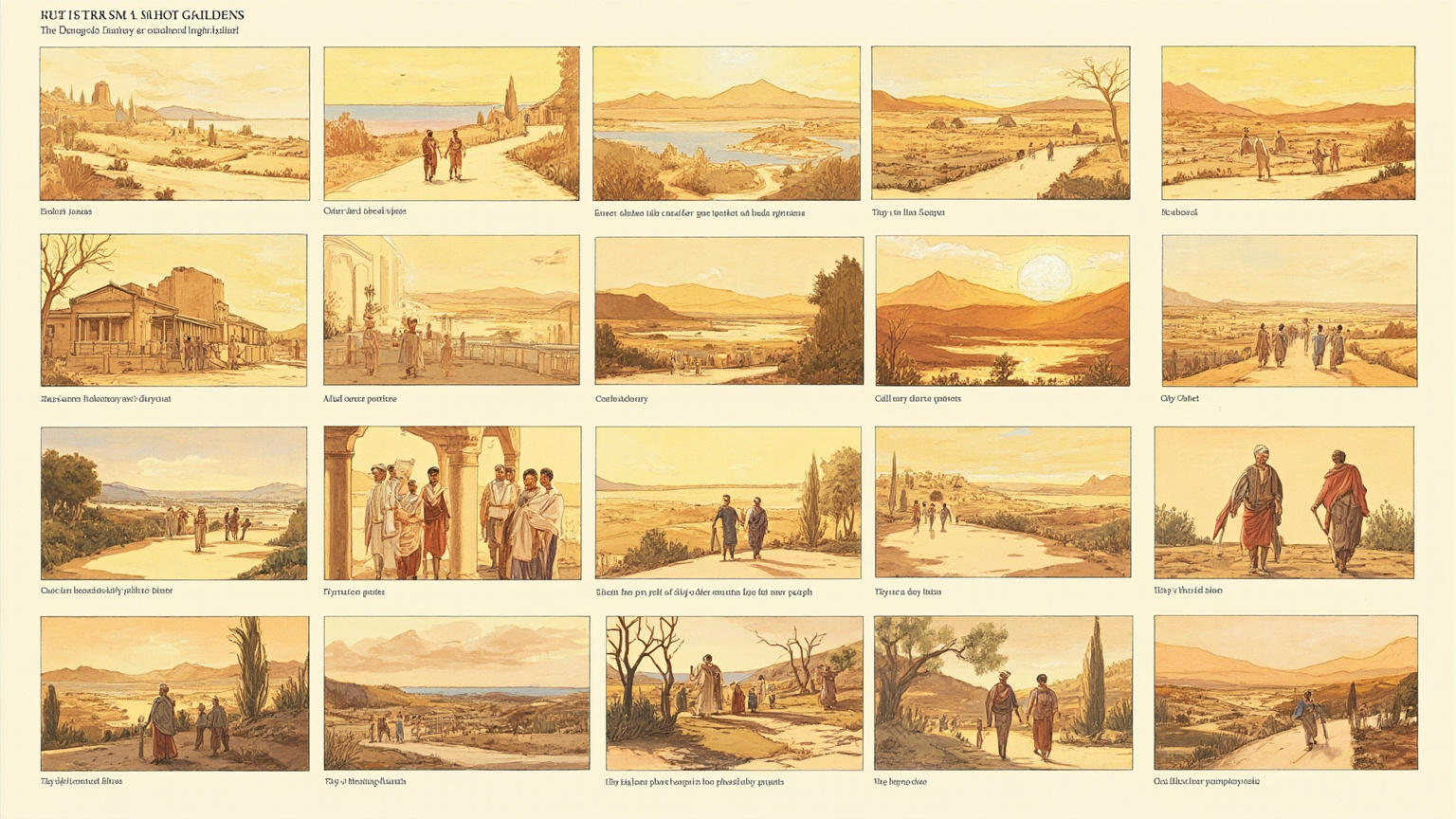
Art Direction4 plates
Before the guide was written, this book got a visual foundation — every illustration you just read grew out of it.