Little Women; or, Meg, Jo, Beth and Amy · Companion Guide
Little Women
Through the Civil War years, a mother and four daughters keep one hearth burning — staging plays, making resolutions, losing and becoming — turning lean years into the origin of girlhood coming-of-age literature.
Opening hook: four girls by the fire
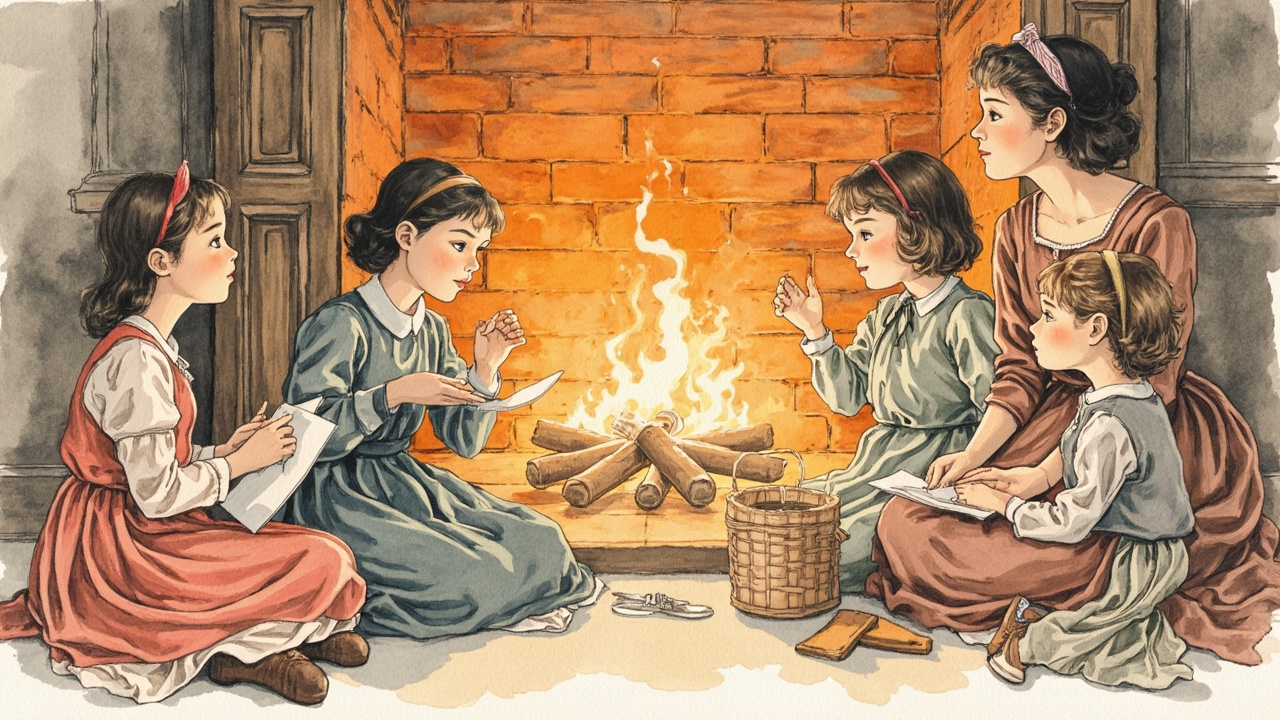
It's Christmas Eve, and there are no presents, no turkey — Mother has just set dinner on the table: bread, potatoes, a dish of pickles, and a pot of milk. The four girls sit around the fire, complaining that their stockings are empty, while they listen to Mother read a letter from their father, far away. He's at the front; the household is down to the mother and her four daughters, and money is too tight even for a decent meal.
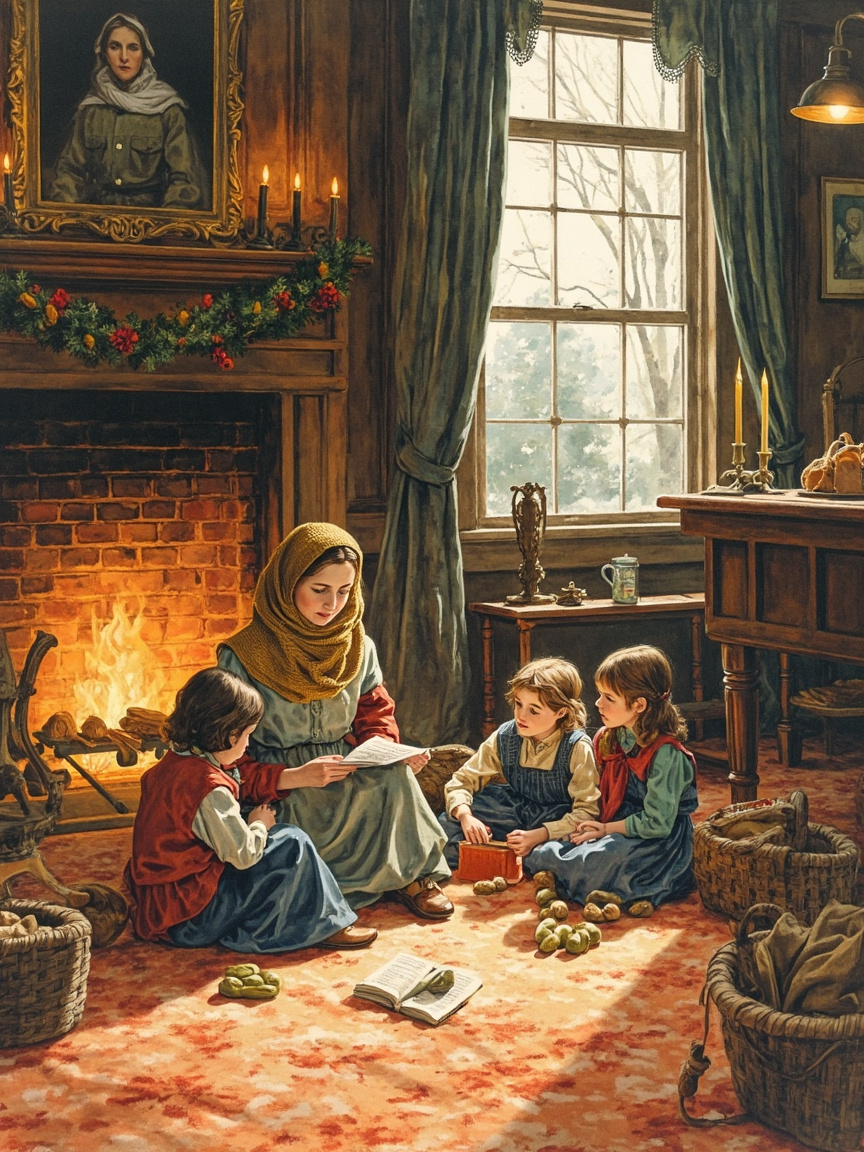
Christmas won't be Christmas without any presents
没有礼物,圣诞节就不算圣诞节。
Original line · The novel's opening line · Jo's complaint by the fire
No Christmas present ever came. The next morning, the four girls instead carry their carefully prepared Christmas breakfast to the poorer Hummel family down the street — a household of thin, sickly children crammed into a drafty room, too ill to get up. This one scene sets the tone for the whole book: this is not a novel about a prince coming to the rescue. It's about how to grow into a decent person in an age when your pockets are empty but your heart is full.
What kind of book is this
Little Women is a novel by Louisa May Alcott, published in Boston in two volumes, in 1868 and 1869, later combined into the single volume readers know today. It draws on Alcott's own family's life in Concord, Massachusetts — a mother raising four daughters alone — and the author herself is the second daughter, Jo.
It went on to become the foundation of coming-of-age literature for English-speaking girls. For more than a century, countless girls first saw themselves in Jo March: someone who wanted to make a life with a pen, not a marriage. Its earliest readers were young women themselves — and it was rare, for its time, in treating little women as praise rather than as a lesson in how to behave.
People and world: four girls, four faults
The eldest, Meg, loves pretty things and a respectable life; her fault is vanity. The second, Jo, is a tomboy with a hot temper; her fault is her temper. The third, Beth, is shy and gentle, and loves the piano; her fault is making herself too small. The youngest, Amy, loves drawing and putting on airs; her fault is selfishness. Between the four faults, they cover every blind spot of adolescence. Their father is off serving as an army chaplain; their mother runs the household alone — and the family's warmth is built on genteel poverty.
Next door stands the wealthy Laurence family's mansion. The lonely rich boy, Laurie, gets pulled into the March household's plays, letter-readings, and fireside evenings, and becomes something like a fifth child. Stern old Mr. Laurence gives Beth a piano, because she reminds him of his own granddaughter, who died young. There's also a wealthy, eccentric Aunt March — sharp-tongued but not unkind — whose estate later becomes the site of Jo's school.
Wartime poverty: Christmas, resolutions, and the scarlet fever
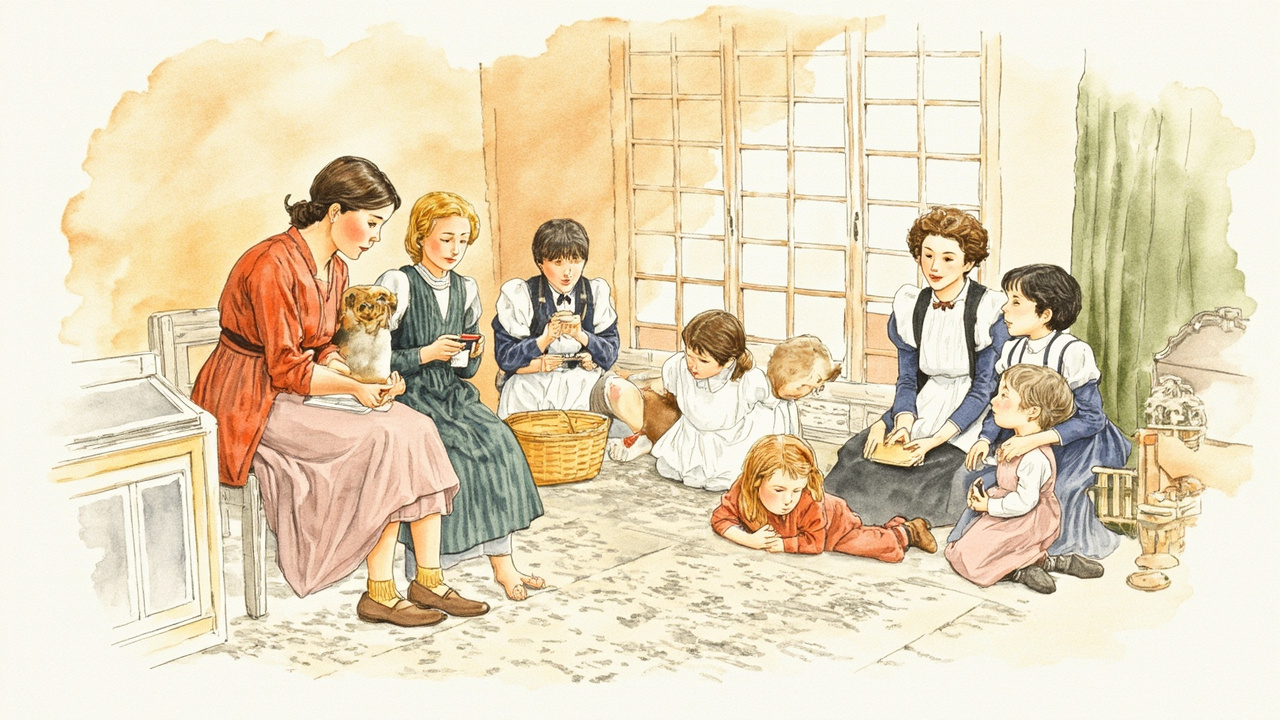
Once Christmas is over, the four girls resolve to fix their own faults: Meg will rein in her vanity, Jo will master her temper, Beth will overcome her shyness, Amy will conquer her selfishness. Their training ground is small — there's no money at home, and daily life means staging plays, running a homemade newspaper, mending clothes, and giving away the little the family can spare to those poorer still. Laurie acts in their plays, climbs trees, and laughs with them; the friendship between the young people is entirely innocent.
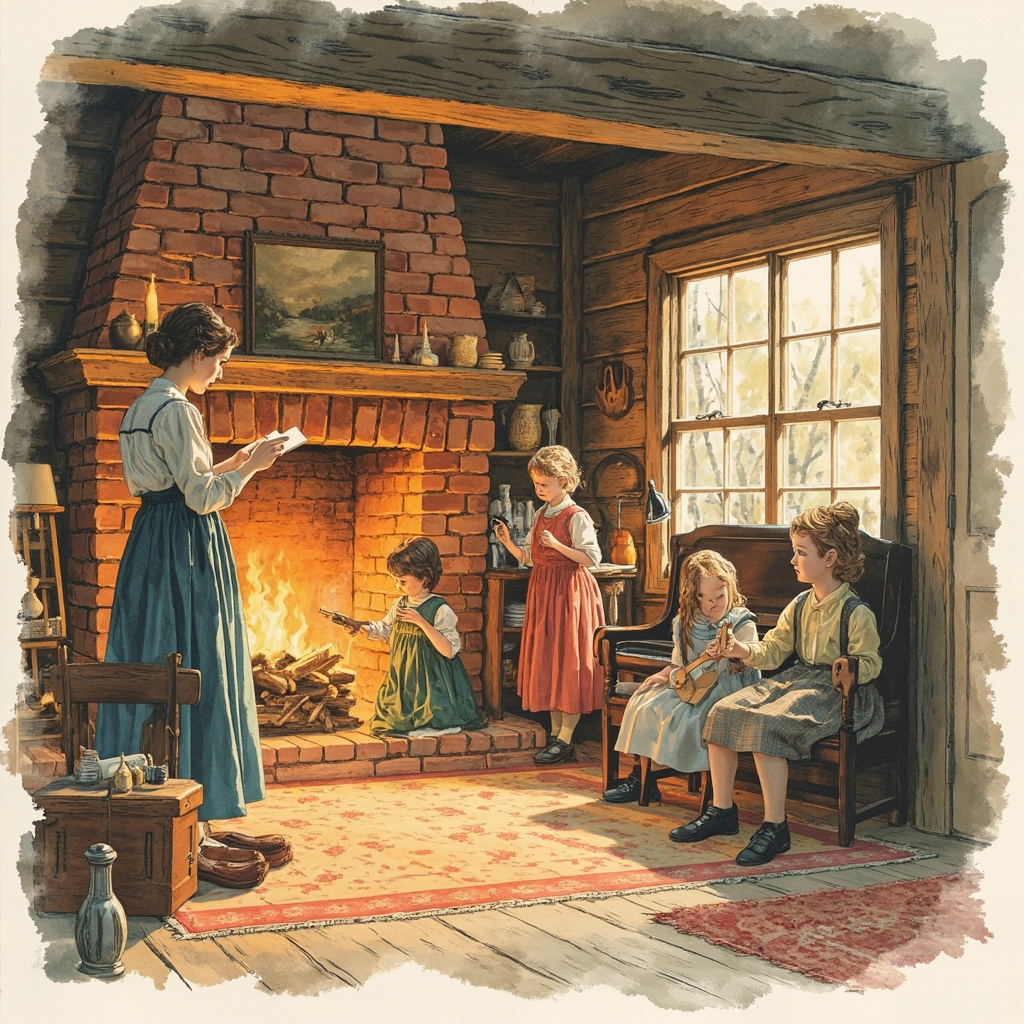
Watch and pray, dear, never get tired of trying, and never think it is impossible to conquer your fault
祷告着,警醒着,孩子——永远别厌倦尝试,也永远别以为战胜自己的毛病是不可能的。
Original line · Marmee's counsel to Jo · the four sisters resolve to mend their ways
The turn comes right on its heels. Father falls ill at the front; Mother rushes to Washington to nurse him, leaving only the children at home. Beth goes in her mother's place to look after the sick Hummel family and holds their feverish baby — and in doing so catches scarlet fever herself. Her life is saved, but her heart is damaged for good. This is the story's hidden nail: from here on, Beth's life is on a countdown.
The childhood chapters close: Father comes home, Meg gets engaged
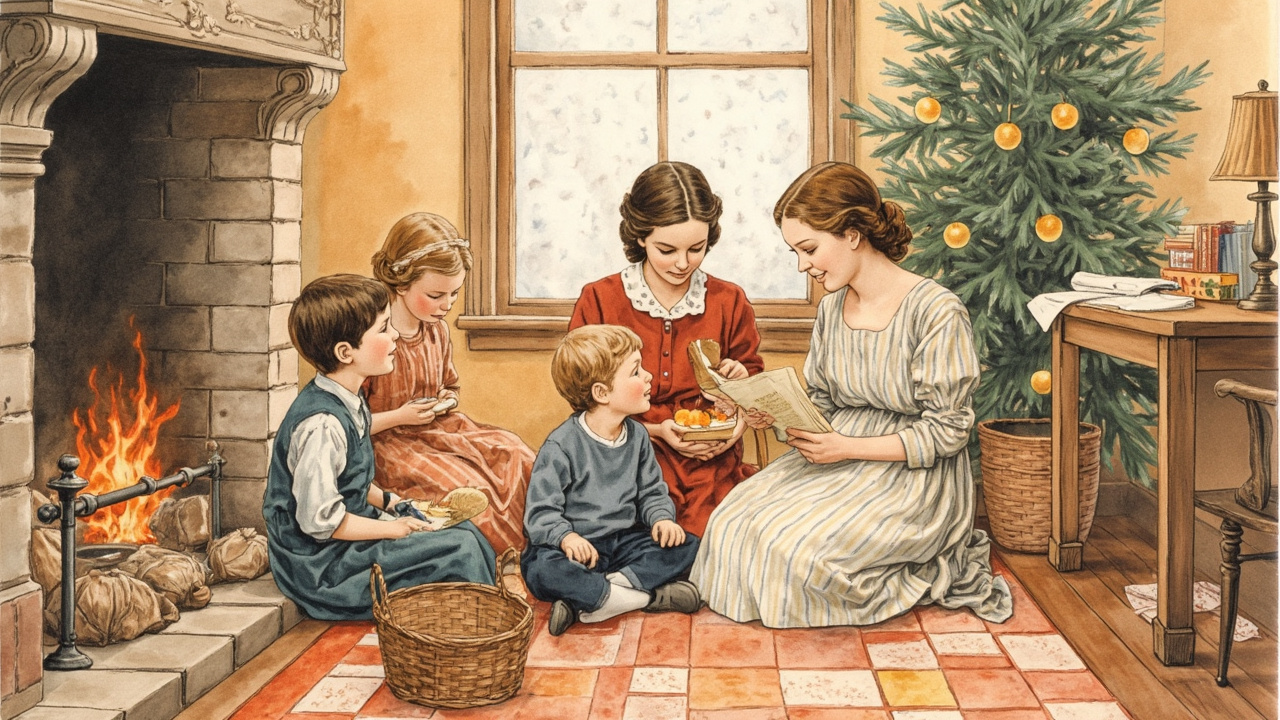
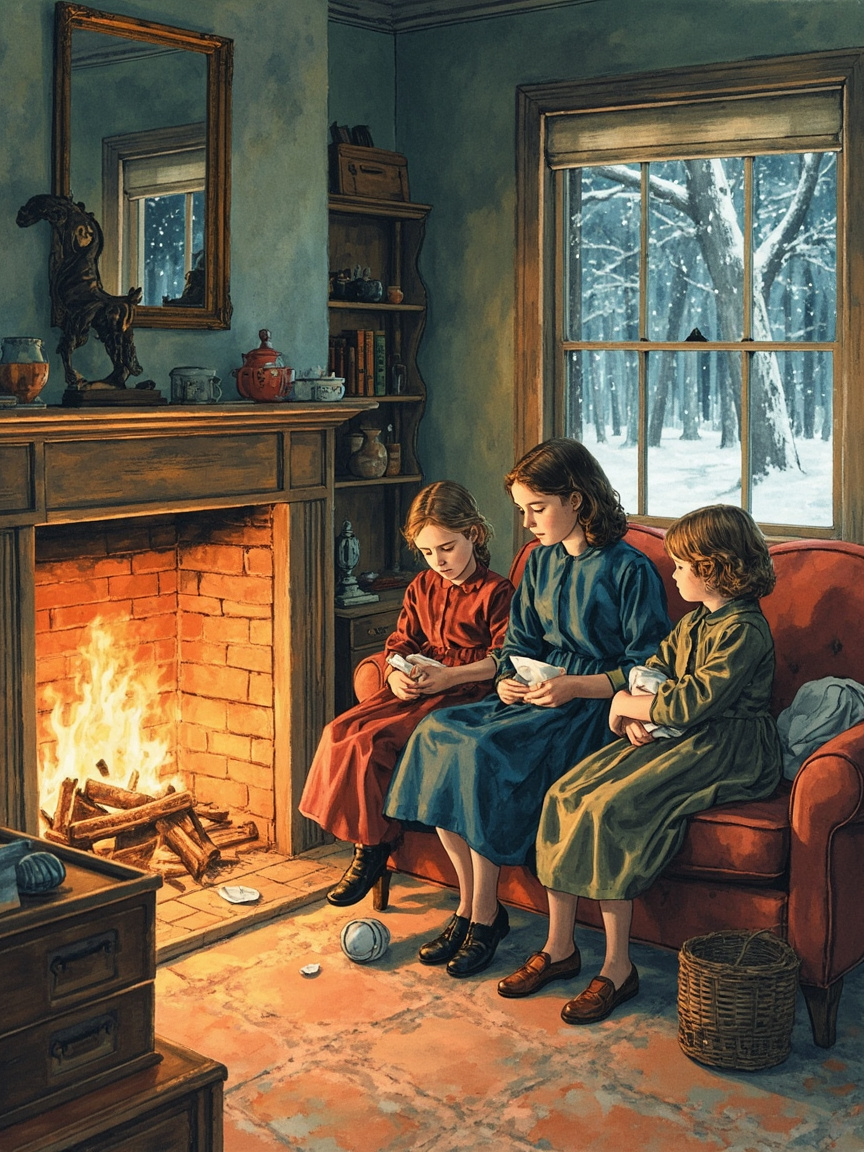
The first volume ends on the Christmas when Father comes home safe. Mother has grown much thinner; the children run to throw their arms around her — the book's first reunion. But the reunion already carries the seed of the next volume: Meg has fallen in love with Laurie's tutor, John Brooke, a young man with no money and no standing, but plenty of backbone. Father is home, Meg is engaged, and childhood closes here.
Jo turns down Laurie: the book's most stubborn stroke
In the adult chapters, the sisters take different paths. Meg marries John, has twins, and learns to run a frugal little household. Jo, determined to support herself by her pen, cuts her hair short, puts away her skirts, and goes off to earn money as a governess. Laurie, grown up now, has stayed by her side all along, and finally says what's in his heart. Jo turns him down.
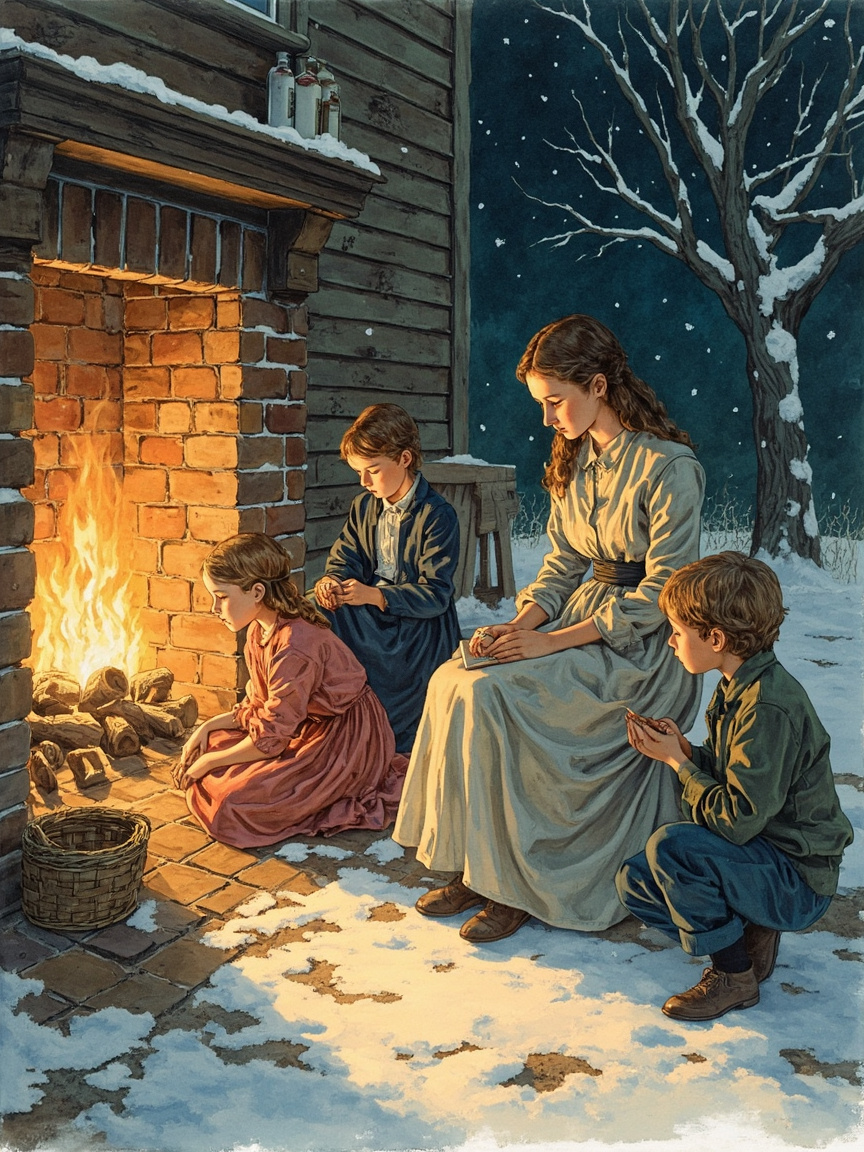
I don't believe I shall ever marry. I'm happy as I am, and love my liberty too well to be in a hurry to give it up for any mortal man.
我不信自己会结婚。我如今就很快乐,太珍爱自己的自由,不愿为任何男人急着交出它。
Original line · Jo on marriage · the most defiant stroke in the book
Jo's reason isn't a lack of love — it's fear. She's afraid that marriage will mean setting her ambitions aside; afraid of becoming one of those little women whose whole life revolves around a husband and children. She shuts that door almost in a panic, and with real force. Laurie, heartbroken, sails off to Europe. This is the single most important stroke in the whole book: a hundred and fifty years ago, a woman writer put it in ink that her heroine could refuse the proposal every reader wanted her to accept.
Professor Bhaer in New York: someone who will tell you your writing is bad
Alone, Jo goes off to make her way in New York. At her boardinghouse she runs into Professor Bhaer, newly arrived from Germany — an older, awkward scholar with an unkempt beard, poor as a church mouse, and a houseful of other people's children. He doesn't mind that she isn't ladylike, and he doesn't flatter her either. He picks up one of the cheap, sensational stories she's been writing to pay the bills and tells her flatly: stop writing this stuff, you're wasting your own talent.
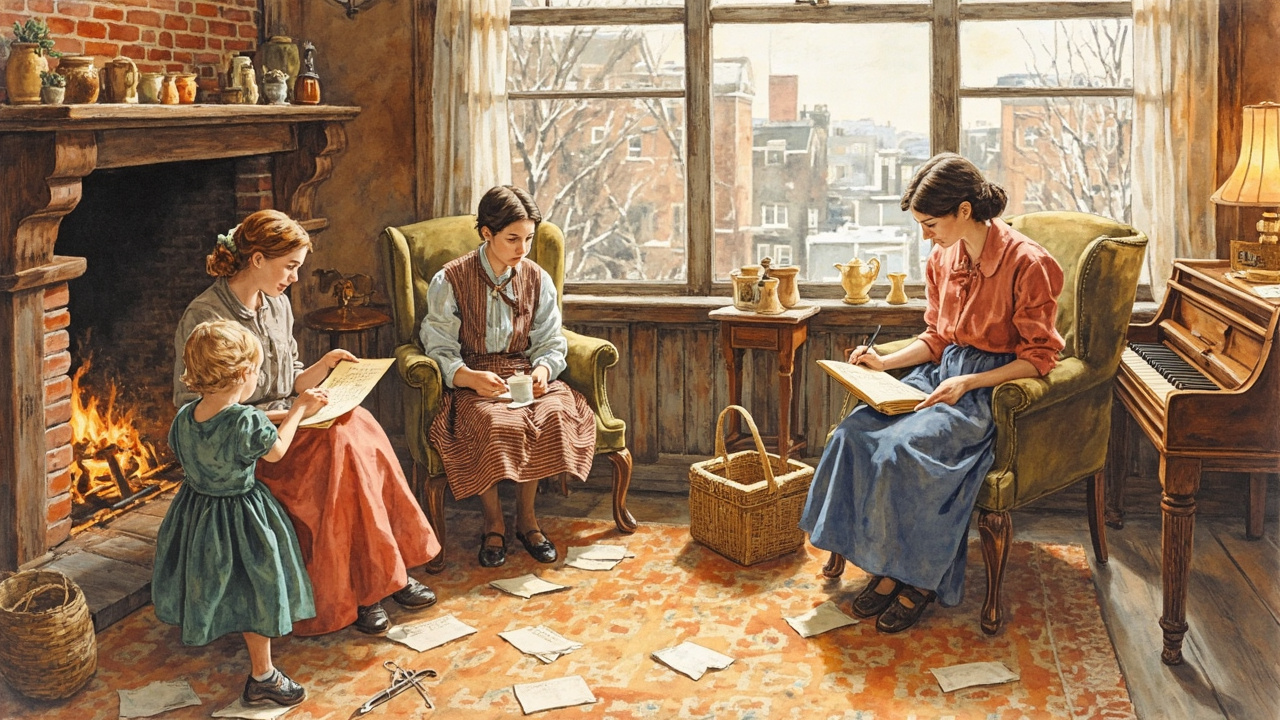
I want to do something splendid before I go into my castle, something heroic or wonderful that won't be forgotten after I'm dead.
在走进我的空中楼阁之前,我想做一件了不起的事——一件英勇或美好、在我死后也不会被遗忘的事。
Original line · Jo's ambition · to make her way by the pen
Nobody in Jo's world has ever dared criticize her like that. She and Bhaer bicker and root for each other amid a houseful of German boarding-house children. He's the first person she's met who doesn't treat her ambition as a flaw — and also the first willing to tell her plainly that she's wasting herself.
Beth's death: the real cost of a cozy family novel
Meanwhile, Beth's health is failing day by day. Not wanting to worry her family, she keeps helping around the house, playing the piano, knitting scarves for the poor, as if nothing were wrong. She goes quietly — no dramatic rescue scene, no long deathbed speech. Jo simply gets home to find Beth already leaning against her, with no strength left to speak.
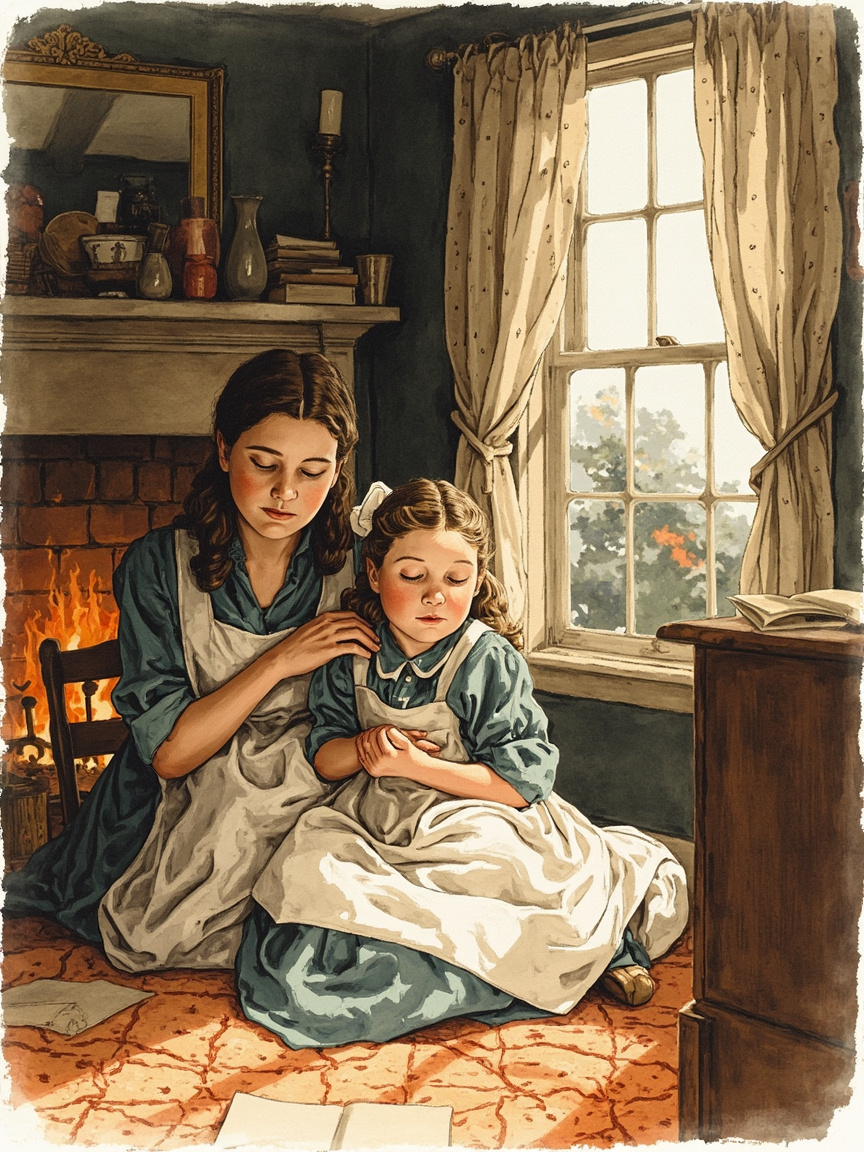
As Beth had hoped, the 'tide went out easily', and in the dark hour before dawn, on the bosom where she had drawn her first breath, she quietly drew her last
正如贝丝所盼,'潮水静静退去'——在黎明前最暗的时辰,在她第一次呼吸的那个怀抱里,她悄然咽下了最后一口气。
Original line · Beth's quiet death · the real cost beneath the cozy story
The most heartbreaking stroke in the whole book isn't the grief itself — it's that it happens inside a story that has, until now, been all about firesides, plays, and Christmases. Alcott was writing this novel while losing her own real sister, Lizzie, to the same scarlet fever's aftereffects. She buried that real grief inside what was, on its surface, a bright and cheerful book. Growing up isn't about becoming prettier — it's about losing people.
Jo and Bhaer, Plumfield, and the book's close
After some time adrift, Bhaer finds his way to Jo and proposes. This time Jo doesn't shut the door — she no longer needs to marry just for the sake of marrying; the man she wants is one who understands her writing and wants her to keep writing. Meg and John's family, twins and all, are back; Amy and Laurie have met again in Europe, fallen in love, married, and come home to Concord with a baby. Aunt March has died and left them her great house, Plumfield. There, Jo and Bhaer open a school for boys, bringing the noisy warmth of that German boardinghouse back home.
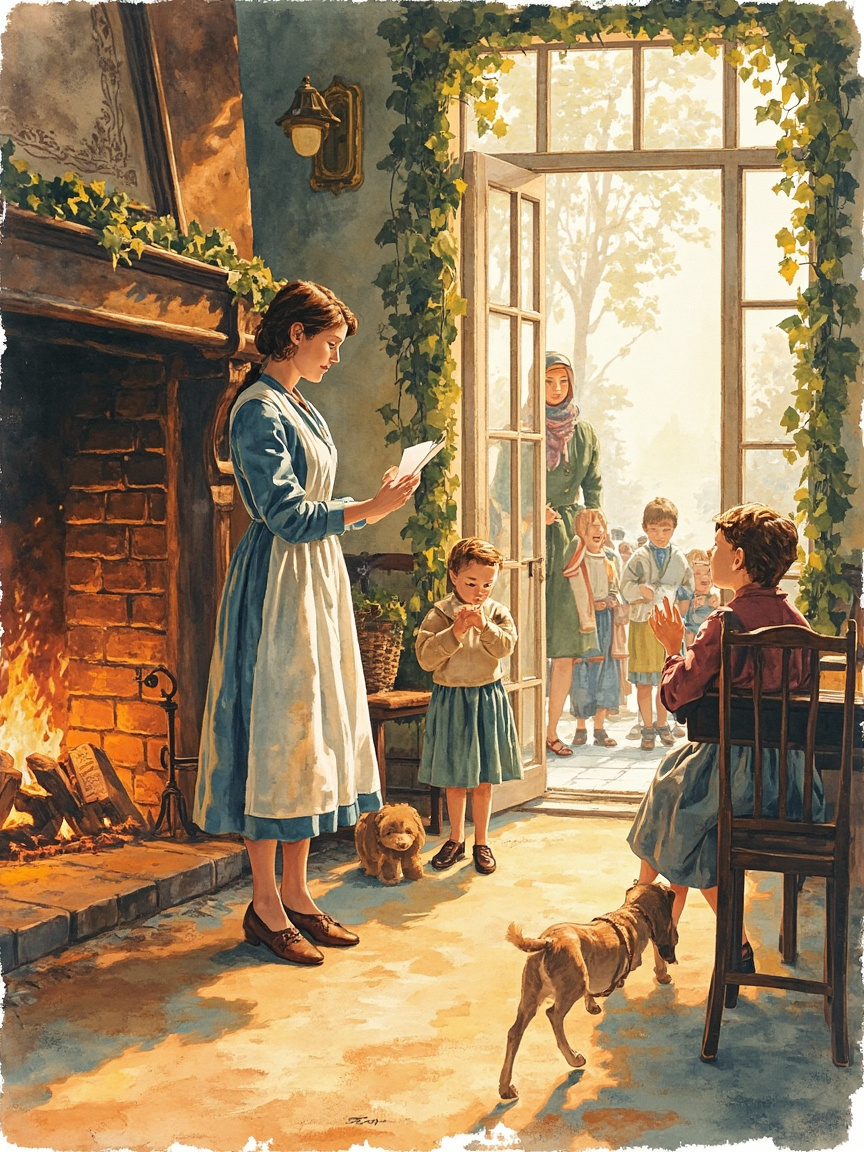
Oh, my girls, however long you may live, I never can wish you a greater happiness than this!
哦,我的姑娘们,无论你们活到多久,我都无法再祝愿你们比此刻更大的幸福了!
Original line · The novel's closing · Marmee's words by the fire
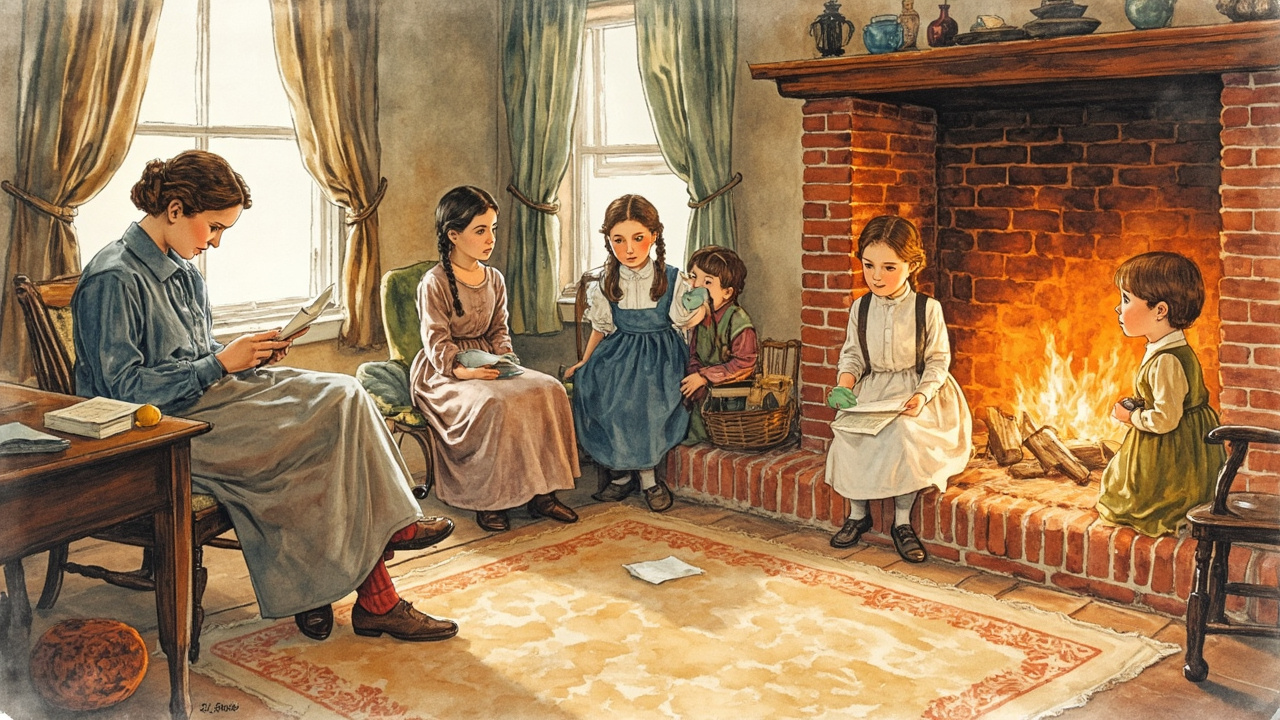
The book closes on a scene of the whole family gathered around the fire. Meg's twins roll around on the floor, Amy holds her own baby, Beth's piano still stands in its place, and Father sits again in his armchair. There's no fairy-tale ending where all four girls marry princes — Meg marries a poor tutor, Jo marries an awkward German professor, Amy marries the boy Jo once turned down, and Beth doesn't even live to adulthood. This is what a true, fitting ending looks like.
The most remarkable thing this novel does is let its heroine refuse the proposal every reader wants her to accept — and then let her go on living well anyway.
Theme: dignity, grown in poverty
Little Women was never about four girls finding husbands. It's about how four sisters, with no money, no father at home, and only their mother as the one adult in the house, slowly shape themselves into decent people. It doesn't treat little women as an insult — it treats respectability, self-reliance, caring for the poor, and looking after each other as the truest kind of wealth. That's why their Christmas breakfast is more dignified than any rich family's turkey.
It's a founding text of literature about girls growing up: Jo is one of the earliest and most forceful portraits in literary history of a young woman who wants to build her life on writing rather than marriage. In the end she doesn't give up love for ambition, or ambition for love — what she wants is someone who understands her writing and wants her to keep at it. For a hundred and fifty years, generation after generation of girls have looked at Jo and seen, for the first time, that growing up could mean a life you don't have to shrink to fit.
The hook to read the original: what a companion guide can't give you
A companion guide can hand you the map, not the ground itself. Alcott wrote this book while she was losing her own real sister — that restraint, that refusal to complain, only lands when you actually reach the pages where Beth dies quietly. The novel takes its time over why Jo refuses Laurie — slow, tangled, and frightened — in a way no single sentence like she wouldn't give up her ambitions for marriage can replace. Meg's small vanity, clutching her plain calico dress the moment she gets engaged at the end of the first volume; Amy's private glee at doling out oranges to her classmates slice by slice in the snow; Bhaer's beard bristling the first time he meets Jo and her braids irritate him — these fine-grained moments, the ones only the English can carry intact, live in the text itself. Knowing how it ends makes the book worth reading more, not less — because it was never the suspense of what happens next that held you. It was the small, unskippable work of growing up, one day at a time.
Art Direction4 plates
Before the guide was written, this book got a visual foundation — every illustration you just read grew out of it.