Lord of the Flies · Companion GuideStories · Issue 00
Lord of the Flies in 10 Minutes: How an Island Turns Boys Into Beasts
On an island with no adults, a group of boys smash the conch, beat one of their own to death, and burn the whole place to ash.
Text and illustrations produced by the pipeline
ImaReadFolio 02 — 06
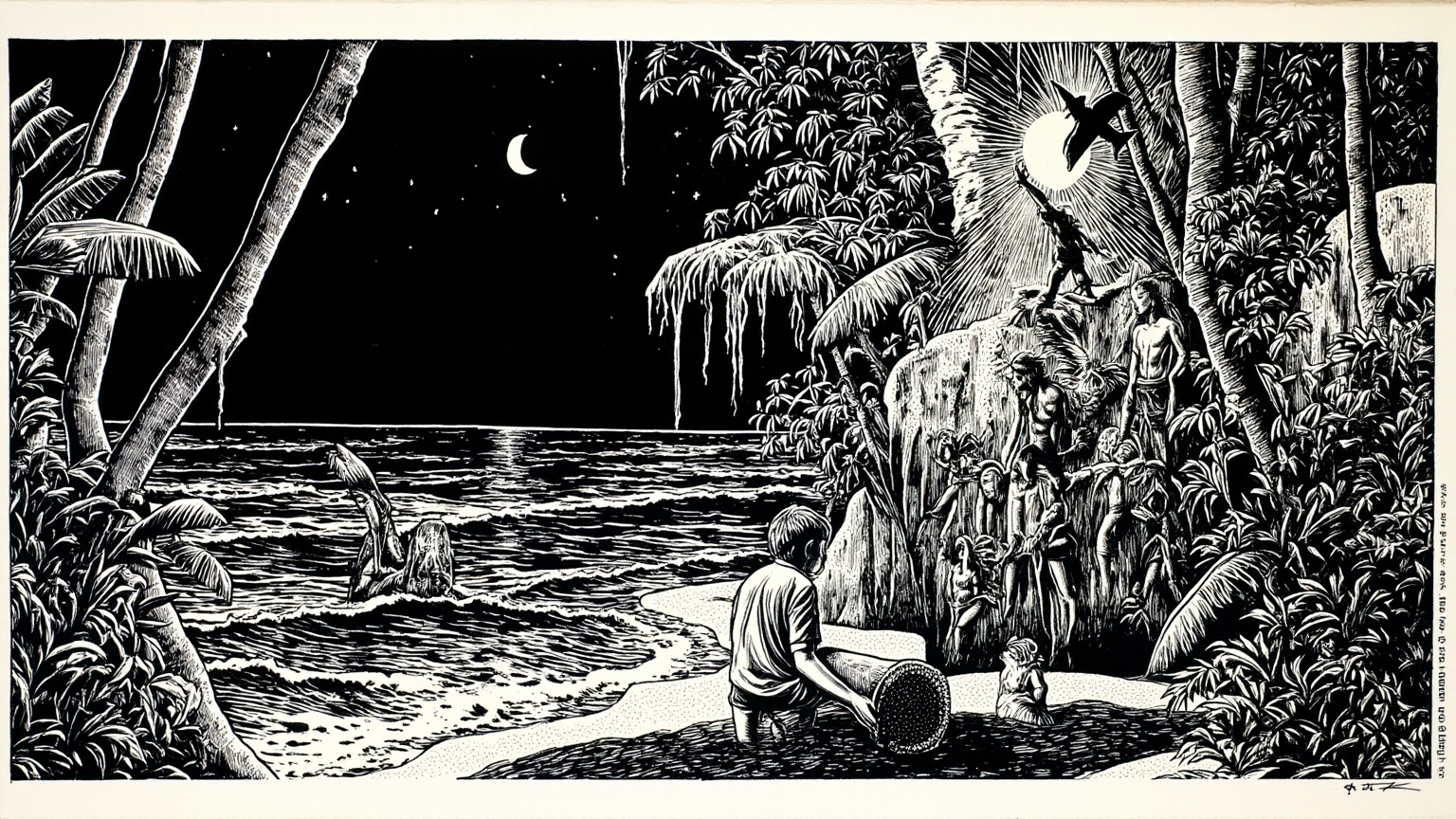
Opening scene: the conch shatters
A white conch shell is smashed to powder by a boulder someone pries loose. It isn't the surf that kills it. A boy named Roger does, and dying with it is the fat, nearsighted boy in glasses everyone calls Piggy. This is the quietest murder in Lord of the Flies. It happens near the end of the book, but it is the right place to start telling the story, because the conch has been standing there since page one, meaning: we can speak, we can raise a hand, we can vote. The moment it breaks, every rule on the island breaks with it.
What this book is actually about
Lord of the Flies is a novel-length fable by the English writer William Golding, published in 1954. He was forty-three at the time, and publishers had rejected the manuscript so many times he'd started to doubt himself — editors thought it was too dark, too far from what a book for children was supposed to be. It went on to become one of the most widely read English novels of the twentieth century, and it won Golding the Nobel Prize in Literature in 1983. It takes direct aim at an old tradition. A century earlier, R. M. Ballantyne's The Coral Island had put three English boys on a desert island and let them be gentlemen, heroes, playing house. Golding turns the question around: what if there were no adults? No police, no parents, no teachers? What would a group of actual children grow into?
Who's here, and what they want
Ralph, about twelve, fair-haired, is the first boy to pick himself up off the beach. He finds a large shell-like conch, blows it, and calls in the children scattered across the island. He looks like a leader, so they choose him. Piggy is his second in command — fat, bespectacled, always short of breath, forever mocked with the chant of his own nickname. There are no matches on the island, and his glasses are the only thing that can focus light into fire, which makes Piggy, in effect, the island's only scientist. Jack, red-haired, used to lead the choir. He has a good voice and a talent for giving orders. He resents Ralph's authority from the start, and the first thing he wants is to become a hunter and kill one of the island's wild pigs. Simon is a different kind of boy. He says little, and often slips off alone into a clearing deep in the jungle where no one else goes. He is the one who sees things first — and the one no one is willing to listen to. Then there's Roger, the twins Sam and Eric who do everything together, and a cluster of younger boys, the littluns, always on the verge of tears. The smallest of them, Percival, recites his own name and home address whenever he's frightened, like a charm against evil. There is not one adult on the island.
ImaRead2
ImaReadFolio 03 — 06
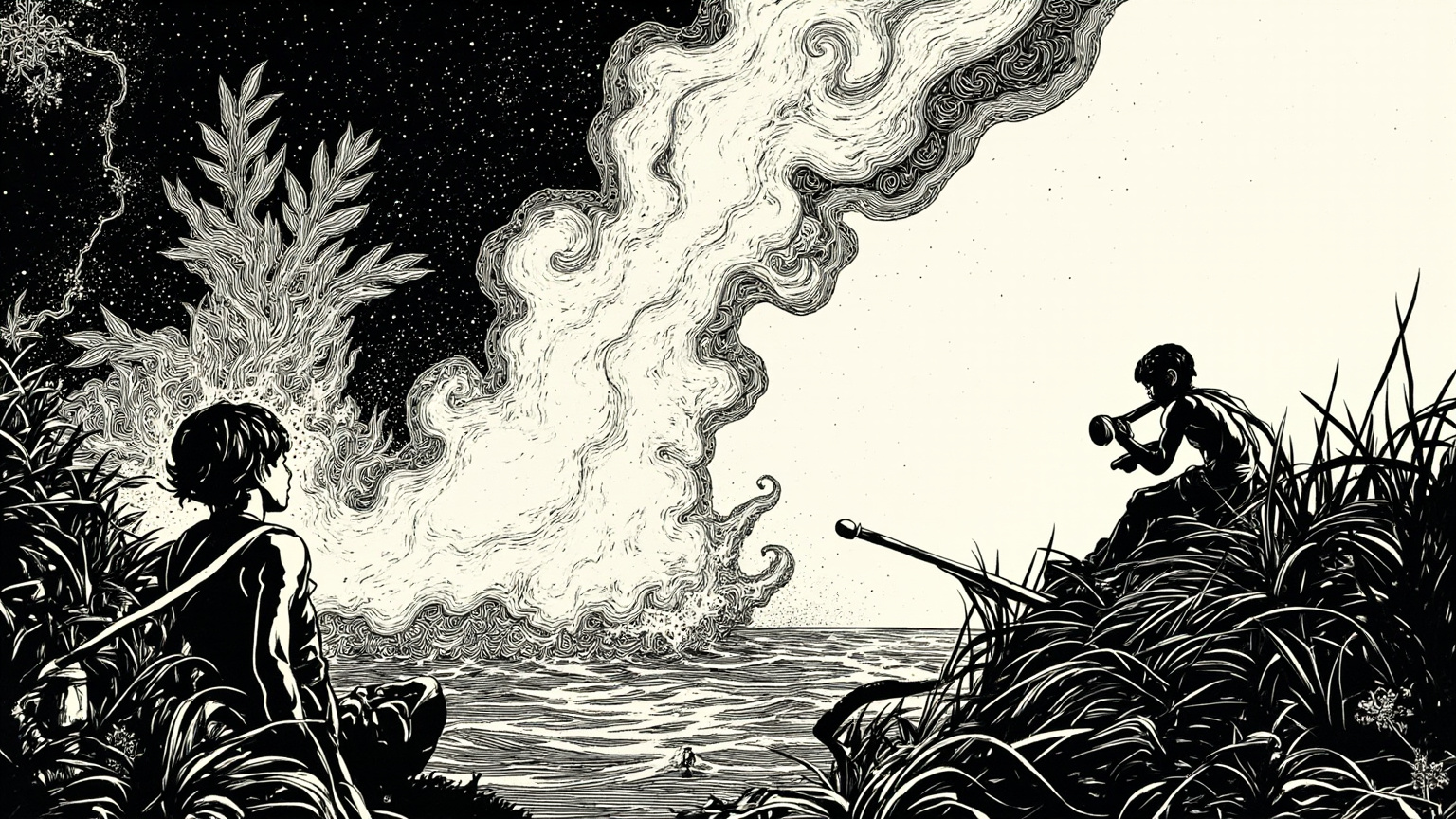
But the order has a crack in it from day one: Jack keeps staring into the trees. Somewhere in there a wild pig is grunting, and one thought keeps circling in his head — driving a spear into it himself, feeling it twitch. Ralph insists the fire must never go out. Jack insists they need to go hunting. The two sides start grinding against each other, little by little. Golding hides the knife well in how he writes this: order comes dressed as a conch shell, shoes on sand, an orderly meeting. Temptation comes dressed as mud, blood, a scream. The two sounds sit right next to each other, and no one calls a halt.
Beat two: the beast, and what grows in the mind
At night, the youngest children start talking about a beast. One says he saw a snake-shaped shadow. Another says he saw something alive crawling on the ground — it was only a vine. Percival cries at the slightest thing, and whenever he wakes at night he starts reciting his name and address, like sealing himself up with wax. This is the section most readers skim past too fast. Many assume the beast is some creature about to show itself. But Golding is hinting, from beginning to end, that the beast isn't in the jungle. It's in the children's own minds — the shape fear grows into.
ImaReadFolio 04 — 06
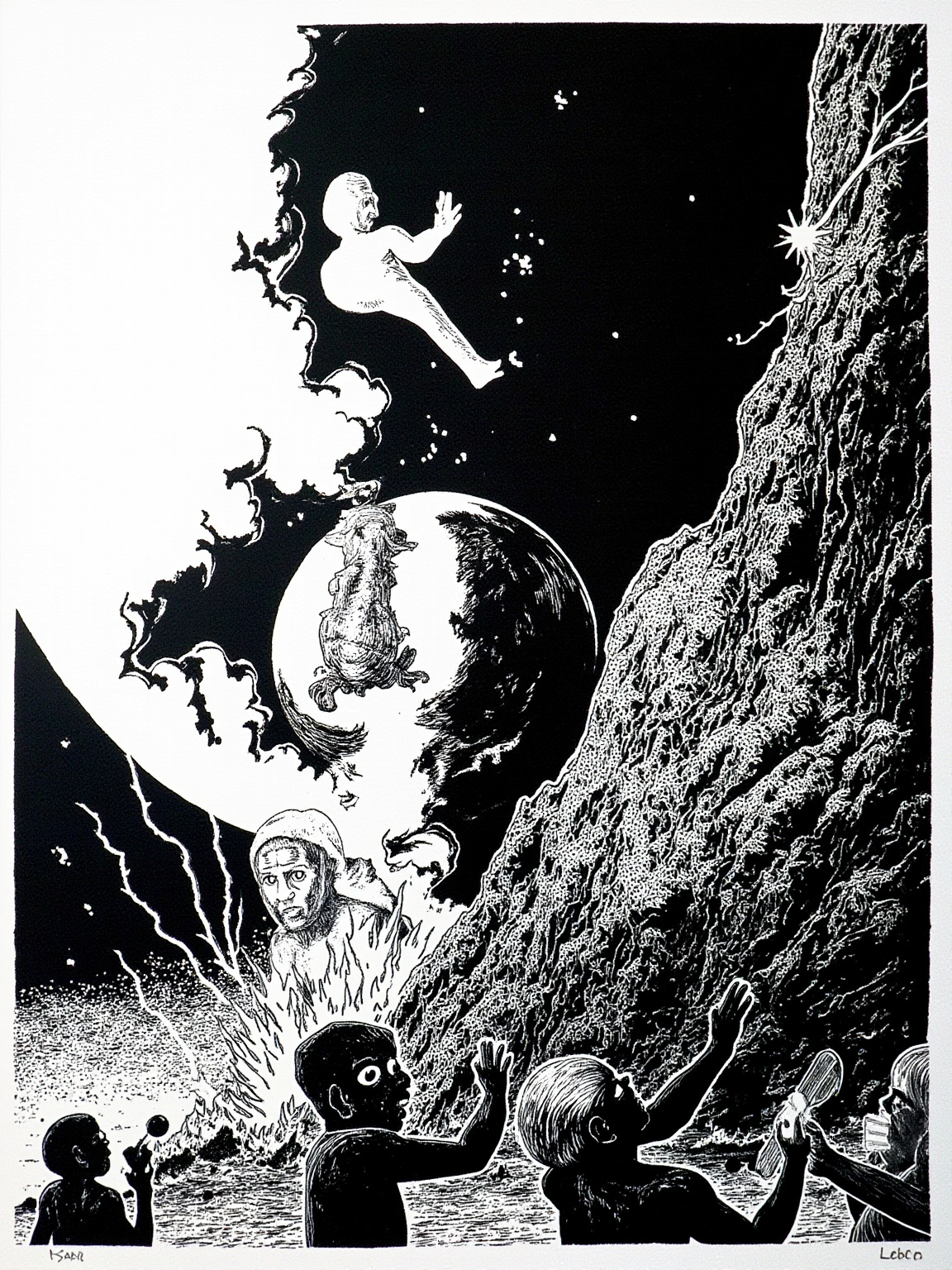
Beat four: Piggy's death, the conch shattered
No one on the island reflects on what happened to Simon. Jack formally breaks away, streaks his face with red, white, and black mud like a tribal warrior, and marches around the island holding his spear overhead, declaring the founding of his hunter tribe. Most of the boys follow him — because following him means meat, singing, drumming, and the freedom to speak without raising your hand. Ralph is left with only three: himself, Piggy, and the twins. One night, Piggy and Ralph carry the conch to Jack's camp to negotiate — to ask for the glasses back. Jack's hunters had already stolen them, and without them Piggy can't see and no one can light a fire. The conch is still there, and Piggy holds it up, still trying to reason with them.
Roger — the silent, darkest boy in Jack's camp — stands on a high cliff and works a boulder loose with both hands. It comes down in the moonlight. The conch shatters first. Piggy falls after it. The pieces of shell wash into the sand; Piggy's body rolls down onto the rocks below. Golding writes this with real restraint — no cry from Piggy, no begging. In that single instant the conch, the glasses, Piggy, and everything Ralph has left are smashed together, literally and physically: the symbol and what it stood for go down as one.
ImaReadFolio 05 — 06
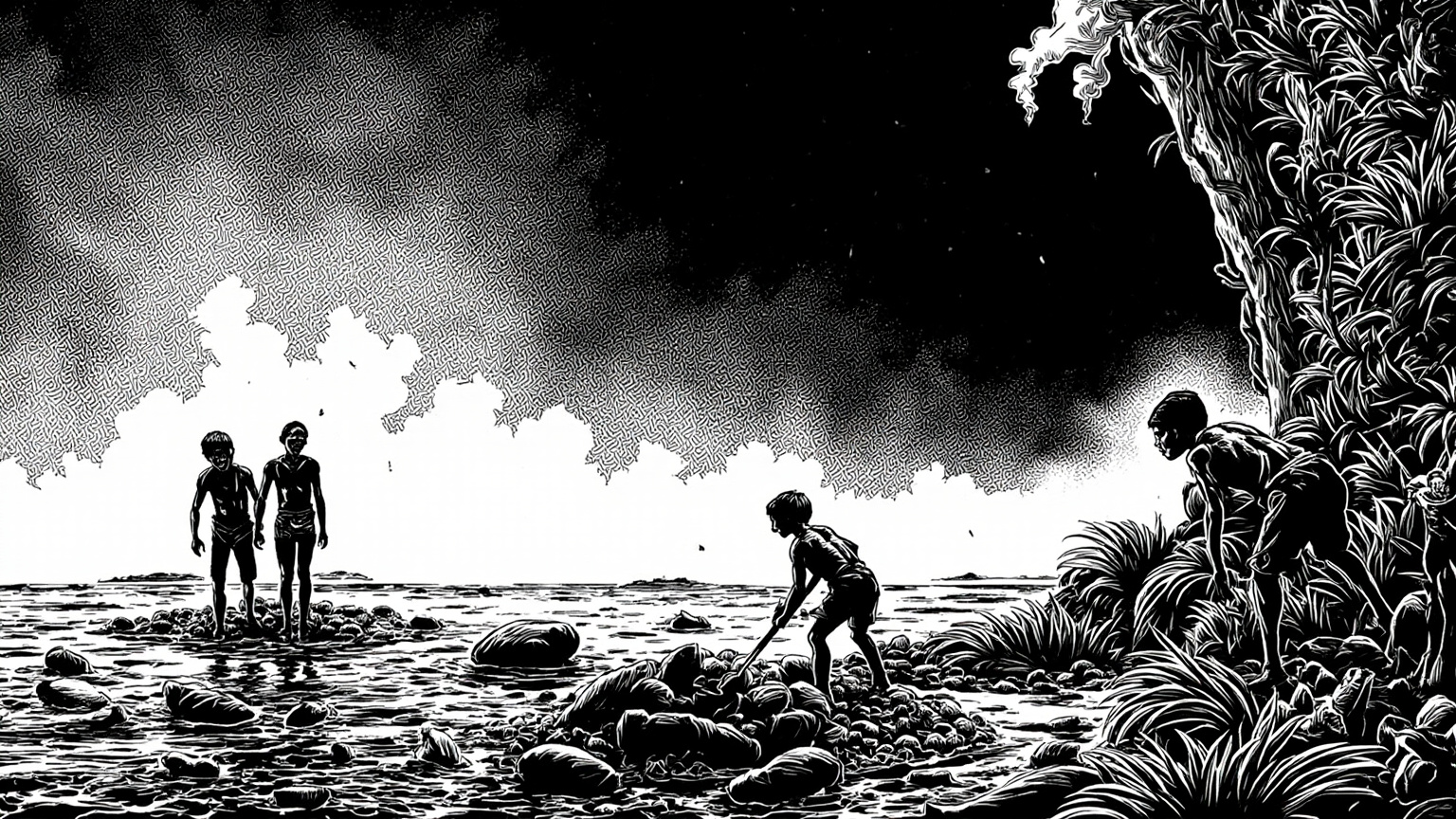
Golding saves one last cut for the final page: the civilized world the officer represents is, at this very moment, fighting a nuclear war. Out there, adults are doing exactly what the children on this island did — with bigger fires and louder weapons, on a scale a thousand times larger. So this isn't a happy ending. It's the mirror turned around. You thought savagery only happened without adults? It doesn't. Adults do it too — they just wear a more respectable uniform while they're at it.
What the book is really saying
The shallowest reading is that this is a book about human nature being evil. Golding rejected that label himself — he said he didn't write it to prove people are born bad, but to answer the naivety of The Coral Island, the idea that English boys are gentlemen by nature. One layer deeper, it's a book about how fragile order is. The conch matters only because people agree to treat it as order — agree to stay quiet while someone else speaks, to vote, not to grab. The order was never in the shell itself; it was in the choosing. Civilization is a thin skin, and underneath it is fire, drumbeats, and paint on a face.
ImaReadFolio 06 — 06
The conch breaks, the glasses break, the fire turns and burns the boy who lit it — Golding does one thing from start to finish: he turns every tool over and shows you the teeth on the other side.
ImaRead6
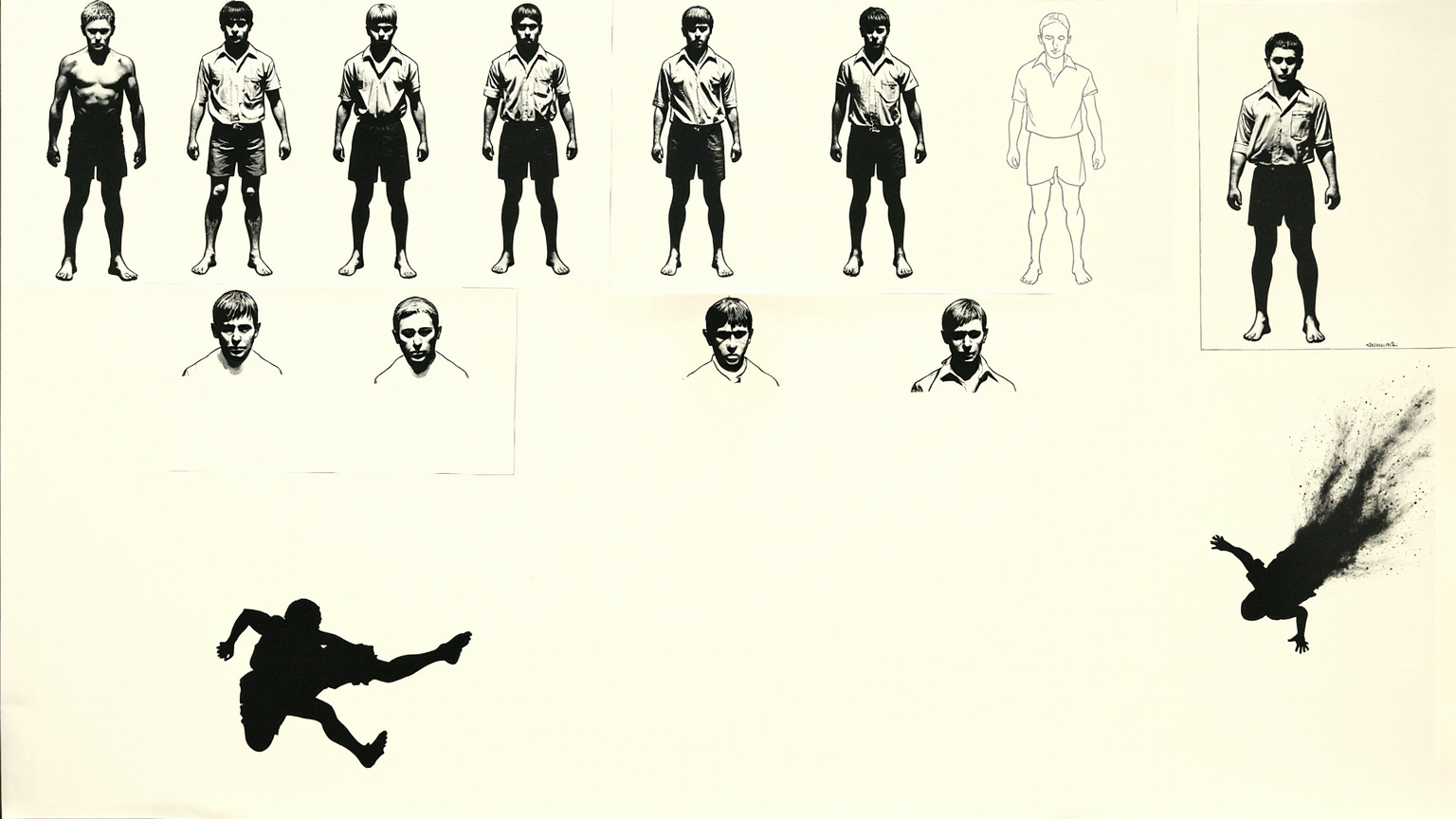
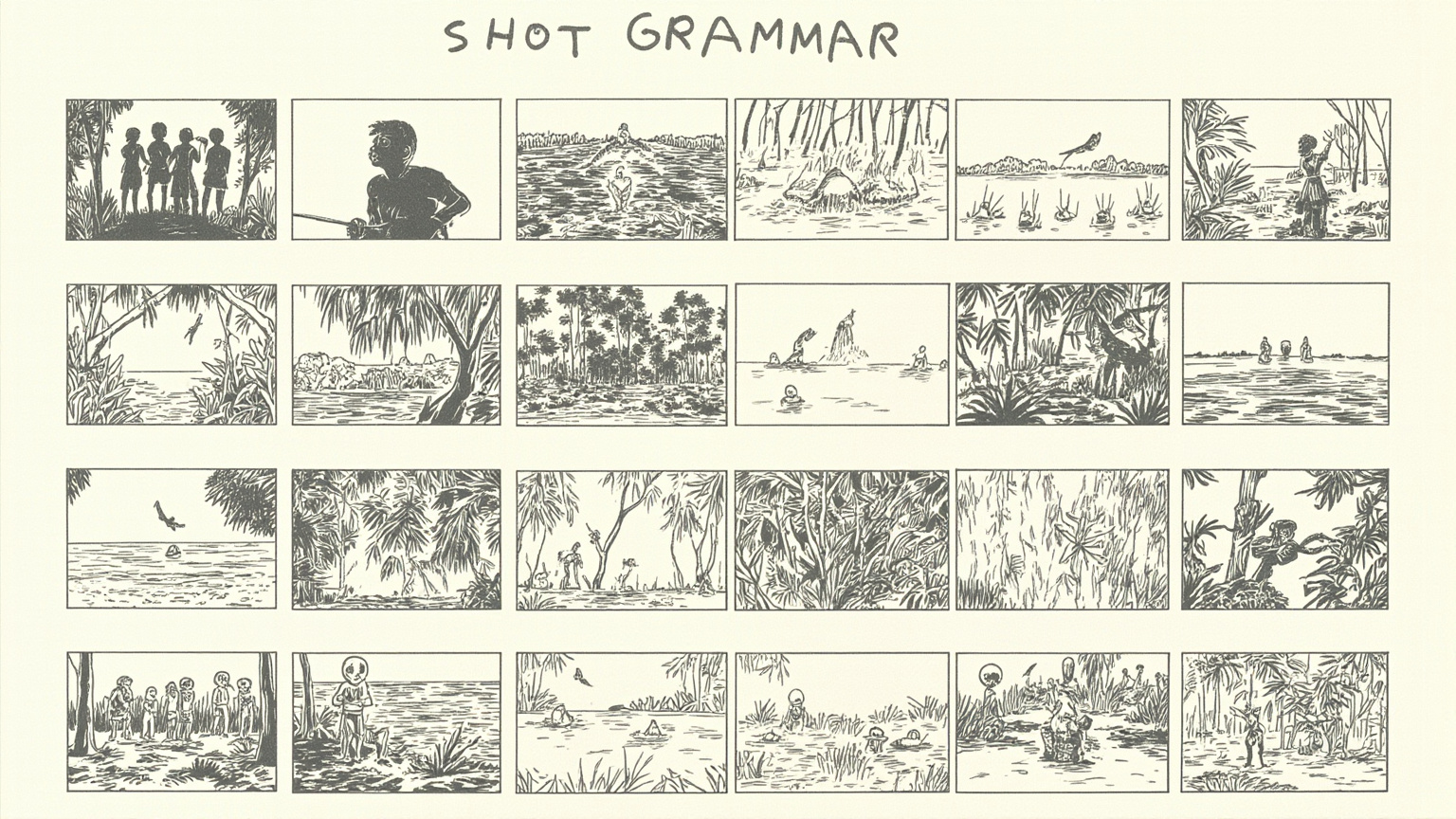
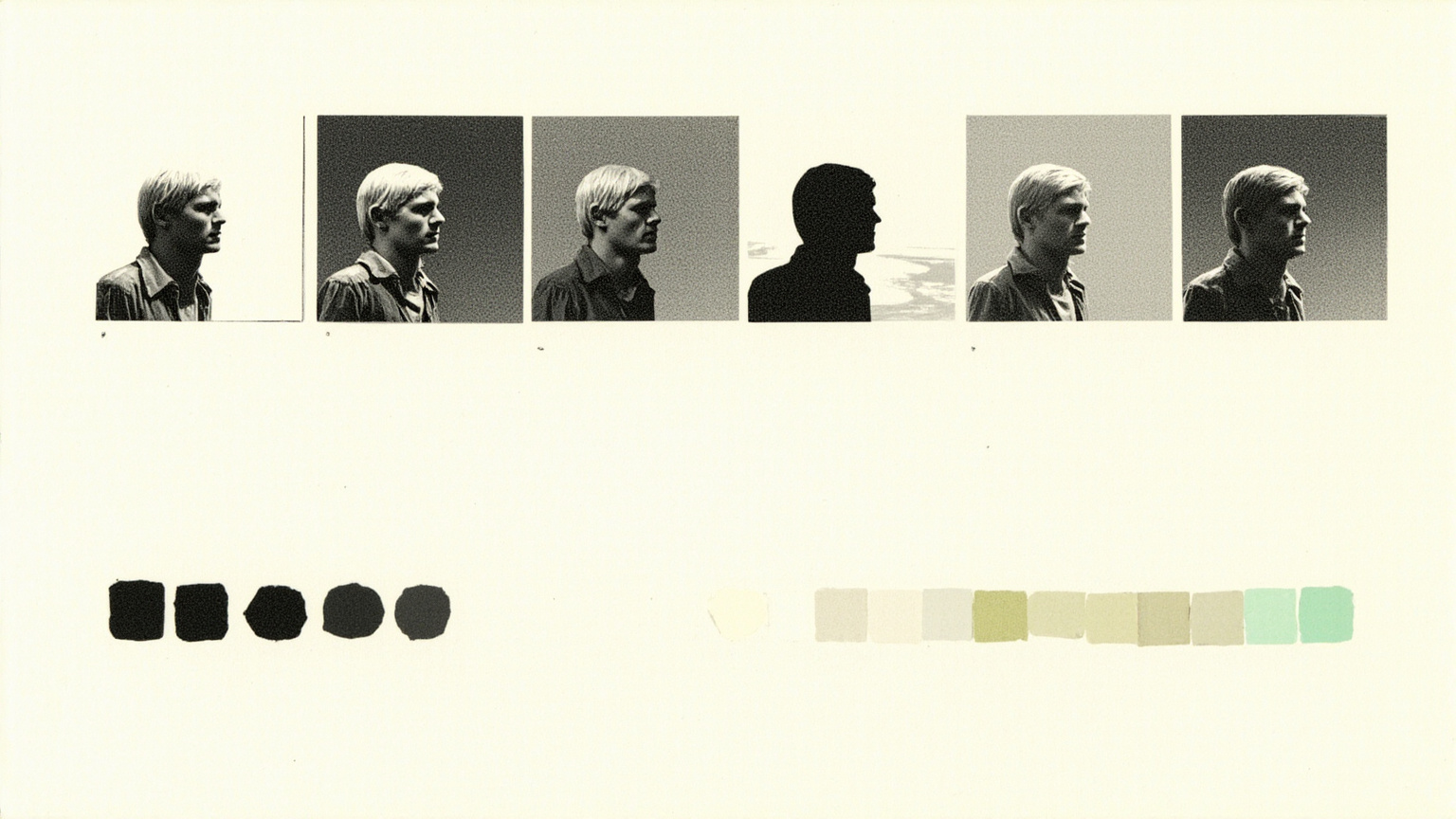
Art Direction4 plates
Before the guide was written, this book got a visual foundation — every illustration you just read grew out of it.