Eileen Chang crams war and love into a single sentence
Text and illustrations produced by the pipeline
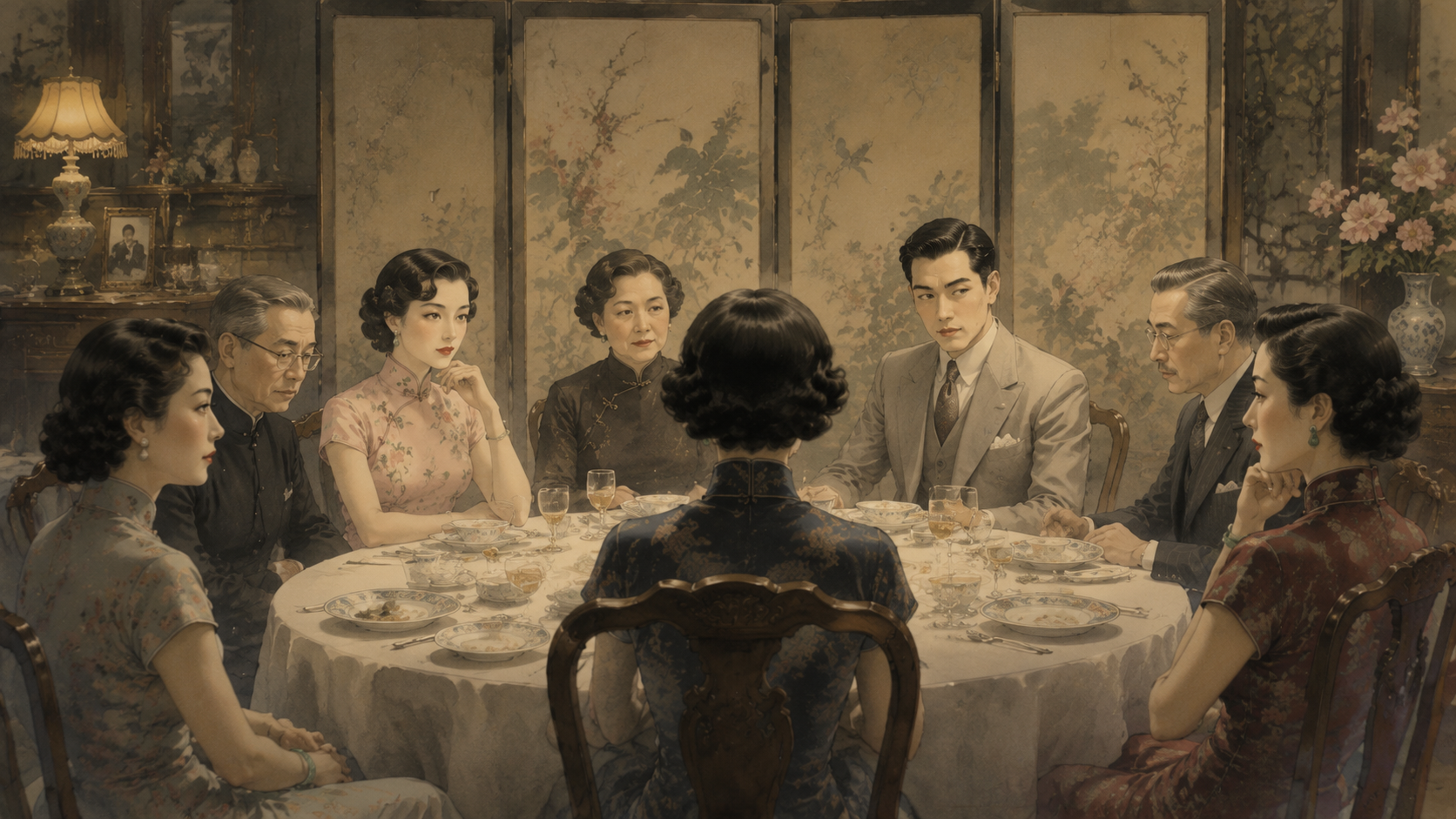
No one at the table dares say it outright, but every chopstick does. She is divorced, and the family fortune is visibly disappearing under her — in an old-style Shanghai household, a divorced woman with nowhere else to go is treated as something close to a sin. She has grown used to the half-smiling, half-cutting what more do you expect, at this point, so when a Mrs. Xu leans in and says, I have someone for you, she is already doing a different kind of math. Not love. A way out.
Love in a Fallen City is a novella by Eileen Chang, first published in 1943 in the Shanghai monthly Magazine, and collected the following year in her book Chuanqi. Chang was barely in her twenties, writing under the shadow of war, and she had already found a voice that was almost frighteningly cold and exact — weighing out, to the last ounce, how much of what passes between a man and a woman is real feeling and how much is calculation. Decades later, this novella of under forty thousand characters is still the textbook case in modern Chinese literature of using the small to show the large: it tells the story of two people falling in love, and underneath that, the story of how a city falls.
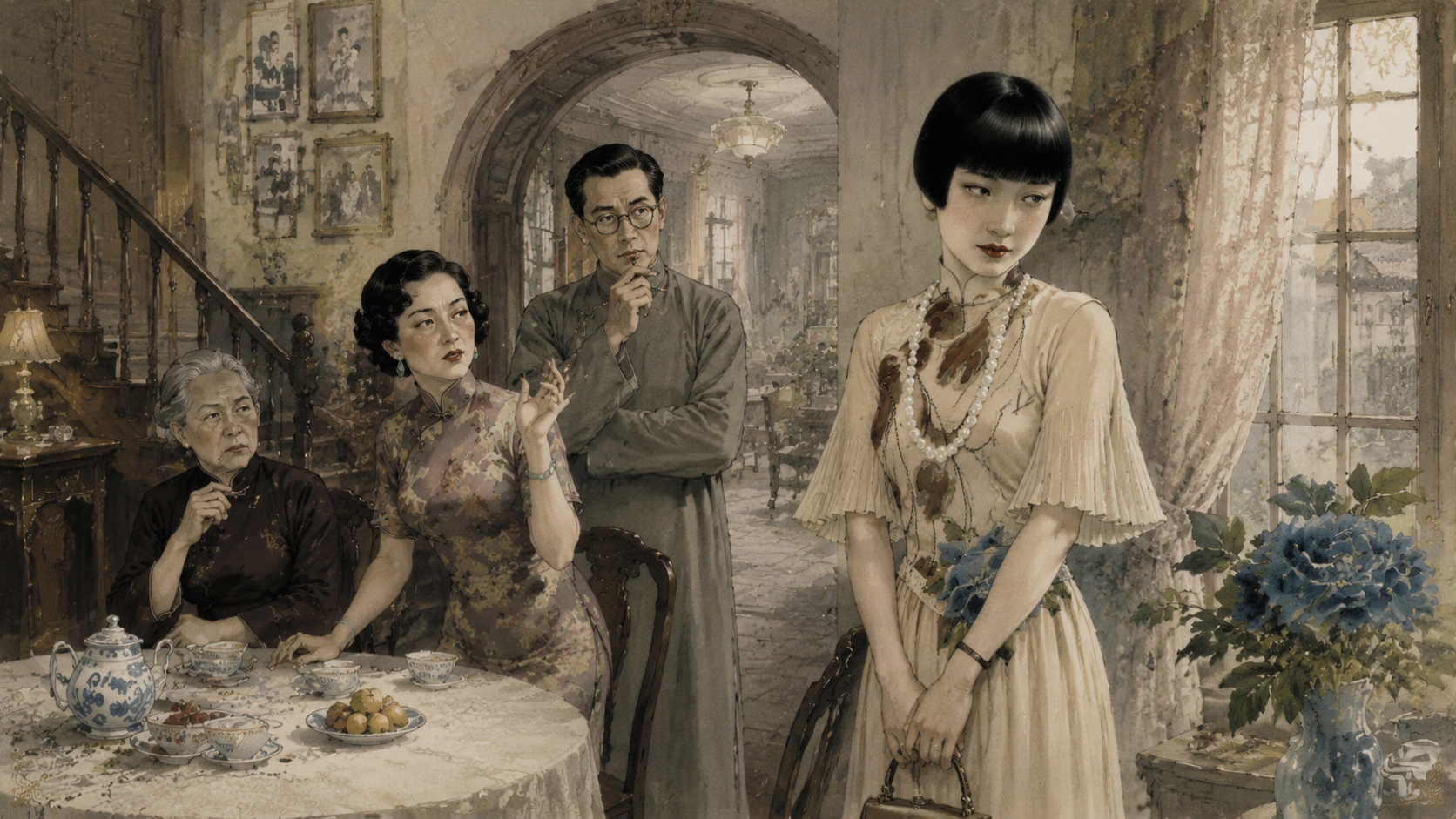
The heroine, Bai Liusu, is the one extra person in the fading Bai household in Shanghai. She is divorced; her family resents feeding her for nothing, and she has no warmth left for them either — the two sides simply put up with each other. The hero, Fan Liuyuan, is the illegitimate son of a wealthy overseas Chinese merchant in Southeast Asia, and that background has left him unable to take much of anything seriously; in his mouth, feeling comes out sounding like a clever joke. The two are introduced by a Mrs. Xu, an old-fashioned matchmaker who smiles and pushes a man and a woman together while keeping her own accounts on the side.
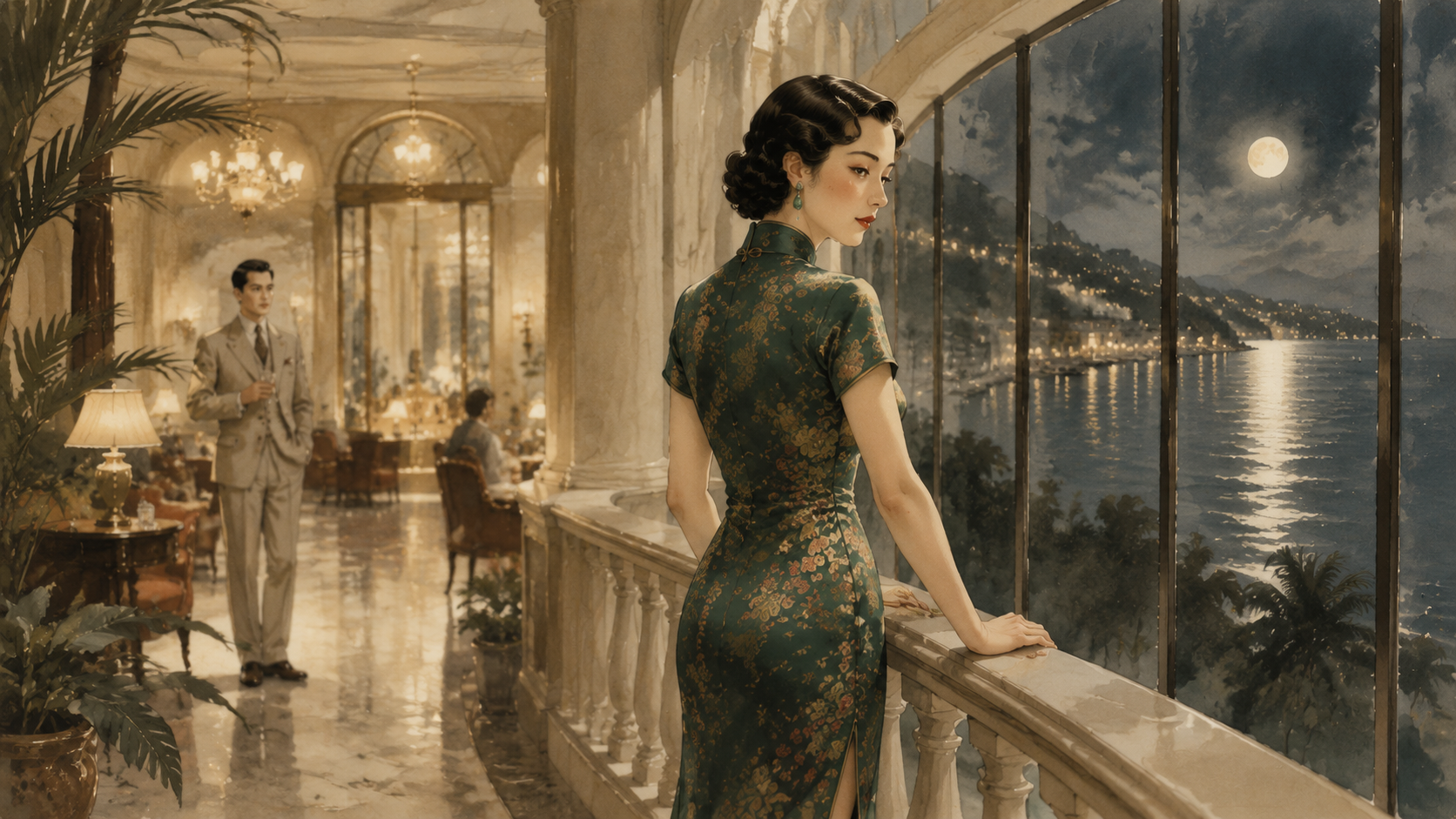
The story's world splits in two. One half is old Shanghai, where under the carved balustrades of the Bai mansion a whole household waits for the chance to laugh at her. The other half is prewar Hong Kong, where the balcony of the Repulse Bay Hotel looks out over the sea and the sons of rich merchants come to talk business and, on the side, love. What the two halves share is this: everyone in them keeps up an air of perfect respectability while doing the most disreputable arithmetic.
On December 25, Hong Kong falls — remembered as Black Christmas — and the long Japanese occupation begins. The city is brought down by shellfire, and it is exactly that fall that brings the two of them together. When the guns go quiet and the streets empty out, Liuyuan comes to Liusu and says the one thing he would never have said before: let's get married. No roses, no ring — just a city in the middle of falling.
In the story's last line, Chang spells out the pun buried in the title: the women in old romances who topple kingdoms and cities are, more or less, made this way — the fall of a city is what completes a person. It sounds like praise, but it lands more like a sigh: the fulfillment a woman gets was never love's doing, it was chaos's doing. That is the coldest cut in the whole book.
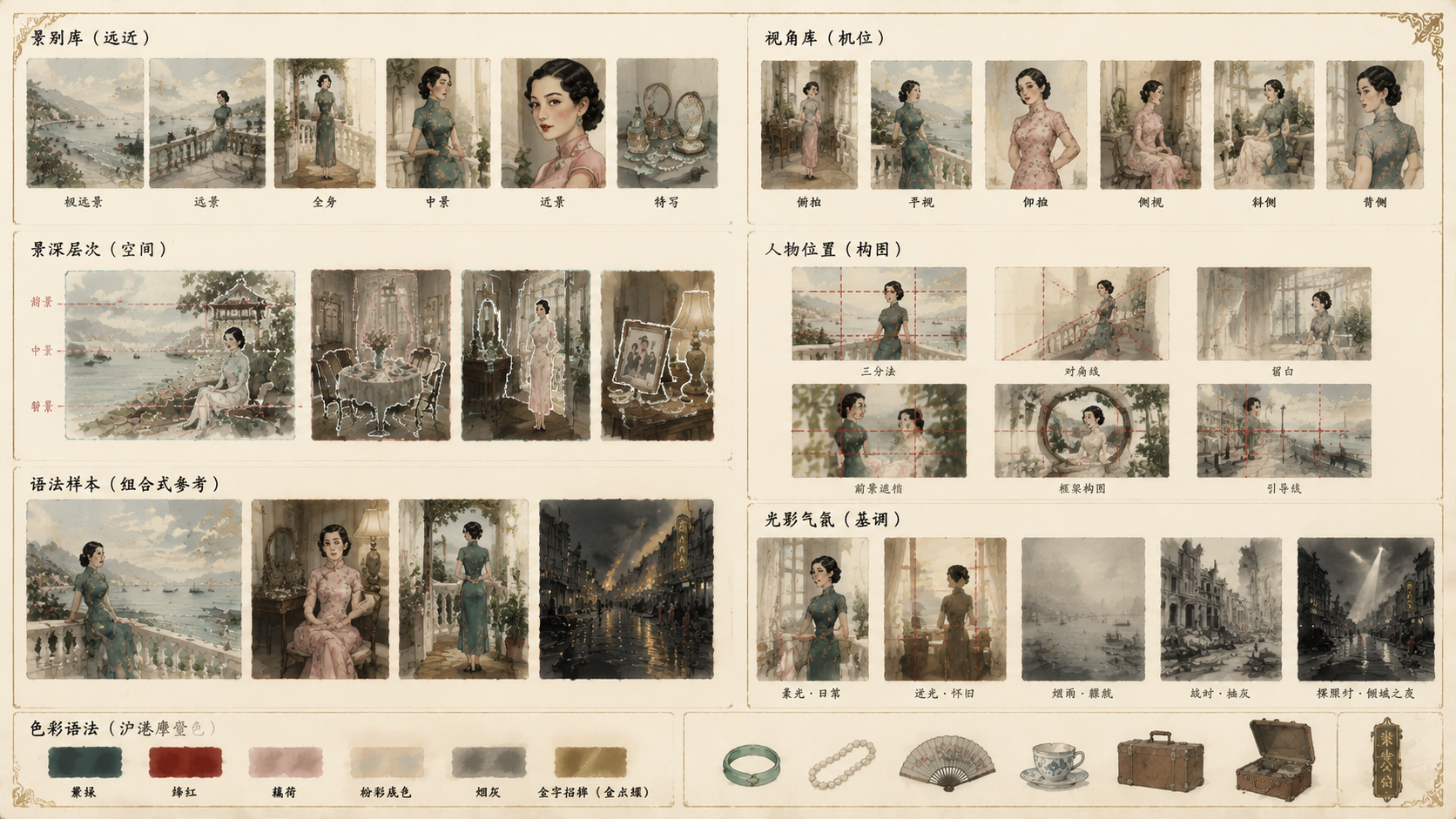
Before the guide was written, this book got a visual foundation — every illustration you just read grew out of it.
On the day her brother and sister-in-law's sniping leaves her barely able to stand it, Mrs. Xu brings Fan Liuyuan around. The introduction was meant for Liusu's younger sister, but Liuyuan cannot help giving Liusu a second look — and this dinner where the matchmaking happens is Eileen Chang at her sharpest: in a handful of lines of dialogue, she makes it perfectly clear who is falling first and who is working hardest to look like they are not.
What follows is a standoff neither of them can win outright. Liuyuan invites Liusu to Hong Kong, and she goes — for a divorced woman, following a man to another city is staking her last fallback. They stay at the Repulse Bay Hotel: walking, dancing, fighting, making up, every move two steps forward and one step back. Liuyuan does not want marriage, only someone who understands him; Liusu wants marriage, a meal ticket for life and a face she can bring home. Neither will show their hand first, so the romance turns into a card game over who folds.
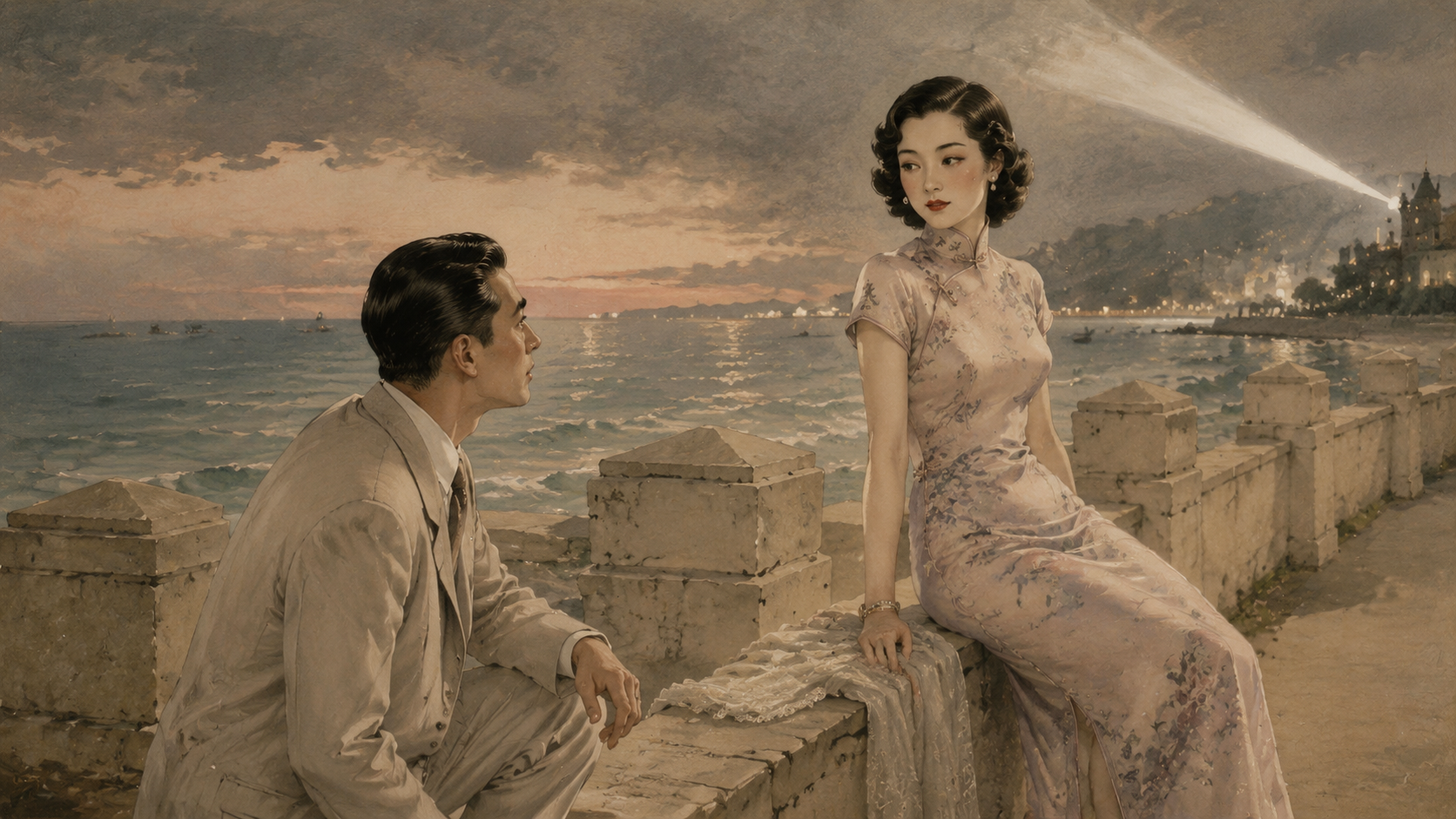
Partway through this standoff, Chang writes the novella's most famous line: Fan Liuyuan tells Bai Liusu that he met her here, at the foot of this wall. In one sentence, the accident of their meeting is folded into the city of Hong Kong itself — people passing each other at the foot of a wall, along the top of a wall, brushing by without knowing whether a shell will bring the wall down the next moment. This is Eileen Chang's idea of a love line: it sounds romantic, and underneath it is nothing but desolation.
Liuyuan leaves for England to settle family business and leaves Liusu behind alone in Hong Kong. Being left behind all but tears the mask off the whole affair. Liusu has no money, no standing, no marriage; clutching what little dignity she has left, she discovers for the first time that she genuinely wants him — while he has never once said he means to marry her. At one point she packs her bags, ready to slink back to Shanghai and face another round of her family's I told you so.
Then, on December 8, 1941, the Pacific War breaks out and Japanese forces attack Hong Kong. This is not a plot twist the book arranges for convenience; it is real gunfire. Bombs fall near the Repulse Bay Hotel, the whole city collapses into chaos, and every scrap of respectability, calculation, status, and face becomes worthless in an instant. Liuyuan rushes back to Hong Kong and finds Liusu in the middle of the shelling — and in that moment he is no longer the careless playboy, only a man going back for the person he needs to find.
Chang never lets her readers off easy about love. She has Liusu disbelieve in love from the start — Liusu believes in marriage, money, a meal ticket, a face she can hold up when she goes home. And yet Chang also has Liuyuan say let's get married in the middle of the shelling, and for that one moment lets the reader believe it along with Liusu. This is where Chang is most merciless: she never tells you love is fake. She simply lets you see that even the one real moment of it had to be bought with the fall of a city.
As craft, the novella is a textbook case of using the small to carry the large. Chang barely writes the war itself; the shelling stays a distant backdrop while an entire span of grand history gets compressed into a man and a woman's conversations in a parlor, walks on a balcony, a ride in a hotel elevator. She had already mastered that kind of compression while still young — while her contemporaries were still writing wartime heroes, she had already turned the war into a private matter between two people. That is exactly why the novella still feels familiar to readers today: in any city that might collapse, love and calculation were always the same thing.
A companion piece can tell you that Bai Liusu gets her marriage, but it cannot pin down whether the moment she gets it feels like relief or like a small heartbreak. It can quote Fan Liuyuan's line about meeting her at the foot of that wall, but it cannot reproduce the density of the air in the lines around it — the cold moon over Repulse Bay, the wind at night, the feel of waves against the wall, all of which only the original prose can give you. Nor can it show you how she lays out every small transaction — who pays for dinner, who picks up the phone first — stitched as fine as thread through the whole emotional standoff. Knowing the ending first actually makes it worth reading more, not less: you will read on unable to stop worrying for them, wondering whether this marriage is real or just another deal. Chang refuses, right to the end, to answer that for you.