Lunheng: Discourses Weighed in the Balance · Companion Guide
论衡
一个买不起书的年轻人站在洛阳书肆里,一卷一卷把汉代的天命、圣人和鬼神翻过来过秤。
Opening: The Man Who Stood in a Luoyang Bookshop and Read All the Philosophers
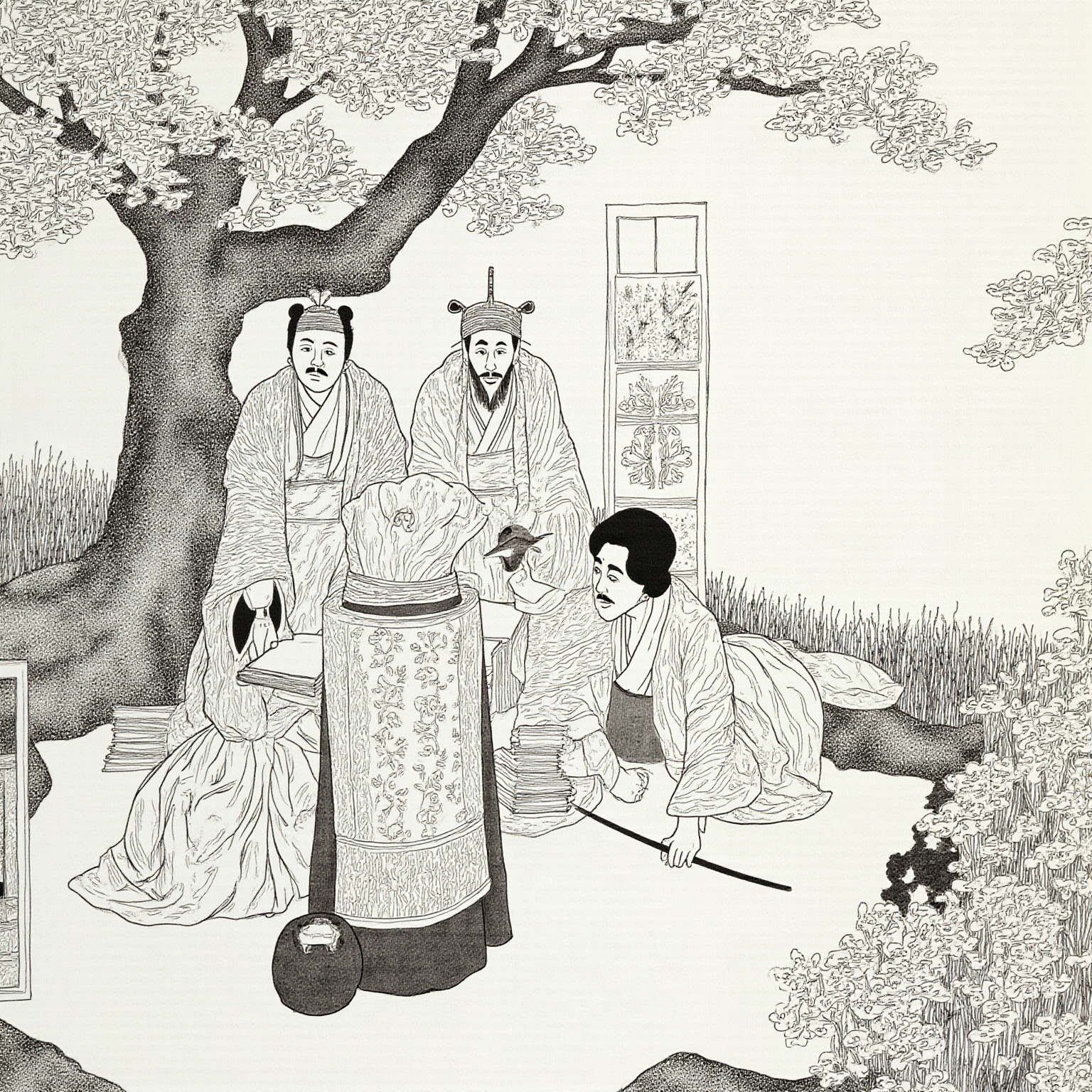
The wooden shelves of a Luoyang bookshop were stacked with bamboo scrolls. A young man too poor to buy any of them stood in the aisle, hands tucked into his sleeves, working through scroll after scroll of the pre-Qin philosophers and Han classical scholarship, turning them over and back again. The clerk came by more than once to move him along; he nodded, stepped a pace into the corner, and pulled out another scroll. That was Wang Chong.
The Lunheng he eventually wrote grew straight out of that posture. No money for books, so he read standing up. No one to hand him answers, so he turned over the popular claims himself and checked them one by one. What he set out to deal with was not some odd tale here or there, but the whole worldview that dominated Han China: that disasters in the sky were reprimands sent down to the world below, that the souls of the dead could be summoned back, that the appearance of phoenixes and unicorns was heaven handing out prizes, that every sentence Confucius or Mencius ever spoke was beyond question. He meant to bring each of these claims to the table, one at a time.
What Kind of Book Is This
Lunheng is a one-man work of philosophical argument from the Eastern Han, written by Wang Chong, who was born around 27 CE and died around 97 CE; most of it was composed after he retired from official life in middle age. Its place in literary history is unusual. Most books from that era were busy vouching for emperors, sages, and the mandate of heaven; this one puts the mandate of heaven, the sages, and every reported omen on trial instead. Works that question mainstream belief this systematically are rare in ancient Chinese thought, and Lunheng gets cited so often precisely because nothing from its own era matches the breadth of what it attacks or the nerve with which it attacks it.
Who Wang Chong Was, and Who He Was Arguing With
The book has no cast of characters, only one mind running through it from start to finish: Wang Chong's own. He came from nothing, taught himself into a minor post around Kuaiji, then resigned and went home to pour everything he had into writing. Facing him, unseen, stood a crowd of opponents: the great scholars in the capital preaching the correspondence between heaven and man, the fortune-tellers manufacturing auspicious omens for the emperor, the village mediums who called back the dead for a fee, and everyone who treated a line from Confucius or Mencius as beyond inspection. He was not competing with them for followers. He was running tests.
One thing needs clearing up here, because it gets confused constantly: Wang Chong was not out to topple Confucius or Mencius, still less tradition itself. What he objected to was the move of turning a sage's words into something absolute, the idea that a line becomes untouchable simply because a sage said it. He could not stand that move. He kept working with the Confucian texts rather than throwing them out; what he wanted was to bring the classics down off their altar and back onto a table where they could be opened and argued with.
Starting From the Sky: Thunder, Eclipses, and the Whole Theory of Correspondence
Wang Chong picked an interesting point of entry, not human relations, but the sky itself. In chapters like On Thunder, On the Sun, and Debunking Day-Selection, he puts the two celestial events every Han reader knew best, thunder and solar eclipses, back on the scale. Why did the lightning strike that old tree and not the house next to it? Is an eclipse really the bill arriving for an emperor's misconduct? His answer is blunt: thunder and lightning are a natural effect of yin and yang colliding, and have nothing to do with whether heaven is in a temper; an eclipse can be calculated straight from the motion of sun and moon, and forcing it to mean a reprimand from above just stitches two unrelated things together.
The cleverness is in the method. He is not writing popular science; he is using a handful of things everyone takes for granted to pry open the whole wall of heaven-and-man correspondence. Once you grant that thunder is just weather and an eclipse is just orbital mechanics, everything built on top of them, every disaster read as a reprimand, every omen read as a reward, starts to come loose.
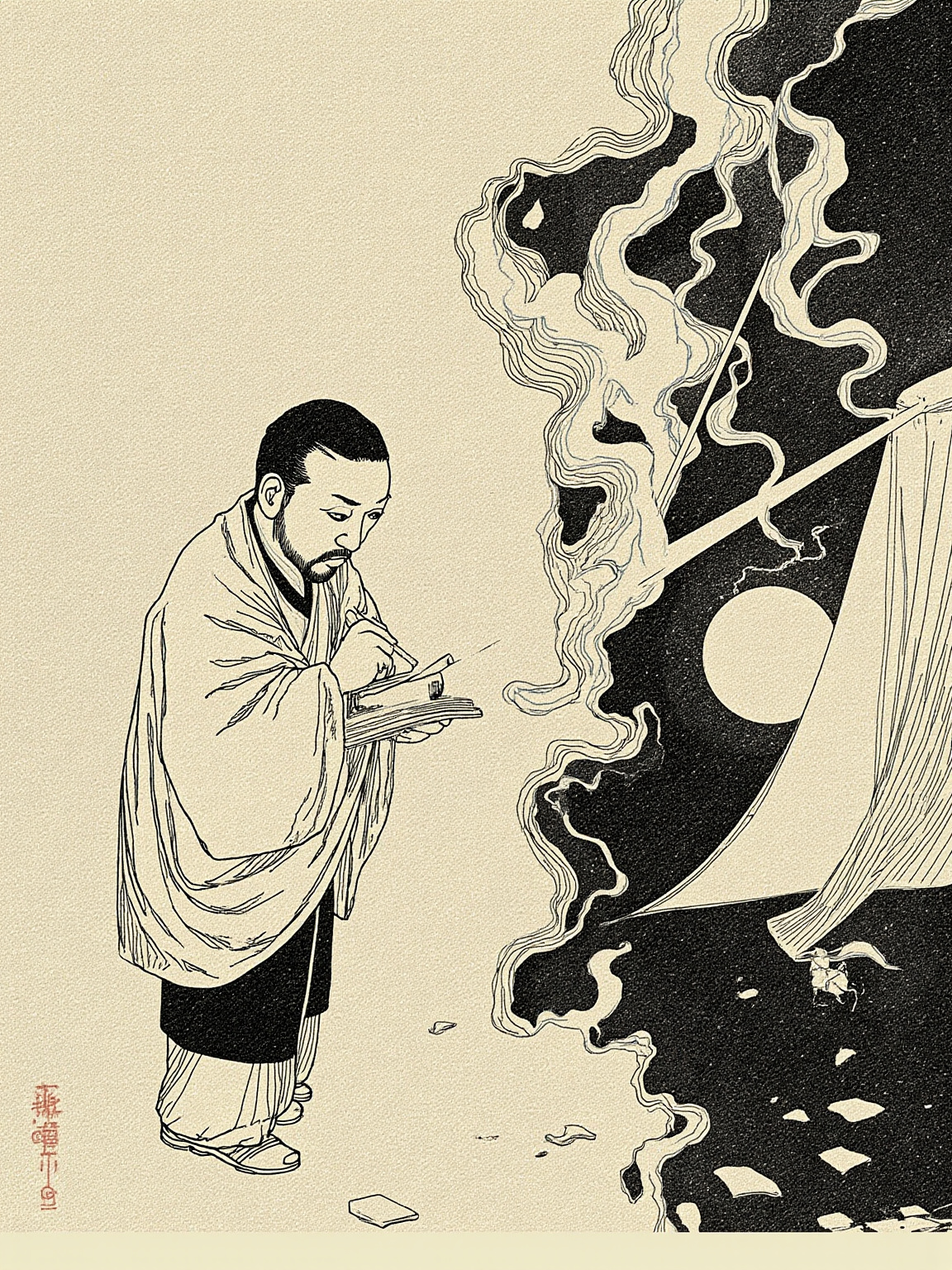
Thunder cleaves one tree and spares the house beside it — how then can heaven be speaking to men?
雷者,火也。火气相激则鸣,与天意何与?
金句 · 《雷虚》篇 · 论雷之自然
Are There Ghosts When People Die: Weighing Soul-Calling, Sacrifice, and Omen-Reading One at a Time
Once the sky is dealt with, the underworld needs the same treatment. Wang Chong raises a fairly precise objection to the idea that the dead become ghosts: a living body holds together on qi and blood; once a person dies, the qi and blood disperse and the body rots, so what exactly would reassemble itself into a ghost that still talks and recognizes faces? When someone at a soul-calling ceremony claims to have seen the departed, he pushes back: if that really were a ghost, then the ghosts of the countless millions who have died should be turning up everywhere, so why do they only appear at these particular ceremonies? He applies the same test to auspicious omens. A phoenix or a unicorn is reported somewhere, and officials rush to write memorials celebrating it; Wang Chong asks for the physical evidence, the chain of witnesses, something that can be checked again and again. Without that, it stays a rumor. It does not get to count as fact.
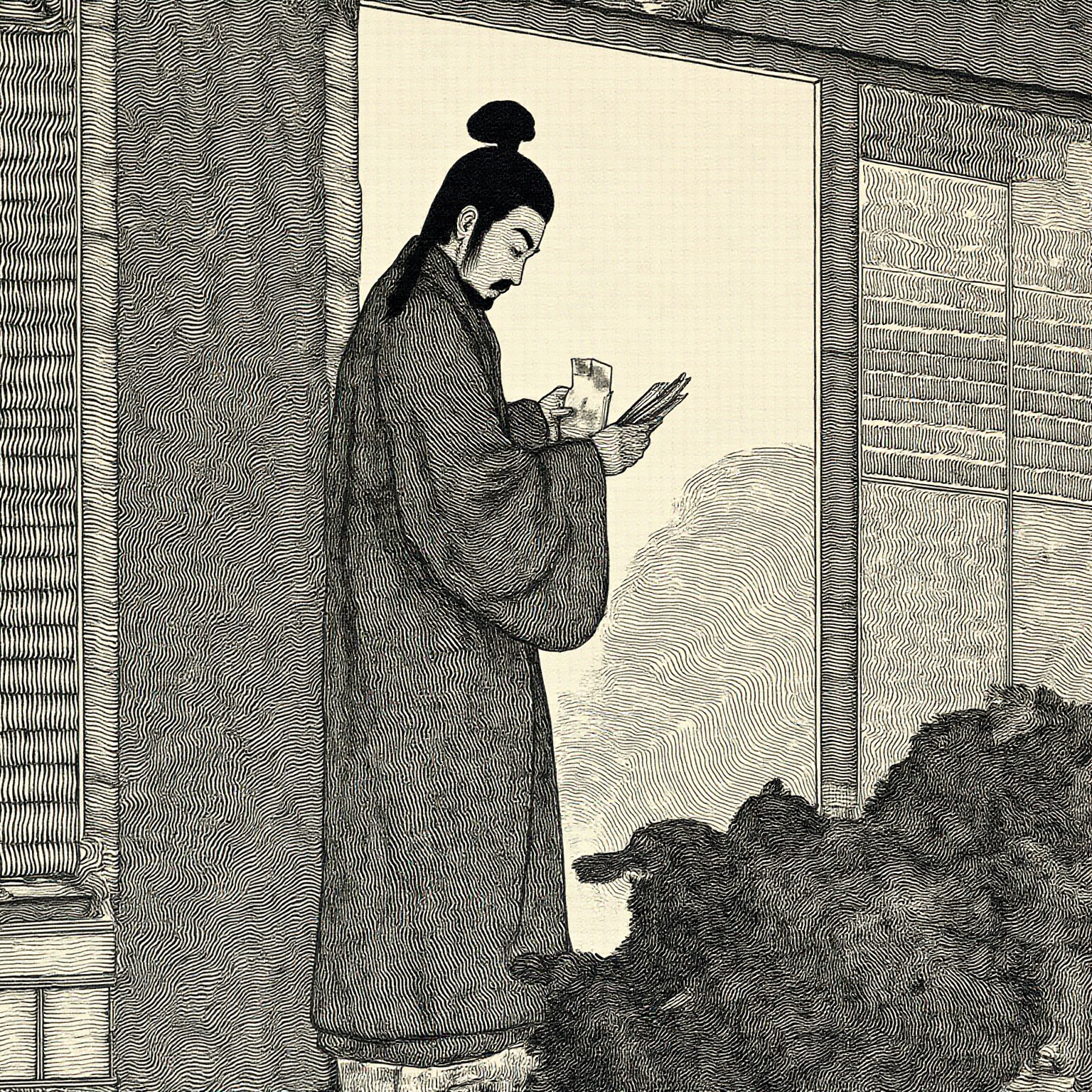
When the blood is spent and the bones decay, what is it that returns to walk and speak as before?
人之所以生者,精气也,死而精气灭,何能为鬼?
金句 · 《论死》篇 · 辩人死不为鬼
Out of this he sets a standing rule that later readers would sum up as his war on falsehood and empty claims: no matter how old an idea is, how popular, or whose authority backs it, if it cannot produce repeatable evidence, it remains a rumor and not a fact. That single rule sweeps almost the whole field, the correspondence theory, the disaster-as-reprimand reading, the omens, the fortune-telling, clean off the table.
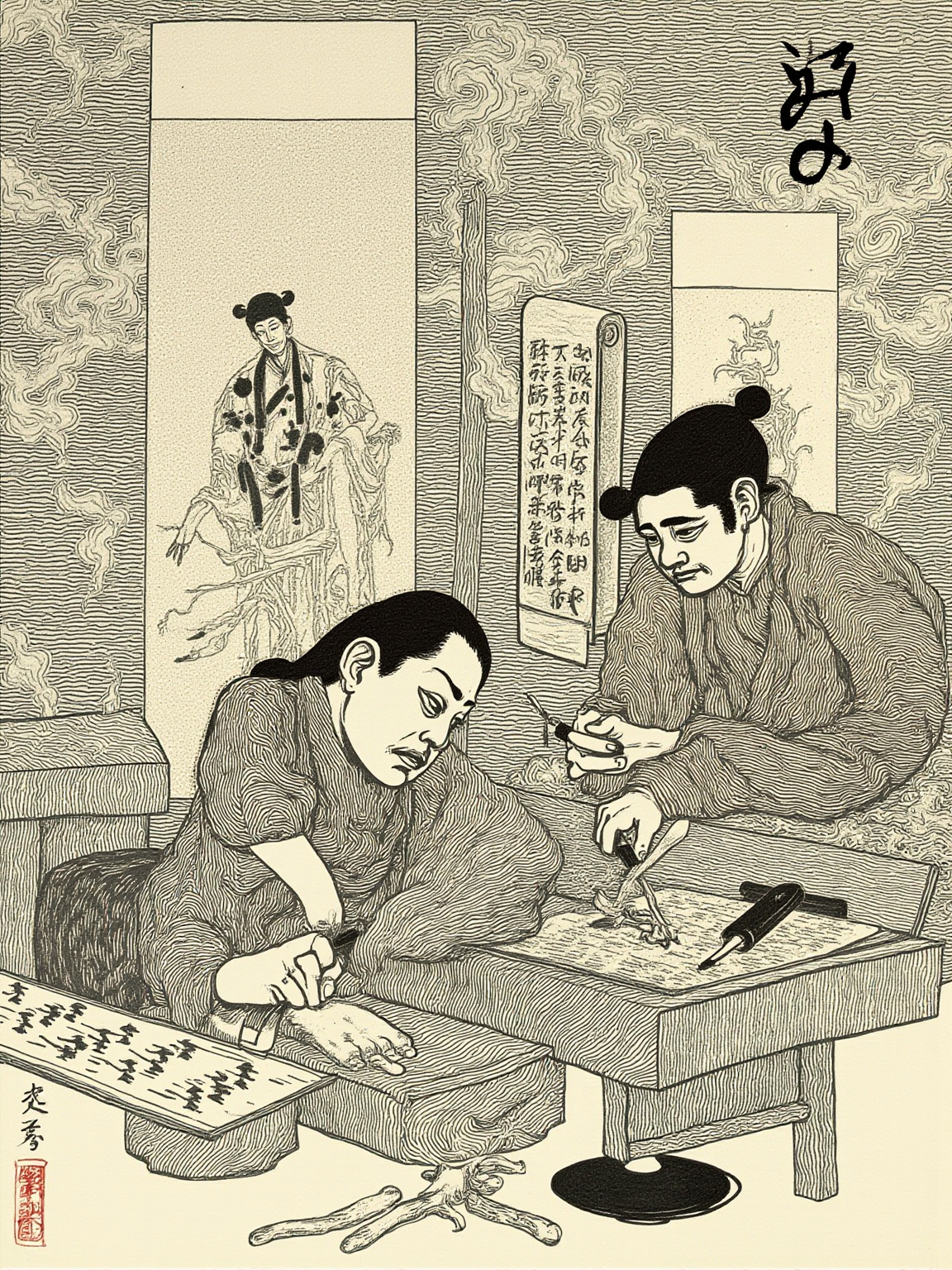
What cannot be shown again and again is rumor, not fact — weigh all such sayings in this balance.
凡事须以效验定其真伪,不能重复者,皆虚妄之说也。
金句 · 《知实》篇 · 立疾虚妄之总则
Bringing Down the Sages Too: Questioning Confucius and Criticizing Mencius
Only after the sky and the spirits are dealt with does the heaviest blow land: Questioning Confucius and Criticizing Mencius. Wang Chong opens the Analects and the Mencius and goes through them line by line, marking what strikes him as self-contradictory, factually wrong, or inconsistent. Even Confucius said things worth arguing with, and Mencius built arguments on ground that does not hold. In the climate of Han classical scholarship this was close to blasphemy, the posture for reading the classics back then was kneeling, treating every line as an edict beyond question.
But his criticism is not mudslinging. What he is aiming at is a particular way of reading, the assumption that whatever a sage said is correct and not one word of it may be changed. What he wants to prove is that Confucian thought stands up better when it is brought back down to the level of ordinary argument; once it is set up on an altar beyond question, it is Confucianism itself that becomes fragile first.
Because a word came from the sage's mouth, shall no one after him dare to ask whether it is true?
圣人之言,不能皆是,当问其是非,不当因人而废言。
金句 · 《问孔》篇 · 解圣言之绝对
What Makes His Case: Evidence, Experience, Natural Cause
Lunheng does not win its arguments through emotional force; it wins them through method. Wang Chong's reasoning rests on three fixed points: can it be observed, can it be repeated, does it follow natural law. Whatever satisfies all three, he accepts. Whatever fails, he rejects, no matter how impressive its pedigree. This is one of the earliest attempts in ancient Chinese thought to use verifiable evidence as a hard standard of knowledge.
The most striking thing in the whole book is that Wang Chong never invokes authority to win a point. He does not lean on Confucius, and he does not lean on the yin-yang theorists; instead he places himself in a fairly modest position: I am only a scholar, and what I say is what I have seen with my own eyes or can explain clearly. That tone was close to an anomaly in the world of Han classical scholarship.
Out of this comes a stance that reads as remarkably modern: he does not deny that the world holds things beyond our understanding, but he insists on labeling anything unproven as unproven, not as known. That distinction is one of the most familiar boundaries in later scientific common sense, and Wang Chong was already standing on it nineteen hundred years ago.
I mark only what I have seen or can plainly render — the unproven stays unproven, never confirmed by default.
未尝见其事,未必知其理;知之与否,当以耳目所及为断。
金句 · 《实知》篇 · 立效验与实证之矩
Why It's Still Worth Reading Today
Lunheng writes about Eastern Han concerns, but the underlying question is universal: when a claim is popular enough, old enough, or vouched for by someone important enough, do we still owe it the question is this true? Wang Chong's answer is yes, and always yes. That near-professional habit of doubt is the book's biggest legacy. It has none of today's vocabulary, but it takes aim at exactly the same target as any reader now who checks a prediction, a rumor, or an official statement before believing it.
Go Read the Text Itself
A companion guide can give you the map; the text itself gives you the feel of Wang Chong's hand as he takes a myth apart, sentence by sentence. You have to read On Thunder, On Death, and Questioning Confucius yourself to see how he starts from one specific rumor and, in a few moves, works an entire belief system loose. You have to see him write, with real restraint, I did not see this myself so I cannot call it true, to feel that particular cold steadiness of an Eastern Han scholar. No guide can hand you that. Reading Lunheng is not about finding answers. It is practice in a posture that is getting rarer by the year: taking any sentence that sounds impressive and setting it down to weigh it.
The most valuable thing Lunheng ever taught later readers was not any conclusion but a way of asking: Did you actually see it? Can you say it again?
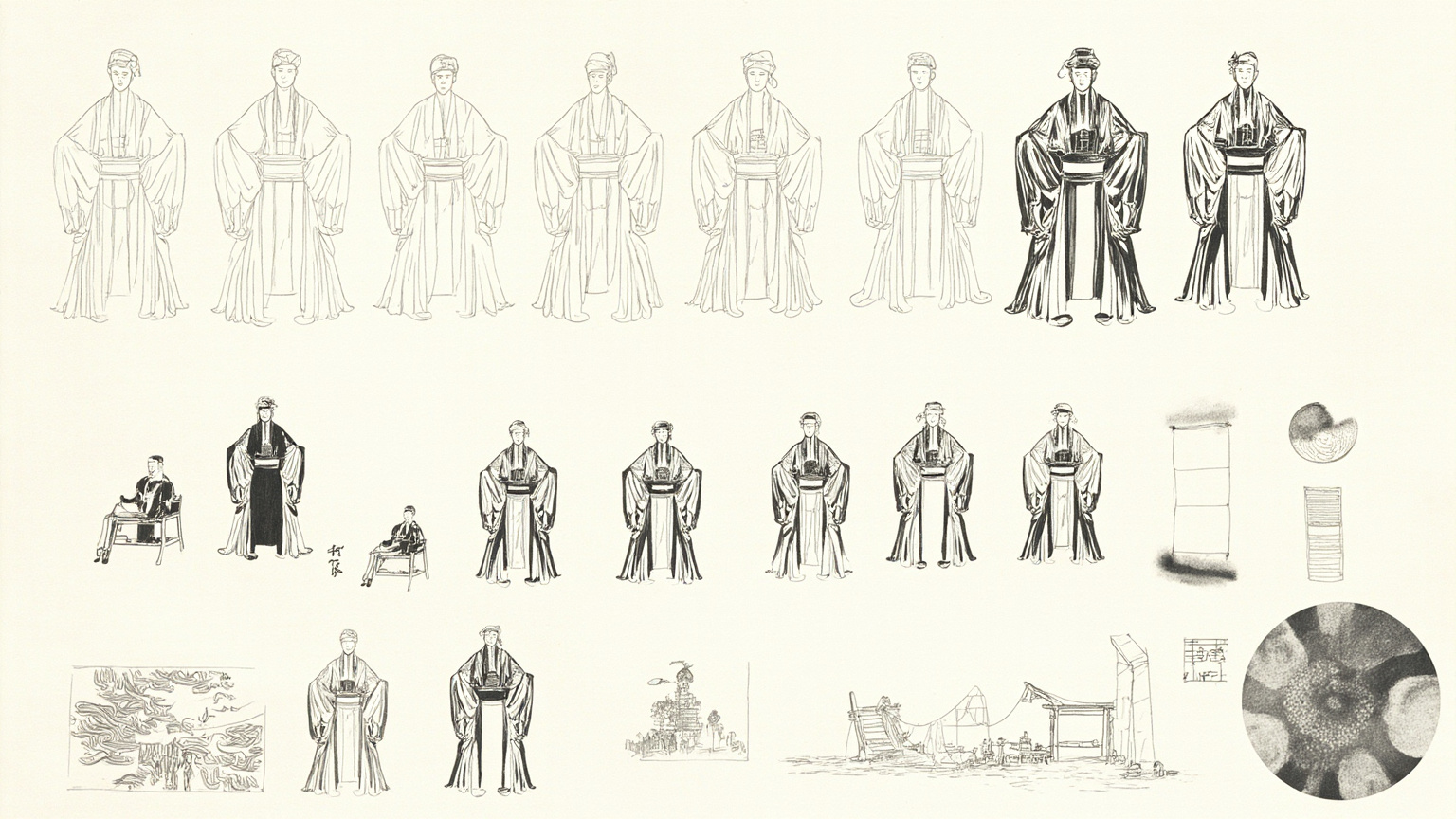
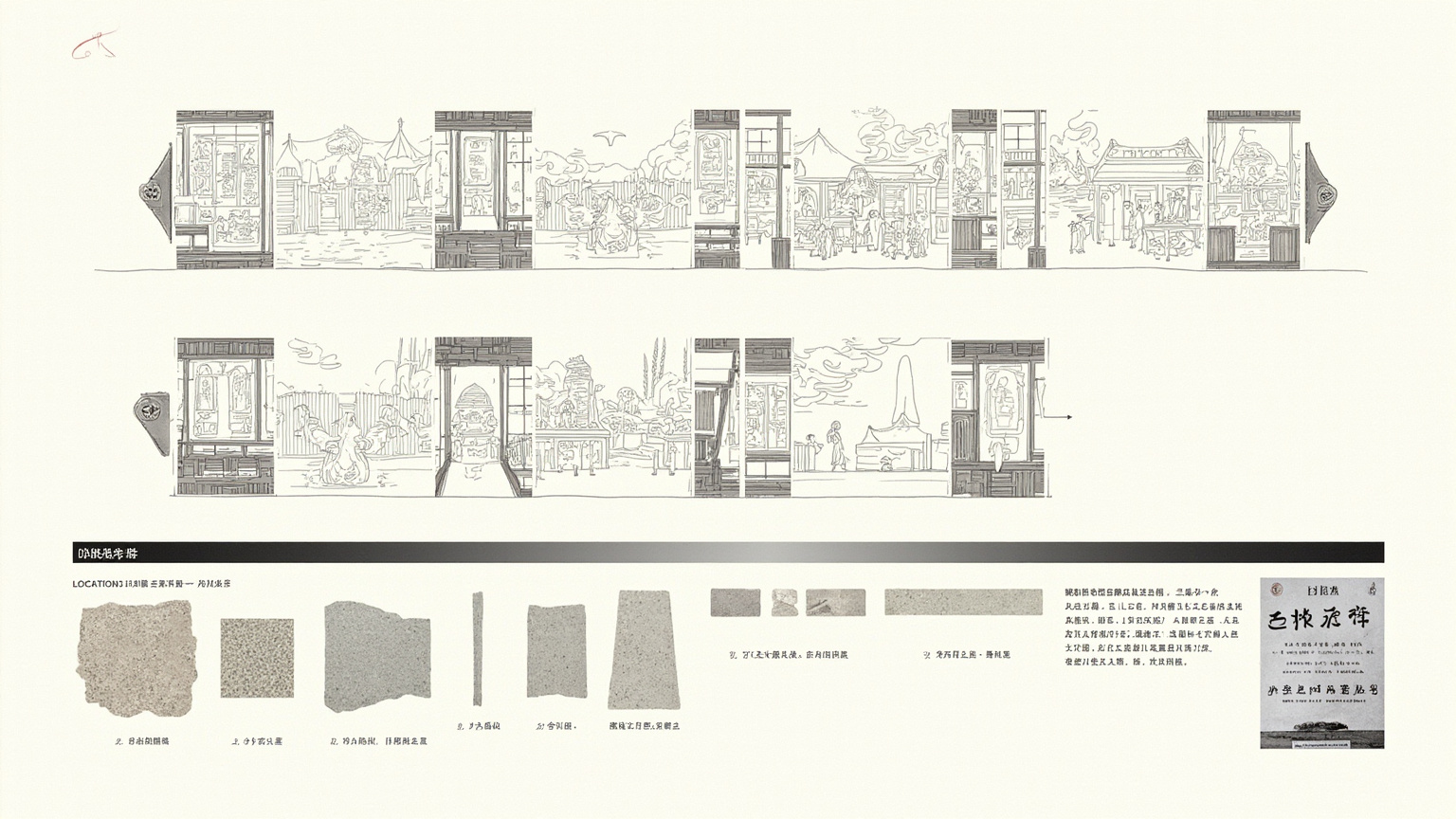
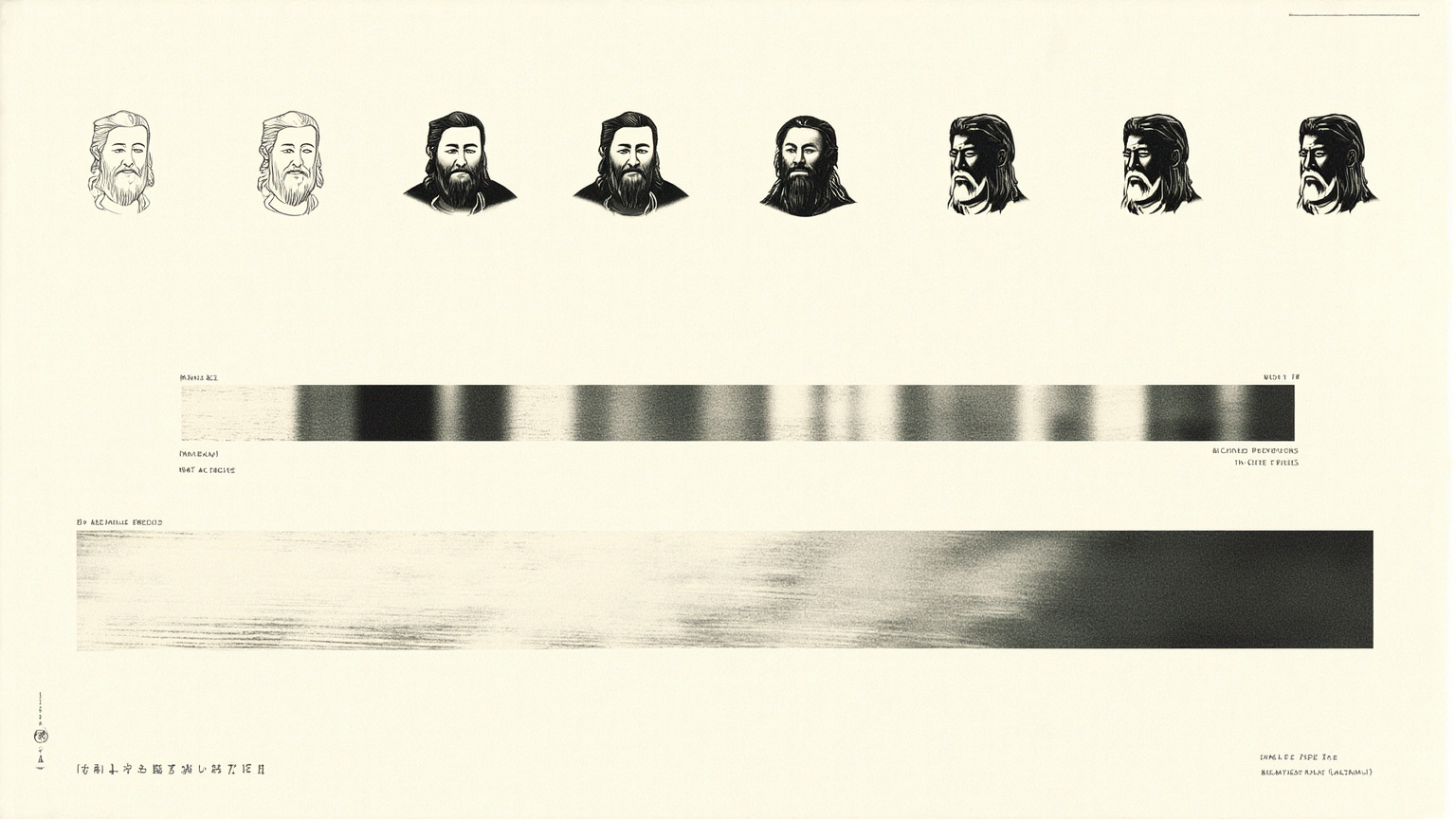
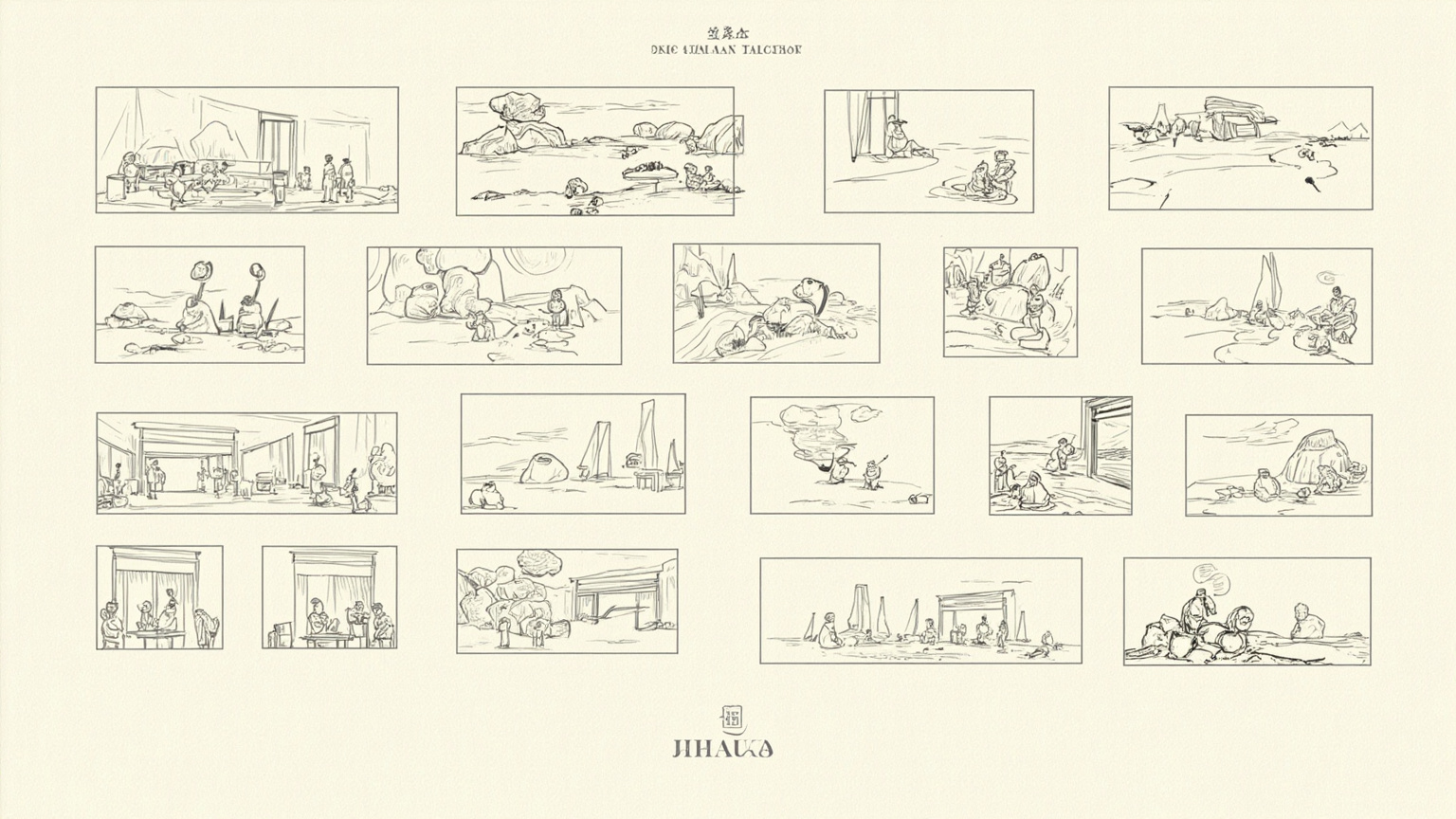
Art Direction4 plates
Before the guide was written, this book got a visual foundation — every illustration you just read grew out of it.