Main Street: The Story of Carol Kennicott · Companion Guide
大街
明尼苏达小镇上,一个渴望改造世界的女人,在从众文化的无形暴力中,守住最后一缕不肯熄灭的光。
I. Opening: The Gray-Brown of Main Street
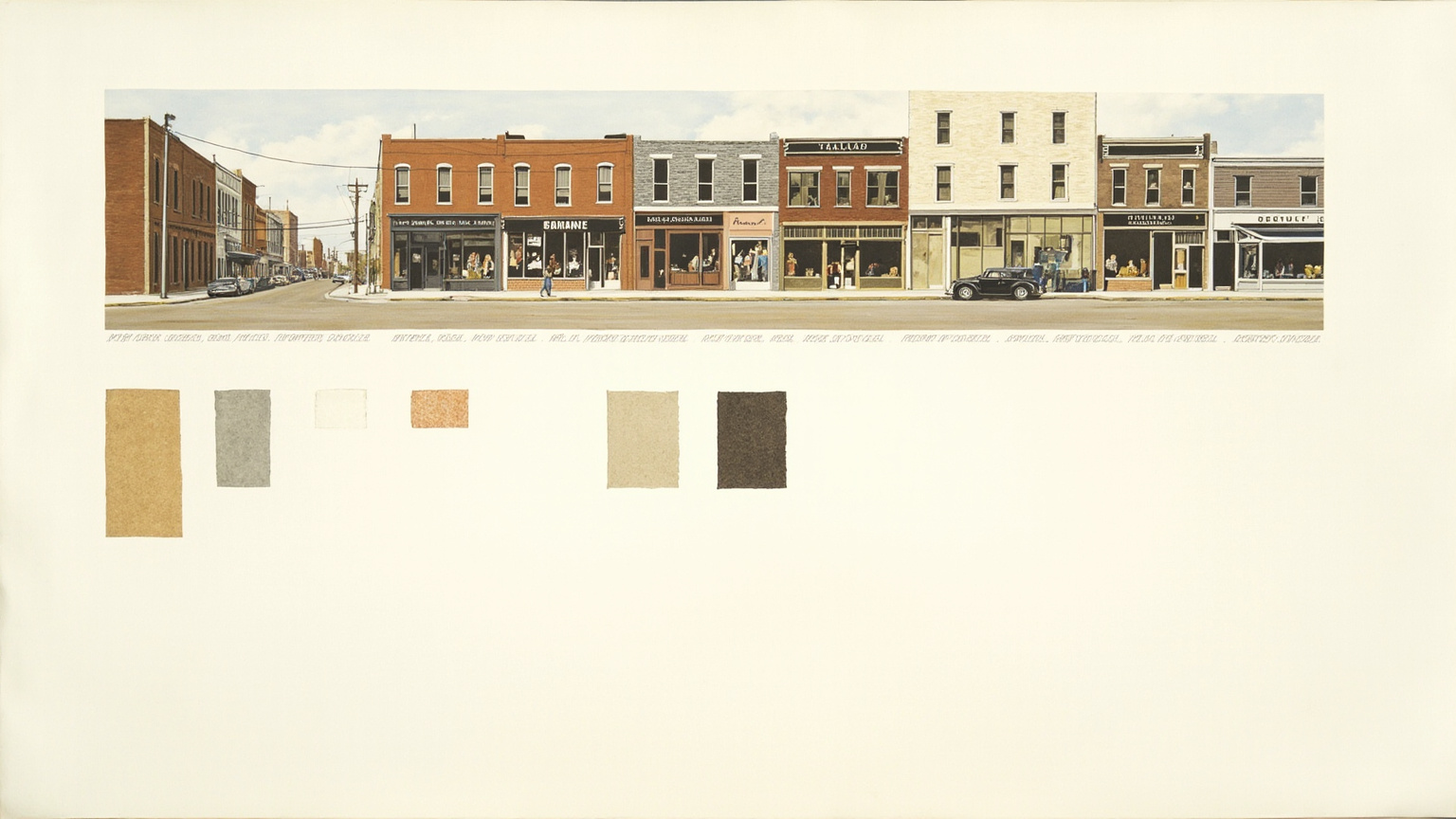
She stands on the main street of Gopher Prairie and looks up: two-story brick storefronts, wooden porch posts leaning slightly off true, a crumbling concrete step in the middle of the road. This is the whole view for the rest of her life. A St. Paul college graduate married to the town's country doctor, she arrived eager to light the place up with city planning, a real library, a little theater. What she saw on first sight was grayer and flatter than anything she had imagined.
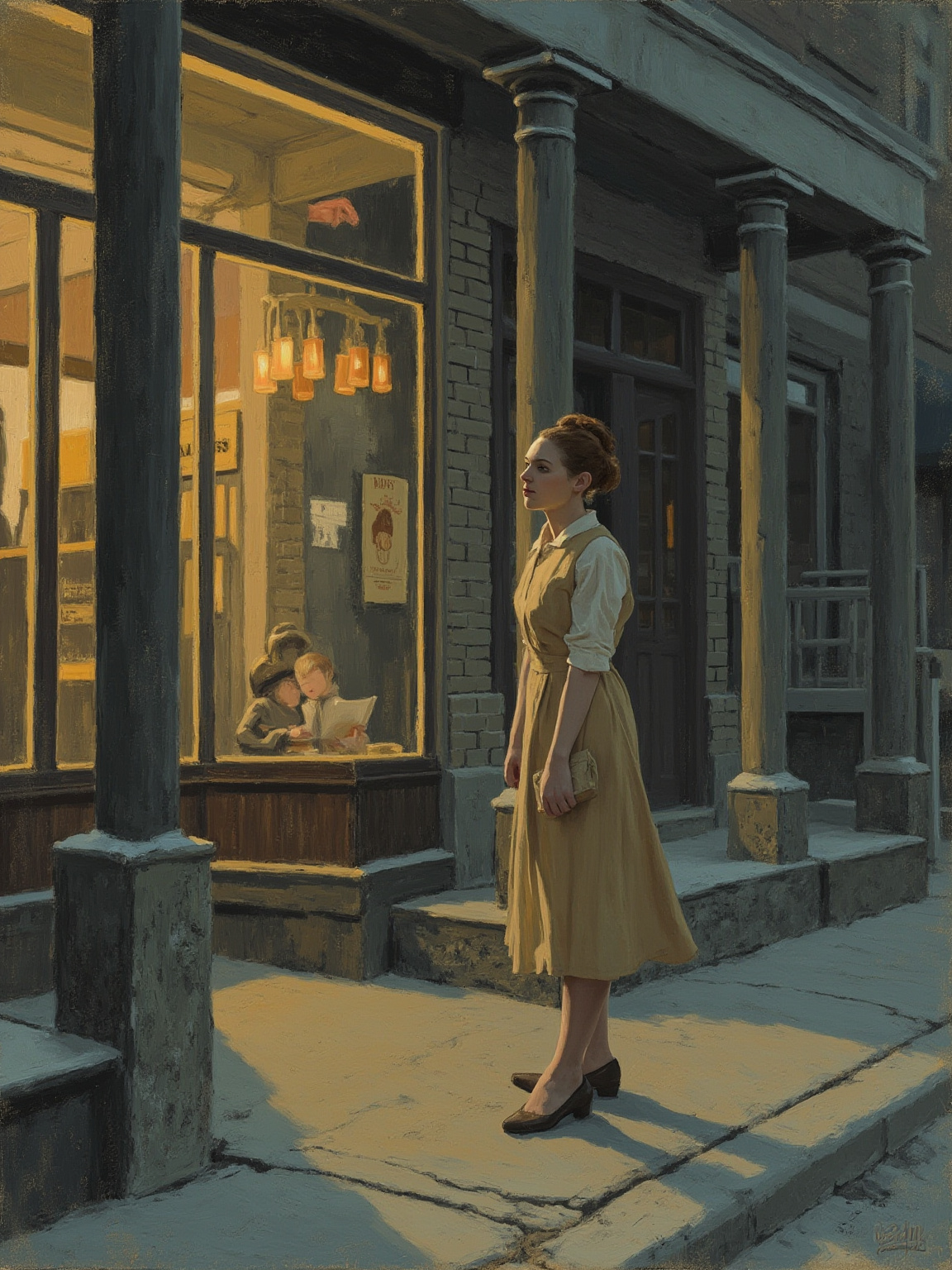
A clothing store with a display of "ox-blood-shade Oxfords with bull-dog toes."
一家服装店,橱窗里摆着‘公牛脸牛津鞋,牛血色’。
原文金句 · 第一章 · 初抵戈弗草原
II. What Kind of Book This Is
Sinclair Lewis, born 1885 in Minnesota, was an American novelist. Main Street came out in 1920 and stands as a landmark in American realist fiction's critique of conformity — the book's drab Main Street became, afterward, shorthand in English for any closed-off small town. In 1930 Lewis won the Nobel Prize in Literature for Babbitt, Arrowsmith, and the rest of that run of novels, the first American to receive it, and Main Street is where that run begins.
III. People and World
The protagonist is Carol Milford, a St. Paul librarian who marries the country doctor Will Kennicott. Will is a good man — hardworking, decent, genuinely devoted to her — but his way of loving her is to install her on a gray-brown sofa and bring her along to bridge parties. Carol's world splits in two: on one side, the city planning, art, and social reform she picked up at college; on the other, the small town's endless round of bridge, sewing circles, and church suppers.
A few people around her are worth talking to: Vida Sherwin, a teacher at the local high school; Guy Pollock, a lawyer who actually reads; and Miles Bjornstam, the town's odd-job man and self-taught socialist, known as "the Red Swede," full of heresies the whole town steers clear of. There's also Bea Sorenson, a Swedish farm girl newly arrived as a maid — sturdy, awkward, unguarded, the exact opposite of Carol's estrangement from the place.
IV. Reform After Reform Fails, and the "Village Virus" Shows Itself
Carol starts in the moment she arrives. She wants a new town hall — the local architect hands her nothing but a gray brick box. She starts a reading circle — people either slip her unfinished books back onto the shelf or tell her to her face that the poems she picked are "too racy." She tries to reform the library — the old librarian locks the new books straight into a cabinet. She organizes an amateur theatrical society — the audience walks out halfway through rehearsal. Carol can't understand it: all she wants is to make the town a little more presentable, and everyone blocks her like she's coming for their own stove.
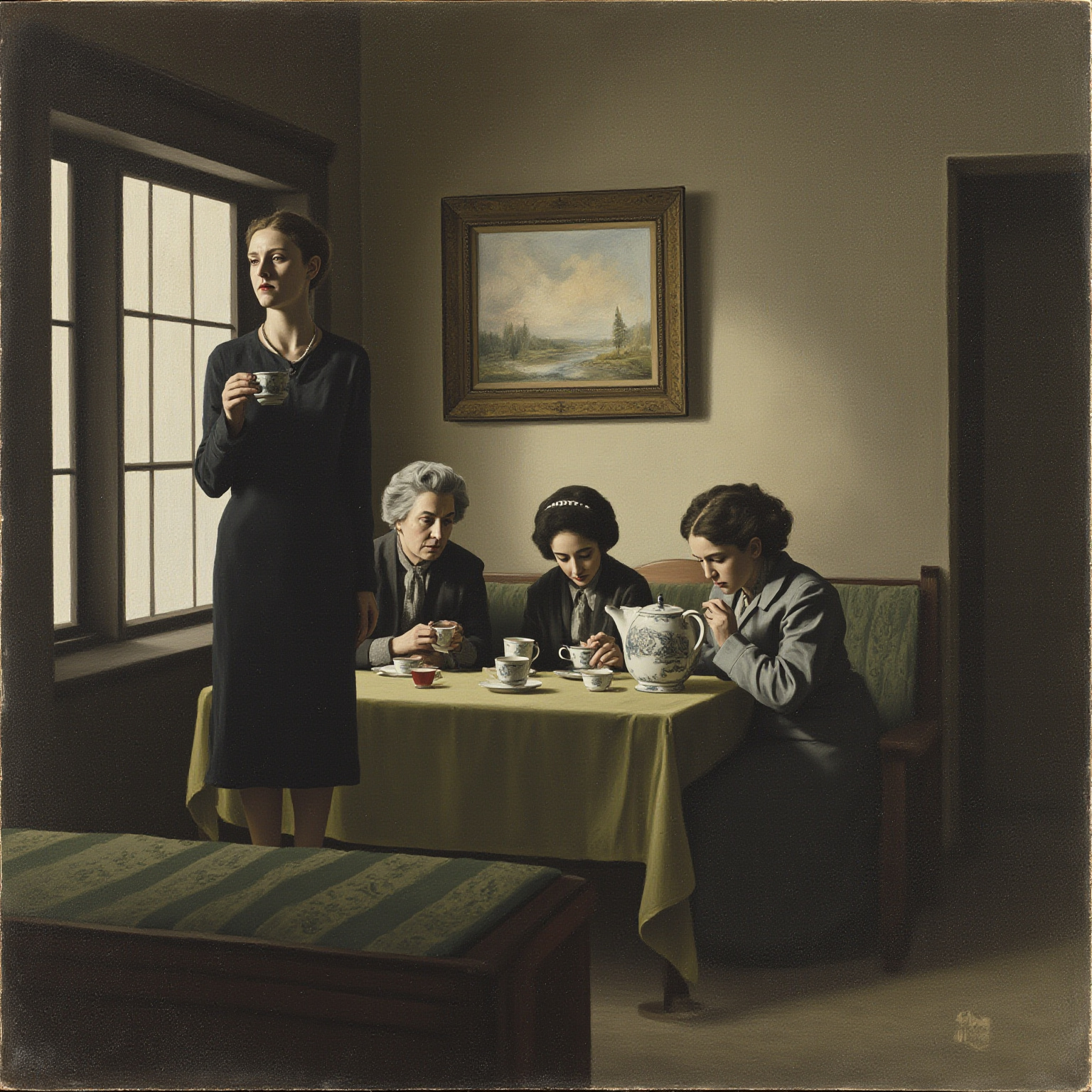
Then I found that the Village Virus had me, absolute: I didn't want to face new streets and younger men--real competition.
我发现小镇病毒已经彻底掌控了我:我不愿面对新的街道和更年轻的男人——真正的竞争。
原文金句 · 中部 · 波洛克论小镇病毒
Guy Pollock names the disease: the Village Virus. It's a contagion, he says, that absorbs any new idea, new taste, new fashion someone brings into town, wearing it down layer by layer into the same gray-brown, until the newcomer, too, learns to shake their head in the same tone and say we don't go in for that here. The phrase has outlived the book — a century later we still reach for it to describe any place that smothers what's different in the name of respectability.
V. Gossip Exposes the Knife Under the Respectability
Carol grows a little closer to Erik Valborg, the town's young tailor, who carries around a dream of going to New York to design clothes and is the only person in town who can talk to her about Debussy. They exchange a few too many glances while talking, and the news travels down Main Street faster than a telegram. Carol never crosses the line, but the gossip crosses it for her.
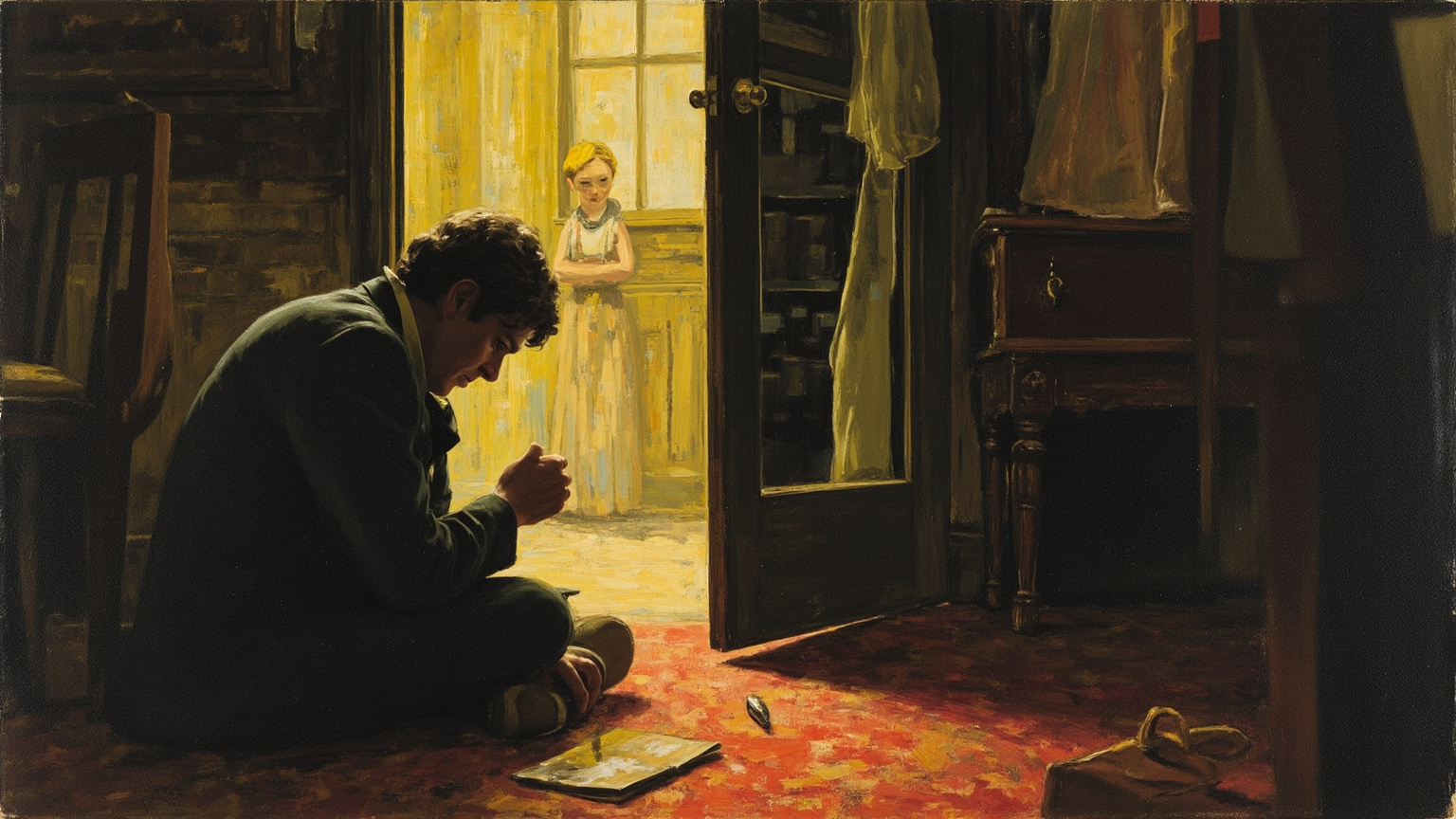
Now she noted that his jaw was square, that his long hands moved quickly and were bleached in a refined manner, and that his trusting eyes indicated that he had "led a clean life."
此时她注意到他的下巴是方的,修长的手动作敏捷,举止文雅,他那双信任的眼睛表明他‘过着纯洁的生活’。
原文金句 · 暧昧时分 · 卡罗尔对埃里克的观察
Around the same time, Fern Mullins, a young teacher at the high school, gets caught up in a scandal when a student turns up drunk at a dance — the town doesn't ask what happened, only whether she's that kind of woman, and within days she's forced to resign and leave. This is when Carol finally sees it: under Main Street's thin shell of politeness sits a knife, already sharpened. Anyone who doesn't sit up as straight as everyone else finds it waiting for them.
VI. Bea: Where the Virus Bites Softest
Bea Sorenson falls in love with Miles Bjornstam. She can't quite explain the choice herself — the whole town steers around "the Red Swede," and she goes and marries him anyway. For a short while after the wedding, they have their bright days: Miles humming while he splits firewood, Bea sitting in the sun with the baby, nobody in town bothering to knock. Even that light turns out to be borrowed.
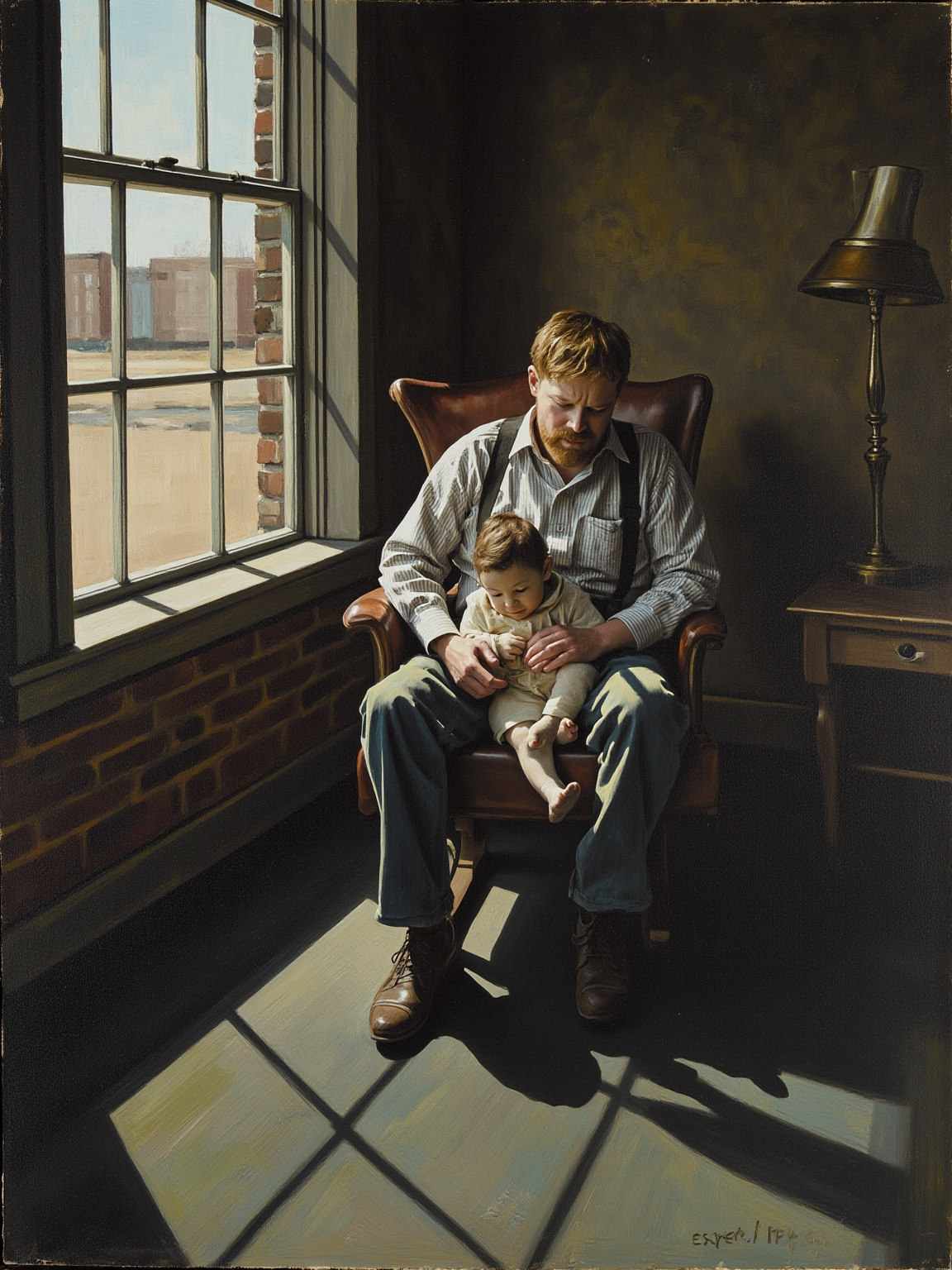
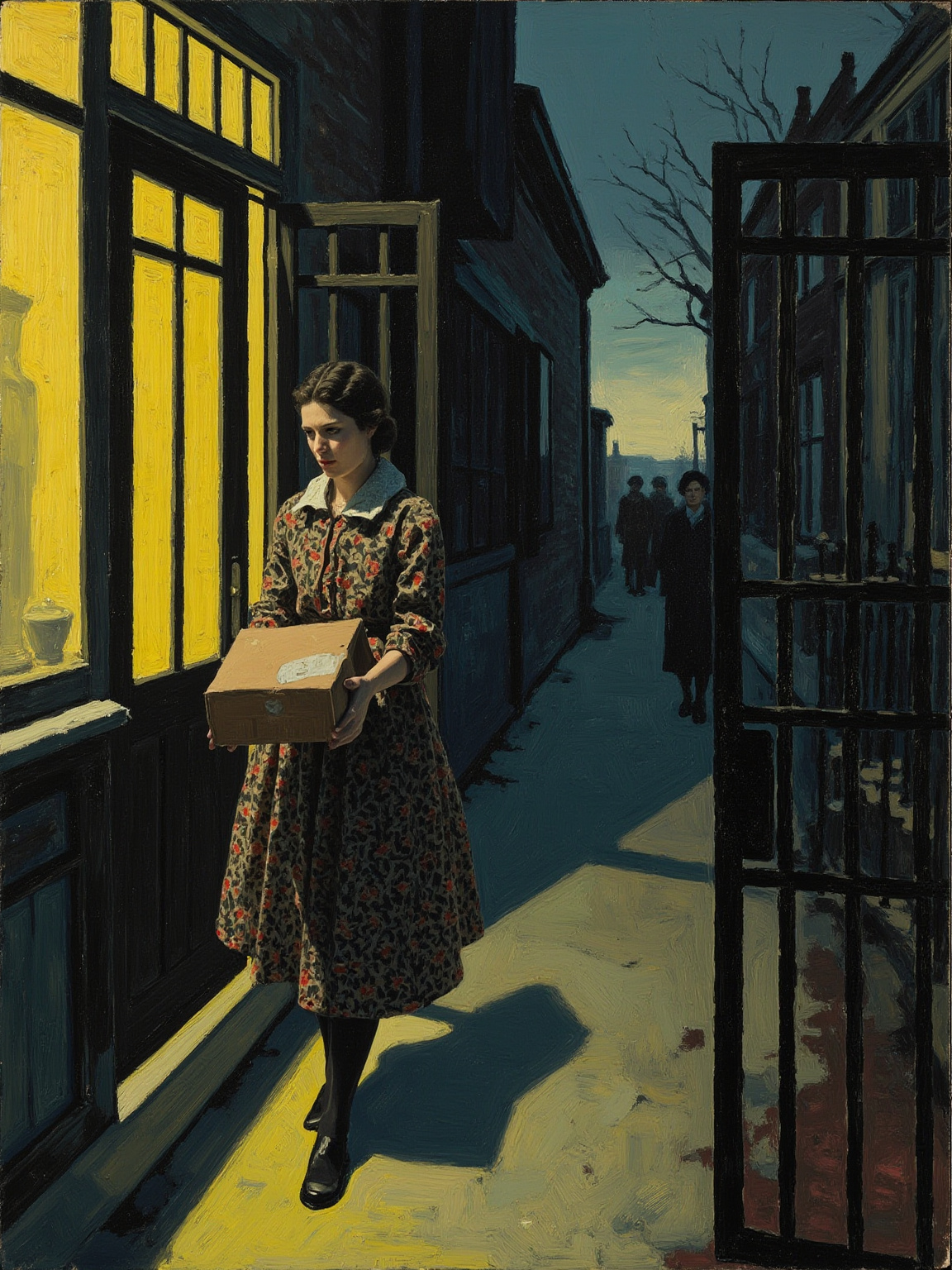
To Carol he said good-by with a mumbled word, a harsh hand-shake, "Going to buy a farm in northern Alberta--far off from folks as I can get."
他与卡罗尔告别,嘴里咕哝着什么,握手粗鲁:‘我要去艾伯塔北边买个农场——离人越远越好。’
原文金句 · 悲剧之后 · 迈尔斯诀别
Typhoid comes. Mother and child die within days of each other. Miles never really speaks again after that. When Carol comes to bring the little embroidered blanket, Miles is sitting motionless on the doorstep, staring at a diaper Bea had hung out in the yard, still lifting in the wind, with no one left to take it down. It's the heaviest blow in the whole book: the virus never infects only ideas, it strangles the small warmth people manage to build between each other, too.
VII. Two Years in Washington
When the war breaks out, Carol leaves Gopher Prairie with her son for wartime clerical work in Washington, D.C. She stays almost two years — offices, dance halls, libraries, streetcars full of strangers who couldn't care less what she reads or what neckline she wears. The first time I read the passage of her walking alone under the plane trees on a D.C. street, I stopped short too: she was never incapable of shining. The town had just been smothering her.
VIII. She Chooses to Go Back
And still she goes back, carrying a newborn daughter she conceived in her last months in D.C. Gopher Prairie hasn't changed: Main Street is still Main Street, the bridge table is still the bridge table. She and Will sit in the living room and finally say it plainly: I haven't won, but I haven't given up either. It isn't a happy ending, and it isn't resignation. It's someone worn thin who decides to keep standing where she stands.
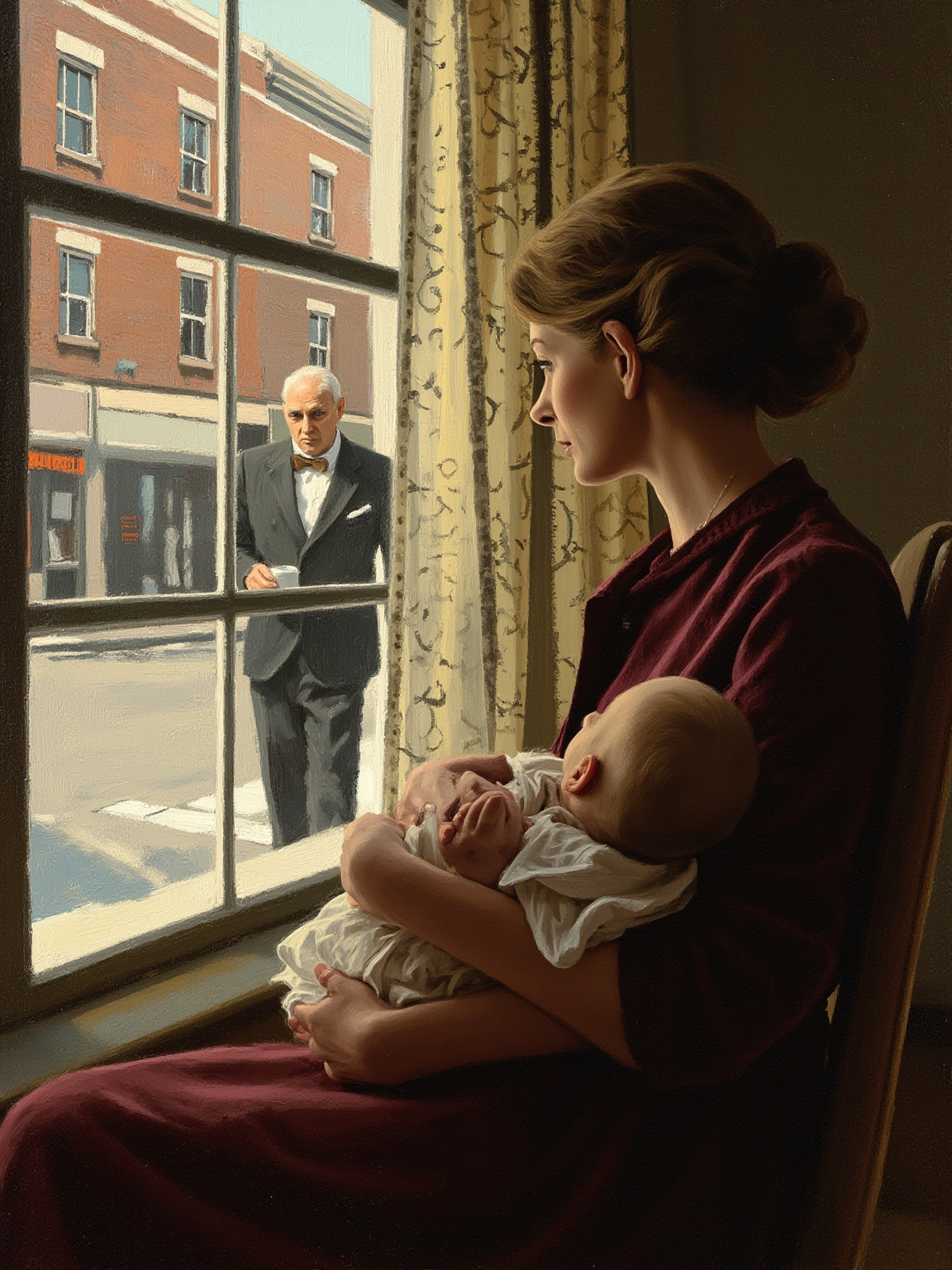
The others greeted them with the inevitable storm of humor and slight vexation: "Where the deuce do you think you've been?"
其他人用那种无可避免的戏谑和带点恼意的热情迎接他们:‘你们俩究竟上哪儿去了?’
原文金句 · 终章 · 重归戈弗草原
IX. What This Book Is Actually About
In one sentence: how conformity kills. Not the body — possibility. Any small town, any workplace, any family can be Gopher Prairie: everyone nods together, nod along and you're safe, shake your head and you become someone to be dealt with, the way Bea and Miles and Fern were. Lewis never gives Carol a triumphant escape, because he knows the disease doesn't cure that easily. He doesn't let her give in and lie down either, because she doesn't. That's why the book still stings a century later.
For readers today, Main Street isn't only about 1920s Minnesota. Any place that keeps "respectability" on its lips and we don't go in for that here as a running line — the family dinner table, the office break room, the parents' group chat — has a Gopher Prairie living in it.
X. The Guide Gives You the Map; the Novel Is the Ground
You already know the plot, but you haven't seen how Lewis writes it. He works with something close to an anthropologist's patience, rendering the order of play at the bridge table, the exchanged glances at the sewing circle, even the lettering on the shop signs down Main Street — this kind of granular tedium is the real tedium of the town, and only in the original prose does that airlessness press you slowly into your chair. Carol's inner life isn't a heroic monologue either; it's an educated woman, a little vain, a little naive, pulled back and forth inside her own head. And then there's the passage before Bea dies — Lewis never sums it up with a line of grief, he just lets the wind move that diaper. That restraint carries more weight than any scene of open weeping. Once you know what happens, a second reading actually slows you down.
The Village Virus isn't a slogan. It's what happens when you've nodded along for so long you forget any other posture was ever available.
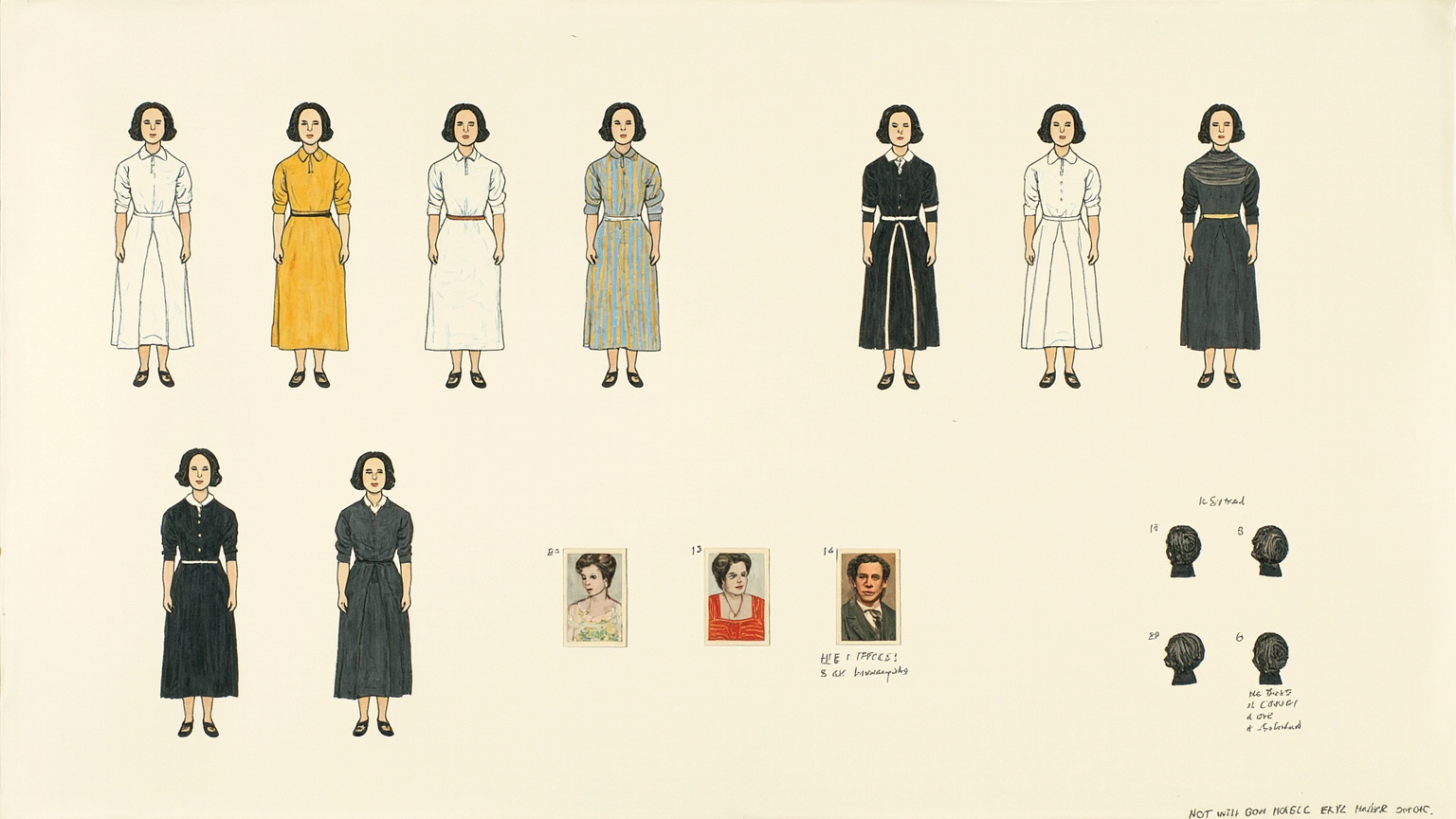
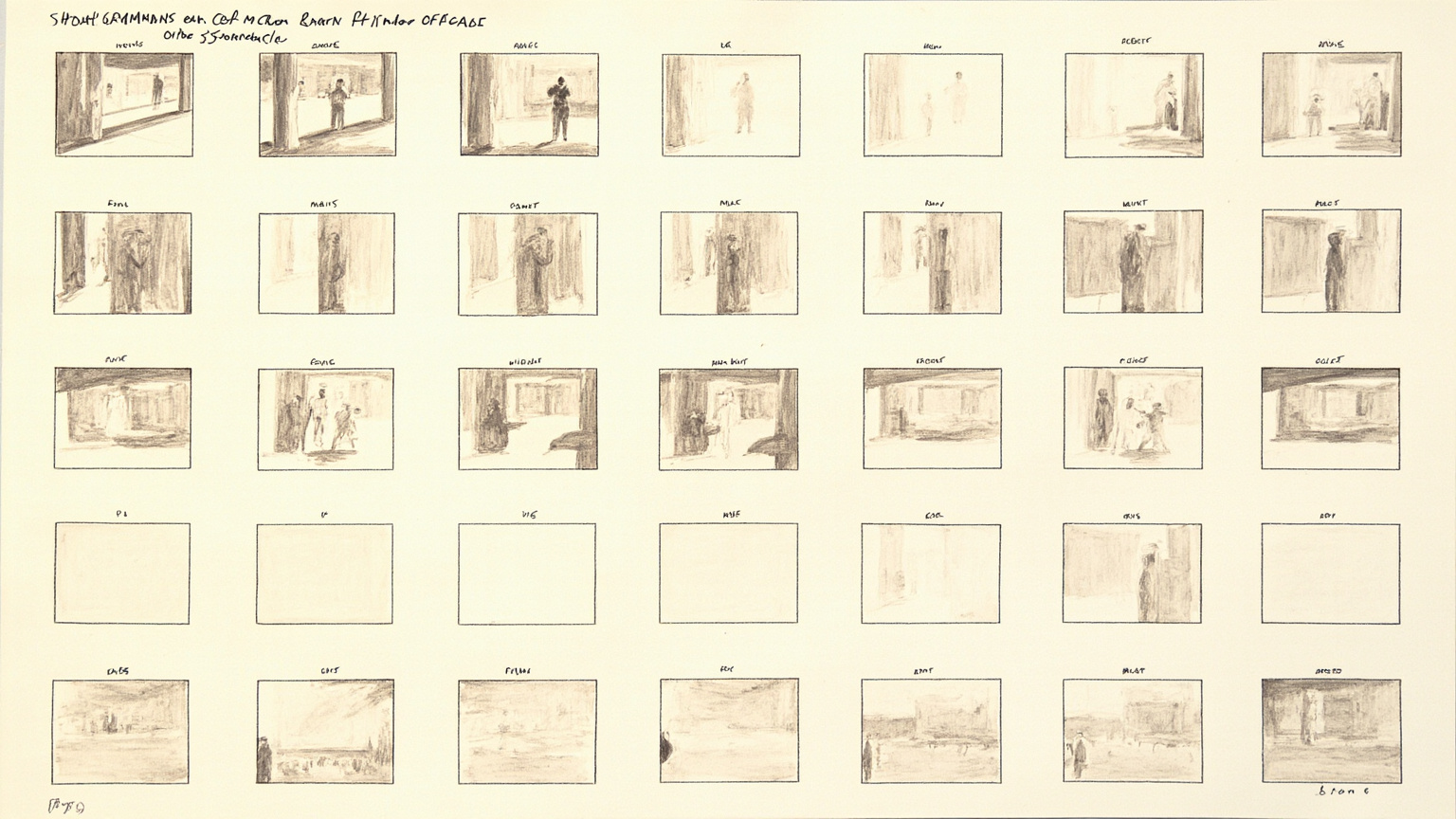
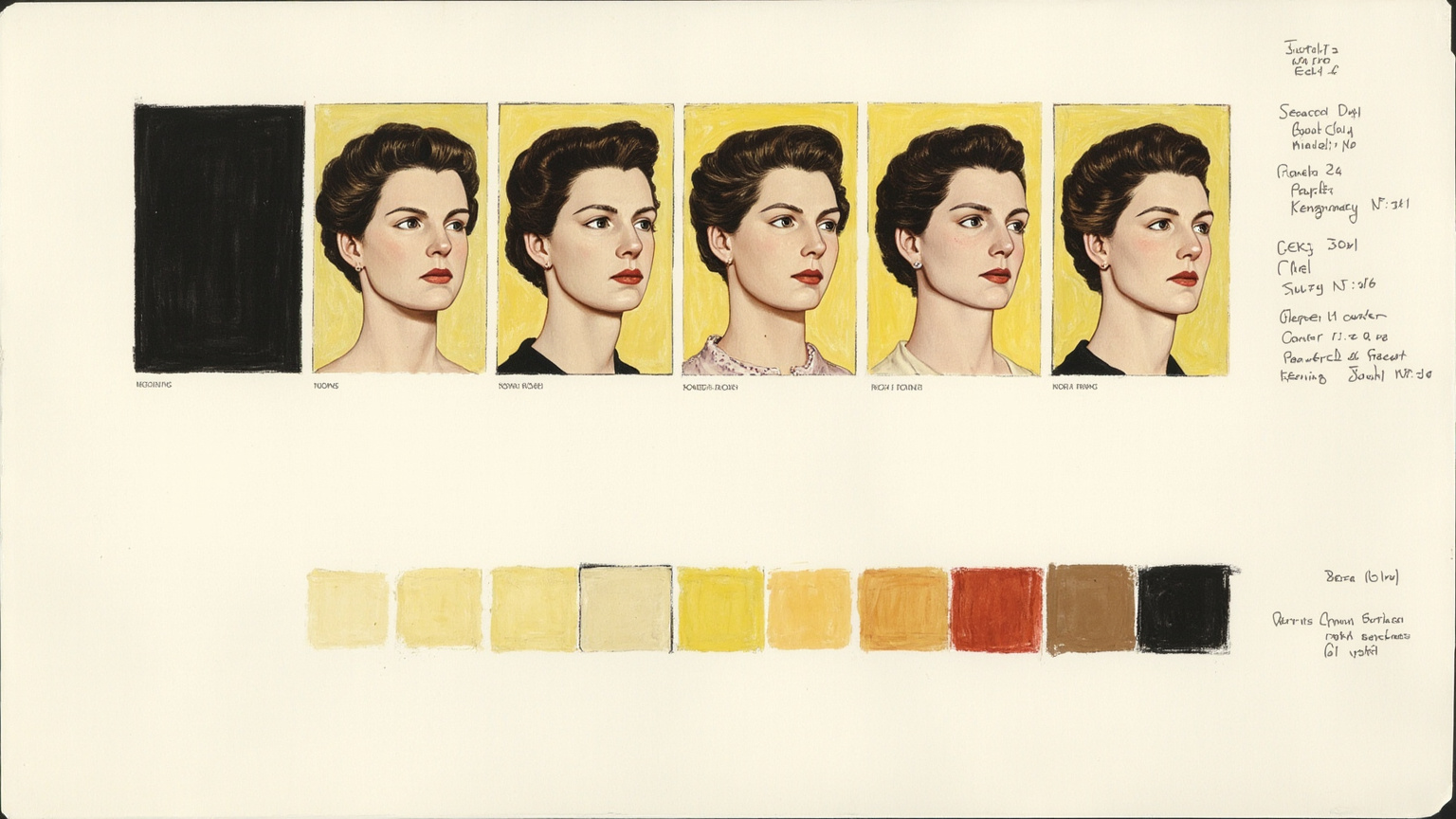
Art Direction4 plates
Before the guide was written, this book got a visual foundation — every illustration you just read grew out of it.