The Maqamat of al-Hariri (The Assemblies of al-Hariri) · Companion Guide
玛卡梅集
一个老头靠嘴皮子让五十座城心甘情愿掏钱,再转身消失在人群——听觉打败眼睛的中世纪市井奇谈
A Man from Saruj
Outside Sana'a, at dusk. A man stops a caravan heading home, weeping and wailing, saying his hometown has been raided, his daughter taken, his family's wealth gone. The travelers press coins into his hands, hand him water, help him up into the saddle. He wipes his eyes and recites a few lines of verse — the meter flawless, the allusions exact, every word landing on the softest spot in his listeners. The whole camp weeps again. By morning the man is gone, and the caravan wakes to find the purse under the saddle empty too.
This is an ordinary episode in the Maqamat. The man weeping is Abu Zayd of Saruj, who claims to come from a small town in northern Syria — Saruj. He is a shameless con man, and the only recurring figure across all fifty episodes. But he never swindles with a knife, poison, or a rigged scheme. His only asset is his mouth.
Who Wrote This Book, and Why It Survived
Its author was al-Hariri, a philologist from Basra, born in the mid-eleventh century and dead by the early twelfth. He worked as an official in the Seljuk administration — short, bearded, unremarkable to look at, and fond of joking that he was made to be heard, not seen. But he knew Arabic so thoroughly that the Islamic world kept copying his book and glossing his sentences for eight hundred years after his death. In his own lifetime he personally authorized more than seven hundred copies, and readers traveled all the way from Andalusia just to hear him recite.
He finished the book in the early twelfth century under its original title, Maqāmāt — literally 'assemblies' or 'sessions,' a genre that mixes rhymed prose with verse, half spoken and half sung. It is not the Quran, and it is not scripture — it is the high point of secular literature in the Arabic world, second in prestige only to the holy book itself. More than that, it stands among the earliest sources of the picaresque novel anywhere in world literature, on the same line as the Satyricon in ancient Rome and Rabelais's Gargantua and Pantagruel in France — a branch that historians of the Western novel almost never mention.
He was a hearer, not a seer; and what he heard was the speech of the Arabs, which he could bend into every shape a tongue could hold.
他自称是听的人,不是看的人;他听的是阿拉伯人的言辞,那言辞他能拗成舌头所能装下的任何一种形状。
金句 · 序章 · 听者自述
Two Men, One City, Then Another
All fifty episodes share the same skeleton: an Arab merchant named al-Harith travels from city to city and keeps running into an old acquaintance, Abu Zayd. Each time, Abu Zayd wears a different face — a blind beggar, a dying old man, a mosque preacher, a courtroom orator, a robbed merchant, a Quran reciter — and with a sob story, a poem, or a piece of grammatical sleight of hand, he walks off with everyone's tears and everyone's money. Then he laughs and vanishes. Al-Harith recognizes him every time, and every time there is nothing he can do about it.
Neither man is a hero. Al-Harith is a slightly credulous observer, led around by the nose, sighing all the while and following anyway. Abu Zayd is a brilliant con man, but once the con is over he simply leaves — no grand scheme, no ambition for anything larger. What he wants is the next meal and the next person willing to listen to him. What holds fifty episodes together is not plot. It is language.
Language Is His Entire Fortune
Abu Zayd does not steal, does not rob, does not trick anyone into signing a contract. What he cons is the ear. He tosses off Bedouin desert idioms without breaking stride, reaches into the deep stock of classical allusion and bends its meaning on the spot, buries a pun three layers deep, and rhymes verse that sounds both ancient and new. His sharpest trick comes in the twenty-sixth episode, where he composes a letter on the spot that reads one way forward and an entirely different way read backward — his listeners come away baffled and awestruck at once.
Al-Hariri built the whole book as a display case for rhetorical acrobatics. It is not one of the medieval period's usual panegyric odes, and it is not scholastic commentary. It is a language textbook wearing the shape of a novel. The satire is aimed at the ordinary heart that loves flattering words and trusts eloquence too easily — not at faith, and not at any mosque.
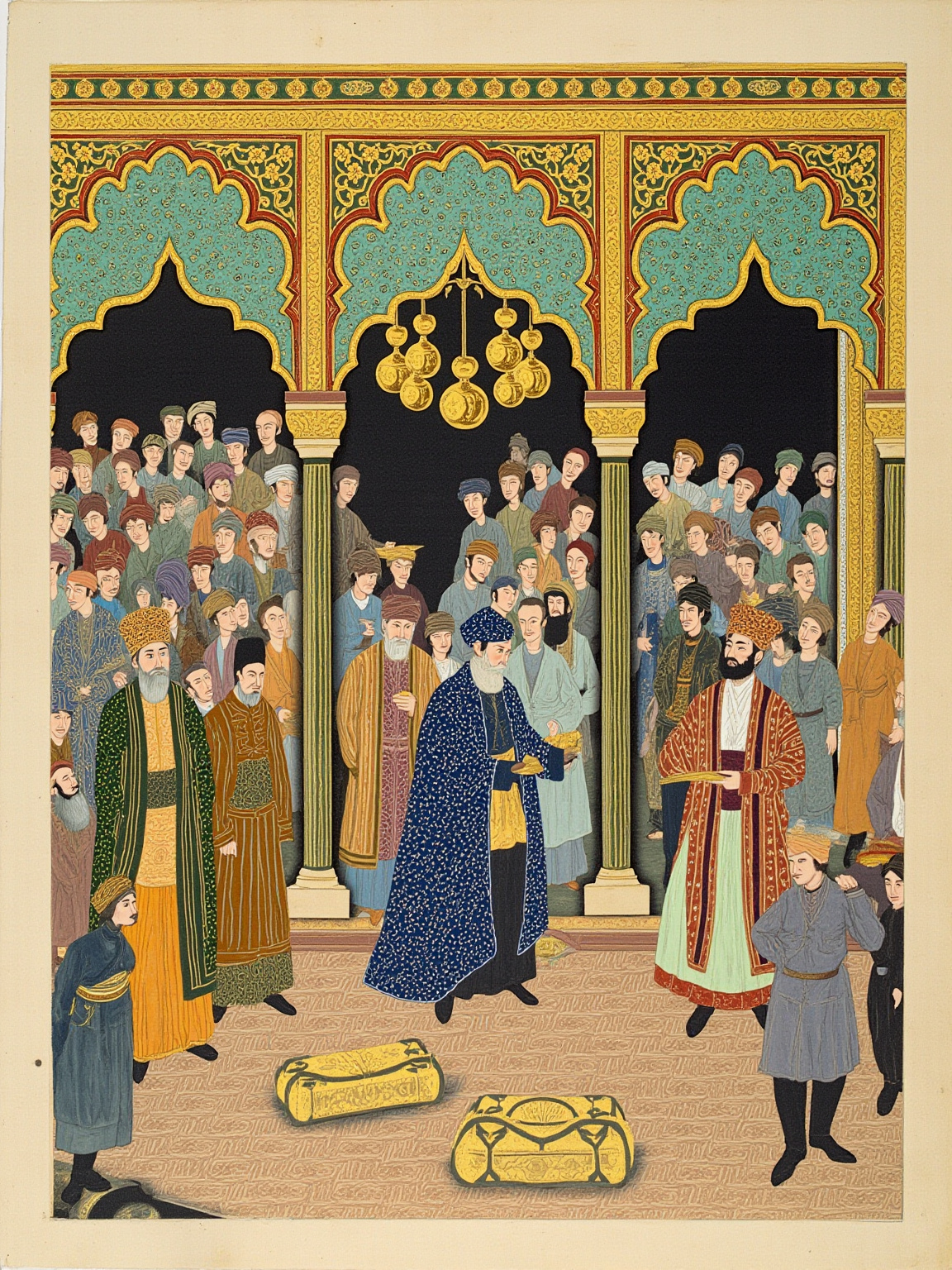
His only capital was his tongue; with it he bought tears, and with tears he bought bread, and he vanished before the bread turned stale.
他唯一的本钱是那根舌头;用它他换眼泪,再用眼泪换面包,面包还没凉他已走远。
金句 · 中章 · 骗子行状
Fifty Cities, One Con Man's Face Changed Fifty Times
Fifty episodes, fifty cities. From Sana'a in Yemen to Alexandria in Egypt, from Kufa to Mecca, from Baghdad to Samarkand in Central Asia, from Damascus all the way to Andalusia in Spain — the whole waystation network of the Arab-Islamic world gets strung into a single line by one con man. Most episode titles are simply 'The Assembly of' whichever city, and with every new city Abu Zayd sheds another skin.
He walks into town blind and leaning on a cane, or dying at a mosque door dictating his will, or arguing a case in court against the real judge, or chanting aloud at the book market. Every time, the whole city falls for it — except al-Harith. He always recognizes him, but he never gives him away, at most muttering, 'him again.' That relationship — watching a con he already sees through — is more compelling than the con itself.
One detail stopped me cold the first time I read it: in the episode where Abu Zayd tells of his hometown raided and his daughter taken, the whole crowd weeps openly and stuffs his arms with coins. When he laughs and runs off and the listeners come to their senses, it is they who feel the shame — not because they were conned, but because they discover how much they enjoyed listening.
The Author's Own Moment of Humiliation
After finishing the first forty episodes, al-Hariri traveled to Baghdad — the arena where reputations in the Arab world were made or broken. Someone accused him openly of plagiarizing an earlier writer's maqamat. A vizier put him on the spot and demanded he compose one there and then. But al-Hariri was a man of the study, not the stage — his gift lived on the page, not on his tongue. He stumbled, was humiliated in public, and retreated back to Basra in shame.
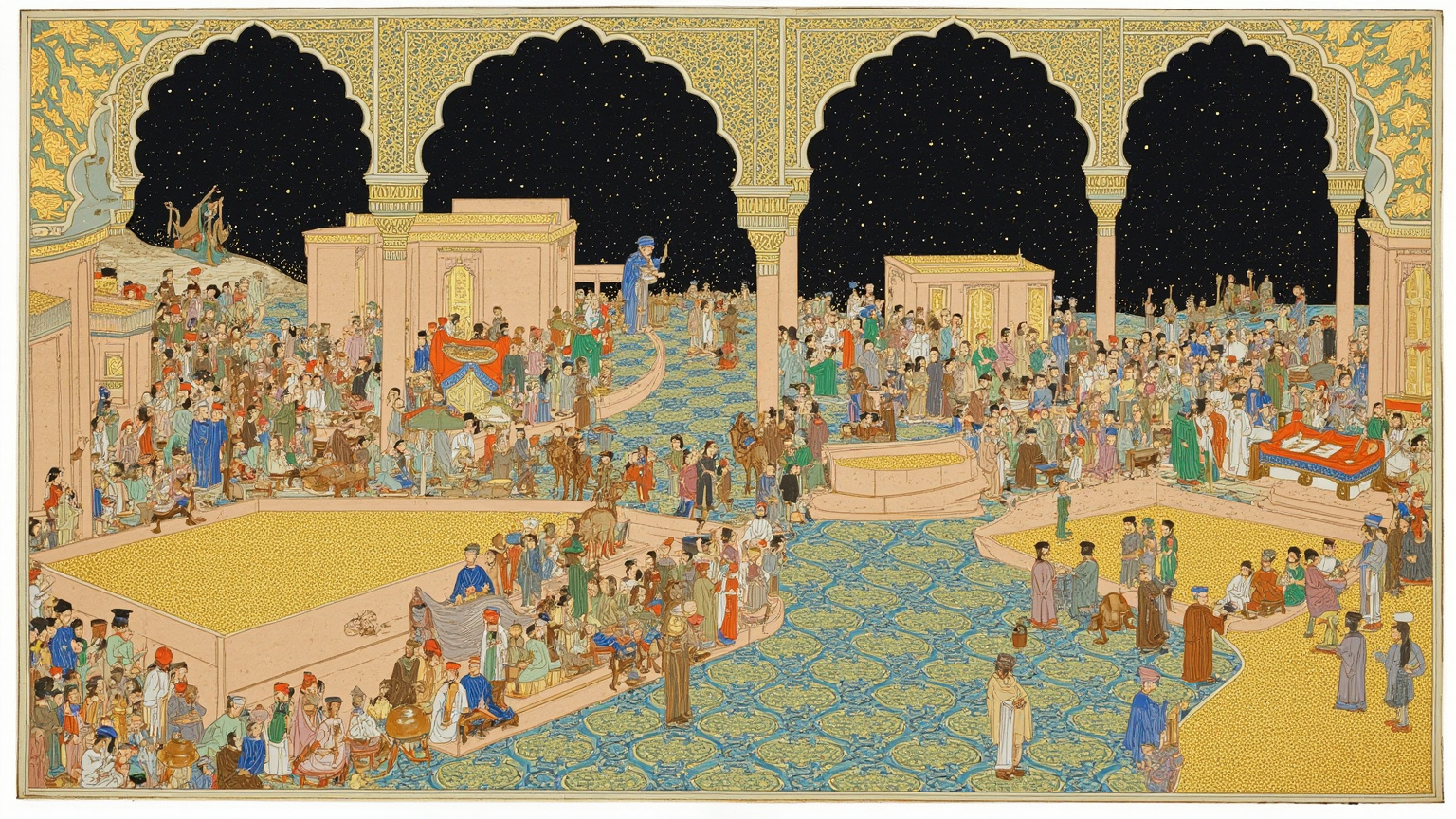
They stripped him of speech before a court that judged by the sword, and the scribe who had built a city of words could not summon one of them in time.
他在一个凭刀剑裁断的厅堂前被人夺去了说话的本钱,那座用字句筑起的城,他一时竟喊不出一个字来。
金句 · 后章 · 巴格达的羞辱
Back in Basra he wrote ten more episodes in one stretch, joining the first forty to make the fifty we have today. Later critics have called several of these ten the sharpest in the whole book. A con man who lives by his tongue, set against an author whose own tongue had just failed him in public — the contrast is impossible to miss. That crisis of writing became part of the legend behind the text.
He Did Not Invent the Form, but He Fixed It in Place
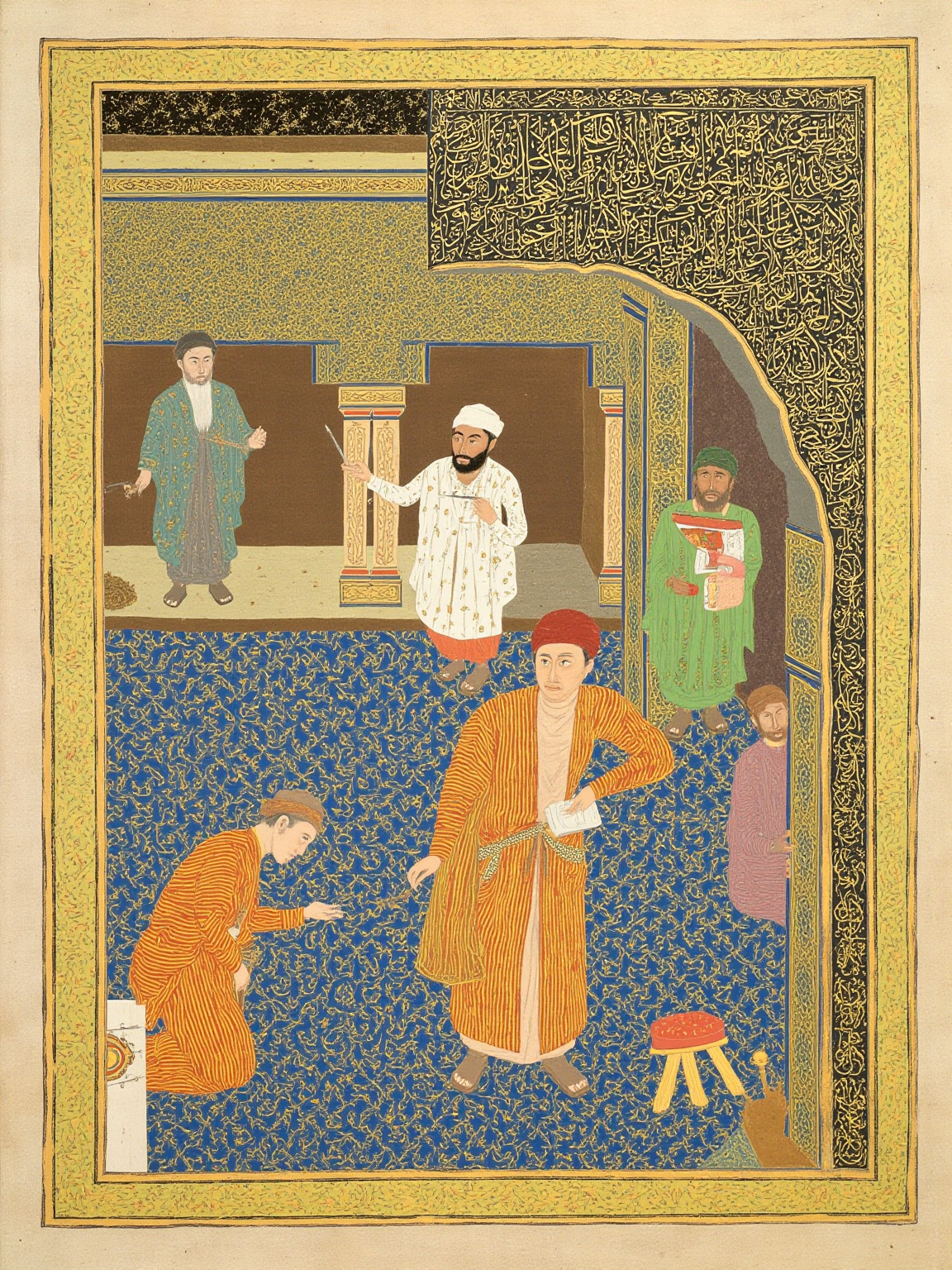
The maqama form existed before al-Hariri — al-Hamadhānī, a generation earlier, had already written a book of them, and the credit for inventing the genre belongs to him, not al-Hariri. Al-Hariri said so openly. What he did instead was push the form, in a fixed written text, to the summit of Arabic prose. After his death the book was copied hundreds of times, thirteen of those copies illustrated with miniatures — the most famous painted in Baghdad in 1237 by al-Wāsiṭī, now held in Paris.
In other words, text and image have traveled together since the thirteenth century. How did thirteenth-century painters see this con man? They painted him under mosque arcades, beside market caravans, in front of the judge's bench — but carefully: Abu Zayd is never shown in the dignified role of a real religious office. When he plays a preacher, he is a fraud playing a preacher, not a preacher. This is the point modern readers get wrong most easily: the book is secular satire, not a religious text.
Why It Is Still Worth Reading Today
The Maqamat is badly underrated in world literary history, and the reason is simple: understanding it takes some classical Arabic, or at least a sense of what its rhetorical tradition is doing. That threshold keeps ordinary readers in English and in Chinese away from it. But get past that barrier — even halfway — and it gives you something no other book does.
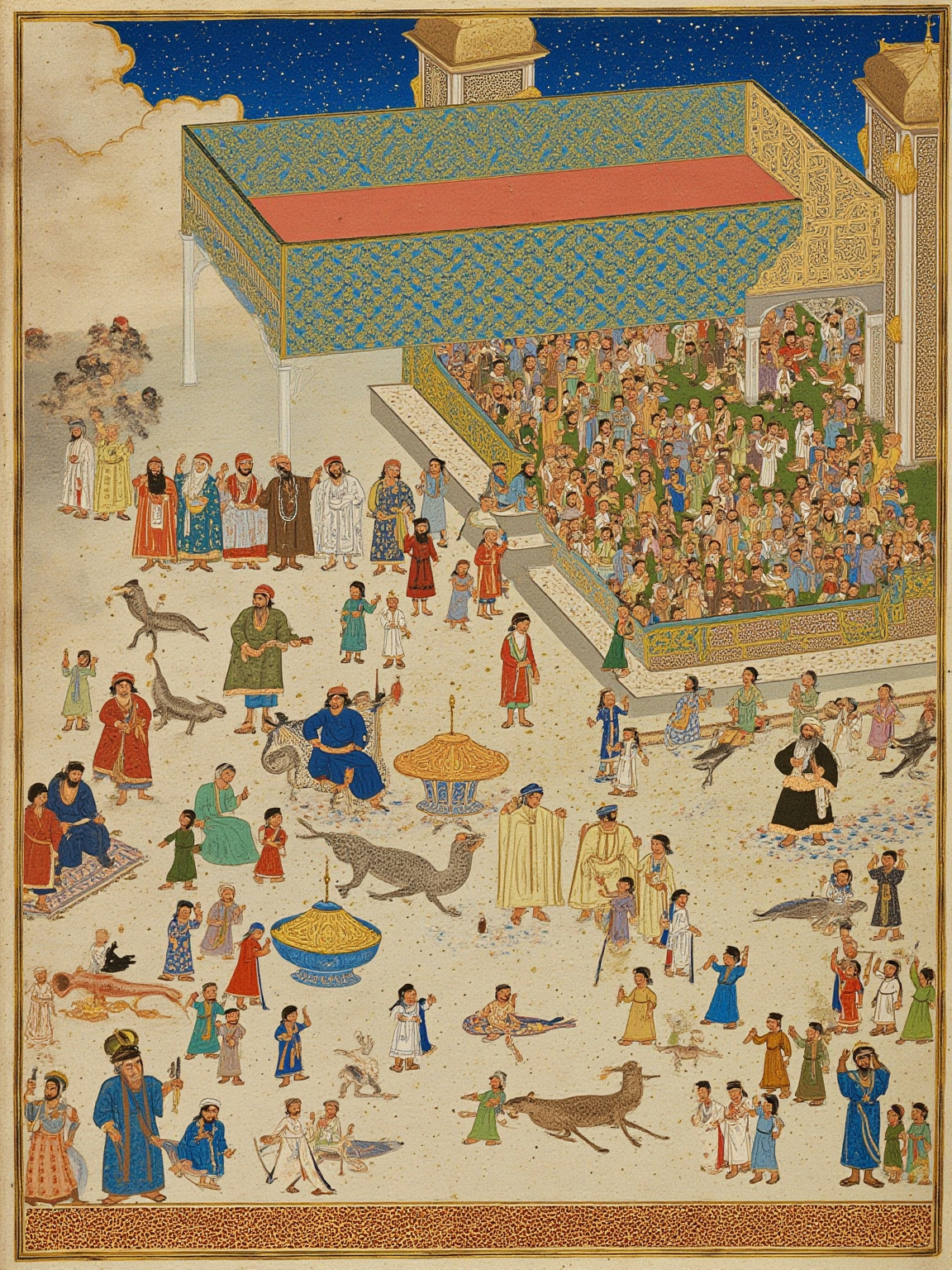
The rogue had run; what stayed behind was the shame of the listeners, who mourned a lie they had loved too well to doubt.
骗子早已跑掉;留下的是听者的羞愧——他们曾那样爱那句谎话,爱到连怀疑都不肯。
金句 · 终章 · 听者之耻
It gives you a medieval marketplace where hearing outranks sight. Al-Hariri himself said he was made to be heard, not seen, and Abu Zayd wins by ear, not by eye. In an age already drowning in short video and images, a novel where the voice beats the eye turns into a kind of mirror. It also hands you a hidden thread in world literature: the picaresque novel did not only start in Spain — a branch grew out of the Arab world too, and centuries earlier.
He doesn't con the purse. He cons the instant a person willingly goes soft for a beautiful sentence — and once the con man is gone, the one left embarrassed is never him.
You Know the Plot — So Why Read the Text Itself
A guide can give you the skeleton. It cannot give you the voice. In the original, Abu Zayd's sentences carry rhyme and something close to song — a poem folded into a passage of prose, a pun folded into the poem, and another layer of meaning folded into the pun. That density of rhetoric never shows up in a plot summary; only the text itself lets you feel it. And the fifty cities — a guide can only name them, but the text lets you smell the dust of Sana'a and the sea wind off Alexandria. Then there are al-Wāsiṭī's thirteenth-century illustrations — the con man leaning on his cane, the judge holding court, the crowd at the book market — a second Maqamat that exists outside the words. You already know the plot. Only the text can actually con you.
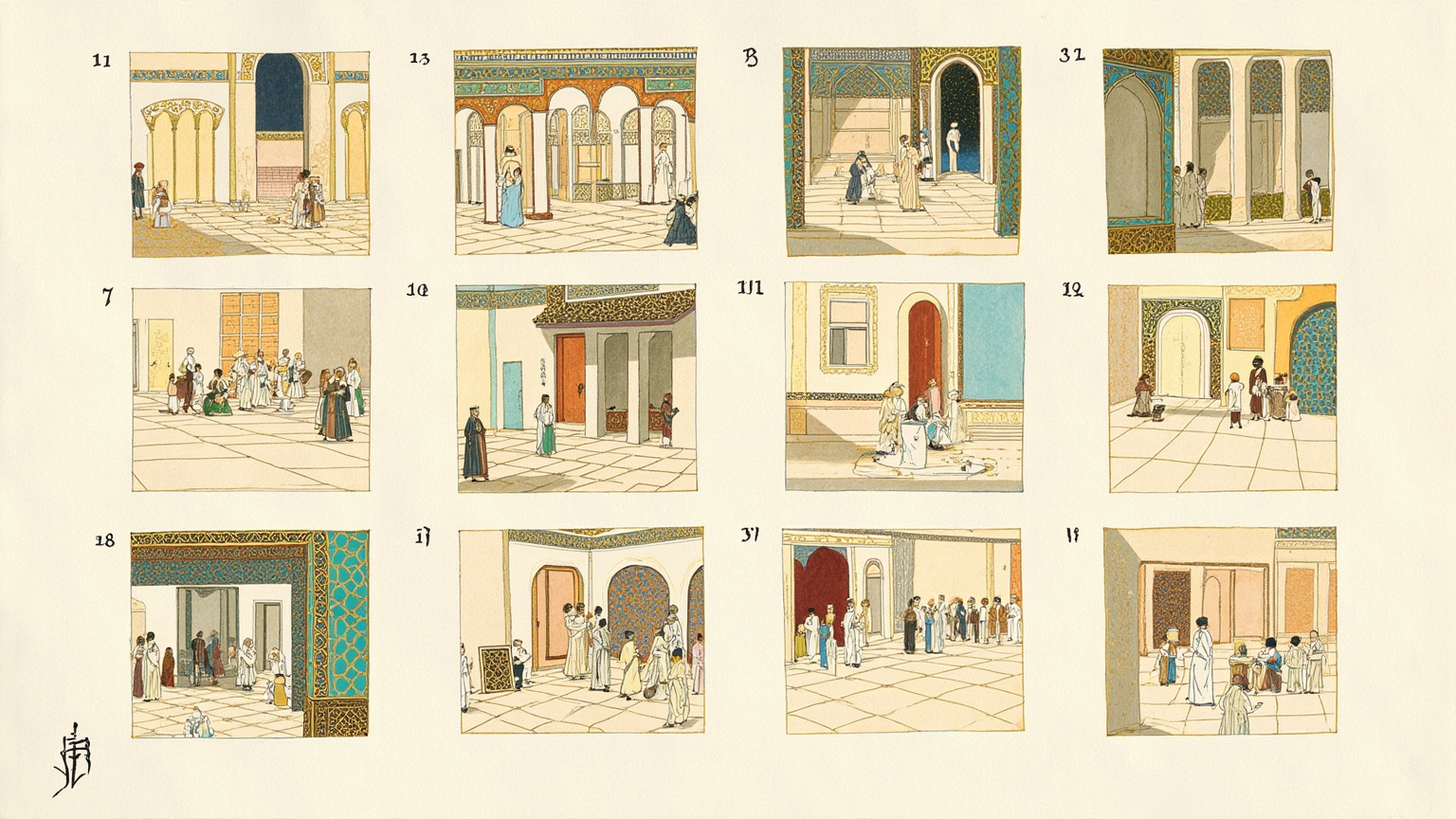
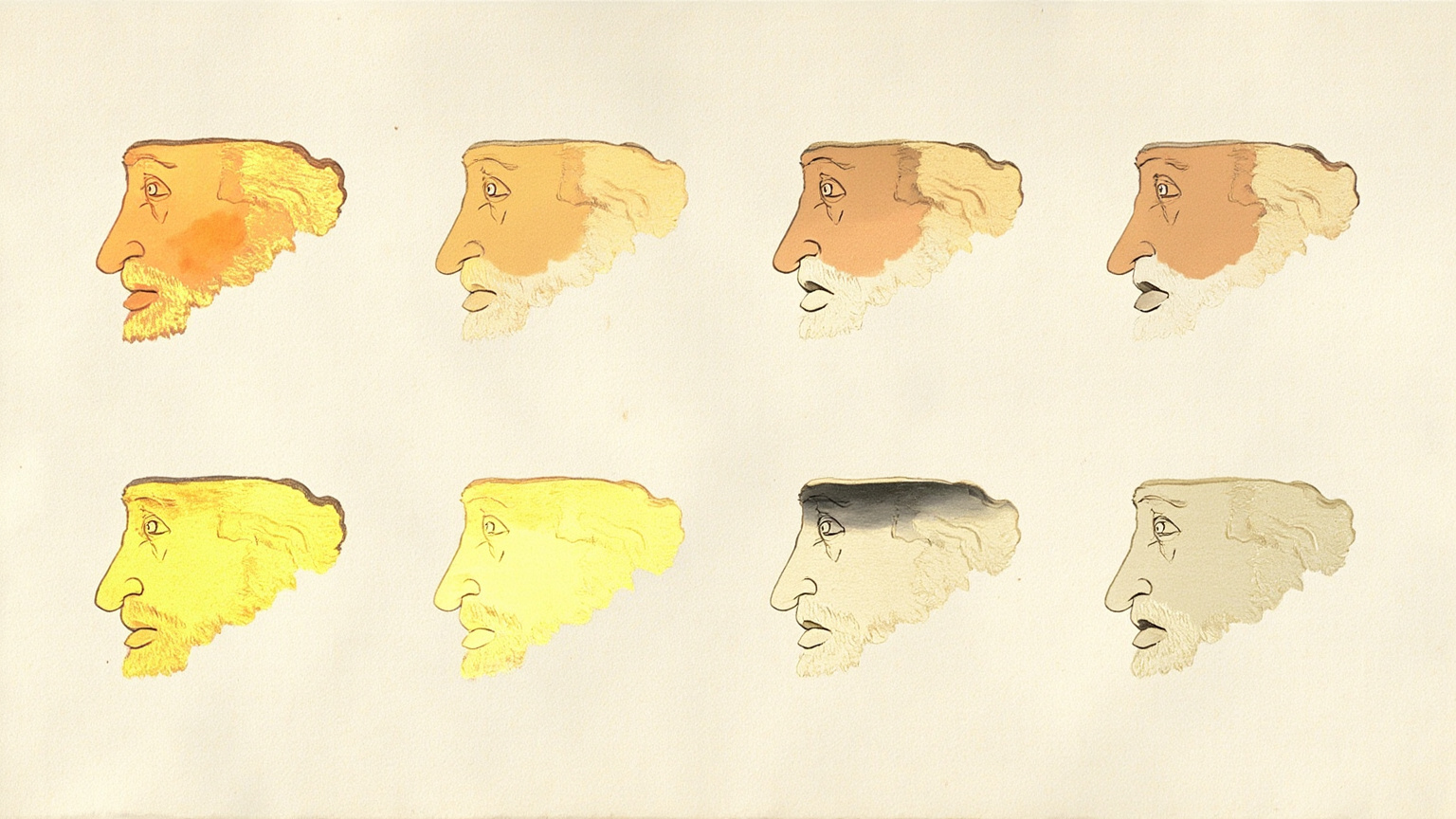
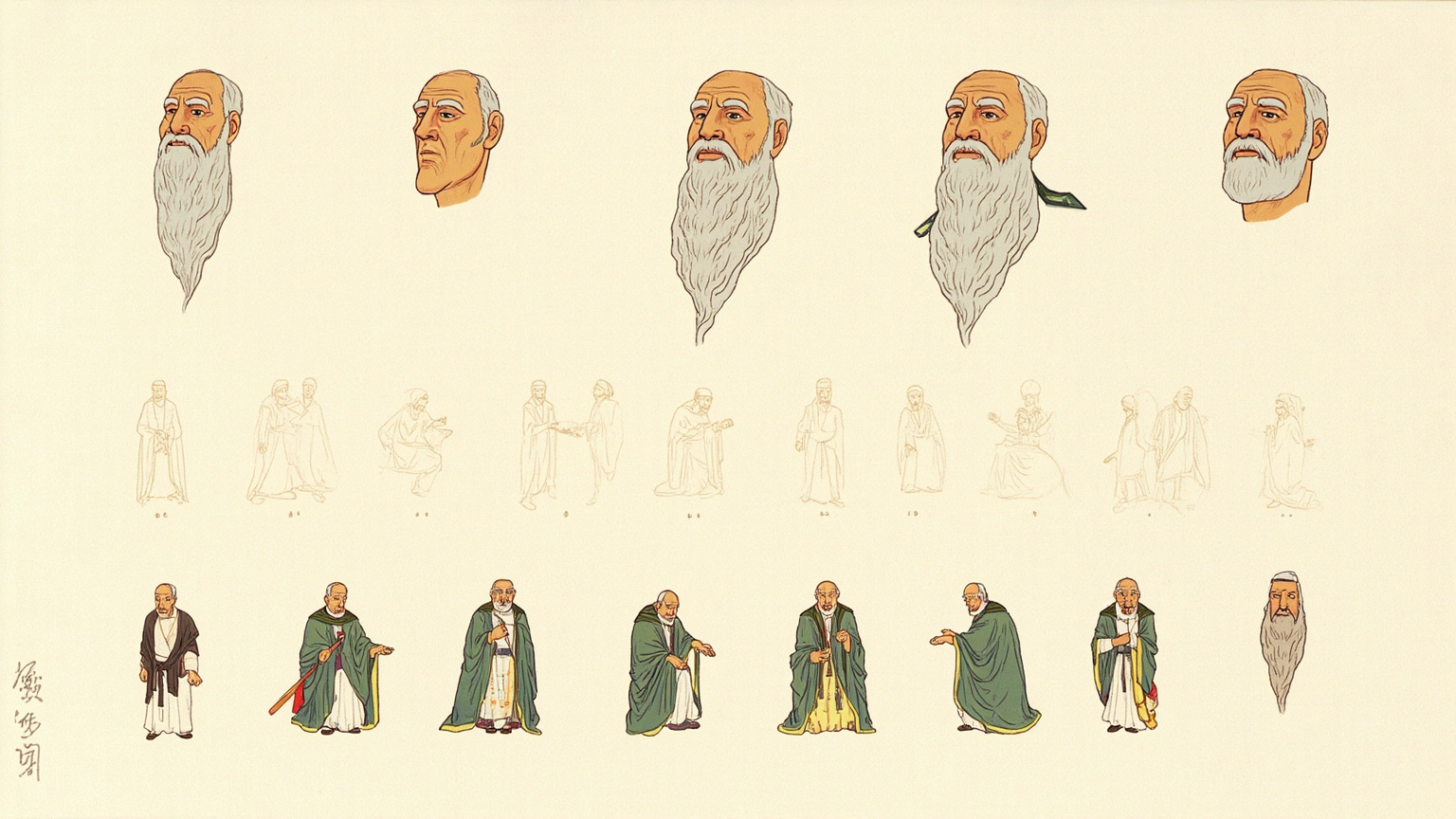
Art Direction4 plates
Before the guide was written, this book got a visual foundation — every illustration you just read grew out of it.