Max Havelaar (Max Havelaar, or the Coffee Auctions of the Dutch Trading Society) · Companion Guide
马格斯·哈弗拉尔
从阿姆斯特丹账房的一杯咖啡,追到爪哇村庄被制度碾碎的血汗;一个官员的良知,能否撬动整座殖民机器?
Opening: A Cup of Coffee
A white porcelain cup on an Amsterdam breakfast table, steam still rising, the smell of roasted beans taken as the start of the day. Follow that dark brown liquid back far enough, though, and it lands in a village in West Java stripped of its fields, a family ground down to nothing. A thick novel folds the ten thousand kilometers between those two points into a single sentence — that is what Max Havelaar did when it was published in 1860.
The name on the cover is Multatuli. It is a pen name. The man behind it was Eduard Douwes Dekker, a Dutchman who had served as a colonial official in the Dutch East Indies — inside the very system he later attacked. He was dismissed after trying to bring charges against his superiors, and went home to Holland and wrote this book with the anger still in him. Mid-nineteenth-century European novels mostly took up love, industry, the pangs of conscience. He insisted on the sweat of rice farmers on an island ten thousand kilometers away, and he did not write it as reportage. He wrote a book meant to make readers want to flip the table.
Two Threads, the Distance of a Cup of Coffee
The novel opens in the counting-house of an Amsterdam coffee broker. Its owner, Batavus Droogstoppel, is a careful Amsterdam burgher who converts everything he sees into money first. A manuscript of uncertain origin lands on his desk, and he plans to hand it to Stern, a threadbare young clerk, to polish into a memoir he can sell. Once it is opened, the manuscript pulls him toward the equator instead — its author is Max Havelaar, newly appointed assistant resident of the Lebak district in West Java, arriving among the rice paddies and coffee plantations full of righteous intent.
The two threads move forward side by side. On one side, a profit-minded merchant in a dim counting-house. On the other, Javanese farmers pressed into forced labor under the wet heat. On one side, auction catalogues stamped with the letterhead of the Nederlandsche Handel-Maatschappij. On the other, terraced rice fields and a Dutch residency office beside the local regent's palace. The two threads finally collide — Droogstoppel, halfway through his ledger, is slapped awake by the accusation rising off the page.
Havelaar: The One Awake Inside the Machine
Havelaar is the book's conscience. He arrives in Lebak full of ambition, believing that following the rules will be enough to stop the abuse. Reality corrects him fast. The local regent, who is supposed to assist the colonial government, is in fact colluding with the lower ranks of Dutch officialdom — seizing farmers' land, extracting forced labor, driving rice and coffee growers to sell off their land and cattle just to survive. Havelaar draws up formal charges and takes them to his superior, Resident Slotering, an old hand who knows exactly what is happening and tells him, in effect, to leave the local elite's interests alone. Havelaar refuses to back down. He goes over Slotering's head and sends the complaint further up the chain, putting himself squarely against the whole bureaucracy.
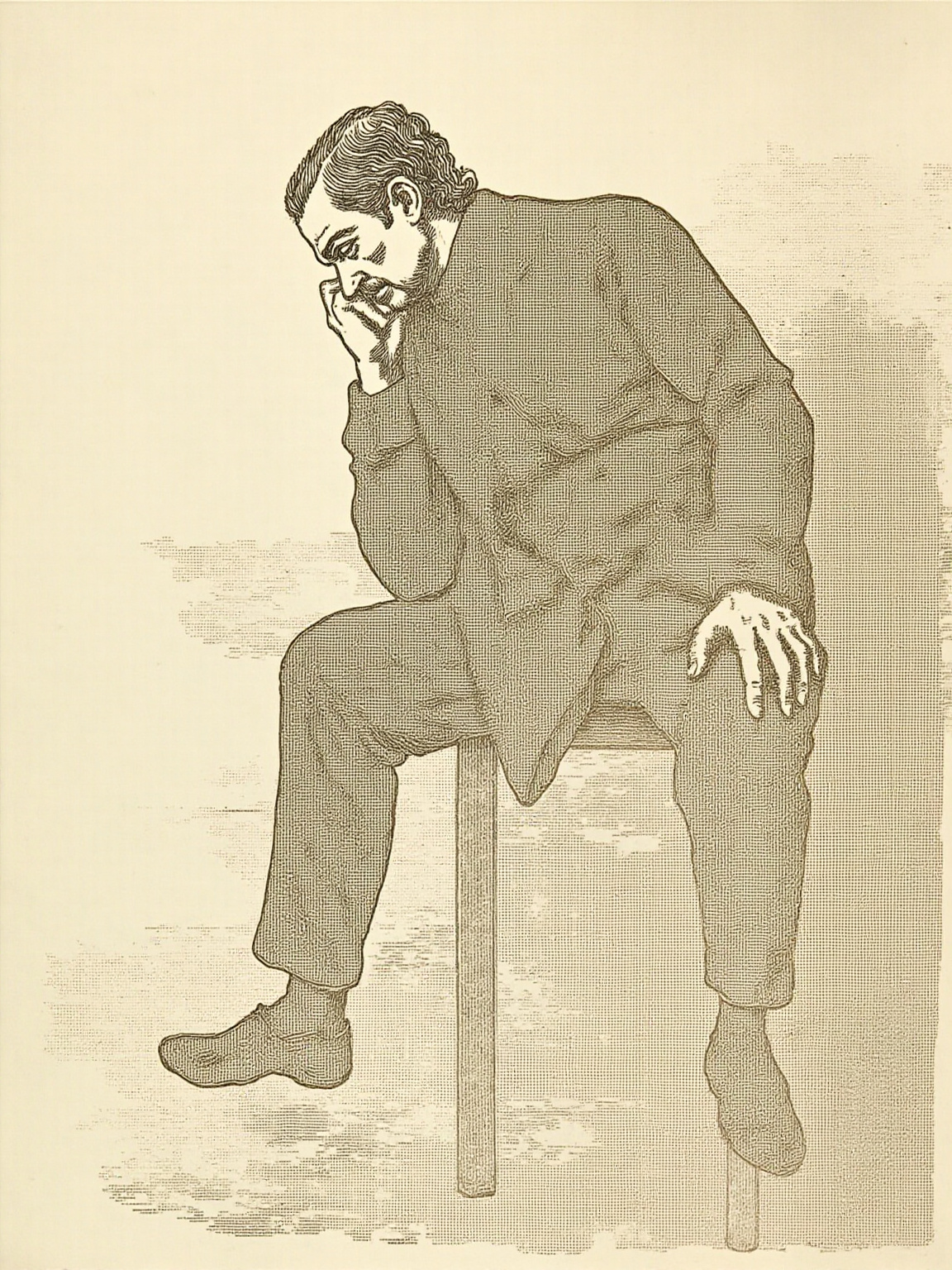
I have tried to act according to the laws, but the laws were not made for the people who suffer them.
我曾想依照法律行事,可法律并不是为那些受它压迫的人制定的。
金句 · 哈弗拉尔手稿 · 官僚机器里醒着的人
The ending is not dramatic. No one draws a gun, no one drags him off to be executed. The bureaucracy's method is quieter and worse: the matter is passed from desk to desk until he is quietly retired on a pretext of ill health and shown the door. That ending sits heavier than any violent one. This is a system that kills without spilling blood — what it breaks is the backbone of anyone who tries to do the right thing.
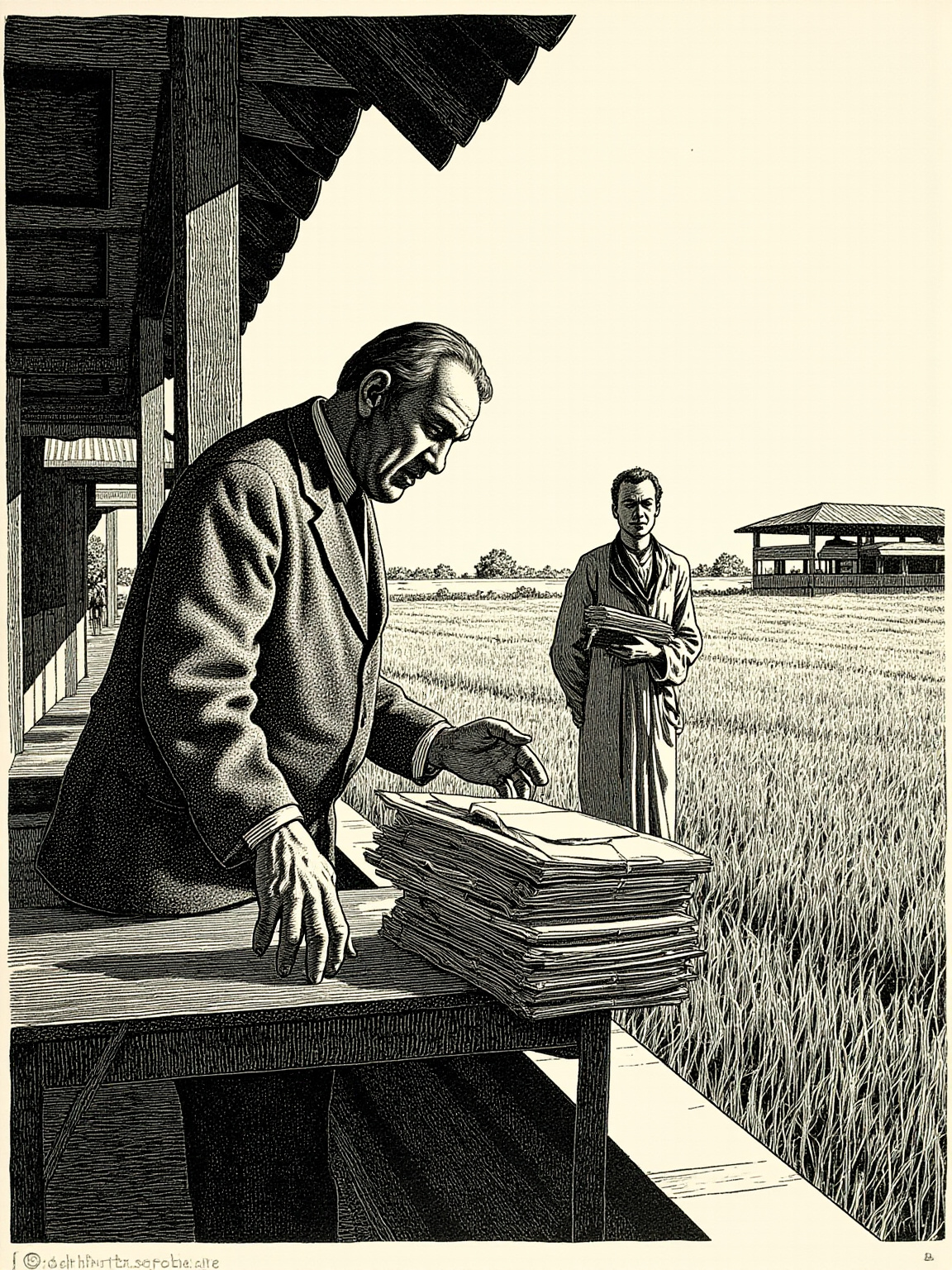
They dismissed me on account of my health, and I was sent away.
他们以健康为名将我解职,打发我离开。
金句 · 哈弗拉尔手稿 · 被解职的官员
Saïdjah and Adinda: The Ordinary People Ground Down
Buried inside Havelaar's manuscript is the story of a young Javanese farmer. Saïdjah leaves home to earn money for a water buffalo, and Adinda, a girl from the next village, answers him across the water with a song on a stringed instrument. Their families have already agreed to the marriage. It is the gentlest stretch in the whole book, and the author holds himself back — a man leading a buffalo along a paddy dike, a girl singing back to him from the far bank, smoke over the village, rice heavy on the stalk, light on the threshing floor. The first time I read it, I let out half a breath of relief along with them.
The sky turns without warning. The village Saïdjah and Adinda belong to ends up bearing the full weight of colonial repression — the final image is empty huts and abandoned fields, the buffalo gone, the song broken off, the people scattered. The author does not dwell on any single act of violence. He lets the wide shot of an emptied village carry the cruelty of the system down to the bone. What makes it land is this: the two most ordinary people in the book are crushed, silently, by a machine that the people drinking coffee on the other side of the ocean will never see.
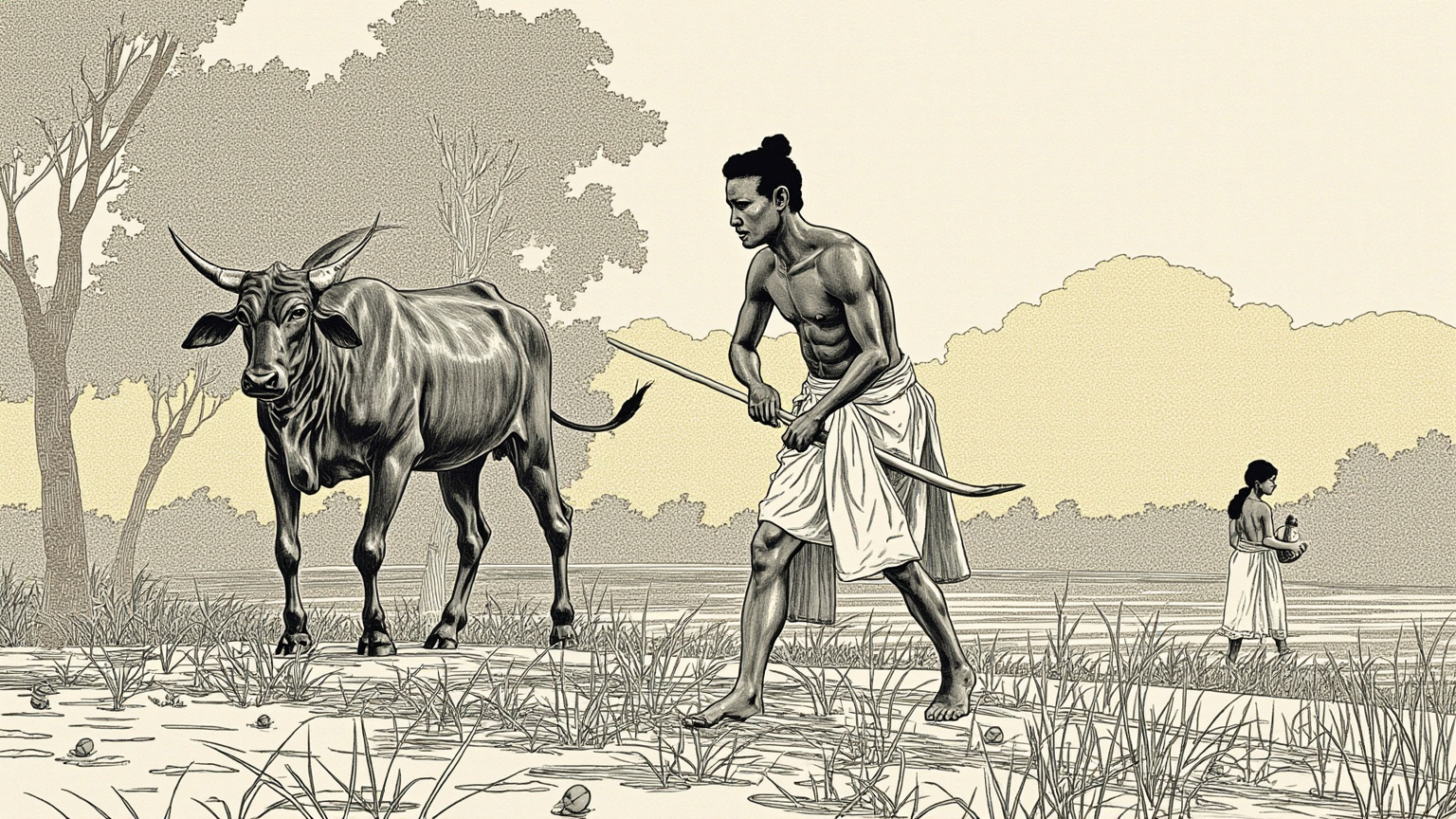
The village was silent; the buffalo were gone, and the songs were heard no more.
村庄沉寂了,水牛不见了,琴歌也再没有响起。
金句 · 赛加与阿丁达 · 荒村
The Indictment: When the Novel Turns Into a Manifesto
Past the midpoint, the manuscript's voice tears open. A chapter of narrative gives way, without warning, to an indictment. Havelaar stops telling a story and addresses the King of the Netherlands directly, in the second person, then God, then the Dutch people as a whole. Every line lands like a nail: that spoonful of sugar on your table is also a product of this same system; the coffee in your cup traces back to a specific village stripped of its land. He forces the reader to admit what it is they are actually drinking.
The move breaks every convention. A novel's job is to tell a story, and here the author forces in a manifesto so raw it is almost unreadable aloud. The form itself is the accusation — he reaches for a manifesto because the system has left him with no other voice that will be heard. Outside the manuscript, Droogstoppel, reading this passage in his counting-house, finally loses his grip on the arithmetic of profit. The light from those pages goes straight through him.
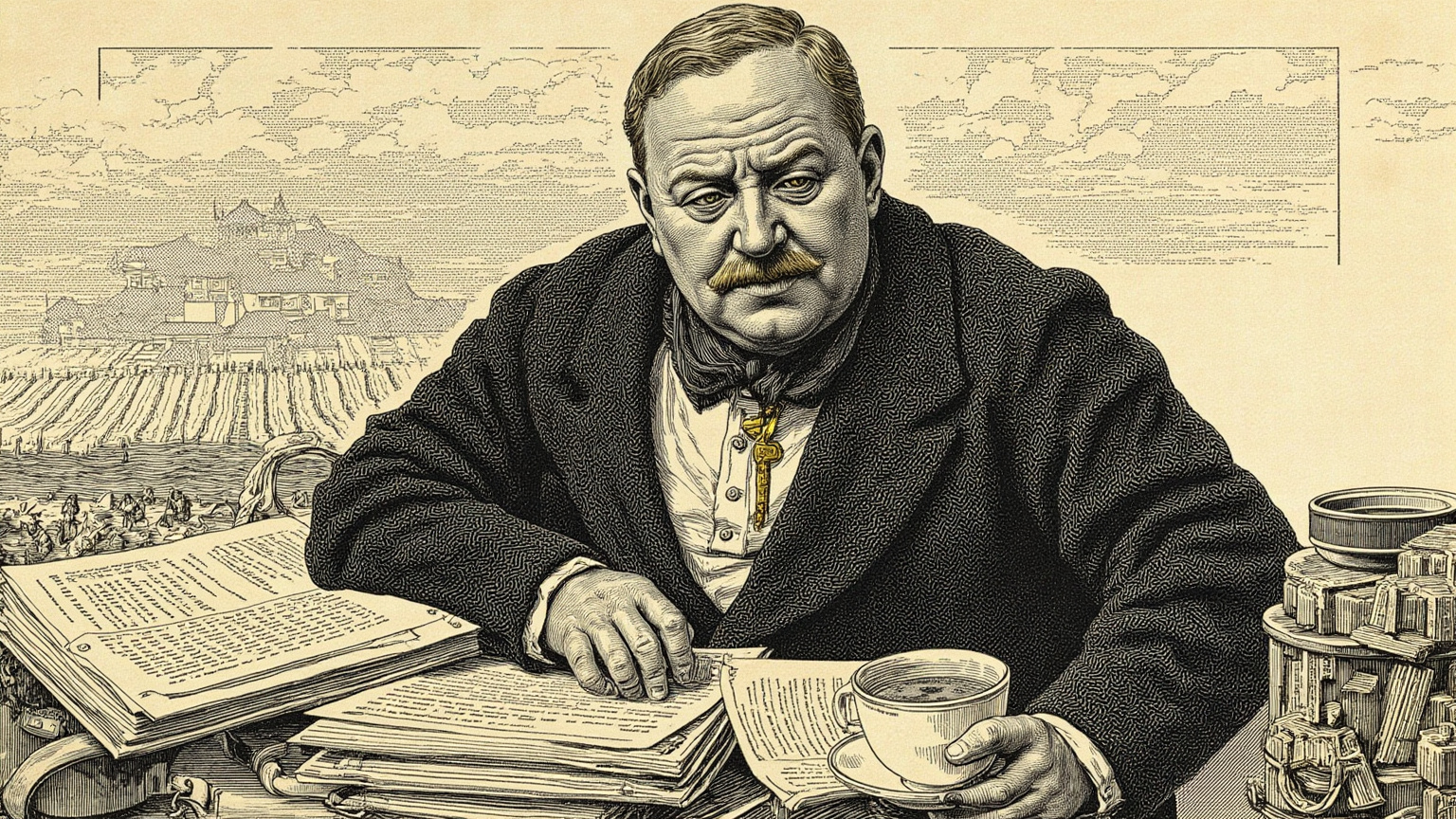
I accuse you before God and before all the people of the Netherlands.
我在上帝面前,也在全体荷兰人民面前,指控你们。
金句 · 诉状 · 面向荷兰人民的控诉
Why This Book Is Considered Great
First, it moved policy directly. When the book came out in 1860, opinion exploded — readers in Leiden passed it hand to hand, the policy circles in The Hague could not sit still, and within a decade the Netherlands formally abolished the Cultuurstelsel, the forced cultivation system in Java. A single book unseating a core policy of an empire is a rare kind of leverage in literary history. Second, the form is itself an argument. The Amsterdam counting-house and the fields of Java run side by side, and the respectability of a business ledger is nailed structurally to the misery of the plantation within one open book — every page turned forces the reader to multiply the distance between the two by the price of a cup of coffee.
Third, it opened the road for the colonial writing that followed. When it is discussed alongside later, major works written from the colonized perspective — Season of Migration to the North, Things Fall Apart — it is regularly placed at the source. Those later writers turned the camera around to face the colonized; Multatuli had not gotten there yet, and his own voice is that of a man who fell out of the system and is shouting from outside it. But his dissection of administrative detail, bureaucratic procedure, and the mechanics of extraction mapped the terrain that later writers would build on.
What a Reader Today Will Find
It is not a comfortable book. The rhythm of Havelaar's indictment can hit hard — his anger is real, not a rhetorical trick. For a reader today, it works as a slice of history, Java in the Dutch East Indies of the 1850s, and also as a cold cup of coffee — what is in it is still recognizable to anyone drinking something imported today. We are still drinking someone's morning tea or coffee from somewhere; only the names at the far end have changed a few times since.
Why It Is Still Worth Reading the Book, Even Once You Know the Plot
A guide gives you the map. The text gives you the terrain. The few steps Havelaar takes along the equatorial rice paddies, the color draining from Droogstoppel's face in his counting-house the moment his own world is exposed, the morning Saïdjah stops in his tracks hearing the song carry across the river — none of this survives a summary. It only lands when you turn to that page and read it yourself. And the book's structure itself puts you in a particular seat: reading the counting-house and the rice fields in turn, so that the moment the two threads collide inside your own head is the sharpest cut in the book, and no retelling can keep its edge. Take a cup of coffee, open to the first page, and walk the twenty thousand kilometers of both threads yourself.
A cup of coffee on the breakfast table equals the sweat of a village — the entire force of this novel rests on making the reader multiply that distance out for themselves, at the price of one cup of coffee.
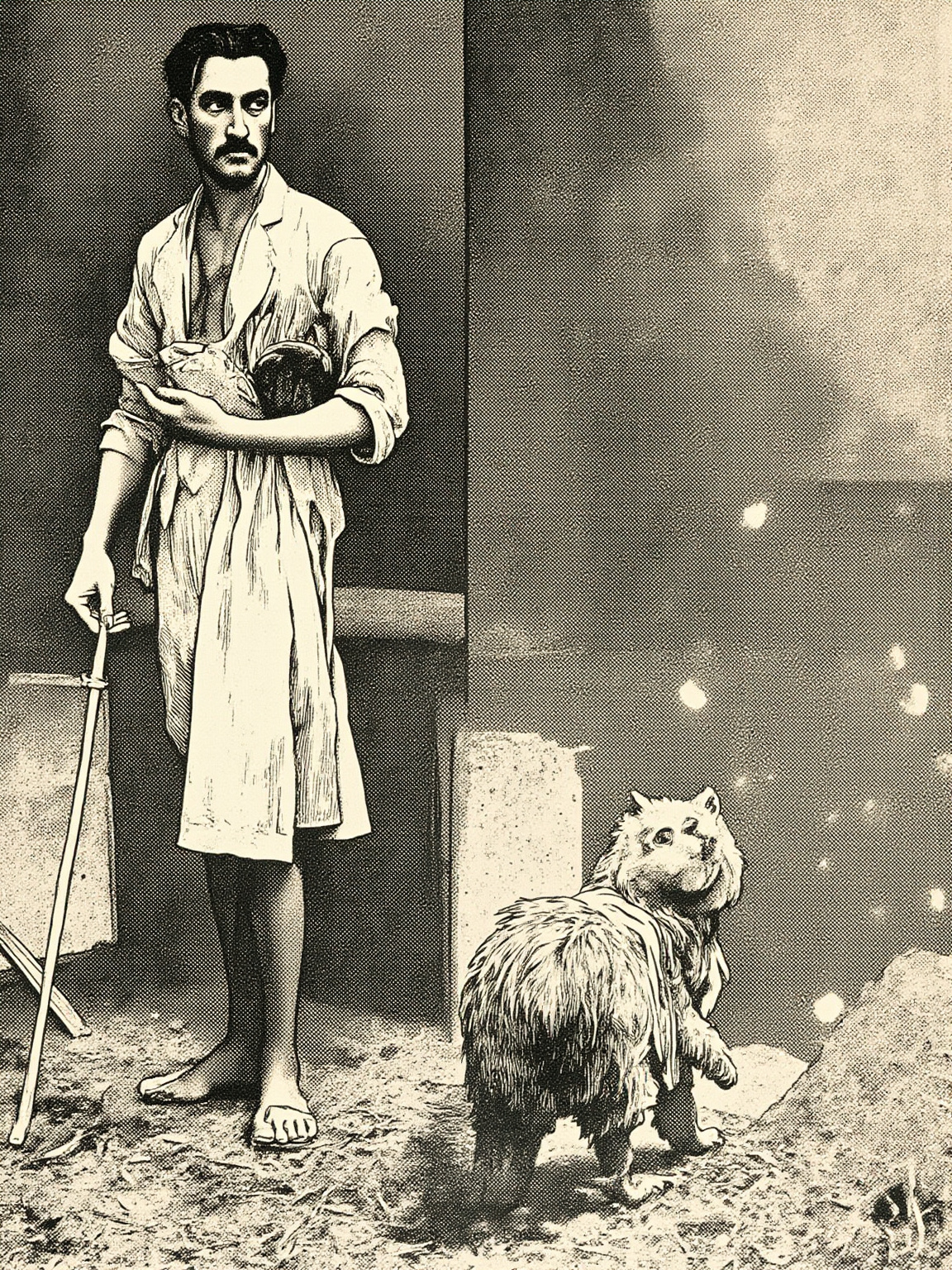
Art Direction4 plates
Before the guide was written, this book got a visual foundation — every illustration you just read grew out of it.