Middlemarch (full title: Middlemarch: A Study of Provincial Life) · Companion Guide
米德尔马契
一个把结婚当作「出师表」的姑娘,一座把理想磨成日常的英格兰小镇,一张由婚姻、金钱与流言织成的网——《米德尔马契》是外省生活的一幅全景解剖图。
Opening: A Girl Who Treated Marriage as Her Manifesto
Nineteen-year-old Dorothea Brooke wants to ‘do something great.’ She doesn’t know exactly what, only that marriage shouldn’t just be marriage. She stumbles into the belief that marrying a scholar twenty-some years her senior will let her ride his immortal learning out of the small town — a marriage generations of readers would later ache over, one that was never about love from the start, but about launching herself into something larger. Only after the wedding does she discover that his so-called immortal research is a stagnant pond with no bottom in sight. This is not a book about a brilliant young woman saving the world. It is about two idealists — a young woman and a young doctor — and how, amid the engagements and unpaid bills of a fictional market town in the English Midlands, the small flame each of them carries gets blown out, day by day.
What Kind of Book Is This: An Anatomy of Provincial Life
Middlemarch is George Eliot’s novel, serialized in installments in the early 1870s, with the formal subtitle A Study of Provincial Life. Its author was in fact a woman named Mary Ann Evans — in that era, she needed a man’s pen name before her work would be taken seriously. It is one of the earliest novels in English to stop treating courtship and marriage as child’s play and to actually paint what daily life looks like from the day the wedding ends, and it is one of what Virginia Woolf called the few English novels ‘written for grown-up people.’ It is remembered not for its big events but for how it shows ordinary people quietly aging inside themselves — and that slowness became the wellspring of more than a century of realist fiction that followed.
People and World: A Web of Relations in a Provincial Town
Middlemarch is a typical English Midlands town, its households strung together by manor houses, parish churches, a newly built hospital, banks, markets, and tenant farmland. The cast falls into paired contrasts. Dorothea, an idealistic young gentlewoman, marries Mr. Casaubon, a scholar more than twenty years her senior who is spending half his life writing a great work on the Key to All Mythologies — while privately knowing it will never be finished. Around the same time, Lydgate, a twenty-seven-year-old doctor full of ambitions for medical reform, arrives in town and marries Rosamond, a beautiful young woman set on living a genteel life. Around them circle Fred, a merchant's son buried in gambling debts, and his plain-spoken, clear-headed childhood friend Mary Garth; and the town banker Bulstrode, a man of ostentatious piety whose fortune rests on a disreputable secret from his youth, one that is waiting to be exposed. Every marriage, every ledger entry, every rumor among these people gets woven into a web called provincial society — every private choice you make gets retranslated by every mouth in town.
How the Story Moves: How Ideals Get Ground Down an Inch at a Time
I. Two Marriages Going Wrong, Two People Sharing the Same Illusion About the Town
Dorothea thinks marrying a scholar means marrying an ideal; Lydgate thinks marrying a beauty means marrying love. Both treat the provincial town as a place that can hold a grand design, but a town is only a town — what it actually supplies is bills, gossip, and the kind of domestic haggling that comes with in-laws. Eliot draws no conclusions at the outset. She simply sets both marriages running at once, so you can watch the same illusion grow different patches of mold on two different people.
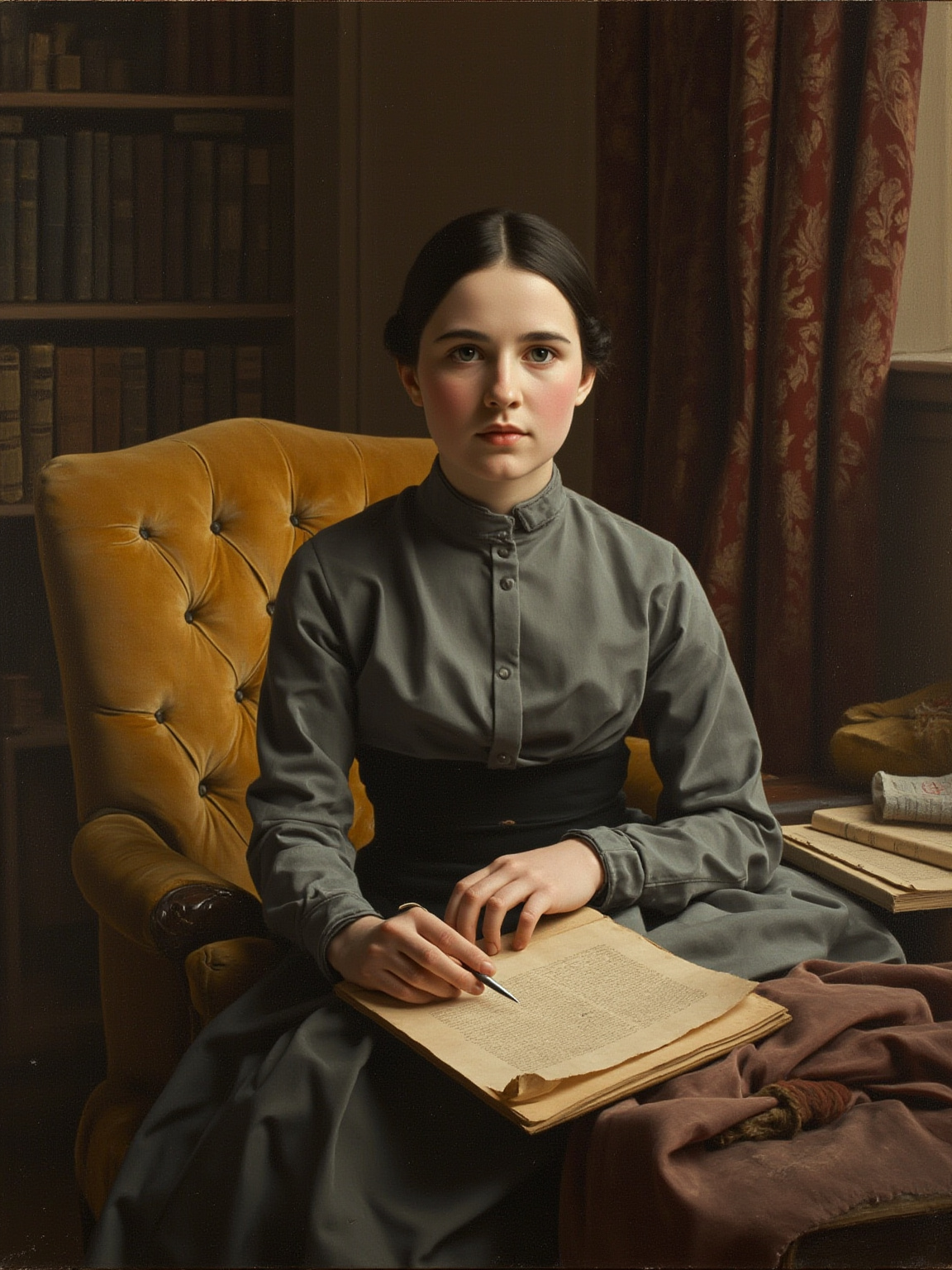
"It is so painful in you, Celia, that you will look at human beings as if they were merely animals with a toilet, and never see the great soul in a man's face."
西莉亚,你真让我痛心——你打量人,就像他们不过是带梳妆台的动物,从来看不见一个人脸上那伟大的灵魂。
原文金句 · 第1卷 · 布鲁克姐妹
II. The First Year of Marriage: Discovering the Other Person Isn't Who You Thought
The longer she lives with Casaubon's research into the Key, the clearer it becomes to Dorothea that this is not a living body of scholarship but a stagnant pool the author has privately given up on and refuses to admit it. She wants to help; all he feels is the shame of being seen through. Their conflict isn't argument — it's two people who should be close, sitting in silence under the same roof. This grief with nothing to point to is the thing Eliot writes best. Almost simultaneously, Lydgate's hospital reforms have barely begun, and already the household accounts are sounding alarms. Eliot runs these two marriages forward like parallel lines, and you can see clearly that idealism isn't destroyed in some dramatic instant — it's worn down by one bill after another, one unnecessary vase, one argument that goes nowhere.
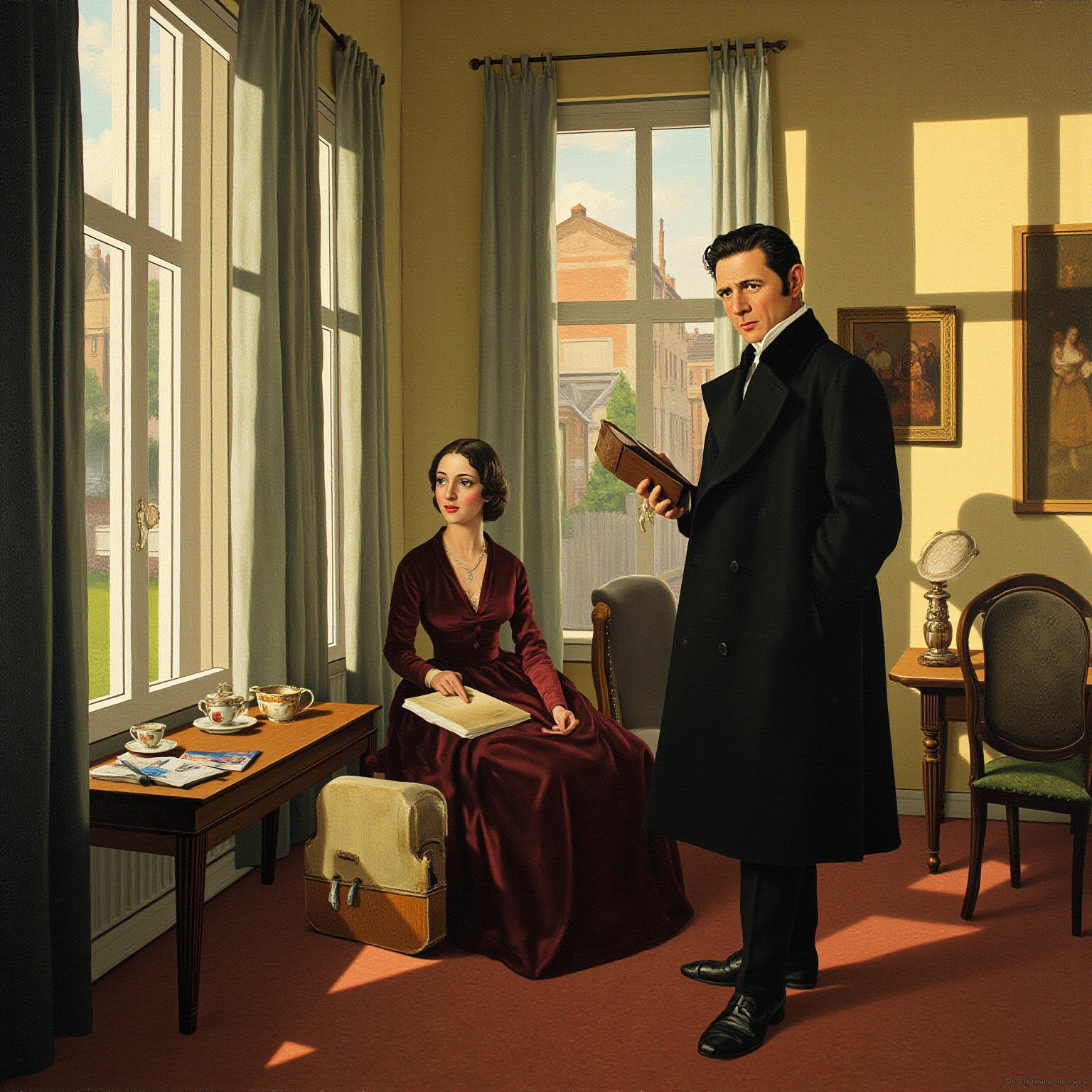
"Of course there is always a great deal of poor work: the rarer things want that soil to grow in."
当然,低劣的玩意儿总是多得是:珍稀之物需要那样的土壤才能生长。
原文金句 · 第2卷 · 书房谈话
III. Casaubon's Will: Tying the Estate to His Suspicion
Casaubon grows increasingly suspicious that Dorothea and his young cousin Will Ladislaw feel something for each other — at this point, they don't. On his deathbed he adds a near-humiliating clause to his will: if Dorothea ever marries Will, she forfeits the entire inheritance. Eliot doesn't write Casaubon as a cartoon villain. He is a pitiable old man hollowed out by a lifetime of intellectual fraudulence he can't admit even to himself — the clause comes not from hatred but from an old man's almost reflexive self-protection as he feels everything slipping away. One clause nails suspicion, jealousy, distrust of his wife, shame, and an obsession with his estate all onto a single legal document.
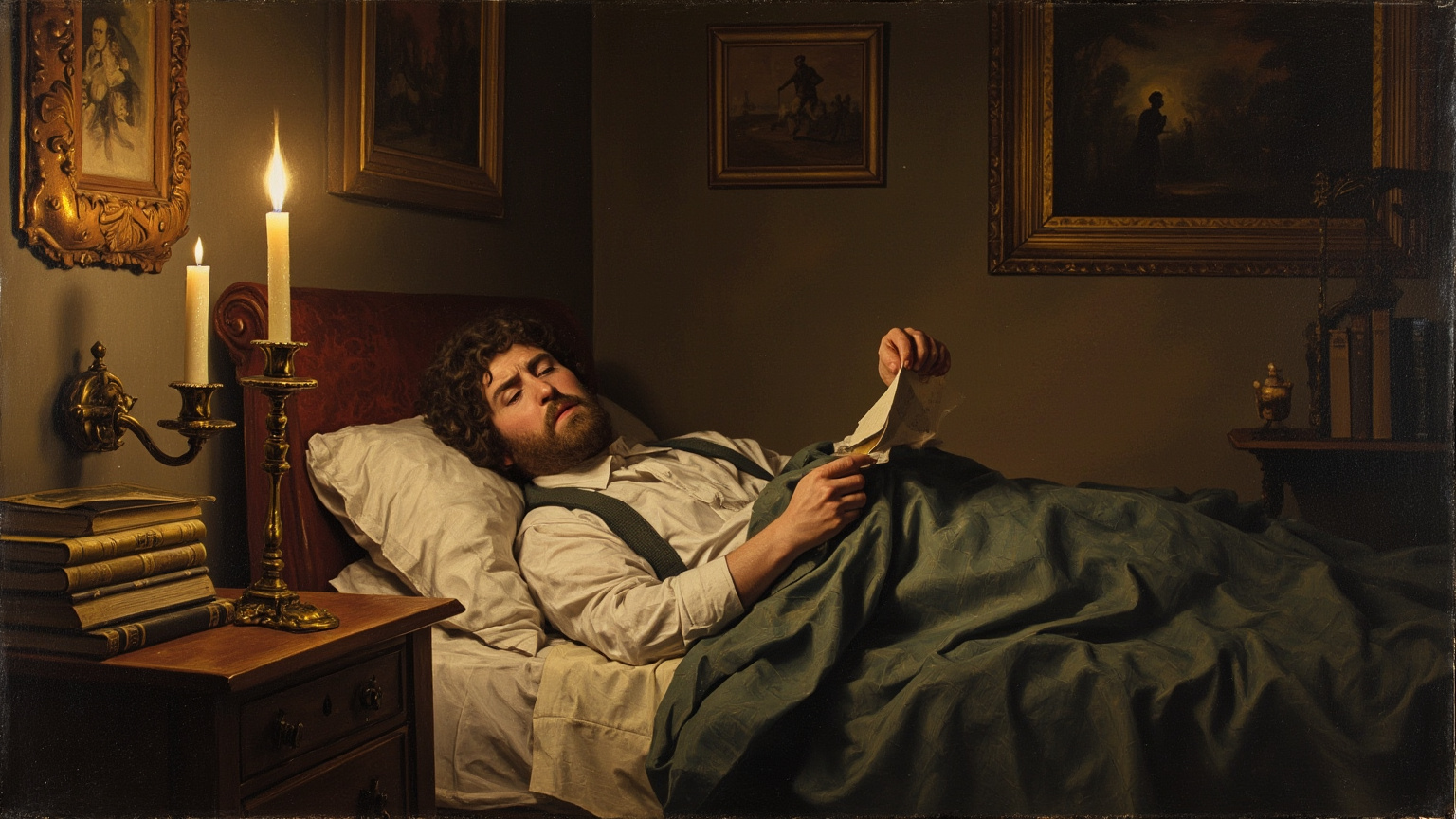
She colored with surprise, but put out her hand with a smile of unmistakable pleasure, saying- "I did not know it was you: I had no thought of seeing you here."
她吃惊地红了脸,却伸出手,带着不容错认的欣喜微笑说:“我不知道是您——没想到会在这里见到您。”
原文金句 · 第3卷 · 不期而遇
IV. The Banker's Old Debt: Dragging Lydgate Down With Him
Running alongside this is another thread: the town's respected banker, Bulstrode. A man who has spent years presenting himself as fiercely pious, his real fortune traces back to a disreputable secret from his youth. Now his old accomplice Raffles has turned up in town, dropping hints that he'll expose him — and just as Lydgate is being crushed by everyday debt, Bulstrode seizes the moment to slip him a loan. These two quiet transactions tie doctor and banker to the same rope. Raffles soon dies from a mishandled medical case, the town's talk about Bulstrode starts to turn, and under scrutiny from church and civic authority alike, the banker's old accounts get turned inside out — dragging the doctor's reputation down with them. Eliot doesn't make Bulstrode a murderer. He is simply an ordinary man who has spent decades performing piety to carefully bury his past, and the past eventually gets dug up.
V. Fred's Turnaround: Becoming Steady Is Harder Than Proposing
Just as the clouds over the main story keep pressing lower, the book quietly hands the reader a subplot to breathe through. Rosamond's brother Fred — a spendthrift, in debt, and the reason the honest Garth family loses money after standing surety for him — genuinely loves Mary, the plain, practical-minded daughter of Caleb Garth. Mary is blunt about it: it isn't that she doesn't love him, it's that he has to prove he can support a household before there's any talk of marriage. So Fred sets aside his gentleman's-son airs and goes to work under Caleb, the very uncle whose money he cost, learning to survey land and read a tenant's accounts. This isn't a dramatic prodigal's return — it's just years of steady work in the fields alongside a decent man. And in this vast, panoramic book, it turns out to be the most convincing solution to love that anyone finds. Eliot says it coldly: real love doesn't weigh much; the real difficulty is earning enough to live on.
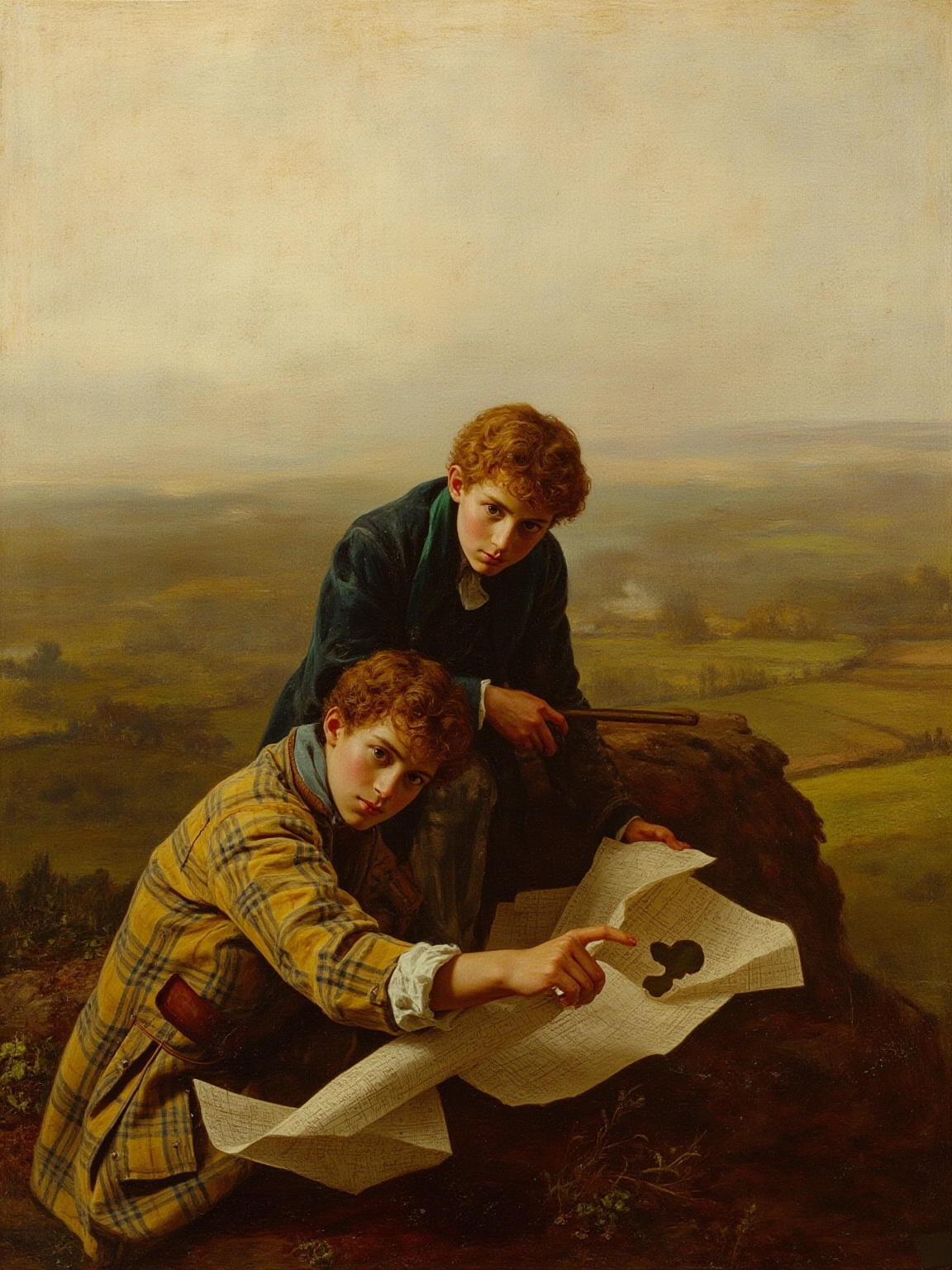
"If Mary said she would never have me I might as well go wrong in one way as another."
“如果玛丽说她永远不会要我,那我还不如在这条路上错下去,也在那条路上错下去。”
原文金句 · 第5卷 · 弗雷德的决心
VI. After Casaubon's Death: Dorothea's Choice
After Casaubon's death, Dorothea's situation actually becomes very clear: under the will, if she marries Will, her inheritance is void. The town watches, waiting to see whether she'll choose wealth or love. Eliot doesn't give Dorothea a rousing speech, and she doesn't hand her a clean victory either. Dorothea does marry Will in the end, but the saint-like achievement she dreamed of as a girl is no longer within her reach. She becomes, instead, one of that era's women who quietly pour their passion into countless small acts of goodness — finding a drainage ditch for a tenant, helping a stranger get by — women whose names history will never record. In the novel's famous closing 'Finale,' Eliot tells the reader directly: don't pity her for it. This is what most people are actually capable of, and what most people actually do.
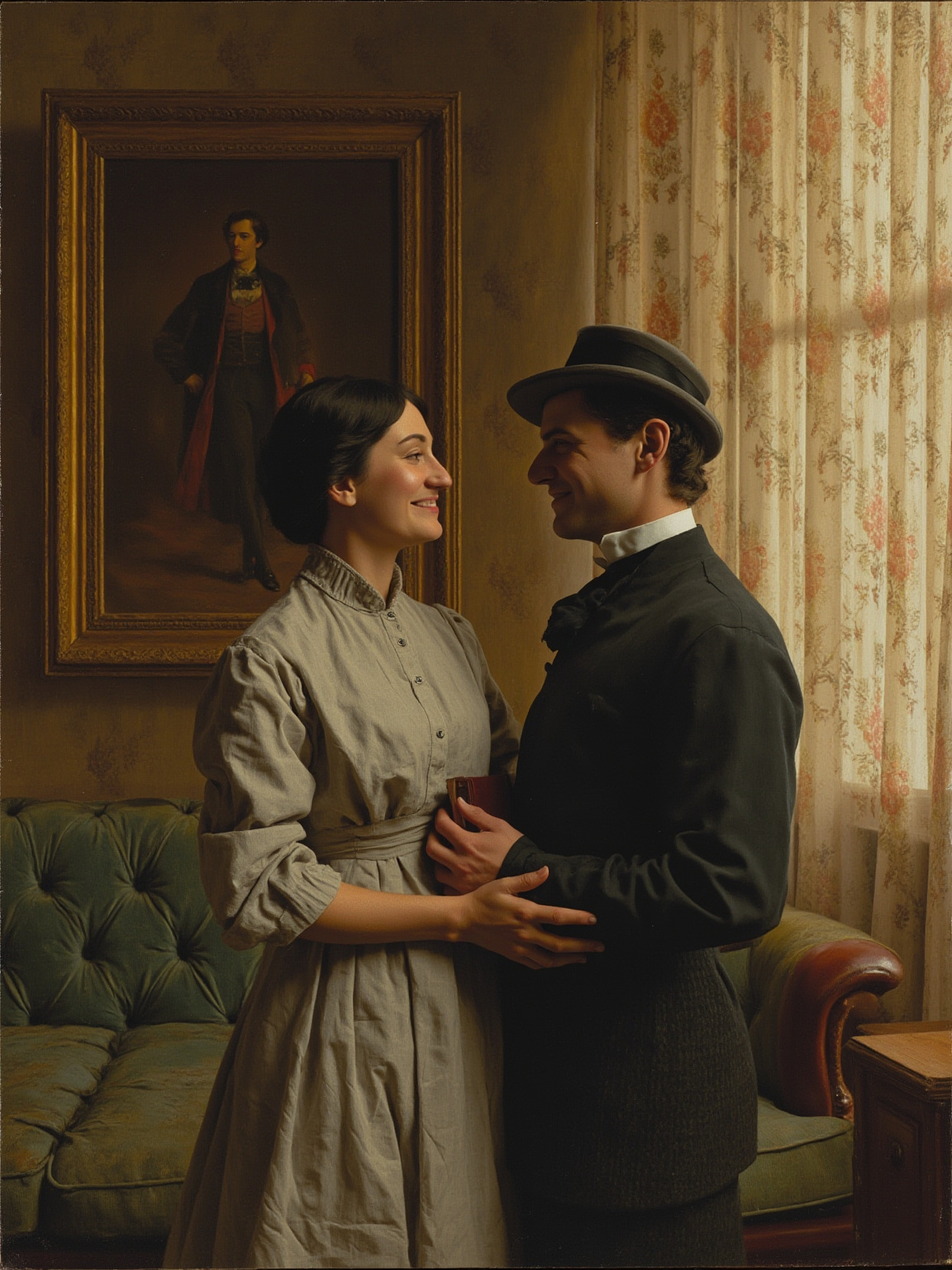
"He said he would never do anything that I disapproved-I wish I could have told him that I disapproved of that,"
“他说过绝不会做我不赞成的事——我真希望当时能告诉他,我根本就不赞成那件事。”
原文金句 · 第6卷 · 遗嘱之后
VII. Finale: The People History Forgot
No one completes the grand ambition they set for themselves in their youth. Dorothea never becomes a saint. Lydgate never passes on the torch of medical reform — he dies young, buried in debts he never clears, married to a wife who never understands what he was after. And Bulstrode's decades of pious respectability turn to dust once his old accounts are dug up. But Eliot doesn't end on a sigh. In this final section she deliberately turns to the good deeds Dorothea has quietly done over the years that no one has noticed, to the small, steady effort Mary and Fred put into their modest life together, to all the ordinary labor that never makes it into any history book yet leaves the world around it a little better. She pulls off one of the most famous turns in the history of the English novel — making the unvisited tomb the very ending this book means to praise.
Theme: What It's Really About
What this book is really asking is an anticlimactic question: when someone has a fire burning inside them, and the world is only willing to give them a sitting room, a ledger, and a marriage, what happens to that fire? Eliot's answer is that, most of the time, it slowly shrinks rather than growing into a blaze. She isn't pessimistic about this. Dorothea, Mary, and the whole Garth family prove that shrinking isn't the same as going out — the fire just changes form, becoming a kind of virtue that soaks into daily life and gets no recognition. This is also why Woolf called it a book 'written for grown-up people': it refuses to hand you a romantic miracle ending. It would rather have you finish it, close the book, and go back to your own small, unrecorded life carrying a new measure of respect for the nameless good deeds happening around you.
She doesn't give the ideal a romantic miracle ending — she sends the reader back into their own small life, so you can see again the good deeds around you that will never make it into any history book. That is what Middlemarch is really doing for you.
Why It's Written So Well
In Eliot's day, the marriage stories English households were reading mostly ended with 'and so she married him.' Middlemarch flips that: the real story begins after she marries him. Two things about how it's written still feel startling today. First, it weaves an entire town's economy, politics, religion, and gossip into the fates of a handful of families without ever sacrificing any single person's inner life to that panorama. Second, its honesty about marriage was roughly half a century ahead of its genre — it neither romanticizes nor mocks, but patiently shows you two intimacies that start out mutually misread and slowly, silently, turn into two different kinds of regret. Even more remarkable is how it refuses easy villains: Casaubon turns out to be a pitiable man, Bulstrode turns out not to be a murderer — in every tragedy here, the person doing the harm is also, in some sense, a victim hollowed out by pressure of their own. By the end, you can't quite tell who to be angry at. This reluctance to condemn any single character outright is about as difficult as psychological realism gets.
Why It's Still Worth Reading the Book Even Once You Know the Plot
The part of this book that spoilers can least touch is the layer that lives not in the plot but in the sentences themselves. The endless silence between Dorothea and Casaubon, the pain of Lydgate's commitment to medical reform slowly losing focus as the ledger pages turn, the few seconds in which Bulstrode is exposed in front of the whole town — you only feel Eliot's singular, nearly unimitable psychological precision by reading these moments sentence by sentence. She can render the faint inward tremor of a young doctor's first realization that the town has already digested him. Reading this novel feels less like following a plot and more like spending a slow afternoon talking with someone unusually perceptive about people. You'll know roughly where the story is going, and you'll still find her landing, in some apparently plain sentence, precisely on some hesitation of your own. That feeling of being seen through is something no summary can give you. Only the text itself can.
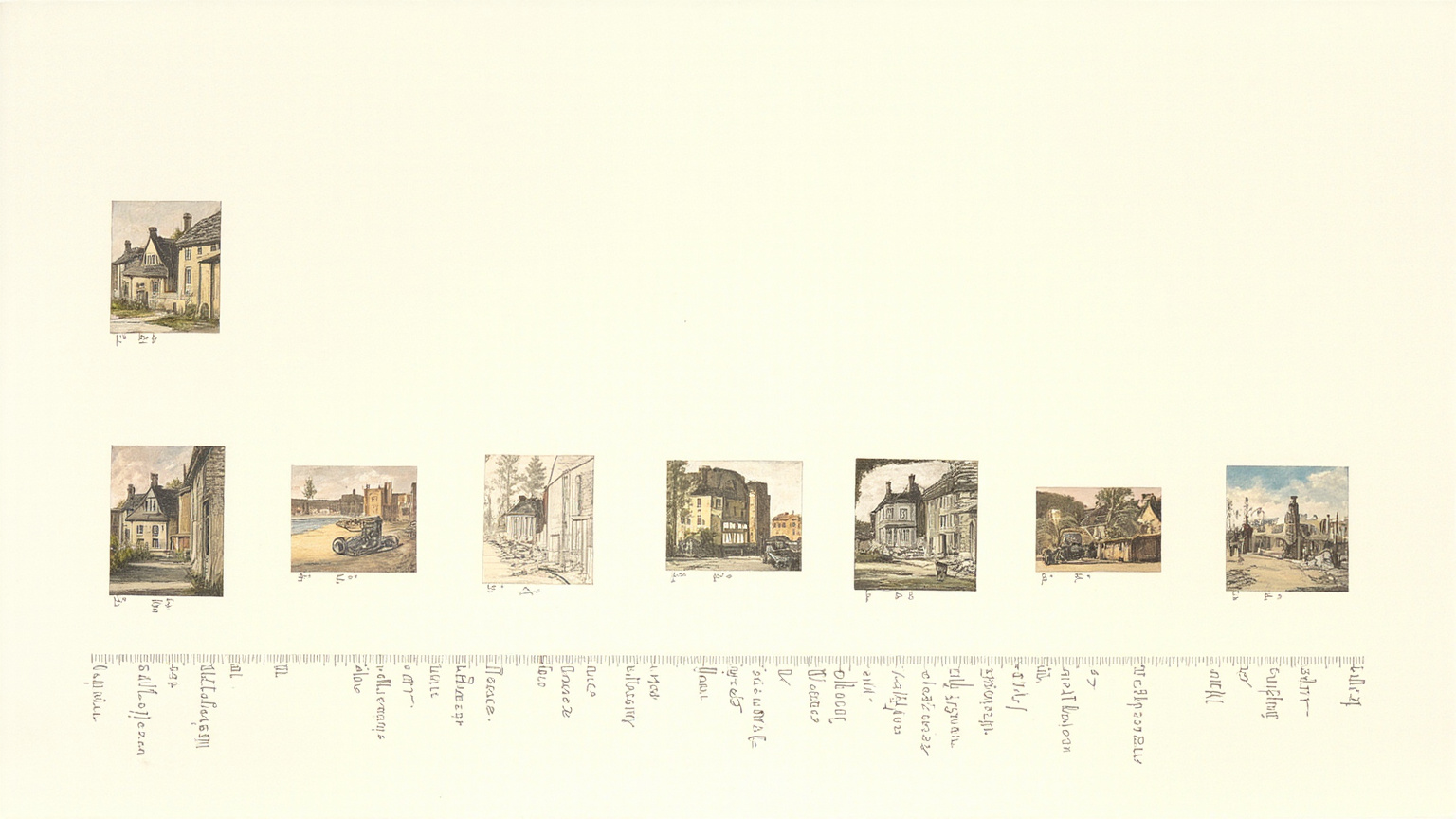
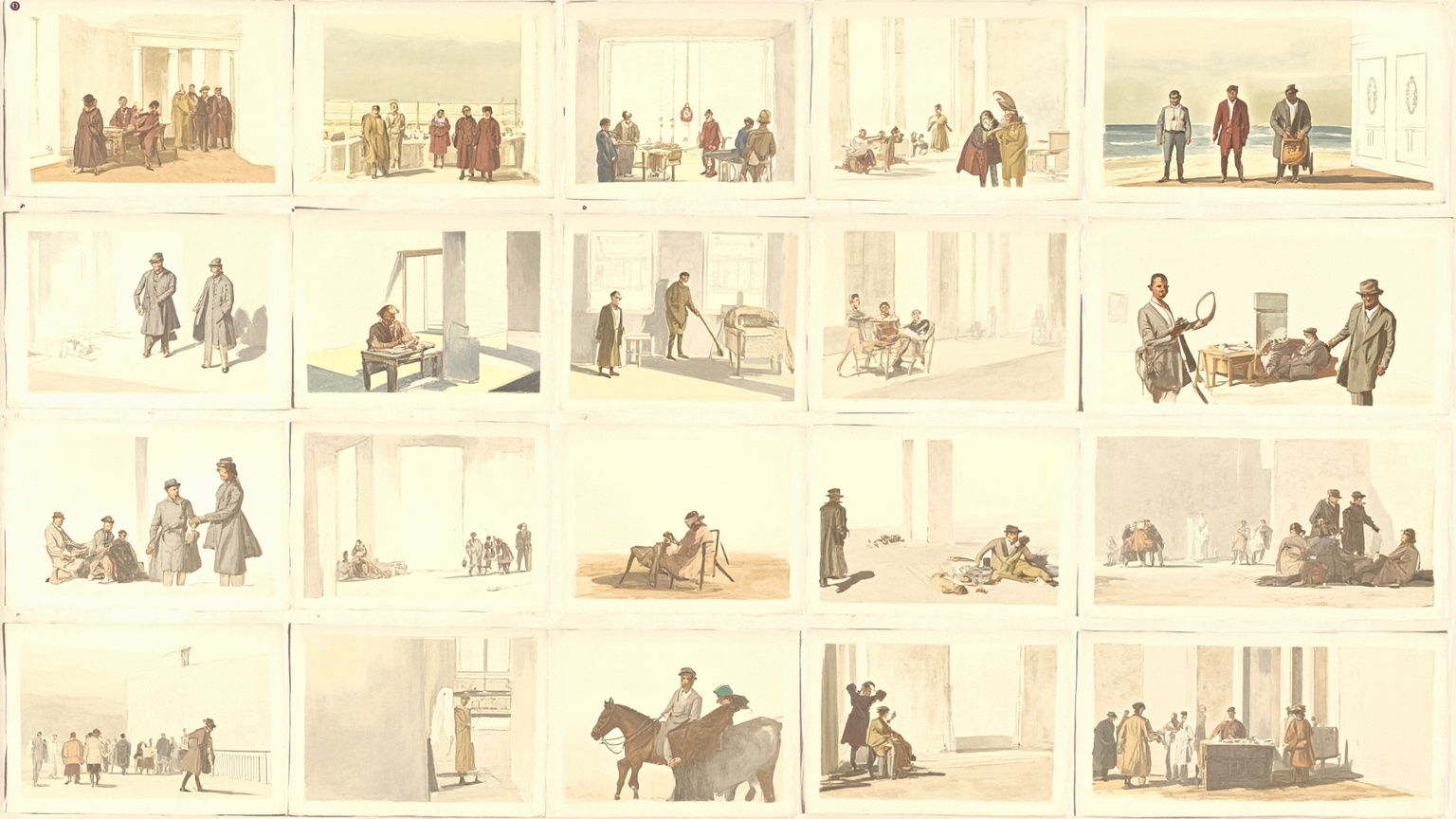
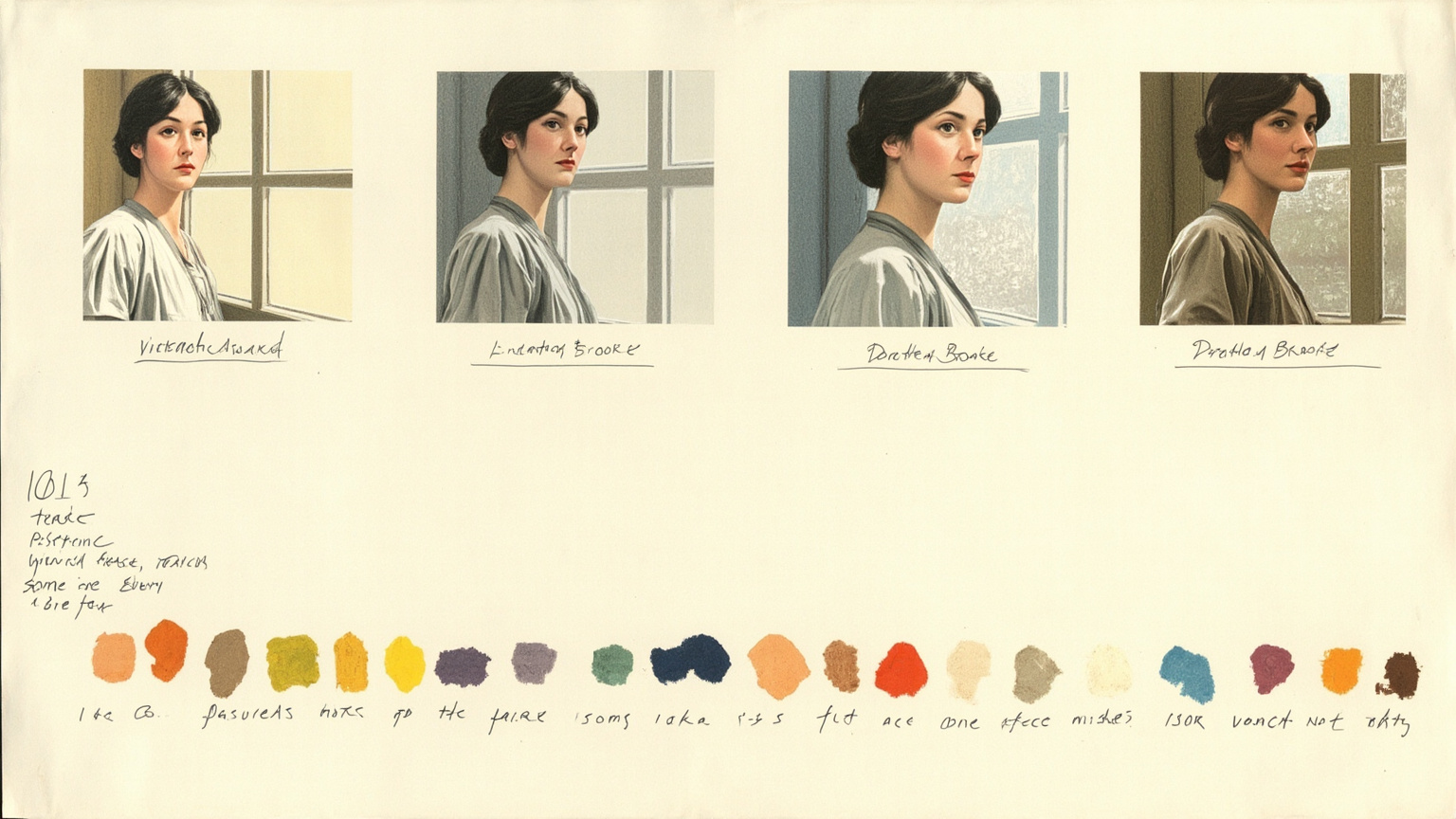
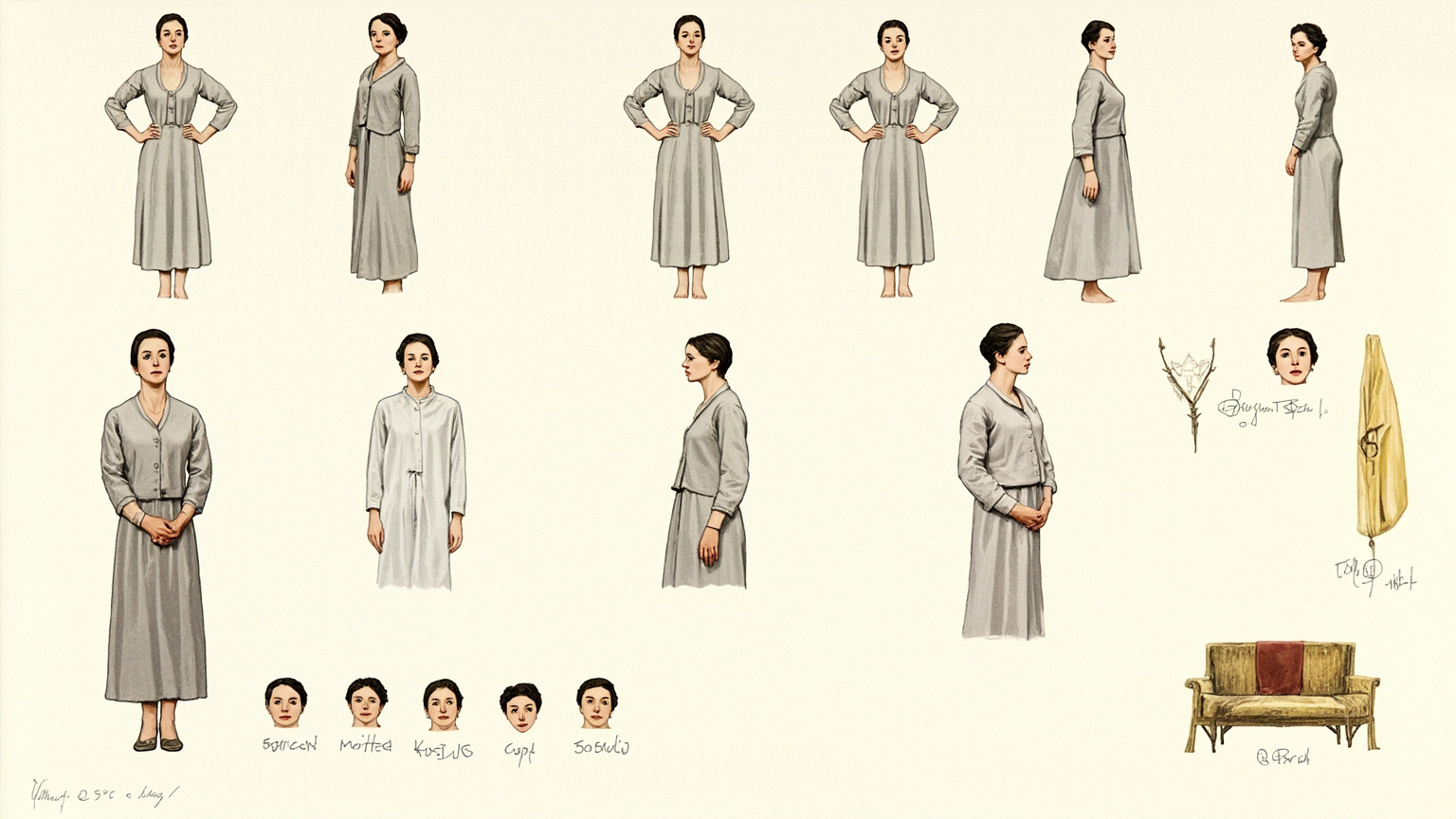
Art Direction4 plates
Before the guide was written, this book got a visual foundation — every illustration you just read grew out of it.