Rushdie tells a story that tastes of pickle brine, packing sixty years of South Asian history into a jar that is already splitting.
Text and illustrations produced by the pipeline
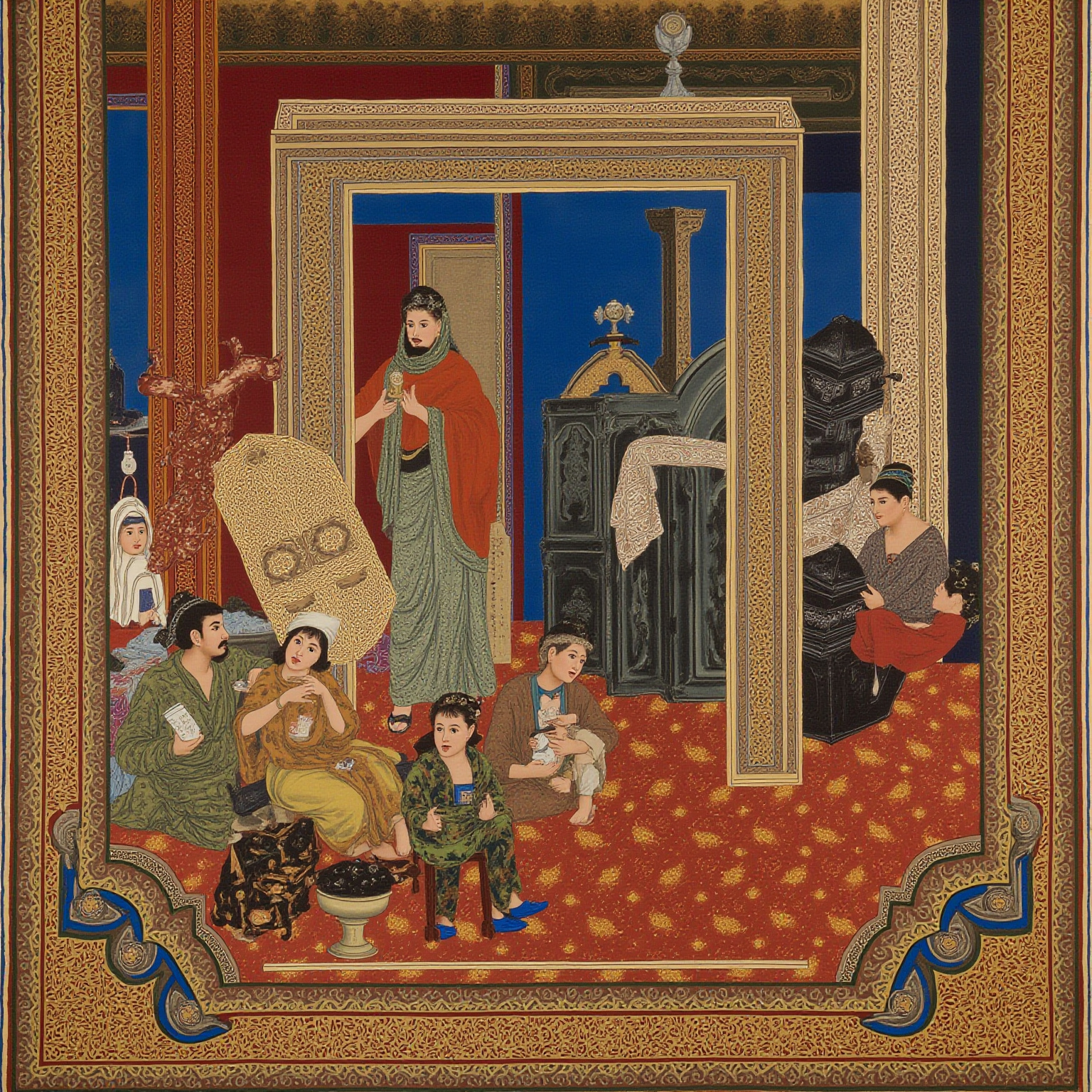
In a clinic in Srinagar, Kashmir, in 1915, a young doctor freshly returned from medical school in Germany is kept behind a white sheet, allowed to glimpse his patient only through a hole cut in the cloth — a shoulder today, a strip of waist tomorrow, piecing together his future bride inch by inch. His name is Aadam Aziz. His patient is Naseem. That perforated sheet goes on to follow the family through sixty years of South Asian history: no one ever gets to see the whole face, and everyone has to recognize the people they love from fragments assembled one glimpse at a time.
Thirty-odd years later, at the exact stroke of midnight on August 15, 1947 — the moment India's independence is declared — two baby boys are born within the same minute in a Bombay maternity ward. Mary Pereira, the nurse on duty, slips between the two cots and switches their name tags. That single act is where everything Midnight's Children has to tell begins.
Midnight's Children came out in 1981, when Salman Rushdie was barely past thirty. It is the novel English literature most often sets beside Garcia Marquez's magical realism — except where Marquez wrote Latin America's magic, Rushdie wrote South Asia's. It won the Booker Prize that same year, then went on to be named "Best of the Booker" twice, the only novel in the prize's history crowned that way on two separate occasions. What people remember is the move at its center: swap a family's fate in for a nation's, then use magic to make that substitution feel true.
The story opens in Kashmir in 1915. Aadam Aziz examines Naseem through that sheet, slowly falls in love with her, and marries her. A few years later he witnesses British colonial troops open fire on civilians in Amritsar, and the trauma of that day lodges itself in the family's memory for good. The perforated sheet becomes the novel's governing image from here on — no one ever sees the whole face, no one ever sees the whole of history, and everyone has to piece together the people around them through a white cloth with holes cut in it.
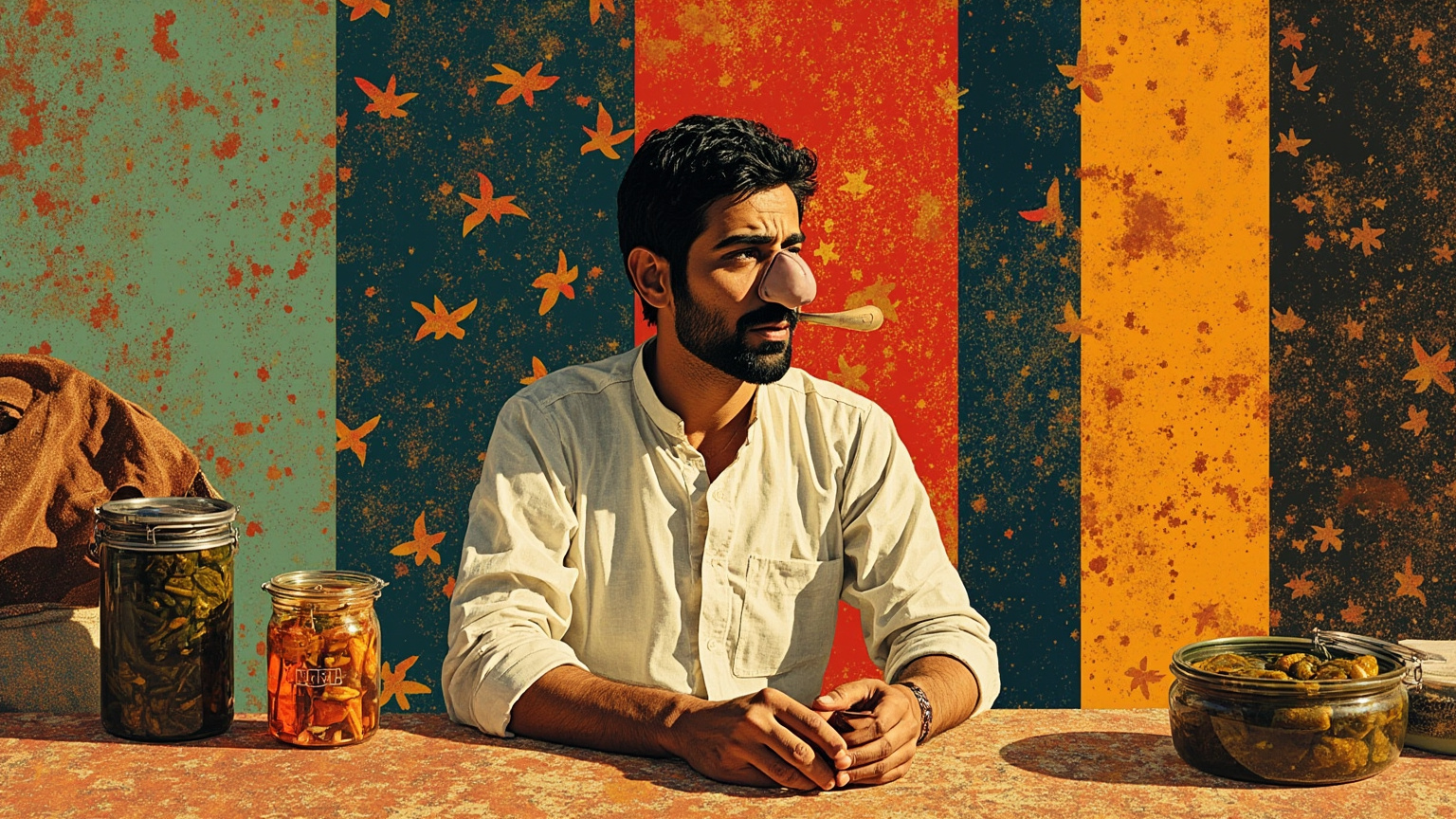
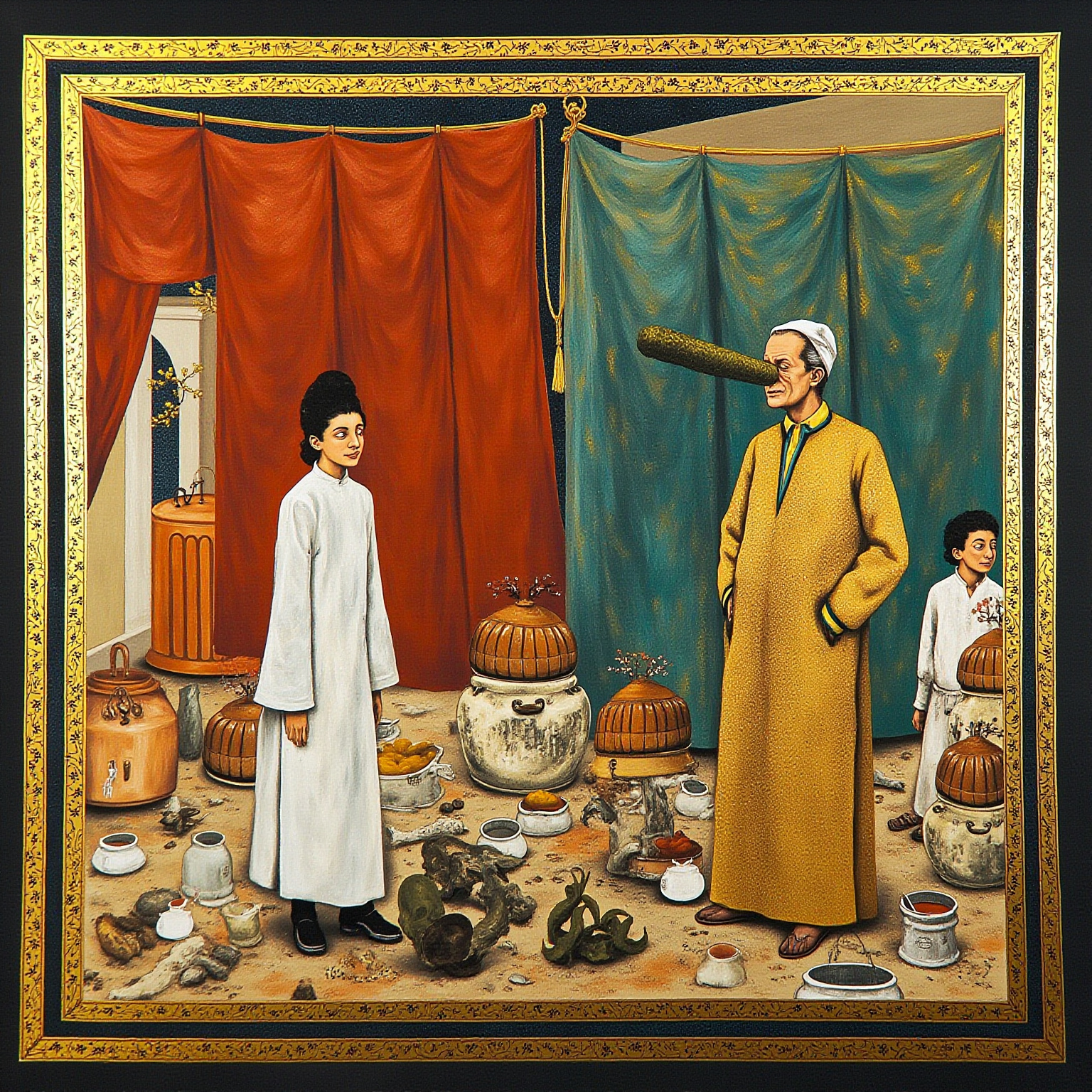
The novel's frame story opens up an entirely separate time and place: a pickle factory in Bombay, where Saleem, now in his thirties, sits among the clay jars as his body starts coming apart at the seams, telling his story to his lover Padma before he falls to pieces for good. Which means he is falling apart even as he speaks — the book's central structural trick, and its most unsettling one: you are reading what feels like a complete story while its narrator tells you, in real time, that he is running out of days.
The story returns to the pickle factory. Saleem, in his thirties, sits among the clay jars, his body seeping at every seam, flecks of something luminous leaking from under his fingernails. Padma crouches at the other end, packing chutney, cutting in every so often: didn't you say three drops of blood last time, so how is it five now? Saleem patches himself up and keeps talking. He has to hand over his whole life before he comes apart completely — the last reason left to tell a story, and nearly the only reason in this book that everyone can hear.
Padma is the most convincing device in the whole book. She can't read, and she has zero reverence for Saleem's story — the moment he gets carried away, she slaps him down: how many drops of blood was it? What year did you move to Karachi? Get it straight or I'll assume you're making it up. A lover who is almost too honest turns out to be the novel's most trustworthy critic. Through her, Rushdie takes "unreliable narrator" out of the textbooks and turns it into a hand you can actually watch at work.
Knowing the plot is still no substitute for reading it, because what Rushdie wrote is not a clean historical outline. His language carries the smell of spice — mustard seed, curry leaves, damp old newsprint, the rose perfume of Naseem's youth, the sting of bleach during the Emergency. None of that survives a summary; it lives only in the prose. There's also the small, needling business of Padma cutting Saleem off mid-sentence — every time she catches him out, the reader gets a small jolt of satisfaction. Without hearing her blunt voice on the page, the pleasure of an unreliable narrator never quite lands. And Saleem's disintegration isn't one collapse — it's a slow shedding you stop counting somewhere along the way. Only finishing the whole book tells you exactly how that clay pot breaks.
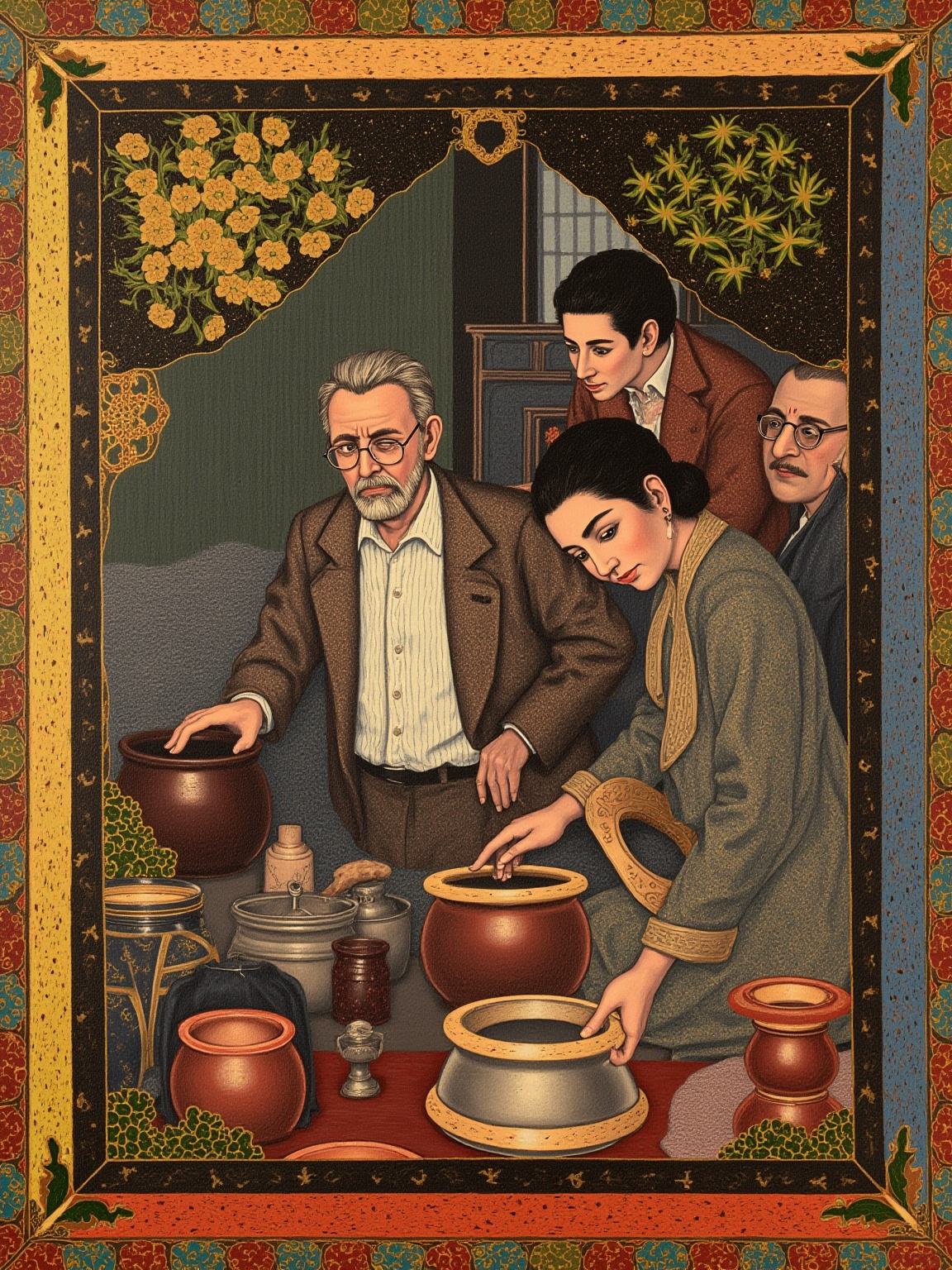
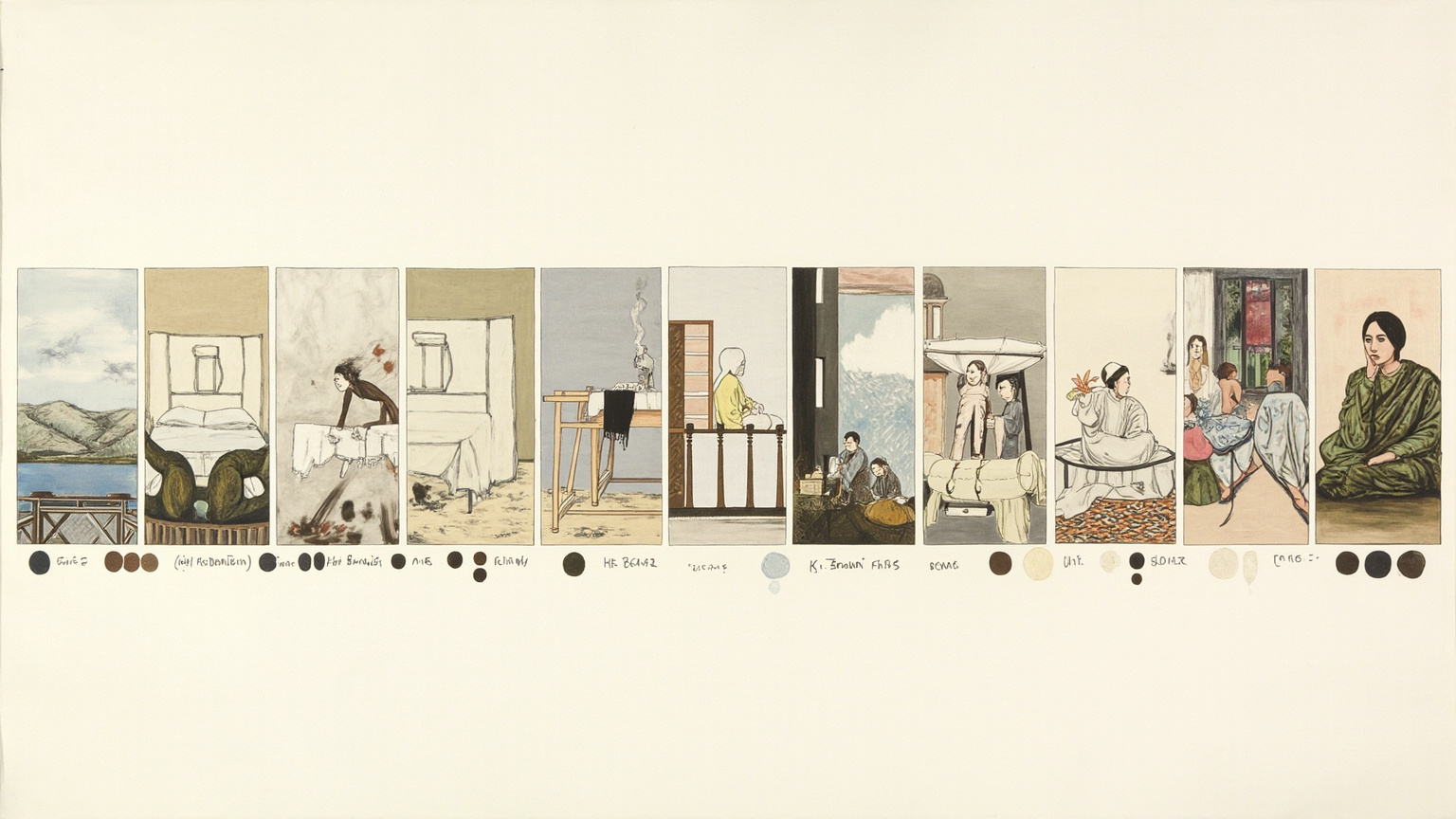
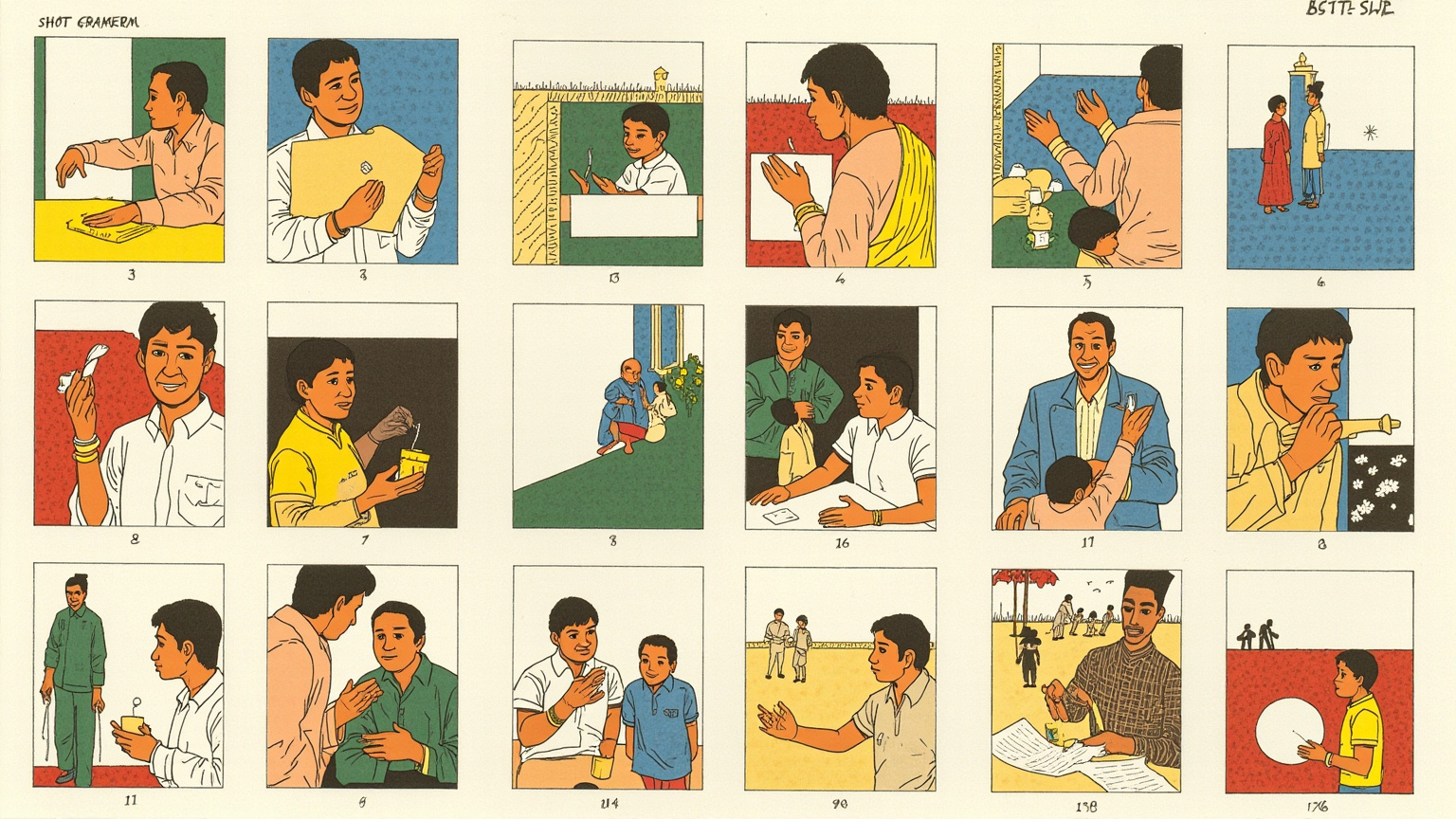
Before the guide was written, this book got a visual foundation — every illustration you just read grew out of it.
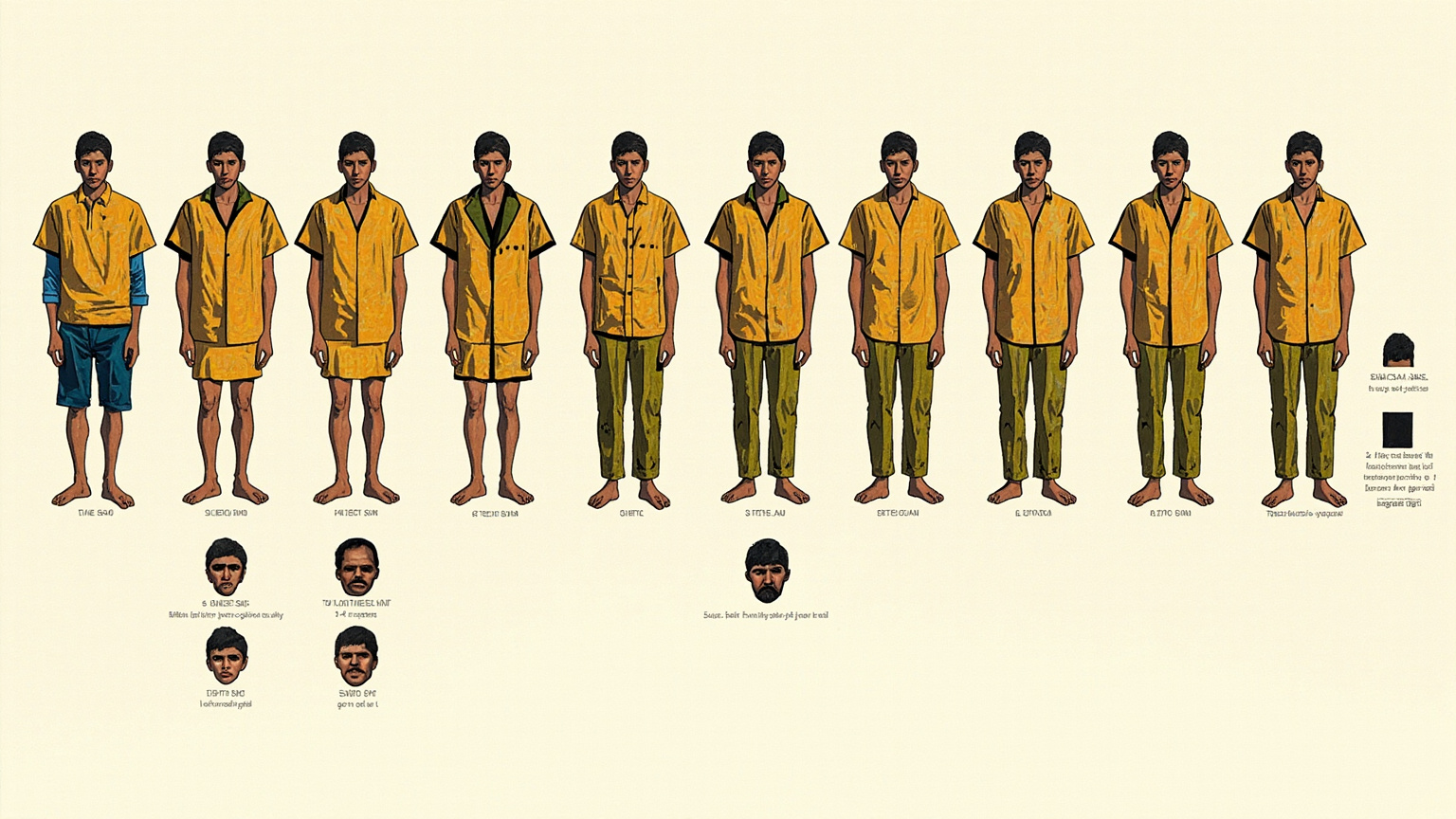
The protagonist is Saleem Sinai, born in Bombay at the stroke of midnight in 1947, and the narrator is that same Saleem in his thirties — except the version living in the "present tense" is sitting in the corner of a Bombay pickle factory, convinced his body is cracking apart like a dried clay pot, and he has to get the whole story out to a woman named Padma before he falls to pieces completely. Padma is his lover and his only listener — illiterate, blunt, packing chutney into jars while she catches him out on every hole in his story. Saleem is the least reliable narrator of his own life, and Padma is the mirror that gives him nowhere to hide.
The novel really has two protagonists: Saleem and Shiva. They are born in the same minute and have their name tags switched by the same nurse. Saleem is carried into the wealthy Sinai household and cherished as its treasure; Shiva is handed off to a street performer in the slums. Saleem grows up telepathic, wired into all one thousand and one children born across India in that same hour; Shiva grows up pure muscle, the strongest fighter among the midnight's children. One connects to everyone; the other trusts only his own fists. They are each other's mirror image, and each other's lifelong rival.
Midnight, August 15, 1947. Mary Pereira, the maternity nurse, stands holding the two newborn boys for a moment, carrying a secret loyalty of her own — a promise made to a revolutionary lover. Seconds later, she quietly swaps the name tags on the two cots. The name Saleem Sinai goes to the illegitimate son of the British colonial William Methwold and Vanita, wife of a street performer, while the Sinai family's actual blood child gets tagged onto the baby in the next bed over, in the poor ward — the boy who grows up to be Shiva. Saleem's birth mother, Vanita, dies in childbirth that same night, and Saleem is raised from then on as the Sinais' own son, the truth buried in the shadow of that household.
At ten, Saleem discovers he can hear voices in his head — the one thousand and one children born in the first hour of Indian independence each have a place inside his mind. Every one of them carries a gift, and the closer to midnight they were born, the stronger it is: invisibility, walking through walls, shape-shifting. Saleem's gift is the connection itself, and he even convenes them all in a ruined building for a secret conference of the midnight's children. Shiva never shows up, but everyone already knows it: these two boys whose fates got switched at birth, one strong in the mind and one strong in the fist, are the two poles this group of children is destined to split along.
Where's the craft in this? Rushdie pours the whole energy of a newborn nation's generation into a thousand and one strange children — they read like a league of superheroes, but they're really a metaphor for the entire subcontinent: speaking different languages, crossing religious lines, contradicting each other while staying connected. The moment Saleem links them all together is the most romantic dream the new India — unity in diversity — ever had of itself.
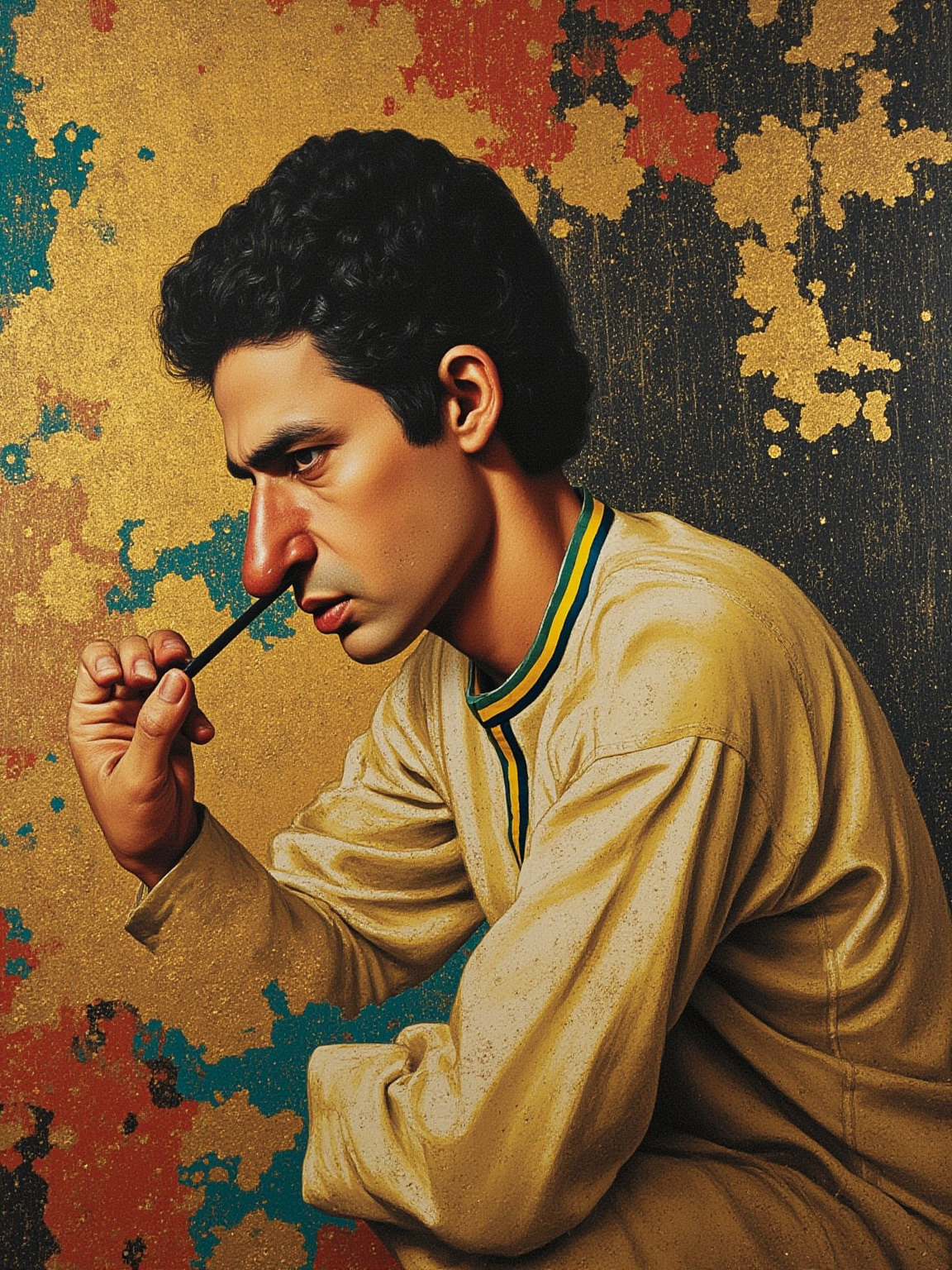
The Sinai family relocates, by way of several moves, from Bombay to Karachi, Pakistan. One night during the 1965 Indo-Pakistani War, a bomb lands near their apartment building, and the blast swallows half the family into rubble. Saleem is thrown clear, most of the light knocked out of his eyes — he loses the thousand voices in his head and never hears another person's thoughts again. What he gets in exchange is strange: an extraordinarily sensitive nose, able to smell out the faintest traces of emotion, illness, even desire.
This is where Rushdie shows no mercy. Just as you've fallen for a child's magical gift, the next paragraph lets politics cut it off. Stripped of his telepathy, Saleem looks diminished, but what grows in its place is a more fragile, more human organ — a nose. Rushdie trades one kind of sight for another, the same way South Asia spent these two decades swinging back and forth between East and West, always either losing something or growing something new.
The 1971 Bangladesh Liberation War pulls Saleem in again. Starved to near nothing along a road of jungles and refugee camps, he is saved by Parvati, a witch with real powers of her own. She too is one of the midnight's children, able to move objects and speak of things no one else can see. She hides him in a slum settlement of traveling magicians and nurses him back to something like life. Later she bears a son by Shiva, a boy named Aadam Sinai — raised by Saleem's own hand, another child whose bloodline is a tangle.
The scene where Parvati saves Saleem carries the sharpest contrast in the book: the one who was supposed to be the strongest of the midnight's children gets picked up out of the wreckage by a character who once looked like an afterthought. Of the two boys whose identities were switched, one lives at the very bottom of the slum and the other at the top of the stage — and it's at his lowest point that Saleem gets his life handed back by the person furthest down that chain.
On the night Aadam Sinai is born, Indira Gandhi declares a state of Emergency in Delhi. Rushdie mocks that government throughout the book as rule by "the Widow" — a widowed woman being seen as both untouchable and utterly intolerant of dissent. Over the following two years, government search parties hunt down the surviving midnight's children one by one and force them onto operating tables for sterilization. The thousand and one children are disarmed, cut by cut, by the new regime. Saleem's own powers are finished off for good under the Widow's rule.
This is the sharpest political indictment in the book. Rushdie doesn't write a massacre or a religious riot — he writes "sacred operations," the state sterilizing an entire generation's possibility in its own name. A thousand and one telepathic children get treated like some threat that must not be allowed to reproduce. It takes an abstract political atrocity and lodges it in one concrete bodily act — colder than any battlefield scene could manage.
The core of what Rushdie is doing is this: one person's body and a nation's fate can stand as metaphors for each other. Saleem is born at the exact second of Indian independence; his mind linking a thousand and one children across India is the promise the country once made of unity in diversity; his body cracking apart piece by piece is that same new nation stripping away, through partition, war, and emergency rule, the capacities it once promised itself. Rushdie doesn't narrate history in the abstract — he pours the second half of twentieth-century South Asia into one man's body as it comes apart.
So this book isn't just a stretch of Indian history — it's a long argument about identity itself. Where you belong: does blood decide it, or does the ground that raised you? When a nurse switches a baby's name tag, whose child does he become? Saleem's blood is a mix of an Englishman and a street performer's wife, but his life was given to him by the Sinais. Rushdie makes you see that any story of pure bloodline is always something invented after the fact.
Rushdie doesn't ask you to imagine a nation — he shows you a man coming apart, and the cracks flaking off his body are the whole history of South Asia in the second half of the twentieth century.