Moby-Dick; or, The Whale · Companion Guide
Moby-Dick
A man puts to sea to drive the November out of his soul — and the first thing he holds on to is a coffin.
Opening: A Coffin Before the Voyage
There is a November in your soul — that damp, nameless ache that isn't pain anywhere in particular, just a refusal to stay put any longer. A man boards a whaling ship to shake it off, and the first thing he ends up holding onto is not the rail but a coffin. Here is the book's real trick: a coffin appears onstage only once in the whole novel, and it is set in front of you at the very start — a sailor falls sick, near death, and orders his coffin built ahead of time, but then he recovers, and the coffin simply stays in the room, a prophecy that refuses to leave.
What Kind of Book This Is: The Classic Slow-Burn Canonization
Moby-Dick is a novel by Herman Melville, published in 1851. Melville had actually shipped out on a whaler as a young man, and that firsthand experience feeds the entire book. On publication it was a commercial disaster — readers were baffled, critics were baffled, and unsold copies piled up with no one interested. Melville never lived to see it redeem him; it wasn't until the early twentieth century, when the modernists dug it back up, that it was carried, book by book, into the backbone of American literature. In other words, this is a novel nobody wanted at the time and everyone canonized later — canonized because it turned a whaling voyage into a vast fable about obsession, nature, and fate.
People and World: A One-Legged Captain, a Tattooed Friend and His Coffin
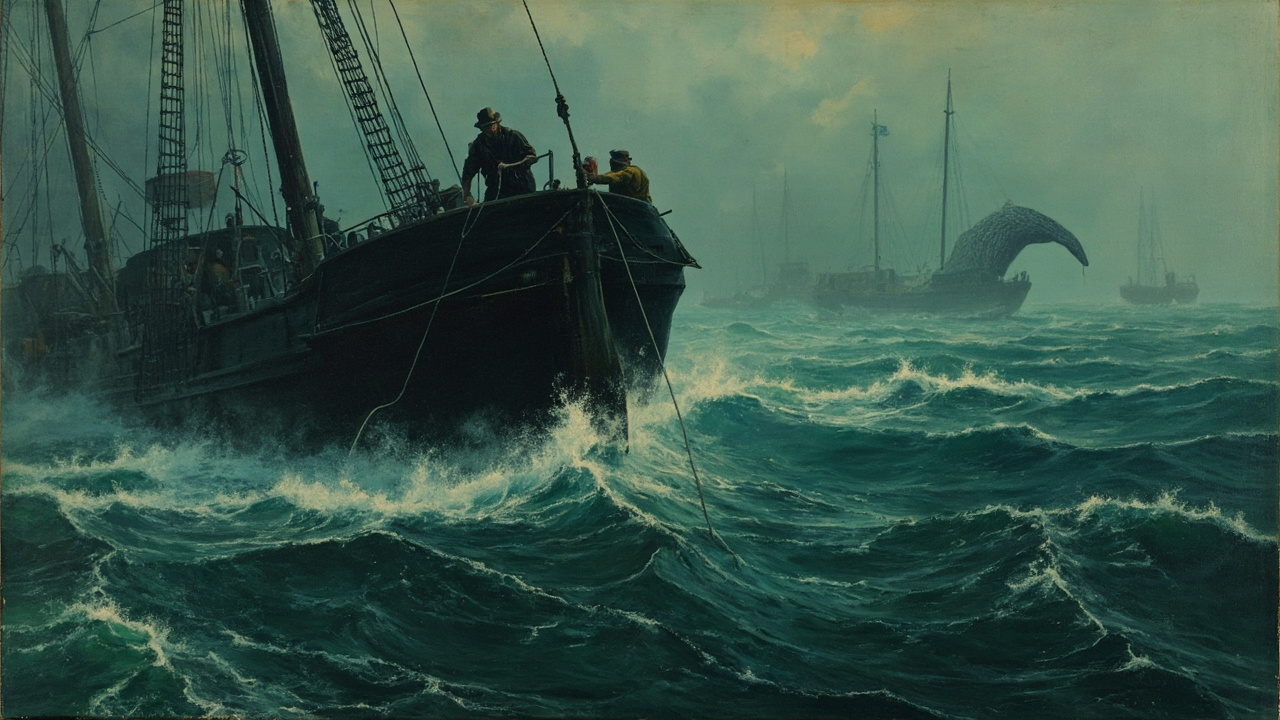
The story is set in the golden age of American whaling, the 1840s. Ships sail out of old Massachusetts ports like New Bedford and Nantucket to chase whales halfway around the globe. There are only a handful of main characters, but each one stands rock solid: Ishmael — the narrator, a young sailor with mildew in his soul, the eyes through which the whole book is seen. He is the ship's only survivor. Captain Ahab — an old man with one leg, bitten off by a white sperm whale called Moby Dick, walking now on a prosthetic carved from whalebone. He has exactly one reason left to live: find that whale and kill it. Queequeg — a Polynesian harpooner covered in tattoos, Ishmael's bunkmate and later his closest friend. He is a "cannibal," a pagan, and deeply loyal — the coffin built for him during his illness is his own order, and it ends up saving Ishmael's life. Starbuck — the first mate, a Quaker, calm and devout, the only man on board who ever tells Ahab to stop. Moby Dick — an enormous white sperm whale, his forehead scarred with old harpoons. He is both the quarry and something closer to the unknowable itself.
One: The Spouter-Inn — Ishmael and Queequeg Set Sail With a Coffin
Ishmael arrives in New Bedford short on money and is put up in a shared bed. Already lying in it is a tattooed, carved-looking figure, ink covering his whole body and face — Queequeg. The two eye each other warily at first, and by the next night they are the kind of friends who turn their backs to each other without a second thought. The best detail is the coffin: Queequeg has one built as a spare when he falls seriously ill, but once he recovers it has nowhere to go, so the innkeeper uses it as a table and Ishmael sits on it like a bench. The two of them carry that coffin aboard the Nantucket whaler Pequod. Craft note: Melville starts from the most ordinary premise imaginable — finding a cheap bed — and slowly pulls the reader into a world that grows less and less reasonable by the page. You are drifting off the ground right along with Ishmael, and that gradual loss of footing is one of the most captivating experiences the book has to offer.
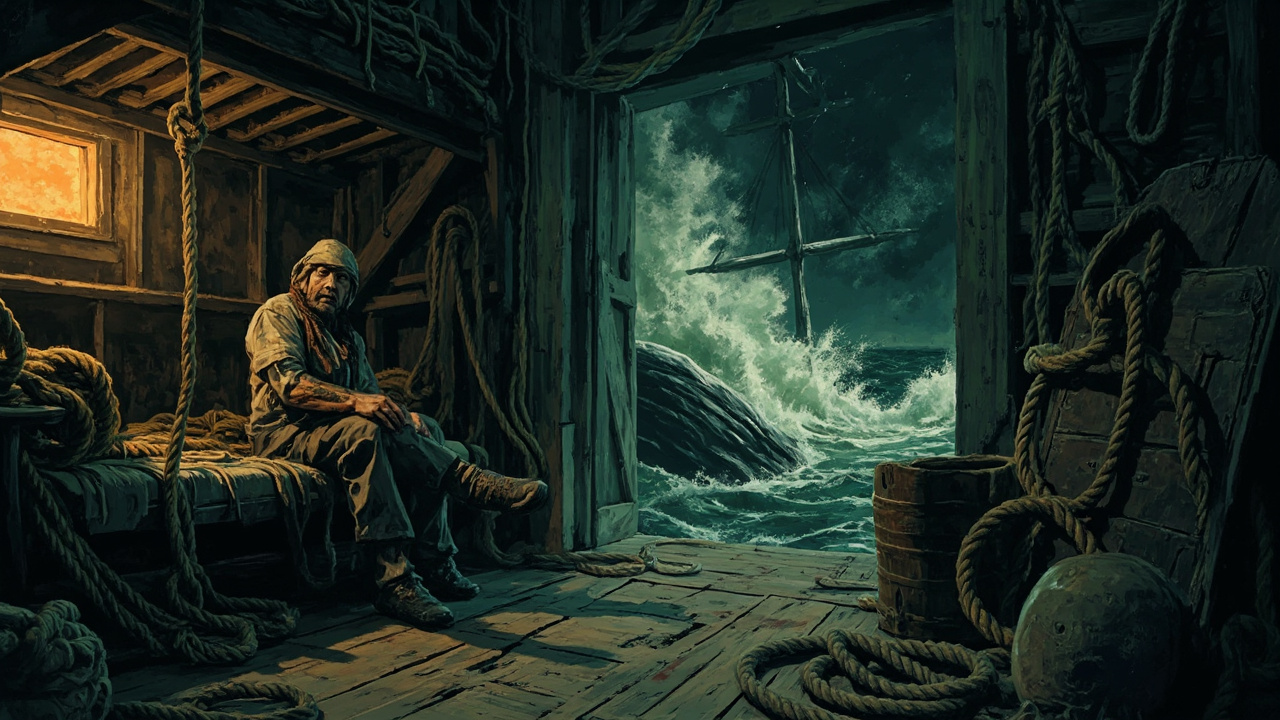
Better sleep with a sober cannibal than a drunken Christian.
与其跟喝醉的基督徒同床,不如跟清醒的野人同睡。
Original line · Chapter 3 · The Spouter-Inn
Two: Father Mapple's Sermon — Jonah and the Whale
The night before the ship sails, Ishmael visits the Whaleman's Chapel. Father Mapple is preaching, and he does not give the ordinary gospel — he tells the story of Jonah from the Bible, the man who defied his orders and was swallowed by a whale, spending three days and three nights in its belly before being cast back onto dry land. The preacher speaks slowly, as if addressing the whole ocean that is still to come. Craft note: this chapter is the book's hidden table of contents. On the surface it is a sermon; underneath, it lays out every character's fate in advance — Ahab is the disobedient Jonah, the white whale is the fish that swallows men whole, and the crew are the innocents trapped in its belly. Melville buries every clue inside a single sermon, and a reader will not necessarily catch it the first time through — only in hindsight does it turn cold.
Three: A Gold Coin Nailed to the Mast — Ahab Appears and Swears Revenge
The ship has been out of port for days already, the crew keeping their usual lookout for whale spouts, when Captain Ahab finally walks onto the deck for the first time. The sight alone stops you cold — one leg, a whalebone prosthetic clicking with every step, eyes that look lit from within. He has the blacksmith nail a Spanish gold coin to the mainmast and swears before the whole crew: whoever first sights the white whale that took his leg gets the coin. In a single stroke, the nature of the voyage changes. What was supposed to be a whaling business trip has become a private vendetta fleet hunting one particular whale. Craft note: Melville welds the crew's fate together with nothing more than a coin. That coin keeps reappearing through the book, a gravity anchor pinning the whole story down, so that every lookout afterward carries a mixed scent of greed and sacrifice.
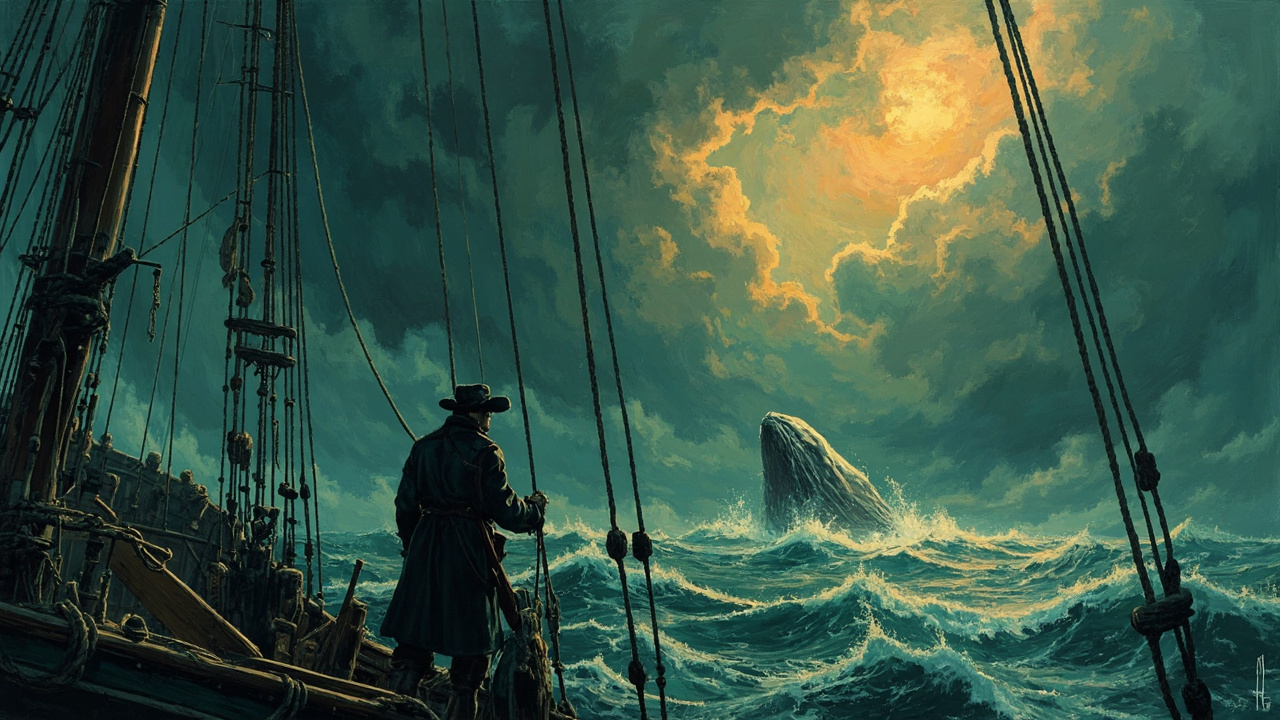
I'll chase him round Good Hope, and round the Horn, and round the Norway Maelstrom, and round perdition's flames before I give him up.
我要追它,绕过好望角,绕过合恩角,绕过挪威大漩涡,绕过地狱的火焰——不到手,决不罢休。
Original line · Chapter 36 · the oath on the deck
Four: Starbuck Stands Alone — The Clear-Eyed Voice at the Heart of the Tragedy
First mate Starbuck, a Quaker out of Nantucket, is calm and devout, the one man aboard who still holds onto the plain fact that this is supposed to be a whaling business, nothing more. He confronts Ahab alone more than once, and each time the words rise to his lips and get swallowed back down — he knows perfectly well that one more step is mutiny, and mutiny means the whole crew dies at sea. Craft note: this is where Melville is most merciless. He does not write a foolish objector; he writes a man who sees everything clearly, sees exactly where this ends, and still cannot stop it. Starbuck is the most heartbreaking figure in the book — he does not die from ignorance, he dies from knowing, with total clarity, that he has to see it through anyway.
Five: The Meeting in the Pacific — The Whale Arrives and the Three-Day Countdown Begins
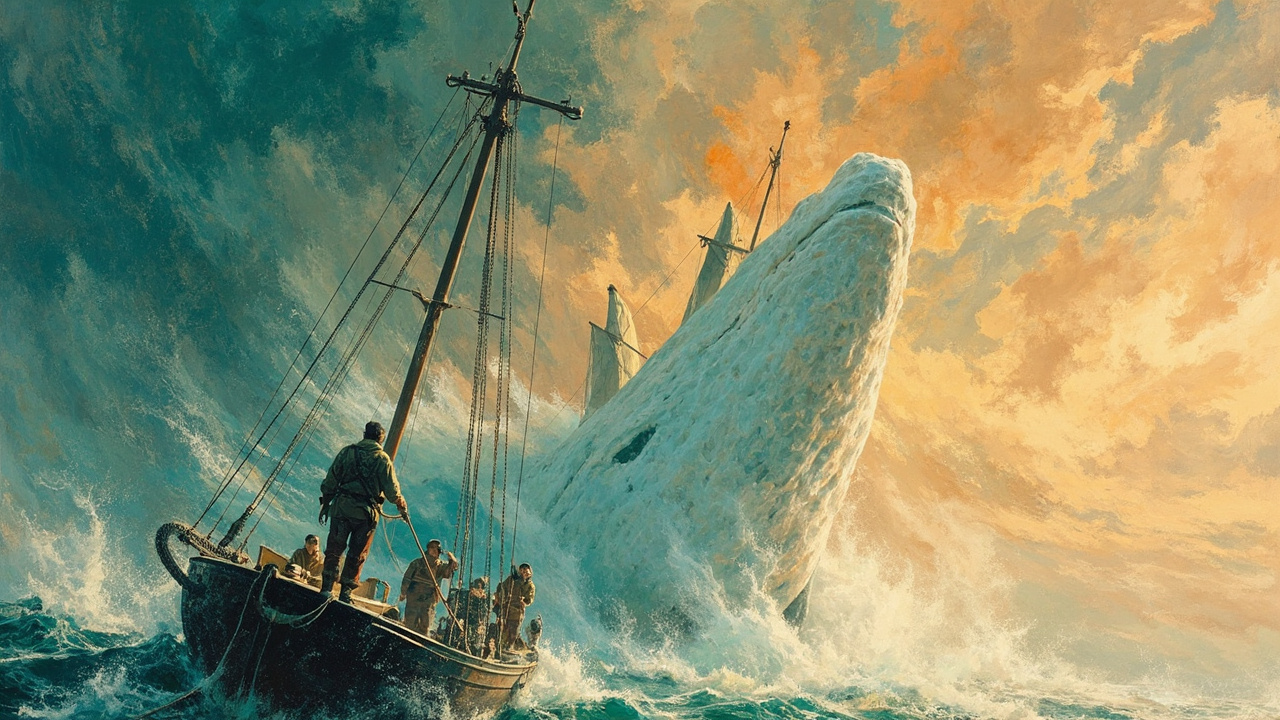
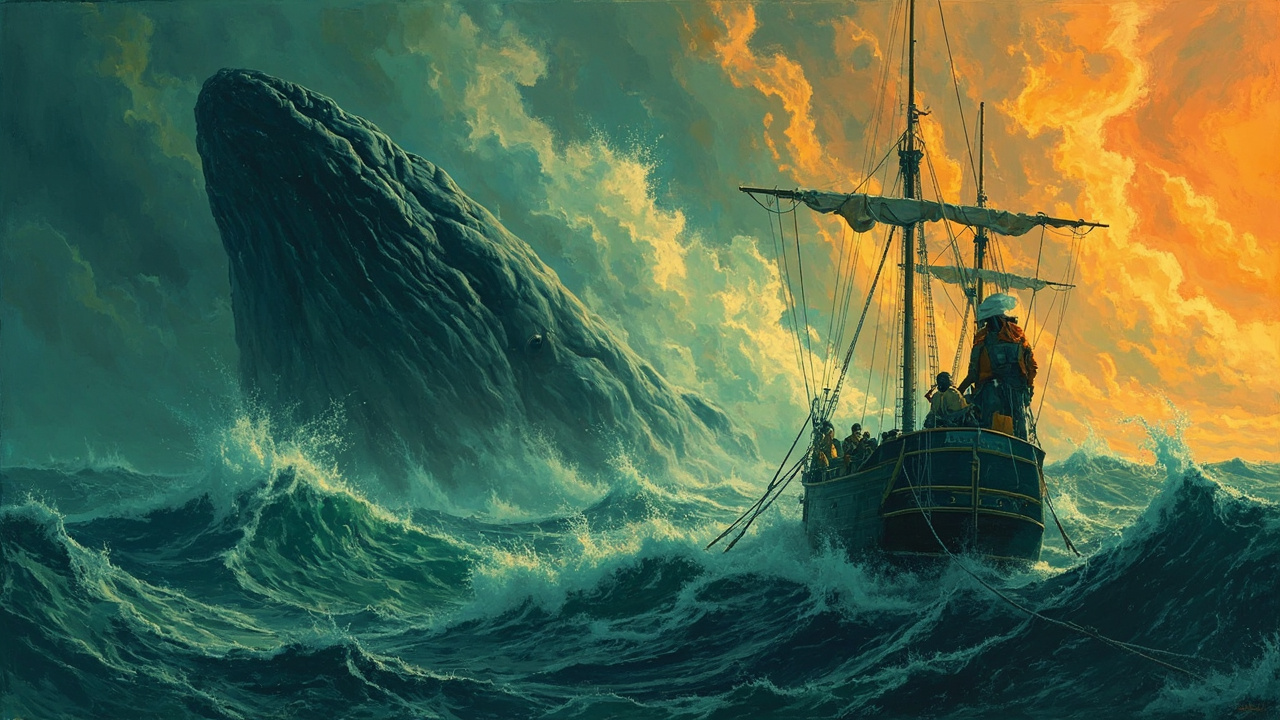
The ship rounds the Cape of Good Hope, crosses the Indian Ocean, and finally enters the Pacific. Ahab's eyes stay locked on the horizon like radar. One day, the lookout at the masthead nearly screams — beneath the surface, a vast, moving, whitening shadow. Three days follow. On the first day, the boats are lowered, harpoons fly, the whale rolls over, and its tail smashes one boat to splinters; the men who go into the water are pulled out alive. On the second day, Ahab takes a different boat and charges again. This time the whale rams straight through the hull with its head, and that boat is destroyed too. The third day — see the next section. Craft note: splitting the climax across three days instead of letting it explode all at once is a remarkably modern move. By the end of the second day, the reader starts to believe there might still be a way out — and so does Ahab — and that very illusion is itself part of the obsession.
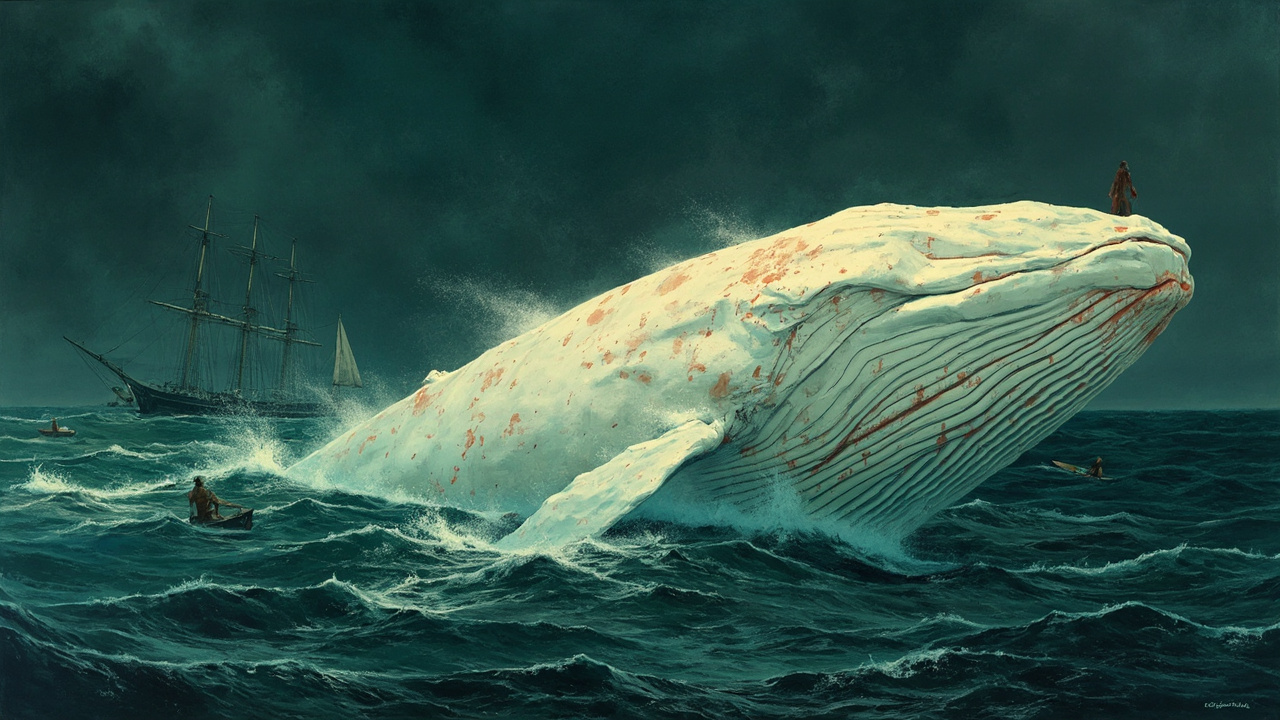
There she blows!—there she blows! A hump like a snow-hill! It is Moby Dick!
它喷水啦!它喷水啦!一座雪山似的驼峰!是莫比·迪克!
Original line · Chapter 133 · The Chase—First Day
Six: The Third Day — The Whole Ship Goes Down With Him
On the third day, Ahab drives a harpoon into the whale once more. The whale, enraged, turns and rams straight into the hull of the Pequod itself — not a whaleboat this time, the ship. It begins to sink. Ahab refuses to retreat and orders another boat lowered to keep the chase going. In the chaos, the line from his own thrown harpoon catches around his neck; the whale dives, dragging the rope down, and it snaps taut — Ahab is hauled under the surface along with the whale. The ship goes down. The boats are smashed apart. The men are pulled one after another into the whirlpool. The entire crew is lost. Craft note: Melville grants no heroic exit when he writes this destruction — he simply lets a rope catch a neck, a ship sink, men vanish. The metaphysical collapse is delivered entirely through physical detail, and that is where the real force of the tragedy lives.
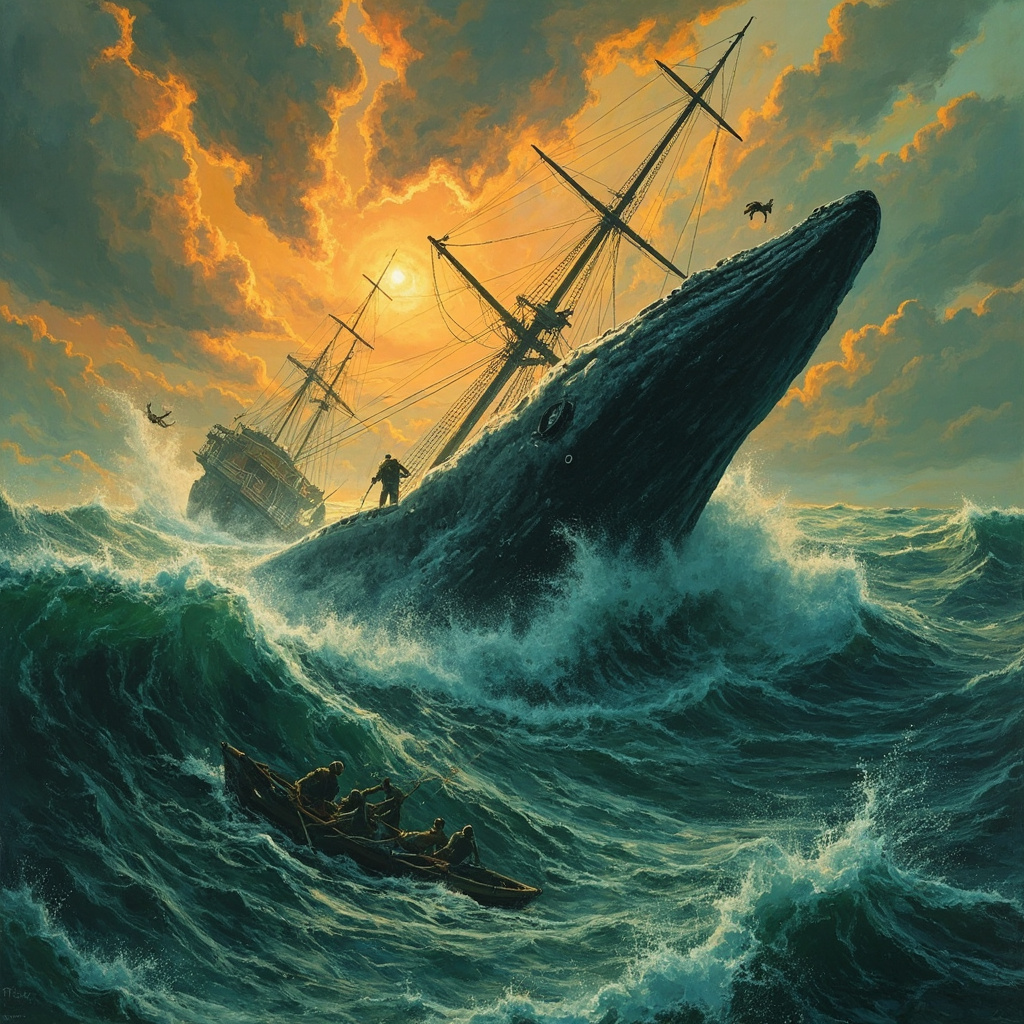
Towards thee I roll, thou all-destroying but unconquering whale; to the last I grapple with thee; from hell's heart I stab at thee; for hate's sake I spit my last breath at thee.
我向你滚来,你这毁灭一切却不可征服的鲸;我与你搏斗到底;从地狱的心脏,我刺向你;为了恨,我把最后一口气也啐向你。
Original line · Chapter 135 · The Chase—Third Day · Ahab's death
Seven: The Coffin Life Buoy — The Only Survivor
In the very instant the ship goes down, the most ironic moment in the whole book happens. In the chaos, the coffin — the same one from the opening chapters, once used as a table and a bench — floats free of the wreckage and rises to the surface. Ishmael grabs hold of it and hauls himself on. A box built for someone else's death becomes, instead, the life buoy that keeps him alive. He drifts in the Pacific for a day and a night before being picked up by a passing whaler, the Rachel, which is out searching for its own lost children. By the time he climbs onto her deck, he has become, just like his own name, a survivor nobody was watching for and who stubbornly went on living anyway.
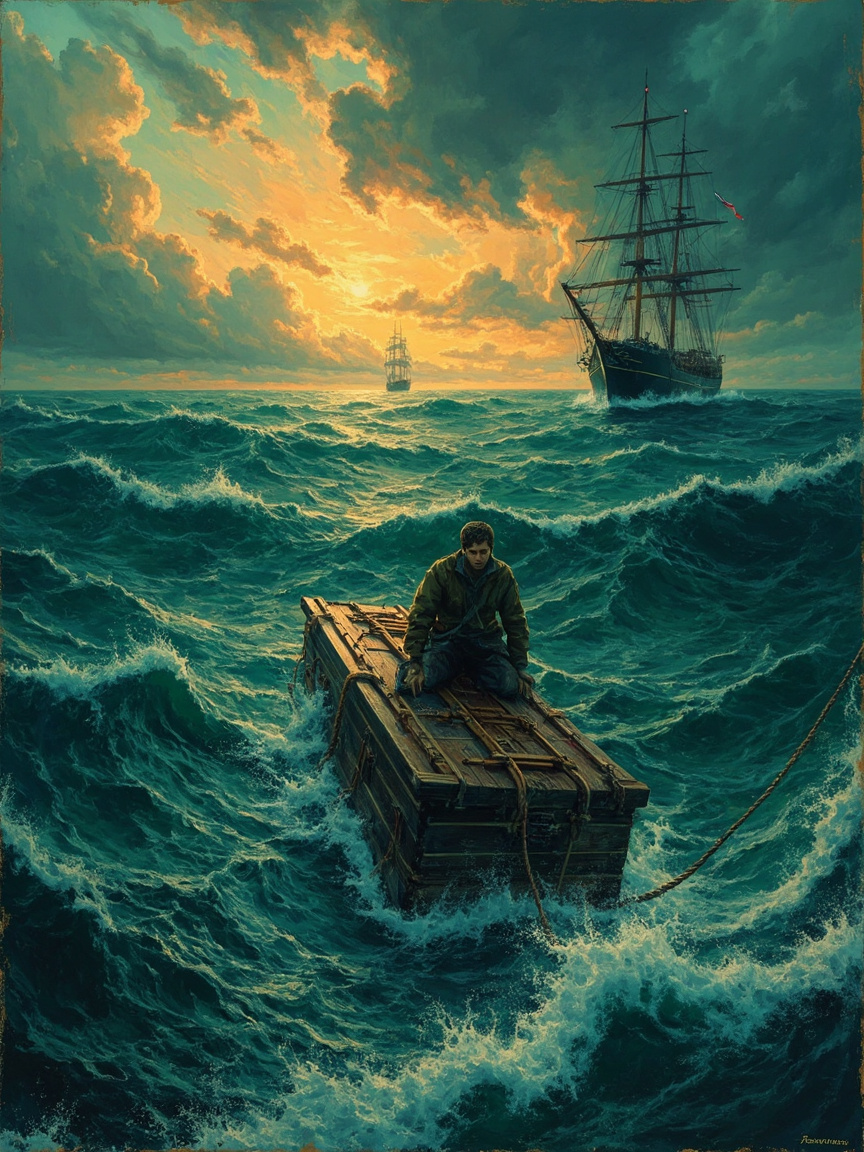
then all collapsed, and the great shroud of the sea rolled on as it rolled five thousand years ago.
随后,一切都塌陷了;大海那片巨大的裹尸布,像五千年前一样,重新合拢,滚滚而去。
Original line · Chapter 135 · the great shroud of the sea
Themes and Craft: The Whale, Hatred, and the Unknowable
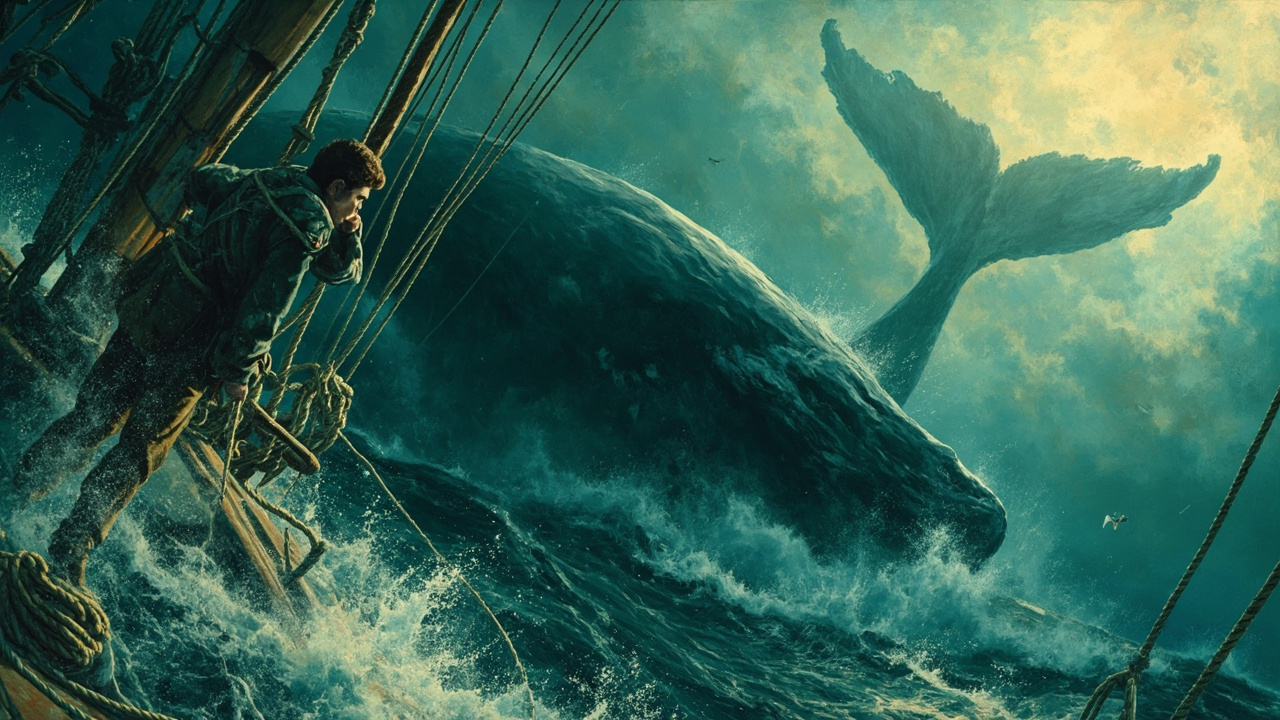
Moby-Dick earned its place in the canon not because it tells a revenge story, but because it stretches that revenge story, alive and whole, into a fable about obsession and ruin. Ahab's hatred is not a villain's malice — it is closer to religious fanaticism. He sees the white whale as the mask worn by all suffering, and it must be killed. The whale itself stays silent, immense, indifferent to human rage, and becomes an embodiment of nature and fate themselves. Melville's own method is just as wild. The book is packed with cetological digressions, theatrical soliloquies, and masthead silhouettes cut against the light, and its structure behaves like the sea itself — calm enough to lull you to sleep one moment, heaving into swells the next. He stirs whaling logs, encyclopedia entries, and Shakespearean tragedy into the same pot and forces out a novel that belongs to no single era.
Read the Book Itself — Only Then Do You Truly Go Under
Retelling the plot only scoops up a single cupful from that ocean. The book's real power hides in its digressions: you can spend an entire chapter reading how whale skulls get classified, how whale oil is rendered down, how terrifying the color white can be in itself. Those seemingly tedious detours are Melville's ultimate trap — he uses hundreds of pages to make you live through a long, disorienting voyage at sea, and by the time you surface, the obsession has taken root in you the way it took root in Ahab. Read it not to find out how it ends, but to drift, yourself, in that bottomless sea.
Art Direction4 plates
Before the guide was written, this book got a visual foundation — every illustration you just read grew out of it.