A fantasy novel written for children, with a philosophy of time built for adults at its core.
Text and illustrations produced by the pipeline
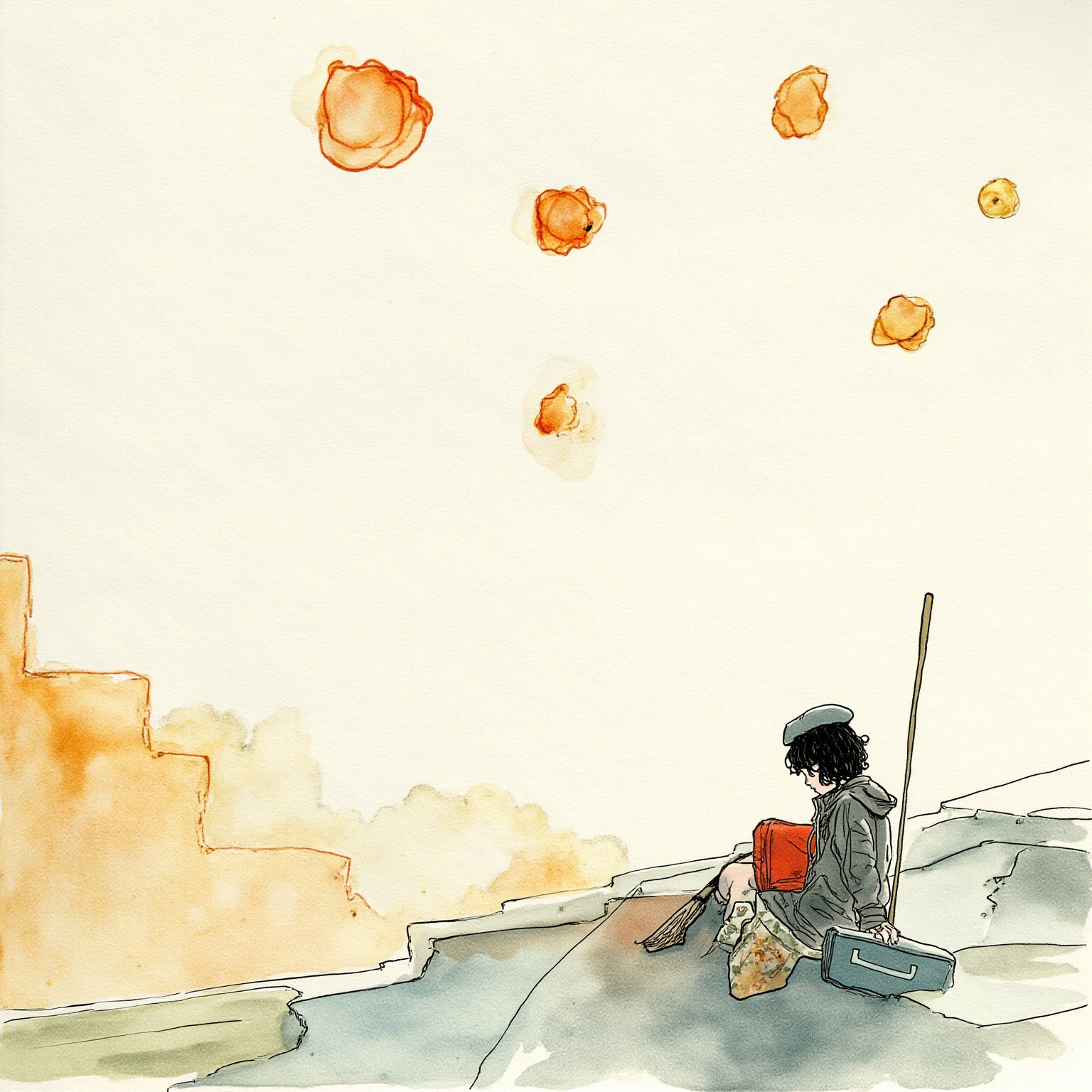
On the edge of an old town in southern Europe, all that's left of the amphitheater is a half-circle of stone steps and weeds gone wild. One day a small girl of unknown origin moved into the ruins — nobody knew her age, or where she'd come from. She was thin and unkempt, living on bread the neighbors slipped her in secret. But sit across from her and start talking, and the most tangled worry would slowly untangle itself: she didn't solve anything, she just let you work it out. She never did a thing. She only listened.
Years later the town would come down with a strange sickness — everyone rushing, everyone blank-faced, too busy even to glance at their own children. Momo was the one flaw in that sickness. This book is about how she used the simple fact of doing nothing to take a city's time back from the thieves who had stolen it.
Momo is a fantasy novel the German writer Michael Ende published in 1973. On the surface it's an adventure story for children; underneath, it's a philosophy of time and a critique of consumer society written for adults. It won the German Youth Literature Prize the year it came out, was later translated into more than forty languages, and became a book no survey of postwar German children's literature can skip. Ende went on to become better known for The Neverending Story, but for many readers Momo is still his best book.
Ende was writing in the afterglow of West Germany's economic miracle, when the cult of efficiency was just taking hold. He turned that mood into a villain — men in grey who make their living convincing people to save time. Read it today, in the middle of your own there's-never-enough-time anxiety, and it can feel like it's talking about the café downstairs from you. That is why people keep coming back to it.
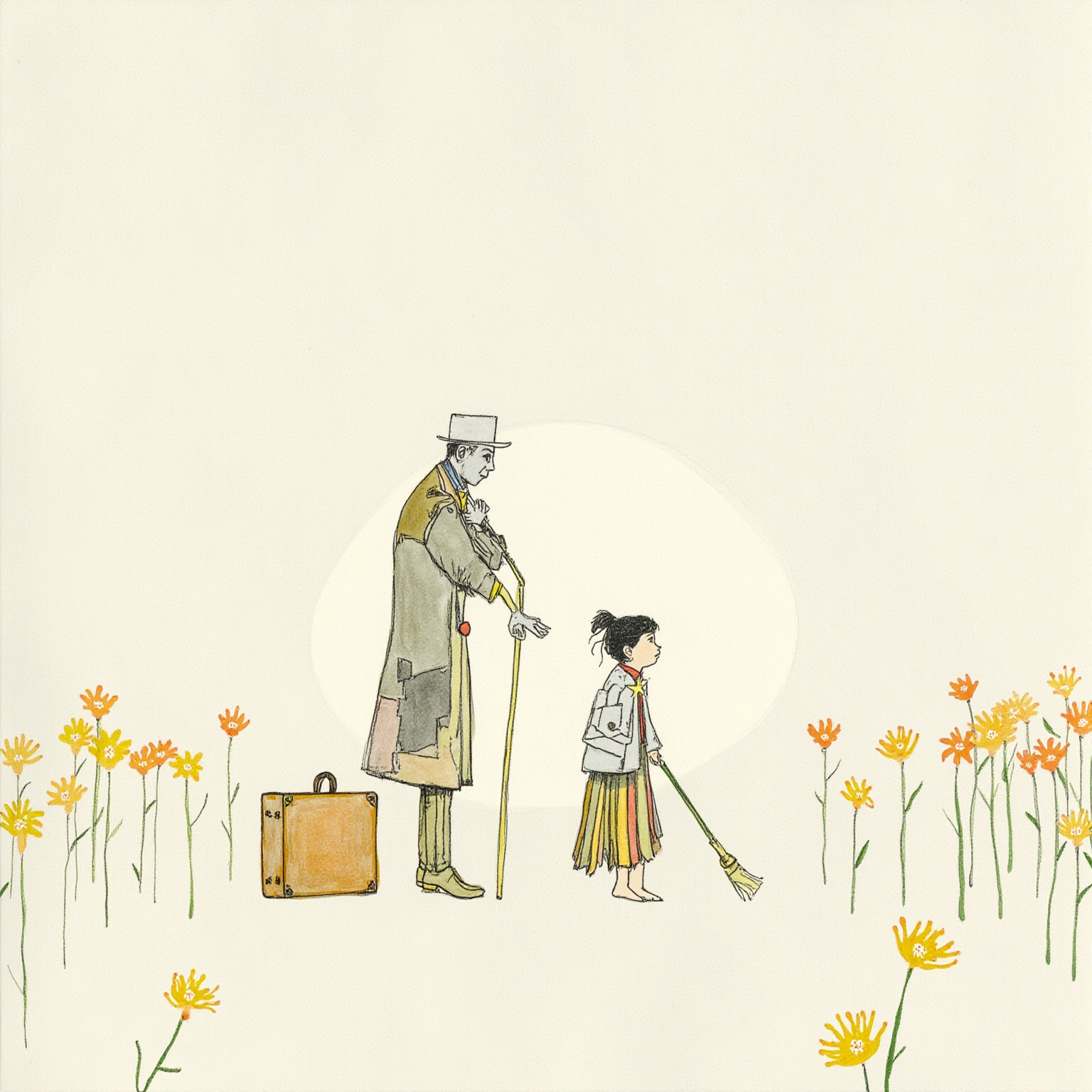
Momo's three closest friends are Beppo, an old street-sweeper; Gigi, a young tour guide who spins tall tales for a living; and Nino, who runs the tavern by the amphitheater. Each of them shows a different way the time-famine eats a person. Beppo goes around warning everyone about the men in grey, nobody believes him, and he nearly gets locked up as a lunatic. Gigi dreams of fame, actually gets it, becomes a storyteller everyone wants a piece of, and empties himself out under the applause, drifting away from Momo. Nino, the kindest of the three, gets talked into the men in grey's logic too, and for a while turns cold and calculating, chasing off his old regulars. The old, unnamed southern European town underneath all this had poor but lively lanes, washing lines strung overhead, neighbors laughing — that is the real ground the story stands on.
The men in grey are a different kind of creature altogether. Dressed identically, calling themselves advisors from the Time Saving Bank, they go door to door talking people into signing up — banking the hours spent with family, chatting with friends, staring into space, playing, all filed under wasted time, which the men in grey then roll into cigars and smoke. They aren't really alive in any ordinary sense; they are parasites feeding on human forgetfulness and waste, and if the cigar supply ever runs dry, they crumble into ash. This isn't a fight against monsters. It's a debt coming due.
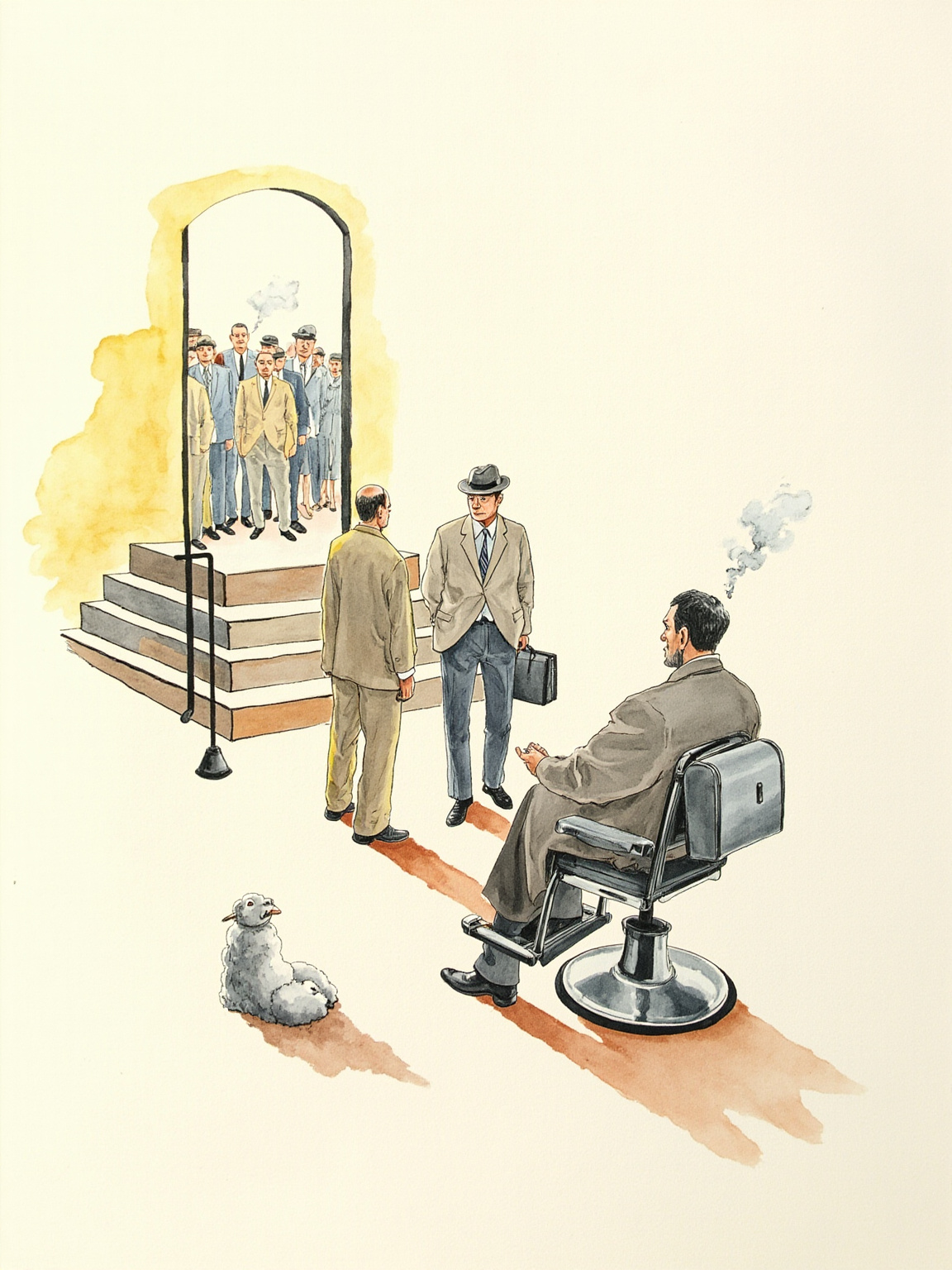
At first the men in grey don't grab anyone. They just talk. They find the barber, the housewife, the small shopkeeper, and do the math for them with great sincerity: thirty minutes chatting with your wife every day adds up to a hundred and eighty-two hours a year; how many hours will you waste over a lifetime playing in the sand with your kid? Why not bank that time and spend it on yourself later? People sign, and hand over their own companionship and small talk in the process. The strange part is that nobody feels robbed. They feel like they're managing their finances.
What you've read so far is just a map. The text itself is the land. Beppo's way of living — sweeping one stroke at a time — will make you want to actually stop and breathe when you read it in the book. The weight of a time flower opening in Master Hora's hall is something no summary can hand you. And the men in grey's endless, gentle, always-thinking-of-you sales pitch only sends a chill down your spine when you read it yourself.
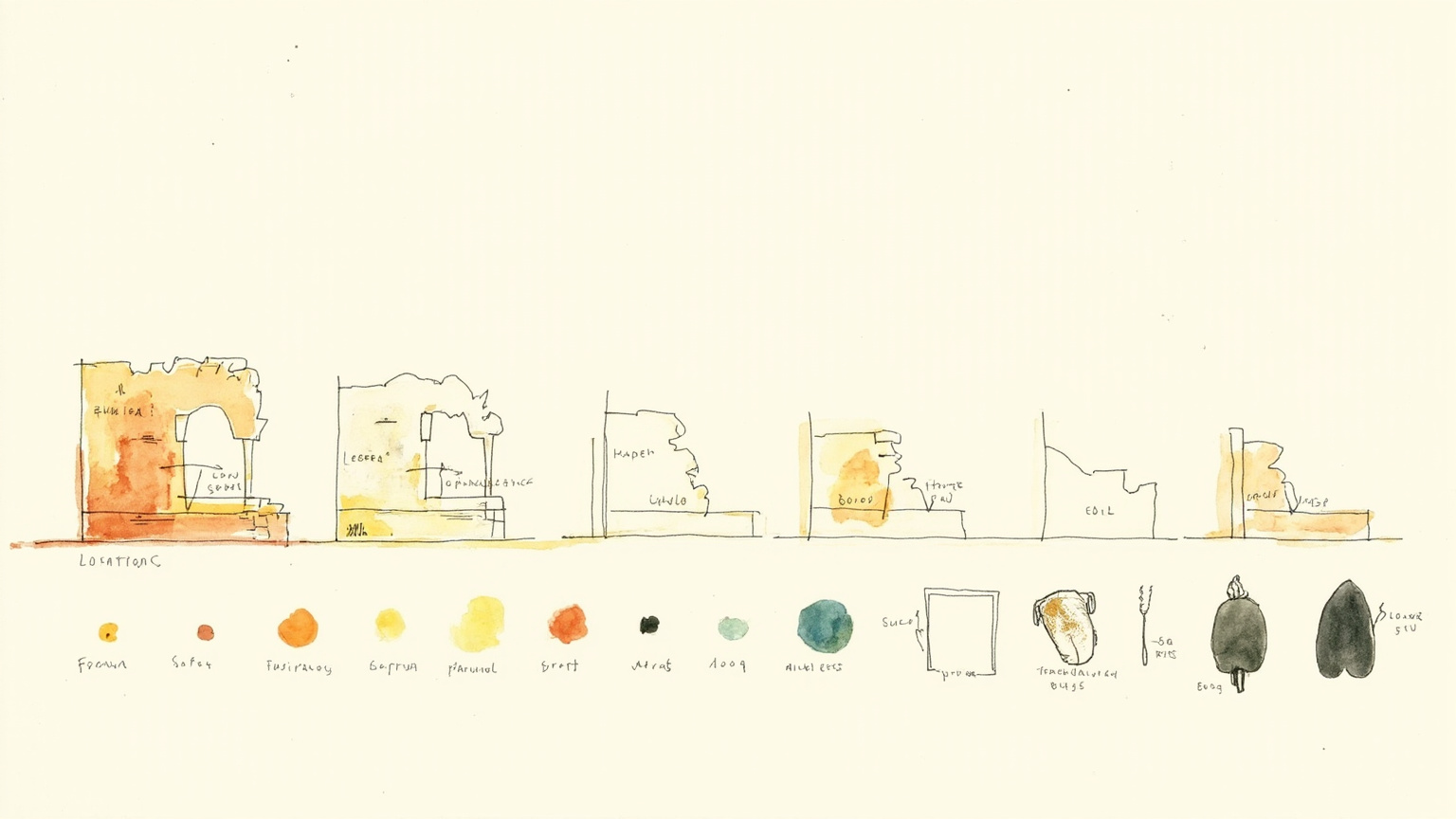
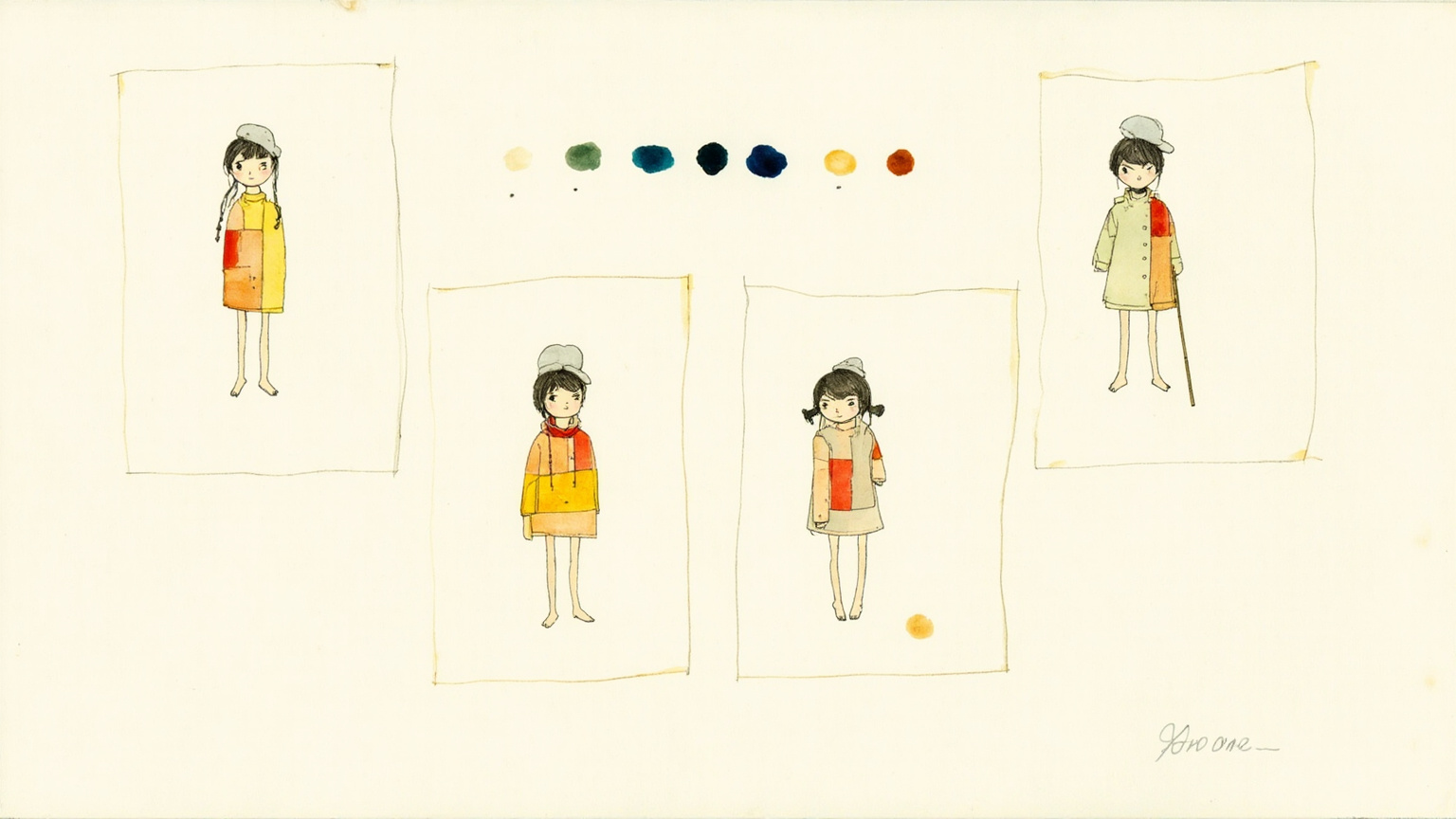
Before the guide was written, this book got a visual foundation — every illustration you just read grew out of it.
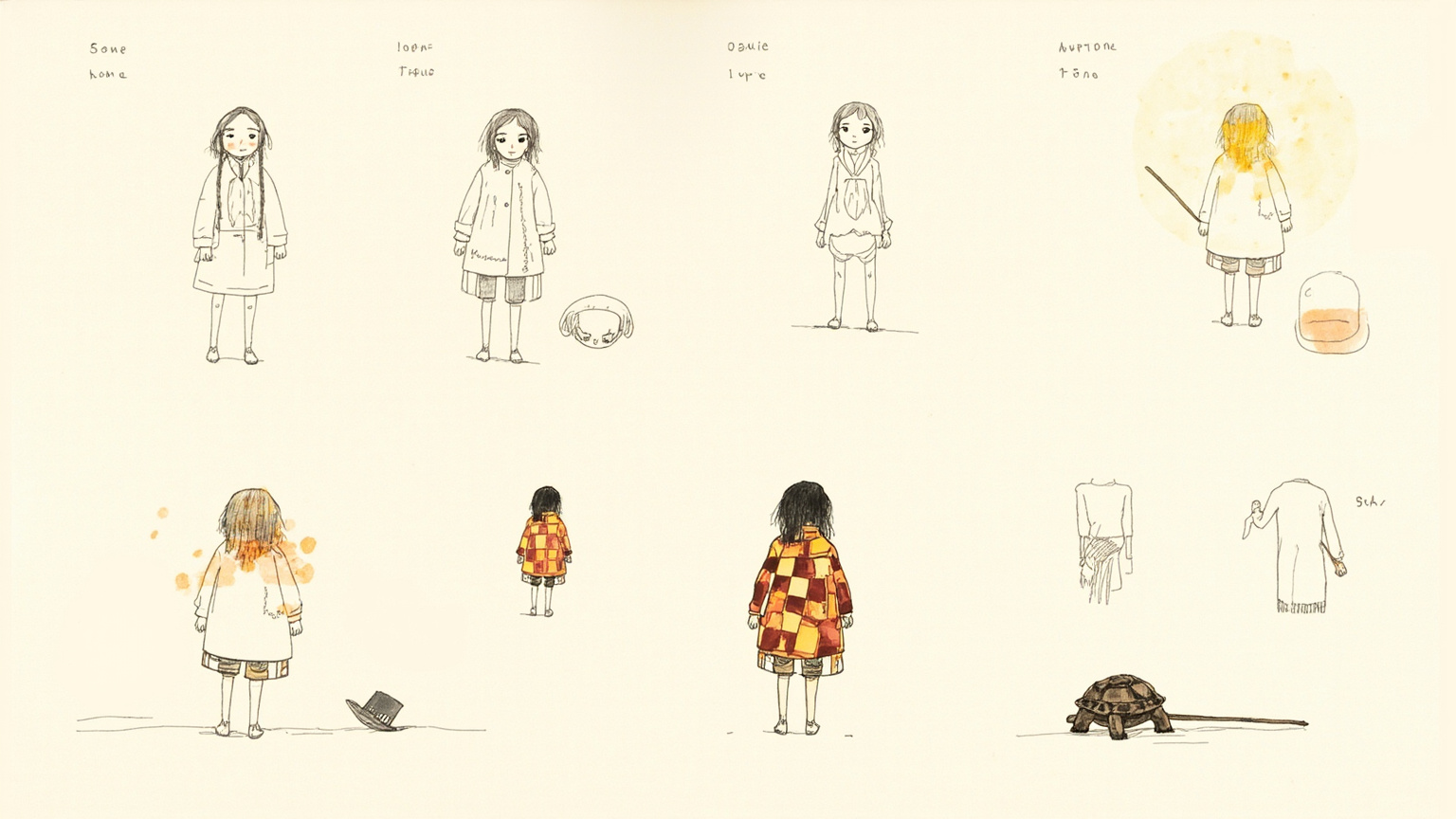
The cruelest stroke in the book is this: the people who save time do not get richer. They get more anxious, more hollowed out. One by one, the adults around Momo turn brisk and distracted, answering their children's questions while looking somewhere else. Nino's tavern loses its late-night chatter. Gigi's stories get shorter, his eyes emptier. The whole town seems to have been switched to fast-forward, and nobody notices anything wrong. I stopped short the first time I read this part — the more you save, the poorer you get, and that loop is running somewhere close to home right now.
One craft choice is worth flagging: Ende never makes the men in grey monstrous. He writes them as patient, polite salesmen who always seem to have your best interests at heart. Nobody forces anyone to sign. That is the sharpest thing in the whole book — modern alienation told as a deal you talked yourself into.
The men in grey quickly work out that Momo is the one hole in the plan: spend even a little time with her, and people remember themselves again — who they love, what they're afraid of, the sentence they never got around to saying to someone. She has exactly one gift: listening with her whole attention. No wand, no charm, no spell. She just lets you talk your way to the bottom of what's bothering you, and lets you hear your own answer. There's no stopping that, so she has to go.
First they send in a talking doll to lure her, promising stardom and a beautiful house. Momo doesn't bite. So the men in grey drop the politeness and hunt her down street by street — and that is when a tortoise named Cassiopeia shows up.
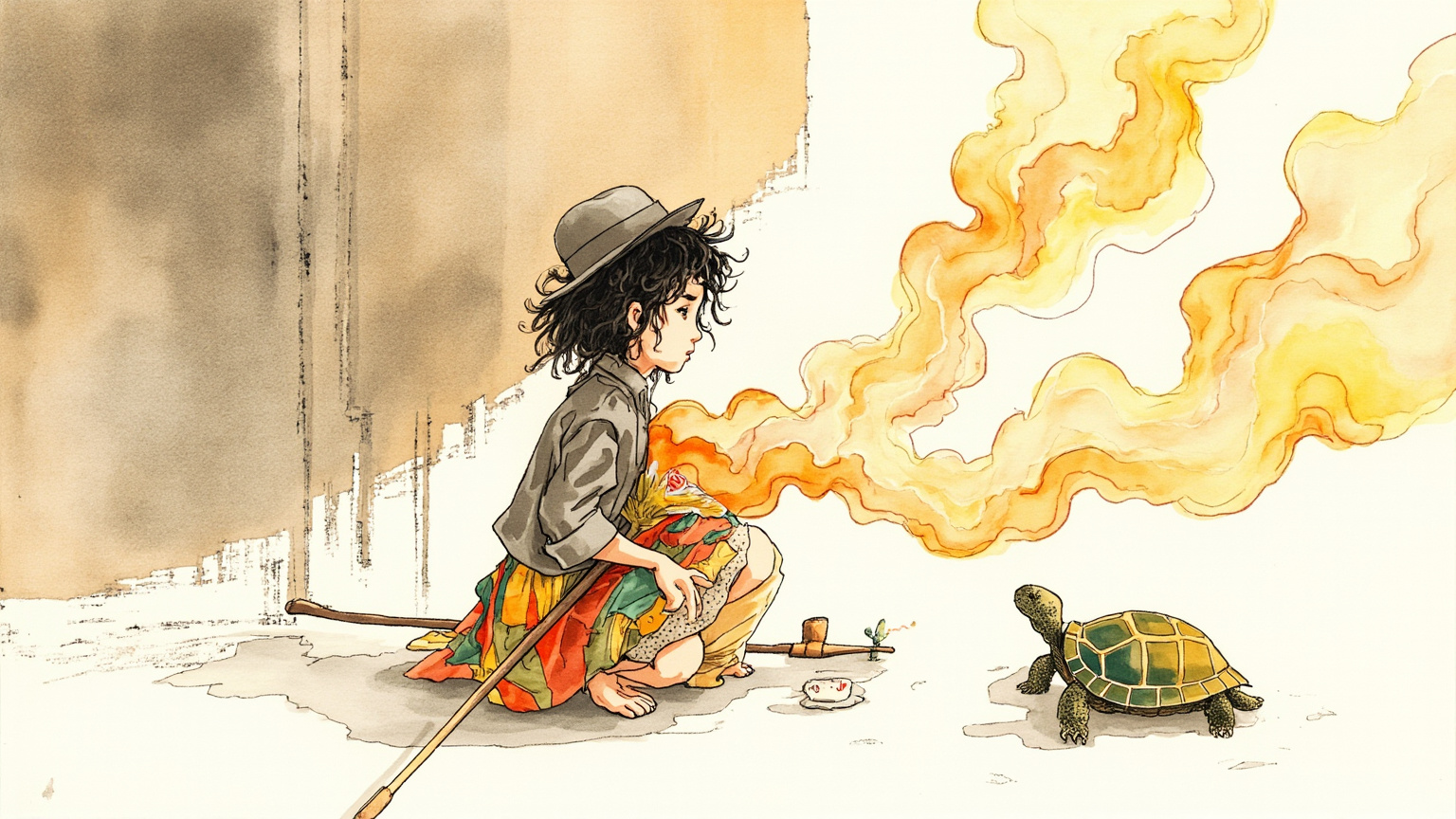
Cassiopeia isn't some giant magical beast — she's an ordinary-sized tortoise who talks by letters that surface on her shell, and who can see half an hour into the future. Master Hora sends her to fetch Momo. She leads Momo into a strange passage called Never Lane, where a sign at the entrance warns that the lane has no way out — you have to walk backward, facing the way you came, to reach the end at all. Walking backward is one of the book's quiet little philosophies: you have to look back before you can really move forward.
At the far end, Momo reaches Nowhere House, the home of Master Hora, the keeper of time, a place set outside ordinary time altogether. There's no day or night here, only a single enormous tree of time. Master Hora walks her into a great hall where flowers open slowly all around her — each one an hour, a day, a year that someone has lived. Only now does Momo understand: time isn't money, isn't something you can bank. Time is life itself. It blooms, and it withers.
Master Hora lays out the truth about the men in grey: they aren't truly alive, only parasites living off human forgetfulness and waste, kept going by the cigars they smoke. Cut the supply and they crumble into ash on their own. By this point in the book, the villains don't really have a motive that needs defeating — they read more like a symptom.
With their cigar supply running low, the men in grey panic and surround Momo's amphitheater, determined to claw back the last of their stolen time. To protect her, Master Hora simply stops time across the entire world — people freeze mid-step on the street, raindrops hang in the air, even the wind stands still. He leaves Momo one flower of time as a pass, so she alone can still move through a world that has stopped.
It's a breathtaking move: Master Hora saves Momo not by sending an army but by stopping every clock on earth. There's something a little brutal hiding in that — to protect one child, everyone else quietly living their lives gets frozen too. I felt uneasy reading this part, and also felt it was exactly right: rescue is never free.
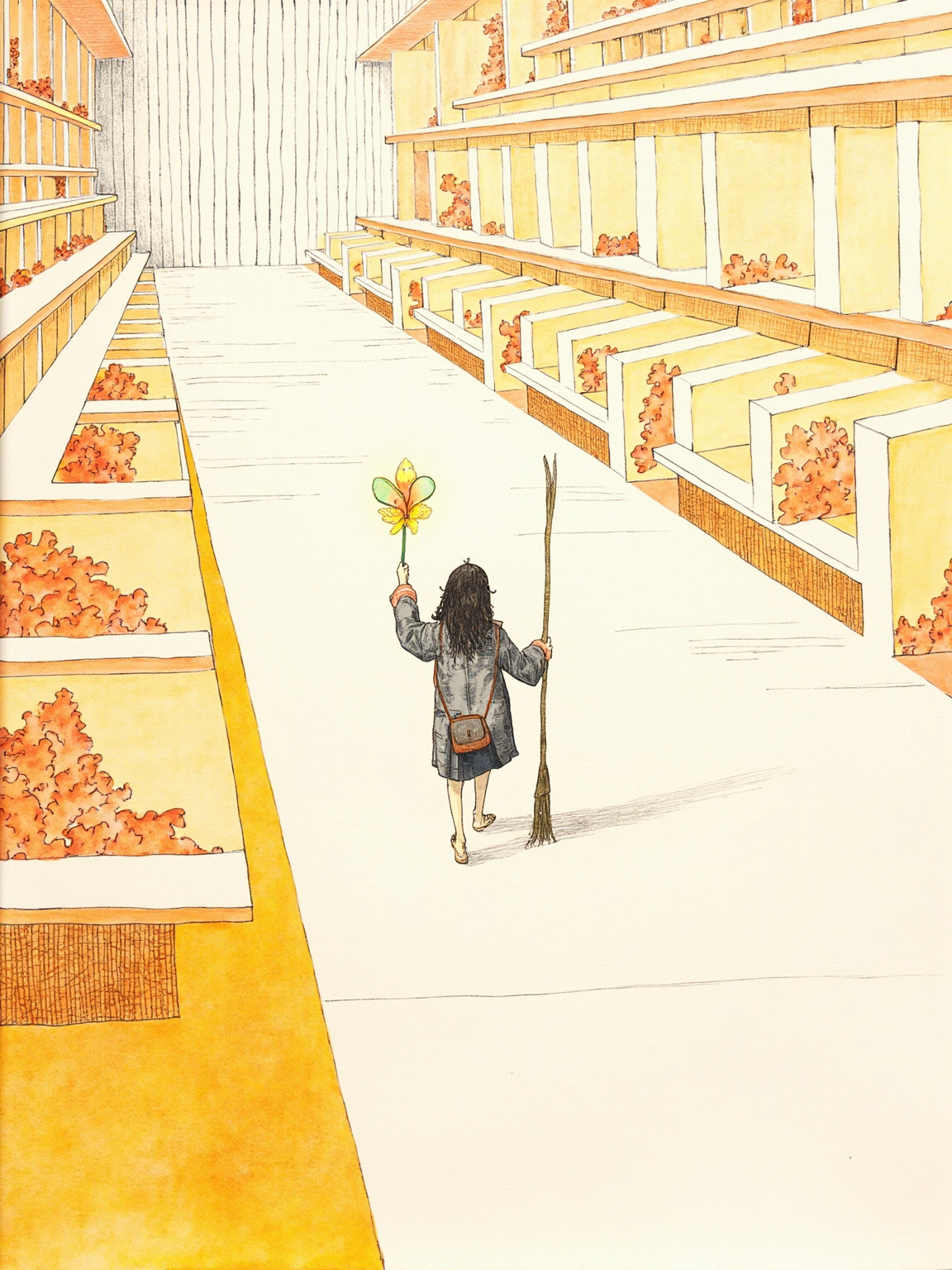
Following Cassiopeia, Momo makes her way to the town center and slips into the underground vault where the men in grey keep their frozen time flowers. It's stacked floor to ceiling with time stolen from countless people, wilting flower by flower, waiting to be rolled into cigars. Inside, the men in grey are still settling accounts among themselves as their cigars burn down one by one; they crumble into ash, one after another, in the middle of hunting her. The last one begs her to hand over the time flower she's carrying so he can open the vault. She refuses, and he crumbles too.
Momo opens the vault. Millions of frozen time flowers pour out like a storm, breaking through the ground and flying back to the people they were taken from — a child gets back the hours his father saved instead of spending them with him, the barber gets back afternoons of chatting with his regulars, Nino gets back the late nights of talking nonsense with his drinkers. Time starts flowing again, and the whole town snaps back to what it was.
Notice how the ending works: Momo never once fights the men in grey head-on. She wins not by defeating them but by giving things back. She opens a door and lets what was stolen find its own way home. It's a rare kind of victory for a fairy tale — not a bigger force winning, but a debt torn up.
What Ende is actually saying, under the fairy-tale surface, is simple: real wealth isn't the time you save, it's the time you spend — a meal with your family, half an hour wasting words with a friend, ten minutes staring at nothing, watching a flower open. None of that can be banked or compounded, but it's what time actually is. The men in grey's bank is a metaphor: the moment we outsource our lives to efficiency metrics and price companionship as opportunity cost, we've signed ourselves into that same bank.
The other theme people keep returning to is listening. Momo's superpower is sitting across from you, doing nothing, and letting you finish what you have to say. In an age when everyone is fighting to talk, fighting to be seen, that's close to a revolutionary act. Ende gives her no magic object on purpose: plain, undivided attention is the power. That is why we're still opening this book fifty years later.
Time you save doesn't make you rich. It only makes you empty — Momo says that more plainly than any book on personal finance dares to.