1697: a member of the French Academy carries folk stories into Versailles
Text and illustrations produced by the pipeline
The clock strikes twelve, Cinderella flees the ball, and a shoe falls on the stairs. In Perrault's French it is verre—glass, not crystal. Later translators and Disney turned it into a crystal slipper, and the mistake has held for more than a century. But the original text is plain: a glass shoe. This is not a trivial detail. It is one entry point among dozens into this book's real subject: the fairy tale you think you know is not the one that was written.
Tales of Mother Goose was published in Paris in 1697 by Claude Barbin. Its author, Charles Perrault, was sixty-nine years old—an academician of the Académie Française who moved easily through the salons of Versailles, and who had, in his younger years, overseen art and scholarship for Louis XIV. He took stories that had circulated by word of mouth in the countryside and rewrote them as French prose fit for the king's court, closing each one with a rhymed moral—Perrault's own term was morale, often rendered in Chinese as 'lesson,' though what he actually wrote is usually ironic, aimed at adult readers. The eight tales are Cinderella, Sleeping Beauty, Little Red Riding Hood, Bluebeard, Puss in Boots, The Fairies, Little Thumb, and Sleeping Beauty in the Woods. The names we now reach for without thinking—Cinderella, Sleeping Beauty, Little Red Riding Hood—owe their literary identity to Perrault first. The Brothers Grimm's Children's and Household Tales, which came a hundred and twenty years later, was written standing on his shoulders. This is the threshold in world literature where the fairy tale crossed from folklore into literature.
In Paris in 1697, a circle of noblewomen sat talking around a fireplace in a salon. Perrault was among them, setting down, one by one, in French fit to be read aloud in that room, the country stories he had heard as a child from his nurse. He was no folklorist out gathering material in the field; he simply carried the hearth, the spinning wheel, and the forest path straight into the gilded drawing room. Cinderella's hearth answers to the prince's ball, Little Red Riding Hood's forest answers to her grandmother's cottage, Puss in Boots walks from a wheat field all the way to the king's carriage. Court and countryside sit side by side, and together they make up the world of this book: the France of Louis XIV, with a pumpkin coach and a crystal chandelier hanging from the same stage.
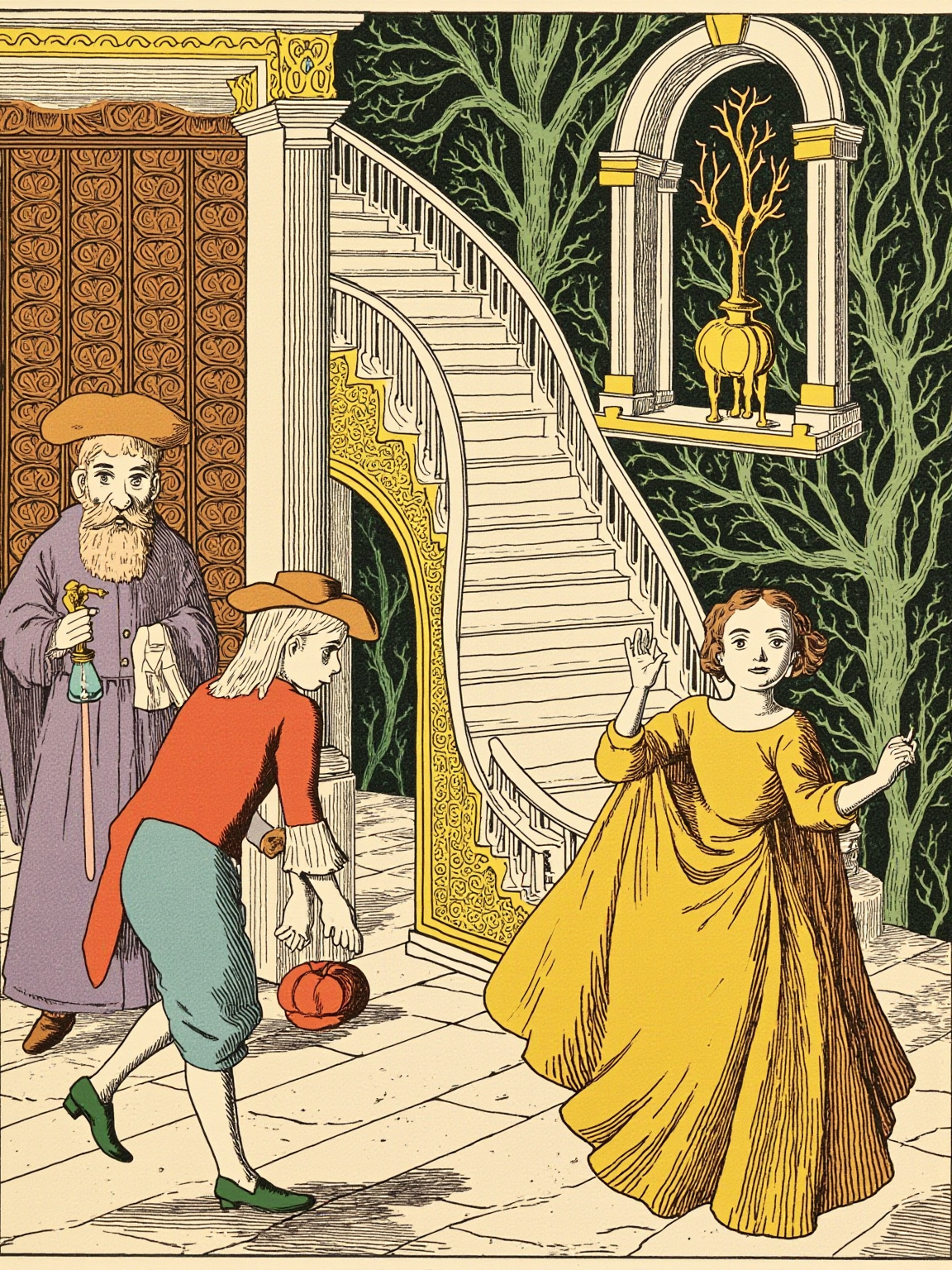
A young woman, worn down by her stepmother and two stepsisters, sits alone by the hearth, and a fairy appears. Note that Perrault's fairy is not the kindly, soft-faced 'fairy godmother' of later versions but a figure of considerable style and presence, who waves a wand and turns a pumpkin into a coach, mice into horses, a lizard into a footman. Cinderella is sent off to the prince's ball, dances with him, and when the midnight bell sounds she flees in a hurry, leaving a glass slipper on the stairs.


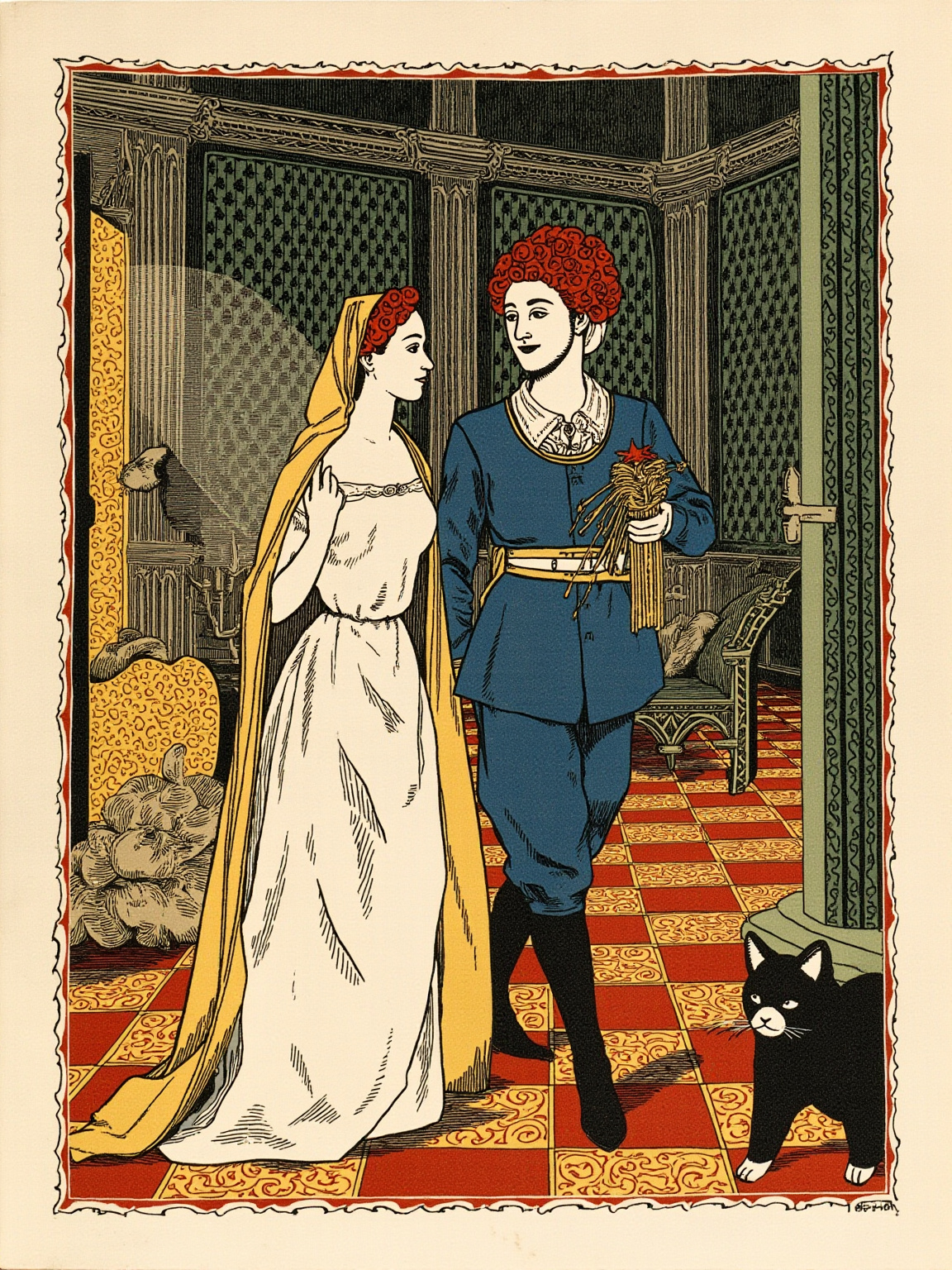
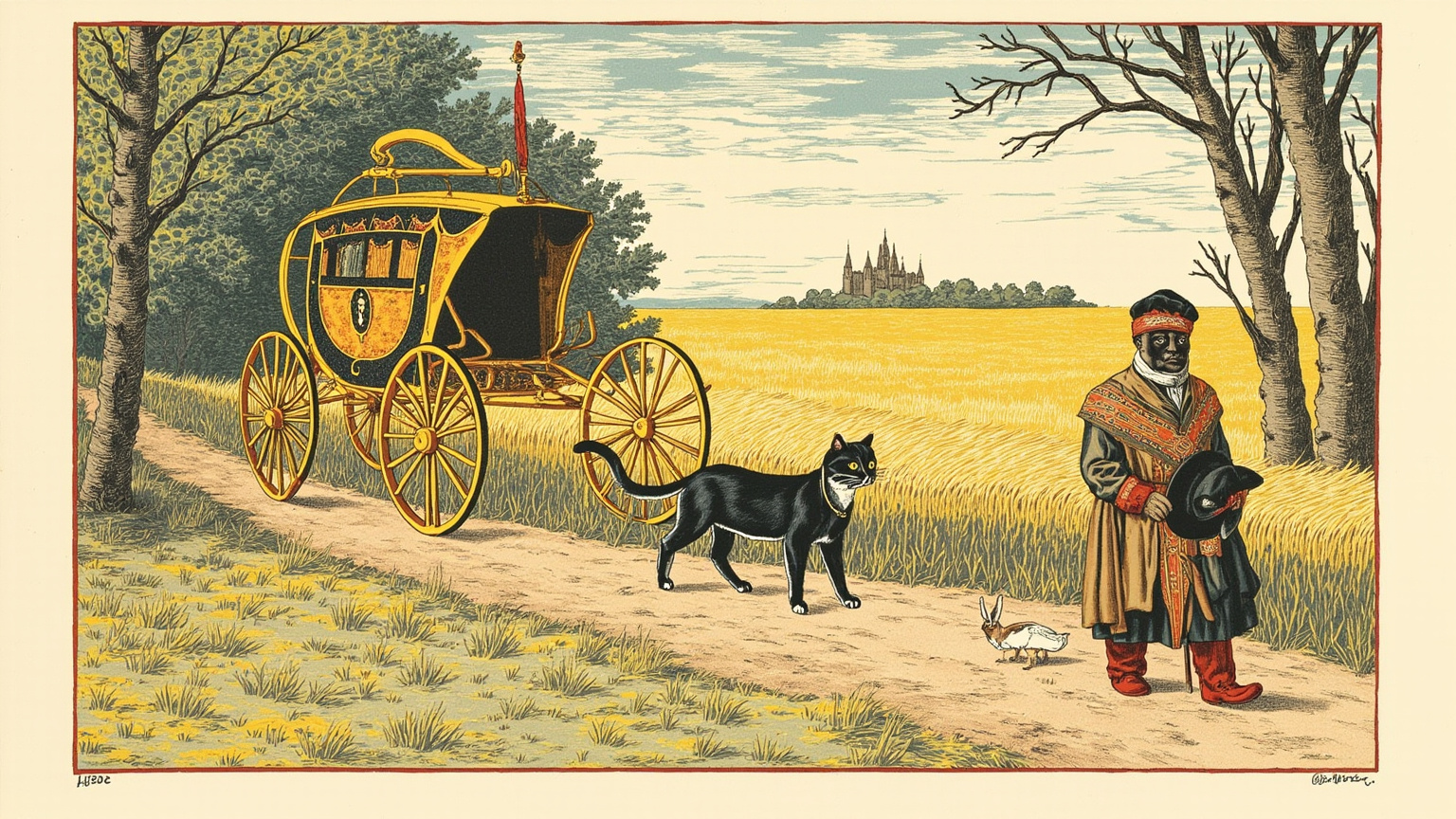
On his deathbed a miller leaves the mill to his eldest son and a donkey to his second, and to the youngest, nothing but a cat. The cat puts on boots, presents the king with gifts in his master's name, talks an ogre out of his own estate through cunning, and arranges for the king's carriage to pass through his master's wheat field—and by the end has pushed the miller's youngest son into marriage with the king's daughter. This is not the round-headed, big-eyed pet of the Disney version. Perrault's cat is a calculating master of spin: the gifts, the swallowed ogre, the staged roadside encounter, all of it built to carry a man of the lowest birth to the king's own family. It is the most anti-heroic arc in the whole book, and the one later retellings have sanded down the most.
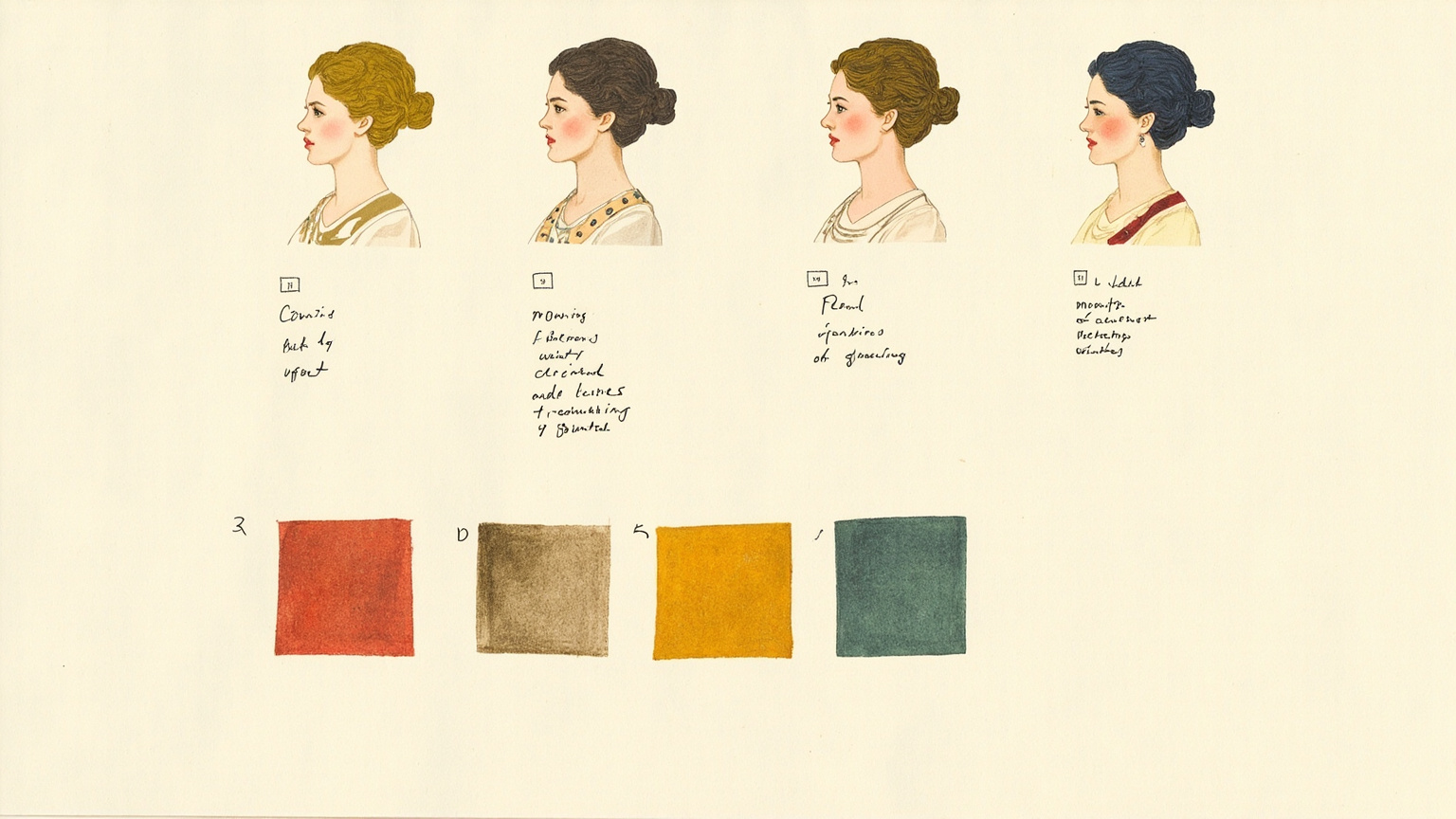
Before the guide was written, this book got a visual foundation — every illustration you just read grew out of it.
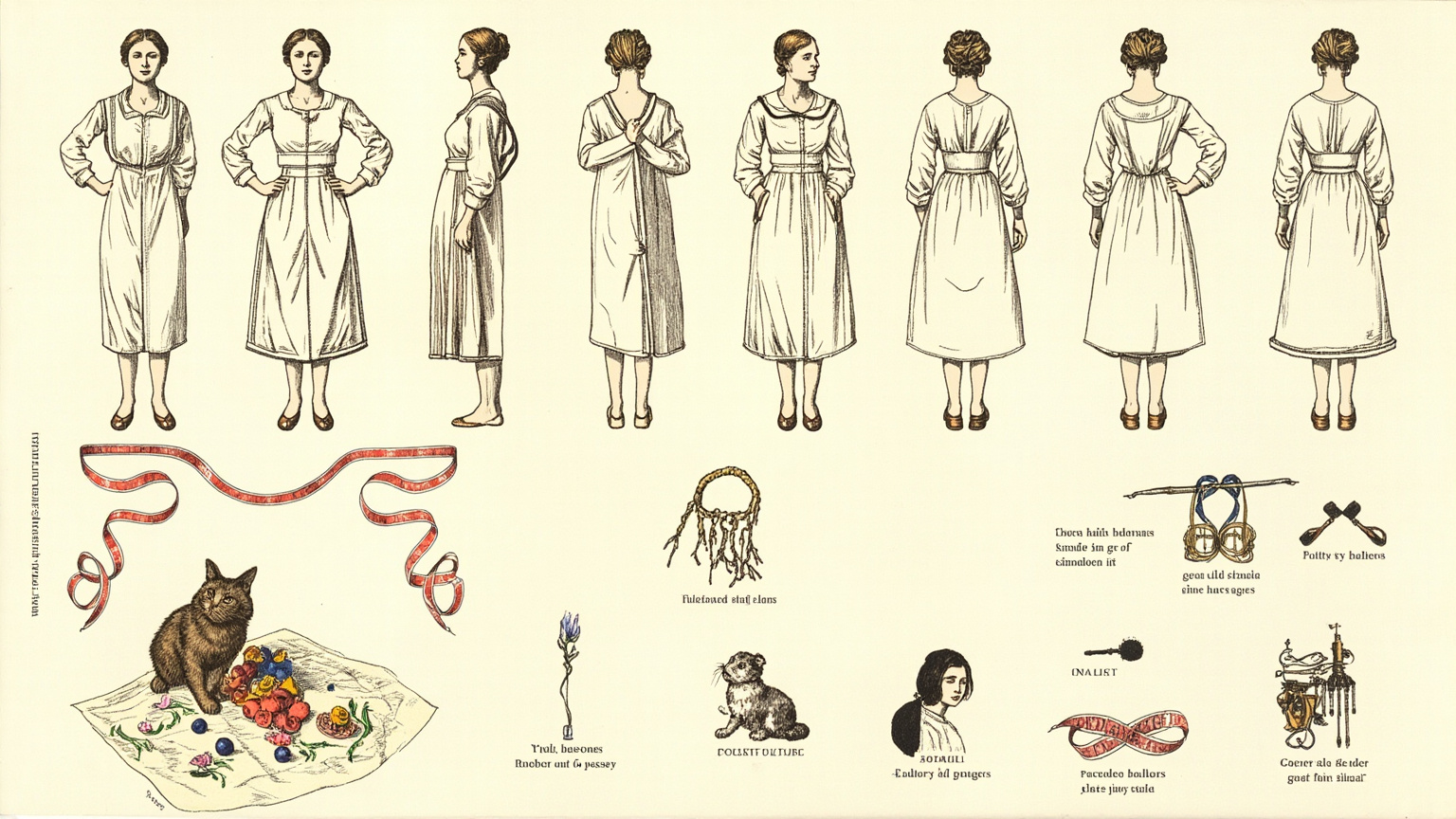

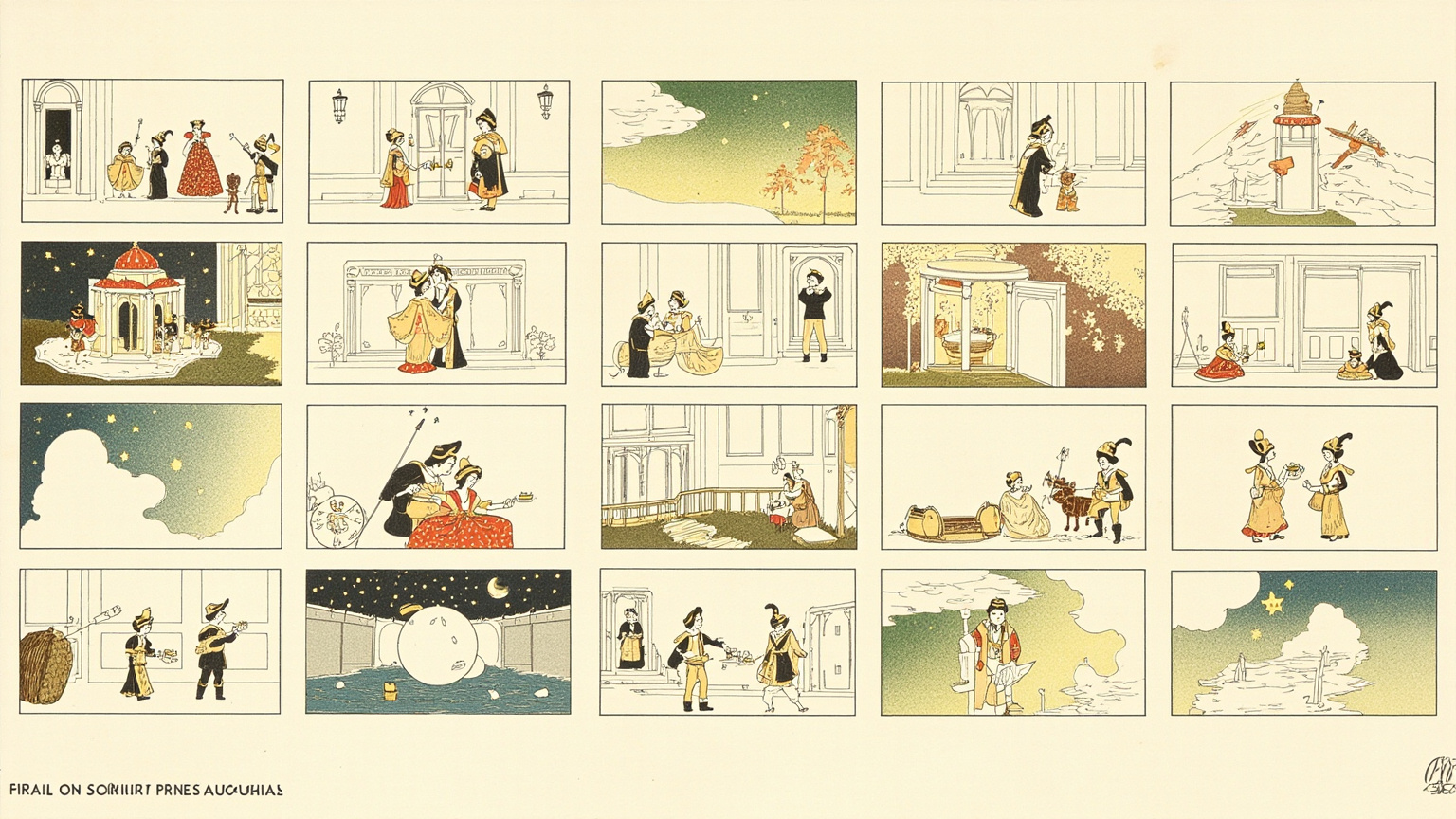
Where does the craft show? Perrault took a rough tale that had lived by word of mouth and rewrote it in a register fit for a Versailles salon—ballroom gowns, dance steps, a gilded carriage sitting right next to hearth ash and a pumpkin, with nothing feeling out of place. This is what makes the book so compelling: two entirely different registers of language, sewn into one piece of cloth.
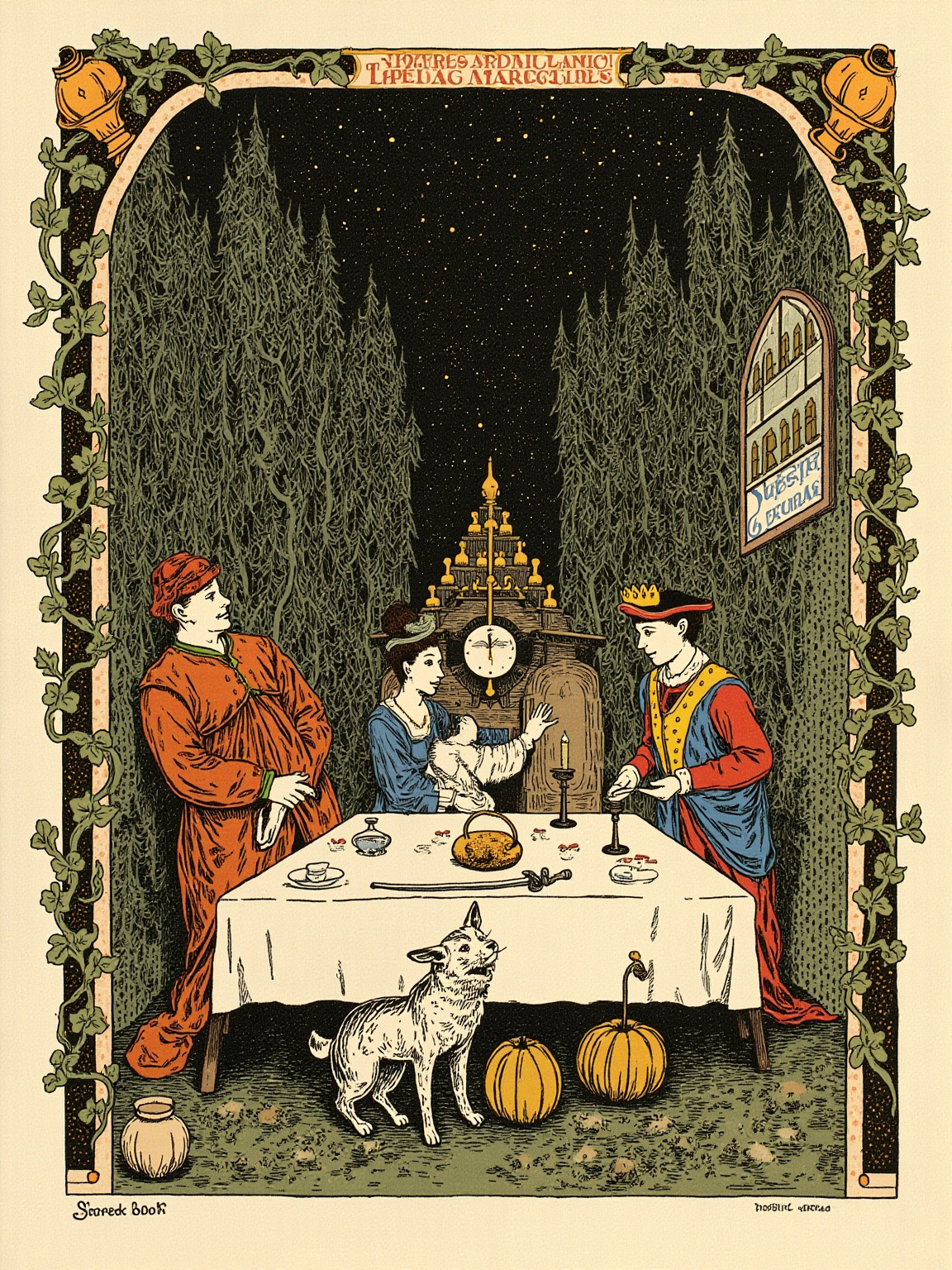
At a grand christening feast, a fairy who was left off the guest list curses the infant princess: she will die by a spindle. Another fairy softens the curse—not death, but a hundred years of sleep. A century later a prince cuts through the forest, pushes open the door of the sleeping castle, and wakes the princess with a kiss; the whole court wakes with her, the royal cook picks up where he left off, and the roses bloom at the same moment. The softening of the curse is Perrault's own invention. In the oral versions, Sleeping Beauty's sleep has no such dramatic cause; Perrault turned it into a miniature court drama between two fairies squaring off. The snubbed fairy, the older one nursing her grudge—he built the salon's undercurrents right into the spell.
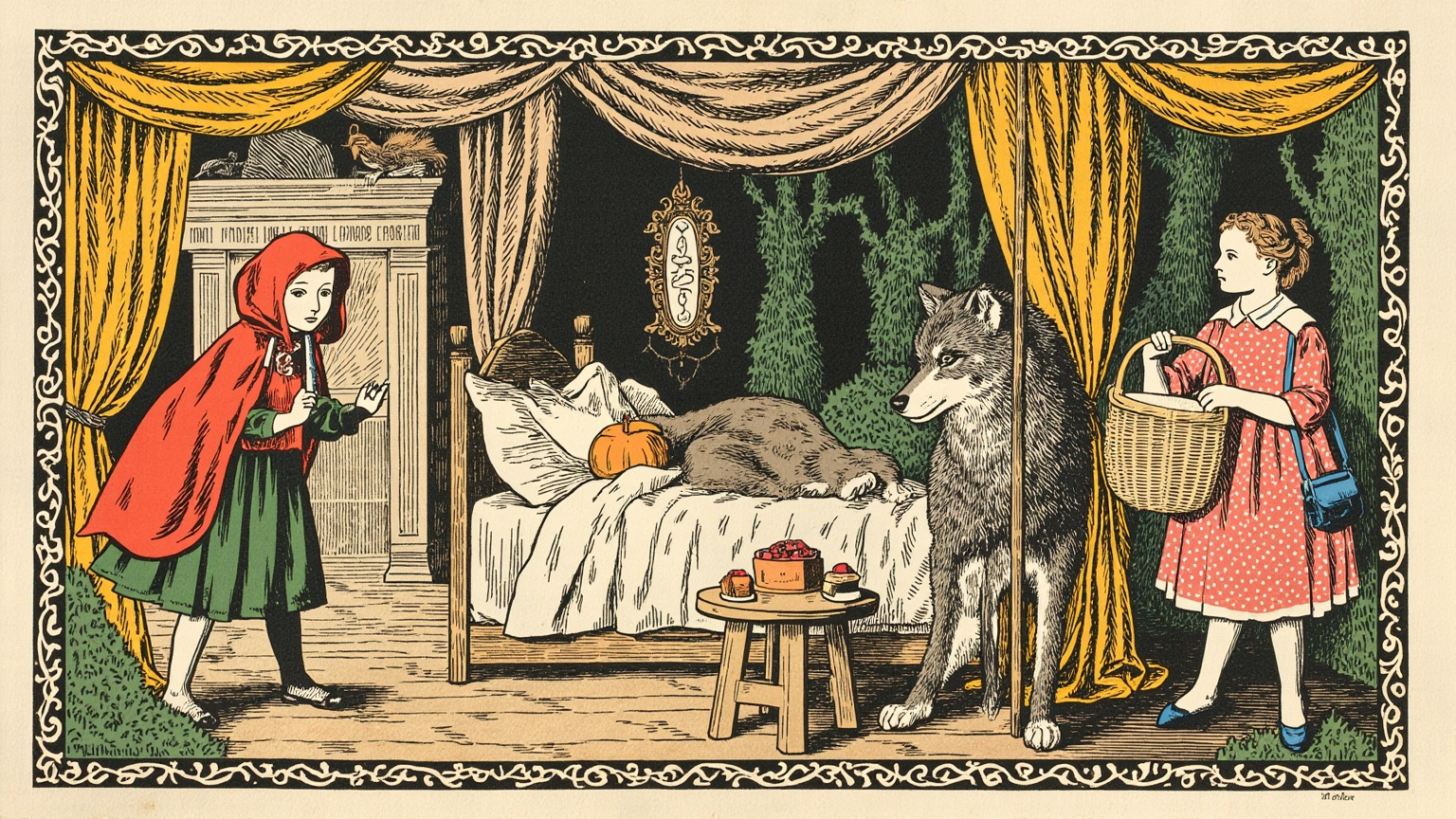
Her mother sends Little Red Riding Hood through the forest with cakes for her sick grandmother, and on the way she meets a wolf. The wolf reaches the grandmother's house first, swallows her, and lies in her bed pretending to be her. Little Red Riding Hood is lured into the bed—and there the story ends. She is eaten. No huntsman bursts in to cut her out. This is the detail Chinese readers most often misremember: the rescue of Little Red Riding Hood and her grandmother is a Grimm addition from 1812, not Perrault's ending. Perrault's own version closes instead with an ironic moral in verse: the wise see through the wolf, it is the innocent who fall. That line was never meant as a warning for children. It was a piece of worldly wit for the adults in the Versailles salon reading it.
Perrault's attitude toward Little Red Riding Hood is the most uncomfortable thing in the book, and the most worth sitting with. In the oral tradition the girl is an object of sympathy; Perrault withdraws that sympathy and turns her instead into a cautionary figure for innocence walking into danger. It is the first time children's literature speaks in that cold, adult register.
A wealthy nobleman with a blue-tinged beard takes a new wife and hands her a ring of keys, telling her she may enter every room in the house except one small door on the lower floor. Her curiosity wins out in the end, and she opens it. Perrault's Bluebeard is not the pure demon of gothic fairy tale; he is closer to a titled man with a place in high society, a tyrant of the Versailles kind who keeps his horrors behind a gilded door. The bride is saved just in time by her brothers, and Bluebeard falls under their sword. One detail here is often lost on Chinese readers: Perrault's text never describes what the locked room actually looks like, never shows the bodies of the previous wives. Everything stays behind the door marked forbidden. That restraint is the salon at work—horror is to be suggested, not shown.
Glass, not crystal. That is what Perrault actually wrote. Little Red Riding Hood is not saved. That is how Perrault's version ends. Puss in Boots is a spin doctor, not a pet. That is Perrault's cat. Bluebeard is a tyrant in the Versailles mold, not a gothic demon. That is Perrault's villain. Nearly every one of the eight tales carries this same gap between what Perrault wrote and what later became the standard version, and any one of them could carry a whole lecture on textual history by itself. The first time I read that detail about the glass slipper, I went back and reread the whole of Cinderella. A single shoe's material, wrong for a hundred years and counting—that alone is a small course in how texts drift.
Half of what you think you know about these eight tales was quietly rewritten after Perrault. He is the source.
On the surface these are eight strange tales for children. Underneath, they are adult fables from the salons of Louis XIV's court. Cinderella's patience, Sleeping Beauty's sleep, Bluebeard's bride and her curiosity, Little Red Riding Hood's obedience—the women's fates differ across the eight tales, but the cost of obedience, and the cost of stepping outside it, keeps coming back as a theme. Puss in Boots and Little Thumb run the opposite direction: characters of the lowest birth climb by cunning alone, Perrault's coldest anti-heroic arc. The short moral in verse at the end of each tale is the book's most hidden signature. They are often ironic, worldly lines meant for adult readers: the wise see through the wolf, it is the innocent who fall. Writing the fairy tale as fable gave children's literature its first adult register. That is the most underrated thing about this book.
A companion guide gives you the map. The text is the ground itself. The rhythm of Perrault's French in the salon register, light, dry, ironic, dropping a reversal every couple of lines, is exactly what any retelling loses in the telling. More than that, there are the eight moral verses: rhymed, cold-humored, pitched in the exact tone of Louis XIV's court salons, a tone you cannot hear unless you read the original. And there is the physical detail: Cinderella's undignified scramble down the stairs, the thickness of the wax pooling on the table in Sleeping Beauty's castle, the moment the curtain closes around the bed as Little Red Riding Hood is drawn in—all of it built line by line with Perrault's own pen. No companion guide gives you that presence. Go read the text. Read how a sixty-nine-year-old academician wrote the coldest stories in the lightest French he had.