Mozi · Companion Guide
墨子
一个穿短褐草鞋的人走上郢都朝堂,拆掉一架云梯,止住一场国战,然后坐下来写守城手册。
1. Opening: The Siege Ladder
Gongshu Ban, the most skilled craftsman in Chu, had carved a siege ladder out of wood, ready to take the small state of Song in one stroke. A man came walking from the north, dressed in coarse hemp, sandals on his feet, a few leather straps and a wooden model case rolled up in his bundle. He reached the gates of Ying, the Chu capital, and told the gatekeeper: I want to see the King of Chu. I want him to call off this war. His name was Mozi. Every chapter in this book starts from that pair of worn sandals.
2. What Kind of Book Is This, Really
Mozi was compiled across the early-to-middle Warring States period, and it is the least typical of all pre-Qin philosophical prose. It isn't a collection of half-awake sayings like the Analects, or a fable soaring ninety thousand li like Zhuangzi. It's a bound set of political-ethical treatises and an engineering manual: the first thirty-odd chapters lay out Mozi's own creed and its defenses, argument by argument; the last eleven take apart, piece by piece, the city wall, the multi-bolt crossbow, the traversing catapult, the block-and-tackle cart, and the swinging gate, in full technical detail, and wedged in the middle are the six chapters of the Mohist Canons, on logic, optics, levers, and buoyancy. In Mencius's own time its reach was wide enough that Mencius himself complained that Mozi's words filled the world; it was one of the two schools that rivaled Confucianism for dominance. Afterward it all but vanished from Chinese bookshelves, a gap in the tradition that has never gotten the attention it deserves.
3. People and World
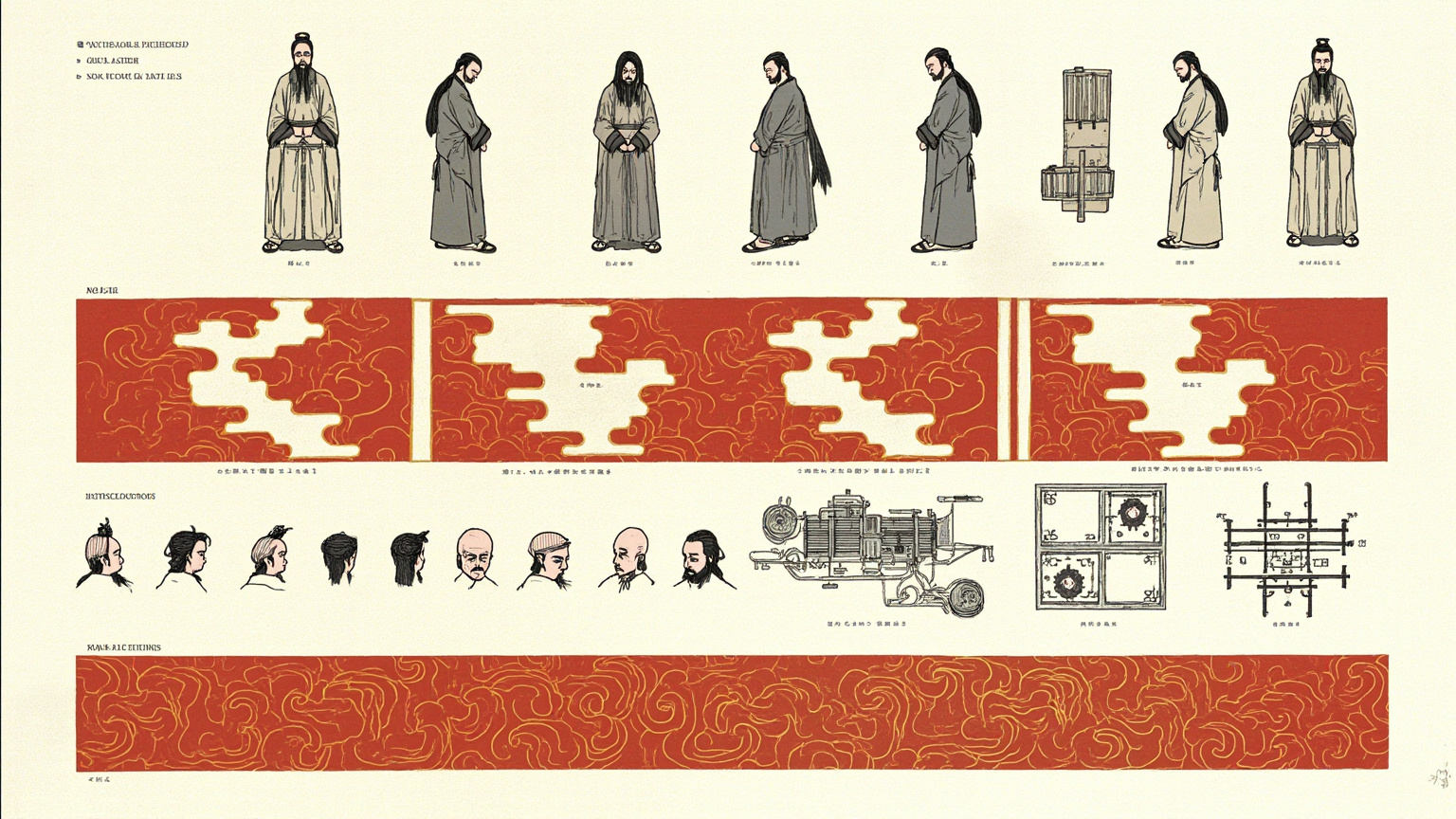
Mozi, founder of Mohism, came from humble stock and had a craftsman's hands. He is said to have built a wooden kite that flew for three days without landing. He described himself as a man who would wear himself down from crown to heel, blistering every step of the way, never stopping, to make the world's gains and losses his own business. Against the long robes and broad sashes of Confucian disciples, against Confucius holding forth like a slow-turning windmill, this school's visual signature is coarse hemp, leg wraps, and straw sandals, hard at work. He is not a white-bearded sage with the bones of an immortal. He is a master craftsman out of the workshop, a walker out of the fields.
Four figures stand beside him and hold the book up. Gongshu Ban, the most celebrated craftsman in Chu, the man who built the siege ladder, and Mozi's opposite number and fellow engineer in the chapter titled Gongshu. The King of Chu, the decision-maker, the man Mozi has to talk out of a war. Qin Huali, Mozi's chief disciple, the one who carries Mohism from debate into the engineering of city defense, and who leads three hundred disciples to hold Song. And the Juzi, the hereditary head of the Mohist order, the embodiment of a discipline that walks into scalding water and blazing fire and never turns back on its heel. Against them, on the ground, is a crowd of ordinary followers in coarse hemp and straw sandals, hard at work: running to stop wars, working the multi-bolt crossbows, drilling in the arts of city defense, the rank and file who dress the same as the craftsmen they work beside. The world is China in the early-to-middle Warring States, the northern states killing each other with their blood up, Song today and Zheng tomorrow, a war every year.
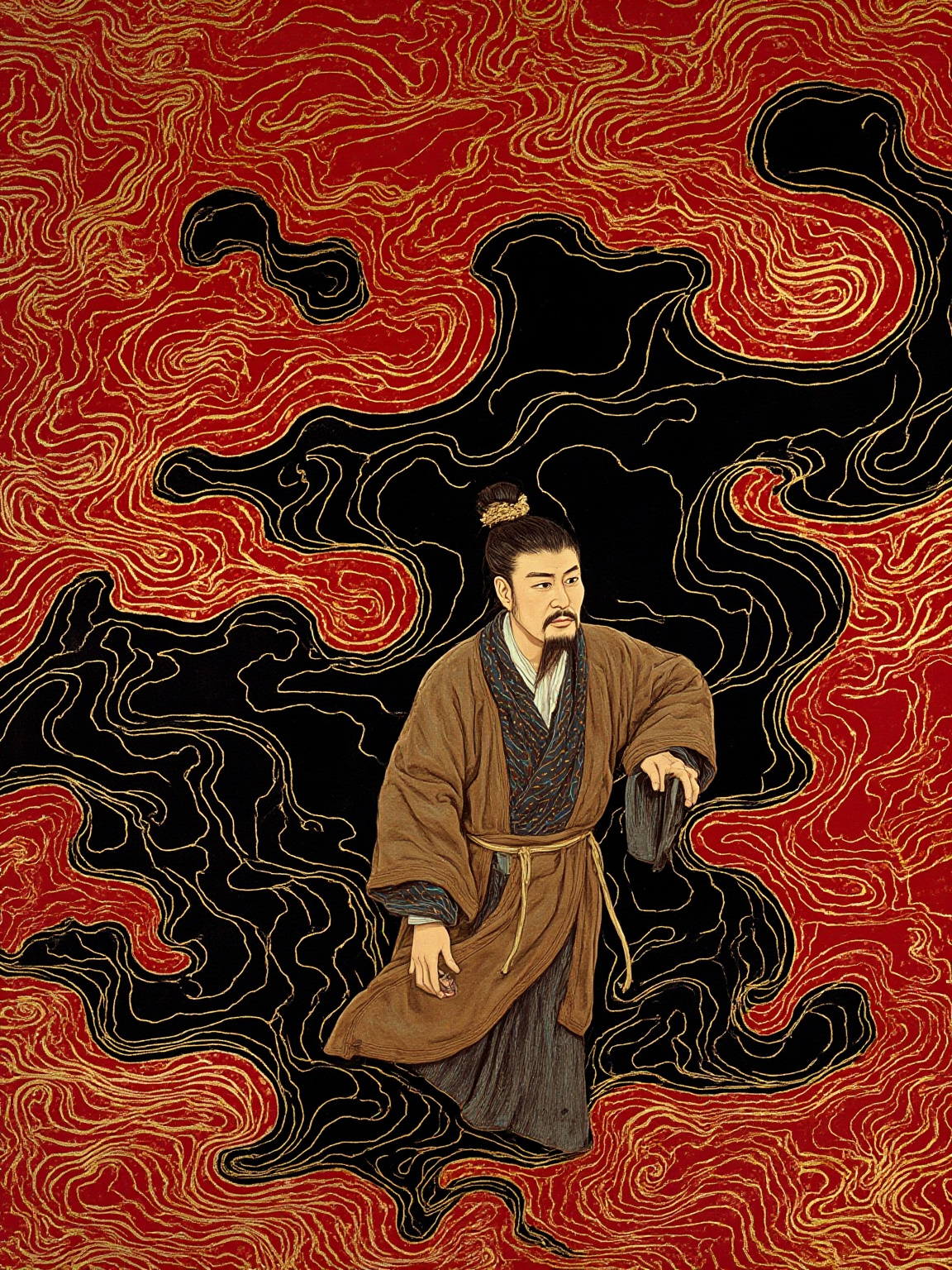
To treat the father of another as one's own father, to treat the state of another as one's own state.
视人之父若其父,视人之国若其国。
金句 · 兼爱上
4. Plot Thread One: The Creed He Founded
The first banner Mozi raised was Universal Love. The words are plain enough that anyone can grasp them; putting them into practice is ruthless. Regard another man's father as your own father, another man's state as your own state. Treat a stranger's father the way you'd treat yours, defend a foreign state the way you'd defend your own, and blood-line hierarchy and the borders between states go into the pot together. The doctrine that comes with it is mutual benefit: where there is universal care there is mutual benefit; where there is not, there is mutual harm. This isn't a warm, sentimental declaration of brotherly love. It reads closer to a political contract built on reciprocity.
To make people believe any of this, Mozi called in two judges: the Will of Heaven and the existence of ghosts and spirits. Heaven is the highest observer with a will of its own, rewarding good and punishing evil; ghosts and spirits watch a person's hidden ledger from the dark. The machinery looks both old-fashioned and startlingly blunt for its time. Other philosophers of the age kept Heaven's mandate vague or dropped spirits from the picture altogether, while Mozi ran the whole thing like a court of law. Later readers have always found the ghosts hard to swallow, but it's genuinely Mozi's own claim, not something later hands slipped into the text.
5. Plot Thread Two: Stopping Chu's Attack on Song
The most dramatic moment comes in the chapter Gongshu. In the Chu court at Ying, Mozi undoes the leather strap at his waist and takes a set of small wooden siege models out of his case, and in front of the King of Chu and Gongshu Ban runs nine mock rounds of attack and defense: for every way the siege ladder could attack, he produces the defense that breaks it. By the time the exchange is done, Gongshu Ban has run out of siege tactics, and Mozi still hasn't run out of ways to defend the wall.
With the engineering demonstration over, Mozi shifts his approach. He asks the King of Chu: I hear you mean to attack Song. In your own household you have men who'd be punished for stealing a basket of vegetables, a single coat. Taking another man's state is a far graver theft than a basket of vegetables; why not punish yourself? This is the parable of the man with a stealing sickness. The king pauses, casts around for a reason to still attack Song, and can't find one. Gongshu Ban concedes, and the king calls off the war.
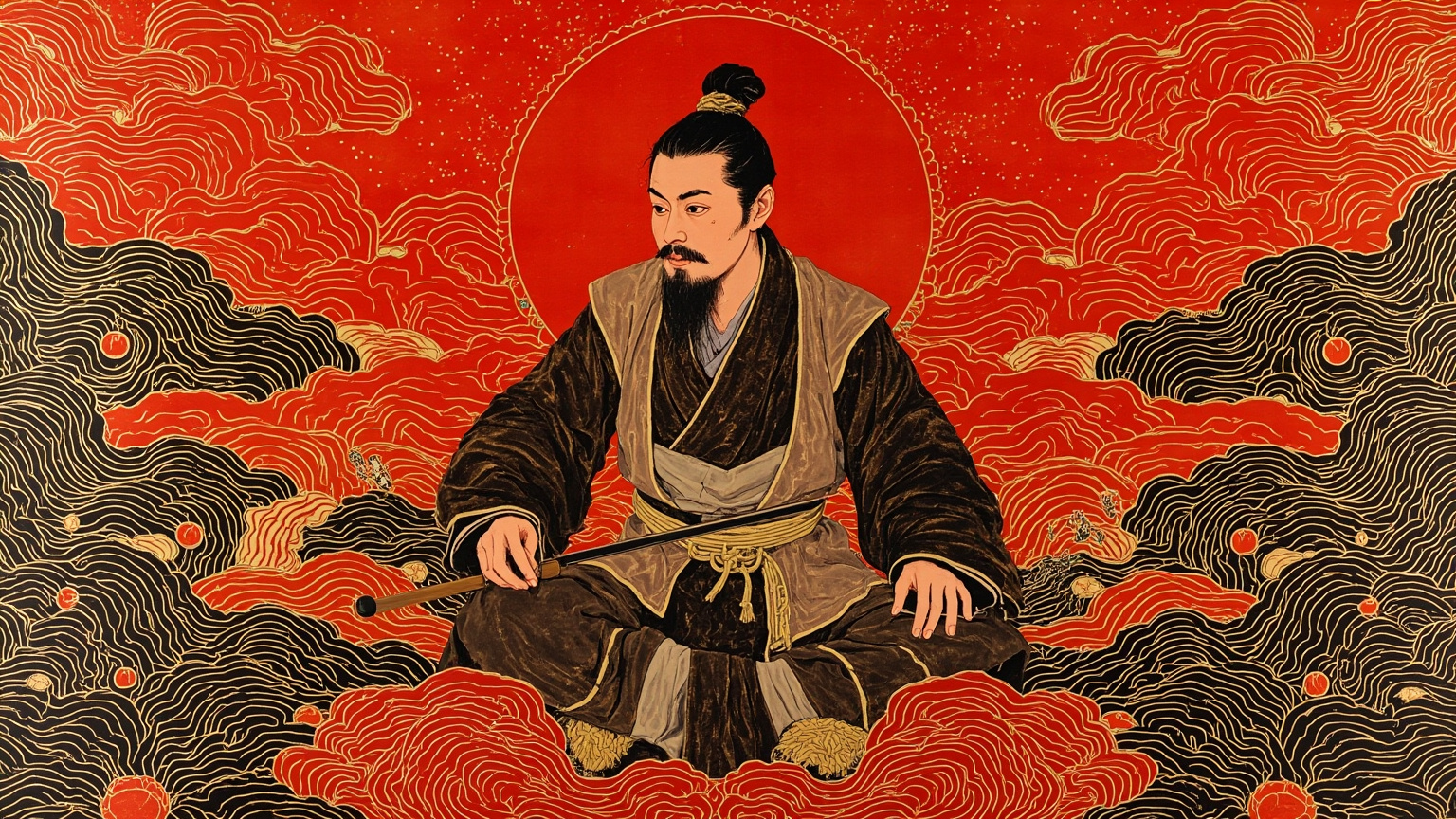
To attack a state is no different from a thief's sickness — what you would punish in the small, you cannot pardon in the great.
攻人之国与窃疾何以异?小物窃之,犹谓之盗;大物窃之,必谓之篡。
金句 · 公输
What's worth returning to in this chapter isn't who wins the argument. It's the posture of the man himself: he walks into court carrying scale models, not to make a case but to fight a war with computation behind it. He is arguer and engineer in one body. The whole temperament of Mohism stands up in this single scene.
6. Plot Thread Three: The Ten Doctrines, Head-On Against Confucianism
With one war stopped, Mozi goes back to his real trade, the treatise, and lays out his positions one by one. Honoring the Worthy: pick people to govern by whether they can do the job, not by birth or wealth or connection. Identifying Upward: each level conforms to the one above it, all the way up to Heaven itself. Against Fate: human effort beats fate, and fatalism, which lets people lie down and quit, has to be broken. Against Music: when a ruler throws himself into grand music, it drains the people and wastes the treasury. Moderation in Use: cut anything that doesn't serve the world's benefit. Moderation in Funerals: no to the Confucian program of lavish burial and long mourning. Three of these attack blood-line hierarchy, three attack extravagant ritual, and together with the Will of Heaven, the existence of spirits, and Against Fate, they make up the Ten Doctrines, a whole counter-establishment system of ethics and politics.
What's interesting is the rhetorical strategy behind all this: Mohism sets itself up openly against Confucianism, point for point. Confucians preach ritual, music, love graded by kinship; Mohists oppose ritual, oppose music, oppose kinship-graded love. Confucians say a gentleman is not a tool; Mohists take the tool, the device, the engineering, the calculation, and make it the most honorable thing in the world. A reader today can't easily feel how sharp that standoff was in the Warring States, because Mozi all but disappeared from the mainstream shelf after the Han, leaving only the Confucian side of the argument still talking.
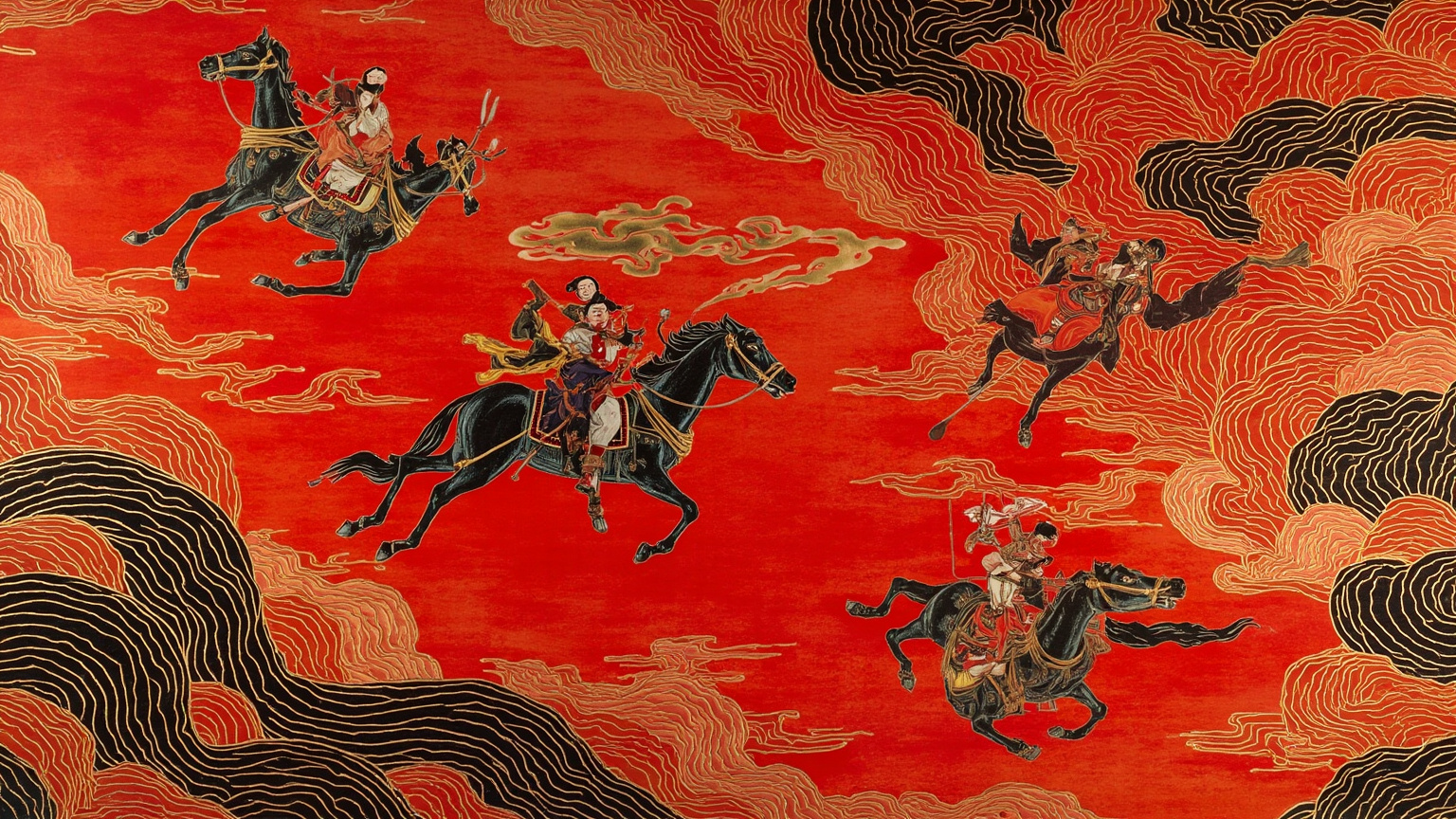
Heaven has a will; it rewards the good and punishes the evil. Let this be the judge's bench over all under heaven.
天之意不可不察也,顺天意者,兼相爱,交相利,必得赏;反天意者,别相恶,交相贼,必得罚。
金句 · 天志上
7. Plot Thread Four: A First in Pre-Qin Thought, the Mohist Canons
Wedged into the middle of the book are the six chapters of the Mohist Canons, the most startling inheritance this school left behind. They set out four terms: name, statement, explanation, disputation. A name is the concept, a statement is the proposition, an explanation is the reasoning behind it, disputation is the rules for arguing. This isn't ordinary rhetoric. It's the only systematic logic pre-Qin China produced, developed independently of the Aristotelian tradition, a second pole in the history of world logic that predates its European counterpart.
The same chapters record an optical discovery almost in passing: the light that illuminates a figure travels straight, like a loosed arrow, so that the image cast by something below appears high, and the image cast by something above appears low. In plain terms, light travels in a straight line, and it flips the image, the way a pinhole camera does. This is the earliest written record of pinhole imaging and the straight-line travel of light being noted together, more than a thousand years ahead of the same observation in Europe. Mohism is the one pre-Qin school that comes close to an engineer's temperament. Its way of seeking the truth is a workshop way, a computational way, a hands-on way, on a different frequency entirely from Zhuangzi's free wandering, Confucius's ritual and music, or Mencius's flood-like vital energy.
8. Plot Thread Five: The Eleven Chapters on Defending the City
The second half of Mozi is a different book. It opens with the multi-bolt crossbow cart, moves on to the traversing catapult, the block-and-tackle cart, the swinging gate, the sally port, the kiln-furnace, and then to the smoke-and-counter-tunnel technique for stopping an enemy who's mining under the wall, and the makeshift tools for defending against siege towers and flooding. Every device comes with what timber to use, what proportions, how many levers, how many axles, how to operate it, and what sound to listen for to judge how far the enemy has tunneled. This is the most complete manual of city-defense engineering to survive from ancient China, and no other pre-Qin philosophical text comes close.
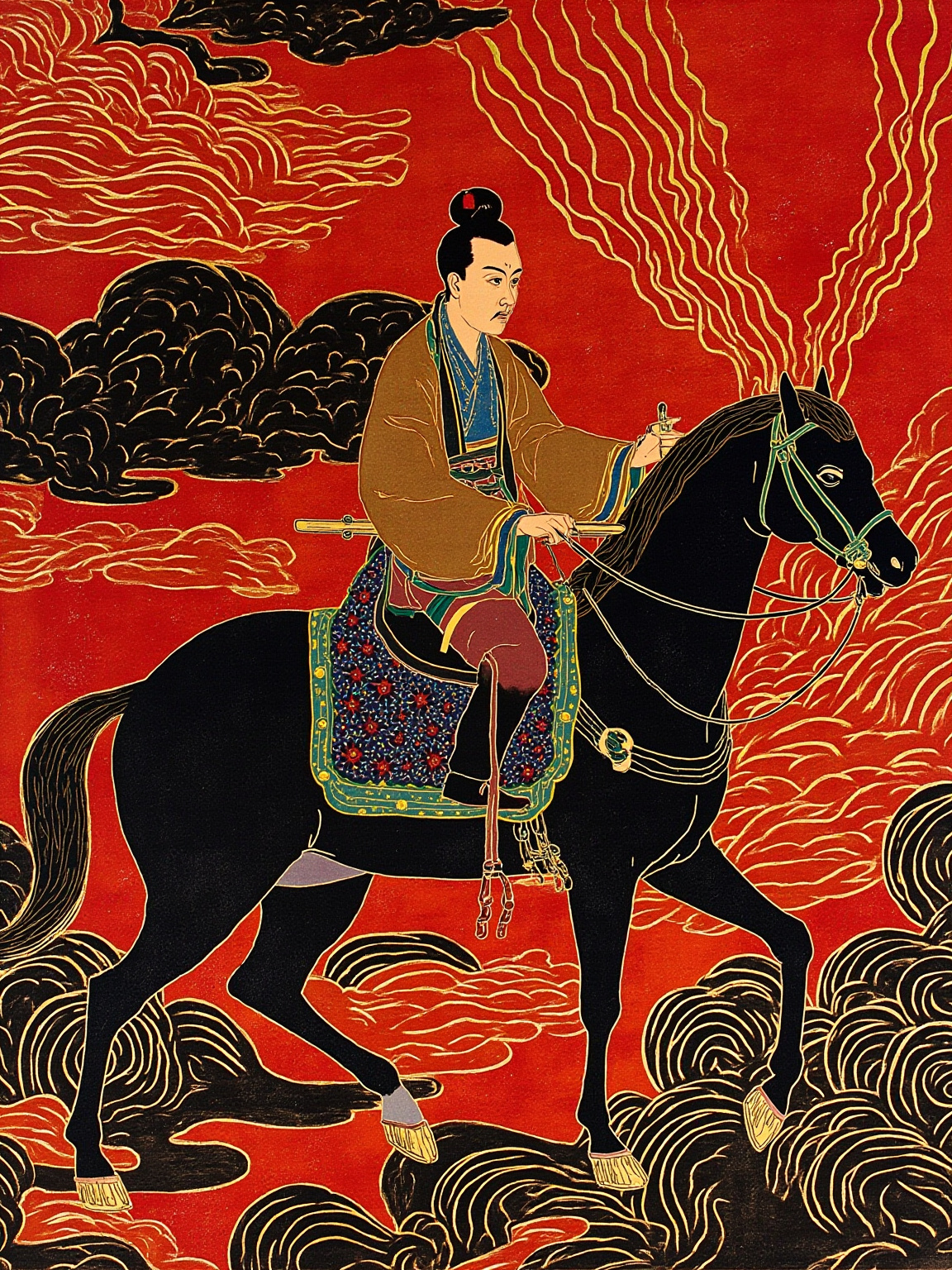
Light from a person is shot as if by an arrow: the lower casts a high image, the higher casts a low image.
景光之人照若射,下者之人也高,高者之人也下。
金句 · 经下
What's interesting about the writing is that the chapters from Preparing the City Gates onward change register almost entirely. Gone is the dense, drumming parallelism of the first thirty chapters, and in comes a plain, one sentence per fact, one item at a time. This is the voice of a technical manual, a completely different trade from the treatise, and both are bound into one book called Mozi. The contrast is itself the best portrait of Mohist identity: a creed argued with the left hand, a tool carved with the right.
9. Plot Thread Six: The Juzi and the Disciples Who Died for It
The Juzi is the hereditary highest leader of the Mohist order, not a title reserved for Mozi himself. After Mozi, the position passed down generation after generation, and the most dramatic episode on record is Meng Sheng, entrusted by a Chu lord to hold a city, who, with the city about to fall, passed the title of Juzi to Tian Xiangzi and then died alongside several dozen of his own disciples. Mohist discipline can be summed up in one phrase: walk into scalding water, walk into fire, and never turn back on your heel, even in death.
Set this personality type against the Confucian gentleman. Confucianism says: help the whole world when you've made it, cultivate yourself alone when you haven't; there's an exit between failure and success. Mohism says: do it for the world's benefit, full stop, and the exit is more or less removed. This is a different kind of admirable, one with a cold edge to it. It asks a person to live as a tool and a weapon, to be sent out whenever needed. The book sets this temperament down in plain, unpolished prose. Reading it, you feel no ornament at all, only weight.
10. Theme and Craft
What Mozi is really arguing is how the phrase benefit the world turns into concrete action. Universal Love is the background color, Against Aggression is where it lands, Moderation in Use is the daily practice, and logic and engineering are the tools. The whole book's underlying position is an almost Puritan ethic of usefulness: whatever doesn't serve the world's benefit gets cut. Anything measurable, workable, testable earns extra credit; anything a person can lose himself in, whether music, lavish burial, or elaborate ritual, gets cut down. Set against the mainstream of pre-Qin thought, this ethic looks like a weld scar, and reading it today still calls up a different vision of an engineer running the state.
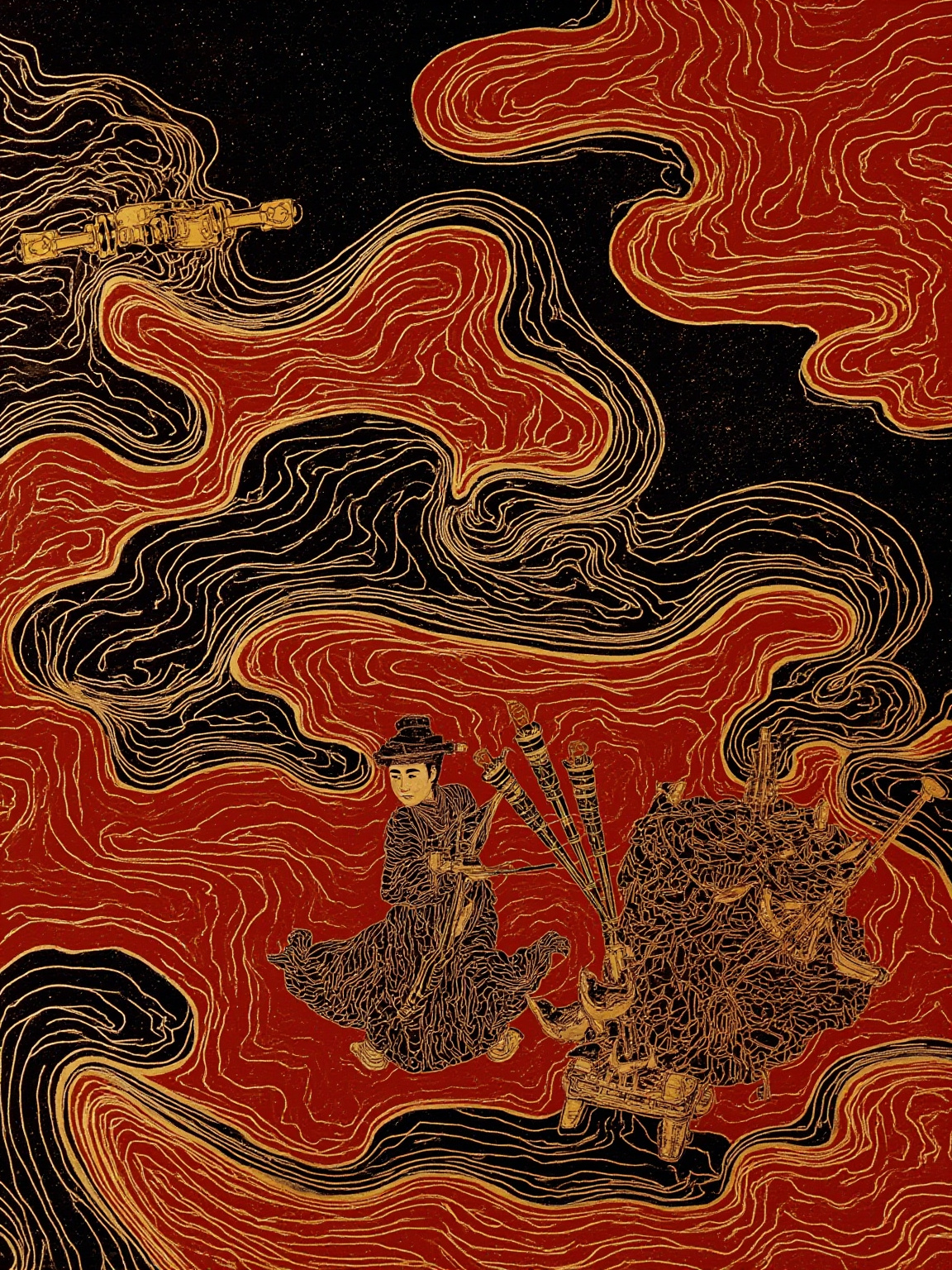
From crown to sole, wear the skin through — do what benefits the world.
摩顶放踵,利天下而为之。
金句 · 墨子佚句
A few things are worth watching in the craft. First, a treatise with an engineering manual and a system of logic built into it: nothing else in pre-Qin prose does this. Second, the parable of the man with a stealing sickness is textbook persuasion, getting someone to admit a small crime, then scaling the same logic up to the big one; you could pull that chapter apart and teach it as a workplace negotiation class. Third, the six chapters of the Mohist Canons are a two-layer text: on the surface they define terms like cause, category, principle, and law, while underneath they're quietly teaching the reader how to argue and how to spot a bad argument. Fourth, the visual signature runs consistent through the whole book: coarse hemp, straw sandals, leather straps, wooden models, every person and every object carrying the smell of the workshop, a full spectrum away from the long robes and cultivated manners of the Confucian texts.
Mozi is not a comfortable book to read. Its power is in that discomfort, in showing you what the other side of Chinese thought actually looked like: not ritual and music, not free wandering, but calculation, labor, and a benefit to the world that came at a price.
11. Why the Text Still Rewards You Once You Know the Plot
A companion guide can hand you a map: what Universal Love is, what Against Aggression is, what the Mohist Canons cover, what the eleven chapters on city defense are calculating. But a few things in the original text no summary can capture. First, the sentence rhythm of the parable of the man with a stealing sickness, each line drawn tighter than the last until the king has nowhere left to stand. Second, the two-line sentences in the Mohist Canons that nail down an entire optical or logical principle, with the precision and economy of an engineer writing up a paper. Third, the voice of the device diagrams from Preparing the City Gates onward, each one a stripped-down work order that still carries the grip of a craftsman's wrist from more than two thousand years ago. Fourth, the group portrait of Mohist disciples in coarse hemp and straw sandals, a temperament you won't find anywhere in the Analects, Zhuangzi, or Mencius. Once you know how this campaign was fought, going back to the original text, you'll still find something new in every detail.
Art Direction4 plates
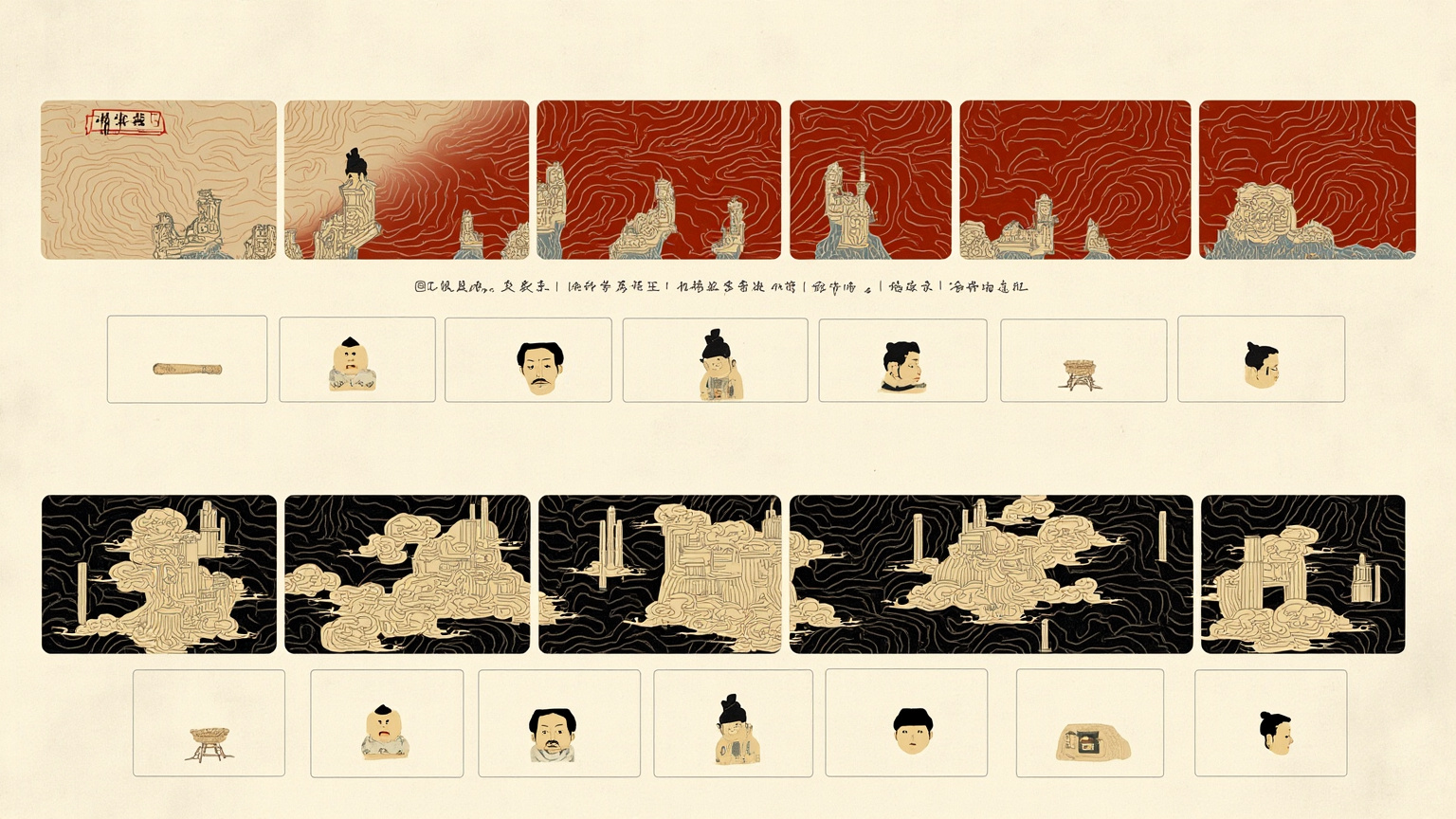
Before the guide was written, this book got a visual foundation — every illustration you just read grew out of it.