One girl's years from six to twelve add up to a whole book of farewells from old Beiping's south side.
Text and illustrations produced by the pipeline
The blue-green birthmark on her neck is a puzzle piece. Niu'er, the girl who sings for coins in the summer hutongs, lifts her hair to show it to Yingzi — the same mark that Xiuzhen, the woman in Hui'an House everyone calls crazy, has described to the empty air a thousand times. Six-year-old Yingzi stands between the two worlds and puts them together.
Under that birthmark is a train that pulls out in the middle of the night, a mother and daughter who never come back from the tracks, a fever that keeps Yingzi burning for days on end. Then life goes on anyway. The camel bells at the mouth of the hutong keep ringing.
My Memories of Old Beijing is an autobiographical novel by Lin Haiyin, collected and published in Taiwan in 1960. Born in Japan in 1918, she moved with her parents to Beijing as a child and grew up near Chunshu Hutong on the city's south side, later moving again within the same neighborhood. Yingzi, the little girl in the book, is close to the author herself. The story runs from around age six to her graduation from primary school, covering a stretch of 1920s south Beijing — the hutongs, the communal wells, Hui'an House — that was already vanishing.
It is the shared childhood memory of several generations of Chinese readers. In 1983 Wu Yigong turned it into a film of the same name, and its camel bells and long takes laid a hazy nostalgic filter over the whole thing. But go back to the novel itself and it is not a postcard — it is the old Beijing a child saw leaning on a doorsill, looking up.
The cast is a set of ordinary people from south Beijing: Xiuzhen, who lives in Hui'an House and waits, obsessively, for a university-student lover taken away by soldiers, while grieving for the daughter, Xiaoguizi, her husband's family threw away; Niu'er, who sings for coins and comes home to a beating from her foster parents; a young man crouched in the weeds behind the family's new house, stealing to pay his younger brother's school fees; Auntie Lan, who takes shelter with Yingzi's family after fleeing a rich man's household and the position of concubine; Song Ma, the nanny who raises Yingzi and her siblings while her own children grow up without her in the countryside; and finally Yingzi's father, whose tuberculosis finally kills him on the day of his daughter's primary school graduation.
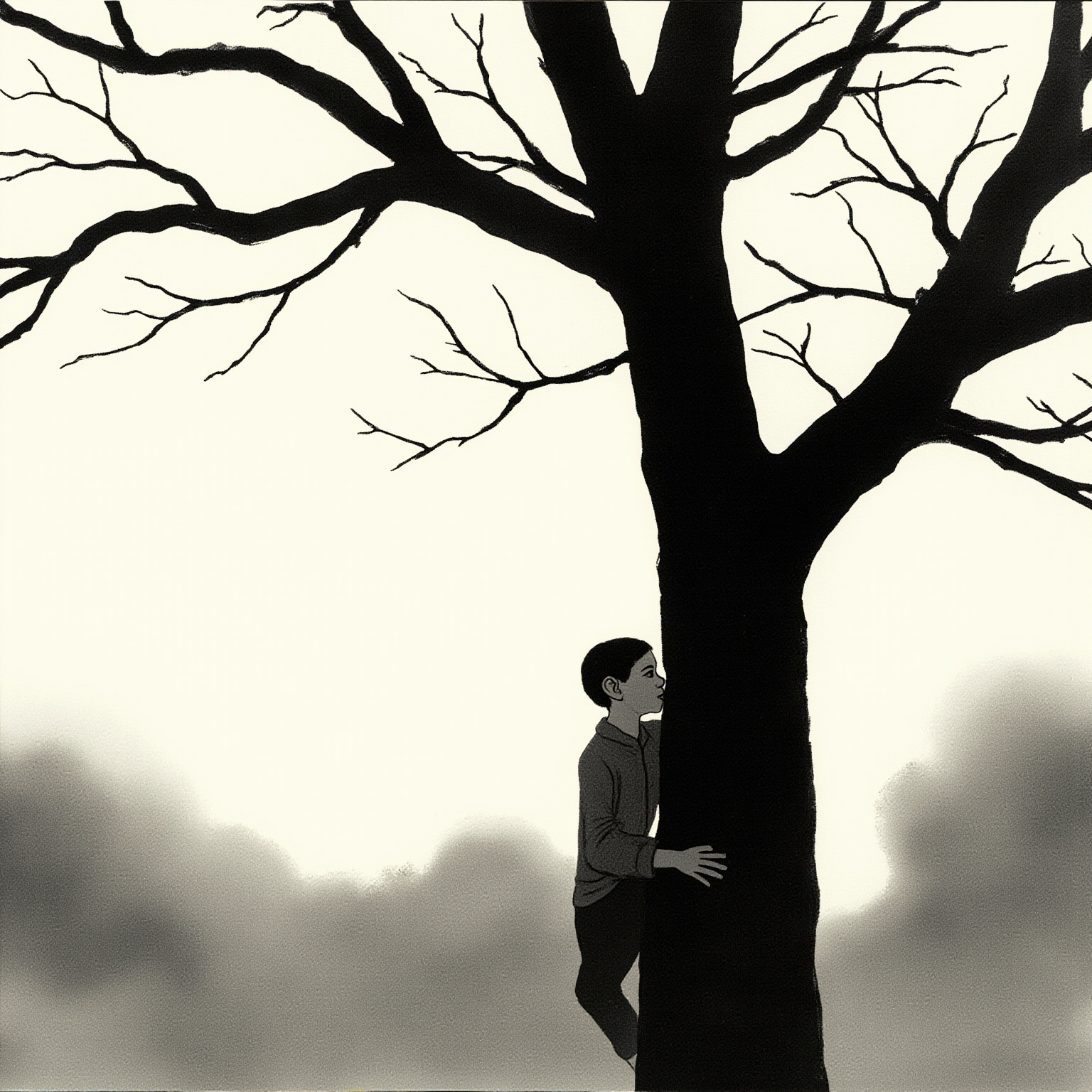
Her father's illness drags on for years. The family moves again, and he is still sick in bed. On the day of Yingzi's primary school graduation, the school invites him, and he does not come. Yingzi delivers the class speech, and partway through it she thinks of the pomegranate tree in their courtyard — the one her father planted, its blossoms fallen this year, its fruit left unpicked. When she finishes and gets home, her father has already stopped breathing. The pomegranate tree stands alone in the courtyard, and something becomes clear to her all at once: from now on, she is the one who has to hold this family's door open.
Every person who passes through Yingzi's life leaves for good — and that is exactly what grows her up.
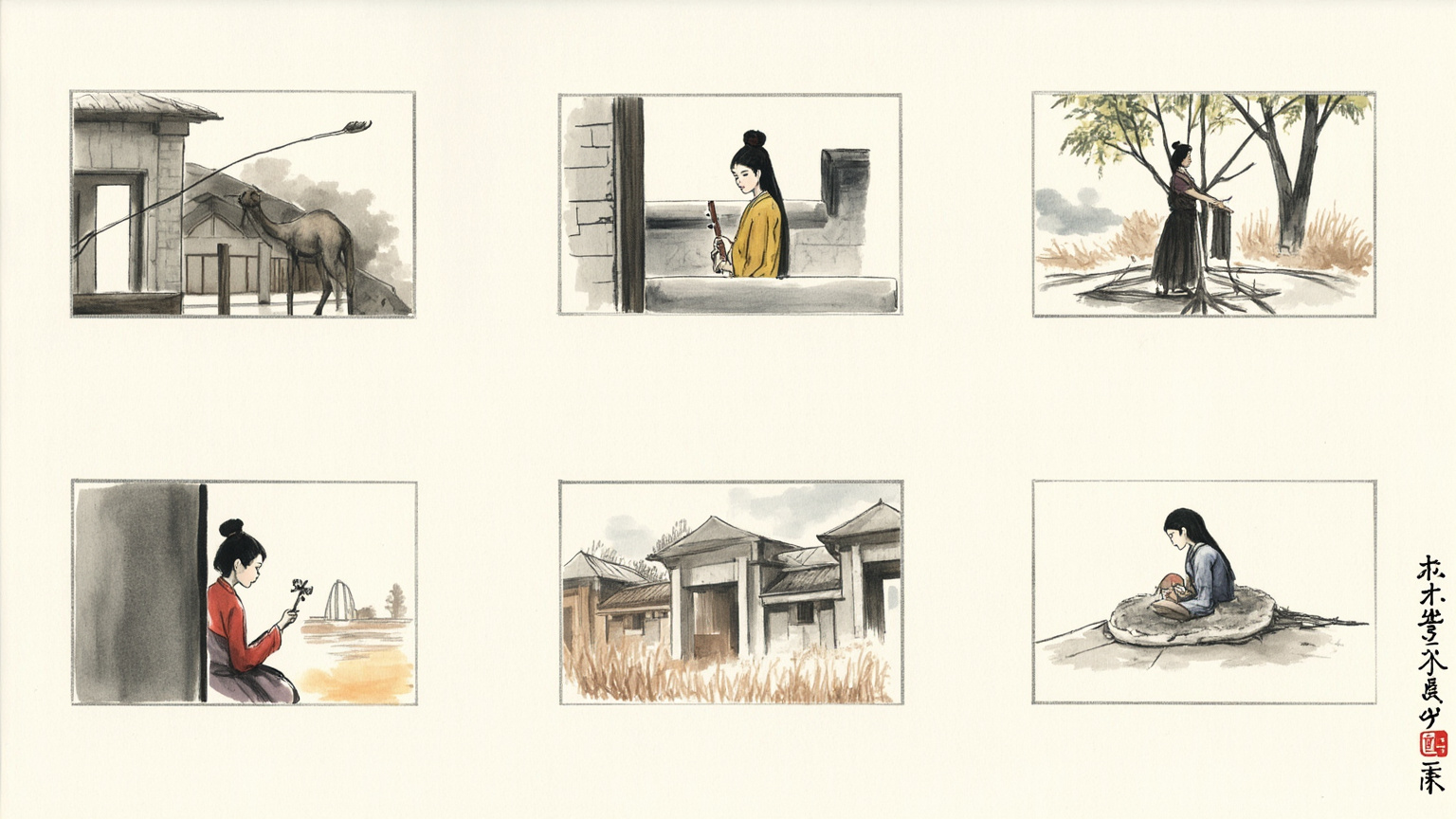
Before the guide was written, this book got a visual foundation — every illustration you just read grew out of it.
The world runs on one rule: everyone leaves. Yingzi narrates the whole book in the first person, and her job is not to change anything — it is to keep her eyes open and see clearly everyone who leaves her.
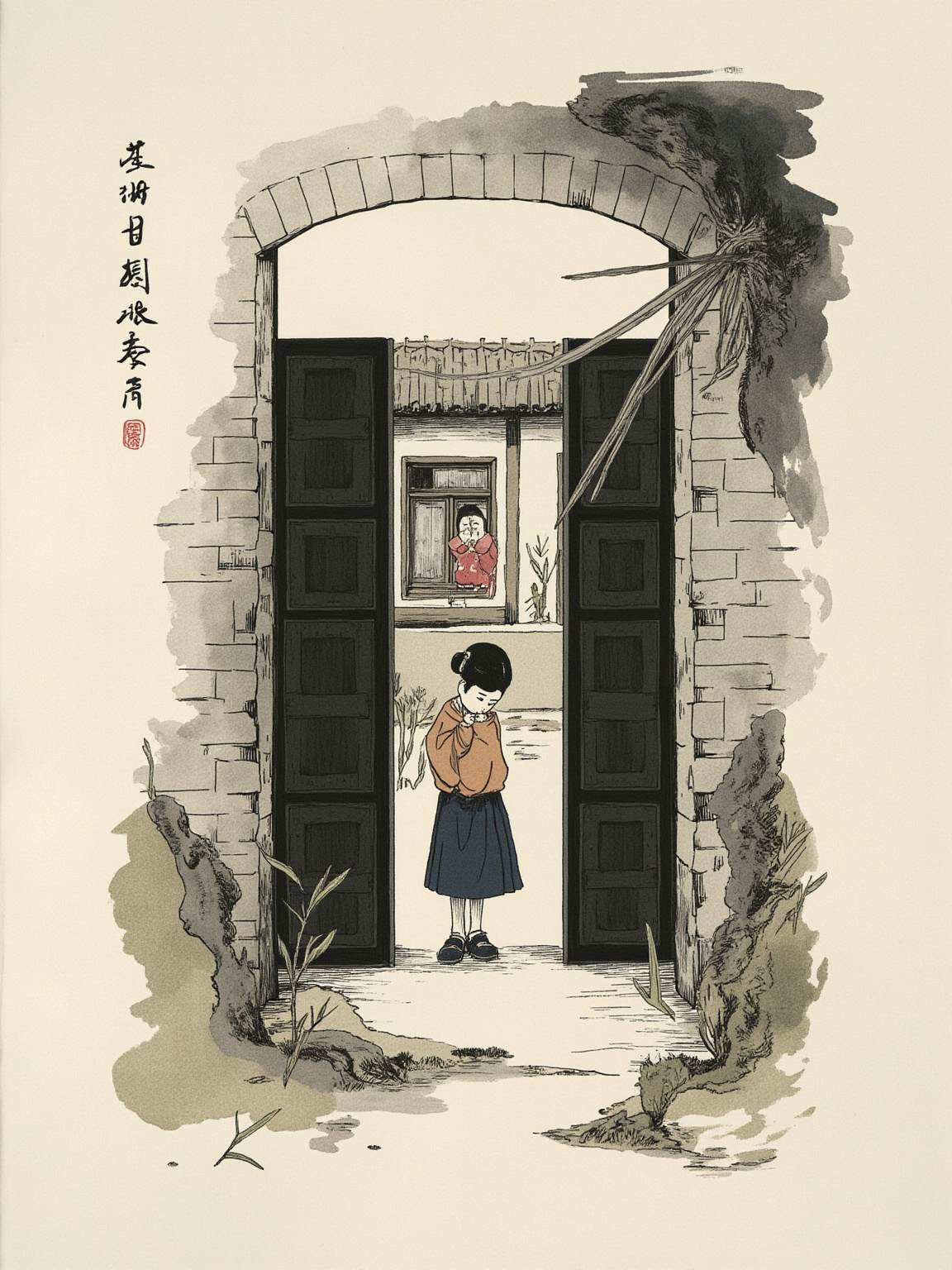
The family moves to Beijing from out of town and crowds into a courtyard near Hui'an House on Chunshu Hutong. Yingzi is six, old enough to run wild through every alley. The adults warn her to stay away from Hui'an House — a madwoman lives there. Yingzi goes anyway. Xiuzhen takes her hand, sits her on the doorsill, and tells the same story over and over: her university-student lover was dragged away, her baby Xiaoguizi was thrown out by his family the moment she was born, and she means to find them both. Yingzi doesn't hear madness in it. She hears one person missing another.
Niu'er is a girl from the next alley, thin as a willow switch, with a loud voice, who leans against the mouth of the hutong singing opera for coins. Yingzi spots the blue-green birthmark on her neck — the same mark Xiuzhen has described on Xiaoguizi's body so many times. She says nothing to anyone. Instead she quietly leads Niu'er under the back window of Hui'an House, then pulls Xiuzhen out to the well to see for herself. One finds her mother, the other finds her daughter, and the two of them collapse into each other, crying. Yingzi stands by the well, watching them hold on to each other, her heart pounding with joy.
It rains that night. Xiuzhen bundles up her jewelry and clothes and drags Niu'er toward the train station — the girl's father is still alive, she says, and they have to find him. Yingzi is stopped on the doorsill by the grown-ups, one shoe still not on properly. Later she hears that the rain was heavy that night, that something happened by the tracks — mother and daughter never came back. Yingzi runs a high fever, and every dream is full of the sound of wheels. Once she recovers, the family quietly moves away.
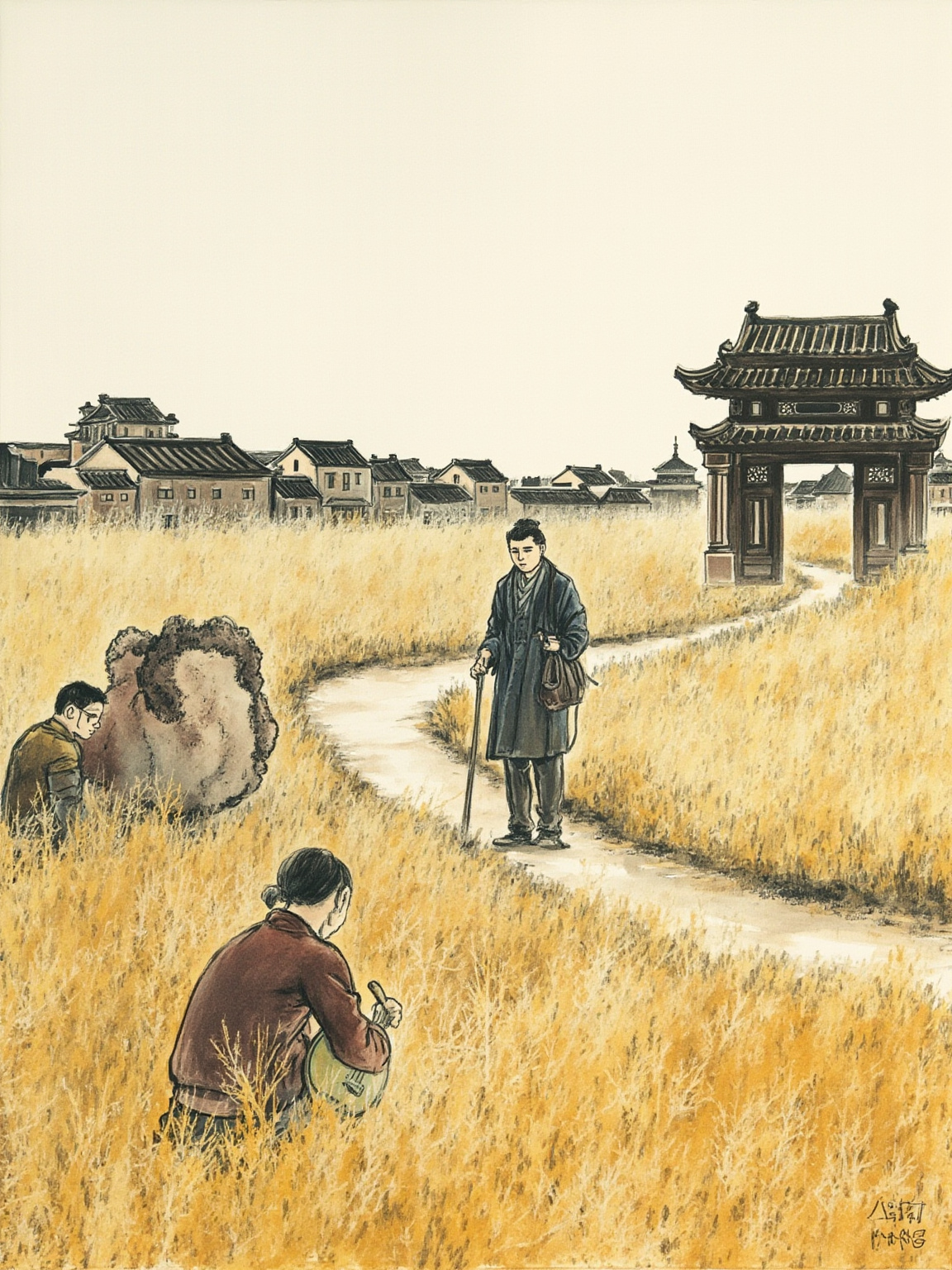
Near the new house is a stretch of wasteland, grass grown waist-high and rustling in the wind. A young man crouches in it, thin, wearing glasses, nothing like a criminal. Yingzi crawls in and he doesn't chase her off. The two of them crouch there watching the clouds, and he tells her about the sea — how his younger brother is going to take him to see it one day. Only slowly does Yingzi understand that this thief the adults talk about has a brother who cannot afford school. He steals so that brother can have his blue school uniform.
One day in the grass he asks Yingzi whether she thinks he is a good person or a bad one. She thinks about it and cannot answer. He smiles. The next time she crawls into the weeds, there is only a flattened patch where he used to sit — he is gone. A few days later a notice goes up at the mouth of the hutong: someone has been arrested. Yingzi stares at the paper and understands, for the first time, that good and bad are words the adults can tell apart and she cannot.
Around this time Auntie Lan joins the household. Young, with fashionable curled hair, she has just fled a rich man's house — they offered her the position of concubine, not a life worth living. She stays with Yingzi's family for a while, moving through the rooms with something hot in her eyes. A progressive university student named Dexian, shirt tucked neatly into his belt, forever talking about the New Youth, is a regular visitor. Yingzi doesn't like the way her father and Auntie Lan carry on together, so she quietly starts steering Dexian toward Auntie Lan instead. It works. The two of them fall for each other and head south together, in the same train car, and are gone.
Song Ma is a rough-handed countrywoman who has been with the family since Yingzi was born, nursing her, doing the laundry, carrying the baby brother strapped to her back. She has a son and a daughter of her own, left behind in the village with her husband. Yingzi remembers her sitting in the shade every summer, stitching a pair of small shoes, talking about how she will bring them home for Xiaoshuanzi. She waits and waits, and what finally comes is the news that her son drowned in the river years ago and her daughter was sold off by her husband for money. Song Ma stands in the courtyard a long while after hearing it, saying nothing. The next day her husband arrives and takes her back to the village. On her way out she touches Yingzi's head, once, and does not look back.
What this book is really about is a childhood built out of goodbyes. Xiuzhen and her daughter are gone, the young man in the weeds is taken away, Auntie Lan and Uncle Dexian head south, Song Ma goes back to the countryside, her father dies under the pomegranate tree. Yingzi is pushed forward, and at every step she has to look back — but she never once calls anyone to stay. This is not cruelty. It is what childhood actually is: a child has no power to hold on to anyone, and all she can do is keep her eyes open and take each departure in.
The author's sharpest move is holding the whole narrative down to a child's eye level. Told by an adult, Xiuzhen's story is a melodrama about a woman abandoned by the old order; the young man in the weeds is a crime item from the local paper. But Yingzi does not know those categories. She sees Xiuzhen and sees a person waiting for another person; she sees the young man and sees an older brother trying to get his brother into school. She has no sense of where good ends and bad begins, and because of that, the adult world she describes gets exposed for exactly how arbitrary it is — the labels are something adults need, not children. That friction, cruel events told in an innocent voice, is why this book keeps getting reread.
There is another layer too, one the book left behind almost by accident: a long scroll of everyday life in old south Beijing. The hutongs, the communal wells, the camel-bell caravans, the gate tower of Hui'an House, the donkey-roll rice cakes sold at Hufang Bridge — most of it has since been torn down. What south Beijing looked like in the 1920s survives because a writer in Taiwan set it down from memory in the 1960s, and that memory has become a private record of a city that no longer exists. The book is half literature, half folklore.
A guide like this gives you the map; the text itself is the land. Lin Haiyin's prose never reaches for sentiment — to write her father's death, she writes the pomegranate tree in the courtyard; to write Xiuzhen's obsession, she writes the one small garment turned over and over in her hands. A summary can only trace the outline of scenes like these. Read the original word by word and a slow cold seeps in that no retelling can match. Knowing the ending first makes it worse, if anything, because you watch a six-year-old, step by step, with no warning at all, get pushed into a place she never wanted to stand.