My Reminiscences (Jibansmriti) · Companion Guide
我的回忆
一座大宅、一个体弱的男孩,雨季灯光下,诗从一个门缝漏进他耳朵里
Opening
A kerosene lamp sits on the old wooden railing above the river. The rain hasn't stopped. A thin boy in a dhoti is chased back indoors from the veranda — it's cold and damp out there, and his liver is acting up again. He doesn't want to sleep. He has just heard, through the crack of the attic door, his older brothers reciting poetry in sentences no grown-up would understand.
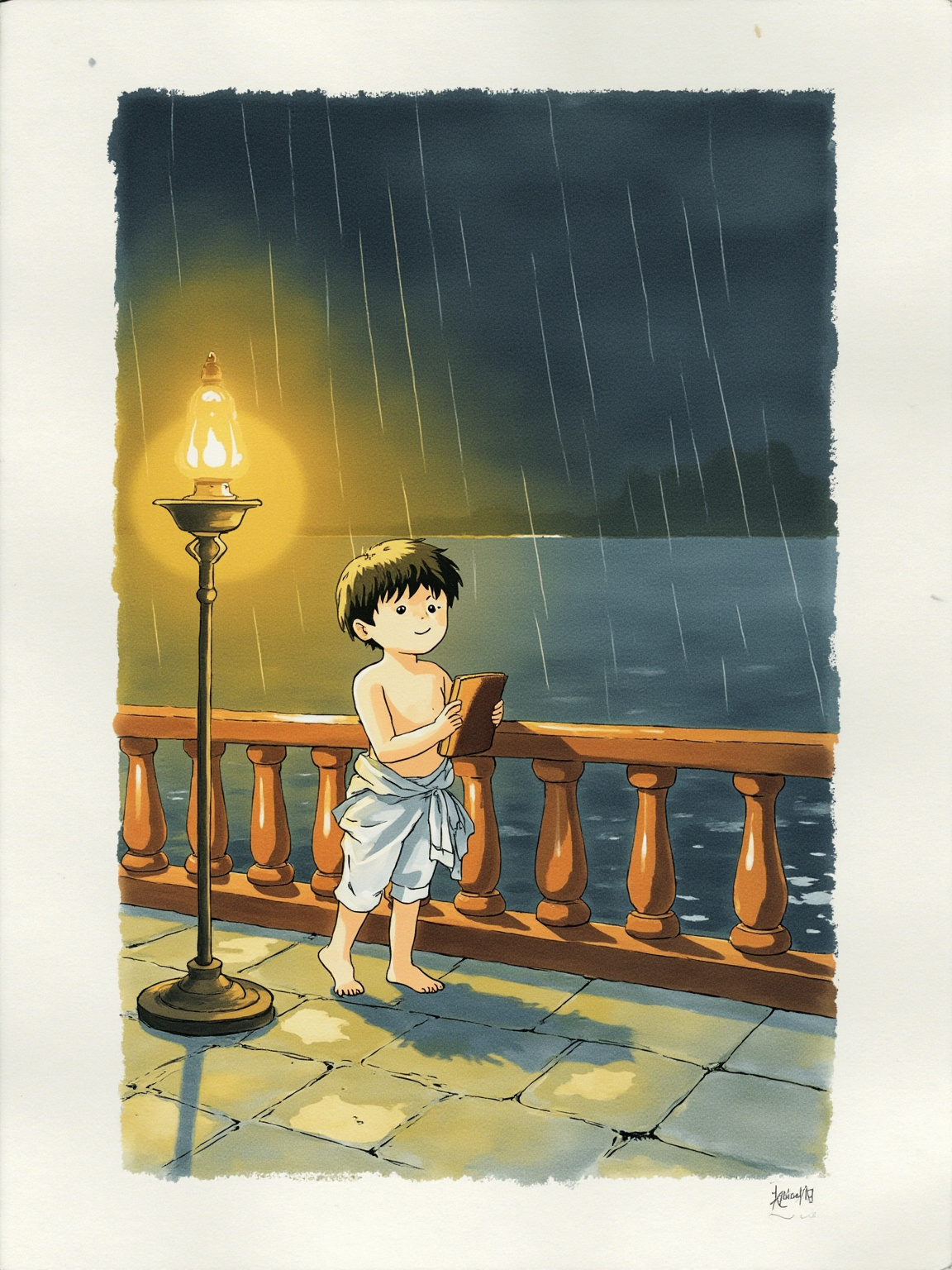
I was kept a prisoner in my own home, and the Jorasanko courtyard became my whole world.
我被关在自己家里,乔拉桑科的庭院便成了我的整个世界。
金句 · 黄疸与闭门不出 · 雨季的内院
This was an ordinary night in the 1860s, in the Jorasanko mansion in Calcutta. It's also the image every reader of this slim memoir remembers afterward. It comes from My Reminiscences (Jibansmriti) — the book Rabindranath Tagore, India's first Nobel laureate in literature, wrote about his own childhood. The world remembers him for Gitanjali, for Stray Birds, for the English translations of his Bengali poems. But this small book about being a child is the one he himself valued most, the one he most wanted to leave behind.
What kind of book this is
Tagore published the book in Bengali in 1912 under the title Jibansmriti; he later expanded it himself and translated it into English as My Reminiscences. It isn't a biography. It stops at the end of his childhood, somewhere around his departure for England — the school at Shilaidaha, the Nobel Prize, the long travels of his later years, none of that is here. It wants to keep hold of one thing only: how a child shut out from the world first heard poetry, inside his own family's courtyard.
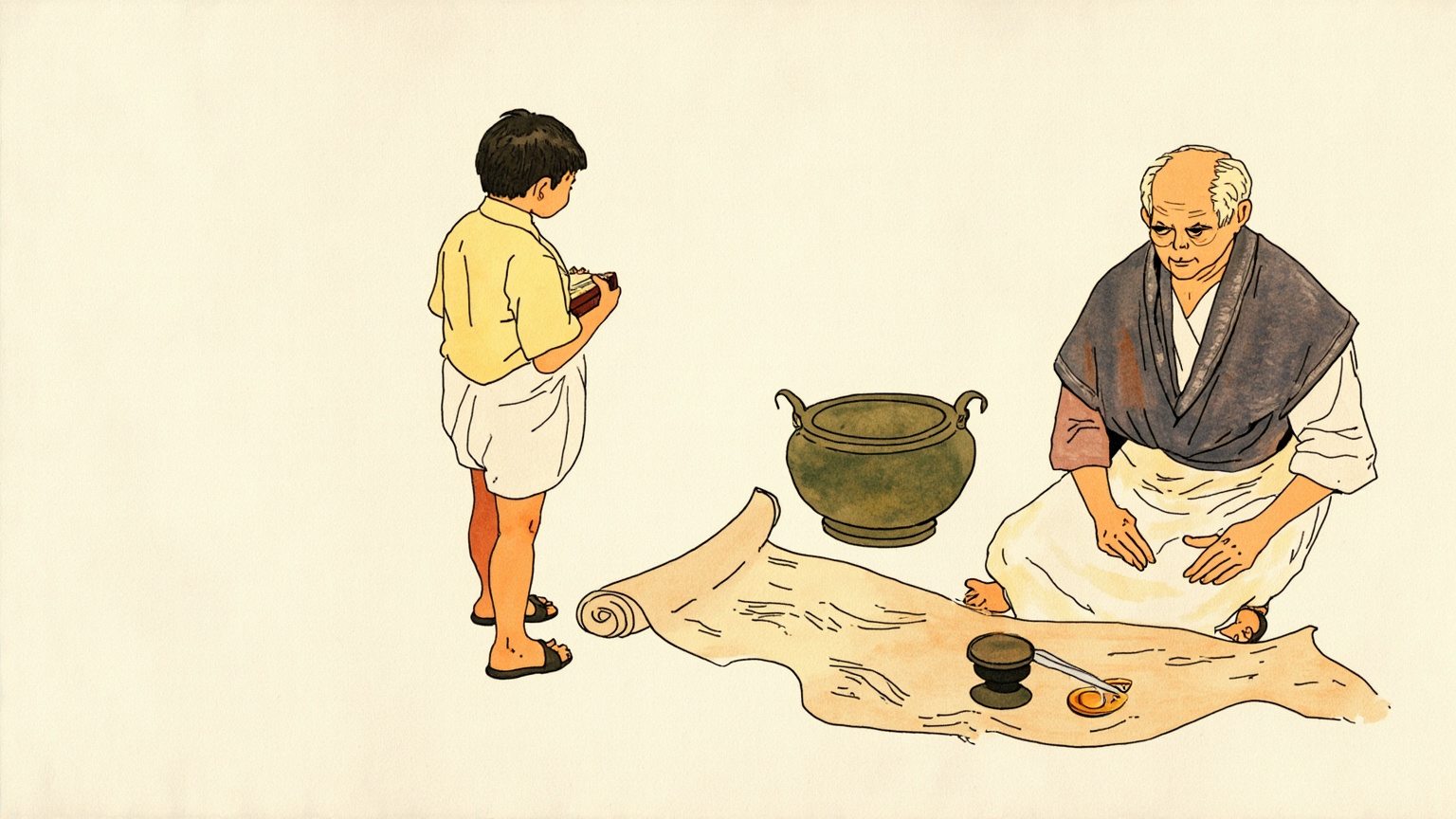
My father was an idol to me, even before I could understand what greatness meant.
父亲是我的偶像,那时我还不懂得什么叫伟大。
金句 · 父亲柴特拉达 · 严厉如一尊金像
People and world
The house belongs to a small boy named Rabindranath — Rabi, to the family. He was already a famous man when he wrote this book, but here he hands the pen back to himself thirty or forty years earlier: a frail, tearful, shy little boy, forever being shut indoors with a flare-up of jaundice. His father, Debendranath Tagore, led the reformist Brahmo Samaj and moved through the house like a calm golden idol; the children mostly held their breath around him. The father young Rabi feared most was also the one he worshipped most — a man who rarely spoke.
Elders and servants
Around young Rabi circled a grandmother, several sisters-in-law, several aunts. The grandmother usually sat to one side of the great hall, keeping watch over how many mangoes he ate and making sure he drank his medicine spoonful by spoonful. Their affection came wrapped in rules, and their rules came wrapped in affection — it's the closest warmth in the whole book. An old family servant walked him to and from his lessons, held an umbrella over him on rainy nights, and woke him each morning to wash up and eat. He belonged to that class of person in the great house whom the children called by name from behind a wall, but who never made it into the family tree.
A few more key figures move through the book, though young Rabi doesn't weigh them equally. First there was the family tutor, brought in specifically to drill him in Sanskrit and Bengali recitation. His accent was strange, his cane never moved, but the moment he began chanting the Upanishads and their mantras, the light in the room seemed to shift a shade — every bit of the boy's awe for his elders grew out of that rhythm. This is the scene where young Rabi is struck, for the first time in his life, by the sheer sound of language.
How the story moves
The story starts at Jorasanko. Tagore opens the book by hanging the whole great house on the shoulders of a frail, shy little boy hemmed in by strict family rules. Every time his jaundice flares, the doctor and his grandmother team up to pull him out of some lively family gathering and shut him back in his own room. His world was narrow, so he looked at what was inside it with unusual care: the damp of a particular flagstone, the age in a particular wooden railing, the ring of oil stain on a particular servant's cuff — all of it dug up and kept.
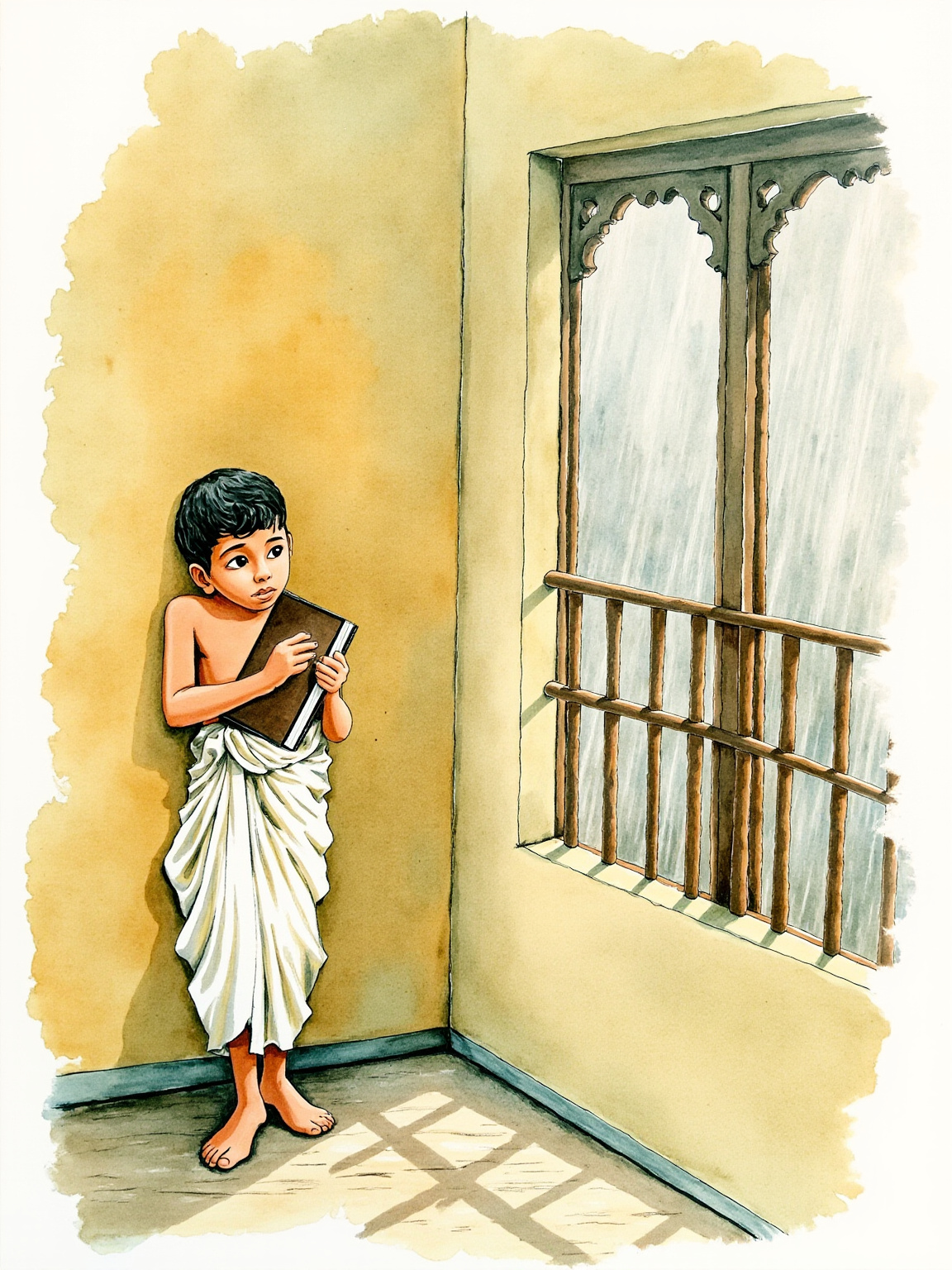
Next comes his early schooling. The tutor his elders hired brought passages of the Upanishads and their mantras and made him recite them line by line until he had them by heart. He grew bored, his mind wandered, and then one day, on a particular word, his mouth opened and the rhythm suddenly fell into place. He stopped short. Words, it turned out, didn't only live on the page; they had a shape in the throat. This is one of the book's most important scenes of awakening: the moment a child is struck, for the first time, by the rhythm of language itself.
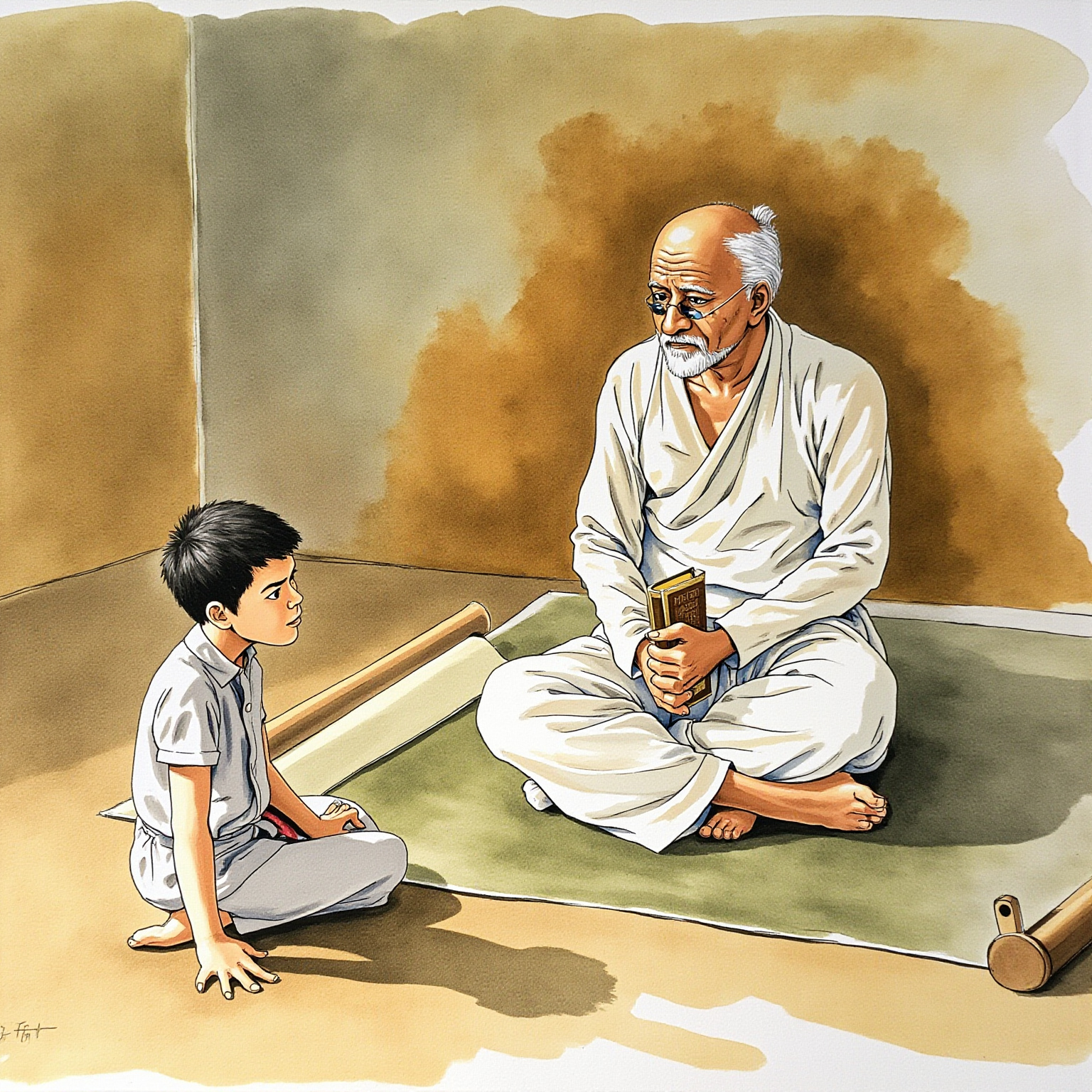
I began to feel the pulse of language, and slowly lost myself in its rhythm.
我开始感到语言的脉搏,慢慢地沉醉在它的节拍里。
金句 · 私塾开蒙 · 念诵《奥义书》的清晨
Then comes the place he wanted most and was refused most, the attic. Several of his older brothers ran a small literary circle up on the second floor, where they wrote poems, read drafts aloud, and staged plays; outsiders weren't let in. Young Rabi could only creep to the attic's side door and press his ear to the crack, listening. He could hear his brothers' voices rising and falling through the wood, and it was there he first understood that writing could be a kind of secret, luminous work.
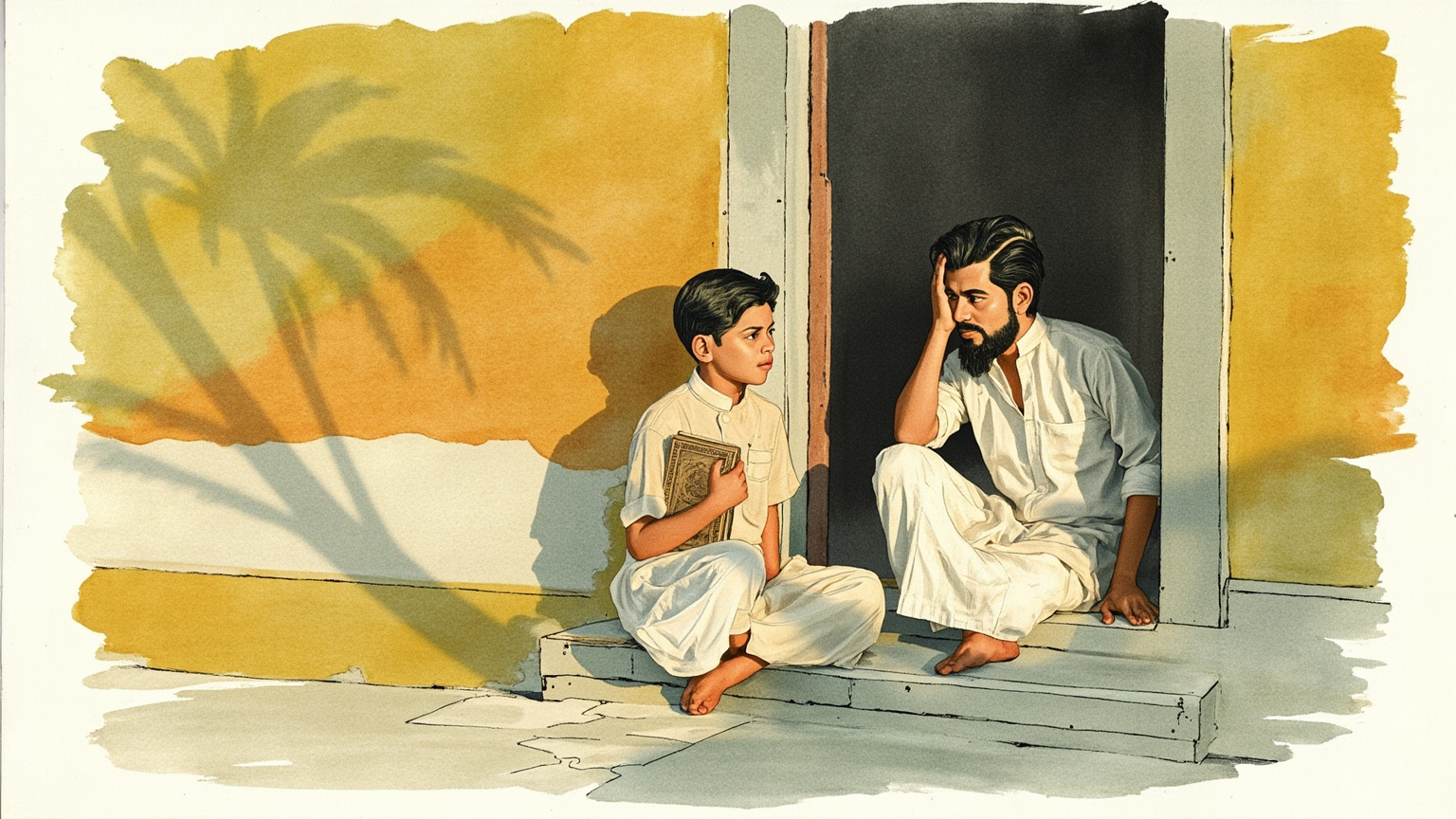
I used to press my ear to the crack of the door, and the wonder of poetry stole into my heart.
我把耳朵贴在门缝上,诗的惊奇,就这样悄悄溜进了我的心。
金句 · 阁楼文学社 · 偷听哥哥们念稿的傍晚
The person who truly lit the fire in him was his sister-in-law Kadambari Devi, newly married into the family. She was younger than the other elders and genuinely loved literature; she often read new Bengali poetry with him, catching his scattered questions and taking them apart for him line by line — which word was freshly coined, which passage was old, why the voice had to drop on a certain line. She pulled this younger brother-in-law, so long kept outside his brothers' door, up to a small writing desk and taught him to stop merely reciting and start listening for the person behind the words. She was his real guide into the world of literature, though in this book she appears only as a family elder who happened to share his love of it.
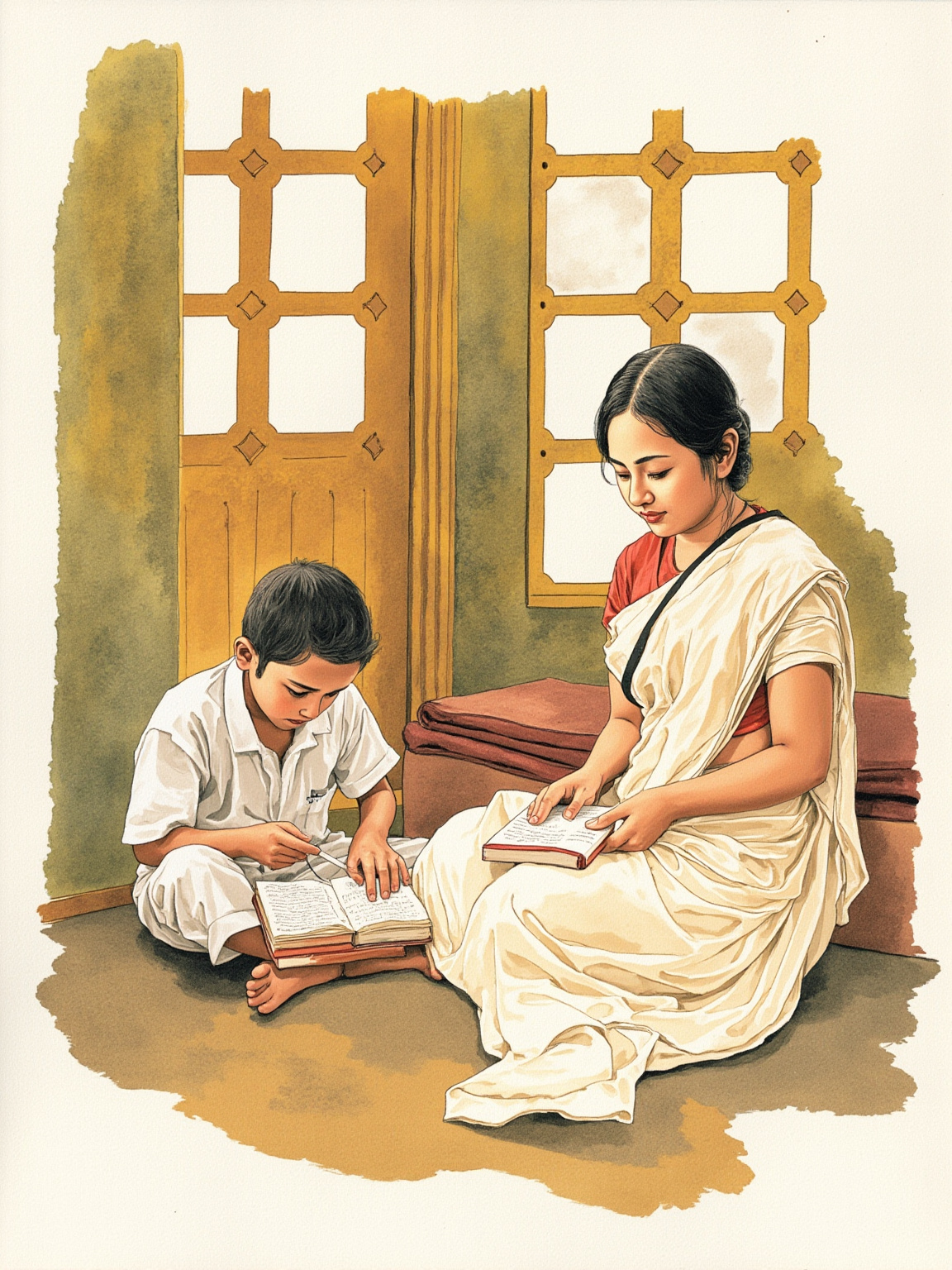
I felt myself growing into a larger world through the touch of her mind.
借着嫂嫂的指引,我一点一点地,长进了一个更辽阔的世界。
金句 · 大嫂迦丹婆利 · 在大宅里一起读孟加拉新诗的下午
But he wasn't always allowed downstairs to read. His jaundice returned every so often, and he'd be carried back to the inner rooms to lie down, a ceiling fan overhead and endless rain outside the window. Forced to shrink his radius of movement to almost nothing, he ended up reading the great house all the more closely: which corner of the veranda let the rain blow in, which door creaked at a push, which stretch of railing always had a curl of peeling paint. He packs the book so densely with these details that readers only later realize this isn't nostalgia. He really did lie on that bed and take in the whole world through the frame of a window.
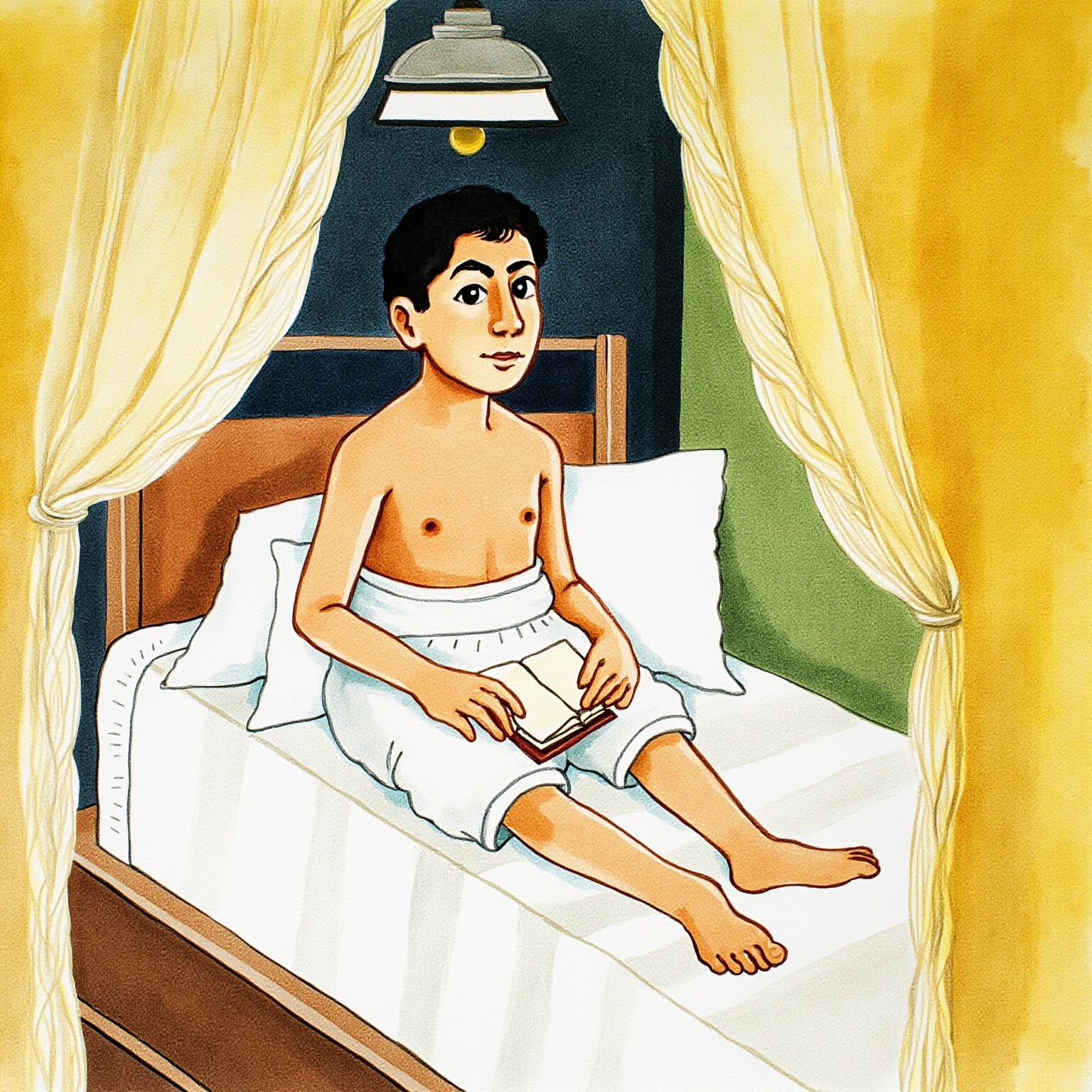
The long rains held me at home, and I read every book I could lay my hands upon.
长长的雨季把我留在家里,我便把能翻到的书,全翻了个遍。
金句 · 雨季与闭门 · 在大宅里独自漫游的少年
When the jaundice eased, he'd follow the old servant around the courtyard, or send him to fetch old volumes from an elder's study. New and old Bengali poetry, new English books, manuscripts left by earlier generations of the family — all of it came within his reach, and he soaked it up like a dry sponge. The books in the house were faintly damp, tinged with mildew, carrying a trace of the monsoon that he'd hold right up to his nose. Somewhere in all that reading, he went in for a recitation lesson one day and found he could finish the tutor's line before the tutor did; by then he had become his own small literary circle, entirely in his head.
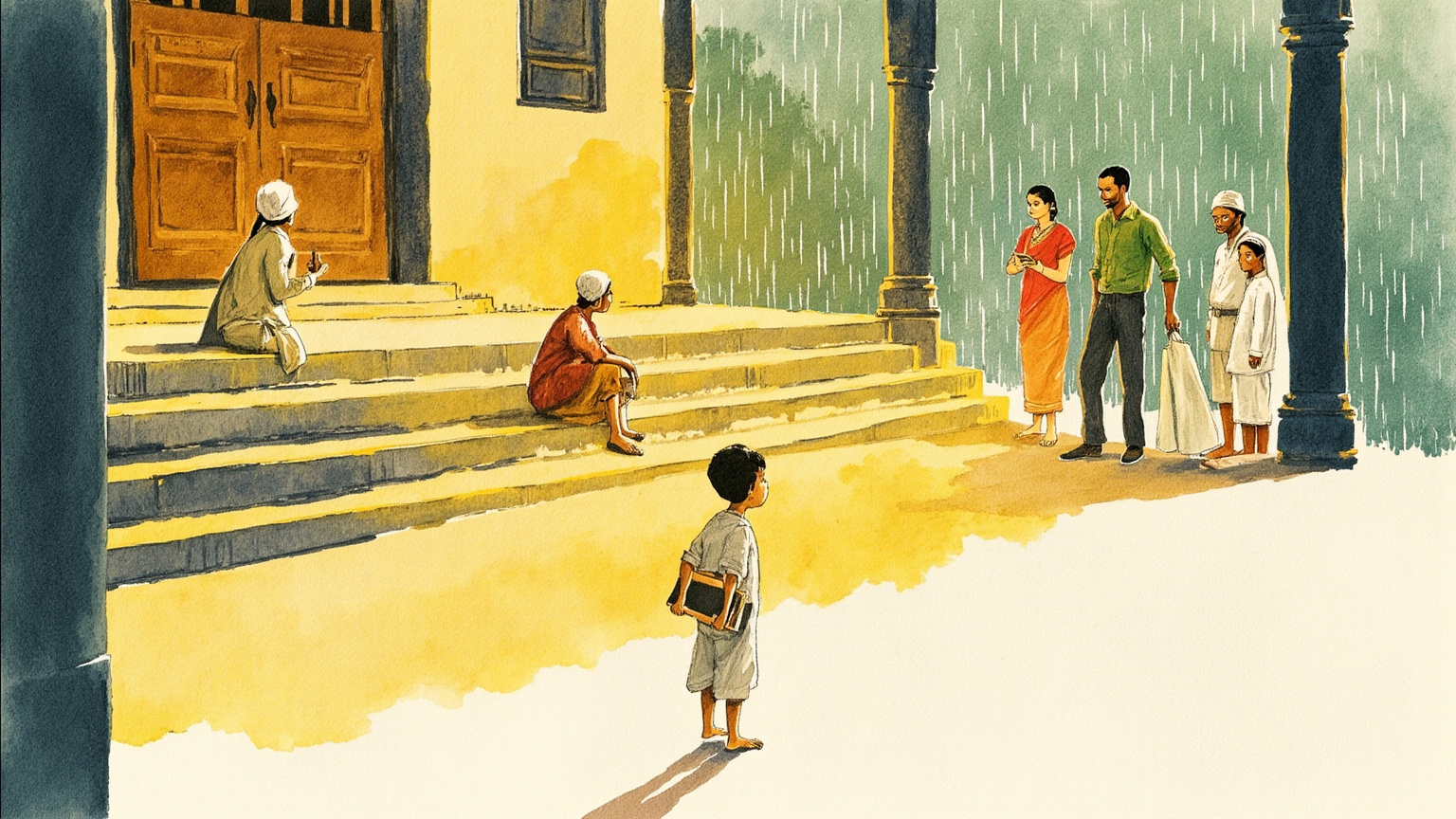
The book closes on a rainy night. The family is somewhere in the house at evening prayers, and young Rabi is allowed to stand in a corner of the outer hall and listen, while an older brother or his new sister-in-law reads out newly written lines from across the room. His father is still as silent as a golden idol; his grandmother still slips him a sweet in some corner when no one's looking. The rain keeps falling, and standing there in the lamplight and the murmur of voices, he understands for the first time what he wants to be: someone who writes. That's where My Reminiscences ends. England, growing up, the school he would found, the Nobel Prize — all of that belongs to other books.
Themes and craft
The book's real protagonist isn't a person, it's a house. Jorasanko itself is the narrator: its courtyards and verandas, its flagstones, its railing above the river, the floorboards that turn damp every monsoon, all of it enters the story before any person does, and outlasts every person in it too. A child who kept falling ill was shut out of the wider world, and in return he saw straight through the world he was confined to. What this book does is turn that forced inwardness into a kind of vastness of its own.
A family ethic of being cherished and disciplined in the same breath is the book's second theme. He was doted on by his elders from birth, and still had to wash his hands before meals, stay still in the house after dark, and lower his eyes before his father. Tagore never complains about any of it. He writes these rules the way he writes the rain, an unchosen backdrop, and also the place where a person eventually grows their shoulders. Anyone later troubled by their own family should come back and read how he writes his father.
On the level of craft, the book's best moments are always small: a raindrop splashing on a particular flagstone, a Bengali word in the tutor's mouth suddenly taking shape, a thread of candlelight leaking through a door crack. Tagore refuses to make childhood grand. He only lets you hear the smallest, quietest sounds, and then you realize these are exactly what shapes a child. One more thread of theme, tucked in at the end: this is also a book about how a childhood lived across languages grows an ear for poetry. Bengali, Sanskrit, English, and new Bengali verse all struck this child in turn under the same roof, and he could write precisely because all four sounds were raising him at once.
The hook to read on
The real protagonist of this book isn't Tagore, it's the Jorasanko house he grew up in. Its rain, its flagstones, its old paint, its morning prayers, and that thread of candlelight leaking under the attic door slowly, irresistibly led him to poetry.
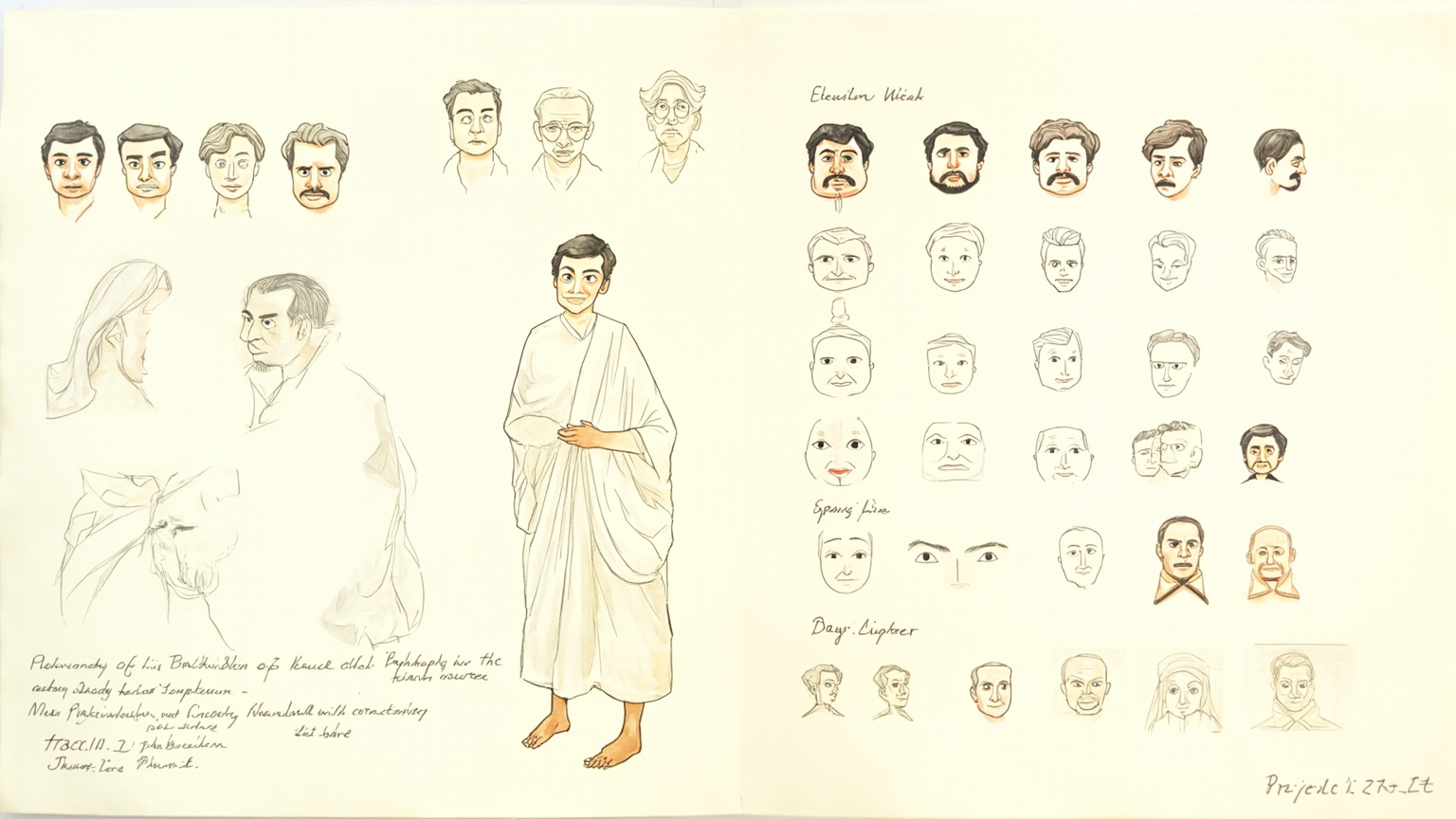
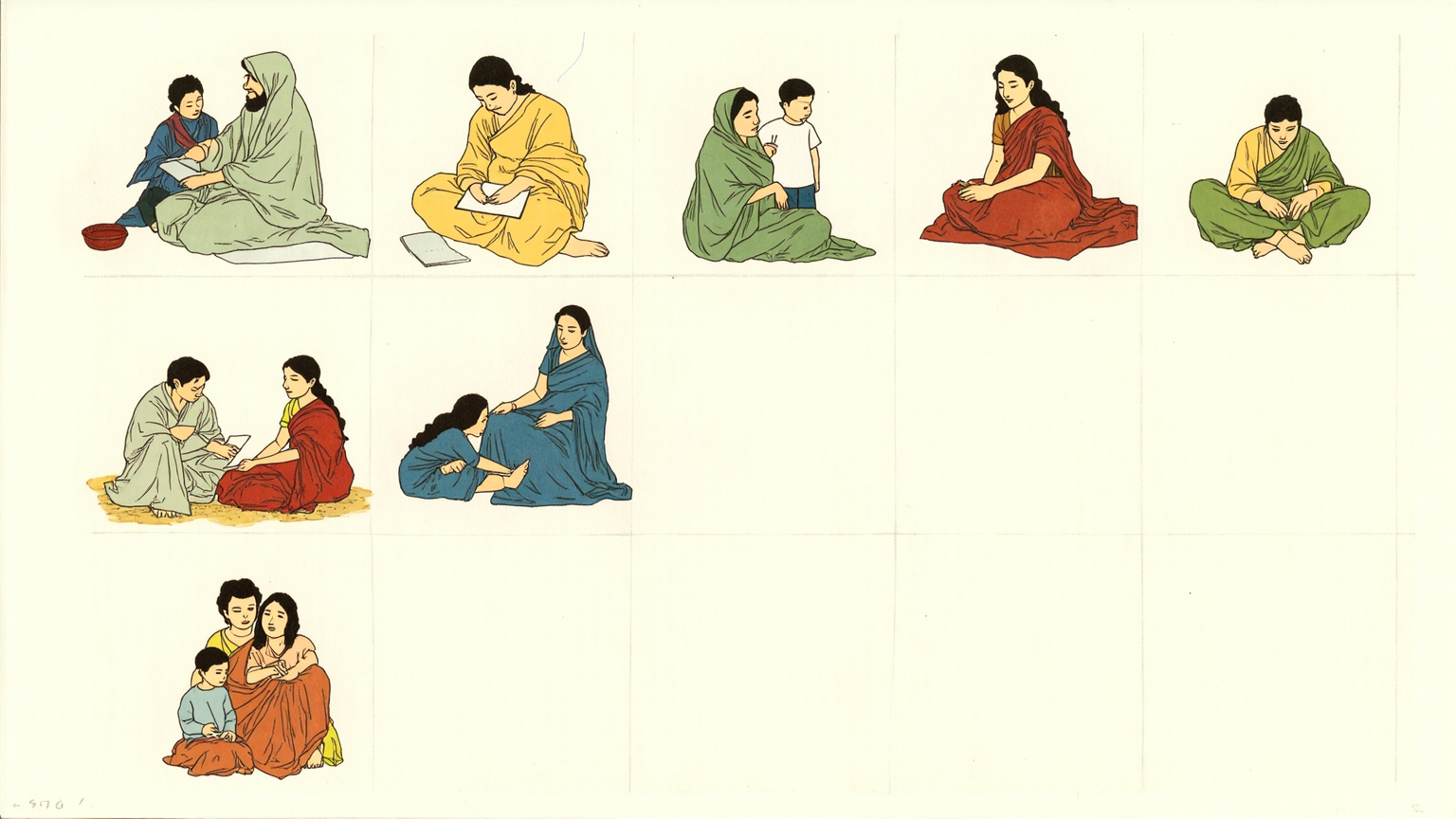
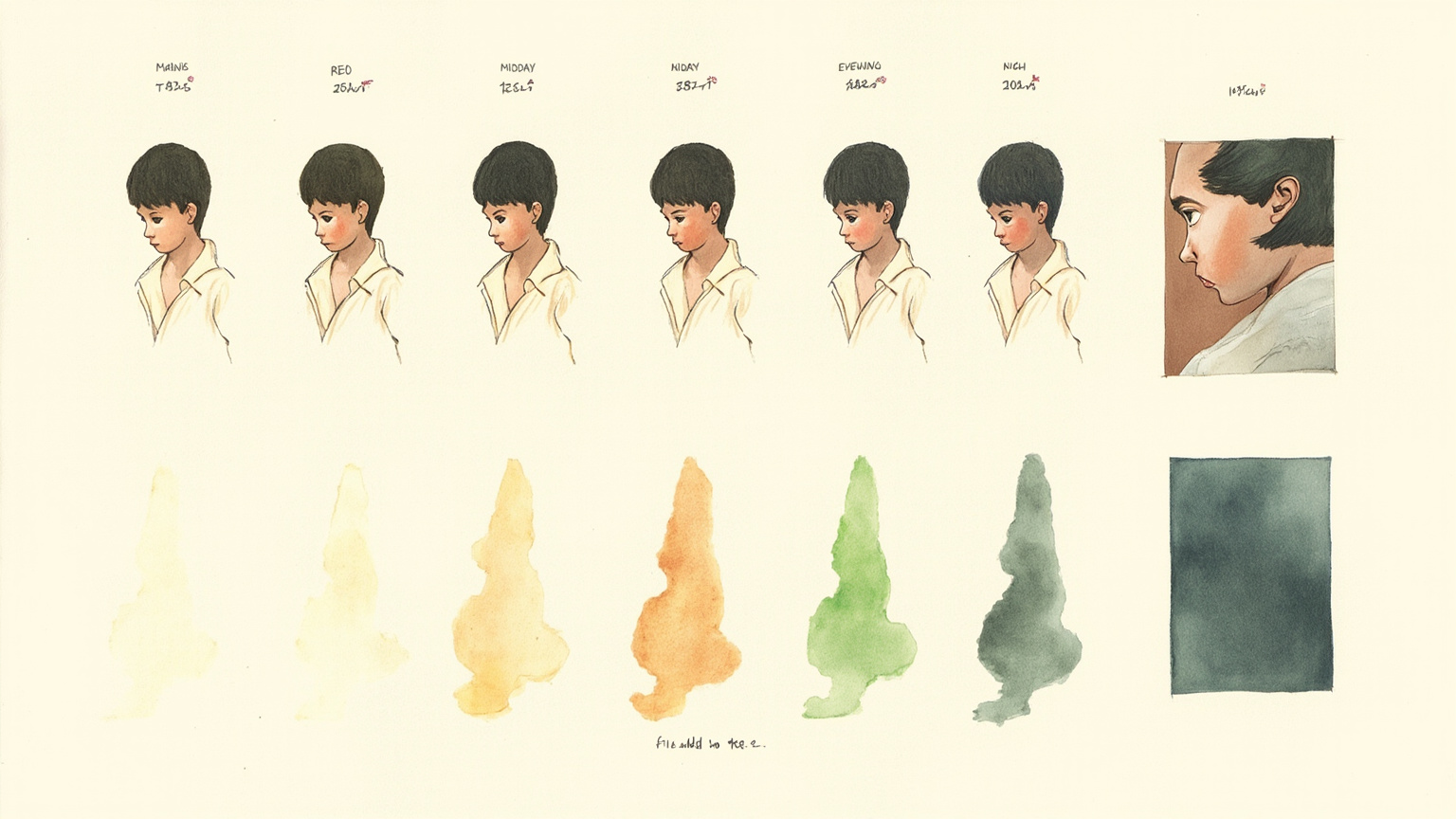
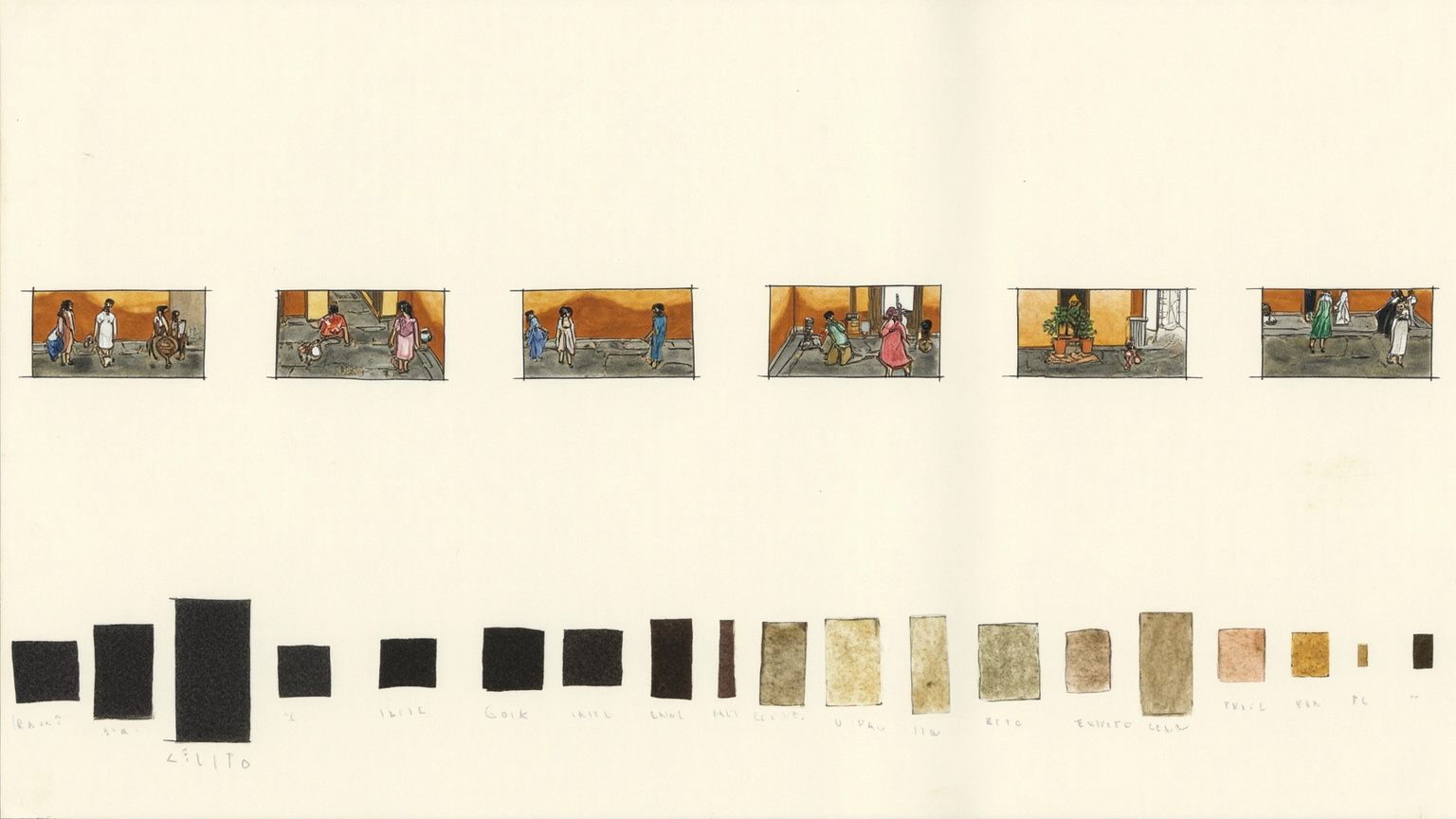
Art Direction4 plates
Before the guide was written, this book got a visual foundation — every illustration you just read grew out of it.