A five-and-a-half-year-old on a poor street learns what tenderness is, and that people can be gone
Text and illustrations produced by the pipeline

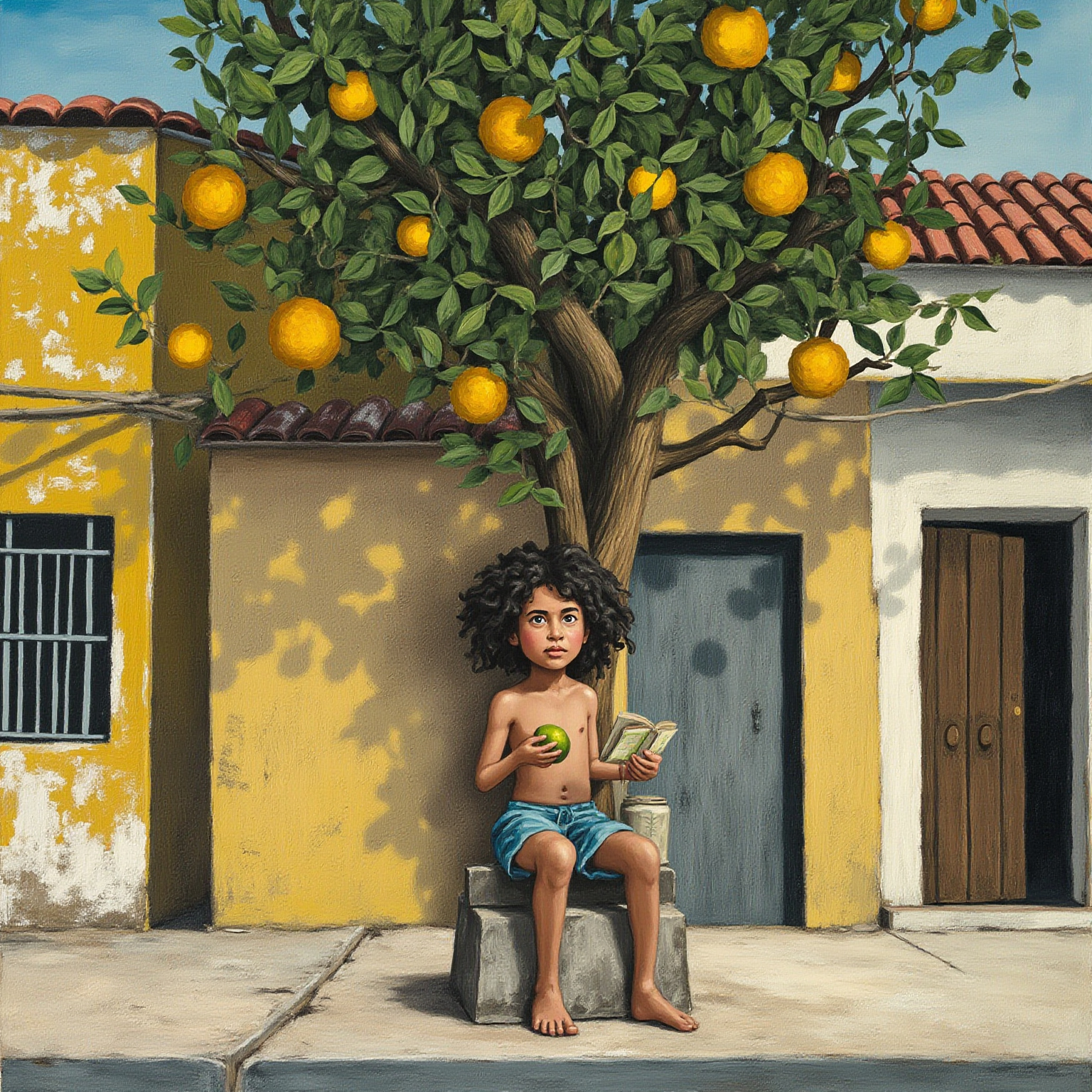
On Christmas morning, five-and-a-half-year-old Zezé stands on his toes to reach the old shoe hanging by the door. He knows the family is poor, but he cannot help himself. The shoe is empty, not even a single piece of candy inside. No one had made a wish for him. The book begins with that moment on his toes: José Mauro de Vasconcelos brings the camera down to his height and lets the whole street unfold through a child's eyes.
This is a Brazilian novel published in 1968, originally titled Meu Pé de Laranja Lima, about the youngest son of a poor family, five and a half years old. Running underneath it is the author's own story: Vasconcelos was born in 1920, grew up in Rio's northern suburbs through that decade, and later became a writer and actor before his death in 1984. In Brazil his standing is close to that of the one book everyone thinks of when childhood comes up: assigned in schools, adapted for television, translated into dozens of languages. It is remembered because it never turns a poor kid from the streets into an inspirational specimen, and never turns domestic violence into spectacle. It simply lets a five-year-old lift his head and tell us about the world, plainly, as it was.
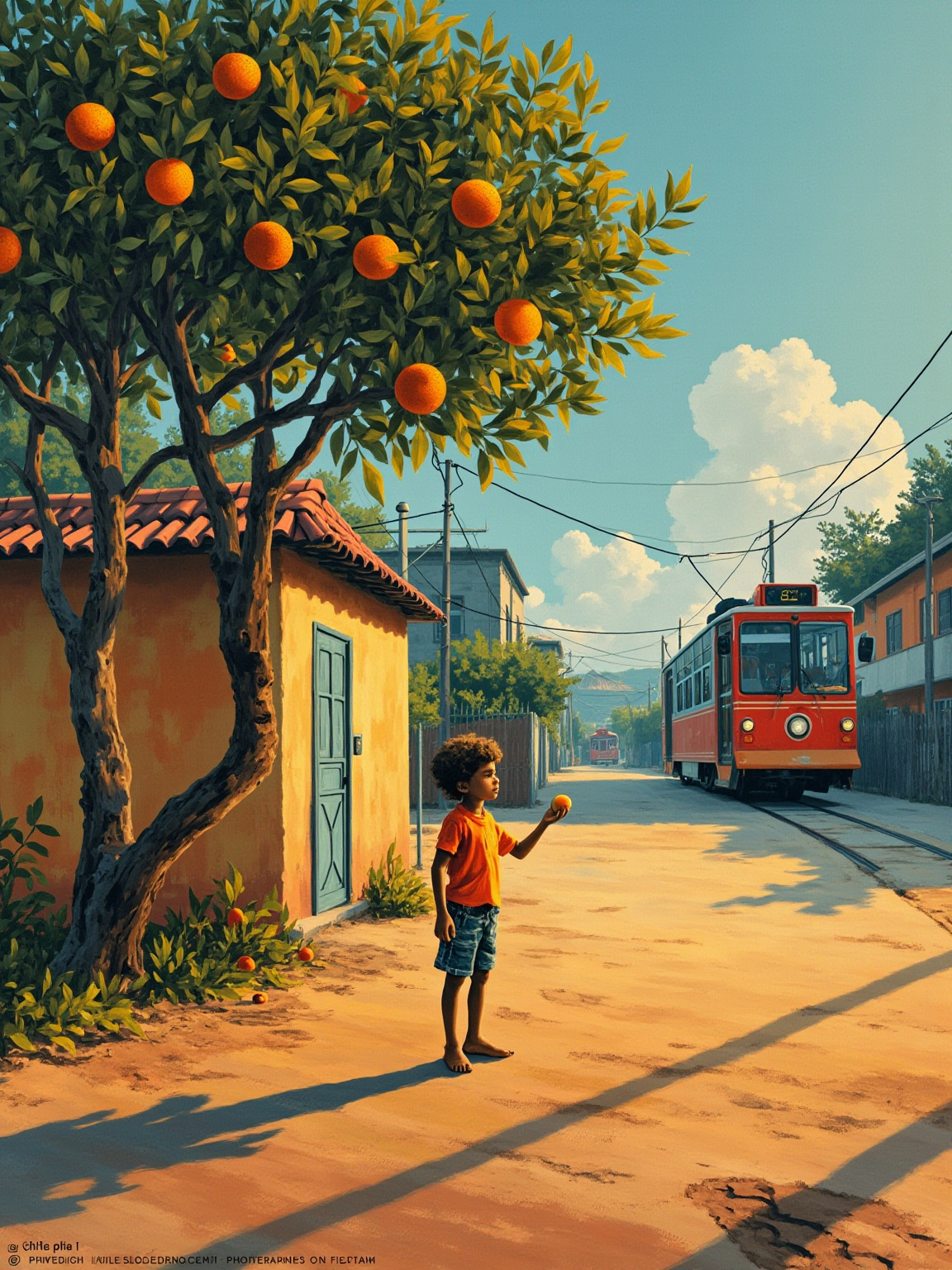
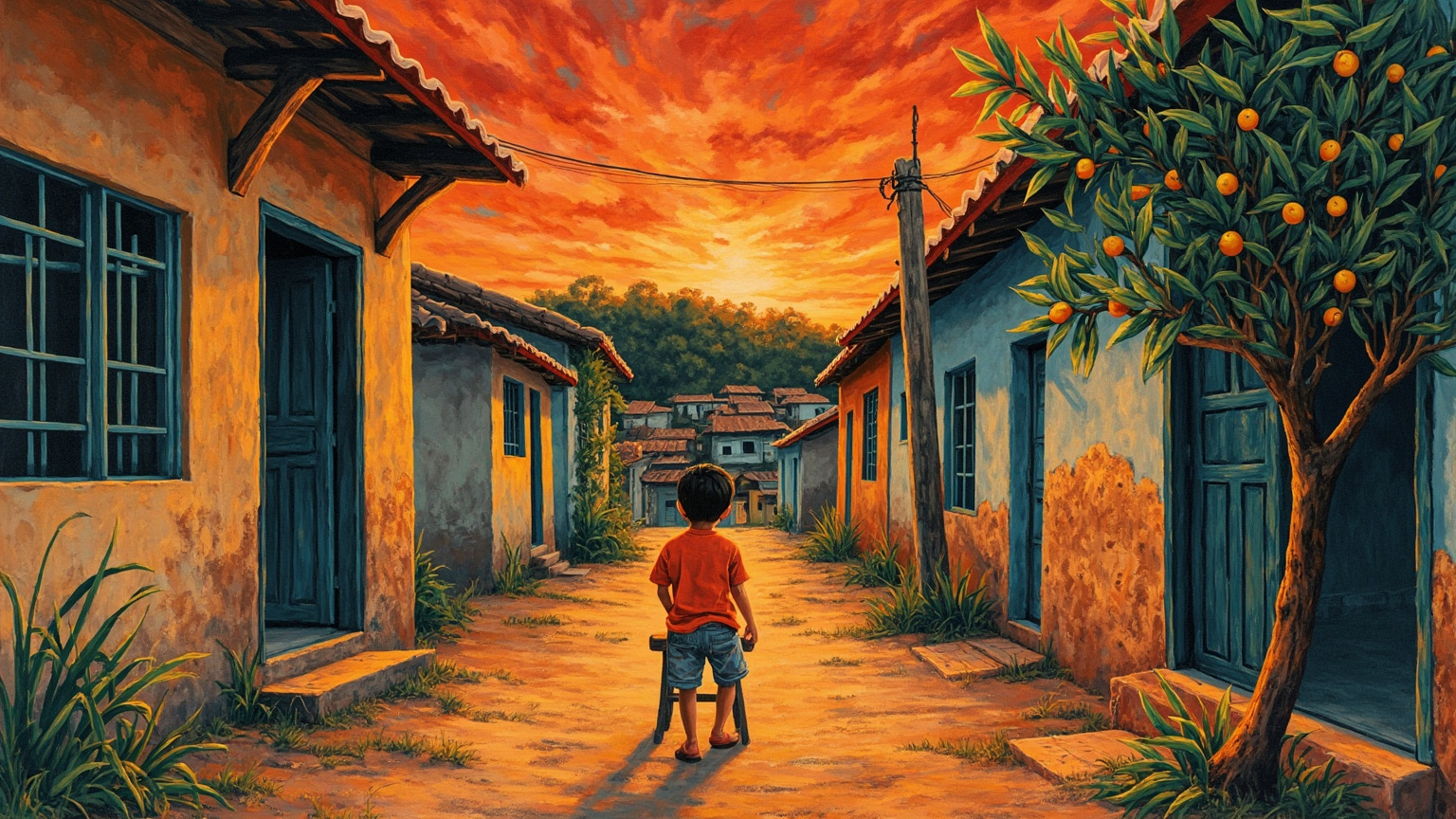
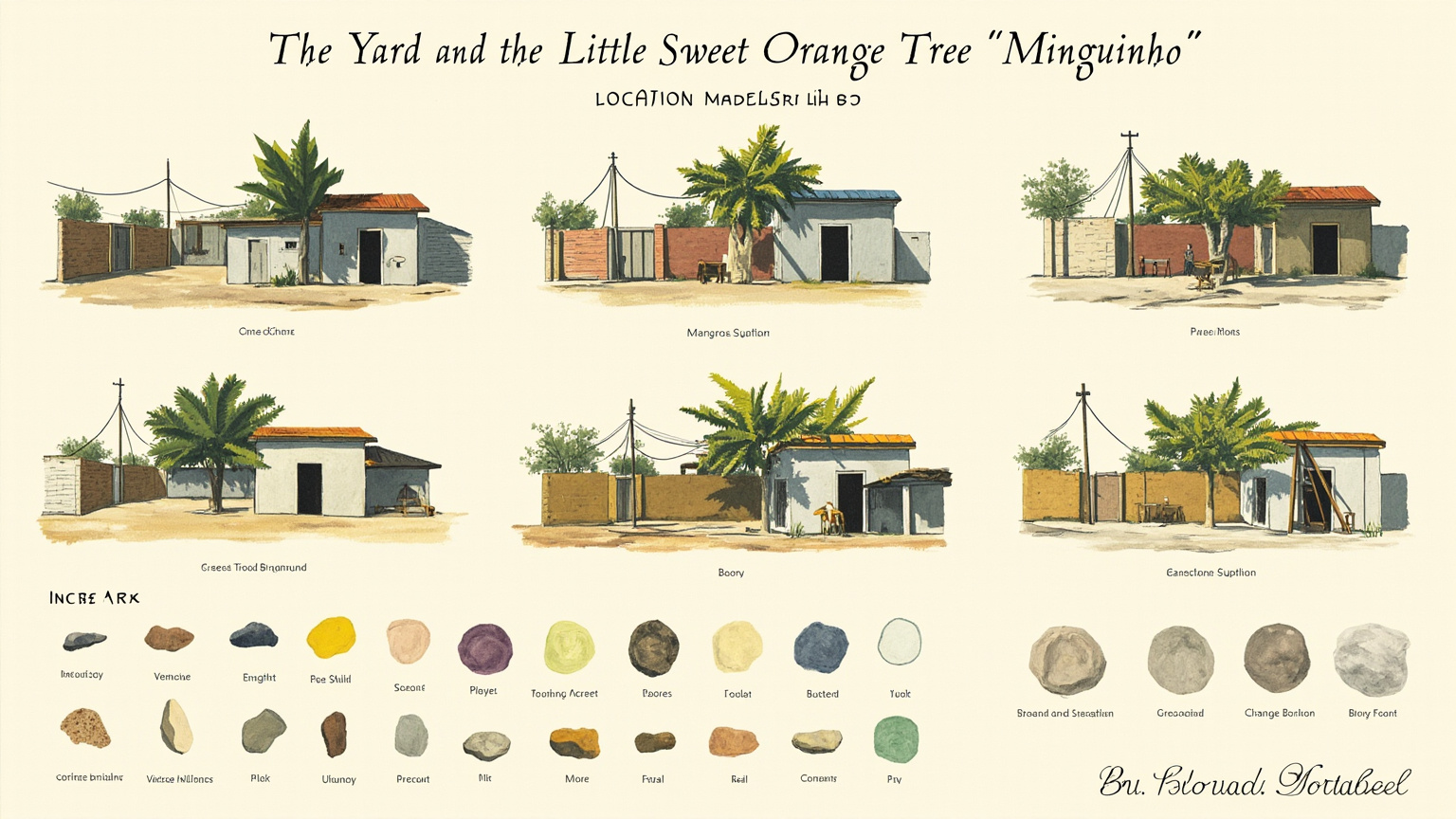
Zezé is near the bottom of the family: his two older brothers gang up to beat him, a baby brother has just arrived below him, his mother takes in washing, his father is out of work and drinks. They call him Little Devil, a name the family gave him and one he has earned, full of mischief and quick with his mouth. But the moment he sits down under the little orange tree in the backyard, all of that goes quiet. The tree was planted the day he was born, and he has raised it alone, watering it himself; he named it Minguinho, and every afternoon he sits at its roots and pours out everything the day handed him, the scoldings, the beatings, the things he never got to say to anyone else.


Tenderness isn't born in you. It's an adult choosing not to raise a hand, and coaxing the little prince inside a child out into the light.
One thing I have to say: even with the whole story laid out, there is something no summary can give you, the physical feeling of it. The buzzing itch in Zezé's feet as he lies against the floorboard listening to the engine sing. The dry ache in his throat after talking to the tree until his voice gives out. The lurch in his heel when he stands on his toes and finds the shoe empty. None of that is plot; it is the texture of Vasconcelos's sentences themselves. The rhythm of the Portuguese carries a laugh, a catch of breath, a crack in the voice, and any translation loses something of that. But the height of being five years old, the sheer nerve of a child naming a tree between beatings, still only comes through on the page. Go see Minguinho. It has been waiting in that yard for a long time.
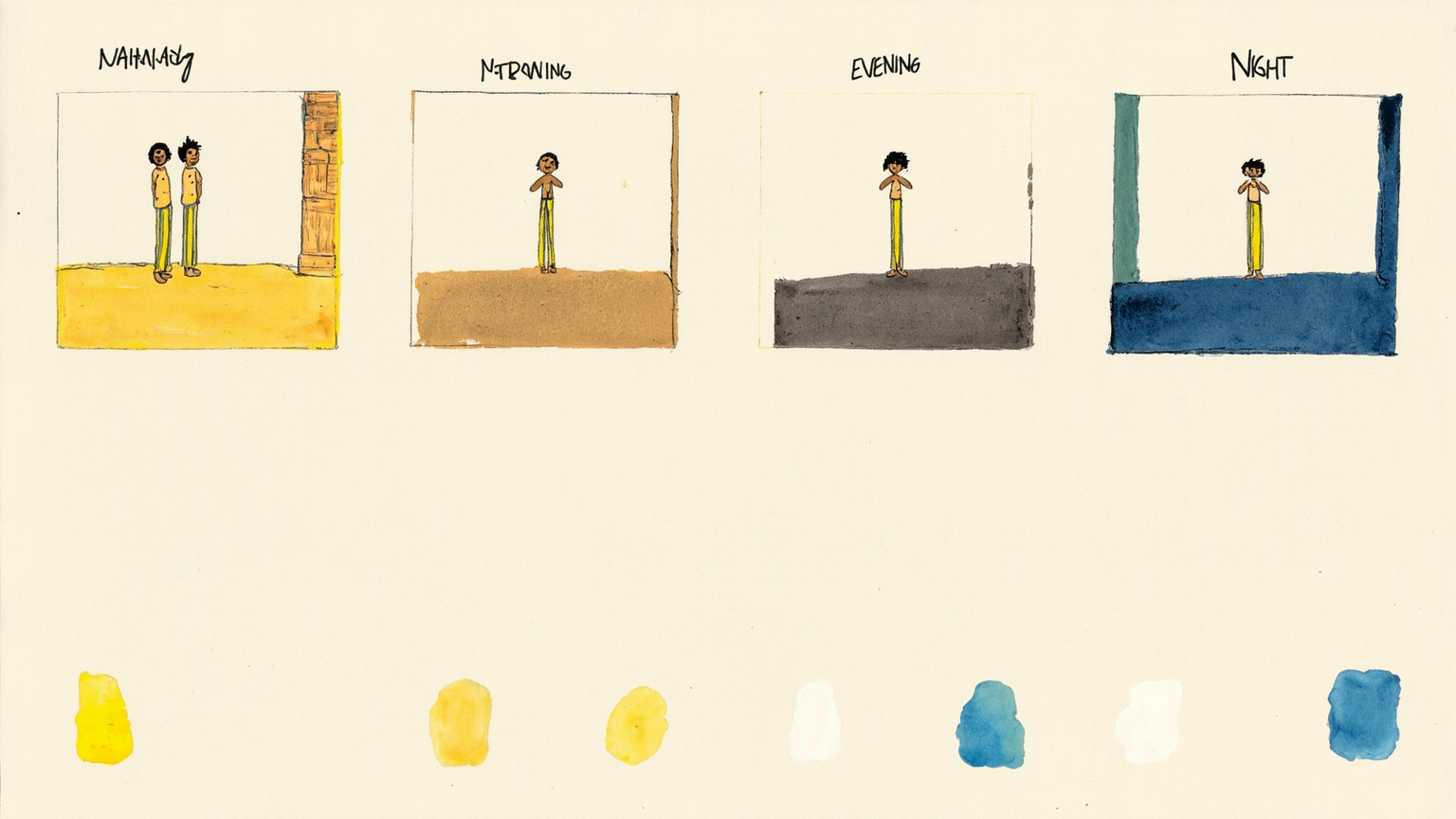
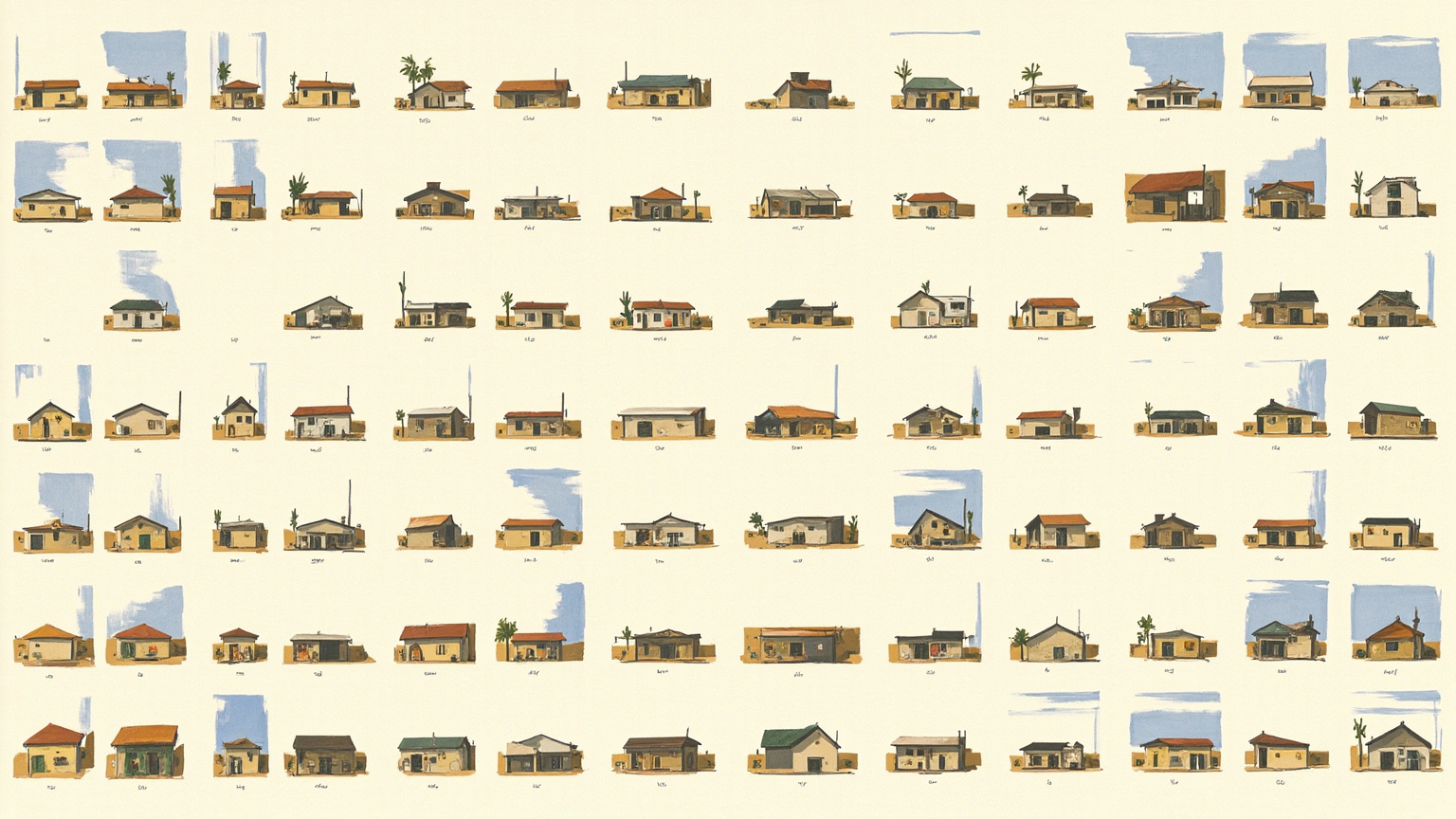
Before the guide was written, this book got a visual foundation — every illustration you just read grew out of it.
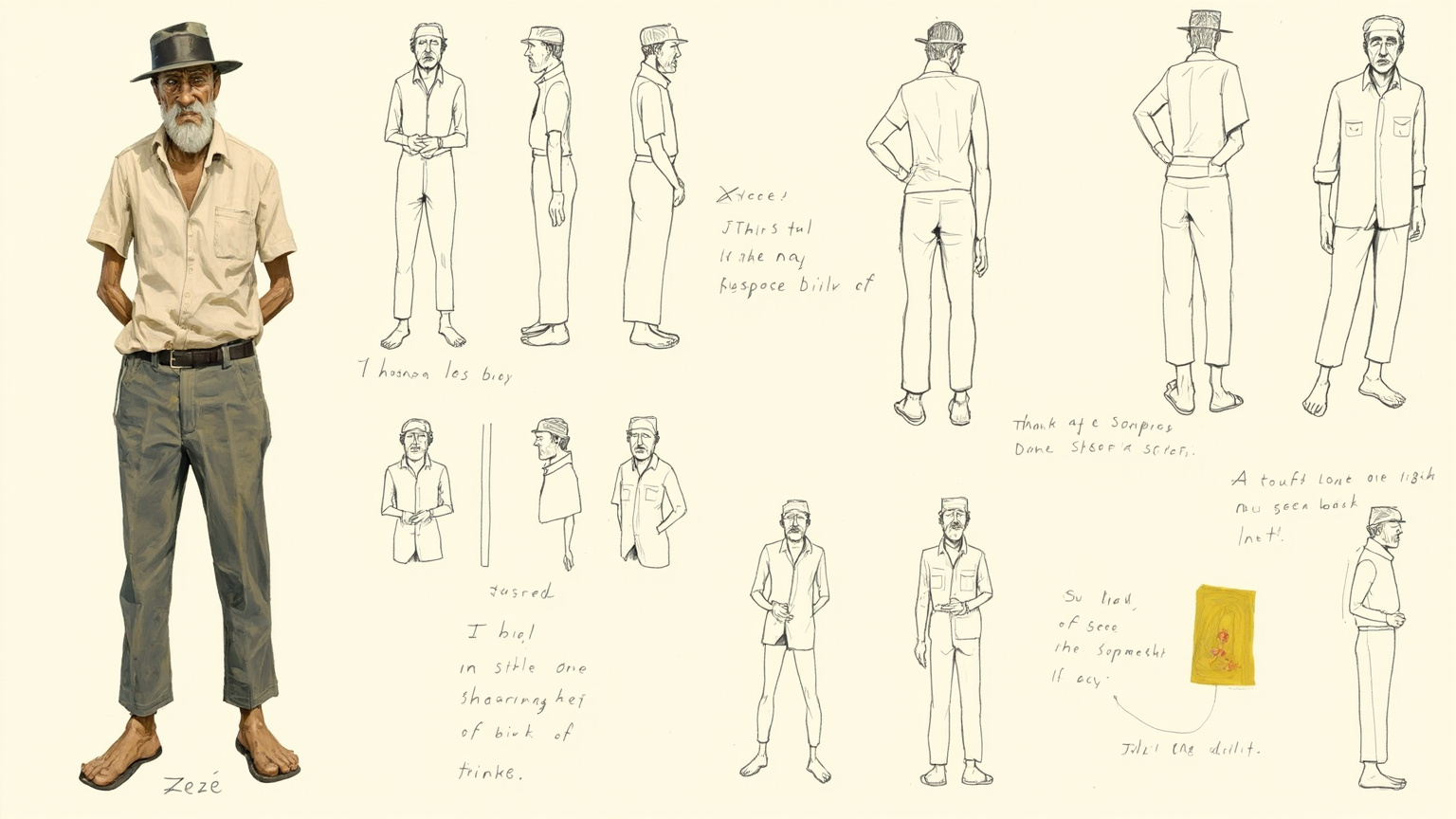
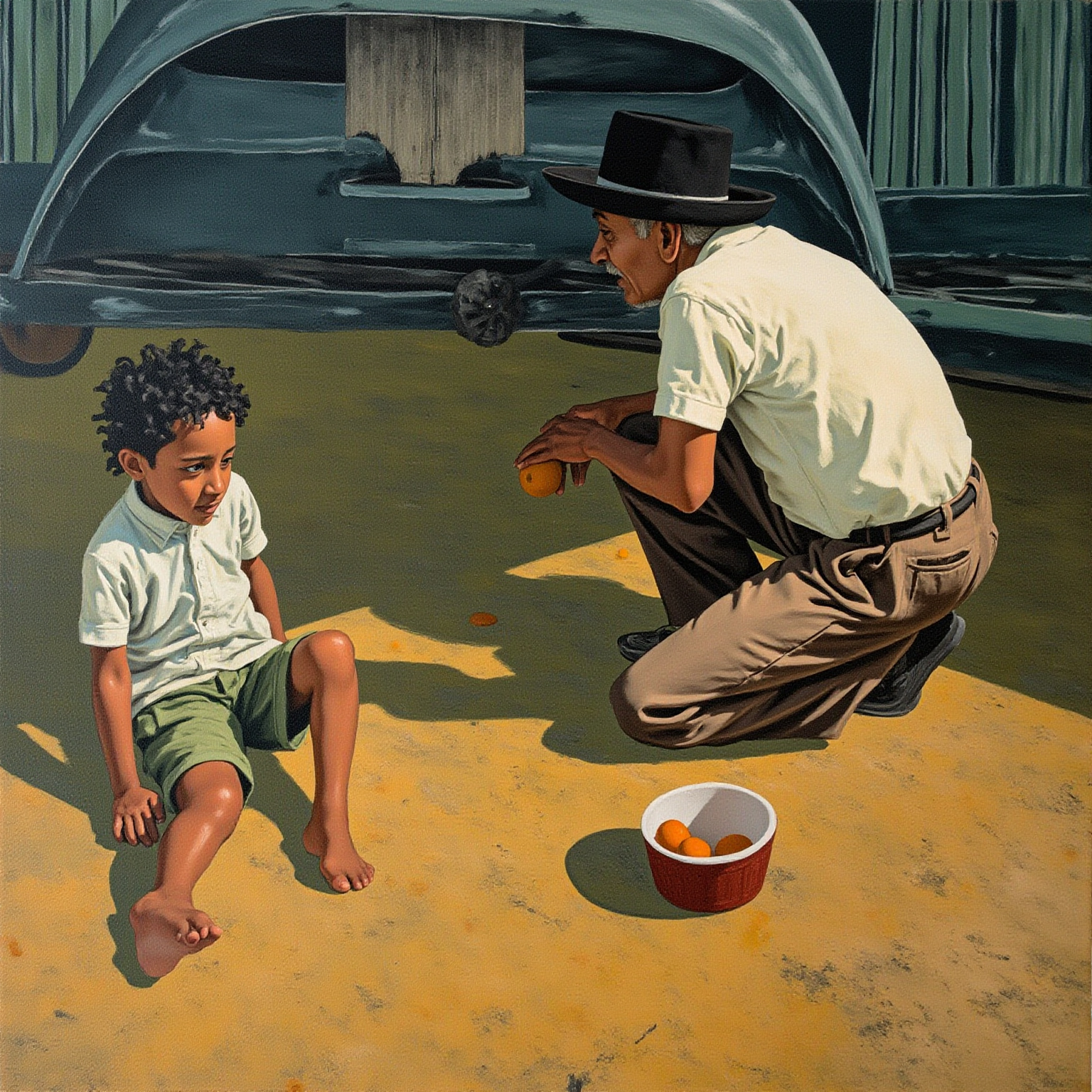
The man he hates most at first is Portuga, the old Portuguese immigrant who runs the repair shop on the corner, always in his round black hat. The trouble starts over a harmonica: Zezé reaches to touch it, and the old man slaps his hand away. Being hit is nothing new to Zezé; everyone hits him. But this time the old man stops hitting him. He crouches down and speaks to him in a tone Zezé has never heard from an adult, then invites him along for a ride in his loud old Ford.
Sitting in that old car is the turning point of Zezé's life. The old man has him lie down against the floorboard and tells him the engine is singing, that low hum, sealed inside iron, rising up through the soles of his feet into his chest. Zezé has never heard a song like that. There is no sound like it at home.
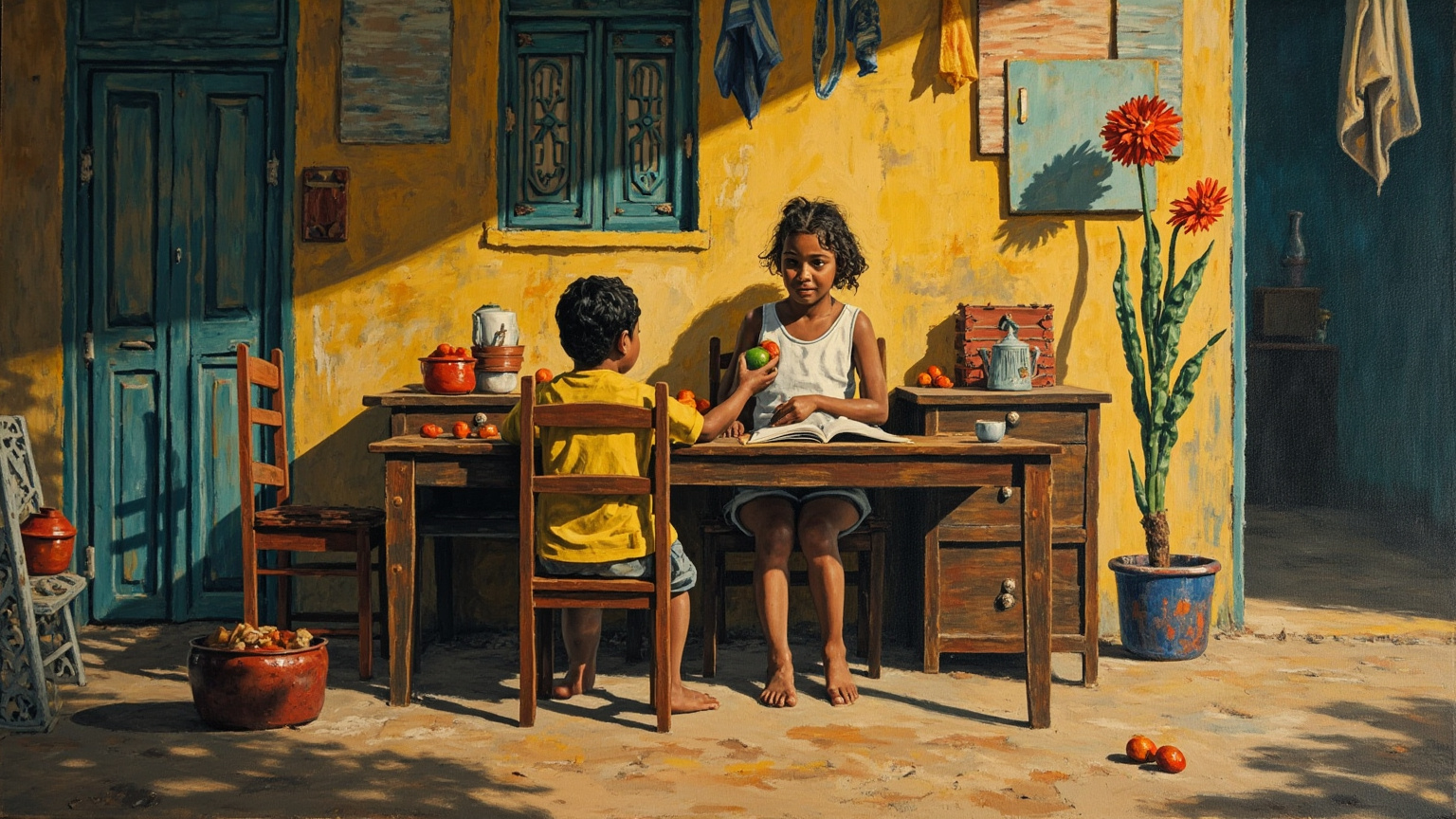
From then on there is an old car every week, a song, and a spelling chart. The old man teaches him his letters and never once raises a hand. For the first time Zezé learns that an adult can guide you without hitting you. He later calls the thing this wakes in him the little prince, something that had been asleep inside him all along until this old man coaxed it out, little by little. Stop here for a moment: Vasconcelos does not write that Zezé was moved. He writes that Zezé understood, for the first time, what the word tenderness actually meant. It is the same event told two entirely different ways.
Then the old man is gone. It happens after a Christmas, and the word spreads down the street. The book gives no crash scene, only Zezé refusing to believe it for days afterward: how could someone who understood him that completely simply stop existing?
For a while he does not want to live. It is not defiance; it is the collapse of a world that has suddenly lost its proof, because the one person who had ever treated him with tenderness, the proof itself, is gone. Vasconcelos gives this a single sentence, no elaboration, no dramatizing, because even the weight of saying it is more than a five-year-old can carry.
The heaviest hand raised against Zezé belongs to his father. The book never shows the beatings themselves, only their aftermath: a boy who cannot get out of bed, who is late for school, who trembles at the sight of his father for days afterward. Vasconcelos's position is clear: this is not discipline but poverty and violence, silenced in one generation, coming down on the next.
After the worst of the beatings, Zezé is taken in for a short while by his teacher, Helena de Sousa. She keeps a begonia in her kitchen drawer, replaced with a fresh one every week without fail. That someone, somewhere, still bothers to make a day look decent becomes, in itself, the place where Zezé can breathe. Her household says little. It simply gives him a clean bed, meals on time, and water changed on schedule for the flower in the drawer.
Zezé comes home to find his mother crying. It is the first time he discovers that adults can break too. She has been holding five children up for too long, not because she loves them too little, but because she loves them past the point of having anything left to hold herself up with. The house falls apart that night, and Zezé, pressed into a corner, understands for the first time that there is no one left for him to lean on.
But he climbs out. No one delivers him a lesson to live by; he is held up, inch by inch, by the small and unremarkable people around him. What he finally understands is that a person can be gone and still leave something behind in you: the spelling chart, the sound of an engine singing, the discovery that a child can be taught without being hit.
Vasconcelos was already in his forties when he wrote this, pulling his own childhood back out for readers, not to accuse anyone, but to remind grown adults that a five-year-old sees the world from a different height. His houses are dragons. His trees talk. His streetcars never stop ringing. Poverty and violence are certainly in the book, but it never lets them become spectacle. It only lets them become a way of seeing how a child actually survives them.
The orange tree, as a stand-in for the inner life of childhood, is widely regarded as one of the weightiest images in modern books about growing up, young enough for a child, sturdy enough for a whole family to read together. It is not as weightless as a fairy tale, nor as crushing as a misery memoir; it sits in between, where a child learns what tenderness is for the first time and learns that people can die for the first time, both in the same year, both in the same small body. That collision is what gives this book its particular texture, something close to an awakening.