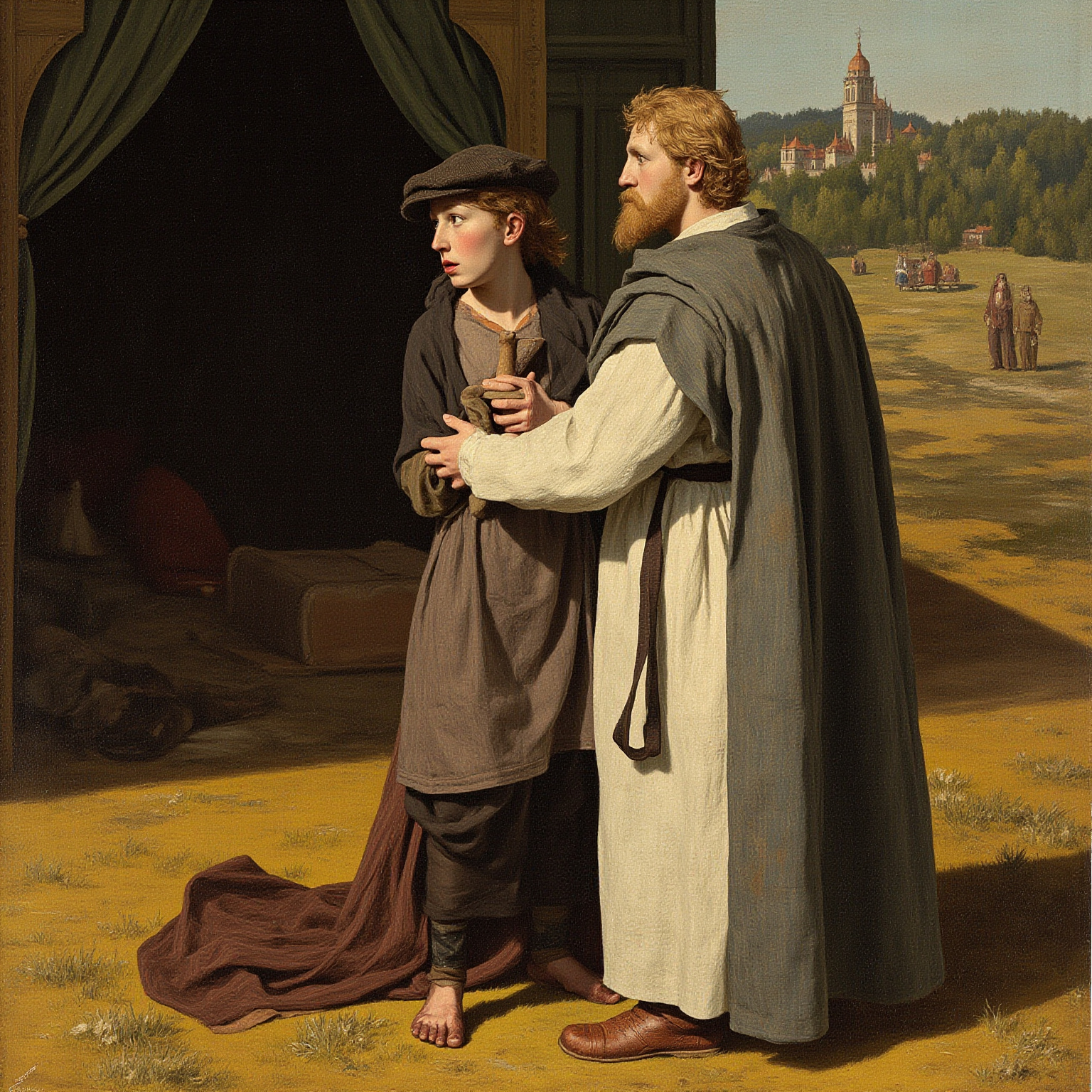
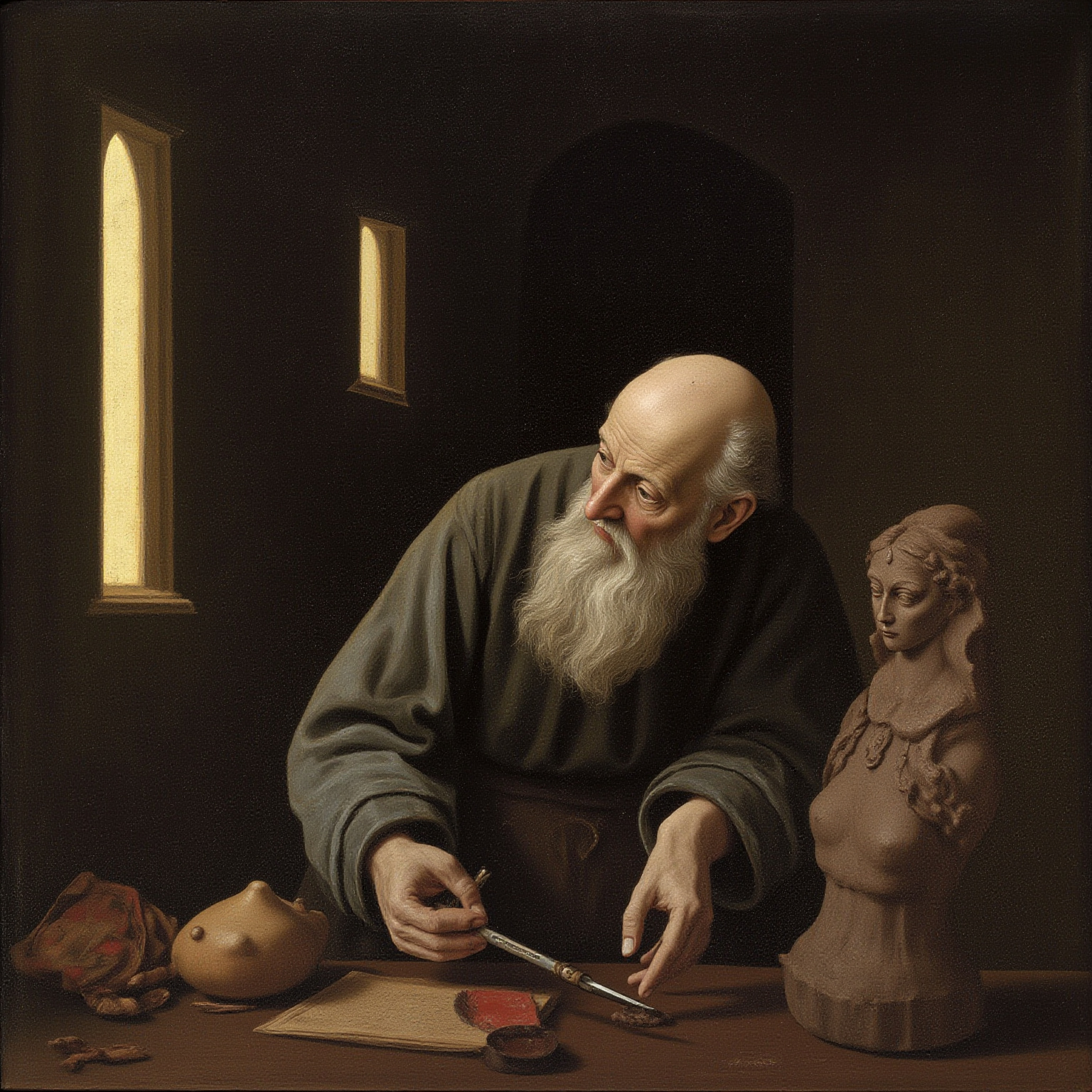
A kiss ruined him. In the cloister of a monastery, a young man had been sent by his father to atone for his mother's sin, bound to grow old there among candles and prayer. A gypsy woman crossed the meadow outside and gave him his first kiss, and the moment their lips touched, no monastic rule could hold him anymore. He left without a word, walked out on his vows, and did not come back for decades — bruised all over, cradling an unfinished carving of a woman. People later called it a story that split one man in two: half stayed behind to do penance, half was let loose to wander.
What This Book Is
Narcissus and Goldmund is a German novel Hermann Hesse wrote in 1930. He had only recently handed in Steppenwolf, and he was still writing out of that broken-glass mood of interwar Central Europe. The novel went on to become one of his acknowledged masterworks, one of the twentieth century's most reread German coming-of-age novels. Hesse set it deliberately outside real time, somewhere in a generic medieval Germany of monastery and countryside — no fixed year, just the vague sense of the Middle Ages, the plague years. He was not after historical accuracy. He wanted the feeling of a cloister that could belong to any century.
The reason this book stays with people is simple. Hesse took one whole person and split him in two: the rational half, named Narcissus, stays in the monastery as a monk; the sensory half, named Goldmund, goes out to wander the world. The two men think of each other for the rest of their lives, complete each other, and in the end one dies in the other's arms. They are not related by blood, and they are not opposites — they are the left and right halves of a single soul, each finishing what the other lacks.
What a guide like this can give you is a map: who meets whom, who dies where, who asks which question. What the novel itself gives you is the cold of the cloister, the crisp sound of a chisel meeting wood, the lifelong warmth left by a first kiss in an open field. None of that lives in the plot. It lives in the gaps between sentences. Hesse does not write the senses with adjectives — he writes them with the body's motion: how a hand clenches, how lips meet, how eyes look away. That is the thing worth reading the book yourself to get.
ImaRead5
Art Direction4 plates
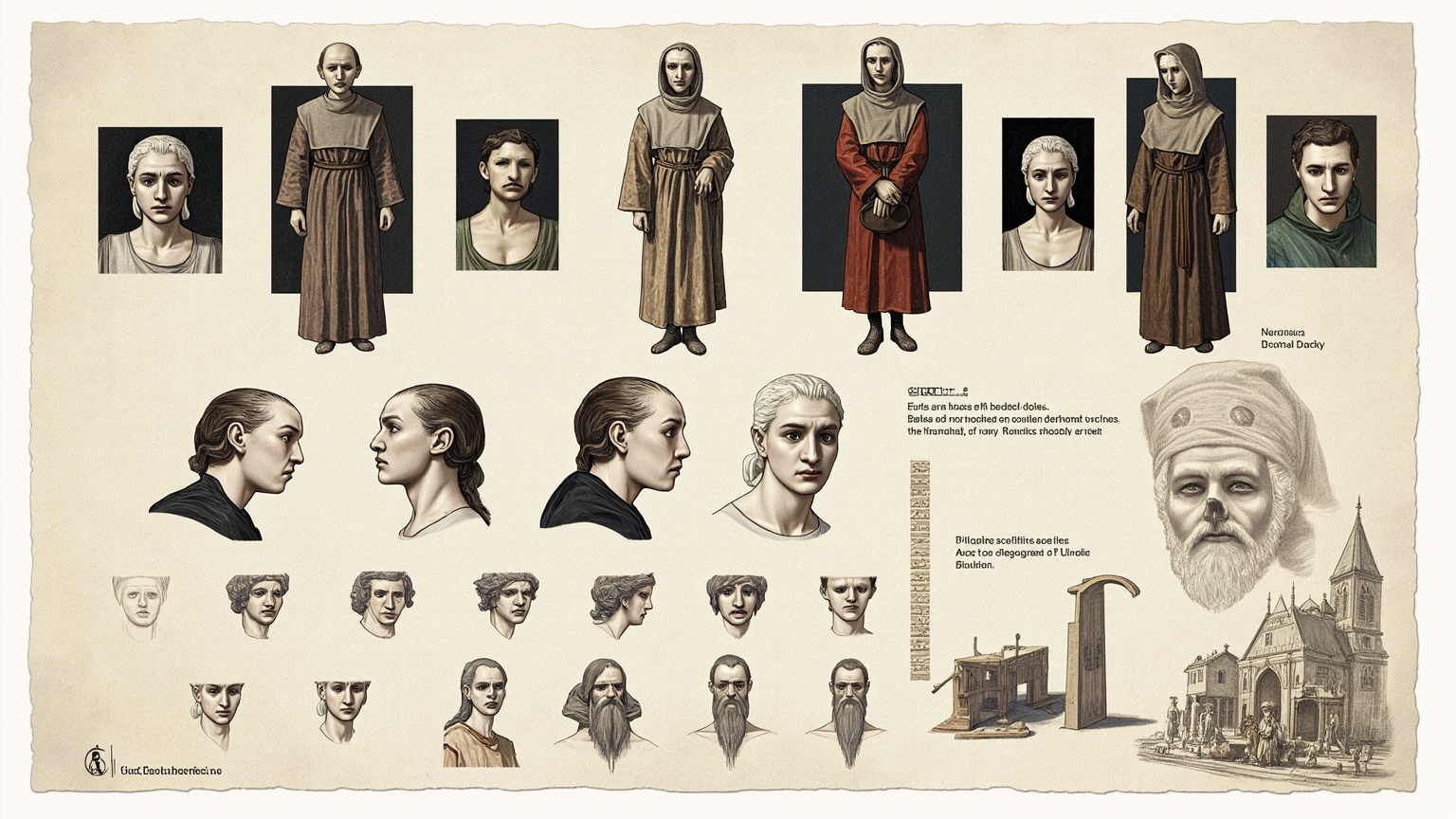
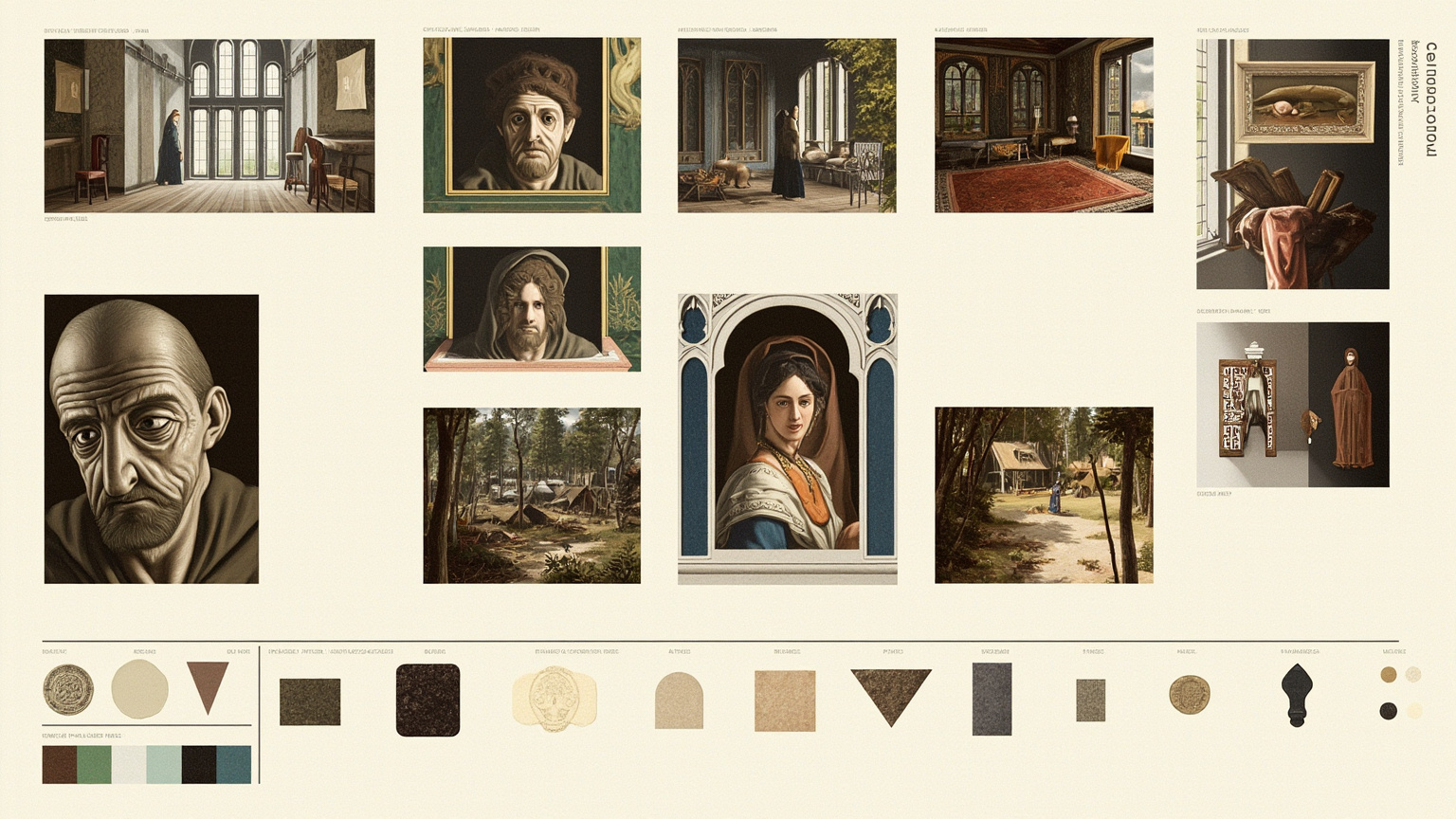
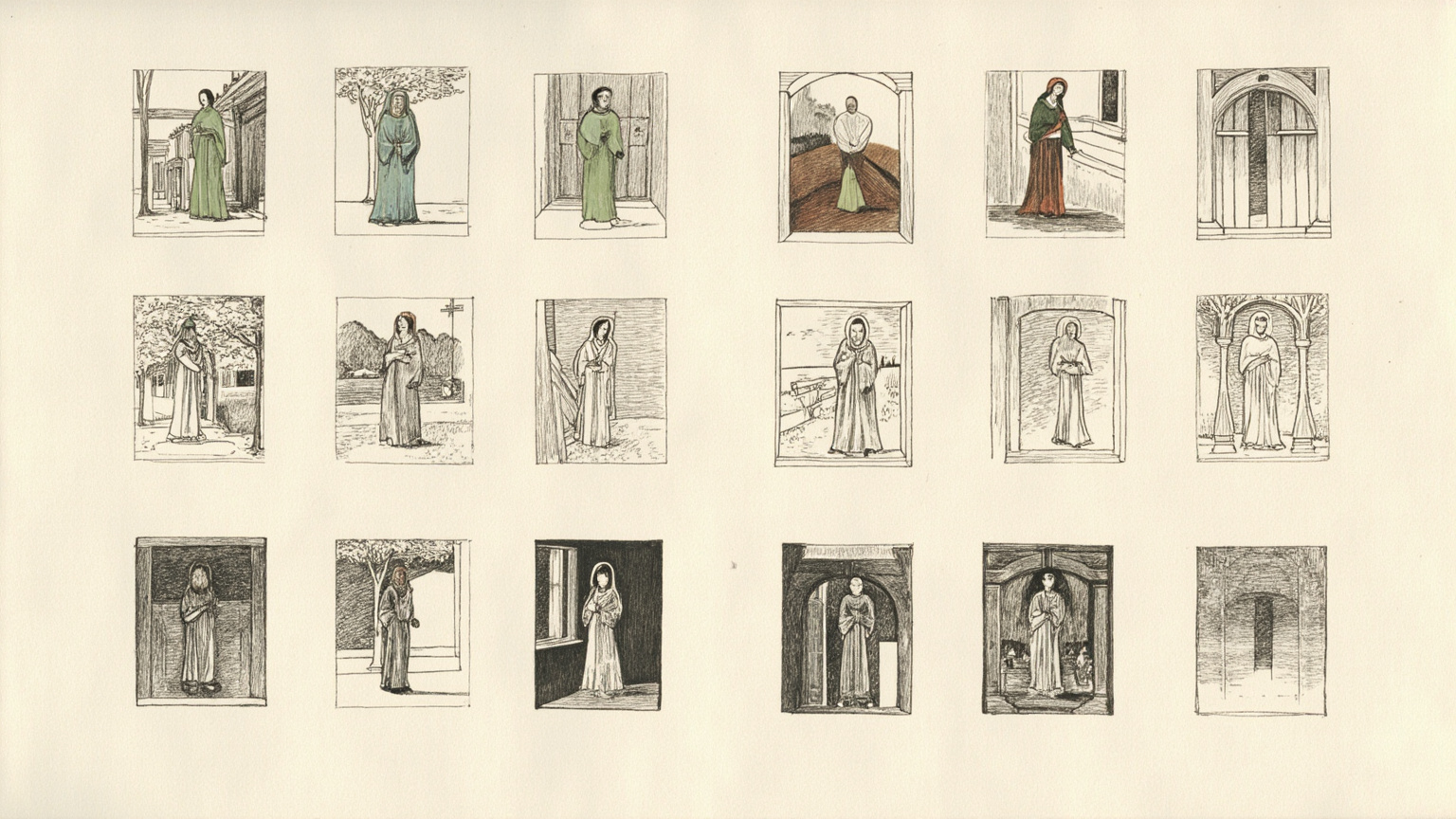
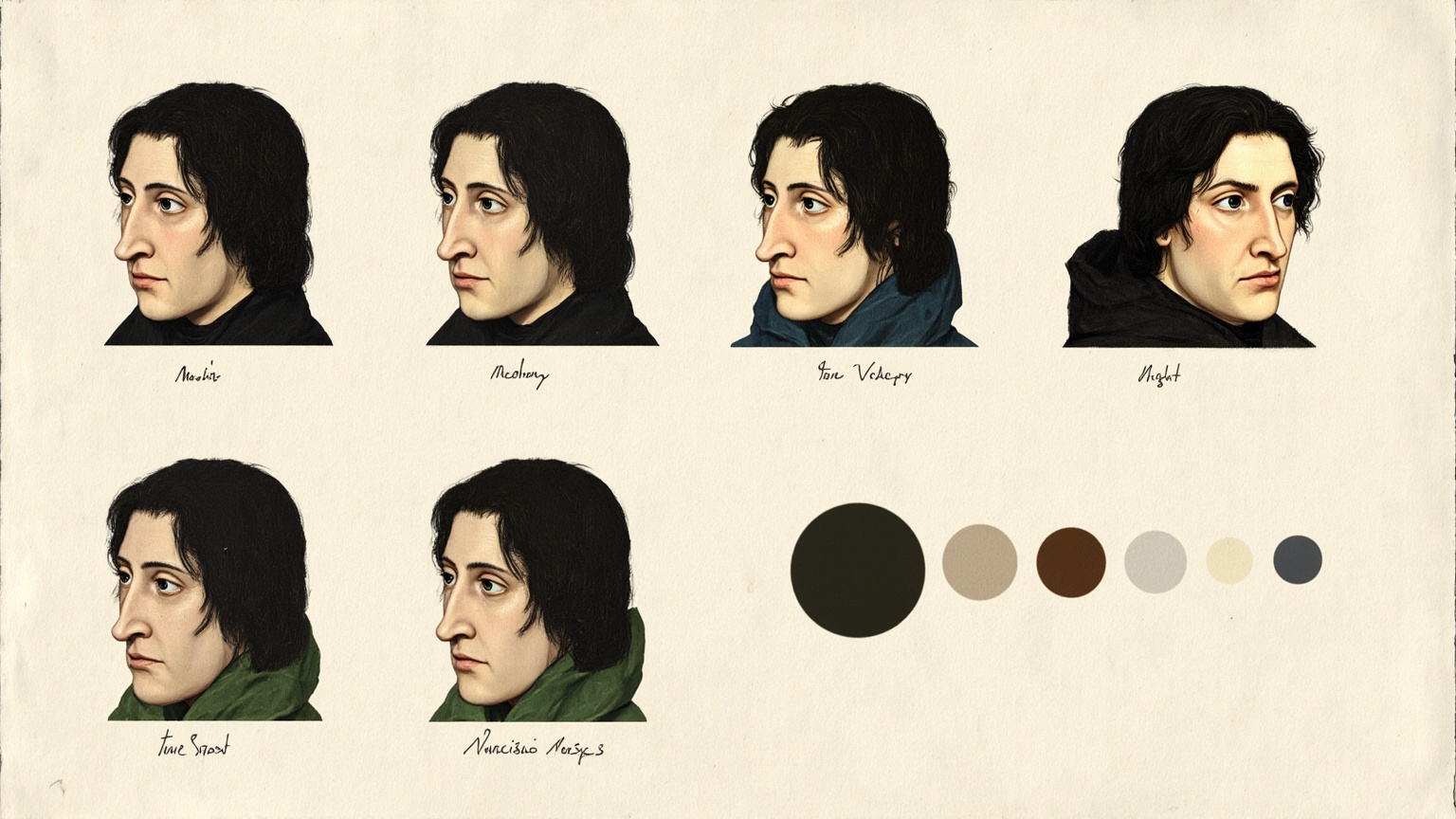
Before the guide was written, this book got a visual foundation — every illustration you just read grew out of it.
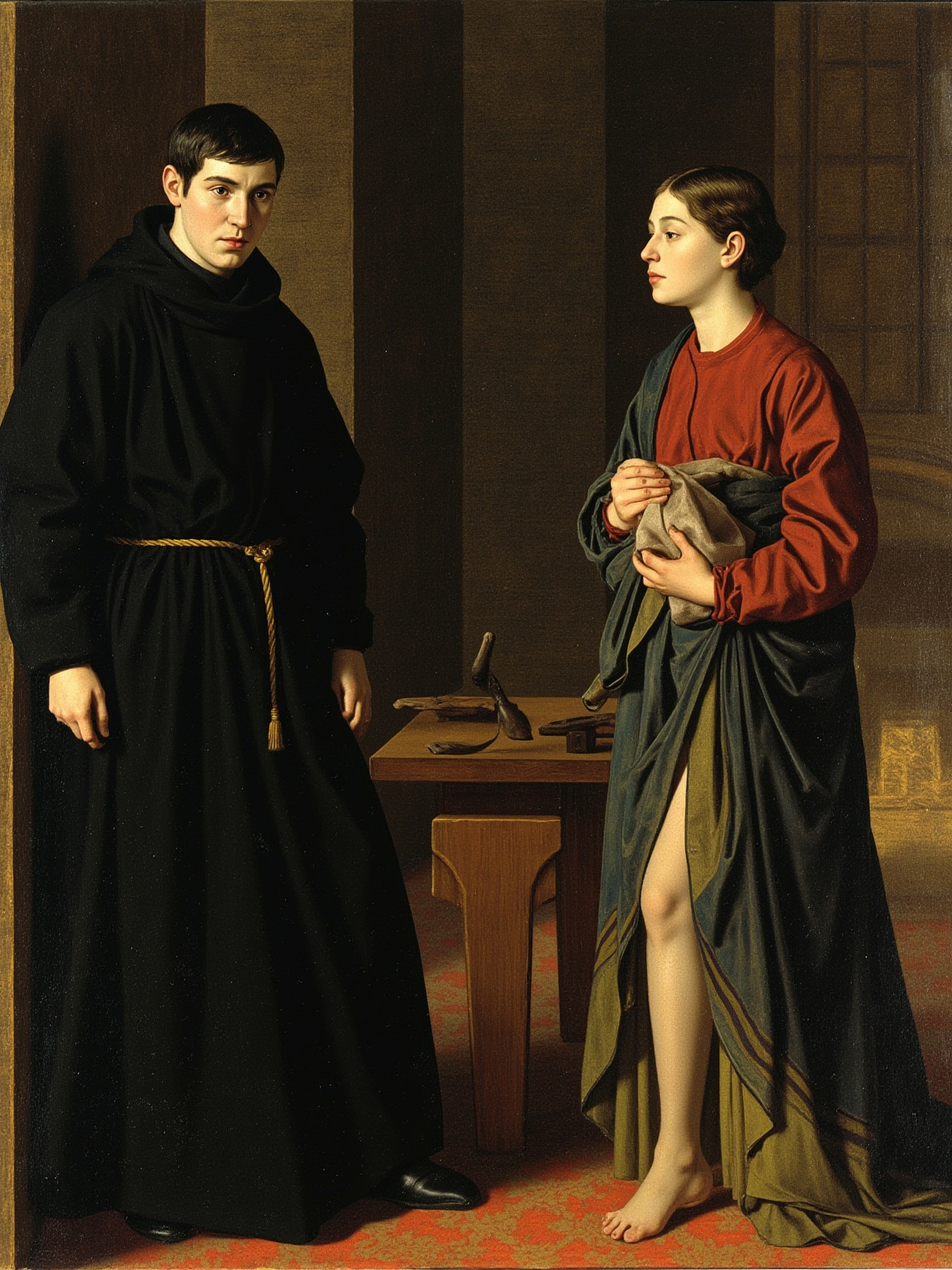
Narcissus is already a teaching monk at Mariabronn while still young, with a severe face and eyes that seem to be weighing you up. He stands for thought, spirit, order, self-denial — the kind of man who can stand in a cloister and read what is in your marrow at a glance. Years later he becomes abbot, holding the power of life and death over the whole monastery. Goldmund is the young friend whose road out of the monastery Narcissus himself set in motion: his father had decided his mother's blood was a sin that needed atoning for, and sent the boy here to pay the debt. Goldmund was born inside these walls and grew up inside them, but his heart was never here. Old Abbot Daniel is the monastery's gentlest wall, warm and forbearing, and his warmth throws Narcissus's coldness into relief.
The world of the story is the countryside of a vaguely medieval Germany. It starts at the fictional monastery of Mariabronn — Hesse never used a real place name — moves through towns and villages that the Black Death has swept through, and centers, most importantly, on the city where Goldmund learns to carve: Master Niklaus's workshop, sawdust mixed with the sound of the chisel. The last stretch of the book brings him back to the monastery. The whole novel traces a circle: leave the monastery, wander the world, return to the monastery.
How the Story Moves
By the year Goldmund's father delivers him to the monastery, Narcissus is already a teaching monk. Narcissus reads people with uncanny accuracy, and within a few exchanges he sees that this boy is not built for penance — there is a wildness in his eyes that will not stay down through the chanting of prayers. The two form an odd friendship: Narcissus cool and sharp as a blade, Goldmund hot as fire, and neither can do without the other. What makes the writing work is this: Hesse does not put them at odds. Instead he has Narcissus press Goldmund to face the part of himself he has buried. Where is your mother? Do you think of her? What do you actually want? That pressing is the switch that starts everything that follows.
Not long after that switch is thrown, a gypsy woman named Lise crosses the meadow and gives him his first kiss. It rips the lid off senses he has kept down for more than a decade. He leaves without a word — abandons his lessons in the cloister, abandons Narcissus, abandons old Abbot Daniel. The monastery gate closes behind him, and he is on the road.
The years on the road are no romantic poem. Lovers come and go, one after another, and none of them stay. On the way he runs into a cunning traveling companion named Victor, who pretends to journey with him and then tries to rob and kill him in the night. Goldmund kills him in self-defense — his first time feeling, with his own hands, what death is like. Further on, the plague is sweeping the continent. Villages stand empty, the dead pile up faster than anyone can bury them, and he walks from one dead town into the next.
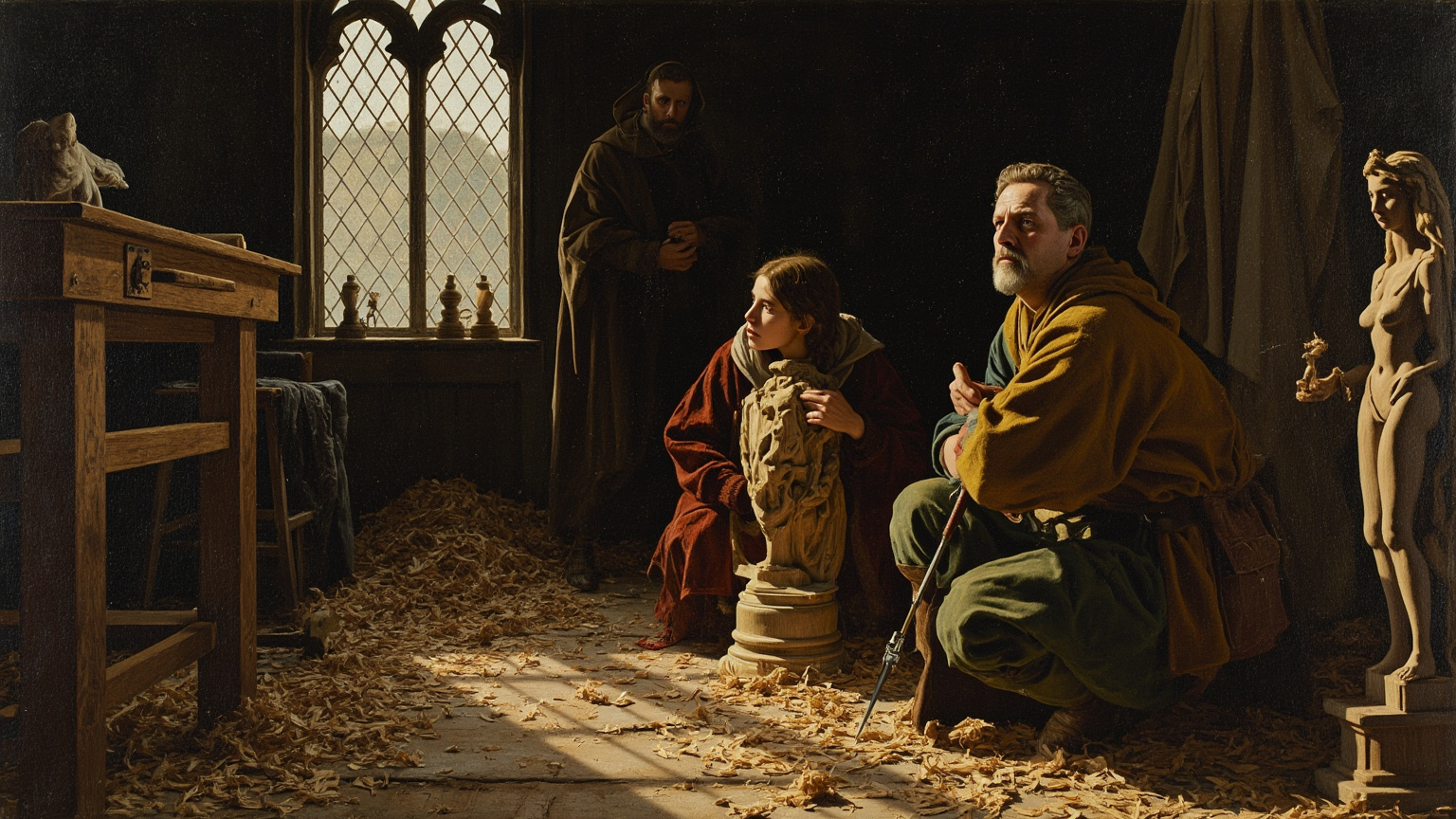
Most people who walk out of a heap of corpses come out broken. Goldmund does not. He stumbles into a city workshop and kneels in the sawdust before the master carver Niklaus. Niklaus teaches him to treat the chisel as another kind of body, to fix fleeting things — desire, youth, death — into wood, one cut at a time. Here Goldmund's real gift comes out. He pours everything into a carving of Saint John modeled on Narcissus: clean, severe, the friend he left behind in the monastery.
Niklaus values him enough to want him to stay and inherit the workshop. A settled life is laid out in front of Goldmund; he looks at it, shakes his head, and goes back on the road. This beat carries the whole book's rhythm — he could stop, and he refuses to. The craft was only a place he passed through. What he is looking for is someone he has not yet found inside himself.
ImaRead3
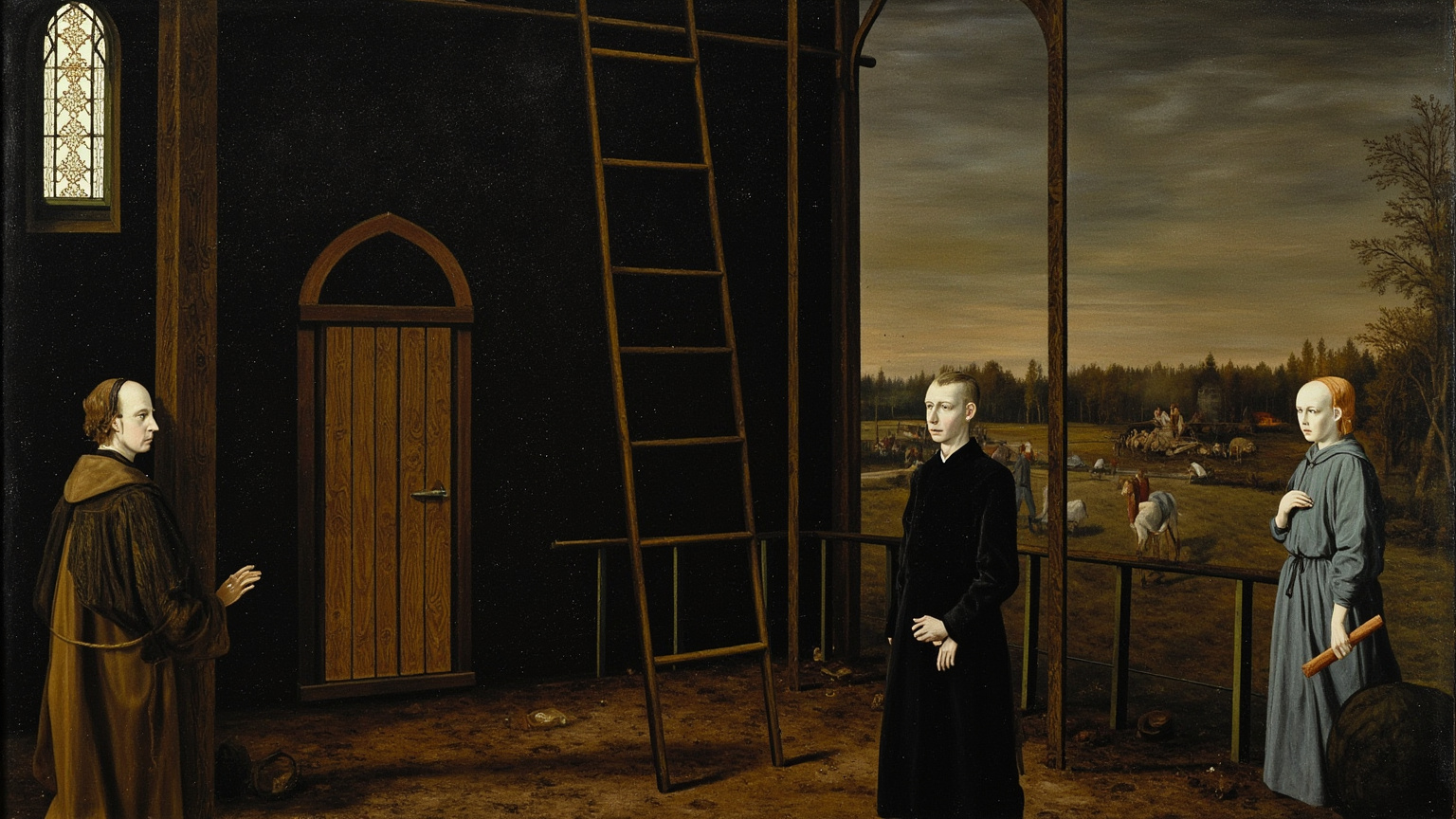
Later wandering pulls him into his most dangerous affair — Agnes, a count's proud, beautiful mistress. The affair is discovered, and he is arrested and about to be executed. The hangman has already put him on the ladder to the gallows. That is when Narcissus arrives. Now abbot, he has traveled a great distance and uses his position and his skill to pull Goldmund off the gallows and bring him back to Mariabronn.
Back at the monastery, Goldmund does not leave his vows to marry, and he does not become a famous success. He does one thing: he shuts himself in the monastery's carving room and spends the rest of his life at the wood. There is one figure he keeps trying to carve and never finishes — the union of mother, earth, desire, and death that lives in him, which takes shape as an unfinished statue of Eve. That image in his head fascinates him more than any of the women he actually loved.
At the end, he leaves one last time, briefly, and comes back gravely wounded. Dying in Narcissus's arms, he asks one question — without a mother, without that kind of love that embraces the world and the senses, how do you die? For the first time, the question truly lands on Narcissus, a man who has held himself together with reason his whole life. Someone who has been cold for a lifetime is, in that instant, stopped short by the friend he once knew.
Theme and Craft
What this book is actually saying is not that spirit beats flesh, or that flesh is more honest than spirit. Hesse is craftier than that. He lays the two paths out as equals and lets you watch what each one looks like taken all the way. Narcissus grinds himself, through self-denial, into something like a bell. Goldmund grinds himself, through desire, into a statue. Both grindings point at the same thing in the end: wholeness. The first time I read that closing line — without a mother, how do you die — I sat with it for a long time. It is not really a question for Goldmund. It is a question for everyone who has lived too cleanly.
Why is a book from 1930 still being read and reread today? Because it takes an old split — reason and feeling, discipline and indulgence, staying put and wandering — and gives it two real bodies, so you can see what each path costs and how the two complete each other. The cloisters of a medieval monastery, the bones of the plague years, the sawdust of a carving workshop: Hesse turns all of it into a coming-of-age story for an artist that you can practically see. Reading it, you can smell the sawdust, feel the cold wind through the plague towns, hear the bell for evening prayer at the monastery.
Reason and feeling were never two coats you have to choose between — they are two ways of breathing that the same person has to learn.