Nathan the Wise (Nathan der Weise) · Companion Guide
智者纳旦
圣殿骑士从火中救出犹太富商之女,苏丹的刀下留情——一场对话中,一枚祖传戒指的寓言,让三教仇敌成为血脉相连的家人。
Opening: It Begins With a Fire
Outside Jerusalem, a fire nearly burns the house of Nathan, a wealthy Jewish merchant, to the ground. His adopted daughter Recha is trapped upstairs, and a Templar passing by carries her out of the flames. By the time Nathan gets home, the fire is out and she is alive. He is overcome with gratitude and swears to meet the man who saved her. That rescue lights the real fire of the play — not wood burning, but questions of birth, faith, and sect.
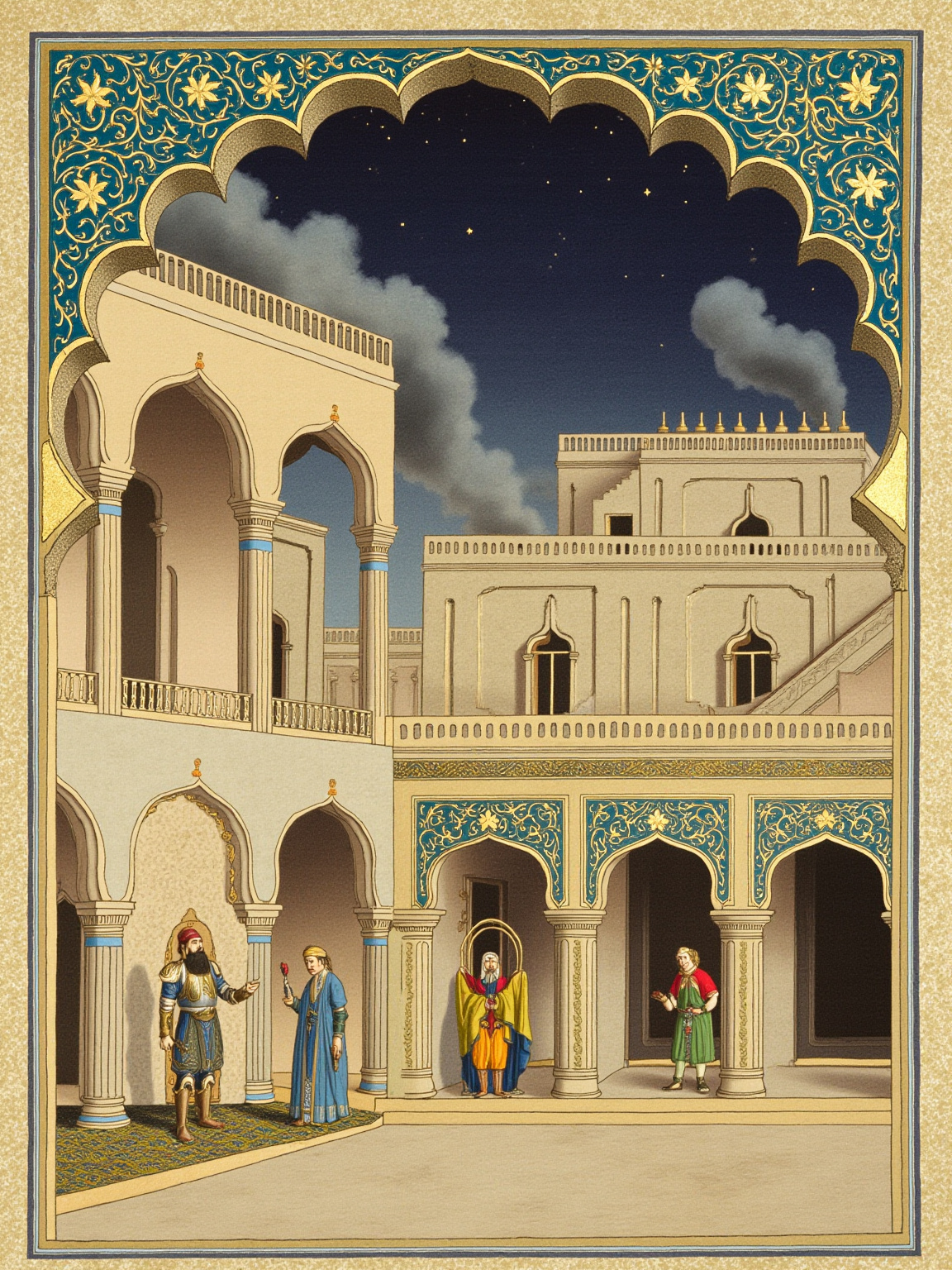
Yes, visibly he bore me through the fire, O'ershadowed by his pinions.-Face to face I've seen an angel, father, my own angel.
是的,他把我背过火,借着翅膀的荫蔽……我见过天使,父亲,我自己的天使。
原文金句 · 第1幕 · 火场
This Templar, Curd von Stauffen, had been Saladin's prisoner, condemned to die. He escaped the blade only because he looked so much like Assad, the Sultan's own brother, dead for years — Saladin softened at the resemblance and spared him. A living man who happened to resemble a dead one, pardoned, left in limbo, tethered to Jerusalem by a reason even he doesn't understand.
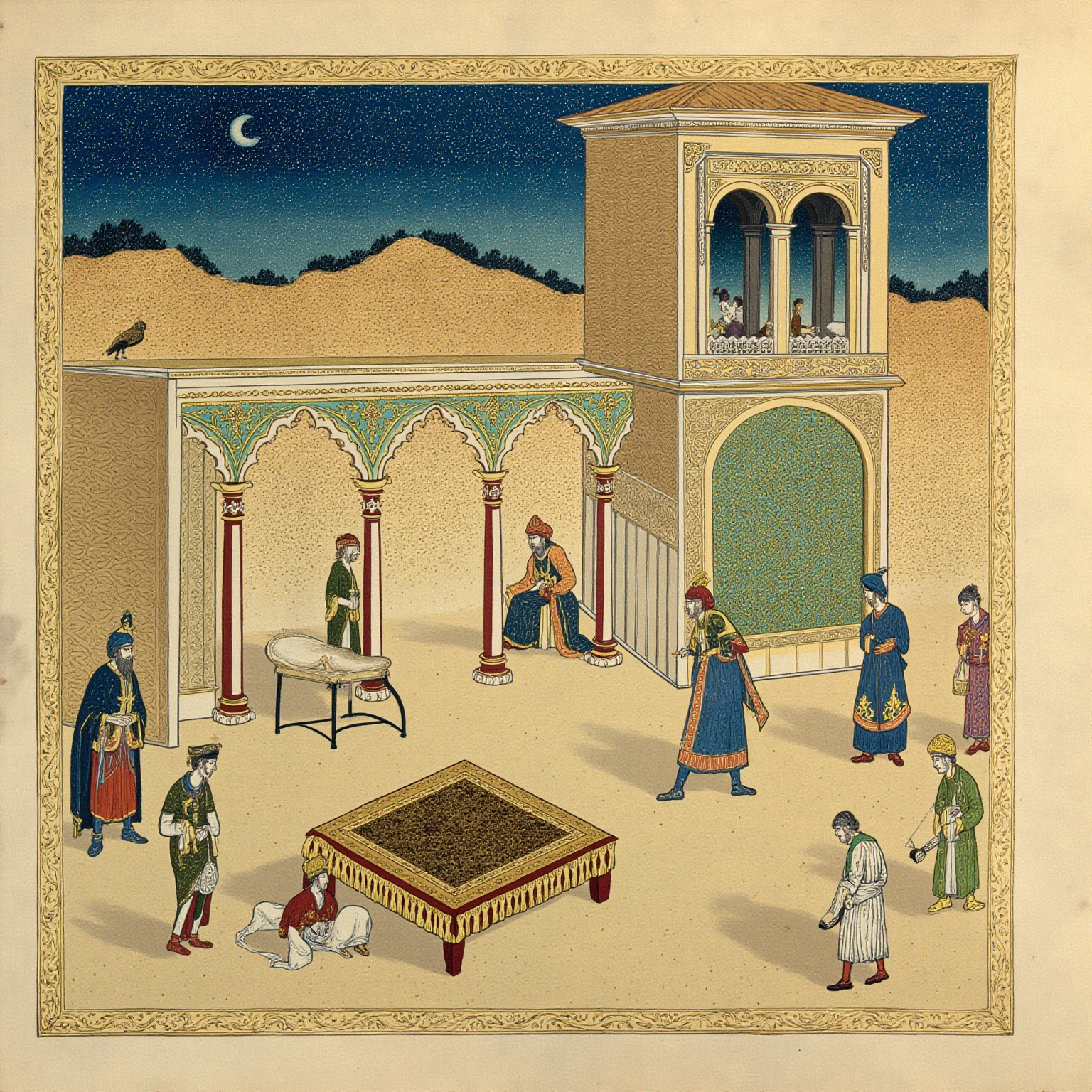
But why alone of all the captives Thou hast been spared, he fain would learn- TEMPLAR.
他们想知道,为什么所有俘虏中只有你被赦免——
原文金句 · 第2幕 · 苏丹的疑惑
What Kind of Play This Is
Nathan the Wise is a philosophical drama in five acts of blank verse, written in 1779 by the German Enlightenment playwright Gotthold Ephraim Lessing. German literary history keeps returning to it because it did something almost no stage dared to do at the time: it made a Jewish merchant the wisest, most morally upright figure in the whole play, and had him say, in effect, that the three great religions were once one. This is not a Crusades play full of swordplay. Nearly every conflict in it plays out in conversation, and the tension builds through layers of probing and revelation. That is also why it keeps getting staged and keeps getting translated — the question it raises has not gone stale.
The Cast and Their World: A Round Table in Jerusalem
Nathan is the play's moral center, a Jewish merchant past fifty who lost his wife and sons and raised a Christian infant as his own. He is a merchant by trade and a philosopher by temperament. Recha is his adopted daughter, who believes herself his by blood, devout and unguarded, falling for the man who saved her without knowing anything about her own origins. Curd, the Templar, is cold and proud, and that one glimpse in the fire begins to thaw him. At the top of Jerusalem's power sits Sultan Saladin, scrambling to cover his war chest. He summons Nathan meaning to trap him, and gets a lesson instead. Around this table sit a few more: Daja, the companion who alone knows the whole secret; an old friend, a treasurer who quit the post in disgust; a Patriarch so fixed in his convictions he would see Nathan burned; and a lay brother who, years earlier, placed the infant Recha in Nathan's arms with his own hands — and whose kept relic will crack the story open.
The Three Rings: A Parable Holding Up the Whole Play
Saladin summons Nathan to the palace, plays a game of chess, asks for a loan, and then drops the real question: of Judaism, Christianity, and Islam, which one is actually true. Answer wrong and it could cost him his head. Nathan doesn't answer directly. He tells a story instead. Once there was a father who owned a ring, passed down through the family from father to son. He came to love his three sons equally and could not choose between them, so he had a jeweler make two more rings, identical in every way — no one could tell the three apart. On his deathbed he gave one ring to each son, and each believed he held the genuine one. The brothers took their dispute to a judge. The judge heard them out, smiled, and said: I cannot tell you which ring is real, but a father's love for his children was never divided to begin with. Whichever of you can make his ring bring forth kindness, humility, and true regard for his neighbor, his is the real one. When the story ends, Saladin sits stunned. He reaches out his hand — the stage direction has the two of them sworn friends on the spot. The sharpest idea in the whole play is folded into a parable you could tell in under ten minutes.
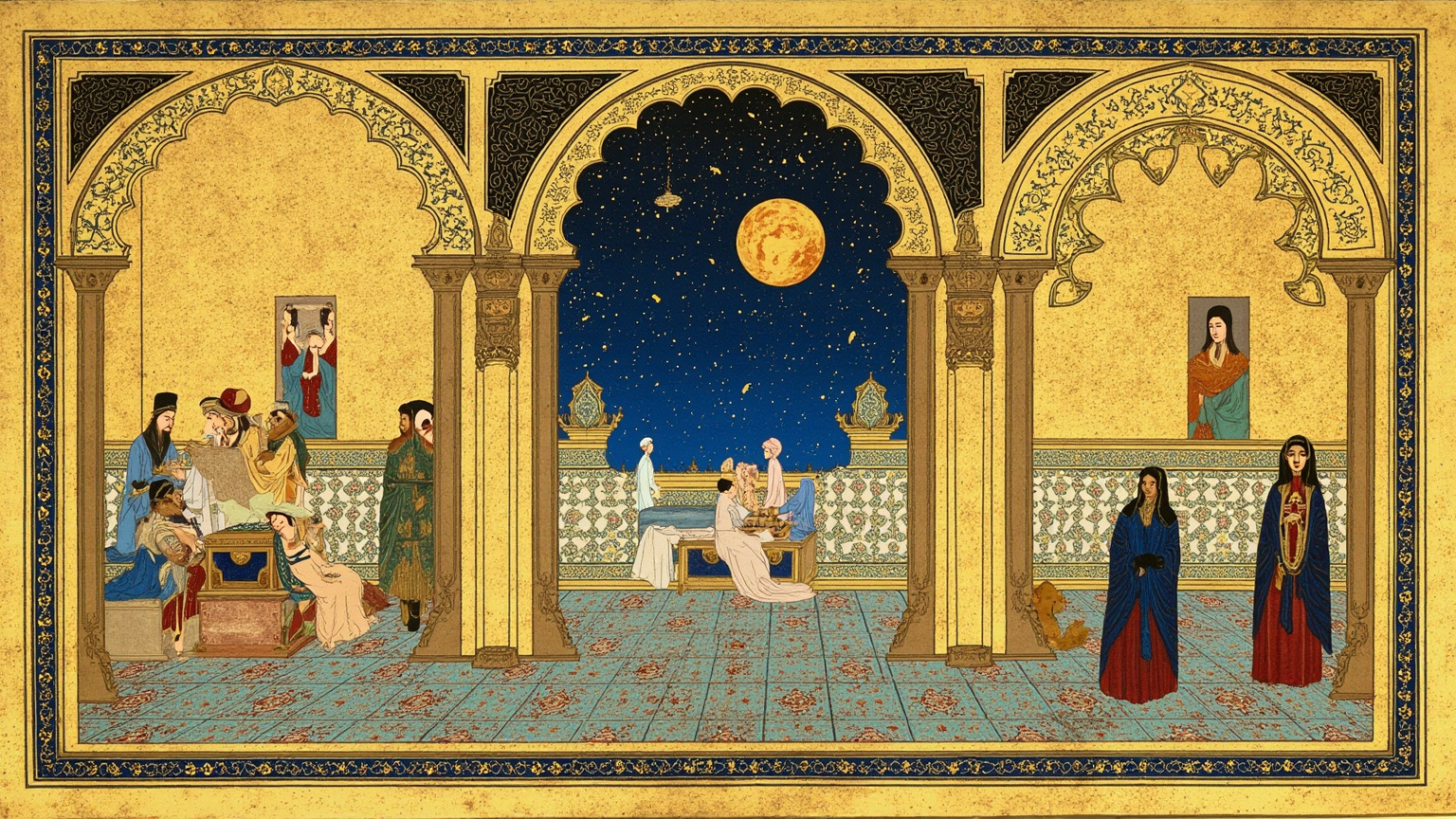
But hold-you tell me that the real ring Enjoys the hidden power to make the wearer Of God and man beloved; let that decide.
但且慢——你告诉我真正的戒指拥有隐藏的力量,使佩戴者为神和人所爱;让这点来决定吧。
原文金句 · 第3幕 · 戒指的力量
The real ring was never the metal. It was how the one wearing it chose to live.
The Secret Gets Out, Fury Follows, and an Order Nearly Burns Someone Alive
No parable, however elegant, can hold down what people quietly want for themselves. Daja, Recha's companion, is the only one who knows the truth — that Recha is not Nathan's daughter by blood but a Christian orphan. Driven by her own pious agenda, she leaks it to the Templar: your bride is no Jew, she is one of your own people. The Templar explodes. Whose daughter is Recha, really? What has Nathan been playing at all these years? He nearly breaks with Nathan on the spot, then turns and carries the story straight to the Patriarch of Jerusalem. The Patriarch never even sees Nathan face to face. On hearsay alone, he issues one order: take the Jew who raised a Christian girl as his own and burn him alive.
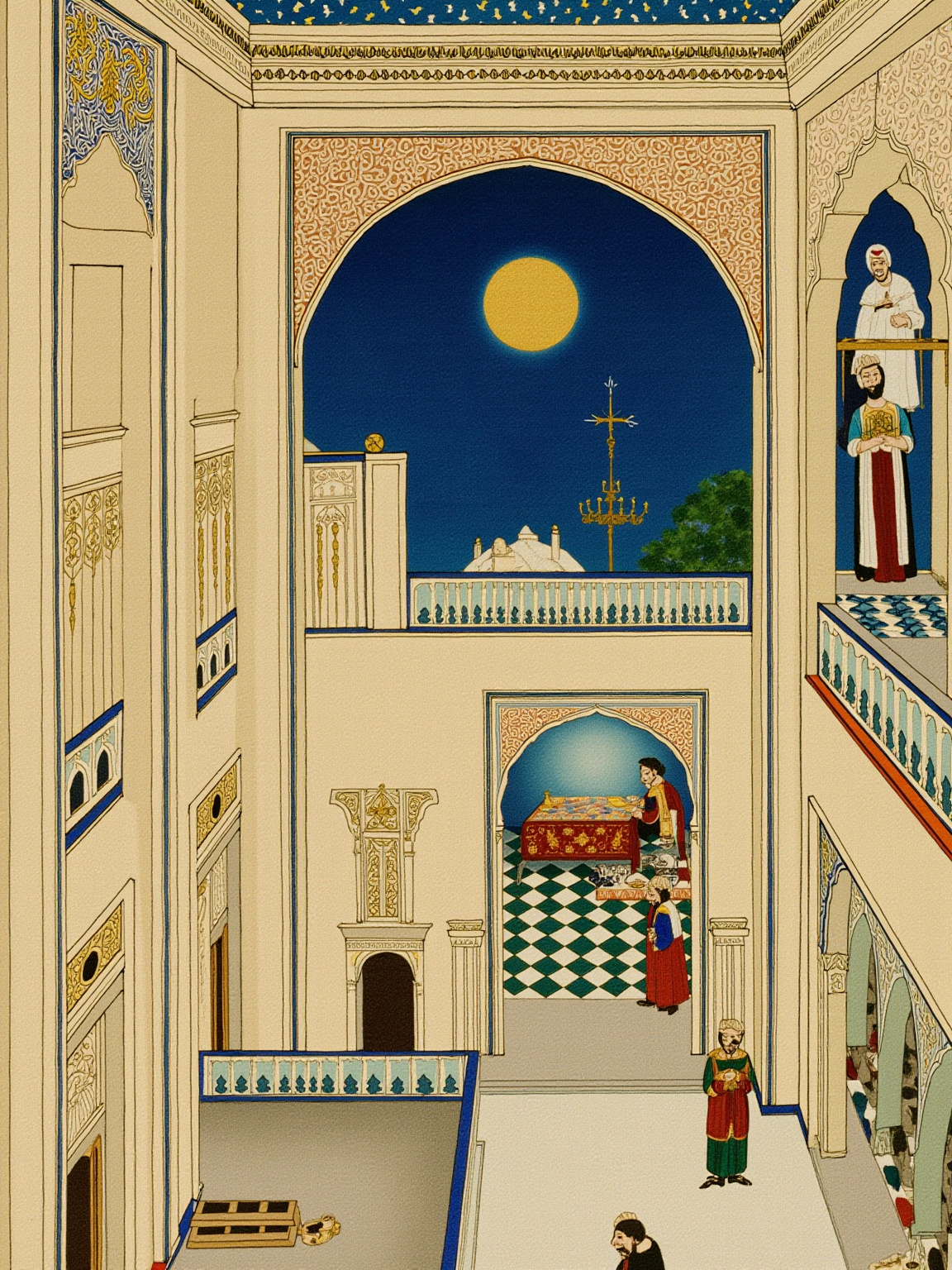
Come, come, in one word Acknowledge to me plainly that you love her, Love her to madness, and I'll tell you what.
来吧,来吧,一句话——向我老实承认你爱她,爱得发狂,那我告诉你怎么办。
原文金句 · 第4幕 · 告密
This is the harshest scene in the play. Lessing doesn't have Nathan beg on his knees, doesn't give him a rousing speech in his own defense — he has someone who never even appears onstage hand down the verdict for him. The reader watches, powerless, as one man decides another man's life on nothing but rumor. This is where the play's critique of religious fanaticism keeps its edge.
The Lay Brother's Turn: Conscience Outruns the Order
The man the Patriarch sends to test Nathan is a lay brother. He arrives at Nathan's door carrying a lantern, and Nathan freezes at the sight of him — he recognizes the man at once. Years before, it was this same brother who placed the infant Recha in his arms. The brother's conscience won't let him do his job. He was sent to act on orders, but instead he quietly leaves behind a prayer book he has kept for years, along with a few pages in her father's own hand, and turns to warn Nathan instead. He knows exactly what those two things can prove: that Recha is not a Jew's daughter, nor some Christian orphan picked up off the street, but a girl with a father, a name, a family. Whose family? Assad's, Saladin's dead brother.
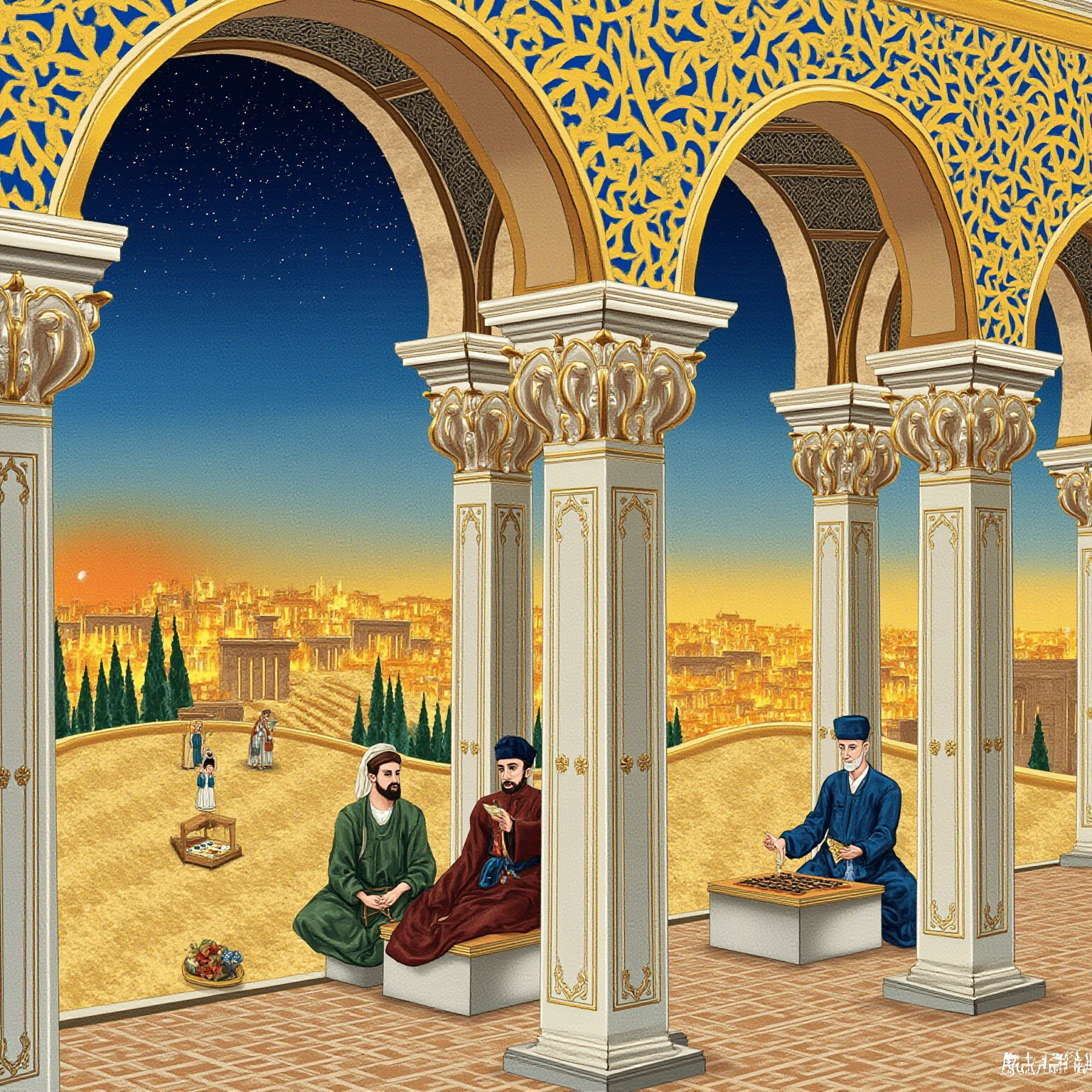
I rose and called out-God, I will-I will, So thou but aid my purpose-And behold You was just then dismounted, and presented To me the child wrapt in your mantle.
我起身呼喊——上帝,我愿意,我愿意,只要你帮助我的决心——看哪,你正好下马,把用斗篷包裹的孩子递给我。
原文金句 · 第4幕 · 修士的回忆
The Truth: Three Families, One Family All Along
The handwriting is matched, and Recha's and the Templar's true parentage comes out at once: they are brother and sister, children of Assad, Saladin's long-dead brother. Which makes Recha the Sultan's own niece, lost for years, and the Templar his own nephew, lost the same way. In the play's final scene, Nathan, Saladin, Recha, the Templar, and Sittah come together in one embrace of recognition. Lessing uses this one-family-across-three-faiths setup, coincidental as it looks, to spell out his central argument as plainly as he ever does: blood crosses the line religion draws, because that line was only ever drawn by people in the first place.
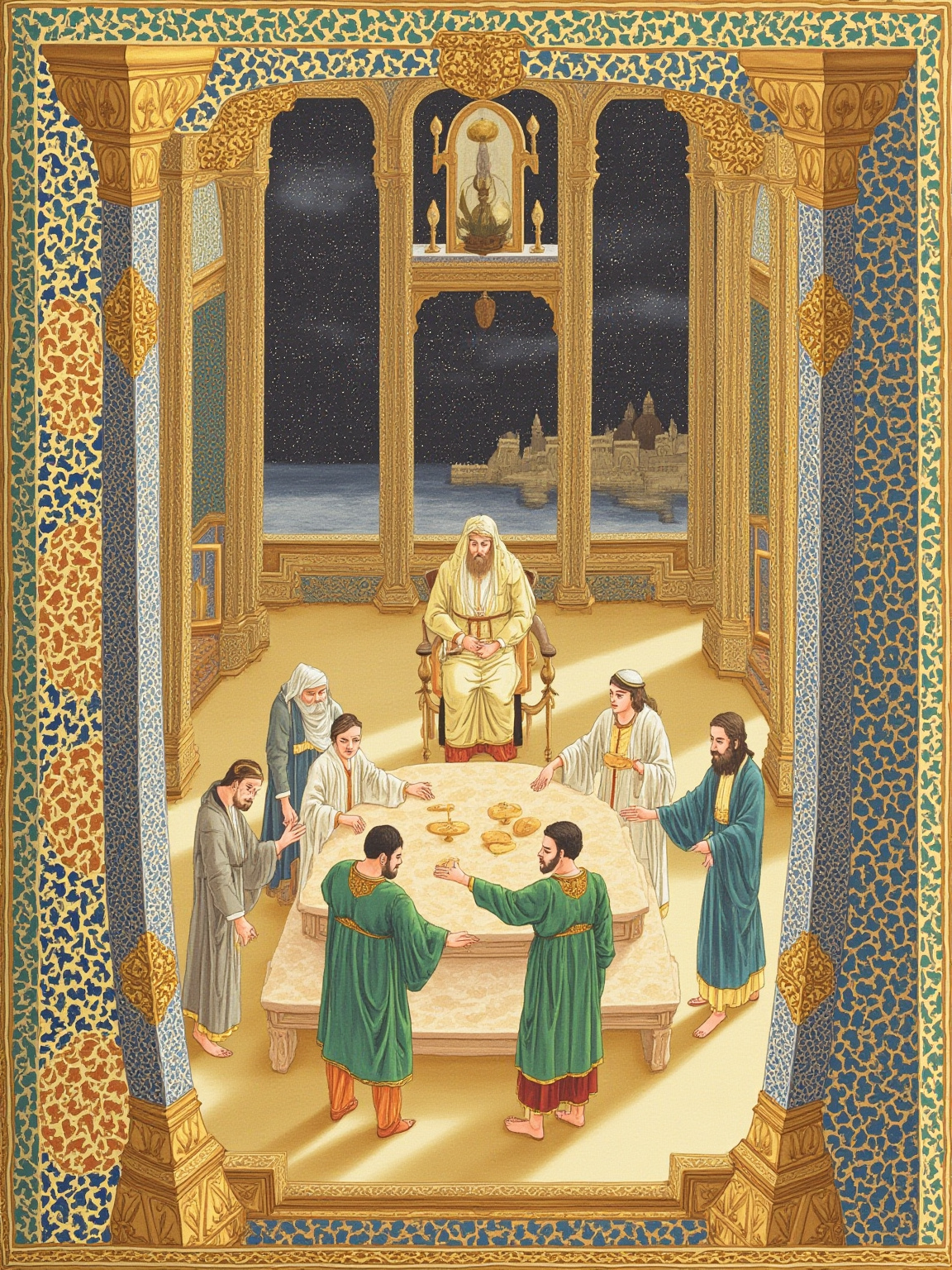
Lilah died for grief, And never could forgive me that I let him Then ride alone.
莉拉悲伤而死,从不原谅我让他独自骑马。
原文金句 · 第5幕 · 萨拉丁的哀伤
Religion cut them into three families. Blood quietly put them back at the same table.
Why It's Well Made, and Why It Still Matters Today
Lessing sets this play in the age of the Crusades and gives it almost no combat at all — no siege, no swordplay. The most intense moments are a parable and a conversation. That is the confidence of Enlightenment drama: reason can beat the sword, and thinking can hold the line against fanaticism. He made a Jewish merchant the wise man of German theater for the first time, and made religious tolerance the protagonist instead of a side theme. Doing that in 1779 took nerve. Read today, the play is still asking the same question: when everyone believes the ring in their own hand is the genuine one, how do you prove you aren't just seeing the world from the bottom of your own well? The answer: all three rings look exactly alike. No one can tell them apart. So don't burn anyone until you can.
Why the Text Is Still Worth Reading Once You Know the Plot
A plot summary gives you the skeleton. It cannot draw the way the dialogue closes in, layer by layer, in the actual text. Lessing wrote this five-act philosophical drama in blank verse, and every scene's probing, dodging, and crossing of words has the breath of live theater in it — the silences and half-sentences between Saladin and Nathan, before and after the ring parable, exist only on the page. Then there is Nathan himself. A summary gives you his conclusions. The text gives you the night he survived losing his wife and sons, why a Christian infant happened to land in his hands, and what moved him to raise another man's daughter as his own. A summary can spare that backstory one line. The text can stop you cold and keep you thinking for a long while. A map tells you what the land looks like. The land itself you have to walk.
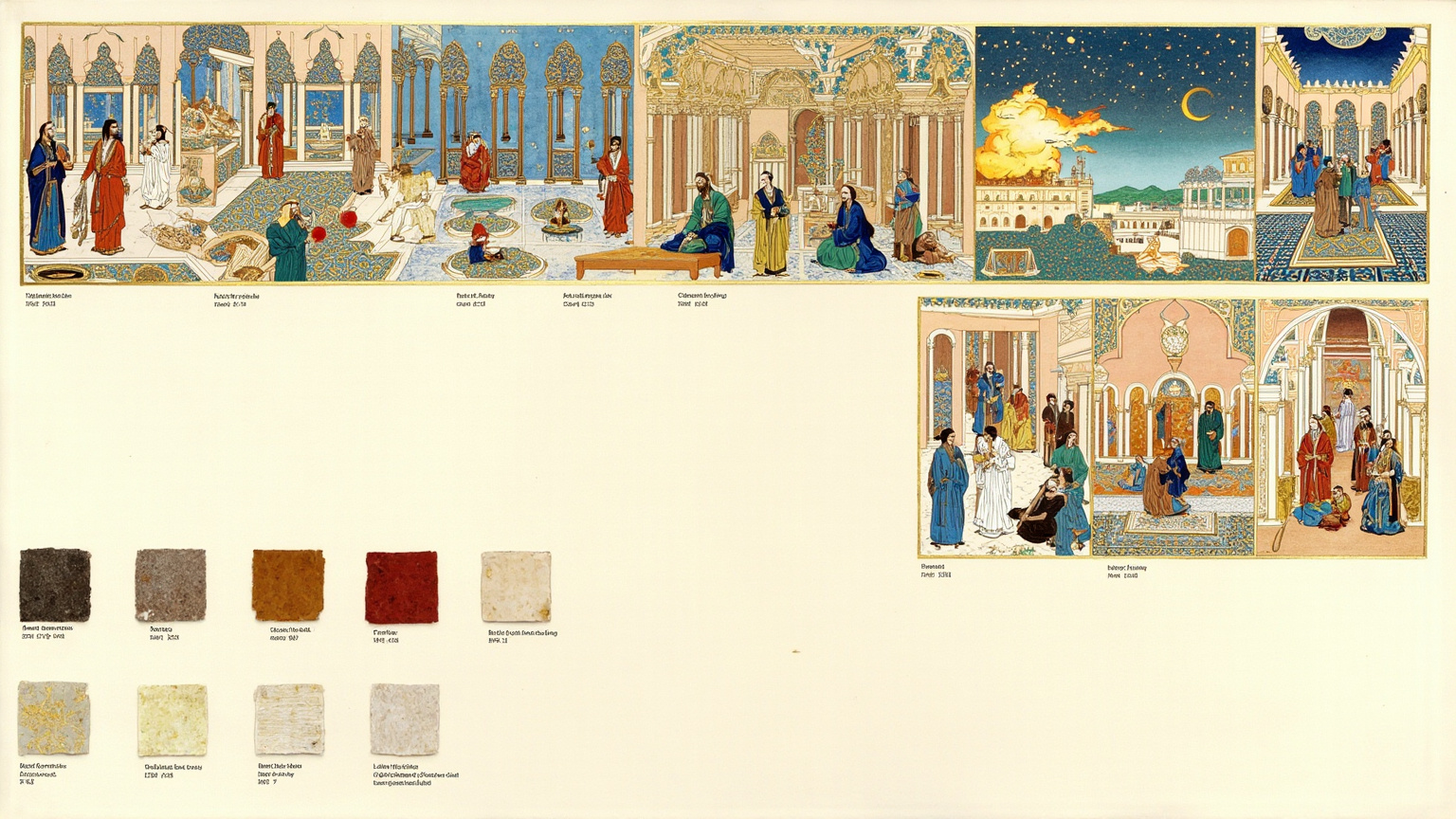
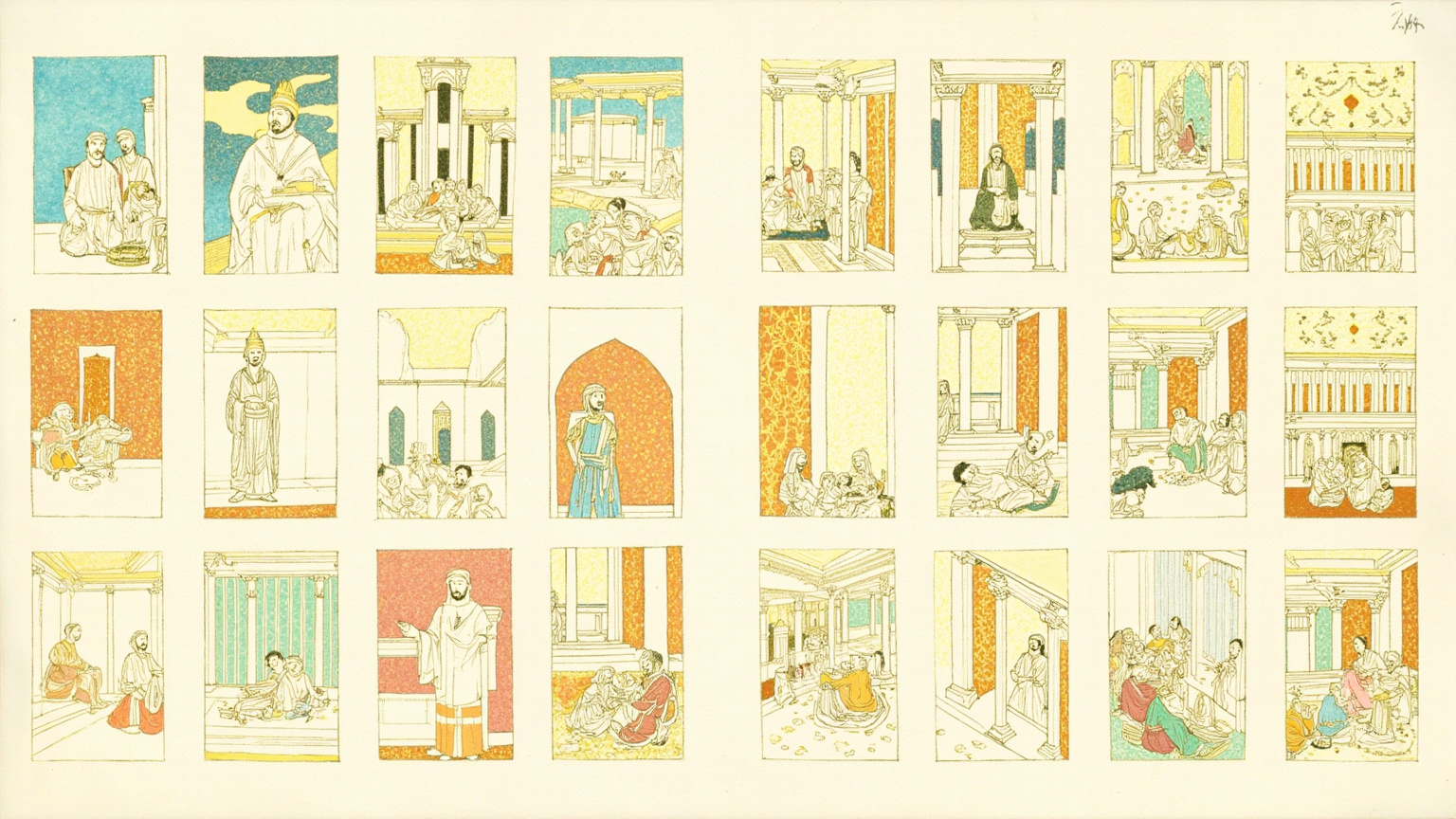
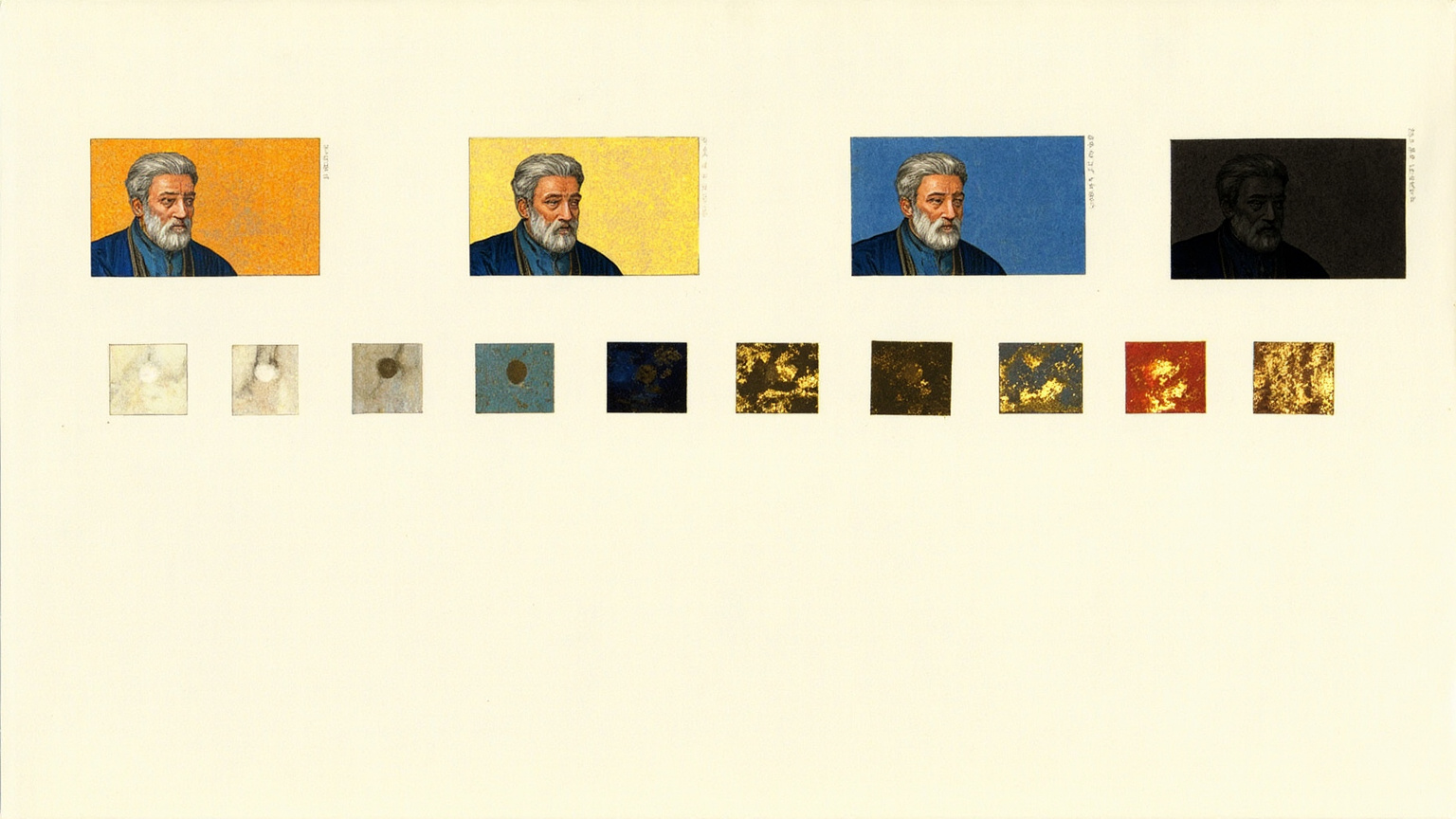
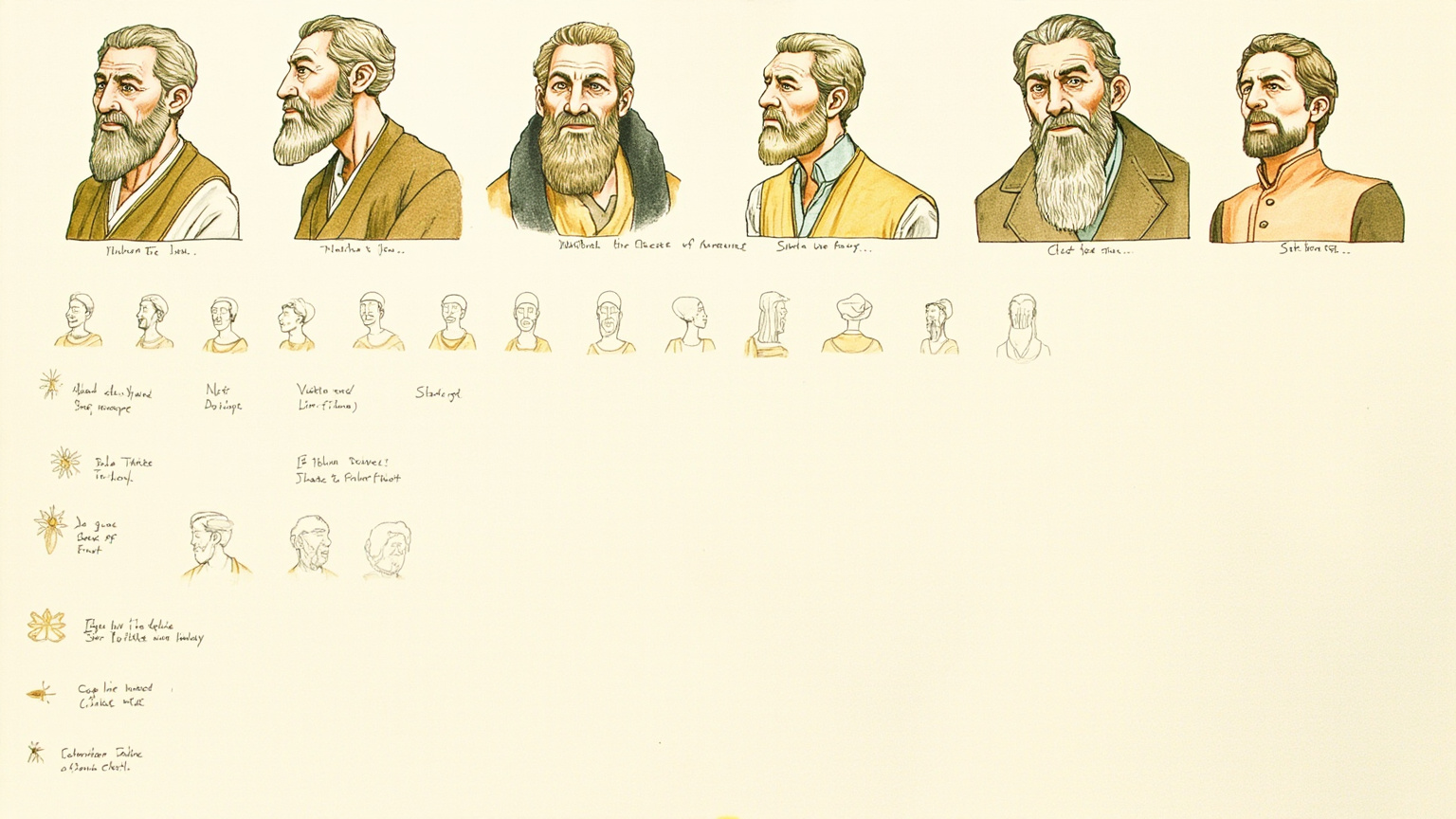
Art Direction4 plates
Before the guide was written, this book got a visual foundation — every illustration you just read grew out of it.