Never Let Me Go · Companion Guide
别让我走
克隆人少女在英格兰乡间慢慢长大,温柔地接受自己被安排好的死亡。诺福克的铁丝网外,是她们从未真正拥有过的人生。
Opening
A car sits in a field by the Norfolk coast. Inside is a woman in her early thirties, staring at a rusting wire fence in the distance—the place beyond it she never really visited as a child. She doesn't cry. She just rolls down the window and lets the cold November air of England flood in. This is the scene from the final pages of the book, as quiet as someone placing a piece of ice on your chest.
The woman's name is Kathy H. She's just come from a funeral. The one in the coffin is Tommy, the man she loved her whole life. A little further back, her other friend Ruth is gone too. Three children who grew up together at the boarding school in Hailsham—and now only she remains. She didn't fight fate, didn't plan an escape, barely complained. She just drove to Norfolk—the place she went as a teenager with classmates to search for "the lost"—and stood there for a while.
What this book is
Never Let Me Go, published by Kazuo Ishiguro in 2005. He would later win the 2017 Nobel Prize in Literature, but this is the book most ordinary readers remember. The setting is a dystopian science-fiction shell: a group of clones born with their futures already planned, destined to donate organs in sequence until they "complete"—which means death. But Ishiguro didn't turn it into an action movie like The Island, or a hard sci-fi worldbuilding manual. He wrote about memory, farewell, and how a group of children learned to love on overcast days. So the book gets shelved as "coming-of-age fiction" and also as "soft science fiction"—but its truest place is probably "the book you can't put down after page forty, then depresses you for three days."
Three children, and a verdict that never rings
Kathy, Ruth, Tommy—three children raised together at Hailsham, a boarding school in the English countryside. Kathy is the narrator: gentle, perceptive, someone who hides her feelings deep. Ruth has a controlling streak, wrapping her insecurity in toughness. Tommy, as a child, had a violent temper, quick to anger, seen as odd by his classmates; later he learned to swallow his emotions. Between the three runs a thread that stays tangled their whole lives—Ruth and Tommy become lovers, Kathy loves Tommy silently, and no one ever breaks the silence.
On the surface, Hailsham looks like an ordinary English boarding school: red brick buildings, sports fields, woods, dormitory corridors. But there are oddities you can't quite put into words—students aren't allowed to leave campus alone, all drawings, poems, and pottery must be handed over to a "Madam" who visits the school regularly, and no one explains why. Kathy didn't know then that her favorite old cassette tape was also in Madam's collection.
How the Truth Came Crashing Down
Hailsham had a guardian named Miss Lucy. One day in class she suddenly broke down—she told the children they were cloned humans, created for a purpose. When they reached their teens they would begin making "donations"—kidneys, lungs, whatever could be given, until their bodies could no longer hold up, at which point they would be "completed." She said this was their future and they had a right to know. Shortly after saying this, she was dismissed from the school, because the rule at Hailsham was: the children must not be told.
Ishiguro handles this revelation to a degree that makes one's skin crawl—the children do not cry out, they do not riot. The oldest ones simply sit for a moment after hearing it, then ask: so can we still go out and buy things? This is something heavier than anger: acceptance. They have been raised in a protected environment all their lives, and they have never been trained to have the strength to be angry.
Three years at the farmhouse, and a relationship forever out of step
After leaving Hailsham, they move to what is called "the farmhouse"—a cluster of old cottages semi-isolated from the outside world. Ruth and Tommy become officially a couple, and Kathy stuffs herself into the role of "good friend," watching the two of them come and go through the same door. She makes a few weak attempts—one rainy night she goes to Tommy's room, gets halfway through what she wants to say, then retreats. She never does speak the words "I actually like you"—and she spends half the book turning that moment over and over in her mind.
The cruelest thing about this section is not the love triangle—it's the atmosphere. Ishiguro piles on detail after detail of the most ordinary daily life—who washes the dishes, who forgot to buy milk, who quarrels in the hallway—letting the reader unconsciously become familiar with the rhythm of these children's lives, and then making you realize that these children who wash dishes, argue, and hold grudges, have perhaps only a few years left to live.
Norfolk: the "lost place" in their hearts
During the farmhouse period there is an important outing. A friend named Chrissie believes that every clone has a real "original"—a normal person they were modeled after. She takes Ruth to the Norfolk coast to find that original, and Kathy and Tommy go along.
The Norfolk coast becomes the most important image in the book. There are beached wreck ships, rusty barbed wire, a small town selling fish and chips, the opposite shore in the distance. They never find any "original," but there they first touch the edge of the ordinary people's world — children picking shells on the beach, couples kissing in cars, an old man sitting on the pier smoking. Kathy watches all this, and a feeling rises in her that she herself cannot name. Later she keeps returning to Norfolk, and that feeling crystallizes into four words: "the lost thing" — something they could have had, but were told from birth they had no right to have.
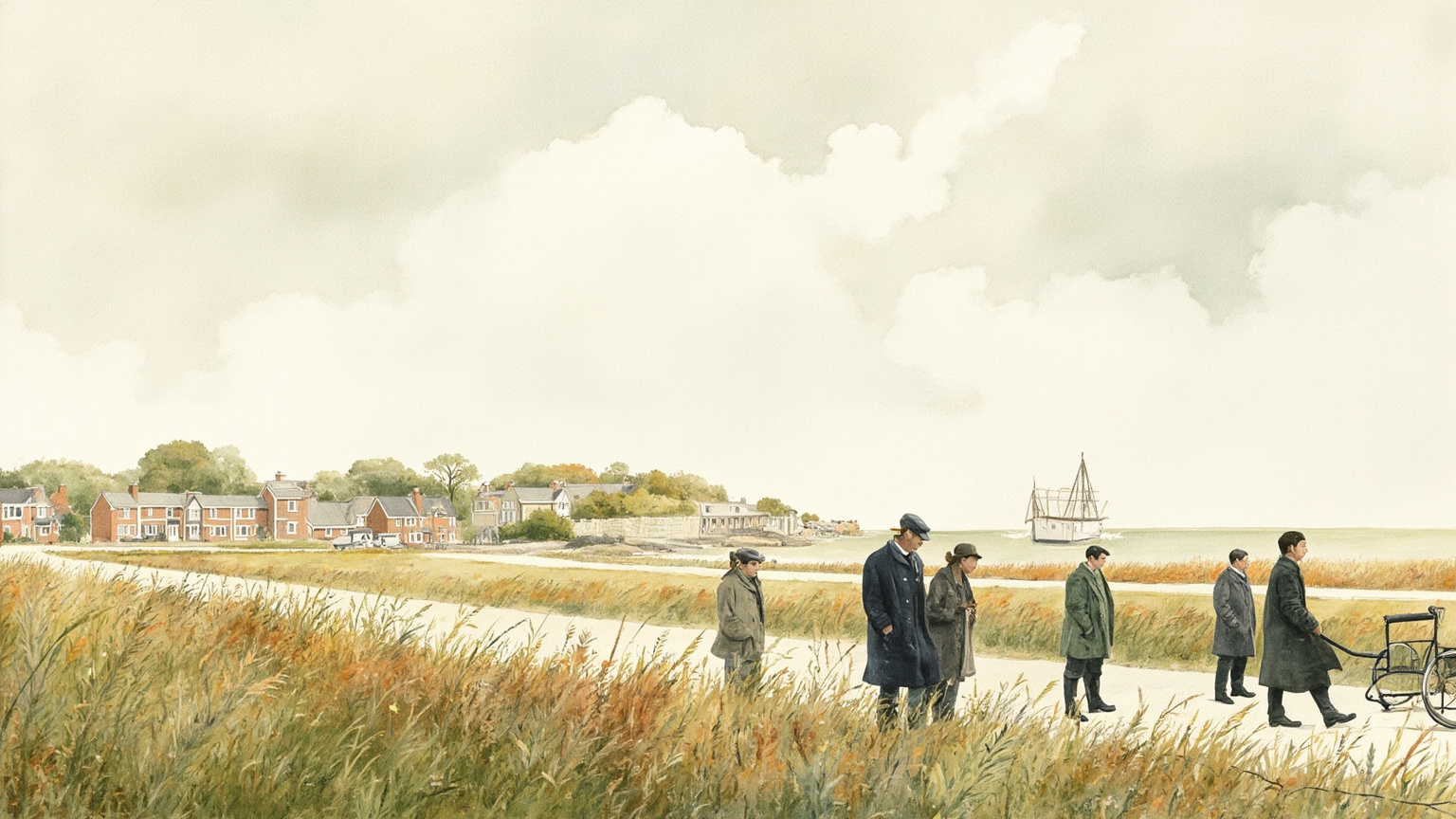
It was as though we were being let in on a secret, a glimpse of something that for years we had been shut out of, and I could see it meant something almost like happiness to Ruth, too.
好像有人把我们悄悄带了进去,让我们瞥见一样多年来一直被关在门外的东西,而我看得出来,这对露丝而言也几乎意味着幸福。
金句 · 第七章 · 诺福克海岸线
Ruth's goodbye, and the apology she never spoke
The story jumps forward to when they are all adults. Ruth completes her second donation — after which she lies in the recovery center, her complexion gray. She calls Kathy, and for the first time speaks in her unhidden voice: it was me who took Tommy away from you. I was afraid that if you and Tommy were really together, I'd be left all alone. She almost begs Kathy and Tommy to request a "deferral" — she's heard that if two clones can prove they genuinely love each other, the donation can be postponed.
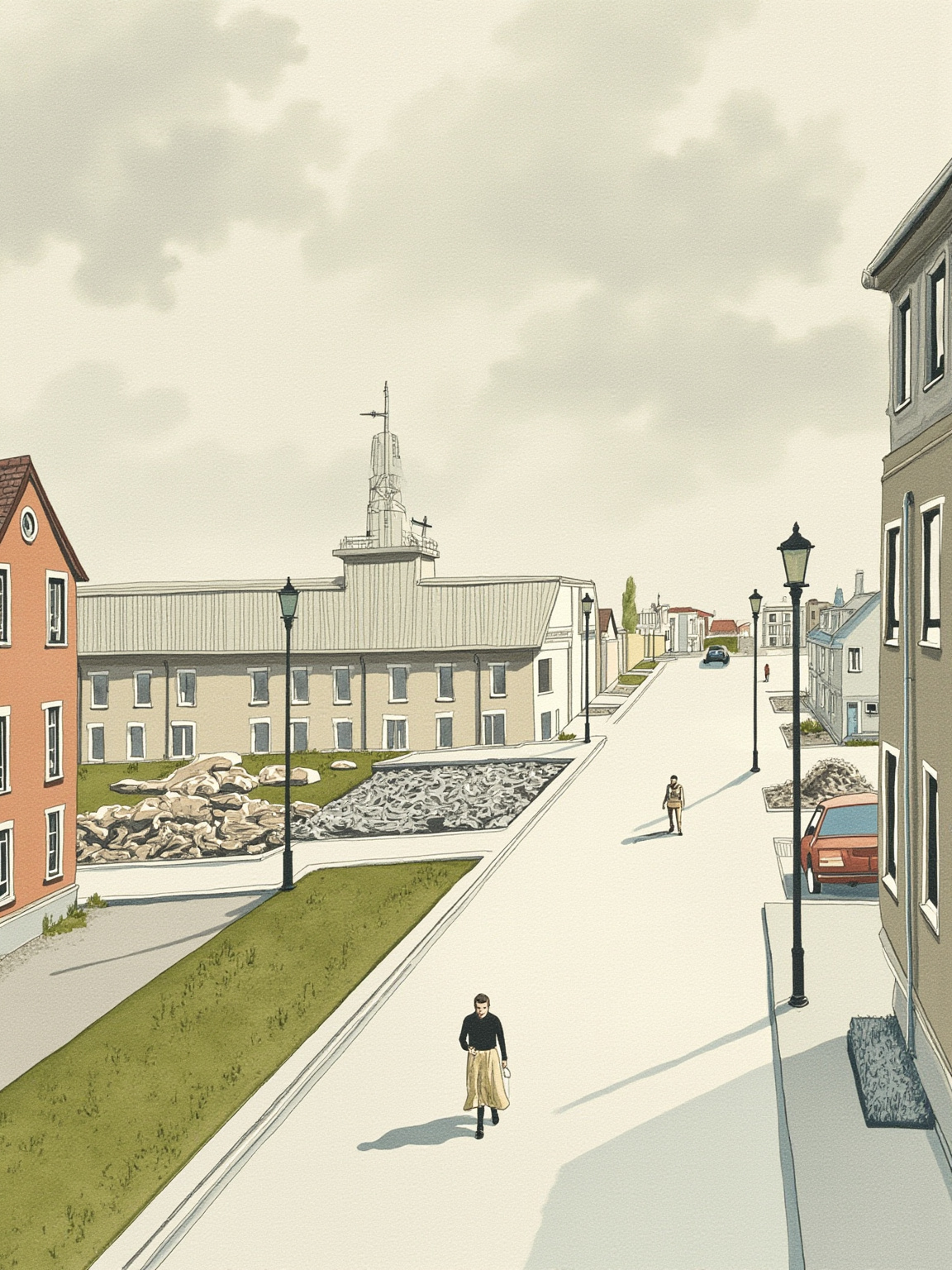
I did something wrong, and I have to live with it. But I think I've been remembering it all wrong, and now I have to stop.
我做过错事,我得带着它活下去。可我好像一直把这件事记错了,而现在我必须停下来。
金句 · 第十七章 · 露丝的病房
Not long after, Ruth quietly dies in her next operation. Ishiguro doesn't describe her final struggle, only writes about Kathy sorting through her belongings — a box of hair clips, several unsent letters, a cardigan worn too long. How a person gets reduced to just these few things is the entire weight of this chapter.
The deferral never actually existed
Kathy and Tommy still go to find Madame — that mysterious woman who once took away all their drawings. She's old now, her legs unsteady, and she receives them together with Miss Emily (the former headmistress of Hailsham) who uses a wheelchair. They make their request: can you give us a deferral? Madame shakes her head. Deferral never really existed — it was just a story the Hailsham students told each other to comfort themselves.
Then Miss Emily reveals Hailsham's true purpose: the people who founded the school wanted to use their paintings, poetry, and pottery to prove to the outside world that clones also have souls, also have feelings, also have reasons to live. Hailsham was essentially a slow-moving evidence-gathering project for cloned people's rights. The school closed long ago, and that reform barely made a difference — the world stayed the same.
Tommy listens quietly, then starts to cry. Years later he finally understands that his childhood love of drawing and scribbling figures on paper meant something to someone — but the people who cared didn't win. Even Kathy's old tape, the one that was kept in the collection, couldn't save anyone. Ishiguro writes this passage without anyone raising their voice; the loudest thing is silence.
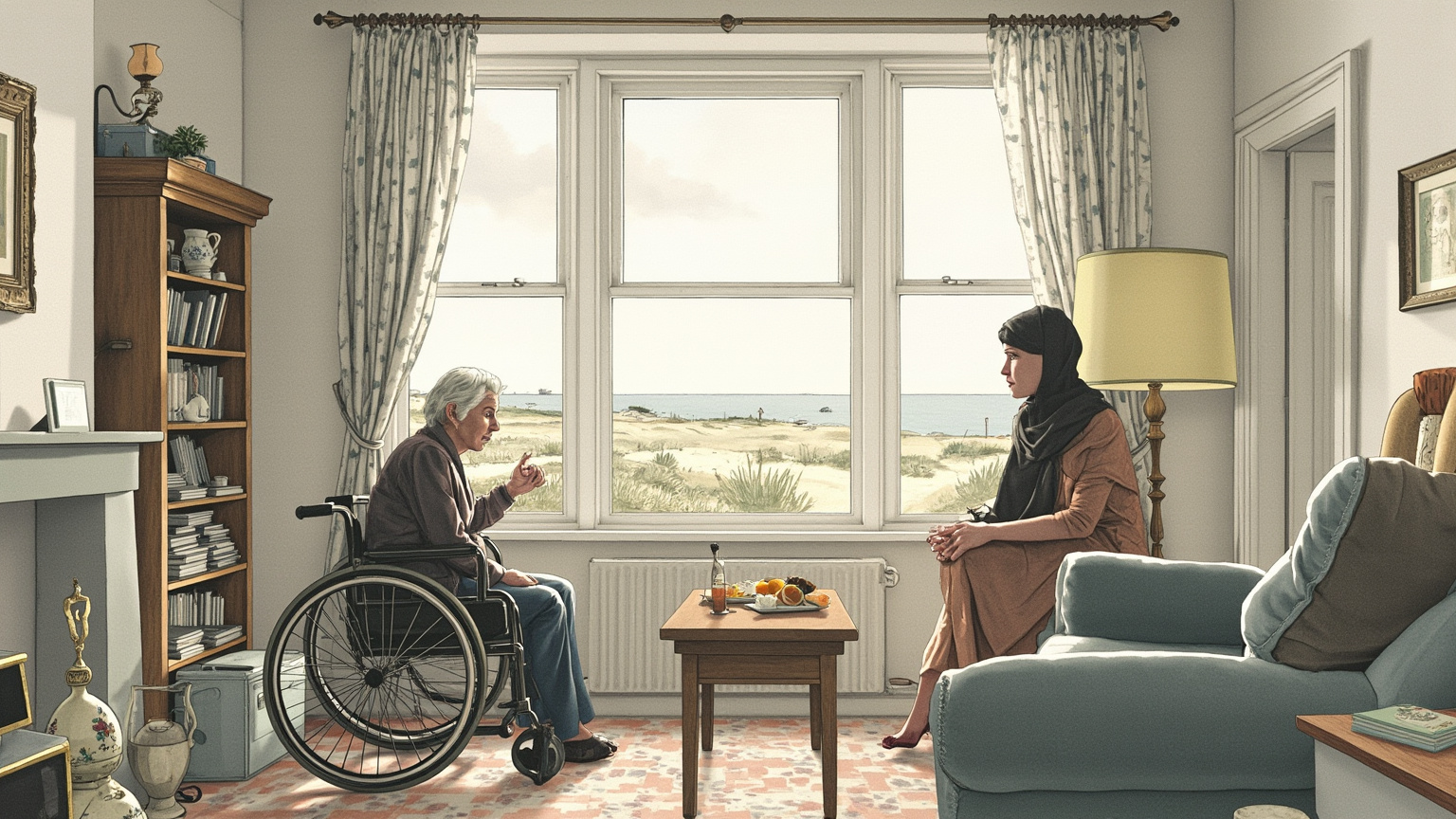
None of you are really like the others, and yet there's something that holds you together. I'm sure of it.
你们谁也不真的像谁,可有一样东西把你们拢在一起。我确信这一点。
金句 · 第二十二章 · 玛达姆与艾米莉小姐
Tommy’s Final Donations and the Drive to Norfolk
Kathy had spent years as a caretaker—looking after clones about to donate, walking them through that final stretch. Then Tommy began his third and fourth donations. After the third he could still stand and talk; after the fourth he could barely get out of bed. Ishiguro writes his decline not through medical records but through clothes: the collar of his shirt starts to hang loose, his shoulders thin out, and when he laughs his eyes blink first.
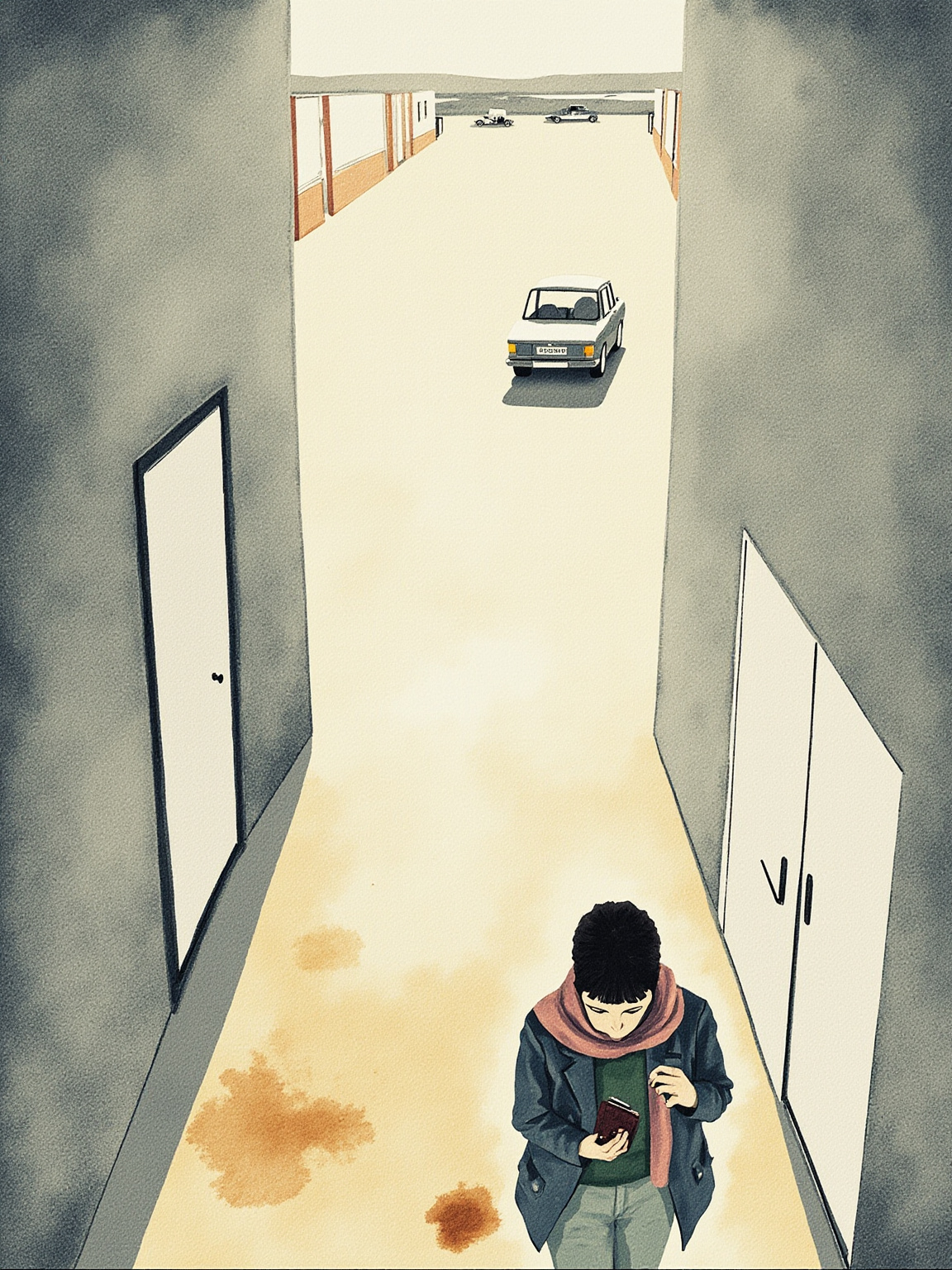
After all this time, I can finally see him properly, and I can see that he's crying.
过了这么久,我终于能好好地看他,我也看得出来,他正在哭。
金句 · 第二十三章 · 延期被拒之后
On the day Tommy dies, Kathy stays in the ward for a while, then drives off as usual—she’s taken two days off from the company and decided to go to Norfolk. She pulls over by a field, looks at the wire fencing in the distance, and thinks about the stranded boat from years ago, the far bank she never crossed, the kiss she never said. That’s where the book ends.
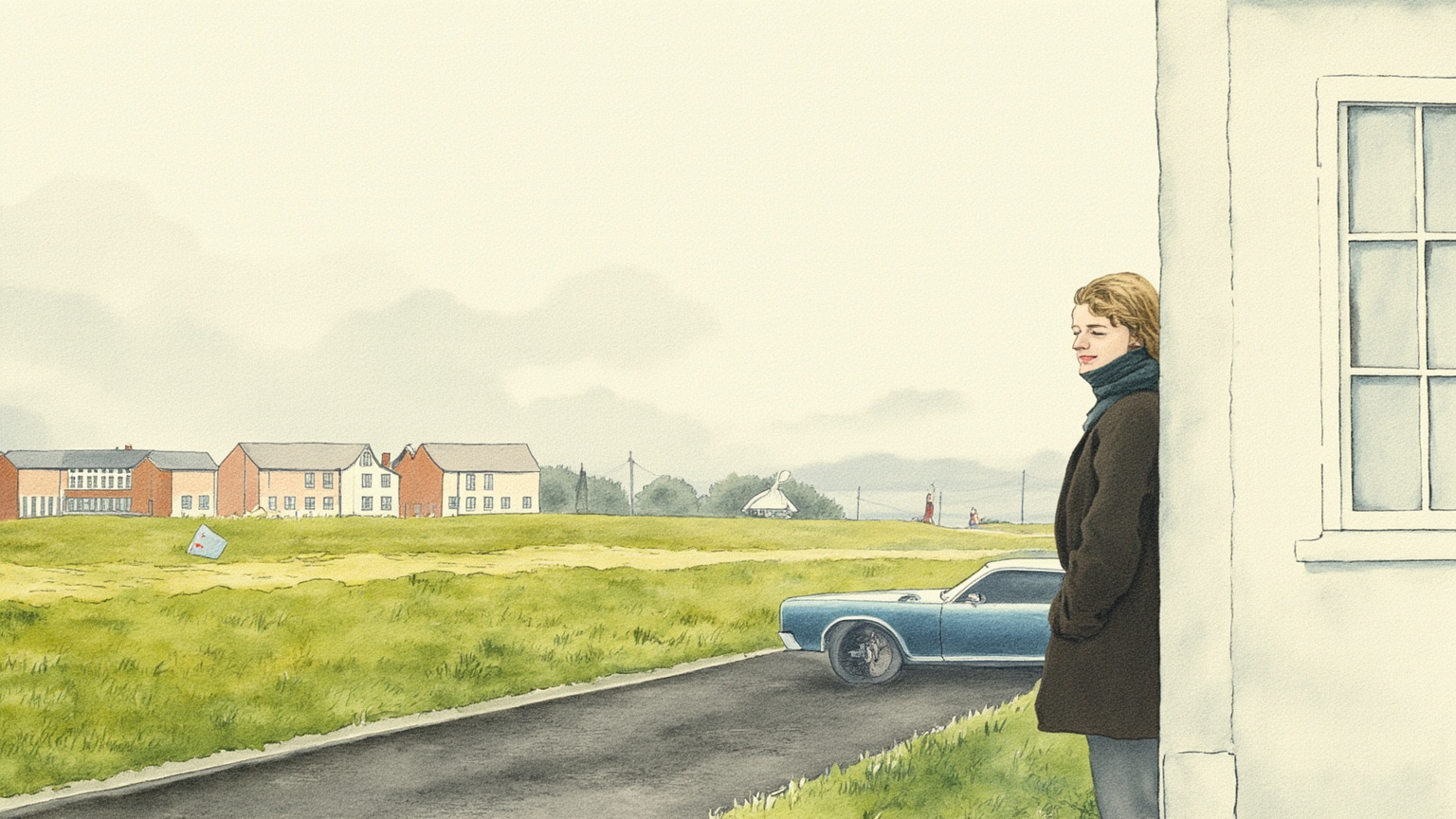
I just waited a bit, then turned back to the car, and drove slowly to the coast, and I think I cried a little then, too, for the first time in a long while.
我等了一会儿,然后转身回到车上,慢慢地把车往海边开去,我想我也哭了一下子,隔了这么久以来的头一回。
金句 · 第二十四章 · 尾声,开往诺福克的路上
What the Book Is Actually About
On the surface it’s a science fiction premise—clones living to donate their organs—but look deeper and it’s a story about acceptance. These children know their ending from the start. They don’t rebel, don’t run, don’t organize underground movements. They cry and then go back to class, finish a drawing and hand it in, wash the dishes and go to sleep. This gentleness close to numbness makes the cruelty feel worse—because the people being cruel aren’t fighting a heroic resistor, they’re a group who’ve digested fear into habit.
Going deeper, it asks: how do you prove a person is human? The people at Hailsham tried to prove clones had souls through art, proved they deserved delayed donations through love. But the act of proving itself is humiliating—because it means the other side has already decided you don’t count, and you have to present evidence to change their mind. Ishiguro doesn’t give you an answer. He just shows you the old cassette tape, the faded children's drawings, the apology that was never spoken, tucked into a drawer and sealed away in a world that no longer needs them.
The book still works today because it’s not really about clones. It’s about any life that’s been given a ceiling in advance—people told "you can only go this far" who still, inside the wire fence, love with full seriousness, paint with full seriousness, memorize a song’s lyrics with full seriousness.
The book’s cruellest thing isn’t death. It’s the living deciding to keep going.
Why the Main Text Is Still Worth Reading Even When You Know the Plot
The companion guide gives you a map, but the main text gives you the body. What Kazuo Ishiguro does so brilliantly is write the "unspoken" — Cathy hears Tommy and Ruth laughing in the hallway, she stops, then keeps walking. That two-second pause, and he fills two pages with it. You know the plot, but you can't know — until you read it — that when a person swallows their feelings back down, the throat actually takes on a specific shape.
Then there's the English countryside sky — always gray-white, always about to rain but never quite falling, always that lukewarm air wrapping around you. That weather is part of Hailsham, part of the clones, part of that wire fence in Norfolk. You won't feel that skin sensation from the companion guide. You only encounter it when you turn the first page and the overcast day presses you into your chair.
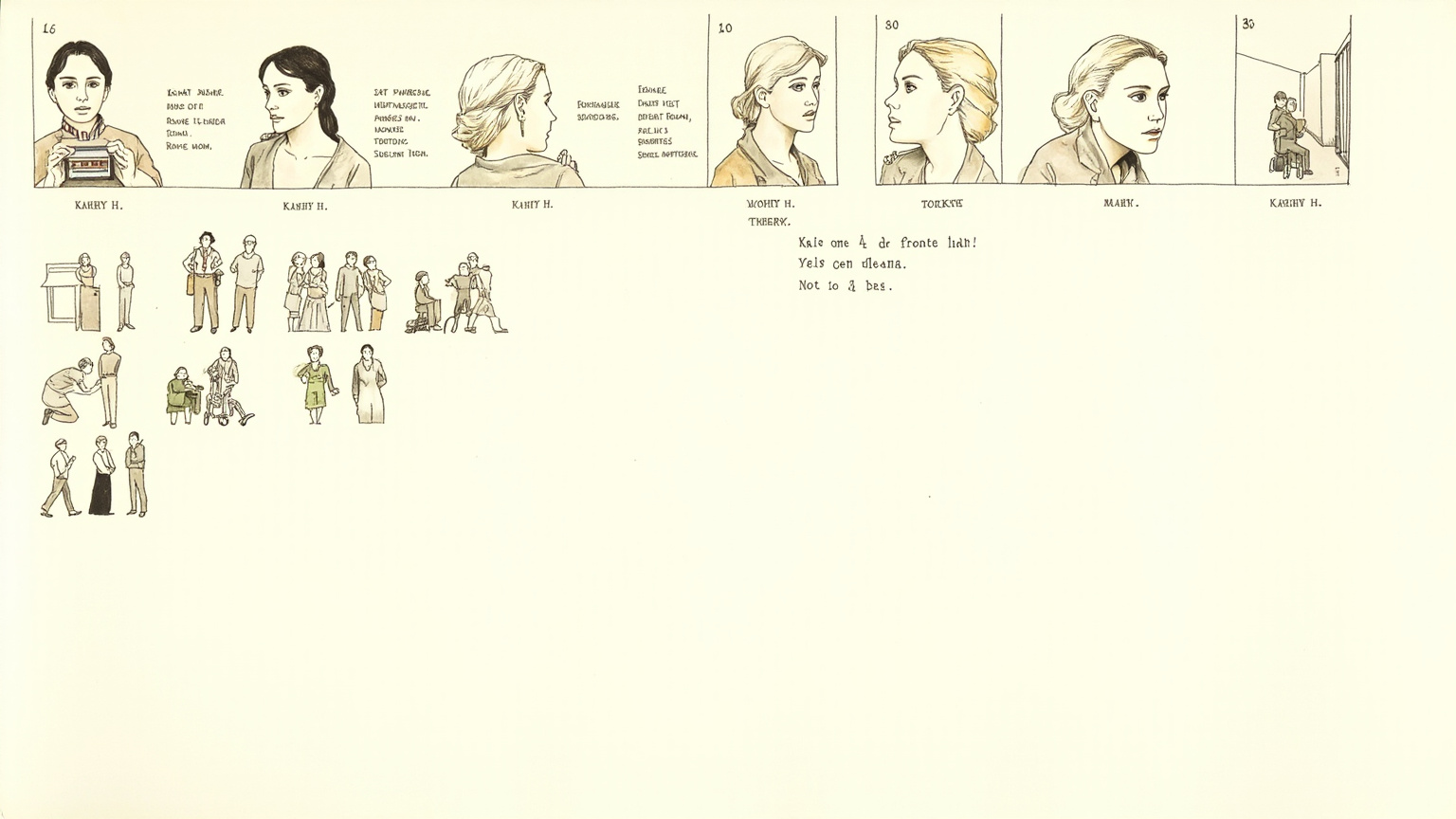
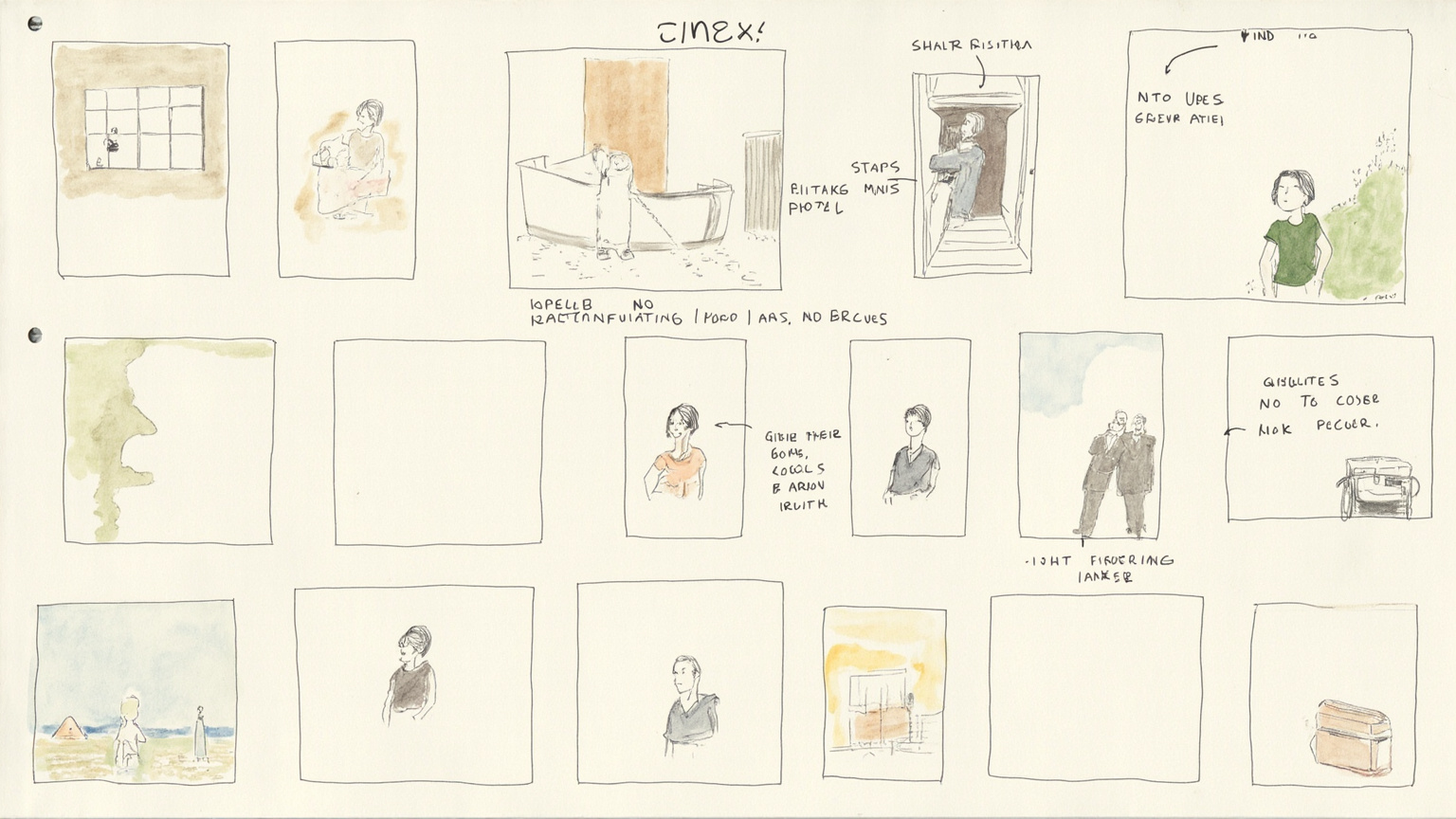
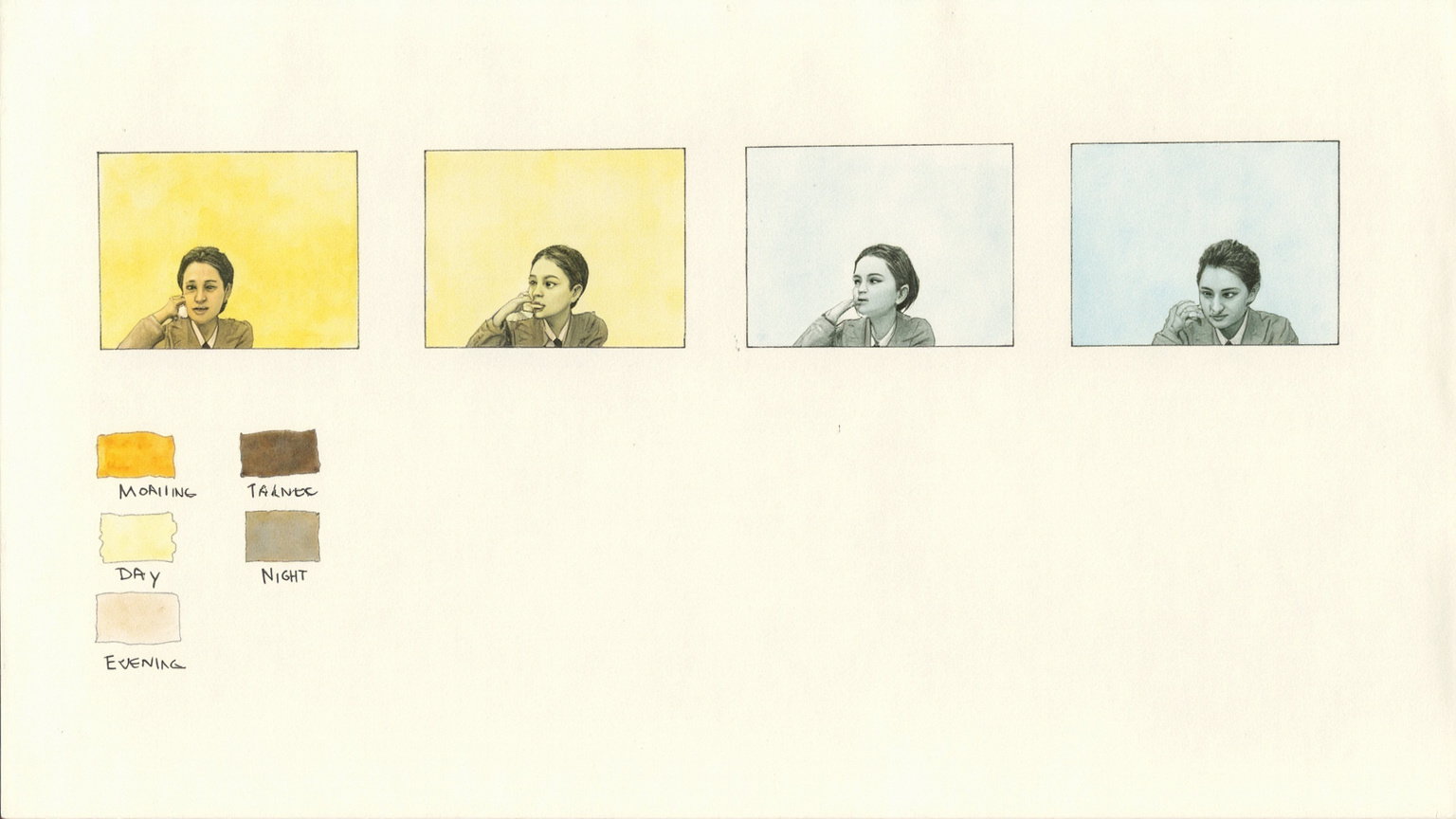
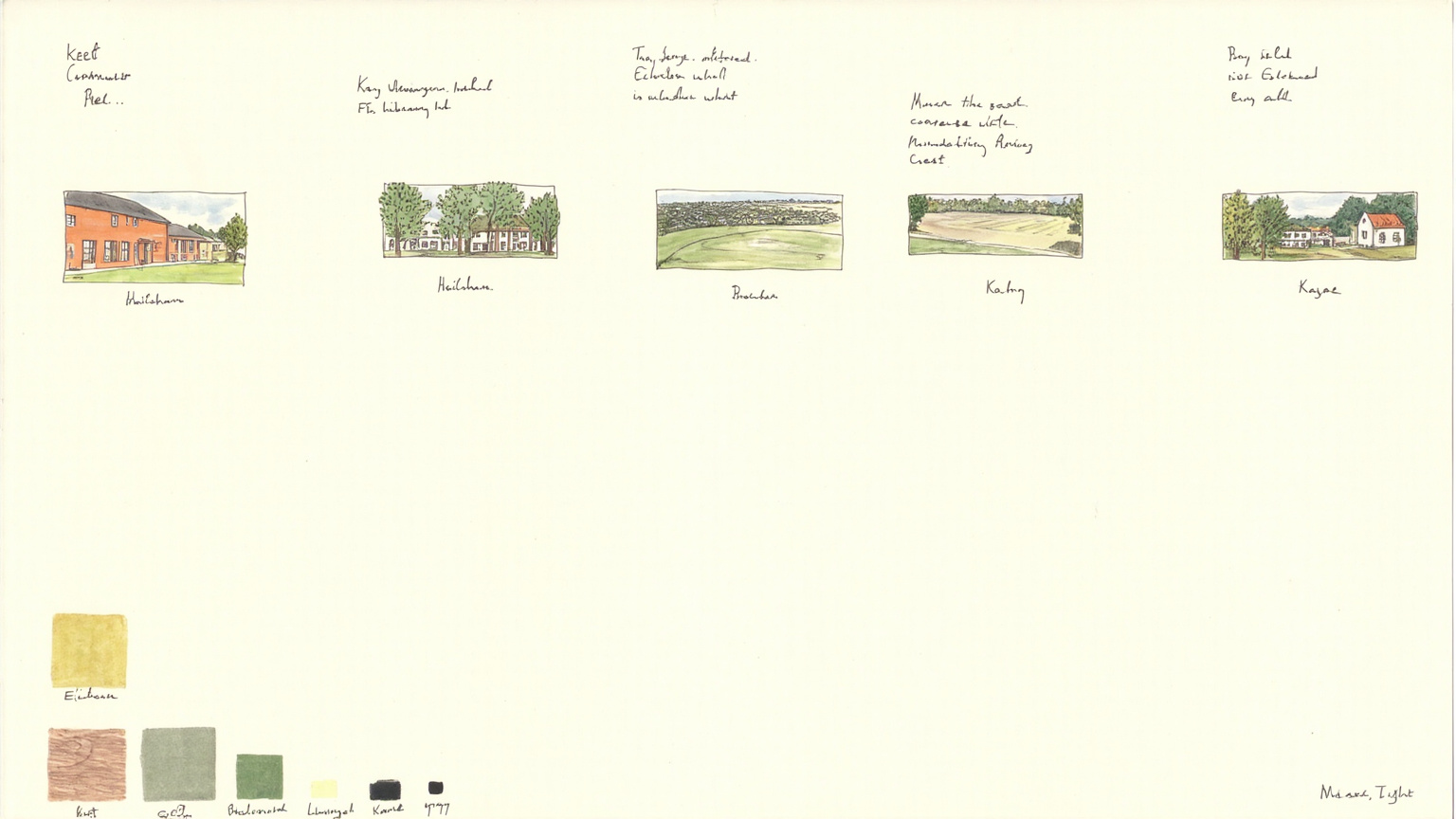
Art Direction4 plates
Before the guide was written, this book got a visual foundation — every illustration you just read grew out of it.