Jiandeng Xinhua (New Tales Under the Lamplight) · Companion Guide
剪灯新话
一盏牡丹灯,点了整部书的火;一封禁毁令,烧不掉江南夜色里的鬼与人。
A Peony Lantern, a Bridge by a Ruined Shrine
It is the Lantern Festival, some year in the last days of the Yuan. The region east of Zhejiang has not settled — Fang Guozhen's troops still hold the ground. A young scholar named Wei crosses a bridge and meets a woman coming the other way, carrying a lantern painted with peonies. She is called Qiao. That is all it takes: the tone of The Tale of the Peony Lantern is set in a handful of words. Not a court, not a battlefield, but a ruined shrine under dim lamplight, a bridge, and an encounter that looks like it is about to become a romance.
That lantern became the emblem of the whole book. New Tales Under the Lamplight opened the Ming dynasty's tradition of literary short fiction, and what later readers remember is not the polish of any one story's prose. It is this: the Lantern Festival, a peony painted on silk, a beautiful woman carrying it through the dark, a chance meeting under lamplight somewhere in the Jiangnan night. Read this book, and the lantern is the first thing to hold onto.
What Kind of Book: Written Late at Night, Burned by Imperial Order
The author, Qu You, courtesy name Zongji, sobriquet Cunzhai, was born in Qiantang at the turn from Yuan to Ming. As a boy he was praised by Yang Weizhen as the thousand-league colt of the Qu family. He was a poet all his life, never a professional writer of fiction. His years span the last warlord struggles of the Yuan on one side and the Hongwu emperor's crackdown on the literati on the other. In the eleventh year of the Hongwu reign, 1378, caught in that narrow space, Qu You assembled this collection — four scrolls and an appendix, twenty-one stories — and it circulated in manuscript. By the fifteenth year of the Yongle reign, 1417, seventy-five years old and living in exile at Bao'an, near present-day Huairou in Hebei, he was still revising it line by line under his own lamp, decades after he had first finished the book.
In the seventh year of the Zhengtong reign, 1442, Li Shimian, Chancellor of the Imperial Academy, petitioned the throne directly against it: left unchecked, he warned, its heresies would spread and corrupt the people. Emperor Yingzong ordered it burned, the first time in the Ming that a work of literati fiction was banned by imperial decree. The irony is that the ban never held. Manuscripts and printed editions kept moving, through the country and across East Asia, regardless.
People and World: The Living Caught in War, Officials Kept Honest in the Underworld
New Tales Under the Lamplight is not one continuous narrative. It is twenty-one sealed bottles, and most of them hold the same kind of cargo: a young scholar, and a woman he wants but cannot keep. The central pair is Jin Ding and Liu Cuicui in The Tale of Cuicui, husband and wife by their own choice in the last years of the Yuan, happily married, until Zhang Shicheng's uprising sweeps through and Cuicui is taken as General Li's favorite concubine. Jin Ding tracks her down through every hardship only to be received as her brother, not her husband; in the end they die together and are reunited as ghosts. Then there is Scholar Shang and Yang Caicai in The Pavilion of Autumn Fragrance, close to a self-portrait of Qu You himself: childhood sweethearts who pledge themselves to each other under an osmanthus tree, separated for ten years without word once the war scatters their families, and when Shang finally returns after the Ming has unified the country, Caicai has already married someone else. Her only reply is a single line: let us be husband and wife in the next life.
The other recurring shape is a scholar who meets a female ghost. In The Tale of the Gold Phoenix Hairpin, Wu Xingniang is betrothed as a child, sickens with longing, and dies before the marriage, then her ghost tracks down her fiance anyway and borrows her younger sister's body to finish what death interrupted. In The Tale of the Woman in Green, a maid to the Southern Song chancellor Jia Sidao was put to death alongside Zhao Yuan (called Wu Yuan elsewhere in the text) at Broken Bridge on West Lake in a previous life; reborn, Zhao Yuan remembers none of it, so she comes to him night after night dressed in green and yellow, a servant girl's colors. In The Tale of Teng Mu's Drunken Excursion to Jujing Garden, Teng Mu knows perfectly well that Wei Fanghua is a palace woman of the fallen Song, long dead, and keeps drinking and trading poems with her under the moon regardless. The living and the dead, on speaking terms.
The settings move from a study by Wuque Bridge to the Broken Bridge at West Lake, to flagstone lanes, to a cold night in Bao'an, the northern place of Qu You's own exile. The rule of this world is simple enough: a war can tear a loving couple apart in one night, a literary ban can silence a writer in one night, but whatever the living cannot reach still waits for them after death, and the underworld, it turns out, keeps its rules better than the court does. That is the sharpest cut in the whole book.
Marriages Torn Apart by War: Two Star-Crossed Couples
Start with The Tale of Cuicui. It has the cleanest tragic bones in the whole collection. Cuicui and Jin Ding marry by their own choice and live happily, one of the few sentences in the book that lets the reader breathe. Then Zhang Shicheng's rebellion breaks out, and Cuicui is taken as General Li's favorite concubine. Jin Ding finds her after enormous hardship, only to be allowed into the general's household as her brother, nothing more. It ends with both of them dying by their own hand and reuniting as ghosts. What is worth noticing in the craft is how far Qu You pushes the war itself into the background: there is not a single battle scene in the story. Every blow lands on one thing only, a husband and wife who can meet but cannot acknowledge each other.
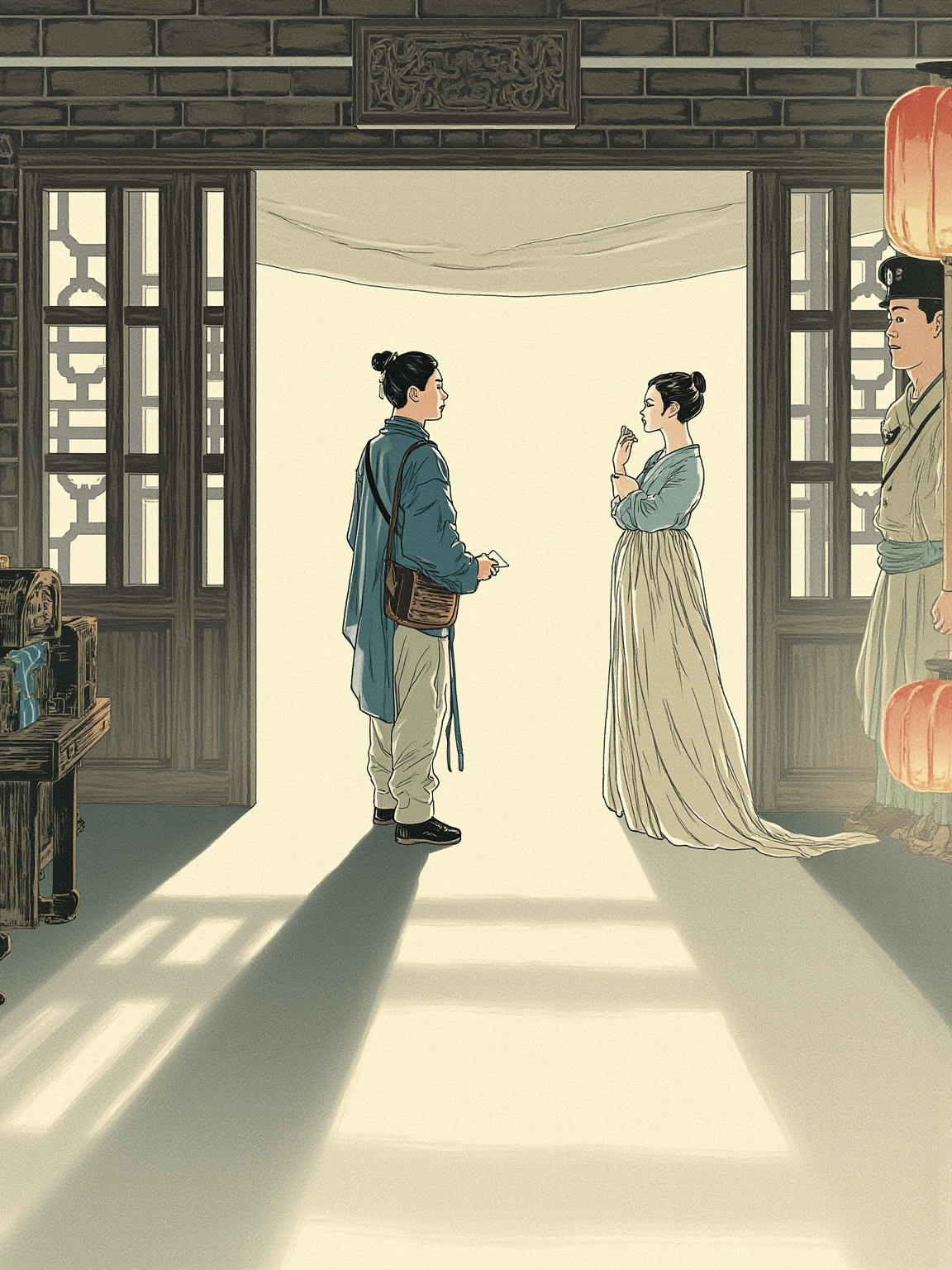
They had married by their own choosing, and the days they shared were full of grace — until the war rose like a tide and swept her from his arms.
夫妇自择佳偶,琴瑟甚笃;不料兵乱如潮,竟把她从枕边卷了去。
金句 · 卷三 · 翠翠传
Then there is The Pavilion of Autumn Fragrance, which can be read almost as Qu You's own half-told story. During the Zhizheng reign of the Yuan, young Shang follows his father's official postings to Gusu and lodges near Wuque Bridge, where he and his cousin Caicai pledge themselves to each other under an osmanthus tree. War scatters the family to Lin'an, and the two lose touch. When Shang returns in the early Ming, Caicai is already married; her reply is one line, let us be husband and wife in the next life. Shang keeps that letter for the rest of his life, and the text says only that he often went days without eating or sleeping. Eight characters that carry more weight than tears.
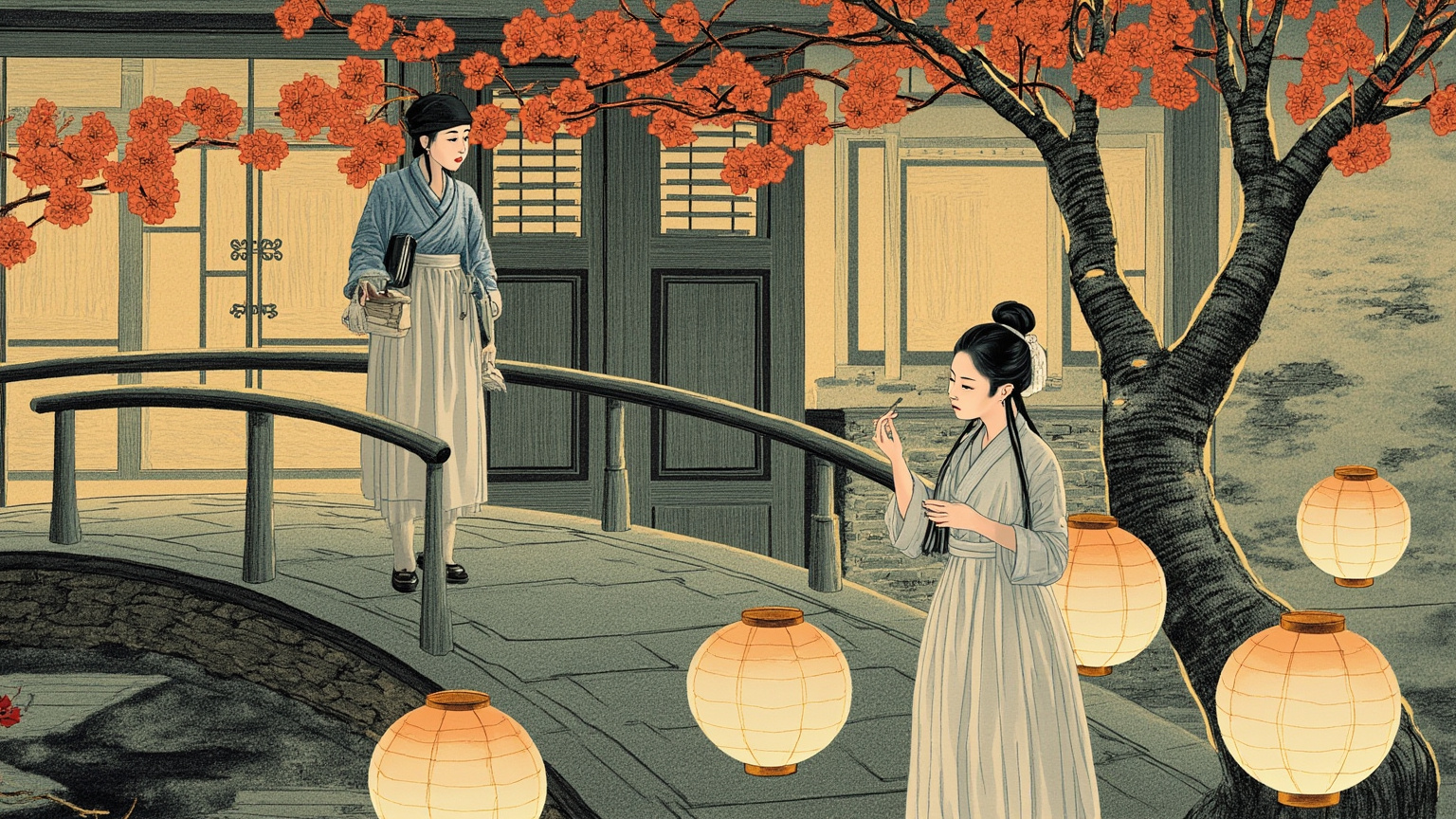
The osmanthus still bloomed under the old pavilion, but the girl who once waited there had long since become another man's wife.
秋香亭下桂花年年依旧开,那个曾在树下等他的人,早已作了他人妇。
金句 · 卷二 · 秋香亭记
Three Kinds of Love Between the Living and the Dead
On the theme of love between the living and the dead, Qu You uses three distinct approaches. The first is: I will marry you even though I am dead. In The Tale of the Gold Phoenix Hairpin, Wu Xingniang is betrothed to Cui Xingge as a child; when the Cui family is posted far away and fifteen years pass without a letter, she falls ill from longing and is dead within half a year. Her ghost then tracks Cui Xingge down, elopes with him back to her hometown, and possesses her younger sister Qingniang's body for a full year before the engagement is finally, properly completed. This is the boldest of the three: dead is no obstacle, she comes back and borrows her sister's body to get married anyway.
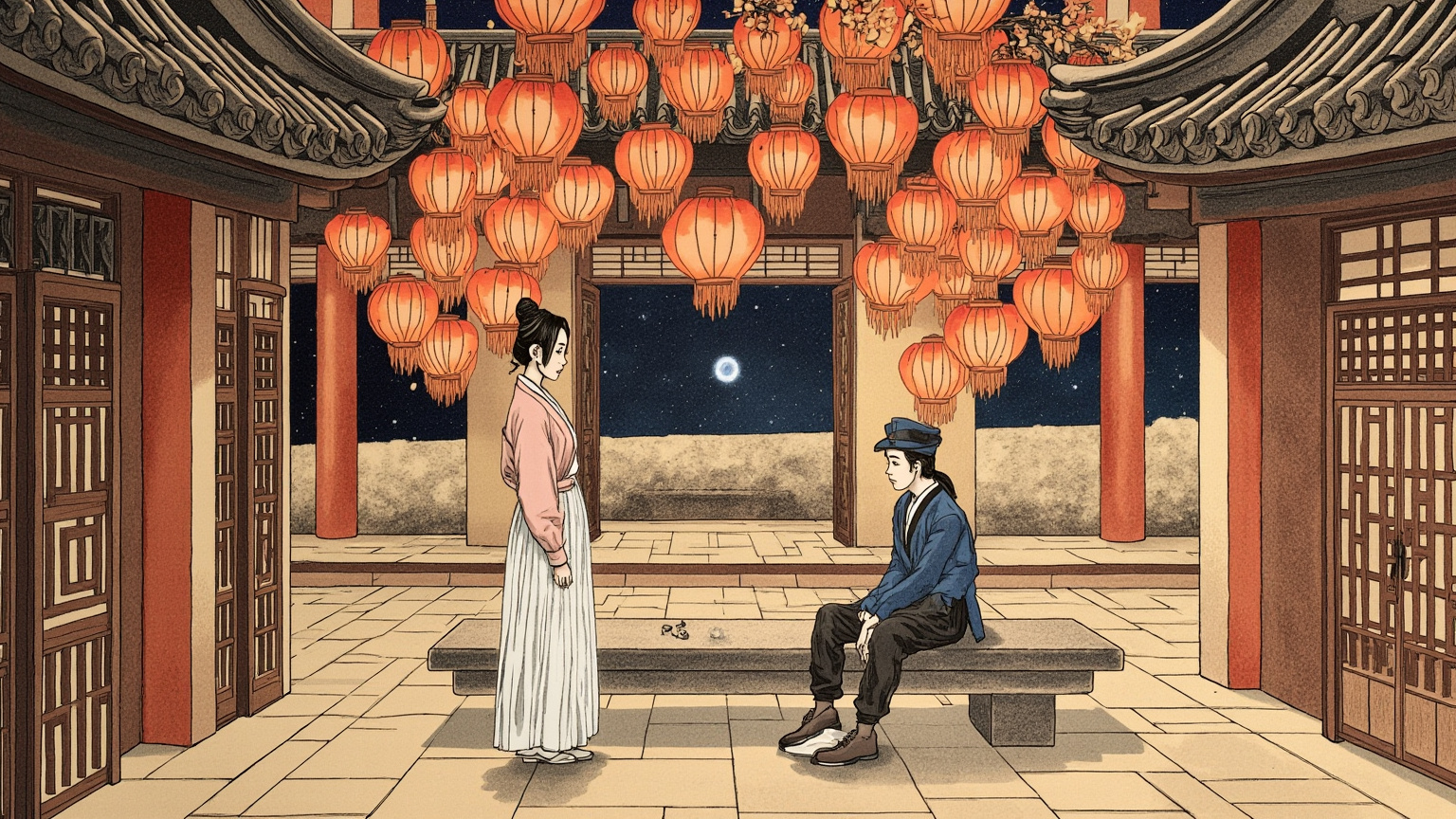
She had died for love unfulfilled, and now, beyond death, she would not let the man who owed her a wedding slip away.
她是为一段未成的姻缘郁郁而终的;既已死了,这一回,断不肯再放那欠她一场婚事的人走。
金句 · 卷一 · 金凤钗记
The second is: I died wrongfully in a past life, and now you do not even remember me. The woman in green, in The Tale of the Woman in Green, was put to death alongside Zhao Yuan (Wu Yuan in some passages) by order of the chancellor Jia Sidao, at Broken Bridge on West Lake, in an earlier life. Reborn, Zhao Yuan knows nothing of it, so she visits him night after night in her green and yellow servant's dress, until, three years on, their allotted time together runs out and she finally tells him everything. Zhao Yuan buries her properly and takes vows at Lingyin Temple. This is the coldest and most beautiful of the three: the injustice of the past life stays sunk at the bottom of West Lake, and all that survives into the next one is color, green over yellow.
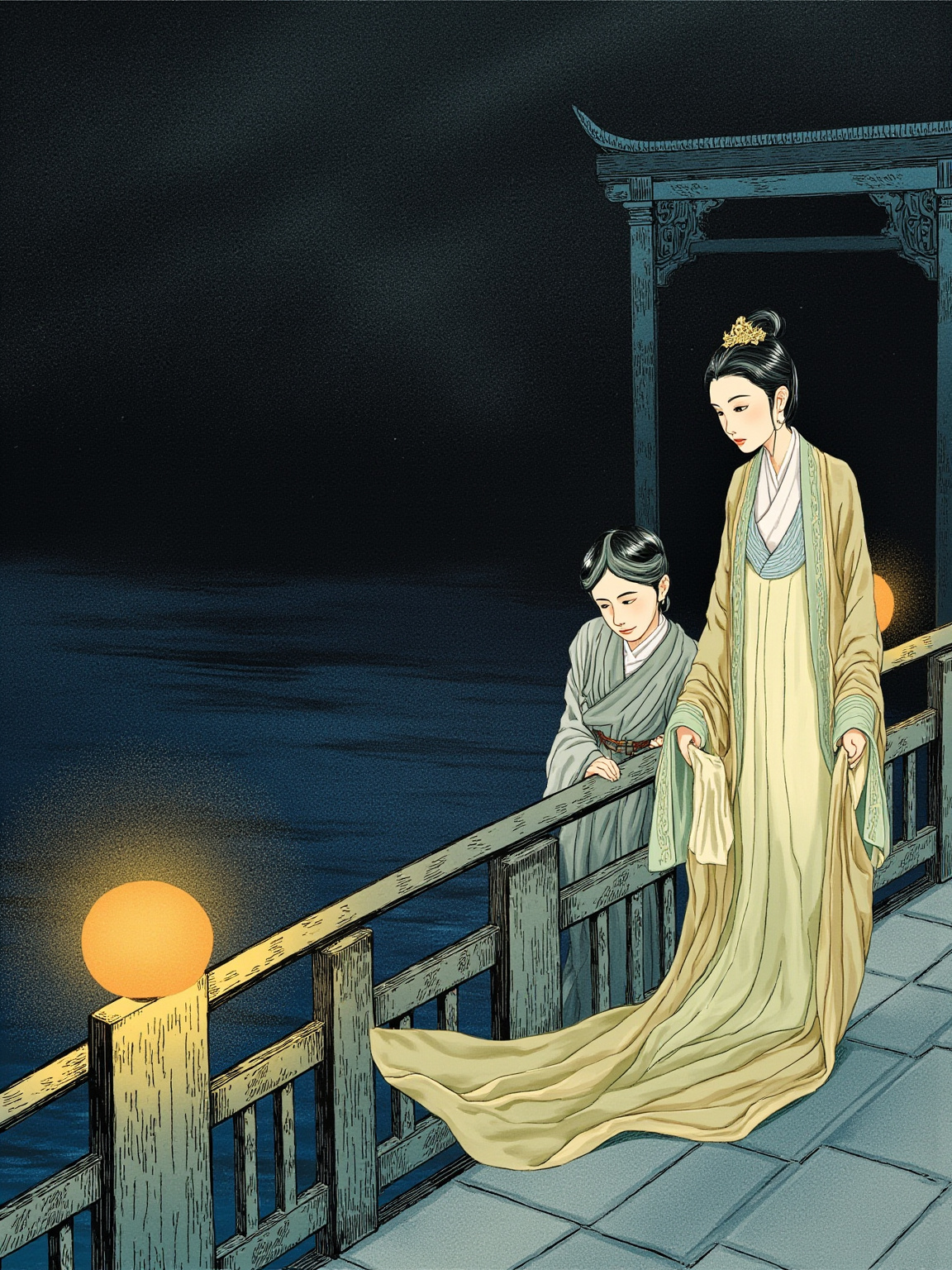
She came to him each night in green and yellow silk, and for three years he never guessed what the lake had once swallowed.
她夜夜着绿衣黄裳而来,三年之久,他竟不知西湖断桥下,曾吞没过两条性命。
金句 · 卷四 · 绿衣人传
The third is: I know perfectly well you are a ghost, and I will drink and trade poems with you anyway. In The Tale of Teng Mu's Drunken Excursion to Jujing Garden, the Southern Song scholar Teng Mu comes to know Wei Fanghua, a palace woman dead for years, through an exchange of matching verses in Jujing Garden. Knowing exactly what she is, he still drinks with her under the moon and writes poems with her. In the end Fanghua's spirit form gives out and she must leave, and Teng Mu gives up any thought of an official career and goes into the mountains to gather herbs. This is the most literary and the least dramatic of the three: nothing improper ever happens between them, and the whole relationship lives entirely inside the poems.
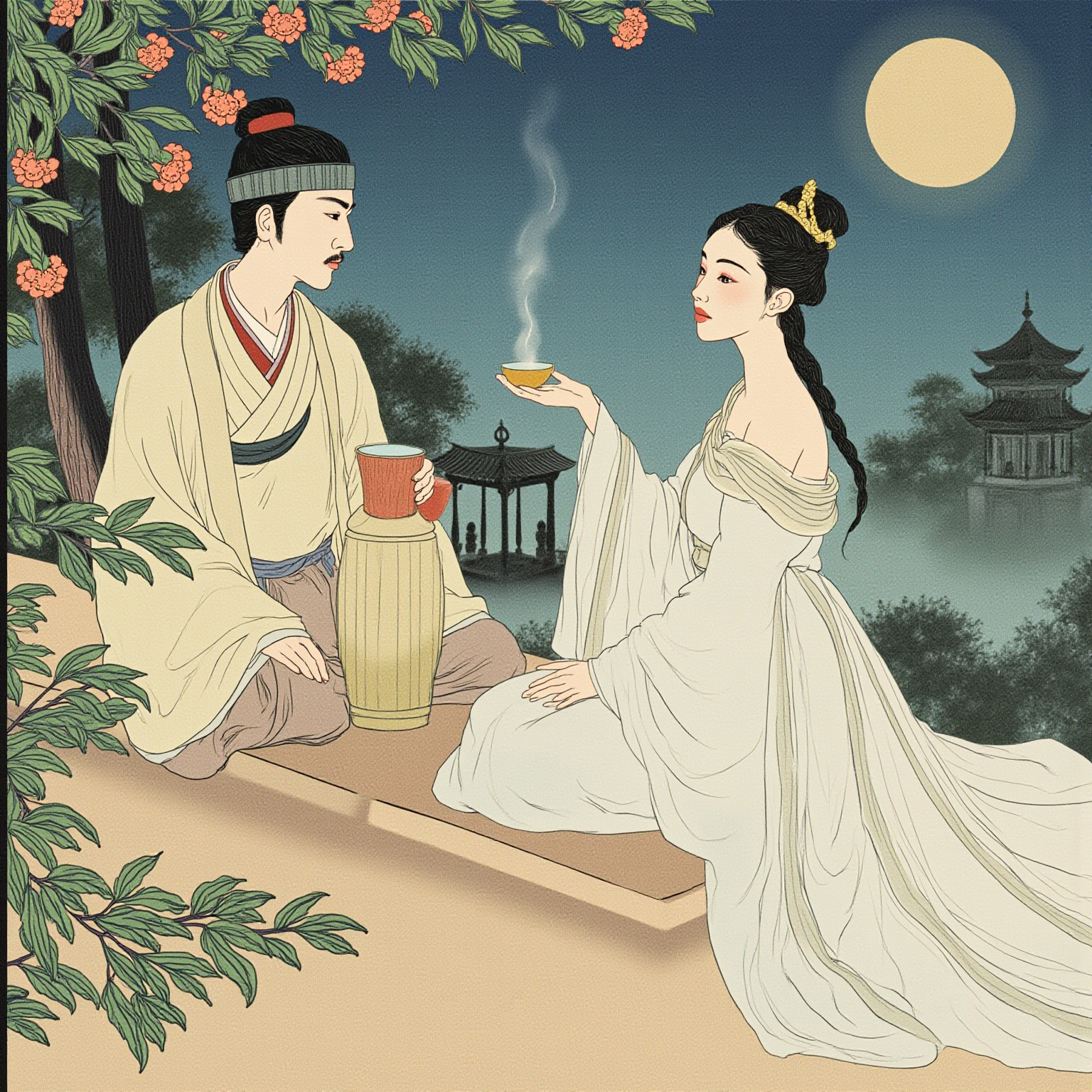
He knew she was a ghost, and still he raised the cup to drink with her under the moon, verse answering verse.
明知她是鬼,他仍举杯邀月,与她一唱一和,诗里相知。
金句 · 卷二 · 滕穆醉游聚景园记
The Peony Lantern on Lantern Festival Night: The One Image Worth Keeping
Give The Tale of the Peony Lantern its own close-up. Around the Lantern Festival, in a Jiangnan night while Fang Guozhen still holds the region east of Zhejiang, the scholar Wei meets a woman named Qiao at a bridge by a ruined shrine, a lantern painted with peonies in her hand. The lantern becomes their signal and their bond, and the whole story's weight sits on those two things: the light, and the meeting. That single lantern later became the source of Chikamatsu Monzaemon's joruri and kabuki play Botan Doro, The Peony Lantern; half the visual lineage of East Asian ghost stories branches off from right here.
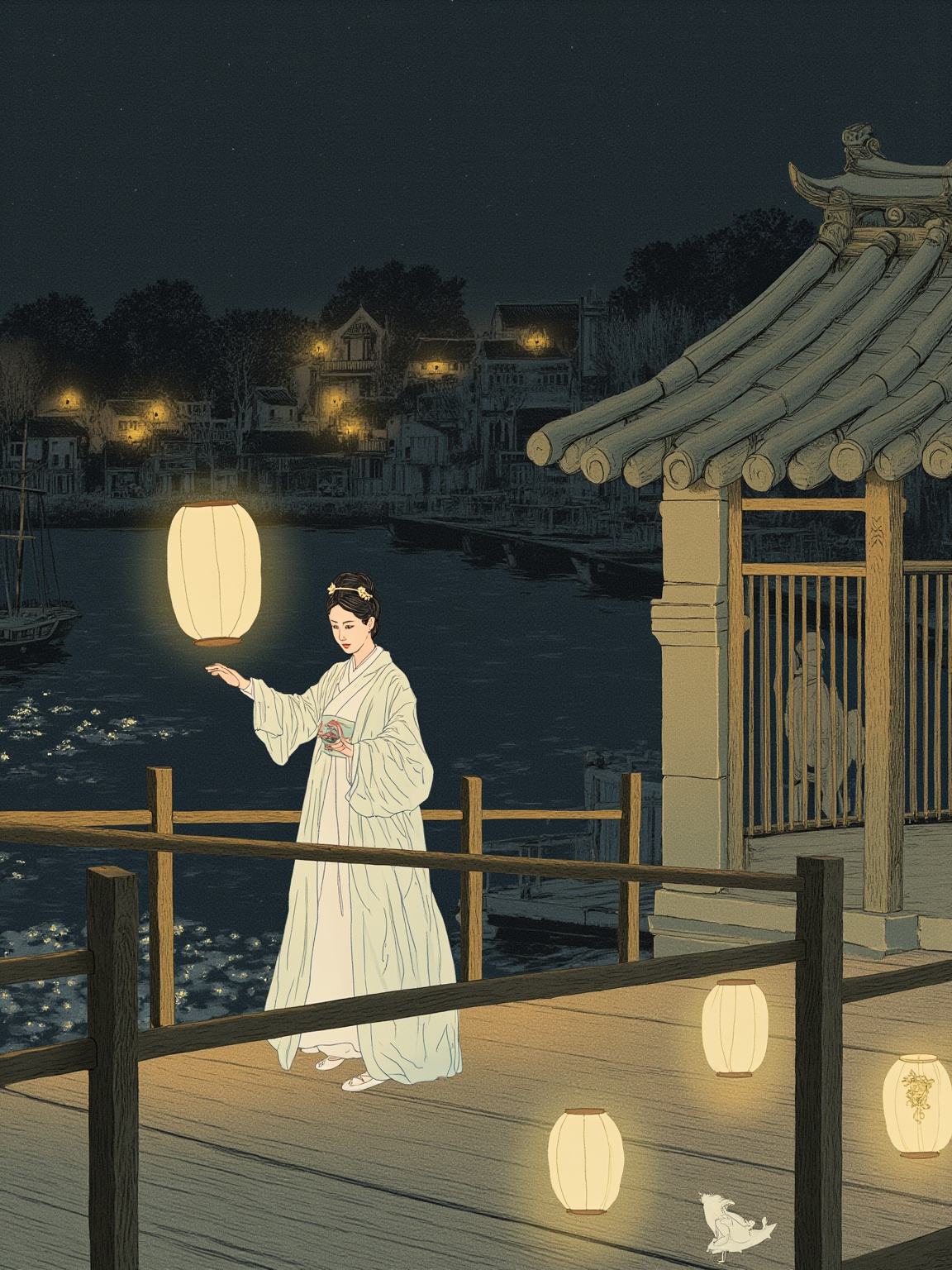
The girl raised a lantern painted with peonies and walked alone through the night of the festival — and there, on the bridge by the ruined shrine, a scholar's life turned.
女子手擎一盏画牡丹的灯笼,独行于元宵之夜的桥头——荒祠石阶之上,书生的命就此转了。
金句 · 卷四 · 牡丹灯记
The Underworld Keeps Better Order Than the Court: The Sharpest Irony in the Book
There is a blade hidden in New Tales Under the Lamplight: the rules of the underworld are used to shame the rules of the court. In the underworld, the text says, a post always goes to someone fit for it, matched exactly to their ability. And the human bureaucracy? Qu You drives the point home in one line: you can buy your way in with bribes, walk in on your family's rank, or seize a post on nothing but an inflated reputation. This is one real reason the court banned the book. On the surface it is romance and ghosts and gods; underneath, it is a sideways attack on the Ming bureaucracy and the censorship of writers.
That is why this book cannot be read as a romance collection and nothing more. Lu Xun called it dressed-up boudoir sentiment, sweet phrases picked for popular taste, and added that its prose was too weak to carry its own ambitions. As literature, no single story matches the Tang tales, let alone the Strange Tales from a Chinese Studio that came later. What actually makes it matter is not whether any one story reads well. It is two other things: it carries the Tang tale's method forward across three centuries to reach Liaozhai, keeping the classical short story alive in between, and it lit the fire that became East Asia's entire ghost-story tradition.
The Year It Was Banned Was the Year It Traveled Fastest
In 1442, the seventh year of the Zhengtong reign, the court ordered New Tales Under the Lamplight burned. Burned or not, manuscripts and printed copies kept circulating. At home, Li Changqi's Supplementary Tales Told by Lamplight and Shao Jingzhan's Tales Told While Seeking the Lamp followed close behind it, and the three books together are known as the Three Lamplight Tales. Ling Mengchu drew heavily on it for Slapping the Table in Amazement, Second Collection, and Zhou Deqing did the same for his Second Collection of West Lake Tales. On stage, Shen Jing reworked The Tale of the Gold Phoenix Hairpin into The Tale of the Fallen Hairpin, and Zhou Chaojun folded parts of The Tale of the Woman in Green into The Tale of the Red Plum.
Abroad, the influence runs even further. Kumo Sinhwa, the founding work of Korean fiction; Truyen Ky Man Luc, Vietnam's first work of literary fiction; and Chikamatsu Monzaemon's Botan Doro in Japan, a direct descendant of The Tale of the Peony Lantern, are all direct imitations of it. A book Emperor Yingzong ordered burned became the headwaters for the entire East Asian tradition of tales of the strange.
Why It Is Still Worth Reading Today
For a reader today, the thing worth taking from New Tales Under the Lamplight is not how any single story ends. It is the temperament behind it: a writer who stayed quiet by day and only dared to write at night. Qu You was a poet his whole life, never a novelist by trade, and writing this book reads like stuffing everything he could not say in daylight into short stories composed by lamp. The same scene keeps returning: a study late at night, the shadow of war or censorship somewhere outside the window, a lamp on the desk, a few sheets of paper, a few lines of romance or ghost-talk that would not have passed in daylight. This is not the high art of the Tang tale. It is something closer to the original shape of Chinese literati fiction, hiding real bone under romance and the supernatural, the moment this particular craft was first lit.
A book the court ordered burned went on to light the fire under every ghost story in East Asia. That is where New Tales Under the Lamplight actually sits in literary history.
What Only the Text Itself Can Give You
A guide like this one gives you the map. The text is the ground itself. There are at least three things no summary can hand you. One is Qu You's own poetry: almost every one of the twenty-one stories carries a complete classical poem inside it, and that is where his real skill lives. The second is the physical feel of reading it in classical Chinese, by lamplight, at night, a whole life's rhythm passing in a few turned pages. The third is the specific air of staying silent by day and lighting a lamp by night that belongs to that late-Yuan, early-Ming moment; you cannot feel how that pressure builds and leaks out between the lines until you have sat with a few passages of the original. Knowing what happens is still worth trading for the text itself, because what this book actually does well is not its plots. It is the air under that lamp.
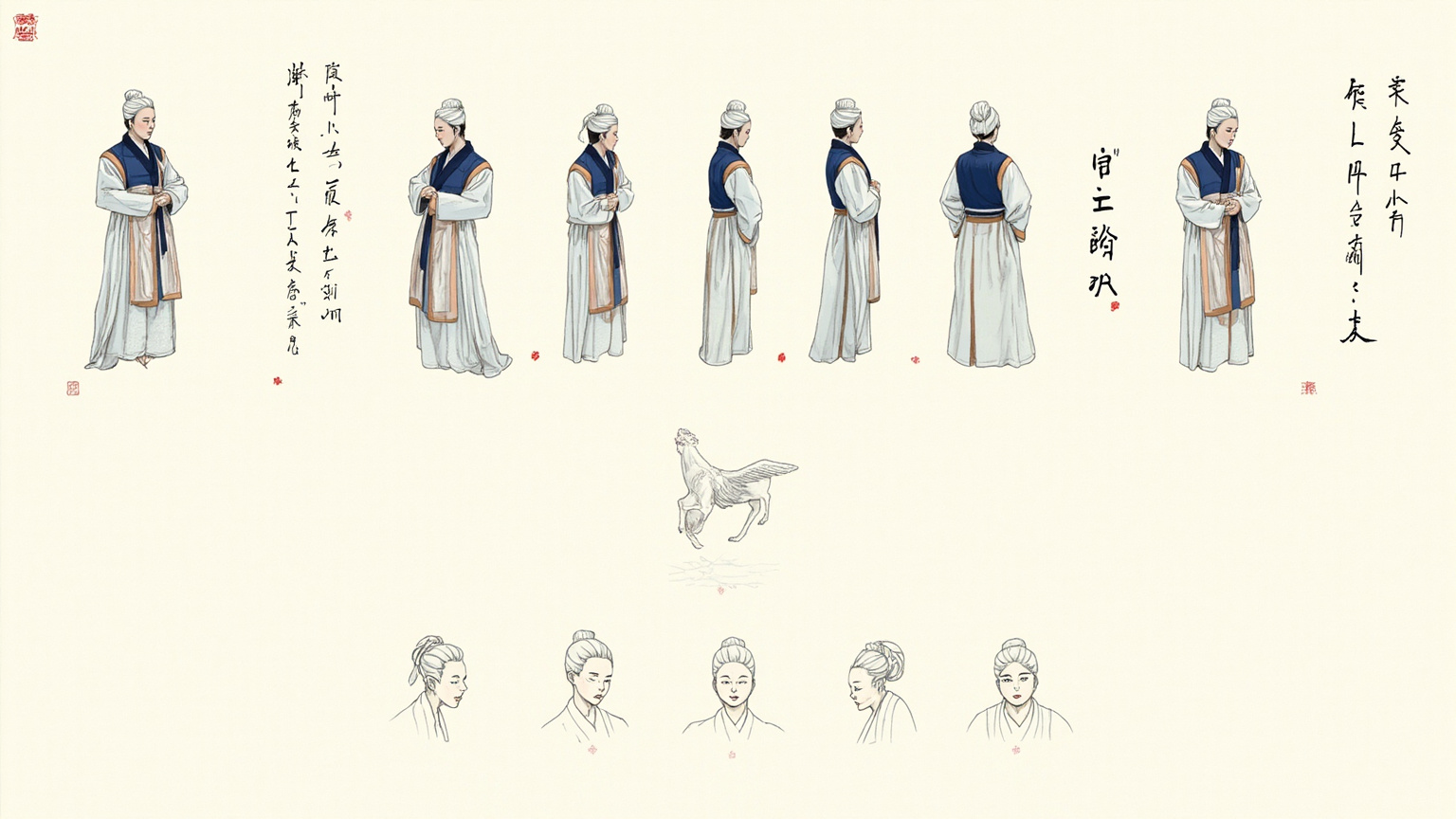
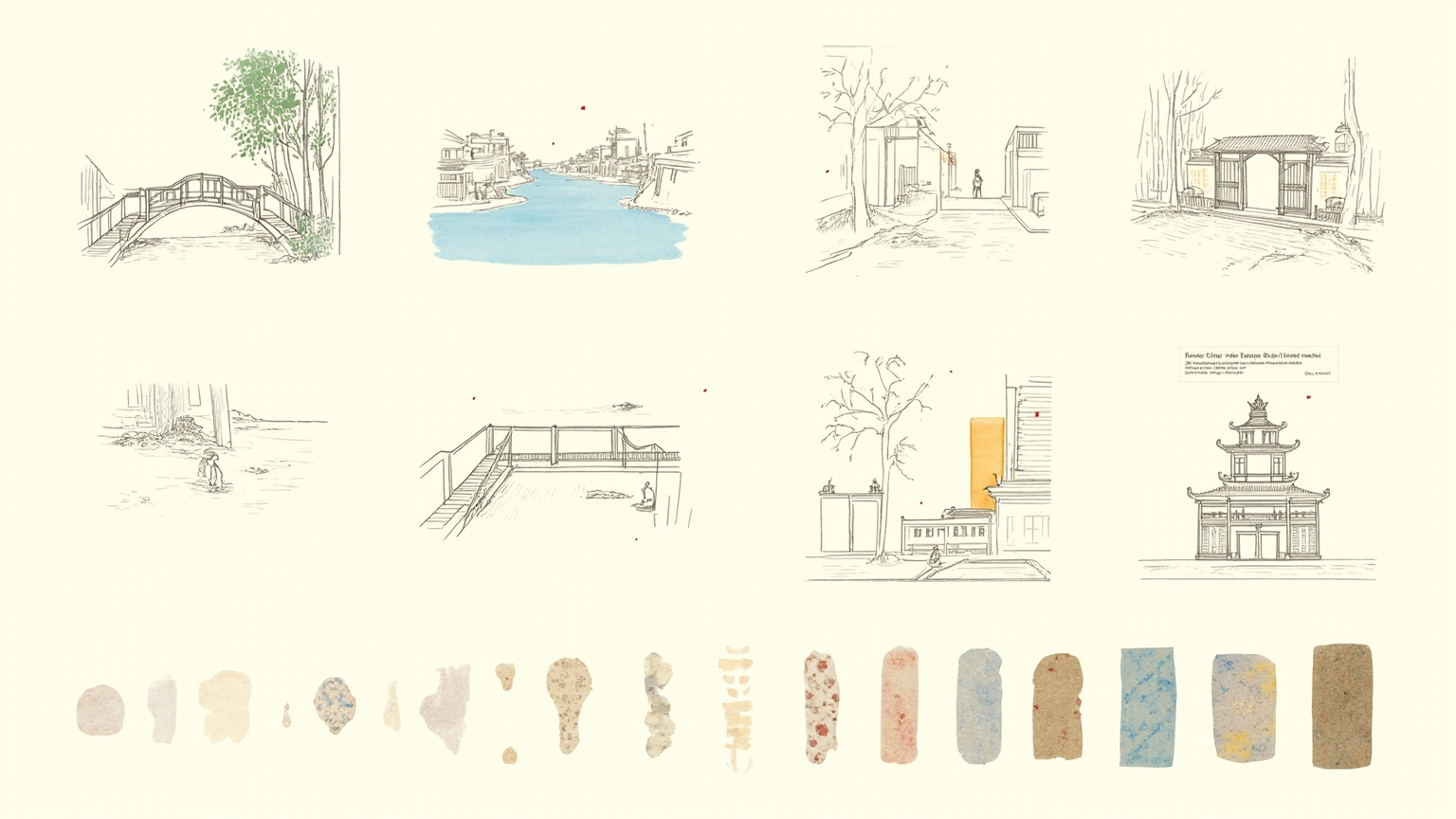
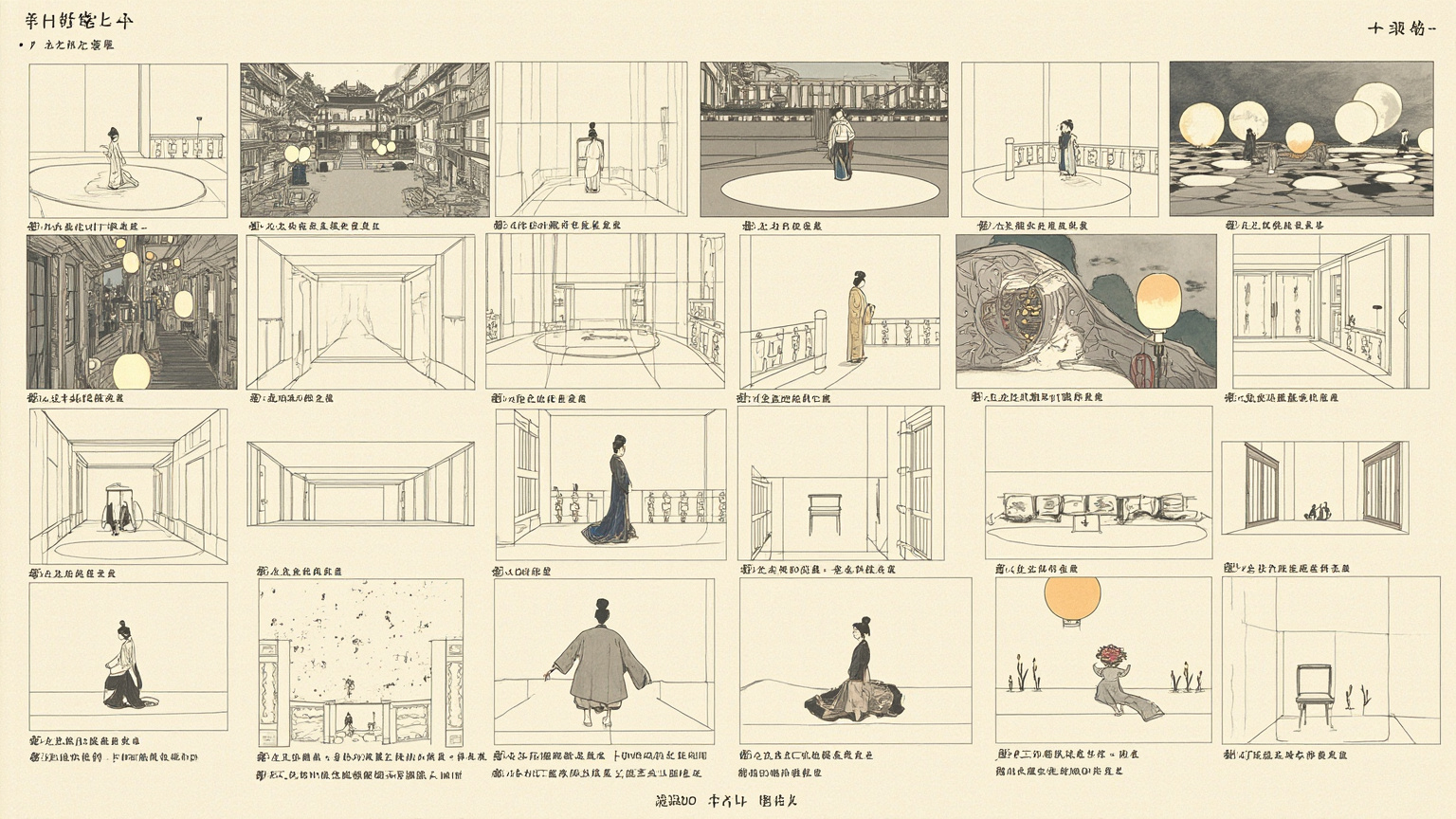
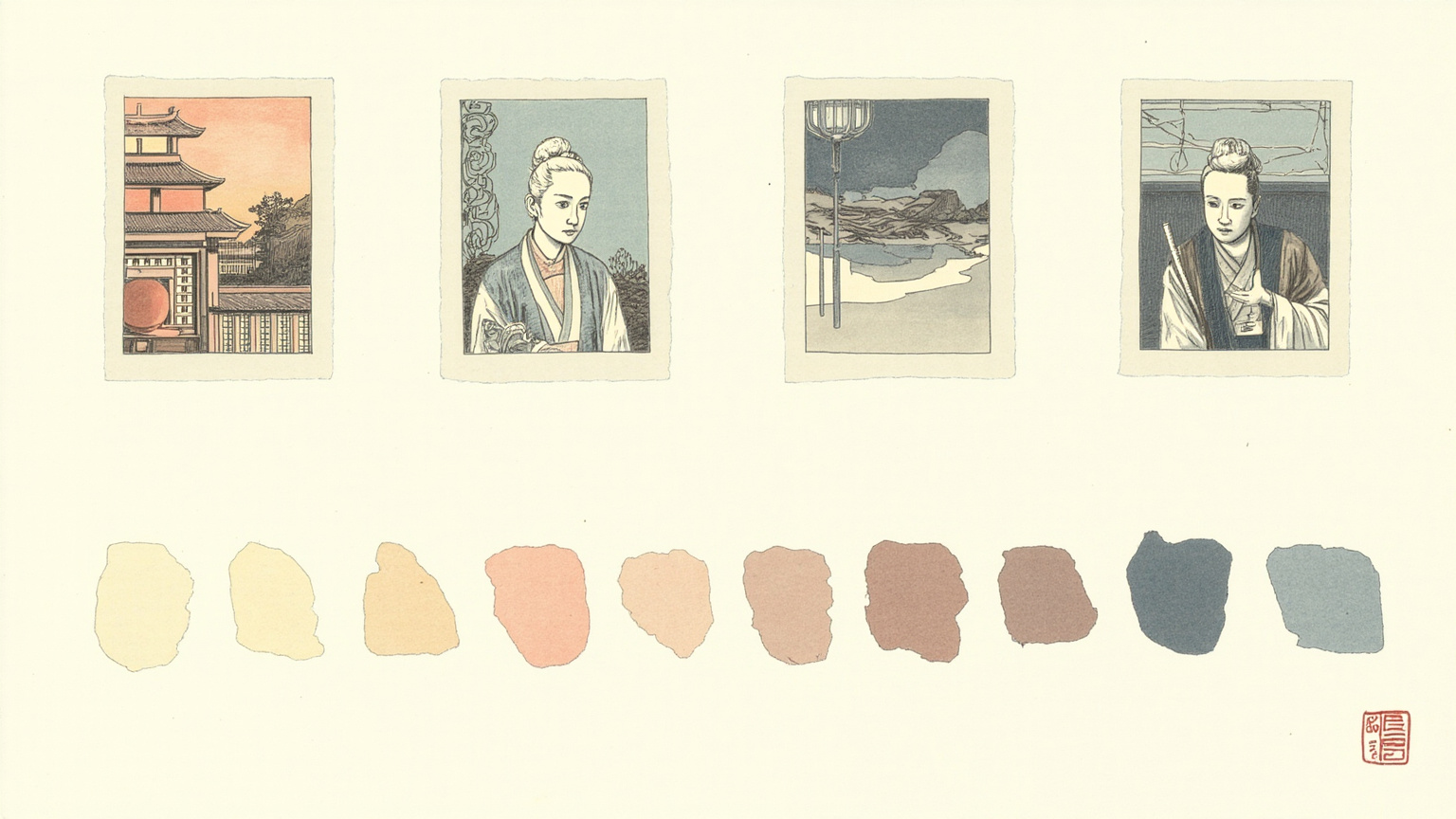
Art Direction4 plates
Before the guide was written, this book got a visual foundation — every illustration you just read grew out of it.