A Greek lecture course on how to live an entire life
Text and illustrations produced by the pipeline


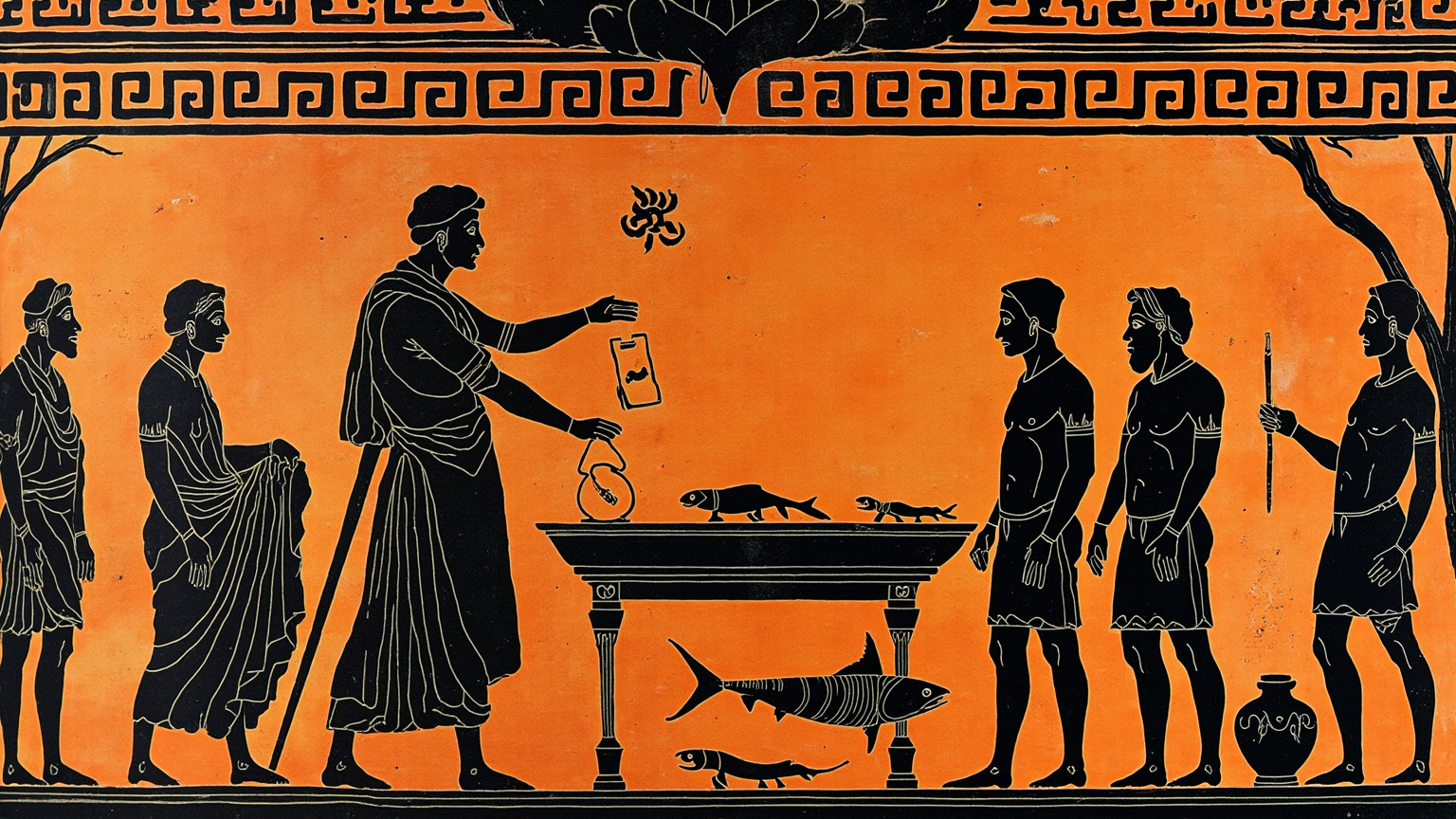
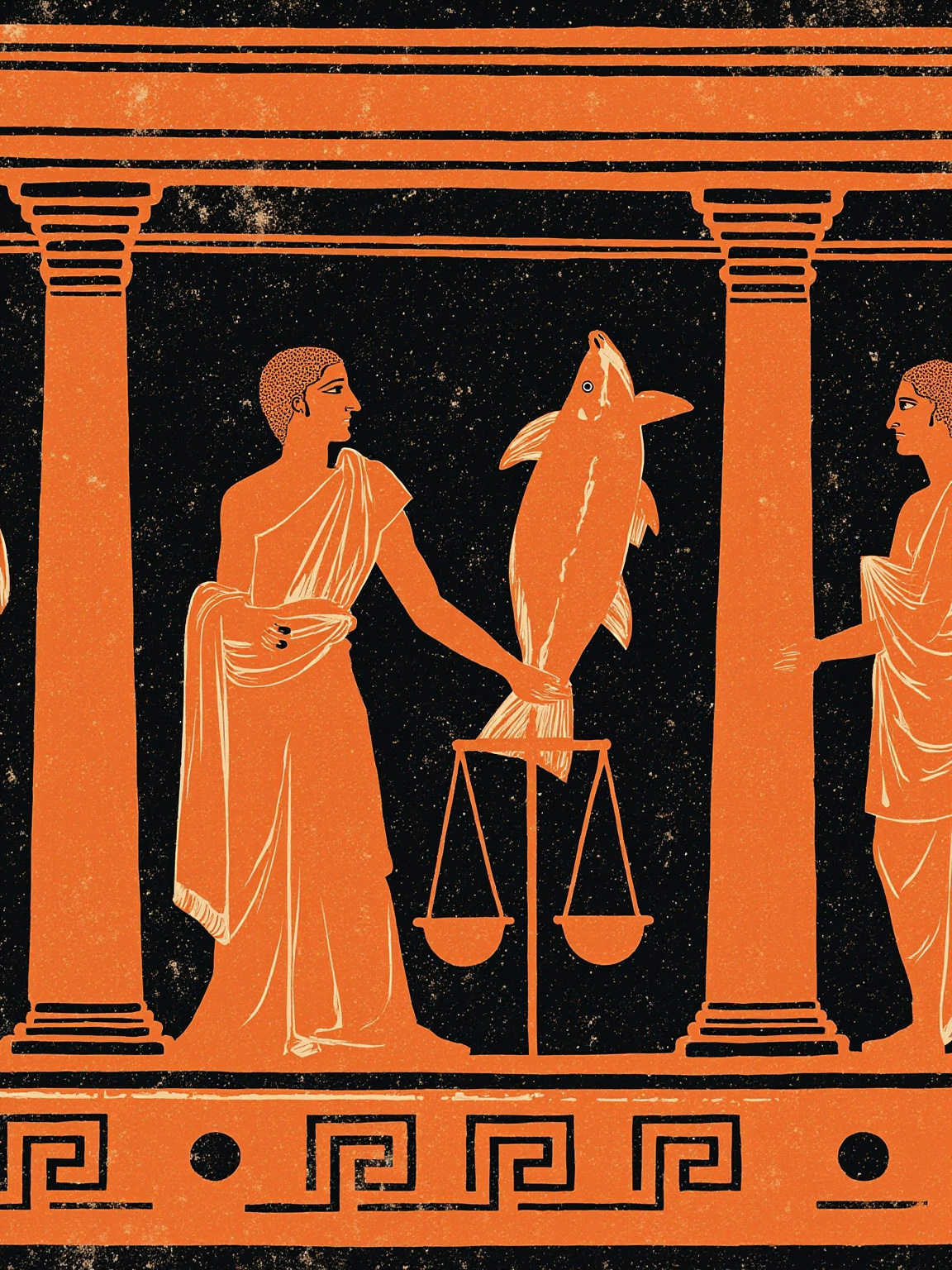
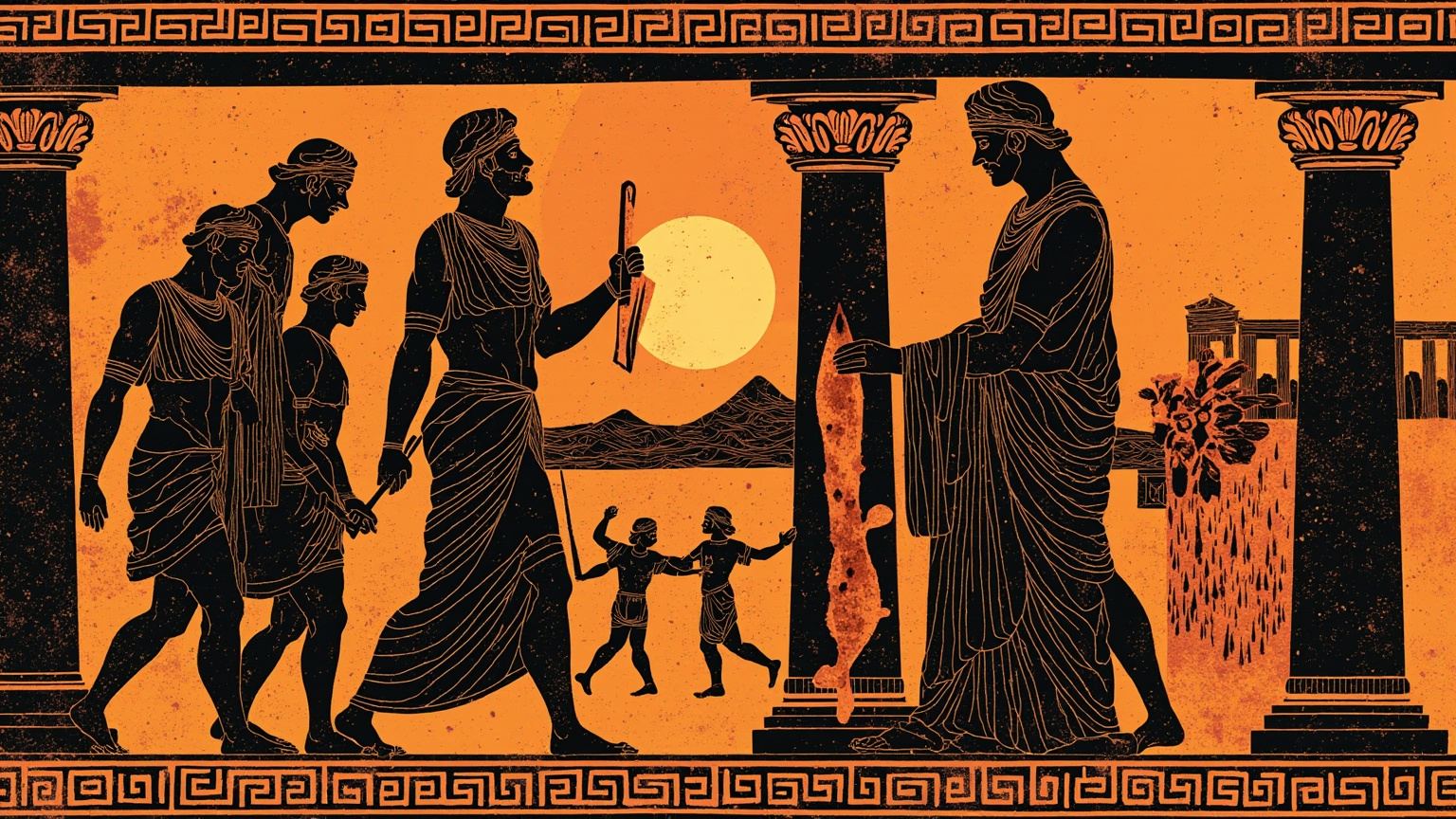
Under the colonnade of the Lyceum, Aristotle begins with a fish laid open on the table. It isn't a digression — he is slitting the belly open with one hand while he talks about flourishing with the other. The young Athenians standing around him expect a lecture on happiness. He sets the knife down on the table. What you call happiness, he says, is not a feeling. It is not a mood, not sleeping well at night and smiling through the day. It is an activity — the kind you keep doing for the whole of a life.
The Nicomachean Ethics was written in fourth-century BCE Athens by Aristotle — student of Plato, tutor to Alexander the Great, founder of the Lyceum. Ten books, ten courses of lectures, all asking one question: how should a person live. Its place in the history of Western thought is a strange one. Philosophy has never been short on books about metaphysics, logic, or nature, but a book devoted entirely to how to live a life, one still being quoted twenty-three centuries later — this is the first of those, and still the one people return to most. It isn't a set of doctrines or a list of commandments. It's the notes for a course of lectures: a teacher telling his students how we ought to think this through, pulling you into the argument until you're turning it over yourself.
There's no protagonist in this book, but there is a cast. Standing at the front is Aristotle himself — philosopher, and also a naturalist who spends his days dissecting fish and shellfish. He doesn't look up at the heavens; he looks down at his specimens. That's why the book gives you lines like one swallow does not make a summer, and also lines like virtue is a craft, and a man becomes a lyre player by playing the lyre — the second kind of line comes straight out of an afternoon spent bent over a dissection, reaching for the nearest comparison. Two shadows stand across from him: Plato and Socrates. Plato was his teacher, and Aristotle argues with him bluntly in these pages, rejecting his claim that the good is a single unified Form. Socrates is earlier still and barely appears on the page, yet an entire chapter is spent answering his claim that knowledge is virtue. Gathered under the colonnade to listen are a crowd of "we" — young men from Athens and the cities around it, twenty years old or so. This is their last lesson before they come of age: how to turn from a boy into a citizen.


Morality isn't something you think your way into — it's the kind of second nature you get from playing an instrument until it's no longer something you have to think about.
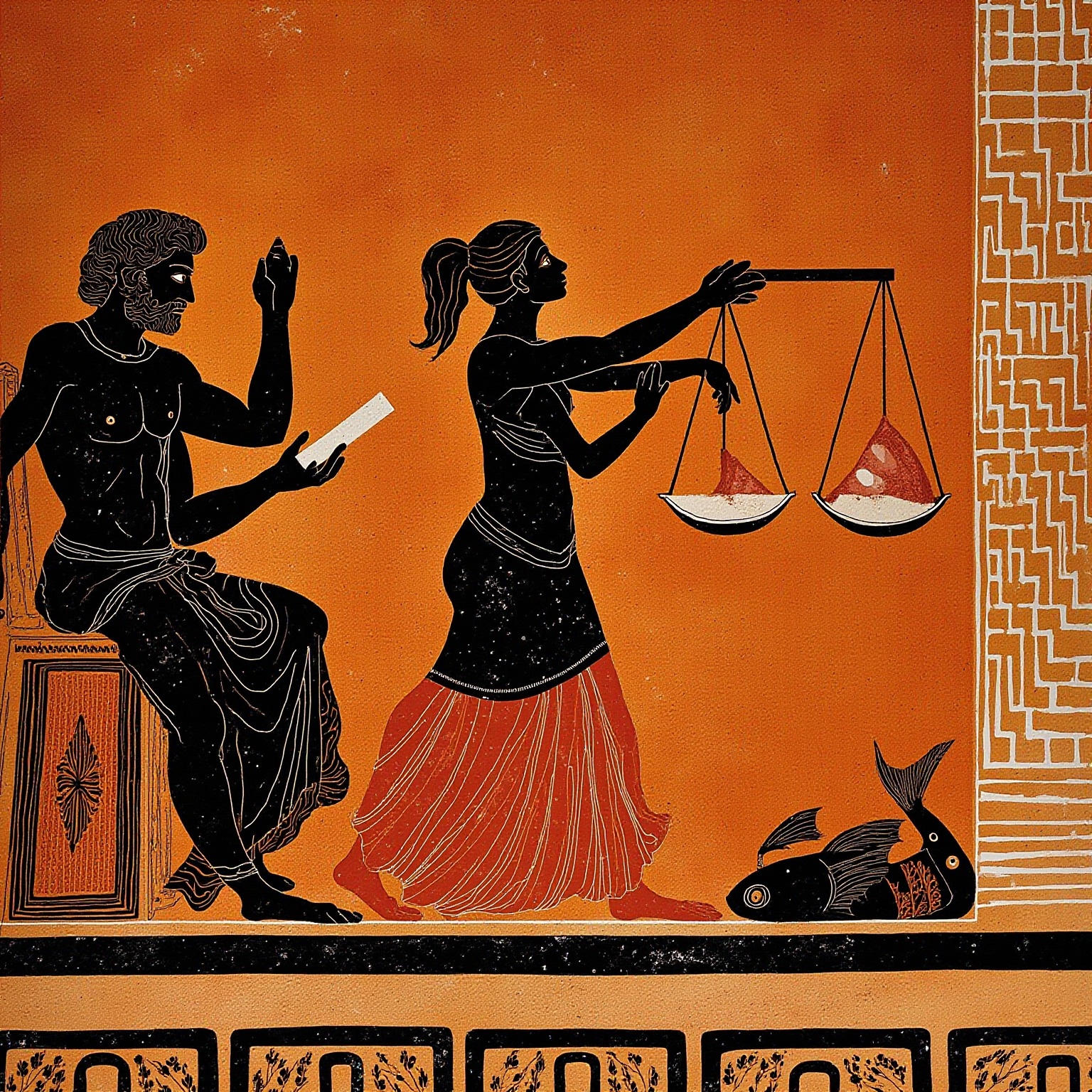
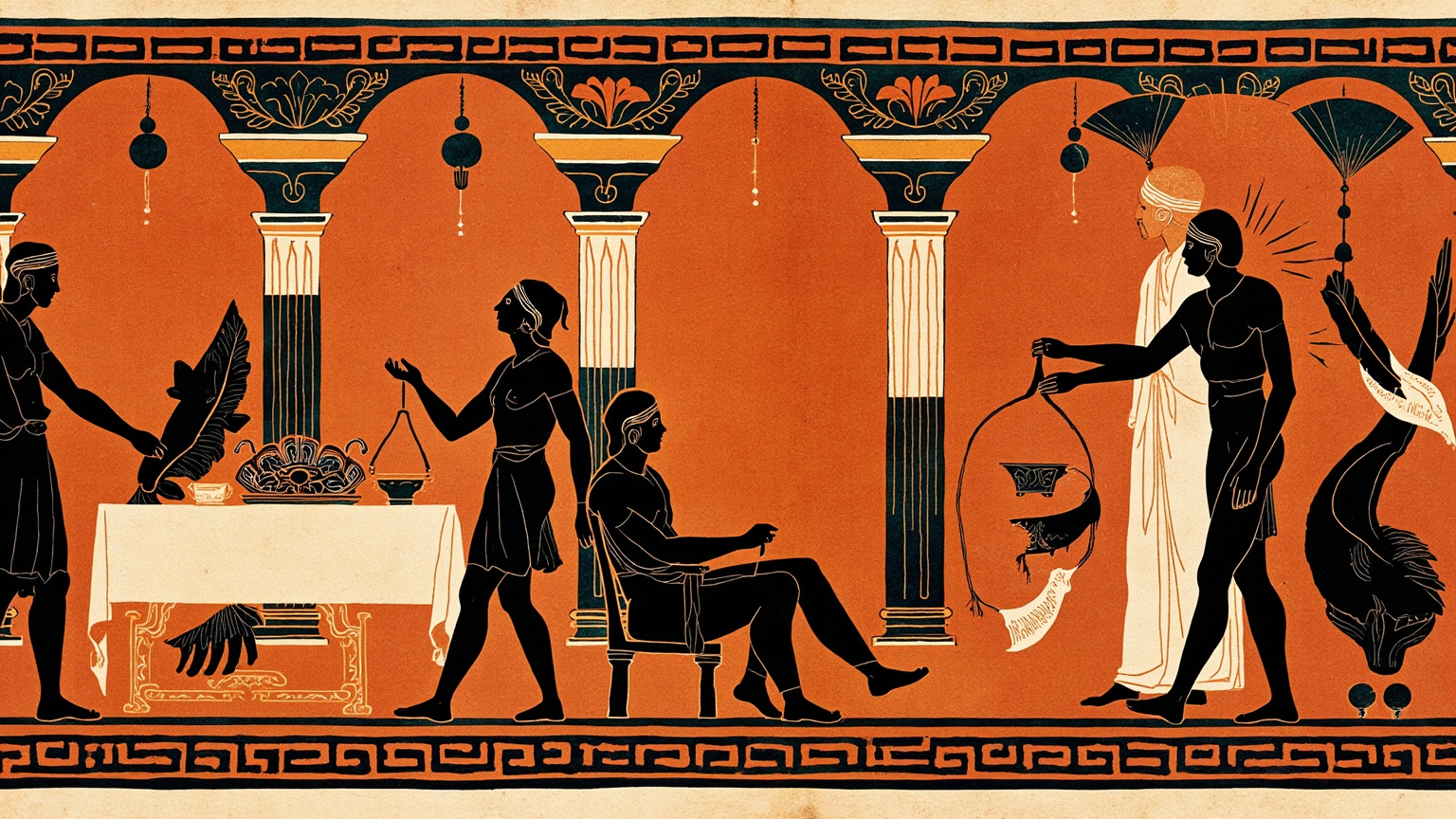
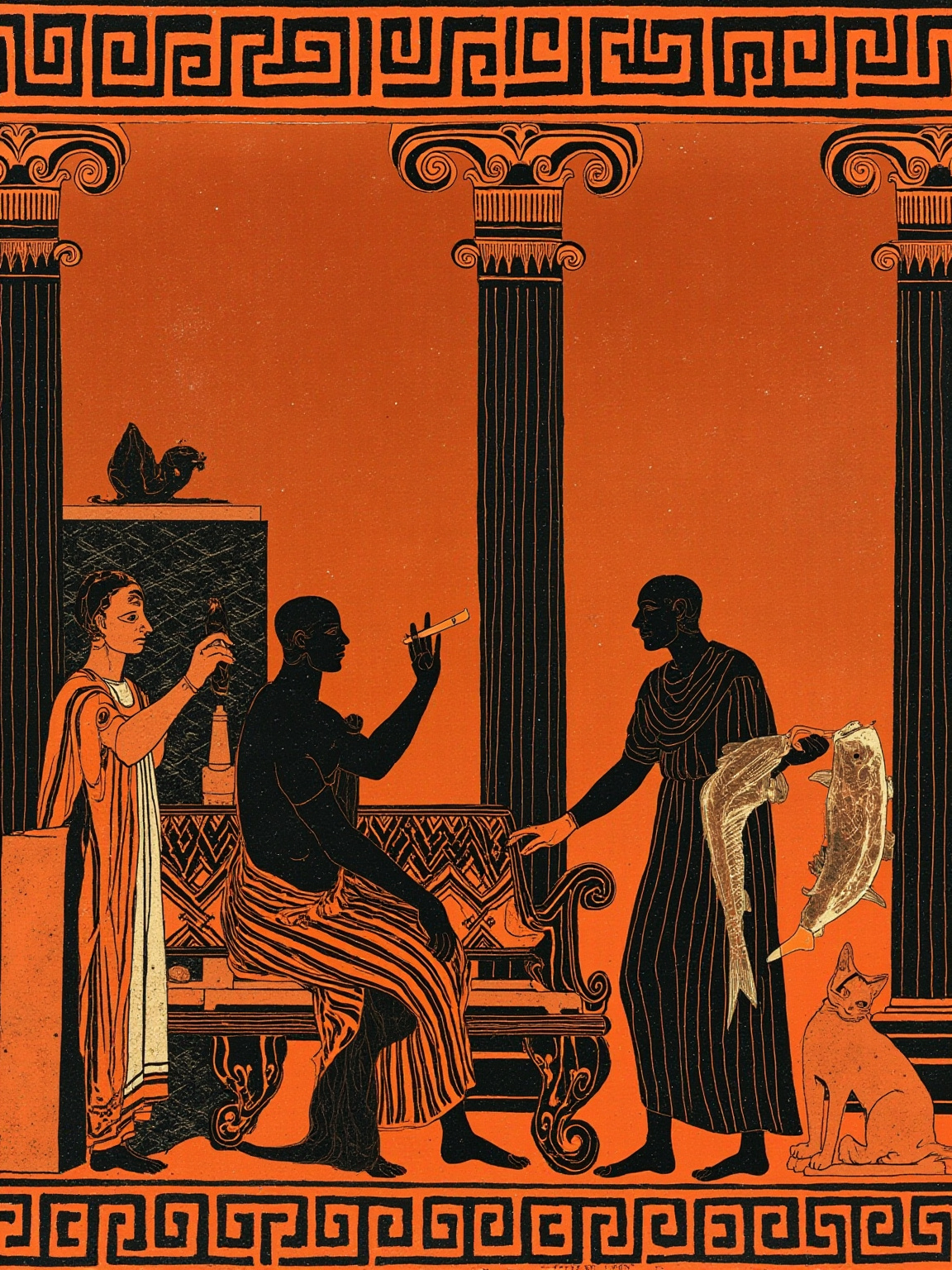
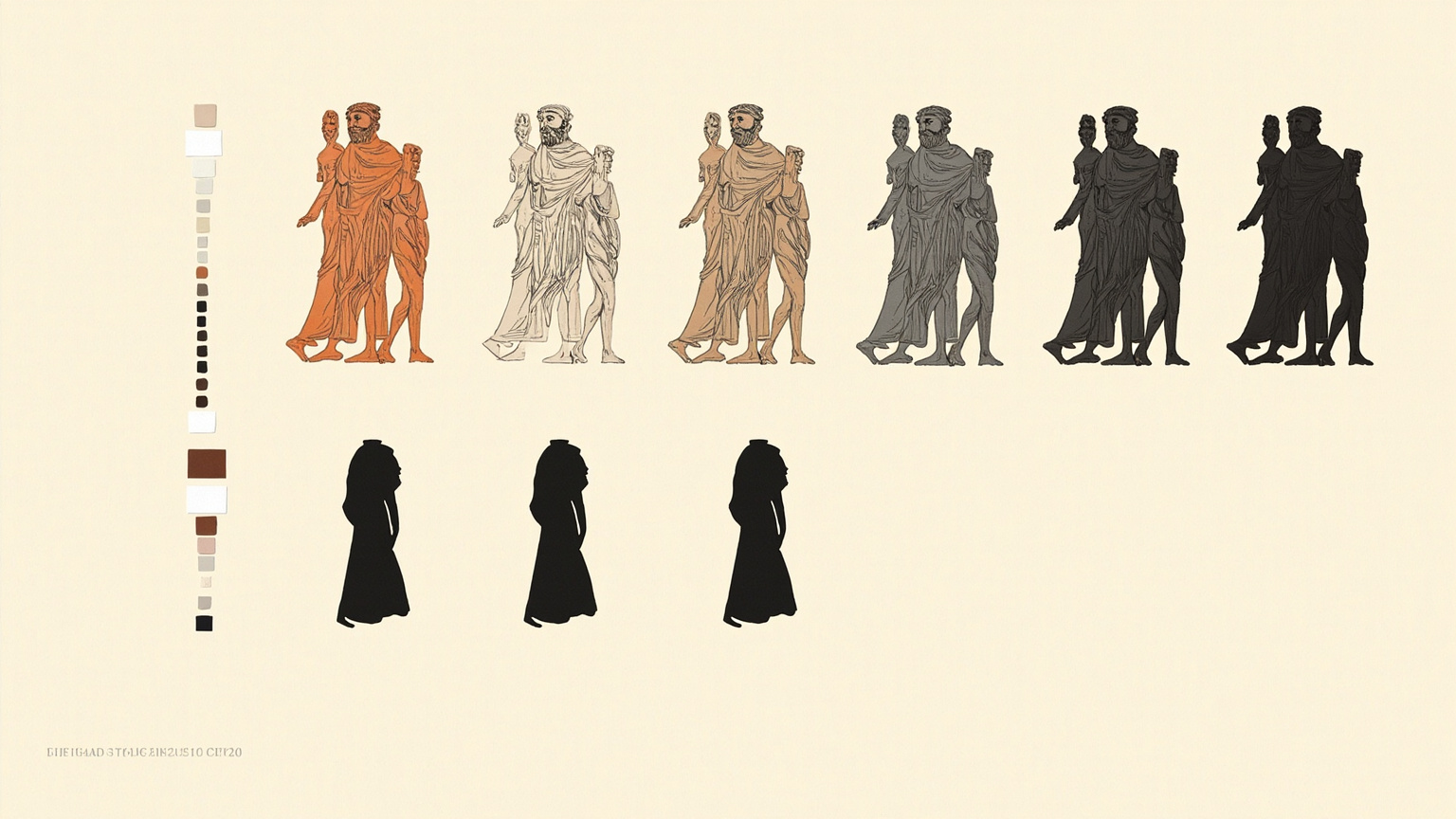
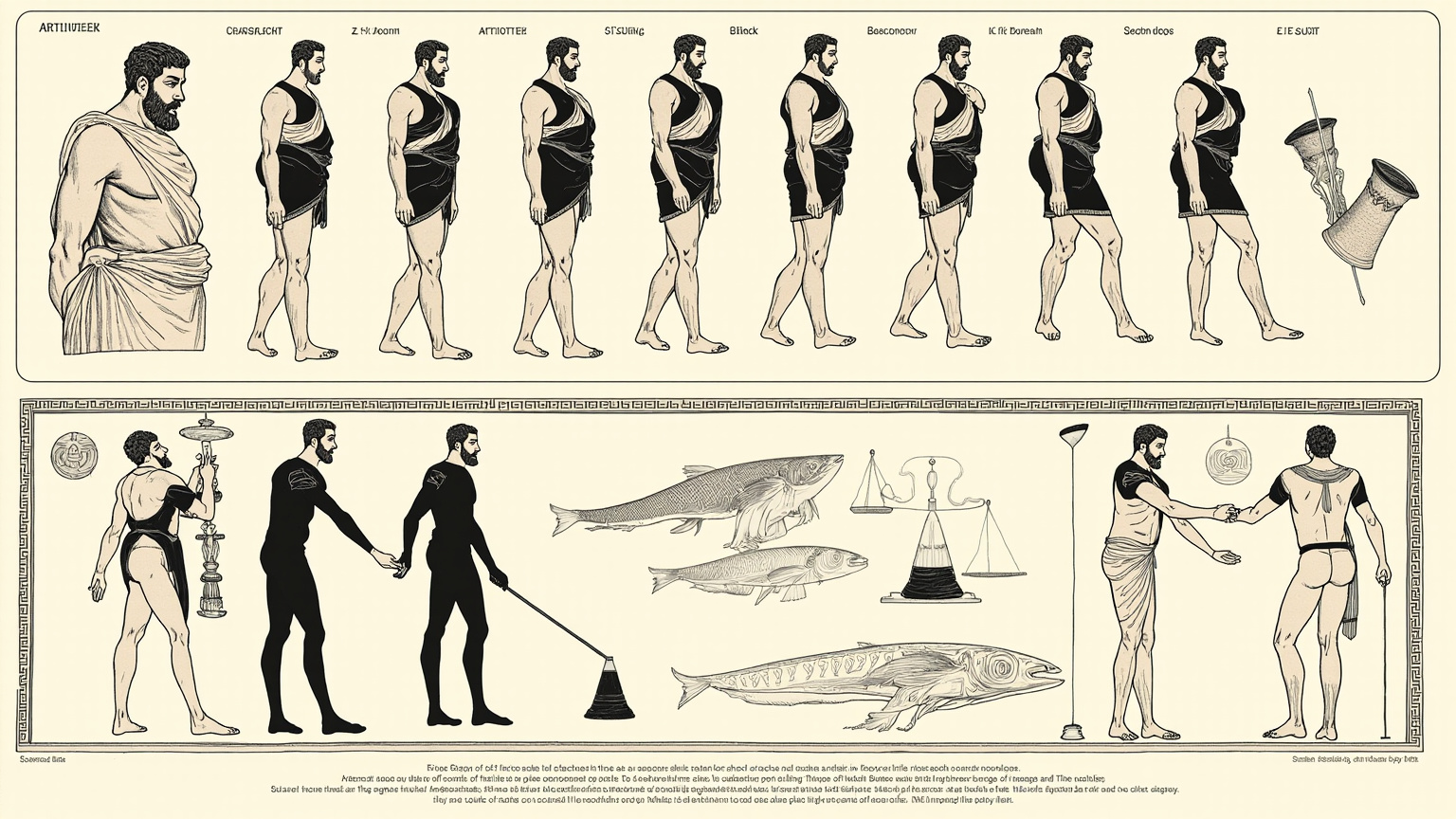
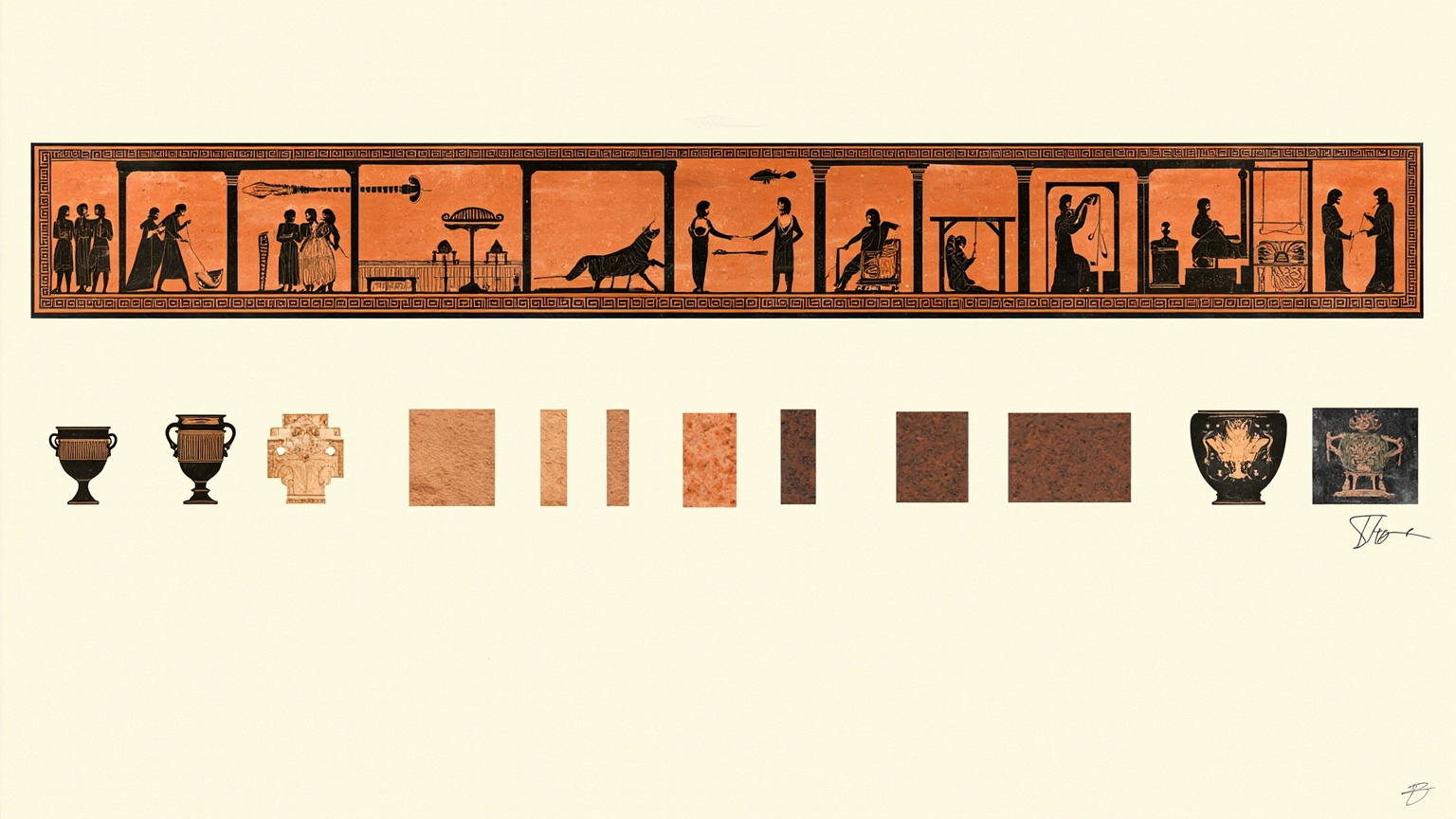
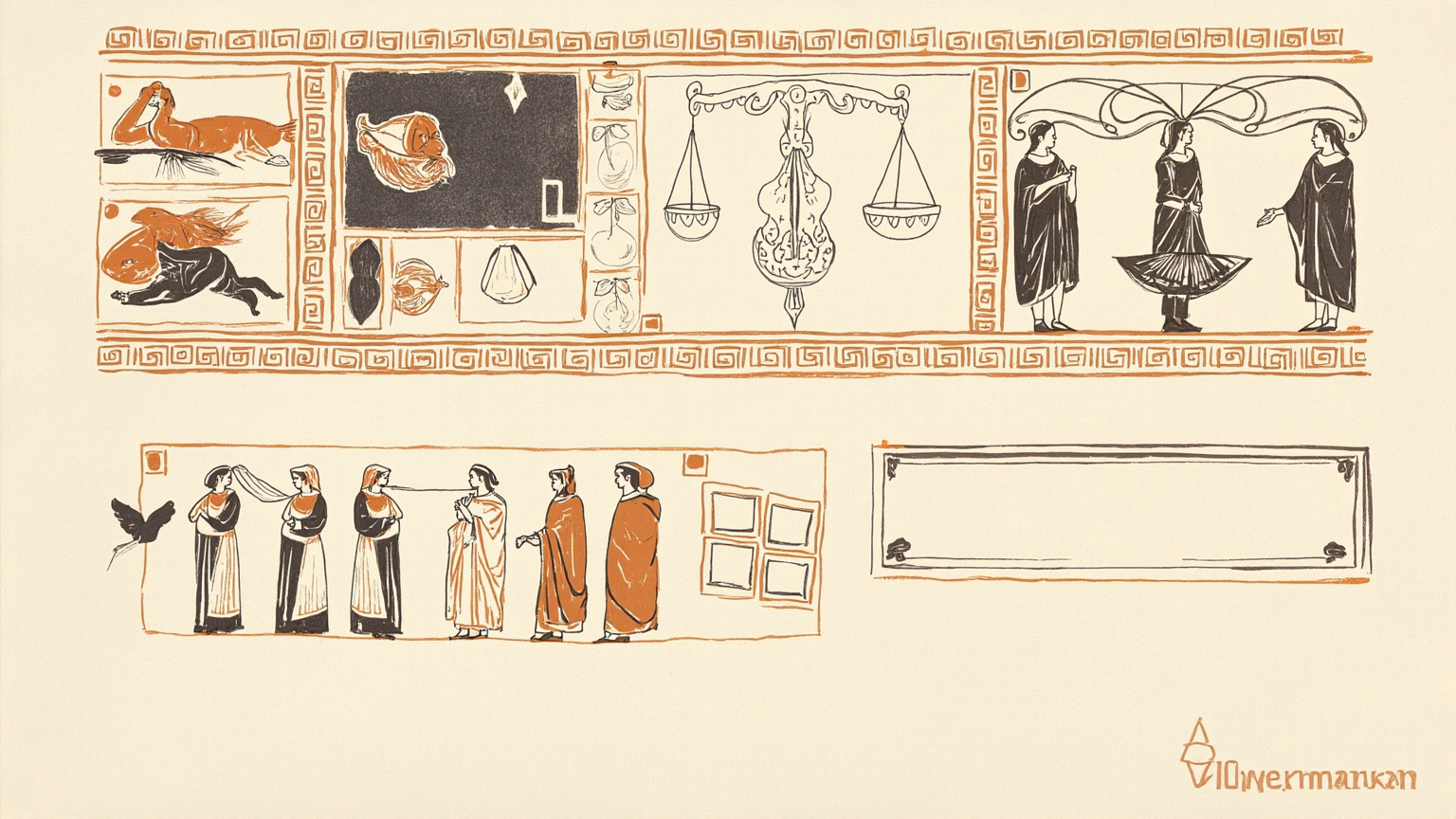
Before the guide was written, this book got a visual foundation — every illustration you just read grew out of it.
Book One opens the way the Greeks liked their arguments opened: medicine aims at health, seafaring aims at safety, generalship aims at victory — every craft is chasing some good. Rank all those goods, and the highest one turns out not to be any particular good thing; it's the thing a human life itself is reaching toward. Aristotle calls it eudaimonia. The word usually gets translated as happiness, and the translation misleads. Say happiness to a modern reader and they picture a mood, a smile, a grid of photos on social media. That's exactly what Aristotle is arguing against. He isn't asking whether you feel good. He's asking whether you have lived out the part of you that makes you human, and done it for an entire life. One swallow does not make a summer — that's the footnote he leaves on this kind of life. One or two virtuous acts don't count. It has to keep going.
What does living it out actually mean? Aristotle brings out two tools. The first is the mean (mesotēs). Every particular virtue — courage, temperance, generosity — sits on a scale. Too much of it is recklessness, or extravagance, or vanity; too little is cowardice, or stinginess, or self-deprecation; the mean is the exact point in between. He heads off the obvious misreading fast: the mean is not splitting the difference, and it is not compromise for its own sake. Adultery, murder, betrayal have no mean — they are wrong from end to end. The mean is what's appropriate relative to us, relative to this moment, and it depends on who the person is, what the situation is, and what the timing (kairos) calls for. The second tool cuts deeper. He shows you the root of the word ethics itself: the Greek ethos, meaning habit. "We become just by doing just acts, temperate by doing temperate acts." It's one of the most quoted lines in the book. Morality isn't knowledge poured in, and it isn't something you arrive at by thinking hard enough. It's something you do over and over until it's second nature, the same way you learn to play an instrument, or practice medicine, or bake bread.
The two books that follow are the most readable stretch in the whole work — Aristotle walks through them like a gallery, holding up one moral quality after another and weighing it against excess and deficiency. Courage sits between recklessness and cowardice: charge in without thinking and you're a fool, hang back and you're a coward. The one who knows when to charge, when to hold, and what it's for — that's courage. Temperance sits between indulgence and a kind of numbness to pleasure. Generosity sits between extravagance and stinginess, and here he lets slip a small aside: the extravagant person is actually closer to the mean than the stingy one, because extravagance can still be corrected, while stinginess has already locked itself shut. Honesty is a mean too — between boasting, always claiming to be more than you are, and false modesty, always claiming to be less. Even wit has a mean, between buffoonery that pushes a joke past the point of offense and a boorishness that never lets anyone off the hook. The advantage of writing it this way is that you don't have to memorize abstract definitions. You just carry around a picture of excess, mean, and deficiency, and when you meet an actual person in an actual situation, you hold it up against them.
But knowing the word mean isn't worth much on its own. What you're facing is one particular patient, one particular negotiation, one particular child mid-tantrum — and what that calls for is judgment, not a formula. Aristotle takes another cut at the rational part of the soul and splits it into four kinds of knowing: epistēmē, unchanging scientific knowledge; technē, a craft you can learn; sophia, the highest theoretical wisdom; and phronēsis, practical wisdom — the timed, situated judgment for doing well in the changeable business of being human. This chapter turned out to be the hinge of the whole twentieth-century revival of virtue ethics. Arendt writes about judgment, MacIntyre about the pursuit of virtue, Nussbaum about human capabilities — each of them takes a long road and ends up back at this one Greek word. Because it names something everyone already knows and almost no one can say cleanly: being right in theory and being right in life are not the same thing.
By this point Aristotle has an old debt to settle. Socrates held that no one does wrong on purpose — that anyone who truly knows what is good will do it, and wrongdoing only happens out of ignorance. Aristotle rejects this. He knows there's a type of person who knows perfectly well that one course is better and still takes the worse one anyway, out of appetite, out of temper, out of wanting the thing in front of him too much right now. He gives this condition a name: akrasia, weakness of will. The person who knows better and, unlike the akratic, actually acts on it — who holds the line — he calls enkratēs, self-controlled. This move matters. It knocks a chip off Socrates's elegant claim: knowing is not the same as doing, and between them stands a bridge called habit, and another called practical wisdom. It's also why he traces the word ethics back to a root that means habit, not knowledge.
Books Eight and Nine, among the longest in the work, split friendship (philia) into three kinds. Friendship of utility — useful to you today, maybe not tomorrow. Friendship of pleasure — built on drinking and singing together, fading once the novelty wears off. Only friendship grounded in virtue survives time, and that's because it isn't built on what the other person can give you, but on who they are. He writes a line that has been quoted for two thousand years: a friend is another self, one soul living in two bodies. This isn't romantic phrasing — it's structural. A good person needs another good person as a mirror, needs someone present who lets him live himself out fully. He goes on to sort friendship into layers: the political friendship of the city, the friendship of husbands and wives and parents and children within the household, and friendship with oneself. That last one is the hardest — in Book Nine he takes up, at length, how a person reaches something like a friendly settlement between his own reason and his own desires.
The final book returns to pleasure. Aristotle wants to pull pleasure down off its pedestal as the satisfaction of desire. Pleasure isn't the opposite of the good, isn't the rush that follows a bad act, and isn't a reward tacked onto a good one. Pleasure is the natural companion of virtuous activity, the way health is the natural companion of exercise. You don't exercise for the sake of health; health just comes along with it. Then he drops the line that has unsettled readers the most: the happiest life is the life lived according to theoretical wisdom, sophia. Not just being a virtuous citizen, in other words, but doing as much of that pure thinking as possible — studying nature, studying first causes, studying being as such. Even he seems uneasy once he's said it; this kind of life asks too much of an ordinary person. So in the closing pages he hands the argument off: the legislator's job is to train citizens into good people — ethics runs out into politics. What a person becomes depends not only on himself but on the city he happens to be born into.
Read as a whole, the book is answering three questions. What is a life reaching toward? Eudaimonia — the sustained exercise, in virtuous action, of the rational capacity that makes a human being human. Not a feeling. An activity. Where does morality come from? From habit — doing something over and over until it's second nature. Not something you think your way into; something you practice your way into. How do you decide what to do? Through phronēsis — facing the particular, the changing, the situation with no ready-made answer, and acting with a feel for timing, a grip on the mean, and a clear sense of who you are. These three answers have kept being used for two thousand years because they answer a real problem: a person doesn't live by feelings, and doesn't live by maxims either. A person lives by a string of particular, practiced, judged actions.
The book carries the marks of its own time, of course. Aristotle's passages claiming that some people are slaves by nature, or that women are inferior to men in reasoning, are products of the patriarchal discourse of the Greek city-state, and a reader today should take them as facts of intellectual history rather than doctrine. Knowing his limits is how you know what still needs filling in.
The reason this book hasn't died is that Aristotle starts from ordinary experience, not from metaphysics. He's thinking about how one person lives out one life, not about how an abstract person ought to behave in an abstract world. So when you open Book One, what you find isn't jargon — it's the purpose of a craftsman, the purpose of a doctor, the purpose of a general. That approach still works twenty-three centuries later because the basic situation of being alive hasn't changed much. The twentieth-century revival of virtue ethics — Anscombe, MacIntyre, Nussbaum — almost all of it starts over from this book. Contemporary conversations about the good life, about character education, about what counts as sound judgment, keep circling back to it no matter which way they start.
A companion guide can only give you the map. The text itself is the ground. There's something in this book that no summary can hand you: the particular tone of a man dissecting a fish while he talks about morality. He never talks down to you about how you should live. He's more like a friend, working with his hands while pulling you over to sit down and look — see, it's like this. That tone, that habit of saying how we ought to think this through, only comes across in the original. One more thing. The excess-mean-deficiency charts in the book are the skeleton; the flesh is your own experience. Read the section on courage and you'll think of some time you charged in too hard or held back too far. Read the section on friendship and you'll think of some relationship that started and then faded. None of that surfaces unless you're turning the actual pages yourself.