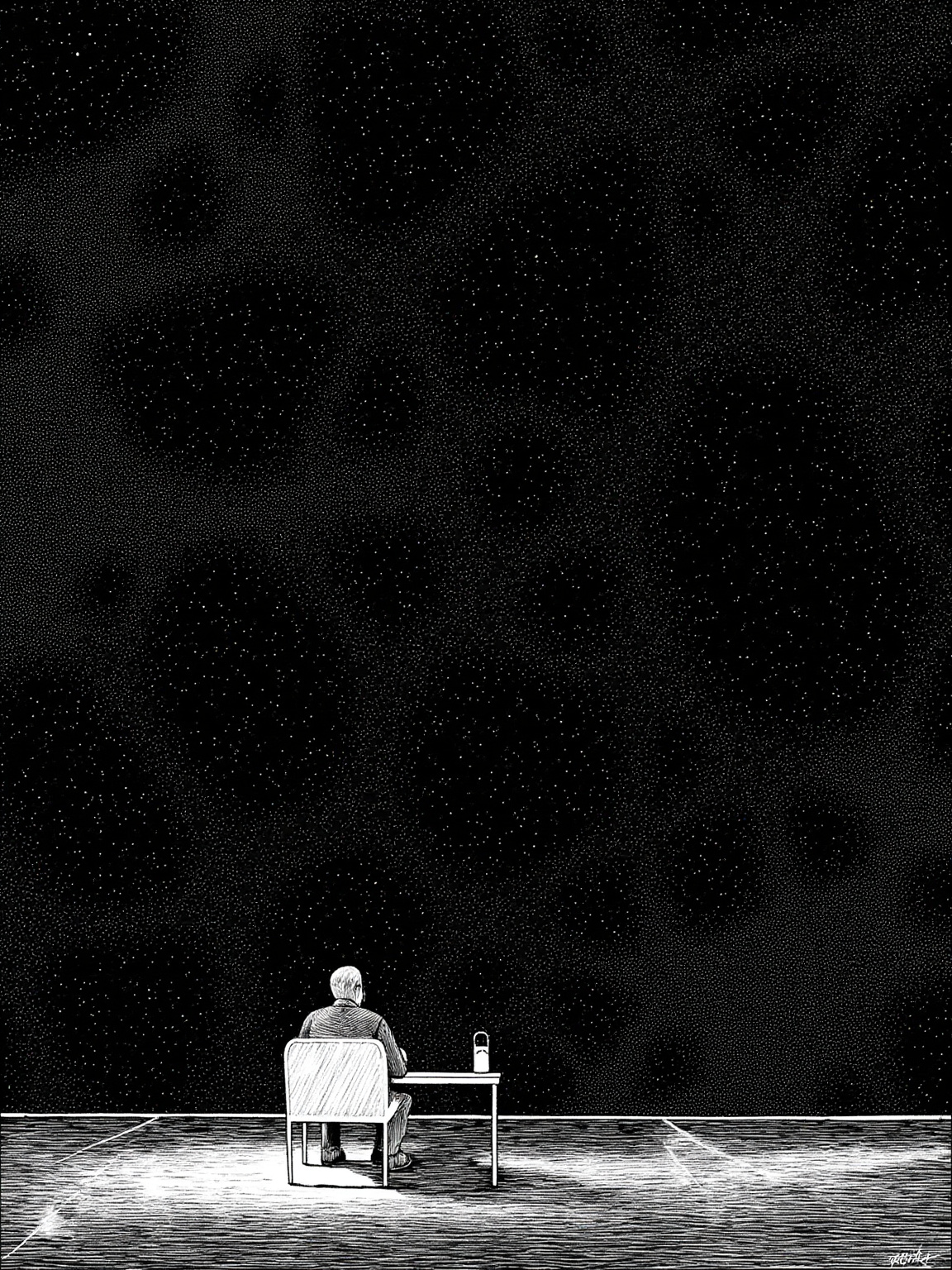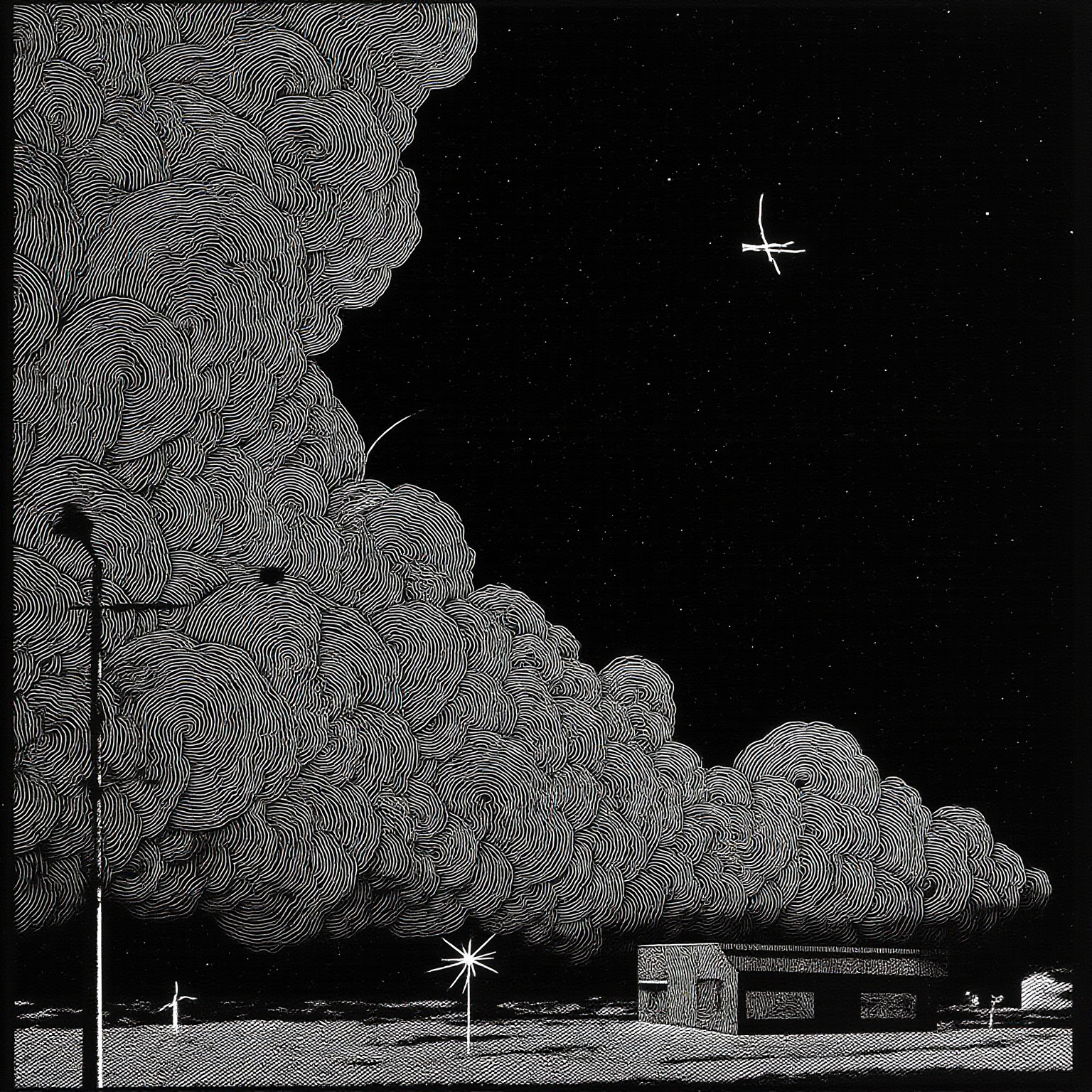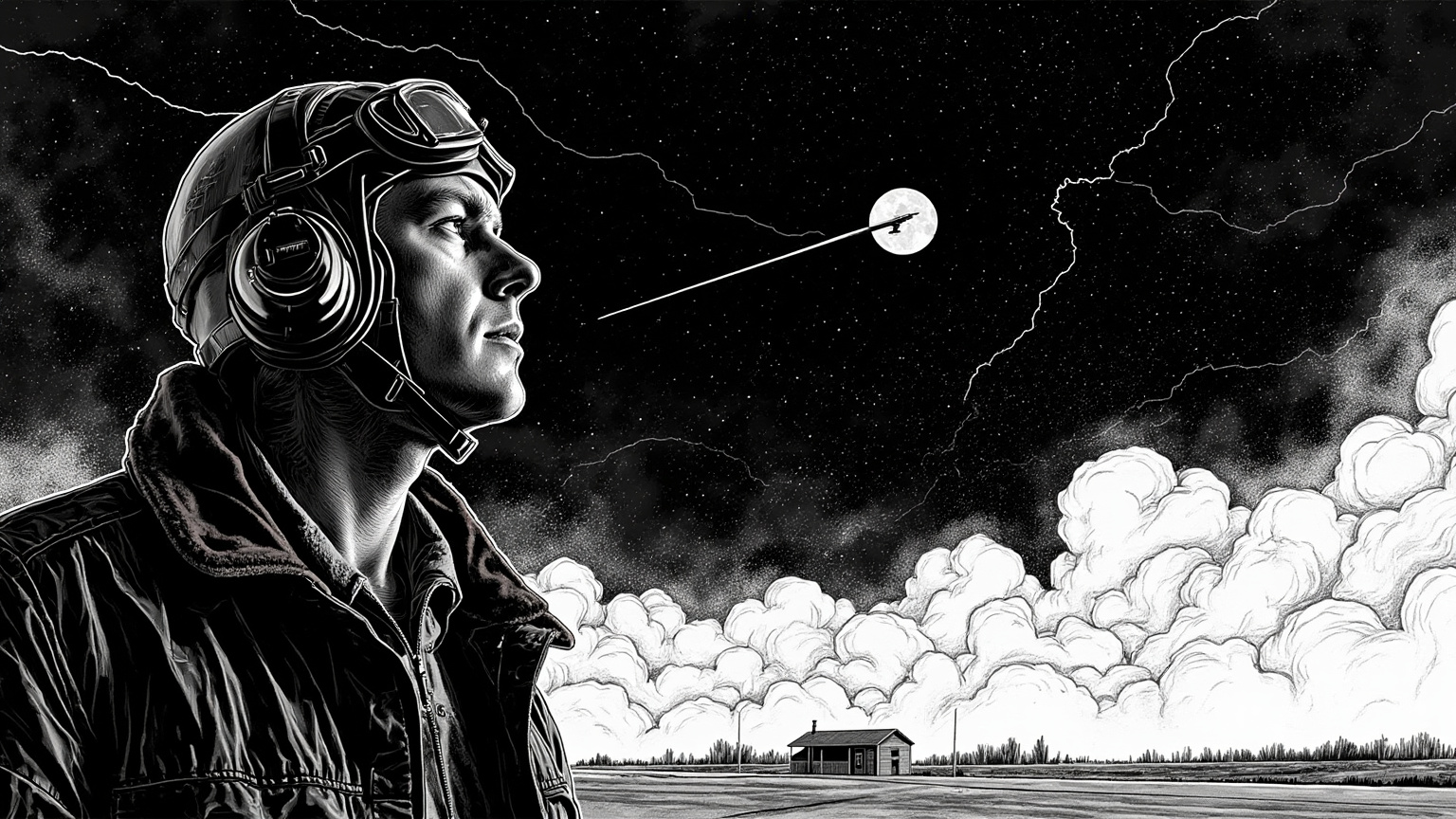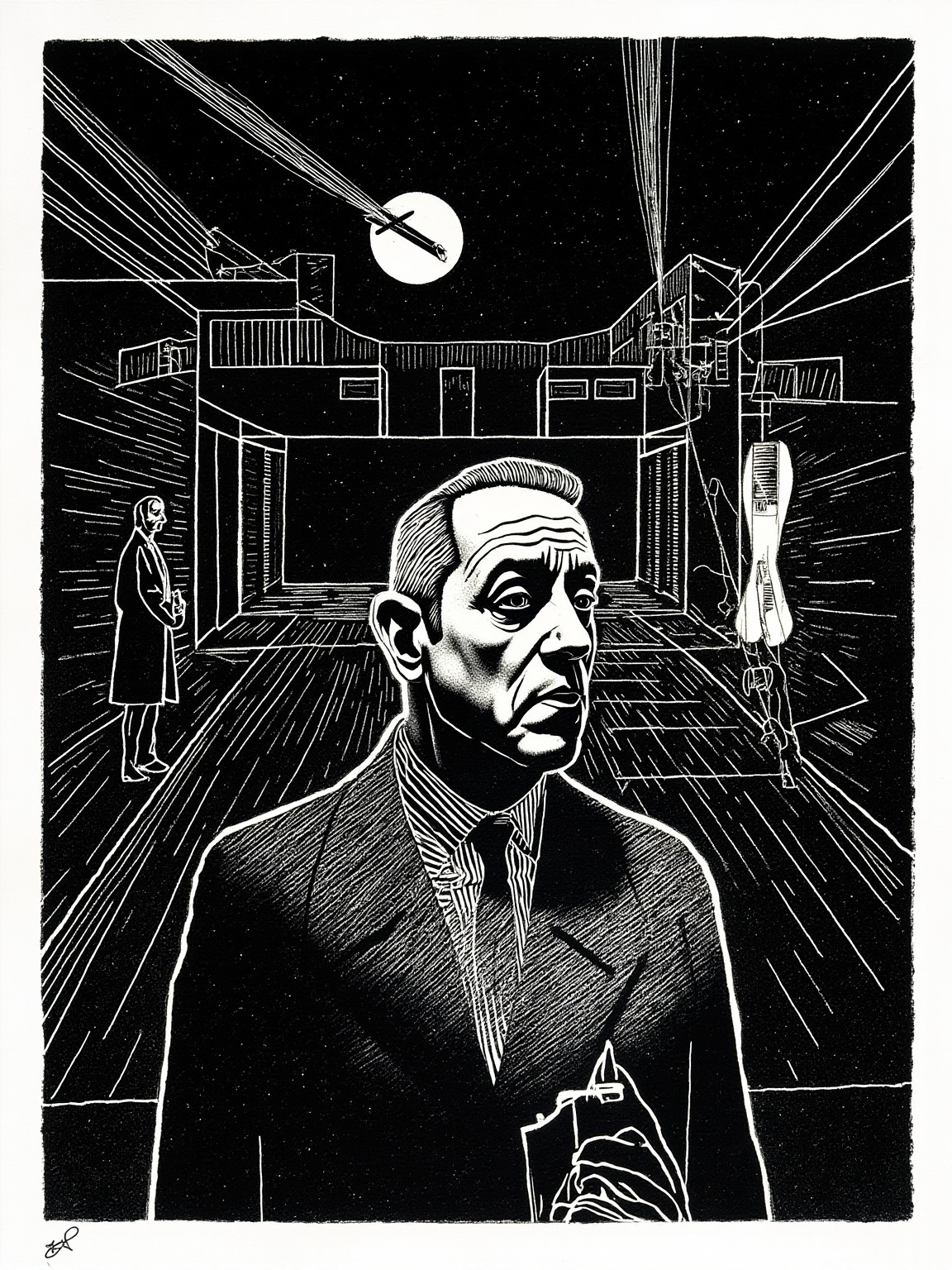
A slim parable about duty that Saint-Exupery wrote for aviation's pioneering years.
Text and illustrations produced by the pipeline
In the dispatch office in Buenos Aires, a man of fifty has not slept all night. Three planes are converging on him from different points across South America, one of them being forced steadily higher by a cyclone closing in around it. At home, a wife married six weeks is on the phone, asking when her husband's flight will land. The man on the other end has no answer.
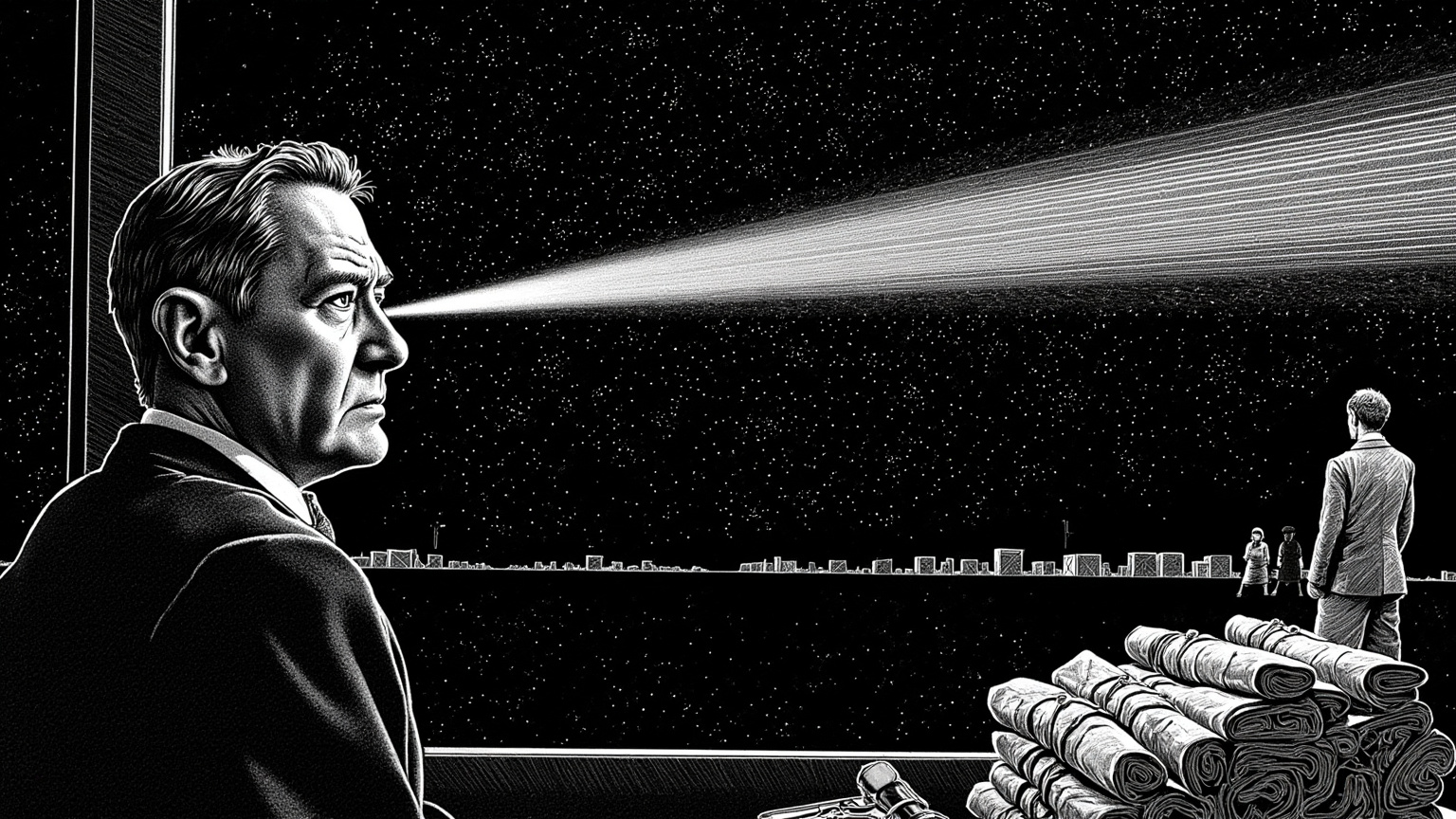
The reason this slim book has lasted isn't the prize it won. It's a single image: a plane running out of fuel, driven upward by the storm wrapped around it, climbing above the clouds into a moonlit sky as still as the ocean floor. Then the plane, and the man in it, never come back.
The author is Antoine de Saint-Exupéry. Most readers come to know him later, through a thinner, gentler book, The Little Prince. But Night Flight came first, and it is harder. It is set in the late 1920s, in the first years of the South American mail airline's attempt at night flying, when planes carried no reliable instruments, pilots navigated by eye and by telegraph exchanges with ground radio stations, and a storm, the Andes, or an Atlantic squall could each swallow a plane whole.
It was first published in French in 1931, won that year's Prix Femina, and carried a preface written by André Gide himself. Saint-Exupéry had spent those years as an operations manager for an Argentine mail airline, and the nights in the dispatch office were ones he had lived through. The man who sits in that room forcing himself not to soften owes something to his own superiors. That's why the novel doesn't read like a period piece. It reads like us. Whatever temperament belongs to an industry's early, reckless years hasn't actually gone anywhere.
The real protagonist is Rivière, the manager in his fifties who runs the dispatch office. He holds to one iron rule: night flying survives only on punctuality. One act of softness, one plane turned back because of weather, and the system starts to rot, until eventually the whole enterprise dies. So he forbids himself pity, forbids himself admiration. He means to be the kind of superior his pilots fear, not the kind they love.
Tonight he is waiting on three pilots. Pellerin is coming back over the Andes from Chile; Fabien is flying north from Patagonia; a third is inbound from Paraguay, and we won't follow that one here. Of the three, Fabien is the young man married six weeks, and he's carrying a young radio operator whose job is to keep in touch with the ground through the storm. There's one more figure in the dispatch office: Robineau, the inspector, a weak, middle-aged man hungry for recognition and short on imagination, in whom Rivière's iron philosophy finds its saddest reflection.
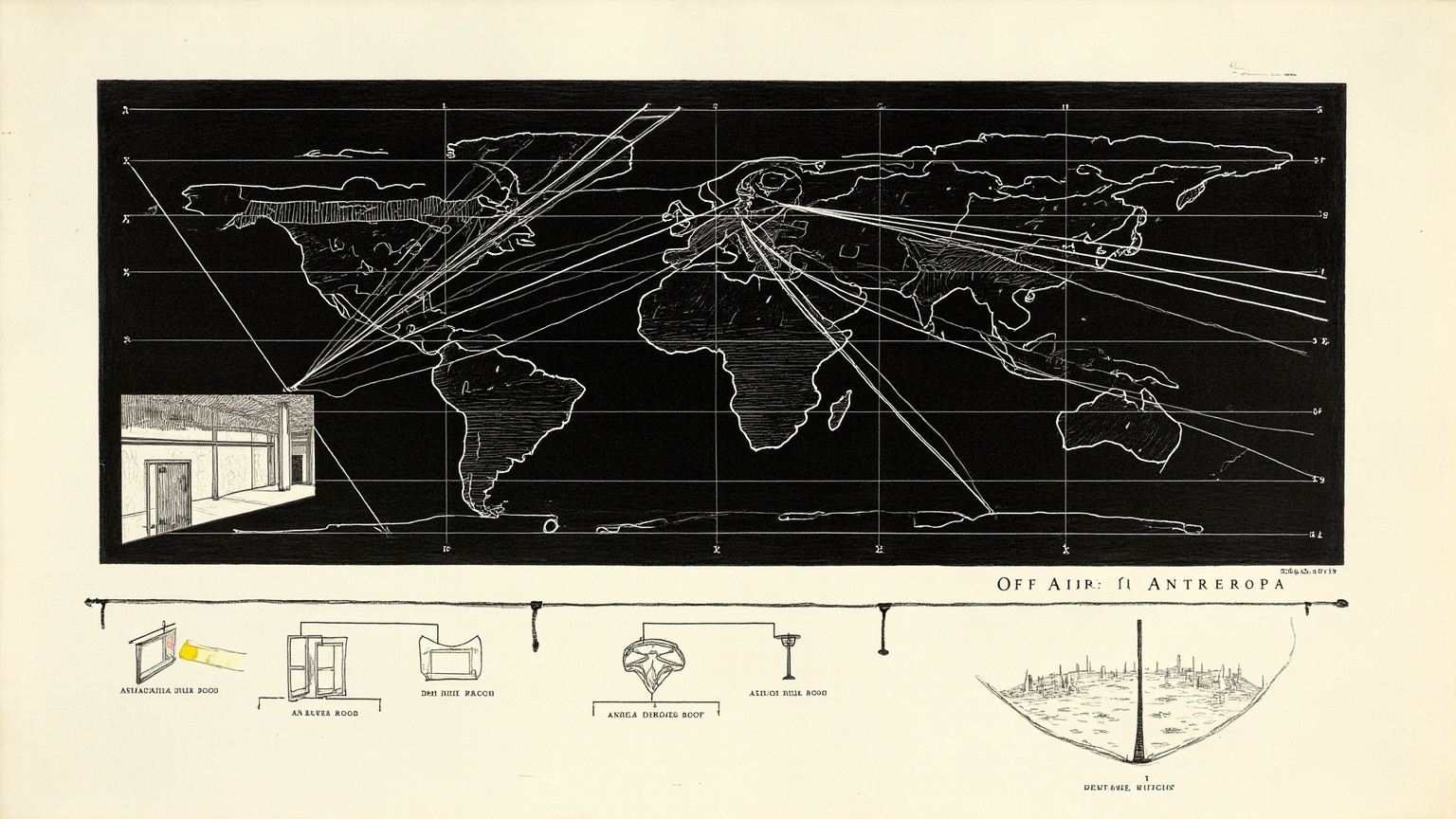
The world of the story is South America in the late 1920s. The planes are flimsy, the cockpits unsealed, and night flying is a trick civil aviation has only just learned. Mail leaves at night from across the continent, converges on Buenos Aires, and is loaded onto the flight that crosses the Atlantic to Europe. Arriving in Paris eight hours earlier means a whole page of financial figures gets a little more breathing room.
For readers today, Night Flight is a slightly distorted mirror. We already sit sealed inside cabins cruising six miles above the clouds, and we don't see the storms. But anyone who has opened a laptop late at night and forced themselves to hand in a report on time can probably stop for a few seconds at that dispatch table where Rivière sits.
A guide gives you the map; the text is the ground itself. This is a slim book, but Saint-Exupéry's sentences have a texture few other books manage. They carry the smell of engine oil, the clatter of the telegraph, the dull thud in your eardrum when the night air pressure shifts. None of that fits inside a summary; you have to turn the page yourself. And the particular silence that presses down on everyone in that dispatch office only moves between the original sentences, nowhere else. Knowing the ending and going back to read it anyway hurts more, not less. You already know Rivière will give the order to depart, and you still want to watch every line on his face that night.
Night Flight isn't a story about sending men into the sky. It's a story about pinning a man to a desk and forbidding him to soften.
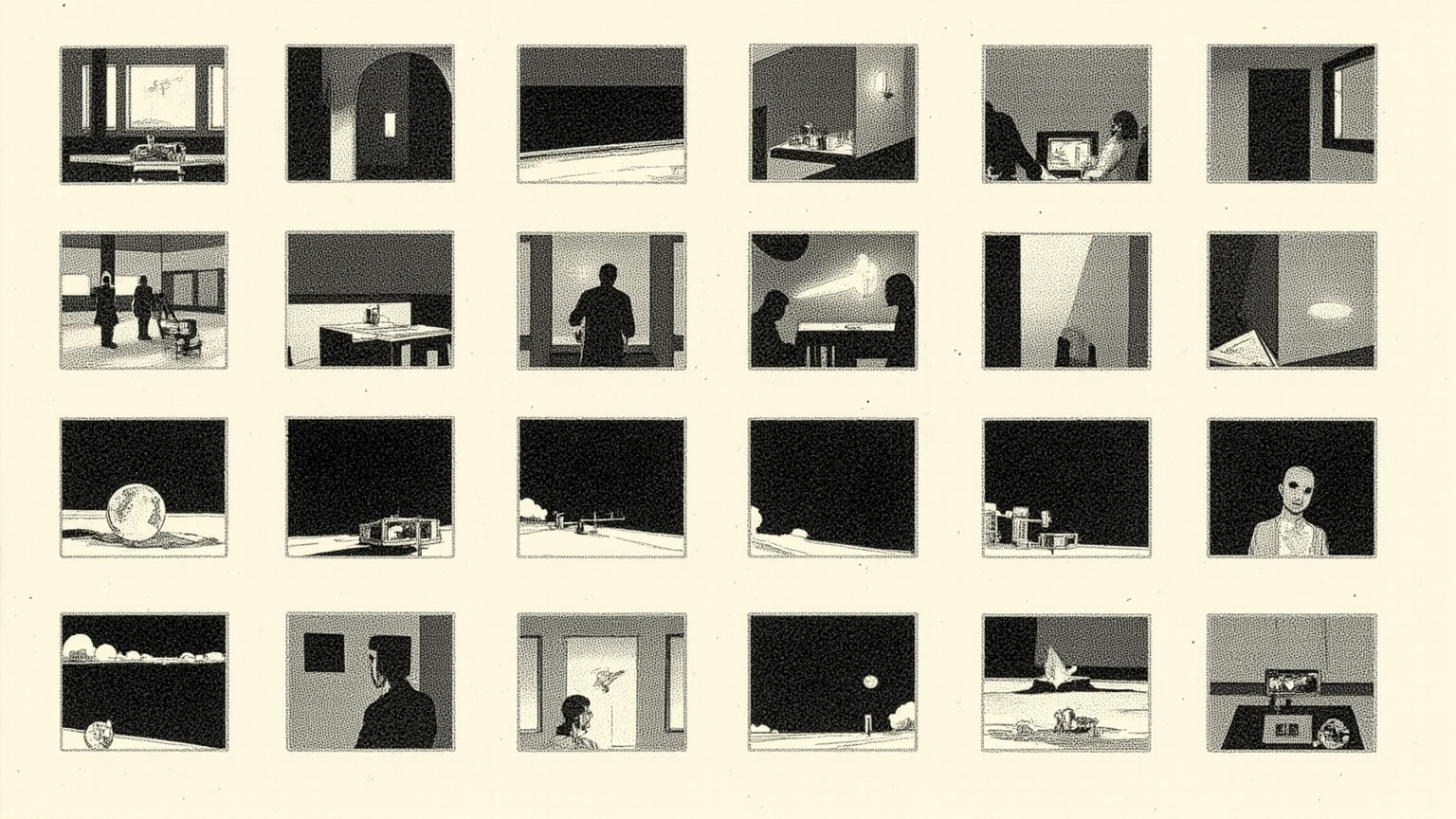
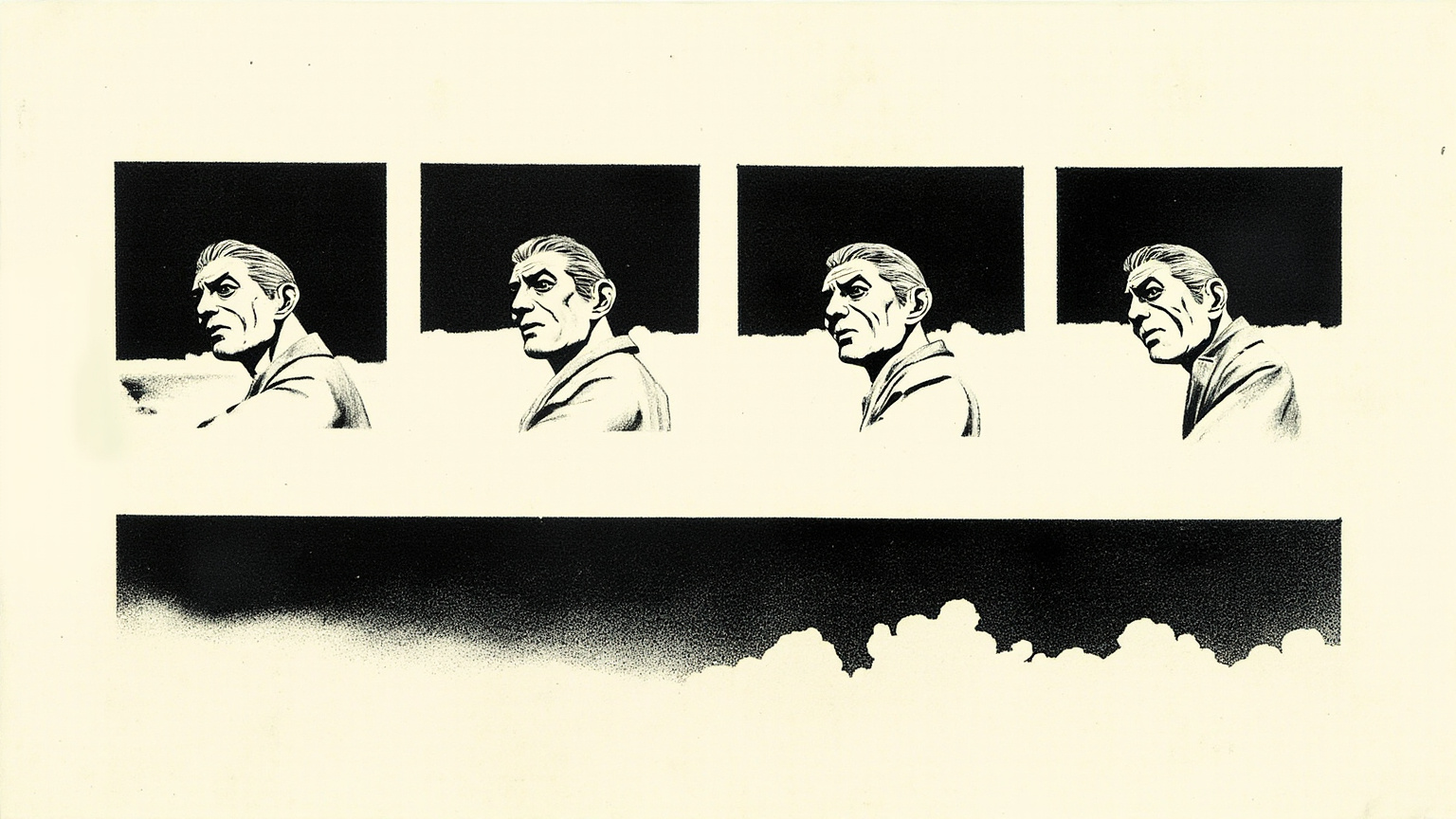
Before the guide was written, this book got a visual foundation — every illustration you just read grew out of it.
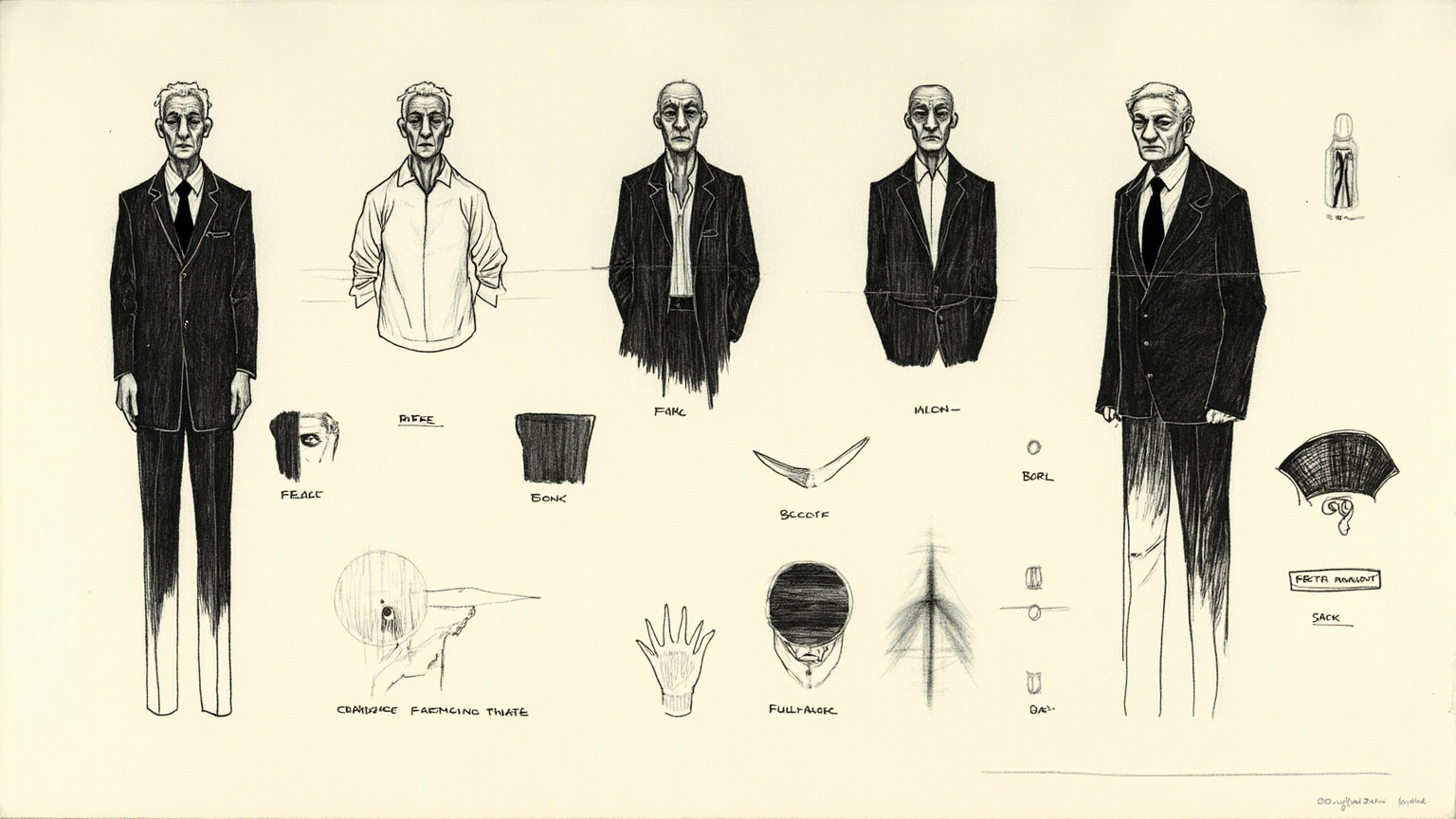
Night falls, and Rivière takes his seat at the dispatch table. The three lines come through one after another, telegraph keys clattering. His job tonight is to sit until all three planes are down, then watch the assembled mailbag loaded onto the Atlantic flight. If any one of them is late, a corner of Paris's morning collapses.
As craft, this is Saint-Exupéry's clever move: he doesn't write the plane, he writes the dispatch office. The reader is pinned to the table, listening to the telegraph, watching Rivière's face hold still or not. The plane's danger, the life hanging in the balance, all of it stays on the far side of a radio signal. By the time you go looking for the plane, it's already too late.
Word comes first from Pellerin, flying in from Chile. He hit a blizzard crossing the Andes and made it back by the barest margin. Rivière's first words to him aren't "you're alive." They're a string of near-cold questions: how much fuel was left, what caused the delay, what to do better next time. Pellerin nearly left his life on that Andean ridge, and what he gets in return is an interrogation.
The first time I read this scene, it stopped me too. I understood later that it isn't that Rivière feels nothing, it's that he can't let himself feel it. A superior moved to soften by a pilot's heroism will hesitate the next time a storm comes, and hesitation kills people. He holds the line of discipline with his coldness, and holds himself up with it too.
Fabien, flying up from Patagonia, doesn't land on time. Bad news starts coming through the telegraph: ahead of him a cyclone has closed in, the cloud cover is thick, and the wind keeps forcing the plane higher. The young radio operator keeps calling the ground through the storm, shouting to Fabien, breathless, asking whether they should turn back. Fabien chooses to keep flying.
Meanwhile, in another city, Fabien's young wife Simone waits at home. She has lost count of how many times she's called the dispatch office. Whoever answers stammers. He can't tell her that her husband probably isn't coming back, and he can't tell her everything's fine either. She's left to guess at the truth from a stranger's silence. This outsider's vantage point is one Saint-Exupéry deliberately built in: the logic of the dispatch office and the logic of the wife are two grammars that don't translate into each other.
The fuel drains away, little by little. Fabien makes a pilot's last move: he climbs, and climbs clear of the clouds. The storm passes beneath him, and for a while he is above a sea of clouds lit by the moon. No wind, no turbulence, quiet as the ocean floor. The young operator sits behind him; the telegraph link to the ground has already gone dead.
This is the most famous passage in the book. In a handful of pages, Saint-Exupéry turns death into something isolated and beautiful, not a fall but a vanishing. The plane and the man slide out of that moonlight and are never found again. The novel never shows a crash, never shows a body, never gives a last word, only "missing." The first time I read it, I went back and reread the page before, and only then understood the author never meant to let the reader cry it out cleanly. He leaves you facing that quiet moonlight, feeling something drop inside you on your own.
Elsewhere in the dispatch office, the inspector Robineau paces back and forth. He wants to project authority over the ground crew and manages only to look foolish; he wants to be liked by the pilots and is instinctively kept at arm's length by that circle. Rivière treats him as a piece to be moved around at will, then set back down when he's no longer needed.
Robineau is the character easiest to skip past and the one you least should. He's a mirror. He shows the cost of Rivière's iron philosophy: a man needed by the system and never truly recognized by it. Finish the whole story and look back at Robineau, and it puts a chill down your spine.
The news reaches the dispatch office. Fabien and the operator are missing. No one in the room speaks. Rivière is silent for a moment, then he gives the order: load the assembled mail onto the flight crossing the Atlantic. The plane departs on time.
That order is the detonation point of the book's entire ethics of duty. Fabien's life may still be up in the air, and Rivière is already thinking of Paris's morning. Readers who understand him will hear something close to faith in that severity; readers who don't will hear only cruelty. Saint-Exupéry's cleverness is that he never judges for you. He only lets you hear the word depart.
In his preface, Gide names the book's paradox: human happiness lies not in freedom but in submission to duty. That's a hard thing to hear, but night flying, as work, genuinely cannot run on freedom. A free, romantic man turns back in the storm, and the system dies with him: the next pilot dies, the next mailbag is late, a corner of Paris's morning caves in, and somewhere far off a sick man's medicine arrives days late. Rivière's harshness is a bet, one life now, against the system saving more lives later.
The novel keeps circling one question: if an undertaking has value in itself, can that value give meaning to the deaths it costs? There's no answer, but Saint-Exupéry makes the asking weigh enough that we can't help being held by it. It's the theme he spent his whole life returning to, running later through Wind, Sand and Stars, The Little Prince, and Flight to Arras, each time in a gentler or lighter voice.