Nineteen Eighty-Four · Companion GuideStories · Issue 00
Nineteen Eighty-Four in 10 Minutes: No One Wins in This Book
How totalitarianism renovates a person's mind
Text and illustrations produced by the pipeline
ImaReadFolio 02 — 06
I. Starting With Something Strange
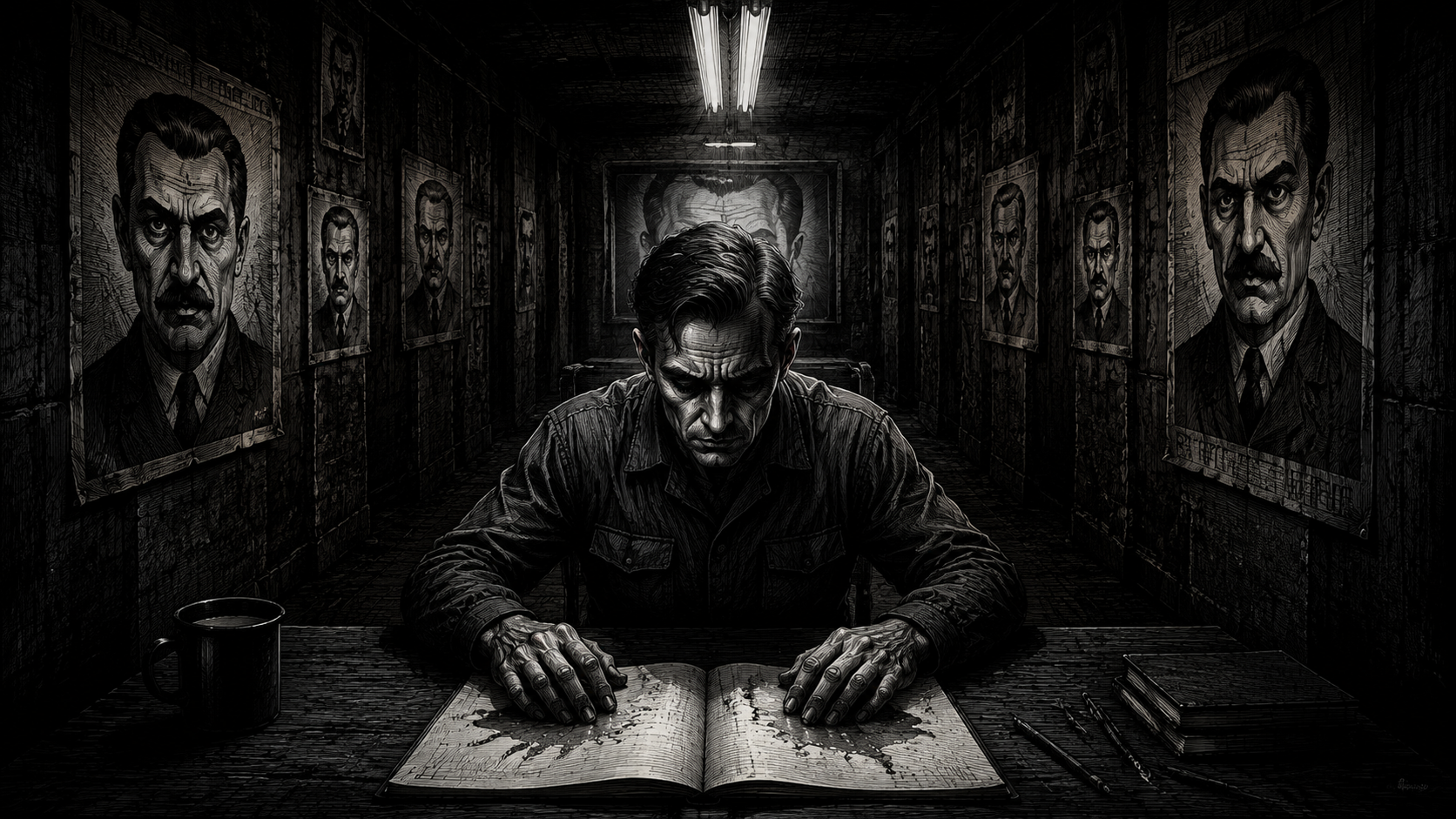
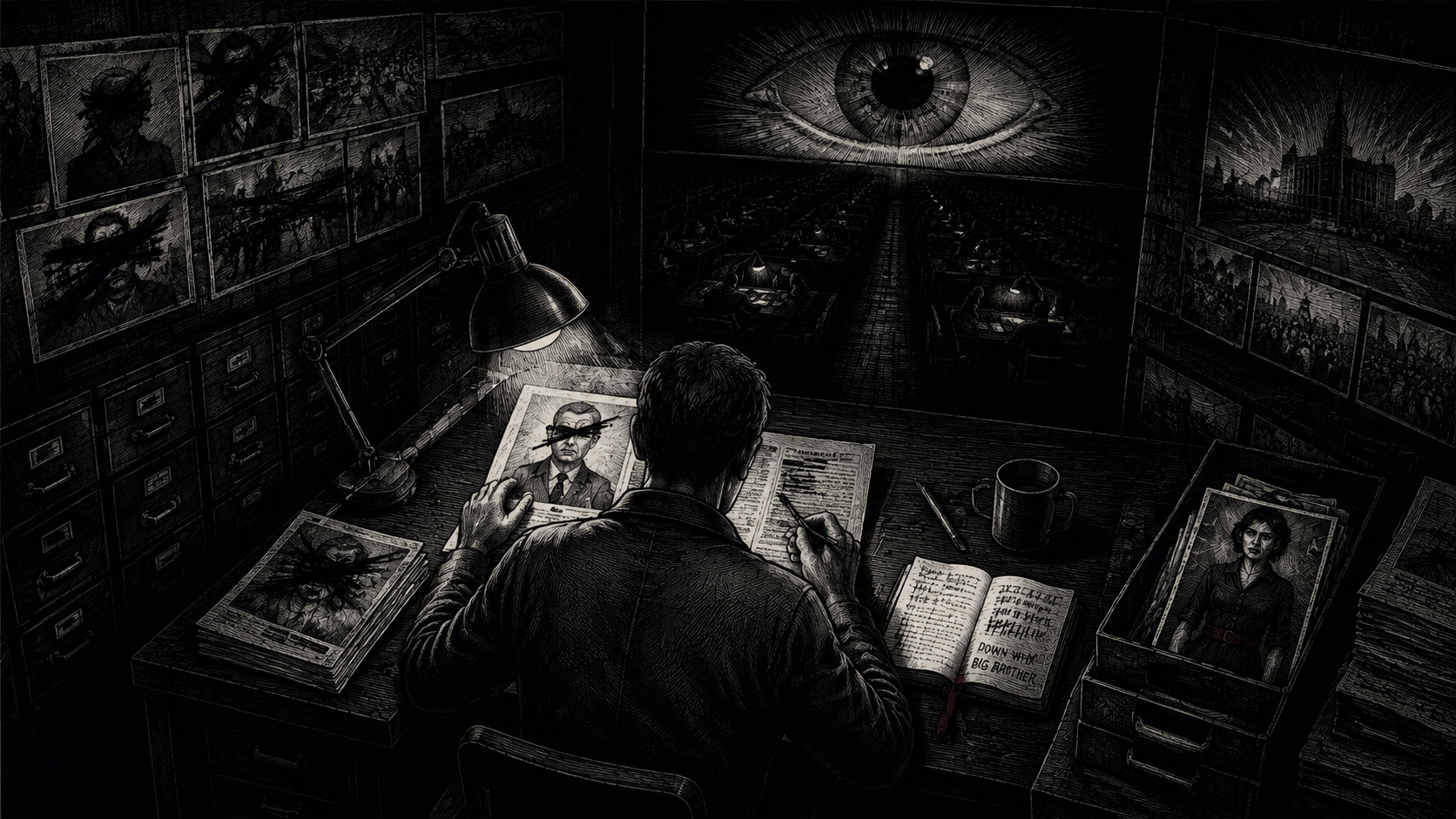
Your job is to rewrite yesterday's newspaper into today's — not because anything happened, but because the people above changed their minds. A colleague has vanished, and nobody asks where he went. A new language is being invented, built so that a person eventually can't even say the word freedom. You know, somewhere inside, that none of this is right — but your job is exactly the machinery that makes it work. How long can you hold out? Orwell's novel starts from this absurd, everyday grind, and follows a man named Winston all the way to the end of that road — and the end is darker than you think.
II. What Kind of Book This Is
Nineteen Eighty-Four is a dystopian novel by the English writer George Orwell, finished in the mid-twentieth century and published in 1949. The title is just the last two digits of the year he wrote it, flipped — it was never really a prophecy about some specific year 1984. The reason it has been read, quoted, and pinned into politicians' speeches for more than seventy years is that it left humanity a working manual for how totalitarianism actually operates — surveillance, the rewriting of history, invented language, turning people into informers on each other. Generation after generation has recognized this same combination playing out in real political events.
Orwell had already told a fable of totalitarianism once, in Animal Farm, but this time he wanted something finer-grained — not how a revolution curdles, but how an ordinary person's mind gets remodeled, piece by piece, by the state, until it takes the shape the Party wants.
III. People and World
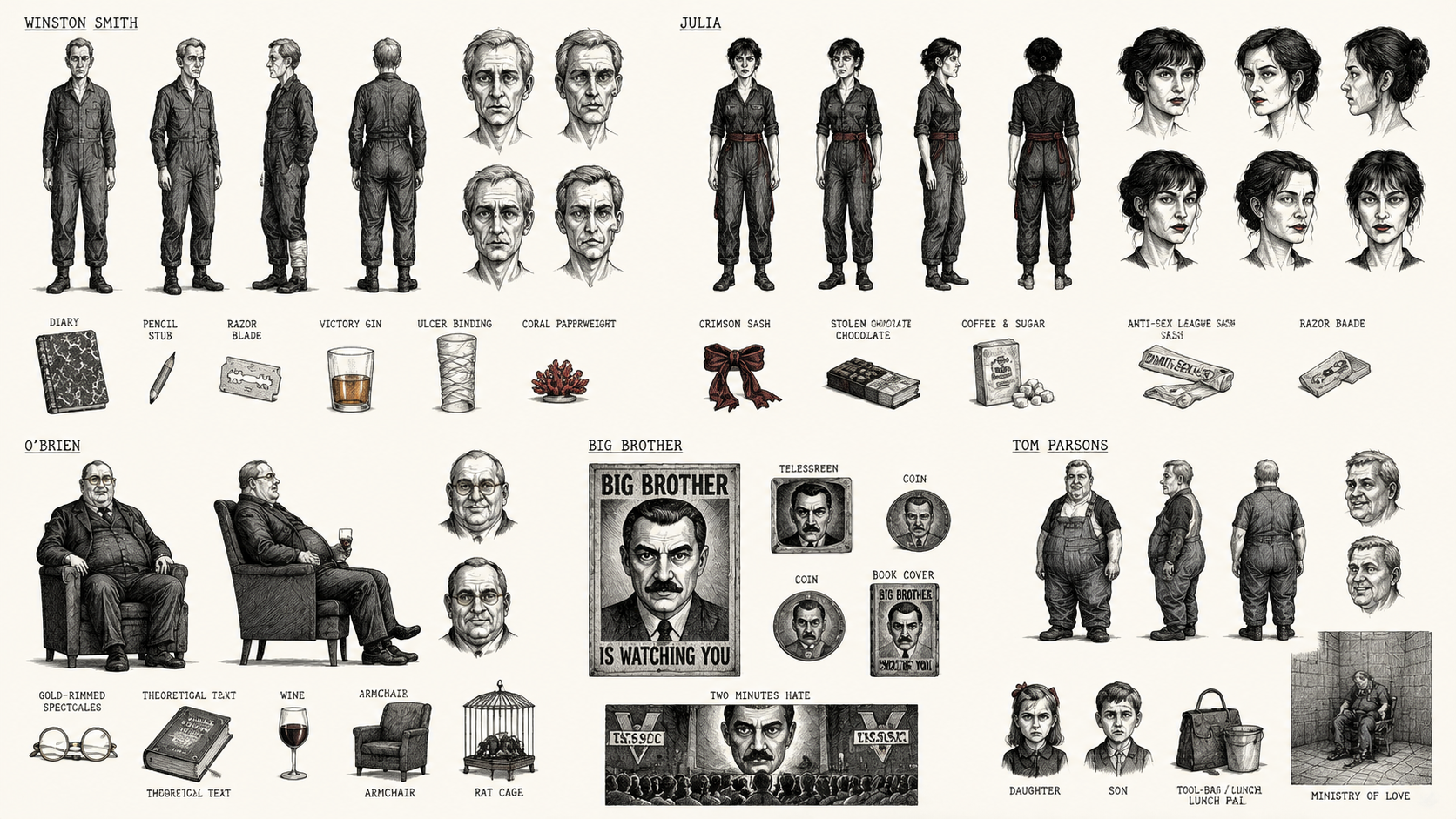
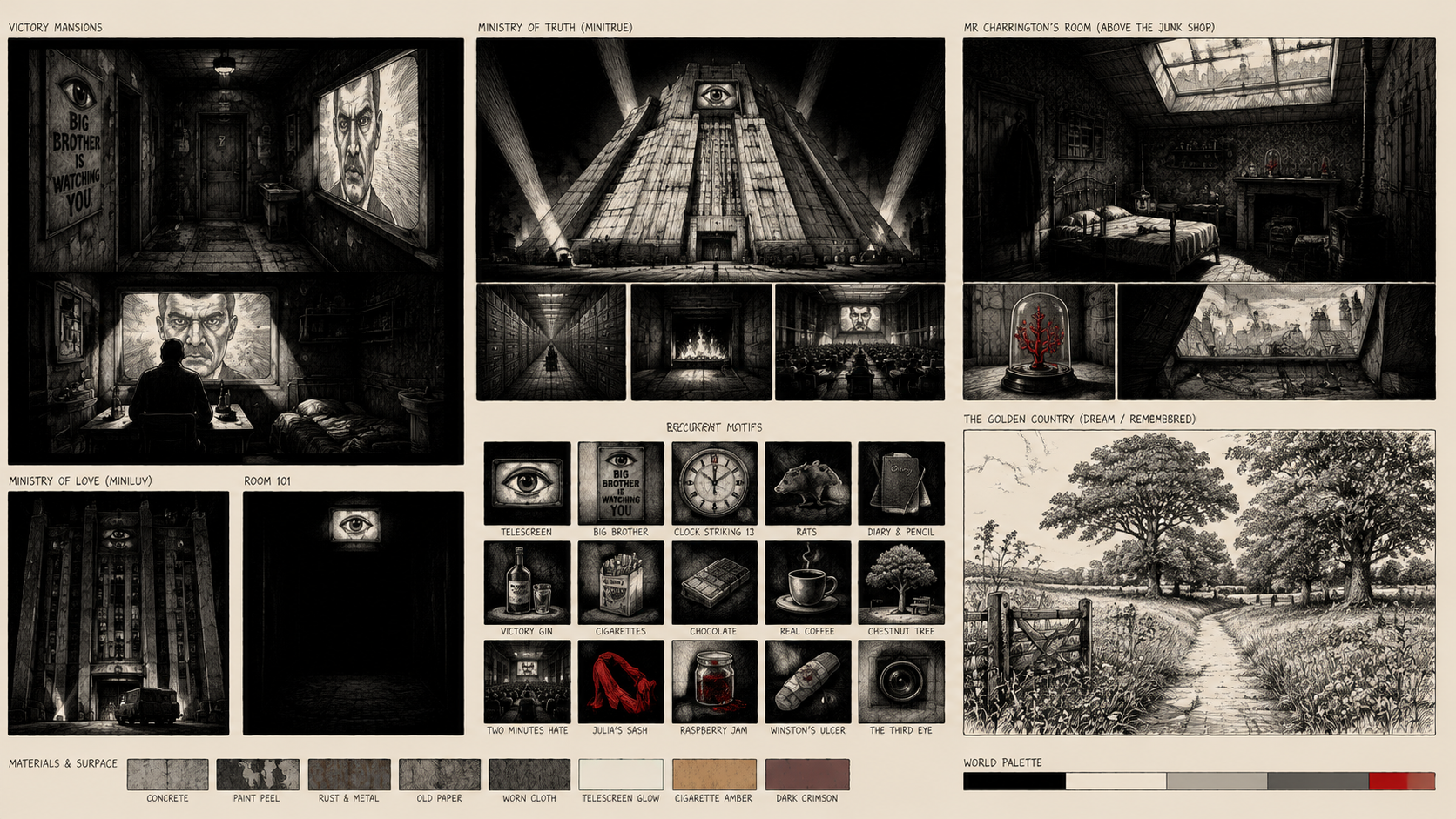
The novel's world is carved up among three superstates — Oceania, Eurasia, and Eastasia — and the map quietly redraws itself every few years, enemy and ally swapping places according to whatever the Party needs. The protagonist, Winston Smith, is an Outer Party member in his late thirties working at the Ministry of Truth in Oceania's London, and his day job is smoothing history into whatever the Party is currently saying. He knows in his gut that this is a lie. He knows even more surely that the screen in his room, which watches and listens to him — the novel calls it a telescreen — never blinks.
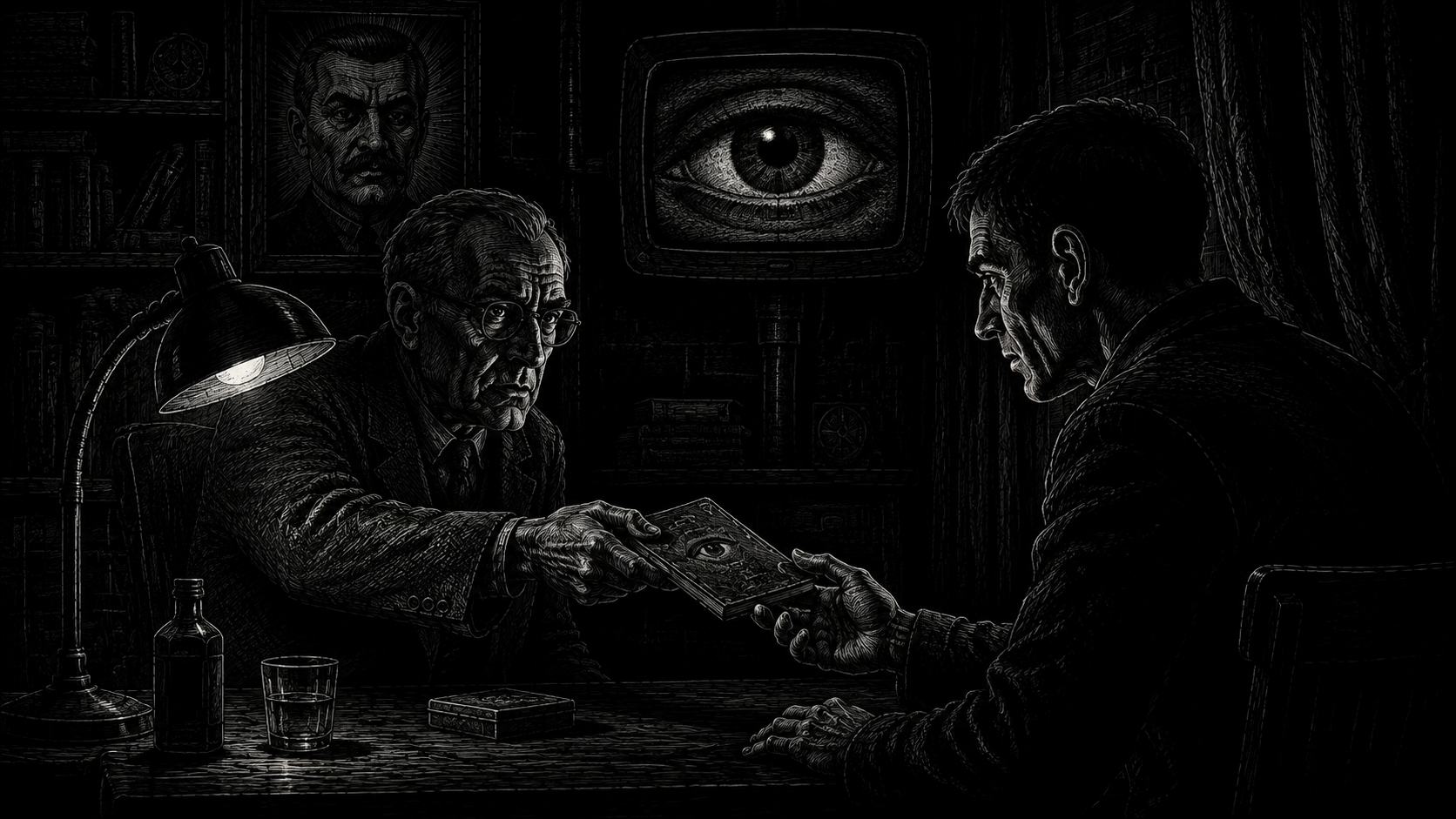
Julia is the young woman he meets at the Ministry of Truth's Fiction Department — outwardly an obedient, model Party member, but privately treating the Party's chastity doctrine as waste paper, and living on stolen affairs. O'Brien is the Inner Party official Winston looks up to, courteous, soft-spoken, with eyes that seem to see straight through you — the man Winston takes for a fellow conspirator, when in fact he is, from beginning to end, the Party's own instrument. The Party's supreme symbol is Big Brother, a face that always smiles, seemingly never present and yet everywhere at once.
ImaRead2
ImaReadFolio 03 — 06
ImaReadFolio 04 — 06
ImaReadFolio 05 — 06
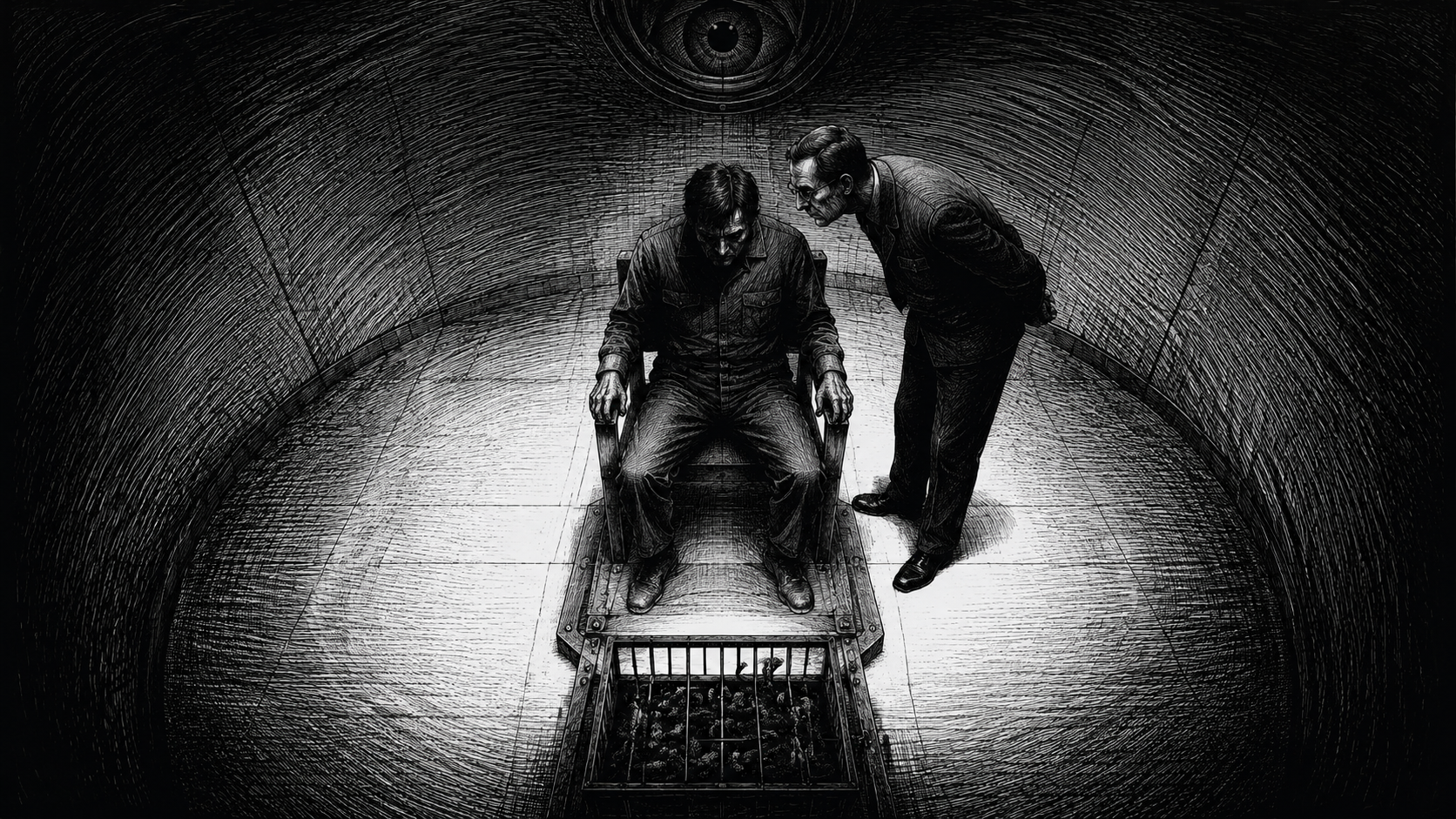
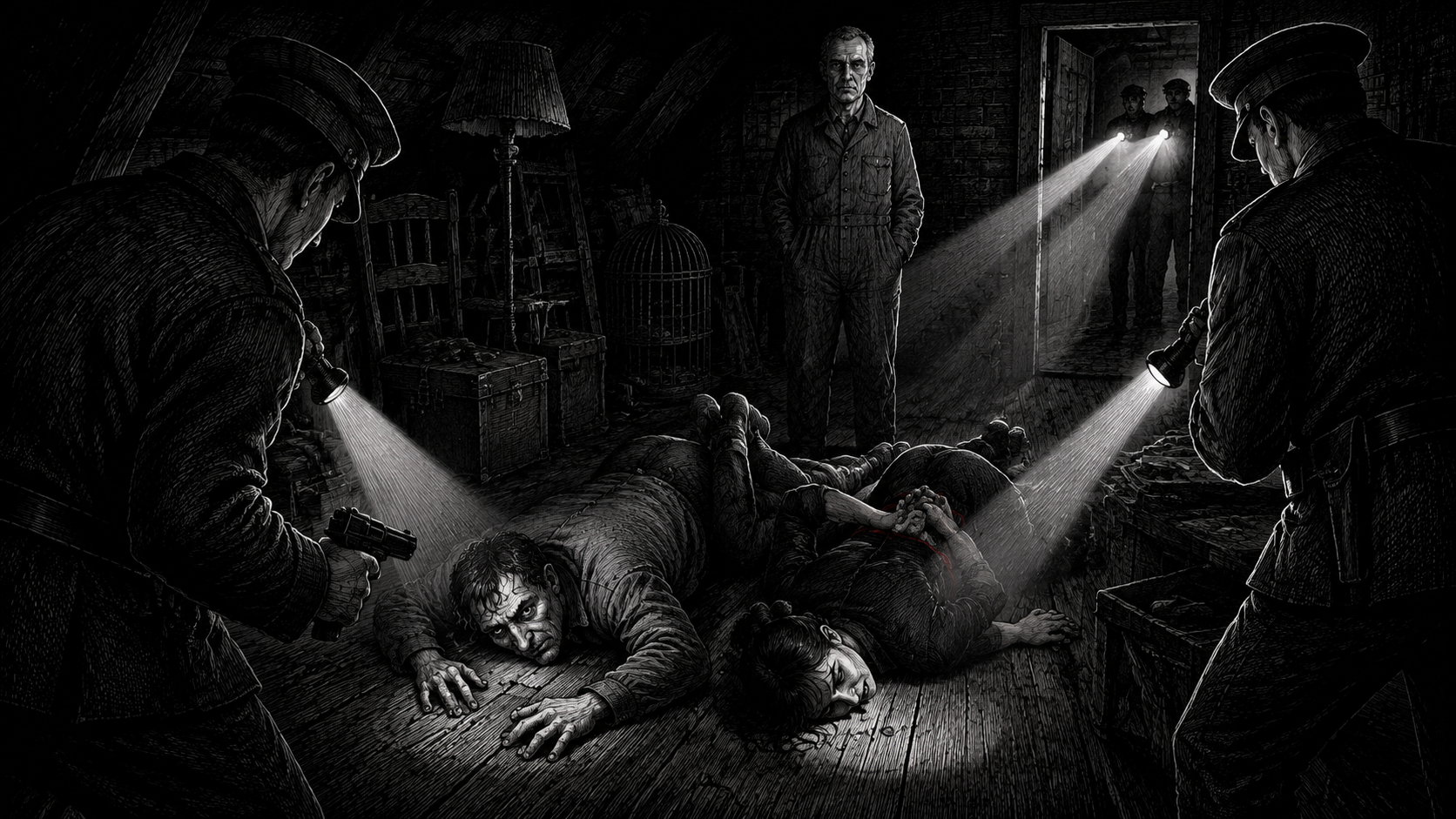
What finally breaks him is Room 101. This room is custom-built around each prisoner's own particular fear: what terrifies Winston isn't being beaten, it's rats. The guards push a cage of live rats closer and closer to his face, and something in Winston snaps completely — he screams at O'Brien to put this torture on Julia instead. With his own mouth, he hands over the last thing in the world he wanted to protect. Orwell isn't writing a villain here. He's writing something else: that a person, faced with absolute terror, will destroy the deepest thing he has with his own hands — and will later, quietly, forgive himself for it.
The ending is the cruelest stroke in the whole book. Winston is eventually released, and we find him sitting in the Chestnut Tree Café drinking Victory Gin, much thinner now, his eyes hollow. On the screen in front of him, the news is broadcasting the Party's execution of a traitor, and he raises his glass with the crowd to celebrate. Then he looks up, sees the portrait of Big Brother on the wall, and feels a great, comforting rush wash over him — he has genuinely fallen in love with Big Brother. The book doesn't let him escape. It doesn't let him die before dawn with some scrap of heroism intact. Orwell refuses to give resistance a satisfying ending, because what he wants to tell the reader is this: totalitarianism's real victory isn't executing you. It's making you believe, from then on, that it was right all along — and making you feel relieved about it.
ImaReadFolio 06 — 06
By now you already know how it ends, but the actual text holds something a summary can never carry away. Orwell isn't writing a conspiracy — he's writing an erasure as ordinary as wiping down a table every morning. The scene where Julia first presses close to Winston is about how a body, wedged into the narrow cracks left by totalitarianism, finds its way back to the warmth of "I want this." The moment O'Brien murmurs to Winston that there will be no more darkness between them shows, sentence by sentence, exactly how much chillingly elegant cruelty it takes to push a person to the edge of collapse. These small, physical sensations — the smell and the heartbeat inside the sentences — only land if you read them yourself, page by page. And really, what Nineteen Eighty-Four teaches you isn't "be careful of totalitarianism." It's "be careful of the voice inside you that's already been persuaded" — and that is something nobody can confirm for you but you.
ImaRead6
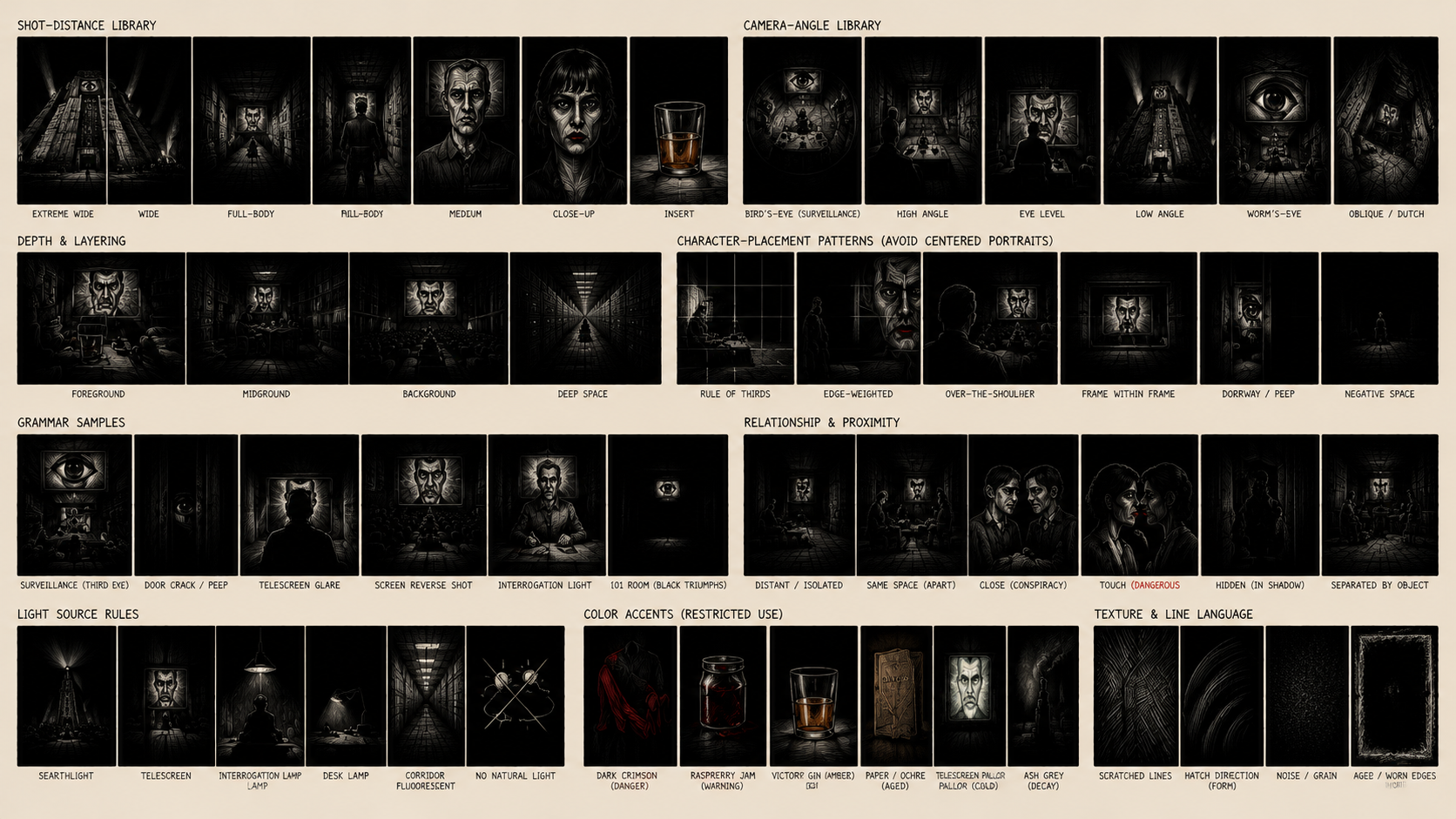
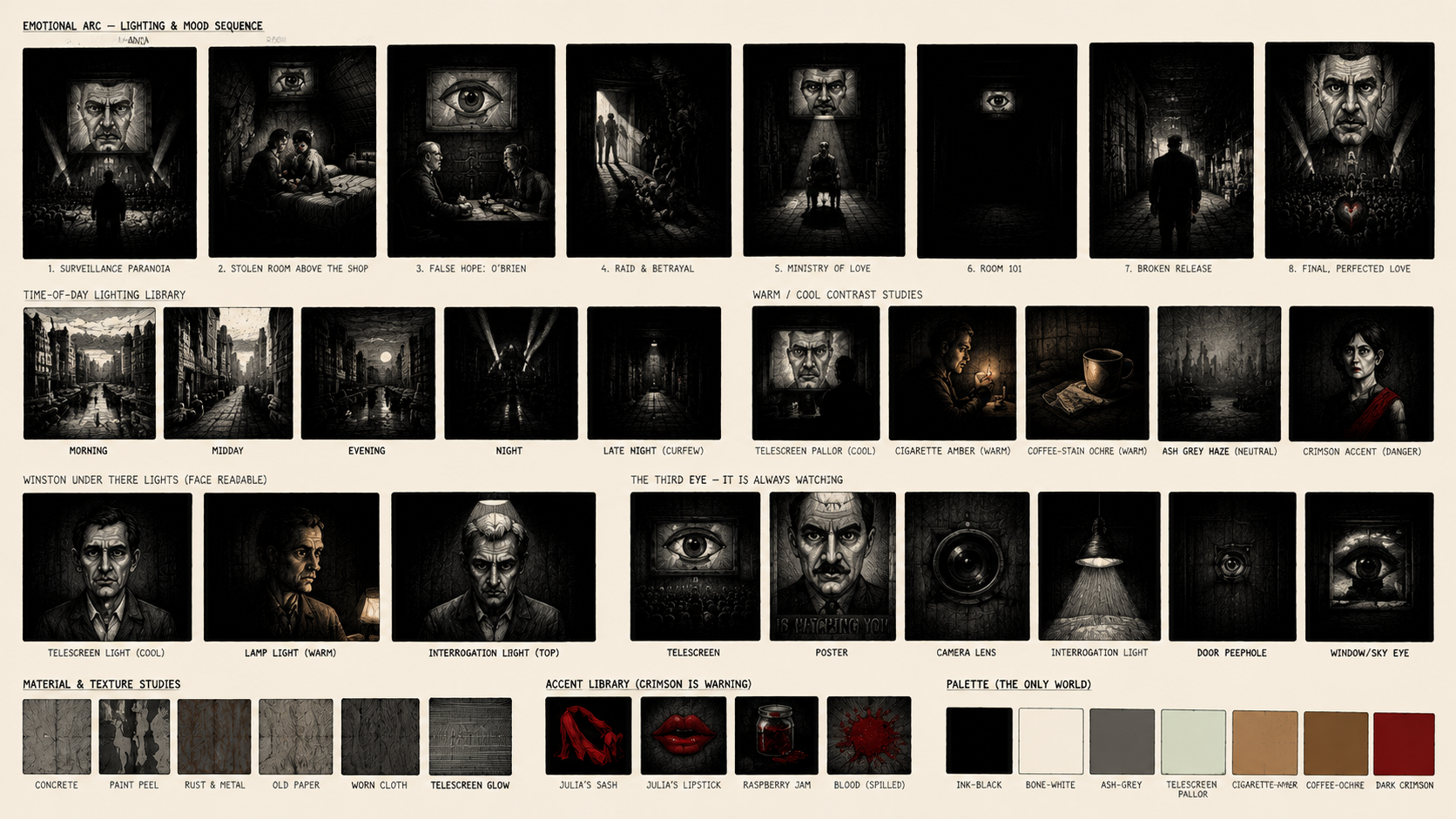
Art Direction4 plates
Before the guide was written, this book got a visual foundation — every illustration you just read grew out of it.