Njál's Saga (The Story of Burnt Njál) · Companion Guide
尼雅尔萨迦
冰岛自由邦时代,两头白发的法学家与他不肯退让的武人朋友,三代血债以一把火清账,最终以收养与赐名收束。
Opening: Two Heads of White Hair, One Icelandic Coast
Two farms on Iceland's south coast face each other across a meadow. At Bergþórshváll lives Njal, a lawyer with white hair and a white beard who has never once picked up a sword. At Hliðarende lives Gunnar, a man in his prime who carries one, the most celebrated hero in the whole of saga literature. The two are close friends, until Gunnar brings home a tall woman, Hallgerður, hair long enough to brush her knees, ambition to match her grudges. She has buried three husbands already, and each of those deaths has her fingerprints on it. The marriage buries an ember in the meadow between the two farms, and the meadow has not yet frozen over.
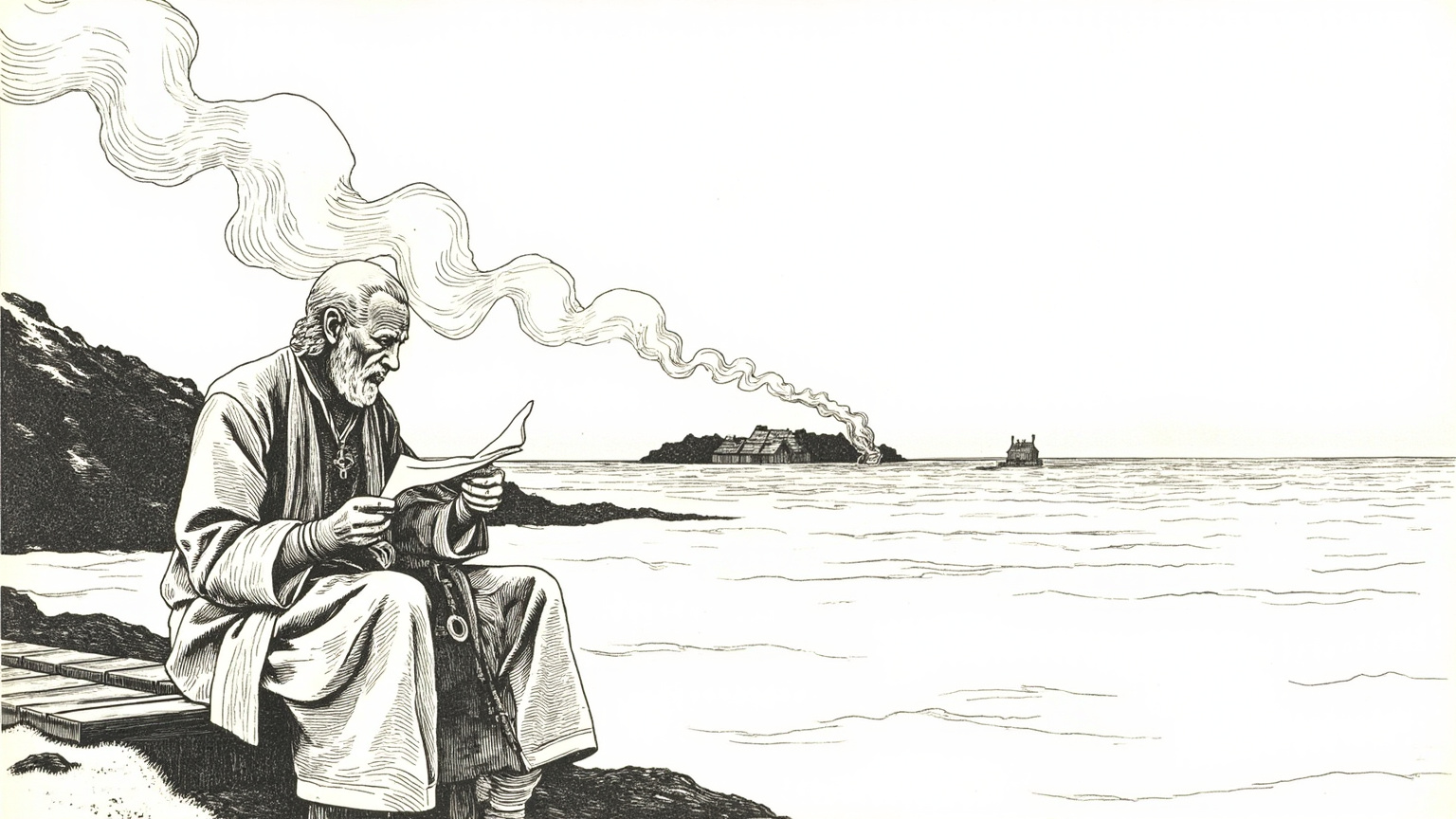
Njal had no need to take up weapons himself; but he was so skilled in law that no man matched him.
尼雅尔从不必自己动手拔剑,可论起法理之熟,无人能出其右。
金句 · 第1章 · 双白发与海岸对望
What Kind of Book This Is
It is called Njal's Saga, sometimes rendered as The Godforsaken Saga or The Saga of Burnt Njal. An anonymous Icelandic author wrote it in the mid-to-late thirteenth century, setting down events that actually happened between the late tenth and early eleventh centuries. Scholars generally date the composition to the 1270s through the 1290s; the author's identity is lost. The English translation still in wide circulation today is George Webbe Dasent's, from the mid-nineteenth century. It is widely regarded as the summit of Icelandic saga literature, and Icelanders call it the king of sagas. In the history of Western literature, it occupies roughly the place the Iliad holds in medieval Scandinavia: no myth, no gods, only lawsuits, settlements, manhunts, arson, and adoption, one after another. Why has it lasted? Because it tells a family blood feud that starts with a slap of words with the composure of a modern courtroom drama, every claim checkable, every debt payable, and stays that cool even at the moment you can see, through the flames catching under the eaves, exactly what the people inside are still writing down.
People and World: No King, Only Courts and Feuds
The story unfolds during the Icelandic Commonwealth, a society with no king, where disputes were settled by the local godi chieftains sitting in assembly. Power lived not in a royal court but at the Althing, the annual midsummer assembly: on the Law Rock at Thingvellir, the godar stood to pass judgment, argue cases, and pronounce outlawry. Law and blood feud ran as two ledgers at once. The court could award compensation, and an enemy could take it. If he refused, the court could raise the stakes: outlawry, three years in which no one in the community could sit with him or speak to him. And if even that failed to stop him, the next step was fire. At the center sits a chain of blood debt. Njal is the white-bearded lawyer who lives by argument and foresight, and it is his foster son Skarphedin, nicknamed the Black Claw on the Snow, the most overpowering fighter in the whole saga, who does the killing on his behalf. Gunnar is Njal's closest friend, whose line withers after he marries the ambitious Hallgerður. Hallgerður is tall, beautiful, and unforgiving, capable of undoing a settlement with a single slap. Mord is Njal's most treacherous legal adversary, a man who destroys people through the letter of the law. Flosi leads the final assault on Njal's hall. And Kari Solmundarson, married into Njal's family, is the only survivor of the burning, the one man left to settle what remains of the debt.
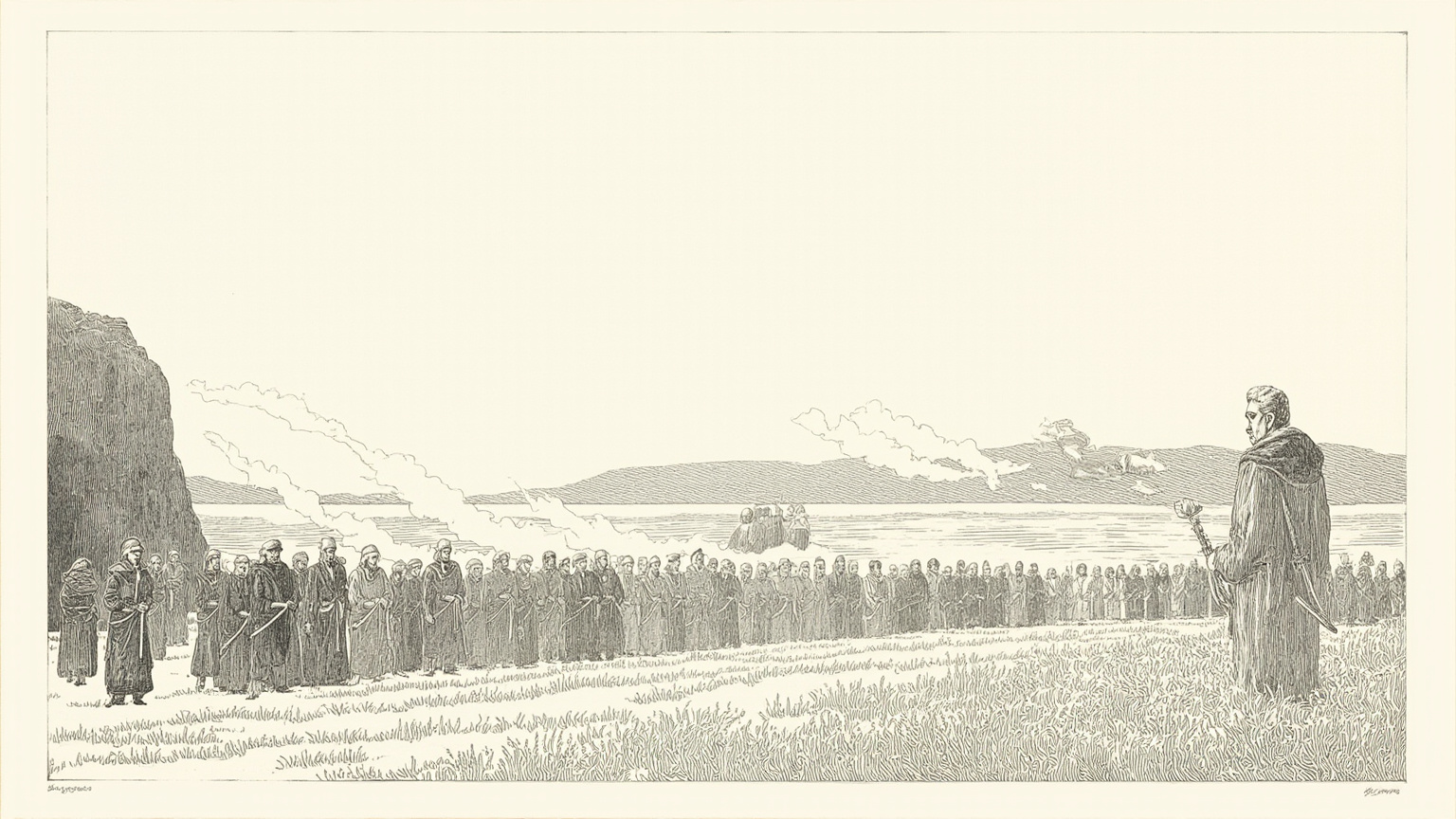
Every man there who had not been named before was named then by the Speaker of the Law.
凡此前未曾命名之人,皆由议事会主议于此时一一赐名。
金句 · 第8章 · 阿尔庭议事场
Death at Hliðarende: The Hero Who Stayed Where the Sword Went Back in Its Sheath
Gunnar's troubles begin as a chain reaction set off by a quarrel Hallgerður starts. Disputes over compensation and old grudges between households could have been settled in court, but he refuses to give ground, and his enemies refuse to let go. It escalates until the entire Þorgrímr clan bands together and lays siege to his farm. Outnumbered, his neighbor Otkell devises a method of attack that still chills the reader: yoke two oxen to a plow, drive them quietly against the wall of Gunnar's house until it collapses, then trap Gunnar inside and cut him down. Gunnar dies in his own home. The saga gives his final moment one of its most famous images. He reaches for the sword hanging on the wall; it slides a foot out of its sheath, then slides back a foot, and he never draws it. This is not cowardice. He cannot bring himself to leave this piece of home ground. Gunnar's line at Hliðarende withers, and Hallgerður, taking the son she bore him, marries into Njal's household, quietly carrying the ember to the next family.
The Killing on the Ice: Bone Skates, Blood on Thin Ice
When the fire reaches Njal's household, it is his foster son Skarphedin who takes up the sword Gunnar never drew. He is a huge man, an enormous eater, quick with a blade, and undefeated in every fight he has ever taken. The most famous scene in the saga's middle stretch happens on a frozen lake somewhere in southern Iceland, where he goes skating with a group that includes Grímr and Helgi, nephews of one of Gunnar's old enemies. His skates are fitted with bone blades. He swings his axe once, and both men go down on the thin ice. The saga narrates the whole fight with the flat calm of a chronicle, and that calm makes it the most electric passage in the book. What happens right after is what actually chills you. This particular killing has already been settled in court, compensation agreed, the matter closed. Then, off to the side among the women, Hallgerður reaches out and slaps a woman from the other family. The settlement tears apart on the spot, and a fresh debt is entered onto Njal's account. I stopped short the first time I read that slap. What the saga is telling you is that a settlement was never held together by its clauses. It was held together by dignity, and dignity in the hands of a woman who does not forget is as brittle as ice.
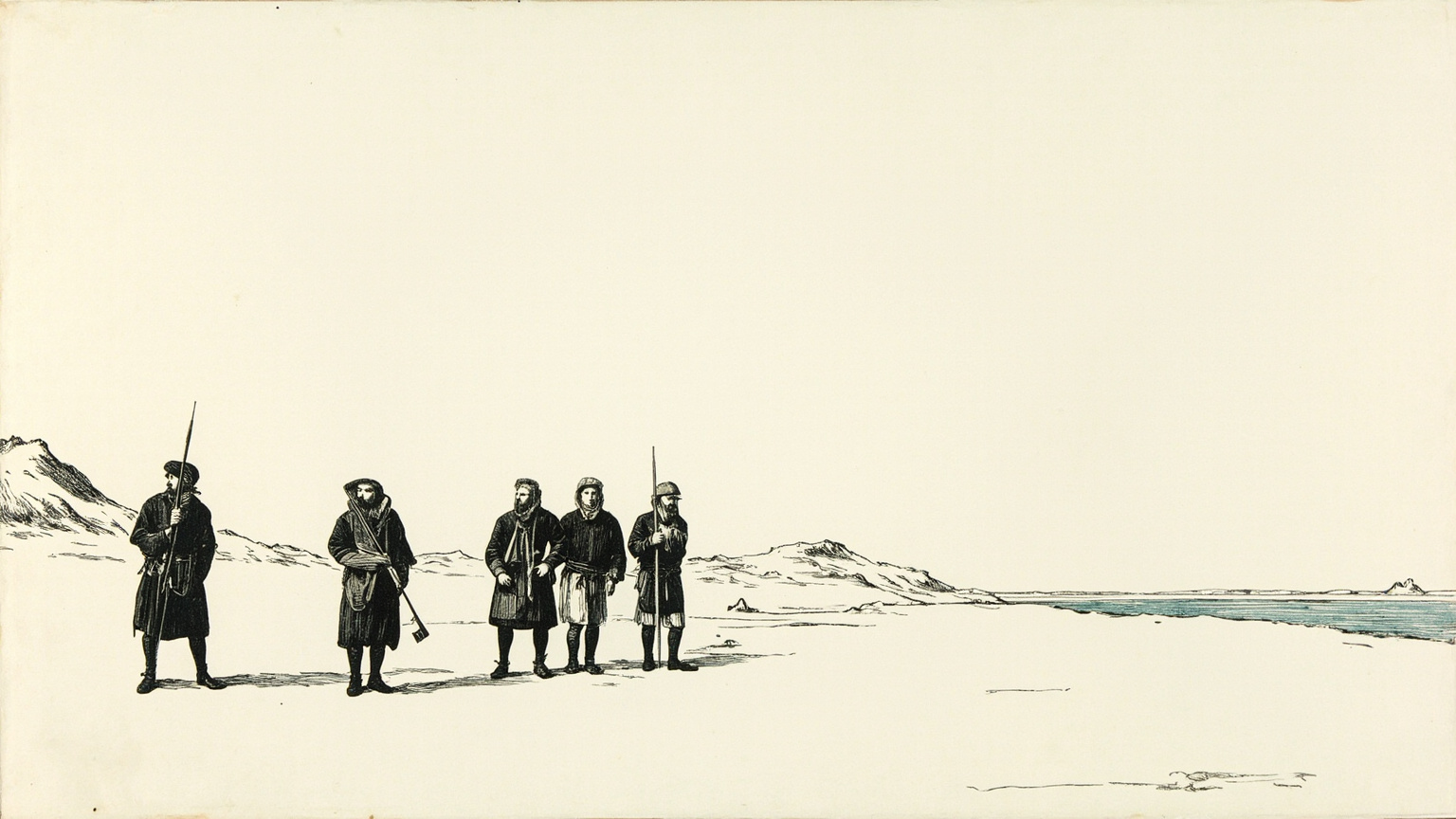
Skarphedinn dealt the blow that would have felled a tree.
斯卡帕赫丁那一斧劈下,足可断一棵大树。
金句 · 第14章 · 冰鞋骨刃
The Siege of Bergþórshváll: Thirty-Odd Lives, One Fire
This is where the story reaches its climax. Flosi, son of an old enemy, gathers more than a hundred men from north and south, assembles them behind Svínafell, and marches on Bergþórshváll. White-bearded Njal, his equally white-haired wife Bergþóra, his foster son Skarphedin, his own sons, their wives, grandchildren, and a number of servants, thirty-odd people in all, are trapped inside the timber-and-stone hall. Flosi does not storm it. Following Icelandic custom, he lets the household carry out its belongings first, then throws in the torches. As the fire catches, Njal does one thing: he offers to let Bergþóra escape alone while he stays behind. She refuses, leaving behind a line quoted ever since: "Whatever death I chose when I was a young bride, I am not going to choose a different one now." The two sit down together, Njal writing, Bergþóra reciting, until the flames eat through the roof. Of the thirty-odd people inside, not one gets out, except Kari Solmundarson. Njal's kinsman by marriage climbs a ladder over the wall and is the only survivor of the fire, and the one who will settle what remains of the debt. This is where Njal's tragedy fully unfolds. He never once picks up a sword; he turns to law and argument for everything, and he even has foresight, knowing the third disaster can be avoided and the fourth cannot. He stays anyway. Wisdom and fate sit in the same room, and fate's chair is heavier.
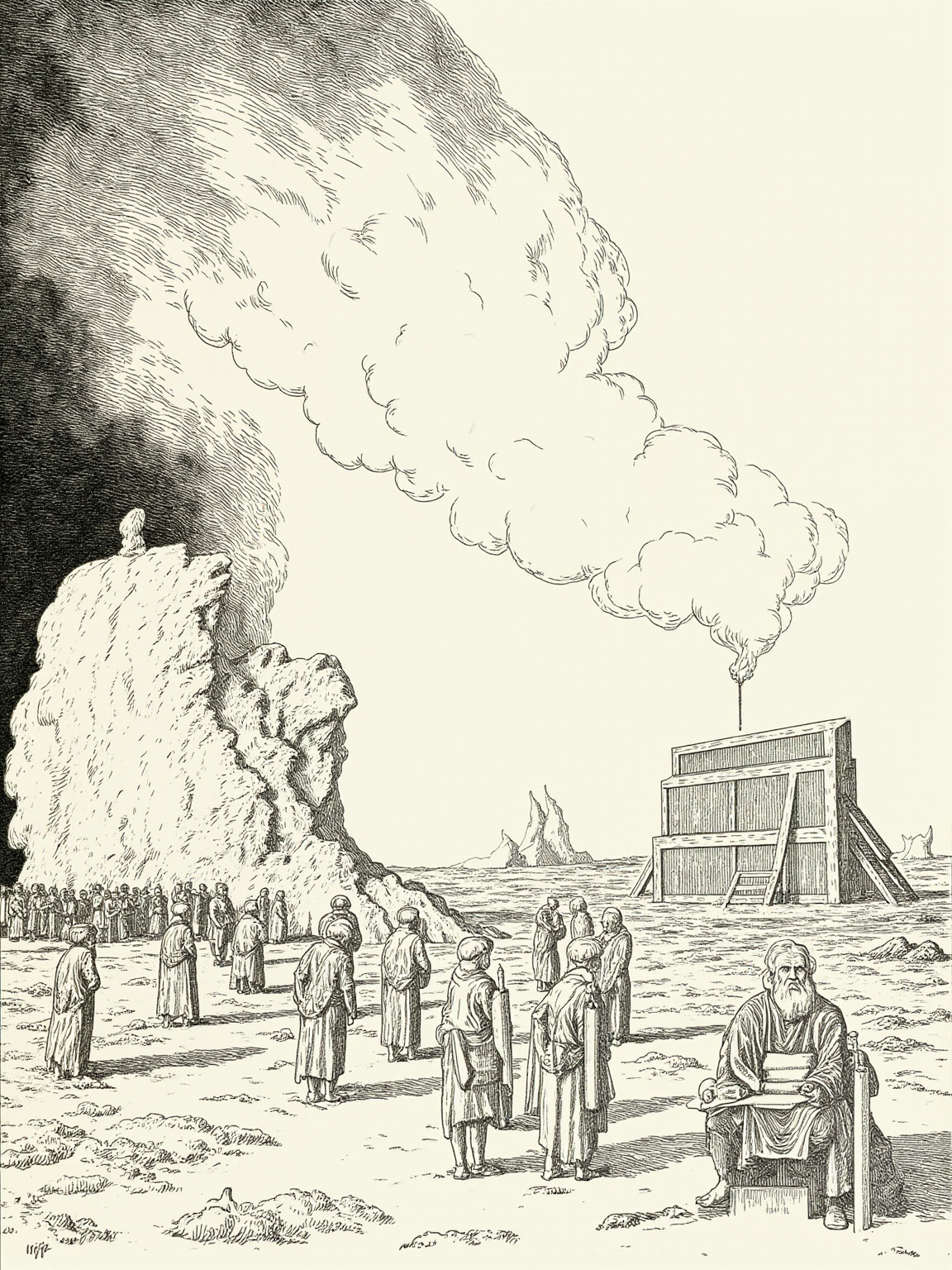
I do not choose the death of a young girl, said Bergthora.
少年的死法我不想挑。
金句 · 第22章 · 长屋之焚
The Peak of the Althing: Where the Law Runs Out
After the fire, all of Iceland gathers for the midsummer Althing. In the assembly, Flosi is outlawed under the heaviest procedure the law allows, a Fourth Court judgment: for three years, no one in Iceland may sit with him, speak to him, or share a meal with him. It is the harshest penalty Icelandic law can hand down, a kind of social death. A priest comes to broker peace on his behalf; Flosi accepts it, humiliated, pays the settlement, and is cleared to go home. This is the moment the saga's legal machinery reaches its high point, and also the moment it fails: the law can drive him out of the community for three years, but it cannot take the torch out of his hand. In the end, after petitioning the king of Norway and getting nowhere, Flosi returns to Iceland and buys off the killing with a full cash payment. The law never stopped him from setting the fire, but the payment closed the account. This is the saga's sharpest edge of legal realism: the most a court can do is let a blood feud continue in the form of a settlement, not end it in the form of a verdict.
The Chase Across the Sea: Three Lives on Gotland
What debt remains, Kari collects on Njal's family's behalf, one stop at a time. Flosi himself has settled by payment, but his brother and several of his accomplices have not. Kari leads a party all the way to Gotland, in what is now Sweden, and there, far from home, kills Flosi's kinsmen and three more of the main perpetrators one by one, closing out a debt decades in the making, entry by entry. This chase across the sea is unusual in saga literature: most blood-feud epics stay inside the country's own borders, but Njal's Saga follows the account all the way to Sweden. It shows you the real operating radius of this revenge ethic. It is not emotion. It is business. One debt owed, one life to cancel it, entered in the ledger and settled clean.
The Adopted Son: After the Killing, What Then
After the swordwork is settled, the saga's real ending arrives. Beyond the events themselves, the narrative comes to rest on the next generation being raised. When Kari returns to Iceland, Flosi offers, unprompted: "Now I will tell you, Kari, that you should come and stay with me at Svínafell, for I owe you more than I owe any other man." A blood feud is not ended by a verdict. It is ended by raising a child, the enemy's children taken in by the enemy, given names, given dowries, raised to adulthood. This is the most distinctive move in Icelandic saga literature: the fighting is over, the account is settled, and the next generation is no longer a torch but an heir. The word saga itself, in Old Norse, carries two meanings at once, a story, and an event that gets told. Njal's Saga spends an entire epic showing you that the real story is the care that comes after the fire goes out.
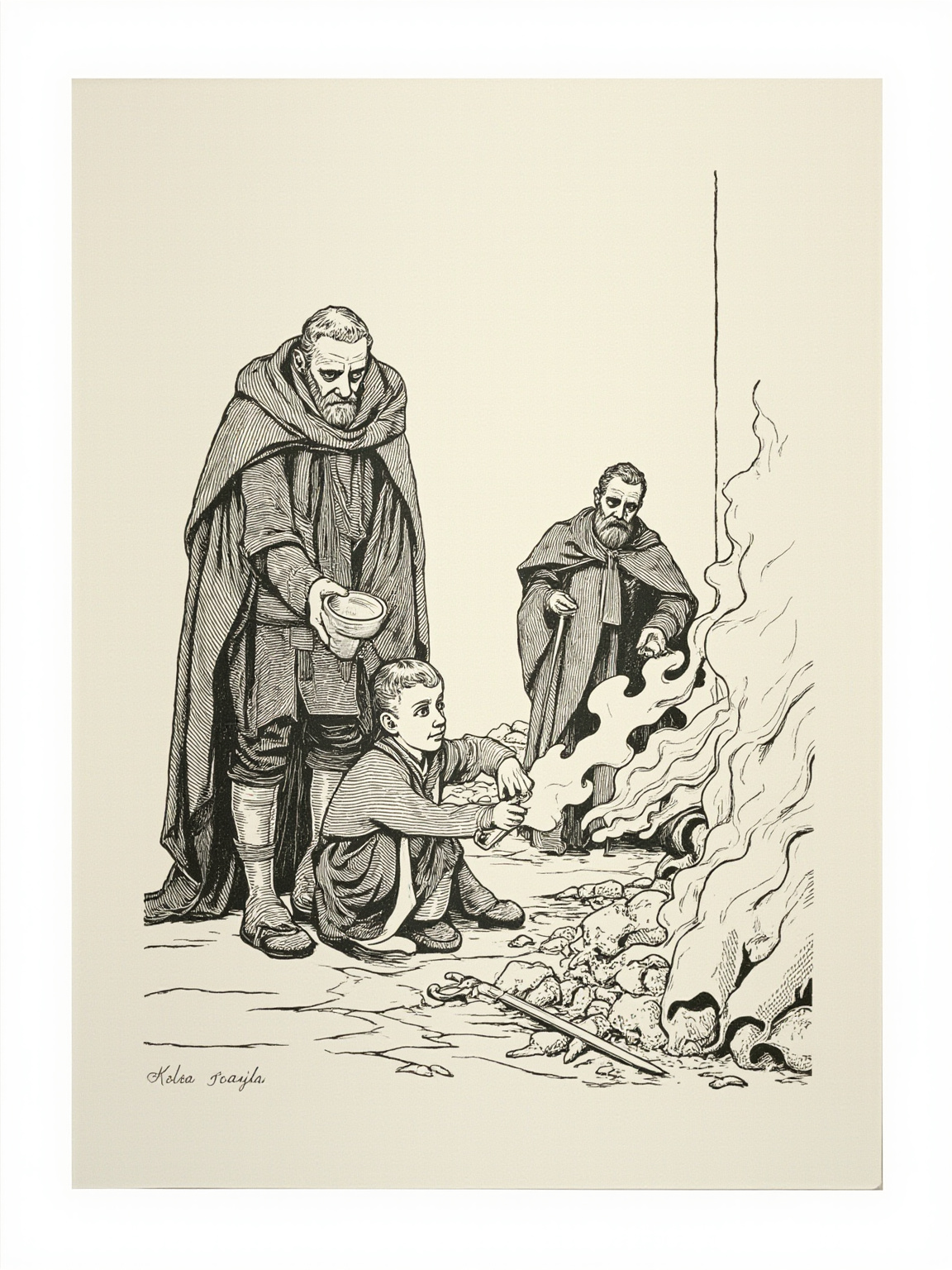
Flosi took Kari into his home and raised him as his own son.
Flosi 收 Kári 于家中,抚为己子,养之成人。
金句 · 第28章 · 承继之子
A blood feud is not ended by a verdict. It is ended by raising a child: once the account is settled, the next generation is no longer a torch but an heir.
What It Is Really About, and Why It Is Still Worth Reading
On the surface, Njal's Saga is a family blood-feud chronicle: a household is driven toward fire and exile by a quarrel, by a woman's slap, by an unfair judgment. Underneath, it is writing out an ethic still recognizable today. The law can hand down compensation, and compensation cannot stop a person who does not forget. A community can outlaw a man for three years, and three years is not enough to settle accounts three generations deep. What makes it formidable is that it uses a world as remote from us as Viking Iceland to strip two different things down to the bone: settling a debt and putting a matter to rest. One runs on payment. The other runs on raising a child. The writing itself is why the book is considered great. It stays composed, almost like a chronicle, with no mythology behind it and no god ever stepping in, narrating even its worst tragedies in the flat tone of court minutes. And it is exactly inside that coldness that the images suddenly reach out and burn you: Hallgerður's hair long enough to brush her knees, Bergþóra's line about the death she chose when she was young, bone blades on ice, a ladder over a burning wall, a sword sliding a foot back into its sheath.
Go Read the Text
A guide like this can give you a map, one marked with every fire, every settlement, every life lost. What it cannot give you is the evening when you reach the moment Bergþóra refuses to run, and you have to stop reading and then keep going anyway. The saga never describes its people with adjectives. It just makes them sit down, speak, draw a sword, light a fire, write. The best way to read it is to find a winter night, something hot to drink, two or three hours nobody will interrupt, and let that white-haired old woman decide, on your behalf, how to die.
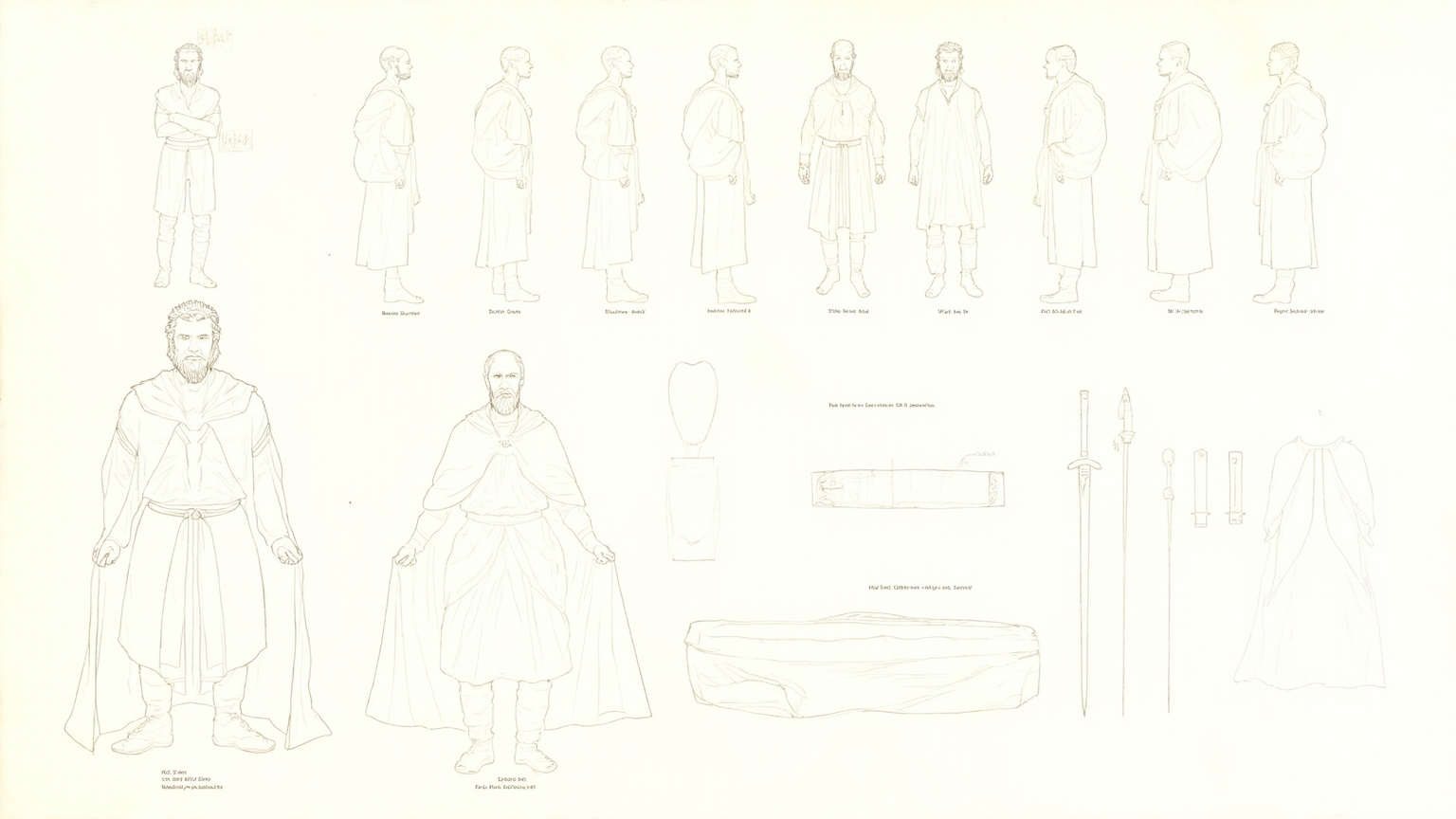
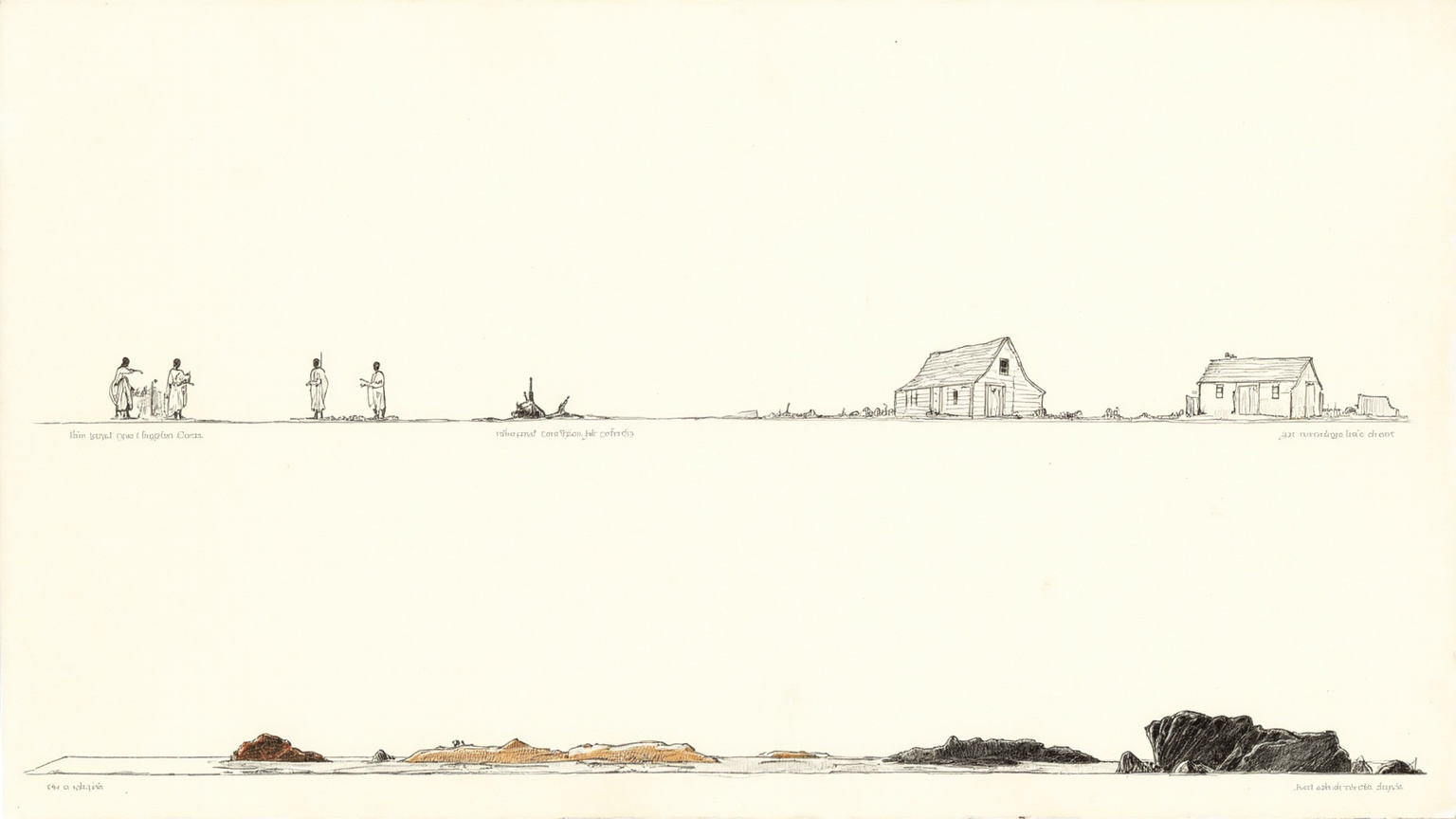
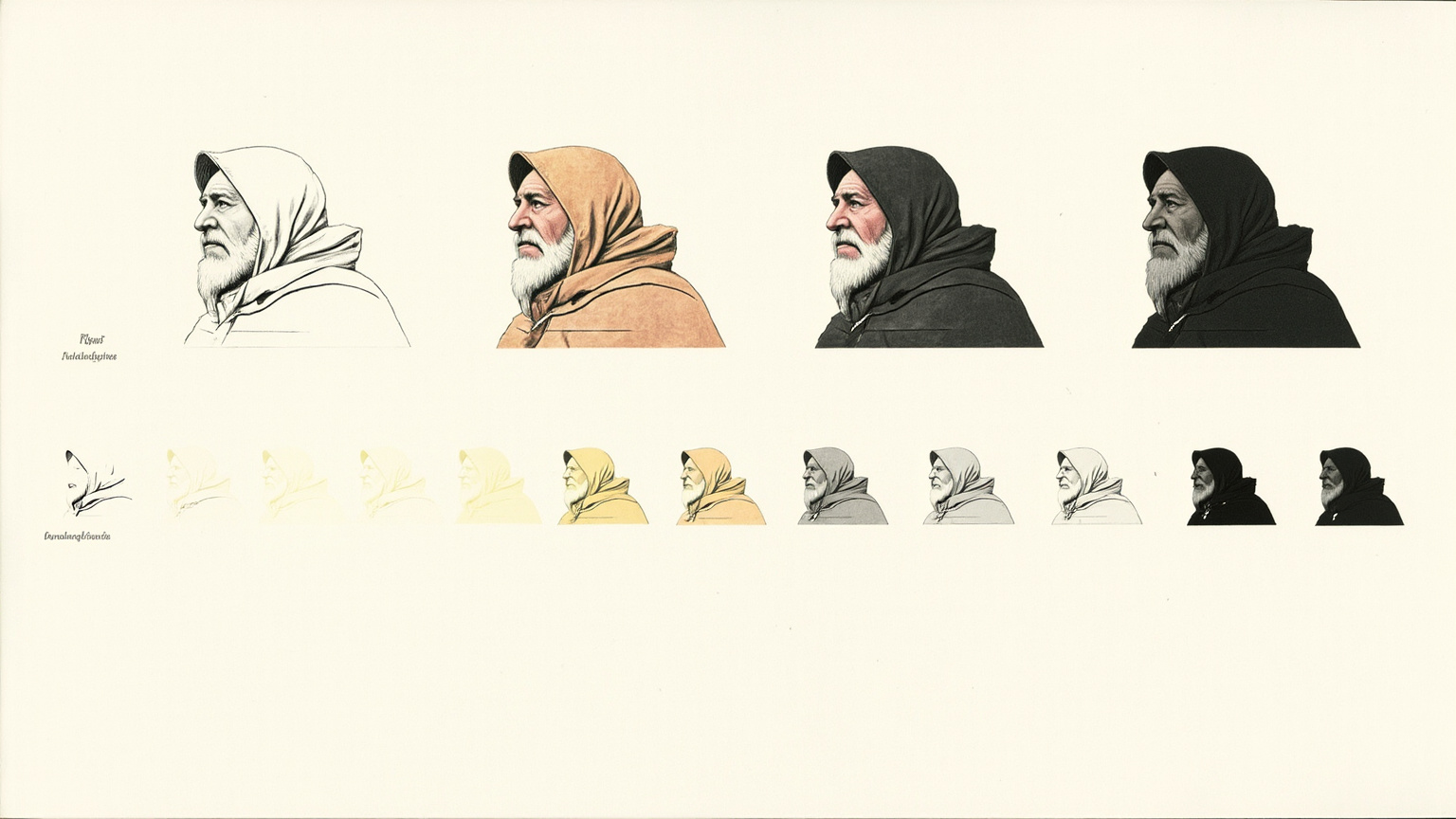
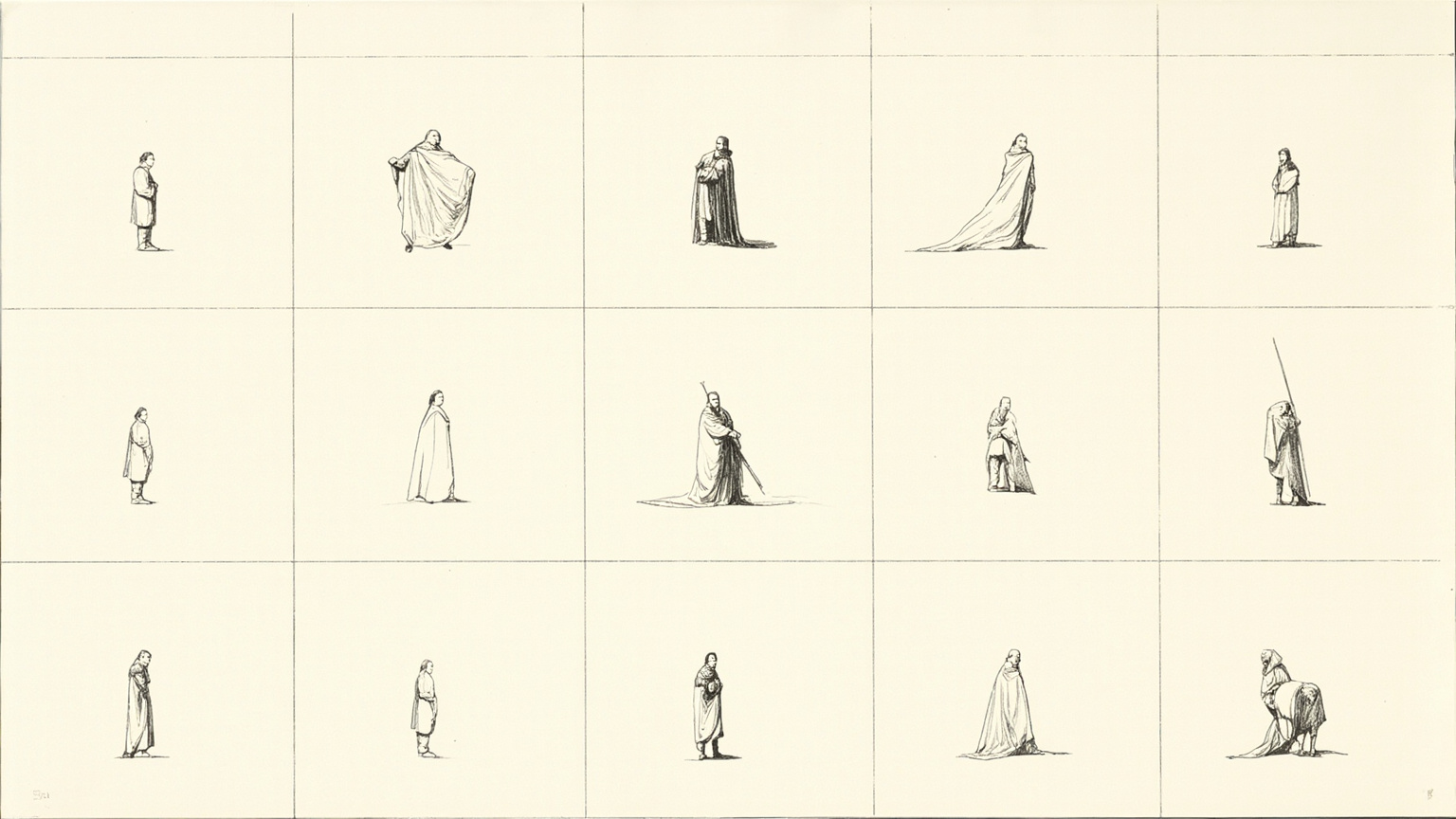
Art Direction4 plates
Before the guide was written, this book got a visual foundation — every illustration you just read grew out of it.