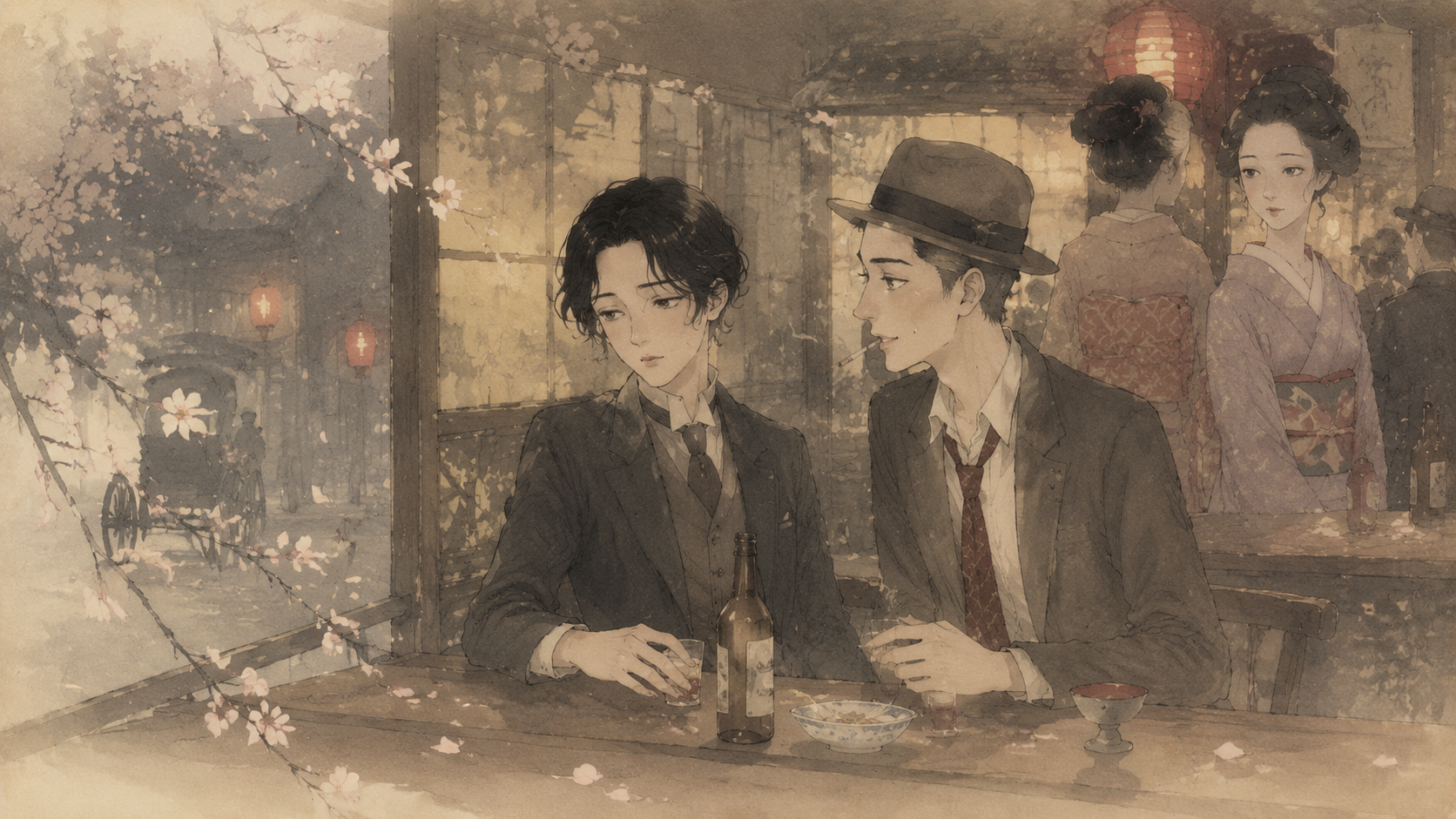
Osamu Dazai poured his own life into this confession of forfeiting the right to be human
Text and illustrations produced by the pipeline
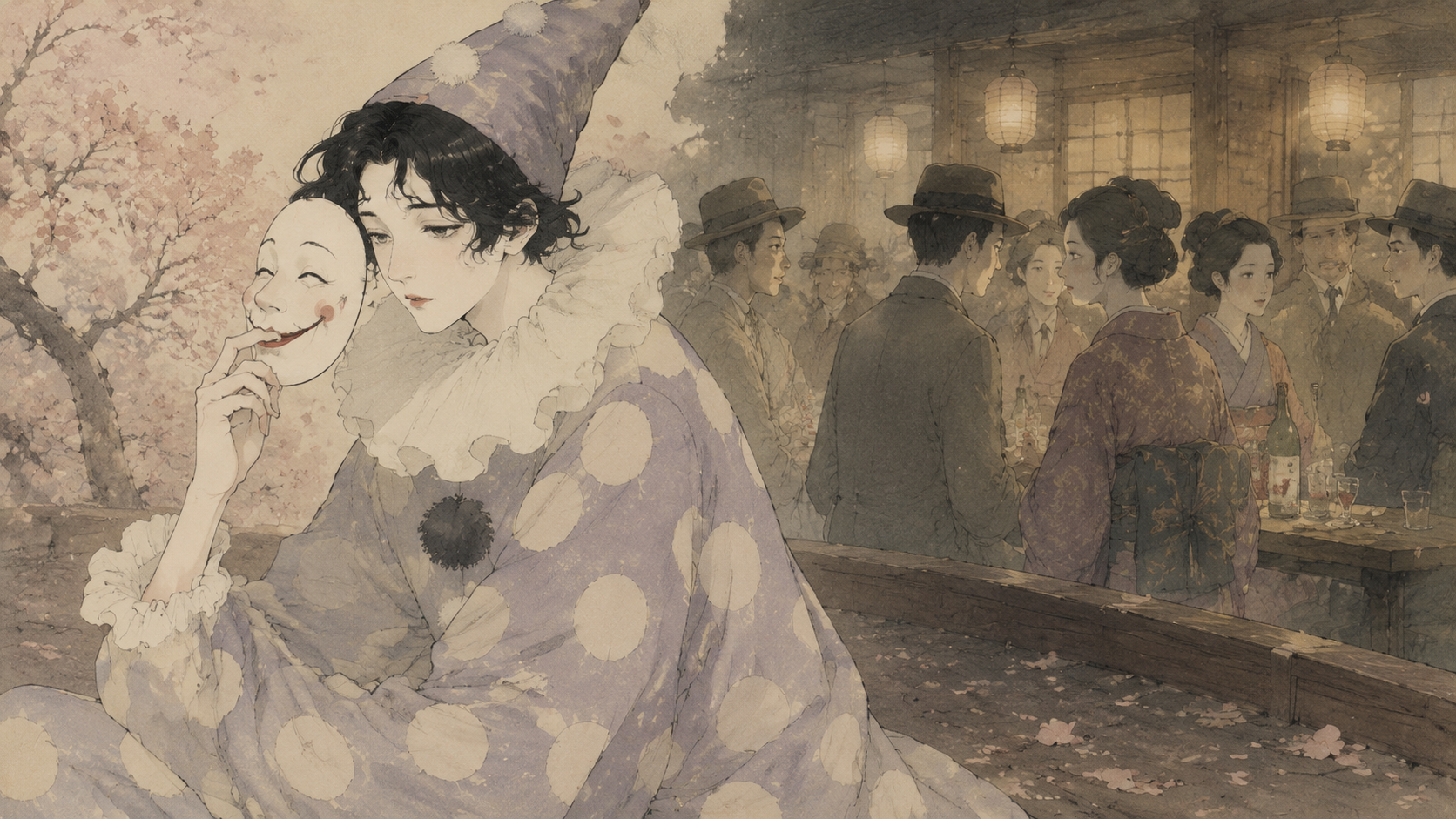
Laughter, anger, affection — he understood none of them. The hunger everyone else feels at dinner, the drowsiness that comes naturally at bedtime — he never learned either one. The only skill he ever mastered was clowning. Make the whole table laugh at his father's flat joke, then laugh loudest of anyone himself — that was how he survived, and it is also where his tragedy begins.
In 1948, Osamu Dazai — one of postwar Japan's most self-destructive writers — finished this short novel and, not long after, drowned himself. That made it one of the most famous last testaments in literary history. It belongs to the distinctly Japanese tradition of the shishosetsu, the "I-novel," which dissects the self with no regard for dignity and hands the reader a first-person account of a man's entire collapse. The book itself is slim, yet generation after generation of postwar Japanese readers have treated it as scripture for anyone who has ever felt like an outsider — because Dazai laid bare everything he had spent his life trying to hide, and did not live to see it published.
The protagonist, Oba Yozo, is the youngest son of a wealthy family, and from childhood he discovers he is different from everyone else — not smarter, not worse, just someone who cannot grasp the most basic human emotions. Standing at an elite school, never having to think about money at the table — none of it saves him. A handful of people around him keep pulling him toward the bottom. Horiki Masao, a bad influence, is the godfather who initiates him into vice. Tsuneko, a bar hostess, is his partner in his first attempt at double suicide. Shizuko, a woman who writes for a living, takes him in and supports him — and he cannot even accept that kindness before he runs. And finally there is his wife, Yoshiko, a woman who trusts people completely — and it is precisely her trust that becomes the last straw that breaks him.
Knowing the outline actually raises the stakes of reading the text itself. First, Dazai's prose has a rare quality: despair with impeccable manners. He is dissecting himself in real time, yet there is no accusation, no wallowing — every sentence reads like a small, courteous nod to the reader, and that tone cannot survive translation intact, let alone summary. Second, there is the texture of the body: the particular drunkenness of the drinking, the morphine, the sound of water in his throat as he is dragged out of the sea — experiences only the prose itself can deliver. And finally there is the machinery of the structure: the three notebooks escalate in tone, pace, and depth of self-mockery, gear meshing into gear, and only once you see how those gears actually catch does the phrase "last testament" carry its full weight.
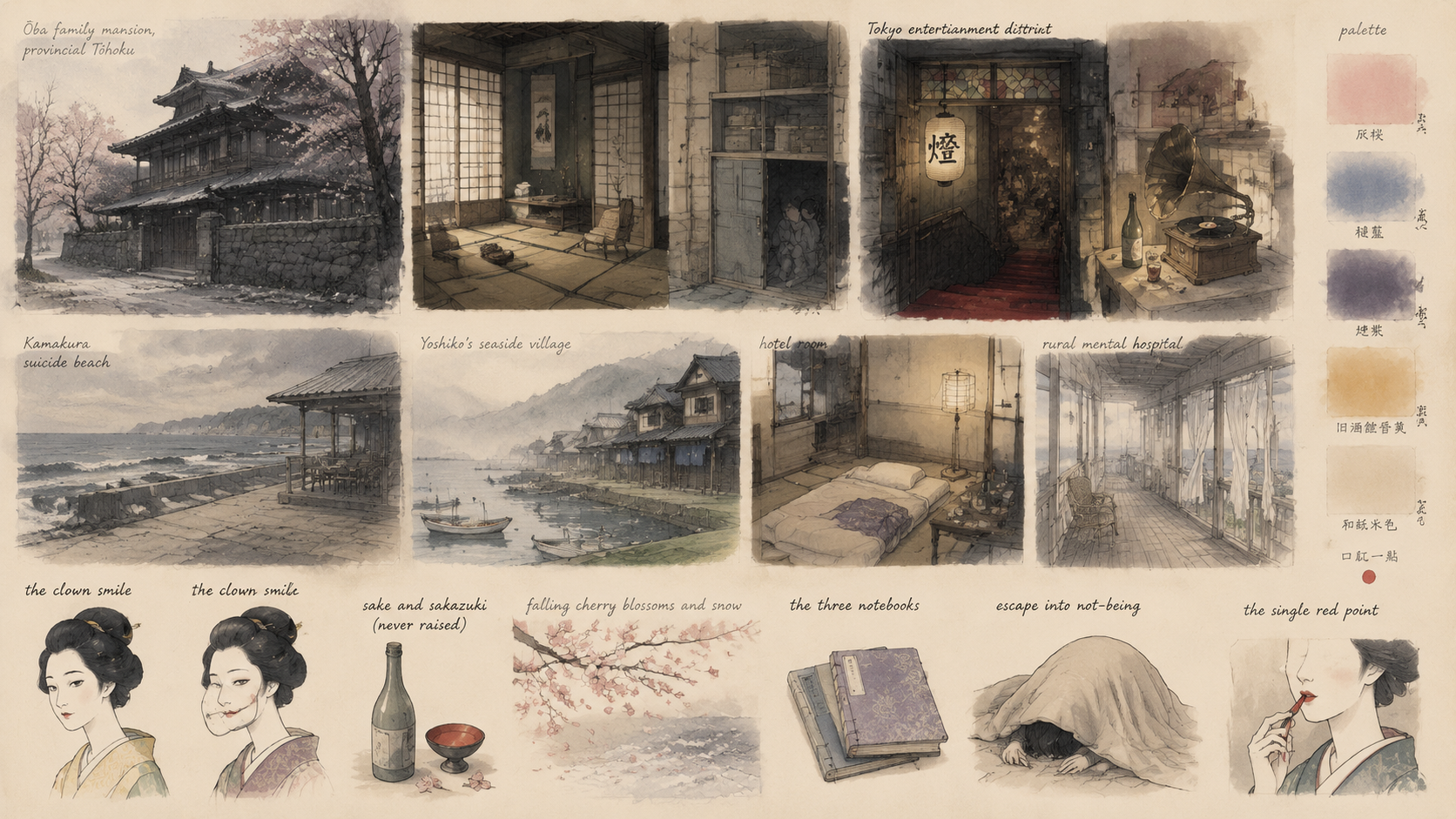
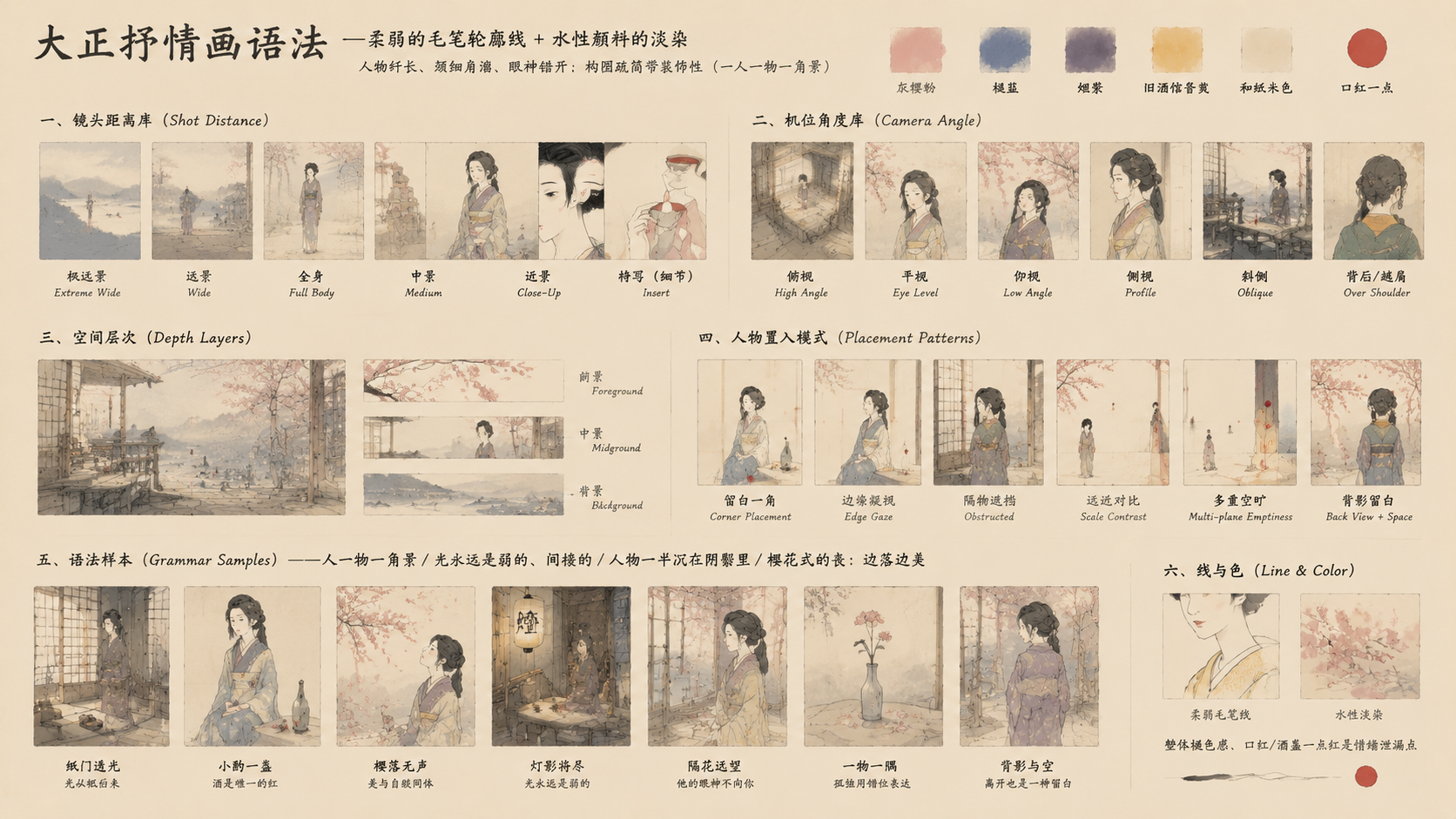
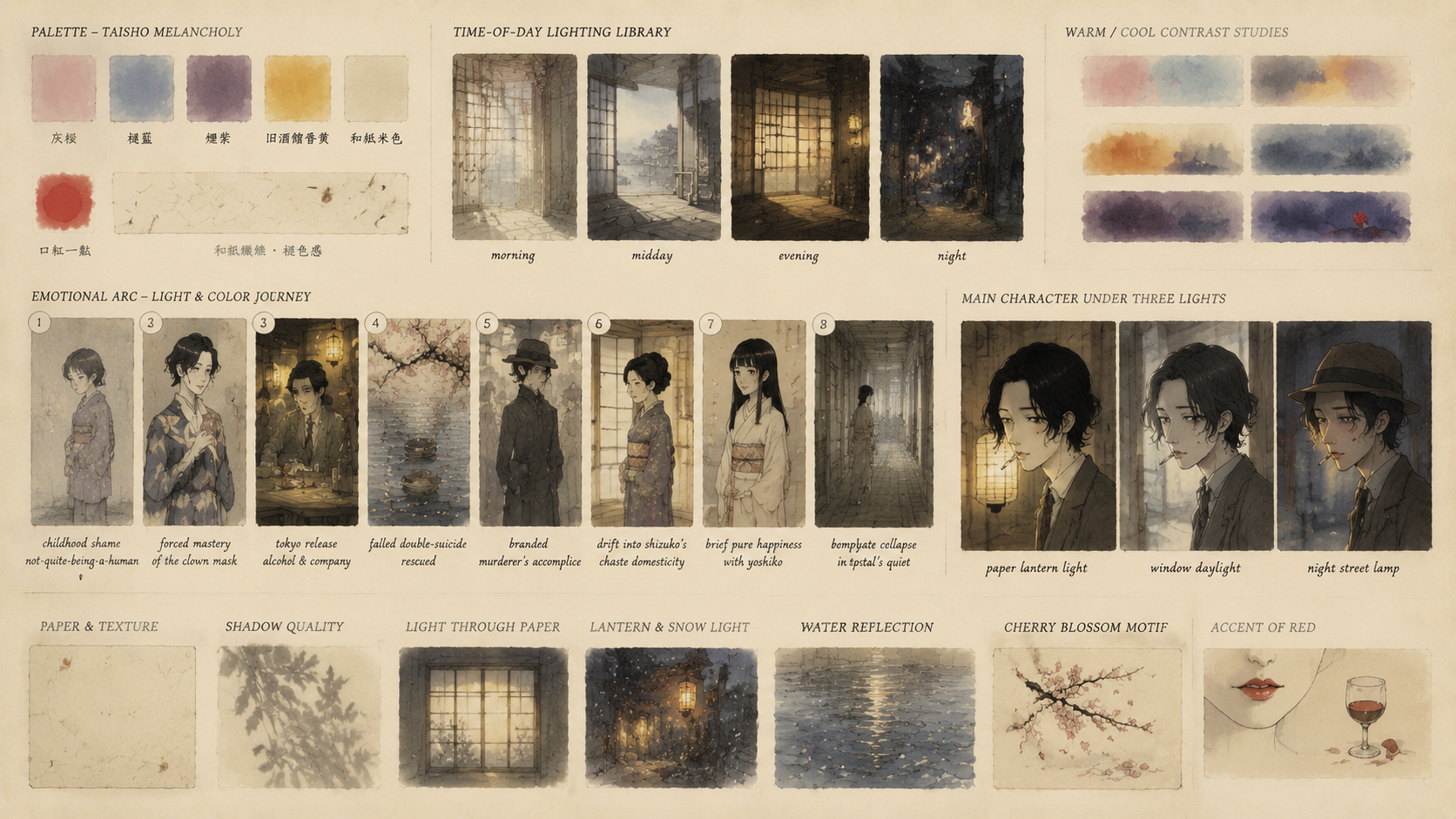
Before the guide was written, this book got a visual foundation — every illustration you just read grew out of it.
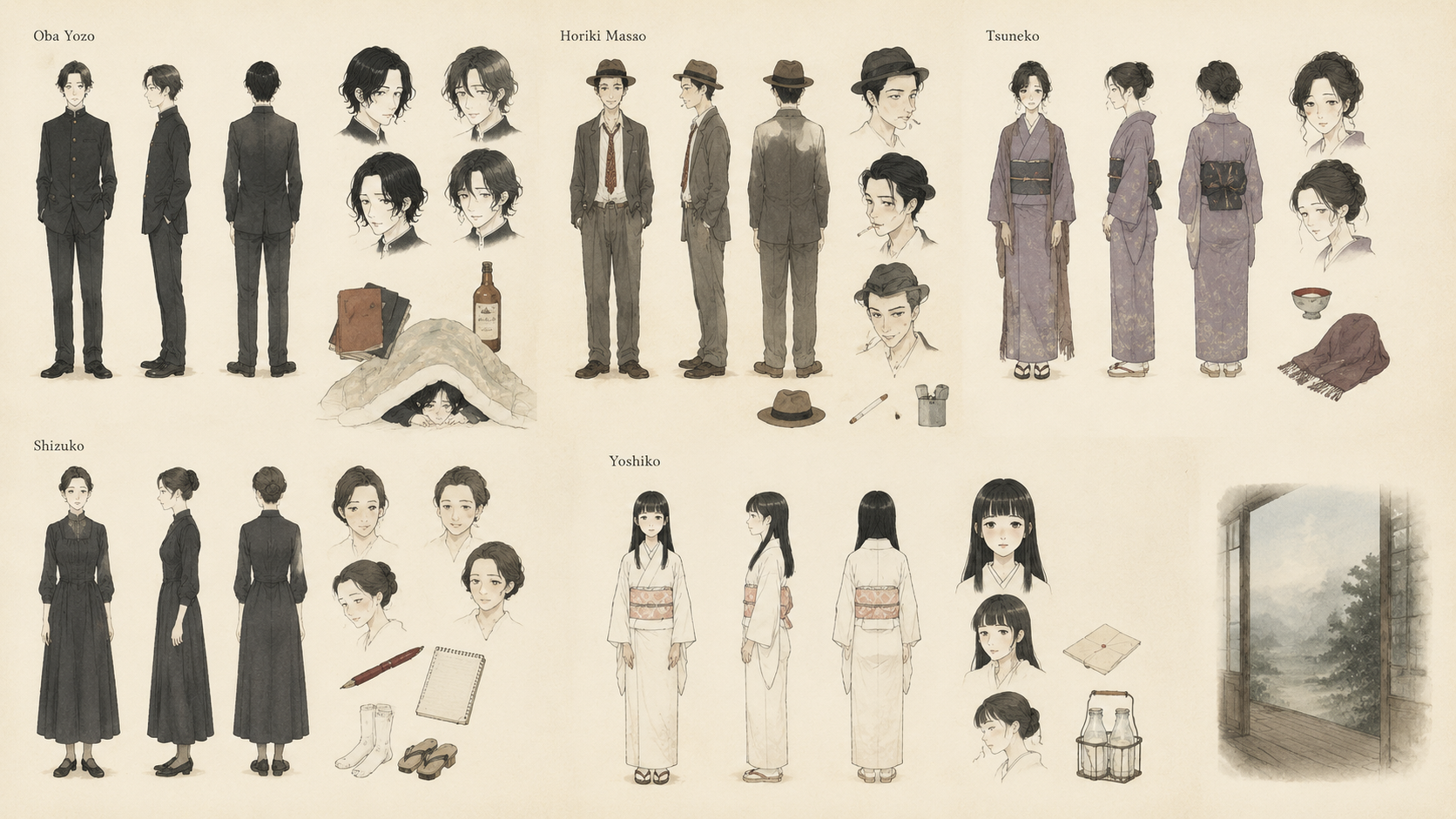
This world runs on a single rule: everyone else lives as if it were the easiest thing in the world. Yozo's whole struggle is to fake looking like he can live that way too. This book is not about anything he did wrong — it is about the fact that he never got handed the same ticket of admission everyone else was given.
Yozo's earliest discovery is that there is something running between human beings that he can sense but never actually touch. When others laugh, he laughs along; when others cry, he fakes sorrow — and he runs this whole system of impersonating a human being more smoothly than anyone around him. His family treats him as the household clown, his teachers and classmates find him endearing, and clowning carries him through every social occasion he has. The cost is that he never once learns who he actually is underneath it. What makes this stretch of the book so skillful is how seamlessly Dazai welds comedy to dread — you laugh along even as a chill creeps up your spine, and only partway through does it hit you that none of this was humor. It was a child calling for help.
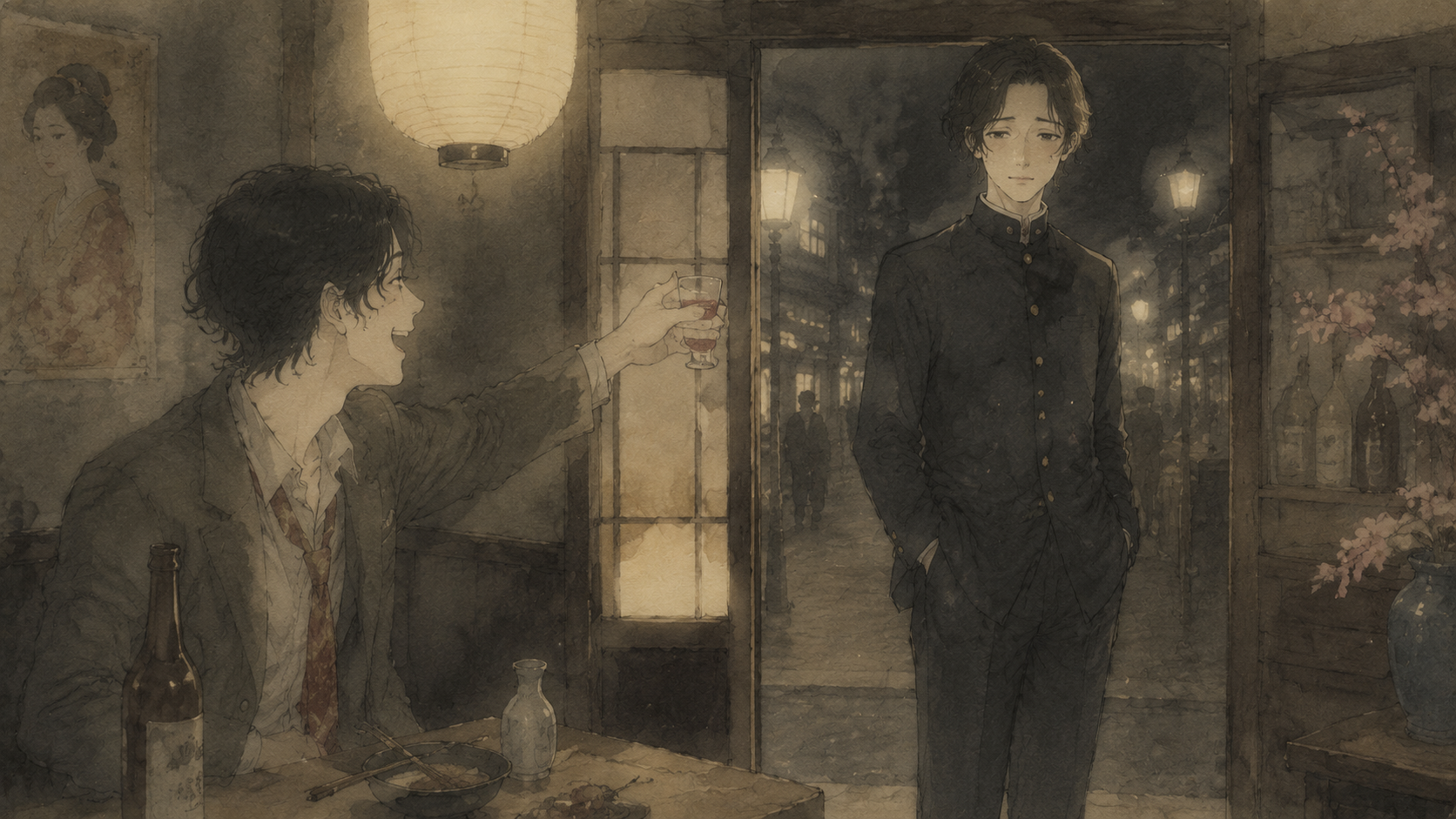
Tokyo works like an amplifier. Once he moves to the city, Yozo meets Horiki Masao, a bad influence who drags him from good-boy clowning into bars, mahjong, geisha, and hard liquor. Horiki serves two functions: he shows Yozo that deliberate self-ruin is an option the world actually permits, and he strips the humor out of Yozo's clowning until it curdles into naked performance. Yozo is still laughing, but what the reader hears underneath it are footsteps closing in on the end.
The next two events chain directly into each other. Tsuneko, a hostess at a bar he frequents, proposes that the two of them die together. Some mixture of drunkenness and mutual recognition of misery carries them out to actually walk into the sea. Tsuneko drowns; Yozo is pulled out alive. That a man who wanted to die is saved is heavy enough on its own — heavier still is the label he carries afterward, the one that never washes off: he let someone else die and lived. What Dazai does here is genuinely clever — instead of writing Yozo into remorse, he shows Yozo discovering that even this absurd weight, dying alongside someone and surviving alone, produces no pain in him at all. His emotions have simply stopped responding. That is more chilling than any amount of ordinary guilt.
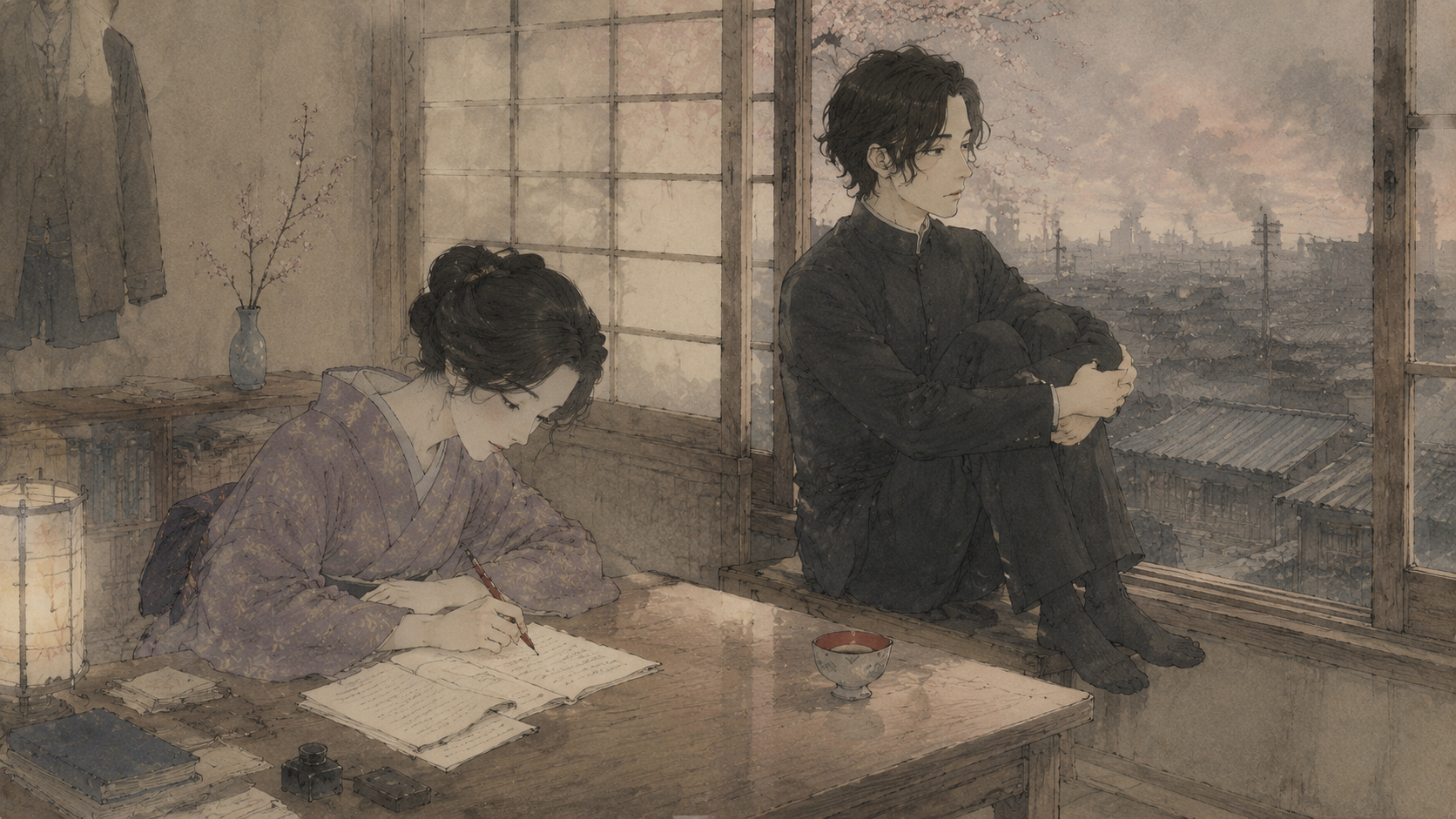
After the scandal, what waits for Yozo looks like a period of stability — Shizuko, a woman who writes for a living, takes him in and supports him. For one moment he genuinely believes he can become a new man. And then? He cannot bear someone who does not despise him. You read that right: he runs because being treated kindly leaves him nowhere to hide. What makes the Shizuko section work is not its plot but its rhythm — it is brief and quiet, exactly like one exhaled breath, there only so the next one can break.
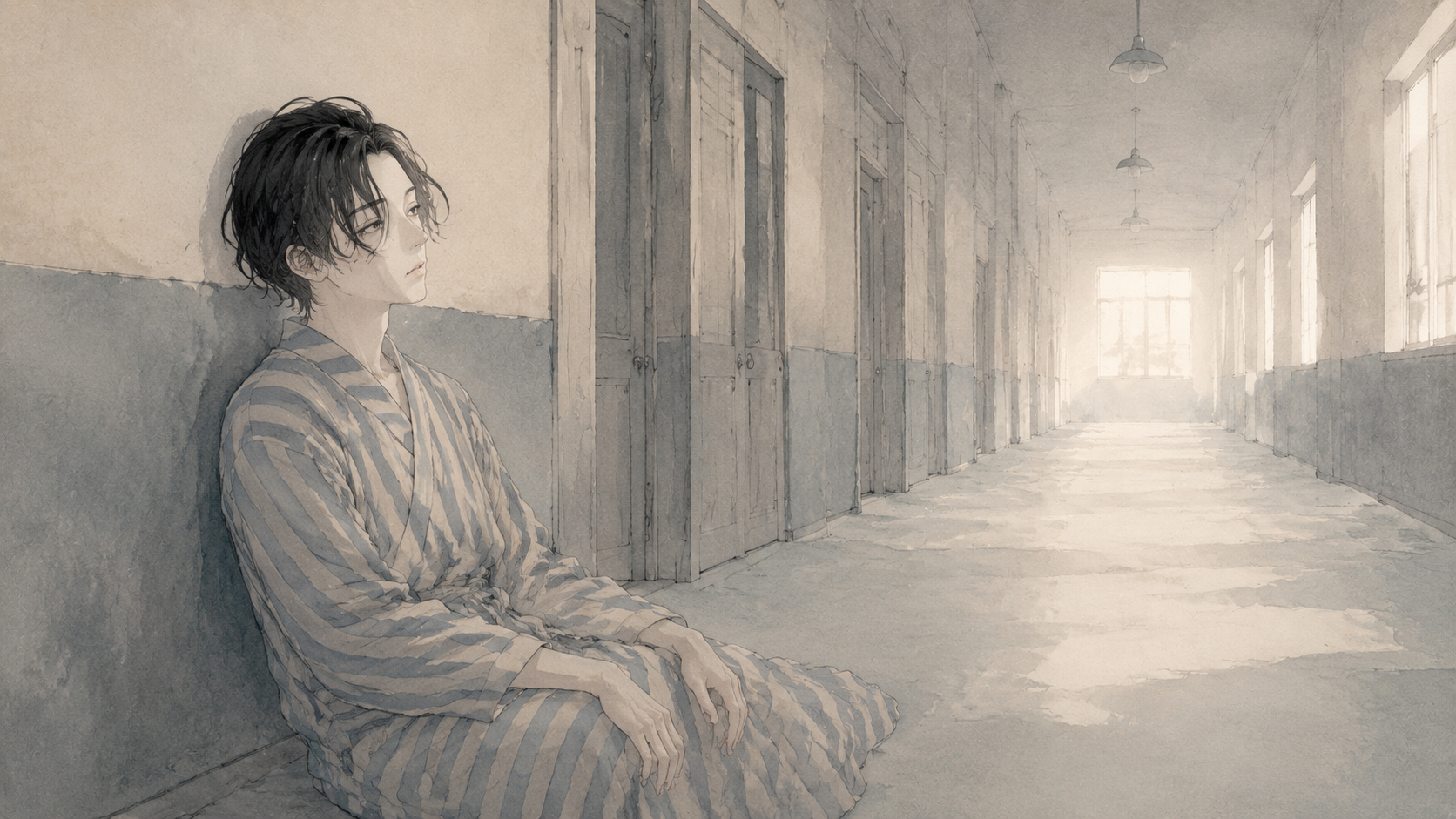
Marriage is Yozo's last bet. His bride, Yoshiko, is defined by her innocent trust in other people — the one thing Yozo has never once managed in his life. The two of them seem to complete each other, and for a while there really is a stretch of something like ordinary, peaceful life. Dazai deliberately slows the pace here, because he wants the reader to believe this time it will hold. Then he smashes the window himself: Yoshiko's unconditional trust gets her violated by another man, and Yozo happens to witness it. The last thread he had left — the faint belief that other people might still have decent souls — comes apart completely, and the collapse runs like a chain reaction: heavier drinking first, then morphine, and finally being tricked by his own family into an asylum.
The book closes in someone else's voice, and the twist is one nobody sees coming. Yozo is a broken man by now, sent back to the countryside to convalesce, expecting nothing from life anymore. But in the memory of the bystander telling this final piece — a woman he once won over with his clowning — Yozo was "a good boy, almost like a god." That single line delivers the whole novel's most lethal blow. Yozo believed, from beginning to end, that he had only ever been performing, deceiving, scraping by in bad faith. What the bystander remembers is nothing but his gentleness. Dazai lets both versions stand at once — you are no longer qualified to be human, and yet you were, in fact, something like a god — and that irony is one of the cruelest closing lines in modern Japanese literature.
As for Dazai himself: barely more than a month separates finishing this book from walking into the water. In June 1948, before the final installment had even run in the magazine, the writer and his lover went to the river together and drowned. In other words, while Yozo was still being written into his third and final notebook, the author had already walked that last stretch of road for him. This coincidence — writer and work collapsing in sync — makes the book impossible to read as an ordinary novel. It is the last frame a man left behind while he was still sinking.
On the surface, No Longer Human is a chronicle of ruin. At its core it is a self-diagnosis of disqualification from being human at all. It is not preaching despair — quite the opposite. It forces you to look straight at the actual admission ticket to being human: can you feel hunger, anger, love, hatred; can you simply accept someone else's kindness without flinching. Yozo fails at every one of these, which is why he pronounces himself unqualified. But Dazai's real sharpness is in that final irony — letting a man who considers himself completely bankrupt be seen, through someone else's eyes, as a good boy, almost like a god. What that amounts to saying is this: qualification to be human was never something you get to rule on yourself, and a person's distance from the world does not necessarily mean that person is bad.
What cuts deepest in this book isn't how wretched Yozo's life is — it's that you finish it unable to shake the suspicion that there is a gap between you and the world you have simply chosen not to see.