Norwegian Folktales (East of the Sun and West of the Moon and Other Tales) · Companion Guide
挪威民间故事集
一个农家姑娘骑上白熊的背,穿过雪原与极夜——只为找回那个被蜡烛烫碎的人。
Opening
A candle. One drop of hot wax lands on a sleeping man's chest. The girl gasps, and the White Bear who has slept beside her every night turns back into a man on the spot, only to be caught by his own curse: he must leave her before dawn. One careless moment with a candle, and she loses him for good.
This is the best-known tale to come out of the Norwegian fjord farmhouses: East of the Sun and West of the Moon. It comes from a collection assembled in the 1840s, when two young Norwegian folklorists traveled the countryside recording oral tales contemporary with the Brothers Grimm. From the Oslofjord to the western coast, from the mountain districts in the north to the mills of Trøndelag, every story carries the smell of pine forest, snowfield, and timber farmhouse.
What Kind of Book Is This
Peter Christen Asbjørnsen and Jørgen Moe were both Norwegians born in the early nineteenth century, one trained as a forester, the other the son of a country pastor. They made a pact as students to collect folktales, and spent more than a decade crossing Norway on foot, writing down living oral traditions like the White Bear prince, the three Billy Goats Gruff, and the mermaids of the fjords. The tales appeared in volumes starting in the early 1840s.
The book holds a distinct place on the map of European folklore. Scandinavia already had the grand mythology of Odin and Thor in the Eddas; Finland had a national epic in the Kalevala. What Asbjørnsen and Moe recorded was a smaller, closer layer, the stories told by the hearth in fjord farmhouses. They sit closer to the ground than myth, and further north than Andersen, gathering Norway's own trolls, the North Wind, the White Bear prince, and fjord-dwelling sea folk into one book for the first time. In English it is known best as East of the Sun and West of the Moon.
People and World: The Neighbors Over the Mountain
The book has no single hero, because its real subject is a place, the fjords and mountains of Norway. The characters who live there fall into three rough groups. First, the farmhouse people: poor farmers' daughters, herdsmen, fishermen, millers, and the stepmothers who never stop tormenting their stepdaughters. Second, the creatures of the mountains and forest: trolls living in caves and under stone bridges, a prince transformed into a White Bear, mermaid sisters in the depths of the fjord. Third, the helpers who move between earth and sky: Old Man North Wind, the East Sun, the West Moon, and the gold-laying hens and geese that keep watch at a dead mother's grave.
The rules of this world are simple. Trolls are clumsy and greedy, but daylight turns them to stone. The North Wind is stern but fair, and will help a good-hearted mortal. A mermaid who marries into the human world loses her powers of the sea, but she carries one taboo that can never be broken. The three Billy Goats Gruff come in ascending sizes, small, middle, and big, drawn so a reader can tell them apart at a glance. None of these rules answer to logic. They answer to an oral contract handed down from the grandparents.
The White Bear Prince: A Marriage Undone by a Candle
A poor farmer's daughter agrees to marry a White Bear, so her father can live in comfort. She rides on the bear's back through snowfields and the long polar night, to a northern palace where a fire is lit for her every evening. The prince comes to her only at night and leaves before dawn, on one condition: she must never light a candle to see his true face. Alone through the long nights, she cannot help herself. She lights one. In the instant the wax drips onto his chest, she sees the handsomest face in the world, and with her own hand, ruins everything.
The prince is driven away, and the girl sets out to bring him back. She visits Old Man North Wind, then the East Sun, then the West Moon, each living farther off, colder, and vaster than the last. She finally reaches the trolls' castle, steadies her shaking heart, and survives every trial the trolls set for her. At the last moment, she kisses the White Bear, and only then does the curse fully break.
Fairy tales love the kiss that wakes a stone statue by magic. Here, the kiss takes nerve, the girl has to close the distance herself. Norwegian folktales rarely break a curse with time or tears; they break it when someone finds the courage to take that last step.
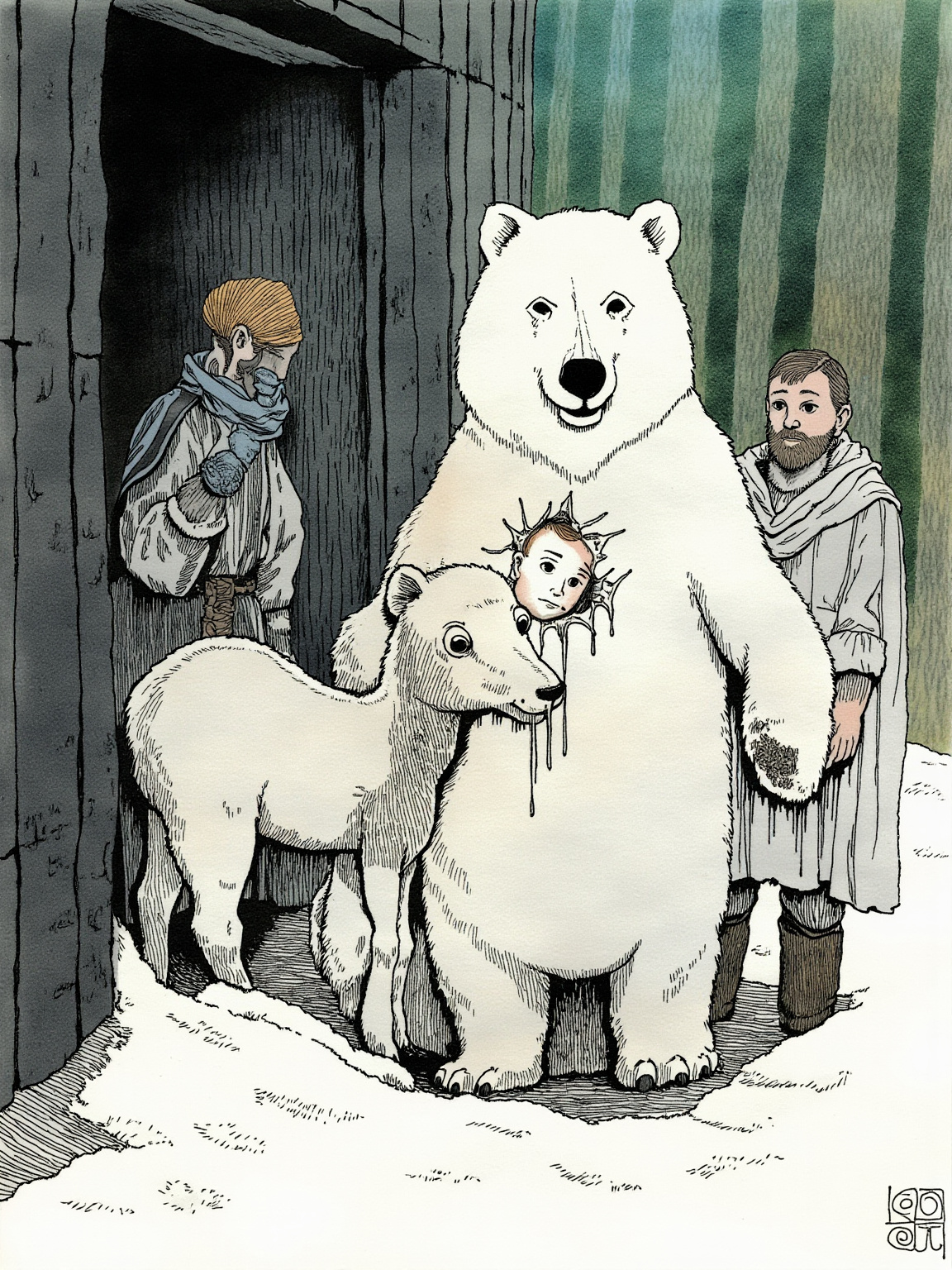
Now she must go seek him, though she does not know in what direction.
她必须上路去找他——尽管她连该朝哪一边走都不知道。
金句 · 东之太阳西之月亮 · 寻找王子之旅
The Three Billy Goats Gruff: The Story Every Norwegian Knows by Heart
The grass is richer on the hillside, greener still on the far side of the bridge. Three billy goats, small, middle, and big, head across a stone bridge one after another. Under it crouches a troll with a great nose, waiting for a meal. The smallest goat trots lightly onto the bridge. "I am the smallest one, I would not even fill the gap in your teeth," and the troll lets him pass. The middle goat tries the same trick, and slips through too. Then comes the big goat, and he does not bother talking his way out. He paws the ground, lowers his head, and knocks the troll clean into the river.
The whole story runs under two minutes, and it is the one Norwegian children hear every night before bed. It is short as a nursery rhyme, and the rhythm lands exactly right: small goat sets it up, middle goat repeats it, big goat delivers the payoff, three beats and done. This is where the troll's whole image gets fixed: dumb, greedy, outwitted by something small, and finished off when the big goat puts his head down and sends him into the river.
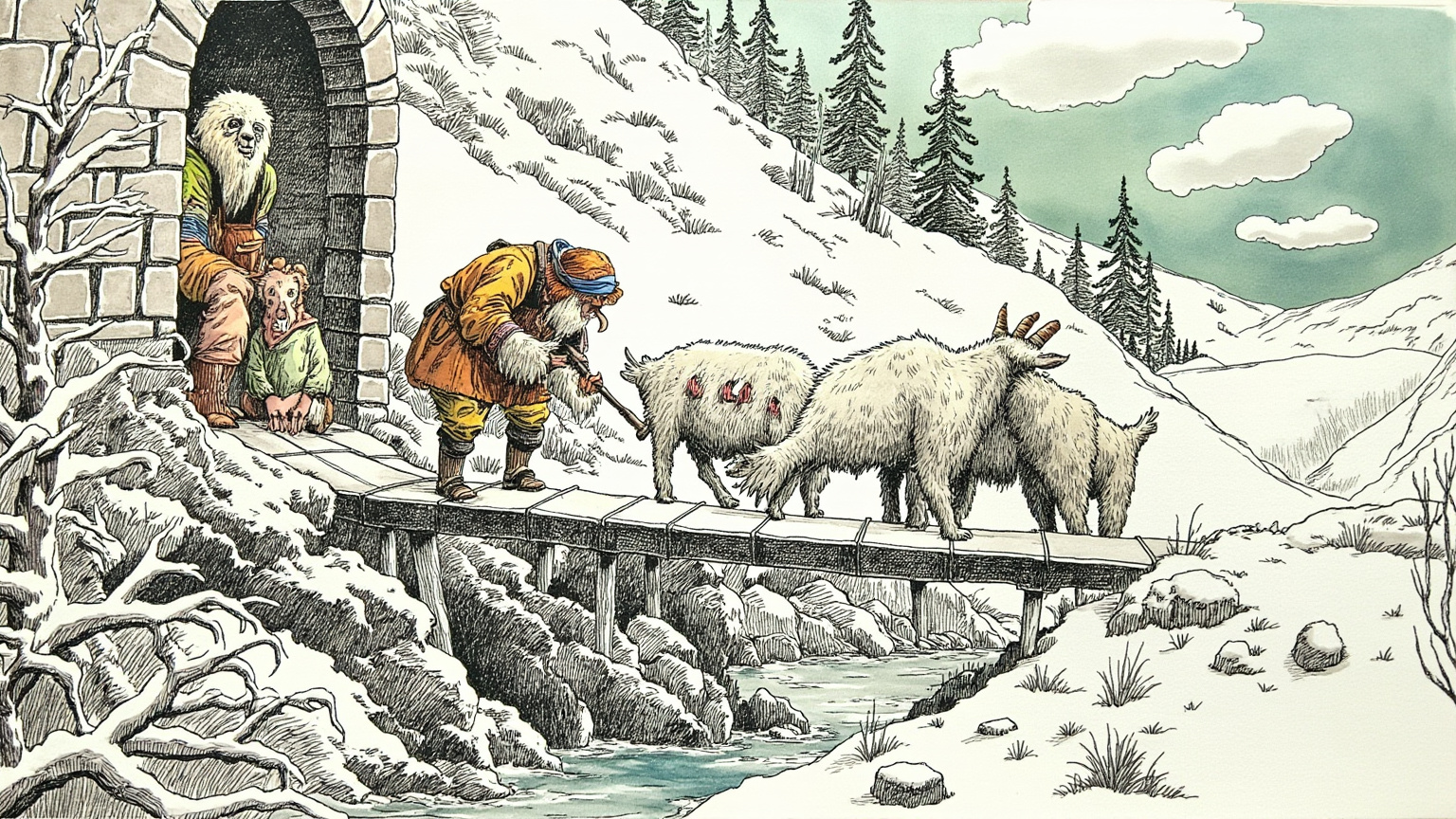
Snip, snap, snout — here come I to gobble thee up!
唰、啪,鼻子尖——我这就来把你一口吞掉!
金句 · 三只公羊比利 · 桥上的巨魔
The Girl by the Hearth: A Norwegian Cinderella
A girl in broken boots, or a girl in ashen gray, her name hardly matters. She sits in the ashes by the hearth, her face blackened by smoke, her thin body wrapped in rags. Her stepmother piles all the work onto her, while the stepsisters dress up and go to the feast. The girl has no shoes, no gown, no prospects, only a small tree at her dead mother's grave, or a hen that lays golden eggs for her, or Lazarus speaking up from the bottom of a well. These small mercies from beyond the grave step in for her exactly when she needs them most.
In the end she puts on the golden shoe, or the ring is recognized, and stands in front of the truth, and the stepmother's and stepsisters' lies collapse on the spot. What sets this Nordic branch of Cinderella apart is who does the helping: always the mother who is no longer there, appearing as the tree at her grave, the talking hen, or the dead voice from the well, rather than a fairy godmother. The authors make mother into a kindness that crosses over death itself, colder than a glass slipper, and steadier.
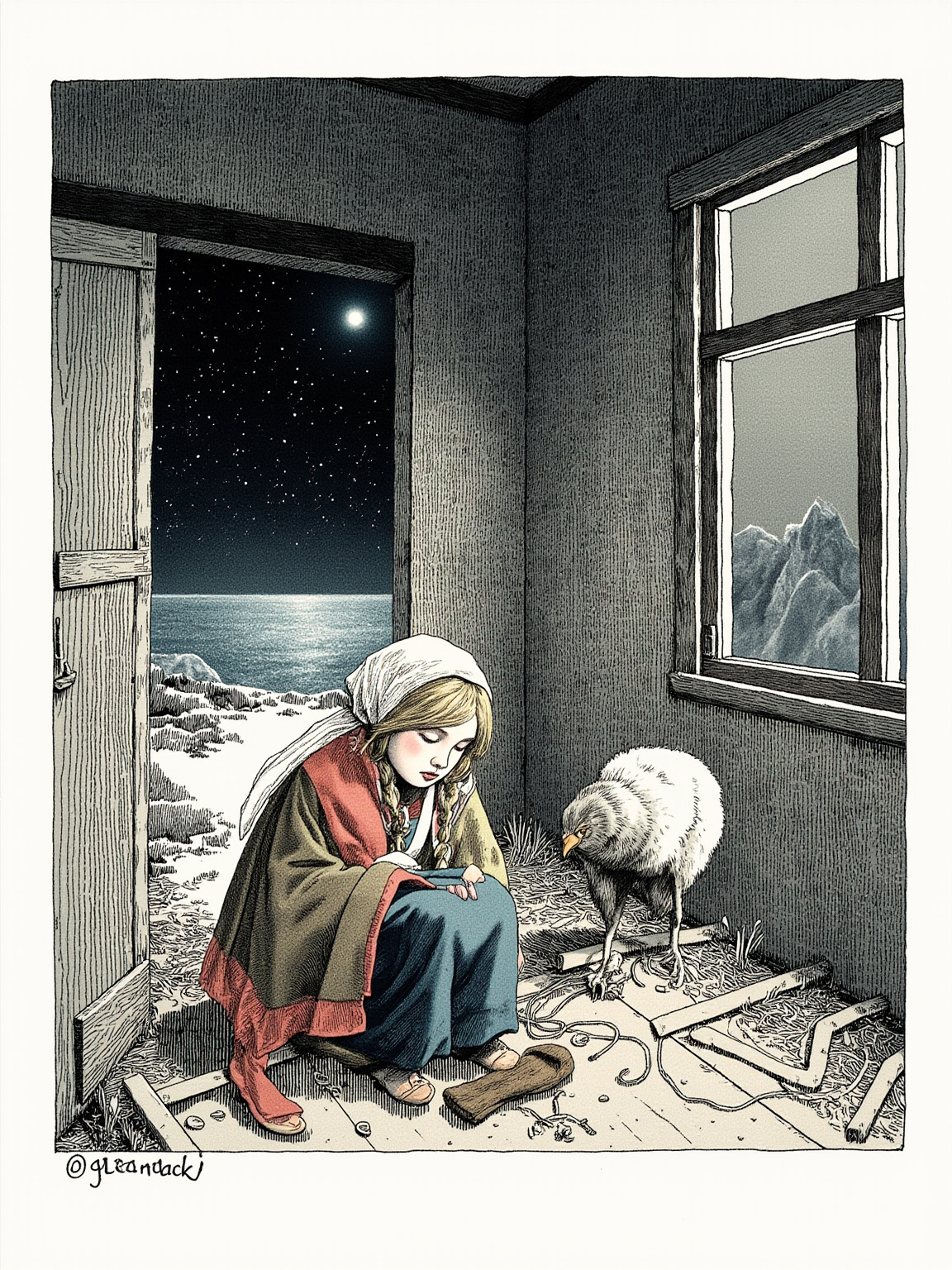
She sat in the ashes, as the youngest daughter always does.
她坐在灰堆里——最年幼的女儿,照例坐在灰堆里。
金句 · 灰衣少女/破靴子之女 · 灶边的继女
The Fjord Fisherman and the Sisters of the Sea
A fisherman hauls in a mermaid with his net, no, two of them. One of them is moved by the way he looks at her, and agrees to come ashore and live with him. Once she marries into his world she loses her powers of the sea; her tail becomes legs, and she cooks by the hearth and mends nets on the dock like anyone else. But one thing is forbidden: he must never take her back to see the sea she came from, and never speak of her old home on a certain day of the year.
The book never says exactly what he does wrong. It only gives the result: her face goes cold, and she takes the children back into the sea, leaving nothing behind but an empty house and a net still out on the dock. Stories like this from the Nordic coast always carry a taste of salt: a human can marry into the other world, but there is always a rule pressing down on it, and once it breaks, there is no going back.
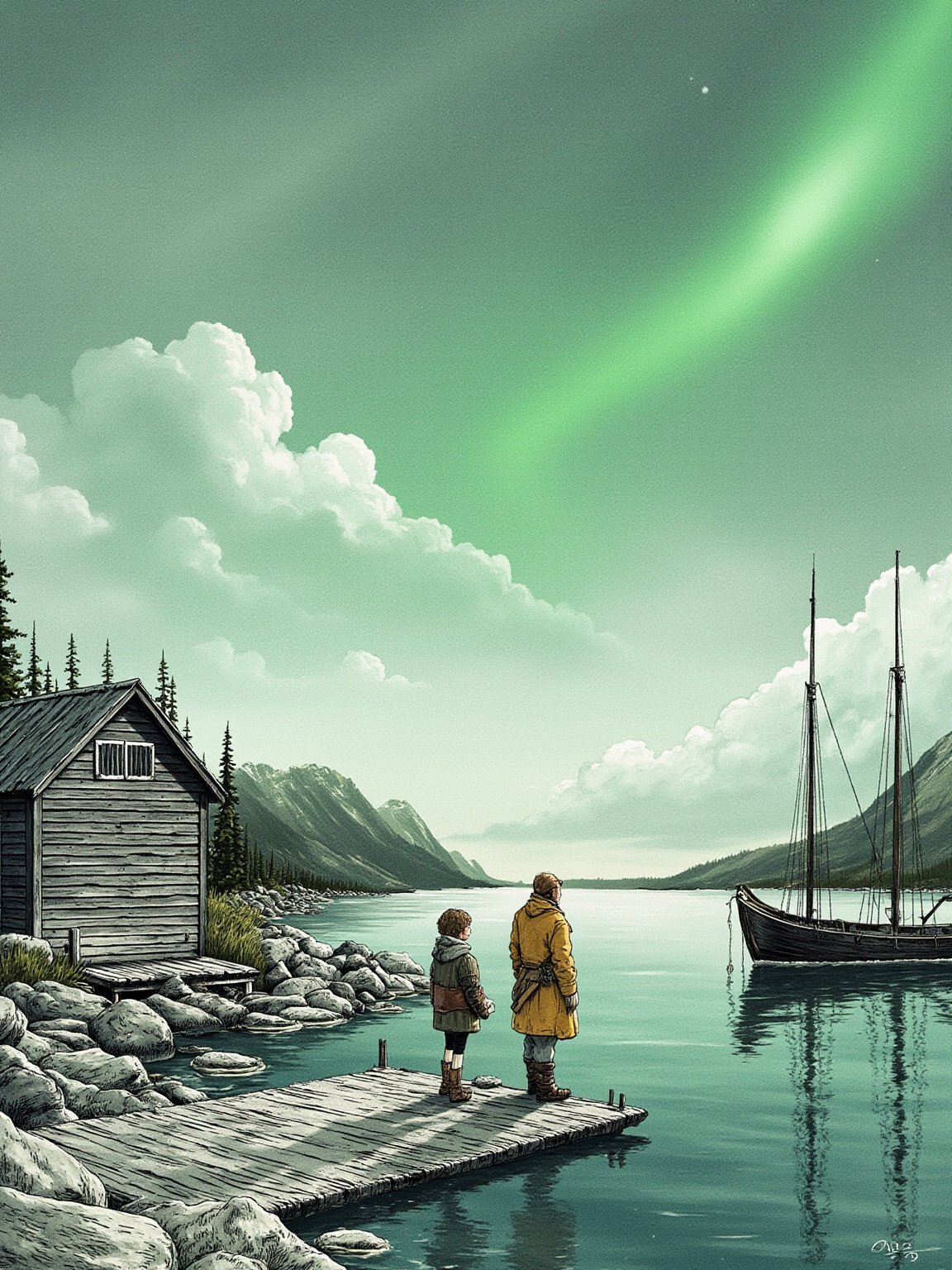
She could never bring herself to show him where she had been, and he could never ask.
她始终没把他带回海里去,他也始终没问出口。
金句 · 峡湾人鱼/汉娜 · 海中姐妹的下嫁
The North Wind on the River: A Day of Swapped Chores
A man complains that his wife has him running around all day, lighting the fire, milking the cow, feeding the hens, minding the baby, as if none of it takes any skill. So the two of them agree to swap jobs for a day. His first stop is the cow, and she does not know him from a stranger; she kicks the milk pail over. He goes to light the fire, and the smoke floods the whole house. He tries to settle the baby, who cries until he can barely breathe. He goes to feed the hens, and they scatter across the yard in a panic. The North Wind howls all day, and every single thing goes the wrong way.
This one is clearly a joke tucked into the collection as seasoning, after so many trolls, bears, and curses, the reader needs something to laugh at. It flips the old Nordic division of labor on its head, and every laugh comes from an ordinary object: the milk pail, the hearth fire, the wailing baby, the flapping hens. The North Wind drops out of the leading role here and becomes background noise instead.
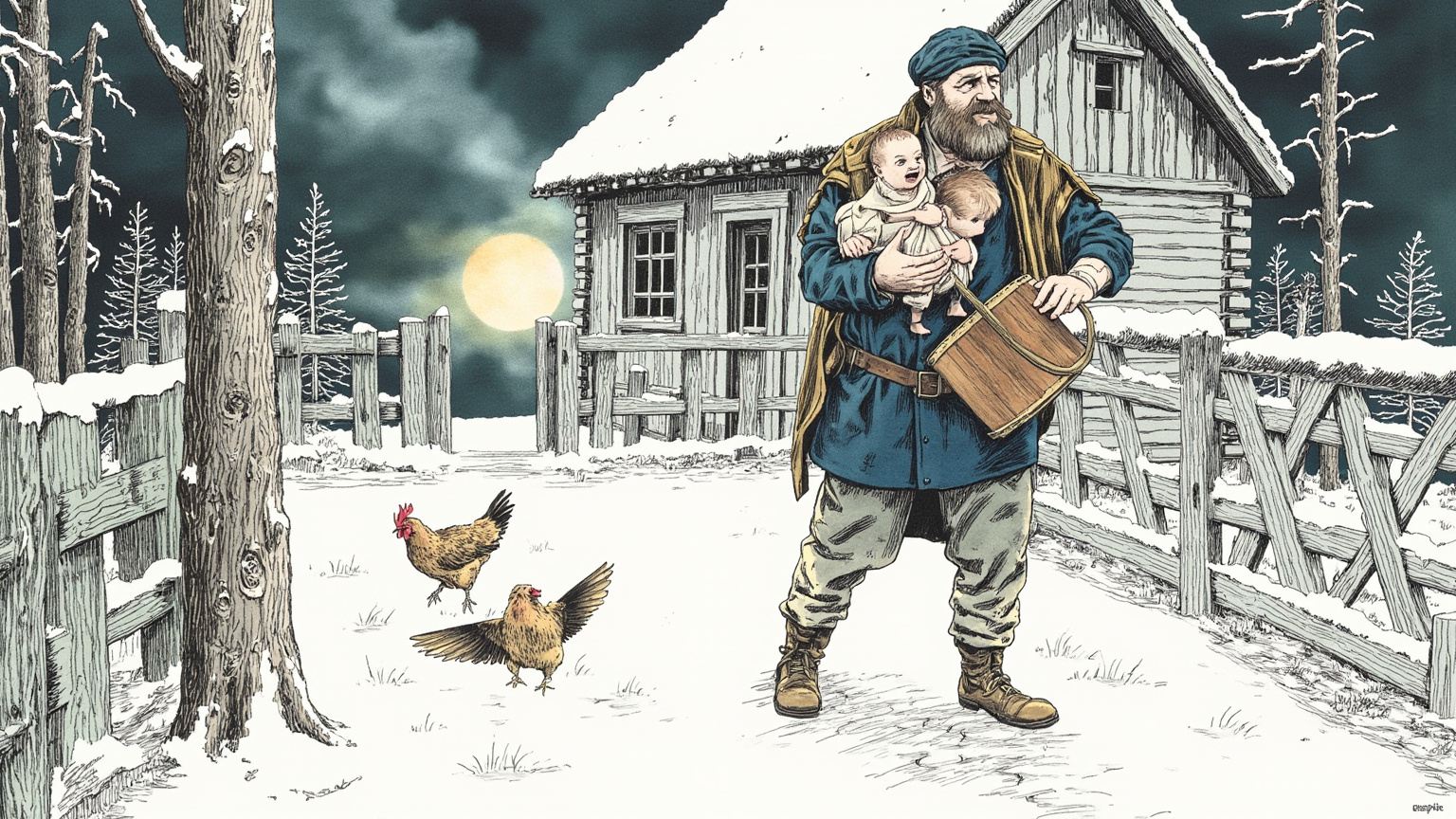
The wind blew the porridge off the fire, and the cow kicked over the milk-pail.
北风把粥从灶上吹翻了,奶牛一脚踢翻了奶桶。
金句 · 北风在河上吹 · 换工一日的闹剧
What This Land Is Really About
Line up all seven tales, and the theme surfaces on its own: rural Norway imagines nature as a neighbor with a personality, a house, and a set of obligations. Old Man North Wind lives in an ice palace in the far north and runs the cold spells. Sea spirits live deep in the fjord and run the tides. Trolls live in mountain caves and run the mountain paths. A dead mother keeps watch from her grave over the children she did not get to finish raising. Nature here has a neighbor's face: it lives close by, talks back, and strikes bargains with you, rather than sitting in the background as scenery.
Transformation is the most obsessive motif in this collection: a White Bear who is really a prince, a bride who is really a mermaid, a missing bridegroom who turns out to be someone else entirely. On the surface it is all spells and curses. Underneath, it is a warning that seeing is not believing. The husband beside you might be a prince. The bride you married might come from under the sea. The Cinderella by your own hearth might be carrying gold you cannot see. The folktale wraps a transformation around a single insistent point: do not trust appearances.
The moral ledger underneath is almost stubbornly stable: the wicked stepmother does her damage at home, the troll does his out past the mountains, but the good ones, whether a girl, a herdsman, or a fisherman, can always borrow strength from the other world or the dead exactly when they need it. The worldview of the Norwegian farmhouse is that plain: be a good person, and the world will hand you a lifeline at the worst possible moment.
This book's trolls, North Wind, and sea folk do not live in some once upon a time. They live on the hill behind your house, one stone bridge from your door.
Why Read the Tales Themselves
This companion gives you the map. The text is the land itself. The prose here runs cold and spare, close to Nordic speech, no piled-up adjectives, no psychologizing. The stories move on action and objects alone: the jolt of riding on a bear's back, the sound of a milk pail going over, a hen bursting through a fence rail. Reading it, you will catch the resin smell of pine forest and the smoke of a farmhouse hearth, the kind of physical sense no companion piece can hand you.
And the best part of these stories is how short they are. The Three Billy Goats Gruff reads in five minutes; the North Wind's comedy of swapped chores takes maybe ten. A short tale is the hardest test of a storyteller's touch, one extra sentence and it goes soft, one sentence too few and it collapses. What Asbjørnsen and Moe wrote down is the leanest, most exact version, sifted out of countless grandmothers' voices. Reading the tales is a way of listening for whether those voices are still there.
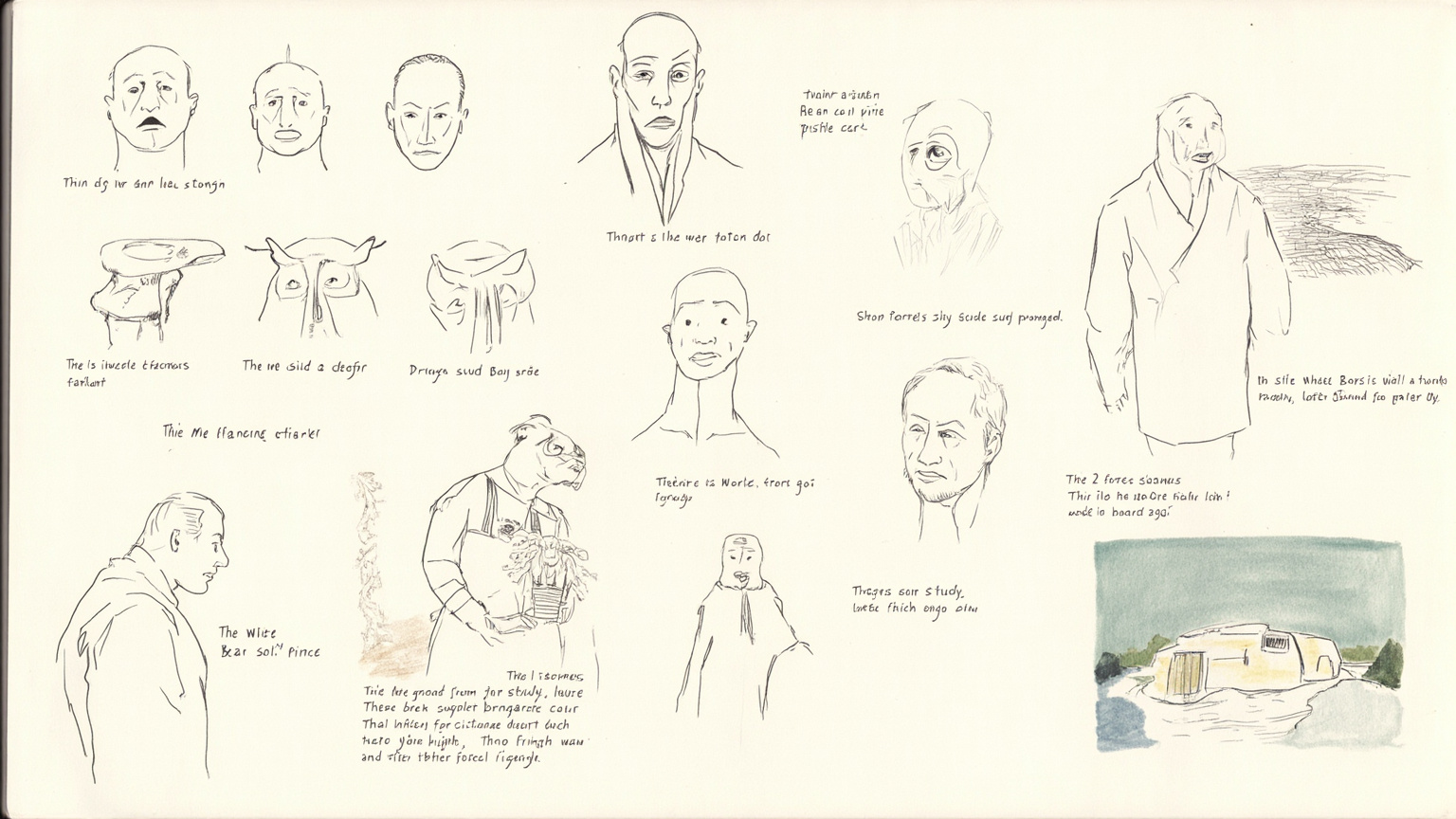
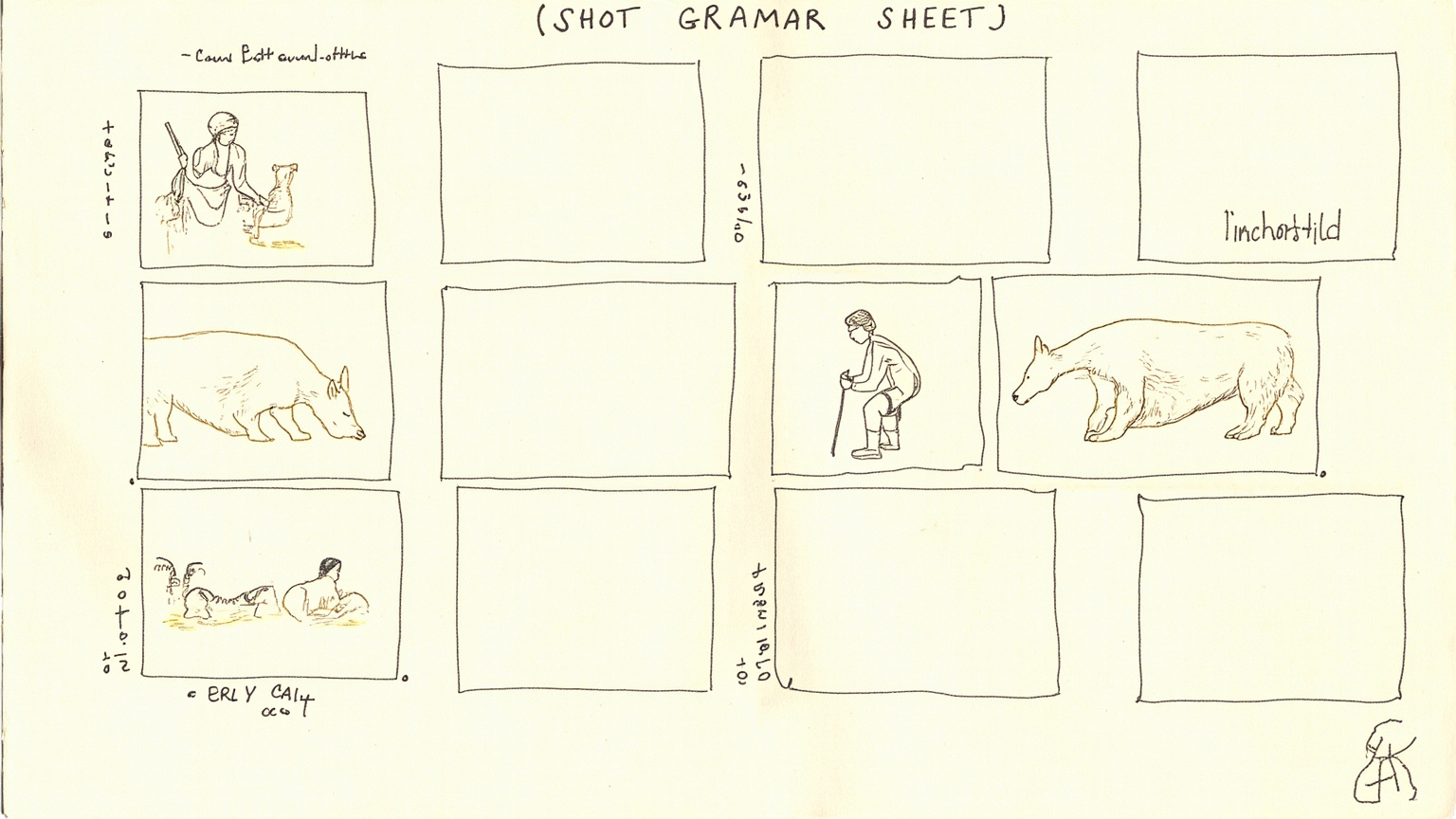
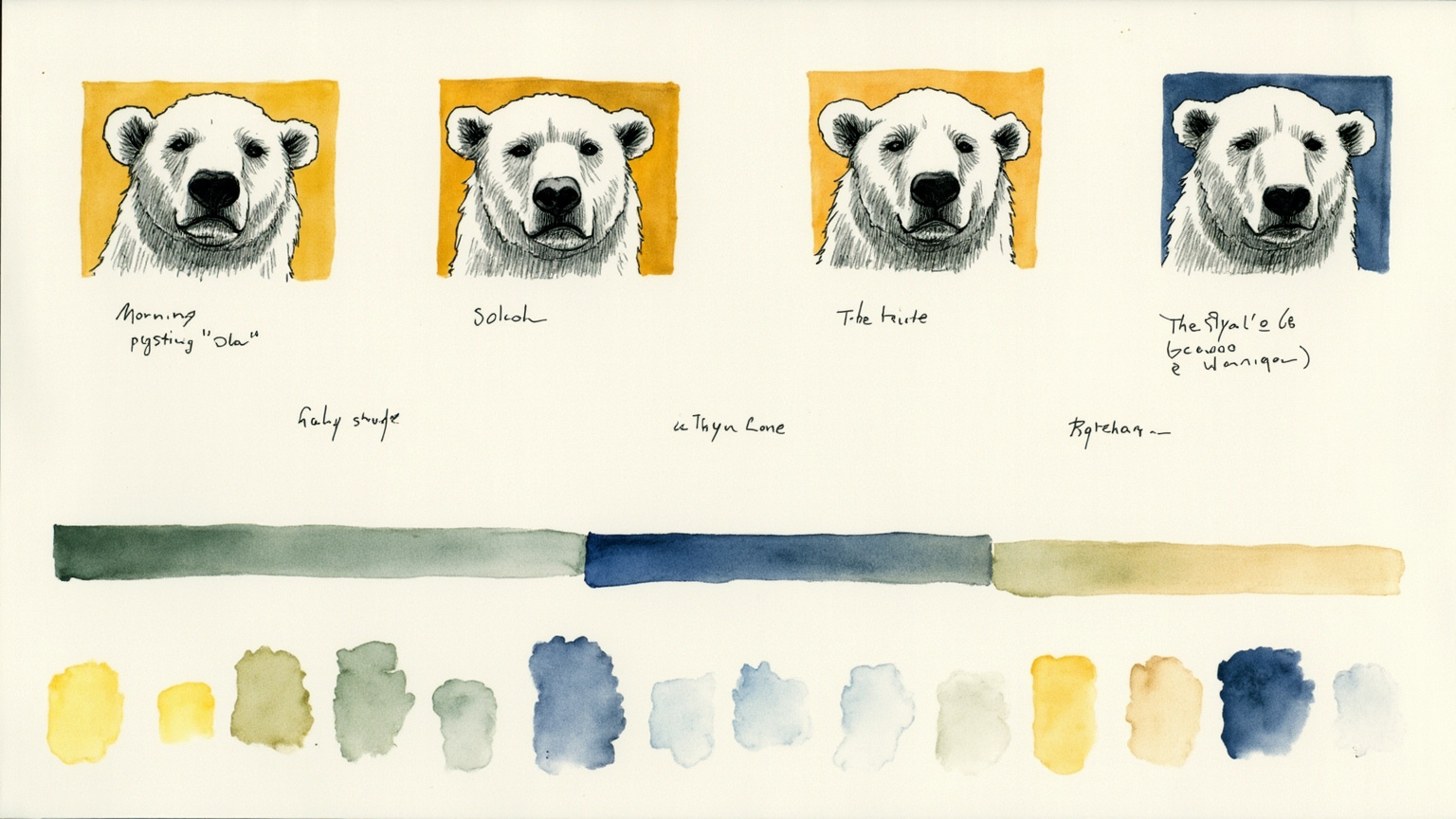
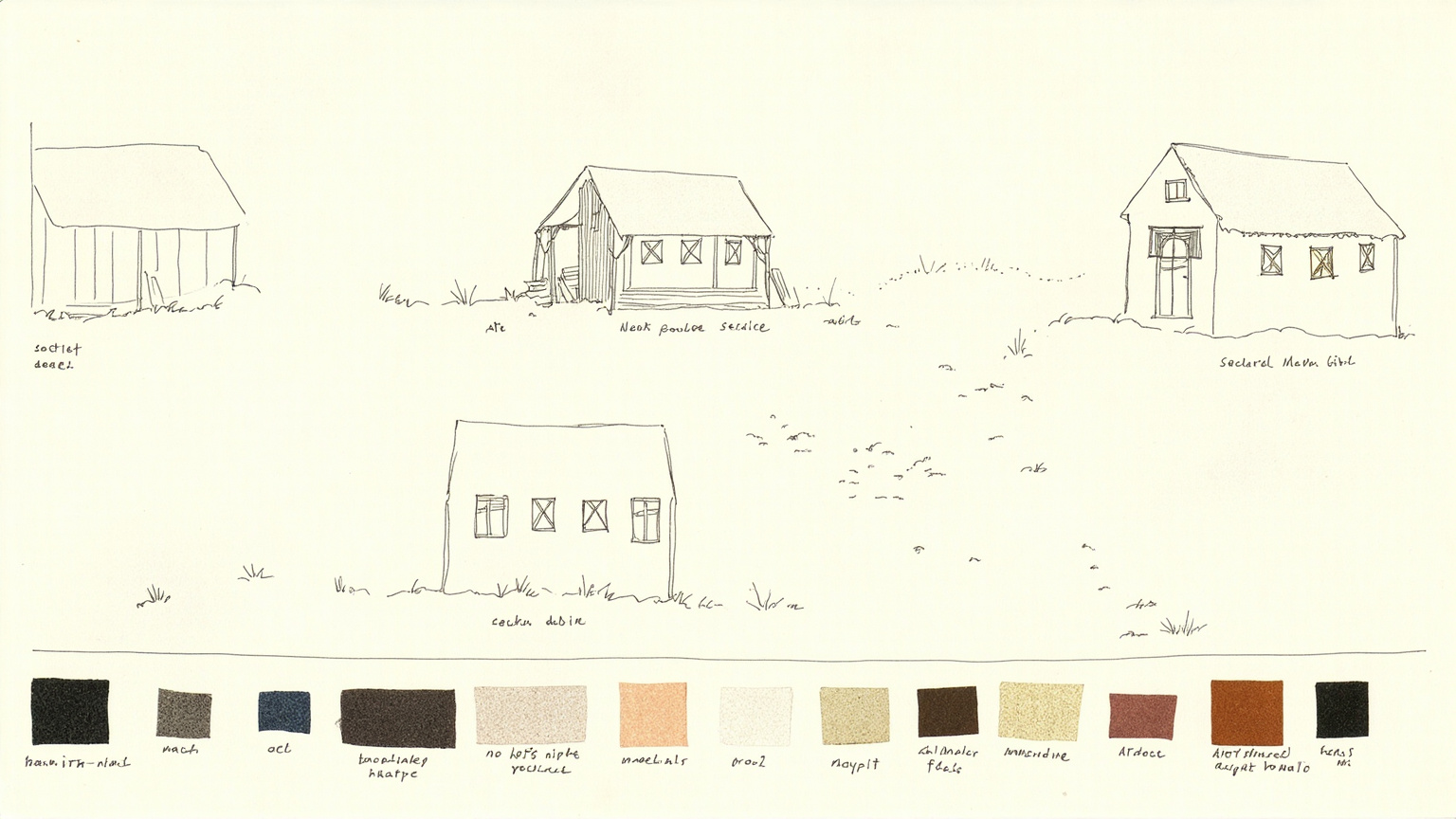
Art Direction4 plates
Before the guide was written, this book got a visual foundation — every illustration you just read grew out of it.