A coming-of-age novel about youth, death, and a love with no way back
Text and illustrations produced by the pipeline
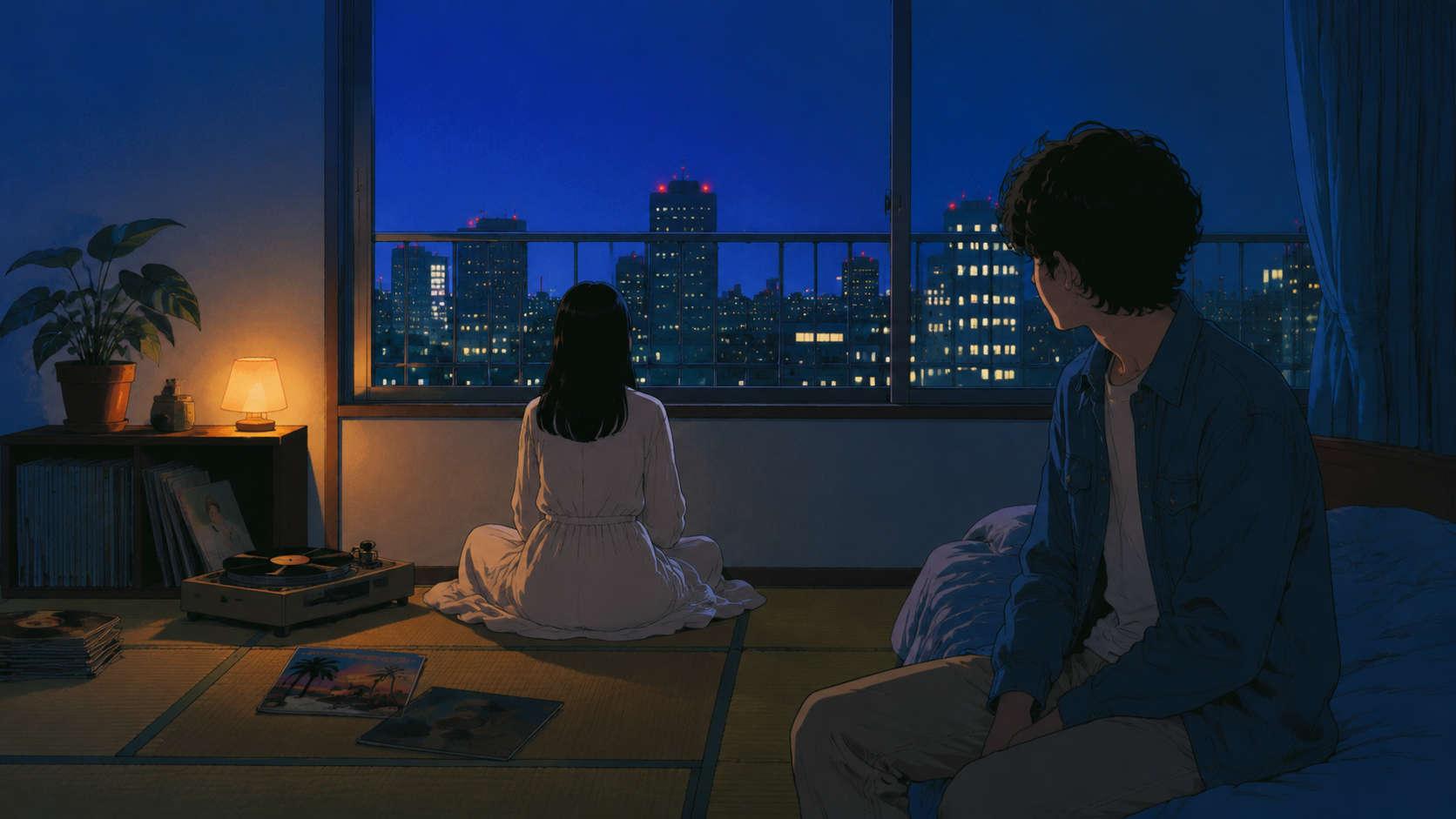
How long has it been since an old song yanked you straight back into the past? Toru Watanabe, now middle-aged, is sitting on a plane when the cabin speakers play the opening bars of the Beatles' "Norwegian Wood." A few notes are all it takes — the world collapses inward. He is no longer the politely detached passenger in business class; he is nineteen again, standing in Tokyo's endless rain, the smell of death and desire still clinging to him. Once memory tears open like that, it never quite closes back up.
Norwegian Wood came out from Kodansha in 1987, split across two volumes, and tore through the Japanese book market like wildfire, eventually selling more than 4.5 million copies. It was the moment Haruki Murakami stopped being a writer's writer and became a household name. He had already built a distinctive voice with Hear the Wind Sing and Hard-Boiled Wonderland and the End of the World, but Norwegian Wood was the first time he pushed his aesthetic of urban loneliness all the way — a spare, restrained style that lays the warmth of youth and the shadow of death flat in the same frame. It has since been translated into dozens of languages and become the book that carried Murakami onto the world stage.
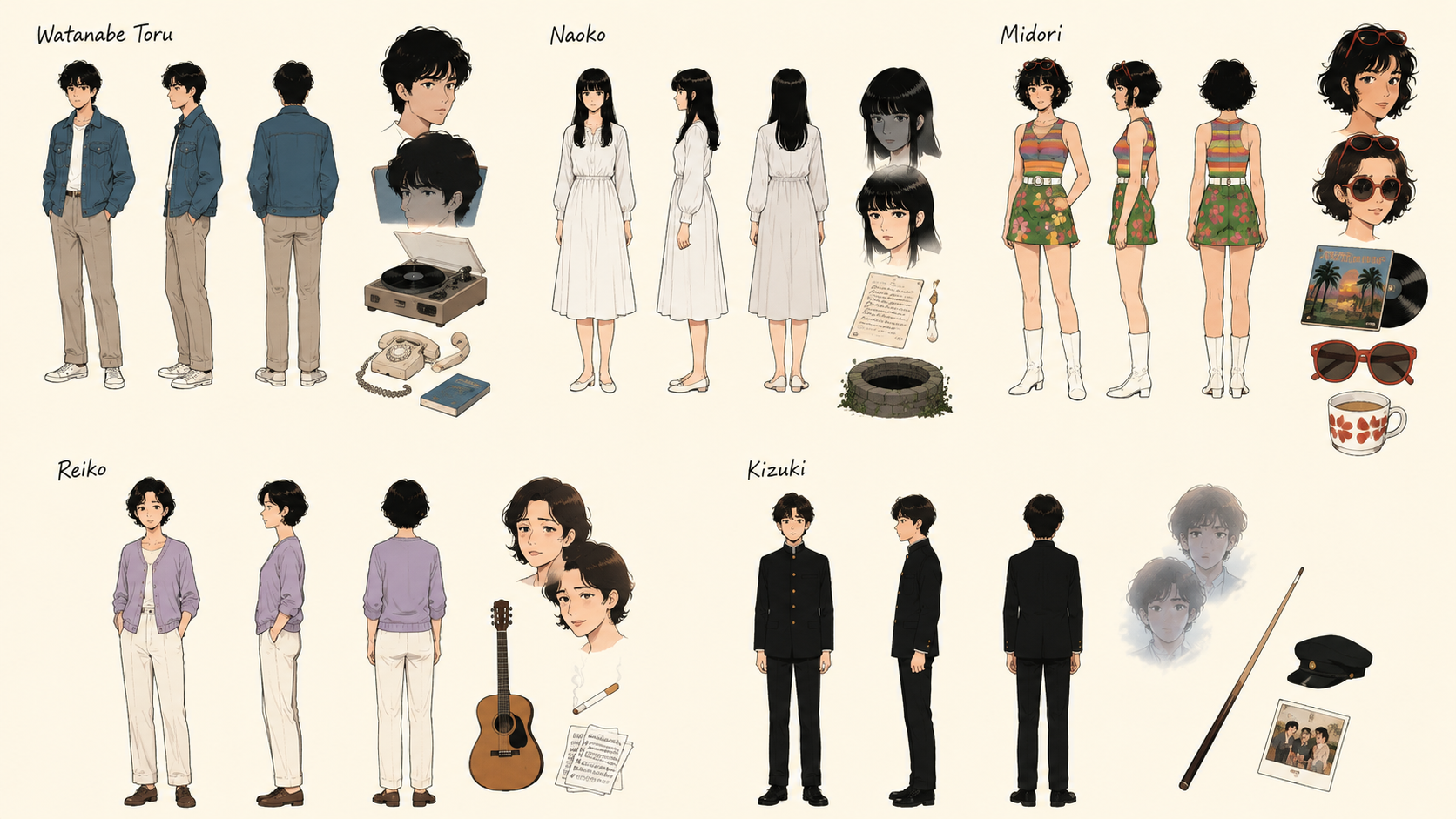
The whole weight of the book rests on four young people. The narrator, Toru Watanabe, is a withdrawn, detached college student with the permanent air of a bystander. He is caught between two women: Naoko, the girlfriend of his dead best friend Kizuki, fragile and sensitive, like a sheet of thin ice that could crack at any moment; and Midori, a girl he meets at college, blunt and outgoing, so full of life it is almost scorching. Kizuki himself — Watanabe's closest friend in high school and Naoko's first love — ended his own life at seventeen, without warning. His death is the novel's first falling domino; every character's grief afterward traces back to that one silent collapse. There is also Reiko, an older woman and former piano teacher at Ami Hostel, the sanatorium in the mountains outside Kyoto — Naoko's roommate there, and the only person who can help Watanabe read the storm inside Naoko's mind.
Just as guilt is about to swallow Watanabe whole, Reiko leaves Ami Hostel. She comes to see him in a black dress, carrying her guitar case. That night they talk about everything they never got to say — about Naoko, about death, about why the living go on living at all. When morning comes, Watanabe picks up the phone and calls Midori. The line connects, and hearing that familiar voice, he feels he can finally say something and mean it. But the novel stops right there — he never says I love you, and he never gets a clear answer back. The book's last line is Watanabe silently asking himself, Where am I now? Around him is an unfamiliar phone booth, and beyond it the noise of Tokyo; he grips the receiver and falls, once more, into that bewilderment with nowhere to go. This is not loneliness cured. It is loneliness acknowledged.
This guide is a map — it has sketched out the rough shape of the towns, the rivers, the mountains. But it is only when you step into the actual text of Norwegian Wood that you set foot on that ground: you will smell the faint antiseptic of the sanatorium corridor mixed with the damp of the mountain forest, hear Naoko's voice seeping up out of the fibers of the letter paper, feel the thin film of sweat on Watanabe's palm as he grips the receiver in that phone booth. Murakami's prose has a strange bodily quality to it that cannot be paraphrased, only lived through directly. By the time you finally close the book, that melody drifting through the Hamburg airport might have become a memory trigger of your own — and that is where its real power lies.
Before the guide was written, this book got a visual foundation — every illustration you just read grew out of it.
Everything begins with Kizuki's suicide. No note, no warning. Seventeen years old, an ordinary day, and he was simply gone. Watanabe and Naoko are left stranded in the same silence, stitched together by death like an invisible thread. For a long stretch afterward they are little more than a blur of pain in each other's lives, meeting occasionally, walking the streets of Tokyo without a word, neither one daring to get too close. Then, on the night of Naoko's twentieth birthday, the thin tension between them snaps, and they sleep together. For Watanabe it feels like a confirmation that has arrived too late; for Naoko, it is the point after which her mind begins to collapse in on itself, irreversibly. Soon after, she is admitted to Ami Hostel, the sanatorium in the mountains outside Kyoto.
Around the same time, a completely different girl bursts into Watanabe's daily life. Midori talks a mile a minute, yawns loudly in the middle of class, and, with her father dying in the hospital, still drags Watanabe out for a bowl of steaming oden. Her presence gives him something close to physical warmth, and it also makes him feel, more sharply than ever, the weight of his responsibility to Naoko sitting like lead on his chest. Naoko writes from the sanatorium in handwriting so fine it looks ready to dissolve; Midori laughs on the phone, and her laugh makes reality something you can touch again. Watanabe sways between the two of them, and every time he moves closer to one, it feels like a betrayal of the other.
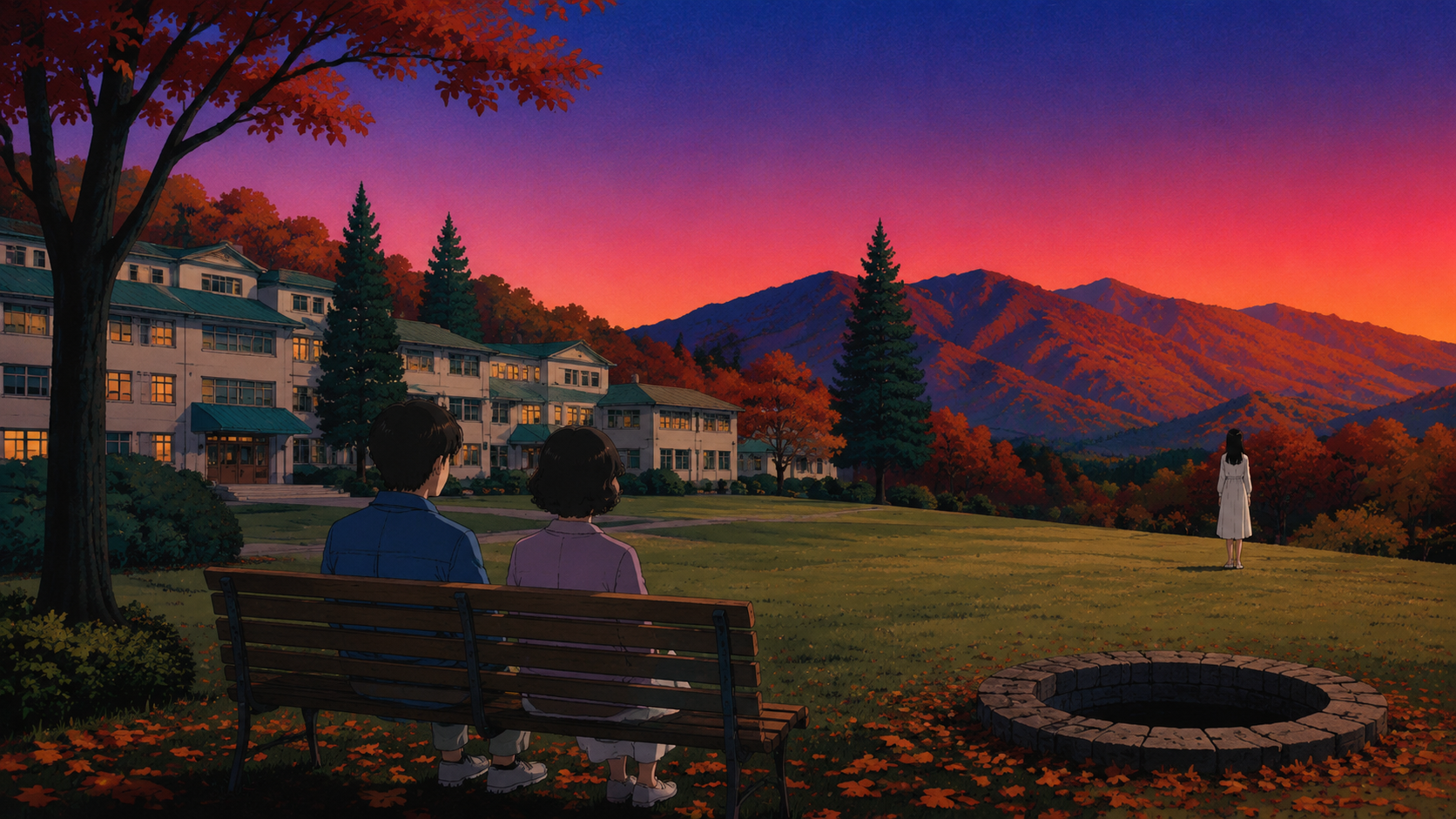
Eventually Watanabe takes the train to Kyoto to visit Naoko. Ami Hostel is tucked deep in the mountains, quiet to the point of feeling unreal. Naoko seems better, but the improvement is only a thin surface; underneath, the same black whirlpool is still turning. It is here that Watanabe meets Reiko, an older woman whose fingers were injured badly enough to end her piano playing, and who now tends to Naoko's broken heart with words and patience instead. Reiko tells Watanabe that Naoko's wound has never really healed — her good spells and bad spells come and go like tides, and each ebb drags away more sand than the last. Watanabe stays the night at the sanatorium, and the wind never stops moving through the mountain trees.
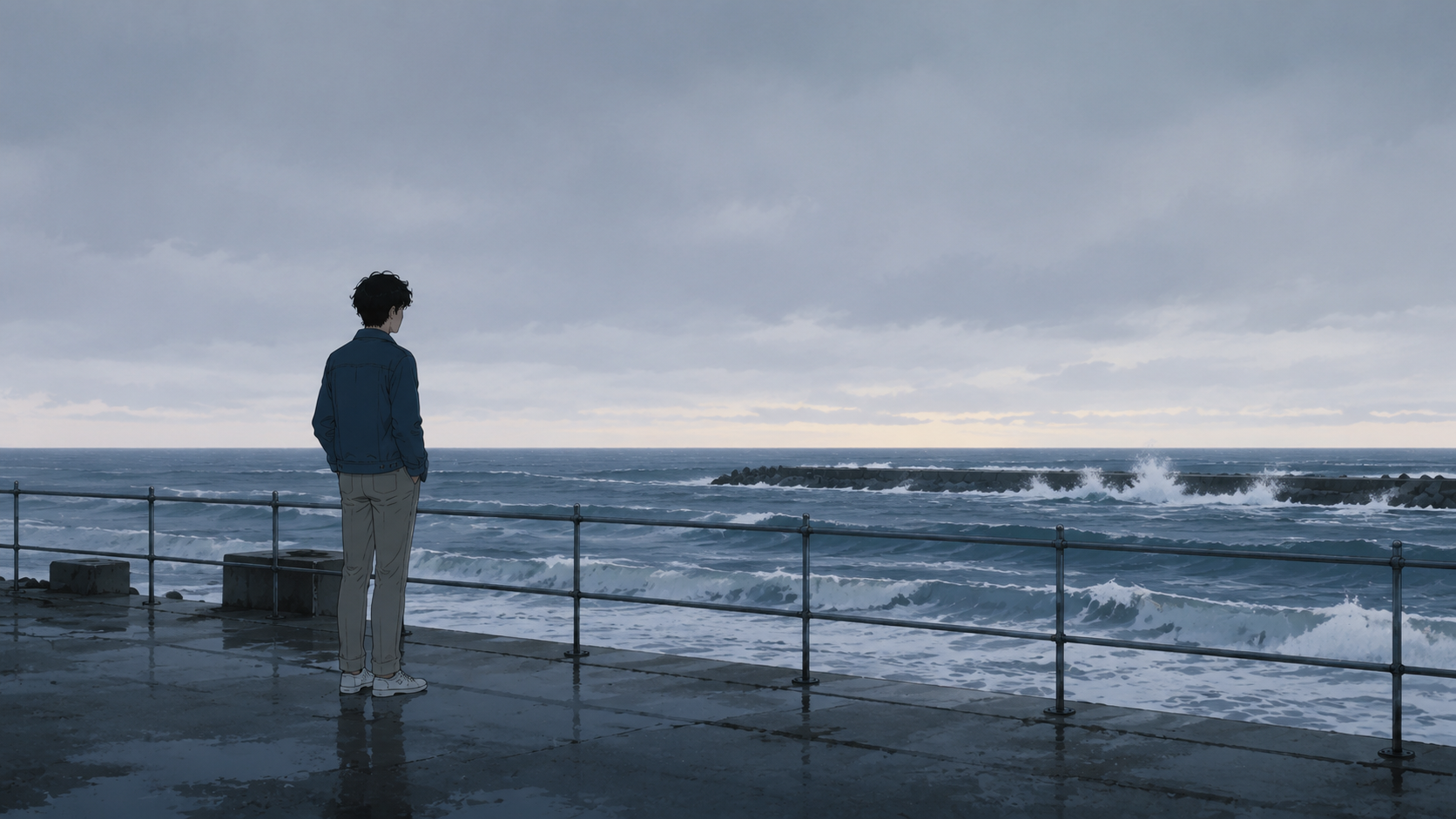
In the end, no one manages to hold Naoko back. Her condition keeps worsening, and she finally hangs herself in the woods near Ami Hostel. When the news reaches him, Watanabe feels as if the world has turned into a television with the sound switched off. He can't stay in Tokyo, and starts drifting aimlessly around Japan, sleeping in the cheapest inns he can find, walking along the coastline, getting off at random small stations, as if grief can't catch up with a body that never stops moving. That whole journey plays out like a long spell of muteness, all his energy spent just breathing, just absorbing one fact: Naoko is no longer anywhere in the world.
Death isn't the end of youth — in Murakami's hands it is the very smell of youth, seeping into every touch and every silence, so that all tenderness carries the weight of a countdown.
Strip away the plot, and Norwegian Wood is not really about love — it is about how the living carry the dead. Kizuki's death leaves everyone with a debt no one can repay; Naoko pays it in illness, Watanabe pays it in wavering and guilt. The novel captures that particular split of youth: on one side, a body alive with restless desire; on the other, a mind whose ground keeps giving way. Tokyo in the late 1960s was on fire with student protest, but Watanabe deliberately keeps his distance from every grand narrative around him, retreating instead into the most private of emotional trials. That deliberate blurring of the political backdrop is exactly what gives the novel its timeless reach: young people in any era, any place, can find themselves alone in a small room, facing the same question death leaves behind.
Murakami's prose in this book strikes a remarkable balance — deeply restrained and, at the same time, deeply sensory. He writes about sex, about the smell of rain, about the wind moving through a forest, and every detail lands light and exact, as if to tell you that pain doesn't need to shout; it can be nothing more than a melody, the warmth of a bowl of soup, or a long silence on the other end of a phone line. The title is lifted straight from the Beatles song "Norwegian Wood," and the music runs underneath the text as a quiet counterpoint — from the opening pages, the old record sets the emotional key for everything that follows. This technique would go on to become a Murakami signature, and Norwegian Wood is its purest, most restrained expression.
We end up carrying the weight of the dead and going on, still trying to work out where we are even as we stay lost — maybe that is the cruelest and gentlest truth about growing up.