Of Mice and Men · Companion GuideStories · Issue 00
Of Mice and Men in 10 Minutes: Two Drifters and a Small Piece of Land
Steinbeck wrote a story about a dream getting run over.
Text and illustrations produced by the pipeline
ImaReadFolio 02 — 06
In a stand of willows by the river, two men lie curled up asleep. One tall, one short. The tall one is Lennie, with shoulders as broad as an ox and the strength to match. The short one is George, sharp-faced and talkative, carrying more trouble in his pockets than a man his size ought to.
They've just run out of Weed, and they're running again. This pair is always running, because Lennie is always in trouble. He doesn't know his own strength, and anything soft draws his hand. He pets too hard. A dress, a puppy, someone's hair — any of it can go wrong.
What kind of book is this
John Steinbeck wrote this story down in 1937. It's short, a novella, almost bare of scenery — every chapter plays like a scene, staged with a table, a few chairs, a handful of voices and gestures. The Grapes of Wrath came later, thicker and more famous, but Of Mice and Men is the one more people have actually read, because high school English classes assign it and drama clubs stage it. And it tells you something classrooms rarely do: two men taking care of each other, all the way to death.
The people and the world
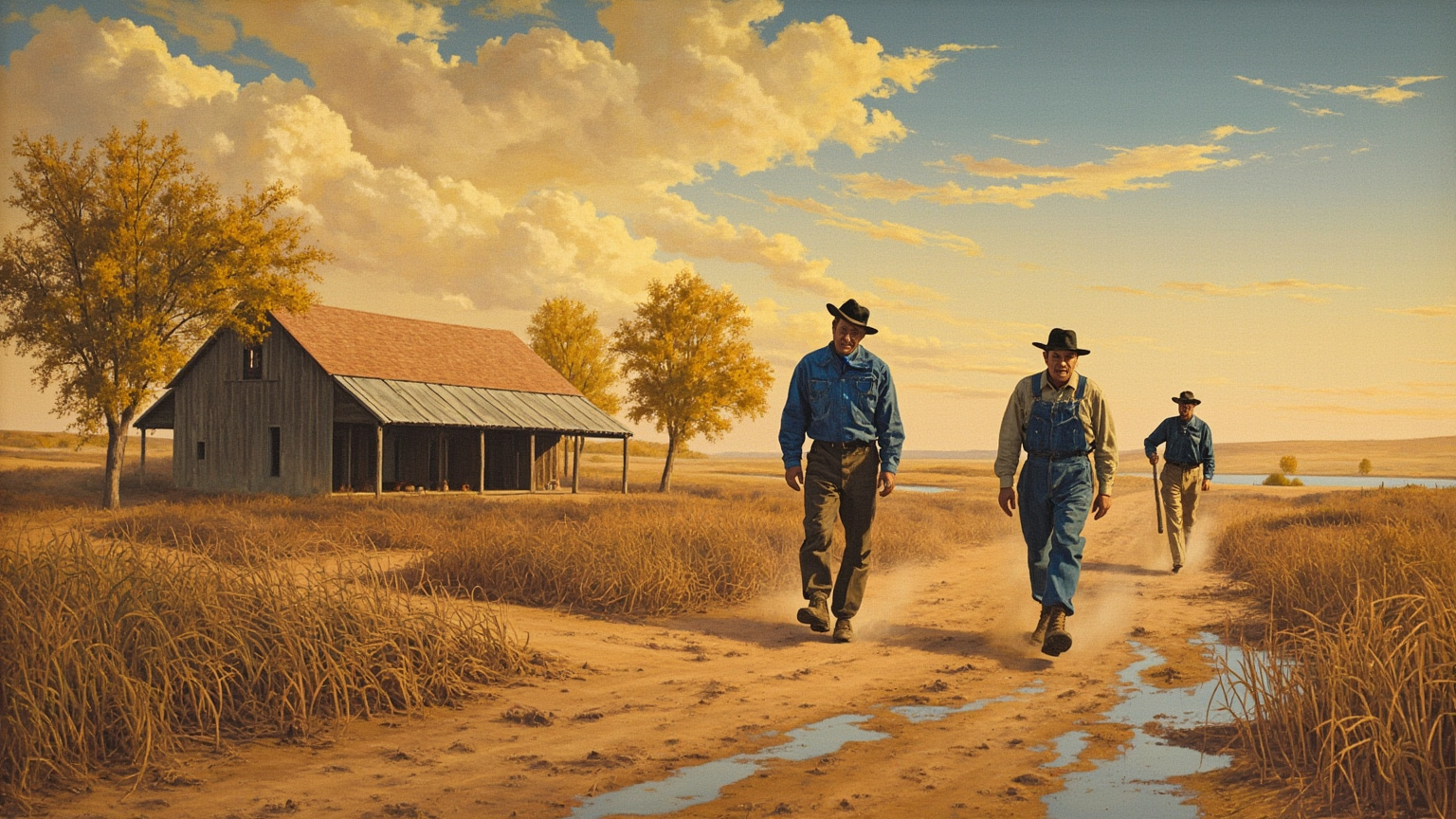
The story is set on a ranch in central California in the 1930s, near Soledad, in the Salinas River valley, on dry-season dirt. Migrant laborers get hired for a few months and let go, with no idea where the next job will be. They sleep in a bunkhouse, earn next to nothing, and their only luxuries are smoking and sex — it sounds like livestock, but that's how the economy has them living.
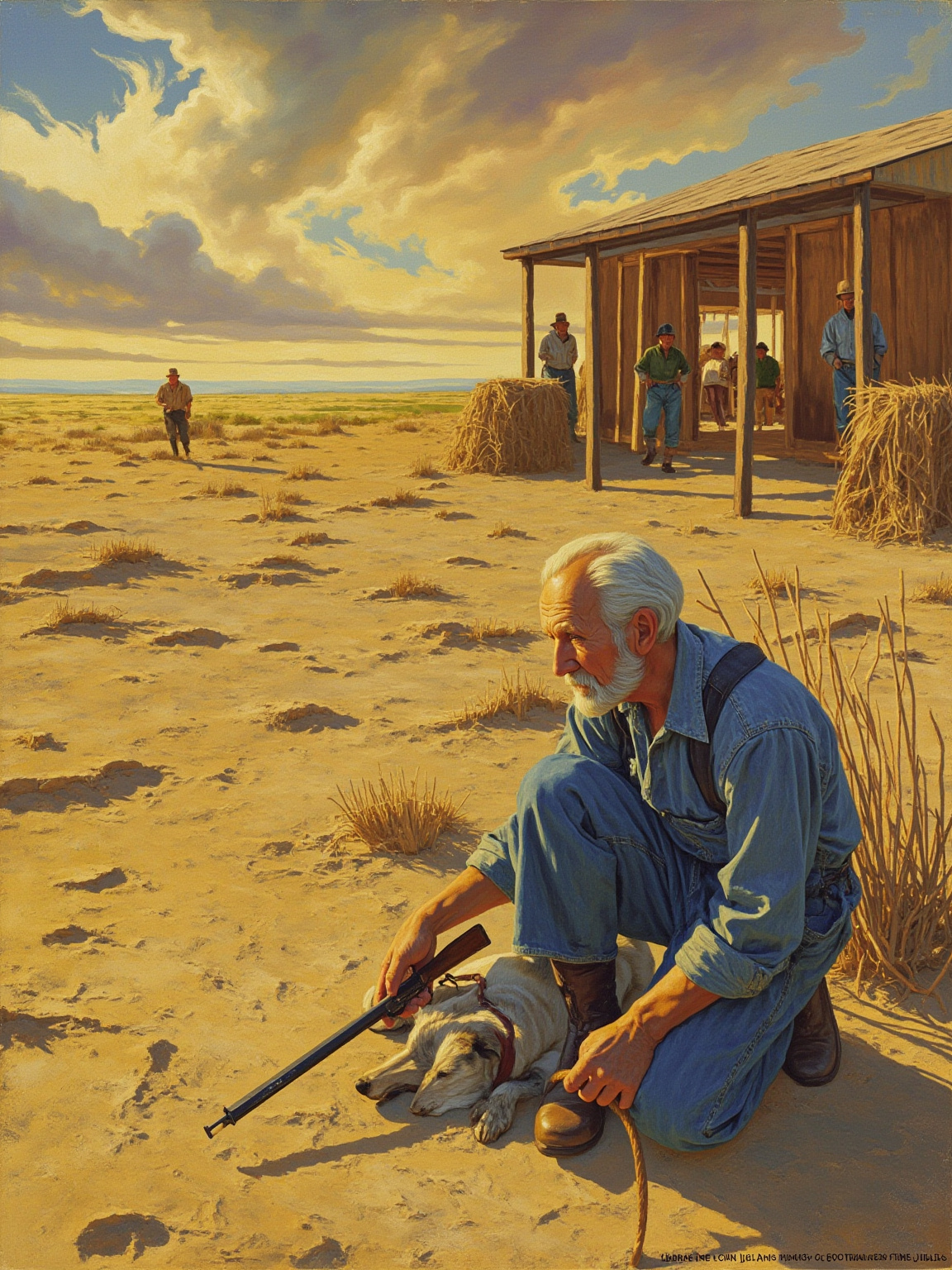
George Milton is small and sharp, and he watches over Lennie. Lennie Small is mountain-big with a child's mind — a burden to George, and also the only company he has. The two of them are tied to one rope, and George's end of it is always cleaning up after Lennie's.
Candy is the old one-armed swamper, the man on the ranch most afraid of being thrown out. Carlson is a big man with a gun who can kill something without blinking. Slim is the mule-team driver, one of the few men whose word carries weight. Crooks is the Black stable hand, kept apart in the harness room because of his skin. Curley is the boss's son, small and quick to fight, an ex-boxer who picks on the big men. Curley's wife is the only woman on the ranch — no one in the book ever calls her by name. She wants to be seen, and no one will look.
ImaRead2
ImaReadFolio 03 — 06
ImaReadFolio 04 — 06
ImaReadFolio 05 — 06
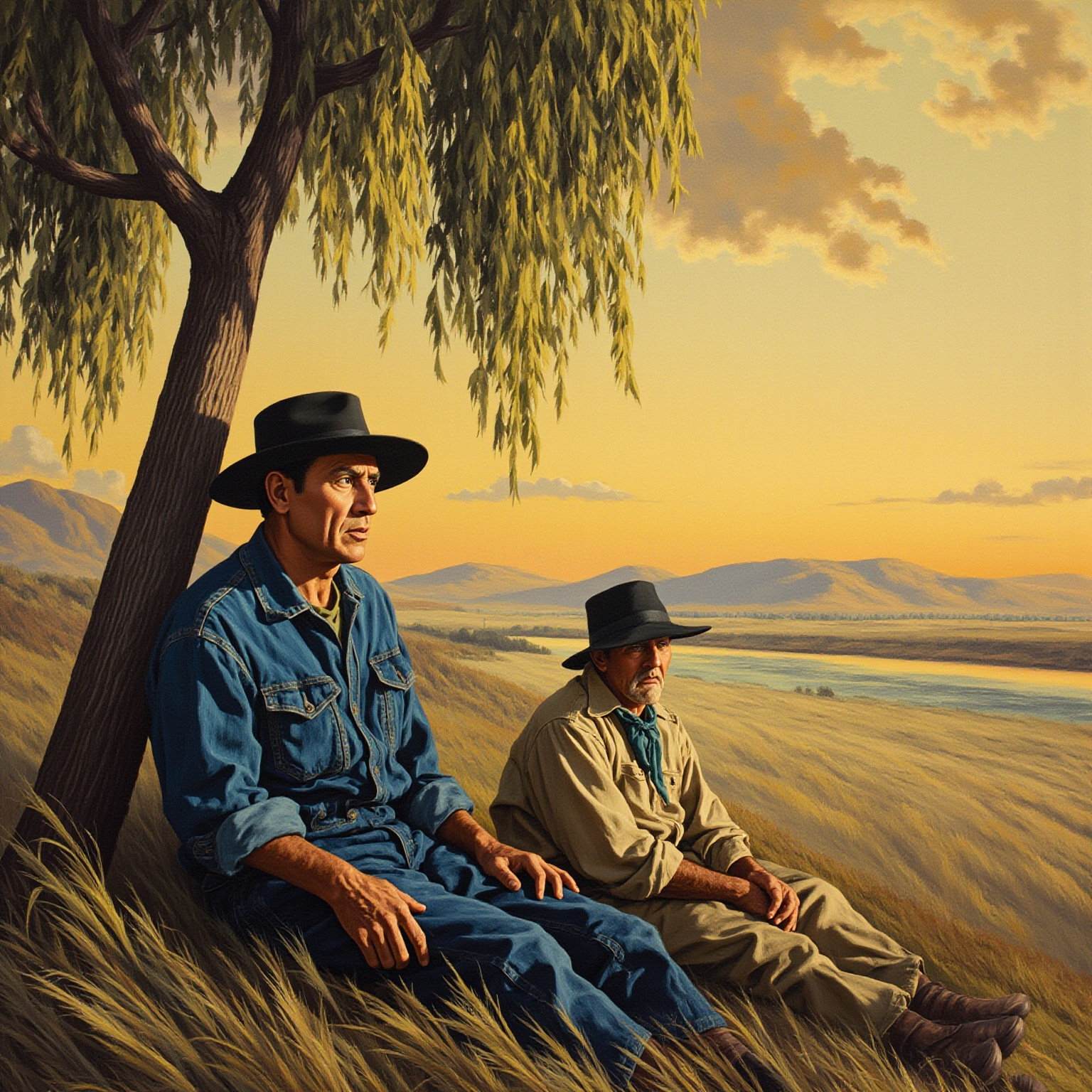
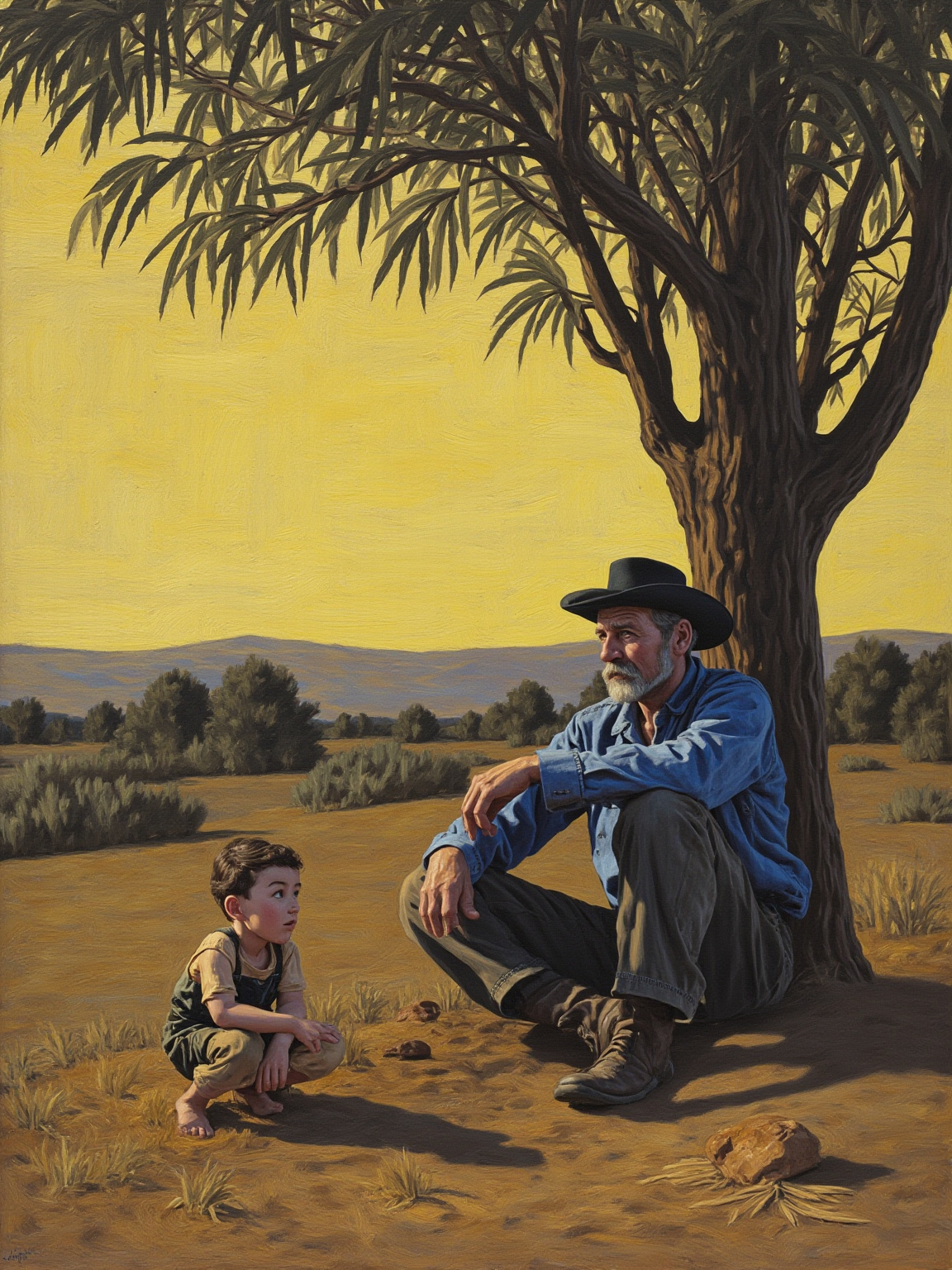
In that moment, while Lennie is lost in the picture, George raises the gun, presses it to the back of his head, and pulls the trigger.
The shot lands, and it's over. Lennie doesn't have time to turn, to feel pain, to wake from the dream. He dies the way Carlson's dog died — a death made into a kind of mercy, sparing him the mob coming with torches, sparing him a death beaten out of him in terror.
After the shot, George's hand is still shaking. He looks back and finds Slim beside him. Slim says nothing, just claps a hand on his shoulder, helps him up, and walks him toward the road.
ImaReadFolio 06 — 06
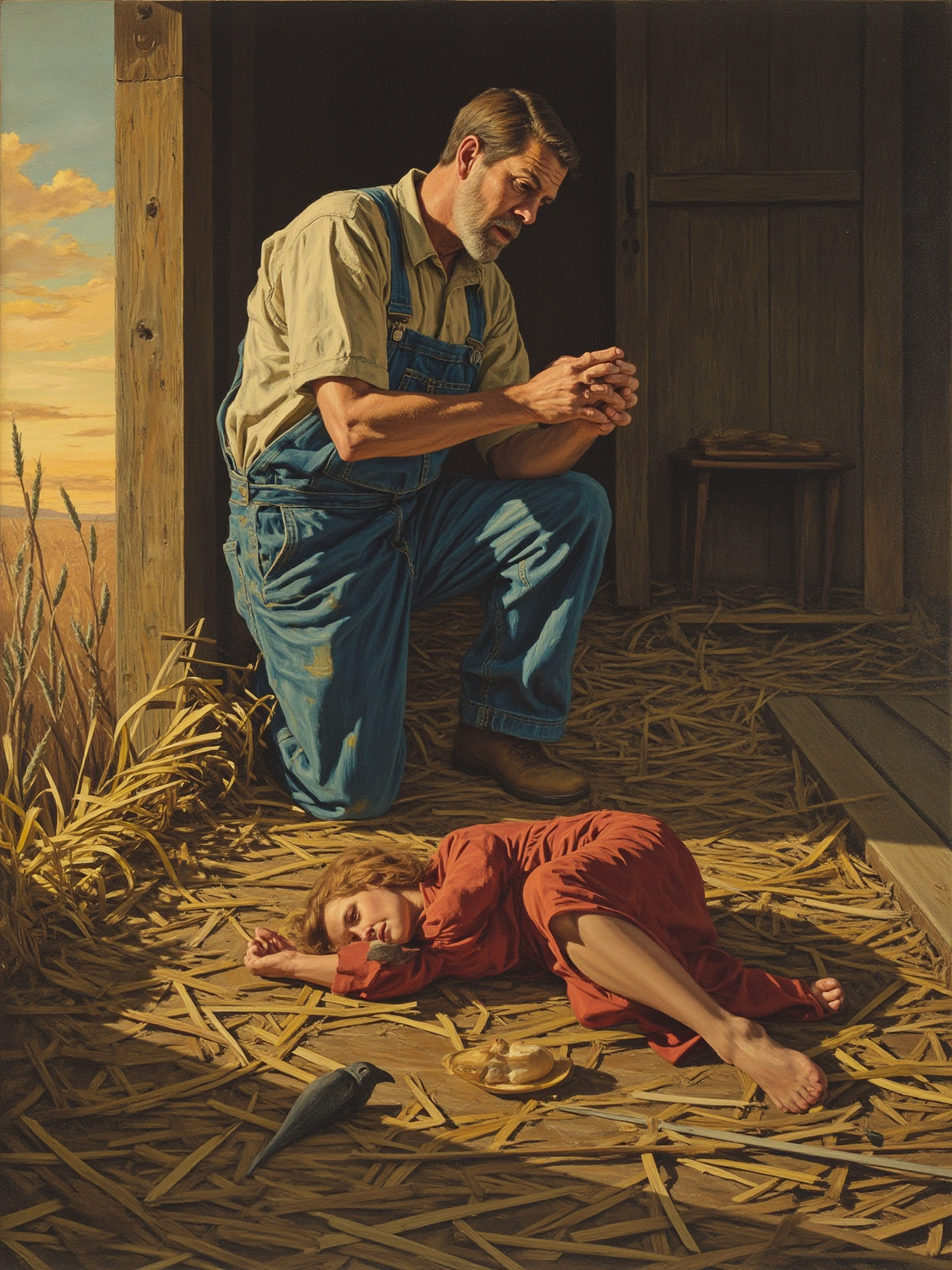
Reading a guide gets you a map. The novel itself is the land. Steinbeck's prose doesn't sprawl, but it's physical — you can smell the river weeds, the sweat in the bunkhouse, the damp alfalfa in the barn. And there's Lennie's breathing on the page: a dangerous man who is also the one who wants love most. That contradiction only lands if you walk into the sentences yourself.
The softest hands crush the most, and the smallest dreams die the quietest.
ImaRead6
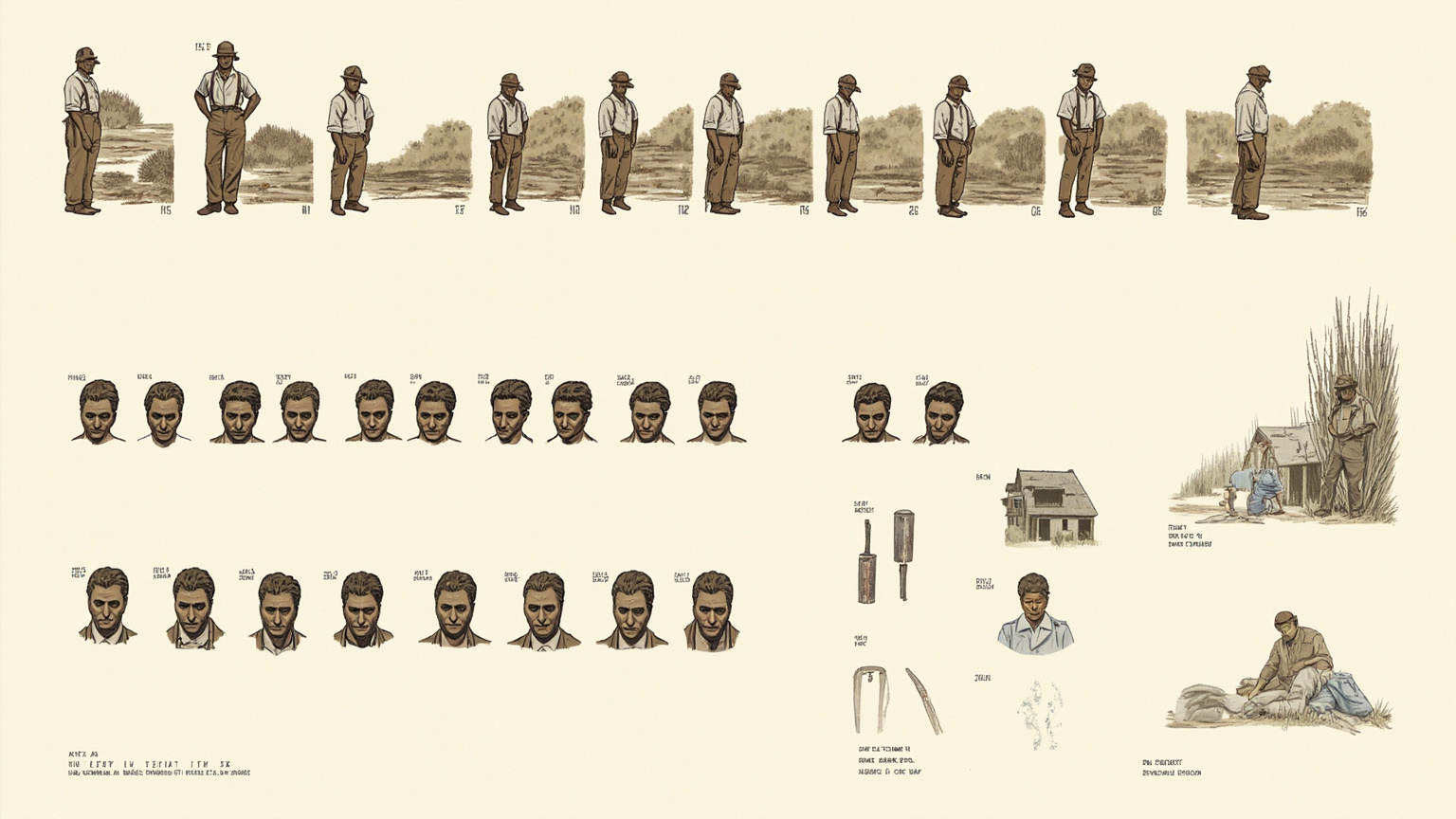
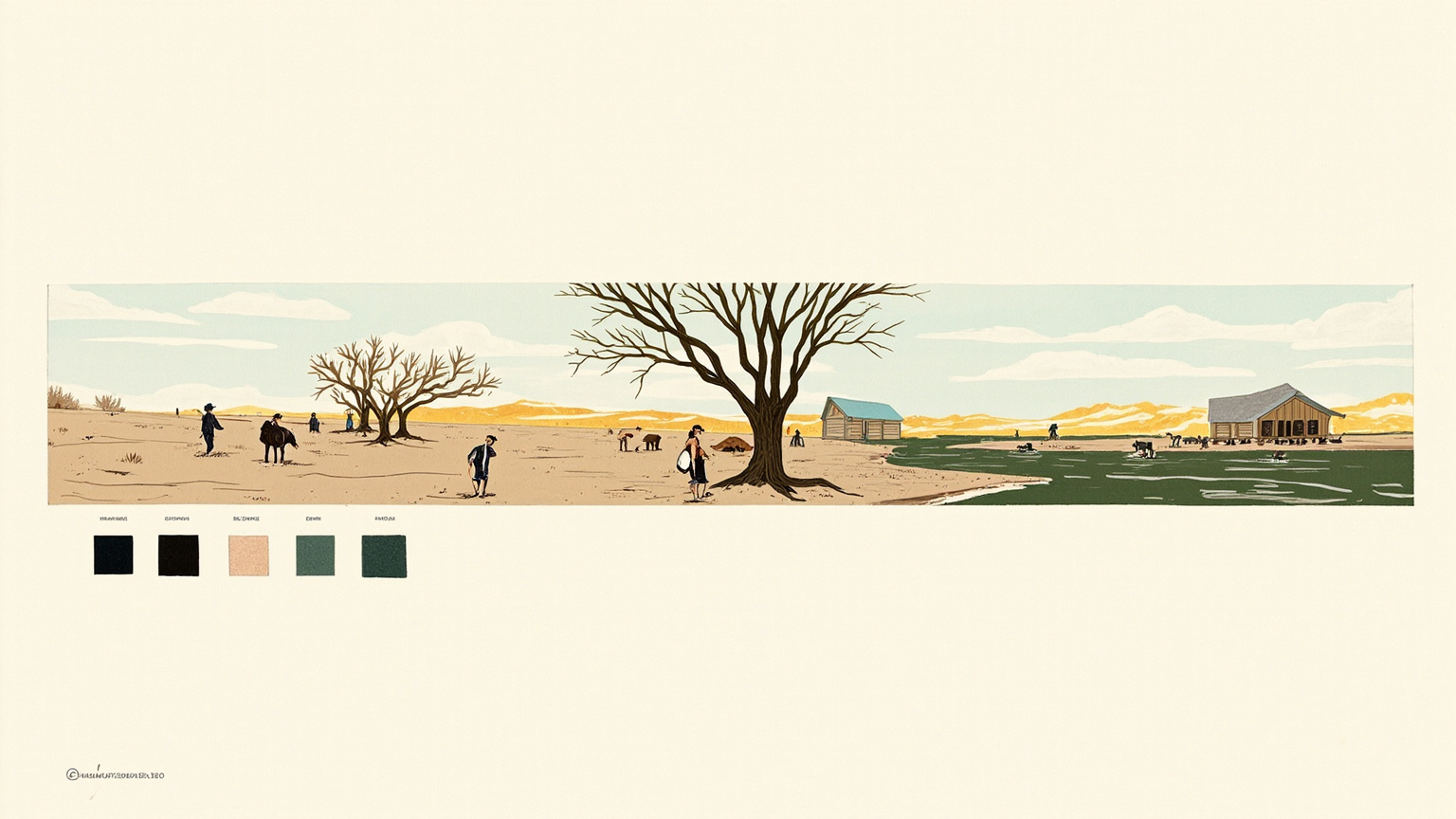
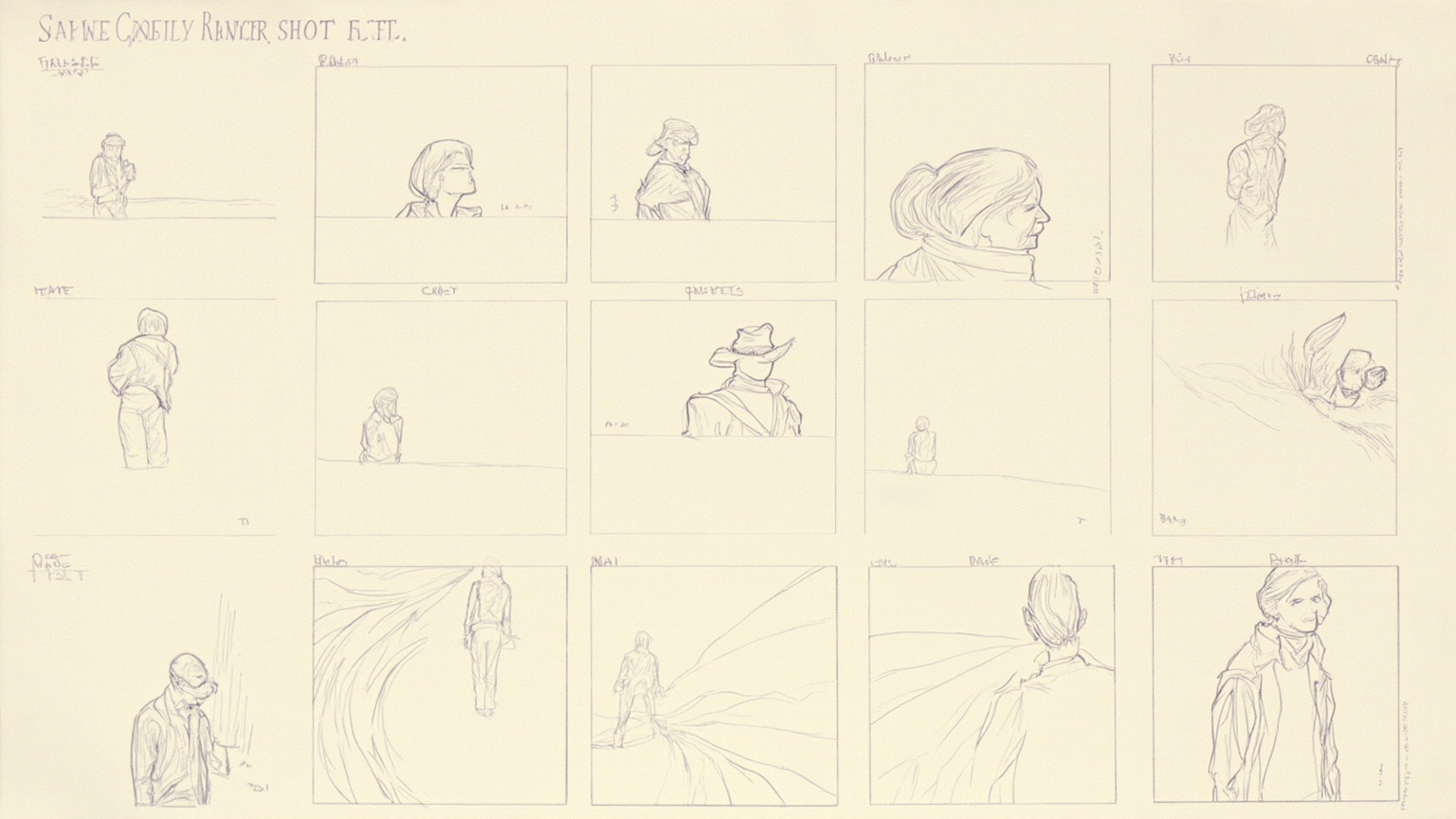
Art Direction4 plates
Before the guide was written, this book got a visual foundation — every illustration you just read grew out of it.