Officialdom Unmasked / Guan chang xianxing ji · Companion Guide
官场现形记
一群候补佐杂在门包与节敬里学做官——清官与贪官翻的是同一本账簿,银子才是真正的主考。
Opening: A Protege's Card
A red card is passed through the gate, inscribed: your protege Qian kowtows in respect. The gatekeeper weighs it in his hand, takes it, and turns back inside. Outside stands a minor official who bought his rank and is still waiting for a post, his robe worn pale at the hem, new cuffs pulled fresh over his sleeves. His name is Qian Bofang. Where that card ends up decides whether his next meal comes from a mansion or a teahouse.
This is not a curtain-raiser. It is the whole color of late Qing officialdom — the entire trade of holding office, start to finish, is presenting a card, kowtowing, presenting a card, kowtowing again. Li Baojia stretched that single gesture into a scroll of dozens of officials, one of the four books later grouped together as the great condemnation novels of the late Qing. He wrote it in vernacular Chinese, serialized in the newspaper Shijie Fanhua Bao (loosely, The World in Bloom), and it came together as a book between 1903 and 1905, two years before his death. More than a century on, no discussion of late Qing official satire gets far without this one. The title itself, Officialdom Unmasked, claimed the whole genre as its own.
Registrar Qian: Turning Office into Theater
The book has no single hero. Officialdom itself is the subject being painted. The first nail pinning down this long scroll is Registrar Qian, a man who bought his rank and is still waiting on a post, with no seat of his own to fill — he drifts between county offices, tax bureaus, and foreign-affairs bureaus. He cannot handle actual business, but at presenting cards, cultivating the sons of family friends, adopting teachers, and swearing brotherhood, he has no equal. His arithmetic is simple: buying a rank costs money, and waiting for a posting costs money too. So he treats office-holding as a trade and flattery as a skill. One choice in the writing is worth noticing. Li Baojia never gives him an inner life. He gives him a sequence of motions at the gate: how the card is handed over, what words are used, how far he bows before he finally turns to go. The satire lands on posture, not judgment, and posture cuts deeper.
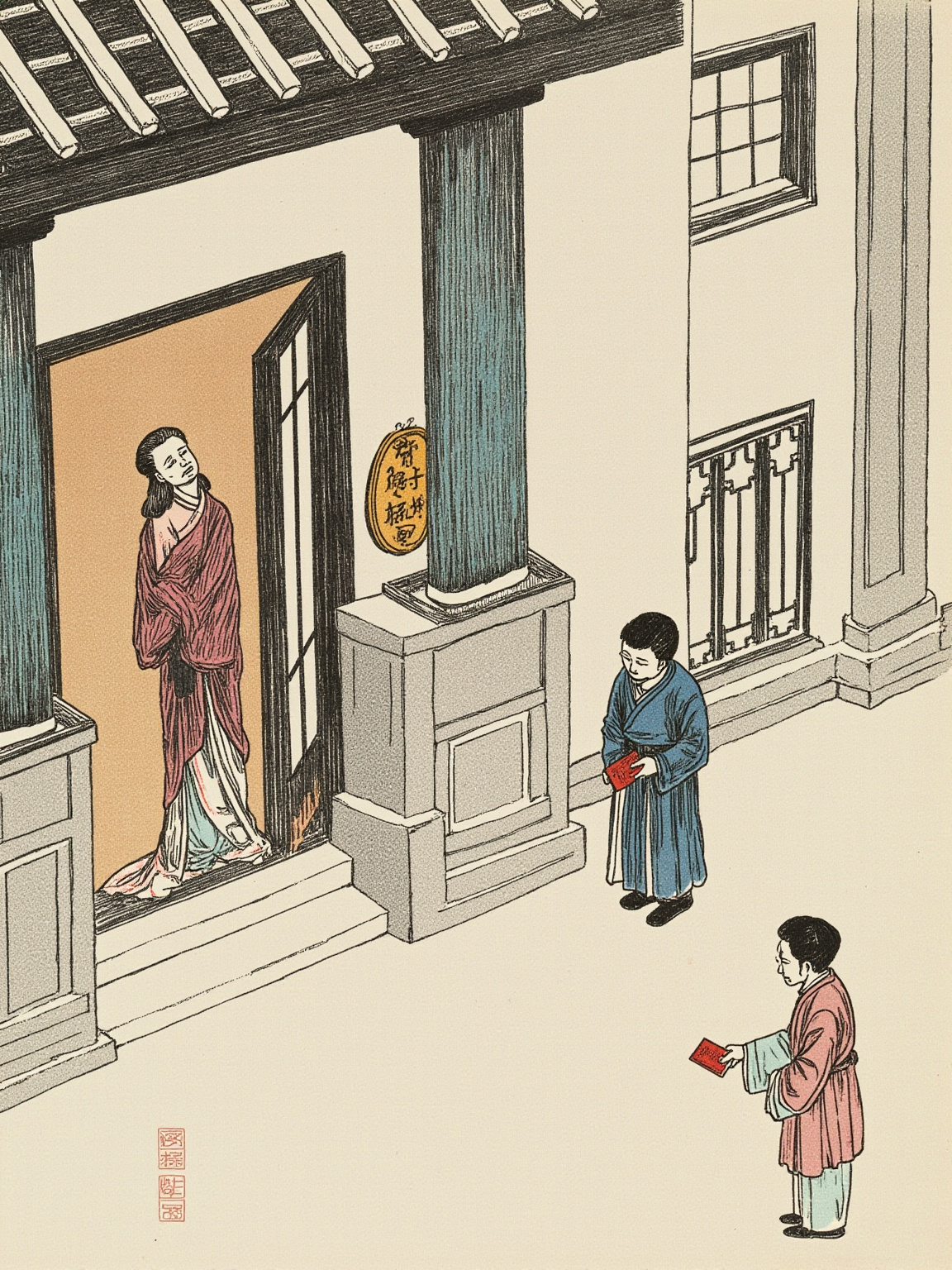
To be an official is to learn the steps of a play before one learns the business of office.
做官是一桩讲究做戏的营生,未学办事,先学做戏。
金句 · 钱典史出场,写候补捐班递帖谋差
Huang Ermazi: A County Magistrate's Arithmetic
The lens climbs one rung, from the expectant nobody to a man actually holding the seal: Huang Ermazi, a county magistrate in the provinces. His first act on taking office is not to read the case files. It is to do the sums — travel costs, seasonal gifts, the secretary's cut, tribute owed upward to his superiors. He adds it line by line, divides by the months of his term, and arrives at the figure he needs to squeeze out of the county's people every month. Squeezing taxes early, forcing donations, and abusing punishment become the default setting. Li Baojia never scolds him for it. He just keeps the books: so much collected on such a date, so much docked in salary on another, a certificate of good conduct issued on a third for a fee. The satire is nailed to money rather than to the whip, and that lands harder, because a whip only strikes one man while a ledger indicts a whole system.
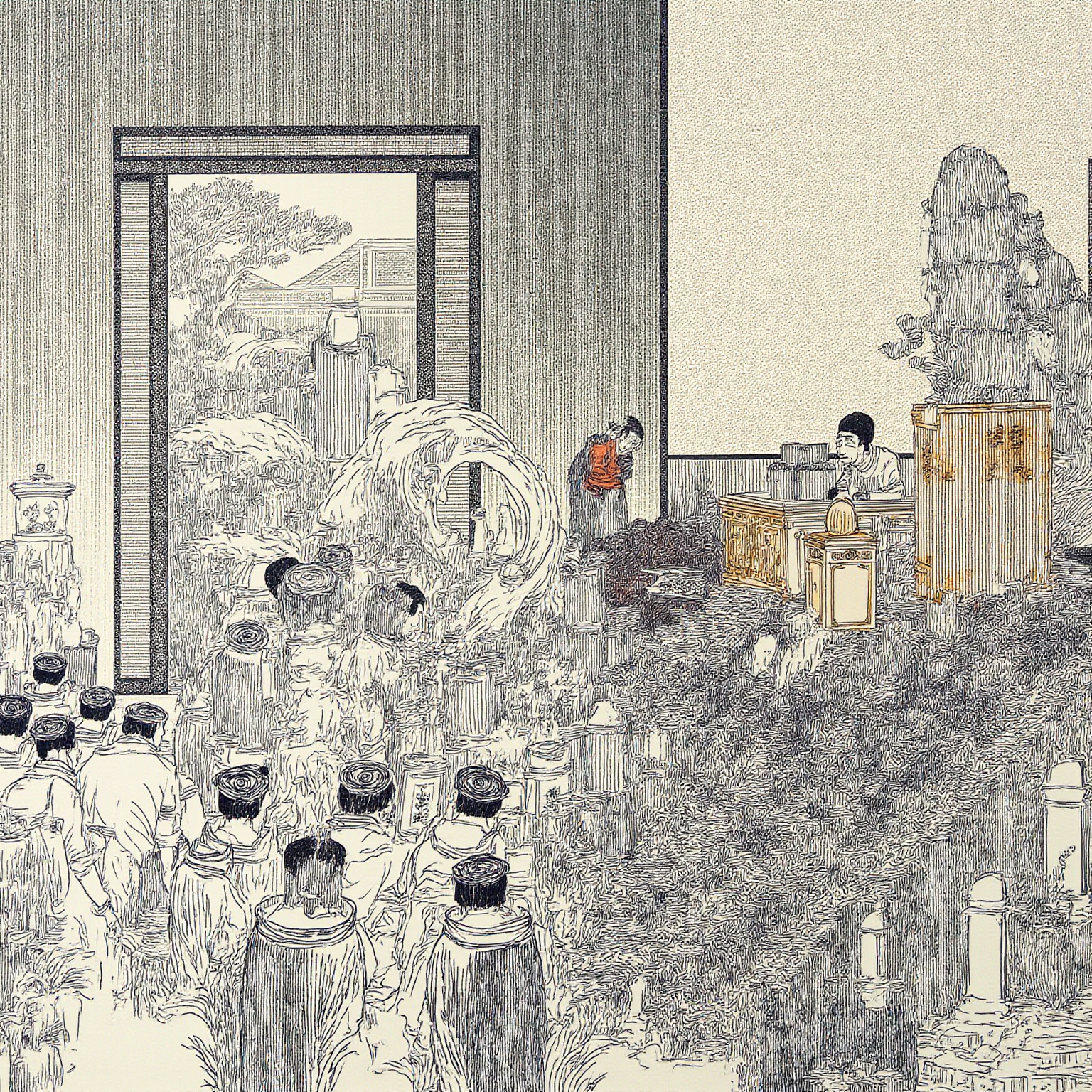
He had not yet seen his first docket, but he had already balanced the account of his term: how much to take each month from the people below.
官还未到任,先在心里拨了一回算盘——任内每月须从百姓身上刮多少。
金句 · 黄二麻子上任,写外省知县先算盘缠节礼
Magistrate Mei: The Other Half of the Honest Official's Face
You might think swapping in an honest official would fix things. Li Baojia refuses to let the reader off that easily. Magistrate Mei takes no bribes, accepts no gifts, squeezes no one directly — and yet his books balance just as neatly. He extracts through authority instead of cash, through the forms of courtesy instead of outright demand. Seasonal tribute still comes in. Gifts from subordinates still come in. Fines are still levied, certificates still sold for a price. He keeps his reputation for incorruptibility and every one of the real benefits, both at once. This is the cruelest cut in the whole book: honest and corrupt run on the same ledger, and officialdom has no genuine clean current running through it. Writing a corrupt official is easy. Writing the honest official's separate arithmetic is much harder. Li Baojia splits the word corruption in two, writes half of it in silver and half in etiquette, then tells you that only the sum of the two halves makes officialdom whole.
From Prefect Fu to Commissioner Jia: The Slang of Courtesy
The lens climbs higher still. A provincial prefect, Fu Dehui, takes office and lectures his staff on the rules — gate fees, seasonal tribute, ice money for summer, coal money for winter, a whole slang vocabulary rattling off his tongue as easily as a market vendor names his goods. One rank above him, the provincial judicial commissioner Jia Xiaozhi runs a household of constant banquets and a crowded harem, his private fortune swollen past counting. The craft here is worth pausing on. Li Baojia turns etiquette inside out and rewrites it as currency. A gate fee is an admission charge. Ice money and coal money are seasonal dividends. A banquet is a business lunch with better wine. What passes for the rules of officialdom turns out to be gift money under other names. The satire's edge lands on documents, honor guards, and gift lists — things a reader can actually picture — and that lands harder than pointing at the men themselves, because an object cannot argue back in its own defense.
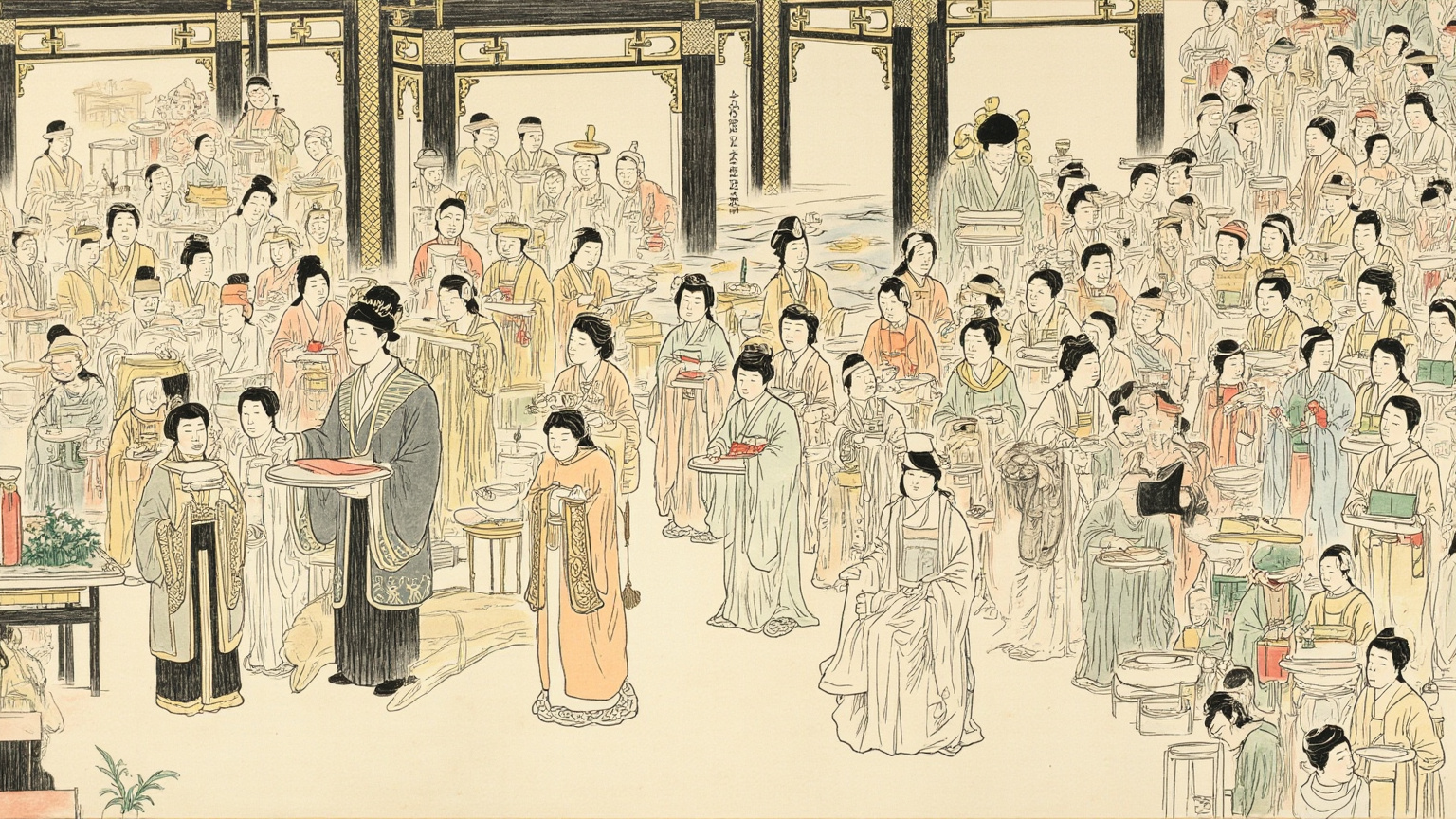
He took nothing, and so he kept everything — the name of clean and the profits of office were both his.
他手里不沾一文,袋里的节敬却一文不缺——清名与实惠,他两样都收下了。
金句 · 梅大令,写清官以威礼巧取
Tao Ziyao: Abroad, and Making a Fool of Himself
A different string of officials gets sent abroad to handle foreign negotiations, and Tao Ziyao is one of them. He is afraid of foreigners, afraid of foreign languages, afraid of foreign manners — afraid enough that he rehearses the order of a handshake three times in his head before attempting one. To him, a foreign posting is simply a lucrative assignment, and he comes home having produced a farce that mixes the etiquette of officialdom with the etiquette of international negotiation, to neither side's satisfaction. This section is the funniest in the book, and the most merciless. Li Baojia writes foreign affairs as just another branch of the official trade: going abroad is landing a plum posting, coming home is making a public fool of yourself, and the whole enterprise is one more layer added to the provinces-capital-overseas structure for dividing up spoils. Tao Ziyao's humiliation is not because he is stupid. It is because the game officialdom taught him does not work in front of foreigners, and he has no other game to switch to.
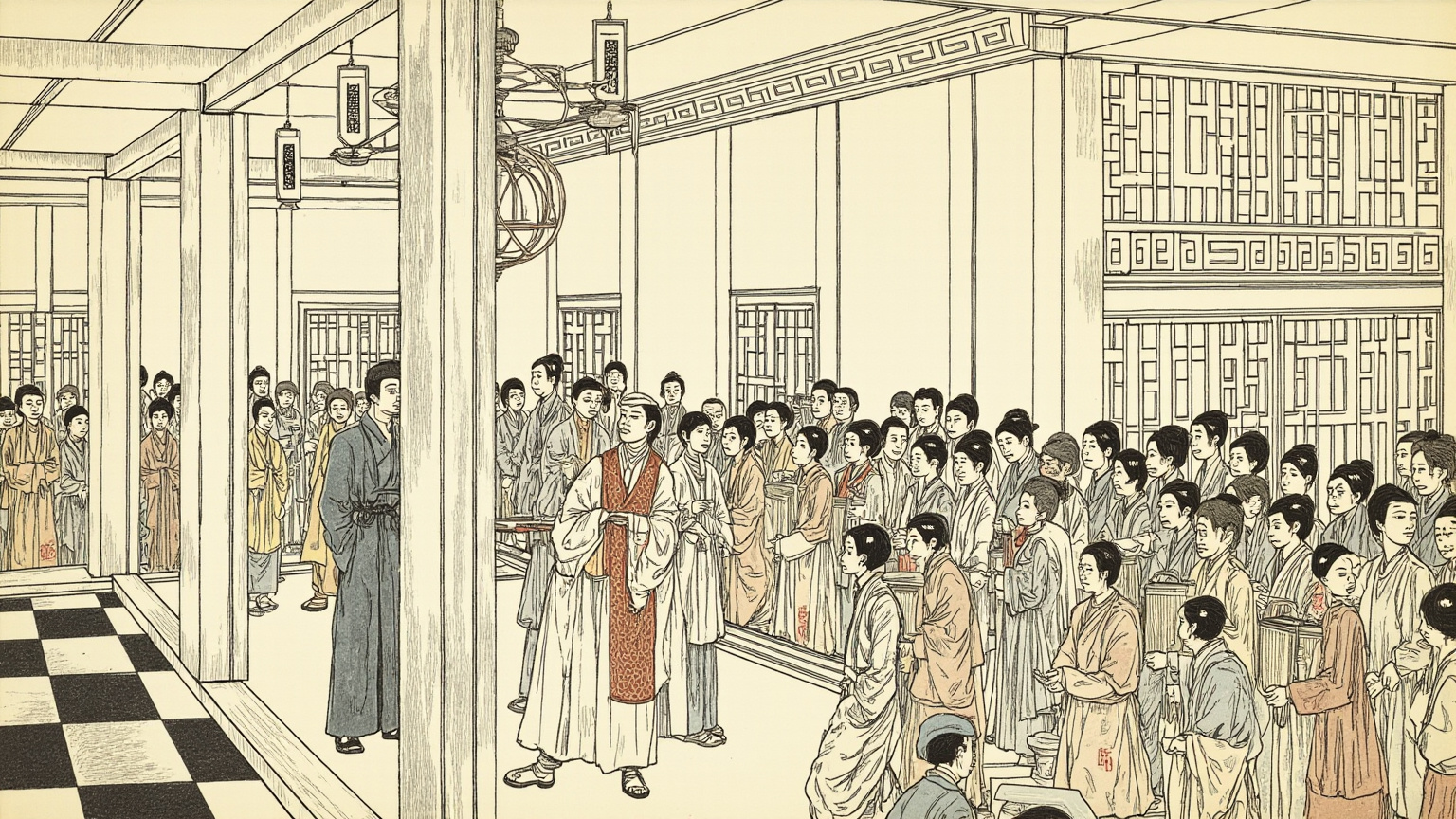
Crossing the ocean, he feared the Westerners' eyes more than their guns; he had come to make a killing, and returned to make a spectacle.
一出洋便见洋人先矮三分,原是来办差,回来却成了洋场里一桩官场笑话。
金句 · 陶子尧出洋,写候补官员见洋礼洋钱之窘
Converging on the Capital: The Real Business Happens in Guildhalls and Theaters
The lens finally converges on the capital. Long Boshu has bought his way into the court by now, and Shi Xiaoren builds his web in the capital's officialdom out of protégés, fellow provincials, and men who passed the examinations the same year as he did — paying respects, presenting cards, swearing brotherhood. Guildhalls, theaters, and banquet halls turn out to be where the actual business of government gets done. The first time I read this section, it stopped me cold. The capital's officials, it turns out, do not conduct government business inside the Six Ministries at all. They conduct it over dinner at the provincial guildhalls. Li Baojia moves the phrase government business from the yamen gate to the dinner table, and with that single move, the whole book's satire clicks into place. Officialdom does not live in the courtroom. It lives at the banquet.
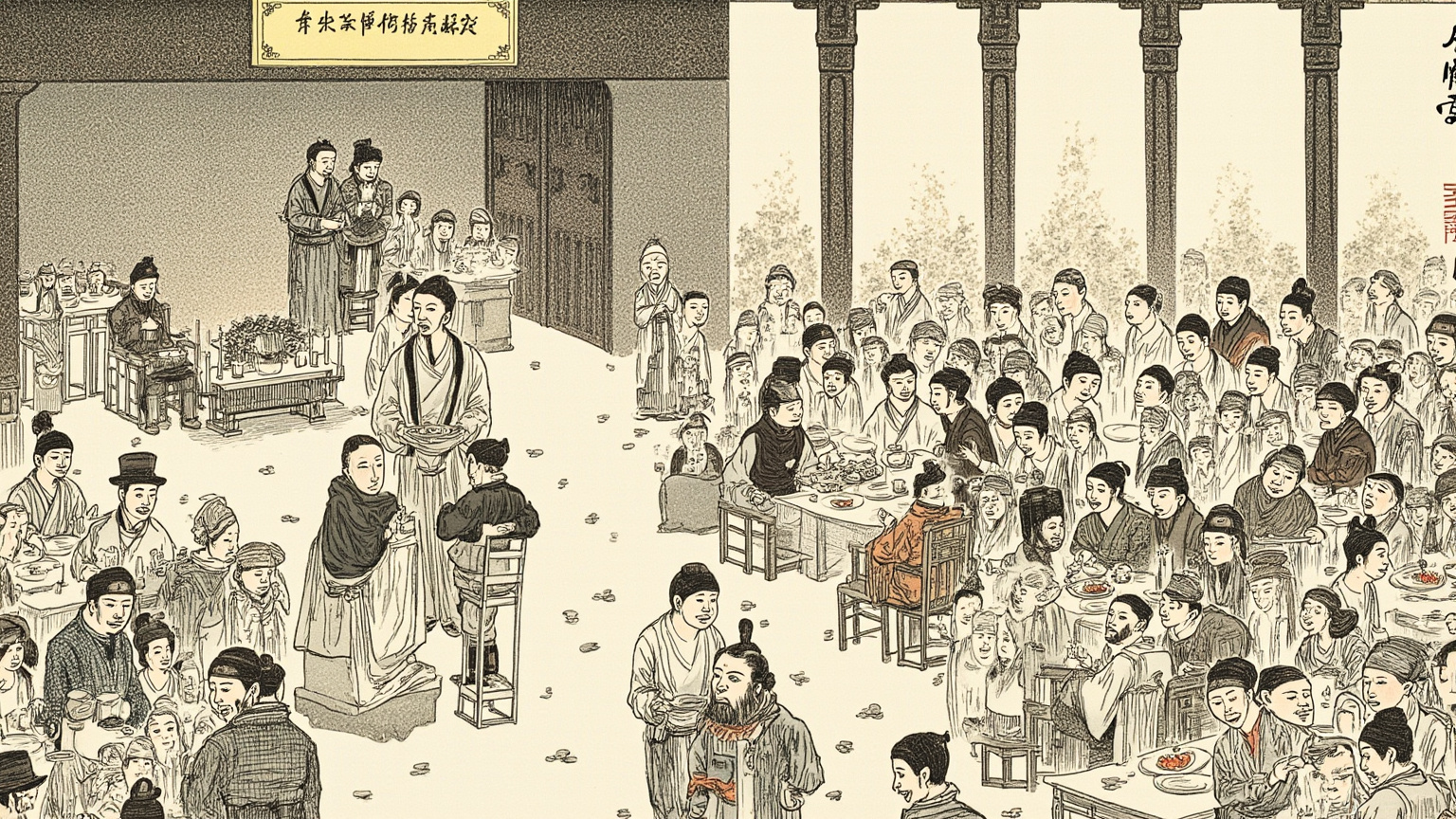
In the capital, the inn, the theatre, and the banquet hall were the true office; the memorial and the audience were only the coda.
京城里没有政务,堂会、戏园、会馆才是真衙门;呈文与觐见,不过是散戏前的尾声。
金句 · 龙伯述、时筱仁,写京城堂会即官场
The Ninth Concubine: Another Ledger, Kept Indoors
The satirical point of view finally makes a deft turn inward, into the household. In Commissioner Jia's residence, the Ninth Concubine runs the banquets, the gift lists, and the maids — she keeps the accounts, keeps the gift registers, handles the household's diplomacy, and fights her open and hidden battles with the wife and the other concubines. The phrase a boudoir officialdom is not Li Baojia's coinage, but he stages the whole outer-court routine again indoors: how gift lists are ranked, how seating is assigned, how red envelopes are slipped into the right hands. Every bit of it runs on rules. What makes this move interesting is what it tells the reader: the word officialdom has already swallowed both the outer court and the inner household, and even the wives are holding office. With that turn of the lens, the whole book's satire flips over once more, from money to etiquette, and from etiquette to social obligation.
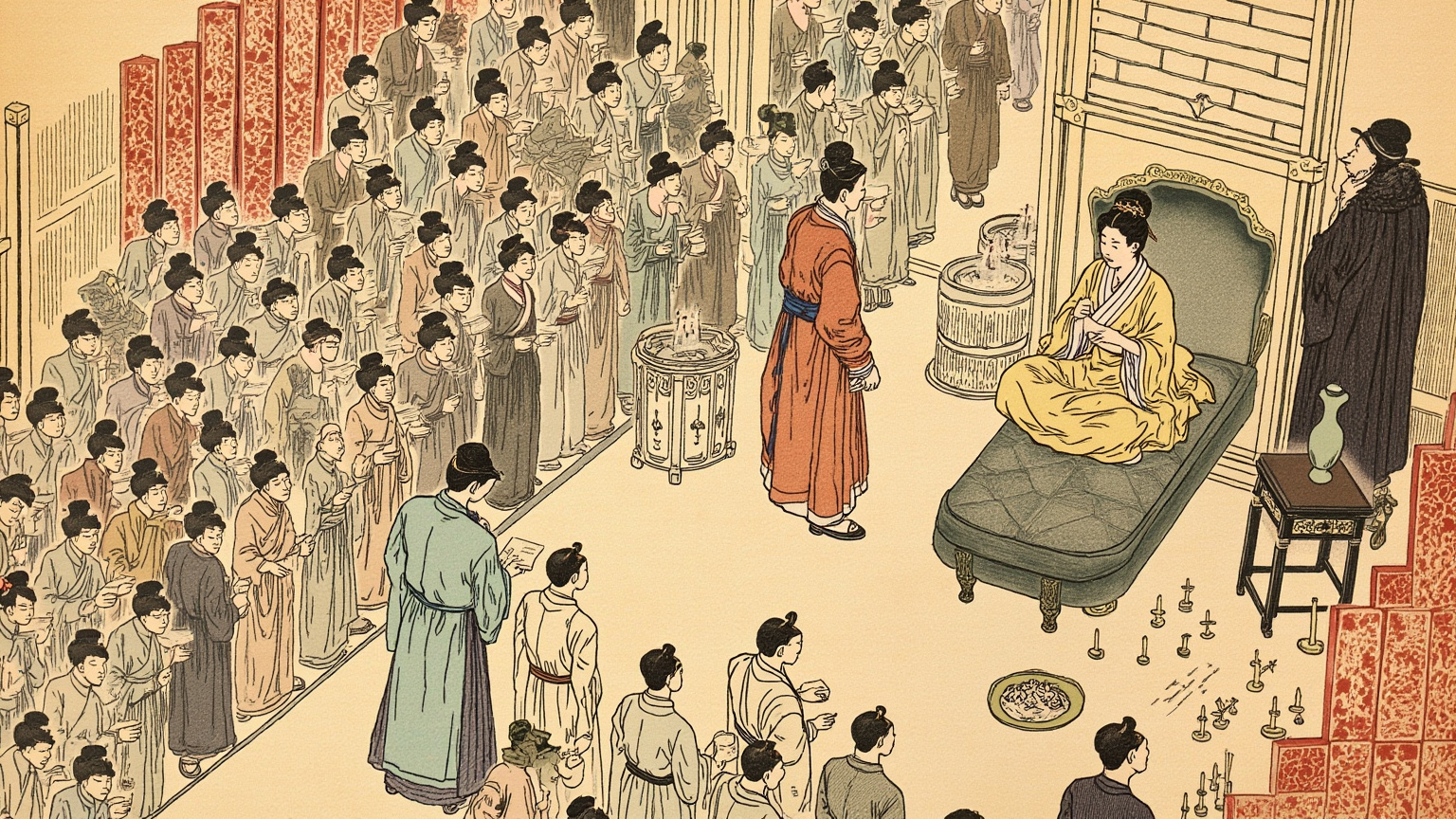
Within the inner chambers another set of books was kept — and the rules there were the same as in the yamen without.
内宅另设一本账,外头那套门包节敬的规矩,搬进闺阁一样照行。
金句 · 九姨太管堂会礼单,写内宅即外朝
Why It's Remembered: Satire Aimed at Objects
Looking back at where Officialdom Unmasked stands in the history of the novel, its innovation is unavoidable. It was the first book to string together the misconduct of dozens of officials into a single panorama, scanning the whole machinery of officialdom from the bottom up, from county clerk to court official. Together with The Scholars, which anatomized the examination system, and The Travels of Lao Can, which followed a wandering healer, it forms one leg of a three-part late Qing tradition of satire — but it alone claims the full panoramic satire of corruption within officialdom itself as its territory. The more important point is where the satire actually lands. Li Baojia never writes the bedroom scenes of concubines and courtesans that other novels reach for. His satire lands on silver ingots, red envelopes and gift lists, official caps and insignia robes, sedan chairs and honor guards, banquet tables — objects you can actually picture. Corruption gets nailed to ledgers and gift lists rather than to the men themselves, and that makes it last longer, because an object cannot plead its own defense and a ledger cannot lie.
Why Read It Today
Read today, the book still stings. It is not really about the last years of the Qing. It is about an entire operating system that treats a post as merchandise and treats manners as currency. The gate fees, the ice money, and the coal money of a century ago have new names now, but the skeleton underneath has not changed. The point of reading it is not nostalgia. It is to laugh, and then notice the shadow of some familiar rule standing right next to you. Go read the text itself. This guide has handed you a map. The novel is the territory — dozens of officials inside it, presenting cards, kowtowing, doing sums, making fools of themselves abroad, each striking a different pose while working the same abacus.
The cruelest stroke in Officialdom Unmasked is not scolding the corrupt official. It is showing you that the honest official and the corrupt one keep the very same ledger.
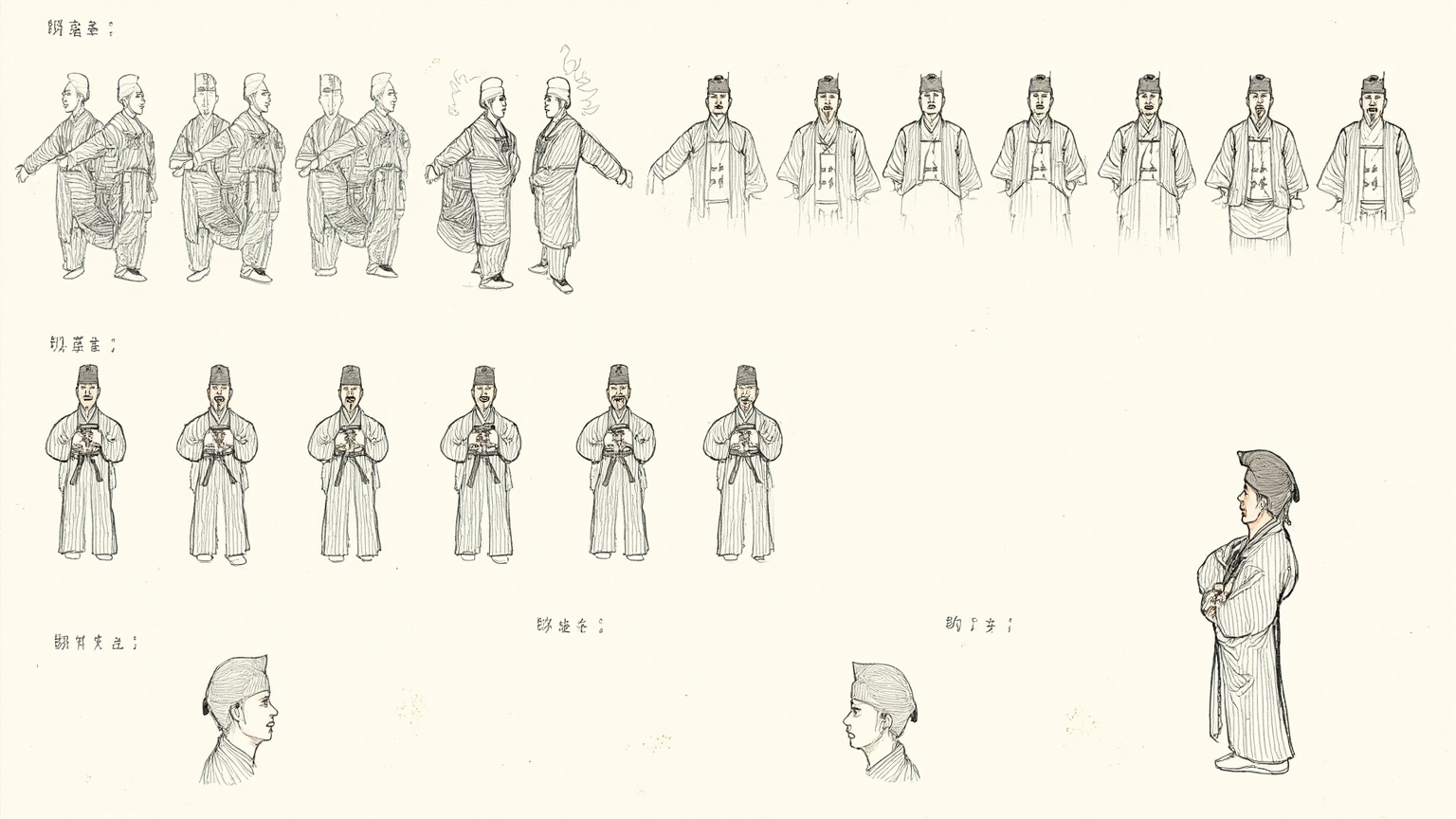
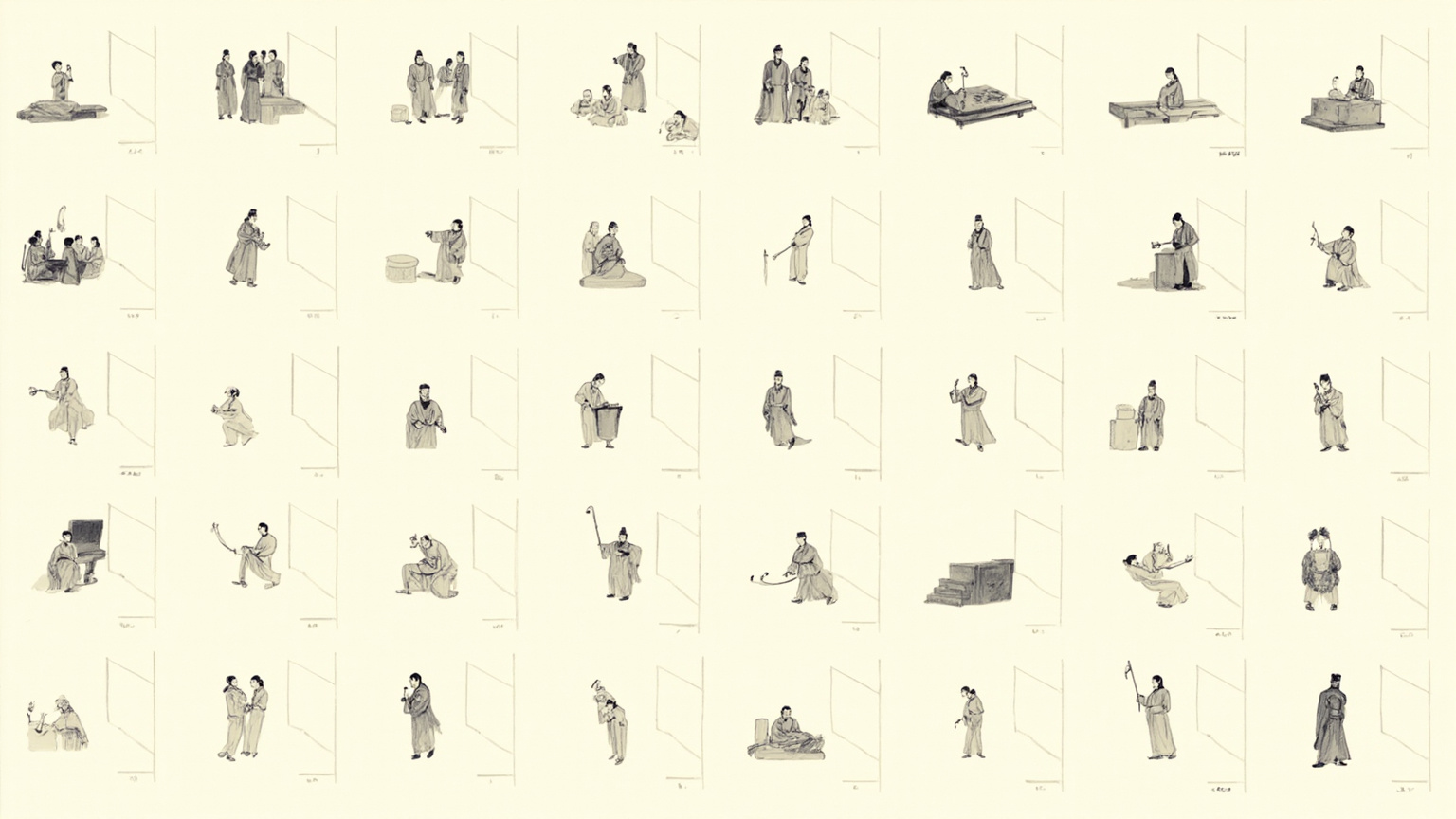
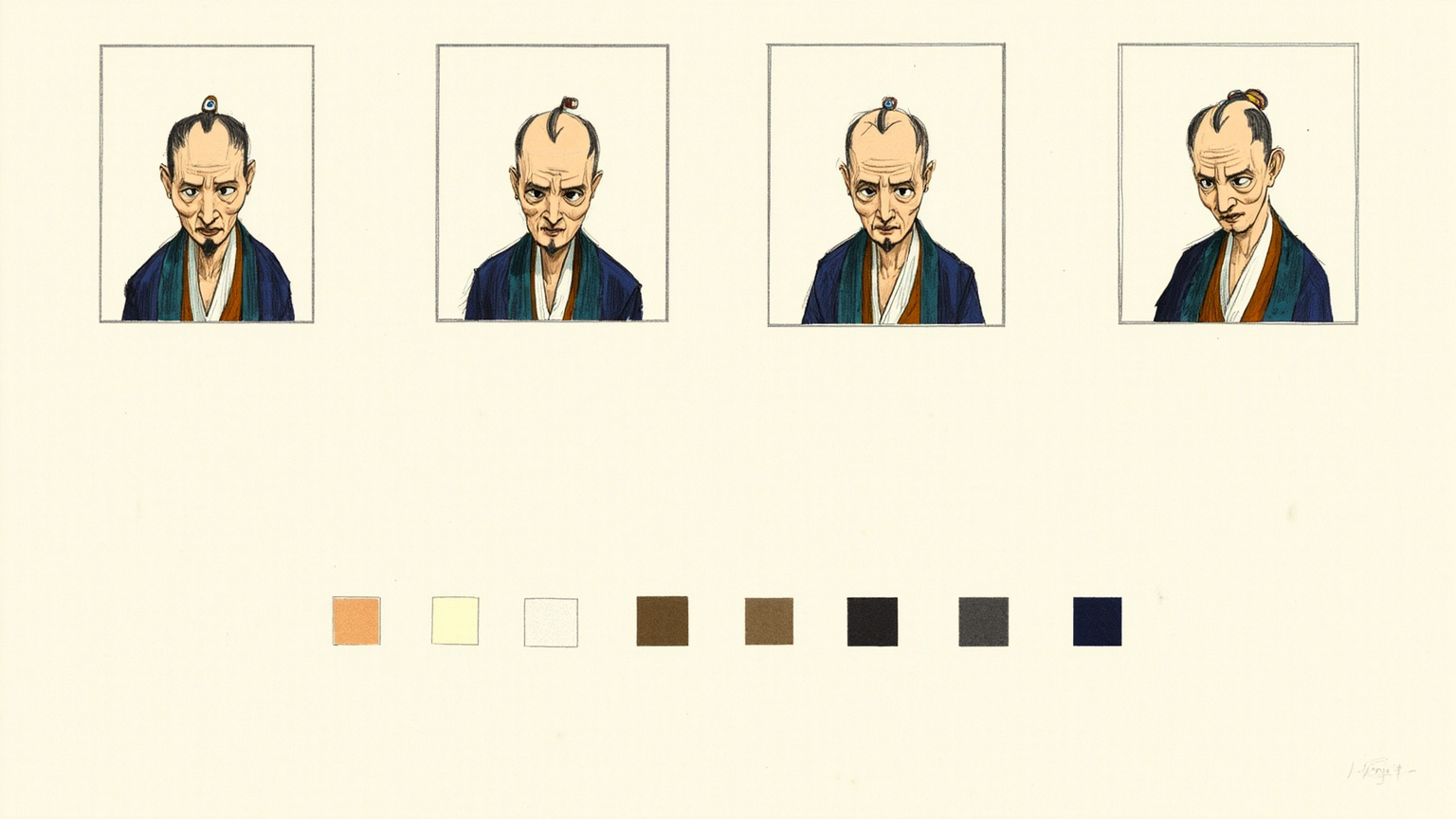
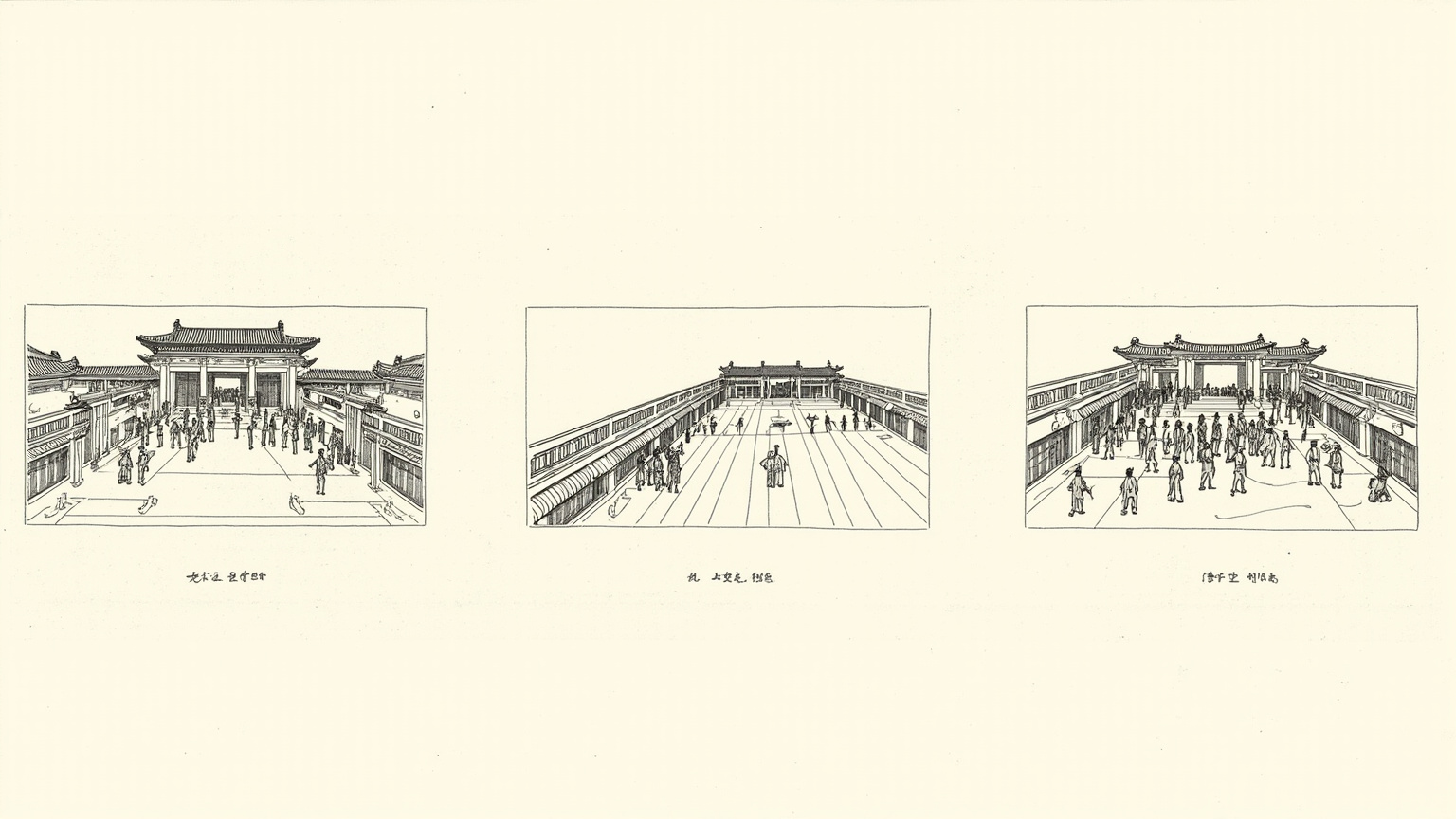
Art Direction4 plates
Before the guide was written, this book got a visual foundation — every illustration you just read grew out of it.