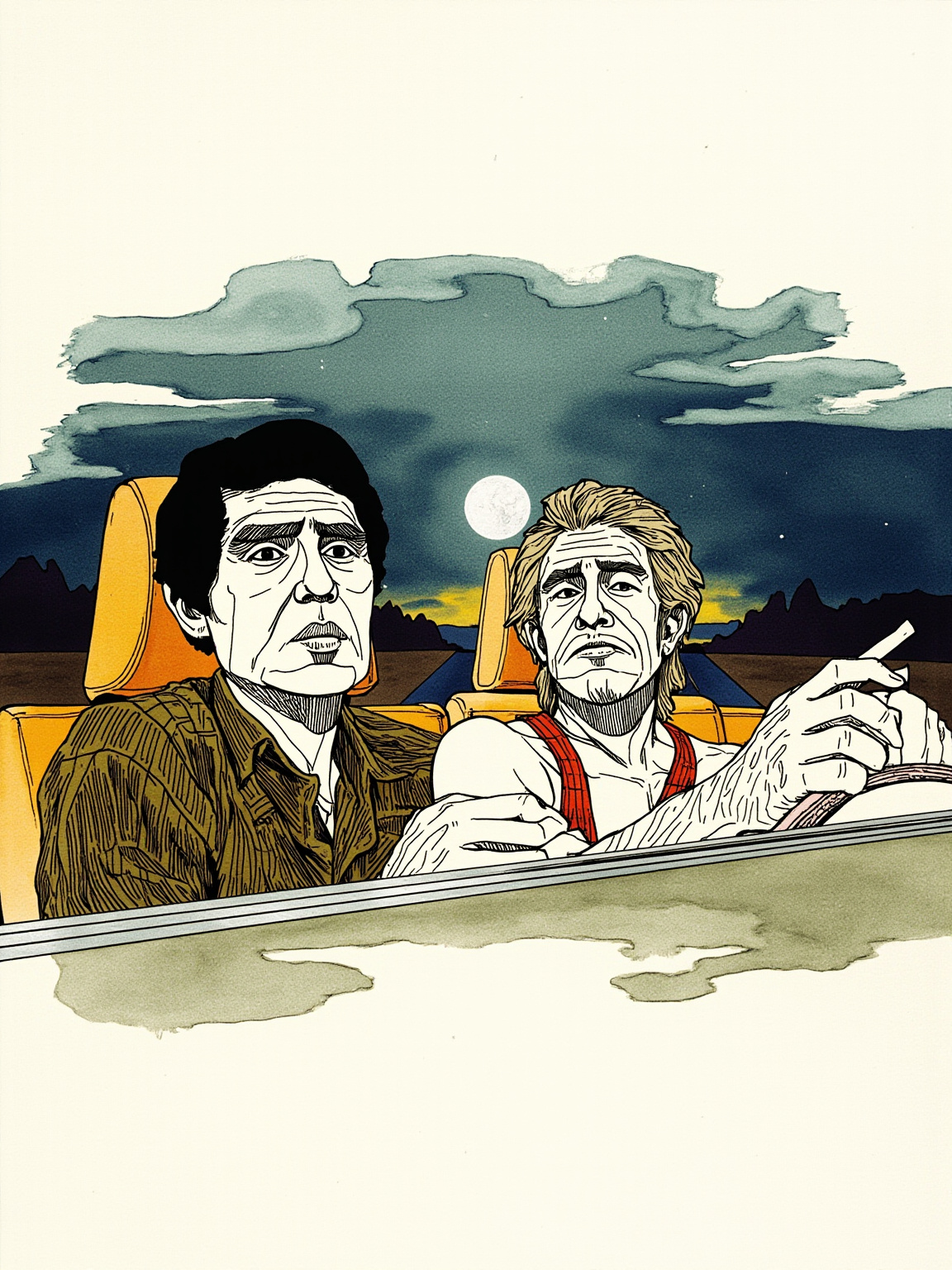
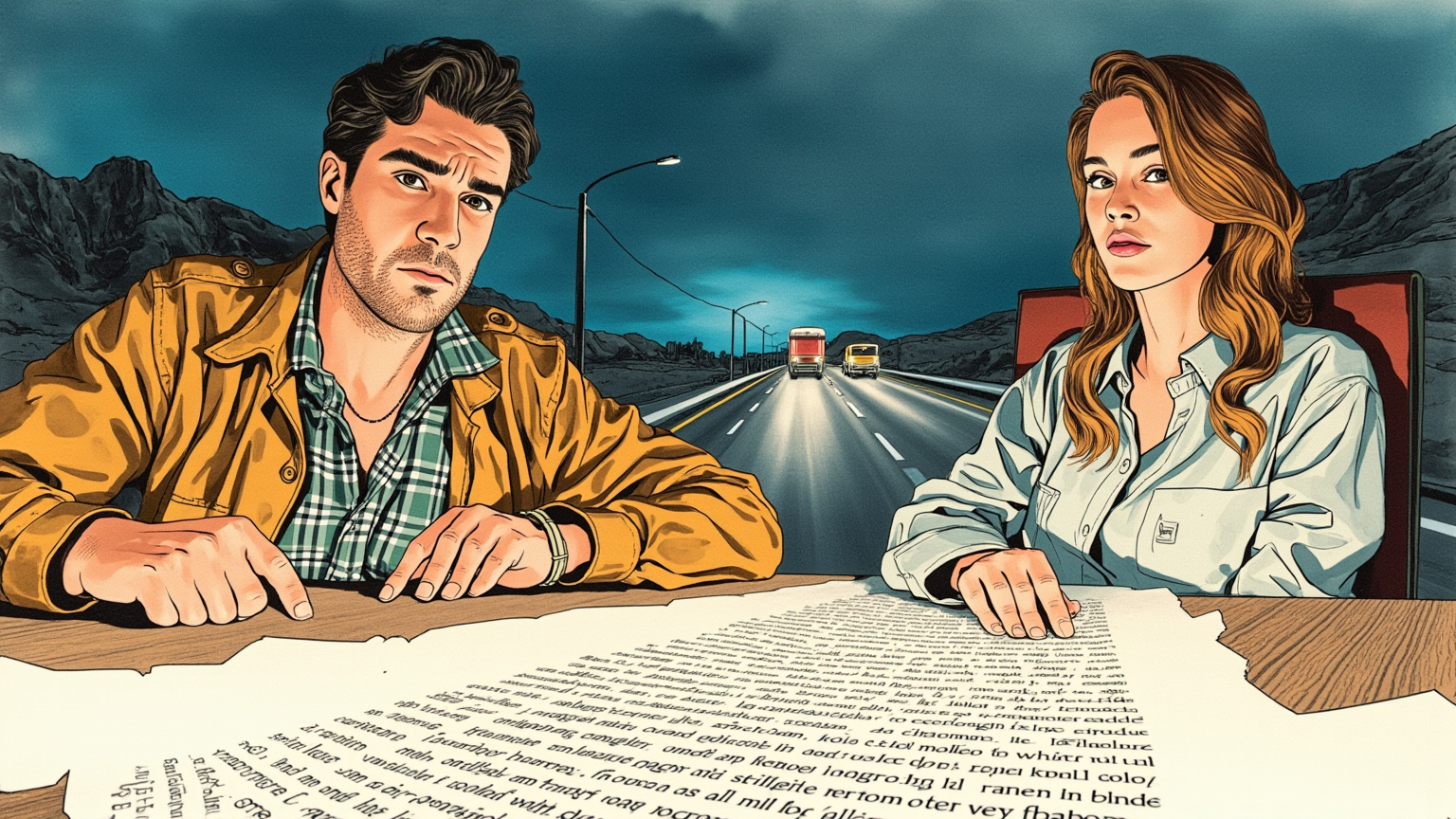
A borrowed Cadillac, driven nearly to pieces, tears out of Denver with Dean Moriarty at the wheel, racing across the country to reach his next wife. Sal rides beside him, carsick, wired, half convinced. This is the image On the Road left behind for everyone after: the car still running, the man already coming apart.
What Kind of Book This Is
In 1957, the young American writer Jack Kerouac published this semi-autobiographical novel. Every character had a real-life counterpart, and the story drew directly on his own cross-country trips between 1947 and 1950. It isn't really a conventional novel — it's closer to a flag planted in the ground. As the founding text of the Beat Generation, it set the tone for a whole postwar generation of young Americans: restless, anti-middle-class, chasing something close to a religious need to feel truly alive.
It's also remembered for a legend of its own making. Kerouac wrote the first draft in April 1951 on a single continuous scroll of taped-together paper, roughly a hundred and twenty feet long, no paragraph breaks, typed straight through in one sustained burst — the manuscript itself is a portrait of the book's temperament. The published version was later cut and its characters renamed, but the speed survived intact.
Founding text of the Beat Generation sounds like a label pinned on by literary history, but what it actually means is this: generations of writers, musicians, and countercultural kids who came after have all had at least one foot on the road this book paved. It redefined both the language of postwar American literature and the way its writers lived.
Set on fire by a madman, then left behind on the road — that's the price of freedom, and On the Road makes you pay it in full.
Why Read the Actual Book
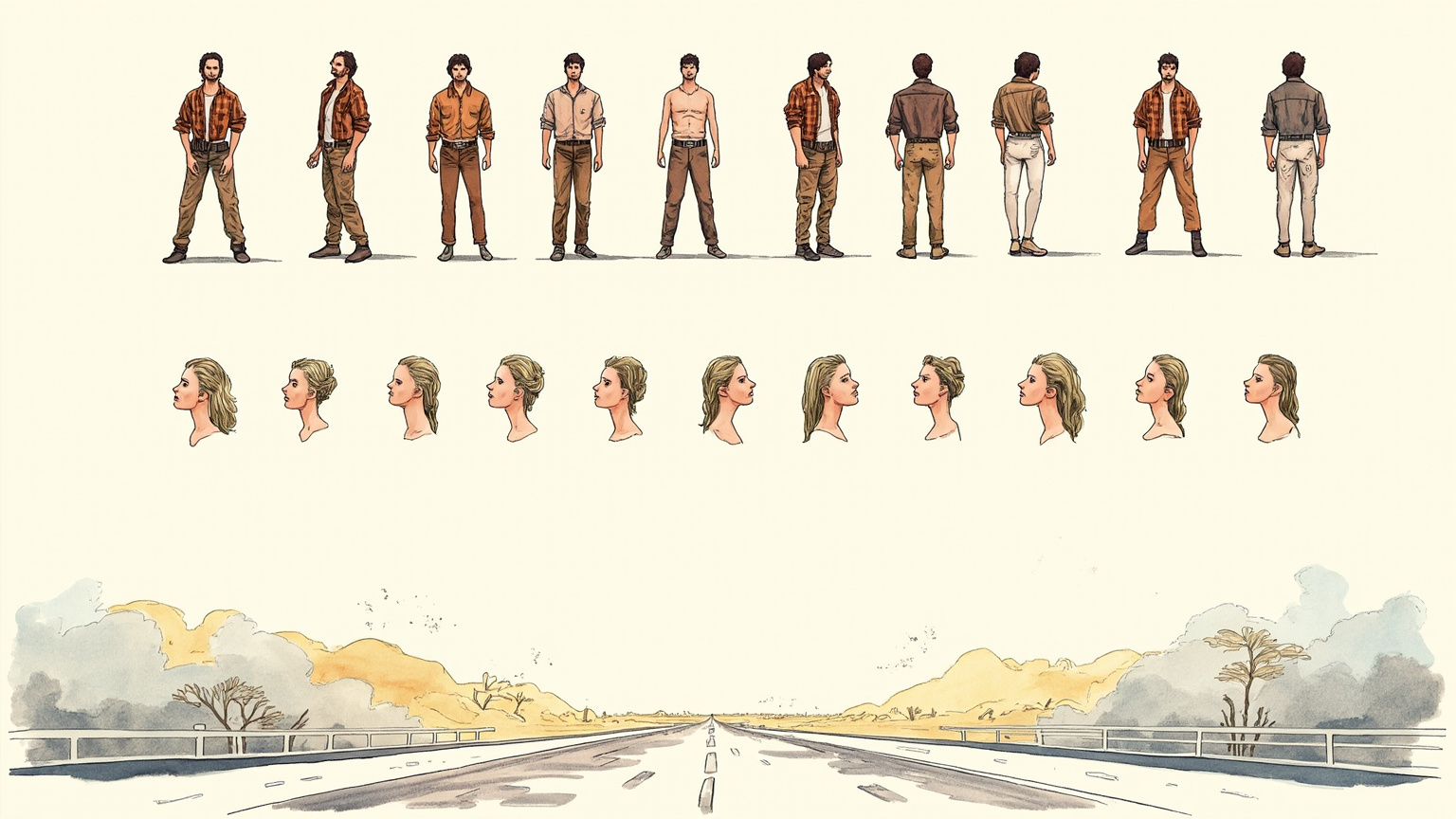
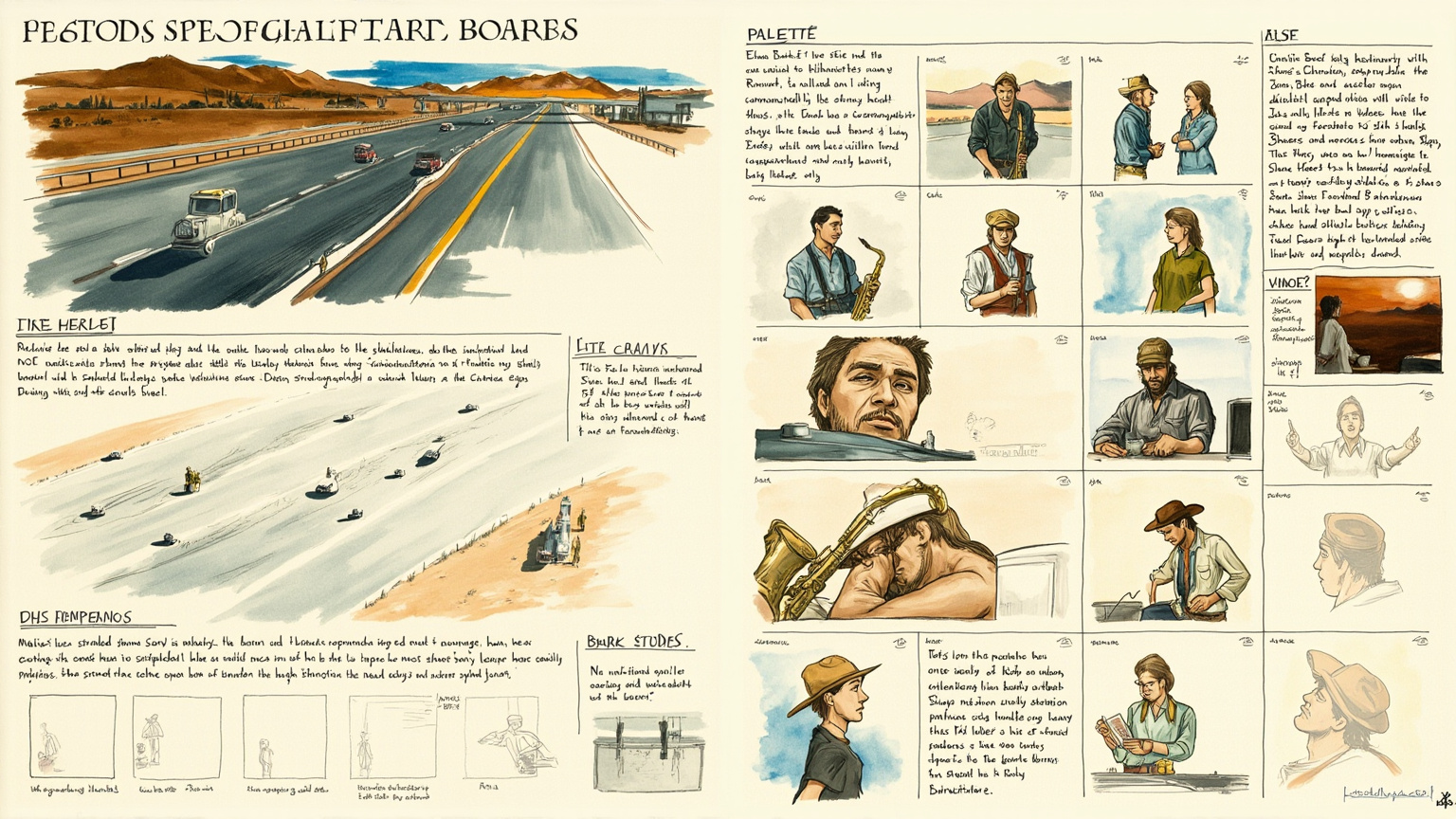
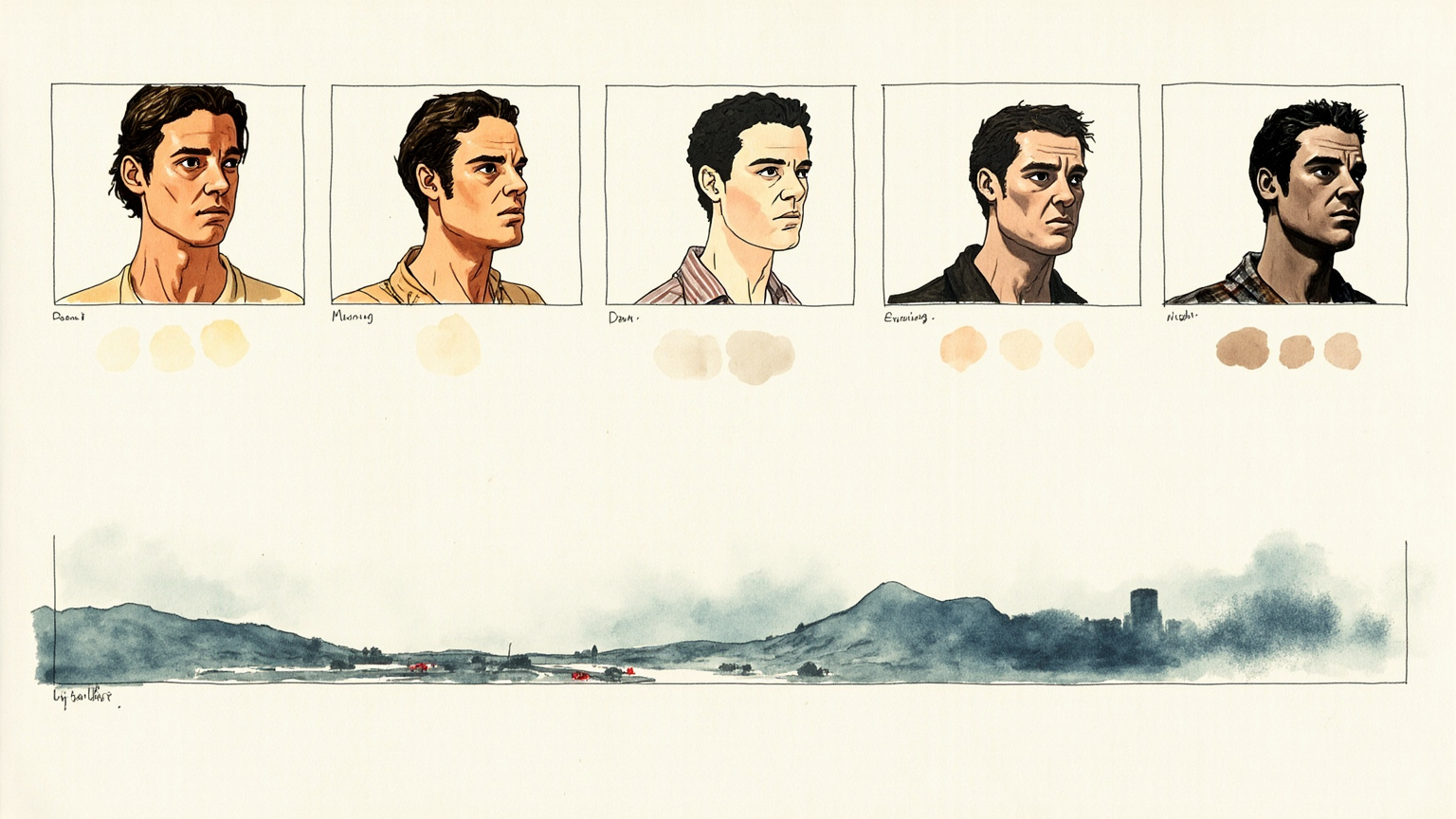
Art Direction4 plates
Before the guide was written, this book got a visual foundation — every illustration you just read grew out of it.
Sal Paradise narrates: a young man who wants to be a writer, recently recovered from illness, freshly out of a broken marriage, living at his aunt's house in New Jersey. That house is the one fixed point in the whole book, the place he returns to catch his breath after every wild trip.
Dean Moriarty is the book's center of gravity. Raised in the slums of Denver, son of a habitual car thief, he talks, drives, and loves at a speed that borders on out of control. To Sal he is the living embodiment of being mad to live, mad to talk, mad to be saved — and he abandons the people around him again and again, including Sal himself, left sick and alone in Mexico City.
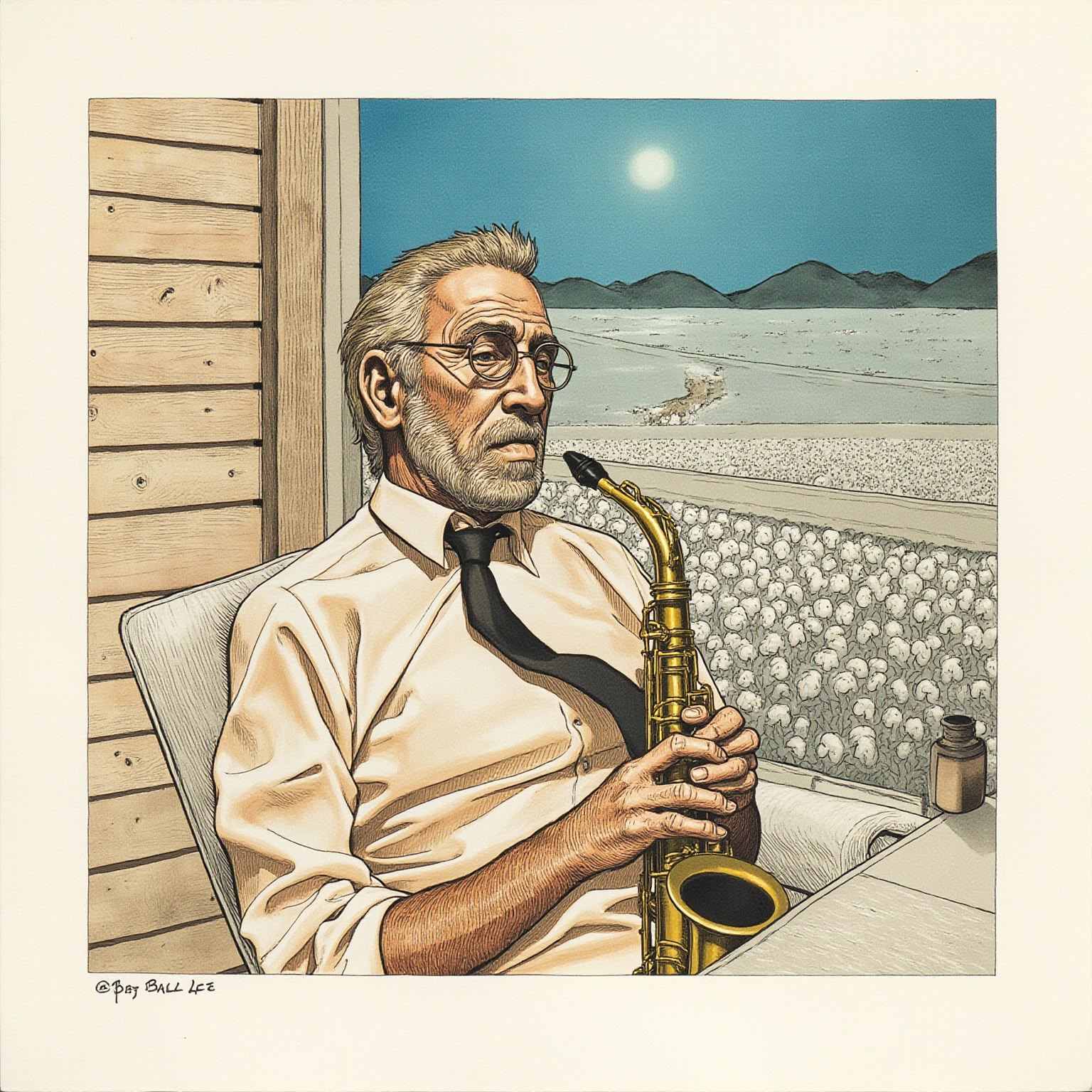
Carlo Marx is the center of the New York poetry crowd, talking through the night about the soul and eternity — with Dean and Sal he forms the book's talking-mad trio. Old Bull Lee is the older, strange figure settled on a farm out in rural Louisiana: erudite, addicted to morphine. Sal and Dean's visit to him is the darkest stretch in the whole book.
First Trip: 1947, Heading West Alone
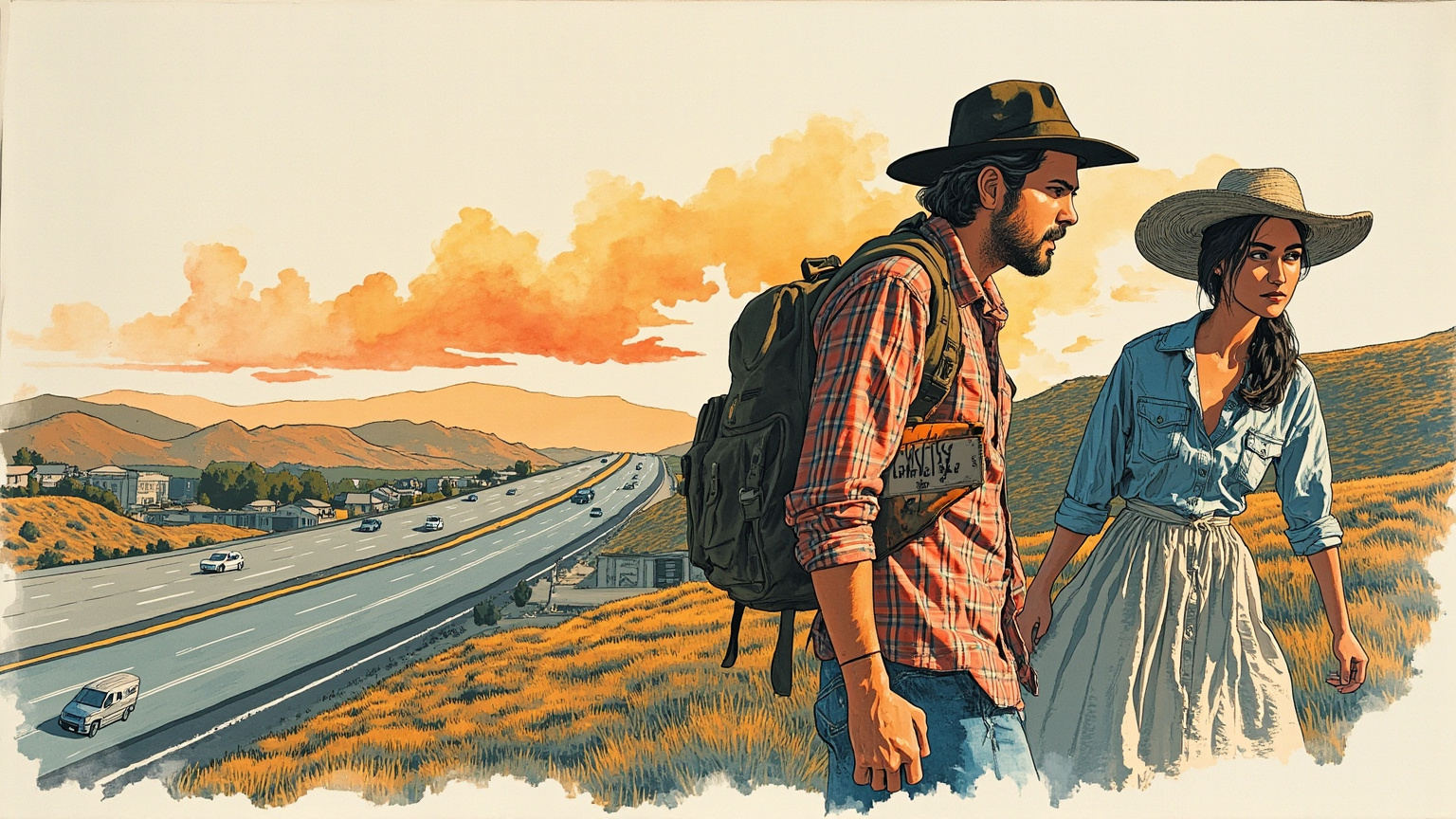
The story opens in postwar New York. Sal has barely met Dean when that mad-to-live energy hits him full force. In 1947 he hitchhikes west alone, across to Denver, then San Francisco and Los Angeles. When the money runs out, he picks grapes in a California vineyard and briefly moves in with a Mexican farmworker named Terry, one of the few stretches in the book that dwells on working-class life: tender, poor, and over almost as soon as it starts. Once the money is gone, he catches a bus back to New York, worn down and empty-handed.
Second Crossing: A Night of Talk in Denver
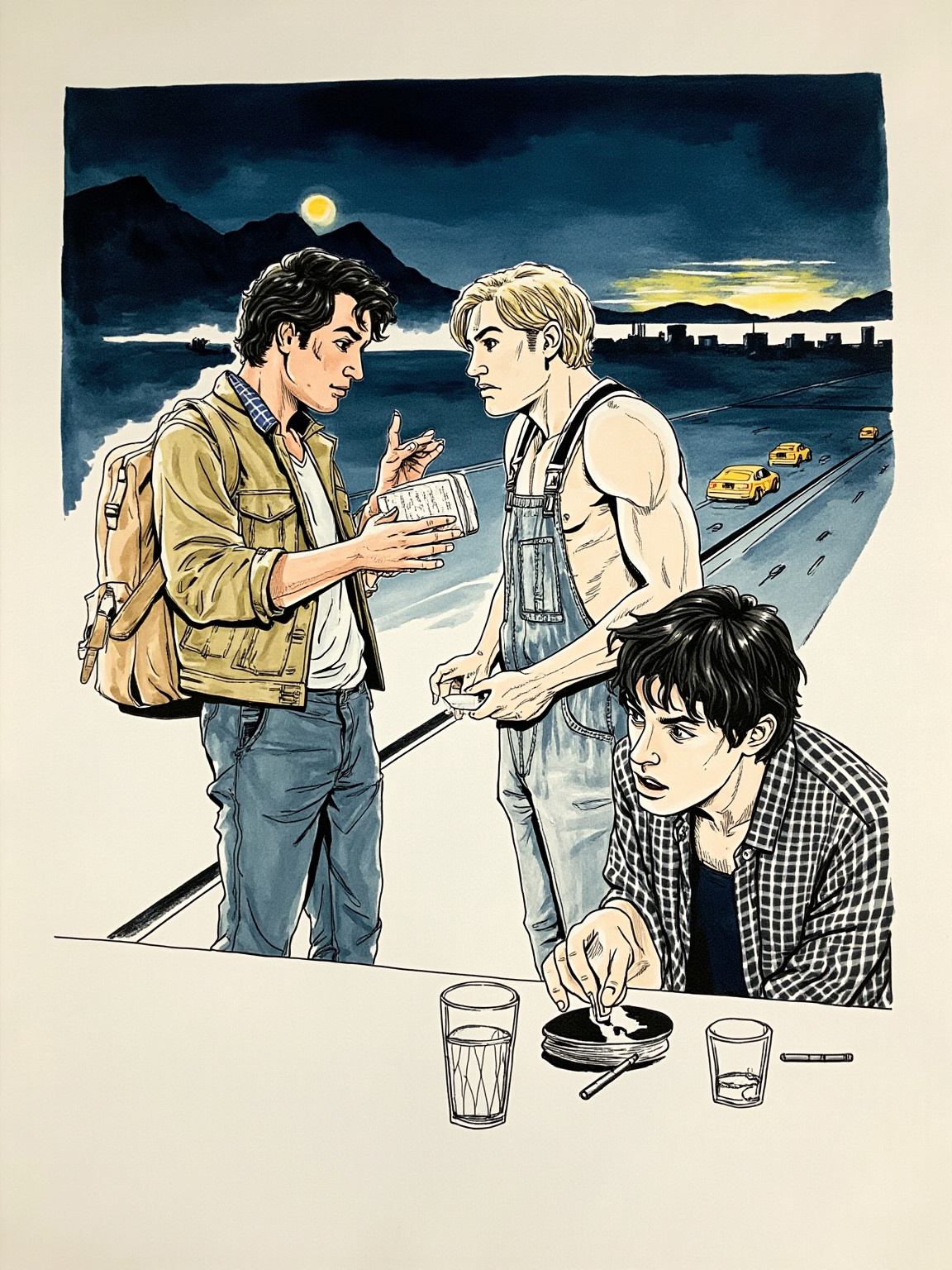
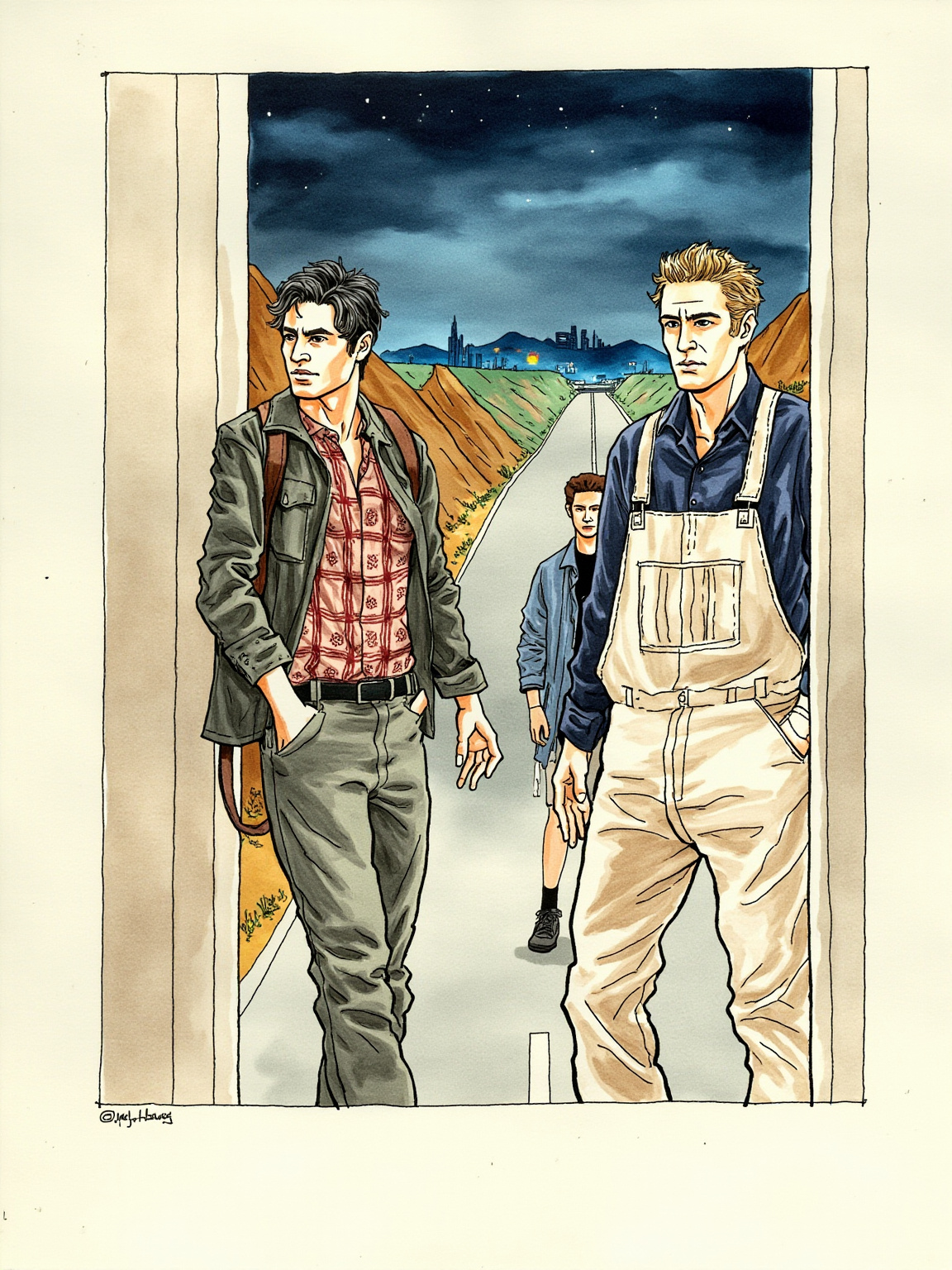
Dean, now split from his first wife Marylou and remarried to Camille in San Francisco, calls Sal out to join him. The two of them meet the poet Carlo Marx in Denver first: smoke-filled jazz bars, nights spent talking through the soul, eternity, America. Those few nights with all three of them together are the book at its most concentrated dose of mad talk.
Afterward the three of them drive a borrowed car east across the country. Dean's state on the road can only be called chaos — driving with one hand while talking on the phone, yes, to someone hours away by car, flirting with a woman in the back seat the whole time. Sal sits in the passenger seat, swept along by the sheer force of it.
Louisiana: A Visit to Old Bull Lee
ImaRead3
On the way back east, Sal and Dean detour through Louisiana to visit Old Bull Lee, the strange figure settled on a farm out there. This stretch is the darkest pause in the whole book — the farm is a mess, the air a mix of morphine and old newspaper. Lee is learned, brooding, endlessly full of stories about the world, but the addiction is visibly eating him from the inside. Here Sal first sees the underside of mad living: burn too hard, and you can burn yourself hollow.
The Cadillac Run: Road Genius at Its Limit
Dean, having left Camille again, drives a borrowed Cadillac across the country and pushes his road genius to its absolute limit — windshield about to crack, steam rising off the hood, foot flat on the gas, indifferent to the car falling apart under him and to Sal being shaken sick beside him. This is the fastest, most densely written stretch in the whole book: Kerouac's sentences run on like a bebop saxophone riff, refusing to stop for punctuation.
The first time I read this passage, I flipped back and read the previous page again, not because I hadn't followed it, but because I couldn't quite believe a person could write like this.
South to Mexico City: The Peak of the Chase, and Being Left Behind
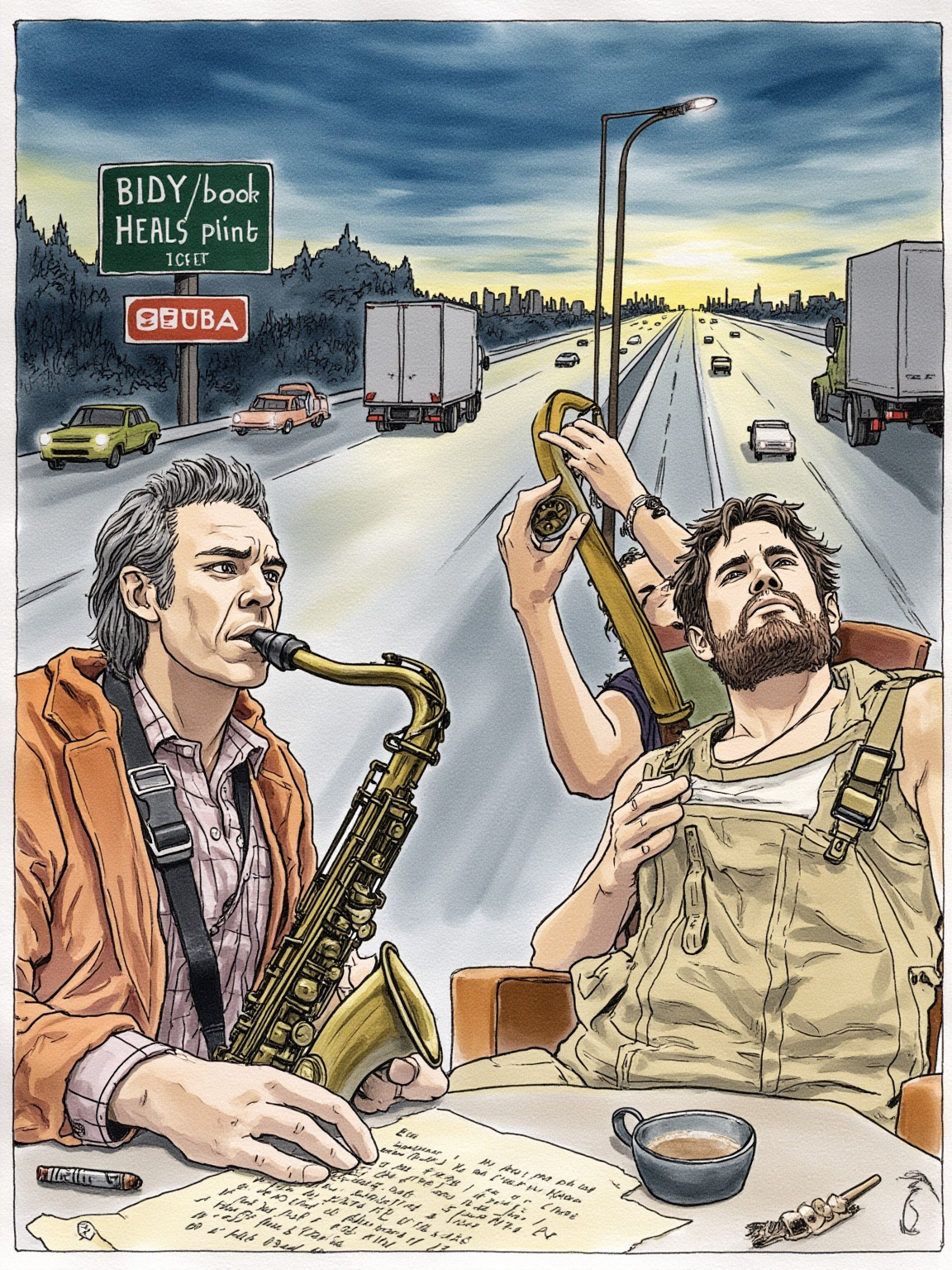
On their last trip, the two of them cross the border into Mexico City. Heat, marijuana, saxophones in the street, nights lost in the red-light district: mad living pushed all the way to its peak.
ImaRead4
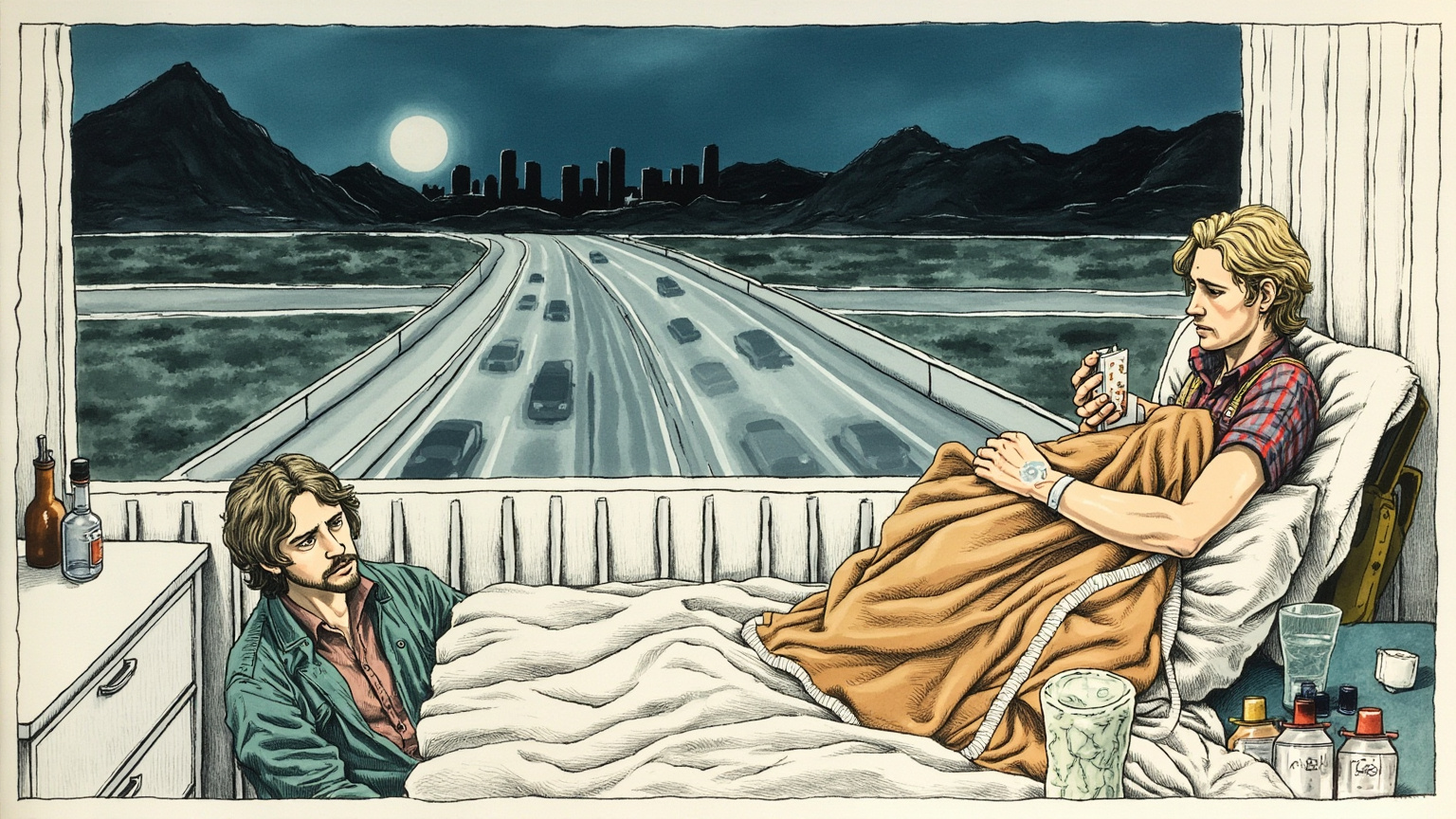
After the peak comes the collapse. Sal catches dysentery, burning with fever, curled up unable to move in a hotel bed. Dean doesn't stay to look after him — he's in a hurry to get back to America, to yet another wife. Sal is left behind on a sickbed in a foreign country. This is the sharpest cut in the whole book: the price of following a self-destroying genius is that when you need him, he leaves.
Epilogue: A Cold Night in New York, and a Road That's Gone
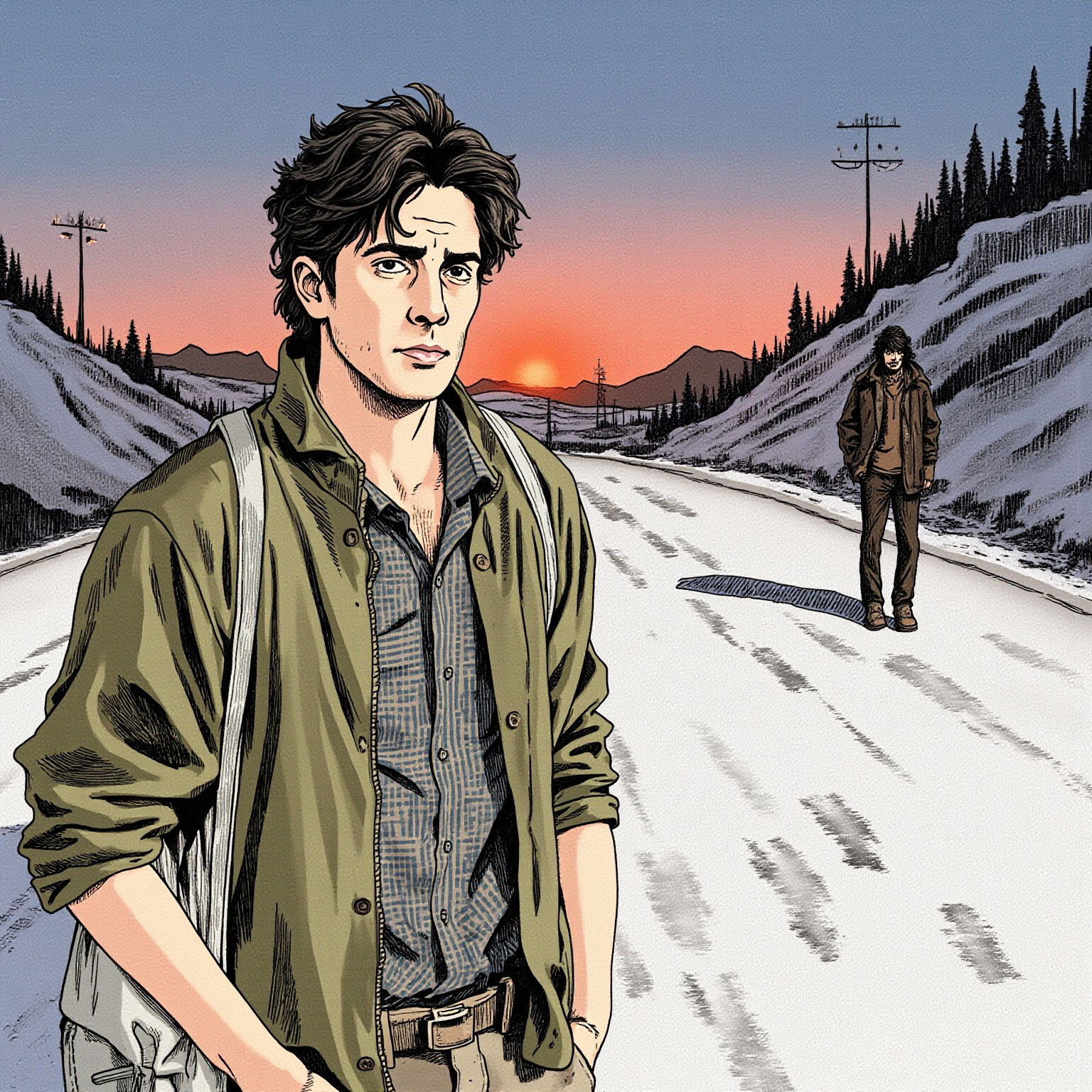
Recovered, Sal returns to New York, meets a new girlfriend named Laura, and starts to settle down. One evening Dean shows up uninvited, ragged and half coherent, at Sal's door once more. But Sal is on his way to a Duke Ellington concert with friends and has no room for Dean. He watches Dean walk off alone into the cold, then looks once at the sun going down. That look is Sal mourning Dean, and mourning the road-America that is already gone for good.
What Is It Actually About
On the surface it's about the road. Underneath, it's about one word: IT. Postwar America was settling into the prosperous, conformist sameness of the 1950s, and the Beats went chasing something almost sacred instead, an ecstatic experience of the present moment, sought not to arrive anywhere but to prove you had actually been alive. Dean is the near-religious embodiment of that pursuit, and Sal is his disciple.
As a matter of craft, Kerouac learned directly from bebop: sentences run straight through like a saxophone solo, never pausing for rhetorical effect, no polished parallelism, just a rhythm forced out by speed and adrenaline. That style was an affront in 1957. It still is.
Why It Still Cuts
ImaRead5
This guide gives you the map. The book itself is the land. Three things the map can't give you: first, the speed. Kerouac's unbroken, breathless sentences only feel like being dragged along once you're turning the pages yourself at night. Second, the body: the carsickness, the fever, the ache of driving through the night, the Mexican heat, all of which only wears you out if you read it word by word. Third, the jazz rhythm, sentences that launch off like a saxophone riff, improvised, never the same way twice. Reading it already knowing the plot actually sharpens your eye — you notice exactly where Kerouac pushes deliberately too far, and where he suddenly pulls back. That kind of awareness is a pleasure only available to a reader who's already been spoiled.