Latin America's own creation myth, and the harshest thing ever written about solitude
Text and illustrations produced by the pipeline
Some books reach you as a reputation before they reach you as a story — One Hundred Years of Solitude is one of them. Most people know it's famous, know it's about a Latin American family, and half-remember a girl who floats off into the sky and a rain that never seems to stop. Then they actually open it and get scared off by a parade of names that all sound nearly identical. This guide isn't here to make you memorize a family tree. It's here to help you understand one thing: what this novel is actually about, and why it's worth pushing through.
Let's give away the central secret up front: this is a book about a life written in advance. The family at its center has its fate sealed by a prophecy — a set of parchment manuscripts — from the moment the founding generation builds the town. The last member of the line spends years decoding those strange ciphers, only to discover that everything they lived through, wars, love affairs, solitude, was a script laid down long before. The instant he reads the final word, a hurricane wipes the entire town off the map. This isn't the it-was-all-planned twist of a mystery novel; it's myth, religion, and the cyclical weight of Latin American history fused into a single literary spell.
Its author is the Colombian writer Gabriel García Márquez, born in 1927, died in 2014. Published in 1967, the novel was the loudest thunderclap in Spanish-language literature during the second half of the twentieth century. Literary history has a label for it: magical realism — telling impossible things in the most matter-of-fact voice imaginable. People fly up into the sky, ghosts drop by for visits, and it rains for more than four years straight. The whole book plays out on a single stage: the fictional town of Macondo (invented by García Márquez himself, not a real place). The timeline spans a full seven generations of the Buendía family. The novel won him the Nobel Prize in Literature, but its deeper impact was this: it made the whole world start listening seriously to Latin America tell its own stories — the continent finally had its own creation myth, instead of being a footnote in European and American literature.
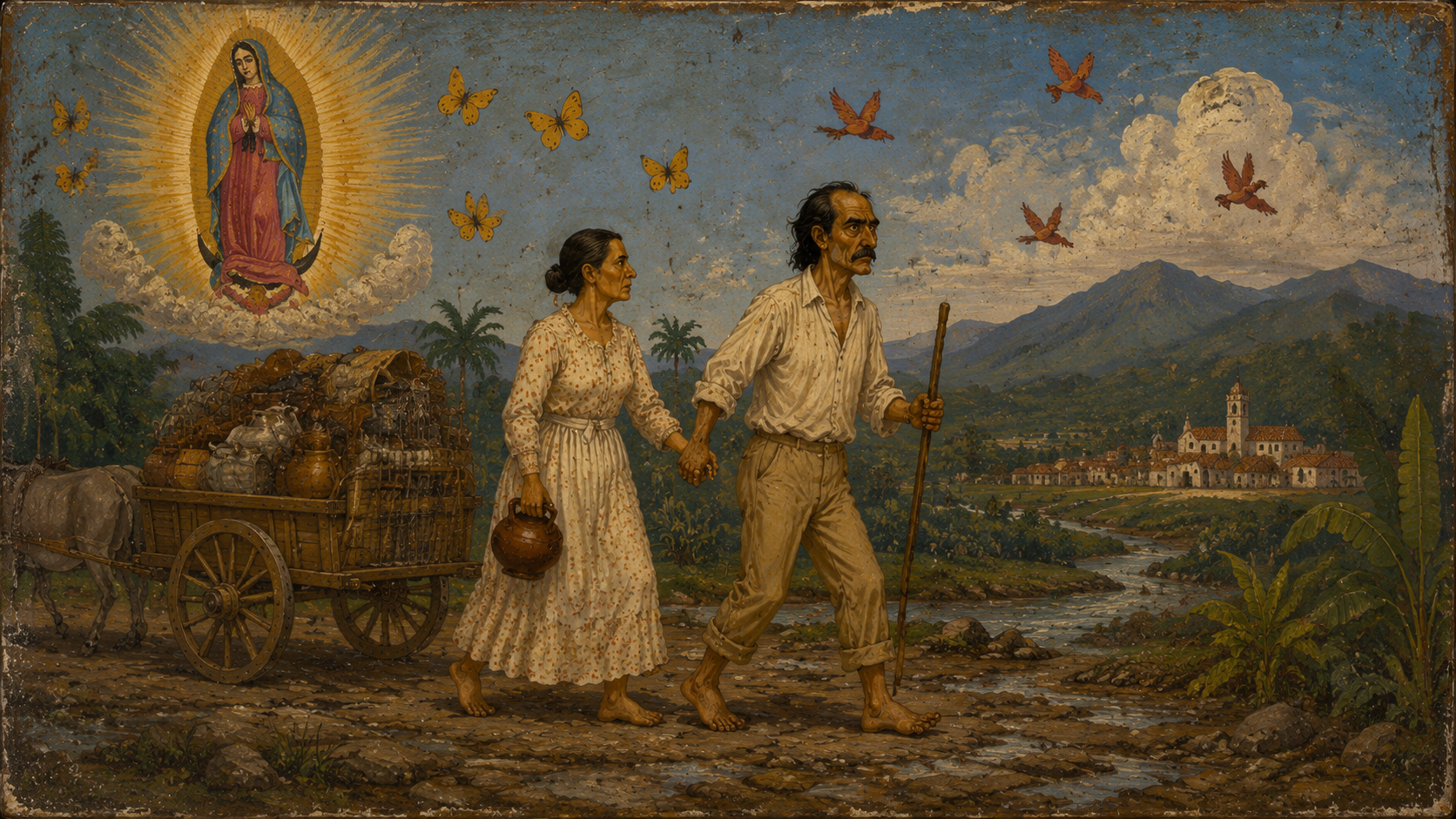
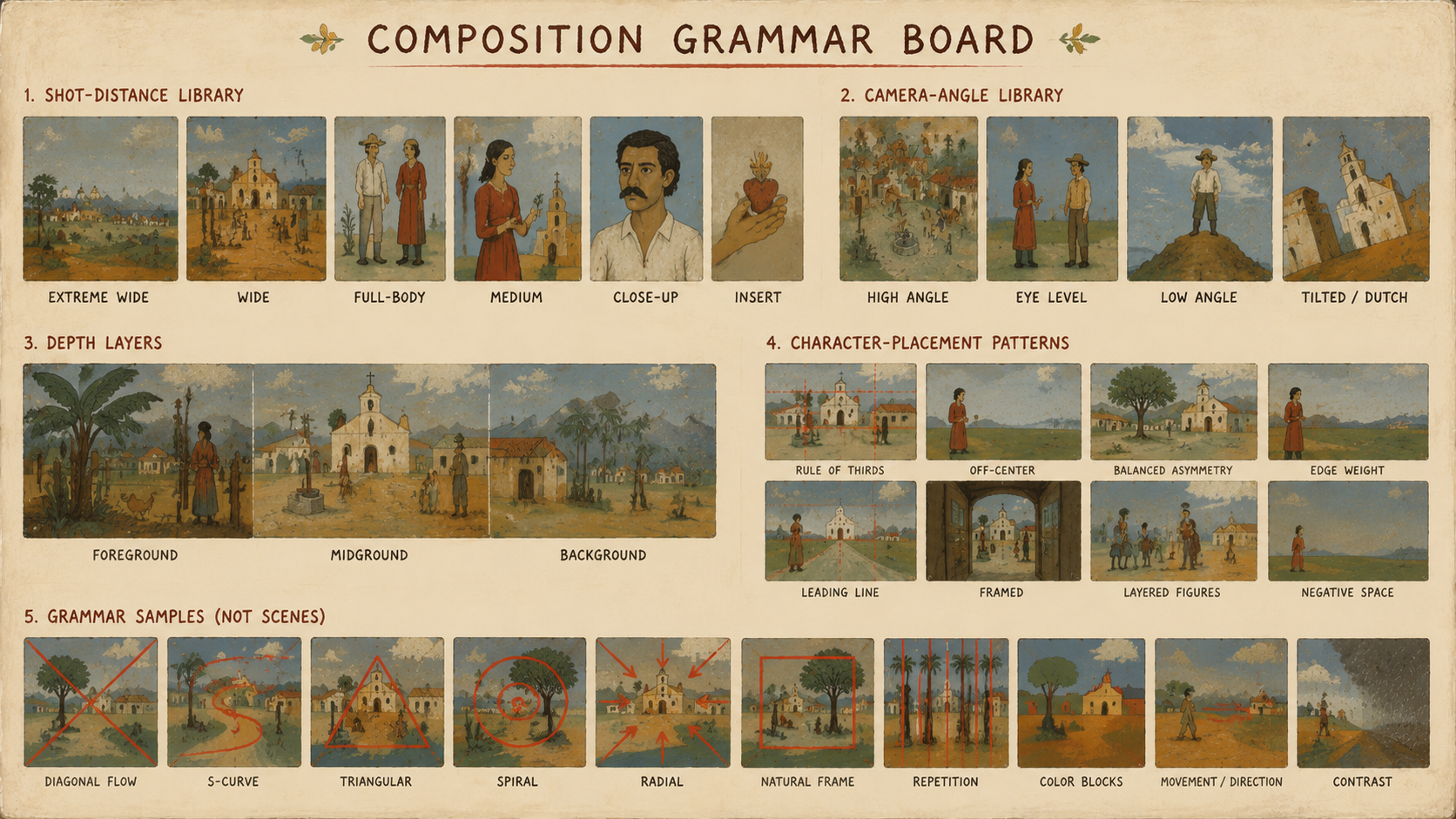
Before the guide was written, this book got a visual foundation — every illustration you just read grew out of it.
The two most important people at the start of the story are a married couple: José Arcadio Buendía and his wife, Úrsula Iguarán. They found Macondo, and everything in the family begins with them. José Arcadio is the classic founder type — restless energy, wild imagination — and in his later years he becomes obsessed with alchemy and every new invention that crosses his path, until he finally loses his mind under the chestnut tree in the backyard and is tied to its trunk, never to come down again. Úrsula is his opposite: practical, unbreakable, and she lives past a hundred, functioning as something like the book's horizon — no matter which generation you're reading about, she's still there, holding things up.
Their son, Colonel Aureliano Buendía, is the most famous figure of the second generation: he becomes the leader of an uprising and spends his life launching thirty-two civil wars, all of which fail. He functions as the novel's historical symbol — a man who has witnessed the grandest events imaginable, only to retreat into his workshop, forging tiny gold fish over and over, then melting them down to start again. Another figure impossible to skip is the gypsy Melquíades. He isn't part of the family, but he acts like fate's own screenwriter — arriving with magnets, ice, and other miracles, and eventually leaving behind the parchment manuscripts that prophesy the family's entire destiny. The family also has its emblematic beauty, Remedios the Beauty, gorgeous to a degree that makes her utterly unfit for ordinary human affairs, who one day grabs hold of a bedsheet and simply floats away, and Amaranta, who spends her life pushing love away every time it comes near. The last of the line is a man named Aureliano Babilonia, who finally deciphers the manuscripts. You'll notice the names Aureliano and Arcadio keep getting recycled through the family like copy and paste — that isn't laziness on the author's part. It's deliberate. The repetition is itself part of the novel's theme.
Act One: Genesis. The story opens on a scandal that sounds almost absurd: José Arcadio and Úrsula are first cousins, and out of fear of having a child born with a pig's tail, they leave their homeland along with a group of neighbors and found a town called Macondo beside a swamp. The craft here is worth noticing — it quietly swaps the myth of Adam and Eve cast out of Eden for the elopement of two closely related spouses. This creation isn't sacred; it's forced, a little embarrassing. That's García Márquez's trick: turn myth into gossip, and turn gossip into myth.
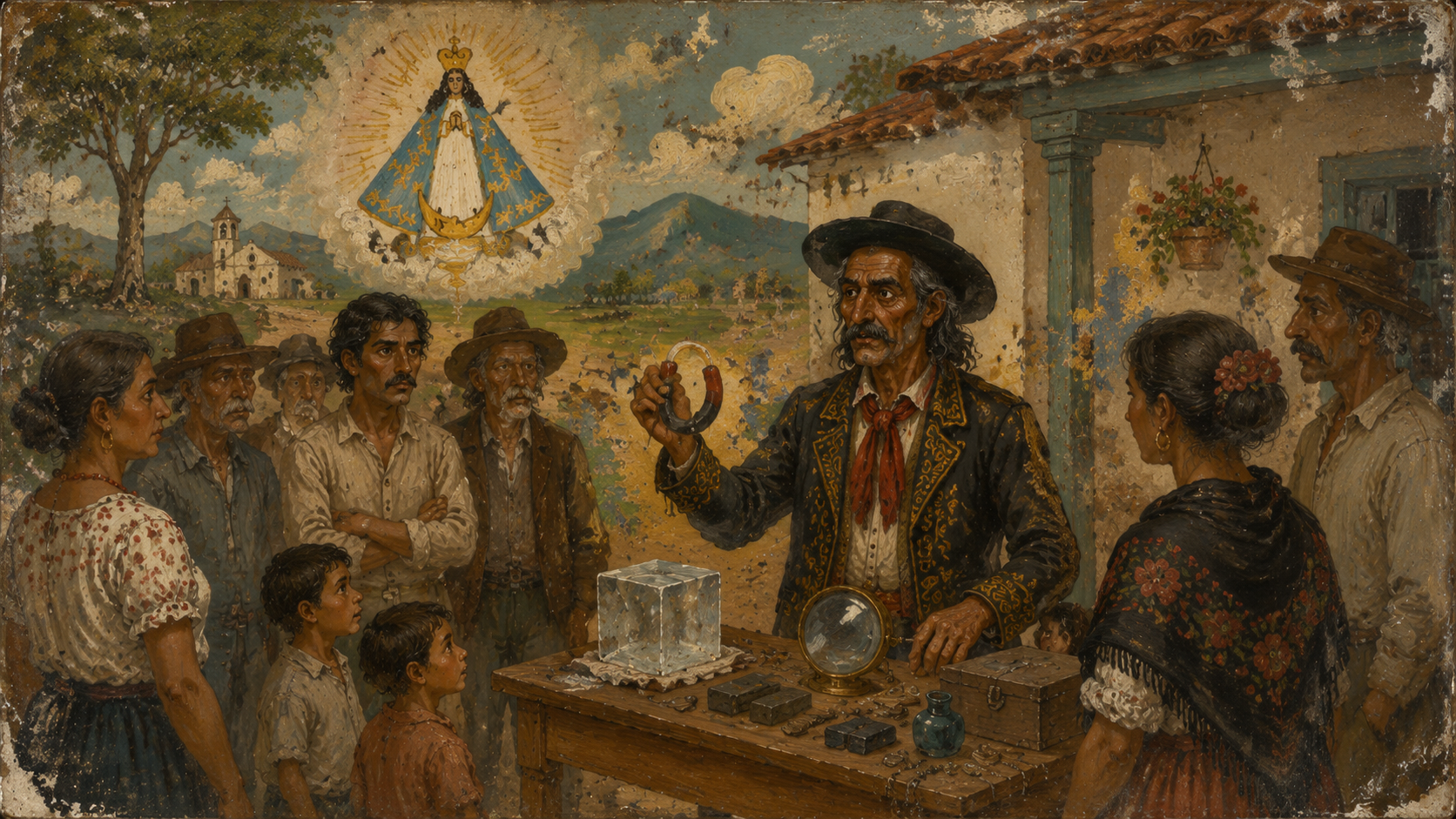
Act Two: The Outside World Breaks In. Macondo starts out like an isolated little paradise, until the gypsy Melquíades keeps showing up with magnets, ice, and magnifying glasses, his own miracles. Every time, the townspeople chase him off as a fraud, and every time, he comes back with something new. What to illustrate here: in the dark of night, Melquíades spreads his magnets across the town square, and two iron pots and a string of keys go sliding across the ground toward him, while the watching Buendía family looks on in astonishment. On the surface, this scene is about science arriving in a small town. What it's really saying is that Latin America was dragged into modern history by outside forces — you think you're just living your life, and history shows up uninvited.
Act Three: Thirty-Two Wars and One Gold Fish. Aureliano grows up, becomes a colonel, and throws himself into revolution. From this point on, the novel's pacing suddenly stretches out — over the following decades he fights thirty-two civil wars and loses every one. There's a particularly ruthless move in the writing here: García Márquez compresses nearly every battle into about a sentence's worth of space, so the reader goes numb to the war right alongside the character. The colonel's condition in his later years is one of the novel's most iconic images: he shuts himself in, forging tiny gold fish again and again, then melting them down to start over. The act means nothing at all — it's purely the posture of a man holding out against the void. What to illustrate here: in a workshop at dusk, Colonel Aureliano sits at his workbench with a few freshly cast gold fish in front of him, traces of metal dust still clinging to his beard, his eyes fixed on something beyond the frame.
Act Four: The Banana Company and the Erased Massacre. Beyond the family's own fate, a piece of national history gets folded in: a foreign banana company sets up in Macondo, bringing brief prosperity, a railroad, electric lights, telephones, wages, but labor unrest quickly follows. Workers gather in the square to protest, the army surrounds them, and the workers are slaughtered. The more chilling scene comes after: once the rain stops, the government announces that none of it ever happened. No one can remember how many died, and even the survivors' own memories get forcibly corrected. This passage is the political heart of the whole book. It is a real wound from Latin American history, only rendered through magic — official records can be erased, and even an eyewitness's memory can be rewritten.
Act Five: More Than Four Years of Rain. After the massacre, the sky opens up. At first people find it almost romantic, but it keeps falling until moss grows on the walls and houses start collapsing — it turns out what is falling is not rain at all, but time itself, corroding everything. What to illustrate here: under an unbroken curtain of rain, in front of a half-collapsed wooden house in Macondo, Úrsula sits wrapped in a shawl whose color can no longer be made out, rainwater running off the eaves all the way down to her feet. This is García Márquez taking climate and writing it as fate, pushed to its furthest extreme.
Act Six: A Fate That Repeats Itself. In the generations that follow, almost every one replays the story of the one before it: the same names, the same impulses, love between close relatives, the same forms of solitude and madness. Neither the women nor the men escape it — the most extreme form love takes is refusal, and the most extreme form of hatred is shutting oneself away.
Act Seven: The Parchments and the Hurricane. The last of the line, Aureliano Babilonia, finds the parchment manuscripts Melquíades left behind a hundred years earlier, up in the attic. The strange symbols are written in Sanskrit, in Latin, in an encrypted family history, and he spends the rest of his life decoding them. In the final moment he discovers that every person in the family, every event, even the founding and destruction of Macondo itself, was already written on those pages. He reads the last line, and the page is swept up by the wind — a hurricane tears through and wipes Macondo off the face of the earth completely, as though the town had never existed.
On the surface it tells the rise and fall of seven generations of one family. Underneath, it is really telling at least three stories at once. First: solitude here is not a character flaw, it is a fate — the people in this family are not short on money or love, but they never manage to truly make peace with each other, with the world, or with time. Second: Latin American history is a cycle — independence, civil war, dictatorship, foreign capital moving in, massacre, forgetting, round after round — which is why the author does not write it in linear time, but in the time of recurrence. Third: memory can be erased, but myth and story cannot — the novel itself is a counterstrike against erasure.
Why is it considered so well made? Three reasons are impossible to skip past. First, the seamless stitching — myth, history, and domestic squabbles all fused together, so it reads at once like a family's oral history and like a Latin American Genesis. Second, the famous opening construction, Many years later... — García Márquez packs future, past, and present into a single sentence, and from the very first line he dismantles the reader's ordinary sense of time. Third, the sheer density of the sentences — nearly every paragraph is packed with imagery and detail, and it still holds its shape in translation, which is rare, hard-won craft even by the standards of Spanish-language literature.
I have just handed you the skeleton — but you should still go read the book itself. The reason is simple: a guide is a map, and the text is the land. What actually makes this book extraordinary is the material texture on every single page — the sound of rain hitting a tin roof, the sweet, faintly rank smell clinging to a banana company maid, the small metallic ring when the colonel drops a gold fish into the furnace and metal meets flame. None of that exists anywhere except in the immersion of your own fingers moving across the page. There are also the side characters I have deliberately left out here — how Amaranta spends her whole life tearing herself apart between love and refusal, how twin brothers who share the same name live out completely opposite fates, whether Remedios the Beauty really floated away or was quietly smoothed over by collective memory. Once you learn the answers to those puzzles from a guide like this one, you lose half the pleasure of them. And there is something else you can only get by reading it yourself: every few dozen pages you will run into a sentence that makes you want to copy it down — and the sentence you copy down is never the same one twice.