Orlando: A Biography · Companion Guide
奥兰多
贵族少年在伊丽莎白时代被女王吻过额头,四百年不死,在君士坦丁堡的一夜醒来变成了女人——性别、时代、传记本身,都被伍尔夫揉进同一个人身上。
Opening
In the winter of his sixteenth year, Londoners flooded onto the frozen Thames to skate. Among them was the young noble Orlando—he collided with a Russian girl wearing a sable cap, a girl named Sasha. That night, he fell in love. Published in 1928, this book begins with that collision and proceeds to carry its single protagonist through a full four centuries.
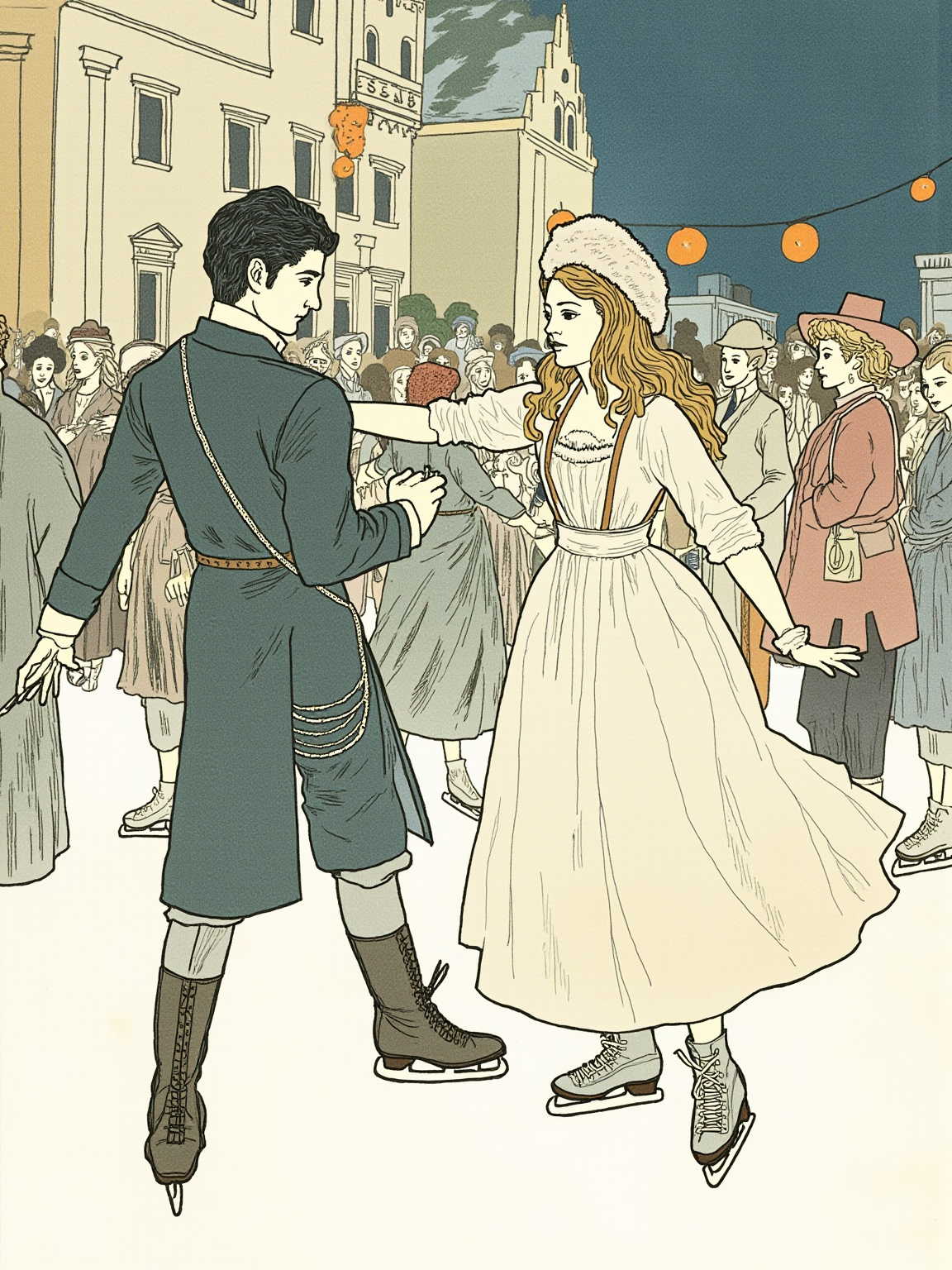
He escaped, but only just in time. There, on the frozen river, the skaters were spinning.
他挣脱出来,但只来得及那一瞬。结冰的河面上,溜冰的人正旋转不停。
金句 · 开篇 · 冰上集市
What Kind of Book Is This
Orlando's subtitle reads "A Biography," but what it parodies is biography itself. Woolf takes a single life and tears it into scenes that change like stage sets—the Elizabethan age, the Jacobean, the eighteenth century, Victorian England, 1928 London—and with each century shift, the writing changes register too. Verse, historical documents, footnotes, even mock scholarly annotations all get worked into the style. It is the lightest of Woolf's long novels, but beneath the playfulness lie her deepest preoccupations: can a person transcend their own gender? What does time look like on a single human life? How unreliable can a biography actually be?
Character and World
There is only one protagonist: Orlando. He is a favored young noble of the Elizabethan age, granted by the queen a mansion with three hundred and sixty-five rooms; beneath an oak tree he begins writing a long poem called "The Oak," and he writes it for three hundred years. Queen Elizabeth I is his protector in youth, gifting him the house and an annuity, and she leaves on him the first gaze of "being watched." The Russian Princess Sasha is the embodiment of his first love—they meet on the ice, and one morning she departs with the diplomatic mission, leaving him alone in the room with the curtains drawn tight. In the literary world there is a critic named Nick Greene, who lives for centuries always disparaging his poetry—this figure is Woolf's concentrated caricature of literary snobbery. At the book's end, the sailor Shelmerdine appears, Orlando's final love, gray-bearded and weathered, perpetually drifting at sea. There is also a "grand duchess" who pursues Orlando, and only later does the reader learn she is a man in disguise—gender in this world is not fixed, even the suitor can change costume on the fly.
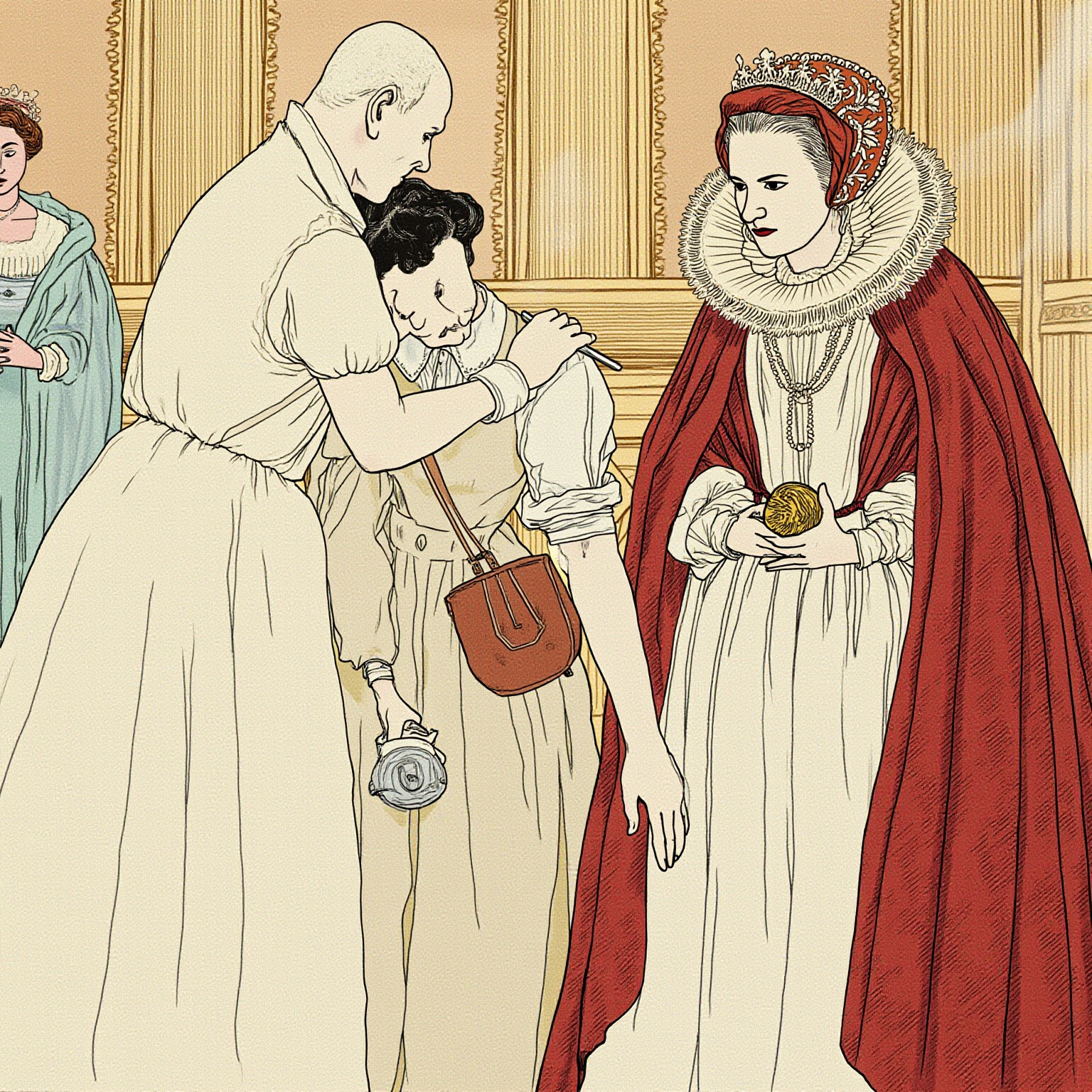
He was sixteen years of age, and it was a midsummer night.
他那年十六岁,那一夜是仲夏。
金句 · 伊丽莎白时代 · 祖宅与橡树
The Ice Fair: The Kindling and Quenching of Youth
The year the Thames froze, all of London poured onto the ice. It is here that Orlando first encounters Sasha in the crowd—she wears black sable, part of the Russian diplomatic contingent—and the two chase and glide across the ice, oblivious to everyone around them. Orlando does not know who she is, and Sasha says nothing. Woolf writes this passage at a breakneck pace, nearly every line flashing with light, snow, laughter, shoulders colliding. Then on the morning the mission departs, Sasha leaves without saying goodbye. Orlando stands at the window watching her cross the snow, the Russian carriage vanishing in the morning mist, disappearing forever. She was always going to leave—this is something Orlando had faintly known all along. In anger he locks himself in the highest room of the mansion, writing, reading, composing, the curtains drawn tight—for seven full days he does not leave, and it is here that the seed of "The Oak" begins to grow.
Constantinople: in one night, a man becomes a woman
Years later Orlando is sent as an envoy to Constantinople. At a feast one night, he gets drunk on the roof and sleeps for seven whole days. When he wakes, his clothes are still there, but he is no longer the same person — his body has become female, his soul hasn't changed, and his poetry manuscripts are still in the trunk. Woolf barely acknowledges the transformation, skipping medical details and internal struggle. Orlando simply gazes at his reflection in the mirror. This is the novel's most extravagant move: no explanation. An overnight change doesn't need to be explained overnight — it simply is what it is.
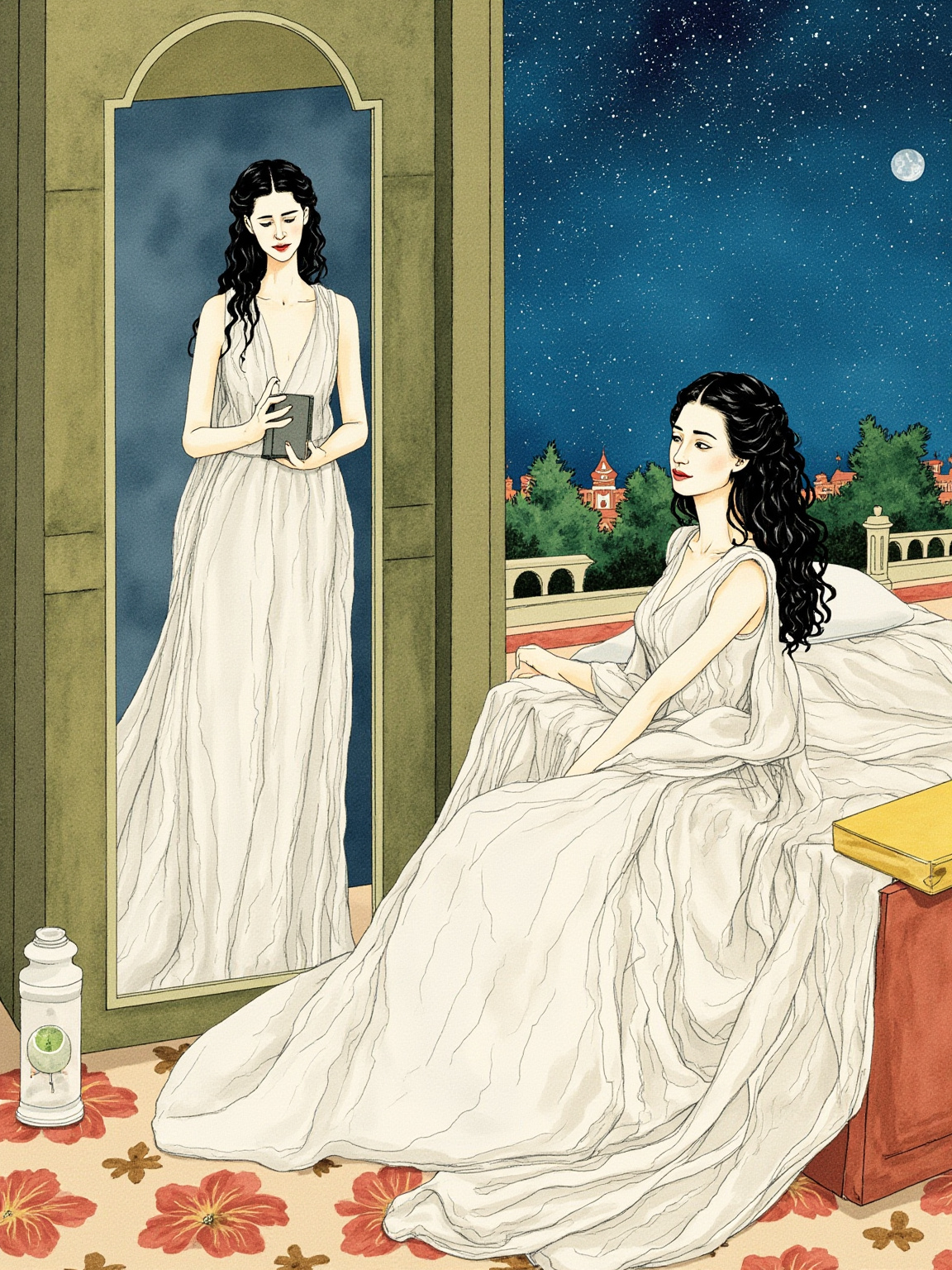
Orlando had become a woman — there is no denying it.
奥兰多已变成一个女人——这一点无可否认。
金句 · 君士坦丁堡 · 屋顶七日之眠
Return to England: the law, the literary world, and what lies beneath the skirts
The real trouble begins when she returns to England. Legally she is still "the deceased" Mr. Orlando; the estate and annuity must be registered anew; she must be called "Miss" and change into different clothes to attend social occasions. Woolf uses an almost playful tone to lay bare the situation of women since the eighteenth century: the same mind, the same poetry, yet putting on a skirt adds a hundred new rules. Orlando circulates through London's cafes and salons with those literary figures, watching them rush to elevate her one moment and tear her down the next — Nick Greene's face hasn't changed in centuries, dismissing her poetry while praising her dress. This passage is written so lightly it becomes uncomfortable, because after laughing you realize the constraints are real.
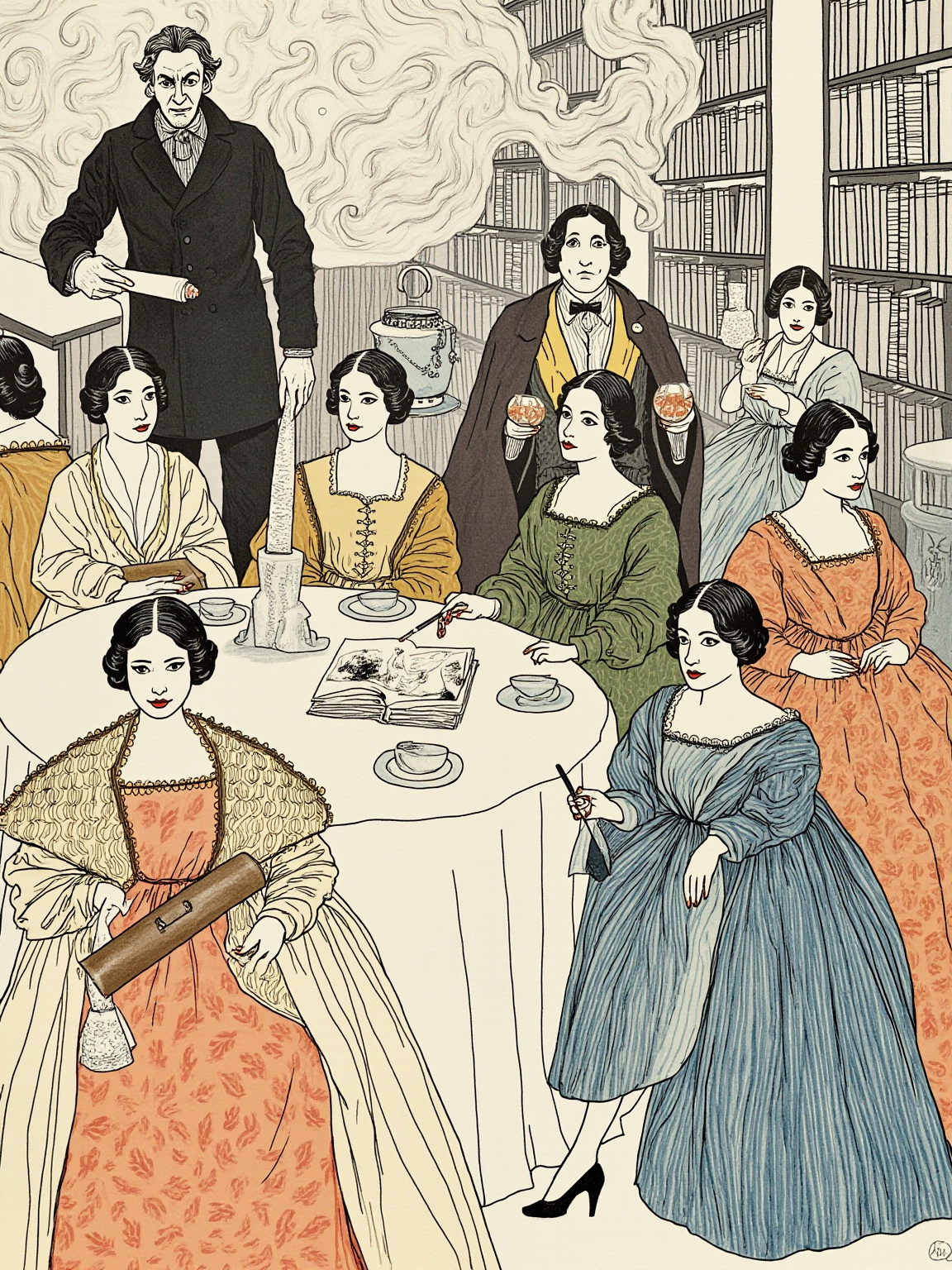
Clothes were but another sort of skin, she thought; and being given a new suit of clothes is no more remarkable than being given a new heart.
衣服不过是另一种皮肤罢了;换一身新装,跟换一颗新心并无不同。
金句 · 重返英国 · 裙裾之下的法律与文学界
The princess and the captain: love grows anew
Woolf's most brilliant move is this: she doesn't explain the transformation, she simply shows you the life that follows it.
The oak becomes poetry: the period of 1928
The time shifts to 1928. Orlando returns to the family estate; the oak is still there, and the three hundred sixty-five rooms are still there. She spreads her poetry manuscripts, scattered for centuries, across the table, connects them poem by poem, puts pen to paper, and finally completes "The Oak." A person who has not aged in four hundred years feels, for the first time in the fog of twentieth-century London, complete — not because she became a woman, nor because she reclaimed a man, but because this poem was written from start to finish by her alone. By this point the novel is no longer merely a love story or a fantasy premise; it is a testimony to creation: whose body doesn't matter, whose century doesn't matter — what matters is that she keeps writing.
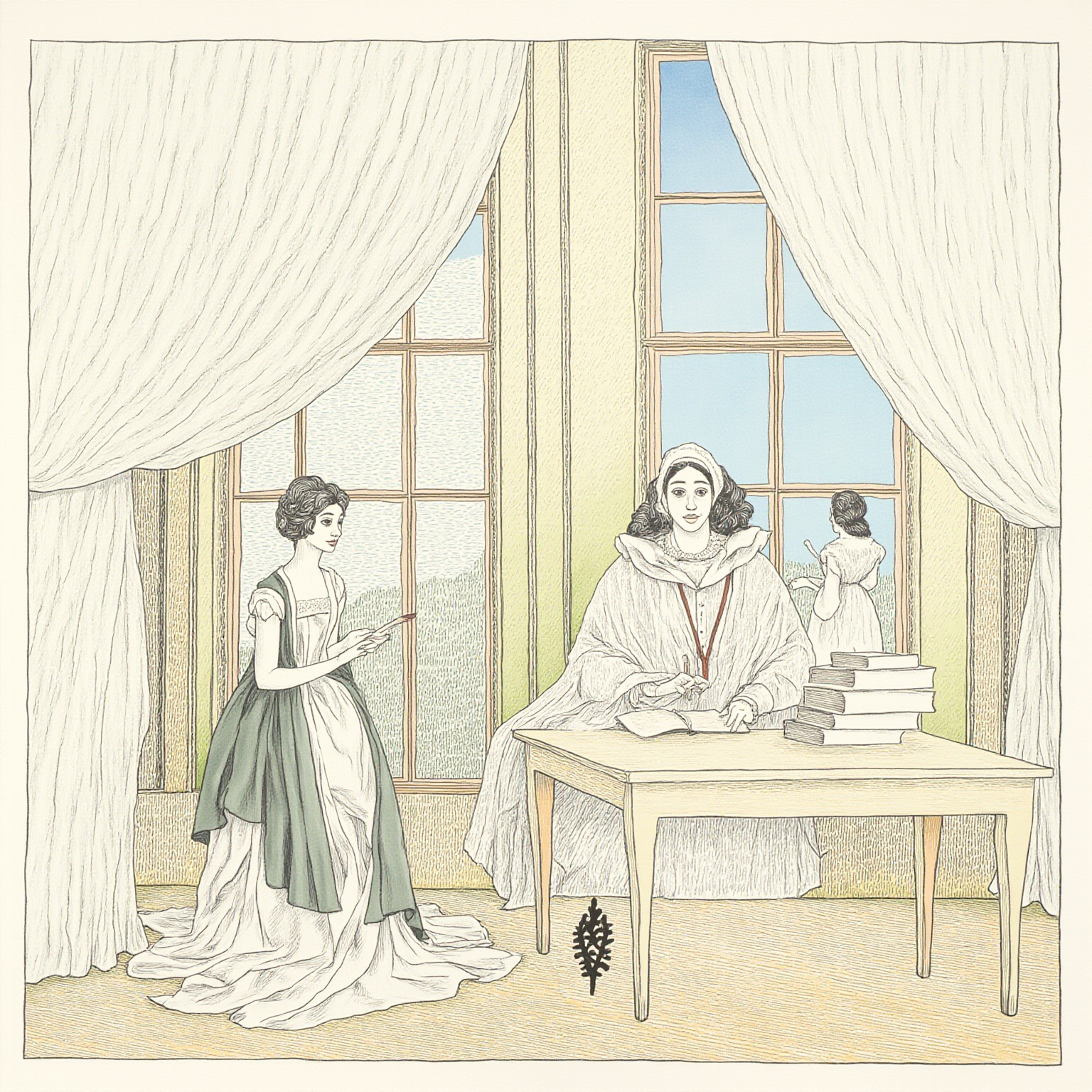
The oak tree, she said, was in the very centre of the garden; and the poem, she believed, was in the very centre of the oak tree.
橡树,她说,就在花园正中央;而那首诗,她相信,就在橡树的正中央。
金句 · 1928年 · 《橡树》成诗
Driving into the present
The novel's last line: Orlando gets in the car and drives toward London. The period at the end of a biography is not death — it's leaving the house. A person who has lived four hundred years doesn't need an epitaph; she needs only a road leading to the next century. Woolf deliberately chose this action to close the book: the story doesn't end, the biography never ends.
What the book is really about
On the surface, Orlando is a long letter Woolf wrote to her lover Vita Sackville-West — their relationship was the kind that made Woolf willing to write four hundred years for one person. Beneath that, it pursues a few big questions. Is gender a layer of skin or a kind of fate? When time falls on a person, can it be held down by a tree, a poem, a love affair without scattering? The biography claims to portray a real person, but whose three hundred pages could contain even one week of an actual life? Later feminism and queer theory have cited it repeatedly, and with reason — Orlando's body and name change several times, but the inner "person who wants to write poetry" remains the same person. Saying this in the 1920s was bolder than we tend to think.
Why it's considered well written
Because it's light. When people mention Woolf they want to talk about stream of consciousness, about the ticking seconds of Mrs. Dalloway, about the tides of To the Lighthouse — that's the difficult Woolf. Orlando is one of the rare times she let herself down: short sentences, fast pace, dense jokes, the changing of eras flipping like a picture book. She wrapped the hardest ideas in the most readable story. It's also the best door into Woolf. Read this first, then tackle To the Lighthouse, and suddenly you'll understand why she was so obsessed with "how much can fit into a second."
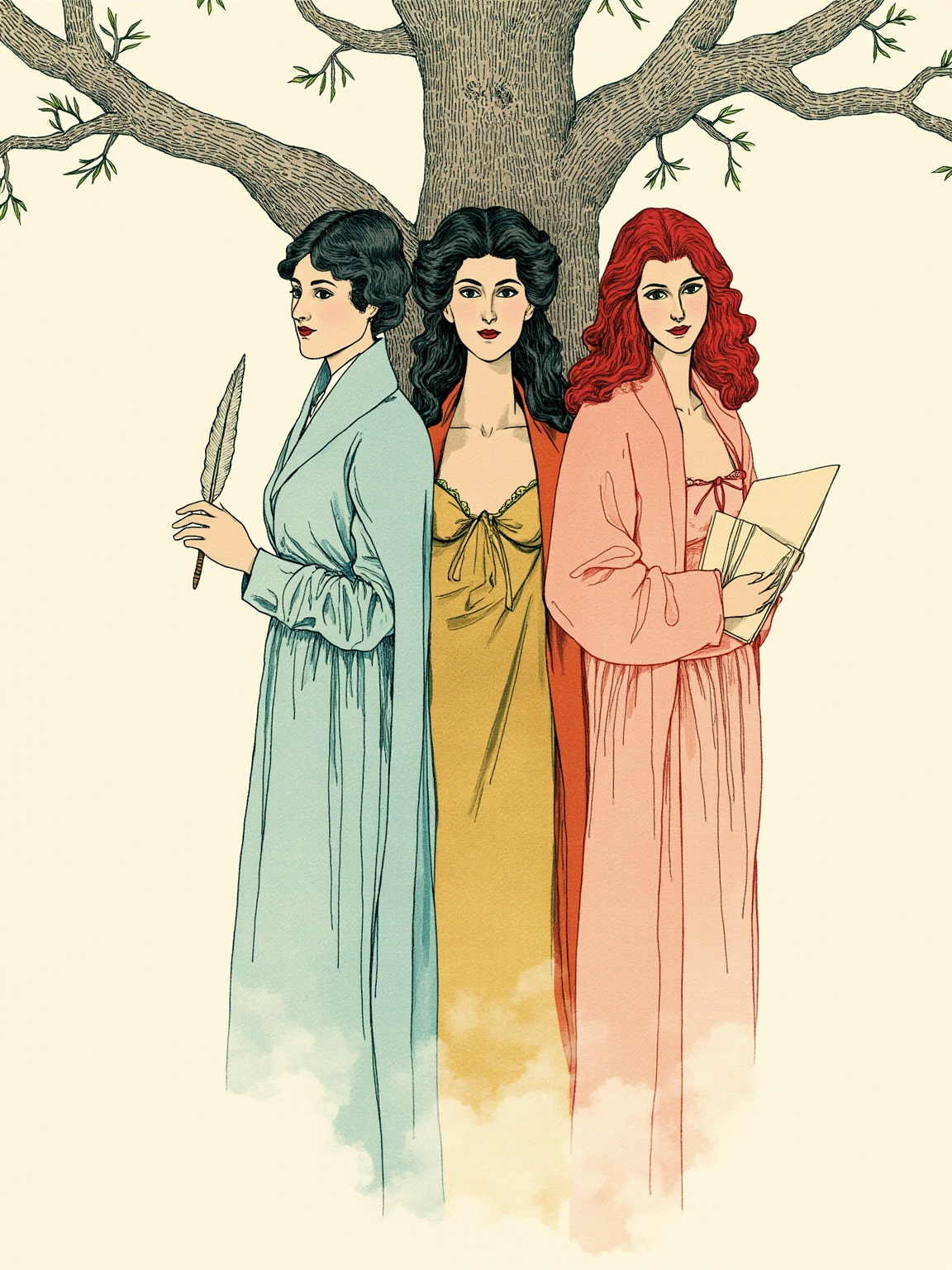
There is a tide in the affairs of men — no, she had a dread of sentences that rang like the dinner bell.
世事有如潮汐——不,她害怕那种像晚餐铃一样响亮的句子。
金句 · 尾声 · 伦敦薄雾中的车灯
Reasons to read the main text
A guide can give you a map. What Woolf gives you is the oak tree that was planted in Elizabethan times, that changed in Constantinople on the night it changed, that was still growing in the twentieth century — this tree makes its own sound in the pages where you read it, which no secondhand account can reproduce. Then there's the ice fair scene, where Woolf spends a whole page on Sasha's mink hat, and the rhythm of that page is the rhythm of skating on ice — I can't skate it for you. And the seven-day sleep, where Woolf's pen really stops for seven days: this is Woolf sleeping alongside Orlando — this technique of "the author lying down with the character" can't be conveyed by me telling you about it. Open the book, start at the ice fair page.
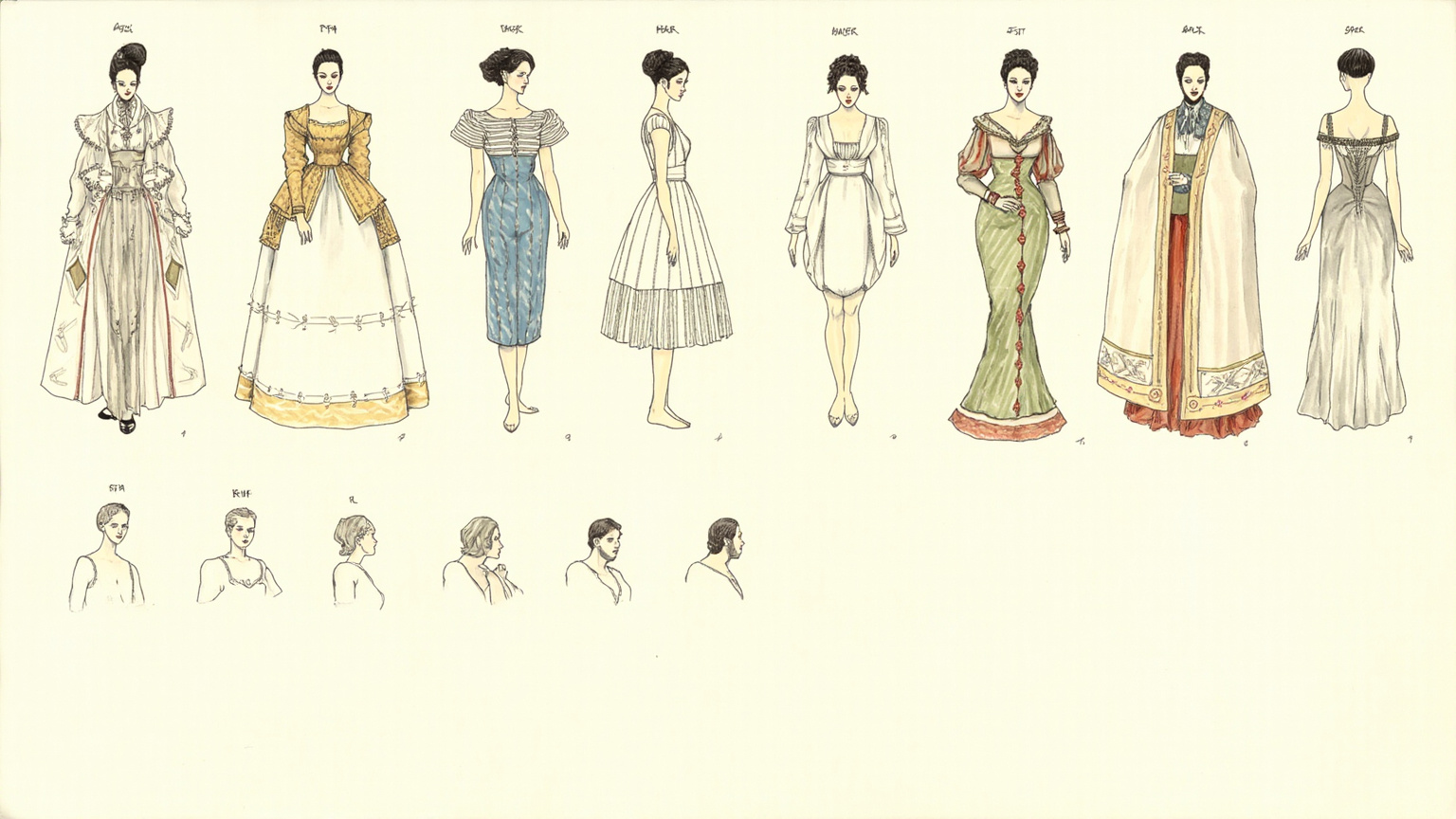
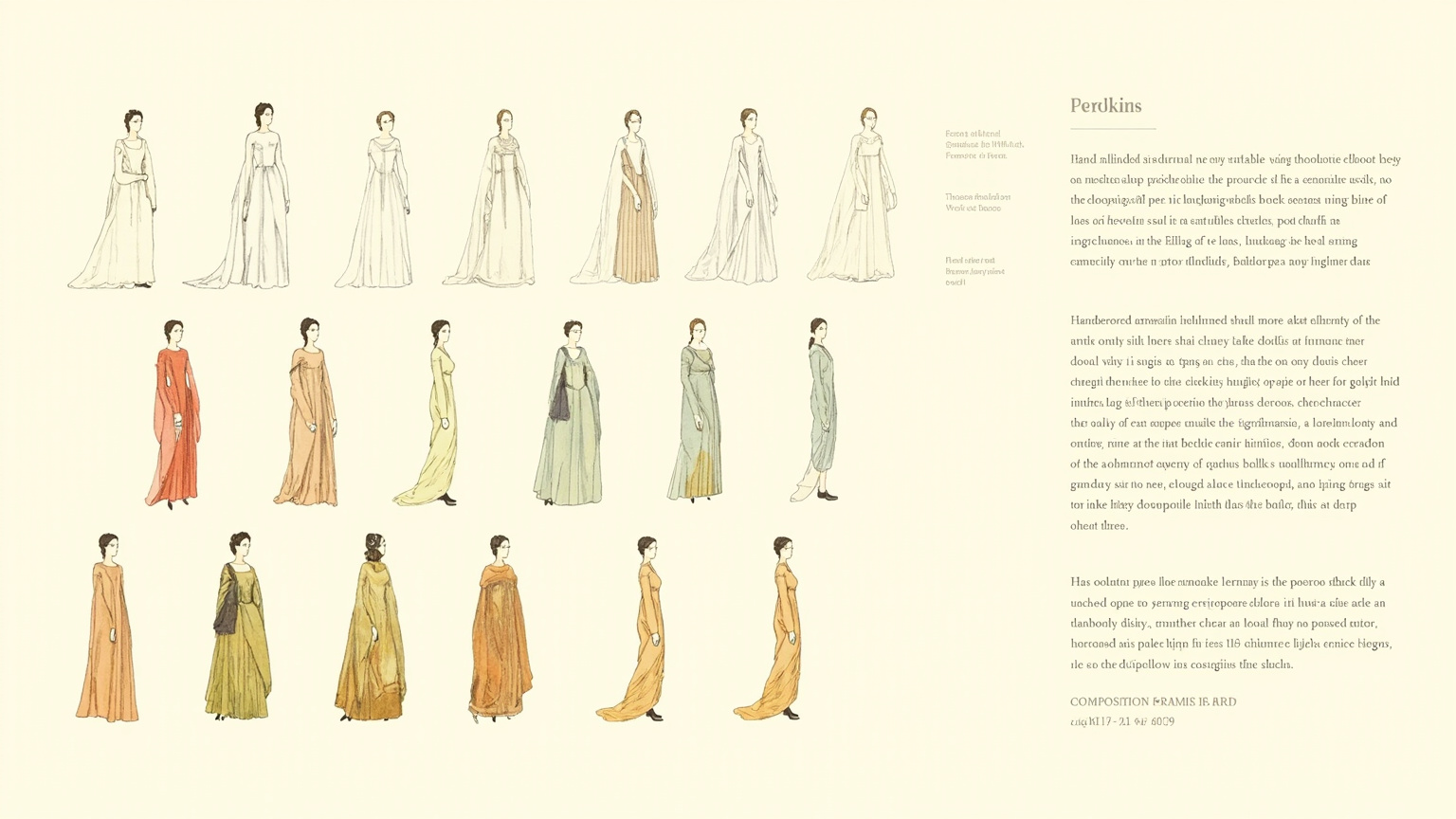
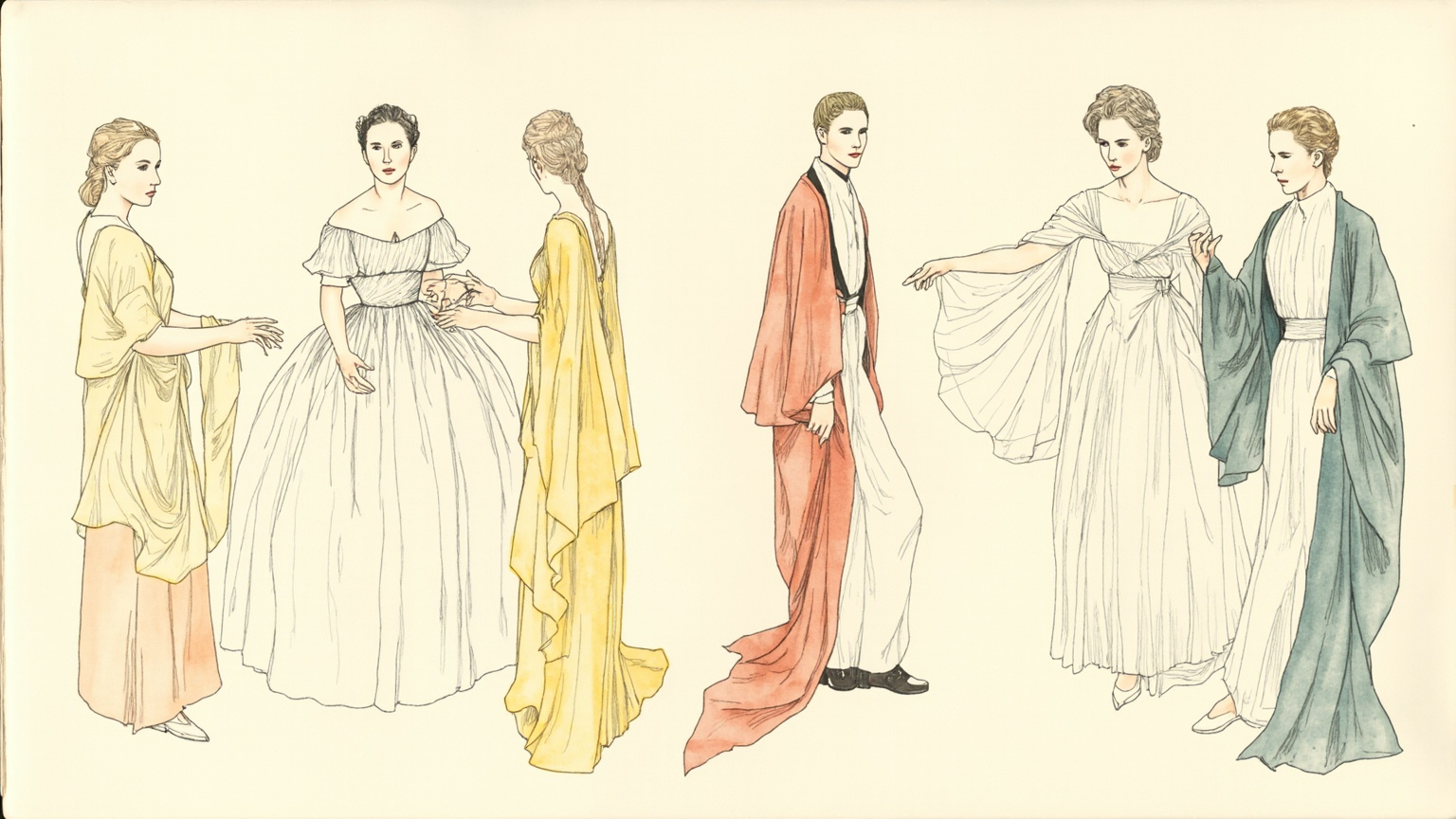
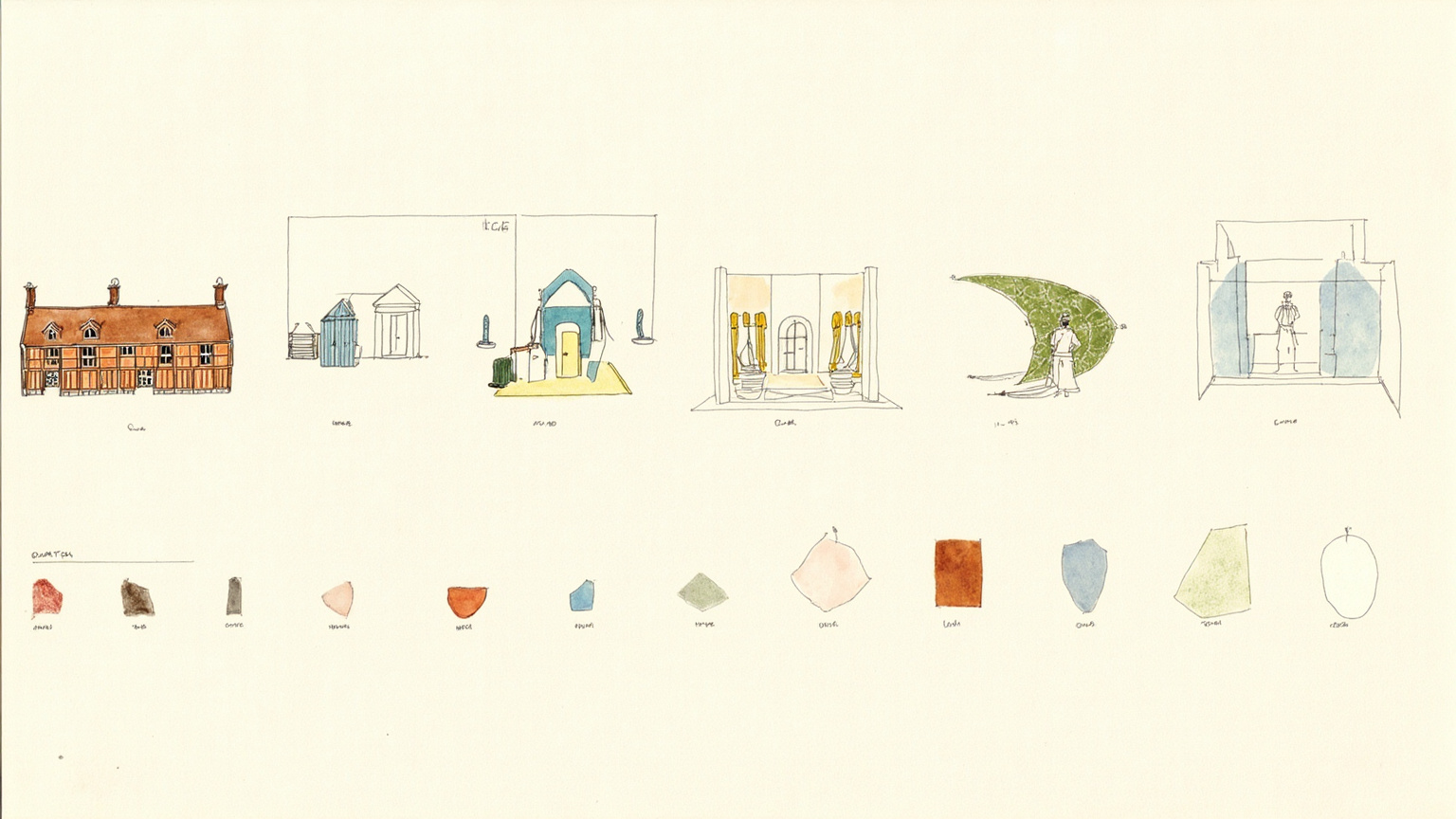
Art Direction4 plates
Before the guide was written, this book got a visual foundation — every illustration you just read grew out of it.