Pan · Companion Guide
牧羊神
白夜森林里,一颗子弹射穿他的脚,也射穿了爱与自毁的界限。
Opening: a bullet, a white night
The bullet goes through no one else. It goes through his own foot.
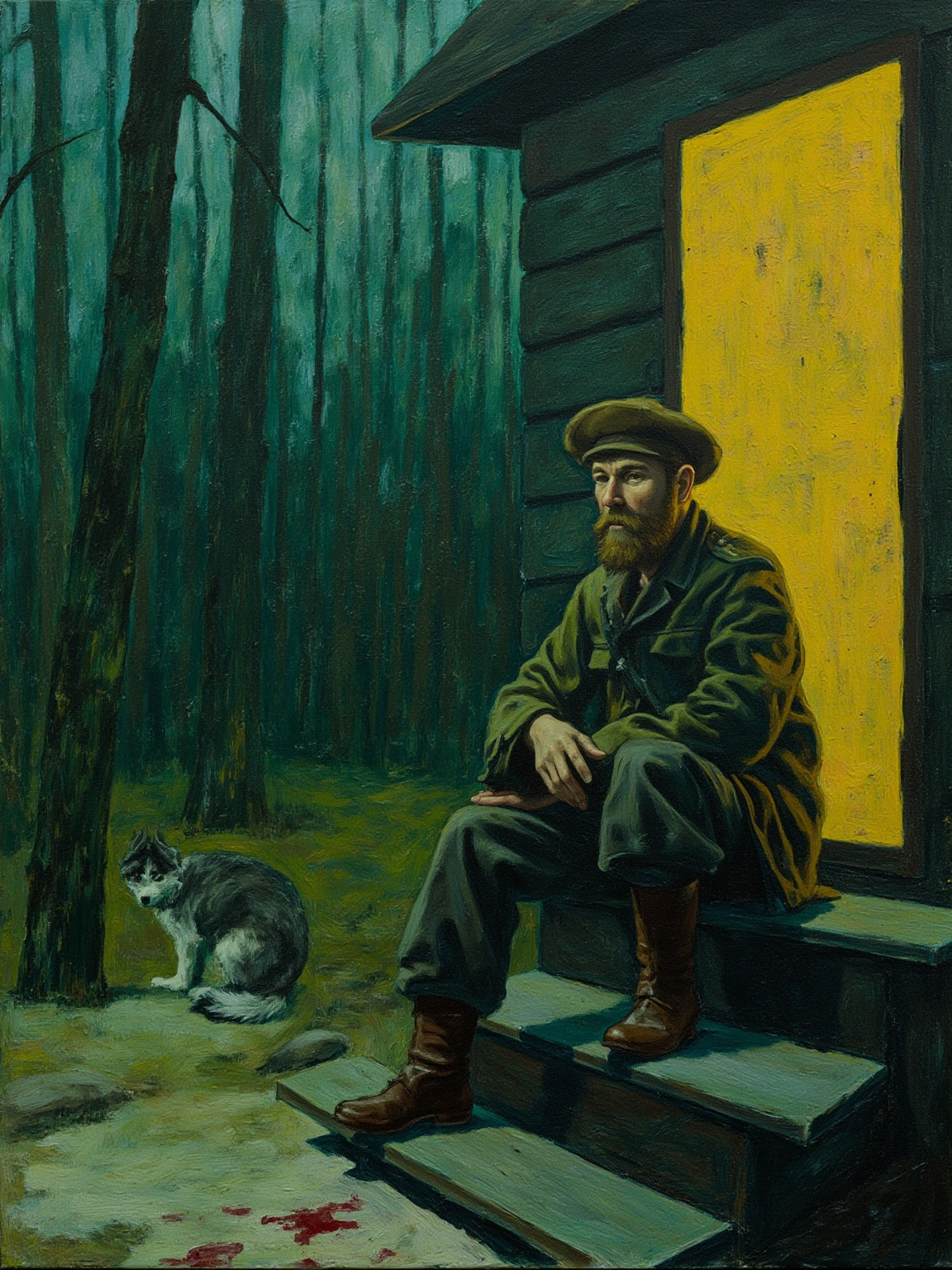
You might see me in the daytime and say I was a young man, but when the evening comes along, and I'm all alone, I feel it a good deal.
白天看我兴许还是个年轻人,可一到夜里独处,那份沉重就实实在在地压下来。
原文金句 · 第2章 · 白夜孤屋
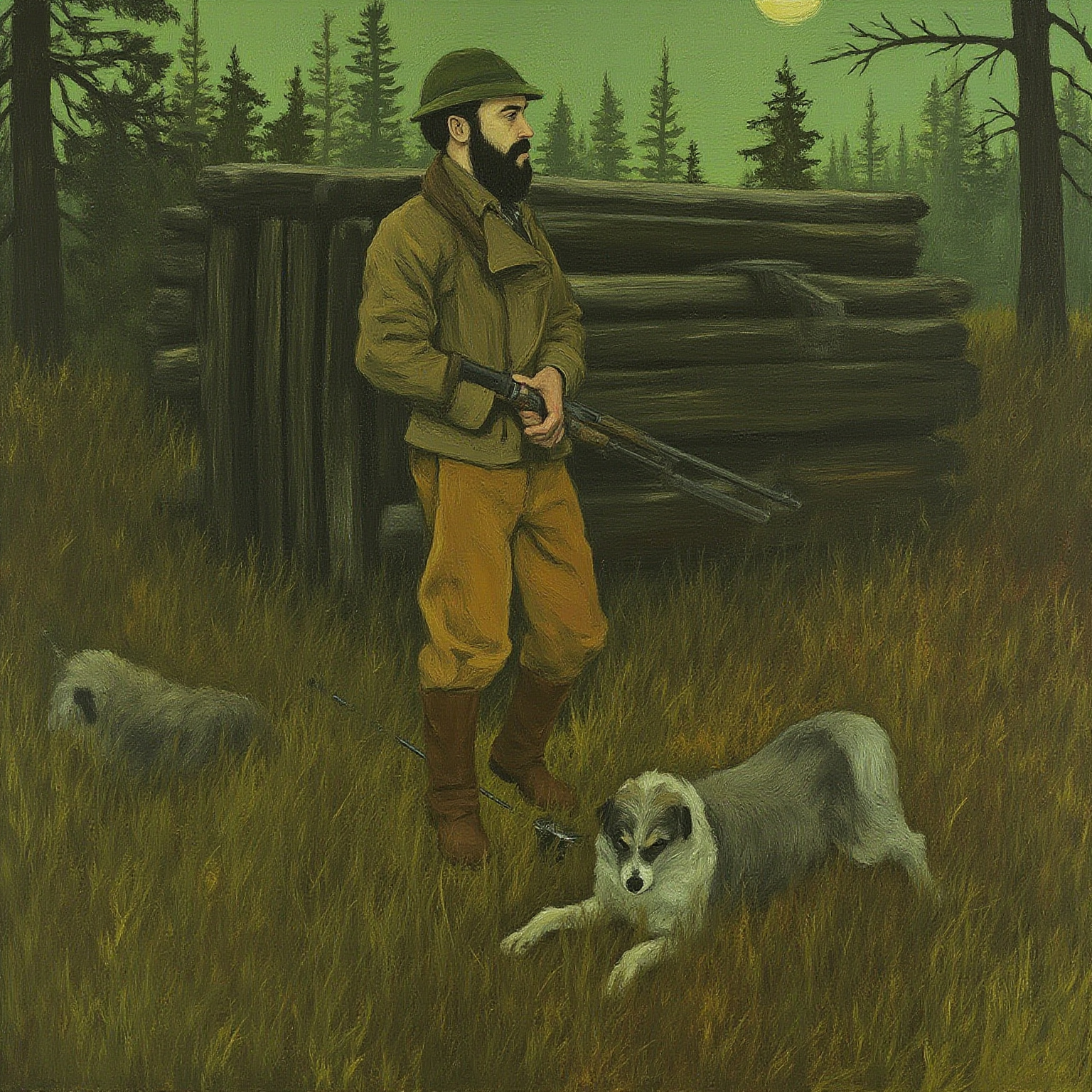
Summer nights in northern Norway never go dark. The sun lingers at the horizon, and the forest, the sea, the distant snow peaks all sit soaked in a nearly transparent green light. A retired lieutenant folds his uniform to the bottom of a trunk and moves into a hunting lodge in the woods outside the town of Sirilund, keeping company with a dog named Aesop and living on hunting, myth, and coffee. His name is Thomas Glahn, and his face already carries the particular weariness of a man who has stopped fearing death. That is the whole of what Pan opens with -- no grand ambition, no real occupation, just a man and his forest.
What this book is
Pan is a psychological novel the Norwegian writer Knut Hamsun wrote at the end of the nineteenth century. Hamsun later won the 1920 Nobel Prize in Literature, and he won it not for tender nostalgia but for rendering hunger, vanity, and self-destruction with the precision of a scalpel. More than a hundred years on, people still pick this book up because it did something almost no one else was doing at the time: it treated first-person inner monologue as the main feature, not a device -- jumping, fractured, following the nerve endings. Reading it today, you can watch the door to twentieth-century modernist fiction swing open.
Characters and world
The story is set on the Nordland coast in the mid-nineteenth century. The fictional trading post of Sirilund sits on a fjord, a small frontier world of fishermen, blacksmiths, and petty merchants. The richest man there is the widower Mack, who runs a small trading kingdom of his own. His only daughter, Edwarda, is the one person on this whole coastline Glahn cannot look away from. Glahn does not belong here. He is no merchant, has no interest in the season's catch, and his eyes drift toward the trees whenever he talks. The town also has a doctor, polished in manner and smooth of speech, another possible suitor circling Edwarda -- and later the same hands that treat Glahn's wounded foot. The whole novel really runs on two lines: the forest, and Edwarda. Everyone else is debris thrown off where those two lines collide.
Plot line: forest, woman, bullet
In the forest, Glahn lives in something close to a trance. The title Pan refers to the half-man, half-goat god of the wild from Greek myth, and Glahn makes himself over in that god's image -- pressing his ear to a pine to listen to the wind, walking on moss until the moss alone can carry his mood for a whole day. This is the most unguarded stretch of the whole book. The moment Hamsun's pen enters the forest it turns to lyric poetry -- the color of the bay, an elk's tracks, the sun's stubborn refusal to sink below the horizon at midnight -- all written well enough to make you want to throw your watch away too.
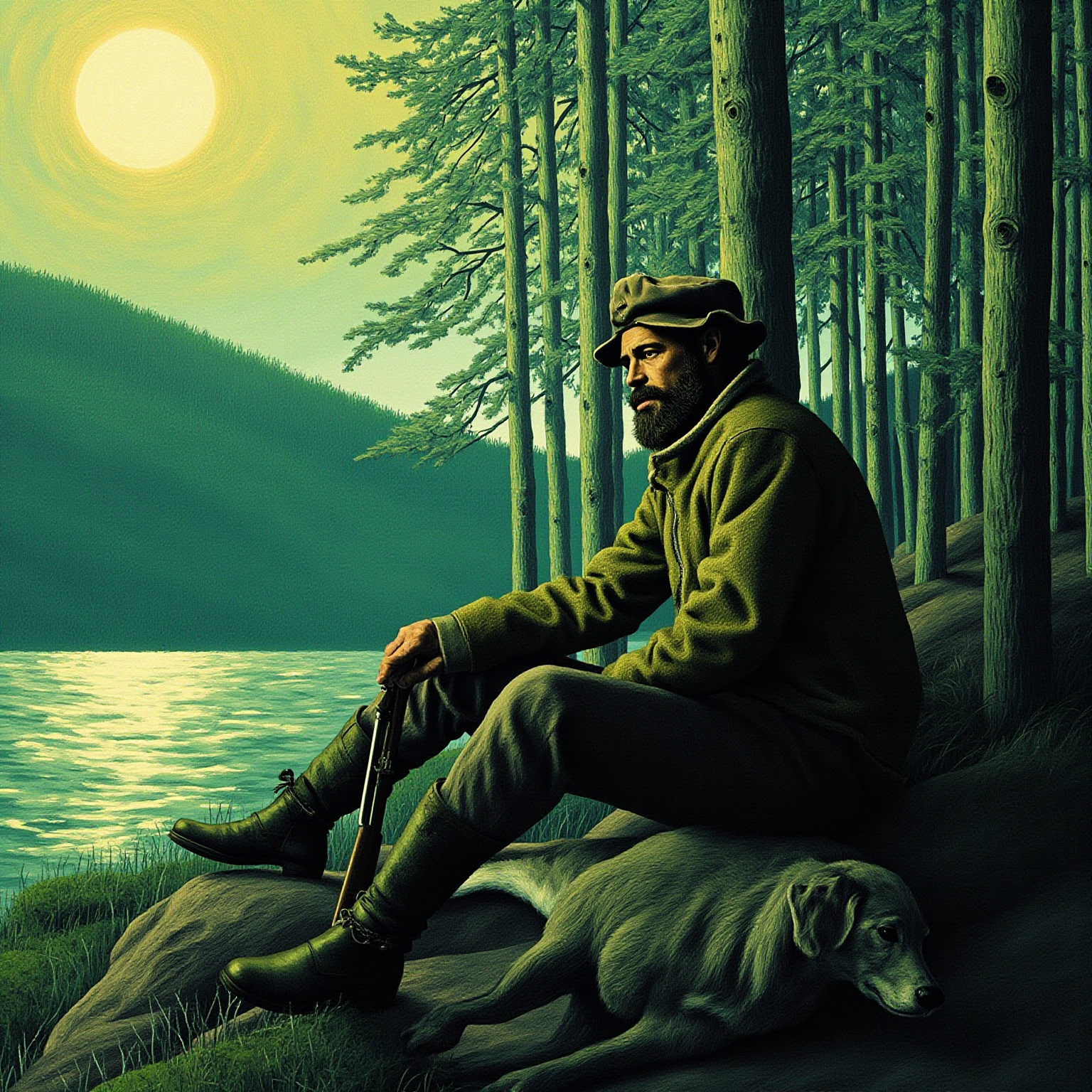
The feeling of the woods went through and through my senses; I cried for love of it all, and was utterly happy; I was dissolved in thanksgiving.
森林的气息穿透我所有的感官;我因爱这一切而泣,全然幸福,溶化在感恩里。
原文金句 · 第7章 · 林中狂喜
The moment Edwarda appears, that stillness tears open. She is a girl who switches, again and again, between bare feet and tangled hair and sheer willfulness -- one moment a child, the next a mistress giving orders -- and the switch between those two states is always in her own hand, never his. Glahn is pinned the instant he sees her, and that is where the trouble starts. She draws close, then turns cold without warning; he tries to leave, and she calls him back. The two of them are like two knives grinding against each other, thinner with every pass, and sharper for it.
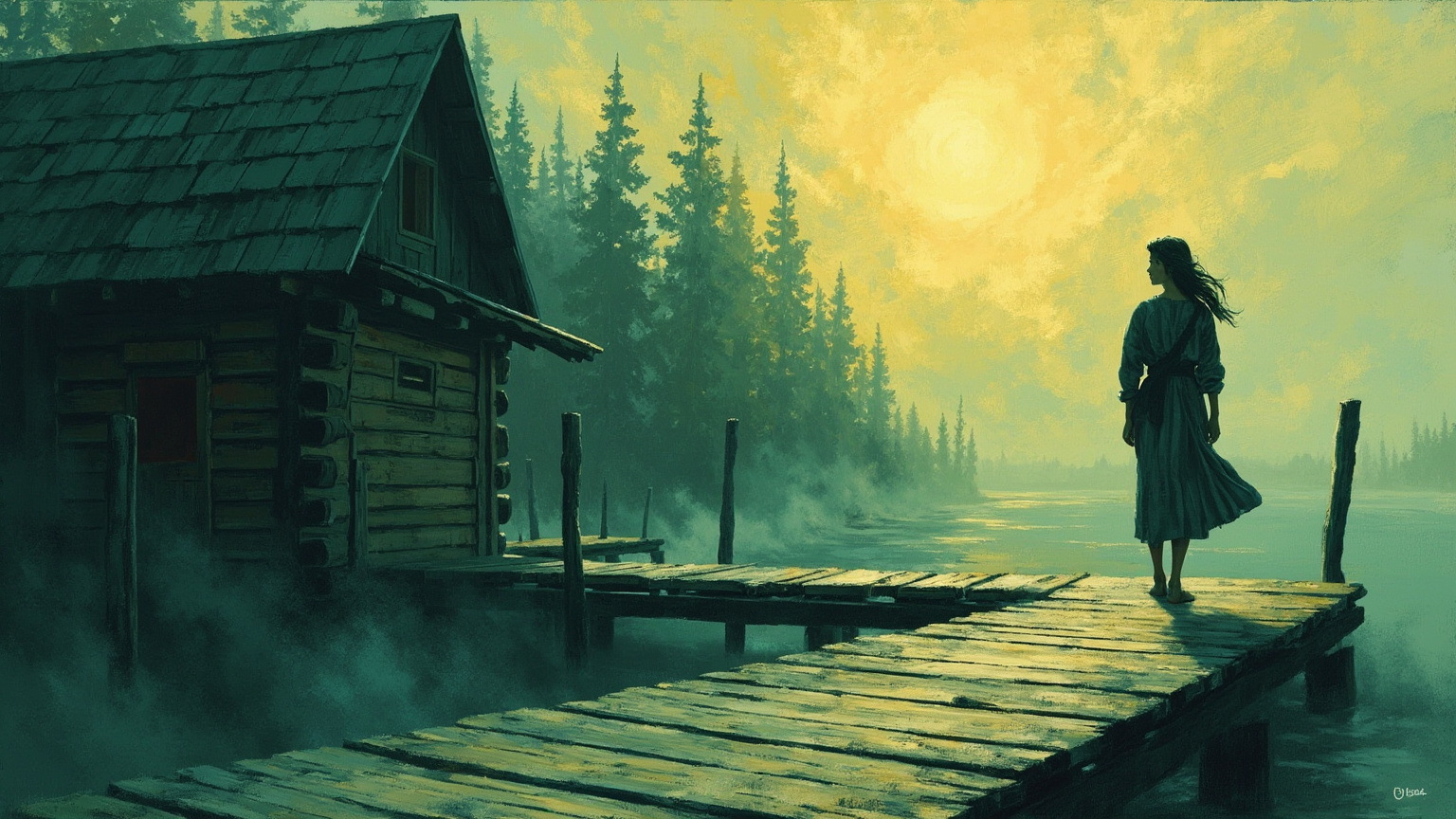
For the second time I was fascinated by her dark eyebrows, that curved high up into her forehead.
第二次,我被她的深色眉毛迷住了,它们高高挑起,没入额际。
原文金句 · 第4章 · 初遇爱德华达
Suspicion backs Glahn into a corner. One day, in front of everyone, she pulls her hand out of his, coldly, and in that instant only one thought is left in his head -- he has to do something, has to give this pain somewhere to land. He goes back to the lodge, fires the gun, and shoots through his own foot. The shot is no accident and no duel. It is a punishment he has planned out in advance: he means to leave a scar on her, even if the price is his own flesh.
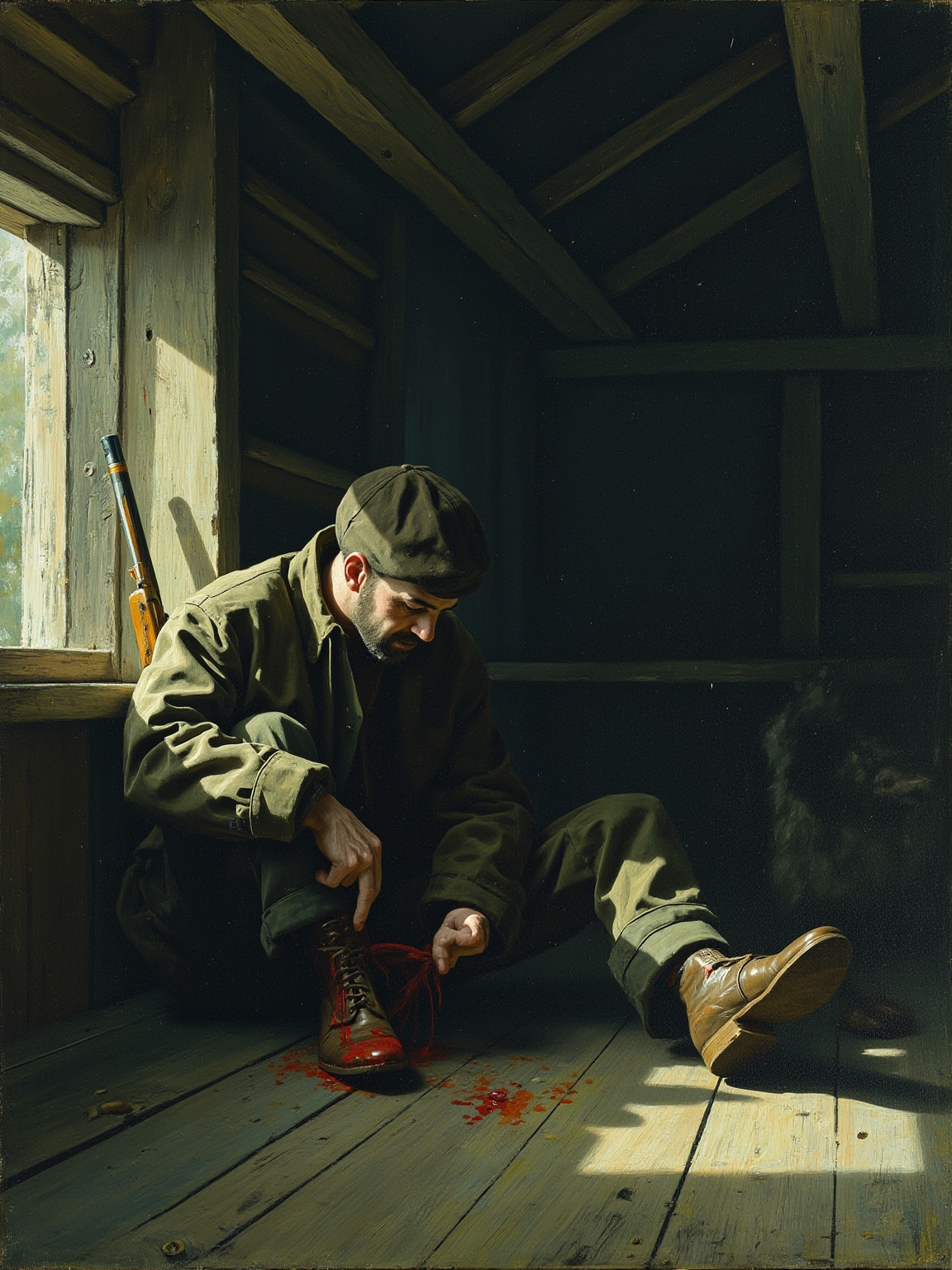
The man who carries him off to have the foot treated is the town doctor -- the same man courting Edwarda. There is a dry, cold humor in the image: the polished rival presses his hands to Glahn's wound and stitches his blood shut. Once he has healed, Glahn does something crueler still. He goes to Eva, the blacksmith's wife -- the same woman Mack himself has been secretly sleeping with. The affair is half genuine comfort, half a blade deliberately meant to reach Edwarda's ears.
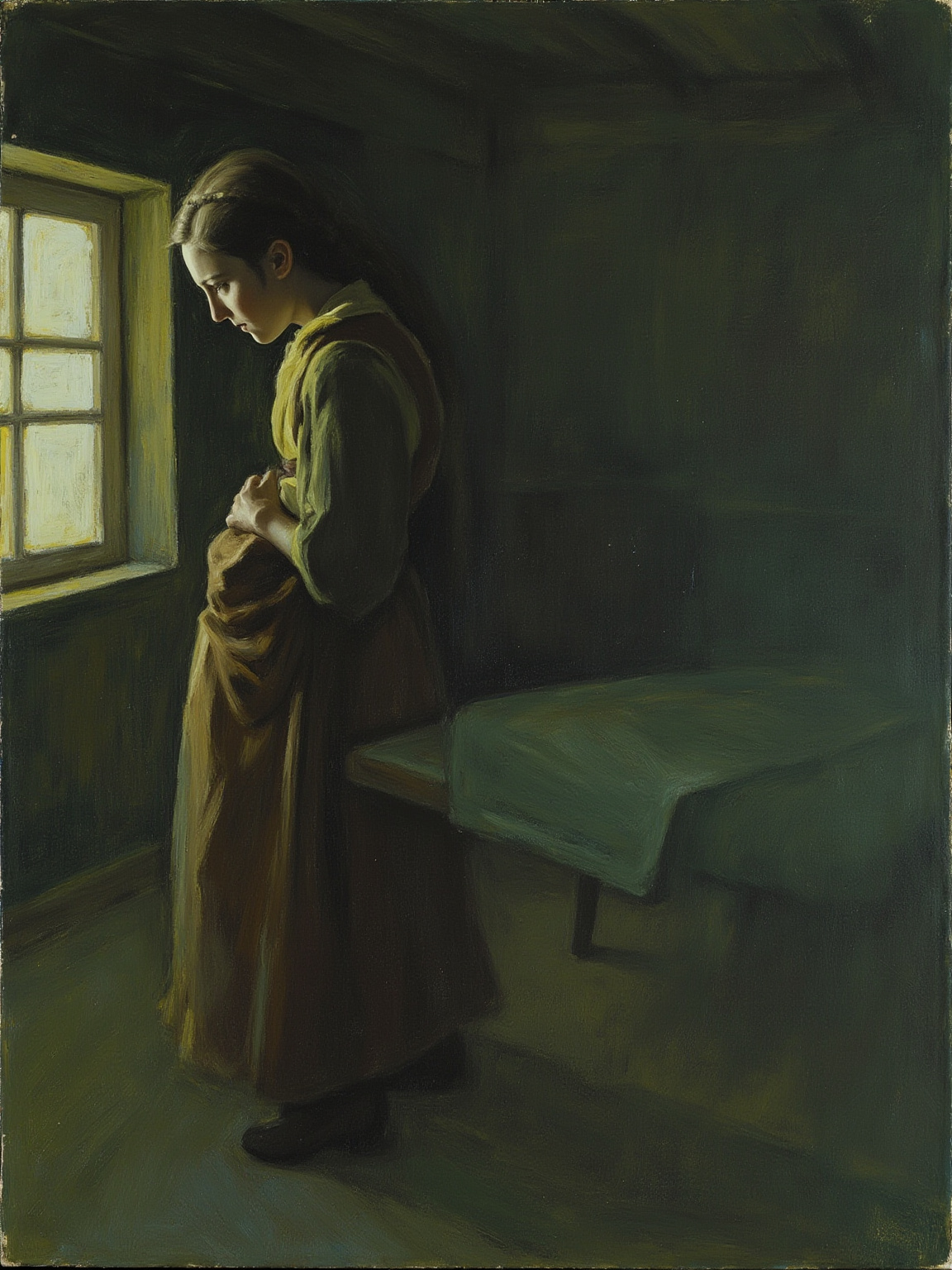
"Set the load down, Eva, and let me see if your eyes are as blue as ever."
把担子放下,伊娃,让我看看你的眼睛是否还像从前那样蓝。
原文金句 · 第10章 · 猎屋私情
Things blow apart, literally, in a quarry blast set off before a festival. Eva dies under the collapsing rock. Whether Glahn simply forgot, distracted, to clear her out in time, or whether Mack quietly arranged for her to pay for the affair, the novel deliberately withholds the answer, and no one can say for certain. That withholding is Hamsun's cruelest move: he leaves the reader carrying, alongside Glahn, a debt that can never be settled.
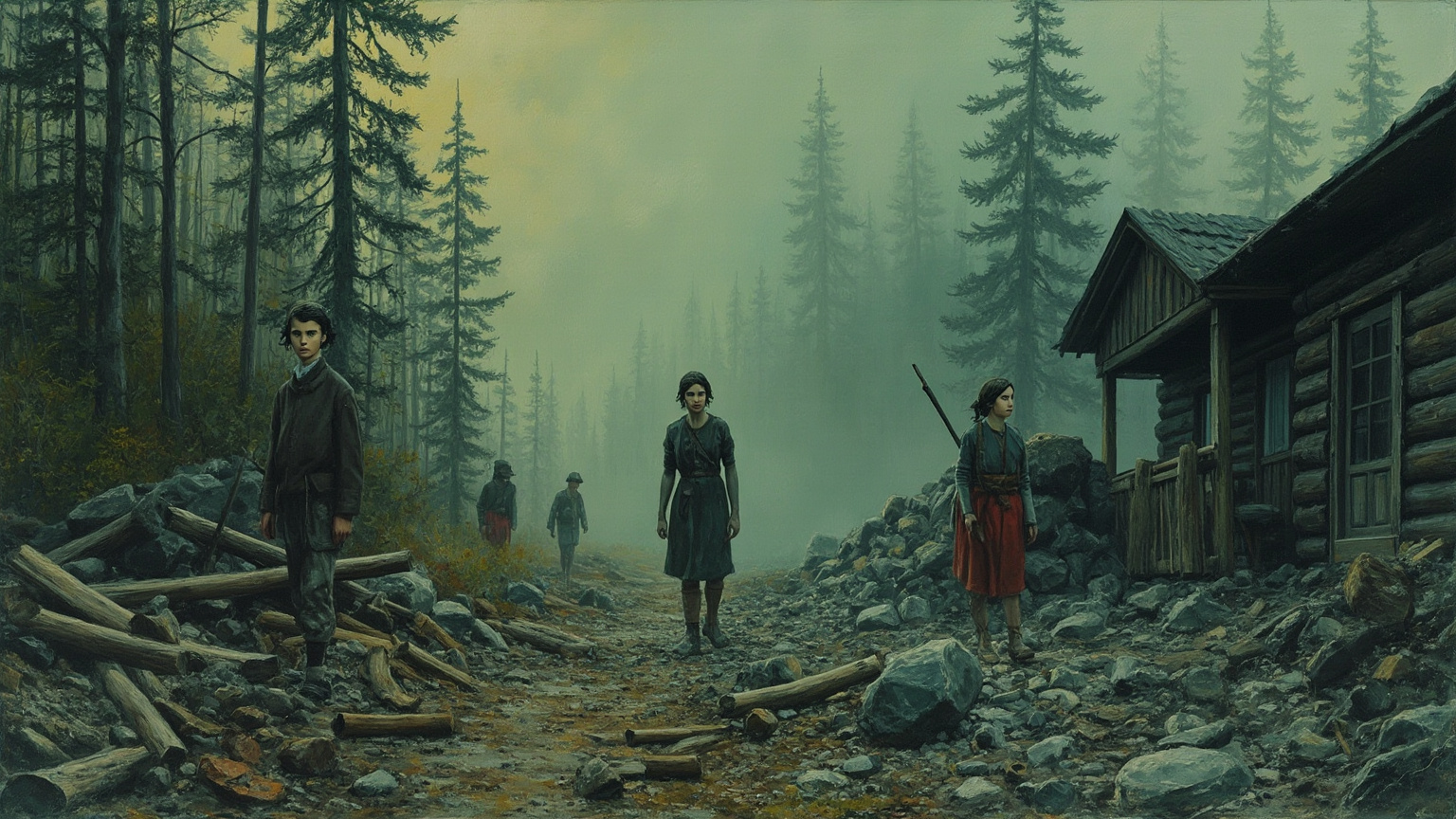
I know a spot--a channel down the hillside--where rocks have rolled before and made a clean road to the sea.
我知道一个地方——山腰一条沟壑——那里岩石曾崩塌过,辟开一条直通大海的路。
原文金句 · 第12章 · 采石场前兆
Eva's death does not bring Glahn and Edwarda closer. It finishes them off completely. What she sends him afterward is not comfort but a deeper humiliation, and he leaves Sirilund carrying that grievance, heading further away. Years later, she has a letter and two green feathers sent to him. Those feathers are the whole novel's afterglow -- the shape of a promise never kept, light as a fallen leaf and heavy enough that the lid won't close over it.
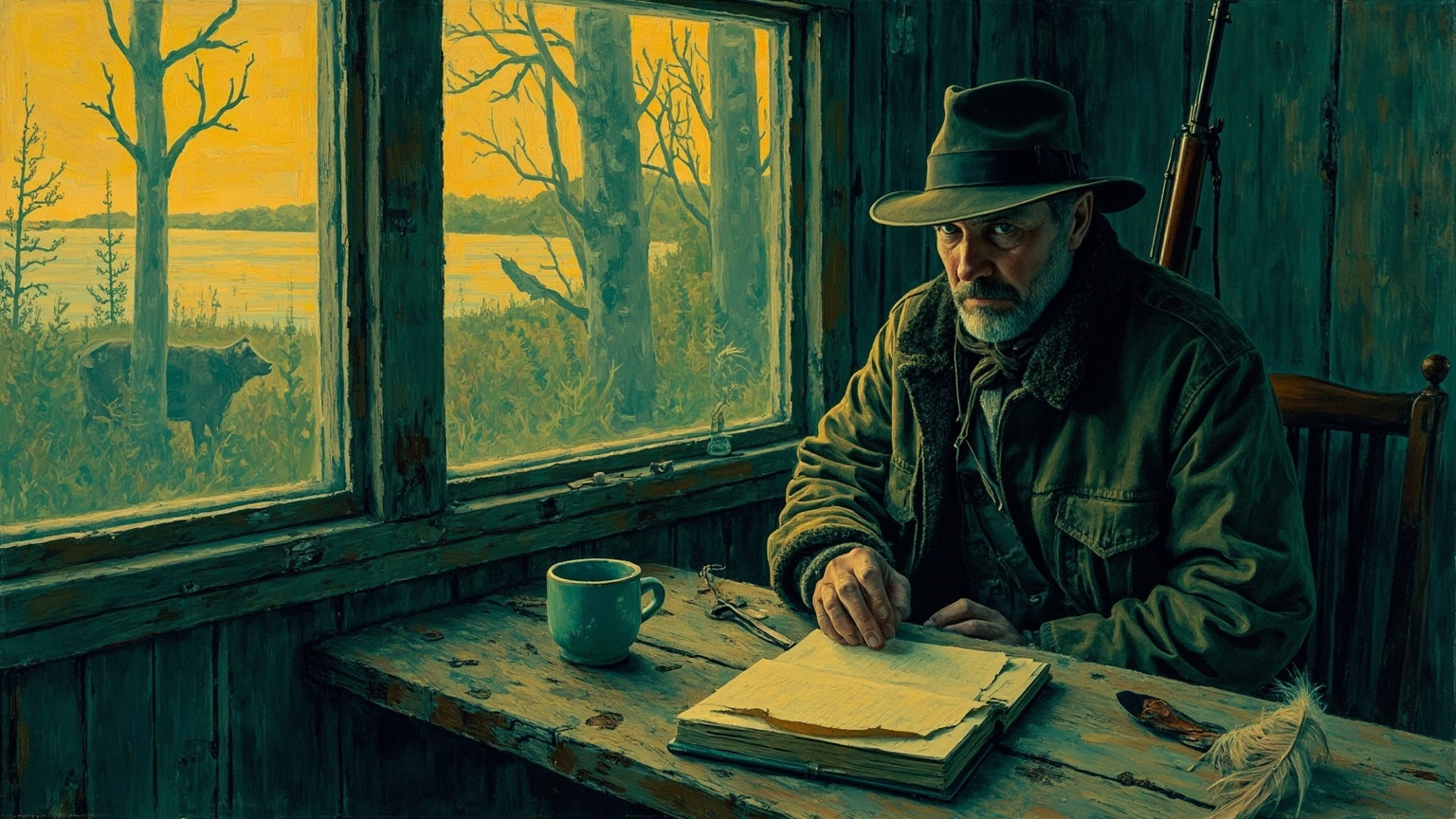
She is still standing away off there in the corner, looking at you with glowing eyes.
她依旧站在远处的角落里,用灼灼发光的眼睛望着你。
原文金句 · 第12章 · 决裂之后
The epilogue, Glahn's Death, jumps years ahead to an Indian jungle, told by another hunting companion. Glahn has drifted to a tropical hunting ground, but what still fills his ears is the arctic white night and that girl's cold smile. He has more or less stopped wanting to live -- or maybe he only wants his death to look like an accident. He deliberately provokes his fellow hunter until the man's gun turns on him. At the crack of the shot, the man who falls has crossed two continents and never once left that one summer behind.
Theme and craft
The title Pan is the key to the whole novel. The goat god is no gauzy pastoral idol. He is half man and half beast -- half reason, half instinct, half sense, half shriek. Hamsun uses that name to tell the reader his protagonist is neither hero nor villain, just a mortal man driven into a corner by his own instincts. Glahn is a god in the forest and a caged animal the moment he steps back among people. His love for Edwarda always comes mixed with possession, retaliation, and childish spite, and that is what the goat god really is: half god and half beast, half love and half hate. As craft, the book was an outlier for its time. The plot is stripped to almost nothing -- one man, one forest, one girl -- but the emotional density feels compressed to the point of pressure. Hamsun does not write big scenes. He writes the instant a foot lands on moss, the hesitation in a fingertip as a hand slides off a girl's shoulder, the short distance a thought travels from the chest to the mouth before it is swallowed back down. Piled together, these fine-grained moments build the kind of interior monologue we now associate with Kafka or Woolf. More than a century ago, this book was already rehearsing stream of consciousness.
Pan is not about how a man falls in love with a girl. It is about how, step by step, he turns that love into his own undoing.
Why the book itself is worth reading
A companion piece like this can give you the map. Only the text itself is the land. What resists retelling most is the slowness of that white-night forest -- read for a while and you get caught in that thick green light, you find yourself listening, through Glahn's ears, for a pine needle hitting the ground, holding your breath through the second he wavers over whether to pull the trigger. Hamsun's sentences have a body to them; you can touch their temperature, guess their weight. None of that lives in the plot. It lives in the gaps between the words, and that is a gift no summary can hand you -- only the book itself can.
Read this piece and you only learn how it ends. Open Pan and you find out how a man walks, through the white night, toward that one gunshot.
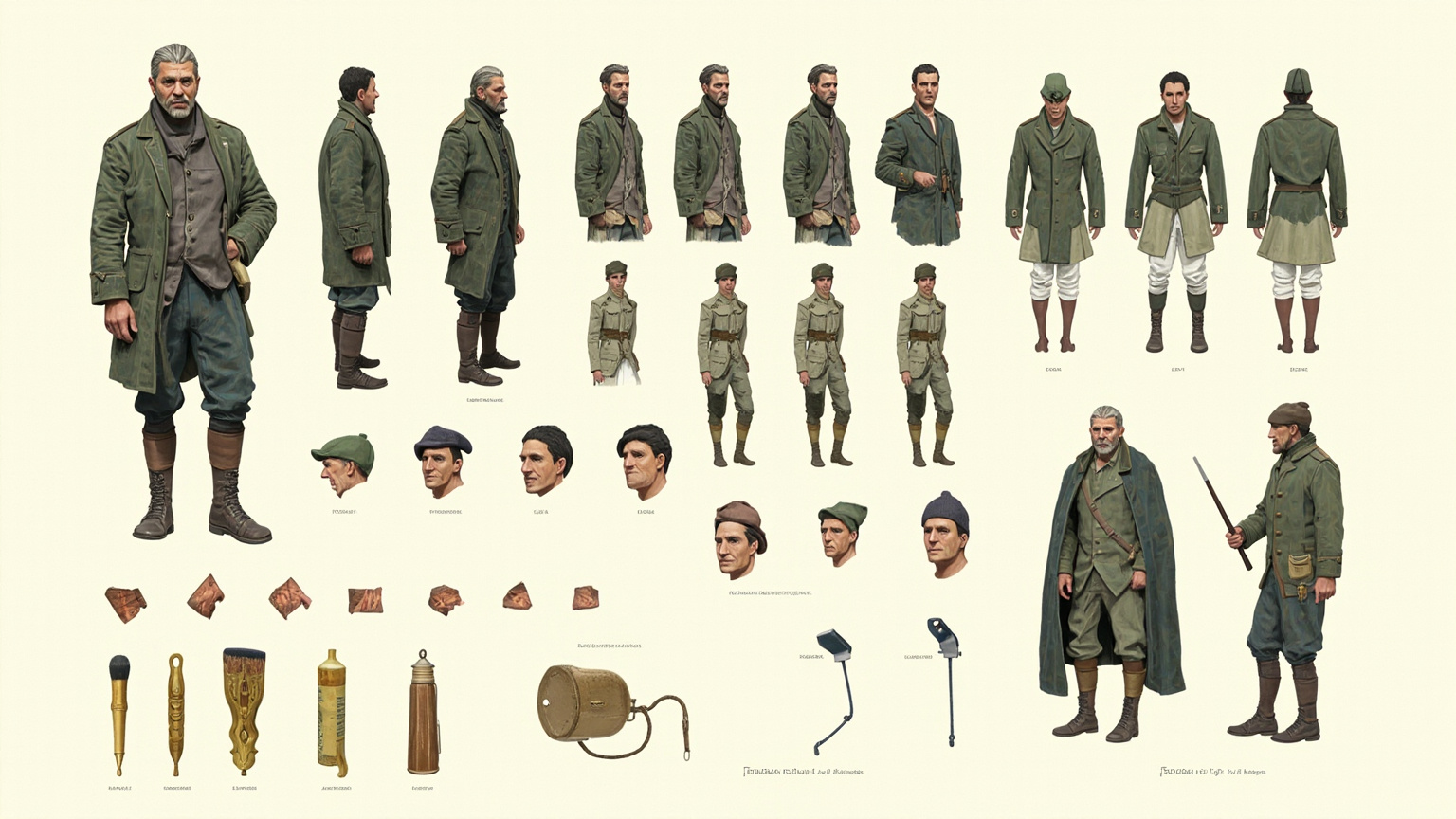
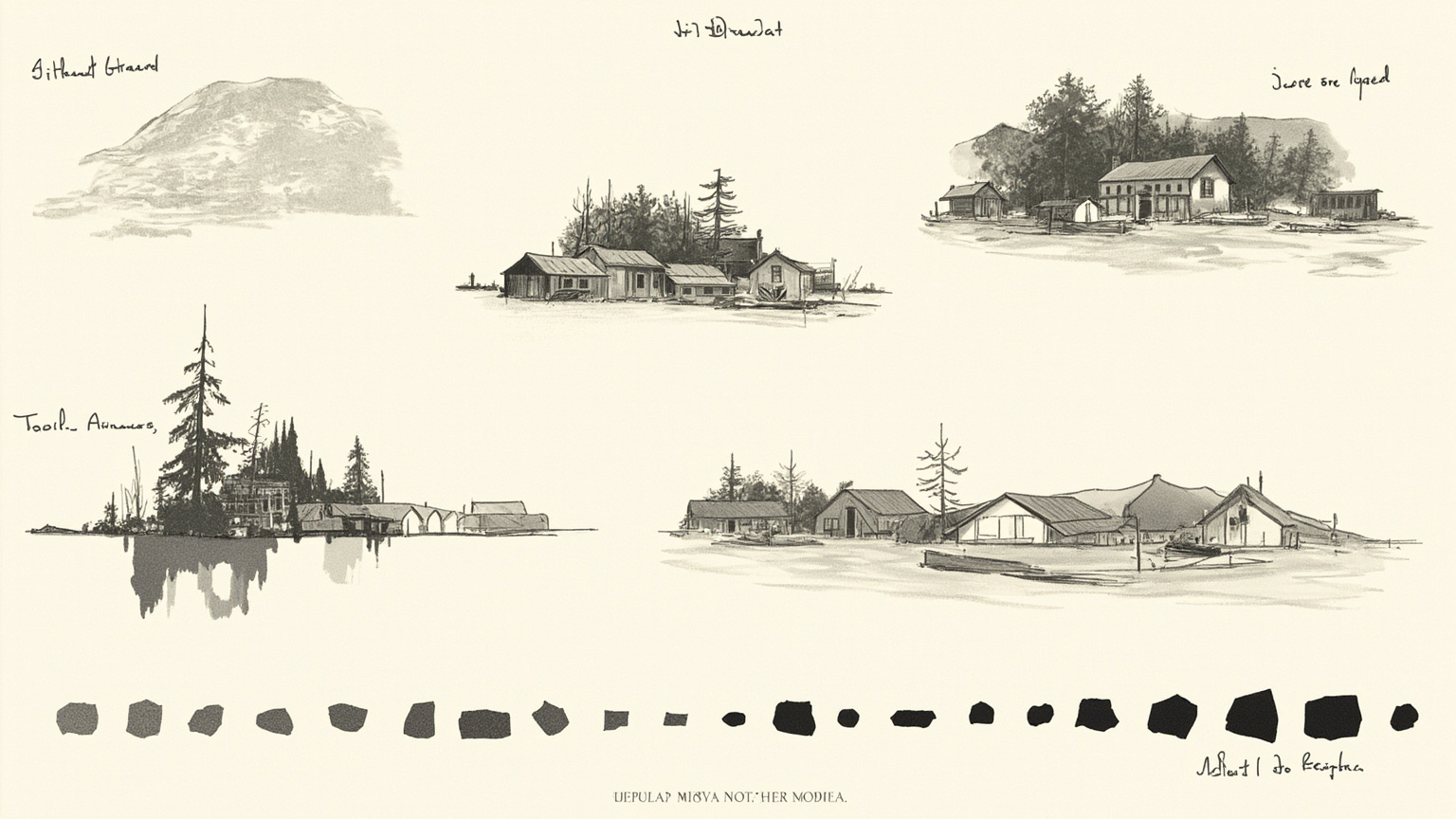
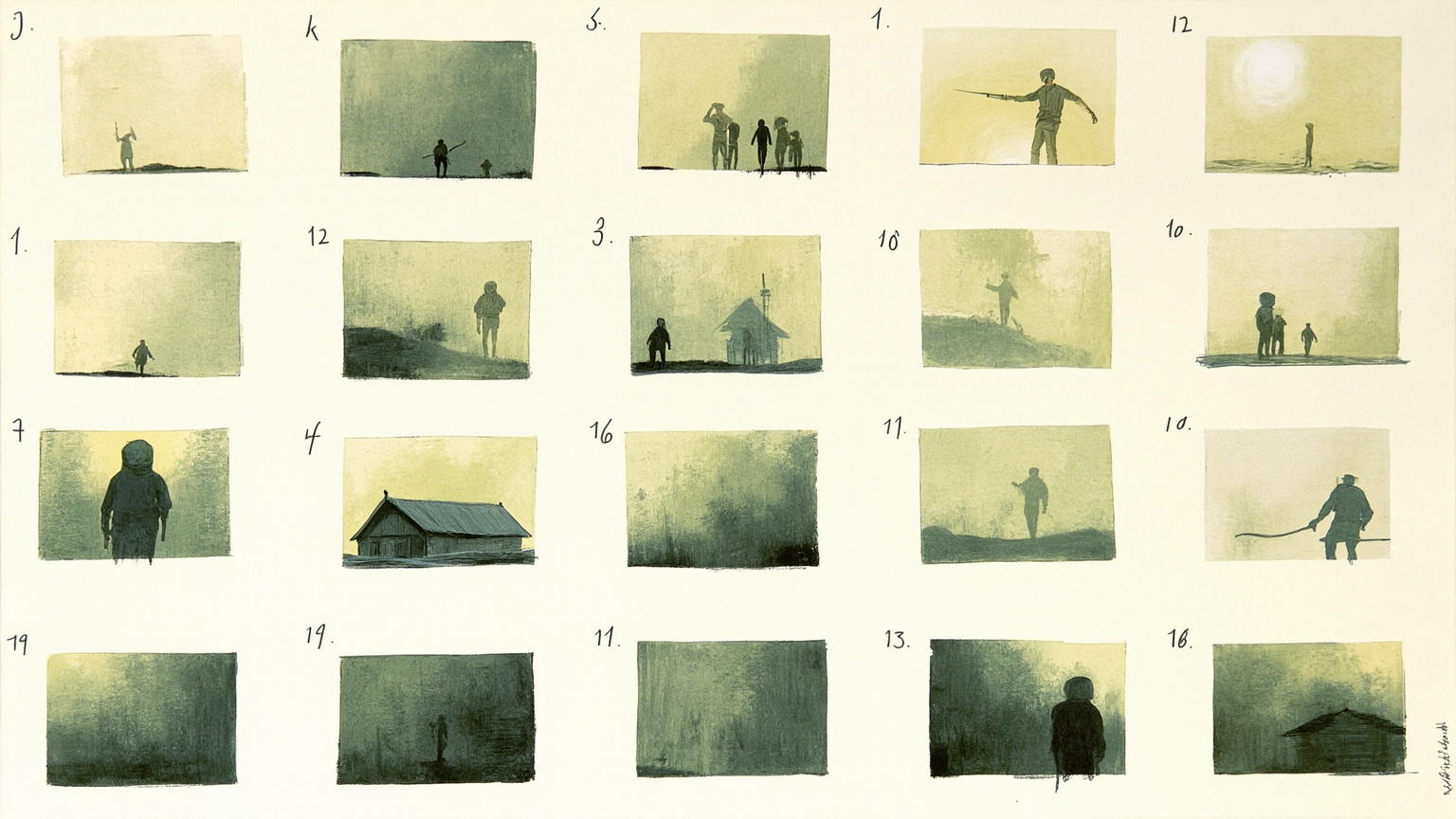
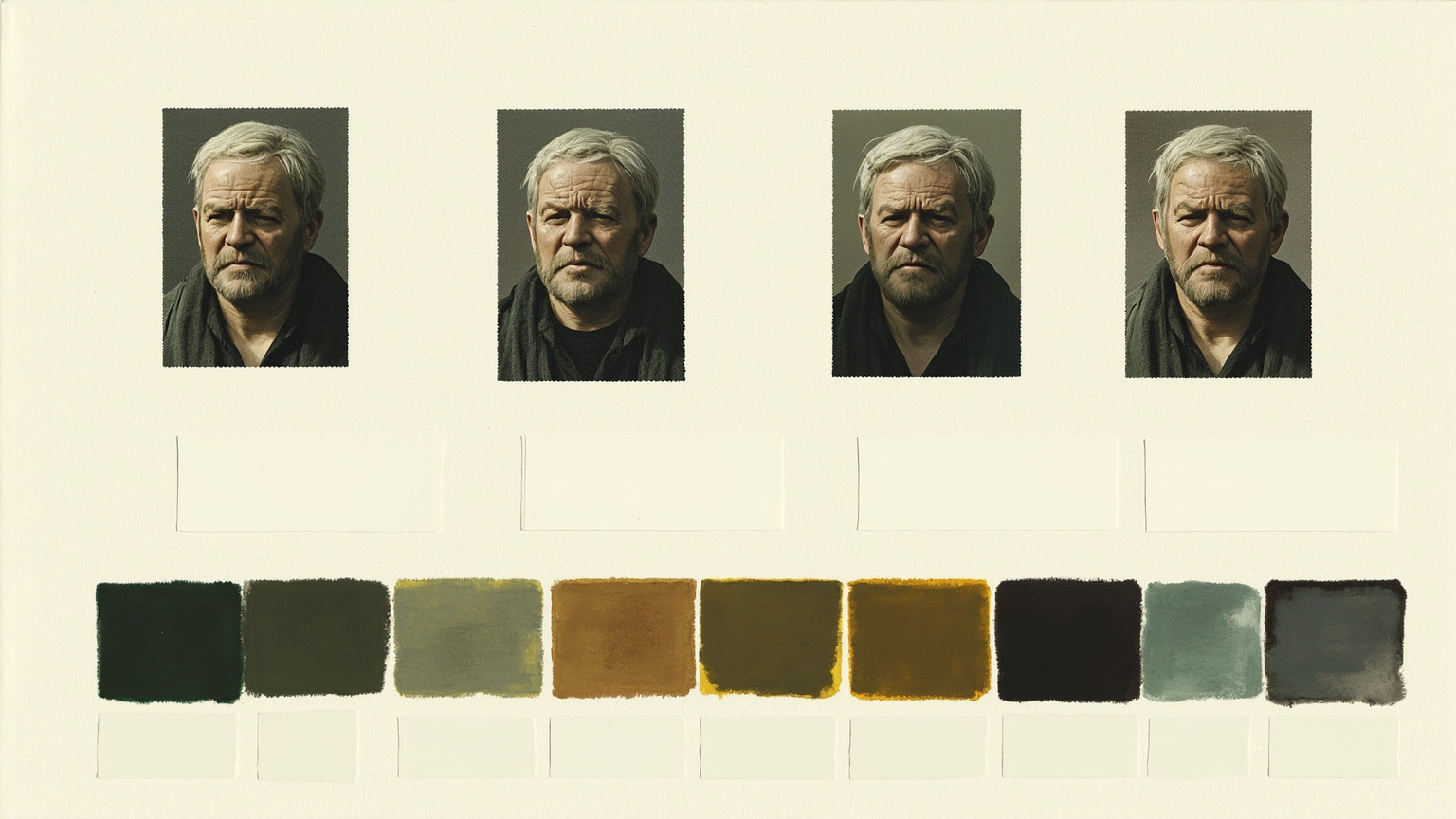
Art Direction4 plates
Before the guide was written, this book got a visual foundation — every illustration you just read grew out of it.