The Panchatantra · Companion Guide
五卷书
一棵菩提树下,三个愚钝的王子被一只豺狼、一头公牛与一只乌鸦教成了王——而那个讲故事的老师,把人间所有陷阱都缝进了动物的皮。
Opening
A jackal grinds his teeth in the shadow of his den. He is out of work — the lion king has just taken up with a bull, and the old courtier's seat has emptied overnight. The jackal decides to get rid of the bull, and his method is to make the lion do it himself. This scheme was written down in the court of some Indian city-state around the turn of the era, and for the next eighteen hundred years it passed through the scriptoria of Baghdad, the translation schools of Toledo, and the print shops of Paris, until it became a fable you heard as a child without knowing its source. It is called the Panchatantra.
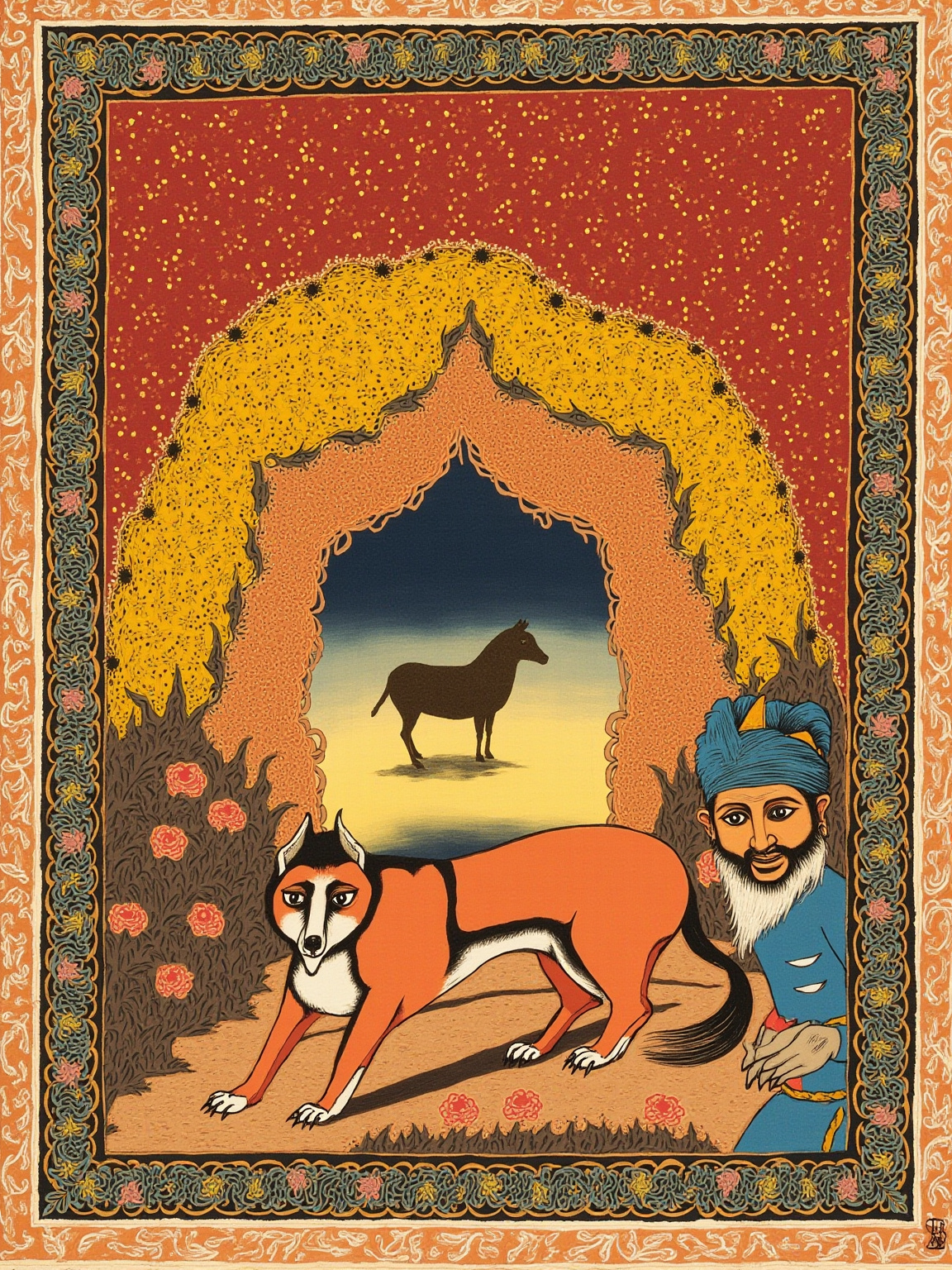
They who have neither learning nor wisdom — for such princes the true path is the path of the story.
凡不学无术、不具智慧之王子,唯以故事之径,方为正道。
金句 · 序章 · 毗湿奴舍哩曼受命施教
What kind of book this is
The Panchatantra took shape in India around the third century BCE. The original text is lost; after a sixth-century recension carried it forward, the version most widely read today is the polished redaction compiled by Purnabhadra at the end of the twelfth century. Tradition credits the whole work to a Brahmin scholar named Vishnu Sharma, who — so the story goes — was asked by a king to turn three princes with no interest in scripture into competent rulers, and did it in six months, entirely through storytelling. The genre is a beast fable collection, five long books, each one a self-contained cycle of miniature fables nested inside fables, running three or four layers deep at its deepest.
There is only one reason it survives in memory: nearly every fable collection you can name by name is its descendant. Only the Bible has been translated into more languages. The Sanskrit original was rendered into Persian Pahlavi around the sixth century, then turned into Arabic in the eighth century by the translator Ibn al-Muqaffa as Kalila and Dimna, and from there it moved through Syriac, Greek, Hebrew, and Latin, eventually feeding Aesop's Fables, La Fontaine's Fables, The Decameron, and The Canterbury Tales during the Renaissance and the Enlightenment. The Chinese scholar Ji Xianlin's remark that, judged by its real influence on ordinary people, even the Old and New Testaments might rank second to it remains the line most often quoted to place the book.
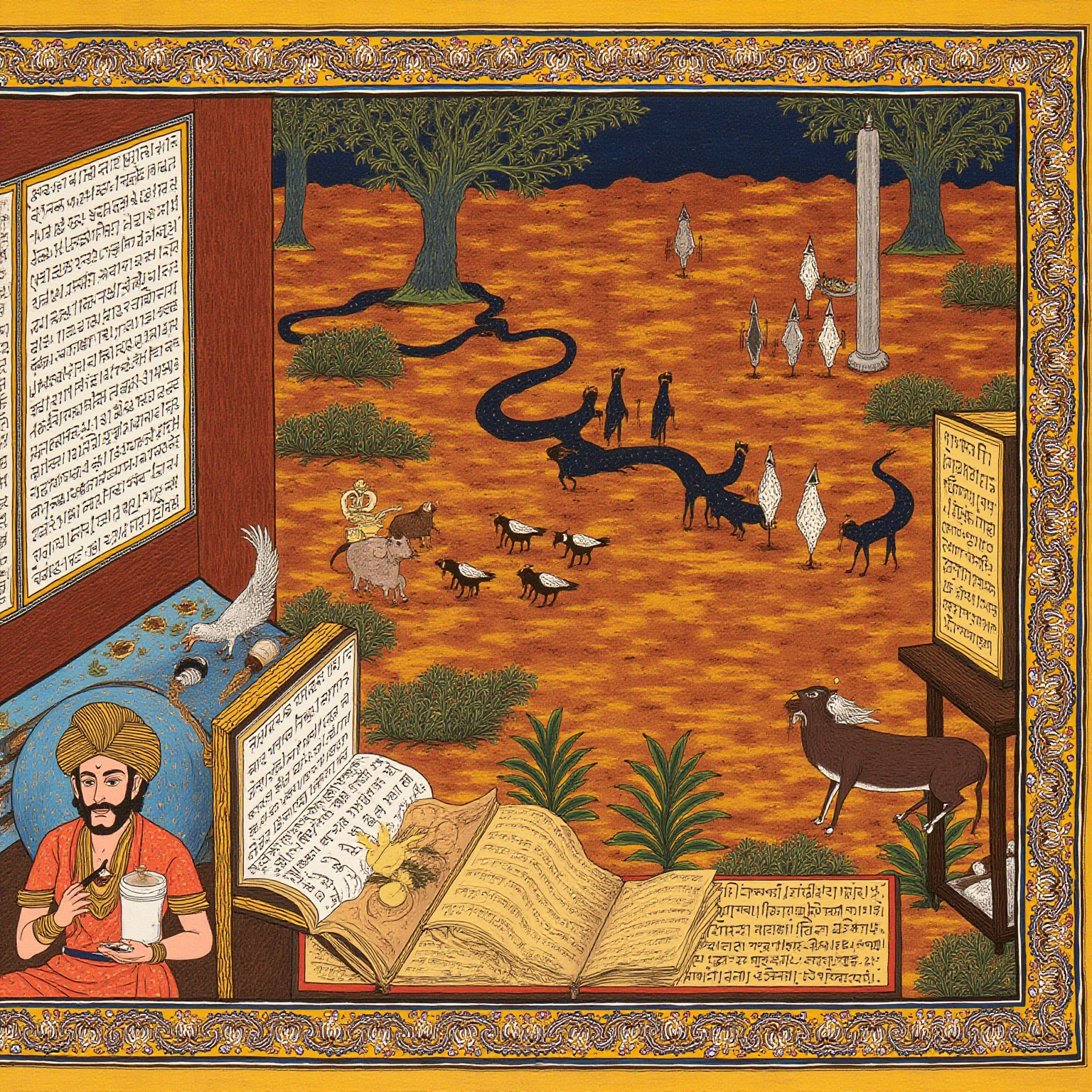
By the fables of the Panchatantra a man may win the three worlds; without them he wins nothing.
凭《五卷书》之寓言,人可赢得三界;舍此则一无所获。
金句 · 译跋 · 伊本·穆卡法致巴格达
Characters and world
The book's stage has two levels, one in the jungle and one in the court — the same play seen in light and in shadow. The frame story is an Indian king with three sons who have no interest in scripture, and the legendary Brahmin tutor he brings in (tradition names him Vishnu Sharma) teaches them through animal fables. That frame is the book's most important invention: it builds a natural ladder for stories nested inside stories. The tutor tells a story, a lion inside that story tells another, a crow inside that one tells a third, and the reader can keep falling further down.
The jungle's principals in Book One are the lion king Pingalaka, his new ally the bull Sanjivaka, and the out-of-work jackal minister Damanaka — who brings along a partner, Karataka, forever urging him to let it go. Book Two switches to a set of the weak: a crow, a tortoise, a mouse, and a deer, living in air, water, burrow, and open ground, with habits that never naturally overlap, who become friends who save each other. Book Three stages a war between two nations: crows against owls, day against night, the few and good against the many and wicked, with the crow king Ciramjivin as the strategist and the owl king Raktaksa as his stubborn opponent. These animals hold court under banyan and bodhi trees, but they also stand in for human rulers and ministers, allies, enemies, the wise, and the foolish.
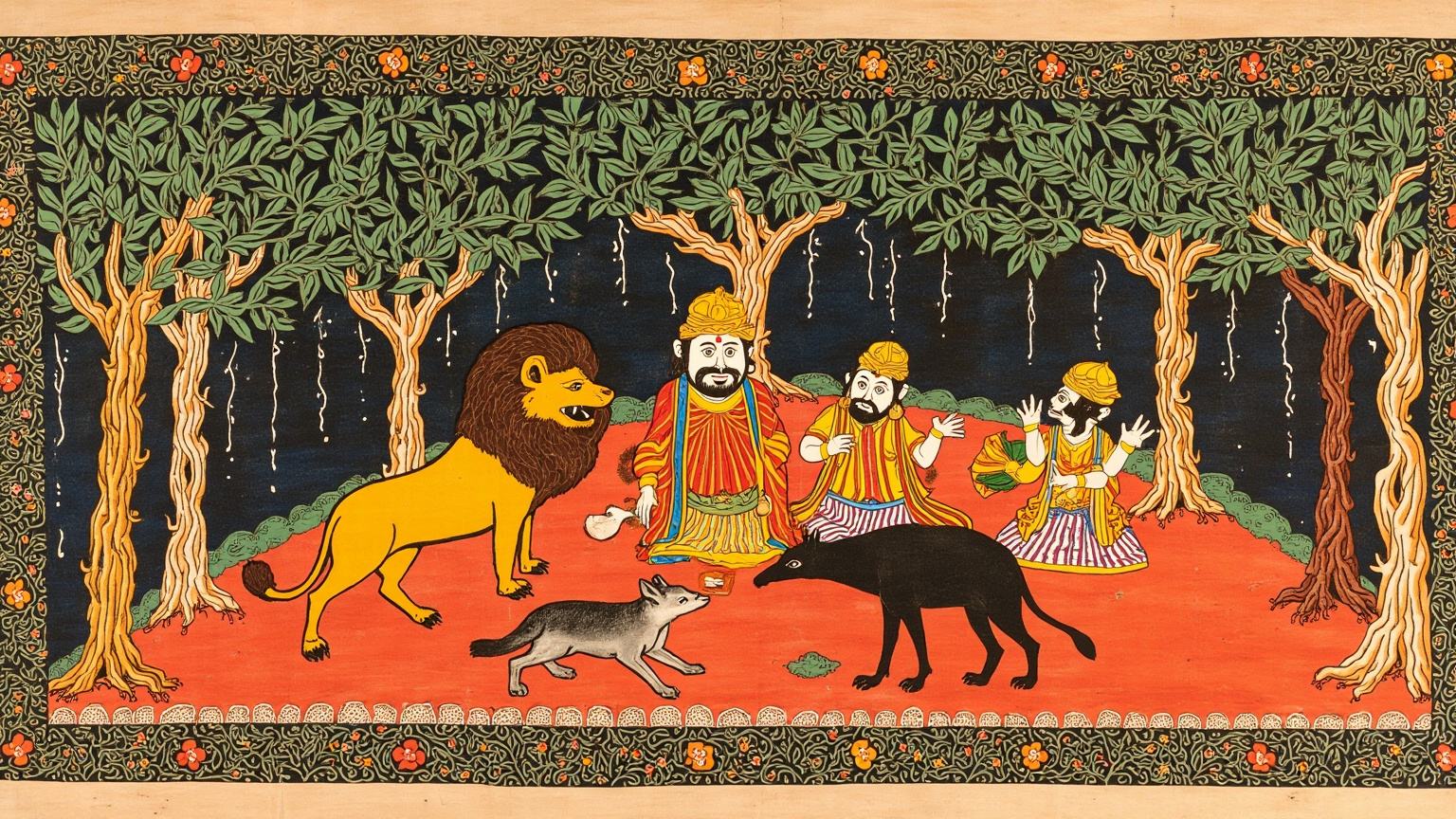
The friendship of the mighty with the mighty is a thing to be feared — the jackal knows it, and sets the lion against the bull.
强者与强者相结,其友宜惧——豺狼深谙此理,遂使狮王自戕其友。
金句 · 第一卷 · 朋友的决裂
How the plot moves
Book One, The Loss of Friends, is the whole book's founding scene. The lion king Pingalaka has taken up with a wild forest bull, Sanjivaka, and the two are inseparable, leaving the out-of-work courtier Damanaka pushed aside. The jackal knows force will not work — he is the weak one, the bull is powerful, and the lion already favors him. His weapon is talk. Damanaka comes before the lion in tears: have you noticed how the bull looks lately, head lowered, avoiding your eyes — that is a bull gathering himself, they get that look right before they gore someone. The lion half believes him. The jackal goes to work on the bull too: the king's eyes have changed when he looks at you lately, will you slip away or wait to die? Two allies who had never quarreled drift apart between the fires the jackal lights on both sides, until the lion himself drives the bull off a cliff. The craft here is that the author never asks you to sympathize with the jackal — he takes the technique of setting friends against each other apart step by step, and every step is some ordinary human impulse, so that by the end the reader recognizes the same kindling sitting in his own head.
The plot works. So what happens to the jackal? The author refuses to promote him. When Damanaka comes back to report, the lion suddenly understands: he killed his friend on the word of one man. This lion does not stay on as king of the jungle — once he sees what he has done, he abandons the throne. The jackal is left with nothing. It is the book's cool refusal of the fantasy that scheming pays off: the man who set every piece in motion is the one person who cannot arrange the outcome he wanted.
The strong fall, the weak band together
Book Two, The Winning of Friends, drops the whole weight of the story straight down to the jungle's lowest tier. A crow, a tortoise, a mouse, a deer — living in air, water, burrow, and open ground — would never ordinarily cross paths. What brings them together is that each of them is hunted: the crow by hawks, the mouse by cats, the tortoise by otters, the deer by hounds. One day the crow's foot is caught in a trap, and his desperate cry happens to reach a passing mouse, who gnaws through the snare. That is where the friendship begins. What they build afterward is a strange web of mutual aid: the crow scouts from the air, the mouse digs underground, the tortoise lies low in the water, the deer supplies speed. When a hawk attacks, the tortoise plays dead to draw its attention, the deer lures it under a tree, and the mouse chews through its leg tendon — and the hawk goes down. Four weak animals who could each lose alone beat a predator none of them could handle by themselves.
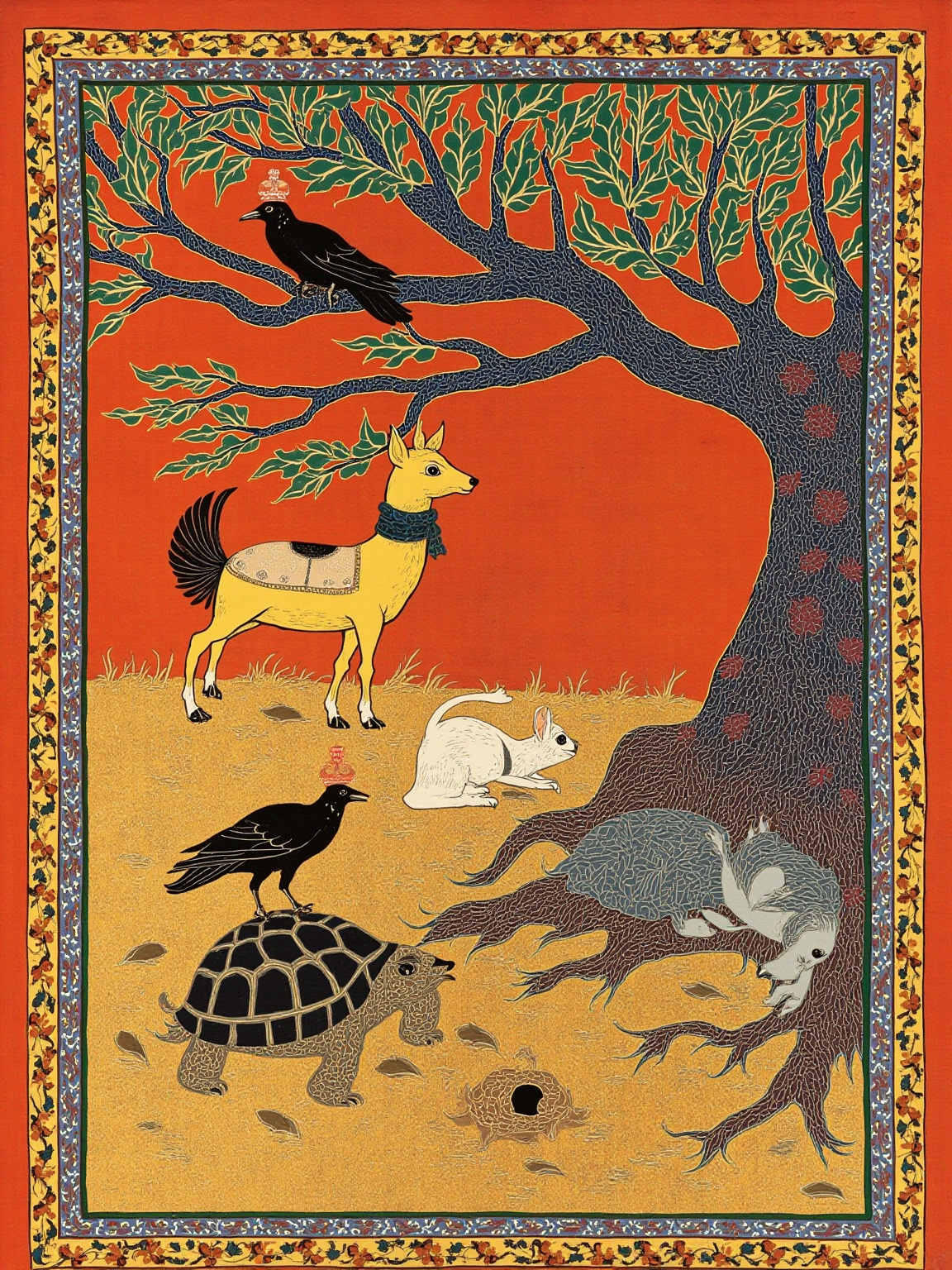
Even the weak, when they take counsel together, may prevail over the strong — so the crow, the tortoise, the mouse, and the deer made one another safe.
弱者若能合谋,亦足以克强——乌鸦、龟、鼠、鹿相与为友,各得其所。
金句 · 第二卷 · 朋友的获得
This book is a mirror image of the first: Book One shows a weak creature's tongue pulling the strong apart, Book Two shows the weak defeating the strong by banding together. Same jungle, two opposite ways to survive it.
Day makes war on night, and wit beats the blade
Book Three, The Crows and the Owls, moves the jungle onto a battlefield. On one side are the crows — few in number, active by day, marked by the author as good. On the other are the owls — many, active at night, marked as wicked. The odds are lopsided, and the crow king Ciramjivin, after hearing out his counselor, makes a decision that runs against instinct: fight at night, not by day. He has his crows hang balls of resin-soaked hemp thread on the branches around the owls' nest and set them alight after dark. The owls see their whole roost lit up, assume the crows have brought fire with them, and scatter in panic, only to be picked off one by one by crows waiting at the entrance. The battle turns not on numbers but on timing: the crows borrow the owls' own fear of the dark. The enemy's greatest strength becomes, in the end, its softest spot.
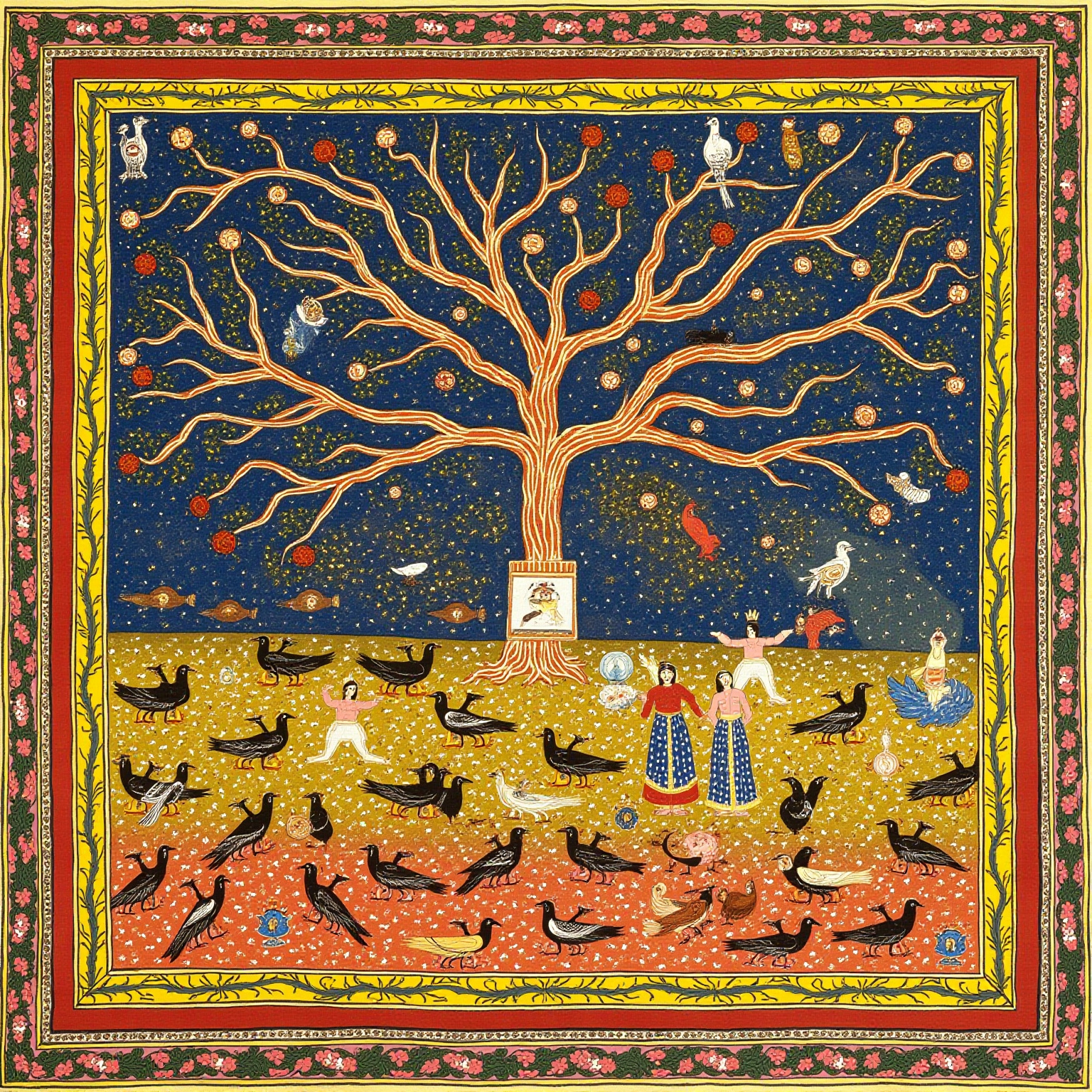
Courage alone is not the arm that wins; it is wisdom, sitting in the breast of the few, that overthrows the many.
克敌之器非徒勇气,乃智慧——智慧居于少数胸中,足以倾覆众强。
金句 · 第三卷 · 乌鸦与猫头鹰之战
The owl king Raktaksa, whose earlier victories had gone to his head, delivers a strikingly clean piece of self-reproach as he dies, asking himself why he never listened to his elder counselor. The whole book keeps doing one thing over and over: it strips a particular human failing of its human skin, fits it onto an animal's bones, and lets the reader recognize himself in an unfamiliar shape.
Five books of counsel, and the three princes' ending
I am not going to walk through Books Four and Five scene by scene — the weight of the whole work sits in its skeleton: The Loss of Friends, The Winning of Friends, The Crows and the Owls, The Loss of What Has Been Gained, and Rash Deeds. Five aspects of the world, five human traps. Loss teaches you to spot manipulation, winning teaches you to build alliances, the crows and owls teach you to substitute wit for force, loss of what has been gained teaches you to hold what you have, and rash deeds warns you to think before you act. Only after all five books does the frame story close: the three princes who had no interest in scripture finally graduate.
The leap out of India
If this book had stayed inside the Indian jungle, it would at best be an excellent local fable collection. What actually changed its fate was the leap it made around the sixth century. The Sanskrit original is lost; the earliest intermediary we can trace is Pahlavi, the official language of Sassanid Persia. Then, in eighth-century Baghdad, in the middle of the Abbasid translation movement, a translator of Syriac descent, Ibn al-Muqaffa, turned the Pahlavi version into Arabic and titled it Kalila wa Dimna — Kalila and Dimna are the names of those two jackals. From this book onward, the nested story collection took root as a literary form in the Arabic world.
That translation was not a simple change of language. In Ibn al-Muqaffa's version, the two outer layers of frame story picked up details of the Arab court; he was not preserving the original, he was rewriting it. From Arabic the book was translated again into Syriac, Greek, Hebrew, and Latin, and every language reshaped it further. By the time the printing press arrived in the Renaissance, Aesop's Fables and La Fontaine's Fables were retelling the lion and the jackal, the crow and the owl, the tortoise and the hare, and every one of those stories traces back to this book. Boccaccio's Decameron and Chaucer's Canterbury Tales drew on it heavily too. This one book is, essentially, the grandfather of the entire later European tradition of short fiction.
Theme and method
Two motifs run through all five books. One is the intelligence of the weak: in the human world, strength was never the deciding factor; cunning, cooperation, and a cool head are. The other is nīti, the art of conduct, or statecraft — this is a training manual for rulers, smuggled cleverly into animal stories. At the end of each fable a character recites a verse of maxims, such as friends coming in two kinds, those who ask you for help and those who ask you not to help them, that snaps the story back to its point. The trick of telling a story and driving home its moral in the same breath was already being handled with real skill in India two thousand years ago.
It built a machine for telling stories two thousand years ago, and any short story collection you read today that nests one tale inside another may still be running on it.
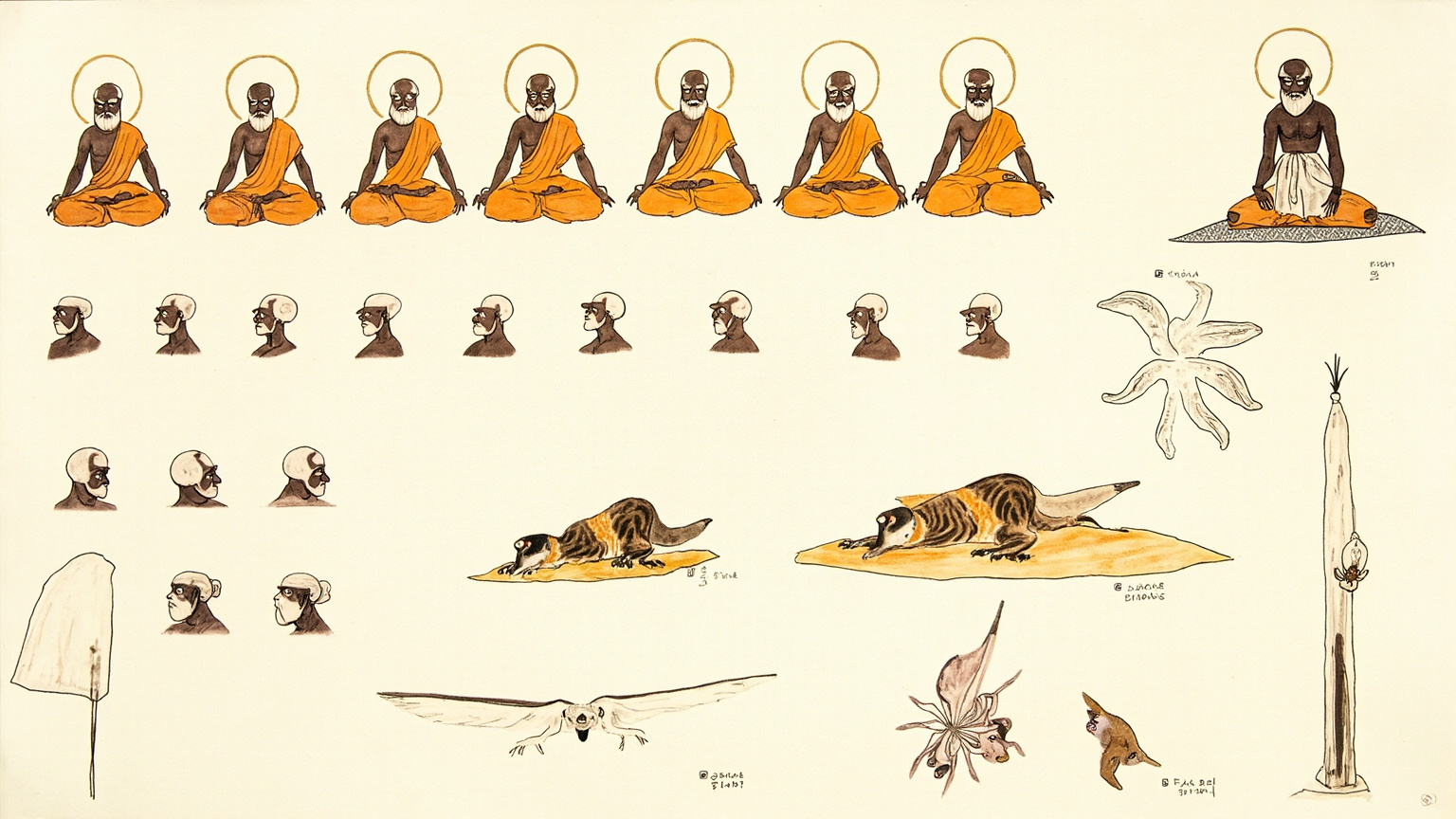
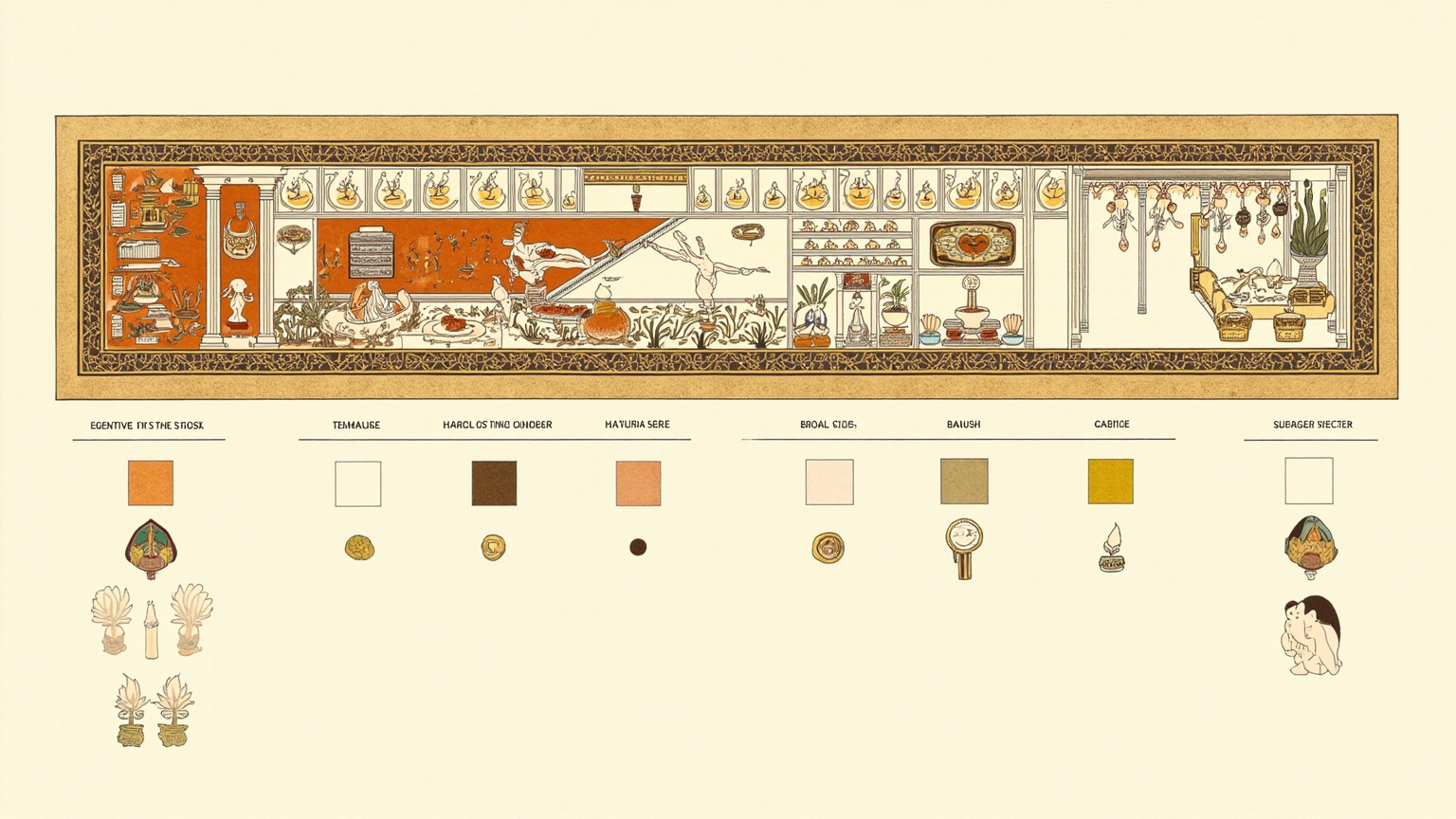
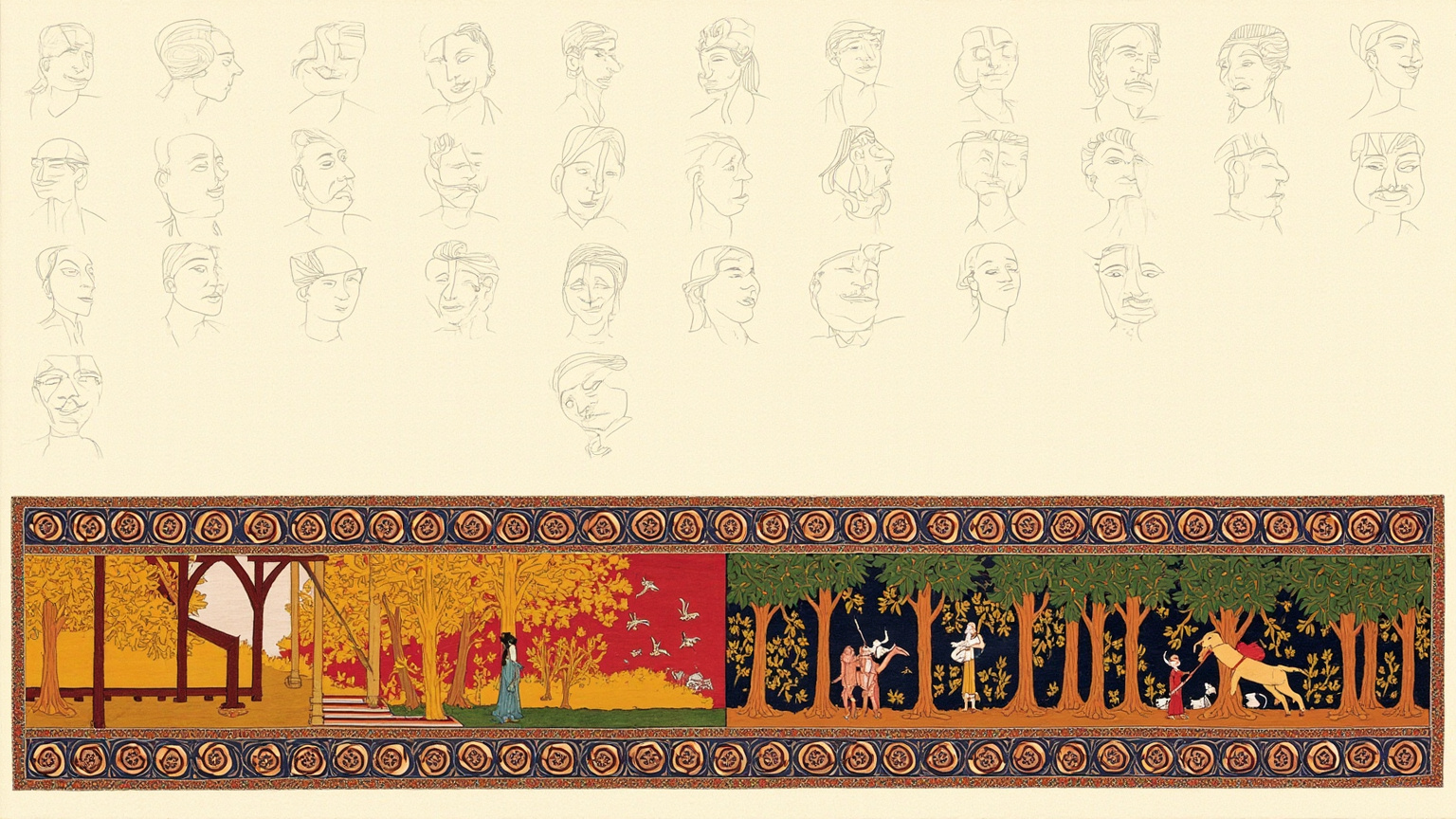
Art Direction4 plates
Before the guide was written, this book got a visual foundation — every illustration you just read grew out of it.