Panji Semirang (The Tale of Panji) · Companion Guide
班基故事
两国王室联姻未及献祭圣河,王子失公主、平民女被碾;他以四国流浪修补天命,皮影与面具替他活过六百年。
Start with one concrete thing in front of you
An oil lamp turns a white screen yellow. A pierced leather puppet, mounted on a bamboo rod, tilts sideways past two mahogany posts carved with lotus petals. It wears no golden crown of Rama, only a narrow-brimmed Javanese crown. This is wayang gedog, the shadow-play form reserved for Panji stories, staged apart from wayang purwa, which performs the Ramayana and the Mahabharata. Tradition credits the form to a sixteenth-century Javanese holy man, dating it to the middle of that century. In the five hundred years since, the prince on that bamboo rod has crossed every border around him. He is reborn in painted wooden masks in Bali's Gambuh dance-drama, dances as Inao in the lakhon nai of the Bangkok court, and turns into dozens of Hikayat manuscripts on the desks of Malacca's sultans. In 2017, manuscripts held by Leiden University and the national libraries of Indonesia, Malaysia, and Cambodia were entered into the UNESCO Memory of the World Register on the same day, which is how an authorless "book" gets recognized internationally.
What kind of book is this
Strictly speaking, this is not one book but a cluster of stories. Even the word Panji is not a personal name. It is a title from the Javanese court, meaning banner. The same prince goes by Inu Kertapati, Panji Semirang, Kuda Rawisrengga, or Raden Panji Asmoro Bangun depending on the version; the same princess is Candrakirana, Sekartaji, Endang Sangulara, or Galuh Candrakirana. Dozens of texts survive, among them Hikayat Panji Kuda Semirang, Hikayat Cekel Wanengpati, and Hikayat Galuh Digantung, and titles alone line up more than thirty manuscripts across libraries in Indonesia, the Netherlands, and Britain. They vary in length and diverge in plot, and it is genuinely hard to say which one counts as the standard version.
The whole cluster is set among four ancient Javanese kingdoms: Kahuripan, Kediri (also called Daha), Gagelang, and Singasari, likely echoing the twelfth-century Kediri dynasty. It holds a distinct place in both Indonesian and Southeast Asian literary history, ranked after the two great Indian epics as the work that spread widest and left the deepest mark across the region. One sentence is enough to hold onto it: a Javanese prince leaves and comes home, and the theaters of an entire continent have been relaying the story for six hundred years.
Gods, mortals, and two sacred rivers that refuse to bare their blade
The hero is Panji, prince of Kahuripan, betrothed to Candrakirana, princess of Kediri. The engagement is a political arrangement meant to reconcile the two royal houses, but both kings forget to make offerings to the gods of the bengawan, the sacred rivers. Batara Kala, the god of fate, brings the matter before Batara Guru and wins permission to tear the betrothed couple apart, forcing them through ordeal after ordeal before they may be reunited. This single stroke is the dramatic engine that has kept the whole cluster alive for centuries: the gods withhold mercy, so the humans have to walk.
The world looks like red-brick gateways, terraced rice fields and volcanoes, palm-leaf and bark-paper manuscripts, gamelan gongs, oil-lit shadow screens, and painted wooden masks. The cast list also holds a few key supporting figures who will later break your heart in the prequel chapters: Dewi Anggraeni, a commoner girl Panji secretly marries in a remote hermitage while traveling, and Ken Martalangu, a village headman's daughter he meets while out hunting. Both are eventually crushed by royal fury, the recurring cost paid along this central love story.
The plot line: how it survived six hundred years
The story really begins with an earlier prologue. In the early twelfth century, the court poet Mpu Dharmaja wrote a standalone Old Javanese court poem, Smaradhana, in which the love god Kamajaya and his wife Kamaratih are burned to ash by Shiva's fire, their souls falling back to earth again and again, reincarnated as mortals. This poem was later folded into the Panji cluster as its prologue, so that Panji and Candrakirana become one more incarnation of the divine couple, destined to fall in love again, lose each other again, and search again. The craft here is not to drape the romance in a halo of the sacred, but to tell you upfront that this pair were never mortal to begin with: their parting and reunion is a project the heavens themselves signed off on.

Then the fire of Śiva fell upon Kāma, and the god of love was consumed; only his soul slipped down into the world of men, to be reborn again and again.
湿婆之火焚尽爱神,躯壳成灰,而魂魄坠入人间,一世又一世地转生。
金句 · 序章《Smaradhana》· 爱神焚身
Then the core engine starts up. The kings of Kahuripan and Kediri fail to make offerings to the gods of the bengawan, so Batara Kala raises a whirlwind, sweeps away Candrakirana, princess of Kediri, and has her tonsured as a pertapa, a recluse. Prince Panji sets out on a wandering journey across all four kingdoms, from Kahuripan to Daha, then to Gagelang and Singasari, searching for his wife while getting tangled up in disguises, false identities, and misunderstandings at every turn. The device looks stock, but read closely and the real tension is not whether he finds her. It is how many lives each of them has to live through before he does.
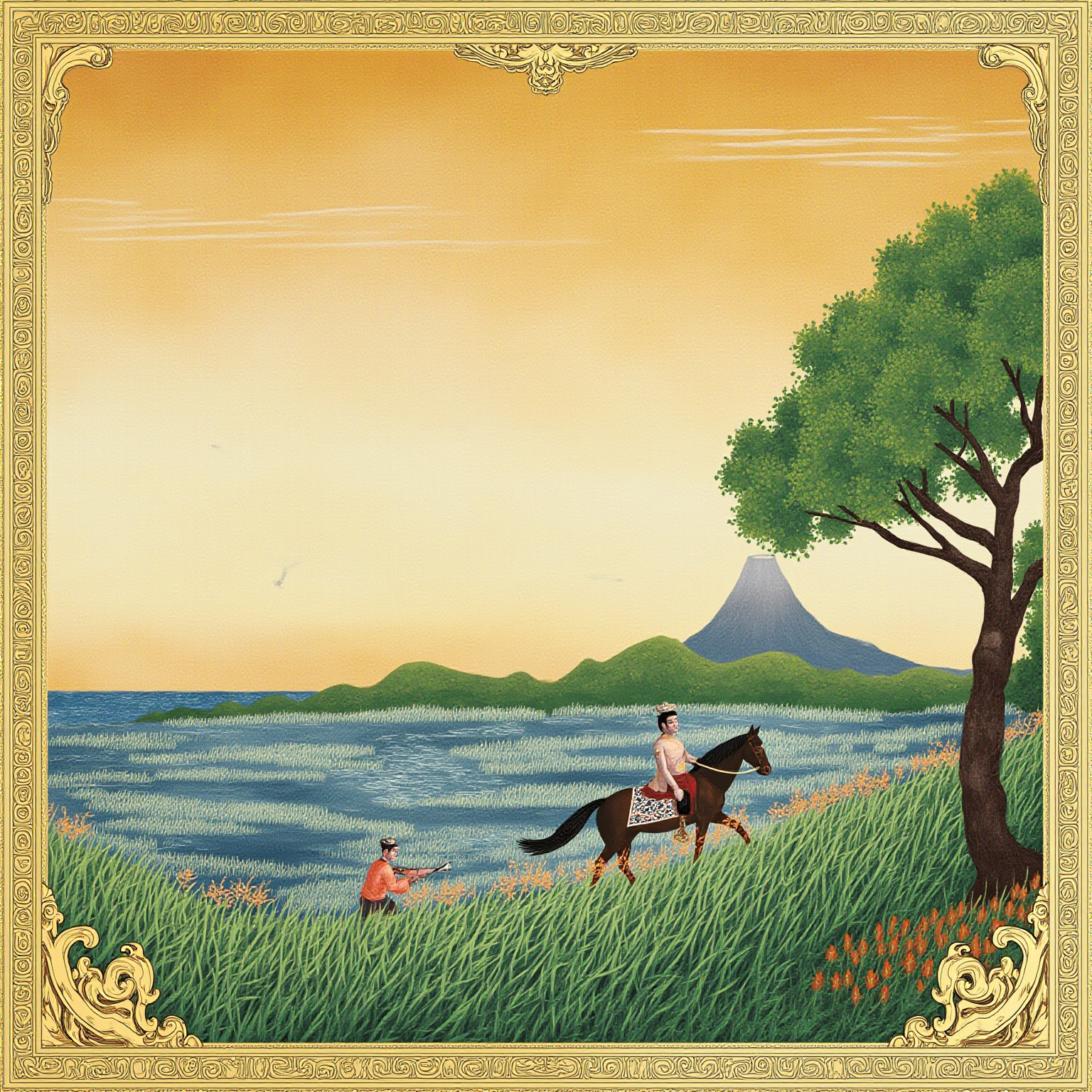
The two kings forgot to offer sacrifice to the spirits of the bengawan; and Batara Kala rose up, and took the bride from her chamber.
两王忘了向圣河诸神献祭,于是 Batara Kala 自海底起身,从闺中将新娘带走。
金句 · 主线开端 · bengawan 献祭
Before the main quest for his wife even begins, there is a bloodier prequel. In the prologue Dewi Anggraeni, the prince, out traveling, secretly marries a commoner girl, Anggraeni, at a remote ashram. Both royal houses are outraged; Kediri's envoys threaten war; and to head off the conflict, the court plots to have Anggraeni killed. After that pair is crushed, the prince meets another commoner on a hunting trip, Ken Martalangu, a village headman's daughter, and again both fear the wrath of Kediri's king, since Panji is already betrothed to Galuh Candrakirana. This romance ends in blood too: the queen of Kahuripan slips into the house one night while Panji is away and stabs Martalangu with a kris. The commoner love plots keep getting crushed at a bloody price, and the pattern throws into relief the hard political steel running underneath the royal marriage contract.
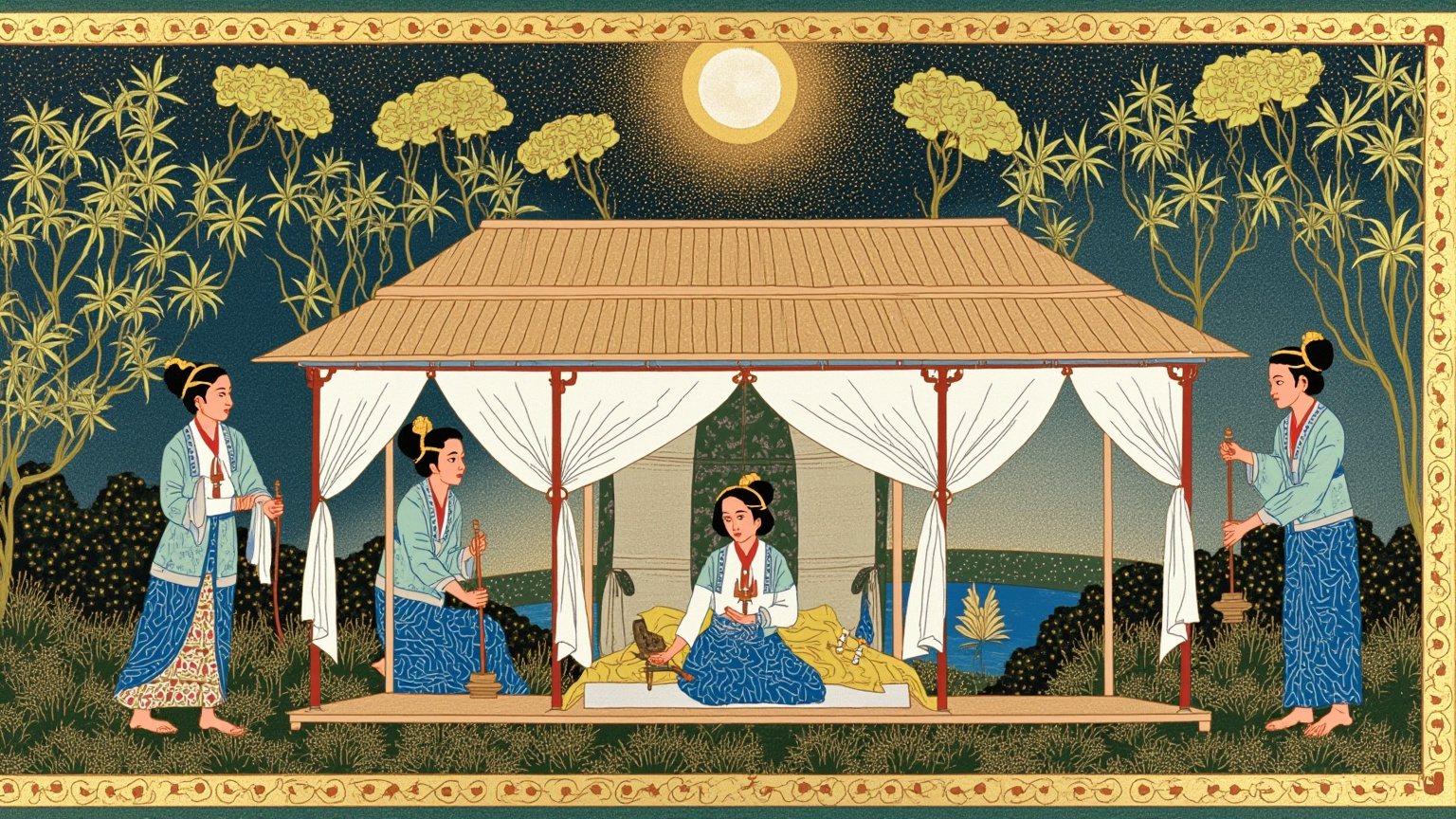
She was only a commoner, and the court would not suffer such a marriage; so they sent her in secret to the river, and the river was bidden to be silent.
她不过是个平民女子,王室容不下这门亲;于是她被悄悄送上河去,河也被吩咐了沉默。
金句 · 前传《Dewi Anggraeni》· 河中沉浮
The cluster's material life begins getting carved into stone in the thirteenth century. Narrative reliefs at the Candi Jawi temple in East Java show Panji scenes rendered "in an elegant, natural, and refined manner, in contrast to the shadow-puppet style," meaning the story cluster was already a subject for royal architectural carving before it ever became shadow theater. In fourteenth-century Majapahit temples, crowned figures in reliefs and freestanding statues have been identified as Panji, "indicating that Panji may have been a figure of worship in Majapahit." The prince may have been an object of devotion before any script existed for him.
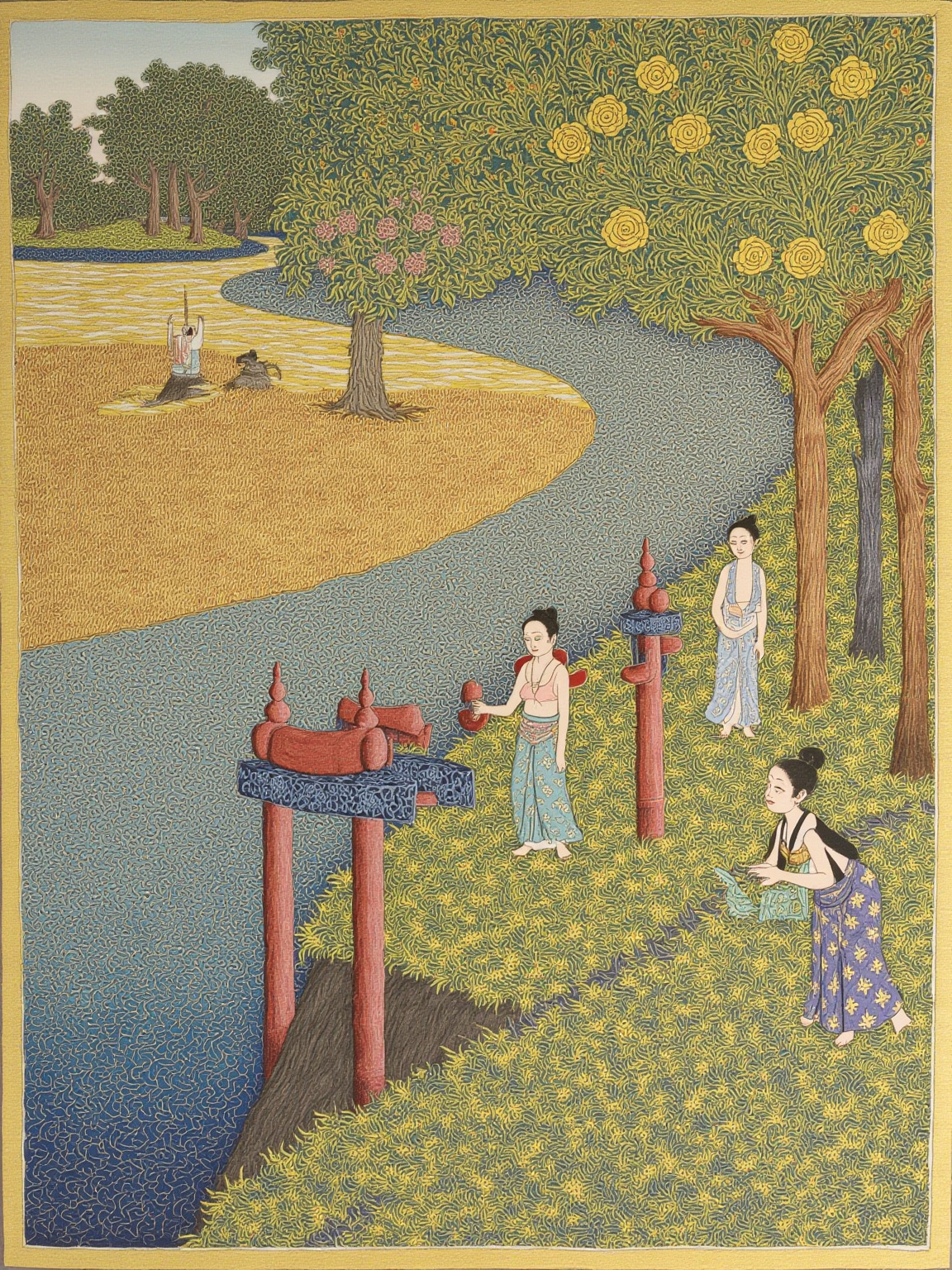
In the mid-sixteenth century, tradition credits Sunan Giri, a holy figure said to have brought Islam to Java, with putting the Panji stories onto the shadow-puppet stage. From then on Java had wayang gedog, dedicated to Panji, standing alongside wayang purwa, which performed the Indian epics. From there the story branched further into wayang topeng, the painted wooden mask dance; wayang klitik, the flat wooden-puppet theater of East Java; wayang golek, the rod puppets of West Java; and wayang beber, the scroll-painting theater. One story, cycling through four or five different performance forms, like the same tune rehearsed again and again by different bands.
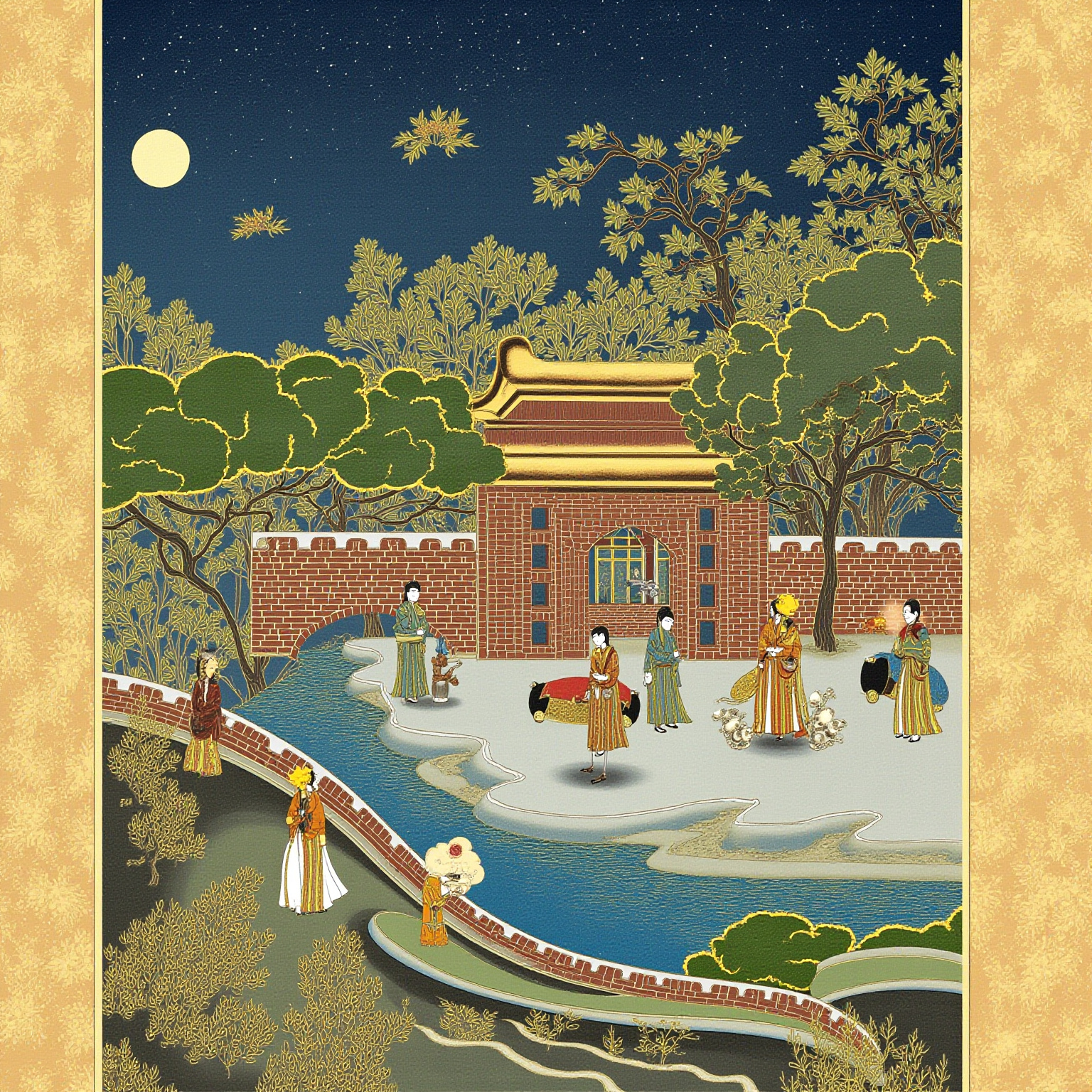
And so the prince took a new name and a stranger's face, and walked the length of four kingdoms, asking after a princess he might never find.
于是王子换上新名,戴上陌生的脸,走遍四国,去寻一位也许再也寻不回的公主。
金句 · 四国漫游 · 改名换脸
The cluster crossed the Java Sea and went looking for stages across all of Southeast Asia. In Bali it is called Malat, performed through the Gambuh dance-drama and the Arja opera; the Malay courts hold dozens of Hikayat manuscripts; in Thailand it was rewritten as Inao, a lakhon nai court dance-drama, composed around the mid-eighteenth century and said to be drawn from a Javanese Panji story told by a captive Malay woman. This is the most dramatic stretch in the whole cross-border history: a story told by a woman held captive ends up danced as a national drama in the Bangkok court. Cambodia, Myanmar, Laos, and southern Vietnam each developed their own versions.
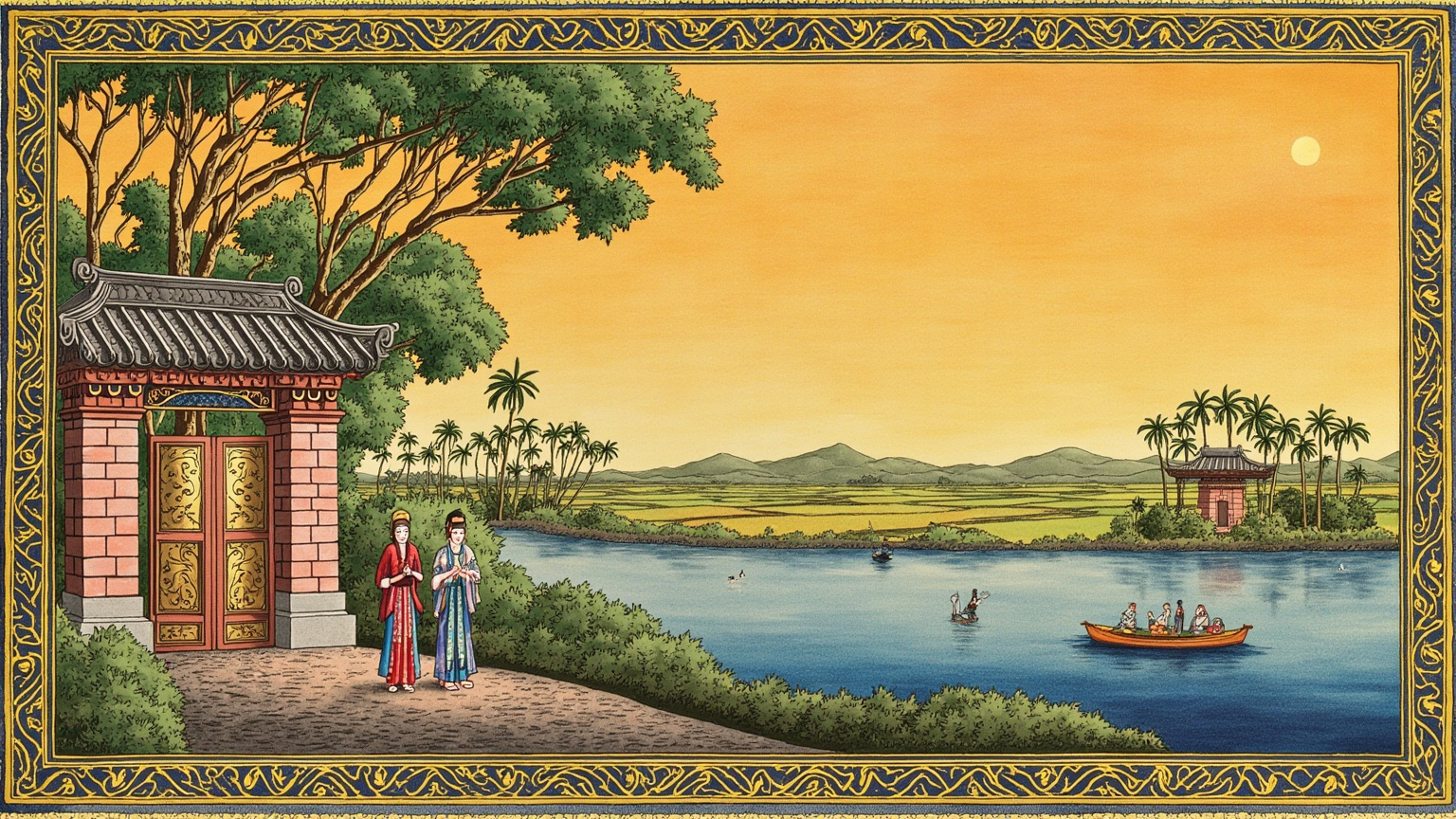
From Java the story crossed the strait, and took a hundred new names: Malat in Bali, Inao in Siam, Hikayat in every Malay court.
故事越过了爪哇海峡,便换上百种名字——巴厘唤作 Malat,暹罗叫它 Inao,每一个马来宫廷都有一部 Hikayat。
金句 · 东南亚流布 · 故事群的扩散
Then came October 30, 2017. Panji manuscripts held by Leiden University Library and the national libraries of Indonesia, Malaysia, and Cambodia were jointly inscribed on the UNESCO Memory of the World Register, "affirming their world significance." An unsigned Javanese story cluster got its international documentary standing the same way four separate library collections got it: entered on the very same day.
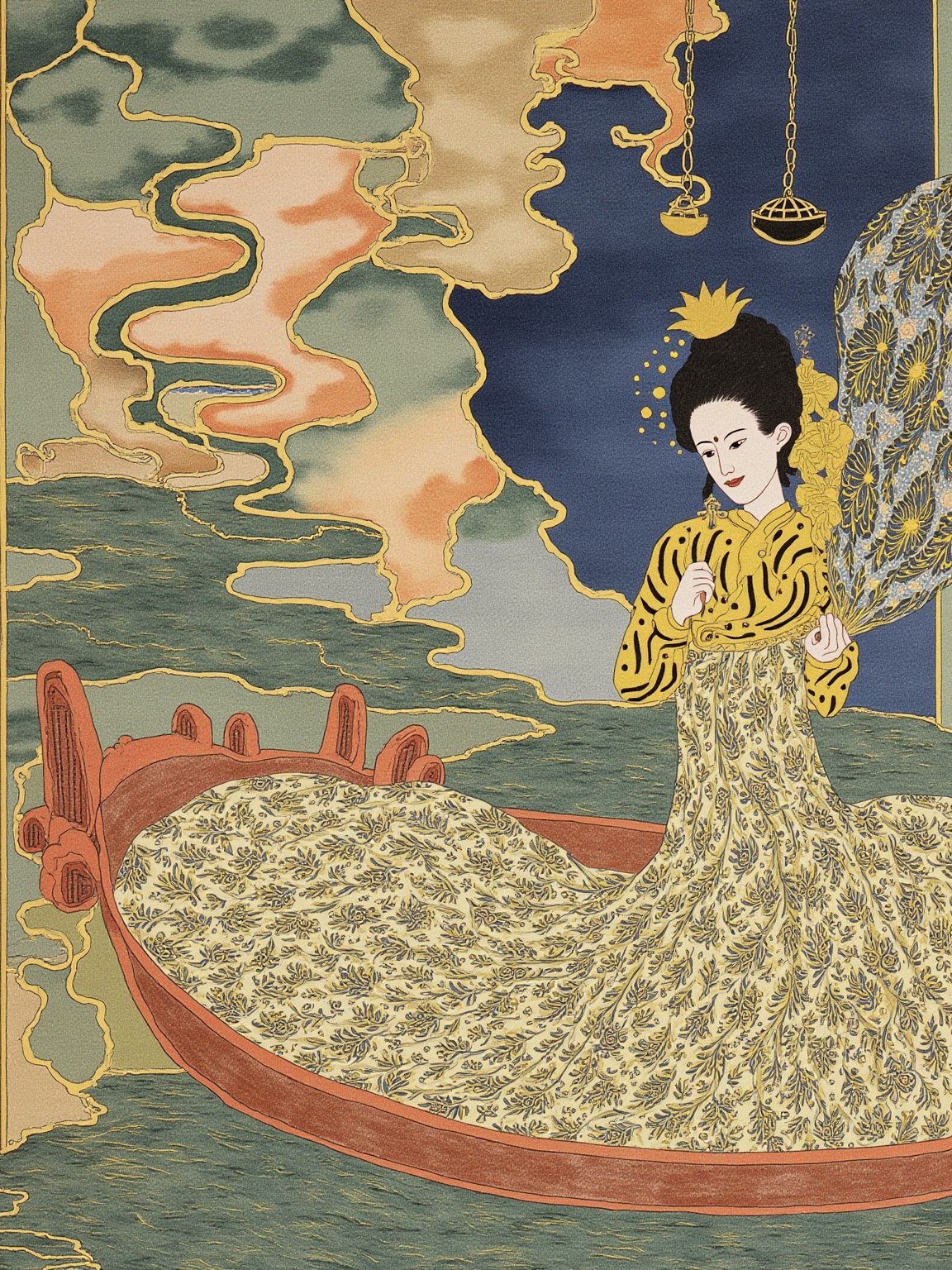
On the thirtieth day of October, in the year two thousand and seventeen, the manuscripts of the Panji were entered upon the register of the world's memory.
二〇一七年十月三十日这一天,班基的写本被写入了世界的记忆。
金句 · UNESCO · 世界记忆
Theme and craft: why anyone kept retelling it for six hundred years
What the Panji cycle is really about is not love itself but how a political marriage gets interrupted by divine will, and how mortals mend it. Batara Kala's appeal to Batara Guru is fate; Panji's wandering is the mending; the court's assassination of Anggraeni and the queen's murder of Martalangu are two separate instances of politics crushing feeling. It wedges a love story hard into three layers of power: gods, royalty, and commoners. That is exactly why generation after generation of courts kept retelling it. Whoever was telling it could slip their own political anxieties in without anyone noticing.
The single most important thing about its craft is that it stayed alive for six hundred years through three separate carriers: shadow and rod puppets, mask dance and court dance-drama, and palm-leaf and bark-paper manuscripts. The story was never finished by being read; it was finished by being performed. The text is only the script; the gongs, the masks, the oil lamps on stage are its real body. Understanding that gets you closer to what this cluster actually is than reading any single Hikayat manuscript ever could.
A love-and-adventure cycle with no author and no fixed text, kept alive six hundred years by stages and manuscripts passing it hand to hand, and that is the story it tells: people can mend more than the gods ever allow.
Knowing the plot is no reason to skip the text
The first time I watched Panji, in a painted wooden mask, take his stately steps through a Bali Gambuh performance, I only realized afterward what I had been missing. A summary gives you the skeleton of the story: the prince loses the princess, commoner women get crushed, the wandering runs through four kingdoms, shadow puppets hand off to mask dance. What the text itself carries, irreplaceably, is the flesh: the long-vowelled breathing rhythm of Old Javanese kakawin court verse, the restraint in how a Malay Hikayat manuscript writes the line where the queen walks in with her kris, the scratch of a stylus dragging across palm-leaf fiber. That physical feel, that texture of the language, is exactly what a plot summary cannot hold. And there is the stage. No amount of reading Hikayat manuscripts will let you hear what the gamelan gongs sound like in the scene where Panji finally recognizes Candrakirana. Read it, watch it, listen to it: three ways of saying the same thing.
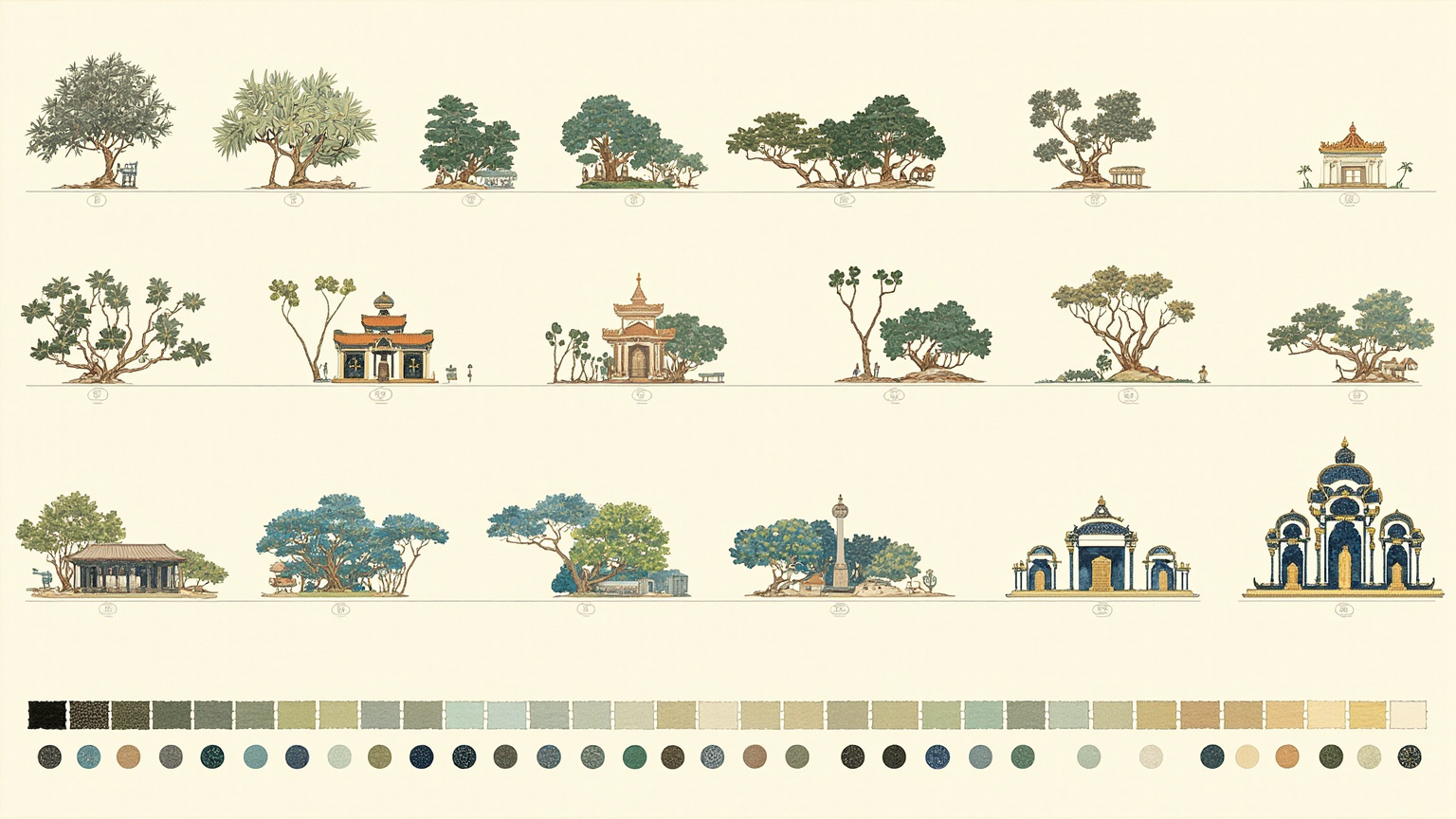
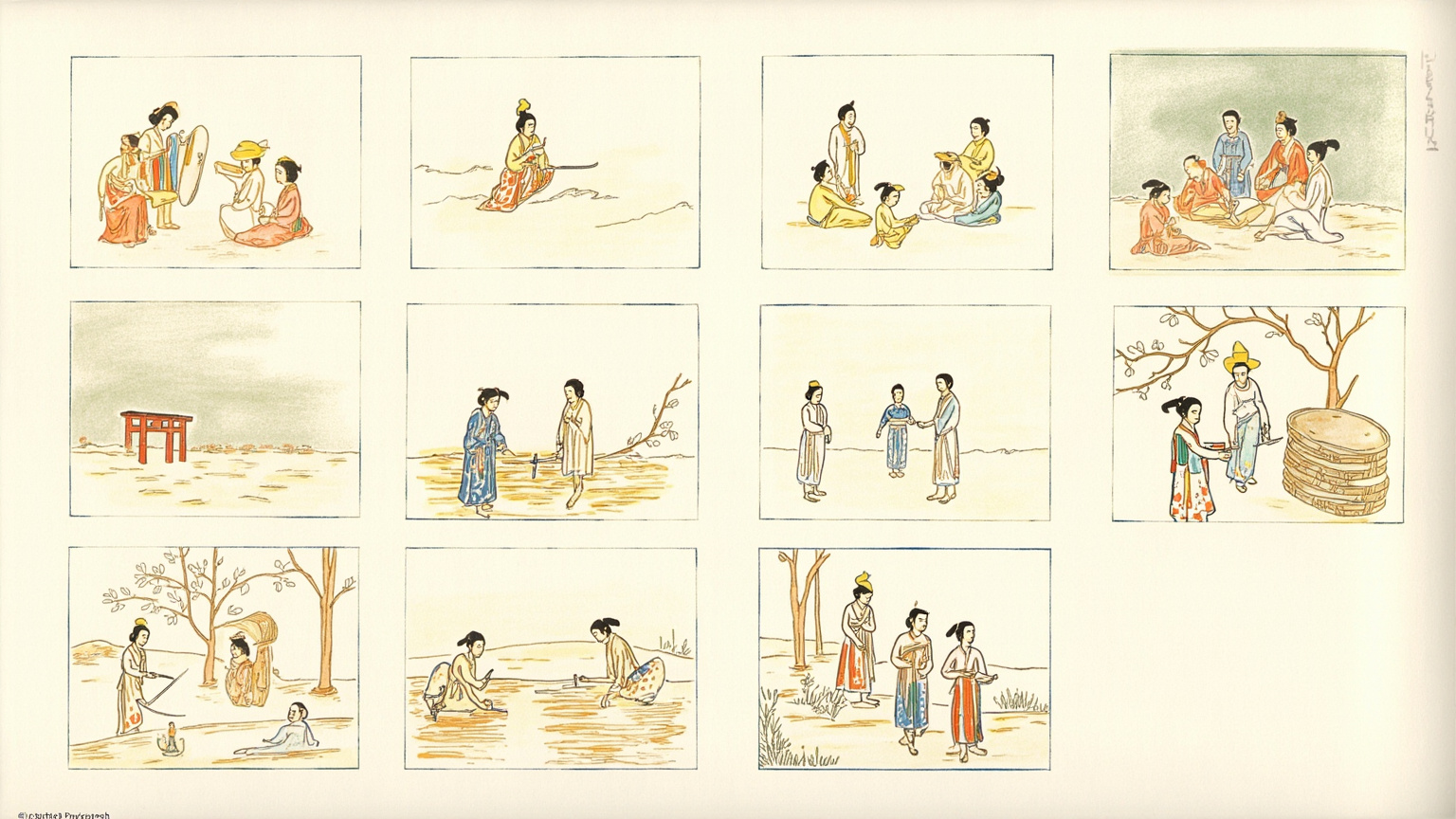
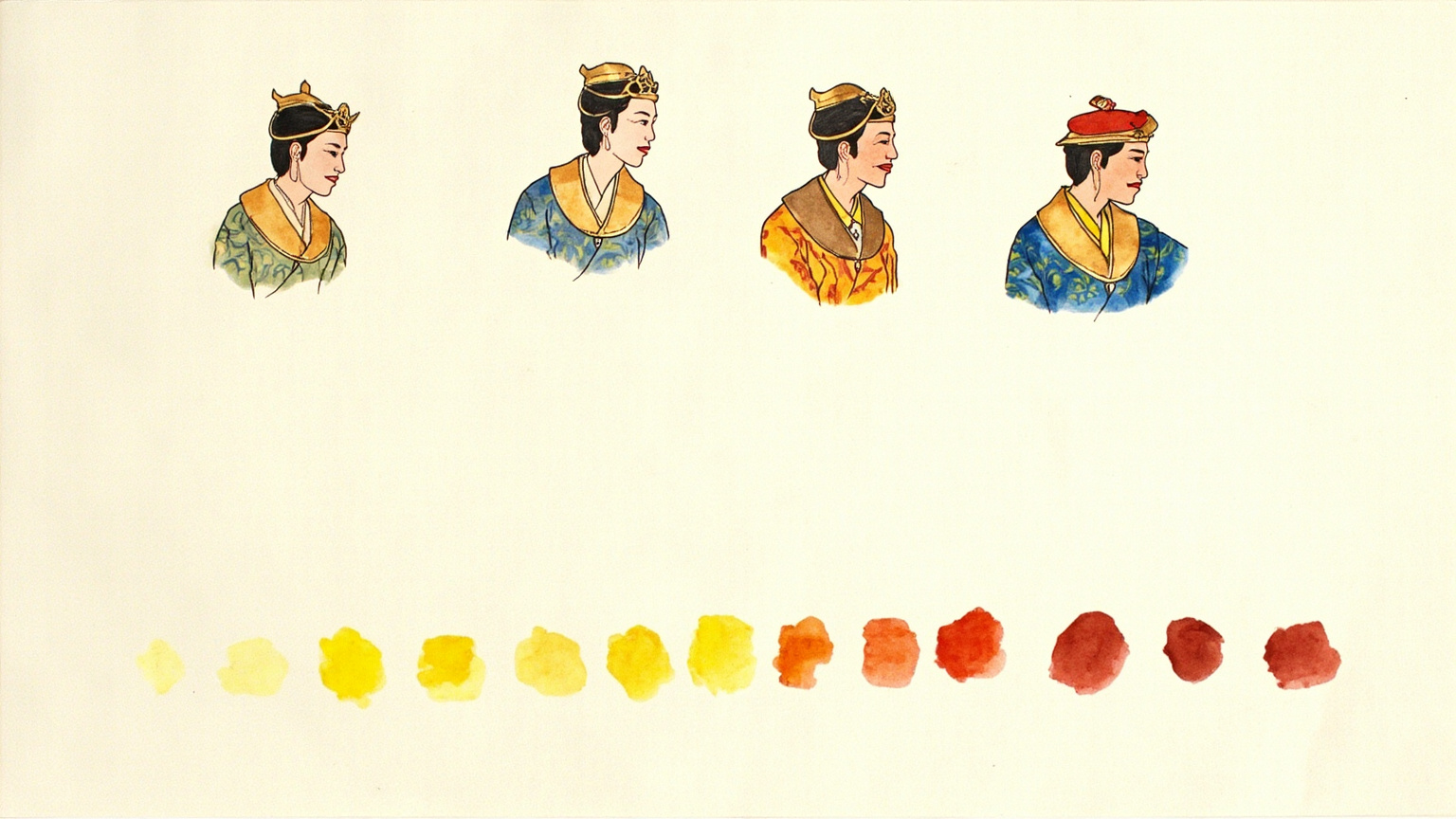
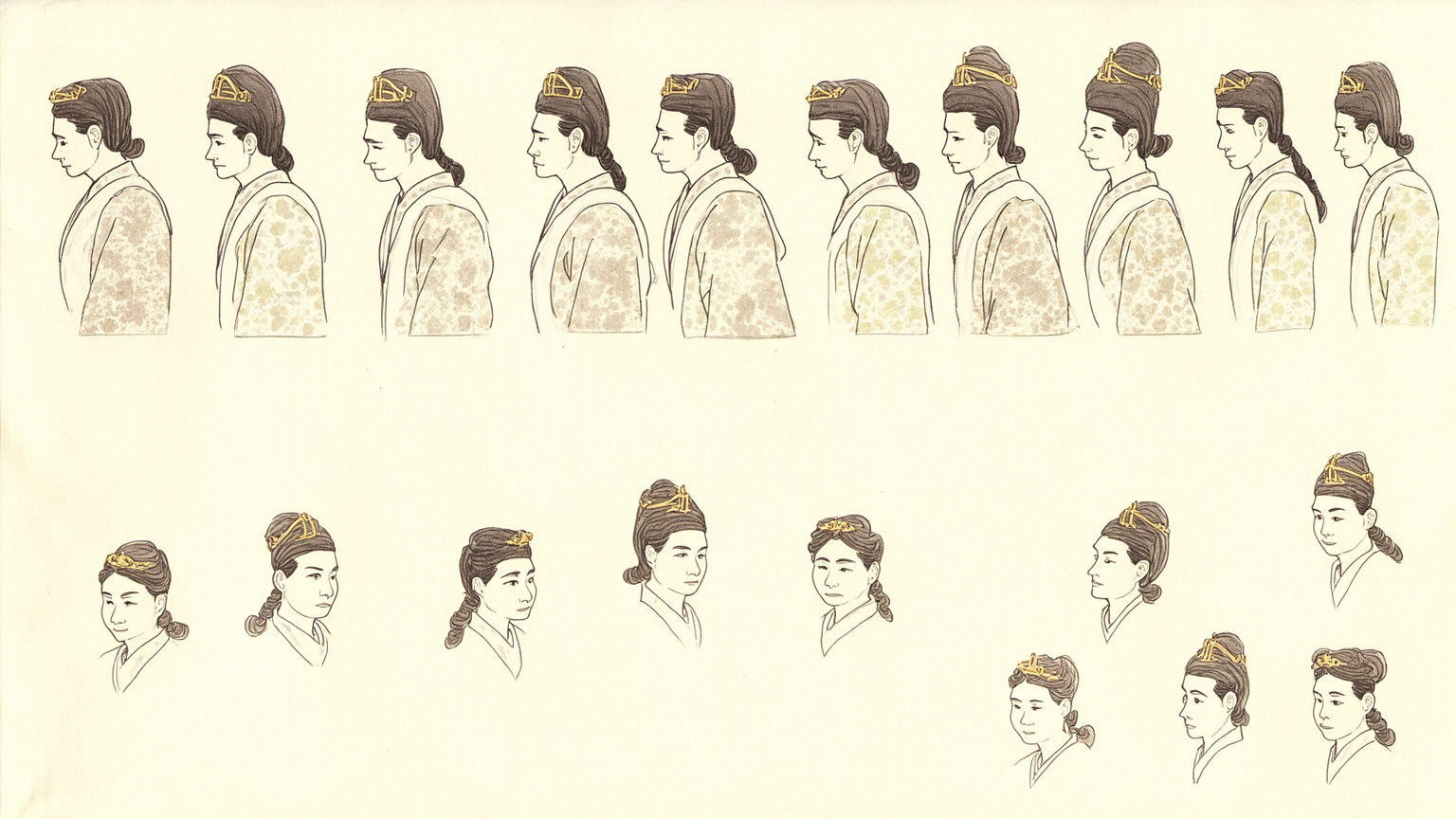
Art Direction4 plates
Before the guide was written, this book got a visual foundation — every illustration you just read grew out of it.