Phra Aphai Mani (พระอภัยมณี) · Companion Guide
帕阿派玛尼
暹罗湾的《奥德赛》——王子被海与妖反复掳入深渊,唯有一支葫芦笛,能将困他的人一一吹伏。
Opening: One Flute Holds Down an Entire Sea
The gourd flute lies on the coral steps. Faded gold thread winds around its body, and sea salt has stiffened the tassel at its end into hard little cords. It was still sounding a moment ago — sounding hard enough to shake the vaulted ceiling overhead, the one fused to the seabed ridge, hard enough to bring the coral-armored guards holding its owner captive down to their knees, scales scraping against the pearl floor. The one who played it is a Siamese prince, just past twenty, standing barefoot in the undersea palace where he has been held for years. In another quarter hour he will carry this flute back up to the surface.
This is Phra Aphai Mani, as Sunthorn Phu wrote him — a man the sea keeps seizing, and keeps failing to hold. The whole thirty-thousand-line poem turns on this one small gourd flute.
What Kind of Book This Is
Phra Aphai Mani is the long narrative poem Thailand's Poet Sage, Sunthorn Phu, began in the 1830s and kept writing for twenty years — more than thirty thousand lines of khlong verse in all, first printed by Kraja Sastra in 1871. It is the longest and most revered poem in Thai literary history, the national text every schoolchild is made to memorize. Sunthorn Phu composed most of it blind, working by dictation and memory, and Thailand honors him as its Poet Sage, a standing roughly equivalent to Du Fu's in China.
The reason it has stayed in memory is simple: it is Siam's Odyssey — storms, castaways, the lands of the giants, undersea palaces, sea monsters, a magic flute, duels of sorcery, every beat landing as a piece of fantastical folklore vivid enough to stand on its own. Before this poem, nowhere on the Southeast Asian mainland had anything been strong enough to carry the banner of a sea-voyage epic. The moment this one went up, the mainland had its own Odyssey.
Cast and World: The Sea Chart and the Magic Flute
Phra Aphai Mani, the poem's hero, is the son of the king of Lokkhon, just past twenty the year he put to sea, his full brother Sinlak beside him. The two set out for one reason only: their father had been falsely accused and exiled, and they meant to find him. Their ship reached the waters of the giants, a storm tore the brothers apart, and from there their two lives split for good — the elder pulled down beneath the surface, the younger washed up on a foreign shore and adopted into its royal house. That split is the poem's whole skeleton: two men adrift, each surviving his own dangers, until the sea finally lets them find each other again.
The world of the poem rests on three levels. The first is the surface: the shipping lanes of the Gulf of Siam, dragon-prowed boats, monsoon storms, shipwrecks and rescues. The second is underwater: a giants' court built of coral, pearl, and crystal, the deep-sea prison where the prince is held for years. The third is underground — the sealed realm of a thousand shifting forms, a lair of shapeshifting serpents and demons a thousand years old, a labyrinth entirely separate from the palace beneath the sea. Laid side by side, the three levels form a complete map of Siamese myth.
Phra Aphai Mani carries something more useful than any sword: the gourd flute. It was given to him by Rachawong, an elder from the heavens, and it can tame giants, subdue sea monsters, and break any deadlock. Every turn of fortune across all thirty thousand lines comes down to this one small instrument.
The Plot: The Sea Pushes Him Away, the Flute Pulls Him Back
A Storm at Departure
The brothers weigh anchor from Lokkhon's golden-spired harbor, bound to find their exiled father. The sea gives them a stretch of false calm, then turns — a black wave rolling in from the waters of the giants splits the ship in two and throws each brother into a different fate. This is where the whole poem begins; every later scene branches out from this one wave.
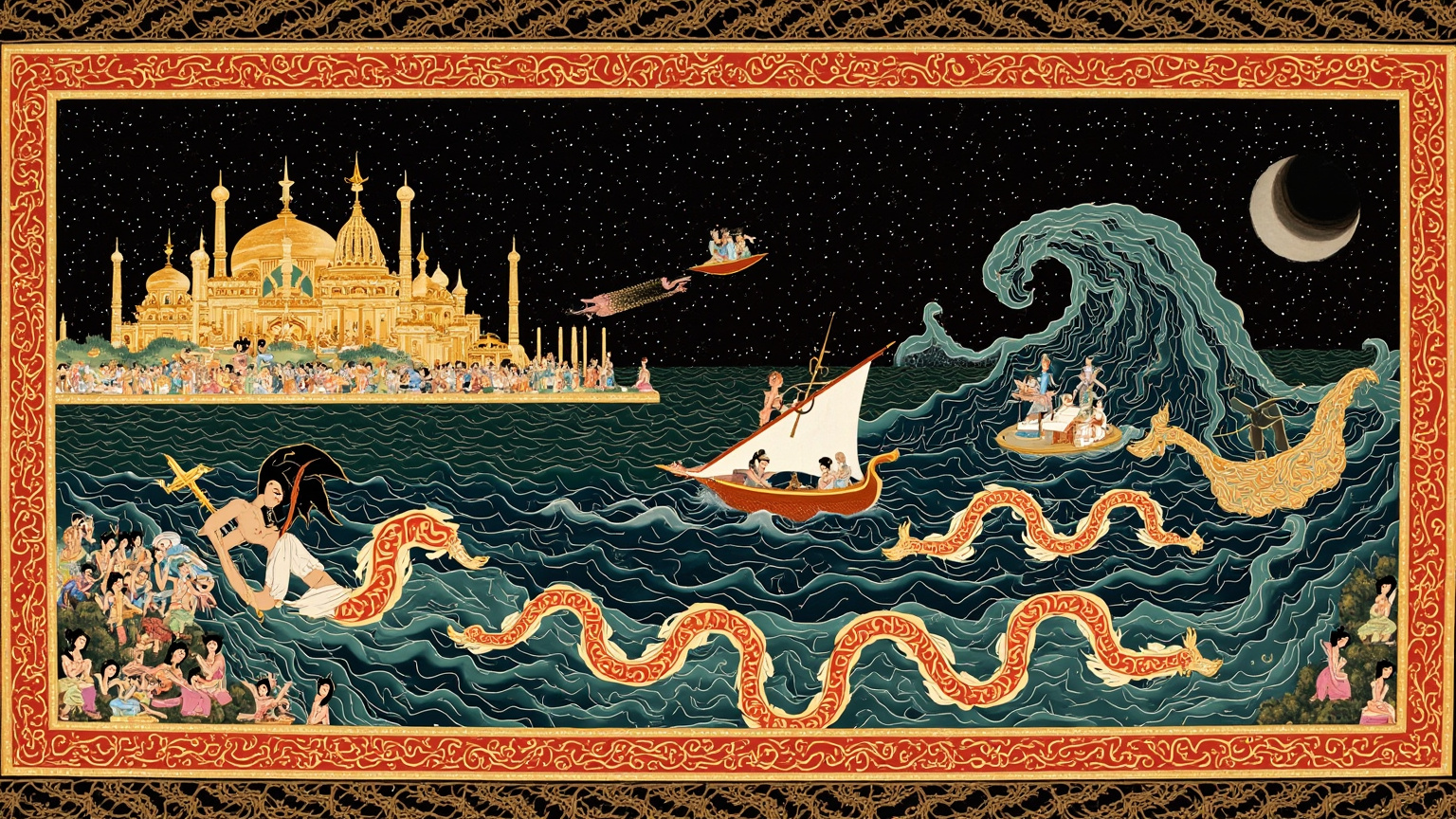
The black wave came up from the realm of giants and clove the ship in two, casting each brother into a different fate.
黑浪自巨灵海域卷来,把船一劈为二,把兄弟两人各掷进一片不同的命里。
金句 · 风暴离港
The Coral Palace Under the Sea
Phra Aphai Mani is swept into the waters of the giants. Nulasipi, a giantess and princess of the Nang Yak who rule these waters, towers far above any human, crowned in coral and belted in fish scales. She holds him in her undersea coral palace, a court grown over years out of living coral, pearl, and crystal, and keeps him there long enough that he forgets what sunlight above the water even looks like.
The flute sounds for the first time in that prison chamber. The prince plays the technique Rachawong taught him, and the coral-armored guards, the wardens, the giants' attendants go slack one after another. This is not the opening move of a love story. It is the first note of an escape won by sound alone.
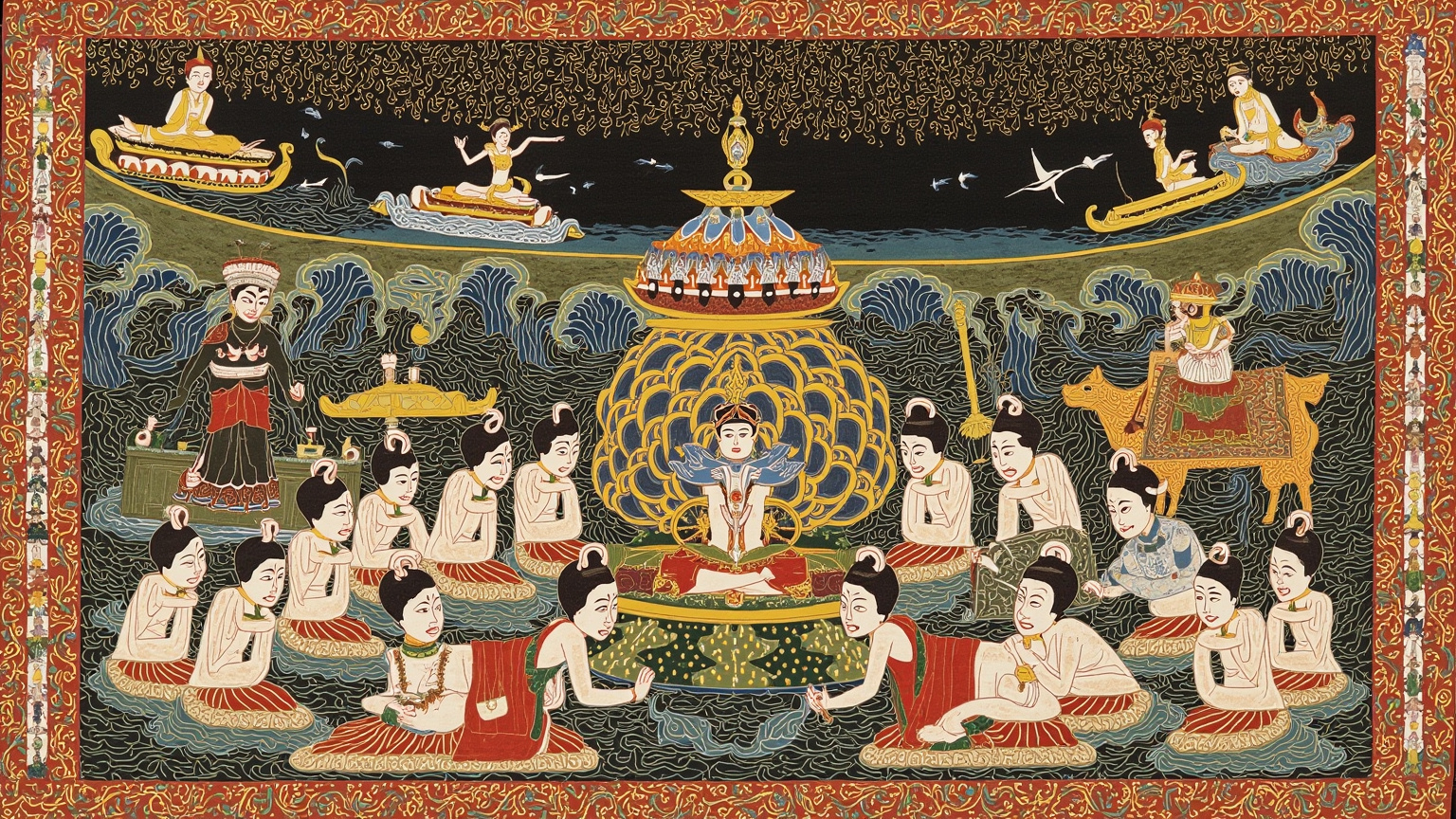
He lifted the gourd flute that Ratchawong had taught him, and the coral soldiers one by one sank to their knees.
王子举起拉差翁亲授的葫芦笛,珊瑚甲兵便一个接一个跪了下去。
金句 · 笛声初试 · 深海囚室
The Flute That Breaks the Cage
The years of captivity pass in a single stroke; the weight falls on the moment of the break. The magic flute sounds again, the coral palace's walls shudder apart from within, and the prince plays his way out through door after door of the giants' court. The scene holds on the instant he breaks free — not an embrace, not a farewell, just the beat of capture, break, and flight itself.
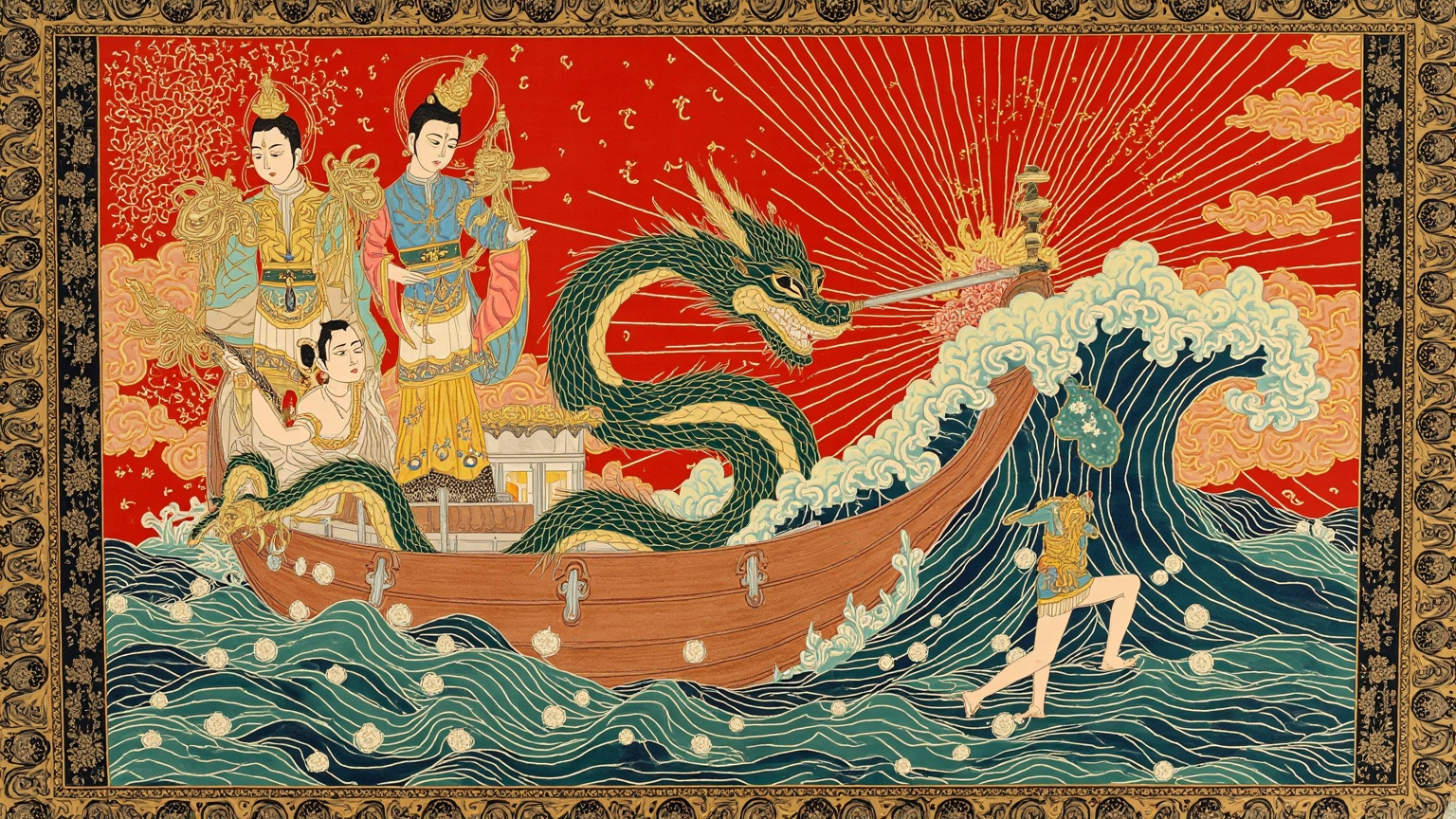
It was no embrace, no farewell — only the rhythm of being held, then broken, then gone.
不是相拥,不是诀别——只有困住、震开、抽身而去的节拍本身。
金句 · 囚笼破笛 · 珊瑚王庭
Trapped Again in the Wreck-Palace
Free of the waters of the giants, the prince is caught again on the surface of the Indian Ocean, this time by the sea monster Suwanmali. This is no deep-sea prison but a palace built out of a wreck adrift on the waves — the sea monster's leader has hollowed the ruined hull into her own court. The prince is briefly held there; the flute sounds once more, and the monsters kneel before it. Music is the only key this stretch of the poem offers. The same beat, capture, break, flight, plays out again in a different sea.
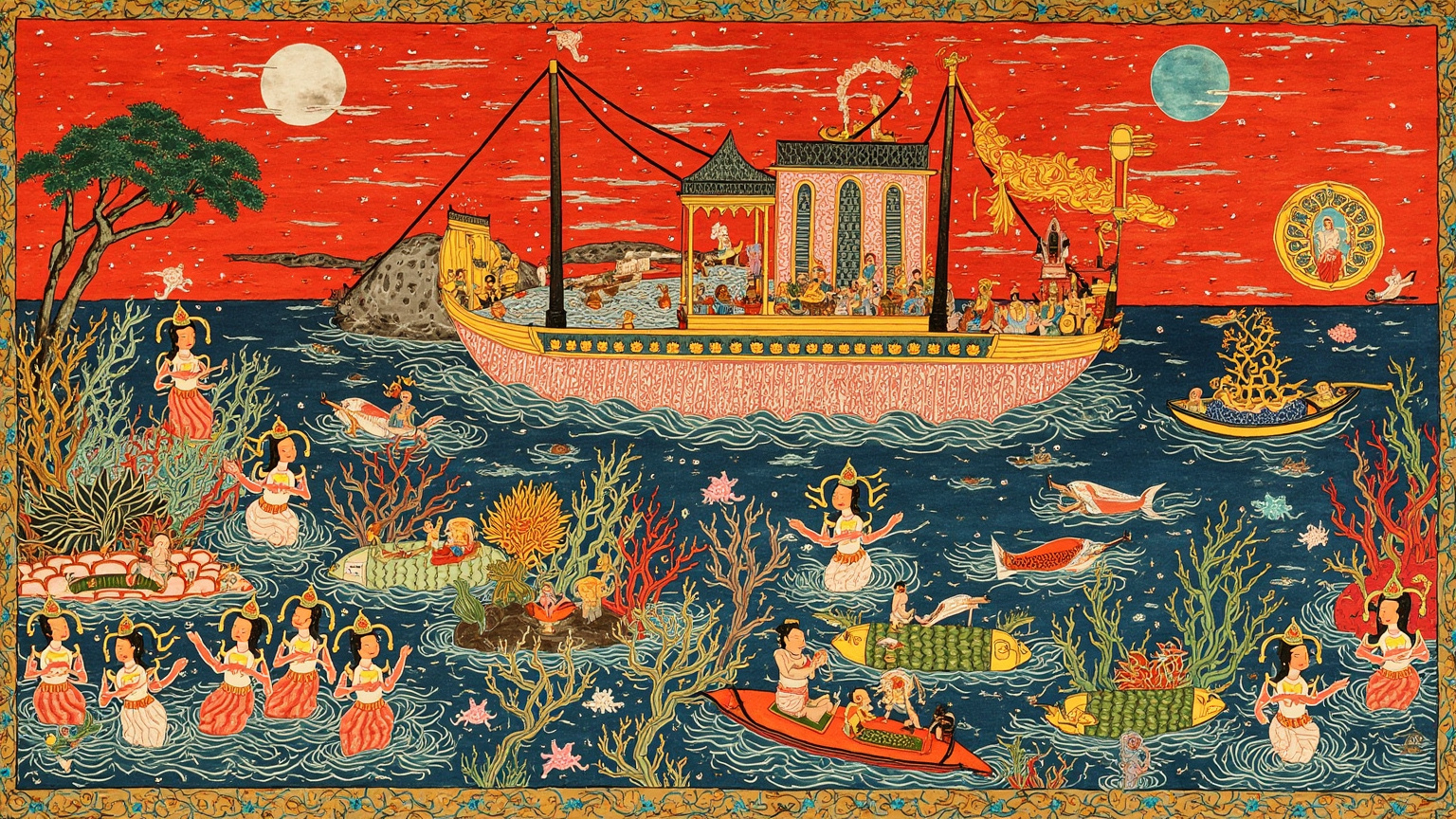
The sea-queen had eaten the wreck into her own palace; the flute alone carried the key.
海妖把沉船吃成了自己的宫殿,而那钥匙,只在笛音里。
金句 · 沉船宫殿 · 苏婉玛莉
The Descent into the Sealed Underworld
Phra Aphai Mani's real trial is not at sea but underground. The sealed realm of a thousand forms is a kingdom of giants buried beneath the earth — a shapeshifting serpent's lair, a thousand-year-old snake den, an abyssal demon-kingdom stacked one inside the next, and climbing back to daylight means clearing more than one layer of maze. This stretch carries the poem's thickest sorcery and combat, and it is what stretches Siamese myth into a complete geography, above ground and below.
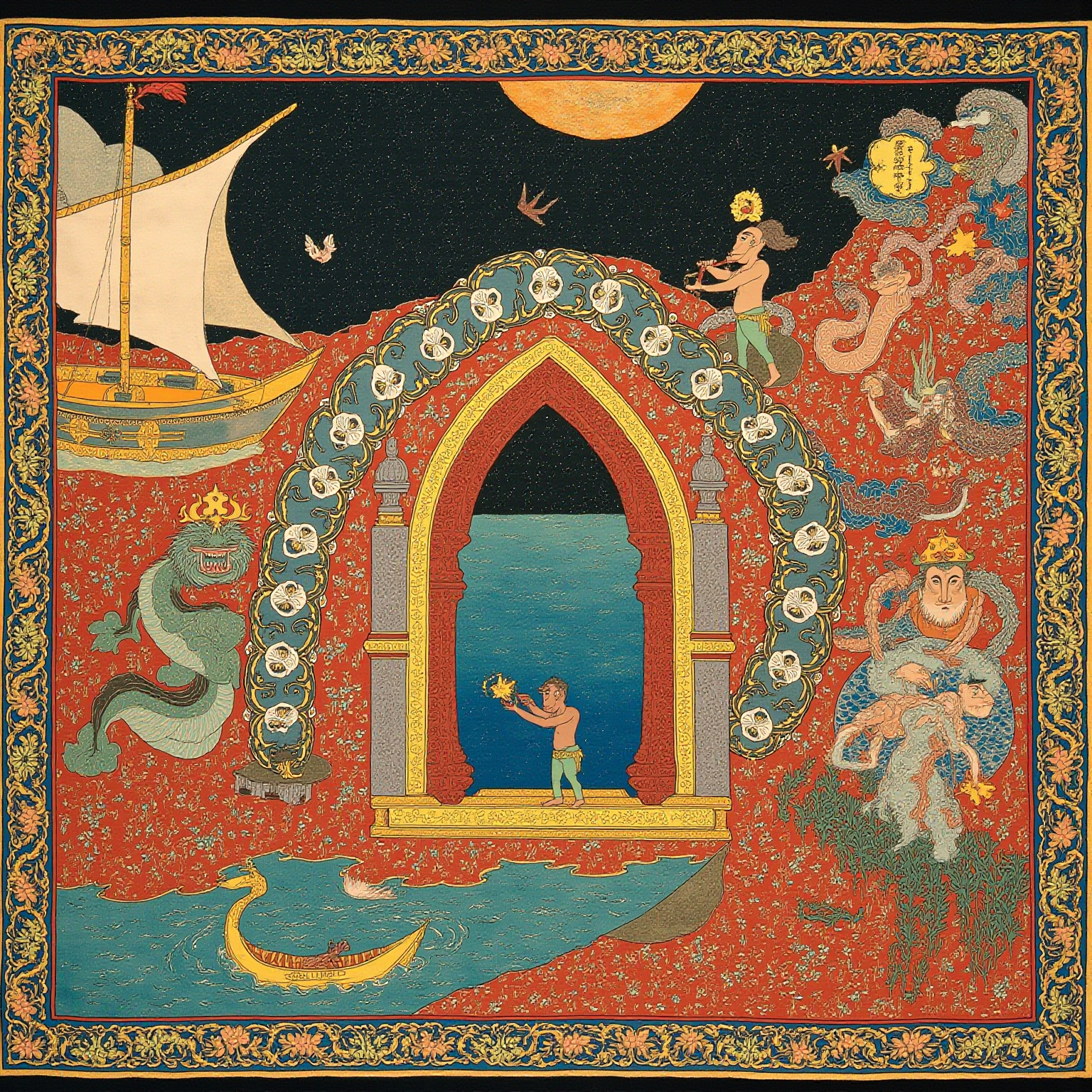
Beneath the earth the naga-lords coiled in their thousand-year sleep, and the flute's note was the only key that could wake or unbind them.
地底深处,蛇魔盘踞千年未醒;唯有这一缕笛音,能唤之,亦能解之。
金句 · 万象地界 · 化蛇魔窟
The Old Brahma's Teaching
Rachawong is an incarnation of the old Brahma. The most recited passage in the whole poem is the moment he hands the prince, as an elder of the heavens, both the technique of the magic flute and a philosophy of the sea — the poem within the poem, Nirat Phra Phrom, the drinking song. Through this elder's voice Sunthorn Phu inserts a long, self-contained lyric on wine, the sea, fate, and why sound can overpower the sword. It is the passage every Thai schoolchild is made to learn, the one every Thai reader recognizes on sight.
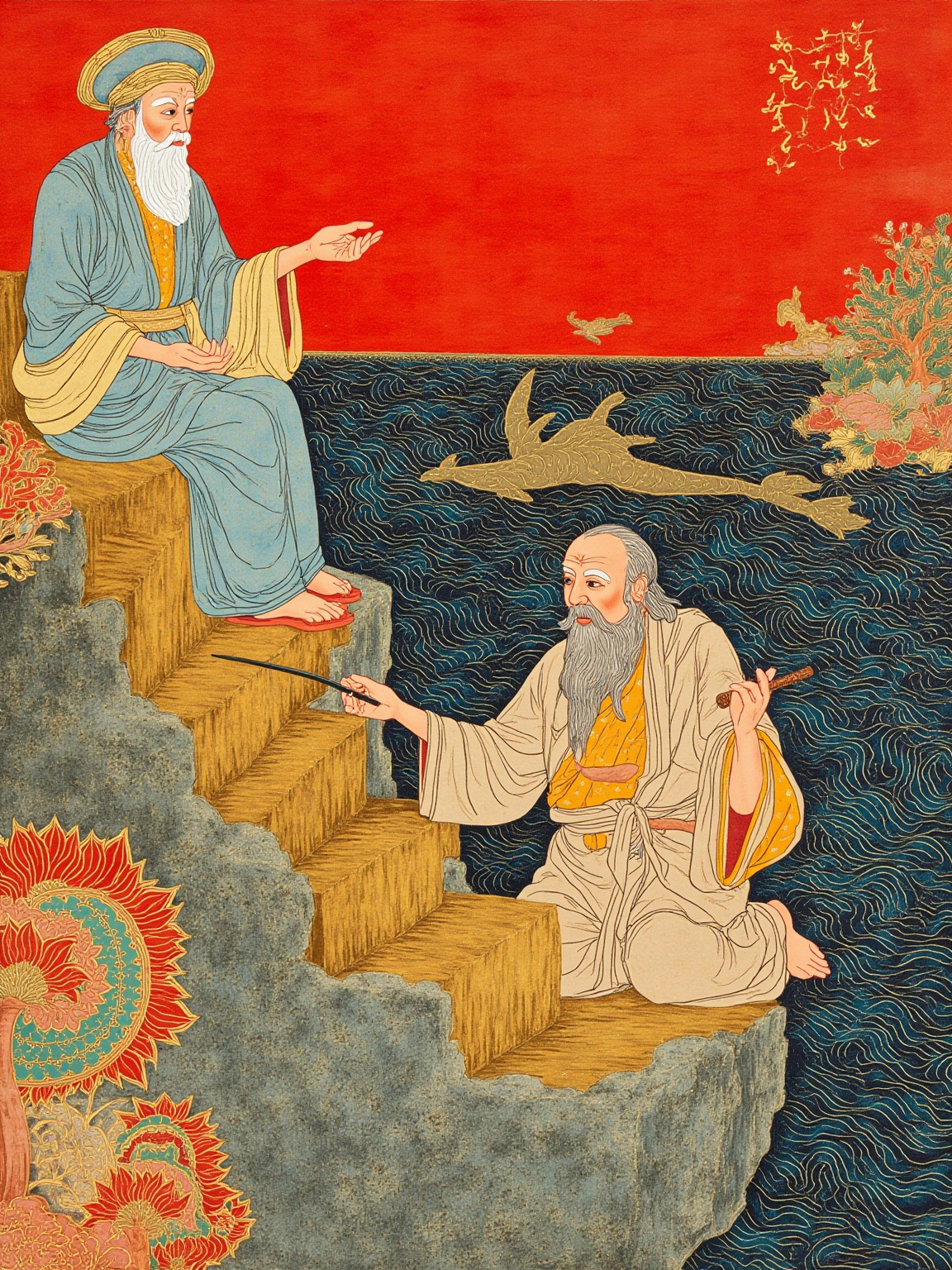
From the elder's mouth the art of the flute and the wisdom of the sea were given together, in one breath.
长老口中所授,是笛术与海道,并一口而出。
金句 · 拉差翁授笛 · 《Nirat Phra Phrom》
Reunion on the Lokkhon Coast
Sinlak's story runs alongside his brother's the whole time — washed onto a foreign shore by the same storm, adopted into a foreign royal house, drawn into its court intrigues — until the two threads twist back together on an island far out at sea. The brothers join forces again, turn back to find their long-exiled father, and the whole family is reunited at Lokkhon's golden-spired harbor. This is the epic's final chart point, and it lands on a Siamese harbor, a coast of golden spires, not on any further captivity.
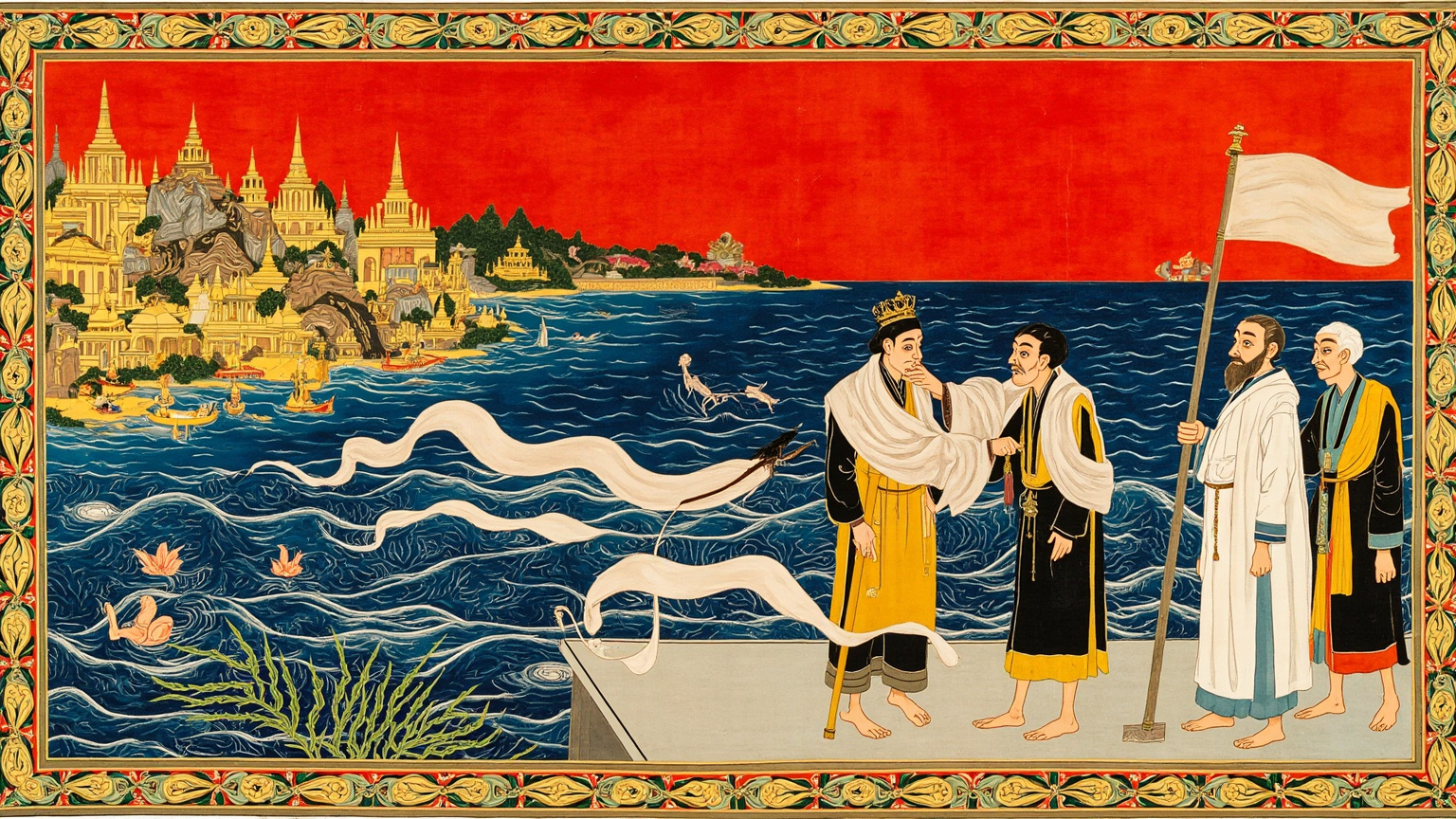
Theme: The Man Drives the Sea, the Sea Drives the Man
The poem keeps saying the same thing in different waters: the sea never stops pushing a man around, but every time it throws him back onto land he is closer to home. The monsoon over the Gulf of Siam is not scenery — it is a character. Every shipwreck is not a punishment but a ticket to the next leg of the journey. Set beside the Odyssey, the two poets, two thousand years apart, seem to be answering each other across the gap. The sea is the same sea. Coming home is the same coming home.
The second thread is that sound outranks the sword. The magic flute tames giants, subdues sea monsters, and breaks every captivity, and none of it runs on force. It runs on vibration and melody. Sunthorn Phu writes sound as power into every beat of all thirty thousand lines, and that is the sharpest thing the poem hands down to everything that came after it.
The third thread is Siam building its own cultural identity out of borrowed antiquity. Sunthorn Phu weaves Indian mythology, hymns to Brahma, Brahmanical gods, together with the real waters of the Gulf of Siam, the golden spire of the Great Narai Stupa, and the monsoon over Lokkhon harbor, into the old Siamese khlong verse form. The result is not a translation of Indian poetry, not a footnote to Buddhist scripture. It is the first flag Thai national literature ever planted for itself.
Why It Is Considered Great
Set it next to the Odyssey on the map of world literature and the beats line up almost note for note: storm, castaway, capture by a female monster, escape through sound and cunning — except where Odysseus holds a lyre, Phra Aphai Mani holds a flute. For more than two thousand years the Odyssey held the category of sea-voyage epic almost alone. Phra Aphai Mani is the hand the Southeast Asian mainland finally raised to claim a place in it.
Visually, the poem is a ready-made library of illustrations. Every beat produces a piece of fantastical folk imagery that stands on its own: the coral palace, the wreck-palace, the underground kingdom of giants, the golden-spired harbor of Lokkhon, and each one carries its own light, its own temperature. That is exactly why the poem keeps getting rediscovered abroad. An illustrator opens the text and cannot put the pen down.
Public recognition is off the charts. Every Thai person knows the magic flute and the golden-spired Lokkhon coast on sight; they rank alongside the Reclining Buddha and sunset on the Chao Phraya as cultural shorthand. Nirat Phra Phrom, the poem within the poem, is the passage every textbook makes students memorize, which amounts to one chapter of the book being carved straight into the national memory.
You Know How It Ends. Why Read the Poem Itself
A guide like this hands you the chart. Sunthorn Phu hands you the twenty-odd years actually spent at sea: the feel of salt hardening into knots on a flute's tassel, the shudder of a coral door cracking open under a single note, the wet predawn wind off Lokkhon's golden-spired harbor. A map can point you the direction. Whether you actually get there is something only the poem itself can tell you.
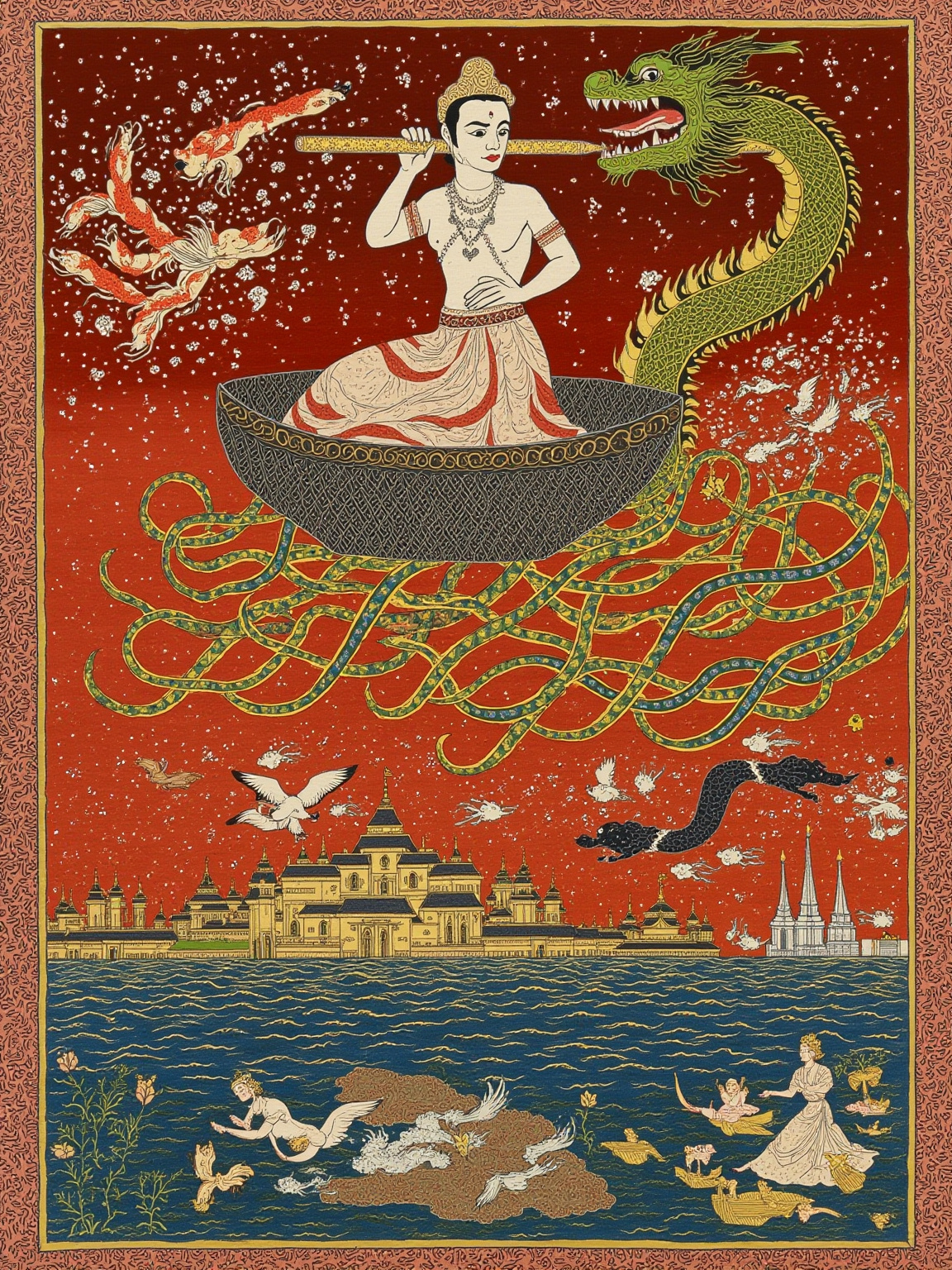
The sea pushes him away, the flute pulls him back — thirty thousand lines, doing this one thing over and over.
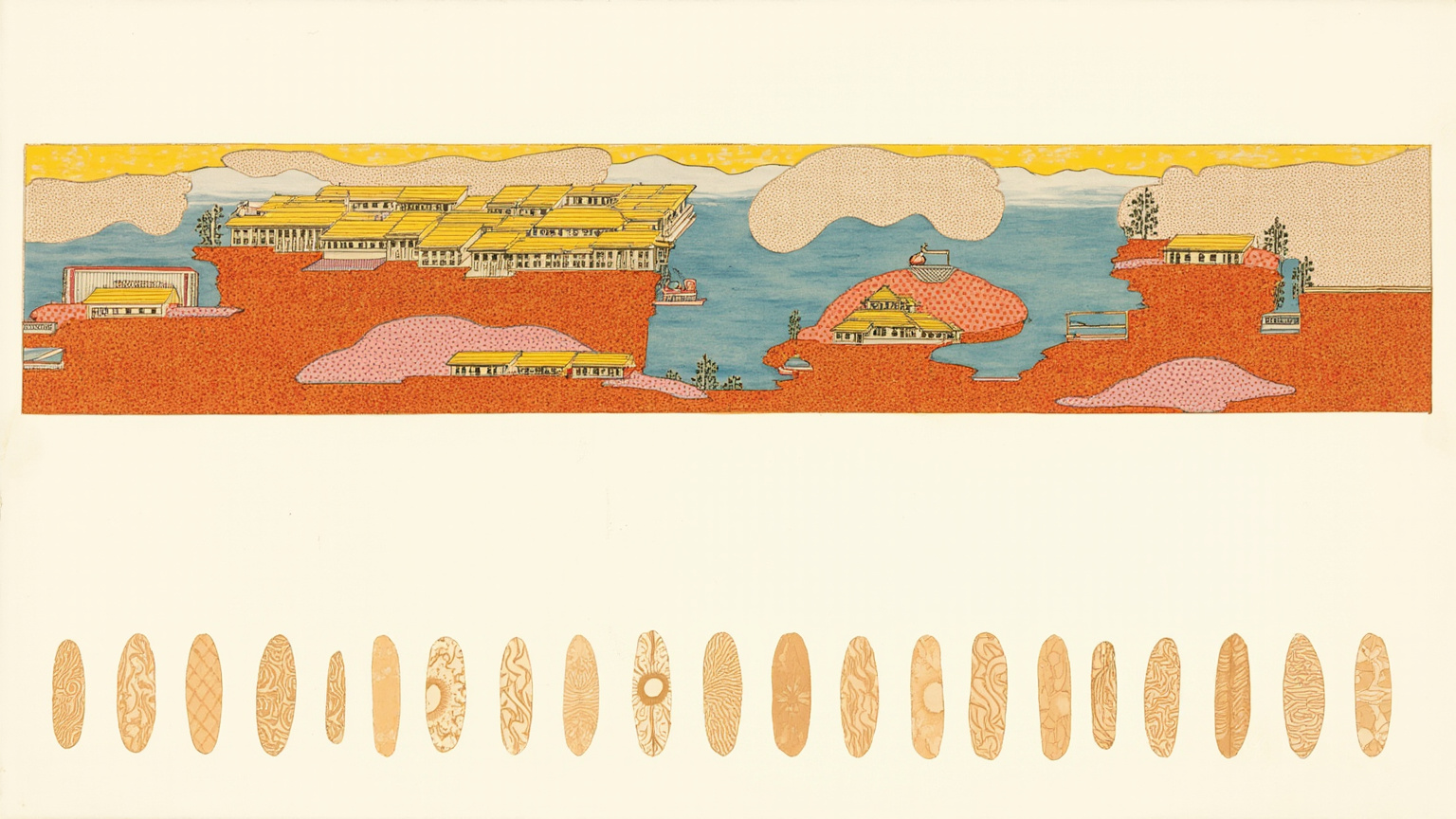
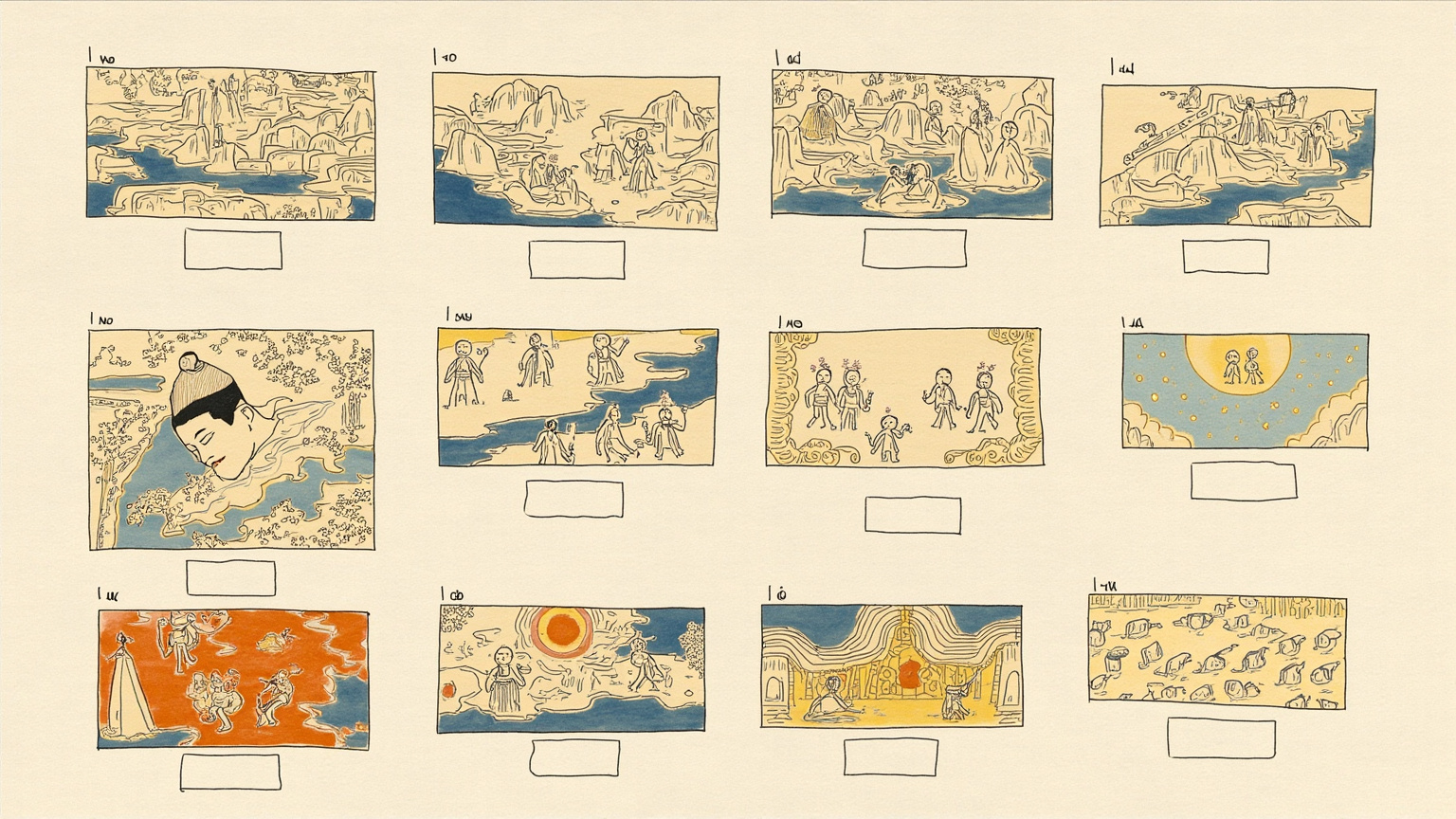
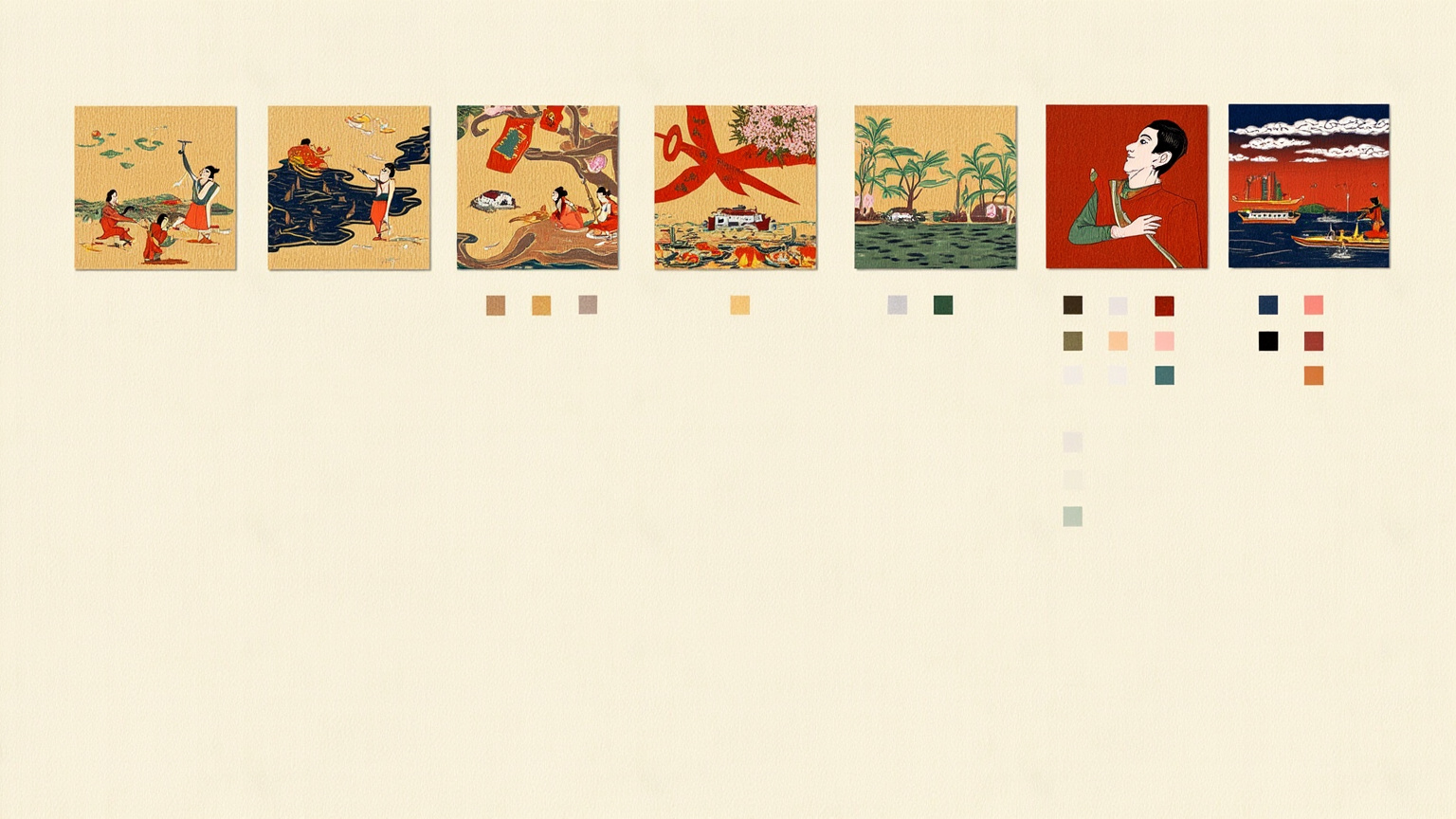
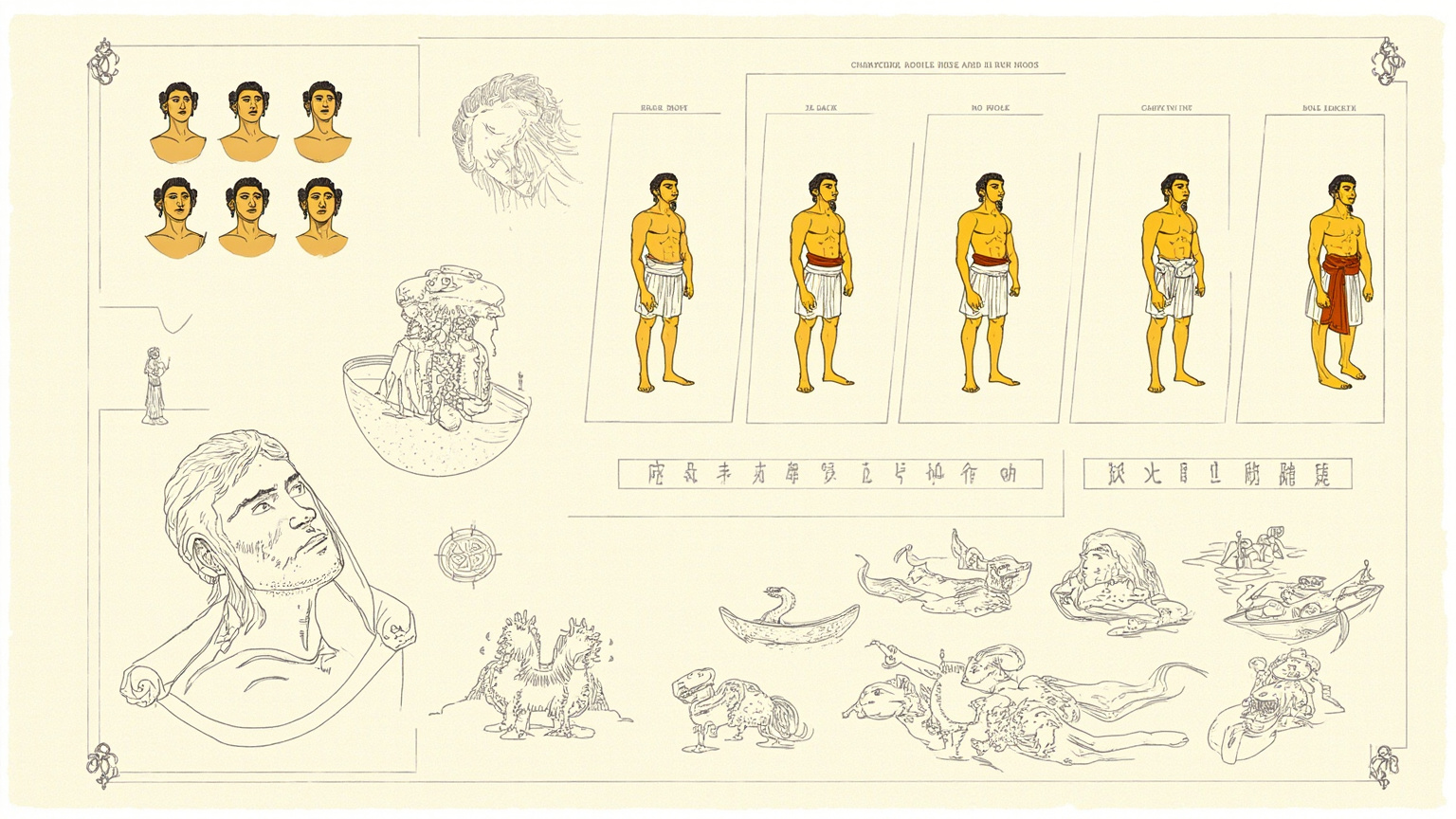
Art Direction4 plates
Before the guide was written, this book got a visual foundation — every illustration you just read grew out of it.