A grey donkey, a whitewashed town, one hundred and thirty-eight short chapters, and the earliest tenderness of a Nobel poet
Text and illustrations produced by the pipeline


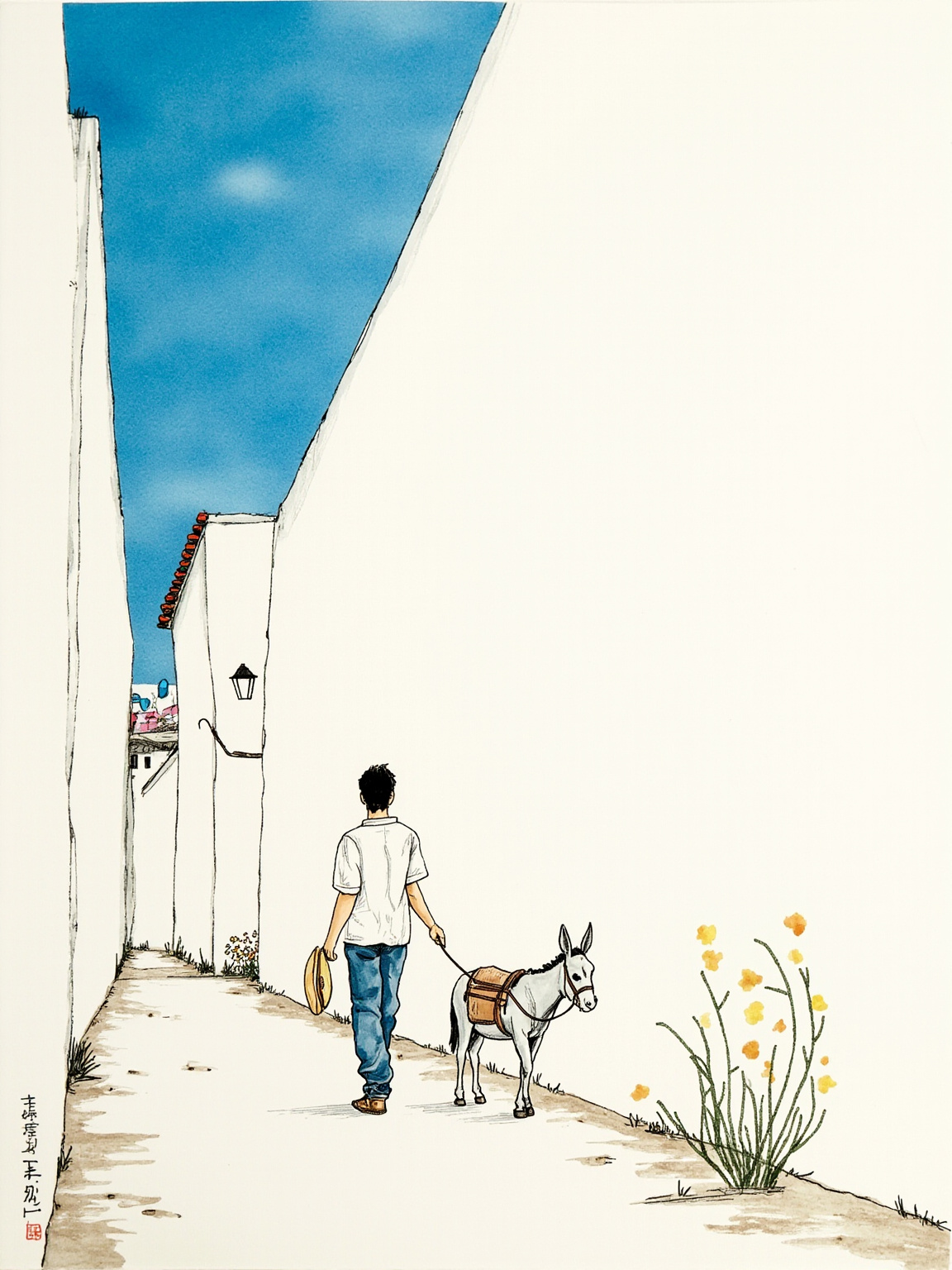
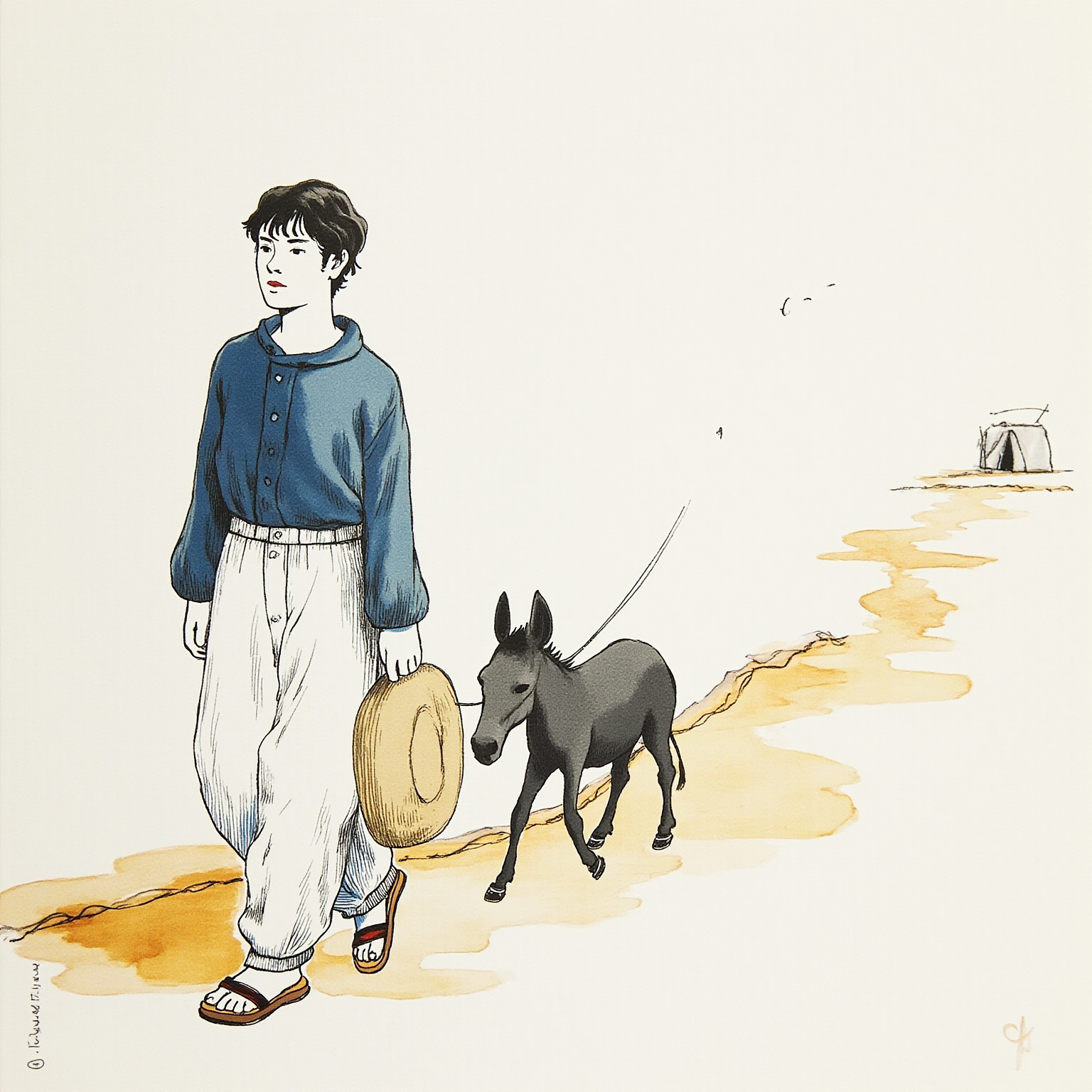
A shaggy little gray donkey named Platero, with big dark eyes. He picks his way over the cobblestones of Moguer's narrow lanes, ears standing straight up, catching the scent of figs along a garden wall. That opening is the whole book: a donkey, a boy leading him, and an Andalusian town bleached white by the sun.
Platero and I first appeared in Madrid in 1914, a hundred thirty-five short chapters in the original Spanish, later expanded to a hundred thirty-eight, and it stands as a landmark of the twentieth-century Spanish prose poem. Its author, Juan Ramón Jiménez, went on to win the Nobel Prize in Literature in 1956; many read this small book as the starting point of the "pure poetry" he wrote afterward.
In the Chinese-speaking world it has been retranslated again and again since the 1980s, one of the earliest doors Spanish-language literature opened for Chinese readers. That is also where the confusion sets in. Many take it for a children's tale, though Jiménez himself said he never wrote this book for children, only that he did not write it for adults either. Read it as a children's book and you find tenderness. Read it as a prose poem and you find that quiet force.
The book has only two leads. One is the narrator, a young man of Moguer, sensitive, quick to tears, convinced that everything alive has a soul. Jiménez folded a piece of himself into this figure, so that writing down these memories meant looking back at his own boyhood. The other is Platero, a little donkey who can be affectionate one moment and mulish the next, the companion at his side on every road he walks.


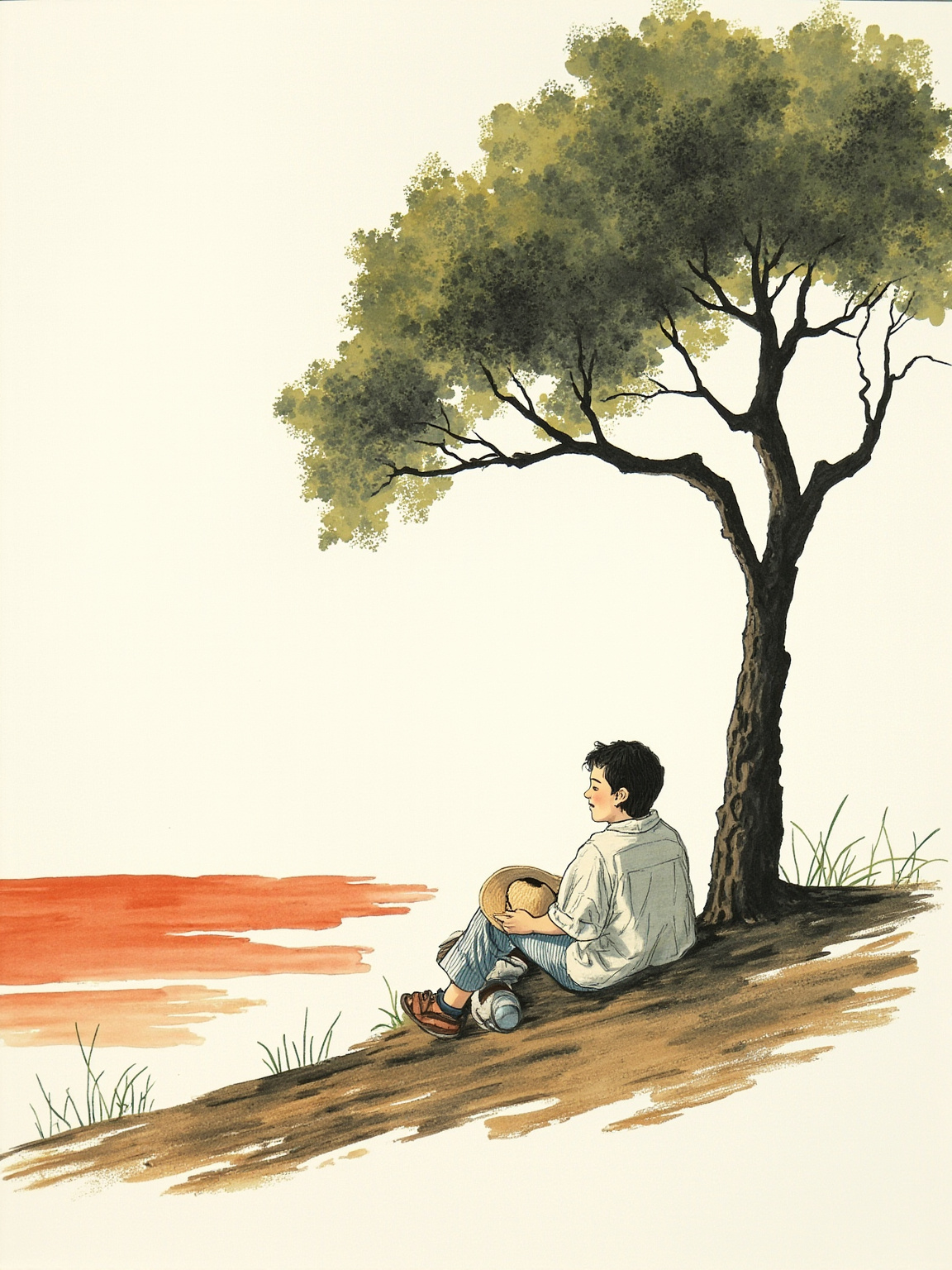
Only a handful of pieces remain in the book's final section. In the last one, the narrator returns to where Platero is buried. He does not say how the donkey died, does not say where the grave is, does not describe what grows over it, he only says that he came back. It is the most restrained page in the whole book, and the heaviest.
It is also the page most likely to be misread, taken by some for a sad story about an animal. Read the whole book through, though, and the point is different: a young man is finally saying goodbye to his own childhood, and the donkey who walked every one of those roads beside him turns out to be exactly what that goodbye needed as its symbol. A hundred thirty-eight short chapters, walking from the apricot blossoms of spring to here, use up the whole light of a childhood in the process.
Before the guide was written, this book got a visual foundation — every illustration you just read grew out of it.
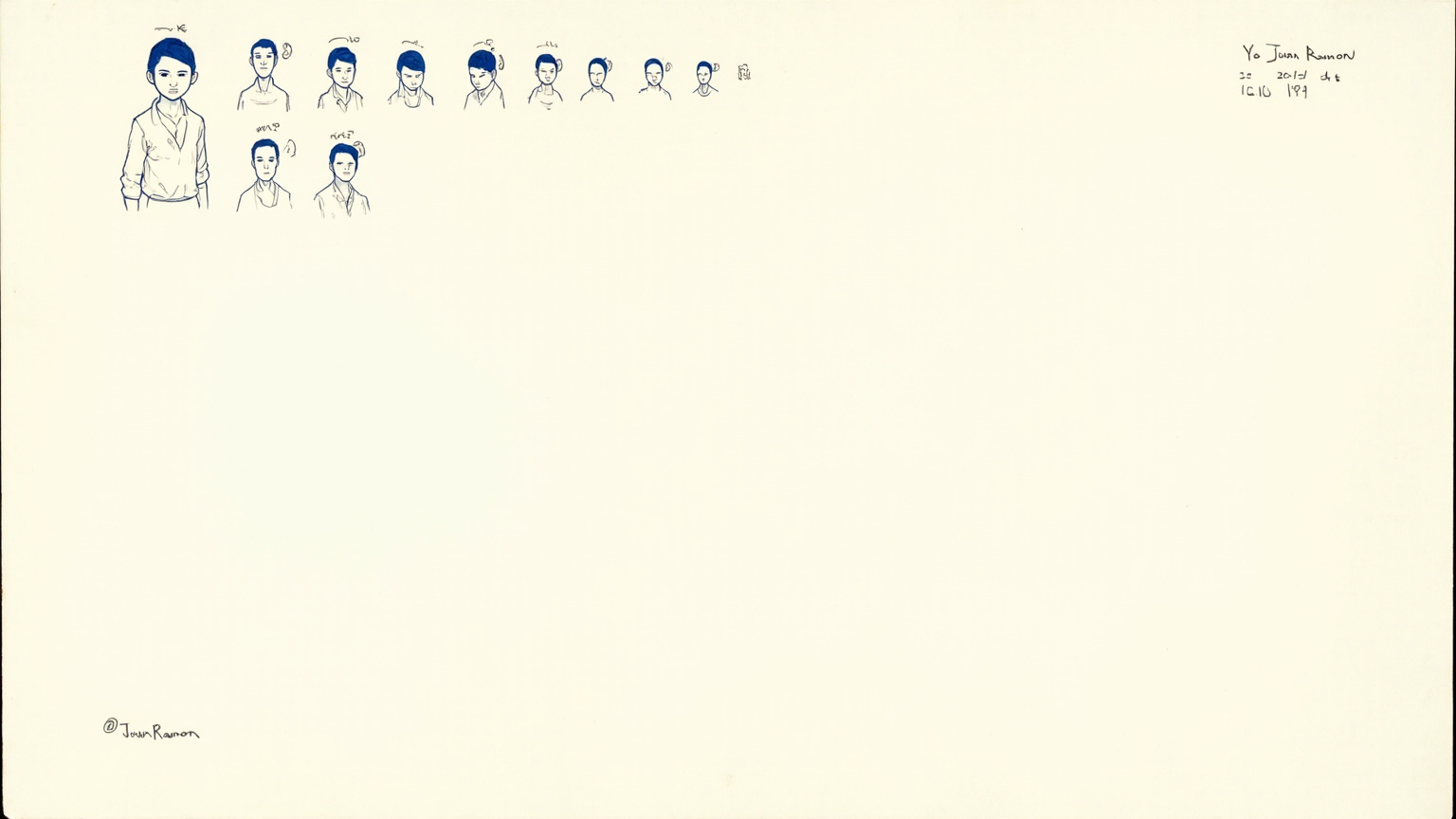
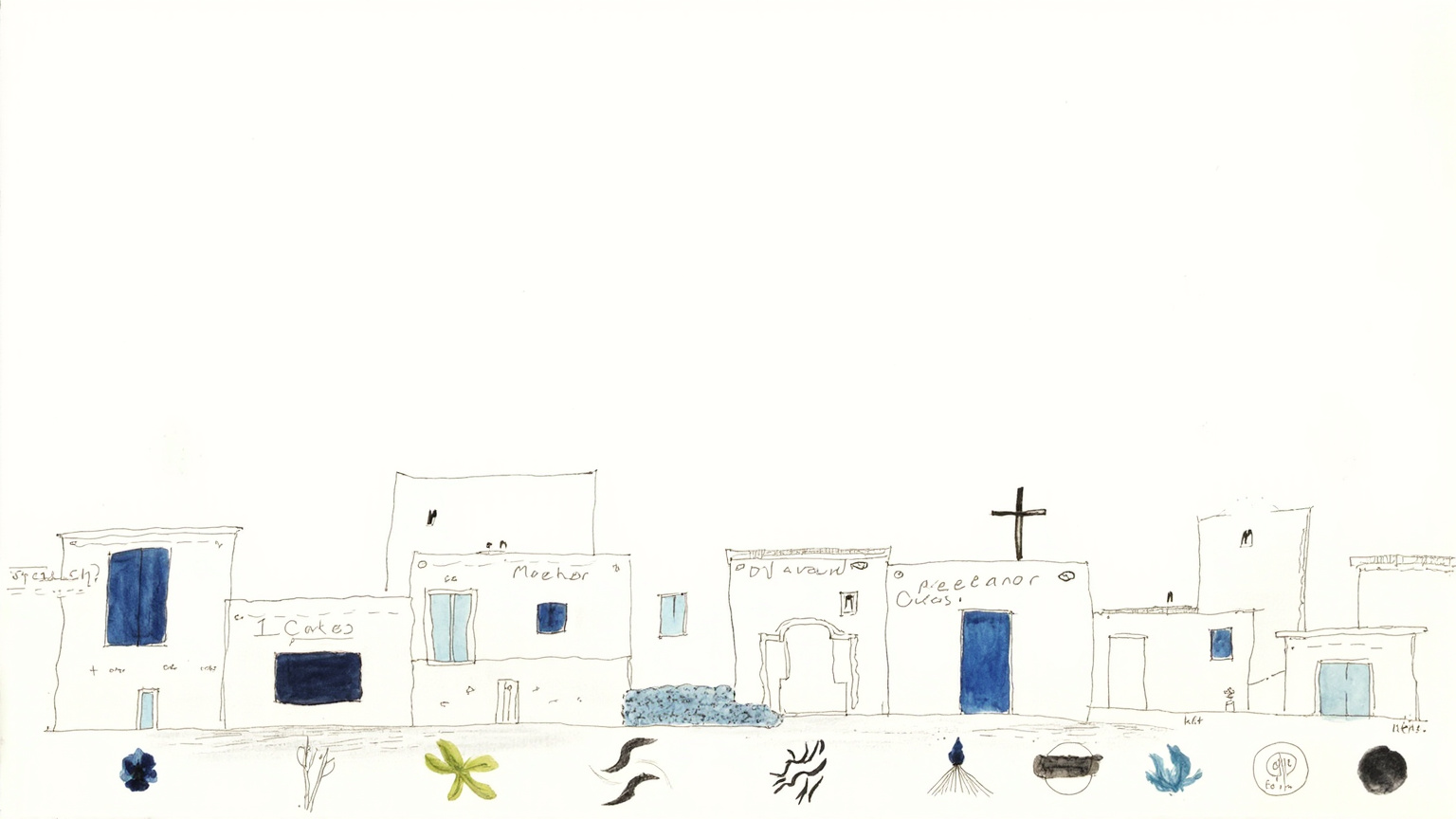
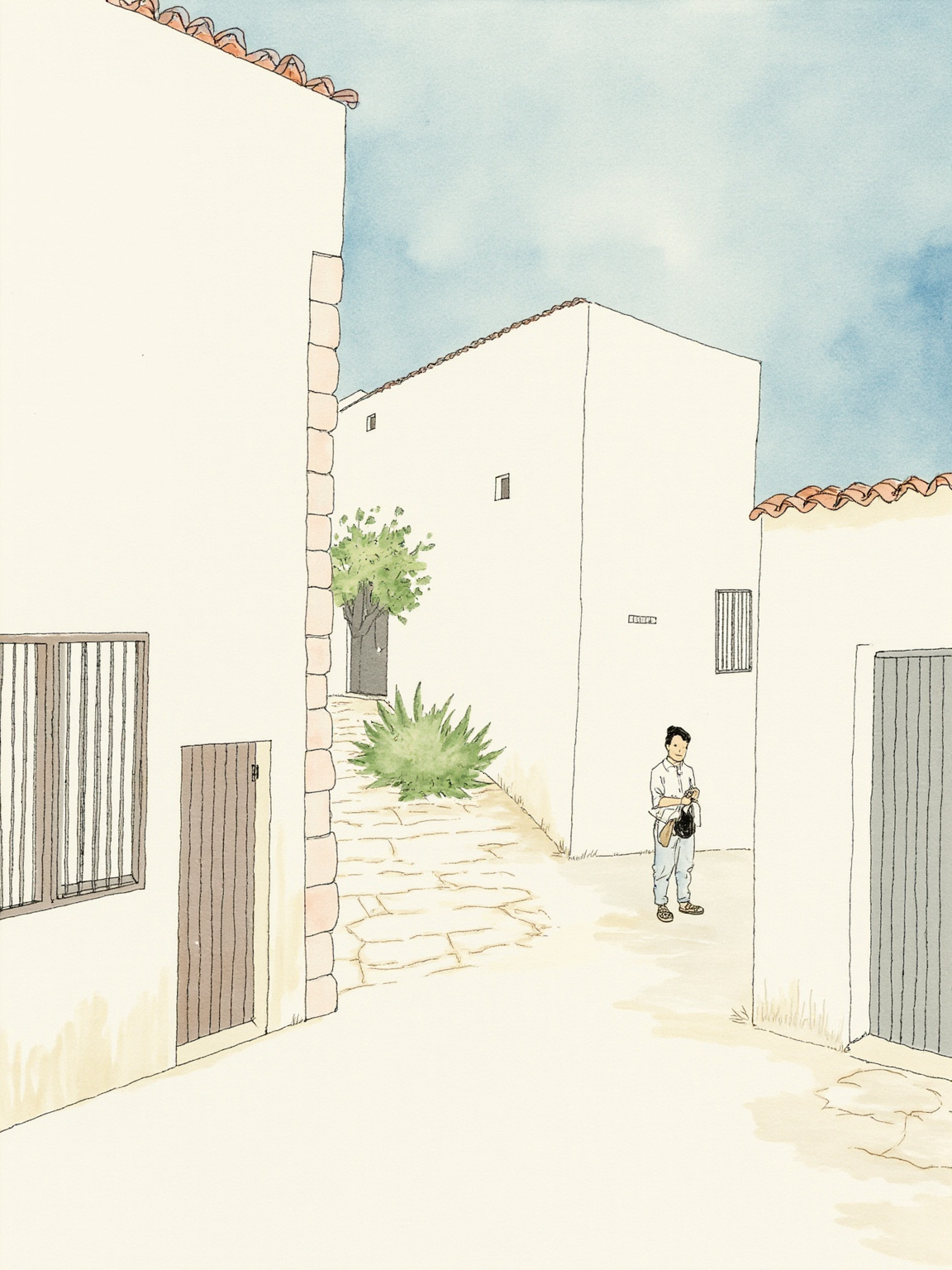
The world they walk through is a coastal town in Huelva province, southern Spain: whitewashed walls, window frames and doors painted blue, narrow streets, a market square, bakeries, wellheads, the Easter procession of the saints. Beyond the town lie the salt flats near the mouth of the Guadalquivir, pine groves, vineyards, and open country where sunflowers and poppies bloom. It is a world where the light stays fierce all year and shadows run either very short or very long: white, chalk-gray, ochre, and now and then a stretch of sky so blue it will not thin out.
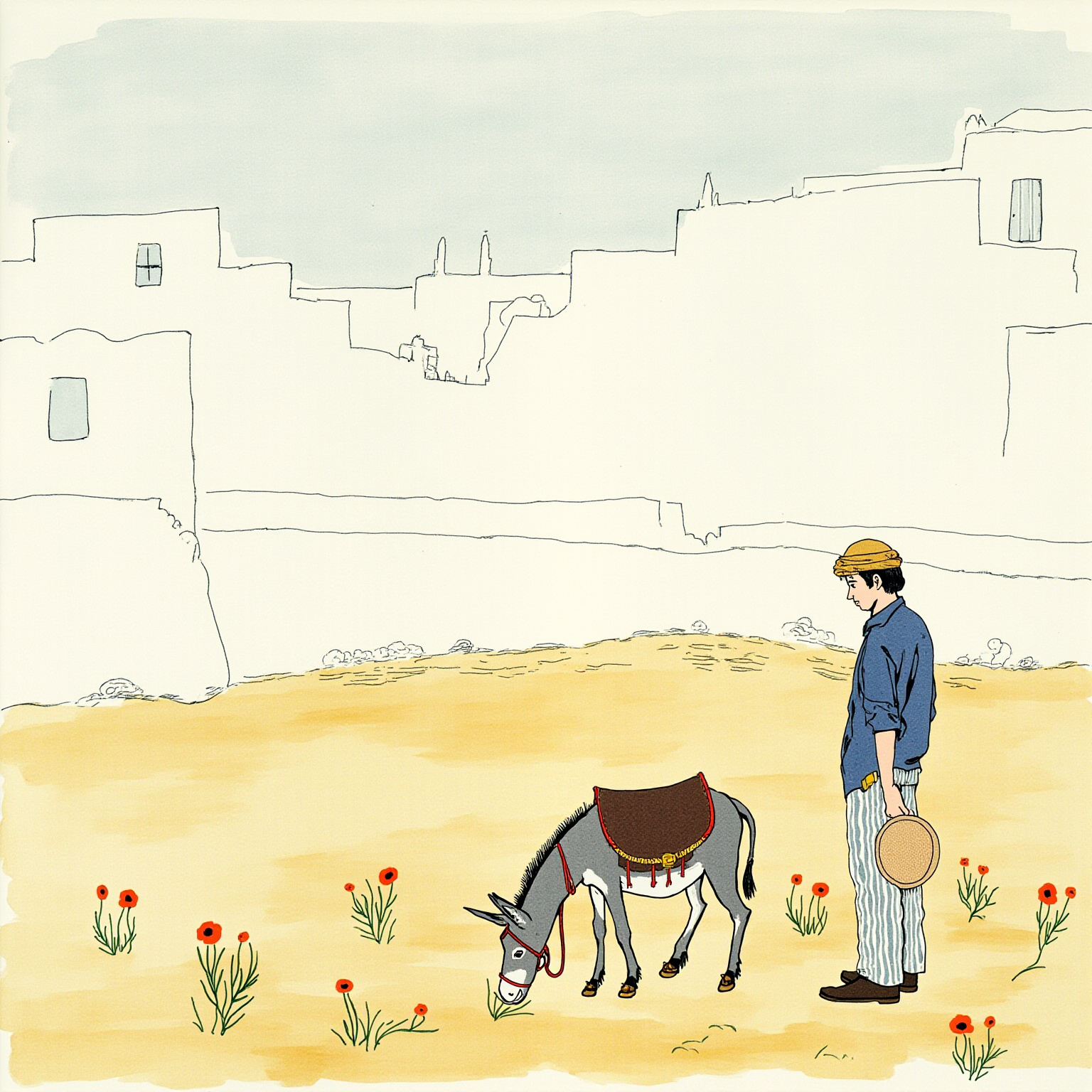
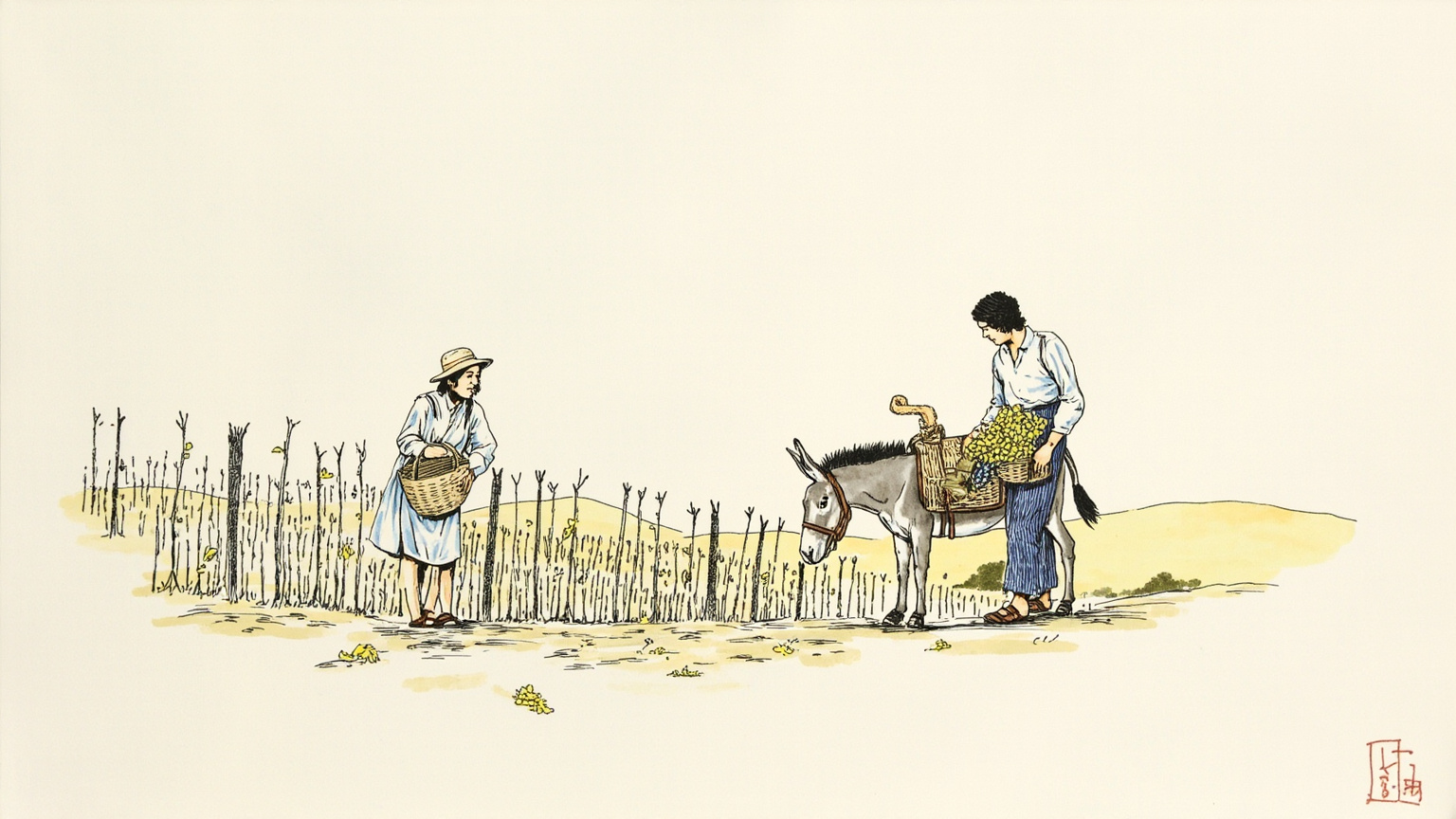
The book's first section reads almost like a season-by-season inventory. Spring brings apricot blossoms and wildflowers, summer a noon light so white it dazes you, autumn the September grape harvest and figs gone ripe, winter frost-covered mornings. Platero walks through each of them: splashing through a stream in spring, hunting the shade of a pine in summer, pressed into hauling baskets for the grape pickers in autumn, breathing two plumes of white into the winter air.
Jiménez does not describe the landscape; he describes how the donkey moves through it, which flower gets stepped on, which stone gets sidestepped, which road he suddenly balks at and refuses to take. That is the line between a prose poem and a travelogue: a travelogue wants you to see Andalusia, Jiménez wants you to feel it through Platero's hooves.
Town life opens with the Easter procession. The priest carries the statue of the Virgin through the narrow lanes, the crowd parts, and the boy stands with Platero at the far end of the street, watching candlelight fall on the white walls. The bakery opens early, women draw water at the well and talk in low voices, and on market days someone hauls in baskets of figs. That is the texture of daily life in Moguer: white, bright, narrow, slow, everyone within a plaza's radius knowing everyone else.
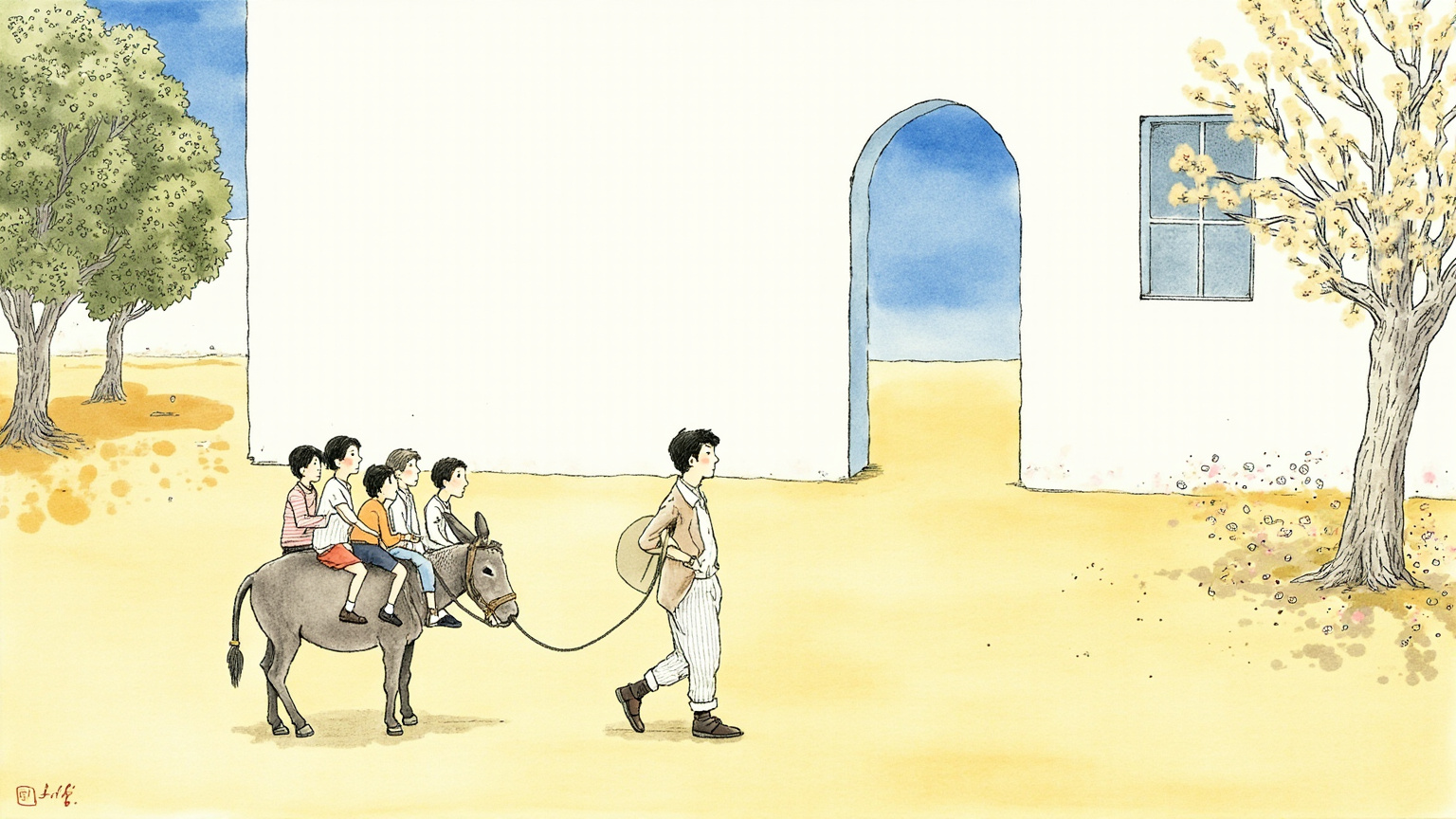
Platero is not a pet here. He is part of Moguer. The children ride him home from school, an old woman feeds him bread crusts, the miller borrows him to haul the cart. He has covered every lane in town and knows its geography better than any person does, so when Jiménez looks at the town through Platero's eyes, what comes back is Andalusia seen at donkey height.
This is the section that leaves you least able to sit still. The boy leads Platero out to look at the people the town overlooks: a madman locked away on a street corner, a beggar curled under the eaves, a boy with a mental disability who gets mocked and shoved around, a sick child confined to bed. Each piece is short, sometimes a few lines, at most a page or two, with no outrage and no pity on display, only a boy leading a donkey past, seeing, weeping, and leading the donkey away again.
In the piece about the boy with the mental disability, the narrator passes by leading Platero while a few children pelt the boy with stones. He says nothing. He just leads Platero over and lets the boy touch the donkey's nose. The first time I read that passage I sat there stunned; it takes real skill to write a moment that light and that heavy at once. The donkey is not the point; he is a lens that magnifies the boy's capacity to feel. Jiménez never tells you to have compassion. He just lets you watch this boy having it.
The book sets up another contrast: the children of the town growing up as children ordinarily do. They chase Platero, grab at his ears, tug his tail, push crumbs of bread into his mouth. Girls like Dolores crowd around and climb onto his back, jolting off to school. Watching them, the narrator carries his own childhood inside him.
This is the lightest stretch in the whole book. Set against the people the town has forgotten, the children's brightness feels almost too sharp, not a contrast Jiménez engineered, but one he genuinely saw, the two faces of the same town.
The subject was never the donkey. Jiménez uses him to walk back through the whole light of his own childhood, once more, page by page. What it offers today's reader is that capacity for noticing itself. Finish it and step outside, and you find yourself looking twice at the angle of light on a wall, looking twice at the people nearby that everyone else walks past. You do not gain that ability just by finishing the book, but Platero and I plants the seed of it.
This guide has told you the whole story, but something in the text itself is still waiting there: the way light trembles on a whitewashed wall at noon in Andalusia, the way water splashes when Platero's hooves step into a shallow stream, the way that boy's fingers move when they find the donkey's nose. None of that survives in a summary. It only exists in the dense, short, breath-like sentences of the Spanish original. And then there are the chapters that stop after a single sentence: turn the page and the back is blank, and the Andalusian light is left for you to catch on your own. By now you know the shape of the story. What actually gets you to sit down with the book is the density of those hundred thirty-eight pieces, each one under three pages, the kind of density that makes you stop after one and look up out the window for a moment.