Points and Lines · Companion Guide
点与线
两张浮尸被判殉情结案,唯有刑警盯着国家铁路出版的那本时刻表,看出四分钟停靠区间里藏着不可能同时在场的两个人——制度本身成了凶器。
Opening
The tide pulled two bodies onto the rocks at Hakata Bay. The man was an official at the Ministry of Transport. The woman was a reporter who had talked her way into the social affairs desk with a fake business card. Neither pocket held so much as a shared photograph. The police thumbed through the hotel register and called it a failed elopement, a double suicide at sea. Three days later another detective picked the closed case file up off his desk and dropped it back in the drawer. He meant to take it apart himself.
What Kind of Book This Is
Points and Lines, published in 1958, is the book credited with founding what Japanese readers call the social school of mystery writing. Before it, Japanese detective fiction ran on two fuels: locked-room mechanics out of the classic puzzle school, and the morbid, ghost-story psychology of kaidan tales. Matsumoto swept both aside and put a Japanese National Railways timetable in their place. The crime no longer happens inside a locked room; it happens in the gap between a platform and a printed departure time. After this book, the social school became a river other writers could follow downstream. Keigo Higashino's whole generation is working the water Matsumoto opened up.
The first time I saw the word timetable used as a murder weapon in a mystery novel, I stopped short. That counts as a trick? Reading on, I understood: the danger was never the knife. It was the system.
Characters and World
The protagonist, Mihara Kiichi, is a detective with the Metropolitan Police's First Investigation Division: cool, stubborn, single-minded. He never leans on a confession; he works the case backward through ledgers and timetables. His partner, Sayama Ken'ichi, works a desk at headquarters, well-connected, running the outside legwork Mihara can't do himself, and he pays for it, pushed onto the tracks before the case is solved.
On the victims' side, Yasuda Tatsuro is a young Ministry of Transport official who also happens to be the inside witness in a bribery ring. Tazuka Taro, who dies beside him in the staged suicide, is not really a journalist at all. He is an information broker who used a fake press card to get close to Yasuda, a pawn placed inside the frame-up. Behind them stand the two senior officials taking the bribes, Saeki and Shiraki, who arrange the killing and dress it up as a lovers' death. On the other side of the investigation is Koseki, a woman reporter working the bribery story, a former colleague of Yasuda's and the first person to pull the thread that unravels it. She is treated as a suspect for a while, then cleared.
The whole story sits in the shadow of Japan's high-growth years, the Showa thirties: Tokyo Station still had its platform on the old Manseibashi side, the Hakata Bay coastline hadn't yet been filled in for land, and the entire country was stitched together, Tokyo to Kyushu, by a single Japanese National Railways timetable. The novel's sharpest move is turning that timetable into the murder weapon.
Following the Line
The two bodies from the opening scene get filed away by the police as a lovers' suicide, case closed. But one detail keeps bothering Mihara: the couple didn't even share a friend in common, so how did they agree to die together? He goes back to the Hakata coast and finds the first crack in the story from a restaurant proprietress and a hotel register. The two victims' arrival times in Kyushu don't line up at all. What looks like an elopement looks more like a summons.
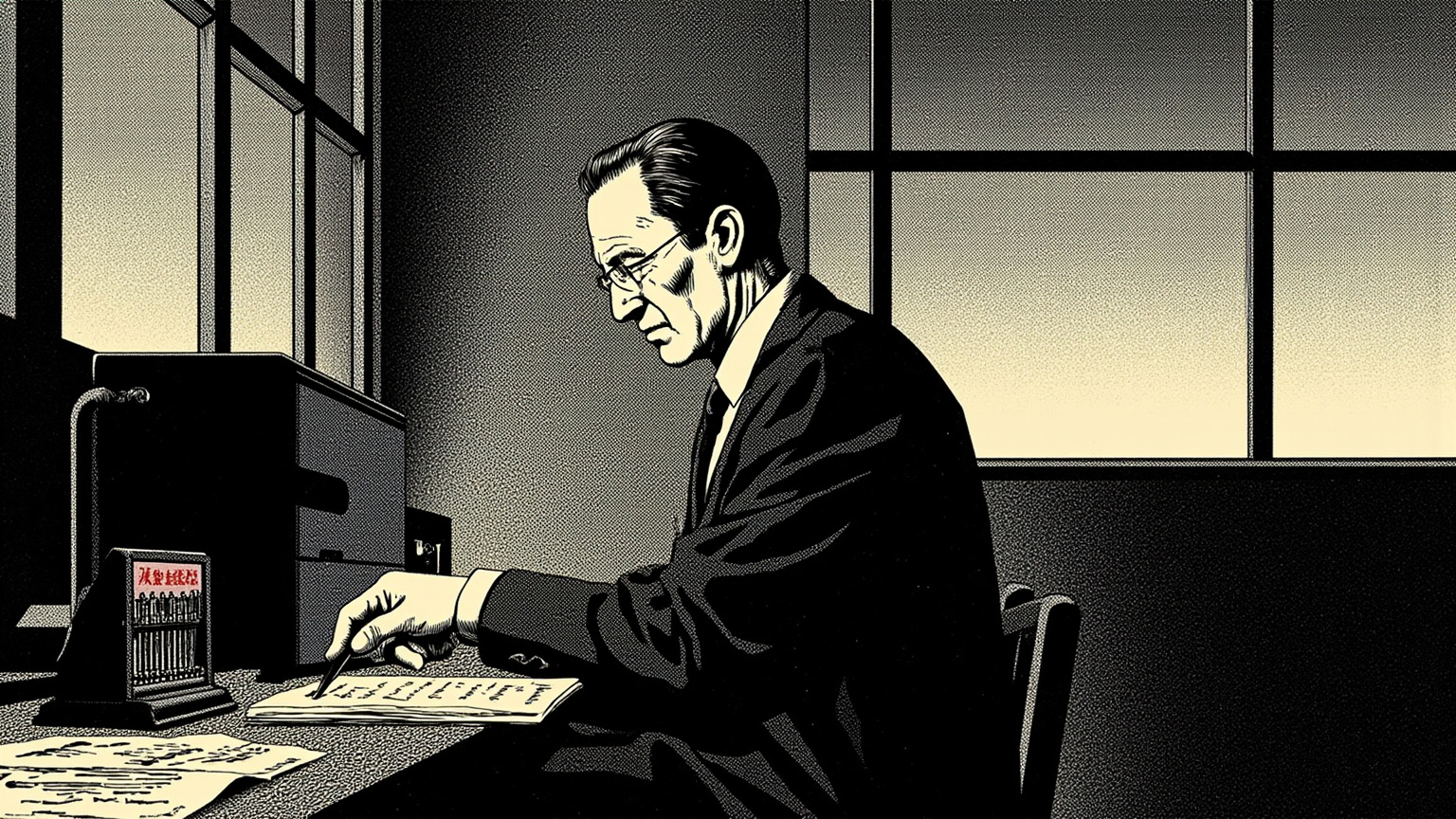
The receding tide of Hakata Bay had brought the two bodies up onto the rocks at low tide, as if it had vomited them from its mouth.
博多湾的退潮把两具尸体推到了礁石边上,仿佛是从嘴里吐出来的。
金句 · 开篇第一章 · 海岸浮尸
Days pass. Mihara is still going through registers on the Hakata coast, while Sayama, chasing the bribery case from the other end, has already traced it to Yasuda. Before the two lines of investigation can meet, the killer moves first. Sayama is found dead along a Japanese National Railways branch line in Kyushu, and the police rule it a suicide without much argument. Mihara holds the original note up to the light half the night. The handwriting doesn't match. It's the same man, and it isn't.
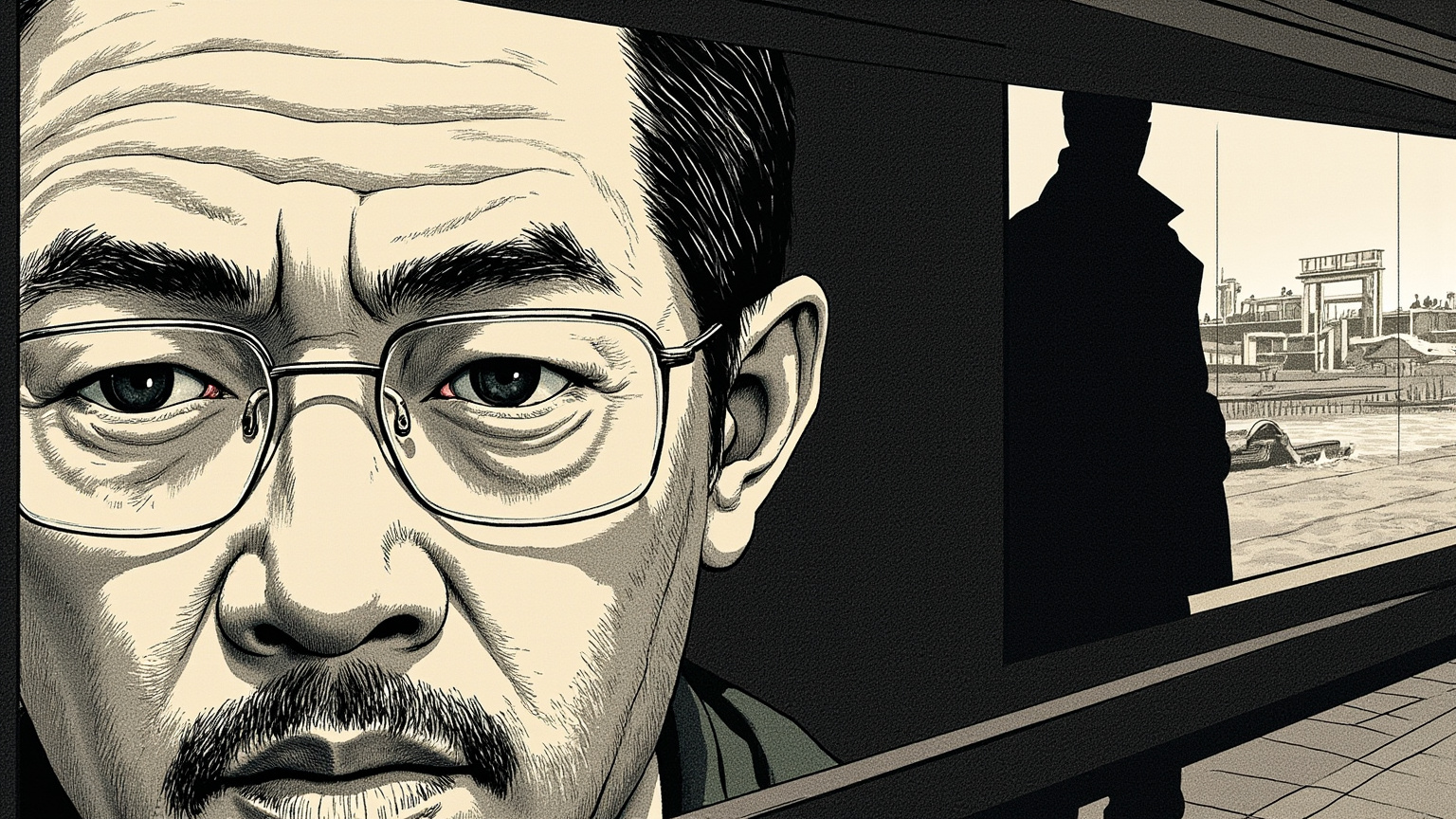
A man and a woman who had never met could not, by any stretch of the ordinary meaning, have chosen to die together.
两个从未谋面的人,按常情常理,根本不可能相约赴死。
金句 · 第二章 · 旅馆登记簿
With Sayama gone, the bribery investigation is cut off at its outside end. Mihara lays both deaths back out on the table: Yasuda wasn't a suicide, he was silenced by Saeki and Shiraki through someone else's hands, and Sayama died by the same hand. What looks like lovers going to their deaths is, underneath, officials methodically clearing out reporters and informants.
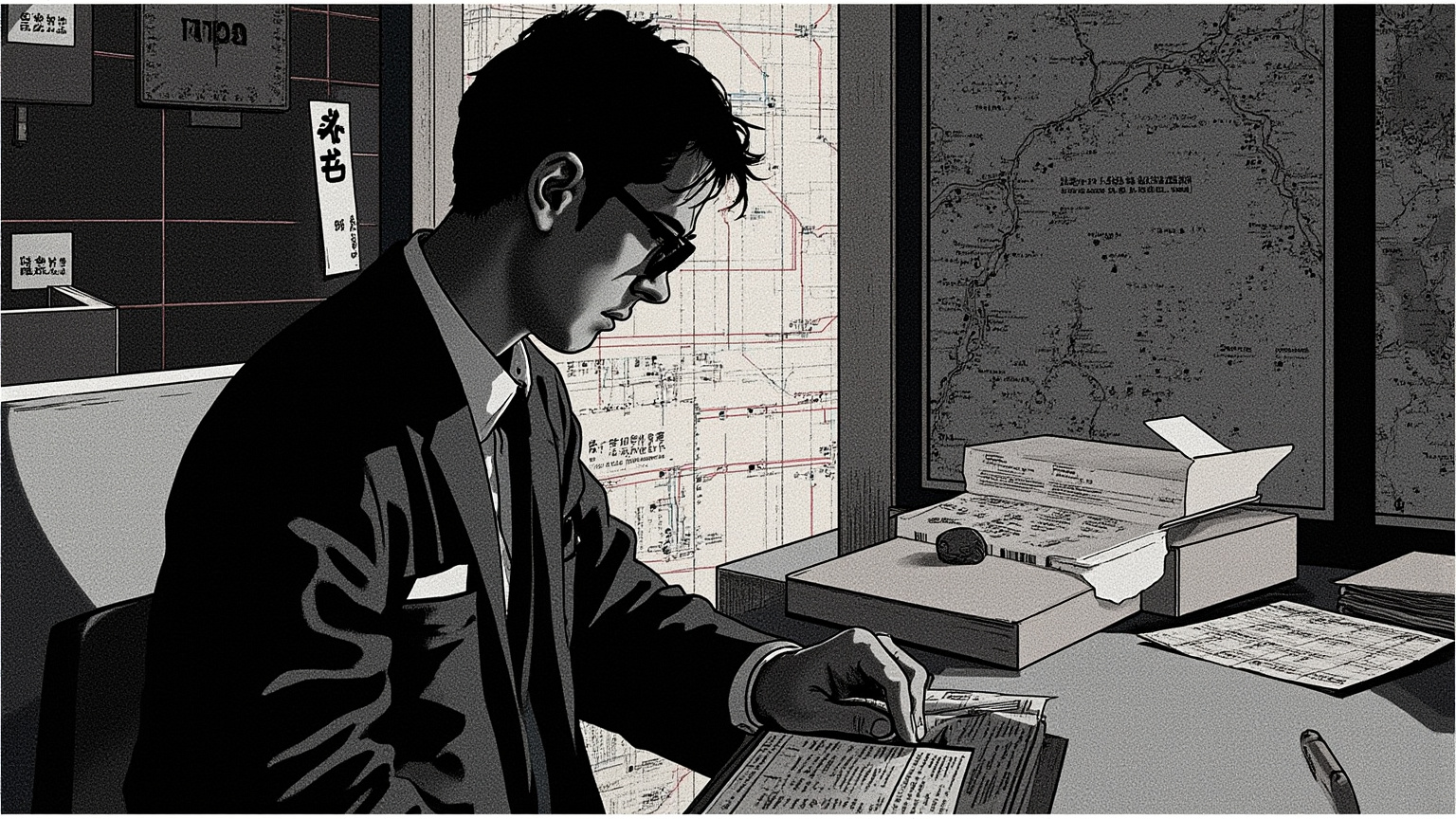
He was killed first, by the same hand, and then they made his death look like a suicide — the way a clerk files a false ledger.
他被人先下了毒手,再把他的死装成自杀——像文书归档那样干净。
金句 · 第四章 · 三原重查海岸
The key to the case sits in the 1958 Japanese National Railways timetable. The killer exploited a peculiarity of certain small stations, where a train stops for exactly four minutes, long enough for two people to leave the same train from two different cars at two different stations, one at A, one at B, and stitch together an alibi that looks airtight because the same person could not possibly be in both places at once. Get off one station early or one station late anywhere along that chain, and the whole fabricated alibi collapses on the spot.
Sayama's body lay across the rail, and the coroner's pen moved across the form as smoothly as if it had been signed by the dead man himself.
佐山的尸体横在铁轨上,而验尸官的笔在表格里一气画完,仿佛由死者本人亲笔签下。
金句 · 第六章 · 佐山之死
What Mihara does isn't detective work so much as proofreading. He carries a timetable thick as a brick down the Kyushu main line, station by station, checking every part of the suspect's story against the printed times. At one station, the train arrives earlier than the suspect claimed by exactly one stop. The whole web of lies starts to come apart from there.
The final scene has none of the usual dramatic confrontation. Mihara simply lays his annotated timetable comparison on the table in front of the two officials, and Saeki and Shiraki are taken away on murder charges. The timetable trick that would become the signature move of Showa-era social-school mysteries is, at this point, complete.
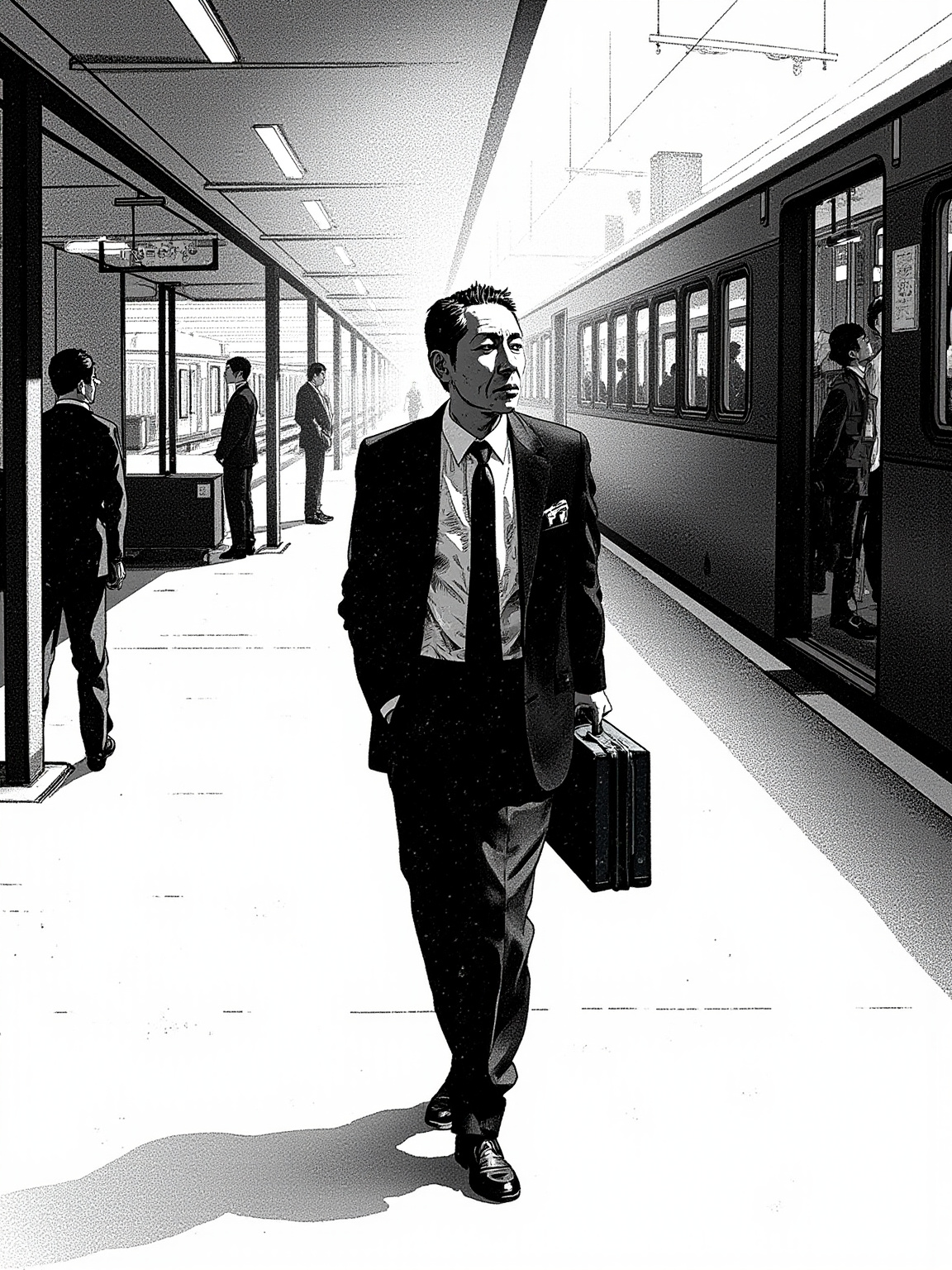
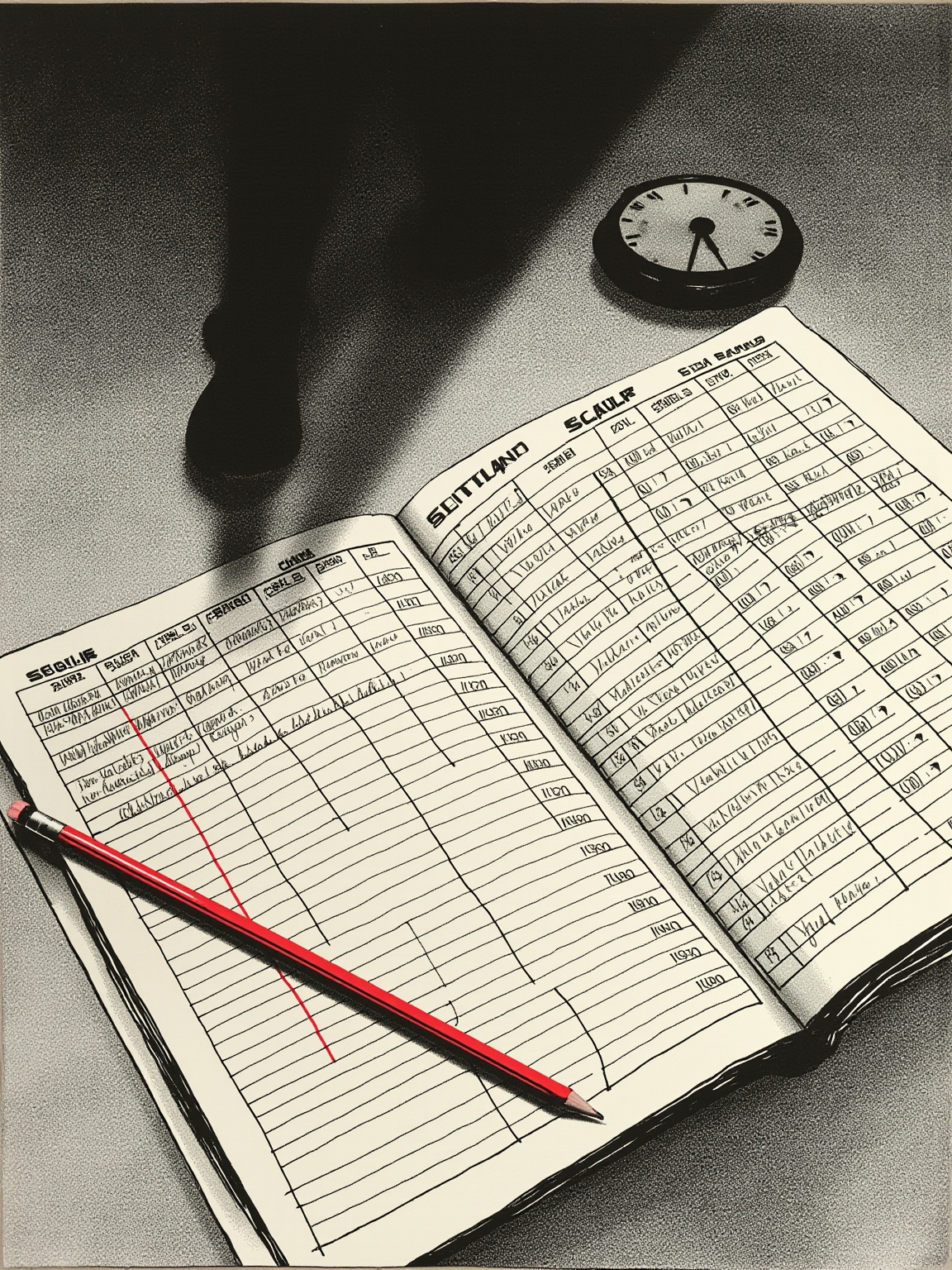
At certain small stations the train halts only four minutes — and that single white margin in the timetable was, in truth, the locked room.
某些小站,列车只停四分钟——那行时刻表里窄窄的一截白边,才是真正的密室。
金句 · 第八章 · 时刻表比对
Theme and Method
Points and Lines cares less about who the killer is than about proving a weapon doesn't have to be a knife. Japan in 1958 was running flat out. The Shinkansen didn't exist yet, officials and businessmen swapped envelopes on commuter trains, and reporters chased leads with a pen and a night train. Matsumoto turned a public railway timetable into a murder weapon: the gap in time is the blade, the four minutes on the platform is the lock, and testimony is the tape holding the alibi together. After this, the trick in a mystery novel no longer had to hide in a locked box. It could be built into the rhythm of how modern society actually ran.
The title has a second meaning built into it. The points are the stations on a timetable. The lines are the paths trains draw across a railway operations diagram, the chart engineers use to plot train movements across time, a piece of engineering vocabulary, not a crime-scene sketch. Naming a mystery novel after a railway diagram is itself a kind of statement: this book means to solve its crime in an engineer's language, not a detective's.
The danger was never the knife. It was the system, and the timetable in Mihara's hand is the real weapon of this cold, procedural strain of Showa detective work.
For a reader today, the book offers an angle you don't often get: reading a mystery novel as a tool for dissecting a society. Mihara solves nothing by flashes of insight. He works entirely from a publicly available document, and that still holds up now: subway timetables, flight databases, the location trail an app leaves behind. Behind every timetable there may be a lie waiting to be checked against the record.
Why It's Worth Reading the Book Even After You Know the Plot
A guide like this hands you a map. The novel itself is the ground, and this stretch of ground is worth walking yourself. When Matsumoto writes station lights, a coastline at dusk, the ledger in the back room of a restaurant, there's a documentary restraint to it that only shows up once you're on the actual page. The physical weight of Mihara turning one timetable page after another, his pencil stopping on a single line, isn't something a plot summary can carry over either. Read it already knowing the ending, and what you find isn't the solution. It's how Matsumoto fit the whole of Showa Japan into one thin timetable.
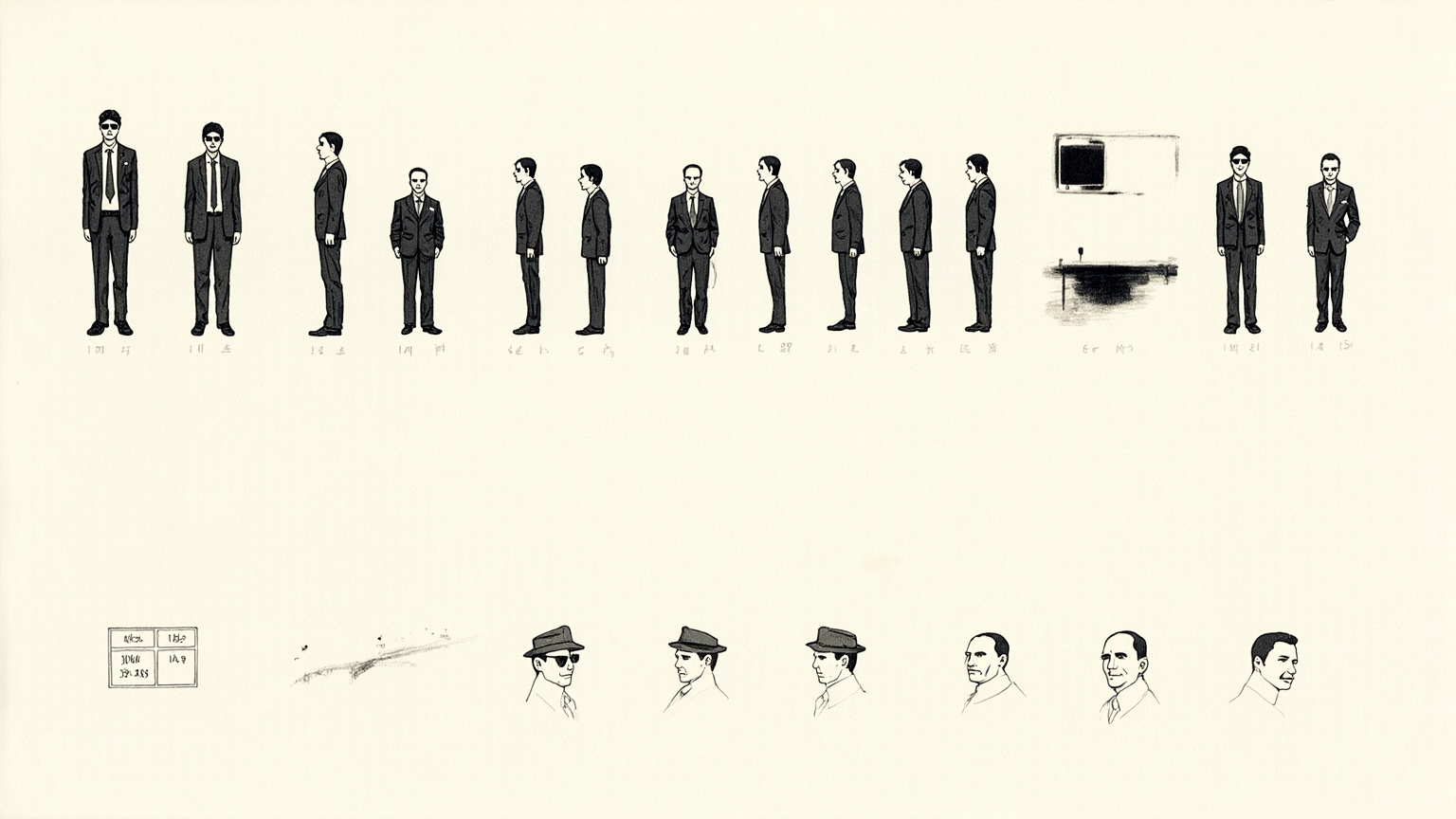
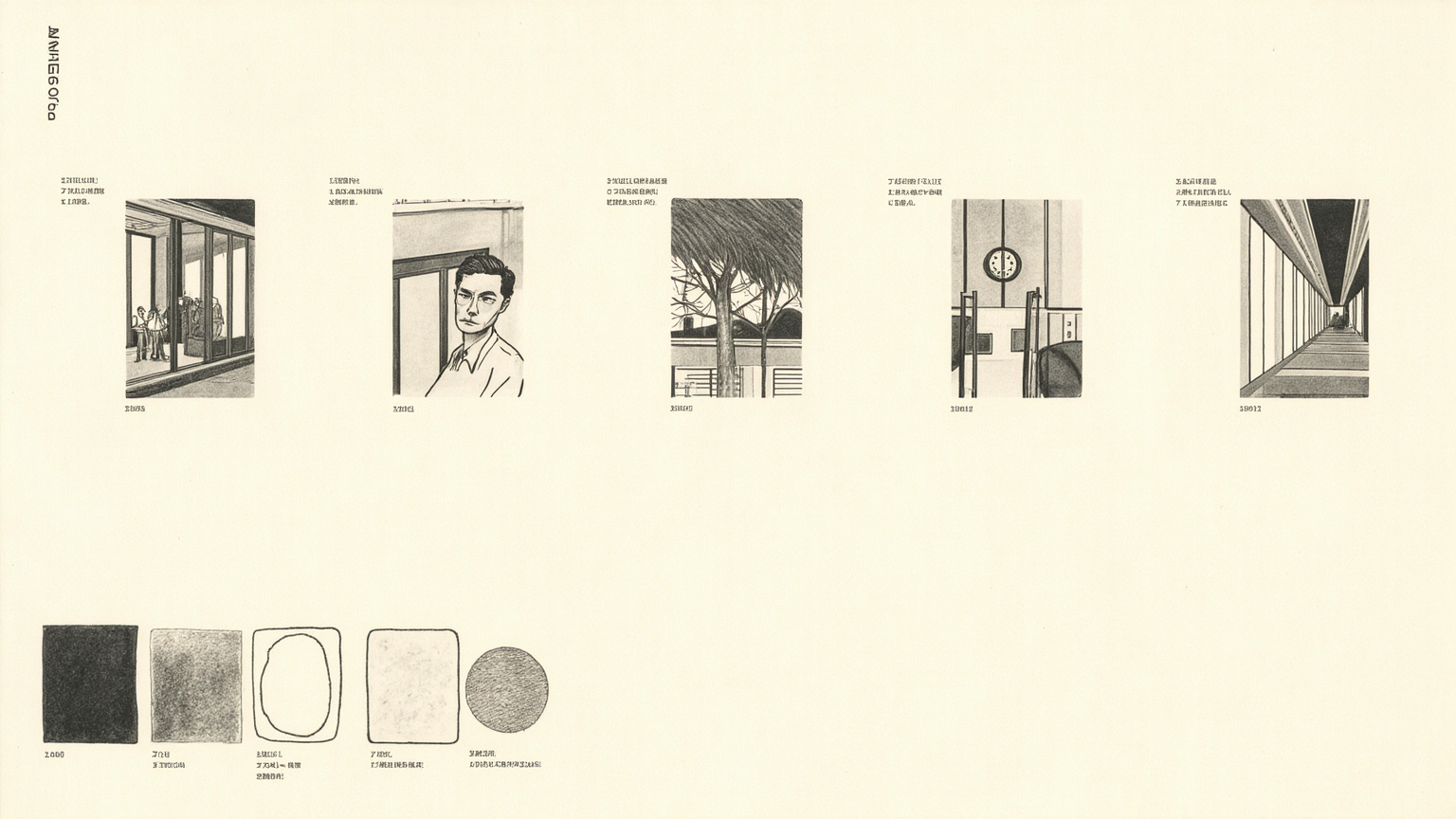
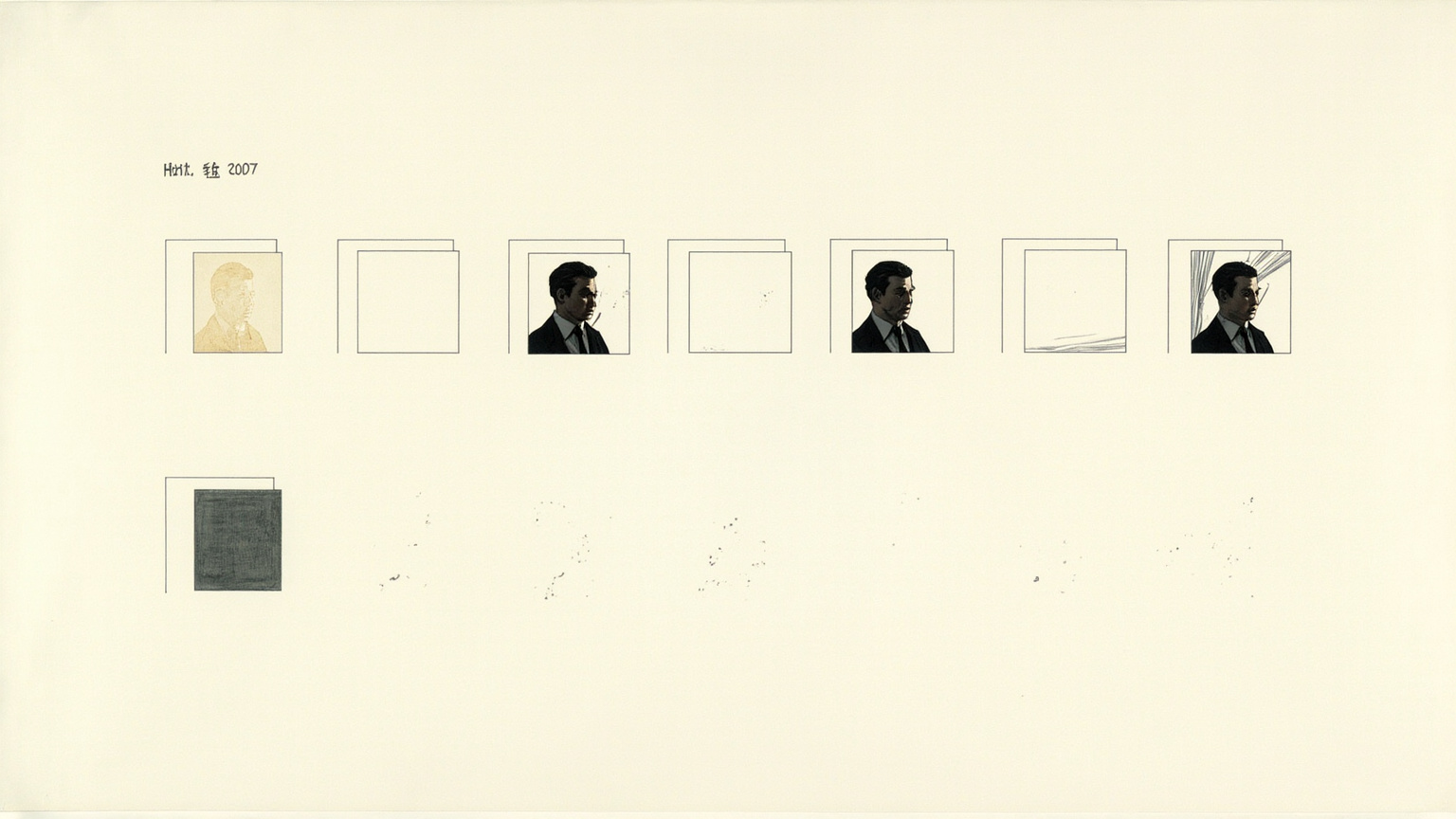
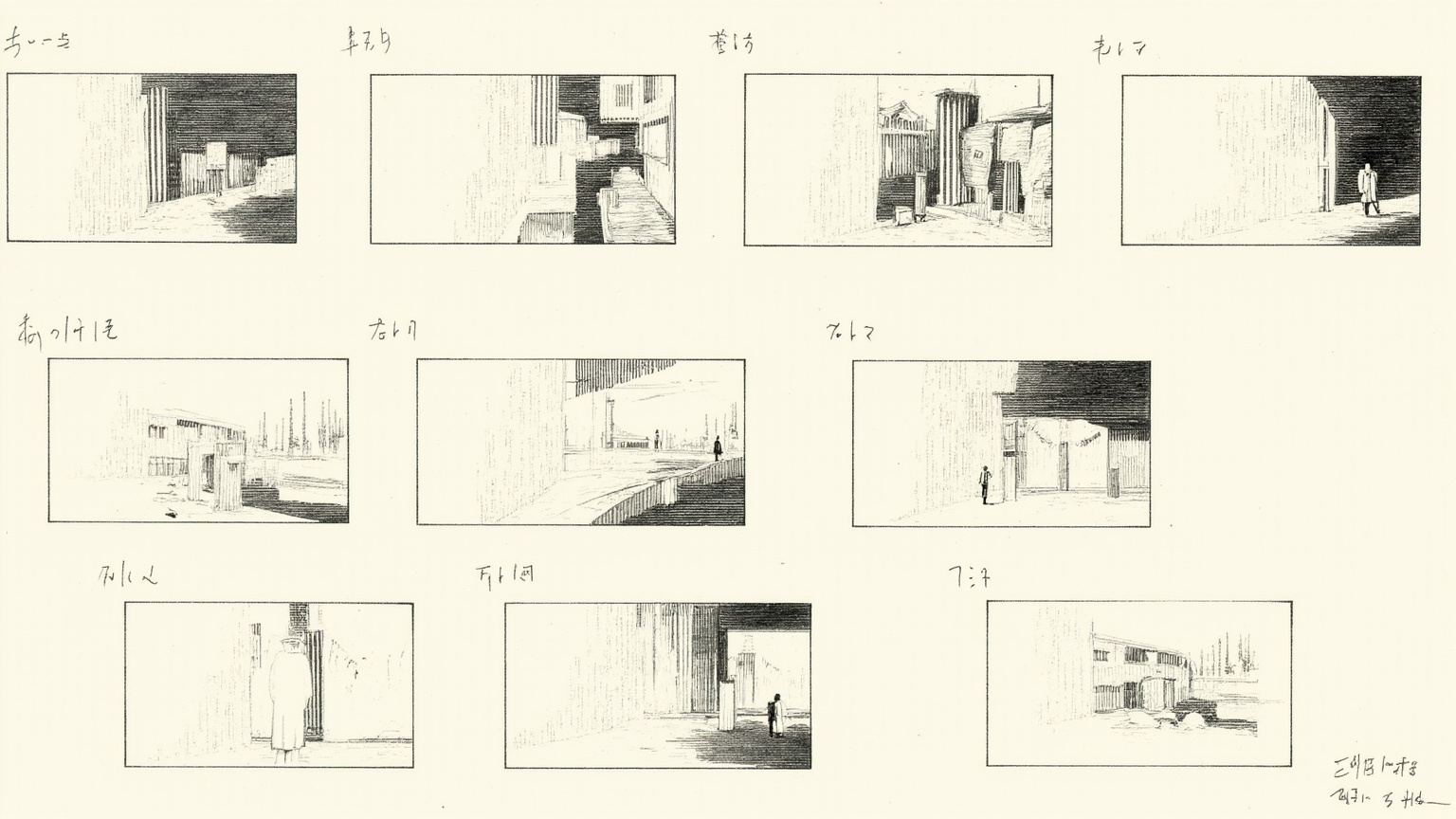
Art Direction4 plates
Before the guide was written, this book got a visual foundation — every illustration you just read grew out of it.